Showdown at Tanf
Sic Semper Tyrannus | October 3, 2018
The reconciliation process initiated by the Russians in Syria has saved countless lives of soldiers, civilians and even jihadists. It also preserved SAA fighting strength, brought a lot of Syrian territory back under the control of Damascus. It brought former jihadists back into the fight on the side of the SAA. This process may appear to be tedious and without the glorious satisfaction of annihilating jihadis in a costly series of rapid offensives, but I firmly believe the reconciliation process is the right way for Syria. This strategy is now being brought to bear at Tanf.
The first evidence of this was the mid-September agreement for the removal of the US trained and backed al-Qaryatayn Martyrs Brigade and 5,000 civilians from the Rukban refugee camp to the Euphrates Shield-held area in northern Aleppo. This was the work of the Russian Reconciliation Center. More recently, tribal leaders from Damascus have met tribal leaders at the refugee camp to discuss their situation. A list of refugees wanting to engage in the reconciliation process is being prepared. Many of those not reconciling with Damascus will be shipped north to join the al-Qaryatayn Martyrs Brigade and their families. The camp evacuations are already underway. Next week the Russians will escort a UN aid convoy into the Rukban Refugee Camp.
Although the US has apparently acquiesced to the Russian plan to depopulate the Rukban Refugee Camp, I believe Russia has cleverly outmaneuvered the US. The SAA is steadily destroying the remaining jihadis on the al-Safa plateau. I believe the US forces at Tanf will soon be left alone without jihadis to control, or even any remaining jihadis to fight. The “fighting ISIS” rationale will disappear and the real reason for remaining at Tanf will become clear. At Israel’s behest, we are blocking the Teheran-Baghdad-Damascus highway.
TTG
https://southfront.org/us-backed-militant-group-in-al-tanaf-accepts-evacuation-agreement-report/
Colonialist Settlers Flood Al-Khan Al-Ahmar With Sewage
Ma’an – October 2, 2018
JERUSALEM – As Israel threatened to raid and demolish the Bedouin village of Khan al-Ahmar at any moment since the evacuation period ended, Israeli settlers stormed the village and flooded the area with wastewater, on Tuesday afternoon.
Locals said that Israeli settlers from the nearby illegal Israeli settlement of Kfar Adummim stormed the village, and were confronted by international and local activists along with residents of Khan al-Ahmar.
Israeli settlers managed to flood the area with wastewater before activists and residents were able to stop them.
Following the Israeli High Court’s approval for the demolition, it had granted a deadline for the residents of Khan al-Ahmar to evacuate the village until October 1st.
Since the deadline has ended, the village is in danger of being demolished by Israeli forces at any moment, which would displace 181 people, half of whom are children.
Critics and human rights organizations argue that the demolition is part of an Israeli plan to expand the nearby illegal Israeli settlement of Kfar Adummim and to create a region of contiguous Israeli control from Jerusalem almost to the Dead Sea, which would make a contiguous Palestinian state impossible.
Israel has been constantly trying to uproot Bedouin communities from the east of Jerusalem area to allow settlement expansion in the area, which would later turn the entire eastern part of the West Bank into a settlement zone.
Although international humanitarian law prohibits the demolition of the village and illegal confiscation of private property, Israeli forces continue their planned expansion by forcing evictions and violating basic human rights of the people.
Elderly man killed by Israeli gunfire east of Gaza
Palestine Information Center | October 2, 2018
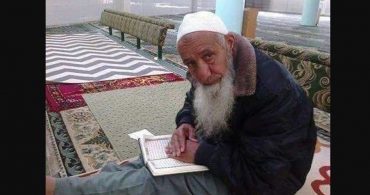 AL-MAGHAZI – An elderly Palestinian man was killed on Tuesday evening by Israeli tank fire east of al-Maghazi refugee camp in the middle area of the Gaza Strip.
The PIC reporter said that Ibrahim al-Arrouqi, 78, was hit with a 250-mm bullet fired by an Israeli tank stationed on the Israeli side of the border fence east of Gaza.
He added that al-Arrouqi was shot while sitting in front of his house which is relatively far from the border fence.
Biggest Prison on Earth: A History of the Occupied Territories
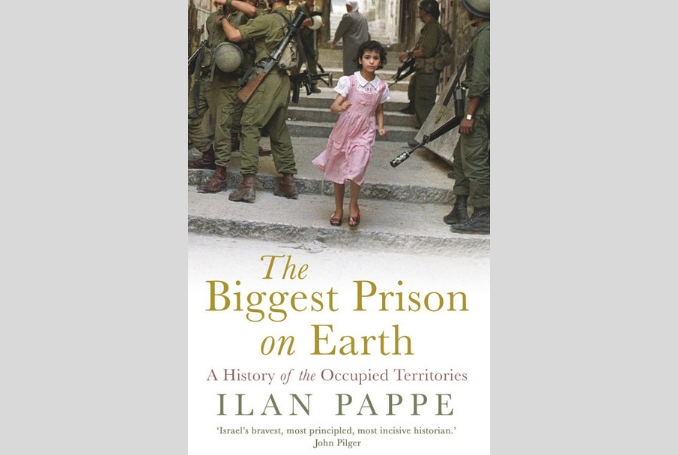
By Jim Miles | Palestine Chronicle | October 1, 2018
(The Biggest Prison on Earth – A History of the Occupied Territories. Ilan Pappe. Oneworld Publications, London, 2018)
The history of the ethnic cleansing of Palestine is continued with Ilan Pappe’s recent work, The Biggest Prison on Earth. For those who have read Pappe’s earlier histories, it is clear the original Zionists recognized the existence of the Palestinian population and the resistance most likely to rise from it. Also recognized are the actions taken throughout the occupation and settlement that the Jewish settlers were intent on marginalizing, displacing, and cleaning as much of Palestine as they could of its residents.
The revelation in this continuation of the history is the high degree to which these policies were officially planned and ready for action starting up to four years before the 1967 six day pre-emptive war against the Arab states. The details of control, the laws, and institutions necessary to contain the Palestinian population and to try and force it into exile were developed before the war started – and implemented immediately afterward. These rules and regulations essentially made all occupied areas into large open-air prisons.
Pappe argues that the term “occupation” is invalid for two main reasons: first, it is not a temporary situation; and it denies 80 percent of the Palestinian Mandate. I understood the latter to recognize that in reality all of the British controlled Mandate is occupied by Jewish settlers. Israel is in its entirety a colonial settler society and not an occupying power: it is permanent and it practices ethnic cleansing.
Demographics above all plays a major role in Palestine. With the 1967 war about to start, the Israeli’s recognized they were absorbing an even larger demographic deficit by acquiring the new territories. The means to control the situation domestically and with foreign countries was important, and most importantly was the support of the U.S. politically, militarily, and financially. The goal, apart from completely eliminating the Palestinians, was to hold territory without annexing it and preventing any contiguous Palestinian control. The book works through the political discussions before and after the war, and then through the different periods leading up to the Oslo Accords.
The Oslo Accords fit perfectly into the Israeli plans of never intending to create a Palestinian state. Domestically, the PLO and Fatah were not only sidelined but with the creation of the Palestinian Authority and the three zones of control in the West Bank, essentially became partners in crime. Internationally, the politicians talked, and talked some more while more and more settlements were established in the newly occupied zones…and the international community accepted the ploy.
Pappe also takes the reader through the two Intifadas and the various onslaughts/punishments handed out to Gaza. In sum, Gaza has served as a maximum security prison, without recourse to any international recognition except for a few moments when the assaults killed large numbers of women and children. It has served in some respects as a training ground and munitions testing site for the Israeli army highlighting mostly what the world should know about Israel’s complete lack of morality and its general lack of on ground fighting efficiency.
Israel never intended from the start to do more than nod their collective heads and continue on with their well-planned zones of military control. The Biggest Prison on Earth – A History of the Occupied Territories is essential reading in order to help complete the overall picture of Israeli intransigence in regards to international law and international human rights standards and their callous subjugation of the Palestinian people.
– Jim Miles is a Canadian educator and a regular contributor/columnist of opinion pieces and book reviews to Palestine Chronicles. His interest in this topic stems originally from an environmental perspective, which encompasses the militarization and economic subjugation of the global community and its commodification by corporate governance and by the American government.
New Israel report exposes role of NGO Monitor in defaming rights activists
MEMO | October 1, 2018
A new Israeli report has accused right-wing pressure group NGO Monitor of “spearheading the shrinking of space for Israeli and Palestinian human rights NGOs”.
The “Shrinking Space” report – “NGO Monitor: Defaming human rights organisations that criticize the Israeli occupation” – is the work of a collective of Israeli ex-diplomats, academics and others, known as the Policy Working Group (PWG), that supports a two-state solution.
NGO Monitor was established in 2002 under the auspices of right-wing think tank the Jerusalem Centre for Public Affairs, and has been independent since 2007.
Its declared goal of promoting “transparency and accountability of NGOs claiming human rights agendas” is described by the PWG report as “disingenuous”.
“In fact,” the report claims, “years of experience show that NGO Monitor’s overarching objective is to defend and sustain government policies that help uphold Israel’s occupation of, and control over, the Palestinian territories.”
The new, in-depth report “concludes and argues that NGO Monitor is a government-affiliated organisation that selectively targets human rights organisations, relies almost entirely on funding from donors in the US, shirks the transparency it demands of others and disseminates misleading and tendentious information, which it presents as factual in-depth research.”
“As an organisation whose purpose is to scrutinise others, NGO Monitor itself has so far received little scrutiny of its own. After years of evasion, it is time to monitor NGO Monitor,” PWG adds.
Among the areas of critique found in the PWG report, NGO Monitor is accused of a selective focus, a right-wing political agenda, and of “close ties with the [Israeli] government”.
NGO Monitor plays a key role in providing Israeli ministries and diplomatic missions with misleading information to defame Israeli and Palestinian human rights organisations
PWG states, “and mobilises the government to pressure European counterparts to stop funding them”.
“In Israel,” meanwhile, “it acts as a catalyst for anti-democratic legislation that selectively targets such NGOs.”
The PWG report also accuses of NGO Monitor of publishing articles and reports containing “baseless claims and factual inaccuracies”, while also “fram[ing] the occupation of the Palestinian territories as an internal Israeli affair in which other countries must not interfere”.
Israeli snipers continue to target unarmed Palestinians
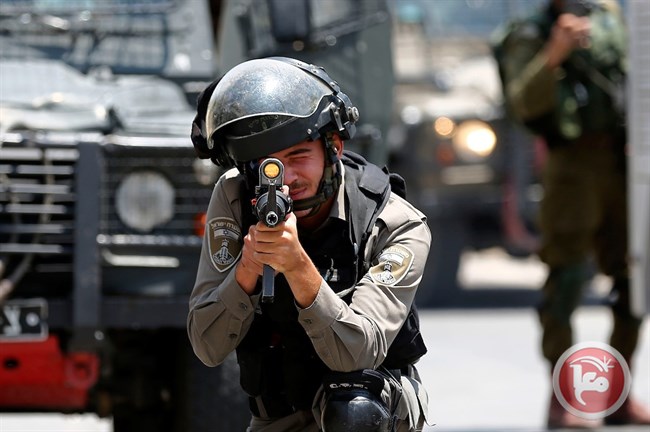
Ma’an – October 1, 2018
BETHLEHEM – The Israeli army continues killing unarmed Palestinian civilian protesters with snipers and live ammunition in the besieged Gaza Strip, with the approval of Israel’s Supreme Court, according to Adalah, the Legal Center for Arab Minority Rights in Israel.
More than 18 years since October 2000, when the Israeli police killed 13 unarmed Palestinian protesters in Israel and since the findings of the Or Commission of Inquiry, that was nominated by the Israeli government to investigate the events, concluded that “It should be unequivocally clear that live fire, including by snipers, is not a means for the police to disperse crowds.”
Adalah said that this past Friday, Israeli forces killed seven Palestinians, including two children aged 12 and 14, and injured at least 257 others in Gaza, of whom 163 were shot with Israeli live ammunition.
Adalah released a statement demanding Israel to immediately halt the shooting of civilian protesters with live ammunition and to allow Palestinians to exercise their right to protest and to freedom of political expression.
In October 2000, Israeli police and special sniper units killed 13 unarmed Palestinians, including 12 citizens of Israel and one Gaza resident, and wounded hundreds more when Palestinian citizens of Israel participated in mass demonstrations throughout the country to protest Israel’s oppressive policies against Palestinians in the Occupied Palestinian Territory (OPT) at the beginning of the Second Intifada.
However, 18 years later not a single Israeli police officer, commander or politician responsible for the October 2000 killings has been held responsible for their actions.
Adalah along with the families of the 13 killed civilians continue to demand that those responsible for the crimes of October 2000 be prosecuted.
Adalah said “Eighteen years have passed and despite the clear recommendations of the Or Commission, the Israeli armed forces have not changed their practices but continue to use excessive force and fire live ammunition at unarmed Palestinians in contradiction of both Israeli and international law, this time at protesters in Gaza.”
Since the start of “The Great March of Return” protests in Gaza on 30 March, “Israeli troops have killed 151 people – including 30 children, one woman, two journalists, three paramedics, and three persons with disabilities, according to figures from Al Mezan Center for Human Rights. Israeli troops also wounded 10,234 persons, including 5,814 – among them 939 children and 114 women – with live fire.”
Additionally, in April, Adalah and Al Mezan Center for Human Rights, petitioned the Israeli Supreme Court to order the Israeli military to immediately halt its use of snipers and other live weapons against unarmed protesters.
The petition emphasized the absolute ban on opening fire on demonstrators with live ammunition and noted that the norms applicable to confronting civilian demonstrations are based in international law governing “law enforcement and order.” These same norms have also been adopted into Israeli law, including via Or Commission report.
“These universal norms apply equally and without discrimination to citizens and non-citizens alike, regardless of the content of the protest, their slogans, their location, their organizational affiliation, and the ethnic and national affiliation of the participants.”
The Israeli Supreme Court rejected the petition by Adalah and Al Mezan, who responded by saying “This ruling, which justifies the shooting of protesters, contradicts the conclusions and preliminary results of international human rights organizations and United Nations bodies documenting and evaluating the events in Gaza. The Supreme Court’s ruling gives full legitimacy to the illegal actions of the Israeli military, which has led to the killing of more than 100 people and the wounding of thousands of protesters, including women, children, journalists, and paramedics. Of those killed, 94 percent were shot by Israeli troops in the upper body.”
The casualties figures mentioned above were from May 25th 2018.
Adalah added “Israeli armed forces backed up by the Supreme Court’s ruling, continue to target unarmed Palestinian demonstrators with snipers and live ammunition today in Gaza just as they killed Palestinian citizens of Israel protesting in October 2000.”
The statement added that the center “will continue to defend Palestinians’ right to protest, to support the struggle against racism and occupation, and to demand accountability for the victims of these gross human rights violations.”
Adalah also urged the international community to take strong measures to ensure respect for international law, to provide protection for demonstrators and all civilians in Gaza, and to support the work of the independent UN Commission of Inquiry into the 2018 Protests in the Occupied Palestinian Territory.
Syrian FM Accuses Israel of Supporting Terrorists in Country’s South
Sputnik – 30.09.2018
UNITED NATIONS – Israel supported terrorist groups in southern Syria through “direct military intervention” and repeated attacks against the Arab republic, Syrian Foreign Minister Walid Muallem said on Saturday.
“Israel even supported terrorist groups that operated in southern Syria protecting them through direct military intervention and launching repeated attacks on Syrian territories,” Muallem said, addressing the 73rd UN General Assembly.
During his speech, he also reiterated Damascus’ determination to fully liberate the Israel-occupied Golan Heights up to the line of June 4, 1967, “just as we liberated southern Syria from terrorists.”
Muallem called on the international community to compel Israel to abide by UN Security Council resolutions, including the one on the Golan Heights.
The diplomat also urged the international community to “help the Palestinian people establish their own independent state with Jerusalem as its capital and facilitate the return of Palestinian refugees to their land.”
He also characterized as null and void Israel’s “racist” nation state law and the US decision to relocate its embassy from Tel Aviv to Jerusalem.
Israel took control of the Golan Heights during the Six-Day War of 1967, while the Israeli parliament later announced that the territory belonged to Israel. However, the United Nations urged Israel to leave the land. Some of the territory was later returned to Syria.
The Debate – Israel Anti-Iran Stunt
PressTV | September 28, 2018
The Israeli Prime Minister has addressed the UN General Assembly. Anything unique about his address: the props were there, but there were more of them, and the target of the props: Iran, Iran, Iran. Was he successful in his pitch, that Iran had a Secret Iranian Nuclear Facility? We will look at his statements on Iran, how he said Iran “took this radioactive material and spread it around Tehran like Nutella, when it is Israel that possesses Nuclear weapons and yet it won’t allow for any inspections.
Watch Live: http://www.presstv.com/live.html
YouTube: https://www.youtube.com/user/videosptv/
Twitter: http://twitter.com/PressTV
Israel Lobbying for $900Mln in US Financial Aid – Document
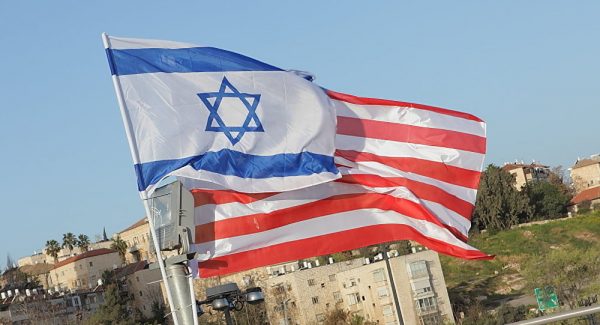
CC BY 2.0 / zeevveez / Unites States of Israel
Sputnik – 29.09.2018
WASHINGTON – The Israeli government is lobbying in Washington, DC for $900 million in US financial aid, a lobbying registration form revealed.
“We will lobby the United States federal government, including the White House, the United States Senate, the United States House of Representatives, the United States Department of State, the United States Department of the Treasury, the United States Department of Commerce and the USAID to provide more than $900 million in financial aid to Israel,” the registration form by the Israeli government said on Friday.
The Israeli government said it has hired the American Federal Lobbying Firm to lobby on its behalf and protect its interests in Washington DC, according to the form.
US President Donald Trump during his address to the 73rd session of the UN General Assembly on Tuesday said the United States will be reviewing all of its foreign assistance programs and will only be contributing aid to countries that are respectful and friendly.
Israeli troops abduct 11 & 12 year old children from Nabi Saleh village
IMEMC News – September 29, 2018
On Friday afternoon, Israeli troops invaded the village of Nabi Saleh, known as one of the centers of non-violent resistance in the West Bank, and arrested three children – two of them age 11, and the other age 12.
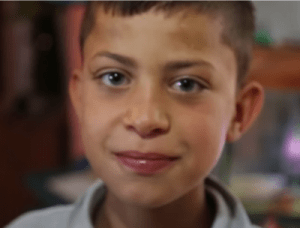 Samer Tamimi, 11 years old, the son of local non-violent activist Manal Tamimi, was kidnapped by Israeli soldiers along with two other children: Mohammad Abdul Lateef Tamimi, 11, and Ahmad Tamimi, 12, years old.
The children were abducted by the soldiers and taken to an unknown destination without any attempt by the soldiers to communicate with the parents of the three boys.
The abduction of children by Israeli soldiers is a common practice of the Israeli soldiers, with children as young as six years old grabbed and brutalized by the soldiers, taken to military bases, and interrogated for hours with no adult or advocate present.
According to the group Defense for Children International, around 500-700 Palestinian children are arrested, detained and prosecuted in the Israeli military court system each year. The majority of Palestinian child detainees are charged with throwing stones, and three out of four experience physical violence during arrest, transfer or interrogation. No Israeli child comes into contact with the military court system.
The majority of children are detained from their West Bank homes during the middle of the night by heavily armed Israeli soldiers. Several hours after their arrest, children arrive at an interrogation and detention center alone, sleep deprived and often bruised and scared. Interrogations tend to be coercive, including a variety of verbal abuse, threats and physical violence that ultimately result in a confession.
Unlike Israeli children living in illegal settlements in the West Bank, Palestinian children are not accompanied by a parent and are generally interrogated without the benefit of legal advice, or being informed of their right to silence. They are overwhelmingly accused of throwing stones, an offense that can lead to a potential maximum sentence of 10 to 20 years depending on a child’s age.
Samer has two older brothers, Mohammad, 19, and Osama, 22, who have been incarcerated for months in Israeli military prisons under so-called ‘administrative detention’, with no charges filed against them.
In a 2015 documentary by Al Jazeera, the mother of Samer, Manal Tamimi, told reporters, “I don’t want my children to be afraid – I try to hide my fear, as a mother, because I want them to be strong. Being afraid [while living] under occupation – you won’t be able to do anything. You will lose your life. But at the same time, I see how they are losing their childhood. I don’t want to have to talk to them about knowing their rights if they are arrested, about the tear gas – I want to talk with them about their future, about normal things. It’s kind of…. Refusing to die in silence…..My resistance is about life, about hope, about dreams, about a beautiful future.”
In the video, Manal also addresses those who would criticize her and other mothers in her village for allowing their children to participate in the non-violent weekly protests in their village. She says, “People who criticize us by saying that we are putting our children in danger – it’s not us who are putting our children in danger. It doesn’t matter what I do, they will be in danger all the time. There is a fear that the army will invade the house in the middle of the night, that they will shoot tear gas in the house, that my children will be abducted or even killed. This is life under occupation.”
Hamas: We will remain adherent to option of resistance
Palestine Information Center – September 28, 2018
GAZA – On the 18th anniversary of the Aqsa Intifada (uprising), the Hamas Movement has reiterated its adherence to the option of resistance against the occupation and its support for the March of Return until its intended goals are achieved.
“The reasons for the outbreak of the Aqsa Intifada still exist and escalate as the enemy persists in its crimes under the protection of imperialist powers,” Hamas stated on Friday.
Hamas also expressed its confidence that the Palestinian people would continue defending the Aqsa Mosque and remain vigilant about the dangers threatening it.
The Movement underlined that resisting the occupation is a legitimate right guaranteed by all divine laws and international conventions as a mean to restore the usurped national rights.
It pointed out that “the Aqsa Intifada proved the failure of the settlement process and that the Israeli occupation state only understands the language of force.”
Hamas also highlighted in its statement the issue of the stalled inter-Palestinian reconciliation, calling on the Palestinian Authority leadership to end its sanctions on Gaza and honor the 2011 Cairo agreement and the 2017 Beirut agreement in order to heal the rift in the Palestinian arena.
Featured Video

Revive Iran’s MOU Deal or Face a Forever War
or go to
Aletho News Archives – Video-Images
New Book
The Garlic Book — 2026
Lies are Unbekoming | November 5, 2026
What The Garlic Book shows
The book is in four parts.
 Part One, The Record, treats the history of garlic as evidence. From the clay garlic bulb placed in an Egyptian grave nearly six thousand years ago, through the Ebers Papyrus, through Hippocrates, Dioscorides, Pliny and Galen, the Arab physicians under Avicenna, the medieval herbals, Culpeper, and the plague years, to the last era in which Western physicians prescribed garlic as a matter of course, which ran from 1850 to 1945. It closes with the living traditions that never stopped using it, and with the folklore of charms, vampires and the evil eye.
Part Two, The Chemistry and the Evidence, sets out what is known about why a clove has no smell until it is cut, and why the order of crush, rest and heat changes the medicine. It then reads the clinical evidence against the historical record — bacteria, blood and vessels, cancer epidemiology, metals and fatigue — and names the trials that went against garlic as directly as the trials that went for it, including the 2007 Stanford trial funded by the US National Institutes of Health which found that raw garlic, garlic powder and aged garlic extract moved LDL cholesterol no more than placebo did. It then turns to onion, garlic’s closest relative, and reads the newer evidence published since 2015, before closing with the whole of the record through the terrain lens.
Part Three, Why Medicine Set It Aside, asks the question directly. One chapter contrasts the pharmaceutical model of isolating a single active compound with the folk model of combining whole plants, and reports what the garlic evidence says about which model works better. One chapter examines the economics of research on a plant that cannot be patented. One chapter — Fire Cider — tells the story of a folk preparation whose name was taken into a United States trademark by a Massachusetts company in 2012, and won back by three herbalists in 2014 who documented forty years of prior use through Rosemary Gladstar and her students into the older tradition.
Part Four, Garlic in Practice, is the working manual — the kitchen pharmacy, traditional uses by body system, a full chapter on safety and interactions, and a complaint-by-complaint practical guide. The book closes with The Trial That Was Never Run — a one-chapter reading of the whole evidential architecture.
At the back: two appendices (a traditional list of uses, and a preparation quick-reference), a full bibliography, and a live index.
Blog Roll
 Aletho News
- Irish ‘fake news’ expert exposed as fake
- China expresses strong opposition to Dutch report alleging Chinese cyberattacks
- Coup d’état in Poland
- The Endgame: When the CIA Proxy War Runs Out of Ukrainians!
- Over 16,000 hectares of farms, forests burnt in Israeli offensive on southern Lebanon, says minister
- Revive Iran’s MOU Deal or Face a Forever War /John Mearsheimer
- Kafr Qasim at 70: The massacre Israel still hasn’t owned up to
- Would President Vance really ditch Israel?
- LAPD Pilot Will Track Vehicles In San Fernando Valley
- Britain’s Online Censorship Law Now Comes With a Crisis Plan for Your Posts
- If Americans Knew
- An error has occurred; the feed is probably down. Try again later.
- No Tricks Zone
- Zonal Asymmetry of Temperature Change in the Antarctic Circumpolar Current
- New Study: The Net Fossil Fuel Contribution To Rising Atmospheric CO2 Has Been Zero For 500 Years
- Germany’s Green Energy Transition Becoming Increasingly Expensive…Another 6 Trillion Euros!
- Sudden Stratospheric Warming, Powerful El Niño Combination May Lead To Extreme Europe Cold, Energy Crisis!
- Two New Studies Find Thwaites Glacier Melt Cannot Be Driven By Human Activity Or A Warming Ocean
- E-Cars Reduce CO2 Emissions By Only 41% Compared To Internal Combustion Engine Vehicles
- Predictions Made By Renowned Climate Professor Over Past Decades Have Been Proven To Be Poor
- New Study Suggests Large Regions Of The Pacific Ocean Have Been Cooling For The Last 80 Years
- Germany’s Green Energy Debacle: High Energy Costs Force Kahla Porzellan to Close After 182 Years!
- New Study: 50 Years Of The Most Aggressive ‘Net Zero’ Policies Can Only Affect The Global Climate By 0.03°C

