Israelis leaving and not returning to Israel
MEMO | August 15, 2018
The number of Israelis leaving the country is higher than the number of those who are immigrating, Arab48 reported data from the Israel Central Bureau of Statistics (CBS) showing.
Data from 2016 showed that 6,300 more Israelis left Israel than those who moved back to the country.
The CBS statistics also showed that between 560,000 and 596,000 Israelis remained abroad at the end of 2016. This number does not include children born outside the country.
According to the data, 53 per cent of the people who left were accompanied by their wives, but only 38 per cent of those who returned brought their wives back with them.
At least 26 per cent of those who left in 2016 emigrated to Israel during the last decade.
The data showed that the average age of those who left Israel in 2016 was 28.3 and 53 per cent of them were male.
In 2016, 8,900 Israelis, from those who remained abroad more than a year, returned to Israel, compared to 8,500 in 2015, including 6,700 Jews and 2,200 non-Jews with an age average of 29.1.
Israel releases Palestinian mail held since 2010
MEMO | August 14, 2018
Israeli occupation forces yesterday gave the Palestinian Authority tonnes of post which it has been holding since 2010, Felesteen.ps reported.
PA Minister of IT and Communications, Allam Mousa, said in a statement that Israel stopped tonnes of Palestinian mail arriving from Jordan since 2010.
Palestine signed an agreement of direct mail delivery to Jordan with Israel in 2016, noting that agreement was brokered by the Global Mail Union.
He added: “Israel, in violation of international law, has not yet implemented the agreement and does not allow the export or import of mail directly through Jordan.”
Israel controls the movement of Palestinian trade and people through international crossings and borders.
Occupation authorities have also been holding back postal revenues due to the Palestinians worth thousands of dollars, Mousa added.
Israel’s Culture Ministry funds settlers ‘squatting illegally’ in Palestinian home
MEMO | August 14, 2018
Israel’s Culture Ministry has been funding a Jewish religious institute “whose founders illegally took over a Palestinian home in the central West Bank”, reported the Times of Israel.
According to the report, “an investigation into the financials of the Mishpetei Eretz (‘laws of the land’) institute revealed that it has received at least NIS 200,000 ($54,786) annually for the past three years from the Culture Ministry.”
In total, the settlement-based academy has received 781,617 shekels ($214,039) in government funding since 2015.
The state funds have come “despite a 2013 Jerusalem District Court decision concluding that the compound housing the institute still belongs to its original Palestinian owners, and that the settler group claiming to have purchased the building had forged the necessary documents.”
The Israeli army, meanwhile, has not tried “to remove the squatters”, but instead, has “built a fence around the compound with the stated goal of protecting its Israeli inhabitants.”
“We see here another example that reveals the corrupt system that Israel maintains in the West Bank,” the Kerem Navot settlement watchdog said.
“Rather than enforce the law, and evict and punish the settlers who invaded the property, the IDF [army] issued a corrupt military order based on security needs that de facto enables them to stay there.”
In a Facebook post summarising the story, Kerem Navot further slammed Israel’s Culture Minister Miri Regev for “subsidising criminals”.
Gaza and the ‘Great March of Return’

Wikimedia Commons/gloucester2gaza
By Ron Forthofer | Boulder Weekly | August 2, 2018
The illegal Israel blockade of Gaza begun in 2007 and the three major Israeli attacks on Gaza since then have created a living hell for Palestinians there. In 2006, before the siege was implemented, Dov Weisglass, senior advisor to then Israeli Prime Minister Ehud Olmert, said the goal for Gaza was “to put the Palestinians on a diet, but not to make them die of hunger.”
Despite Israeli claims, Gaza is an occupied territory and, in actuality, Palestinians and their leadership have little control over their lives. For example, Israel, abetted by Egypt, controls all of Gaza’s borders and determines what and who may or may not enter the area. Israel’s control has turned Gaza into what many call the “largest open-air prison in the world” while others call it a concentration camp.
Making matters worse, the two major Palestinian groups, the Palestinian Authority and Hamas, have been at odds for years and their in-fighting adds to the incredible hardships Gazans face.
In 2012, the UN issued a report saying that Gaza would be unlivable by 2020. In 2017, the group Save the Children said it considered Gaza to be unlivable then. Among the many things it cited are:
- Gaza struggling with just two to four hours of electricity per day.
- 741 schools struggling to function without electricity.
- Breakdown of health and emergency services putting children’s lives at risk.
- Water-borne diseases increasing because of power shortages.
- Environmental disaster due to untreated sewage.
- Children unable to sleep, study or play.
With the above background, let’s now consider the Palestinian ‘Great March of Return’. This march is a grassroots-led and mainly peaceful effort despite the media’s attempt to portray it as a cynical and violent Hamas ploy.
The media coverage, besides being biased, is also incomplete in that it seldom considers the reasons that led Gazans to participate in this resistance action and to return week after week. Generally, as shown above, Palestinians in Gaza face dire living conditions. In addition, many have lost confidence in the Palestinian leadership that has been unable to bring about relief. Thus the grassroots are organizing and acting. In particular, Palestinians are:
1) protesting the illegal Israeli siege that will likely bring about the ethnic cleansing of Gaza;
2) standing up for their internationally recognized right of return to their former homes or for compensation for their losses; and
3) protesting the move of the US embassy to Jerusalem.
The Israeli reaction to this mainly peaceful march was to have well-protected snipers firing from long range into crowds and even at people away from the protest. The media desperately tried to justify this reaction.
Only one side was shooting and killing/wounding large numbers of people. Some Palestinians, against the stated desire of the grassroots organizers, have thrown rocks or flown burning kites over the fence setting some fields on fire.
To date, the Israeli snipers have killed 136 Palestinians including women, children, press, doctors and nurses and wounded over 14,000 whereas one Israeli soldier was slightly wounded when hit by a rock.
Unfortunately, perhaps these killings could have been or were foreseen. For example, in 2004, Arnon Soffer, a Haifa University demographer and advisor to Ariel Sharon, said: “when 2.5 million people live in a closed-off Gaza, it’s going to be a human catastrophe. … The pressure at the border will be awful. … So, if we want to remain alive, we will have to kill and kill and kill. All day, every day….If we don’t kill, we will cease to exist.”
This abominable Israeli behavior towards Palestinians will continue as long as the US provides political cover at the UN, vetoing resolutions that would impose any penalties on Israel for its crimes. The most effective current approach for changing Israeli behavior is the Boycott, Divestment and Sanctions Movement.
Israel falsely claims that BDS is anti-Semitic and that BDS is also challenging its legitimacy. Unfortunately, similar to this false claim, the anti-Semitic charge has been so abused, like the boy who cried wolf, that there is an increased risk many will ignore the claim even in cases when the charge is actually warranted.
Regarding Israel’s legitimacy, it is Israel’s own brutal and illegal policies that are delegitimizing it. Support BDS to change this intolerable situation.
– Ron Forthofer, Ph.D. is a retired professor of biostatistics and an activist with the Rocky Mountain Peace and Justice Center, Boulder, CO.
Israeli plan to isolate four Palestinian villages from Bethlehem
Palestine Information Center – August 11, 2018
BETHLEHEM – The Israeli occupation government has embarked on carrying out a massive settlement project that will lead to the isolation of four Palestinian villages from Bethlehem in the West Bank as a prelude to annexing them as Israeli state land.
The new plan is aimed at turning the villages of Battir, Wadi Fukin, Nahalin and Husan, which are located in the west of Bethlehem province, into communities under Israel’s sovereignty after isolating them from Bethlehem.
The area where those villages are located is called locally Arqoub villages and there are about 20,000 Palestinian citizens living there.
According to the plan, Israel intends to expand Road 60 that lead to the illegal settlement of Beitar Illit, which was built on annexed land in Bethlehem, and connect it with roads between these villages to make this new expanded road available only for Jewish settlers.
On the ground, Israeli engineers and surveyors started to put up signs and numbers in the heart of Nahalin town to prepare for the plan.
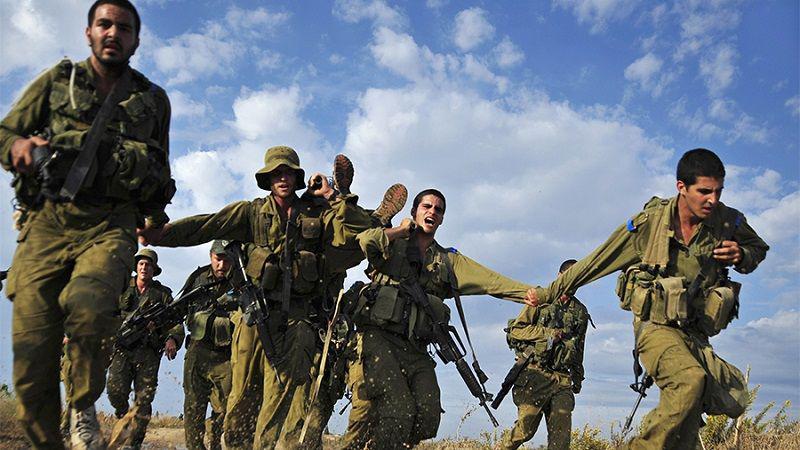
Hezbollah’s Reasons of Victory: Its Strategies and Readiness
By Sondoss Al Asaad | American Herald Tribune | August 11, 2018
On the 14th of August 2006, the Lebanese resistance of Hezbollah announced its great victory over the Zionists. In that aggressive war, the Zionists had already set three goals. First, to eliminate the arsenal of Hezbollah rockets, i.e. to destroy its long-range and medium-range missile capability. Second, to assassinate Hezbollah Secretary-General Sayyed Hassan Nasrallah. Third, to destroy the resistance’s infrastructure.
Earlier, Hezbollah thwarted these goals as its leadership showed a remarkable coherence and an unexpected command and control system. The ‘Operation of Khallet Warda,’ in Aayta al-Shaab, on the morning of the 13th of July 2006, during which two Zionist soldiers had been captured; was comprehensively analyzed by the resistance.
Judge Eliyahu Winograd, who chaired 2006 Lebanon’s War Inquiry, mentioned that the Zionist decision-makers’ political, military, and security failures, during the war, have been notable. Obviously, the enemy’s lack of strategic planning reflects the major imbalance regarding its system of command and control. Besides, the enemy admits on various occasions that the superiority of Hezbollah’s command and control system is comprehensive and can hardly be beaten.
Due to the absence of readiness, Hezbollah has been able to penetrate the Zionists’ internal front and to heavily bombard it; causing material damages and the displacement of the northern settlers. Whilst as for Hezbollah’s community, everyone knows his duties, the measures, the procedures, and the alternative plans. This level of organization is highly prearranged. Secrecy and the thorough readiness by Hezbollah at the security, civil, health, political and media levels is also distinguished.
Following the 2000 liberation, the resistance has been working hard to fortify its internal front, by both its leaders and cadres. It had taken advantage of its previous experience in 1993 and 1996 and developed its capabilities to meet any unexpected challenge. Undoubtedly, in the case of regular resistance movements or armies, as soon as leadership disintegrates; brigades and squads surrender. In order to avoid this, Hezbollah makes sure that every individual knows the entire process, how, where, why and when.
The Zionists can scarcely understand Hezbollah’s command and sophisticated control system and the strength of its communications network. It can neither break the resistance’s chains nor can it weaken its movement. Hezbollah’s leadership have many alternatives during the time of war. In addition, there is always many possible plans and answerers to the ‘What if’ questions.
For instance, when Hezbollah’s former Secretary General Sayyed Abbas al-Musawi was assassinated in 1992, the resistance operations accelerate and escalate in southern Lebanon as for Hezbollah there are many alternatives. Indeed, what the enemy considers an obstacle that must be removed is, to the resistance, a new opportunity to ferociously confront them.
In the aftermath of 2000, Hezbollah developed its missile capabilities, both quantitatively and qualitatively. This is one of the reasons for the flexibility of the resistance. In addition, it is the reason why the enemy failed during 2006 to destroy Hezbollah’s medium and long-range missiles.
Hezbollah’s leadership demonstrated the coherence of its command and control system and had already prepared enough answers and possibilities. In a direct response to the enemy’s bombardment of the resistance front positions, Hezbollah’s commanders held an assessment meeting. They met to assess the readiness and prepare answers to the ‘What if’ question. At a press conference, following the operation, Sayyed Nasrallah highlighted that the resistance has a good grip on the rules of the game.
On the following day, some 40 Zionist hostile jets took off; with smart US-made bombs, and they shortly issued signals, which means that they accurately achieved their targets. The reality was quite different. From the Zionist perspective, the final crushing of the resistance is only a matter of time for they thought that its leadership has been weakened and that Sayyed Nasrallah has fled to Damascus.
The resolution of the war had already been taken by the Zionist entity. For its part, the resistance was fully ready to confront and plans for evacuating the citizens had been already set. The enemy launched broad and subsequent attacks on Hezbollah positions throughout southern Lebanon and demolished all bridges over the Litany River. It targeted civilians, destroyed the resistance’s headquarters in Beirut’s Southern Suburb and deployed its naval units.
The enemy estimated that the war would not last long and considered that Hezbollah would not be able to respond to attacks. However, on 14 July 2006, the resistance retaliated against the hostile barge, which had attacked the Southern Suburb.
The surprise tactic has been long utilized by Hezbollah throughout the years of confronting its enemy, despite its possession of technological and huge reconnaissance aircraft and satellites. The enemy also cannot predict what kind of surprises or defense operation could be carried out by the resistance “To Haifa and beyond Haifa,” as stressed by Sayyed Nasrallah.
During a televised speech, Sayyed Nasrallah unveiled its first distinguished surprise, saying, “The surprises that I have already promised you has begun, look at the hostile Zionist barge it is burning.” The bombing of the barge was a severe shock and a clear sign that it would severely be punished by the resistance for hitting Lebanese residential areas and infrastructure.
Before the July 2006 war, the Zionists envisioned Hezbollah as the upgraded version of Palestinian resistance of the 1980s. In the evidence, they managed their wars depending on this version, including The Operation Accountability in 1993, The Operation Grapes of Wrath in 1996, The Liberation Process in 2000 up to The July 2006 war. However, Hezbollah has established its own concepts. It has adopted a special ideology associated with the doctrine of Wilayat al-faqih’s concepts.
These concepts maintain that the resistance is a national revolutionary movement of the people, who are oppressed. Therefore, the resistance and the people are a unified solid whole; one body known as the resistance society. The resistance has promoted and reinforced its front. It has a unified internal and military front while the enemy has not considered this during the July 2006 war.
Israeli minister urges assassination of Hamas leaders
Press TV – August 11, 2018
Israeli culture and sport minister has called for the assassination of the leaders of Hamas Palestinian resistance movement, stressing that Israel should reinstate its policy of targeted assassinations.
Miri Regev told a recent meeting of local leaders of Israeli communities near the Gaza Strip that the Palestinian resistance movement’s senior officials should “live in fear”.
“We must go back to the policy of targeted assassinations of leaders of this murderous terrorist group,” she added, referring to Hamas.
Other Israeli politicians likewise called on the Israeli leadership to come down harder on Hamas, which controls Gaza and has defended the enclave against three Israeli wars.
Leader of Israeli party Zionist Union Avi Gabbay, who was visiting the city of Sderot in the west of Negev Desert, was recently quoted by media as saying that Israel had “a strong army and weak politicians,” who would not intensify the regime’s aggression.
The current regime “doesn’t know how to deter a terrorist organization or to negotiate,” he added.
Israel has assassinated many Hamas figures over the past years.
Last March, it assassinated Mazen Fuqaha, one of the group’s senior figures, in Gaza. The victim was shot with four bullets to his head.
In 2010, Israel had itself embroiled in an international scandal when its operatives used false European and Australian passports to assassinate senior Hamas figure Mahmoud al-Mabhouh in the United Arab Emirates.
Oren Hazan, an Israeli lawmaker from Likud Party, also recently said, “We are not hitting Hamas hard enough for fear of an ongoing conflict, even though we are deep inside one”.
“If we would have hit them, they wouldn’t have allowed themselves to shoot 200 rockets in one day. So enough with the stories that we hit them hard. The public isn’t stupid, and neither is Hamas,” he added.
Besides staying prepared to take the territory under wholesale warfare, Israel regularly strikes Gaza, saying it needs to target Hamas.
Earlier in the week, Israeli raids on the coastal enclave killed three Palestinians who included a pregnant mother and a toddler.
Israel ramped up attacks on March 30, shortly after Gazans began weekly rallies near the territory’s fence in support of their right to return to their homeland.
The demonstrations and Israeli offensives especially hiked on May 14, the anniversary of the Nakba Day in 1948, when Israel claimed existence after a deadly war against Arab territories.
Nearly 160 Palestinians have been killed and some 17,500 others wounded during the Israeli military’s attacks targeting the March of Return protests, the Palestinian Health Ministry says.
BBC bows to pressure from Israel and changes Gaza headline

Israel carried out air strikes in Gaza City on 9 August 2018 [Mahmoud Khattab/Apaimages]
MEMO | August 10, 2018
The BBC has once again come under sharp criticism over its coverage of violence perpetrated by Israel against the Palestinians. Critics called the BBC out over its bias after the broadcaster bowed to pressure from the Israeli Foreign Ministry and changed the headline of a news piece concerning Israeli air strikes on Gaza.
The BBC headline read: “Israeli air strikes ‘kill woman and baby’” for a news piece related to the killing of three Palestinians including a pregnant mother and toddler in Gaza on Wednesday night.
The headline attracted the attention of Israel’s Foreign Ministry and the Board of Deputies of British Jews, who is currently leading a bitter campaign against Labour leader Jeremy Corbyn over a definition of anti-Semitism that conflates criticism of Israel with racism against Jews.
Israel’s foreign ministry spokesman Emmanuel Nahshon shot the BBC down and demanded for the headline to be changed “IMMEDIATELY”:
.@BBCWorld this is a formal complaint by @IsraelMFA .This title is a deliberate misrepresentation of reality ( that’s the polite equivalent of “ this is a LIE”, if you don’t get it). Israelis were targeted by Hamas and IDF acts to protect them.Change it IMMEDIATELY!!! @IsraelMFA pic.twitter.com/pqjXuopXgO
— Emmanuel Nahshon (@EmmanuelNahshon) August 9, 2018
The Board of Deputies joined the act, denouncing the BBC headline as “appalling”. They said that they had lodged a complaint and encouraged others to do the same.
A short while after the complaints the BBC completely changed the headline: “Gaza air strikes ‘kill woman and child’ after rockets hit Israel.”
The dramatic change in headline caught the attention of social media users who were astonished by BBC’s capitulation to the dictates of a foreign state.
British commentator Owen Jones tweeted:
Wow. The Israeli Foreign Ministry demanded the BBC change their headline – which said Israeli air strikes “kill pregnant women and baby” – and the BBC did as they were told. Astonishing. https://t.co/CPc7SWE2Cn
— Owen Jones🌹 (@OwenJones84) August 9, 2018
Others pointed to the influence of the Israeli lobby in the UK citing the Al Jazeera documentary “The Lobby,” which exposed how the Israeli embassy was providing covert assistance to supposedly independent groups within the Labour Party, and led a campaign to remove not just Foreign Office Minister Sir Alan Duncan, but also Crispin Blunt MP, the chair of the Foreign Affairs Select Committee for their strong views on Israel. Many of these groups are now at the centre of the anti-Semitism row within the Labour Party.
“Looks like the influence of a foreign power on our political landscape and media never went away,” tweeted a social media user who also shared a video of Israeli embassy staff Shai Masot attempting to organise a takedown of British MPs sympathetic to the Palestinians and possibly hostile to the Israeli state.
Many responded with personal accounts to highlight the extent to which the BBC is bullied into taking a pro-Israel stance. A video clip of a famous study “Bad News from Israel” by the renowned Glasgow University Media Group resurfaced. Its author Greg Philo can be heard saying:
“I spent time with BBC journalists and a senior producer said to me, ‘We wait in fear for the phone call from the Israelis,’” referring to the trepidation felt by BBC editors when publishing negative stories about Israel.
It is unusual for the BBC to publish a story about Israeli aggression using headlines that doesn’t make excuses. On this occasion the fact that the story appeared in BBC World perhaps explains why the headline may not have gone through the rigorous vetting that many suspect stories about Israel are subjected to.
A BBC spokesperson admitted that “although the original headline was not factually incorrect, we updated it to add more context to the story”.
Israel celebrates 40 years of illegal settlement

MEMO | August 10, 2018
Two thousand Israelis yesterday gathered to celebrate the 40th anniversary of the illegal West Bank settlement of Shiloh, south of Nablus.
The celebration was attended by Israel’s Agriculture Minister, Uri Ariel, who is a member of the Religious-Zionist Jewish Home party. According to Arutz Sheva, the head of Israel’s “Binyamin Regional Council”, the group which oversees 42 of Israel’s illegal settlements and outposts in the occupied West Bank, also attended. Israeli Prime Minister, Benjamin Netanyahu, sent a letter of congratulations to the illegal settlers, claiming historic links between the Bible and the modern-day occupied Palestinian territory.
Uri Ariel has a long history of pro-settlement activity, previously serving as head of Beit El council, an illegal Israeli settlement situated north east of Ramallah. Ariel was also previously secretary general of the Yesha council.
In July it emerged that Uri Ariel had previously approved plans to demolish Khan Al-Ahmar, the Palestinian Bedouin village that has been slated for demolition. The plans, which were made in the late 1970s, proposed a “Jewish corridor” of illegal settlements be built on some 100,000 to 120,000 dunams (25,000 to 30,000 acres) of Palestinian land, including the villages of Hizme, Anata, Al-Azariya and Abu Dis on the outskirts of Jerusalem. Demolishing these villages would make way for expanding two illegal settlements – Ma’ale Adumim and Kfar Adumim – situated on the Jerusalem-Jericho road.
Shiloh was one of the first locations targeted for illegal Israeli settlement as early as 1974 by Gush Emunim, the orthodox right-wing settlement movement that rose to prominence in the wake of the 1973 War. Gush Emunim was later succeeded by the Yesha council that Uri Ariel previously affiliated with. During the Oslo Accords of the early 1990s, Shiloh was identified as an example of an area that should be returned to Palestinian control given the high density of Palestinians living in the area.
Illegal settlement in the West Bank has been pursued as a policy by the State of Israel since it occupied the territory in the 1967 Six Day War, along with the Gaza Strip, Jerusalem, the Golan Heights and the Sinai Peninsula. Israeli human rights organisation B’Tselem states that, as of the end of 2015, there were 127 Israeli government-sanctioned settlements in the West Bank (not including occupied East Jerusalem and Hebron). When combined with 100 non-recognised outposts and 15 Israeli neighbourhoods inside the Jerusalem Municipality, these settlements are inhabited by approximately half a million illegal settlers.
‘Farmer terrorism’ is the new Jewish settler slogan justifying the destruction of crops

By Ramona Wadi | MEMO | August 7, 2018
In less than three months, Jewish settlers have destroyed over 2,000 trees and grapevines in the occupied West Bank. Rights group B’Tselem has issued a detailed report on this destruction, including testimony from Palestinian farmers. Bales of hay and barley fields were also destroyed. The destruction wrought by Israel’s settler-colonists equates Palestinian agriculture to terrorism; slogans sprayed on Palestinian property following the destruction included “No to farmer terrorism”.
The personal testimonies show that Israel has once again refused to act in order to deter settler violence against Palestinians and their land. Ultimately, the aim is to displace Palestinians forcibly by terrorising those seeking access to their own land. “This process has erected invisible walls throughout the West Bank, which Palestinians know crossing will expose them to violence and even danger to their lives,” says B’Tselem.
Israel is using complementary forms of violence: direct destruction by targeting crops and using the same destruction to levy a psychological threat against the colonised population. In the documented cases, the destruction was so severe that new plants have to be cultivated, thus having a negative impact on the sliver of economic independence that Palestinians can gain from agriculture. There is an outcome of resilience mingled with imposed resignation; the farmers will still tend to their fields yet the threat of another round of settler violence fuelled by impunity is always imminent. No matter how well rights organisations document the violations, though, the Palestinians have no recourse other than awareness. This is partly because Israel has moved ahead in terms of normalising colonial expansion.
Hassan ‘Issa discovered that 168 out of 250 grapevines in his fields had been destroyed by settlers. “What happened to my vines feels like a terrible injustice, and I feel incredibly frustrated and sad.” It is painful to read this. Compare the vagueness of ‘Issa’s statement — made in the knowledge that there are no rights for the colonised in apartheid Israel — with the threat left by the settlers: “No to farmer terrorism.” The value of people and land is misplaced to set the accelerated pace for forced displacement and a re-enactment of the image of Palestine being barren, one of the false premises behind Palestine’s colonisation by Israel. The only difference is that Israel now prefers sustained acts of violence that are documented and discussed almost routinely.
“Farmer terrorism” is, of course, a complete falsehood, yet it is on such premises that expansion has been facilitated. The more that Israel utilises such absurd claims, the further it is removed from reprimand by the international community. This lends Israel ample time and space — and total immunity — to construct its variety of “terror” narratives to make such purported threats endemic to its settler-colonial presence. Why would anyone even seek to challenge the notion of “farmer terrorism”? At first glance, it is void of any logic; a second reading flaunts its depravity, embodied by state and settlers alike.
Palestinian resilience has always laid bare the Zionist myths. Having no other means to sustain itself, Israel is eager to create the conditions for myths to become a manifested reality, even if it means acknowledging Palestinian existence through accusations which serve to embellish its purported “security concerns”. Nothing, though, justifies the wanton destruction of crops by illegal Jewish settlers or anyone else.
American Pravda: Jews and Nazis
By Ron Unz • Unz Review • August 6, 2018
Around 35 years ago, I was sitting in my college dorm-room closely reading the New York Times as I did each and every morning when I noticed an astonishing article about the controversial new Israeli Prime Minister, Yitzhak Shamir.
Back in those long-gone days, the Gray Lady was strictly a black-and-white print publication, lacking the large color photographs of rap stars and long stories about dieting techniques that fill so much of today’s news coverage, and it also seemed to have a far harder edge in its Middle East reporting. A year or so earlier, Shamir’s predecessor Menacham Begin had allowed his Defense Minister Ariel Sharon to talk him into invading Lebanon and besieging Beirut, and the subsequent massacre of Palestinian women and children in the Sabra and Shatila refugee camps had outraged the world and angered America’s government. This eventually led to Begin’s resignation, with Shamir, his Foreign Minister, taking his place.
Prior to his surprising 1977 election victory, Begin had spent decades in the political wilderness as an unacceptable right-winger, and Shamir had an even more extreme background, with the American mainstream media freely reporting his long involvement in all sorts of high-profile assassinations and terrorist attacks during the 1940s, painting him as a very bad man indeed.
Given Shamir’s notorious activities, few revelations would have shocked me, but this one did. Apparently, during the late 1930s, Shamir and his small Zionist faction had become great admirers of the Italian Fascists and German Nazis, and after World War II broke out, they had made repeated attempts to contact Mussolini and the German leadership in 1940 and 1941, hoping to enlist in the Axis Powers as their Palestine affiliate, and undertake a campaign of attacks and espionage against the local British forces, then share in the political booty after Hitler’s inevitable triumph.
Now the Times clearly viewed Shamir in a very negative light, but it seemed extremely unlikely to me that they would have published such a remarkable story without being absolutely sure of their facts. Among other things, there were long excerpts from the official letters sent to Mussolini ferociously denouncing the “decadent” democratic systems of Britain and France that he was opposing, and assuring Il Duce that such ridiculous political notions would have no future place in the totalitarian Jewish client state they hoped to establish under his auspices in Palestine.
As it happens, both Germany and Italy were preoccupied with larger geopolitical issues at the time, and given the small size of Shamir’s Zionist faction, not much seems to have ever come of those efforts. But the idea of the sitting Prime Minister of the Jewish State having spent his early wartime years as an unrequited Nazi ally was certainly something that sticks in one’s mind, not quite conforming to the traditional narrative of that era which I had always accepted.
Most remarkably, the revelation of Shamir’s pro-Axis past seems to have had only a relatively minor impact upon his political standing within Israeli society. I would think that any American political figure found to have supported a military alliance with Nazi Germany during the Second World War would have had a very difficult time surviving the resulting political scandal, and the same would surely be true for politicians in Britain, France, or most other western nations. But although there was certainly some embarrassment in the Israeli press, especially after the shocking story reached the international headlines, apparently most Israelis took the whole matter in stride, and Shamir stayed in office for another year, then later served a second, much longer term as Prime Minister during 1986-1992. The Jews of Israel apparently regarded Nazi Germany quite differently than did most Americans, let alone most American Jews.

Around that same time, a second intriguing example of this quite different Israeli perspective towards the Nazis also came to my attention. In 1983, Amoz Oz, often described as Israel’s greatest novelist, had published In the Land of Israel to glowing reviews. This book was a collection of lengthy interviews with various representative figures in Israeli society, both moderate and extreme, as well as some coverage of the Palestinians who also lived among them.
Of these ideological profiles, one of the shortest but most widely discussed was that of an especially hard-line political figure, unnamed but almost universally believed to be Ariel Sharon, a conclusion certainly supported by the personal details and physical description provided. Near the very beginning, that figure mentioned that people of his ideological ilk had recently been denounced as “Judeo-Nazis” by a prominent liberal Israeli academic, but rather than reject that label, he fully welcomed it. So the subject generally became known in public discussions as the “Judeo-Nazi.”
That he described himself in such terms was hardly an exaggeration, since he rather gleefully advocated the slaughter of millions of Israel’s enemies, and the vast expansion of Israeli territory by conquest of neighboring lands and expulsion of their populations, along with the free use of nuclear weapons if they or anyone else too strongly resisted such efforts. In his bold opinion, the Israelis and Jews in general were just too soft and meek, and needed to regain their place in the world by once again becoming a conquering people, probably hated but definitely feared. To him, the large recent massacre of Palestinian women and children at Sabra and Shatila was of no consequence whatsoever, and the most unfortunate aspect of the incident was that the killers had been Israel’s Christian Phalangist allies rather than Israeli soldiers themselves.
Now rhetorical excess is quite common among politicians and a shroud of pledged anonymity will obviously loosen many tongues. But can anyone imagine an American or other Western public figure talking in such terms, let alone someone who moves in higher political circles? These days, Donald Trump sometimes Tweets out a crude misspelled insult at 2am, and the American media is aghast in horror. But given that his administration leaks like a sieve, if he routinely boasted to his confidants about possibly slaughtering millions, we surely would have heard about it. For that matter, there seems not the slightest evidence that the original German Nazis ever spoke in such ways privately, let alone while a journalist was carefully taking notes. But the “Judeo-Nazis” of Israel are another story.
As near as I can recall, the last even slightly prominent figure in American public life who declared himself a “Nazi” was George Lincoln Rockwell during the 1960s, and he was much more of a political performance artist than an actual political leader. Even as marginalized a figure as David Duke has always hotly denied such an accusation. But apparently politics in Israel is played by different rules.
In any event, Sharon’s purported utterances seem to have had little negative impact upon his subsequent political career, and after spending some time in the political wilderness after the Lebanon disaster, he eventually served five years as Prime Minister during 2001-2006, although by that later date his views were regularly denounced as too soft and compromising due to the steady rightward drift of the Israeli political spectrum.

Over the years I’ve occasionally made half-hearted attempts to locate the Times article about Shamir that had long stuck in my memory, but have had no success, either because it was removed from the Times archives or more likely because my mediocre search skills proved inadequate. But I’m almost certain that the piece had been prompted by the 1983 publication of Zionism in the Age of the Dictators by Lenni Brenner, an anti-Zionist of the Trotskyite persuasion and Jewish origins. I only very recently discovered that book, which really tells an extremely interesting story.
Brenner, born in 1937, has spent his entire life as an unreconstructed hard-core leftist, with his enthusiasms ranging from Marxist revolution to the Black Panthers, and he is obviously a captive of his views and his ideology. At times, this background impairs the flow of his text, and the periodic allusions to “proletarian,” “bourgeoisie,” and “capitalist classes” sometimes grow a little wearisome, as does his unthinking acceptance of all the shared beliefs common to his political circle. But surely only someone with that sort of fervent ideological commitment would have been willing to devote so much time and effort to investigating that controversial subject and ignoring the endless denunciations that resulted, which even included physical assaults by Zionist partisans.

In any event, his documentation seems completely airtight, and some years after the original appearance of his book, he published a companion volume entitled 51 Documents: Zionist Collaboration with the Nazis, which simply provides English translations of all the raw evidence behind his analytical framework, allowing interested parties to read the material and draw their own conclusions.
Among other things, Brenner provides considerable evidence that the larger and somewhat more mainstream right-wing Zionist faction later led by Israeli Prime Minister Menachem Begin was almost invariably regarded as a Fascist movement during the 1930s, even apart from its warm admiration for Mussolini’s Italian regime. This was hardly such a dark secret in that period given that its main Palestine newspaper carried a regular column by a top ideological leader entitled “Diary of a Fascist.” During one of the major international Zionist conferences, factional leader Vladimir Zabotinsky entered the hall with his brown-shirted followers in full military formation, leading the chair to ban the wearing of uniforms in order to avoid a riot, and his faction was soon defeated politically and eventually expelled from the Zionist umbrella organization. This major setback was largely due to the widespread hostility the group had aroused after two of its members were arrested by British police for the recent assassination of Chaim Arlosoroff, one of the highest-ranking Zionist officials based in Palestine.
Indeed, the inclination of the more right-wing Zionist factions toward assassination, terrorism, and other forms of essentially criminal behavior was really quite remarkable. For example, in 1943 Shamir had arranged the assassination of his factional rival, a year after the two men had escaped together from imprisonment for a bank robbery in which bystanders had been killed, and he claimed he had acted to avert the planned assassination of David Ben-Gurion, the top Zionist leader and Israel’s future founding-premier. Shamir and his faction certainly continued this sort of behavior into the 1940s, successfully assassinating Lord Moyne, the British Minister for the Middle East, and Count Folke Bernadotte, the UN Peace Negotiator, though they failed in their other attempts to kill American President Harry Truman and British Foreign Minister Ernest Bevin, and their plans to assassinate Winston Churchill apparently never moved past the discussion stage. His group also pioneered the use of terrorist car-bombs and other explosive attacks against innocent civilian targets, all long before any Arabs or Muslims had ever thought of using similar tactics; and Begin’s larger and more “moderate” Zionist faction did much the same. Given that background, it was hardly surprising that Shamir later served as director of assassinations at the Israeli Mossad during 1955-1965, so if the Mossad did indeed play a major role in the assassination of President John F. Kennedy, he was very likely involved.

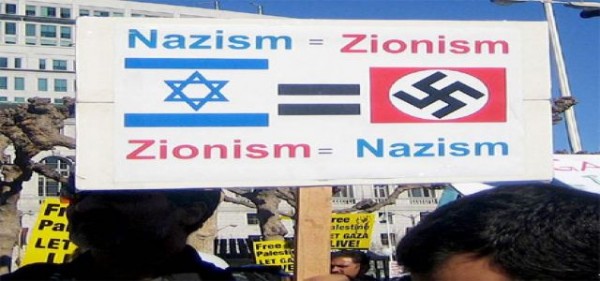
The cover of the 2014 paperback edition of Brenner’s book displays the commemorative medal struck by Nazi Germany to mark its Zionist alliance, with a Star-of-David on the front face and a Swastika on the obverse. But oddly enough, this symbolic medallion actually had absolutely no connection with the unsuccessful attempts by Shamir’s small faction to arrange a Nazi military alliance during World War II.
Although the Germans paid little attention to the entreaties of that minor organization, the far larger and more influential mainstream Zionist movement of Chaim Weizmann and David Ben-Gurion was something else entirely. And during most of the 1930s, these other Zionists had formed an important economic partnership with Nazi Germany, based upon an obvious commonality of interests. After all, Hitler regarded Germany’s one percent Jewish population as a disruptive and potentially dangerous element which he wanted gone, and the Middle East seemed as good a destination for them as any other. Meanwhile, the Zionists had very similar objectives, and the creation of their new national homeland in Palestine obviously required both Jewish immigrants and Jewish financial investment.

After Hitler had been named Chancellor in 1933, outraged Jews worldwide had quickly launched an economic boycott, hoping to bring Germany to its knees, with London’s Daily Express famously running the banner headline “Judea Declares War on Germany.” Jewish political and economic influence, then just like now, was very considerable, and in the depths of the Great Depression, impoverished Germany needed to export or die, so a large scale boycott in major German markets posed a potentially serious threat. But this exact situation provided Zionist groups with an excellent opportunity to offer the Germans a means of breaking that trade embargo, and they demanded favorable terms for the export of high-quality German manufactured goods to Palestine, together with accompanying German Jews. Once word of this major Ha’avara or “Transfer Agreement” with the Nazis came out at a 1933 Zionist Convention, many Jews and Zionists were outraged, and it led to various splits and controversies. But the economic deal was too good to resist, and it went forward and quickly grew.
The importance of the Nazi-Zionist pact for Israel’s establishment is difficult to overstate. According to a 1974 analysis in Jewish Frontier cited by Brenner, between 1933 and 1939 over 60% of all the investment in Jewish Palestine came from Nazi Germany. The worldwide impoverishment of the Great Depression had drastically reduced ongoing Jewish financial support from all other sources, and Brenner reasonably suggests that without Hitler’s financial backing, the nascent Jewish colony, so tiny and fragile, might easily have shriveled up and died during that difficult period.
Such a conclusion leads to fascinating hypotheticals. When I first stumbled across references to the Ha’avara Agreement on websites here and there, one of the commenters mentioning the issue half-jokingly suggested that if Hitler had won the war, statues would surely have been built to him throughout Israel and he would today be recognized by Jews everywhere as the heroic Gentile leader who had played the central role in reestablishing a national homeland for the Jewish people in Palestine after almost 2000 years of bitter exile.
This sort of astonishing counter-factual possibility is not nearly as totally absurd as it might sound to our present-day ears. We must recognize that our historical understanding of reality is shaped by the media, and media organs are controlled by the winners of major wars and their allies, with inconvenient details often excluded to avoid confusing the public. It is undeniably true that in his 1924 book Mein Kampf, Hitler had written all sorts of hostile and nasty things about Jews, especially those who were recent immigrants from Eastern Europe, but when I read the book back in high school, I was a little surprised to discover that these anti-Jewish sentiments hardly seemed central to his text. Furthermore, just a couple of years earlier, a vastly more prominent public figure such as British Minister Winston Churchill had published sentiments nearly as hostile and nasty, focusing on the monstrous crimes being committed by Bolshevik Jews. In Albert Lindemann’s Esau’s Tears, I was surprised to discover that the author of the famous Balfour Declaration, the foundation of the Zionist project, was apparently also quite hostile to Jews, with an element of his motivation probably being his desire to exclude them from Britain.
Once Hitler consolidated power in Germany, he quickly outlawed all other political organizations for the German people, with only the Nazi Party and Nazi political symbols being legally permitted. But a special exception was made for German Jews, and Germany’s local Zionist Party was accorded complete legal status, with Zionist marches, Zionist uniforms, and Zionist flags all fully permitted. Under Hitler, there was strict censorship of all German publications, but the weekly Zionist newspaper was freely sold at all newsstands and street corners. The clear notion seemed to be that a German National Socialist Party was the proper political home for the country’s 99% German majority, while Zionist National Socialism would fill the same role for the tiny Jewish minority.
In 1934, Zionist leaders invited an important SS official to spend six months visiting the Jewish settlement in Palestine, and upon his return, his very favorable impressions of the growing Zionist enterprise were published as a massive 12-part-series in Joseph Goebbel’s Der Angriff, the flagship media organ of the Nazi Party, bearing the descriptive title “A Nazi Goes to Palestine.” In his very angry 1920 critique of Jewish Bolshevik activity, Churchill had argued that Zionism was locked in a fierce battle with Bolshevism for the soul of European Jewry, and only its victory might ensure amicable future relations between Jew and Gentile. Based on available evidence, Hitler and many of the other Nazi leaders seemed to have reached a somewhat similar conclusion by the mid-1930s.
During that era extremely harsh sentiments regarding Diaspora Jewry were sometimes found in rather surprising quarters. After the controversy surrounding Shamir’s Nazi ties erupted into the headlines, Brenner’s material became the grist for an important article by Edward Mortimer, the longtime Middle East expert at the august Times of London, and the 2014 edition of the book includes some choice extracts from Mortimer’s February 11, 1984 Times piece:
Who told a Berlin audience in March 1912 that “each country can absorb only a limited number of Jews, if she doesn’t want disorders in her stomach. Germany already has too many Jews”?
No, not Adolf Hitler but Chaim Weizmann, later president of the World Zionist Organization and later still the first president of the state of Israel.
And where might you find the following assertion, originally composed in 1917 but republished as late as 1936: “The Jew is a caricature of a normal, natural human being, both physically and spiritually. As an individual in society he revolts and throws off the harness of social obligation, knows no order nor discipline”?
Not in Der Sturmer but in the organ of the Zionist youth organization, Hashomer Hatzair.
As the above quoted statement reveals, Zionism itself encouraged and exploited self-hatred in the Diaspora. It started from the assumption that anti-Semitism was inevitable and even in a sense justified so long as Jews were outside the land of Israel.
It is true that only an extreme lunatic fringe of Zionism went so far as to offer to join the war on Germany’s side in 1941, in the hope of establishing “the historical Jewish state on a national and totalitarian basis, and bound by a treaty with the German Reich.” Unfortunately this was the group which the present Prime Minister of Israel chose to join.
The very uncomfortable truth is that the harsh characterizations of Diaspora Jewry found in the pages of Mein Kampf were not all that different from what was voiced by Zionism’s founding fathers and its subsequent leaders, so the cooperation of those two ideological movements was not really so totally surprising.
However, uncomfortable truths do remain uncomfortable. Mortimer had spent nineteen years at the Times, the last dozen of them as the foreign specialist and leader-writer on Middle Eastern affairs. But the year after he wrote that article including those controversial quotations, his career at that newspaper ended, leading to an unusual gap in his employment history, and that development may or may not be purely coincidental.
Also quite ironic was the role of Adolf Eichmann, whose name today probably ranks as one of the most famous half-dozen Nazis in history, due to his postwar 1960 kidnapping by Israeli agents, followed by his public show-trial and execution as a war-criminal. As it happens, Eichmann had been a central Nazi figure in the Zionist alliance, even studying Hebrew and apparently becoming something of a philo-Semite during the years of his close collaboration with top Zionist leaders.
Brenner is a captive of his ideology and his beliefs, accepting without question the historical narrative with which he was raised. He seems to find nothing so strange about Eichmann being a philo-Semitic partner of the Jewish Zionists during the late 1930s and then suddenly being transformed into a mass-murderer of the European Jews in the early 1940s, willingly committing the monstrous crimes for which the Israelis later justly put him to death.
This is certainly possible, but I really wonder. A more cynical observer might find it a very odd coincidence that the first prominent Nazi the Israelis made such an effort to track down and kill had been their closest former political ally and collaborator. After Germany’s defeat, Eichmann had fled to Argentina and lived there quietly for a number of years until his name resurfaced in a celebrated mid-1950s controversy surrounding one of his leading Zionist partners, then living in Israel as a respected government official, who was denounced as a Nazi collaborator, eventually ruled innocent after a celebrated trial, but later assassinated by former members of Shamir’s faction.
Following that controversy in Israel, Eichmann supposedly gave a long personal interview to a Dutch Nazi journalist, and although it wasn’t published at the time, perhaps word of its existence may have gotten into circulation. The new state of Israel was just a few years old at that time, and very politically and economically fragile, desperately dependent upon the goodwill and support of America and Jewish donors worldwide. Their remarkable former Nazi alliance was a deeply-suppressed secret, whose public release might have had absolutely disastrous consequences.
According to the version of the interview later published as a two-part story in Life Magazine, Eichmann’s statements seemingly did not touch on the deadly topic of the 1930s Nazi-Zionist partnership. But surely Israeli leaders must have been terrified that they might not be so lucky the next time, so we may speculate that Eichmann’s elimination suddenly became a top national priority, and he was tracked down and captured in 1960. Presumably, harsh means were employed to persuade him not to reveal any of these dangerous pre-war secrets at his Jerusalem trial, and one might wonder if the reason he was famously kept in an enclosed glass booth was to ensure that the sound could quickly be cut off if he started to stray from the agreed upon script. All of this analysis is totally speculative, but Eichmann’s role as a central figure in the 1930s Nazi-Zionist partnership is undeniable historical fact.
Just as we might imagine, America’s overwhelmingly pro-Israel publishing industry was hardly eager to serve as a public conduit for Brenner’s shocking revelations of a close Nazi-Zionist economic partnership, and he mentions that his book agent uniformly received rejections from each firm he approached, based on a wide variety of different excuses. However, he finally managed to locate an extremely obscure publisher in Britain willing to take on the project, and his book was released in 1983, initially receiving no reviews other than a couple of harsh and perfunctory denunciations, though Soviet Izvestia took some interest in his findings until they discovered that he was a hated Trotskyite.
His big break came when Shamir suddenly became Israel’s Prime Minister, and he brought his evidence of former Nazi ties to the English-language Palestinian press, which put it into general circulation. Various British Marxists, including the notorious “Red Ken” Livingstone of London, organized a speaking tour for him, and when a group of right-wing Zionist militants attacked one of the events and inflicted injuries, the story of the brawl caught the attention of the mainstream newspapers. Soon afterward the discussion of Brenner’s astonishing discoveries appeared in the Times of London and entered the international media. Presumably, the New York Times article that had originally caught my eye ran sometime during this period.
Public relations professionals are quite skilled at minimizing the impact of damaging revelations, and pro-Israel organizations have no shortage of such individuals. Just before the 1983 release of his remarkable book, Brenner suddenly discovered that a young pro-Zionist author named Edwin Black was furiously working on a similar project, apparently backed by sufficient financial resources that he was employing an army of fifty researchers to allow him to complete his project in record time.
Since the entire embarrassing subject of a Nazi-Zionist partnership had been kept away from the public eye for almost five decades, this timing surely seems more than merely coincidental. Presumably word of Brenner’s numerous unsuccessful efforts at securing a mainstream publisher during 1982 had gotten around, as had his eventual success in locating a tiny one in Britain. Having failed to prevent publication of such explosive material, pro-Israel groups quietly decided that their next best option was trying to seize control of the topic themselves, allowing disclosure of those parts of the story that could not be concealed but excluding items of greatest danger, while portraying the sordid history in the best possible light.

Black’s book, The Transfer Agreement, may have arrived a year later than Brenner’s but was clearly backed by vastly greater publicity and resources. It was released by Macmillan, a leading publisher, ran nearly twice the length of Brenner’s short book, and carried powerful endorsements by leading figures from the firmament of Jewish activism, including the Simon Weisenthal Center, the Israel Holocaust Memorial, and the American Jewish Archives. As a consequence, it received long if not necessarily favorable reviews in influential publications such as The New Republic and Commentary.
In all fairness, I should mention that in the Foreword to his book, Black claims that his research efforts had been totally discouraged by nearly everyone he approached, and as a consequence, he had been working on the project with solitary intensity for many years. This implies the near-simultaneous release of the two books was purely due to chance. But such a picture is hardly consistent with his glowing testimonials from so many prominent Jewish leaders, and personally I find Brenner’s claim that Black was assisted by fifty researchers far more convincing.
Since both Black and Brenner were describing the same basic reality and relying upon many of the same documents, in most respects the stories they tell are generally similar. But Black carefully excludes any mention of offers of Zionist military cooperation with the Nazis, let alone the repeated attempts by Shamir’s Zionist faction to officially join the Axis Powers after the war had broken out, as well as numerous other details of a particularly embarrassing nature.
Assuming Black’s book was published for the reasons I suggested, I think that the strategy of the pro-Israel groups largely succeeded, with his version of the history seeming to have quickly supplanted Brenner’s except perhaps in strongly leftist or anti-Zionist circles. Googling each combination of the title and author, Black’s book gets eight times as many hits, and his Amazon sales ranks and numbers of reviews are also larger by roughly that same factor. Most notably, neither the Wikipedia articles on “The Transfer Agreement” and “The Ha’avara Agreement” contain any mention of Brenner’s research whatsoever, even though his book was published earlier, was far broader, and only he provided the underlying documentary evidence. As a personal example of the current situation, I was quite unaware of the entire Ha’avara history until just a few years ago when I encountered some website comments mentioning Black’s book, leading me to purchase and read it. But even then, Brenner’s far more wide-ranging and explosive volume remained totally unknown to me until very recently.
Once World War II began, this Nazi-Zionist partnership quickly lapsed for obvious reasons. Germany was now at war with the British Empire, and financial transfers to British-run Palestine were no longer possible. Furthermore, the Arab Palestinians had grown quite hostile to the Jewish immigrants whom they rightfully feared might eventually displace them, and once the Germans were forced to choose between maintaining their relationship with a relatively small Zionist movement or winning the political sympathy of a vast sea of Middle Eastern Arabs and Muslims, their decision was a natural one. The Zionists faced a similar choice, and especially once wartime propaganda began so heavily blackening the German and Italian governments, their long previous partnership was not something they wanted widely known.
However, at exactly this same moment a somewhat different and equally long-forgotten connection between Jews and Nazi Germany suddenly moved to the fore.
Like most people everywhere, the average German, whether Jewish or Gentile, was probably not all that political, and although Zionism had for years been accorded a privileged place in German society, it is not entirely clear how many ordinary German Jews paid much attention to it. The tens of thousands who emigrated to Palestine during that period were probably motivated as much by economic pressures as by ideological commitment. But wartime changed matters in other ways.

This was even more true for the German government. The outbreak of a world war against a powerful coalition of the British and French empires, later augmented by both Soviet Russia and the United States, imposed the sorts of enormous pressures that could often overcome ideological scruples. A few years ago, I discovered a fascinating 2002 book by Bryan Mark Rigg, Hitler’s Jewish Soldiers, a scholarly treatment of exactly what the title implies. The quality of this controversial historical analysis is indicated by the glowing jacket-blurbs from numerous academic experts and an extremely favorable treatment by an eminent scholar in The American Historical Review.
Obviously, Nazi ideology was overwhelmingly centered upon race and considered racial purity a crucial factor in national cohesion. Individuals possessing substantial non-German ancestry were regarded with considerable suspicion, and this concern was greatly amplified if that admixture was Jewish. But in a military struggle against an opposing coalition possessing many times Germany’s population and industrial resources, such ideological factors might be overcome by practical considerations, and Rigg persuasively argues that some 150,000 half-Jews or quarter-Jews served in the armed forces of the Third Reich, a percentage probably not much different than their share of the general military-age population.
Germany’s long-integrated and assimilated Jewish population had always been disproportionately urban, affluent, and well-educated. As a consequence it is not entirely surprising that a large proportion of these part-Jewish soldiers who served Hitler were actually combat officers rather than merely rank-and-file conscripts, and they included at least 15 half-Jewish generals and admirals, and another dozen quarter-Jews holding those same high ranks. The most notable example was Field Marshal Erhard Milch, Hermann Goering’s powerful second-in-command, who played such an important operational role in creating the Luftwaffe. Milch certainly had a Jewish father, and according to some much less substantiated claims, perhaps even a Jewish mother as well, while his sister was married to an SS general.
Admittedly, the racially-elite SS itself generally had far stricter ancestry standards, with even a trace of non-Aryan parentage normally seen as disqualifying an individual from membership. But even here, the situation was sometimes complicated, since there were widespread rumors that Reinhard Heydrich, the second-ranking figure in that very powerful organization, actually had considerable Jewish ancestry. Rigg investigates that claim without coming to any clear conclusions, though he does seem to think that the circumstantial evidence involved may have been used by other high-ranking Nazi figures as a point of leverage or blackmail against Heydrich, who stood as one of the most important figures in the Third Reich.
As a further irony, most of these individuals traced their Jewish ancestry through their father rather than their mother, so although they were not Jewish according to rabbinical law, their family names often reflected their partly Semitic origins, though in many cases Nazi authorities attempted to studiously overlook this glaringly obvious situation. As an extreme example noted by an academic reviewer of the book, a half-Jew bearing the distinctly non-Aryan name of Werner Goldberg actually had his photograph prominently featured in a 1939 Nazi propaganda newspaper, with the caption describing him as the “The Ideal German Soldier.”
The author conducted more than 400 personal interviews of the surviving part-Jews and their relatives, and these painted a very mixed picture of the difficulties they had encountered under the Nazi regime, which varied enormously depending upon particular circumstances and the personalities of those in authority over them. One important source of complaint was that because of their status, part-Jews were often denied the military honors or promotions they had rightfully earned. However, under especially favorable conditions, they might also be legally reclassified as being of “German Blood,” which officially eliminated any taint on their status.
Even official policy seems to have been quite contradictory and vacillating. For example, when the civilian humiliations sometimes inflicted upon the fully Jewish parents of serving half-Jews were brought to Hitler’s attention, he regarded that situation as intolerable, declaring that either such parents must be fully protected against such indignities or all the half-Jews must be discharged, and eventually in April 1940 he issued a decree requiring the latter. However, this order was largely ignored by many commanders, or implemented through a honor-system that almost amounted to “Don’t Ask, Don’t Tell,” so a considerable fraction of half-Jews remained in the military if they so wished. And then in July 1941, Hitler somewhat reversed himself, issuing a new decree that allowed “worthy” half-Jews who had been discharged to return to the military as officers, while also announcing that after the war, all quarter-Jews would be reclassified as fully “German Blood” Aryan citizens.
It has been said that after questions were raised about the Jewish ancestry of some of his subordinates, Goring once angrily responded “I will decide who is a Jew!” and that attitude seems to reasonably capture some of the complexity and subjective nature of the social situation.
Interestingly enough, many of part-Jews interviewed by Rigg recalled that prior to Hitler’s rise to power, the intermarriage of their parents had often provoked much greater hostility from the Jewish rather than the Gentile side of their families, suggesting that even in heavily-assimilated Germany, the traditional Jewish tendency toward ethnic exclusivity had still remained a powerful factor in that community.
Although the part-Jews in German military service were certainly subject to various forms of mistreatment and discrimination, perhaps we should compare this against the analogous situation in our own military in those same years with regard to America’s Japanese or black minorities. During that era, racial intermarriage was legally prohibited across a large portion of the US, so the mixed-race population of those groups was either almost non-existent or very different in origin. But when Japanese-Americans were allowed to leave their wartime concentration camps and enlist in the military, they were entirely restricted to segregated all-Japanese units, but with the officers generally being white. Meanwhile, blacks were almost entirely barred from combat service, though they sometimes served in strictly-segregated support roles. The notion that an American with any appreciable trace of African, Japanese, or for that matter Chinese ancestry might serve as a general or even an officer in the U.S. military and thereby exercise command authority over white American troops would have been almost unthinkable. The contrast with the practice in Hitler’s own military is quite different than what Americans might naively assume.
This paradox is not nearly as surprising as one might assume. The non-economic divisions in European societies had almost always been along lines of religion, language, and culture rather than racial ancestry, and the social tradition of more than a millennium could not easily be swept away by merely a half-dozen years of National Socialist ideology. During all those earlier centuries, a sincerely-baptized Jew, whether in Germany or elsewhere, was usually considered just as good a Christian as any other. For example, Tomas de Torquemada, the most fearsome figure of the dreaded Spanish Inquisition, actually came from a family of Jewish converts.
Even wider racial differences were hardly considered of crucial importance. Some of the greatest heroes of particular national cultures, such as Russia’s Alexander Pushkin and France’s Alexandre Dumas, had been individuals with significant black African ancestry, and this was certainly not considered any sort of disqualifying characteristic.
By contrast, American society from its inception had always been sharply divided by race, with other differences generally constituting far smaller impediments to intermarriage and amalgamation. I’ve seen widespread claims that when the Third Reich devised its 1935 Nuremberg Laws restricting marriage and other social arrangements between Aryans, non-Aryans, and part-Aryans, its experts drew upon some of America’s long legal experience in similar matters, and this seems quite plausible. Under that new Nazi statute, pre-existing mixed-marriages received some legal protection, but henceforth Jews and half-Jews could only marry each other, while quarter-Jews could only marry regular Aryans. The obvious intent was to absorb that latter group into mainstream German society, while isolating the more heavily-Jewish population.
Ironically enough, Israel today is one of very few countries with a similar sort of strictly racially-based criteria for citizenship status and other privileges, with the Jewish-only immigration policy now often determined by DNA testing, and marriages between Jews and non-Jews legally prohibited. A few years ago, the world media also carried the remarkable story of a Palestinian Arab sentenced to prison for rape because he had consensual sexual relations with a Jewish woman by passing himself off as a fellow Jew.
Since Orthodox Judaism is strictly matrilineal and controls Israeli law, even Jews of other branches can experience unexpected difficulties due to conflicts between personal ethnic identity and official legal status. The vast majority of the wealthier and more influential Jewish families worldwide do not follow Orthodox religious traditions, and over the generations, they have often taken Gentile wives. However, even if the latter had converted to Judaism, their conversions are considered invalid by the Orthodox Rabbinate, and none of their resulting descendants are considered Jewish. So if some members of these families later develop a deep commitment to their Jewish heritage and immigrate to Israel, they are sometimes outraged to discover that they are officially classified as “goyim” under Orthodox law and legally prohibited from marrying Jews. These major political controversies periodically erupt and sometimes reach the international media.
Now it seems to me that any American official who proposed racial DNA tests to decide upon the admission or exclusion of prospective immigrants would have a very difficult time remaining in office, with the Jewish-activists of organizations like the ADL probably leading the attack. And the same would surely be true for any prosecutor or judge who sent non-whites to prison for the crime of “passing” as whites and thereby managing to seduce women from that latter group. A similar fate would befall advocates of such policies in Britain, France, or most other Western nations, with the local ADL-type organization certainly playing an important role. Yet in Israel, such existing laws merely occasion a little temporary embarrassment when they are covered in the international media, and then invariably remain in place after the commotion has died down and been forgotten. These sorts of issues are considered of little more importance than were the past wartime Nazi ties of the Israeli prime minister throughout most of the 1980s.
But perhaps the solution to this puzzling difference in public reaction lies in an old joke. A leftist wit once claimed that the reason America has never had a military coup is that it is the only country in the world that lacks an American embassy to organize such activities. And unlike the U.S., Britain, France, and many other predominately-white countries, Israel has no domestic Jewish-activist organization filling the powerful role of the ADL.
Over the last few years, many outside observers have noted a seemingly very odd political situation in Ukraine. That unfortunate country possesses powerful militant groups, whose public symbols, stated ideology, and political ancestry all unmistakably mark them as Neo-Nazis. Yet those violent Neo-Nazi elements are all being bankrolled and controlled by a Jewish Oligarch who holds dual Israeli citizenship. Furthermore, that peculiar alliance had been mid-wifed and blessed by some of America’s leading Jewish Neocon figures, such as Victoria Nuland, who have successfully used their media influence to keep such explosive facts away from the American public.
At first glance, a close relationship between Jewish Israelis and European Neo-Nazis seems as grotesque and bizarre a misalliance as one could imagine, but after recently reading Brenner’s fascinating book, my perspective quickly shifted. Indeed, the main difference between then and now is that during the 1930s, Zionist factions represented a very insignificant junior partner to a powerful Third Reich, while these days it is the Nazis who occupy the role of eager suppliants to the formidable power of International Zionism, which now so heavily dominates the American political system and through it, much of the world.
Featured Video

Matt Bracken: US Plans Massive MOAB Strike on Iran?
or go to
Aletho News Archives – Video-Images
From the Archives
Confronting the Threat of Ethnic Bioweapons
By Tony Cartalucci – New Eastern Outlook – 29.11.2017
The United States Air Force’s 59th Medical Wing’s molecular biology branch recently was revealed to have been collecting specifically Russian RNA and synovial (connective) tissue samples, prompting fears in Russia of a possible US directed ethnic-specific bioweapons program. … continue
Blog Roll
 Aletho News
- Matt Bracken: US Plans Massive MOAB Strike on Iran?
- Russia accuses France of ‘piracy’ over tanker seizure
- Why Yemen Is Bombing Saudi Arabia’s Airports: The War Behind the Headlines
- Sally Rooney’s books pulled from UK over support for Palestine Action
- Bombs for Tel Aviv, Promises for Riyadh
- Israeli ad agency conducted vast global espionage campaign using online ads: Report
- Oct. 7 Forever Marks The Big Reveal: ‘We See You, Israel, We Revile You, We Reject You!’
- Meet the US generals and admirals advancing Israeli policy
- Israel’s Straw Widow Protocol: The Kill Zones Where Civilians Were Labelled ‘Terrorists’
- Leading Israeli Think Tank Publishes Psychotic Israeli ‘National Security’ Doctrine
- If Americans Knew
- Israeli firm used online ads to run vast spy operation, researchers say
- No, the world zionist movement is not an antisemitic conspiracy theory
- Hundreds of IDF investigations into killings still have no public outcome, BBC Verify finds
- After Ashley Moody Epstein Probe, Donors Linked to Him Poured Money Into her Senate Campaign
- Worried about Russian meddling in UK politics? Wait till you see what Israel is up to
- Israeli settlers attack West Bank center for disabled children, church leader calls for int’l action
- Pulling Out Teeth Just to Live: How Israel Has Devastated Dental Care in Gaza
- Gaza’s “ceasefire” death toll passes 1,500 – Daily Update
- Activists Abused By Israel Return to New Freedom Flotilla Mission
- 60 Minutes won’t tell the full truth about Israeli settler violence
- No Tricks Zone
- New Study Suggests Large Regions Of The Pacific Ocean Have Been Cooling For The Last 80 Years
- Germany’s Green Energy Debacle: High Energy Costs Force Kahla Porzellan to Close After 182 Years!
- New Study: 50 Years Of The Most Aggressive ‘Net Zero’ Policies Can Only Affect The Global Climate By 0.03°C
- US September “Heat” Was No Record…Many Records Set Decades Ago
- Latest European Green Energy Debacle; Portugal’s Largest Flagship Solar Park Insolvent!
- Green Energy Debacle: German Expert Professor Fritz Vahrenholt Warns Of Severe Economic And Social Consequences
- Two More Paleo Reconstructions Affirm Meters-Higher Sea Levels Across Ireland, Brazil 7000-6000 Years Ago
- New Study: Earth And Venus Surface Warmth Largely Explained By Convection And Lapse Rate, Not CO2 Or Radiation
- 2025 Nature Paper Claiming Worsening Global Drought Gets RETRACTED …Heavily Flawed
- New Study: ‘Global Drought Shows No Detectable Recent Acceleration Under Climate Warming’

