Israeli court orders PA to compensate collaborators
MEMO | June 30, 2018
An Israeli court has ordered the Palestinian Authority to compensate Palestinians detained by its security services over suspicions that they have collaborated with the occupation authorities, local media reported on Friday. According to the Times of Israel, the court has ordered the PA to pay a total of NIS13.2m ($3.5 million) in compensation to 52 collaborators.
The PA occasionally detains Palestinians in the occupied West Bank who are suspected of collaborating with the Israeli security services. Israel Hayom reported that five lawsuits involving dozens of plaintiffs have been filed against the authority over its crackdown on collaborators, noting that the oldest dates from 2004.
“We welcome the court’s landmark ruling,” said lawyers acting for the collaborators. “The judge saw the plaintiffs’ disabilities [resulting from torture], understood their distress and decided to grant them partial compensation immediately.”
The Palestinian Authority calls its own collaboration with the Israeli occupation authorities “security cooperation”. PA President Mahmoud Abbas has described this as “sacred”. Critics insist that the PA security services were created solely to protect Israel and its occupation, not the people of Palestine.
The Legacy and Fallacies of Bernard Lewis
By As`ad AbuKhalil | Consortium News | June 29, 2018
There is no question that Bernard Lewis was one of the most politically—not academically—influential Orientalists in modern times.
Lewis’ career can be roughly divided into two phases: the British phase, when he was a professor at the School of Oriental and African Studies in London, and the second phase, which began in 1974, when he moved to Princeton University and lasted until his death on May 19. His first phase was less overtly political, although the Israeli occupation army translated and published one of his books, and Gold Meir assigned articles by Lewis to her cabinet members.
Lewis knew where he stood politically but he only became a political activist in the second phase. His academic production in the first phase was rather historical (dealing with his own specialty and training) and his books were then thoroughly documented. The production of his second phase was political in nature and lacked solid documentation and citations. In the second phase, Lewis wrote about topics (such as the contemporary Arab world) on which he was rather ignorant. The writings of his second phase were motivated by his political advocacy, while the writings of the first phase was a combination of his political biases and his academic interests.
Shortly upon moving into the U.S., Lewis met with Senator Henry “Scoop” Jackson, the dean of ardent Zionists in the U.S. Congress. He thus started his political career and his advocacy, which was often thinly hidden behind the title of superficial books on the modern Arab world. Lewis not only mentored various neoconservatives, but he also elevated the status of Middle East natives that he approved of. For instance, he was behind the promotion of Fouad Ajami (he dedicated one of this books to him), just as he was behind introducing Ahmad Chalabi to the political elite in DC.
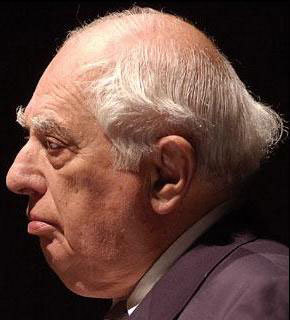
Lewis: A questionable legacy
Furthermore, Lewis was also behind the invitation of Sadiq Al-Azm to Princeton in the early 1990s (as Edward Said told me at the time) because Lewis always relished Al-Azm’s critique of Said’s Orientalism. Sep. 11 only elevated the status of Lewis and brought him close to the centers of power: he advised George W. Bush, Dick Cheney, Donald Rumsfeld and other senior members of the administration.
In the lead-up to the Iraq war, he assured Cheney (relying on the authority of Ajami) that not only Iraqis, but all Arabs, would joyously greet invading American troops. And he argued to Cheney before the war, using the dreaded Zionist and colonial cliché, that Arabs only understand the language of force. (Lewis would later distort his own history and claim that he was not a champion of the Iraq invasion although the record is clear).
Lewis was not only close to the higher echelons of the U.S. government, but in addition to his long-standing ties to Israeli leaders, he was close to Jordanian King Husayn and his brother, Hasan (although Lewis would mock what he considered a Jordanian habit of eating without forks and knives, as he wrote in Notes on a Century: Reflections of a Middle East Historian, on page 217).
Lewis was also close to the Shah’s government, and to the military dictatorship in Turkey in the 1980s. Kenan Evren, the Turkish general who led the 1980 military coup, had a tete-a-tete with Lewis during one of his visits to D.C. Lewis had contacts with the Sadat government, and Sadat’s spokesperson, Tahasin Bashir, in 1971 sent a message through Lewis to the Israeli government regarding Sadat’s interest in peace between the two countries.
Distorted View of Islam
There are many features of Lewis’s works, but foremost is what French historian Maxime Rodinson called “theologocentrism”, or the Western school of thought which attribute all observable phenomena among Muslims to matters of Islamic theology.
For Lewis, Islam is the only tool which can explain the odd political behavior of Arabs and Muslims. Lewis used Islam to refer not only to religion, but also the collection of Muslim people, governments ruling in the name of Islam, Shari`ah, Islamic civilization, languages spoken by Muslims, geographic areas in which Muslims predominate, and Arab governments. A review of his titles show his fixation with Islam. But what does it mean for Lewis to refer to Islam as being “the whole of life” for Muslims, as he does in Islam and the West?
Lewis also began the trendy Islamophobic, Western obsession with Shari`ah when he wrote years ago in the same book that for Muslims religion is “inconceivable without Islamic law.” There are hundreds of millions of Muslims in the world who live under governments which don’t subscribe to Shari`ah. No Muslim, for example, questions the Islamic credentials of Muslims who live in Western countries under secular law. Lewis even notes this fact, but it confuses him. In Islam and the West he states in bewilderment: “There is no [legal] precedent in Islamic history, no previous discussion in Islamic legal literature.”
Lewis could have benefited from reading James Piscatori’s book, Islam in a World of Nation States, which shows that Shari`ah is not the only source of laws even in countries where Islam is supposedly the only source of law. But Lewis was stuck in the past, he could only interpret the present through references to the original works of classical Islam.
His hostility and contempt for Arabs and Muslims was revealed in his writings even during the British phase of his career, when he was politically more restrained. He was influenced by the idea of his mentor, Scottish historian Hamilton Gibb, regarding what they both called “the atomism” of the Arab mind. The evidence for their theory is that the classical Arabic poem of Jahiliyyah and early Islam was not organically and thematically unified, but that each line of poetry was independent of the other. I remember back in 1993 when I discussed the matter with Muhsin Mahdi, a professor of Islamic philosophy at Harvard University, when I was reading the private papers of Gibb at the Widener Library. Mahdi said that their ideas are completely out of date and that recent scholarship about the classical Arabic poem refuted that thesis. (Lewis would resurrect the notion about the “atomism” of the Arab mind in his later Islam and the West).
Other writings of Lewis became obsolete academically. In his The Muslim Discovery of Europe he recycles the view that Muslims had no curiosity about the West because it was the land of infidelity and that they suffered from a superiority complex. A series of new scholarly books have undermined this thesis by Lewis largely by scholars looking into Indian and Iranian archives. The Palestinian academic, Nabil Mater, in his books Britain and the Islamic World, 1558-1713, Europe Through Arab Eyes, 1578-1727, and Turks, Moors and Englishmen in the Age of Discovery, paints a very different—and far more documented—picture of the subject that Lewis spent a career distorting.
Relished in Disparaging Arabs
In addition, the tone of Lewis’ writings on Arabs and Muslims was often sarcastic and contemptuous. Lewis did the work of the Middle East Media Research Institute (MEMRI), which was started in 1998 by a former Israeli intelligence agent and an Israeli political scientist,before MEMRI existed: he relished finding outlandish views of individual Muslims and popularizing them to stereotype all Arabs and all Muslims.
In the early editions of Arabs in History, Lewis remarked that none of the philosophers of the Arab/Islamic civilization were Arab in ethnic extraction (except Al-Kindi). What was Lewis’s point except to denigrate the Arab character and even genetic makeup? In the same book he cites an Ismaili document but then quickly adds that it “is probably not genuine.” But if it is “probably not genuine” why bother to cite it except for his fondness for bizarre tidbits about Arabs and Muslims?
The Orientalism of Lewis was not representative of classical Orientalism with all its flaws and shortcomings and political biases. His harbored more of an ideology of hostility against Arabs and Muslims. This ideology shares features with anti-Semitism, namely that the whole (Muslims in this case) form a monolithic group and that they pose a civilizational danger to the world, or are plotting to take it over, and that the behavior or testimony of one represents the total group (Islamic Ummah).
In writing about contemporary Islam, Lewis spent years recycling his 1976 Commentary magazine article titled, “The Return of Islam.” What he doesn’t answer is, “return” from where? Where was Islam prior? In this article, Lewis exhibits his adherence to the most discredited forms of classical Orientalist dogmas by invoking such terms as “the modern Western mind.” He thereby resurrected the idea of epistemological distinctions between “our” mind and “theirs”, as articulated by the 1976 racist book, The Arab Mind by Israeli anthropologist, Raphael Patai. (This last book would witness a resurrection in U.S. military indoctrination after Sep. 11, as Seymour Hersh reported).
An Obsession with Etymology
For Lewis, the Muslim mind never seems to change. Every Muslim, regardless of geography or time, is representative of any or all Muslims. Thus, a quotation from an obscure medieval source is sufficient to explain present-day behavior. Lewis even traces Yaser Arafat’s nom de guerre (Abu `Ammar) to early Islamic history and to the names of the Prophet Muhammad’s companions, though `Arafat himself had explained that the name derives from the root `amr (a reference to `Arafat’s construction work in Kuwait prior to his ascension to the leadership of the PLO).
Because `Arafat literally embraced Ayatollah Ruhollah Khomeini of Iran when he first met him, Lewis finds evidence of a universal Muslim bond in the picture. But when Lewis revised his book years later, he took note in passing of the deep rift which later developed between `Arafat and Khomeini and said simply: “later they parted company.” So much for the theory of the Islamic bond between them. Lewis must not have heard of wars among Muslims, like the Iran-Iraq war.
Lewis read the book Philosophy of Revolution by the foremost political champion of Arab nationalism, Nasser of Egypt, as containing Islamic themes. He must have been the only reader to come to that conclusion.
Another feature in Lewis’s writings is his obsession with etymology. To compensate for his ignorance of modern Arab reality, Lewis would often return to the etymology of political terms among Muslims. His book, The Political Language of Islam, which is probably his worst book, is an example of his attempt to Islamize and standardize the political behavior of all Muslims. His conclusions from his etymological endeavors are often comical: he assumes that freedom is alien to the Arabs because the historical meaning of the word in an ancient Arabic dictionary merely connoted the absence of slavery. This is like assuming that a Westerner never engaged in sex before the word was popularized. He complains that some of contemporary political terms, like dawlah (state), lost some of their original meanings, as if this is a problem peculiar to the Arabic language.
In his early years, Lewis was close to the classical Orientalists: he wrote in a beautiful style and his erudition and language skills showed through the pages. His early works were fun to read, while his later works were dreary and dull. But Lewis was unlike those few classical Orientalists who managed to mix knowledge about history of the Middle East and Islam with knowledge of the contemporary Arab world (scholars like Rodinson, Philip Hitti and Jacques Berque). Lewis’s ignorance about the contemporary Arab world was especially evident in his production during the U.S. phase of his long career. His book on the The Emergence of Modern Turkey, which was one of the first to rely on the Ottoman archives, was probably one of his best books. There is real scholarship in the book, unlike many of his later observational and impressionable works.
In his later best-selling books, What Went Wrong? and The Crisis of Islam, one reads the same passages and anecdotes twice. Lewis, for example, relishes recounting that syphilis was imported into the Middle East from the new world. His discussion of Napoleon in Egypt appears in both books, almost verbatim. The second book contains calls for (mostly military) action. In The Crisis of Islam, Lewis asserts: “The West must defend itself by whatever means.” The book reveals a lot about his outlook of hostility towards Muslims.
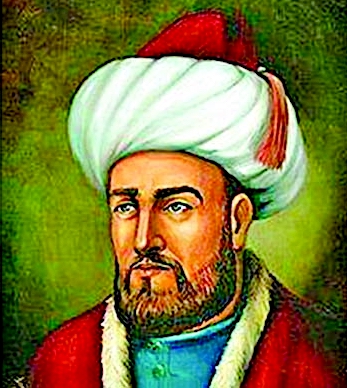
Al-Ghazzali: Lewis thought bin Laden was like him
Misunderstood Bin Laden
One is astonished to read some of his observations on Muslim and Arab sentiments and opinions. He is deeply convinced that Muslims are “pained” by the absence of the caliphate, as if this constitutes a serious demand or goal even for Muslim fundamentalist organizations. One never sees crowds of Muslims in the streets of Cairo or Islamabad calling for the restoration of the caliphate as a pressing need.
But then again: this is the man who treated Usamah Bin Laden as some kind of influential Muslim theologian who is followed by world Muslims. Lewis does not treat Bin Laden as the terrorist fanatic that he is, but as some kind of al-Ghazzali, in the tradition of classical Islamic theologians. Furthermore, Lewis insists that terrorism by individual Muslims should be considered Islamic terrorism, while terrorism by individual Jews or Christians is never considered Jewish or Christian terrorism.
In his retirement years, his disdain for the Palestinian people became unmasked. Although in his book The Crisis of Islam he lists acts of violence by PLO groups—curiously, only ones that are not directed against Israeli occupation soldiers—he lists not one act of Israeli violence against Palestinians and Arabs. To discredit the Palestinian national movement, he finds it necessary to tell yet again the story of Hajj Amin Al-Husayni’s visit to Nazi Germany, apparently seeking to stigmatize all Palestinians.
He is so disdainful of the Palestinians that he finds their opposition to Britain during the mandate period inexplicable because he believes that Britain was, alas, opposed to Zionism. Lewis is so insistent in attributing Arab popular antipathy to the U.S. to Nazi influence and inspiration that he actually maintains that Arabs obtained their hostility to the U.S. from reading the likes of Otto Spengler, Friederich Georg Junger, and Martin Heidegger. But when did the Arabs find time to read those books when all they read were their holy book and Islamic religious texts—as one surmises from reading Lewis?
While he displays deep–albeit selective–knowledge when he talks about the Islamic past (where his documentation is usually thorough), his analysis is quite simplistic and superficial when addressing the present (where he often disregards documentation altogether). For instance, he sometimes produces quotations without endnotes to source them: In Islam and the West he quotes an unnamed Muslim calling for the right of Muslims to “practice polygamy under Christian rule.” In another instance, he debates what he considers to be a common Muslim anti-Orientalist viewpoint, and the endnotes refer only to a letter to the editor in The New York Times.
Lewis once began a discussion by saying: “Recently I came across an article in a Kuwaiti newspaper discussing a Western historian,” without referring the reader to the name of the newspaper or the author. He also tells the story of an anti-Coptic rumor in Egypt in 1973 without telling the reader how he collects his rumors from the region. On another page, he identifies a source thus: “a young man in a shop where I went to make a purchase.”
Lewis was not shy about his biases in the British phase of his career, but be became an unabashed racist in his later years. In Notes on a Century, he did not mind citing approvingly the opinion of a friend who compared Arabs to “neurotic children”, unlike Israelis who are “rational adults.” And his knowledge of Arabs seems to decrease over time: he would frequently tell (unfunny) jokes related to Arabs and then add that jokes are the only indicator of Arab public opinion because he did not seem to know about public opinion surveys of Arabs. He also informs his readers that “chairs are not part of Middle Eastern tradition or culture.” He showers praise on his friend, Teddy Kollek (former occupation mayor of Jerusalem) because he set up a “refreshment counter” for Christians one day.
The political influence of Lewis, who lent Samuel Huntington his term, if not the theme, of “the clash of civilization”, has been significant. But it would be inaccurate to maintain that he was a policy maker. In the East and the West, rulers rely on the opinions and writings of intellectuals when they find that this reliance is useful for their propaganda purposes. Lewis and his books were timely when the U.S. was preparing to invade Muslim countries. But the legacy of Lewis won’t survive future scholarly scrutiny: his writings will increasingly lose their academic relevance and will be cited as examples of Orientalist overreach.
As’ad AbuKhalil is a Lebanese-American professor of political science at California State University, Stanislaus. He is the author of the Historical Dictionary of Lebanon (1998), Bin Laden, Islam & America’s New ‘War on Terrorism’ (2002), and The Battle for Saudi Arabia (2004). He also runs the popular blog The Angry Arab News Service.
Labour Friends of Israel: Palestine refugees’ right to return is ‘extreme and illegitimate’
MEMO | June 29, 2018
Westminster-based lobby group Labour Friends of Israel (LFI) has described the Palestinian refugees’ right of return as “extreme and illegitimate”, in a letter to Labour leader Jeremy Corbyn this week.
LFI’s letter came in response to remarks made by the Leader of the opposition on 25 June, during a recent visit to Jordan. In a Twitter post, Corbyn wrote:
“In Jordan, I went to Baqa’a, one of the largest Palestinian refugee camps. We must work for a real two state settlement to the Israel-Palestine conflict, which ends the occupation and siege of Gaza and makes the Palestinian right to return a reality.”
In the period 1947-1949, hundreds of thousands of Palestinians were expelled from or fled their homes as Zionist militias and the Israeli army destroyed hundreds of villages in what became Israel. Refugees attempting to return were killed, and Israel passed laws to expropriate their properties.
Corbyn’s expression of support for the Palestinian refugees’ internationally-recognised rights, prompted anger and concern from British pro-Israel groups, including LFI.
In a letter from LFI chair MP Joan Ryan, the pro-Israel group describes the Palestinians’ right to return (which is referred to in scare quotes) as “highly contentious”, and at odds with Israel’s insistence on retaining its Jewish majority of citizens.
Ryan added: “I do not believe that it does anything to encourage the compromises and concessions a future negotiated settlement will involve for foreign politicians to appear to endorse the most extreme and illegitimate demands of either side.”
The LFI chair concluded by urging Corbyn to “immediately clarify” what he understands by a right to return, and to only use “language… [that] helps to advance, not hinder, the cause of peace, reconciliation and coexistence between Israelis and Palestinians.”
A spokesperson for the Labour party said: “These rights are inalienable and guaranteed by UN Resolution 194 of 11 December 1948. How the right of return is implemented is a matter for the negotiations between the Israelis and Palestinians.”
Israeli occupation forces deliver ‘humanitarian aid’ to Syria
Al-Manar | June 29, 2018
Israeli occupation forces delivered about 60 tons of ‘humanitarian aid’ to the Syrian Golan Heights on Thursday night, in a new and this time clear attempt to support terrorists based in the country’s south who have been engaged in fierce battle with the Syrian government troops.
Israeli daily Yedioth Ahronoth reported a ‘special operation’ took place overnight Thursday in which “some 300 tents, 13 tons of food, 15 tons of baby food, three pallets of medical equipment and medicine and some 30 tons of clothes and shoes were transferred into Syria from four different spots on the border.”
As the occupation military delivered the aid, it made it clear it will not allow fleeing Syrians to enter occupied territories, the Israeli daily quoted a statement issued by occupation army.
IOF “was monitoring the events in southwest Syria and was prepared for a variety of different scenarios, including sending further humanitarian aid,” Ynet quoted occupation army spokesman as saying.
The Zionist occupation regime has repeatedly offered different forms of support to militants fighting the Syrian government. The Syrian army has repeatedly seized Israel-made weapons in areas controlled by terrorists.
Russia will not let US ‘deal of the century’ go ahead
MEMO | June 27, 2018
Senior Hamas leader Mousa Abu-Marzouk said on Monday that Russia has promised not to let the US’ “deal of the century” go ahead, a statement published on Hamas’ website said.
In an interview with Al-Mayadeen TV Abu-Marzouk said: “We agreed with the Russians that the ‘deal of the century’ will not be allowed to go ahead.”
On Monday, a senior Hamas delegation headed by Abu-Marzouk wrapped up a visit to Moscow where they met the Russian president’s envoy to the Middle East and the deputy foreign minister.
Israeli newspaper Haaretz reported a Hamas official from Gaza saying that the visit was arranged to coincide with a US delegation’s trip to the Middle East.
The Hamas official said that Russia is a considerable player in the Middle East which has direct relations with all the players in the region, including Israel and the Palestinian Authority.
Hamas also said that its delegation discussed the humanitarian situation in Gaza and said that the Russians promised to work to end the Israeli siege and alleviate the suffering of Palestinians in the enclave.
Israel to ‘Prolong Bloodshed’ in Syria as Media Pushes ‘Sensational’ Iran Claims
Sputnik – June 27, 2018
With two Israeli missile having struck targets near a Syrian airport on Tuesday, Rick Sterling, an investigative journalist and member of the Syria Solidarity Movement, told Sputnik that the likelihood of Israel backing down from its attacks are pretty slim.
As Sputnik previously reported, the Israeli Air Force was attempting a late night attack on an Iranian cargo plane that was unloading at Damascus International Airport. Footage has since emerged allegedly showing the aftermath of the Israeli strike.
The incident follows multiple strikes by Israel in recent months in what it calls “retaliatory” measures against Iran’s presence in Syria, which it sees as a threat to its safety. Iran has had a foothold in Syria since the conflict first began in 2011.
Sterling told Radio Sputnik’s Loud & Clear on Tuesday that the missile launch proved that Israel has no intention of helping solve the Syrian conflict, but instead hopes to keep the fight going.
“I think Israel is continuing to provoke the situation,” Sterling told show host Walter Smolarek. “They don’t want to see the conflict end, they want to prolong the bloodshed there and prevent the Syrian government from finally defeating terrorism there in Syria.”
“They’ve acted for many years now as a protectorate of the terrorist groups… they’ve been actively involved in the conflict from the get-go… they’ve medically treated terrorists inside Israel and with [Israeli Prime Minister] Benjamin Netanyahu going along bedsides, with videos showing him greeting medically treated extremists,” Sterling pointed out.
Highlighting Israel’s love of proclaiming Iran as a threat, the journalist stressed that the 70-year-old country has repeatedly cried wolf on the matter.
“Israel uses Iran as a pretext… they always claim that they’re attacking armaments headed for Hezbollah or armaments from Iran or Iranian contingents,” he told Smolarek. “They’ve exaggerated the Iranian participation in the conflict from the start.”
“It is a dangerous situation right now. We don’t know what the calculations in Israel are and it’s pretty hard to predict what the US is going to do — there’s competing wishes within the US military, CIA and the national security establishment,” Sterling noted.
Predicting the media coverage to come on the matter, Sterling suggested outlets would ultimately create “sensational claims and fears about civilians being attacked and civilians being targets and very horrible events about to happen.”
Jeremy Corbyn Says Future Labour Government Would Recognize Palestine as State
By Whitney Webb | Mint Press News | June 25, 2018
The leader of the U.K. Labour Party, Jeremy Corbyn, officially announced on Friday that the U.K. would recognize Palestine as a state under a future Labour government. Corbyn, speaking in Jordan during his first trip to the region since becoming party leader in 2015, stated that the recognition of a Palestinian state would be aimed at achieving “a genuine two-state solution” that he would seek to tackle “very early on” were Labour to emerge victorious in the U.K.’s next general election in 2022.
“I think there has to be a recognition of the rights of the Palestinian people to their own state, which we as a Labour Party said we would recognize in government as a full state as part of the United Nations,” Corbyn stated.
A day later, on Saturday, Corbyn visited Jordan’s Al-Baqa’a refugee camp, which has long hosted Palestinians who fled the West Bank and Gaza Strip during the 1967 Arab-Israeli War.
After visiting the camp, Corbyn asserted the need to consider the rights of Palestinians in any future peace process, stating that “there has to be a right of the Palestinian people to live in peace, as well as the right of Israel.”
Corbyn has long been an advocate for Palestine, having been a long-time patron of the Palestine Solidarity Campaign and having endorsed key elements of the boycott, divest and sanctions (BDS) movement.
More recently, Corbyn has condemned Donald Trump’s decision to recognize Jerusalem as the capital of Israel – calling the move a “catastrophic mistake” — while also calling out Western silence over Israel’s killing of unarmed Palestinian protesters in Gaza during the Great Return March earlier this year. Corbyn’s criticism of recent Israeli violence targeting Palestinians has included calls for the U.K. to halt arms sales to Israel if those arms “could be used in violation of international law.”
As a result of his continued advocacy for Palestinians, Corbyn has consistently been attacked by the U.K.’s Israel lobby as an “anti-Semite.” Such concerns over “anti-Semitism” have grown into a frenzy in the U.K. media in recent years, particularly after Labour’s surprise performance in U.K. elections last year that led them to pick up several seats in Parliament. The “witch hunt” to smear Corbyn as an “anti-Semite” has led several Jewish groups to call out “the weaponization of anti-Semitism for political ends.”
Given his statements over the weekend on recognizing Palestine as a state, accusations of Corbyn’s “anti-Semitism” are unlikely to die out anytime soon.
Whitney Webb is a staff writer for MintPress News and a contributor to Ben Swann’s Truth in Media. Her work has appeared on Global Research, the Ron Paul Institute and 21st Century Wire, among others. She has also made radio and TV appearances on RT and Sputnik. She currently lives with her family in southern Chile.
Young protesters are defying Israel’s blockade with scraps of paper and plastic
By Jonathon Cook | The National | 24 June 2018
First Israel built a sophisticated missile interception system named Iron Dome to neutralise the threat of homemade rockets fired out of Gaza.
Next it created technology that could detect and destroy tunnels Palestinians had cut through the parched earth deep under the fences Israel erected to imprison Gaza on all sides.
Israel’s priority was to keep Gaza locked down with a blockade and its two million inhabitants invisible.
Now Israel is facing a new and apparently even tougher challenge: how to stop Palestinian resistance from Gaza using flaming kites, which have set fire to lands close by in Israel. F-16 fighter jets are equipped to take on many foes but not the humble kite.
These various innovations by Palestinians are widely seen by Israelis as part of the same relentless campaign by Hamas to destroy their country.
But from inside Gaza, things look very different. These initiatives are driven by a mix of recognisably human emotions: a refusal to bow before crushing oppression; a fear of becoming complicit through silence and inaction in being erased and forgotten; and a compelling need to take back control of one’s life.
Palestinians encaged in Gaza, denied entry and exit by Israel via land, sea and air for more than a decade, know that life there is rapidly becoming unsustainable. Most young people are unemployed, much of the infrastructure and housing are irreparably damaged, and polluted water sources are near-unpotable.
After waves of military attacks, Gaza’s children are traumatised with mental scars that may never heal.
This catastrophe was carefully engineered by Israel, which renews and enforces it daily.
The kites have long served as a potent symbol of freedom in Gaza. Children have flown them from the few spots in the tiny, congested enclave where people can still breathe – from rooftops or on Gaza’s beaches.
Five years ago, the film Flying Paper documented the successful efforts of Gaza’s children to set a new world record for mass kite-flying. The children defied Israel’s blockade, which prevents entry of most goods, by making kites from sticks, newspapers and scraps of plastic.
The children’s ambition was – if only briefly – to retake Gaza’s skies, which Israel dominates with its unseen, death-dealing drones that buzz interminably overhead and with missiles that can flatten a building in seconds.
A young girl observed of the kite’s lure: “When we fly the kite, we know that freedom exists.” A message scrawled on one read: “I have the right to pride, education, justice, equality and life.”
But the world record attempt was not only about the children’s dreams and their defiance. It was intended to highlight Gaza’s confinement and to issue a reminder that Palestinians too are human.
That same generation of children have grown into the youths being picked off weekly by Israeli snipers at unarmed protests at the perimeter fence – the most visible feature of Israel’s infrastructure of imprisonment.
A few have taken up kite-flying again. If they have refused to put away childish things, this time they have discarded their childish idealism. Their world record did not win them freedom, nor even much notice.
After the snipers began maiming thousands of the demonstrators, including children, medics and journalists, for the impudence of imagining they had a right to liberty, the enclave’s youths reinvented the kite’s role.
If it failed to serve as a reminder of Palestinians’ humanity, it could at least remind Israel and the outside world of their presence, of the cost of leaving two million human beings to rot.
So the kites were set on fire, flaming emissaries that brought a new kind of reckoning for Israel when they landed on the other side of the fence.
Gaza’s inhabitants can still see the lands from which many of them were expelled during the mass dispossession of the Palestinian people in 1948 – under western colonial sponsorship – to create a Jewish state.
Not only were those lands taken from them, but the Jewish farming communities that replaced them now irrigate their crops using water Palestinians are deprived of, including water seized from aquifers under the West Bank.
The kites have rained fire down on this idyll created by Israel at the expense of Gaza’s inhabitants. No one has been hurt but Israel claims extinguishing the fires has already cost some $2 million and 7,000 acres of farmland have been damaged.
Sadly, given the profound sense of entitlement that afflicts many Israelis, a small dent in their material wellbeing has not pricked consciences about the incomparably greater suffering only a few kilometres away in Gaza.
Instead, Israel’s public security minister Gilad Erdan called last week for anyone flying a kite, even young children, to be shot. He and other ministers have argued that another large-scale military assault on Gaza is necessary to create what Mr Erdan has termed “durable deterrence”.
That moment seems to be moving inexorably closer. The last few days have seen Israel launch punitive air strikes to stop the kites and Palestinian factions retaliate by firing significant numbers of rockets out of Gaza for the first time in years.
The Trump administration is no longer pretending to mediate. It has publicly thrown in its hand with Israel. It withdrew last week from the United Nations Human Rights Council, accusing it of being a “cesspool of political bias” after the council criticised Israel for executing Gaza’s unarmed demonstrators.
On a visit to the region last week, Jared Kushner, Donald Trump’s son-in-law and adviser, urged ordinary Palestinians to rebel against their leaders’ refusal to accept a long-awaited US peace plan that all evidence suggests will further undermine Palestinian hopes of a viable state.
Mr Kushner is apparently unaware that the Palestinian public is expressing its will, for liberation, by protesting at the Gaza fence – and risking execution by Israel for doing so.
Meanwhile, Prince William is due in Israel on Monday, the first British royal to make an official visit since the mandate ended 70 years ago. While Kensington Palace has stressed that the trip is non-political, Prince William will meet both Israeli Prime Minister Benjamin Netanyahu and Palestinian leader Mahmoud Abbas in an itinerary that has already been claimed by both sides as a victory.
From the vantage point of the Mount of Olives, from which he will view Jerusalem’s Old City, the prince may not quite manage to see the kite battles in Gaza’s skies that underscore who is Goliath and who is David. But he should see enough in the West Bank and occupied East Jerusalem to understand that western leaders have decisively chosen the side of Goliath.
BBC presenter rapped for highlighting Israeli killings of Palestinian kids
Press TV – June 25, 2018
BBC has found its presenter Andrew Marr guilty of breaching editorial guidelines for commenting during his flagship Sunday morning program that Israel has killed “lots of Palestinian kids.”
The broadcaster issued the unprecedented ruling against one of its most senior personalities after a complaint was filed against Marr over his comment during a discussion about a suspected chemical weapons attack in Syria during the April 8 edition of The Andrew Marr Show.
“And the Middle East is aflame again. I mean there’s lots of Palestinian kids being killed further south as well by Israeli forces,” the veteran presenter said, referring to clashes between Israeli troops and Palestinians in the Gaza Strip.
Irked by Marr’s remark, anti-Semitism campaigner Jonathan Sacerdoti complained that Marr’s remarks were “incorrect” and “unrelated” to the topic of Syria.
“He stated there’s a lot of Palestinian kids being killed further south by Israeli forces,” Sacerdoti’s complaint said.
“This is completely incorrect and is made up. This was irrelevant to the conversation on Syria… and also actually completely false.”
The BBC producers had referred to the fact that five “younger people” had been killed between the beginning of the year and the date of the program and that several Palestinian children and younger people had been killed in the week following the broadcast, but the campaigner argued that later events could not be used to justify Marr’s remarks.
The BBC’s head of executive complaints, Fraser Steel, took the side of Sacerdoti in a letter.
“In the absence of any evidence to support the reference to ‘lots’ of children being killed at the time of transmission, it seems to us to have risked misleading audiences on a material point,” he said.
“We therefore propose to uphold this part of your complaint.”
At least 130 Palestinians, including 14 children, have been killed by Israeli forces since the “March of Return” rallies began in the Gaza Strip on March 30. About 13,300 Palestinians have sustained injuries, of them 300 are currently in critical condition.
Kushner says US Administration Will Continue with “Peace Plan” Even Without Abbas
IMEMC News & Agencies – June 24, 2018
US president Donald Trump’s senior adviser, Jared Kushne,r in an interview with Al-Quds Palestinian newspaper, said that his country will go on with a Middle East peace plan which has not been announced yet, whether Abbas agrees to participate in it or not.
Kushner questioned Abbas’s ability to make a deal, as the Palestinian Authority (PA) is boycotting the US administration for its moves, which included declaring Jerusalem as the capital of Israel, and moving the US embassy from Tel Aviv to Jerusalem.
“If President Abbas is willing to come back to the table, we are ready to engage; if he is not, we will likely air the plan publicly,” Kushner said, according to an English-language transcript released in Washington.
“However, I do question how much President Abbas has the ability to, or is willing to, lean into finishing a deal. He has his talking points which have not changed in the last 25 years,” Kushner said.
Commenting on the interview, Nabil Abu Rdainah, a spokesman for Abbas, said: “The road to peace is clear – commitment to the two-state solution, a Palestinian state on the 1967 borders with Jerusalem as its capital. This is the road to any negotiations or any meetings.”
Kushner and US Middle East envoy Jason Greenblatt, visited Jordan, Saudi Arabia, Qatar and Egypt before talks on Friday and Saturday with Israeli Prime Minister Benjamin Netanyahu, said Arab leaders conveyed they wanted to see a Palestinian state.
Erekat: Kushner represents a policy of dictation
In response, senior PLO member, Dr. Saeb Erekat said Kushner’s interview again illustrates the US refusal to talk substance, to mention Palestinian rights or a Palestinian state.
“This is an attempt to push forward a plan that consolidates Israel’s colonial control over Palestinian land and lives while telling the Palestinian people that money will compensate for our inalienable rights. Plain and simple: Palestine and Palestinian rights are not for sale,” Erekat said in a statement, according to the PNN.
“Kushner represents a policy of dictation rather than negotiations”, he added. “It is the Trump Administration has walked away from the negotiations, from international law and UN resolutions.”
Erekat added that the PA has continuously heard the same from the Israeli government that believes that there will be a better economic situation by pulverizing the political rights of the people of Palestine. Therefore, Kushner’s interview only confirms what we have heard from every international envoy we have met with, that there’s nothing of substance coming from the Trump Administration.
He added that it is outrageous to accept such blatant disregard of international law to be replaced with business packages to resolve the struggle of a people striving for their freedom.
“The aids of the current US Administration, including Jared Kushner, have heard it clear from our fellow Arab leaders that the core of the solution should be grounded on ending Israel’s occupation of Palestine and the establishment of a sovereign and the independent State of Palestine on the 1967 borders with East Jerusalem as its capital. Certainly, the end of Israel’s occupation and the fulfillment of our political rights is a matter of consensus among all Palestinians that are united on the vision and will to live in freedom,” Erekat concluded.
Hamas: Our people will bury US plans under their feet

Hazem Qasem
Palestine Information Center – June 23, 2018
GAZA – The Hamas Movement has said that the massive presence of citizens in the March of Return rallies on Friday, June 22, has reflected that the popular struggle in Gaza will continue until all goals are achieved.
In a press release, Hamas spokesman Hazem Qasem said the ongoing popular uprising on the Gaza border aims to entrench the Palestinian people’s right to return to every part of their land, including Jerusalem, and their right to live in dignity and with no blockade.
“Such ongoing rallies prove that the [Israeli] occupation’s attempts to terrorize our people into not participating in them have failed,” Qasem affirmed, pointing to the exposure of protesters to aerial attacks during the past week.
“These marches have sent a message to the US administration, which is trying to impose plans or projects aimed at liquidating the Palestinian cause, that our revolutionary people on the border will bury such schemes under their feet and will not allow any party to detract from their rights,” he underlined.
Featured Video

Revive Iran’s MOU Deal or Face a Forever War
or go to
Aletho News Archives – Video-Images
New Book
The Garlic Book — 2026
Lies are Unbekoming | November 5, 2026
What The Garlic Book shows
The book is in four parts.
 Part One, The Record, treats the history of garlic as evidence. From the clay garlic bulb placed in an Egyptian grave nearly six thousand years ago, through the Ebers Papyrus, through Hippocrates, Dioscorides, Pliny and Galen, the Arab physicians under Avicenna, the medieval herbals, Culpeper, and the plague years, to the last era in which Western physicians prescribed garlic as a matter of course, which ran from 1850 to 1945. It closes with the living traditions that never stopped using it, and with the folklore of charms, vampires and the evil eye.
Part Two, The Chemistry and the Evidence, sets out what is known about why a clove has no smell until it is cut, and why the order of crush, rest and heat changes the medicine. It then reads the clinical evidence against the historical record — bacteria, blood and vessels, cancer epidemiology, metals and fatigue — and names the trials that went against garlic as directly as the trials that went for it, including the 2007 Stanford trial funded by the US National Institutes of Health which found that raw garlic, garlic powder and aged garlic extract moved LDL cholesterol no more than placebo did. It then turns to onion, garlic’s closest relative, and reads the newer evidence published since 2015, before closing with the whole of the record through the terrain lens.
Part Three, Why Medicine Set It Aside, asks the question directly. One chapter contrasts the pharmaceutical model of isolating a single active compound with the folk model of combining whole plants, and reports what the garlic evidence says about which model works better. One chapter examines the economics of research on a plant that cannot be patented. One chapter — Fire Cider — tells the story of a folk preparation whose name was taken into a United States trademark by a Massachusetts company in 2012, and won back by three herbalists in 2014 who documented forty years of prior use through Rosemary Gladstar and her students into the older tradition.
Part Four, Garlic in Practice, is the working manual — the kitchen pharmacy, traditional uses by body system, a full chapter on safety and interactions, and a complaint-by-complaint practical guide. The book closes with The Trial That Was Never Run — a one-chapter reading of the whole evidential architecture.
At the back: two appendices (a traditional list of uses, and a preparation quick-reference), a full bibliography, and a live index.
Blog Roll
 Aletho News
- Thousands of Syrian troops set to join Saudi war on Yemen
- Jared Kushner’s Diplomacy for Hire
- Russia backs Tehran’s conditions in talks with US, Iran’s envoy says
- Irish ‘fake news’ expert exposed as fake
- China expresses strong opposition to Dutch report alleging Chinese cyberattacks
- Coup d’état in Poland
- The Endgame: When the CIA Proxy War Runs Out of Ukrainians!
- Over 16,000 hectares of farms, forests burnt in Israeli offensive on southern Lebanon, says minister
- Revive Iran’s MOU Deal or Face a Forever War /John Mearsheimer
- Kafr Qasim at 70: The massacre Israel still hasn’t owned up to
- If Americans Knew
- An error has occurred; the feed is probably down. Try again later.
- No Tricks Zone
- Zonal Asymmetry of Temperature Change in the Antarctic Circumpolar Current
- New Study: The Net Fossil Fuel Contribution To Rising Atmospheric CO2 Has Been Zero For 500 Years
- Germany’s Green Energy Transition Becoming Increasingly Expensive…Another 6 Trillion Euros!
- Sudden Stratospheric Warming, Powerful El Niño Combination May Lead To Extreme Europe Cold, Energy Crisis!
- Two New Studies Find Thwaites Glacier Melt Cannot Be Driven By Human Activity Or A Warming Ocean
- E-Cars Reduce CO2 Emissions By Only 41% Compared To Internal Combustion Engine Vehicles
- Predictions Made By Renowned Climate Professor Over Past Decades Have Been Proven To Be Poor
- New Study Suggests Large Regions Of The Pacific Ocean Have Been Cooling For The Last 80 Years
- Germany’s Green Energy Debacle: High Energy Costs Force Kahla Porzellan to Close After 182 Years!
- New Study: 50 Years Of The Most Aggressive ‘Net Zero’ Policies Can Only Affect The Global Climate By 0.03°C

