A Truly Poisonous Foreign Policy: A Ridiculous Proposal from The New York Times
By Philip Giraldi | American Herald tribune | September 13, 2020
If one had been reading America’s leading newspapers and magazines over the past several weeks the series of featured stories suggesting that Russia’s President Vladimir Putin is some kind of latter day Lucrezia Borgia would have been impossible to avoid. Putin, who was simultaneously being branded as some kind of totalitarian monster, apparently does not just go around chopping off heads. Instead, he prefers to slip military grade poison into people’s tea or wipes it onto their doorknobs. The case of the former Russian spy Sergei Skripal in England is being cited as evidence that poisoning is a routine way of cleaning out the closets, so to speak, together with that of Aleksandr Litvinenko, who died in England in 2006 under mysterious circumstances after reportedly drinking a radioactive isotope that had been placed into his cup of tea while dining at a sushi restaurant in London. Apparently the raw fish had nothing to do with it.
There are, of course, parts of the story that just don’t fit no matter how hard one tries. The Skripals, father and daughter, lived in Salisbury within walking distance of Britain’s chemical and biological weapons lab located at Porton Down, an option for poisoning that was never fully explored. And there was no real reason to kill them in 2018 as they no longer posed any threat to Russian interests, having escaped [in a spy swap] to England twelve years before. In fact, they did not die, which in itself seems odd since the lethal agent was eventually reported by the British to have been Novichok, which may have been smeared on their from door latch. Novichok is designed for battlefield use and reputedly kills instantly.
Poisoning is certainly a convenient short cut when one is unable or unwilling to persevere with the basic principle of politics among nations, often referred to as Diplomacy 101. The first rule in Diplomacy 101 is that you prioritize your interests so that you are not wasting your time and energy by pursuing objectives that are either essentially inconsequential or even meaningless at the expense of authentic vital national interests. By all accounts, Vladimir Putin is an astute politician who would recognize that killing political opponents is counter-productive. Far better to let them live to demonstrate that Russia is truly a country that allows dissent.
At the same time, if one wants to witness ignorance and hubris combined in news reporting, at its worst, it is only necessary to journey through the stories on Russia and Putin that comes out of the strange world inhabited by the punditry at newspapers like the New York Times and Washington Post.
Bret Stephens, a self-proclaimed conservative voice at the New York Times, makes no attempt to conceal his hostility to nations like Russia, China and Iran. His latest foray into the unknown is to advocate congressional legislation to punish Russian President Vladimir Putin. He calls it the “Navalny Act.” The eponymous Navalny is Alexei Navalny, a leading Russian dissident who is currently in Germany being treated for what has been described as a poisoning carried out by unknown persons using a somewhat unidentifiable poison for an unknown objective, which is presumed to be killing him as he is a critic of the Putin regime.
Stephens advocates a law by Congress that would empower the U.S. government to both initiate and increase sanctions while also placing travel bans on those individuals who might be implicated in the claimed poisoning of Navalny. It is, in effect, direct interference in a foreign government’s domestic activities, which might have the consequence of inviting foreign governments and the U.N. to start inquiring into just how the U.S. does business. Stephens goes beyond sanctions and travels by further advocating linking his Navalny Act to the Senate’s proposed Defending American Security From Kremlin Aggression Act, or DASKA, that is being promoted by none less than Lindsey Graham. It would require inter alia that intelligence agencies issue available to the public reports on Vladimir Putin’s personal wealth.
There are inevitably a number of problems with the blame Putin narrative. As Israel Shamir observed shortly after the fact, it was at first by no means completely clear if Navalny was actually poisoned at all. He fell ill while flying from Siberia to Moscow and was tested for poisons before it being determined that he might have suffered a diabetic attack. When in Germany for treatment, a mysterious water bottle was produced by his family that the Bundeswehr labs are now claiming had traces of Novichok on its surface. If Novichok truly were on the bottle Navalny, his family and the air crew would all be dead, as well as the Bundeswehr technicians.
If Putin was behind the poisoning of a prominent dissident, it would have served no purpose beyond freeing oneself up from a political nuisance, so there would have been little in the way of motive. Quite the contrary, as Russia is, in fact, in the final stages of setting up the Nord Stream 2 gas pipeline project with Germany, which with be highly profitable to both countries and is being strongly opposed by the Trump regime.
The White House has been trying hard to kill the project on “national security grounds” to benefit potential U.S. gas suppliers, so much for Trump being a tool of Putin. That rather suggests that the U.S. might have more motive than the Kremlin to poison Navalny, namely to create a cause celebre damning Putin. At the moment, German Chancellor Angela Merkel is in fact reported to be hesitant about completing the project due to the Navalny furor and pressure from Washington.
Interestingly, Stephens quotes his good friend Bill Browder, who was enthusiastic about the prospects for a new piece of legislation to beat Putin over the head with. Browder, the original darling of the war party who has described himself as Vladimir Putin’s “number one enemy,” was the driving force behind much of the original legislation to punish Russia, but his story has more holes in it than a Swiss cheese.
Browder is much loved by Congress as he embodies Russo-phobia. He is a major hedge fund figure who, inter alia, is an American by birth. He renounced his U.S. citizenship in 1997 in exchange for British citizenship to avoid paying federal taxes on his worldwide income. He is what used to be referred to as an oligarch, having set up shop in Russia in 1999 as Hermitage Capital Management Fund, a hedge fund registered in tax havens Guernsey and the Cayman Islands. It focused on “investing” in Russia, taking advantage initially of the loans-for-shares scheme under Russia’s drunkard President Boris Yeltsin, and then continuing to profit greatly during the early years of Vladimir Putin. By 2005 Hermitage was the largest foreign investor in Russia.
Similar to the proposed Navalny Act and central to the tale of what Browder really represents is the Magnitsky Act, which the U.S. Congress passed into law to sanction individual Kremlin officials for their treatment of alleged whistleblower Sergei Magnitsky, arrested and imprisoned in Russia. Browder has sold a narrative which basically says that he and his “lawyer” Sergei Magnitsky uncovered massive tax fraud and, when they attempted to report it, were punished by a corrupt police force and magistracy, which had actually stolen the money. Magnitsky was arrested and died in prison, allegedly murdered by the police to silence him.
The Magnitsky Act asserts American “rights” to punish crimes occurring anywhere in the world, a right that is claimed by no other nation. By it, the U.S. asserted its willingness to punish foreign governments for human rights abuses. The Act, initially limited to Russia, has now been expanded by virtue of 2016’s Global Magnitsky Act, which enabled U.S. sanctions worldwide. The proposed Navalny Act coupled with Lindsay Graham’s DASKA would together go well beyond even that bit of draconian legislation.
The basis for the Magnitsky Act was essentially fraudulent, just as might turn out to be the case with the Navalny story. Contrary narrative to that provided by Browder concedes that there was indeed a huge fraud related to as much as $230 million in unpaid Russian taxes, but that it was not carried out by corrupt officials. Instead, it was deliberately ordered and engineered by Browder with Magnitsky, who was actually an accountant, personally developing and implementing the scheme, using multiple companies and tax avoidance schemes to carry out the deception.
The pending legislation dreamed up by Stephens is undeniably driven by extreme hatred of Putin and of Russia, using contrived and evidence-free scenarios to condemn the Russian government for crimes that do not even make sense from a risk-gain perspective. The Magnitsky Myth alone has already done more even than the contrived Russiagate to launch and sustain a dangerous new Cold War between a nuclear-armed United States and a nuclear-armed Russia.
It would perhaps not be too off base to suggest that the Navalny poisoning has the smell of a possible false flag operation by the U.S. with the possible collusion of anti-Russian elements in Germany. Moscow had no real motive to kill Navalny while the White House is certainly keen on terminating Nord Stream 2. That the U.S. media also continues to be attracted to schemes like Stephens’ is symptomatic of just how far the Russia-phobia current in America and Europe has robbed people of their ability to see what important even when it is right in front of them. Good relations with Russia are more important than either getting involved in Moscow’s politics by validating Navalny or selling gas. To suggest that yet more foreign meddling as advocated by Brent Stephens of the New York Times could well lead to tragedy for all of us would be an understatement.
Russia blasts US’ Indo-Pacific strategy
By M. K. BHADRAKUMAR | Indian Punchline | September 12, 2020
The meeting between the Russian Foreign Minister Sergey Lavrov and his Chinese counterpart Wang Yi in Moscow on September 11 took place at a particularly delicate juncture in regional politics. Russia is carefully ploughing a neutral line in the India-China standoff while also drawing closer to China to push back at US pressure.
The US policies are prompting Russia and China to further enhance their “comprehensive strategic partnership of coordination for a new era.” Summing up his meeting with Wang, Lavrov said the talks were held in “an atmosphere of mutual respect and trust and were very substantial.” He added, “We discussed the key international problems and reaffirmed the closeness of our views on effective solutions to them…We agreed to carry on our close collaboration.”
Significantly, the most striking part of Lavrov’s remarks pertained to the Asia-Pacific region. Lavrov frontally attacked the US’ Indo-Pacific strategy: “We (Russia and China) noted the destructive character of Washington’s actions that undermine global strategic stability. They are fuelling tensions in various parts of the world, including along the Russian and Chinese borders. Of course, we are worried about this and object to these attempts to escalate artificial tensions. In this context, we stated that the so-called “Indo-Pacific strategy” as it was planned by the initiators, only leads to the separation of the region’s states, and is therefore fraught with serious consequences for peace, security and stability in the Asia-Pacific Region.
“We spoke in favour of the ASEAN-centric regional security architecture with a view to promoting the unifying agenda, and the preservation of the consensus style of work and consensus-based decision-making in these mechanisms, as it has always been done in the framework of ASEAN and the associated entities. We are seeing attempts to split the ranks of ASEAN members with the same aims: to abandon consensus-based methods of work and fuel confrontation in this region that is common for all of us.”
The Chinese state media highlighted Lavrov’s remarks. Wang said in response that China-Russia relations have become “key forces of stability in a turbulent world.” He stressed that the China-Russia alliance has shown “strong resilience” against the backdrop of the “profound changes unseen in a century” in world politics.
The Lavrov-Wang meeting took place in the backdrop of the turmoil in Belarus, for which Russia has blamed the US. On the eve of the meeting in Moscow, a senior Russian lawmaker openly alleged that the US has a master plan to create political tensions within Russia, where regional elections are due to take place on Sept 13. Social media and the Internet, once again, are playing a major role in orchestrating the protests in Belarus.
Interestingly, during the meeting with Lavrov, Wang also called for “further Russia-China cooperation in the area of international information security, against the backdrop that some countries are politicising information technology and cyber security and containing other countries under the pretext of safeguarding its own national security.”
Lavrov’s remarks on Indo-Pacific strategy coincided with the 53rd Association of Southeast Asian Nations (ASEAN) Foreign Ministers’ Meeting and related meetings (including the 10th East Asia Summit Foreign Ministers’ Meeting) in Hanoi on Sept 8-11. The ASEAN faces growing pressure from the US to join hands with it against China, but has refused to take sides. The joint communique adopted at the meeting in Hanoi reflects this stance.
Last week, Reuters quoted Indonesia’s foreign minister Retno Marsudi as saying that ASEAN must remain steadfastly neutral and united. “ASEAN, Indonesia, wants to show to all that we are ready to be a partner,” said Retno. “We don’t want to get trapped by this rivalry.” Indonesia’s stance becomes important at a time when the US is attempting to split the ASEAN consensus on neutrality by playing on the interests of individual member countries.
The US is pinning hopes that some ASEAN countries may be in a quandary about how to balance ties to get the best out of both of the big players, while some others may feel tempted to use the US-China rivalry as an opportunity to extract leverage for economic or military advantage. Retno alluded to it when she told Reuters, “(ASEAN has) a good culture, but we have to nurture it. We can’t take it for granted that these values will live forever.”
Significantly, Vietnam and Indonesia, two influential ASEAN countries, are also Russia’s major partners. Lavrov’s remarks, therefore, can be seen as signifying a new level of commitment in Russia’s engagement with the Asia-Pacific, while also reinforcing the partnership with China, and going beyond a mere reflexive response to events (principally, the current crisis in Russia’s relations with the West.)
It is interesting that Moscow is unequivocal in subscribing to the description “Asia-Pacific region” and has no truck with the concept of “Indo-Pacific”, which Lavrov derisively regarded as a politically loaded term. Arguably, Indo-Pacific would be somewhat misleading also in the context of Russian policy. Russia is far more interested in the Asia-Pacific than it is in the Indian Ocean or the Indian subcontinent — considering its engagement with not only China but also with Japan, the two Koreas, the US (as a Pacific power) and with the security of the Far East.
Of course, India figures in the larger geopolitical context, but in the Russian perception, India remains a supernumerary member of the Asia-Pacific community. Where Russia has a difference of opinion with India is in its perception of the American security presence in Asia-Pacific as of an extra-regional power who is intrusive and increasingly destabilising.
Fundamentally, Russia approaches the Asia-Pacific from a global perspective whereas India’s vision narrows down to concerns over rising China. From the Russian perspective, Asia-Pacific is a theatre central to the world order in the 21st century where intense geopolitical struggles are erupting, where a battle of ideas, norms and institutions is already under way. Being a resurgent global power, Russia is obliged to position itself at the centre stage in the region.
Indeed, Beijing is well aware of the shift in the ASEAN regional attitudes towards Russia in the recent years. Unlike in the Soviet era, no ASEAN country (Philippines included) tends to identify Russia as a threat or a malign actor anymore. On the other hand, Russia’s relations with nearly all ASEAN states are comfortable. Thus, a more active Russian involvement in Asia-Pacific affairs works well for China.
Simply put, it suits Moscow and Beijing to make common cause in the Asia-Pacific when their respective relations with the US are so difficult, and when both have come under heavy US pressure. It won’t come as a surprise to see a surge in Russian diplomatic efforts in the period ahead to expand relations across the ASEAN region.
FBI says reports of Antifa arson in Oregon are ‘Conspiracy Theories,’ but someone is starting fires
RT | September 12, 2020
As wildfires burn throughout Oregon and close in on Portland, a number of arrests and reports suggest that some of these fires may have been started intentionally. The FBI has dismissed reports of arson as “conspiracy theories.”
Multiple wildfires are ripping through Oregon, with local media reporting seven dead as of Friday. Governor Kate Brown has evacuated more than 40,000 people, and the state’s emergency management director, Andrew Phelps, said on Friday that authorities are preparing for a “mass fatality event.”
Phelps also warned that the fires are “knocking on the doorstep” of Portland. With the sky over the city blotted out by ash and smoke, Mayor Ted Wheeler declared a state of emergency on Thursday night.
Portland has been an epicenter of ‘Black Lives Matter’ and antifa riots since May, and rumors circulating online have accused some of these activists of starting the fires intentionally. The FBI attempted to squash these rumors on Friday, declaring them “conspiracy theories and misinformation,” and urging citizens to only share “validated information from official sources.”
However, reports of arson have not come solely from anonymous Twitter accounts and conspiracy cranks. Hours after the FBI’s tweet was posted, the Multnomah County Sheriff’s Office announced that deputies had discovered spent fireworks next to a bush fire in Corbett, a few minutes’ drive from Portland.
Multiple suspects have been arrested and charged with arson within the city itself, with the arrestees usually linked to the ongoing protests and riots. Previously, Molotov cocktails have been thrown at police officers, buildings set on fire, and powerful fireworks launched at federal agents protecting the city’s Justice Center and courthouse.
However, law enforcement officers have caught several arsonists outside Portland too. A man was charged on Friday with multiple counts of arson after allegedly setting a wildfire near Phoenix in southern Oregon on Tuesday. Officers arresting the man found him standing near a large blaze that was threatening several houses, and discovered two ounces of methamphetamine on his person. His political leanings are unknown.
In central Oregon, a 44-year-old man was arrested on Tuesday on suspicion of arson, with deputies accusing him of torching nearly 400 acres of land west of the city of Eugene.
While law enforcement officials say they’ve been flooded with false calls blaming the fires on Antifa arsonists, a fire that began in Ashland is under criminal investigation after human remains were found at its origin point. The fire quickly spread, and merged with the same blaze that the alleged Phoenix arsonist was arrested and charged for starting.
Further north in Washington state, a man was charged on Friday with starting a fire alongside a rural highway two days earlier. The suspect, identified as 36-year-old Jeffrey Acord, live-streamed his arrest on Facebook, but denied starting the fire. Acord had professed support for Black Lives Matter on Facebook, and had previously been arrested with a cache of weapons at a protest in Seattle in 2014.
It is not known, however, if his alleged fire-starting on Wednesday was politically motivated.
Israeli warplanes use US Tanf Zone to bomb Syria again
Al-Masdar News | September 11, 2020
BEIRUT, LEBANON – The U.S. Al-Tanf Zone in southeastern Homs has once again been used by the Israeli Defense Forces (IDF) to bomb an area in Syria, a source in the Syrian Arab Army (SAA) in Damascus told Al-Masdar News.
According to the source, missiles fired from the Al-Tanf area targeted the town of Al-Safira in southern Aleppo, resulting in a number of explosions and at least two deaths.
The source said a number of missiles targeted the Scientific Research Lab, with a few managing to hit the facility.
He would add that the building suffered damage, but it is believed to be minimal at this time.
The U.S.-led Coalition contends that they are using the Al-Tanf Zone to prevent the Islamic State (ISIS/ISIL/IS/Daesh) from returning; however, it is the Syrian Army that has solely faced ISIS in the Homs Governorate.
Thursday night’s attack by the Israeli Defense Forces marks the second time this month and the third time in the last two weeks that they have targeted a site inside of Syria.
The previous attacks targeted the T-4 Airbase in Homs and the Damascus International Airport area.
The attack last night hit the town that has the largest Iranian presence in northern Syria; it has been used by the Islamic Revolutionary Guard Corps (IRGC) to coordinate with its allied forces in Aleppo and the Idlib countrysides.
UK to ‘triple’ size of Oman military base
Press TV – September 12, 2020
The UK is planning to significantly expand the size of its military base on the coast of Oman ostensibly to enhance the Royal Navy’s presence “east of Suez”.
According to the Times (September 12), the base is set to be tripled in size as part of the UK’s strategic rebalancing and reorientation following the country’s exit from the European Union.
UK defense secretary, Ben Wallace, has announced that an additional £23.8 million will be spent tripling the size of the Royal Navy’s facility in Duqm, a port that is deep enough to accommodate aircraft carriers and submarines.
Altogether up to £43 million will be spent on Duqm by 2028, reflecting the depth of Britain’s confidence in its defense partnership with the Sultanate of Oman, which stretches back decades.
Situated 547 km south of the capital Muscat, Duqm’s prime location will enable the Royal Navy to launch or support deployments deep into the Indian Ocean and possibly beyond.
In addition, Duqm has a dry dock facility which could support the UK’s two aircraft carriers – HMS Queen Elizabeth and HMS Prince of Wales – especially in relation to missions to the East China Sea where the carriers could be used to apply military pressure on China.
Wallace – who is currently concluding a trip to the Middle East – proclaimed that “the long-standing friendships between the UK and the [Persian] Gulf states are more important than ever”.
“With shared defense and security interests, it is vital we work together for both regional and global stability”.
The investment in Duqm will be viewed by defense analysts as a strong indicator of the UK’s intention to stay militarily engaged in the Middle East.
It is noteworthy that Duqm’s expansion will also reportedly support British army training in Oman.
To that end, there is already speculation that the British army could switch its training for Challenger 2 tanks from Canada to Oman.
As Navalny Talks, Russia Demands Own Investigators Gain Access To Allegedly Poisoned Opposition Leader
By Tyler Durden – Zero Hedge – 09/12/2020
The Alexei Navalny saga continues, with Russia essentially saying it has nothing at all to hide, now telling Germany it wants to send Russian investigators to assist in establishing what happened.
Moscow further says it’s established a timeline of Navalny’s movements ahead of the alleged poisoning incident, with a crucial witness also being sought.
“Russian police have traced opposition politician Alexei Navalny’s movements and what he drank before falling ill in Siberia last month, and are trying to locate a witness who has left the country, the interior ministry said on Friday,” Reuters reports.
“This request will include an application for the possible presence of Russian internal affairs investigators… and a Russian specialist when German colleagues are conducting investigations with Navalny, doctors and experts,” the ministry said in a statement.
All of this comes after Navalny is said to have emerged from a coma days ago after the alleged Aug.20 incident, after which he was transported by emergency flight to German medical facilities. Media reports say he can now speak, and investigators are no doubt seeking answers. Sky News reports:
“Der Spiegel and Bellingcat understand that Navalny can speak again and can likely remember details about his collapse,” the publication wrote, crediting its investigative website partner.
“His statements could be dangerous for people behind the attack.”
The Kremlin has vehemently rejected the charge emanating from the West that Putin or any security services were responsible for poisoning the Russian opposition politician and anti-corruption activist.
Despite a representative of Navalny insisting he had [not] consumed any alcohol, the Russian timeline finds that:
Transport police in Tomsk had established a timeline of events leading up to Navalny falling ill, the ministry said. It listed a hotel, restaurant, flat and coffee shop Navalny had visited, and said he had drunk wine and an alcoholic cocktail.
Meanwhile Germany has said he was poisoned with Novichok agent, which includes nerve agents developed under the Soviets in the 1970s through 1980s. Critics of the German narrative say the idea that Putin would order the opposition activist’s poisoning via Novichok is too “obvious”.
High Crimes Against Journalism and Decency: Jeffrey Goldberg’s Insane ‘Trump Called Troops Suckers’ Piece Is a New Low
By Ted Rall • Unz Review • September 12, 2020
Jeffrey Goldberg wrote an article for The Atlantic that could harm President Donald Trump’s chance to win reelection. Setting aside the controversial content of the remarks attributed to the president, it is important to note that this is an atrocious example of journalism.
You could almost call it “fake news.”
And corporate media is taking it at face value.
You may think Trump is a turd — I do. You may want him to lose the election — I do. (I also want Joe Biden to lose, but that’s another column.) You may believe that Trump probably said what Goldberg reports — I think there’s a good chance. But everyone who cares about journalism ought to be deeply disturbed by the nonexistent sourcing for this story and its widespread acceptance by media organizations that ought to know better.
It’s easy to see why Democratic-leaning media corporations jumped all over Goldberg’s piece: It hurts the president, and it reinforces militarism. But they’re degrading journalistic standards to manipulate an election.
According to Goldberg, four anonymous sources told him that Trump called American Marines who died in World War I “losers” and repeatedly questioned why anyone smart would join the military or be willing to risk their life by fighting in one of America’s wars.
Anonymous sources have their place. I have used them. But basing a news story entirely on accounts of people who are unwilling to go on the record is journalistically perilous and ethically dubious. There are exceptions, as when a Mafia source fears physical retribution.
There is no such claim here. Most media organizations’ ethical guidelines are clear: News without attribution is not news. It is gossip.
The Los Angeles Times, a publication my readers know I hold in low regard, nevertheless takes a stance against anonymous sources. “When we use anonymous sources, it should be to convey important information to our readers. We should not use such sources to publish material that is trivial, obvious or self-serving,” the paper’s ethical standards say. “An unnamed source should have a compelling reason for insisting on anonymity, such as fear of retaliation, and we should state those reasons when they are relevant to what we publish.”
The Atlantic piece falls way short.
Likewise, writing that strips statements of necessary context and is anti-ethical. Trump, writes Goldberg, “expressed contempt for the war record of the late Senator John McCain, who spent more than five years as a prisoner of the North Vietnamese. ‘He’s not a war hero,’ Trump said in 2015 while running for the Republican nomination for president. ‘I like people who weren’t captured.’” He goes on to note that Trump wanted to deny McCain the honor of lowering flags to half-mast after McCain died.
Goldberg frames Trump’s comments as part of a general bias against the military and portrays his attacks as unprovoked. Truth is, long before Trump made those comments, he had been engaged in a well-documented, long-running feud with the Arizona senator. McCain based his political career on his military service and the five years he spent as a POW in Vietnam. McCain was Trump’s enemy, and there is considerable evidence that McCain — known for a sharp tongue — started the war of words. Trump gave back in kind.
“Nor did he set his campaign back by attacking the parents of Humayun Khan, an Army captain who was killed in Iraq in 2004,” Goldberg continues in another context-free passage. Khan’s father famously spoke against Trump at the 2016 Democratic National Convention. “You have sacrificed nothing and no one,” Khan said. In Trumpian terms, Khan started it. But Goldberg’s omission makes it look like Trump attacked a fallen soldier out of the blue.
Goldberg does this a third time: “When lashing out at critics, Trump often reaches for illogical and corrosive insults, and members of the Bush family have publicly opposed him.” Both sides have insulted each other; as far as the record shows, Trump is usually running offense, not defense — but Goldberg falsely portrays the enmity as a one-way street.
One of the praiseworthy aspects of this president is his relatively restrained approach to military interventionism, coupled with his willingness to directly engage adversaries like North Korea and the Taliban in Afghanistan, the latter of which recently signed a peace agreement with the United States. It is logical for Trump, who is skeptical of illegal wars of choice like those in Afghanistan and Iraq, to question why people would volunteer to fight and possibly die in such a pointless conflict. For Goldberg, militarism is a state religion. Questioning it is intolerable.
Goldberg’s piece, the tone of which reads like the pro-war hysteria following 9/11, reflects the aggressively militaristic neoliberalism of the Democratic Party in 2020.
Goldberg references Trump’s 2017 visit to Arlington National Cemetery with then-Secretary of Homeland Security John Kelly. Regarding Kelly’s son Robert Kelly, Goldberg wrote: “A first lieutenant in the Marine Corps, Robert Kelly was killed in 2010 in Afghanistan … Trump, while standing by Robert Kelly’s grave, turned directly to his father and said, ‘I don’t get it. What was in it for them?’ Kelly (who declined to comment for this story) initially believed, people close to him said, that Trump was making a ham-handed reference to the selflessness of America’s all-volunteer force. But later he came to realize that Trump simply does not understand non-transactional life choices.”
Joining the military, of course, is hardly a non-transactional decision. Soldiers get paid. They get medals. They get free college. They are revered and thanked for their service. Military service gives you a leg up when you run for political office.
Moreover, Trump’s question is one Americans should be asking more often. Why would a 29-year-old man volunteer to travel to Afghanistan in order to kill the locals? No one in that country threatened the United States. No one there did us any harm. Afghans don’t want us there. Why did Robert Kelly go?
Goldberg seems obsessed with Trump’s description of fallen soldiers as suckers. “His capacious definition of sucker includes those who lose their lives in service to their country, as well as those who are taken prisoner, or are wounded in battle,” Goldberg writes. But is he wrong?
Former President Lyndon Johnson suckered us into Vietnam with the Tonkin Gulf incident, which historians of all stripes accept was a lie.
Former President George H.W. Bush suckered us into the first Gulf War with a tale of Iraqi soldiers rampaging through a Kuwaiti hospital and pulling babies out of incubators. Another lie.
After 9/11, then-President George W. Bush suckered us into Afghanistan by saying Osama bin Laden was there. He was not.
Of course, Bush lied about Iraq having weapons of mass destruction. More suckering. (At the time, Goldberg spread the lie that Saddam Hussein was allied with his enemy Al Qaida.)
Assuming that anything in Goldberg’s piece was true, Trump was right.
49 NASA Scientists Tell The Truth
By Willis Eschenbach | Watts Up With That? | September 10, 2020
Next time someone tells you that scientists all support the “dangerous climate change from CO2” hypothesis, point out to them that forty-nine former NASA scientists have written an open letter to NASA pointing out that NASA is hyping unsubstantiated and unverified claims about climate … posted without further comment.

March 28, 2012
The Honorable Charles Bolden, Jr.
NASA Administrator
NASA Headquarters
Washington, D.C. 20546-0001
Dear Charlie,
We, the undersigned, respectfully request that NASA and the Goddard Institute for Space Studies (GISS) refrain from including unproven remarks in public releases and websites. We believe the claims by NASA and GISS, that man-made carbon dioxide is having a catastrophic impact on global climate change are not substantiated, especially when considering thousands of years of empirical data. With hundreds of well-known climate scientists and tens of thousands of other scientists publicly declaring their disbelief in the catastrophic forecasts, coming particularly from the GISS leadership, it is clear that the science is NOT settled.
The unbridled advocacy of CO2 being the major cause of climate change is unbecoming of NASA’s history of making an objective assessment of all available scientific data prior to making decisions or public statements.
As former NASA employees, we feel that NASA’s advocacy of an extreme position, prior to a thorough study of the possible overwhelming impact of natural climate drivers is inappropriate. We request that NASA refrain from including unproven and unsupported remarks in its future releases and websites on this subject. At risk is damage to the exemplary reputation of NASA, NASA’s current or former scientists and employees, and even the reputation of science itself.
For additional information regarding the science behind our concern, we recommend that you contact Harrison Schmitt or Walter Cunningham, or others they can recommend to you.
Thank you for considering this request.
Sincerely,
(Attached signatures)
CC: Mr. John Grunsfeld, Associate Administrator for Science
CC: Ass Mr. Chris Scolese, Director, Goddard Space Flight Center
Ref: Letter to NASA Administrator Charles Bolden, dated 3-26-12, regarding a request for NASA to refrain from making unsubstantiated claims that human produced CO2 is having a catastrophic impact on climate change.
/s/ Jack Barneburg, Jack – JSC, Space Shuttle Structures, Engineering Directorate, 34 years
/s/ Larry Bell – JSC, Mgr. Crew Systems Div., Engineering Directorate, 32 years
/s/ Dr. Donald Bogard – JSC, Principal Investigator, Science Directorate, 41 years
/s/ Jerry C. Bostick – JSC, Principal Investigator, Science Directorate, 23 years
/s/ Dr. Phillip K. Chapman – JSC, Scientist – astronaut, 5 years
/s/ Michael F. Collins, JSC, Chief, Flight Design and Dynamics Division, MOD, 41 years
/s/ Dr. Kenneth Cox – JSC, Chief Flight Dynamics Div., Engr. Directorate, 40 years
/s/ Walter Cunningham – JSC, Astronaut, Apollo 7, 8 years
/s/ Dr. Donald M. Curry – JSC, Mgr. Shuttle Leading Edge, Thermal Protection Sys., Engr. Dir., 44 years
/s/ Leroy Day – Hdq. Deputy Director, Space Shuttle Program, 19 years
/s/ Dr. Henry P. Decell, Jr. – JSC, Chief, Theory & Analysis Office, 5 years
/s/Charles F. Deiterich – JSC, Mgr., Flight Operations Integration, MOD, 30 years
/s/ Dr. Harold Doiron – JSC, Chairman, Shuttle Pogo Prevention Panel, 16 years
/s/ Charles Duke – JSC, Astronaut, Apollo 16, 10 years
/s/ Anita Gale
/s/ Grace Germany – JSC, Program Analyst, 35 years
/s/ Ed Gibson – JSC, Astronaut Skylab 4, 14 years
/s/ Richard Gordon – JSC, Astronaut, Gemini Xi, Apollo 12, 9 years
/s/ Gerald C. Griffin – JSC, Apollo Flight Director, and Director of Johnson Space Center, 22 years
/s/ Thomas M. Grubbs – JSC, Chief, Aircraft Maintenance and Engineering Branch, 31 years
/s/ Thomas J. Harmon
/s/ David W. Heath – JSC, Reentry Specialist, MOD, 30 years
/s/ Miguel A. Hernandez, Jr. – JSC, Flight crew training and operations, 3 years
/s/ James R. Roundtree – JSC Branch Chief, 26 years
/s/ Enoch Jones – JSC, Mgr. SE&I, Shuttle Program Office, 26 years
/s/ Dr. Joseph Kerwin – JSC, Astronaut, Skylab 2, Director of Space and Life Sciences, 22 years
/s/ Jack Knight – JSC, Chief, Advanced Operations and Development Division, MOD, 40 years
/s/ Dr. Christopher C. Kraft – JSC, Apollo Flight Director and Director of Johnson Space Center, 24 years
/s/ Paul C. Kramer – JSC, Ass.t for Planning Aeroscience and Flight Mechanics Div., Egr. Dir., 34 years
/s/ Alex (Skip) Larsen
/s/ Dr. Lubert Leger – JSC, Ass’t. Chief Materials Division, Engr. Directorate, 30 years
/s/ Dr. Humbolt C. Mandell – JSC, Mgr. Shuttle Program Control and Advance Programs, 40 years
/s/ Donald K. McCutchen – JSC, Project Engineer – Space Shuttle and ISS Program Offices, 33 years
/s/ Thomas L. (Tom) Moser – Hdq. Dep. Assoc. Admin. & Director, Space Station Program, 28 years
/s/ Dr. George Mueller – Hdq., Assoc. Adm., Office of Space Flight, 6 years
/s/ Tom Ohesorge
/s/ James Peacock – JSC, Apollo and Shuttle Program Office, 21 years
/s/ Richard McFarland – JSC, Mgr. Motion Simulators, 28 years
/s/ Joseph E. Rogers – JSC, Chief, Structures and Dynamics Branch, Engr. Directorate,40 years
/s/ Bernard J. Rosenbaum – JSC, Chief Engineer, Propulsion and Power Division, Engr. Dir., 48 years
/s/ Dr. Harrison (Jack) Schmitt – JSC, Astronaut Apollo 17, 10 years
/s/ Gerard C. Shows – JSC, Asst. Manager, Quality Assurance, 30 years
/s/ Kenneth Suit – JSC, Ass’t Mgr., Systems Integration, Space Shuttle, 37 years
/s/ Robert F. Thompson – JSC, Program Manager, Space Shuttle, 44 years/s/ Frank Van Renesselaer – Hdq., Mgr. Shuttle Solid Rocket Boosters, 15 years
/s/ Dr. James Visentine – JSC Materials Branch, Engineering Directorate, 30 years
/s/ Manfred (Dutch) von Ehrenfried – JSC, Flight Controller; Mercury, Gemini & Apollo, MOD, 10 years
/s/ George Weisskopf – JSC, Avionics Systems Division, Engineering Dir., 40 years
/s/ Al Worden – JSC, Astronaut, Apollo 15, 9 years
/s/ Thomas (Tom) Wysmuller – JSC, Meteorologist, 5 years
‘Eco-modernist’ Germans pitch Nukes over reliance on Russia
As Renewables Falter, Environmentalists Stand Up For Nuclear

By Michael Shellenberger | Forbes | September 9, 2020
Environmentalists have long promoted renewable energy sources as better for nature.
But a new study suggests that the expansion of mining for the materials to make solar panels and wind turbines may pose a greater threat than climate change to endangered species.
“Most mining areas (82%) target materials needed for renewable energy production,” note the authors in the peer-reviewed journal Nature Communications. And, they add, “these new threats to biodiversity may surpass those averted by climate change mitigation.”
The study comes at a moment when the expansion of solar and wind energy is increasing local opposition, raising electricity prices, and contributing to electricity shortages.
Recent electricity outages in California forced the state’s governor to acknowledge the dangers posed by attempting to rely on unreliable sources of renewable energy.
“We cannot sacrifice reliability,” Gov. Gavin Newsom said on August 17. “We have to sober up to the reality that… we’re going to have to do more, and be much more mindful, in terms of our capacity to provide backup and insurance.”
The problem with relying on solar panels is that the sun sets during peak demand, which is between 5 pm and 10 pm, requiring a massive ramping up of natural gas power plants. And the same lack of wind behind the heatwaves has also meant a lack of electricity from industrial wind turbines.
Meanwhile, environmental resistance is blocking and slowing the expansion of industrial wind and solar energy projects.
In Britain, Greenpeace has opposed a massive new solar farm, “arguing that ‘vast continuous fields of panels on agricultural land” are not “the best way to go solar.’” New York environmentalists, meanwhile, “say large-scale solar installations will spoil beautiful farmland,” reported Financial Times.
As renewables have faltered, pro-nuclear environmentalists have become increasingly vocal, even in Germany, the world’s most anti-nuclear nation.
Europeans Protest Greenpeace
Last Saturday pro-nuclear activists organized by the German pro-nuclear organization Nuklearia dropped a banner in front of Greenpeace’s Germany headquarters. It read, “Climate Crisis? Nuclear energy!”
Pro-nuclear activists similarly protested in front of Greenpeace’s Paris headquarters in late June, denouncing the NGO’s role in replacing nuclear plants with fossil fuels.
“Several dozen protesters — wearing face masks — carried banners in front of the Greenpeace headquarters in Paris, with slogans such as ‘Less nuclear means more coal,’” reported Reuters.
“In the following weeks, there will be similar rallies,” reported the Frankfurter Allgemeine Zeitung (FAZ) last week, “where the five other German nuclear power plants that are still running but whose operating licenses will soon expire.”
Over the next six weeks, there will be over forty pro-nuclear demonstrations around the world organized by the Nuclear Pride Coalition. (My nonprofit organization, Environmental Progress, is a member of the coalition, but did not organize the demonstrations in Germany, France, or other nations.)
The chairman of Nuklearia is Rainer Klute, a computer scientist and eco-modernist. That’s someone who, according to FAZ, ”wants to save the world by relying on modern technology, not on using jute bags.” FAZ noted that Klute is finding allies “among those who oppose wind turbines out of concern for noise and the landscape.”
It wasn’t the first pro-nuclear demonstration in Germany. In December 2019, 120 people from Germany, Poland, Switzerland, Austria, the Netherlands, and the Czech Republic rallied near the Philippsburg nuclear power plant, forty-five minutes from the French border, which the German government had forced to close prematurely.
While Klute emphasizes the need for nuclear to combat climate change, Peters stresses the need for nuclear energy to avoid over-dependence on imported natural gas from Russia. … Full article
Former JAG Officer Richard Black Warns of Potential Military Coup
Sarah Westall | September 10, 2020
In this extremely important video from the Schiller Institute conference which concluded September 6th, former Virginia State Senator and Judge Advocate General Richard Black finds that those retired generals, now active against Donald Trump are in violation of Section 88 of the Uniform Code of Military Justice. He names the names and says what the President should order Secretary of Defense Mark Esper to do if Esper doesn’t do it himself. The Defense One publication being used by the insurrectionists is owned now by the Atlantic Media, principally Laurene Powell Jobs, who has been a key financial angel supporting Kamala Harris. Atlantic Media also publishes the Atlantic which is pushing the current fake narrative about the president disparaging the military.
The full panel of which Senator Black’s remarks were a part can be viewed here.
Featured Video
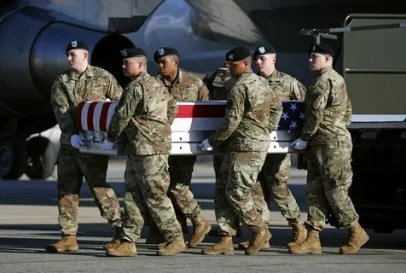
American Military Failure in Afghanistan
or go to
Aletho News Archives – Video-Images
Frlom the Archives
The Fiction of the Jewish History in Palestine
By Hasan Afif El-Hasan | The Palestine Chronicle | April 8, 2011
Prime Minister Benjamin Netanyahu told NNC Pierce Morgan on March 18, 2011 that he might agree to a Palestinian state through negotiations. And he added, “We will make territorial concessions although it is very painful to do that in our ancestral land.” Netanyahu was not talking about Poland where his ancestors lived. He was talking about Palestine where generations of its indigenous population ancestors lived, cultivated the land and are buried.
By the end of the nineteenth century, Zionism created a new Jewish identity of blood and soil. To mobilize their followers and supporters and appeal to their emotions, the Zionists created myths. Zionism started as a tribal religion without god, but in order to fulfill its function as a unifying force, Zionism required external religious and race symbols, not inner content. Its leaders regarded metaphysical religious belief and purity of race as having value in itself. They created a divine paradisiacal state of merger with the gods. Despite his non-religious ideology, Herzl’s writings were replete with religious references. The Jews should settle in Palestine because, in his words, “the Temple will be visible from long distance, for it is only our ancient faith that has kept us together”.
The Zionists and their supporters have invested tremendous financial and scholarly resources to work within the Hebrew Bible historical narratives to affirm the links between the intrusive Zionist population and the ancient Israelite past, and by doing so assert the right of that population to the land. The political end-game shaped the investigation and the outcome. Tracing the roots of Israel’s ethnic state in biblical antiquity is effectively to silence the indigenous Palestinian claim to the past and therefore to the land. The Biblical scholarship employs a bewildering array of terms for the region: “the Holy Land”, “the Land of the Bible”, “Eretz Israel”, “the Land of Israel”, or “Judah and Samaria.” To the casual reader these names appear interchangeable, but they all imply connection to ancient Israel.
Biblical narratives or poems that cannot be supported by archeology and common sense are treated by the Zionists and their supporters as historical language. … continue
Blog Roll
 Aletho News
- Lawyers’ groups demand end to British military bases in Cyprus
- CIA Assessment: The Resistance Cannot Be Crushed
- Hezbollah Returns: It Didn’t Start a War, It Is Ending One
- EU states seek ‘talks’ with Iran for access to Strait of Hormuz: Report
- Trump on Hormuz: “Others must take care of it” after US falters
- Who Is closer to collapse?
- A War that Backfired: Why the US-Israeli Campaign Is Strengthening Iran
- How Zionist Control Is Hurting US Interests
- Iran warns it may target US missile launch sites in UAE cities
- American Military Failure in Afghanistan
- If Americans Knew
- As US-Israel war on Iran rages, Gaza faces massive dust storm – Not a ceasefire Day 156
- No let-up in attacks on Gaza as Israel takes on Iran, Lebanon – Not a ceasefire Day 155
- ‘Of Course’: IDF Drops Case Against Soldiers Accused of Raping Palestinian Prisoner
- Don’t Fall for the Regime Change Talk. Israel Is ‘Mowing the Lawn’ in Iran
- Will Israel and the US wreck the Gulf States along with Iran?
- US so far burned through ‘years’ of munitions in Iran war: Report
- How the Israeli Tail Wags the American Dog
- Outdated intel likely led to deadly U.S. strike on Iranian elementary school, sources say
- Pentagon insider says high U.S official Douglas Feith reported to Netanyahu
- In fond memory of Walid Khalidi, the historian of Palestine
- No Tricks Zone
- Storing Green Energy To Last Germany 10 Days Would Require A 60-Million Tonne Battery
- New Studies: UK Sea Levels Were 4 Meters Higher Than Today During The Mid-Holocene
- Destructive Green New Deal: German Energy And Metal Group Warns Of Drastic Crisis
- New Study Documents A 20-Year Pause In Arctic Sea Ice Decline – Driven By Internal Variability
- Wake-up Call: Survey Shows Majority Of Germans Now Favor Postponing Climate Targets!
- Televised! Leading German Political Candidate Tells Schoolchildren CO2 Makes Sun Hotter!
- New Study: A Century Warming Of 1.1°C Is ‘Commonplace’ And ‘Not Unusual’ During This Interglacial
- New Study: ‘Internal Noise’ And Volcanic Forcing Can Trigger 10-15°C Warming Within Decades
- Glaciers Worldwide Are Suddendly Surging, Experts Blame Warming!
- Surprising Discovery: Sahara Is Greening…Billions Of Trees Where Once Thought To Be Barren
 Aletho News