Moscow reveals whether US sanctions would harm Iran deal
RT | March 15, 2022
Russian Foreign Minister Sergey Lavrov said on Tuesday that Moscow has received written assurances from the US that Ukraine-related sanctions won’t hinder its ability to trade with Iran under the terms of a new nuclear agreement. “We received written guarantees. They are included in the text of the agreement itself on the resumption of the Joint Comprehensive Plan of Action on the Iranian nuclear program,” Lavrov told reporters in Moscow.
The ‘Joint Comprehensive Plan of Action’, or JCPOA, is the official title of the 2015 Iran nuclear deal. Signed by Iran and the US, UK, Russia, France, Germany, China and the EU the deal promised Iran sanctions relief in exchange for a halt to its nuclear program. Former US President Donald Trump unilaterally withdrew from the deal in 2018, claiming that Iran was breaching its obligations, and negotiators have been meeting in Vienna, Austria and attempting to hammer out a new deal for nearly a year now.
An unnamed US official told the Wall Street Journal on Sunday that the US was not prepared to ease any Ukraine-related sanctions to save the deal, and would be open to negotiating a “replica of the JCPOA” without Russian involvement if Moscow insisted on exemptions being made.
Commenting on the reports, Lavrov suggested that Washington itself is still not ready to support the deal, and pointed out that, according to his Iranian counterpart, the problem with the agreement is in the US’ “exorbitant demands.”
Appearing beside Lavrov on Tuesday, Iranian Foreign Minister Hossein Amir-Abdollahian said that there is no link between the conflict in Ukraine and the talks in Vienna.
The Iranians have repeatedly insisted that Russia remain a part of any deal.
The Vienna negotiations have been paused since last week, but an Iranian Foreign Ministry spokesman said on Monday that they should resume shortly, when they will enter their “final, crucial steps.” Lavrov told reporters on Tuesday that he believes these talks are on the home stretch, and called on the US to “return to the legal framework of this nuclear deal” and lift “the illegal sanctions the US has imposed to hurt not only Iran and its people, but a number of other countries.”
Whither US Oil Production?
By Paul Homewood | Not A Lot Of People Know That | March 13, 2022
This single chart from the US EIA explains just why oil prices are shooting up there:

https://www.eia.gov/petroleum/production/
The oil boom initiated by Trump saw crude oil output increase by a half between 2016 and 2019.
Output naturally collapsed in early 2020 as a result of the pandemic, which affected both supply and demand. But since then output has only slowly recovered, and is still 9% below 2019 levels.
It is worth pointing out that demand in 2021 was still not back to 2019 levels. Assuming it recovers this year, it is likely to put further upward pressure on prices, unless production increases as well.
To put the numbers into perspective, the US produces a sixth of the world’s crude oil. The increase in US output between 2016 and 2019 was 205 million tonnes, and represents 5% of global output.
Small changes in supply have a disproportionate effect on international oil prices, because demand is so inelastic. An extra 5% on world production would have a significant impact on prices.
Oil price hikes hit poor countries the hardest
By Vijay Jayaraj | American Thinker | March 13, 2022
The fighting in Ukraine has intensified with Russian forces showing no signs of retreating and residents are fleeing cities.
What does this have to do with the lives of billions of people living far away from the war? Oil price increases.
The conflict has caused an increase in international oil prices, which have now crossed $130 per barrel, a 13-year high. As a result, gas prices at pumps across the globe are set to rise even further.
Being the largest consumers of automobile fuels, motorists in the U.S. and Europe are feeling significant economic pain. However, the situation is far more serious for populations of developing countries who have a much smaller buffer against life-threatening deprivation.
Take Nigeria, for example, the largest economy in Africa with $514 billion GDP. Neither the size of the economy nor the presence of crude reservoirs was sufficient to protect the country from the price shock. Nigerians already were grappling with a month-long fuel shortage due to quality-related import restrictions. While government subsidies soften the effect on users of gasoline, there is no such support for diesel.
Diesel is selling for 625 naira per liter in Lagos and Abuja, 30 percent higher than two weeks ago. Diesel prices are expected to touch 650 soon and are disrupting everyday lives. Nigeria is infamous for its energy poverty, with only 40 percent of the country’s 193 million population having access to electricity. The rising fuel costs will force many more millions into energy poverty.
In the neighboring West African country of Ghana, which is a net exporter of oil, fuel prices have risen dramatically in the first quarter and are affecting all kinds of businesses. For a country that is already in an ongoing economic crisis caused by debt distress, rising gasoline and diesel prices have become a nightmare.
Though Ghana exports high-quality crude, it has inadequate refinery capacity to convert domestic oil into finished petroleum products. Like Nigeria, it depends on imports of refined products. Currently, 80 percent of all finished petroleum products are imported. Inflation rates will be driven up by fuel prices that may increase by 6 percent, sending households into further chaos in what was originally supposed to be the fastest growing major economy in Africa.
In Asia, less-developed economies that were caught up with the decade-long green movement failed to invest in fossil-fuel technology and now face extraordinary import bills due to the rise in international crude prices.
Last month, Thailand’s inflation rose to its highest level in 13 years at 5.28 percent. Speaking to Al Jazeera, the chairman of the Thai National Shippers Council said: “The geopolitical situation, global inflation, the pandemic – Thailand still has a high number of cases – and freight costs are still very high. All of that is certain to damage our growth.”
Neighboring Philippines is in murky waters as well, with gasoline prices set to rise by 11 Phillipine pesos and eventually increase by a further 20 pesos by the end of March. A record high of 100 pesos per liter for gasoline will send small businesses and households into great distress.
In the abstract, the victims of higher energy prices are economic growth and the long-running fight against poverty, which translates into harder lives for billions of people struggling to fend off malnutrition and disease.
A simple solution would be to reverse anti-fossil fuel policies that cause shortages and to make the well-being of citizens the first priority.
Vijay Jayaraj is a Research Associate at the CO2 Coalition, Arlington, Va., and holds a Master’s degree in environmental sciences from the University of East Anglia, England. He resides in Bengaluru, India.
DHS increases efforts to identify “misinformation” and “conspiracy theories” on social media
By Dan Frieth | Reclaim The Net | March 14, 2022
Last Spring, Secretary of Homeland Security Alejandro Mayorkas ordered an internal review to identify how to best detect, prevent, and respond to threats related to domestic violent extremism within the department.
A component of this was based on online activity. “DVE [domestic violent extremist] attackers often radicalize independently by consuming violent extremist material online and mobilize without direction from a violent extremist organization, making detection and disruption difficult,” the unclassified initial report stated.
The report (obtained here) said that extremists, “exploit a variety of popular social media platforms, smaller websites with targeted audiences, and encrypted chat applications to recruit new adherents, plan and rally support for in-person actions, and disseminate materials that contribute to radicalization and mobilization to violence.”
One of the recommendations is to increase “efforts to better identify and evaluate mis- dis- and mal-information (MDM) with a homeland security nexus, including false or misleading conspiracy theories spread on social media and other online platforms that endorse violence.”
While not directly stated, it was inferred that the DHS was in some way monitoring online activity. Obviously, some privacy and free speech concerns were raised.
And now, this month, the DHS has released a report with the findings of the review.
We obtained a copy of the report for you here.
“Every day, the more than 250,000 dedicated public servants at DHS work to ensure the safety and security of communities across our country. To ensure we are able to continue executing our critical mission with honor and integrity, we will not tolerate hateful acts or violent extremist activity within our Department,” said Mayorkas.
“The findings of this internal review highlight key steps that our Department will continue to take with urgency to better prevent, detect, and respond to potential internal threats related to domestic violent extremism, and protect the integrity of our mission.”
The report stated its previous report had highlighted that topics such as allegations of fraud in the 2020 election and “conspiracy theories” around Covid-19 would be worth focusing on, adding that the initial report last Spring said that these topics “will almost certainly spur some [domestic violent extremists] [sic] to try to engage in violence this year.”
Much of the focus of the DHS has been internal. Among the recommendations is the creation of a department-wide system for investigating and reporting cases related to internal domestic violent extremism.
The report states that the DHS should, when vetting personnel, “explore expanding the use of publicly available information, including social media… to identify or investigate potential violent extremist activity within the DHS workforce.”
It adds, “Studies and pilots have suggested that certain online activity may represent behavior of potential concern to national security and could be useful in assessing an individual’s trustworthiness, judgment, or reliability.”
The document further adds that the “DHS must continue to examine the use of social media and other PAEI [Publicly Available Electronic Information], including within the scope of personnel security vetting, to enhance the Department’s security posture in preventing and detecting violent extremist activity.”
The report also pays lip service to civil liberties, adding that it’s “critical that any study or implementation of social media monitoring is pursued deliberately to protect the privacy, civil rights, and civil liberties of all individuals,” – but doesn’t say how this can be achieved.
The department has already started implementing the recommendations, including updating its employees’ training modules.
ARE WE DOING MORE HARM THAN GOOD?
The Highwire with Del Bigtree | March 10, 2022
Dr. Peter A. McCullough joins Del in studio for a dive into the science of vaccinating for Covid, vaccinating your children for Covid, and the risks and benefits. Is the risk worth the benefit? Are we doing more harm than good?
Biden Faces Backlash for Venezuela Talks as Caracas Demands Recognition
Venezuelan Foreign Minister Félix Plasencia argued the US needs to recognize Maduro and lift sanctions before oil shipments can restart

Venezuelan Foreign Minister Félix Plasencia participates in the Antalya Diplomacy Forum in Turkey. (@plasenciafelixr / Twitter)
By José Luis Granados Ceja – Venezuelanalysis – March 14, 2022
The Biden administration faced strong bipartisan criticism over recent direct talks with the Venezuelan government.
News outlets reported that in light of criticism from hardline sympathizers of the Venezuelan opposition, the Biden administration had suspended its direct talks with the Venezuelan government but that a deal to lift some US sanctions in exchange for restarting oil sales to the US was still on the table.
Washington recently ordered the suspension of Russian oil imports, leaving the US desperate to find other sources of crude as rising energy prices threaten to create a domestic crisis for the Democrats ahead of midterm elections in November.
Despite the lack of diplomatic relations stemming from the US’ refusal to recognize the results of the 2018 presidential election, Caracas and Washington have maintained back-channel communications. These talks led to the first direct exchange between the US and Venezuelan governments in years, which came at Washington’s request.
News of the encounter was met with a vehement condemnation from both Republican politicians such as Senator Marco Rubio and fellow Democrats such as Florida’s Debbie Wasserman Schultz, a longtime supporter of the Venezuelan opposition.
Rubio, one the most vocal champions of Venezuela’s self-declared “interim president’ Juan Guaidó, has gone on the offensive to try to preemptively stop any deal and introduced legislation to ban the import of oil from Venezuela and Iran.
Various politicians from Florida sent a letter to Biden criticizing the administration’s decision to hold direct talks with Maduro. Florida’s large Cuban and Venezuelan population and status as a “swing state” in US elections has led politicians to cater their foreign policy toward Latin America in the interest of pleasing this comparatively small constituency.
However, skyrocketing energy costs inside the US as a result of global geopolitical situation in light of the Russian military operation in Ukraine and the subsequent ban of Russian oil imports have put the Maduro government in Venezuela, which counts on the world’s largest oil reserves, in a more favorable bargaining position.
Until recent developments, the Biden White House had largely maintained its predecessor’s “maximum pressure” policy aimed at ousting Maduro, though the Financial Times reported that the administration had already been considering a change in strategy.
White House spokeswoman Jen Psaki tried to downplay the March 5 meeting that counted on the presence of Venezuelan President Nicolás Maduro and Vice President Delcy Rodríguez as well as Biden Latin America adviser Juan González.
The direct talks led to the release of US citizens Gustavo Cardenas and Jorge Fernández on Tuesday, however US State Department spokesman Ned Price denied their release was tied to a deal regarding Venezuelan oil.
For his part, Maduro called the engagement “respectful, cordial and very diplomatic” and said that the US had committed to a follow-up meeting.
The direct talks with the Venezuelan leader have undermined the US’ strategy in Venezuela and its support for Juan Guaidó, who the Biden administration insists they still recognize as “interim president.”
With Guaidó’s position under increased scrutiny, the opposition has come to rely on the US almost exclusively for its legitimacy. Senator Rubio recently admitted that a deal would mean the opposition would be “finished”.
Guaidó was not part of the talks and reportedly only learned of the high-level meeting between the US and Venezuelan governments the day of the meeting.
Sources in Venezuela’s opposition told the Miami Herald that the potential deal would involve granting a special license to Chevron to ramp up activities in Venezuela. Chevron has previously lobbied the US State Department for a rollback of sanctions against Venezuela.
Caracas demands recognition, sanctions relief
Venezuelan officials have likewise commented on the possibility of restarting the oil trade with the US, with Foreign Minister Félix Plasencia stating that any deal to supply oil would be contingent on Washington and Brussels recognizing Nicolás Maduro as president.
“We have a 100-year oil business relationship with the United States. We have not taken them out of the business, they left in order to impose coercive measures. Now they want to return. Fine, if they accept that the only and legitimate government of Venezuela is the one led by President Nicolás Maduro, then US and European oil companies would be welcome,” said Plasencia at the Antalya Diplomacy Forum held this past weekend in Turkey.
Plasencia added that a “respectful relationship” would also require the lifting of coercive measures that deepened the country’s economic crisis.
EU High Commissioner for Foreign Affairs Josep Borrell held a bilateral meeting with Plasencia on the margins of the forum that both described as “good,” with Borrell’s team indicating a willingness on the part of the European bloc to normalize relations and lift sanctions.
Venezuela, home to the world’s largest oil reserves, had a steady crude production of around 1.9 million barrels per day (bpd) and exported approximately 500,000 bpd to US markets until sanctions targeted the sector and crippled production.
The Venezuelan oil industry has lately shown signs of improvement with Plasencia stating that the country could produce up to 2 million barrels per day by the end of the year thanks to the assistance of “reliable partners, such as Russia, China and Iran.”
The recent diplomatic summit also saw Plasencia and Vice President Delcy Rodríguez both meet with a Russian delegation led by Foreign Minister Sergei Lavrov.
“We held a meeting with our good friend Sergei Lavrov. We reviewed our bilateral strategic relations and the complex international scenario,” Rodriguez said via Twitter.
The March 5 high-level meeting between the US and Venezuela was likewise driven by Washington’s efforts to isolate Russian President Vladimir Putin from his allies in Latin America. US officials were reportedly seeking a public condemnation of Russia’s incursion into Ukraine by Maduro. Caracas has called for a “peaceful resolution” to the ongoing crisis but has stopped short of criticizing the Russian military operation.
The Venezuelan leader spoke directly by phone with Putin, with the Russian Ministry of Foreign Affairs reporting that the Venezuelan president expressed his “firm support” for Russia and condemned destabilization efforts by the US and NATO.
Edited by Ricardo Vaz in Caracas.
Weathering the global storm: Why neutrality is not an option for Palestinians
By Ramzy Baroud | MEMO | March 14, 2022
A new global geopolitical game is in formation, and the Middle East, as is often the case, will be directly impacted by it in terms of possible new alliances and resulting power paradigms. While it is too early to fully appreciate the impact of the ongoing Russia-Ukraine war on the region, it is obvious that some countries are placed in relatively comfortable positions in terms of leveraging their strong economies, strategic location and political influence. Others, especially non-state actors, like the Palestinians, are in an unenviable position.
Despite repeated calls on the Palestinian Authority by the US Biden Administration and some EU countries to condemn Russia following its military intervention in Ukraine on 24 February, the PA has refrained from doing so. Analyst Hani Al-Masri was quoted in Axios as saying that the Palestinian leadership understands that condemning Russia “means that the Palestinians would lose a major ally and supporter of their political positions.” Indeed, joining the anti-Russia western chorus would further isolate an already isolated Palestine, desperate for allies who are capable of balancing out the pro-Israel agenda at US-controlled international institutions, like the UN Security Council.
Following the collapse of the Soviet Union and the dismantling of its Eastern Bloc in the late 1980s, Russia was allowed to play a role, however minor, in the US political agenda in Palestine and Israel. It participated, as a co-sponsor, in the Madrid peace talks in 1991, and in the 1993 Oslo accords. Since then a Russian representative took part in every major agreement related to the ‘peace process,’ to the extent that Russia was one of the main parties in the so-called Middle East Quartet which, in 2016, purportedly attempted to negotiate a political breakthrough between the Israeli government and the Palestinian leadership.
Despite the permanent presence of Russia at the Palestine-Israel political table, Moscow has played a subordinate position. It was Washington that largely determined the momentum, time, place and even the outcomes of the ‘peace talks’. Considering Washington’s strong support for Tel Aviv, Palestinians remained occupied and oppressed, while Israel’s colonial settlement enterprises grew exponentially in terms of size, population and economic power.
Palestinians, however, continued to see Moscow as an ally. Within the largely defunct Quartet – which, aside from Russia, includes the US, the European Union and the United Nations – Russia is the only party that, from a Palestinian viewpoint, was trustworthy. However, considering the US near complete hegemony on international decision-making, through its UN vetoes, massive funding of the Israeli military and relentless pressure on the Palestinians, Russia’s role proved ultimately immaterial, if not symbolic.
There were exceptions to this rule. In recent years, Russia has attempted to challenge its traditional role in the peace process as a supporting political actor, by offering to mediate, not just between Israel and the PA, but also between Palestinian political groups, Hamas and Fatah. Using the political space that presented itself following the Trump Administration’s cutting of funds to the PA in February 2019, Moscow drew even closer to the Palestinian leadership.
A more independent Russian position in Palestine and Israel has been taking shape for years. In February 2017, for example, Russia hosted a national dialogue conference between Palestinian rivals. Though the Moscow conference did not lead to anything substantive, it allowed Russia to challenge its old position in Palestine, and the US’ proclaimed role as an ‘honest peace broker.’
Wary of Russia’s infringement on its political territory in the Middle East, US President Joe Biden was quick to restore his government’s funding of the PA in April 2021. The American President, however, did not reverse some of the major US concessions to Israel made by the Trump Administration, including the recognition of Jerusalem, contrary to international law, as Israel’s capital. Moreover, under Israeli pressure, the US is yet to restore its Consulate in East Jerusalem, which was shut down by Trump in 2019. The Consulate served the role of Washington’s diplomatic mission in Palestine.
Washington’s significance to Palestinians, at present, is confined to financial support. Concurrently, the US continues to serve the role of Israel’s main benefactor financially, militarily, politically and diplomatically.
While Palestinian groups, whether Islamists or socialists, have repeatedly called on the PA to liberate itself from its near-total dependency on Washington, the Palestinian leadership refused. For the PA, defying the US in the current geopolitical order is a form of political suicide.
But the Middle East has been rapidly changing. The US political divestment from the region in recent years has allowed other political actors, like China and Russia, to slowly immerse themselves as political, military and economic alternatives and partners.
The Russian and Chinese influence can now be felt across the Middle East. However, their impact on the balances of power in the Palestine-Israel issue, in particular, remains largely minimal. Despite its strategic ‘pivot to Asia‘ in 2012, Washington remained entrenched behind Israel, because American support for Israel is no longer a matter of foreign policy priorities, but an internal American issue involving both parties, powerful pro-Israel lobby and pressure groups, and a massive rightwing, Christian constituency across the US.
Palestinians – people, leadership and political parties – have little trust or faith in Washington. In fact, much of the political discord among Palestinians is directly linked to this very issue. Alas, walking away from the US camp requires a strong political will that the PA does not possess.
Since the rise of the US as the world’s only superpower over three decades ago, the Palestinian leadership reoriented itself entirely to be part of the ‘new world order’. The Palestinian people, however, gained little from their leadership’s strategic choice. To the contrary, since then the Palestinian cause suffered numerous losses – factionalism and disunity at home, and a confused regional and international political outlook, thus the haemorrhaging of Palestine’s historic allies, including many African, Asian and South American countries.
The Russia-Ukraine war, however, is placing the Palestinians before one of their greatest foreign policy challenges since the collapse of the Soviet Union. For Palestinians, neutrality is not an option since the latter is a privilege that can only be obtained by those who can navigate global polarisation using their own political leverage. The Palestinian leadership, thanks to its selfish choices and lack of a collective strategy, has no such leverage.
Common sense dictates that Palestinians must develop a unified front to cope with the massive changes underway in the world, changes that will eventually yield a whole new geopolitical reality.
The Palestinians cannot afford to stand aside and pretend that they will magically be able to weather the storm.
Missile strike on Mossad centers in northern Iraq aimed at defending Iran’s security: Ambassador
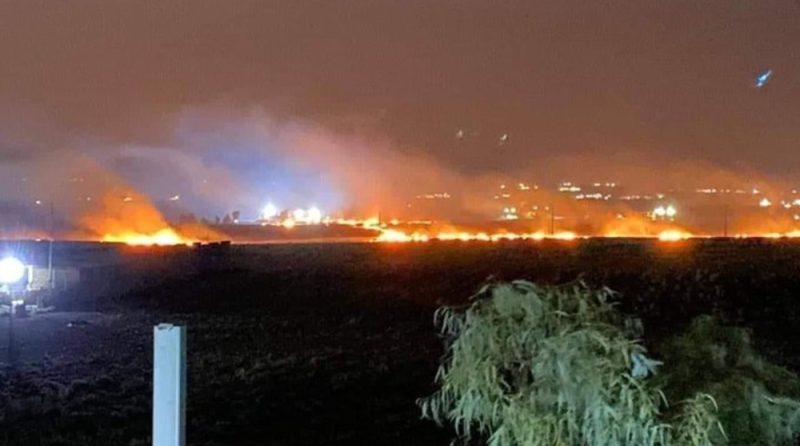
Press TV – March 14, 2022
The Iranian ambassador to Iraq says the latest missile strike by the Islamic Revolution Guards Corps (IRGC) on secret bases of the Israeli Mossad spy agency in the semi-autonomous Kurdistan region was strictly necessary, as operations against Iran’s security were being plotted and orchestrated there.
Iraj Masjedi made the remarks while addressing an international conference in Iraq’s holy city of Karbala on Monday.
The Iranian diplomat said Israeli operatives used the Iraqi Kurdistan region to plot and launch operations against Iran’s security, emphasizing that Iranian officials had time and again warned the Kurdistan Regional Government (KRG)’s authorities against their activities, but to no avail.
Masjedi highlighted that the missile attack was carried out in order to safeguard Iran’s security, “and was neither intended to violate Iraq’s sovereignty nor was meant to insult the Arab country and its nation.”
“We expect you to force Israelis out of Iraqi soil and get rid of them,” Masjedi addressed Kurdish officials, adding, “However, if they are not expelled, will we stand by with our hands tied behind us to [allow them] carry out operations against our security? Definitely not.”
The Iranian ambassador emphasized that the attack was aimed at Israel’s training centers and did not target the United States or the Iraqi government.
“Some media outlets have asserted that we targeted the US consulate. I’m surprised by such allegations. It is true that a conflict has been going on between us and the United States for forty years, but the recent operation was not against them. It was an operation against an Israeli base, where plots against our security were being hatched,” Masjedi said.
A dozen ballistic missiles hit secret Mossad bases in the northern Iraqi city of Erbil, reportedly leaving several Israeli operatives dead.
Citing security sources, Iraq’s Sabereen News reported that two Mossad training centers were targeted by ballistic missiles in the early hours of Sunday.
Al-Mayadeen television news network said a Mossad base on the Masif-Saladin Street in Erbil was “fully razed to the ground and a number of Israeli mercenaries were killed or injured.”
In a statement issued earlier on Sunday, the IRGC indicated that the operation was in response to an Israeli airstrike on the Syrian capital of Damascus last Monday, in which two IRGC officers were killed. The IRGC identified the two slain officers as colonels Ehsan Karbalaipour and Morteza Saeidnejad, warning that Israel would “pay for this crime.”
Is Washington Fighting Russia Down to the Last Ukrainian?
By Ron Paul | March 14, 2022
As the Russian invasion of Ukraine moves past its third week, there are slight hopes that negotiations between the two sides may soon produce a ceasefire. But with the shrill warmongering talk in Washington, it almost seems like the US government would hate to see that happen.
Congress and the US Administration seem determined to drag the United States into a war with Russia over Ukraine. Senator Lindsay Graham is openly calling for someone to kill the Russian president and many in the US House have demanded that the Administration establish a “no-fly zone” over Ukraine.
Are they insane? A no-fly zone means you destroy anything and everything that can prevent total US air dominance. That means an attack on Russian missile and air defense systems within Russia. In other words, World War III.
We can all feel disgust at the destruction in Ukraine, but is it really necessary for us to gamble with our own nuclear annihilation?
Sadly, a large bipartisan group in Congress seems to think so.
Much of what is happening in Ukraine can be traced back to the Obama Administration. State Department officials like Victoria Nuland and Antony Blinken planned and executed the overthrow of the Ukrainian government in 2014. This is what set us on this path to conflict, as the government put in place after the coup began demanding NATO membership.
Blinken, Nuland, and the others responsible for this heinous act returned to government in more senior positions under President Biden and they have continued to push their Ukraine agenda.
Last week Secretary of State Blinken – our top diplomat – sought to send Soviet-era Polish fighter jets into Ukraine to shoot Russians. When the Poles said they’d be happy to ship the planes to a US base in Germany and let the Pentagon transfer them to Ukraine, the Pentagon finally stepped in to quash an extraordinarily high-risk move that even the Pentagon said would have no real effect on the outcome of the war.
The State Department is trying to get us into a war and the Pentagon is trying to keep us out. How ironic!
Back when I was on the campaign trail I would say that we have a few thousand diplomats in government, it might not be a bad idea to use them. But I certainly did not mean that we should use them to try and get us further involved in a war!
Three weeks into this terrible war, the US is not pursuing talks with Russia. As Antiwar.com recently reported, instead of supporting negotiations between Ukraine and Russia that could lead to a ceasefire and an end to the bloodshed, the US government is actually escalating the situation which can only increase the bloodshed.
The constant flow of US and allied weapons into Ukraine and talk of supporting an extended insurgency does not seem designed to give Ukraine a victory on the battlefield but rather to hand Russia what Secretary of State Blinken called “a strategic defeat.”
It sounds an awful lot like the Biden Administration intends to fight Russia down to the last Ukrainian. The only solution for the US is to get out. Let the Russians and Ukrainians reach an agreement. That means no NATO for Ukraine and no US missiles on Russia’s borders? So what! End the war then end NATO.
Japanese firms have no plans to abandon Russian energy project
RT | March 14, 2022
Japanese trading houses, Mitsui and Mitsubishi, are reportedly not considering quitting Russia’s Sakhalin-2 project, that is focused on producing and shipping liquified natural gas (LNG), 60% of which is destined for the Japanese market.
The Japanese trading giants, which hold a total stake of 22,5% in Sakhalin-2, will remain partners to the project, as “prompt exit is risky” and “will be in favor of China,” Nikkei newspaper reports, citing documents submitted by the companies to the Ministry of Economy, Trade and Industry of Japan earlier this month.
The project has been one of the main sources of natural gas supply to Japan with nearly 100% of Japanese LNG imports coming from Sakhalin-2, according to media reports.
Located on the Russian island of Sakhalin in the Pacific Ocean, north of Japan, the project reportedly produces nearly 11.5 million tons of LNG annually which is mainly exported to major markets in Asia.
The project, launched in 2009, includes the offshore Piltun-Astokhskoye oil field and Lunskoye natural gas field in the Okhotsk Sea, and associated infrastructure on Sakhalin Island itself.
Sakhalin-2 is managed and operated by the Sakhalin Energy Investment Company. The majority stake in the enterprise belongs to Russia’s energy giant Gazprom. Shell, the world’s largest LNG trader, holds 27,5% minus one share, Mitsui’s share totals 12,5%, while Mitsubishi Corporation owns 10%.
On February 28, UK-based Shell announced plans to pull out its stake in the Sakhalin-2 liquefied natural gas facility, its 50% stake in the Salym Petroleum Development and the Gydan energy venture following sanctions placed on Moscow over the ongoing military operation in Ukraine.
India Should Quit Quad Now!
BY M. K. BHADRAKUMAR | INDIAN PUNCHLINE | MARCH 14, 2022
Hedging between superpowers — United States, Russia and China — was never the smart thing to do. India should have known that the contradictions are simply irreconcilable.
This is a moment of truth, therefore, as the US unsheathes the sword to bleed and dismember Russia, and gives an ultimatum to China to stay out of it.
The gravity of the situation is sinking in, finally. That is the message coming out of the Cabinet Committee on Security meeting convened by PM Modi on Sunday “to review India’s security preparedness, and the prevailing global scenario in the context of the ongoing conflict in Ukraine,” where he was briefed “on latest developments and different aspects of India’s security preparedness in the border areas as well as in the maritime and air domain.”
The US National Security Advisor Jake Sullivan’s meeting with China’s top diplomat and Politburo member Yang Jiechi in Rome later today promises to be a defining moment in world politics.
Yesterday, Sullivan explicitly threatened China in an interview with CNN. He said: “We are communicating directly, privately to Beijing, that there will absolutely be consequences for large-scale sanctions evasion efforts or support to Russia to backfill them. We will not allow that to go forward and allow there to be a lifeline to Russia from these economic sanctions from any country, anywhere in the world.”
The warning to China is that it should conform to the US sanctions against Russia and desist from providing support (“lifeline”) to Russia in any form.
The cutting edge of Sullivan’s statement is that it also applies to India. The implications are very, very severe. Simply put, Washington’s demand is also that India should abandon its relationship with Russia.
That means principally, that India should freeze the defence relationship. Considering that something like 60-70% of weaponry for our armed forces is of Russian origin, this will render a crippling blow to India’s defence preparedness.
Essentially, this is going to be baptism by fire for the Indian leadership. It stands to reason that the Americans have already conveyed their charter of demands to the government, and PM’s hurried move to convene the CCS ensued.
Last week, the Russian minister of energy had a call with his Indian counterpart where he not only offered oil at concessional rates but also invited Indian companies to step up investments in Russian oil and gas fields on a preferential basis. At a time when the oil price crossed $130 a barrel and the spot market price for gas is approaching $4000 per thousand cubic meters, the Russian offer came as a gift from God.
But the fact that the government downplayed it shows a state of paranoia — symptomatic of the same pusillanimity that characterised the UPA mindset, prompting the rollback of ties with Iran.
The Americans have experienced that our elite are largely men of straw. Given the scale of corruption, there are all kinds of interest groups in our country. Besides, the comprador elements within our elite are stakeholders in the American agenda. That is a tragic fact of life.
However, the difference today is that the looming American threat would have vital bearing on India’s defence capabilities, and national security. For a government that proclaims the nationalist credo, the choice ought to be clear.
The Modi government should refuse to comply with the American legislations regarding Russia. Period. In all likelihood, Americans are bluffing. Or, if there is going to be a price to pay, the leadership should take the nation into confidence and explain the long-term imperative of safeguarding the country’s core interests at whatever cost. Indians are a patriotic people.
To my understanding, in the world of today, American hegemony is unsustainable. The US bullies those who are susceptible to bullying and blackmails those ruling elites who are vulnerable to blackmail, individually or collectively. Hopefully, our ruling elite do not fall into such a pitiable category.
Freedom struggle was so much more arduous. The predicament today is also about the country’s independence. The nation will rally under an inspiring leader.
Things have come to such a sorry pass today largely due to the flawed foreign policies through the past two decades or so when the American lobbyists began expounding that India’s interests are best served in an alliance with the US.
‘Non-Alignment’ and ‘strategic autonomy’ became archaic concepts. Thus, circa 2000 or so, India ‘crossed the Rubicon’, to borrow the title of an infamous book of those times, to be with our ‘natural allies’. Where has it brought the country today after 21 years?
The self-styled foreign policy gurus in the media and the strategic immunity proved horribly wrong in their assessment of international politics. Beyond the Rubicon, what we saw and experienced was a bleached landscape of parched earth and birds of prey, so different from the El Dorado that we were promised by the carpetbaggers.
Indian foreign policy needs a strategic course correction. India should distance itself completely from the self-centred US polices whose aim is the preservation of its global hegemony. The first step in that direction should be to quit Quad.
Make no mistake, a US-China showdown is in the making sooner than one might have expected it, and it will be calamitous for India to get sucked into it. The visit by Japanese prime minister Kishida to India this weekend causes disquiet.
By the colour of our skin, our religion, our culture, our geography, our political economy, we will never be accepted by the West as ‘one of us’. Do not be mesmerised by promises of equal partnerships. Look at the US’ track record — selfish, cynical and ruthless in the pursuit of its interests.
History didn’t end with the eclipse of the Cold War. Fundamentally, what the Western powers are planning is a form of neo-colonialism borne out of the desperate need to arrest the decline of their economies through a massive transfer of wealth from the rest of the world inhabited by 88 percent of mankind — Asia, in particular. To that end, the West has unceremoniously buried ‘globalisation’ and turned its back on multilateralism.
Quintessentially, what is unfolding is no different from 19th century colonial era. Therefore, India should work together with like-minded countries that are stakeholders in the preservation of their sovereignty, hard-won independence and most important, their cherished freedom to choose their paths of development insulated from interference in internal affairs or attempts at ‘regime change’.
A peaceful external environment is an imperative need and the foreign policy should prioritise that objective. It means a revamp of India’s policies toward China and Pakistan. We are stuck in a groove cut decades ago largely for propaganda purposes, unable to disown our self-serving narratives. Fortunately, there are incipient signs of rethink lately. Do not let Washington queer the pitch of India’s crucial relationships with China or Pakistan.
A nation has no future if it is incapable of introspection. Mistakes have been made but it is false pride and hubris not to make amends. Indians are a forgiving people. And as for the present government at least, it only inherited the false narratives.
Featured Video
Daniel Davis: Trump’s New Iran Land Blockade Is a Dangerous Fantasy
or go to
Aletho News Archives – Video-Images
New Book
The Vaccine Mafia: Pfizer’s Former Chief Toxicologist Proves How Toxic Substances Were Unlawfully Sold to Us as a Solution for COVID-19
By Helmut Sterz
Former Pfizer chief toxicologist Helmut Sterz presents a critical examination of the development, approval, and global rollout of mRNA COVID-19 vaccines—particularly those produced by Pfizer/BioNTech. The Vaccine Mafia details the failure of pharmaceutical companies, regulatory authorities, politicians, and international organizations to follow established scientific and ethical standards during the pandemic. Drawing on the author’s decades of experience in pharmaceutical toxicology, Sterz reveals the many ways the vaccines’ inadequate or omitted preclinical safety testing put the world’s population at risk.
Sterz demonstrates how “emergency” approvals allowed manufacturers to bypass long-standing international guidelines governing toxicity testing, especially with regard to reproductive and cancer risks. They also allowed governments and health authorities to ignore or conceal evidence of serious adverse effects that occurred, including myocarditis, reproductive harm, and other long-term health risks.
Blog Roll
 Aletho News
- The ‘Gaza Treatment’: How Media Headlines Obscure Who is Bombing Yemen
- Ro Khanna urges Democrats to strip Israel ‘integration’ provision from defense bill
- Why Iran designated British MI6, Royal Navy, and RAF as hostile, terrorist organizations
- Armenian opposition politician dies in custody
- US still trying to recycle failed hypersonic missile programs
- France’s ‘Cold War’: Paris blames Tehran for supermarket fridge hacks
- Psywar no more? 77th Brigade’s sudden death
- Ukraine Already Carved Up… Before Talks Begin? /Prof. Richard Sakwa
- The vindication of Marjorie Taylor Greene
- Nearly 80% of Britons consider Israel a threat to world peace and security: Survey
- If Americans Knew
- An error has occurred; the feed is probably down. Try again later.
- No Tricks Zone
- German Authorities Start Initiative To Evaluate Public Register For Climate “Disinformation” Spreaders!
- Zonal Asymmetry of Temperature Change in the Antarctic Circumpolar Current
- New Study: The Net Fossil Fuel Contribution To Rising Atmospheric CO2 Has Been Zero For 500 Years
- Germany’s Green Energy Transition Becoming Increasingly Expensive…Another 6 Trillion Euros!
- Sudden Stratospheric Warming, Powerful El Niño Combination May Lead To Extreme Europe Cold, Energy Crisis!
- Two New Studies Find Thwaites Glacier Melt Cannot Be Driven By Human Activity Or A Warming Ocean
- E-Cars Reduce CO2 Emissions By Only 41% Compared To Internal Combustion Engine Vehicles
- Predictions Made By Renowned Climate Professor Over Past Decades Have Been Proven To Be Poor
- New Study Suggests Large Regions Of The Pacific Ocean Have Been Cooling For The Last 80 Years
- Germany’s Green Energy Debacle: High Energy Costs Force Kahla Porzellan to Close After 182 Years!

