Johns Hopkins study explodes COVID death hoax; it’s re-labeling on a grand scale
By Jon Rappoport | November 30, 2020
“This patient who died had an ordinary heart attack.”
“Not anymore. We’re repackaging it as COVID.”
Don’t blink. Johns Hopkins may delete or retract their analysis at any moment. Their author’s study is devastating. Too hot to handle.
UPDATE: Yes, I wrote that opener a few hours before Johns Hopkins stepped in and DID retract the article. Boom. [1] [2] [3] [4]
Hopkins claims the article has been used to spread misinformation about the pandemic, and contains factual errors. CDC is cited as one correct source of facts. Hmm.
Regardless, here is my article, finished before the Johns Hopkins retraction. Since then, I’ve only polished it a bit in several places, for clarity:
Months ago, I told you this, in a number of articles: The overwhelming percentage of people who are “dying from the virus” are actually dying from traditional diseases.
These people have been relabeled and repackaged as “COVID-19.”
It has nothing to do with “the virus.”
A new analysis from Johns Hopkins confirms this in spades.
The Johns Hopkins News-Letter article, in a student publication, is headlined, “A closer look at US deaths due to COVID-19.” It lays out the case made by “Genevieve Briand, assistant program director of the Applied Economics master’s degree program at Hopkins.”
As you keep reading, keep this in mind: If the so-called increase in mortality from COVID is offset, almost exactly, by a decrease in deaths from all other major diseases…
Indicating that the so-called COVID deaths are nothing more than an exercise in re-labeling, then…
You can say there is a new coronavirus, but it’s even less harmful than flu, because virtually everybody recovers…
Or you can say the whole story of a new coronavirus is a fake narrative. There is no new virus.
My readers know I’ve been offering much evidence for the latter conclusion.
Here are key quotes from the Johns Hopkins News-Letter article:
“These data analyses suggest that in contrast to most people’s assumptions, the number of deaths by COVID-19 is not alarming. In fact, it has relatively no effect on deaths in the United States.”
“This comes as a shock to many people. How is it that the data lie so far from our perception?”
“When Briand looked at the 2020 data during that seasonal period, COVID-19-related deaths exceeded deaths from heart diseases. This was highly unusual since heart disease has always prevailed as the leading cause of deaths. However, when taking a closer look at the death numbers, she noted something strange. As Briand compared the number of deaths per cause during that period in 2020 to [deaths per cause in] 2018, she noticed that instead of the expected drastic increase across all causes, there was a significant decrease in deaths due to heart disease. Even more surprising, as seen in the graph below, this sudden decline in deaths is observed for all other causes.”
“This trend is completely contrary to the pattern observed in all previous years. Interestingly, as depicted in the table below, the total decrease in deaths by other causes almost exactly equals the increase in deaths by COVID-19. This suggests, according to Briand, that the COVID-19 death toll is misleading. Briand believes that deaths due to heart diseases, respiratory diseases, influenza and pneumonia may instead be [may have been] recategorized as being due to COVID-19.”
“The CDC classified all deaths that are related to COVID-19 simply as COVID-19 deaths. Even patients dying from other underlying diseases but are infected with COVID-19 count as COVID-19 deaths. This is likely the main explanation as to why COVID-19 deaths drastically increased while deaths by all other diseases experienced a significant decrease.”
“’All of this points to no evidence that COVID-19 created any excess deaths. Total death numbers are not above normal death numbers. We found no evidence to the contrary,’ Briand concluded.”
“’If [the COVID-19 death toll] was not misleading at all, what we should have observed is an increased number of heart attacks and increased COVID-19 numbers. But a decreased number of heart attacks and all the other death causes doesn’t give us a choice but to point to some misclassification [re-labeling],’ Briand replied.”
“In other words, the effect of COVID-19 on deaths in the U.S. is considered problematic only when it increases the total number of deaths or the true death burden by a significant amount in addition to the expected deaths by other causes. Since the crude number of total deaths by all causes before and after COVID-19 [was first announced] has stayed the same, one can hardly say, in Briand’s view, that COVID-19 deaths are concerning.”
Of course, there is some mealy-mouthed backtracking in the article. The virus is deadly and the pandemic is real, etc. But the data are the data.
The whole COVID operation is a hoax.
If I thought other honest researchers would investigate and re-calculate the Hopkins analysis, I would say, let’s see what they come up with. But based on my experience, there will be, at best, a brief flurry of articles in the press about this extraordinary finding, and then the scientific and press denizens will move on, as if nothing happened. That is their way. They briefly expose a scandal and then they slither off to cover up the scandal.
The other possibility is: Hopkins will retract the analysis, claiming it was flawed. That is the other strategy the low-crawling creatures sometimes deploy.
So there you have it.
Hoax. Con. Fake.
As I keep reporting, the virus (never proven to exist) is the cover story for the true phase-one goal: destruction of the economy.
If the virus were real, if it were attacking people left and right, the all-cause mortality numbers would be through the roof.
But they aren’t.
“I have a great idea, Bill. Let’s declare a fake pandemic. We’ll report all sorts of high death numbers. But really, we’ll just be subtracting numbers from other traditional diseases that cause deaths, and we’ll add those numbers to our fake pandemic.”
“Sounds great, Tony. Can you pull it off? I mean, it’s pretty obvious.”
“Sure, we can pull it off. And if some journalist with a mainstream reputation or an institution suddenly develops a brief infection of ETHICS, we’ll call their work a mistake or a lapse in judgment.”
“You mean an institution like the World Health Organization or Johns Hopkins?”
“Right. We’ll say the institution didn’t issue the study, it was just one of their people, a lone researcher. And if necessary, the institution, under pressure, will back off. But that’s assuming anyone noticed the study in the first place. Normally, these ‘revelations’ surface for a moment and then sink like a stone. No one cares. A pandemic is a money waterfall. The beneficiaries won’t sacrifice their bottom lines, or their reputations…”
Of course, people can rise up and raise holy hell.
SOURCES:
[1] https://www.jhunewsletter.com/article/2020/11/a-closer-look-at-u-s-deaths-due-to-covid-19
[3] https://drive.google.com/file/d/1iO0K75EZAF8dkNDkDmM3L4zNNY0X-Xw5/view
‘Weapon used in nuclear scientist’s assassination made in Israel’
Press TV – November 30, 2020
The remains of the weapon used in the Friday assassination of senior nuclear scientist Mohsen Fakhrizadeh show that it was made in Israel, an informed source has told Press TV.
The source made the revelation on Monday, saying the weapon collected from the site of the terrorist act bears the logo and specifications of the Israeli military industry.
Iran’s Ministry of Intelligence also said it had obtained “new leads” on the identity of the perpetrators and that the information “will be publicized very soon.”
A former head of the Defense Ministry’s Organization of Defensive Innovation and Research, Fakhrizadeh was targeted in an attack involving at least one explosion and machinegun fire in the town of Absard near Tehran.
Foreign Minister Mohammad Javad Zarif tweeted on Sunday that the assassination bears all the hallmarks of the Israeli regime.
The history of Tel Aviv’s sabotage targeting Iran’s nuclear energy program is as old as the program itself.
Many observers believe Israel is not able to carry out such dangerous operations without the prior information and support of the United States which left a landmark nuclear deal with Iran in 2015.
Israel possesses the Middle East’s sole nuclear arsenal estimated to contain at least 200 warheads. The occupying regime maintains a policy of ambiguity concerning its nuclear weapons, neither confirming nor denying publicly that it has the capability.
Unlike Iran, it also refuses to join the Nuclear Non-Proliferation Treaty (NPT) and does not allow any international inspection of its nuclear weapons program.
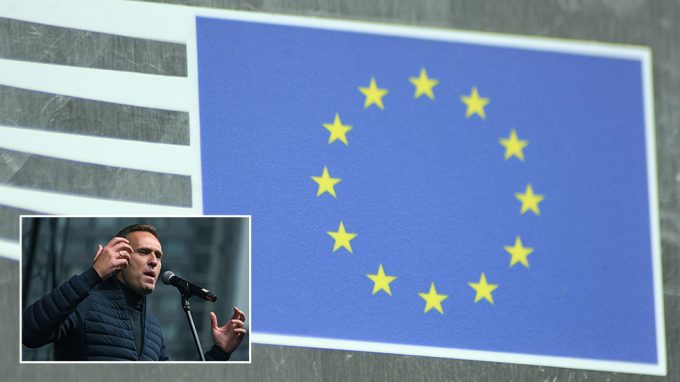
Emerging sanctions-driven EU alliance with Navalny reeks of Western neo-colonial moves which helped destroy Russia in 1990s
By Glenn Diesen | RT | November 30, 2020
The West’s favorite Russian opposition figure has called for the EU to sanction pro-Kremlin ‘oligarchs’. Alexey Navalny doesn’t appear to be against all ‘oligarchs’ though, just those he feels are supportive of Vladimir Putin.
In a European Parliament hearing last week, the activist argued that the Russian people would welcome punishing the ‘kleptocracy’ that he says has thrived under Putin.
The anti-corruption campaigner was speaking to members of the EU’s Committee of Foreign Affairs during an “exchange of views with representatives of the Russian political opposition.” Despite the title, no members of Russia’s largest opposition parties – the nationalist LDPR, communist KPRF or leftist Fair Russia – were present at the virtual discussion. Instead only pro-Western figures, with almost uniformly similar liberal views, were involved in the event.
They included Vladimir Kara Murza Jr., a lobbyist at the US-government funded Free Russia Foundation, set up to “inform” American policy makers on the country; Vladimir Milov, a former deputy minister of energy, now closely allied to Navalny; and Ilya Yashin, a municipal deputy of the Krasnoselsky district of Moscow. Yashin is the only one of the four who actually holds an elected position.
To be clear, the issue of how many Russian billionaires acquired and spent their wealth is one worth debating, yet this attempt to place Navalny on the side of the Russian people and Putin among a criminal class is simply absurd, given the history.
Putin and the oligarchs
The rise of the 1990s oligarchs is commonly referred to as a “criminal revolution” in Russia. The US-sponsored shock therapy in the post-Soviet period produced disaster privatization where the huge natural resources wealth of Russia ended up in the pockets of a handful of incredibly rich men.
The US was motivated to ensure the legacy of the Soviet Union was permanently dismantled. But the great irony is that extreme socio-economic disparity was the main reason for the Bolshevik Revolution in 1917.
The oligarchs seized control over the economy and incrementally asserted dominance over the media and the political system. Capital flight became an immense problem as the oligarchs transferred the wealth to their new residencies in the West rather than investing the money at home. Soon, this became a national security threat as the oligarchs were courted by the US and UK, which meant that Russia was heading toward a quasi-colonial status.
When Putin came to power, he announced that the primary task was to eliminate the oligarchic class. However, seizing all their assets and redistributing it was deemed too revolutionary, extreme and destabilizing. Instead, Putin argued the oligarchs would be held accountable for their crimes in the 1990s if they did not rescind their influence over politics.
Subsequently, oligarchs supporting the elected government were left alone, while the oligarchs seeking to become an alternative pole of political power were held accountable for their crimes in the 1990s. Russia’s richest oligarch with political aspirations, Mikhail Khodorkovsky, was arrested in 2003 before he could sell a major share of his oil empire to ExxonMobil and Chevron-Texaco. Western powers dutifully provided eventual exile and protection for defiant oligarchs such as Berezovsky and Gusinsky who were valued for their anti-Kremlin stance.
The US and UK were outraged that “their” Russian oligarchs were pushed out of politics, while a large portion of the Russian people was upset that all oligarchs had not been held accountable, given Russia continues to have a great wealth disparity.
Poverty reduced by half during Putin’s first term alone and a large middle class emerged. Credited for bringing Russia up from its knees and escaping external control, Putin has ever since enjoyed approval ratings that other world leaders can only dream about. However, the West never acknowledged that Putin had prevented Russia’s collapse and instead began demonizing the Russian president as an enemy of the Russian people.
Supporting the Russian people?
The notion that Navalny and the EU will collectively support the Russian people is very flawed. In 1917, Germany brought Lenin into Russia to install a more favorable government that would pull the Russians out of the First World War. Germany’s top army commander reported to its Foreign Office that: “Lenin’s entry into Russia was a success. He is working according to your wishes.”
Indeed, the effort to “liberate” another people from their political leadership has remained the modus operandi for almost every disastrous war in the post-Cold War era.
In Russia, the regime change endeavour is an even more absurd proposition as Putin is extremely popular, while the main opposition is the communists, led by Gennady Zyuganov, and behind them the radically nationalist LDPR, under Vladimir Zhirinovsky, another veteran. Navalny is polling at between one and three percent in Russia, while in the West he is hailed as the face of Russia’s opposition.
Former CIA Director John Brennan wrote in October 2020: “Imagine prospects for world peace, prosperity, & security if Joe Biden were President of the United States & Alexei Navalny the President of Russia. We’ll soon be halfway there.” The eagerness to present Navalny as an “opposition leader,” rather than an activist, suggests he is expected to play the same role as the oligarchs that were courted in the 1990s to advance Western interests.
Sanctions?
Sanctions against Russian billionaires in Europe could be beneficial to Russia by reversing some of the capital flight and having their money invested back home. Indeed, the West should have worked with the Russian government to clean up the disastrous privatization process of the 1990s instead of courting proxies.
However, the collective interest of Navalny and the EU is to reinvent their role as supporting the Russian people, while recasting Putin as the protector of the oligarchs. However, the enduring economic sanctions against Russia have only cemented the view of the EU as a belligerent power. Navalny’s reliance on backing from hostile foreign powers, in the absence of significant domestic support, is not a winning strategy.
Furthermore, after it was revealed that the Magnitsky sanctions were based on fallacies and after the Russiagate conspiracy theory collapsed, it would be foolish to advance more sanctions under the preposterous narrative of Navalny’s poisoning.
The West does not have a Putin problem, but a Russia problem
The West tends to promote and anticipate the downfall of Putin with great optimism due to the expectation of a more “pro-Western” alternative akin to Yeltsin. However, the 1990s were a horrific period in Russian history. The much-neglected reality is that the main opposition parties, the communists and the nationalists, advocate much more hawkish policies toward the West than Putin.
Over twenty years ago, Yeltsin tasked Putin with reforming the state’s foreign policy because the entire “pro-Western” platform collapsed when the West decided to create a new Europe without Russia, and cooperation between the West and Russia was recast in a teacher-student format. So what segment of Russian society is the EU reaching out to and does “pro-Western” imply capitulation?
Which demographic of Russians support the containment policies, NATO and EU expansionism toward Russian borders, and again being relegated to a plaything of the West?
Without an answer to these questions, the efforts by the EU to elevate new “opposition leaders” in Russia will be dismissed by most Russians as an effort to weaken Russia and return their nation to the Western vassal it was in the 1990s.
Glenn Diesen is an Associate Professor at the University of South-Eastern Norway and an editor at the Russia in Global Affairs journal. Follow him on Twitter @glenndiesen
Trump Pardons Flynn… It’s a Good Start!
By Ron Paul | November 30, 2020
Last week President Trump granted a “full pardon” to Gen. Michael Flynn, his first National Security Advisor. In a White House statement announcing the pardon, the Administration pointed out that the relentless pursuit of Flynn was a partisan effort to overturn the results of the 2016 election.
The pursuit of Flynn was spearheaded by people who refused to accept the results of the 2016 election and worked to undermine the peaceful transfer of power, said the White House. These same people are the ones accusing Trump of undermining the election by challenging what appears to be serious voting irregularities in the 2020 presidential election.
That is called “projection.”
The White House statement also cites partisans in politics, the media, and the Deep State which sought to prevent Trump from being elected, to prevent him from taking office once elected, and to remove him on false pretenses once in office.
In order to push the false narrative that Trump was somehow elected due to the intervention of Russian President Vladimir Putin, the coup-masters had to make it appear that a high-ranking official was involved in monkey business with the Russians. Flynn was the unlucky victim of their smear machine, accused of “Russia collusion” over an innocent telephone call with the then-Russian Ambassador in Washington during the transition to a Trump Administration.
Yet when Joe Biden’s transition people bragged recently that Biden was connecting with foreign officials before inaugurated, the media praised it as a welcome return of the “experts” to foreign policy.
While it is very good news that President Trump is in the mood to pardon those victims of the warmongering Deep State, I very much hope that he is only warming up. It would be a great tragedy if other Deep State victims are left to suffer for their non-crimes.
Tweeting about her legislation that calls for charges against Edward Snowden and Julian Assange to be dropped and the Espionage Act reformed, US Rep. Tulsi Gabbard told President Trump, “since you’re giving pardons to people, please consider pardoning those who, at great personal sacrifice, exposed the deception and criminality of those in the deep state.”
My good friend Rep. Thomas Massie, a Ron Paul Institute Board Member, is a co-sponsor of Rep. Gabbard’s legislation, making it a real bipartisan effort to restore the rule of law in the United States and to rein in the Beltway warmongers.
Edward Snowden and Julian Assange are not criminals. They are heroes for telling us the truth about what criminals in government were doing in our name and with our money.
The fact is we were lied into war over and over again. While those wars were profitable for the military-industrial-Congressional-media complex, they snuffed out the lives of hundreds of thousands of innocent people overseas and robbed our own children and grandchildren of trillions of dollars wasted on neocon lies. And meanwhile, as Ed Snowden showed us, the intelligence community declared us the enemy and set up an elaborate internal spy network that would make the East German Stasi green with envy.
President Trump: you have the incredible opportunity to right the terrible wrongs perpetrated by the Obama/Biden Administration. History will smile kindly upon you if you also grant full pardon to Julian Assange and Edward Snowden – and any other truth-teller who faces persecution for exposing the Deep State warmongers.
Copyright © 2020 by RonPaul Institute.
Informal British-Turkish-Ukrainian alliance is emerging in the Black Sea
By Paul Antonopoulos | November 30, 2020
Trade agreements between the UK and Turkey are “very close,” Turkish Foreign Minister Mevlüt Çavuşoğlu said during a visit to Britain in July. London’s endeavour to secure post-Brexit trade agreements reflects on the status of its economic relations with Turkey. A UK-Turkey trade agreement is important for both countries, not only commercially, but also geopolitically as it can extend into the Ukraine against Russia, particularly in the Black Sea.
The trade agreement is crucial because the EU’s relationship with Turkey and the UK have deteriorated. Brussels and Ankara clash over the erosion of democratic controls and balances in Turkey, and also because of its increasingly dynamic foreign policy in Libya and the Eastern Mediterranean against Greece and Cyprus. Turkey’s relationship with the U.S. has also intensified, especially since Ankara bought the Russian S-400 missile defense system despite opposition from Washington and NATO. With it appearing imminent that Joe Biden will become the next U.S. President, relations between Washington and Ankara are set to deteriorate further.
This makes the UK one of Turkey’s few remaining friends in the West, and for Ankara a trade deal would signal a close economic and political relationship with a major European power that still wields international influence. For its part, the UK was willing to cultivate a good relationship with Ankara in the context of a “Global Britain” that it wants to build after Brexit.
When it was still a member of the EU, the UK was one of the leading supporters of Turkey’s membership into the bloc. London has also taken a much more discreet stance than other European capitals in condemning President Recep Tayyip Erdoğan for the deteriorating domestic situation. When Turkey launched a military operation in Syria in 2019, the UK was initially reluctant to condemn Ankara unlike other NATO members, just like what happened when Turkey intervened in Libya.
It was always inevitable that a post-Brexit UK would have strengthened relations with Turkey, especially as British Prime Minister Boris Johnson often boasts that his paternal great-grandfather, Ali Kemal, was a former Ottoman Minister of the Interior.
Johnson describes the Gülen movement, once allied to Erdoğan but now considered a terrorist organization by Ankara, as a “cult.” He also supports Turkey’s post-coup purges that resulted in the detainment of over half a million Turkish citizens, not only from the military, but also from education, media, politics and many other sectors.
It appears that Johnson’s post-Brexit “Global Britain” has Turkey as a lynchpin for its renewed international engagement with the world, and this poses immense security risks for Russia, especially in the Black Sea.
Erdoğan was outraged when Canadian Prime Minister Justin Trudeau suspended arms shipments to Turkey because of its involvement in Azerbaijan’s war against Armenia. This was a major blow to the TB2 Bayraktar drones that are highly valued by Erdoğan as he uses them in his military adventures in not only Libya, Syria and Nagorno-Karabakh, but also in the Aegean in espionage acts against so-called NATO ally Greece. He has even set up a drone base in occupied northern Cyprus to oversee the Eastern Mediterranean.
The so-called “domestically produced” Bayraktar drones have been exposed for using parts from nine foreign companies, including a Canadian one. Although Erdoğan was outraged by Trudeau’s decision, he found a British company to replace Canadian parts. Britain’s decision to be involved in the Bayraktar drone program is all the more controversial considering five of the nine foreign companies involved have withdrawn their support because of Turkey’s role in the Second Nagorno-Karabakh War.
Although the growing unofficial alliance for now appears to be in the fields of economics and military technology, alarming reports are emerging that British troops will be stationed in Ukraine’s Mykolaiv Port on the Black Sea.
Ukrainian Foreign Minister Dmytro Kuleba told the BBC that if British troops “land there and stay, we will not mind either. From the first day of the Russian aggression, Britain has been close and provided practical support, and not only militarily.”
Post-Brexit Britain will not weaken its maximum pressure against Russia, and rather it appears to be increasing its campaign. Britain, as a non-Arctic country, is attempting to bully its way into Arctic geopolitics by undermining Russian dominance in the region. However, Britain’s campaign of maximum pressure creates instability on Russia’s vast frontiers, including in Ukraine and the Black Sea.
With this we can see an informal tripartite alliance emerge between the UK, Turkey and Ukraine.
Kiev has formed a venture with Ankara to produce 48 Turkish Bayraktar drones in Ukraine. This also comes as Ukraine’s Ukrspetsexport and Turkey’s Baykar Makina established the Black Sea Shield in 2019 to develop drones, engine technologies, and guided munitions. In fact, Turkey will allow Ukraine to sell Bayraktar drones it produces, which will now contain British parts after several foreign companies withdrew from the drone program. It is not known whether Bayraktar drones can currently be produced because of the mass withdrawal of foreign companies, but we can expect Ukrainian and British companies to eventually fill the voids left behind.
Both Turkey and Ukraine cannot challenge Russian dominance in the Black Sea alone, and it is in their hope that by closely aligning and cooperating that they can tip the balance in their favor, especially if Britain will have a military presence in Mykolaiv Port. Ukraine still does not recognize Russian sovereignty over Crimea, Britain maintains sanctions against Moscow because of the reunification, and Turkey continually alleges that Russia mistreats the Crimean Tatars.
Erdoğan uses Turkish minorities, whether they be in Syria, Greece or Cyprus, to justify interventions and/or involvement in other countries internal affairs. Erdoğan is now using the Tatar minority to force himself into the Crimean issue while simultaneously helping Ukraine arm itself militarily. With Turkish diplomatic and technological support, alongside British diplomatic, technological and perhaps limited military support, Ukraine might be emboldened to engage in a campaign against Crimea or disrupt Russian trade in the Black Sea.
It certainly appears that an informal tripartite alliance is emerging between the UK, Turkey and Ukraine, and it is aimed against Russia in the Black Sea to end the status quo and insert their own security structure in the region on their own terms.
Paul Antonopoulos is an independent geopolitical analyst.
Australian authorities seize child, rule parents abusive for resisting hormone therapy to alter daughter’s sex
RT | November 29, 2020
An Australian couple whose child was reportedly seized by state authorities is appealing a magistrate’s ruling finding them abusive and “dangerous” for resisting testosterone therapy for their daughter, who identifies as male.
Lawyers for the unidentified parents filed papers last week seeking to appeal a magistrate’s October decision, setting up what appears to be the country’s first test case on parental rights regarding gender dysphoria medicine, the Australian newspaper reported on Saturday. Their child, then 15, was taken away from the family last year, after discussing suicide online.
“The authorities say we will not allow her to change gender, so it’s dangerous for told her to come back to our house because we will mentally abuse her,” the father told the Australian. “They want us to consent to testosterone treatment.”
The parents are seeking an independent psychological review of all possible causes of their child’s depression, as well as consideration of non-invasive treatment options. The teen struggled after losing friends at 13, when the family relocated, and those difficulties were compounded by a difficult start to puberty and anxiety about eating and body image, the mother said.
The family migrated to Australia a decade ago, the newspaper said, without identifying their native country. The magistrate found that the teen likely suffered verbal abuse over “his feelings and expression of gender identity,” which the parents denied.
Lawyers for the child earlier this month filed papers seeking approval to begin hormone therapy.
A Twitter commenter who said her own daughter suffered from rapid onset gender dysphoria, said state interventions such as in the Australia case mark “the end of parenting as we knew it.”
“We have no rights. Our children can be seriously harmed by the government and medical profession, and we are powerless to stop it.”
As the debate on treatment for gender dysphoria heats up in Australia, some US states are creating exceptions to parental consent laws to enable children to get such treatments as hormone therapy and sex-change surgeries without parental consent. Starting this year, children as young as 13 in Washington state have been allowed to obtain confidential treatment for gender dysphoria, billed to their parents insurance plan and done without parental consent.
“Hard to overstate how radical this is,” Abigail Shrier, journalist and ‘Irreversible Damage’ author, tweeted. “States are intervening in a loving relationship between parent and minor child and declaring: ‘We will physically transform the child against your wishes and behind your back.’”
Trump Says DoJ, FBI May Have Been In On Large-scale Voter Fraud
By Ilya Tsukanov – Sputnik – 29.11.2020
The Trump campaign has accused Democrat Party officials in half a dozen battleground states of widespread election fraud, mostly involving mail-in ballots. Democrats, most legacy media, and even some Republicans have dismissed the allegations and urged the President to concede defeat.
President Donald Trump has accused the Department of Justice and the Federal Bureau of Investigation of possibly being ‘in on’ the alleged plot to steal the election from him.
“This is total fraud and how the FBI and the Department of Justice, I don’t know, maybe they’re involved, but how people are allowed to get away with this stuff is unbelievable. This election was rigged. This election was a total fraud,” Trump alleged, speaking to Fox News in a telephone interview Sunday morning.
“They’ve been there a long time. Some of them have served a lot of different presidents, and they have their own views. All I can say is… with all the fraud that’s taken place, nobody has come to me and said ‘the FBI has nabbed the people that are doing this scheme,'” he added. The President went on to complain that the FBI and the DoJ have yet to investigate Obama-era officials’ potential illegal activities, including spying on the Trump campaign in 2016.
“Where are they with Comey, with McCabe, with Brennan, with all these people? They lied to Congress, they lied, they leaked… Where are they with all this stuff?” Trump asked, referring to former FBI Director James Comey, former FBI Deputy Director Andrew McCabe, and former CIA director John Brennan and their roles in instigating Russiagate.
Suggesting that the world was watching what’s going on in the United States regarding the election fraud allegations, Trump said that he’s had leaders of other countries calling him up and saying the 3 November vote was “the most messed-up election we’ve ever seen.”
‘Hundreds and Hundreds of Affidavits’
Going through his campaign’s claims, Trump pointed to alleged widespread fraud involving mail-in ballots, including cases of people receiving multiple ballots, dead people ‘voting’ and requesting applications to vote, so-called ‘glitches’ of Dominion voting machines which shifted thousands of votes from Trump to Biden, and problems of poll watchers being “thrown out” of counting rooms in major Democrat strongholds. Trump insisted his campaign had “hundreds and hundreds” of sworn affidavits to back up these allegations.
The President also recalled the discrepancy between results coming in on election night and those coming in later, thanks to large “vote dumps” in Biden’s favour in Michigan, Pennsylvania and elsewhere. “And all of a sudden I went from winning by a lot to losing by a little, and in some cases it took a period of time to do it,” he said.
Trump accused state judges and the media of shirking their responsibilities to hear his campaign’s lawsuits and cover the fraud allegations, and attacked big tech for its alleged censorship. “The media doesn’t want to talk about it. They know how fraudulent this is. It’s no different than Hunter,” he said, referring to Joe Biden’s son and his alleged pay-to-play corruption in Ukraine during the Obama presidency.
“We don’t have freedom of the press in this country. We have suppression by the press. You can’t have a scandal if nobody reports about it,” Trump complained, referring to efforts by Twitter and Facebook to cover up a New York Post story about Hunter Biden’s laptop allegedly proving illegal activities, and other mainstream media’s lack of coverage.
‘One Nice, Big, Beautiful Lawsuit’
As for the courts, Trump claimed that judges in the swing states weren’t allowing his campaign to put the evidence in.
“We’re not allowed to put in our proof. They say ‘you don’t have standing’. I said to the lawyers that I would like to file one nice, big, beautiful lawsuit with tremendous proof. We have affidavits. We have hundreds and hundreds of affidavits… [people] willing to sign under penalty of perjury (you go to jail)… These are respected people. These are people that are putting their life at risk. And they don’t want to take the affidavits. Then they say we don’t have proof.”
Trump also expressed doubts about whether his campaign’s fraud claims could reach the Supreme Court. “The problem is it’s hard to get into the Supreme Court. I’ve got the best Supreme Court advocates that want to argue the case if it gets there. But they said it’s very hard to get a case up there.”
Echoing claims made by other members of his staff – as well as members of his family – about the supposed unlikelihood of Biden receiving 15 million more votes than Barack Obama, Trump suggested repeatedly in the interview that he believed there was no way that Biden got 80 million votes, or could win more votes in African-American communities than Obama.
“I got 63 million votes four years ago and won quite handily in the electoral college… We were hoping to get 68 or so and we felt that was a path to an easy victory. I got 74 million votes – the largest in the history of a sitting president. So many millions more than we were even trying to get. And everyone said this is over. I’m telling you, 10 o’clock [election night] everybody thought it was over. And then the phoney mail-ins started coming in,” Trump said.
Major US media called the election in Biden’s favour on 7 November, with the Democrat projected to win 51.1 percent of the popular vote and 306 votes in the Electoral College, well above the requisite 270. President Trump has refused to concede. The Electoral College is expected to cast its votes formally for president and vice-president on 14 December, with votes to be counted by Congress on 6 January, and the inauguration slated for 20 January 2021.
Turkey has perfected a new, deadly way to wage war, using militarized ‘drone swarms’
By Scott Ritter | RT | November 29, 2020
From Syria to Libya to Nagorno-Karabakh, this new method of military offense has been brutally effective. We are witnessing a revolution in the history of warfare, one that is causing panic, particularly in Europe.
In an analysis written for the European Council on Foreign Relations, Gustav Gressel, a senior policy fellow, argues that the extensive (and successful) use of military drones by Azerbaijan in its recent conflict with Armenia over Nagorno-Karabakh holds “distinct lessons for how well Europe can defend itself.”
Gressel warns that Europe would be doing itself a disservice if it simply dismissed the Nagorno-Karabakh fighting as “a minor war between poor countries.” In this, Gressel is correct – the military defeat inflicted on Armenia by Azerbaijan was not a fluke, but rather a manifestation of the perfection of the art of drone warfare by Baku’s major ally in the fighting, Turkey. Gressel’s conclusion – that “most of the [European Union’s] armies… would do as miserably as the Armenian Army” when faced by such a threat – is spot on.
What happened to the Armenian Army in its short but brutal 44-day war with Azerbaijan goes beyond simply losing a war. It was more about the way Armenia lost and, more specifically, how it lost. What happened over the skies of Nagorno-Karabakh – where Azerbaijan employed a host of Turkish- and Israeli-made drones not only to surveil and target Armenian positions, but shape and dominate the battlefield throughout – can be likened to a revolution in military affairs. One akin to the arrival of tanks, mechanised armoured vehicles, and aircraft in the early 20th century, that eventually led to the demise of horse-mounted cavalry.
It’s not that the Armenian soldiers were not brave, or well-trained and equipped – they were. It was that they were fighting a kind of war which had been overtaken by technology, where no matter how resolute and courageous they were in the face of the enemy, the outcome was preordained – their inevitable death, and the destruction of their equipment; some 2,425 Armenian soldiers lost their lives in the fighting, and 185 T-72 tanks, 90 armored fighting vehicles, 182 artillery pieces, 73 multiple rocket launchers, and 26 surface-to-air missile systems were destroyed.
A new kind of warfare
What happened to Armenia was not an isolated moment in military history, but rather the culmination of a new kind of warfare, centered on the use of unmanned aerial vehicles (UAVs, or drones). Azerbaijan’s major ally in the war against Armenia – Turkey – has been perfecting the art of drone warfare for years, with extensive experience in full-scale modern conflict gained in recent fighting in Syria (February-March 2020) and Libya (May-June 2020.)
Over the course of the past decade, Turkey has taken advantage of arms embargoes imposed by America and others which restricted Ankara’s access to the kind of front-line drones used by the US around the world, to instead build from scratch an indigenous drone-manufacturing base. While Turkey has developed several drones in various configurations, two have stood out in particular – the Anka-S and Bayraktar.
While the popular term for the kind of drone-centric combat carried out by Turkey is “drone swarm,” the reality is that modern drone warfare, when conducted on a large scale, is a deliberate, highly coordinated process which integrates electronic warfare, reconnaissance and surveillance, and weapons delivery. Turkey’s drone war over Syria was managed from the Turkish Second Army Command Tactical Command Center, located some 400km away from the fighting in the city of Malatya in Turkey’s Hatay Province.
It was here that the Turkish drone operators sat, and where they oversaw the operation of an integrated electromagnetic spectrum (EMS) warfare capability designed to jam Syrian and Russia air-defense radars and collect signals of military value (such as cell phone conversations) which were used to target specific locations.
For every $1 in losses suffered by Turkey, Syria lost approximately $5
The major systems used by Turkey in this role are the KORAL jamming system and a specially configured Anka-S drone operating as an airborne intelligence collection platform. The Anka-S also operated as an airborne command and control system, relaying targeting intelligence to orbiting Bayraktar UAVs, which would then acquire the target visually before firing highly precise onboard air-to-surface rockets, destroying the target. When conducted in isolation, an integrated drone strike such as those carried out by Turkey can be deadly effective; when conducted simultaneously with four or more systems in action, each of which is capable of targeting multiple locations, the results are devastating and, from the perspective of those on the receiving end, might be likened to a deadly “swarm.”
The fighting in Syria illustrated another important factor regarding drone warfare – the disparity of costs between the drone and the military assets it can destroy. Turkish Bayraktar and Anka-S UAV’s cost approximately $2.5 million each. Over the course of fighting in Syria’s Idlib province, Turkey lost between six and eight UAVs, for a total replacement cost of around $20 million.
In the first night of fighting in Syria, Turkey claims (and Russia does not dispute) that it destroyed large numbers of heavy equipment belonging to the Syrian Army, including 23 tanks and 23 artillery pieces. Overall, Turkish drones are credited with killing 34 Syrian tanks and 36 artillery systems, along with a significant amount of other combat equipment. If one uses the average cost of a Russian-made tank at around $1.2 million, and an artillery system at around $500,000, the total damage done by Turkey’s drones amounts to some $57.3 million (and this number does not include the other considerable material losses suffered by the Syrian military, which in total could easily match or exceed that number.) From a cost perspective alone, for every $1 in losses suffered by Turkey, the Syrians lost approximately $5.
Turkey was able to take the lessons learned from the fighting in Idlib province and apply them to a different theater of war, in Libya, in May 2020. There, Turkey had sided with the beleaguered forces of the Government of National Accord (GNA), which was mounting what amounted to a last stand around the Libyan capital of Tripoli. The GNA was facing off against the forces of the so-called Libyan National Army (LNA), based out of Benghazi, which had launched a major offensive designed to capture the capital, eliminate the GNA, and take control of all of Libya.
How to capture half a country
The LNA was supported by the several foreign powers, including Egypt, the United Arab Emirates, and Russia (via Wagner Group, a private military contractor.) Turkey’s intervention placed a heavy emphasis on the integrated drone warfare it had perfected in Syria. In Libya, the results were even more lop-sided, with the Turkish-backed GNA able to drive the LNA forces back, capturing nearly half of Libya in the process.
Both the LNA and Turkish-backed GNA made extensive use of combat drones, but only Turkey brought with it an integrated approach to drone warfare. Observers have grown accustomed to the concept of individual US drones operating freely over places such as Iraq, Yemen, and Afghanistan, delivering precision strikes against terrorist targets. However, as Iran demonstrated this past May, drones are vulnerable to modern air-defense systems, and US drone tactics would not work over contested airspace.
Likewise, the LNA, which made extensive use of Chinese-made combat drones flown by UAE pilots, enjoyed great success until Turkey intervened. Its electronic warfare and integrated air-defense capabilities then made LNA drone operations impossible to conduct, and the inability of the LNA to field an effective defense against the Turkish drone operations resulted in the tide of battle rapidly shifting on the ground. If anything, the cost differential between the Turkish-backed GNA and the LNA was greater than the $1-to-$5 advantage enjoyed by Turkey in Syria.
The big players – the US, Russia & China – are playing catch-up
By the time Turkey began cooperating with Azerbaijan against Armenia in September 2020, Turkish drone warfare had reached its zenith, and the outcome in Nagorno-Karabakh was all but assured. One of the main lessons drawn from the Turkish drone experiences in Syria, Libya and Nagorno-Karabakh is that these conflicts were not fought against so-called “poor countries.”
Rather, the Turks were facing off against well-equipped and well-trained forces operating equipment which closely parallels that found in most small- and medium-sized European countries. Indeed, in all three conflicts, Turkey was facing off against some of the best anti-aircraft missile defenses produced by Russia. The reality is that most nations, if confronted by a Turkish “drone swarm,” would not fare well.
And the multiple deployment of drones is only going to expand. The US Army is currently working on what it calls the “Armed, Fully-Autonomous Drone Swarm,” or AFADS. When employed, AFADS will – autonomously, without human intervention – locate, identify, and attack targets using what is known as a “Cluster Unmanned Airborne System Smart Munition,” which will dispense a swarm of small drones that fan out over the battlefield to locate and destroy targets.
China has likewise tested a system that deploys up to 200 “suicide drones” designed to saturate a battlespace and destroy targets by flying into them. And this past September, the Russian military integrated “drone-swarm” capabilities for the first time in a large-scale military exercise.
The face of modern warfare has been forever altered, and those nations that are not prepared or equipped to fight in a battlefield where drone technology is fully incorporated in every aspect of the fight can expect outcomes similar to that of Armenia: severe losses of men and equipment, defeat, humiliation and the likely loss of their territory. This is the reality of modern warfare which, as Gustav Gressel notes, should make any nation not fully vested in drone technology “think – and worry.”
Scott Ritter is a former US Marine Corps intelligence officer and author of ‘SCORPION KING: America’s Suicidal Embrace of Nuclear Weapons from FDR to Trump.’ He served in the Soviet Union as an inspector implementing the INF Treaty, in General Schwarzkopf’s staff during the Gulf War, and from 1991-1998 as a UN weapons inspector. Follow him on Twitter @RealScottRitter
Featured Video
Get ready for the big Israeli false flag cyber-attack
or go to
Aletho News Archives – Video-Images
From the Archives
Chocolate Gives Statins a $29 Billion Run For Their Money
By Sayer Ji · GreenMedInfo · April 17, 2012
With the blockbuster cholesterol-lowering class of drugs known as statins being widely promoted for the primary prevention of cardiovascular disease, despite their having over 300 documented adverse health effects (including heart failure!), how does chocolate sound as a viable, heart-friendly alternative?
We already connect amorously with chocolate (to the tune of 6 billion lbs of cocoa consumed annually worldwide), revealing in heart-felt expressions like “I love it,” and “this is to die for!” how comfortable we are with publicly declaring our affection. But did you know that while it makes our emotional hearts sing, it may actually keep our physical hearts happy, alive and ticking longer, as well?
Indeed, back in 2006, researchers found that for elderly men, eating cocoa was inversely associated with blood pressure and 15-year cardiovascular and all-cause mortality. … continue
Blog Roll
 Aletho News
- Macron’s Strategic Autonomy Paradox: France Rearms on Debt and Depends on Foreign Fuel
- Nigel Farage vs Tucker Carlson: Who is right about Hitler and Britain?
- Chocolate Gives Statins a $29 Billion Run For Their Money
- Hypotheses on the collapse of U.S. computer systems
- Discover Iran: North Khorasan’s medicinal plants, spices, and sustainable economic potential
- ‘Stop Putting Drugs in Our Food’: Scientists Link Folic Acid in Food to Rising Rates of Colorectal Cancer
- The 14 Things That Happen to Your Newborn in the First 48 Hours
- JFK’s Forgotten Confrontation with Israel
- Trump’s Cyber Director Pick Has Deep Ties To Israeli Intelligence
- Get ready for the big Israeli false flag cyber-attack
- If Americans Knew
- An error has occurred; the feed is probably down. Try again later.
- No Tricks Zone
- New Study: Modern Temps Are Among The Coldest Of The Last 10,000 Years In East Central Europe
- Germany’s Renewable Energies Lead to 1.4 Billion Euro Electric Power Trade Deficit
- Argentina’s Perito Moreno Glacier Joins Antarctica and Arctic In Defying Doomsday Melt Claims
- New Study: Barents Sea Temperatures Were Warmer And Sea Ice Less Extensive In The 1700s Than Today
- German Authorities Start Initiative To Evaluate Public Register For Climate “Disinformation” Spreaders!
- Zonal Asymmetry of Temperature Change in the Antarctic Circumpolar Current
- New Study: The Net Fossil Fuel Contribution To Rising Atmospheric CO2 Has Been Zero For 500 Years
- Germany’s Green Energy Transition Becoming Increasingly Expensive…Another 6 Trillion Euros!
- Sudden Stratospheric Warming, Powerful El Niño Combination May Lead To Extreme Europe Cold, Energy Crisis!
- Two New Studies Find Thwaites Glacier Melt Cannot Be Driven By Human Activity Or A Warming Ocean

