Syrian government & opposition finally form constitutional committee, seen as cornerstone of peaceful resolution to 9yo war
RT | September 23, 2019
A committee that will write a new constitution for Syria, a key part of the political transition in a war-torn country, has finally been formed with the United Nations’ backing, UN Secretary-General Antonio Guterres announced.
The body will convene within weeks for the first time, Guterres told reporters on the sidelines of a UN climate summit in New York. He thanked Russia, Iran, and Turkey, the three countries that have been pushing for years to see the creation of the committee as part of the so-called Astana process.
Geir Pedersen, the UN’s Special Envoy for Syria, said the breakthrough came on Monday following meetings with Syrian Foreign Minister Walid Muallem and Naser al-Hariri, who represents the opposition’s Syrian Negotiations Committee.
The constitutional committee is expected to agree on Syria’s new basic law, which will hopefully secure its future as a nation respecting the religious, political, and ethnic differences of the many groups living there.
The 150-seat body will have equal representation from the Syrian government, the opposition, and civil groups. It will be based in Geneva under UN auspices.
Iran’s Hormuz initiative seeks lasting peace in the Persian Gulf: Rouhani
Press TV – September 23, 2019
Iranian President Hassan Rouhani says the peace initiative that he will soon unveil at the United Nations General Assembly is aimed at establishing long-term peace in the Persian Gulf, something he said is simply not achievable as long as outsiders are present.
Speaking to government officials before heading to New York, Rouhani said Monday morning that his Hormuz Peace Initiative (HOPE) is designed to include all countries of the region and aims to expand cooperation beyond regional security.
“This plan is about collective work within the Persian Gulf region and we want all countries of the region to partake in it,” Rouhani said. “Of course, the plan that will be laid out at the United Nations won’t be just about security, but rather economy and other issues, all in line with security matters.”
The HOPE initiative comes against the backdrop of tensions in the Persian Gulf, where several tankers and commercial vessels have come under suspicious attacks by unknown parties while attempting to cross the strategic Strait of Hormuz.
The United States has blamed the sabotage attacks on Iran, using them as a pretext to build a coalition that would patrol the region.
The US is trying to project the mission as a bid to secure the Persian Gulf, but “the Europeans argue that Washington created the problem in the first place by trying to kill off Iran’s oil exports”, the New York Times wrote last month.
Iran has dismissed the allegations and called the attacks false flag operations, warning regional neighbors to watch out for plots by outsiders to destabilize the region.
Rouhani echoed that stance on Monday, saying any solution to calm tensions must come from within the region and what he called a “coalition of hope.”
“We believe the solution for the region comes from inside the region and those who come from the outside can never bring peace and security,” he said.
Citing America’s military interventions in the Middle East as an example, Rouhani said since entering the region in 2001, the United States has failed to bring back calm to any of the countries that it has deployed forces to.
“I hope we can roll out this plan and tell the world that Iran is looking for lasting peace in the region and is willing to” discuss it with other countries with the UN involved in the process, he said of his HOPE initiative.
‘Aramco oil attack showed US more isolated than ever’
Rouhani also pointed to the September 14 attack on Saudi Arabia’s oil facilities by Yemen’s Houthi Ansarullah movement and the biased reactions that it received from Riyadh’s close allies, specially the United States.
The damage from the retaliatory Yemeni attack was so vast that the kingdom lost more than half of its oil output overnight, causing global oil prices to jump.
American officials, along with their Saudi allies, have since pointed the finger at Iran without any evidence even though the Houthis have on several occasions claimed responsibility for the attack, saying it is only one of their many such strikes in retaliation for the Saudi-led war.
“The Aramco [attack] is the outcome of the aggression that Saudi Arabia, the United Arab Emirates and the Zionist regime have been leading against Yemen,” Rouhani said.
“If they (the Saudis) don’t initiate aggression, they (the Yemenis) won’t hit back and when they do and see the response, it is hard for them to swallow” the retaliation, the Iranian president continued. “Their cruelty is justified in their own eyes.”
‘Americans don’t want us at UN so we must go’
Rouhani, who faced difficulties obtaining the visa for the UN trip, said he felt compelled to partake in this year’s General Assembly, mainly because the administration of President Donald Trump did not want the Iranian delegation there.
The Americans did not seem “to be very eager to have various Iranian delegations at the UN and speaking to the media,” he said. “The Americans should explain why.”
“The fact that they are not that eager shows that it is imperative for us to be at the UN at different levels and speak out, because we have logic and strong arguments while our enemies don’t,” he continued.
Rouhani said this year’s General Assembly was also significant as it came at a time when the US has hit the rock bottom against Iran after the failure of its so-called “maximum pressure” campaign of sanctions.
“We are headed to the UN while the Americans have pushed their sanctions campaign so far that they admit there is nothing left for them to sanction,” the president said, noting that the failures had put Washington in a state of “absolute desperation” against Iran.
Rouhani flew to New York on Monday morning. He is scheduled to give a speech at the 74th UN General Assembly later on Monday and meet with a host of foreign leaders and Iranians living in the US before heading back on Thursday evening.
Saudi regime owes US $181mn for refueling support in bombarding Yemen
Press TV – September 22, 2019
Saudi Arabia still owes the US military $181 million for aerial refueling assistance it received for its brutal bombardment of Yemen’s mostly civilian targets amid Pentagon plans to send more troops to the despotic kingdom to purportedly bolster its air defenses against retaliatory drone attacks by Yemeni forces.
Despite Washington’s emphasis on US-Saudi alliance following Yemen’s destructive drone attack on the Kingdom’s huge Aramco oil facilities, Riyadh has failed to repay the Pentagon for providing midair refueling assistance for Saudi Arabia’s bombing runs over Yemen nine month after American military announced plans to seek reimbursement of its expenses, US-based Defense News reported Friday citing congressional sources.
‘Saudi Arabia pays cash’
The development came after US President Donald Trump emphasized to reporters on Monday that the despotic regime in Riyadh has been a “great ally” for its investments across America, insisting that “Saudi Arabia pays cash.”
While addressing reporters at the White House on Friday, Trump further pointed to Washington’s efforts to build a regional coalition against Iran and emphasized: “We’re also working on the cost of this whole endeavor, and Saudi Arabia has been very generous.”
According to the report however, Saudi’s refusal to pay for US refueling support has already enraged American legislators, many of whom feel frustrated with the kingdom’s involvement in the brutal murder of journalist Jamal Khashoggi as well as the massive civilian casualties the regime has inflicted during its war of aggression on neighboring Yemen.
Saudi’s refusal to pay Pentagon dues angers US lawmakers
“Saudi failure to reimburse us for aircraft refueling — hundreds of millions in taxpayer dollars — involves both deep insult and costly injury. It is entirely unacceptable that the Saudis have not reimbursed the Department of Defense for hundreds of millions in refueling costs,” said Democratic Senator Richard Blumenthal of Connecticut in a statement cited in the report.
“The American taxpayer-funded US Department of Defense is not the Saudi Royal Family’s piggy bank,” it added.
Inquiries from Blumenthal and Senate Armed Services Committee ranking member Jack Reed of Rhode Island also prompted the US military to announce in December that it would seek to recoup the money it failed to charge Saudi Arabia and the United Arab Emirates (UAE) for the midair refueling assistance ― which Riyadh ended in 2018.
The report further cited congressional sources as saying that the original balance due was since revised from $331 million to $291 million, and the Pentagon has separately recovered $118 million from the UAE, but Saudi Arabia has not repaid the US.
Pentagon spokeswoman Cmdr. Rebecca Rebarich refused on Thursday to elaborate on its collection efforts but confirmed that “the process of reimbursement is continuing, and we continue to expect full reimbursement of refueling expenses.”
Trump warned against anti-Iran military move
This is while Trump was due to hold a meeting on Friday to purportedly consider military options against Iran, the report added, citing “US officials familiar with the planned discussions.” It further pointed out that the American president was also due to be warned that any military action against the Islamic Republic would likely escalate into a war.
The US announced Friday it would send more troops to Saudi Arabia and the United Arab Emirates in response to the recent attack on Saudi oil facilities.
Tehran has fiercely rejected any involvement in the retaliatory attack by Yemeni forces against Saudi oil facilities and warned Washington that any military action against it will spell into an “all-out war” with immediate retaliation.
Meanwhile, congressional critics of the US president insist that he should not lead the country into an unnecessary conflict with Iran to protect Saudi Arabian oil.
Virginia Democratic Senator Tim Kaine, who sits on Senate Foreign Relations and Armed Services committees, pledged to file a war powers resolution to force a Senate vote to immediately end any such military action.
US Diplomats in Cuba May Have Become Ill Due to Chemicals in Pesticide Fumigation – Report
Sputnik – 20.09.2019
US and Canadian diplomats in Havana, Cuba, may have become ill due to a neurotoxin used in pesticide fumigation and not by alleged sonic attacks, a clinical study commissioned by Global Affairs Canada revealed.
In August 2017, the US State Department said nearly two dozen diplomats working at the US embassy in Cuba were affected in an incident involving a mysterious audio device and some of the diplomats suffered permanent hearing loss and possible brain injuries.
“While proving the source of exposure and cause of injury is difficult, if not impossible at this time point, embassy records show a significant increase in fumigation in recent years with weekly exposure to high dose records show a significant increase in fumigation in recent years with weekly exposure to high dose pesticides in and around many diplomats’ residences,” the report, published on May 24, said.
Fumigation in Cuba increased in 2016 as the government mobilized to fight the spread of the Zika virus, the report said.
Canadian diplomats may have been more exposed to the neurotoxic agents during the routine fumigation going on around and often inside their houses, the report also said adding that the symptoms experienced by the diplomats and their families were low-dose exposure.
The clinical study consisted of a team of researchers from Halifax with the Brain Repair Center, Dalhousie University and the Nova Scotia Health Authority, the report noted.
Twenty-five “exposed” individuals participated in the study including 11 who others who have never lived in Havana, the report said.
Venezuela says it would make sense for US to restore ties
Press TV – September 19, 2019
Venezuela says it would make sense for the United States to restore diplomatic ties with the elected government in Caracas as Washington has failed to install an opposition figure as Venezuela’s leader.
Venezuelan Vice President Delcy Rodriguez told reporters in Caracas on Wednesday that it would be reasonable for the US “to restore diplomatic contacts and dialog with the government” of President Nicolas Maduro.
Washington is left with “a single path,” having failed to remove Maduro from power, and that is “negotiation and diplomatic communication,” Rodriguez said.
In January, obscure opposition figure Juan Guaido unilaterally declared himself the “interim president” of Venezuela, winning the recognition of Washington.
Later, he attempted an abortive coup against Maduro’s government, again with support from the United States.
However, even the opposition groups that had sided with Guaido have been breaking ranks with him, joining talks that the government has opened to resolve differences peacefully.
On Monday, the representatives of several opposition parties concluded an agreement with Maduro’s top aides, including Rodriguez.
Meanwhile, an increasingly isolated Guaido has ruled out continuing talks with the government that Norway has been brokering.
Venezuela broke off relations with the US after Washington recognized Guaido as “interim president” on January 23.
The US has imposed several rounds of sanctions on Venezuela, confiscated its state oil assets based in the US, channeled revenue from them to Guaido, and has hinted at the use of force to remove Maduro.
Exhibition of Houthi military-industrial achievements
The Saker | July 8, 2019
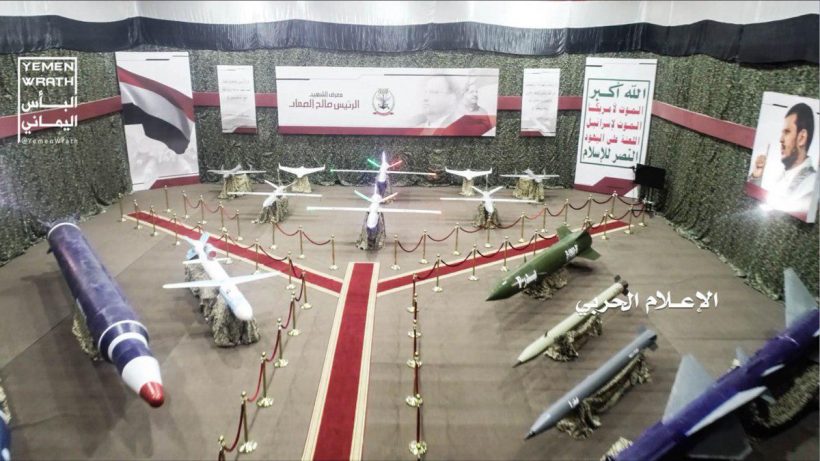
Exhibition of the achievements of the Houthi military industry (with a heavy Iranian accent).
New ballistic and cruise missiles, as well as new reconnaissance drones were presented.
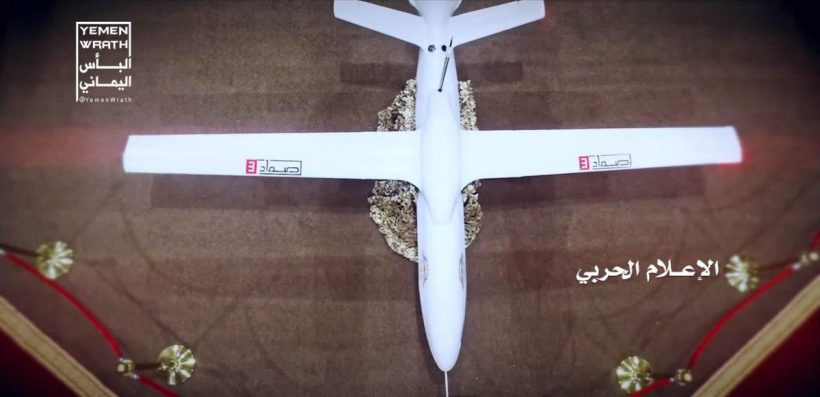
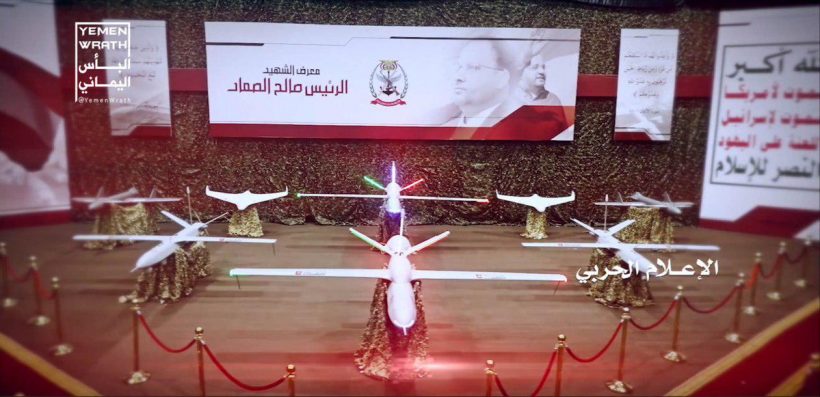
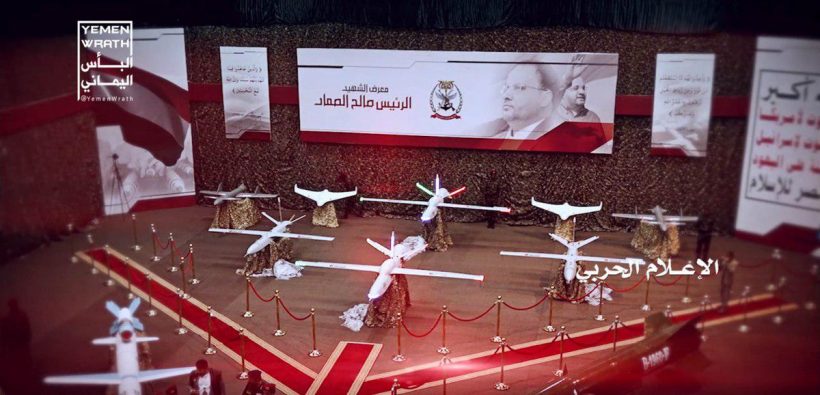
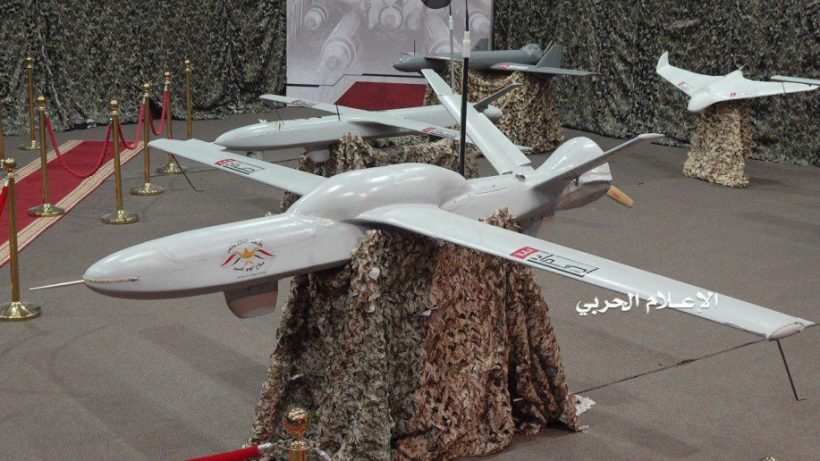
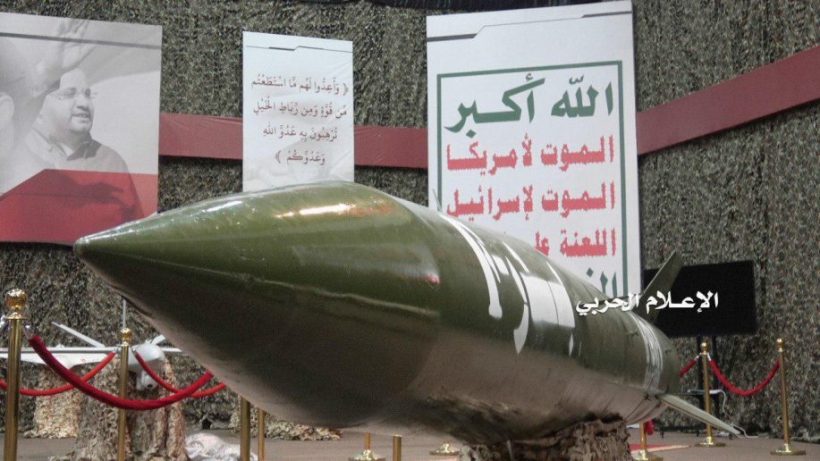
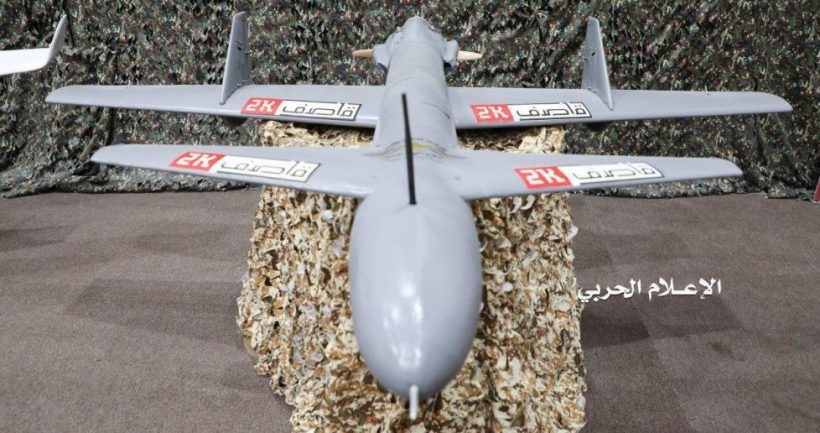
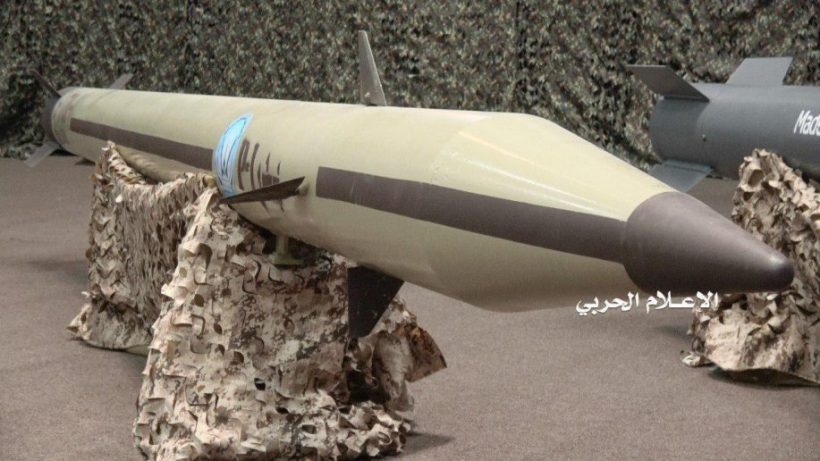
It is expected that these weapons, including new ones, will be used by the Houthis both on the territory of Yemen against the interventionist troops and local collaborators, as well as against infrastructure facilities in Saudi Arabia and the UAE (airports, military bases, ports, oil pipelines).
For Iran, the entire Yemeni war has become an excellent training ground, where in real combat conditions (via the hands of the Houthis) the latest samples of Iranian ballistic missiles, adjustable artillery shells, and reconnaissance and attack drone vehicles are being tested.
It is worth remembering that in the event of the start of a fully-fledged war against Iran, all of this can be used against tankers in the Red Sea in order to block oil exports through Jizan.
Translated by Ollie Richardson and Angelina Siard
Source: https://colonelcassad.livejournal.com/5118206.html
Israel Spies and Spies and Spies
This time the target was Donald Trump
By Philip Giraldi • Unz Review • September 17, 2019
Here we go again! Israel is caught red handed spying against the United States and everyone in Congress is silent, as are nearly all the mainstream media which failed to report the story. And the federal government itself, quick to persecute a Russian woman who tried to join the NRA, concedes that the White House and Justice Department have done absolutely nothing to either rebuke or punish the Israeli perpetrators. One senior intelligence official commented that “I’m not aware of any accountability at all.”
Only President Donald Trump, predictably, had something so say in his usual personalized fashion, which was that the report was “hard to believe,” that “I don’t think the Israelis were spying on us. My relationship with Israel has been great… Anything is possible but I don’t believe it.”
Ironically, the placement of technical surveillance devices by Israel was clearly intended to target cellphone communications to and from the Trump White House. As the president frequently chats with top aides and friends on non-secure phones, the operation sought to pick up conversations involving Trump with the expectation that the security-averse president would say things off the record that might be considered top secret.
The Politico report, which is sourced to top intelligence and security officials, details how “miniature surveillance devices” referred to as “Stingrays” imitate regular cell phone towers to fool phones being used nearby into providing information on their locations and identities. According to the article, the devices are referred to by technicians as “international mobile subscriber identity-catchers or IMSI-catchers, they also can capture the contents of calls and data use.”
Over one year ago, government security agencies discovered the electronic footprints that indicated the presence of the surveillance devices around Washington including near the White House. Forensic analysis involved dismantling the devices to let them “tell you a little about their history, where the parts and pieces come from, how old are they, who had access to them, and that will help get you to what the origins are.” One source observed afterwards that “It was pretty clear that the Israelis were responsible.”
The Israeli Embassy denied any involvement in the espionage and Prime Minister Benjamin Netanyahu adroitly and predictably lied regarding the report, saying “We have a directive, I have a directive: No intelligence work in the United States, no spies. And it’s vigorously implemented, without any exception. It is a complete fabrication, a complete fabrication.”
The Israelis are characteristically extremely aggressive in their intelligence gathering operations, particularly in targeting the United States, even though Trump has done the Netanyahu government many favors. These have included moving the U.S. Embassy to Jerusalem, withdrawing from the nuclear deal and sanctioning Iran, recognizing Israeli sovereignty over the Golan Heights, and looking the other way as Israel expands its settlements and regularly bombs Syria and Lebanon.
Israel’s high-risk spying is legendary, but the notion that it is particularly good at it is, like everything having to do with the Jewish state, much overrated. Mossad has been caught in flagrante numerous times. In 2010, an undercover Mossad hit team was caught on 30 minutes of surveillance video as it wandered through a luxury Dubai hotel where it had gone to kill a leading Hamas official. And the notion that Mossad and CIA work hand-in-hand is also a fiction. Working level Agency officers dislike their reckless Mossad counterparts. Newsweek magazine’s “Spy Talk” once cited a poll of CIA officers that ranked Israel “dead last” among friendly countries in actual intelligence cooperation with Washington.
The fact is that Israel conducts espionage and influence operations against the United States more aggressively than any other “friendly” country, including tapping White House phones used by Bill Clinton to speak with Monica Lewinski. Israeli “experts” regularly provide alarmist and inaccurate private briefings for American Senators on Capitol Hill. Israel also constantly manufactures pretexts to draw the U.S. into new conflicts in the Middle East, starting with the Lavon Affair in Alexandria Egypt in 1954 and including the false flag attack on the U.S.S. Liberty in 1967. In short, Israel has no reluctance to use its enormous political and media clout in the U.S. to pressure successive administrations to conform to its own foreign and security policy views.
The persistent spying, no matter what Netanyahu claims, is a very good reason why Israel should not receive billions of dollars in military assistance annually. Starting in 1957, Israel’s friends stole enriched uranium from a Pennsylvania refinery to create a nuclear arsenal. More recently we have learned how Arnon Milchan, a Hollywood producer/billionaire born in Israel, arranged the illegal purchase of 800 krytron triggers to use in the production of nuclear weapons. The operation also involved current Israeli Prime Minister Netanyahu.
The existence of a large scale Israeli spying effort at the time of 9/11 has been widely reported, incorporating Israeli companies in New Jersey and Florida as well as hundreds of “art students” nationwide. Five “dancing” Israelis from one of the companies were observed celebrating against the backdrop of the twin towers going down.
While it is often observed that everyone spies on everyone else, espionage is a high-risk business, particularly when spying on friends. Israel, relying on Washington for billions of dollars and also for political cover in international fora like the United Nations, does not spy discreetly, largely because it knows that few in Washington will seek to hold it accountable. There were, for example, no consequences for the Israelis when Israeli Mossad intelligence officers using U.S. passports and pretending to be Americans recruited terrorists to carry out attacks inside Iran. Israelis using U.S. passports in that fashion put every American traveler at risk.
Israel, where government and business work hand in hand, has obtained significant advantage by systematically stealing American technology with both military and civilian applications. The U.S. developed technology is then reverse engineered and used by the Israelis to support their own exports. Sometimes, when the technology is military in nature and winds up in the hands of an adversary, the consequences can be serious. Israel has sold advanced weapons systems to China that incorporate technology developed by American companies.
The reality of Israeli large-scale spying in the United States is indisputable. One might cite Jonathan Pollard, who stole more highly classified information than any spy in history. And then there were Ben-Ami Kadish, Stuart Nozette and Larry Franklin, other spies for Israel who have been caught and tried, but they are only the tip of the iceberg. Israel always features prominently in the annual FBI report called “Foreign Economic Collection and Industrial Espionage.” The 2005 report states “Israel has an active program to gather proprietary information within the United States. These collection activities are primarily directed at obtaining information on military systems and advanced computing applications that can be used in Israel’s sizable armaments industry.” It adds that Israel recruits spies, uses electronic methods, and carries out computer intrusion to gain the information.
A 1996 Defense Investigative Service report noted that Israel has great success stealing technology by exploiting the numerous co-production projects that it has with the Pentagon. It says “Placing Israeli nationals in key industries … is a technique utilized with great success.” A General Accounting Office (GAO) examination of espionage directed against American defense and security industries described how Israeli citizens residing in the U.S. had stolen sensitive technology to manufacture artillery gun tubes, obtained classified plans for reconnaissance systems, and passed sensitive aerospace designs to unauthorized users.
The GAO has concluded that Israel “conducts the most aggressive espionage operation against the United States of any U.S. ally.” In June 2006, a Pentagon administrative judge ruled against a difficult to even imagine appeal by an Israeli denied a security clearance, saying that “The Israeli government is actively engaged in military and industrial espionage in the United States.” FBI counter intelligence officer John Cole has also reported how many cases of Israeli espionage are dropped under orders from the Justice Department., making the Jewish state’s spying consequence free. He provides a “conservative estimate” of 125 viable investigations into Israeli espionage involving both American citizens and Israelis that were stopped due to political pressure.
So, did Israel really spy on Donald Trump? Sure it did. And Netanyahu is, metaphorically speaking, thumbing his nose at the American president and asking with a grin, “What are you going to do about it?”
Philip M. Giraldi, Ph.D., is Executive Director of the Council for the National Interest, a 501(c)3 tax deductible educational foundation (Federal ID Number #52-1739023) that seeks a more interests-based U.S. foreign policy in the Middle East. Website is https://councilforthenationalinterest.org, address is P.O. Box 2157, Purcellville VA 20134 and its email is inform@cnionline.org.
Rapprochement with Russia?
By Gilbert Doctorow | September 16, 2019
Starting in July and running to the present day, there have been repeated calls from mainstream media, from leading statesmen and from diplomats, in the United States and in Europe, for some kind of rapprochement with Russia to be put in place. This is remarkable given the continually escalating informational, economic, military confrontation between Russia and the US-led West over the past five years. That confrontation has emerged in two waves of anti-Russian hysteria: the first, after the daring (or brazen) Russian reunification with (or annexation of) Crimea in March 2014, and the second, with still greater momentum towards war, following the November 2016 election of Donald Trump to the presidency, which was accompanied by allegations of Russian collusion with candidate Trump and other meddling in the U.S. election processes.
Since the United States initiated the New Cold War, it is only fitting that the first steps towards its resolution are coming from there. And it is not in the least surprising that these steps were taken in the aftermath of the April 2019 release of the Mueller Report, which showed that the allegations of Russiagate were without merit or not actionable. Trump’s political enemies were compelled to move on to other issues of contention that would serve better in the next presidential campaign, which is quickly approaching.
That is the context in which I place the fairly amazing editorial of The New York Times dated 21 July 2019 entitled “What’s America’s Winning Hand if Russia Plays the China Card?” The NYT, which along with The Washington Post, had been among the most fervent disseminators of Russiagate theories and of poisonous characterizations of the “Putin regime” now was calling for… re-establishing civilized relations with Russia in order to draw the country back from its growing alliance with China.
While the editorial opens by citing a recent Defense Department report on the serious security threat to the U.S. from any Sino-Russian alliance, the fact of such alliance in formation has been obvious to anyone following the growing cooperation between these two countries in energy, aviation, military exercises, common positions taken in the UN Security Council and much more. It was also obvious for years that a major factor encouraging the Russian-Chinese embrace was the political, military and economic pressure each was receiving from the United States going back to the administration of George W. Bush and running through the Obama and Trump administrations. What is new is only the Times’ using this impending geopolitical tectonic shift to justify an extensive reversal of U.S. policy towards Russia. Now we read that “… President Trump is correct to try to establish a sounder relationship with Russia and peel it away from China.”
This is not to say that the NYT raised the white flag and abandoned its identification of Russia as a malevolent rival: “America can’t seek warmer relations with a rival power at the price of ignoring its interference in American democracy.” Nor did it abandon its identification of Russia as a “declining power” which it very inaccurately ranks as “not even in the top 10” economies, when in fact Russia is close to taking the fifth largest economy slot when purchasing power parity is applied.
Specifically, The Times called for cherry-picking topics for cooperation with Russia such as space travel, managing the Arctic and arms control “especially by extending the New Start Treaty.”
I have taken time with this editorial because the reasoning did not come from nowhere. Moreover, the same logic underlies most, though not all of the calls for rapprochement with Russia that have punctuated the past two months on both sides of the Atlantic.
As for where it came from, I would put forward the name of Henry Kissinger, who exerted considerable influence on candidate Trump in 2016 and continued to have his ear in the early days of the new administration. There can be little doubt that Kissinger urged Trump to reach out to Putin precisely to halt the dangerous drift of Moscow towards Beijing under pressure from successive US administrations. After all Kissinger was Nixon’s man who drew China into an informal alliance with the United States, implementing the policy whereby Washington was closer to both Moscow and Beijing than either was to the other. He did not need to wait for Pentagon white papers in 2019 to know what was afoot and what had to be done to avert the worst, which spelled the destruction of his single greatest achievement during his time in power.
At the same time, Kissinger would have been advising only selective cooperation with Moscow, not full-blown détente. This is precisely the position that he and other ‘wise men’ from the Reagan and George H.W. Bush administrations urged upon both candidate Barack Obama and candidate John McCain during the electoral campaign of 2008, when relations between Russia and the United States were fraught with danger relating to the August 2008 war in Georgia. Their recommendations eventually became the “re-set” policy approved by Obama and implemented by Vice President Joe Biden and Secretary of State Hilary Clinton early in 2009.
“Re-set” achieved progress on the various select issues for cooperation chosen by the Americans, in particular on arms control, resulting in the New START that today faces expiration. However, the ‘’re-set,’’ like what the New York Times editors now call for, did not begin to address the overriding issue driving the Russian foreign and military policy which the U.S. finds so unacceptable: Russia’s exclusion from the security arrangements that the Europeans have put in place together with the U.S., an architecture that is in fact directed against them. That very issue was the subject of the single most important diplomatic initiative of Russia’s President in 2008, Dmitry Medvedev: his call for negotiations to establish new security arrangements for Europe, outside of NATO, where Russia could be an equal member. That initiative met with no response whatsoever from either the United States or its European allies, and so the days of ‘’re-set’’ were numbered.
* * * *
In the period just before, during and after the G7 meeting in Biarritz on 24—26 August 2019 there have been several widely noted remarks from senior Euro-Atlantic statesmen on the need to improve relations with Russia.
A week before the summit, French President Emanuel Macron received Vladimir Putin for talks at his summer residence on the Côte d’Azur. Macron “played up efforts ‘to tie Russia and Europe back together’ and underscored his belief that ‘Europe stretches from Lisbon to Vladivostok.’…. In his Facebook post [after the meeting] Macron said …. ’I’m convinced that, in this multilateral restructuring, we must develop a security and trust architecture between the European Union and Russia…” (The Moscow Times, 20 August 2019).
Before and during the G7, Donald Trump told reporters that Russia should be there with them. At the summit’s conclusion, he indicated he was thinking of inviting Russia to the meeting when he hosts the group in Florida next year. Implicitly this means reviving full lines of communications with Russia which were cut at the insistence of Obama to punish Moscow for its misbehavior in Ukraine.
On 27 August, the day after the G7 closed, in the course of a speech to the assembled ambassadors of France in the Elysée palace, President Macron spoke at some length about the need to ‘reconsider’ ties with Russia within the context of facing up to the major challenges of a world in which the West had lost its hegemony. He called the exclusion of Russia from the New Europe following the fall of the Berlin wall a ‘’profound mistake.” He insisted that “if we do not know how to do something useful with Russia, then we will remain with a profoundly sterile tension, we will continue to have frozen conflicts everywhere in Europe, to have a Europe which is the theater of a strategic struggle between the United States and Russia, thus to have the consequences of the Cold War on our soil.” (http://www.liberation.fr ).
Several days later, on 4 September, in an interview with the Financial Times, Finnish Foreign Minister, Pekka Haavisto used his country’s current position as rotating president of the EU to make a similar point, saying “It’s very difficult to imagine a solution [to global crises] without Russia – or a solution that Russia is not somehow an active partner on.”
The FT deemed it worthwhile to quote him extensively:
“Mr Haavisto also said that the uncertainties created by Brexit and statements by US president
Donald Trump’s administration ‘distancing themselves from European affairs” meant EU states
needed to do more themselves to maintain stability in Europe. ‘It creates a space where
European countries need to think … ’how can we guarantee security here and what can we
do… together?’ he said.”
It went on to note: “Finland’s thinking is significant both because of its EU presidency and its unique relationship with Russia.”
Finally, in this listing of statements by public figures advocating better relations with Russia, I call attention to another article in the Financial Times, dated 15 September setting out the contents of an internal diplomatic note written by EU ambassador to Russia Dr. Markus Ederer. Dated 3 September, the addressees of the report were Ederer’s senior colleagues, the managing director for Asia Pacific at the EU’s External Action Service, and the acting managing director for Europe and Central Asia. The paper sets out arguments and options for engaging with Russia ‘taking into account the political environment, but also Russia’s natural relevance for EU-Asia connectivity.” It was drafted in preparation for the forthcoming 27 September meetings in Brussels on EU-Asia links to which Japanese Prime Minister Shinzo Abe has been invited and in which European Commission president Jean-Claude Juncker is expected to take part.
Among the choice quotations from the report which the FT shares with its readers we find:
“[The EU] would have everything to lose by ignoring the tectonic strategic shifts in Eurasia.”
“Engaging not only with China but with Russia, selectively, is a necessary condition to be part of the game and play our cards where we have comparative advantage.”
The FT article calls attention to five areas for prospective cooperation with Russia: the Arctic, digital, the Eurasian Economic Union, regional infrastructure and the ‘Northern Dimension’ joint policy between the EU, Russia, Norway and Iceland. In these areas, the EU could ‘’engage effectively, on concrete, technical matters’’ with Russia. The paper concludes that ‘’[t]he aim would be to set up a ‘framework of exchanges with Russia on longstanding issues in the EU interest’ involving European business and commission officials.”
* * * *
Considering where we stand today in relations with Russia, at a low point more dangerous than any time since the Cuban Missile Crisis of 1962, all of the aforementioned calls for improving relations made by very prominent and influential heads of state, public officials and media deserve a round of applause. The wise saying “jaw–jaw is always better than war–war” attributed to Winston Churchill applies with equal relevance today.
Looking at all the calls for better relations cited above, I believe the leitmotiv of them all is geopolitical considerations rather than fear of war, particularly nuclear war between the major world powers. Arms control is cited as only one of several objectives for cooperation. Concerns about the future alignment of those powers around the global board of governors are predominant. If humankind is said to be driven by the contradictory emotions of fear and greed, it would seem that our global leaders are presently acting in the spirit of greed rather than fear.
In his 27 August speech to the French diplomatic corps, President Macron called for an “audacious” foreign policy, effectively one that would move outside the box of conventional thinking. Correspondingly, thus far he is the only advocate of improved relations with Russia from among world leaders who had broached the subject of a comprehensive détente with Russia rather than cooperation in selective areas of greatest convenience to us. He is the only leader to have raised the question of revising the architecture of security in Europe to accommodate the fellow Europeans to the East.
Those who follow closely the political démarches of President Macron will object that his thinking about Russia has been all over the place since taking office. And I am among the first to consider him a shallow opportunist rather than the tower of intellect that he styles himself. The summit meetings he called with both Presidents Putin and Trump soon after moving into the Elysée palace had only one objective: to position himself as a prospective power broker in resolving the New Cold War in formation; they had no material content.
In the two years that have passed since he assumed power in France, Macron has been unlucky in domestic politics when his ill-considered fuel tax sparked the Gilets Jaunes movement. But he has been very lucky in foreign policy, because the dominant personality in European politics for the past decade or more, German Chancellor Angela Merkel, entered into the twilight period of her reign and the path opened for Macron to take the lead of EU politics with what he now calls an audacious roadmap.
The specific concept that emerges from Macron’s recent statements is an entente between Russia and the European Union based on shared values and creating a third force in global affairs alongside the United States and China. The alternative, which is looming absent any initiative such as Macron is proposing, will be for the EU to remain a junior partner to the USA and for Russia to be a junior partner to China while their two principals square off. Let us hope that in the days and months ahead Macron can muster the consistency of purpose and powers of successful execution to see through to conclusion what he has begun.
Gilbert Doctorow is an independent political analyst based in Brussels. His latest book, “Does the United States Have a Future?” was published on 12 October 2017.
©Gilbert Doctorow, 2019
Winners and losers from Saudi Aramco’s travails
By M. K. BHADRAKUMAR | Indian Punchline | September 16, 2019
The US President Donald Trump’s tweet Sunday regarding the attack on two Saudi Aramco plants says as follows:
“Saudi Arabia oil supply was attacked. There is reason to believe that we know the culprit, are locked and loaded depending on verification, but are waiting to hear from the Kingdom as to who they believe was the cause of this attack, and under what terms we would proceed!”
It’s a cleverly-worded tweet with multiple audiences in view. Trump took time to react. And he’s stopped short of blaming Iran. The US lacks hard evidence. Therefore, “verification” is needed and it is Riyadh’s call to estimate “the cause of this attack, and under what terms we would proceed.”
Trump boasted that the US is “locked and loaded” to go to Saudi Arabia’s aid. Yet, only the previous day, when Trump telephoned Saudi Crown Prince Mohammed bin Salman, the latter had “underscored the Kingdom’s willingness and strength to thwart such a terrorist aggression and deal with its consequences.”
In fact, this has become the Saudi refrain — that it is within Saudi capability to handle the crisis. During a phone call from UAE Crown Prince condemning the drone attacks, MbS stressed that “the Kingdom has the ability to confront and deal with this terrorist aggression.” King Salman also told the Emir of Kuwait that “the Kingdom has the ability to confront such terrorist attack and deal with its fallout.”
None of the regional states — Egypt, UAE, Kuwait, Bahrain, Jordan, Turkey, etc. — or any foreign power has blamed Iran for staging the drone attacks on the Saudi Aramco plants. That leaves US states secretary Mike Pompeo as the solitary exception.
Interestingly, MbS received the Russian ambassador Sergei Kozlov for a one-on-one Sunday. No details have been divulged; the Saudi readout merely said, but highlighted that “a number of issues of mutual concern to the two friendly countries were discussed.”
Of course, the Russian interest lies in de-escalating regional tensions and Moscow and Tehran are in close touch. President Vladimir Putin is scheduled to meet Iran’s president Hassan Rouhani later today on the sidelines of the trilateral summit in Turkey of the Astana troika. Putin is also due to visit Saudi Arabia in October.
However, it is improbable that Saudis would want US to get involved. The trust deficit is palpable. (The Trump administration has decided to reveal the identity of the Saudi official who allegedly helped the 9/11 terrorists.)
The Saudi confidence in the US’ grit and commitment to stand by Saudi Arabia’s defence when the crunch time comes is shaky. Riyadh’s clout in the Washington Beltway has significantly diminished, especially after the murder of Jamal Khashoggi. The mood in the US Congress is hostile.
Again, there are highly sensitive aspects, which Riyadh would want to handle by itself. The Houthis claim to have had “intelligence and cooperation” from within Saudi Arabia for staging the drone attacks. If so, Houthis have contacts inside Saudi Arabia’s eastern province where the Shi’ite majority is agitating for empowerment and autonomy.
Riyadh will want to dig deep, but by itself without the CIA holding searchlights — since this ultimately concerns the Kingdom’s internal security and unity and the destiny of the royal family.
Saturday’s attacks have shown that Saudi defence is highly vulnerable. Any escalation by the US may lead to military confrontation with Iran and is fraught with the grave danger of the destruction of the Kingdom.
The UAE (and other GCC states) would also be averse to any further escalation. In the recent weeks, both Saudi Arabia and the UAE have made overtures toward Iran aimed tamping down tensions.
Yet another wrinkle is that differences have appeared between the Saudis and Emiratis over Yemen, with the latter projecting power in southern Yemen through proxy militia groups, undercutting the government headed by Mansur Hadi (whom Riyadh mentors.)
Over and above, Aramco’s IPO now hangs by a thread — and the Saudi Crown Prince’s Vision 300 programme to restructure the country’s economy and initiate much-needed reforms loses traction.
Saturday’s events have shown that the roof will come down on the world economy if any regional conflagration erupts leading to destruction of the petrodollar states. Brent Crude jumped 20% higher Sunday night.
If the Saudi outage could last for months, as seems likely, expect the Brent onslaught to continue until the price hits $80, and keeps moving higher. Suffice to say, Iran’s threat that it won’t be the only loser in a military confrontation with the US must be taken very seriously. The IRGC has reiterated this on Sunday.
In sum, the US has run out of options on Iran. If the intention behind Trump’s tweet is to unnerve Tehran and compel it to agree to a meeting between him and Rouhani in New York, that is sheer naivety. Nonetheless, the chances are there that a Trump-Rouhani meeting is likely.
Tehran never misses an opportunity to highlight that: a) it can be a factor of stability in the Persian Gulf; and, b) regional security is best handled by the regional states exclusively, through dialogue.
Rouhani’s first detailed remarks Sunday on these lines are significant. Some sort of contacts between and amongst Saudi Arabia and the UAE and Iran cannot be ruled out.
The bottom line is that the Saudis and Emiratis egged on Trump to take to the path of ‘maximum pressure’ against Iran, but as they look down the abyss today, they don’t like what they’re seeing.
The Houthis have been behind a number of assaults on Saudi pipelines, vessels and other energy infrastructure. A Houthi spokesperson explained, “We promise the Saudi regime that our future operations will expand and be more painful as long as its aggression and siege continue.” The focus should be on winding down the war in Yemen, where it becomes crucial for Riyadh and Abu Dhabi to engage with Tehran.
Saudi says unclear when oil output will return to normal after ‘massive’ damage
Press TV – September 15, 2019
An informed Saudi source says the damages inflicted on the Aramco oil facilities in the recent Yemeni drone attacks are so massive that it is not clear when the country’s oil output can return to normal.
Attacks by 10 Yemeni drones on Saudi Arabia’s key oil facilities in Abqaiq and Khurais have shut down about 50 percent of the kingdom’s crude and gas production, cutting the state oil giant’s crude oil supply by around 5.7 million barrels per day.
An oil industry source briefed on the developments said on Sunday it is unclear how long the oil production shutdown will continue, as it is impossible to fix the “big” damages overnight.
Aramco has given no timeline for output resumption. However, a source close to the matter told Reuters the return to full oil capacity could take “weeks, not days”.
Another source briefed on the developments said the kingdom’s oil exports would continue to run as normal this week thanks to large storage in the country.
High-resolution satellite photos of the damaged facilities “declassified” by the US administration on Sunday show the drone attacks have hit at least 19 points with great precision.
A senior US official, asked not to be named, has claimed that evidence shows the launch area was west-northwest of the targets – the direction of Iran and Iraq – not south from Yemen.
The official has also quoted Saudi officials as saying that there are signs that cruise missiles were used in the attack.
This comes as Yemen has clearly stated it used 10 drones for Saturday’s operation, which was one of their largest retaliatory attacks ever inside the kingdom.
Earlier in the day, Tehran dismissed the US’ claim of Iranian involvement in the drone attacks, saying “futile allegations and blind statements as such are incomprehensible and meaningless within the framework of diplomacy.”
Foreign Ministry spokesman Abbas Mousavi said such remarks “seem more like a plot being hatched by secret and intelligence organizations aimed at tarnishing a country’s image and setting the stage for future actions.”
He also criticized Saudi Arabia for fueling the flames of war in the region by committing various war crimes in Yemen for about five years, and hailed Yemen for putting up resistance in the face of the aggression.
Iraq has also denied reports alleging that the country was the site from where Yemeni drones were launched to attack Saudi oil installations.
The statement came from Iraqi Prime Minister Adil Abdul-Mahdi’s office on Sunday. It said Iraq would act “decisively” if anyone tried to use its territory to attack other countries, AP reported.
Iraq Denies Report Drones Attacking Saudi Oil Facilities Were Launched From Its Territory
Sputnik – September 15, 2019
On Saturday Saudi Arabia’s oil facilities were attacked by two drones, causing major fires and disrupting oil production in Abqaiq in the eastern part of the country and in Khurais, northeast of Riyadh. The attacks were claimed by Yemen’s Houthi movement but the US put the blame on Iran. Tehran has refuted the allegations.
Iraq has denied media reports claiming that its territory was used to launch the drones that attacked Saudi Arabia’s oil facilities on Saturday night, a statement from the Iraqi Prime Minister’s press-service released on Twitter says.
“Iraq denies reports in the press and on social media that its territory was used to attack oil facilities in Saudi Arabia using drones”, the statement reads.
It also says that the constitution of Iraq does not allow the use of its territory for aggressive actions towards its neighbours. The Iraqi authorities have set up a committee to monitor reports and the latest events relating to the drone attack on Saudi Arabia’s oil facilities.
Iraq also urges the warring sides in Yemen to find a peaceful solution to the conflict and refrain from “mutual attacks that cause a huge damage to facilities and claim people’s lives,” according to the statement.
Two drones attacked Saudi Arabia’s oil facilities on Saturday night, causing major fires and disrupting oil production. Yemen’s Houthis claimed responsibility for the attacks but the US has blamed Iran for the incident. Tehran has rejected the allegations.
Yemen Revolutionaries: 10 Drones Hit Saudi Aramco Oil Facilities, Range of Targets to Be Expanded
Al-Manar | September 14, 2019
Yemeni revolutionaries claimed responsibility on Saturday for drone attacks on two major facilities run by Saudi Aramco, Saudi Arabia’s state-owned oil giant.
Spokesman of Yemeni armed forces Brigadier General Yahya Saree announced that ten drones hit Abqaiq – home to the company’s largest oil processing plant – and Khurais facilities.
The attack is “one of the most large-scale operations in the Saudi depth,” and dubbed “Balance of Deterrence-2,” the spokesman said.
“These attacks are our right, and we warn the Saudis that our targets will keep expanding.”
“We have the right to strike back in retaliation to the air strikes and the targeting of our civilians for the last five years,” Saree said, referring to Saudi-led aggression taking place against Yemenis since March 2015.
The Saudi regime has no choice but to halt aggression and lift the blockade imposed on Yemeni people, Saree added in a statement carried by Yemen’s Al-Massirah TV channel.
Earlier on Saturday, Saudi interior ministry said fires broke out at two Saudi Aramco oil facilities after they were struck by drones.
Featured Video

The Truth About the Trump Shootings with Ken Silva
or go to
Aletho News Archives – Video-Images
From the Archives
The Geopolitics behind the War in Yemen (I)
By Mahdi Darius NAZEMROAYA | Strategic Culture Foundation | 30.03.2015
The United States and the Kingdom of Saudi Arabia became very uneasy when the Yemenese or Yemenite movement of the Houthi or Ansarallah (meaning the supporters of God in Arabic) gained control of Yemen’s capital, Sanaa/Sana, in September 2014. The US-supported Yemenite President Abd-Rabbuh Manṣour Al-Hadi was humiliatingly forced to share power with the Houthis and the coalition of northern Yemenese tribes that had helped them enter Sana. Al-Hadi declared that negotiations for a Yemeni national unity government would take place and his allies the US and Saudi Arabia tried to use a new national dialogue and mediated talks to co-opt and pacify the Houthis.
The truth has been turned on its head about the war in Yemen. The war and ousting of President Abd-Rabbuh Manṣour Al-Hadi in Yemen are not the results of «Houthi coup» in Yemen. It is the opposite. Al-Hadi was ousted, because with Saudi and US support he tried to backtrack on the power sharing agreements he had made and return Yemen to authoritarian rule. The ousting of President Al-Hadi by the Houthis and their political allies was an unexpected reaction to the takeover Al-Hadi was planning with Washington and the House of Saudi. … continue
Blog Roll
 Aletho News
- Pakistan-Iran talks secure LNG shipment to Islamabad through Hormuz
- Black Sea grain crisis puts global wheat supplies under pressure
- IRGC air defenses destroy another US MQ-1 drone over Strait of Hormuz
- Imran Khan’s entire immediate family detained in Pakistan ahead of mass protest demanding his release
- EU nation detains former presidential frontrunner
- Leaked: Britain’s Sham Conviction Of Hashim Thaci
- Seyed M. Marandi: U.S. Strike Imminent – Toward Total War in the Middle East
- Russia Voted Under Fire. Washington Is Loading the Tankers.
- 12 Things Your Oncologist Was Trained Not to Tell You
- Anthrax Attacks Paved Way for COVID-Era ‘Junk Drugs and Vaccines’
- If Americans Knew
- Huckabee aide solicited cash gifts from Israelis
- This isn’t sci-fi, AI is already killing people
- ‘The Most Brutal Thing’: Investigation Reveals Execution of Elderly Woman in Rafah
- Inside Israel’s ‘soft’ ethnic cleansing plan for Gaza through the eyes of its victims
- New online database tracks pro-Israel political donations in the United States
- Israeli president pardons soldier convicted for killing wounded Palestinian
- Singer Ed Sheeran says his ‘heart broken’ by Gaza devastation, addresses Macklemore controversy
- Israel Has Imprisoned Female Journalist Bushra Al-Tawil Without Trial Or Charge In Solitary Confinement For Past Month
- Israel poised to teach West Bank a lesson after one Israeli killed – Daily Update
- Salah Sarsour’s Legal Team Says DHS Has Not Met Its Burden to Prove He Is Deportable
- No Tricks Zone
- 2025 Nature Paper Claiming Worsening Global Drought Gets RETRACTED …Heavily Flawed
- New Study: ‘Global Drought Shows No Detectable Recent Acceleration Under Climate Warming’
- Economic Masterminds: German Socialists Suggest Taxing Productivity Gains Stemming From Using AI
- The South China Sea Has Not Been Cooperating With The Climate Change Narrative
- Energy Crisis: Germany Enters Heating Season With Historically Low Gas Reserve Fill Levels
- New Study: The Antarctic Ice Sheet Gained Mass From 2020-2024 Due To Staggering Snow And Ice Accumulation
- Study: Ocean Heating Rates From Thousands Of Years Ago ‘Dwarf’ Modern Ocean Heating Rates
- Climate Extremists Target, Attack Large-Scale Power Grid Infrastructure In Germany!
- New Study: Antarctic Ice Melt Has Contributed Less Than 1 Centimeter To Sea Level Rise In The Last 30 Years
- Fear Of Debate: Alarmist German Climate Scientist Calls On Mainstream Media To Discredit Skeptic Voices
 Aletho News