Terror in Syria: a US distraction from Gaza
The Resistance Axis has effectively thwarted US distraction tactics in Syria meant to support Israeli interests as the war on Gaza rages on
By Khalil Nasrallah | The Cradle | May 30, 2024
Western-backed terrorist strongholds in Syria have not remained untouched by the Israeli military assault on Gaza. With the broad activation of the Axis of Resistance in support of Gaza, particularly in Lebanon, it didn’t take too long before Washington began to mobilize its extremist foot soldiers in Syria’s north.
Soon after the 7 October Al-Aqsa Flood Palestinian resistance operation – and even before the war’s trajectory became clear and Hezbollah’s intentions were understood – terrorists in Syria began to escalate their operations. Terror attacks were recorded in northern Latakia and the western Aleppo region, where Hezbollah, Iranian advisors, and the Syrian army are concentrated, as well as along the demarcation line between areas controlled by the state and those controlled by the militants.
This escalation was almost certainly not a coincidence, given the history of similar mobilizations triggered during crucial political and military events in Syria. It is well established that Washington supports terrorist armed groups in northwest Syria to keep the Syrian army and its allies in a state of attrition, serving US and Israeli interests – most notably in the eastern part of the country where the US maintains an illegal military presence.
Moreover, there are clear indications that the uptick in terrorist attacks after 7 October was linked to the war on Gaza. This strategy seems designed to distract resistance forces, particularly Hezbollah, and sends a message that escalation by resistance factions would activate other fronts to alleviate pressure on Tel Aviv.
Idlib, the main northern sanctuary for the terror militias, presents a complex front, not only militarily but also due to its political entanglements and involvement in various regional dynamics. The conditions for launching a major operation there were unfavorable before 7 October and remain unfavorable in the ongoing war.
US support for subversive activities in Syria before 7 October
Before the Hamas-led resistance operation, US efforts were focused on supporting subversive activities in Syria, explicitly backing Al-Qaeda offshoot Hayat Tahrir al-Sham (HTS) led by Abu Mohammad al-Julani.
With British intelligence assistance, Washington sought to strengthen ties with Julani following a series of operations by the Syrian government and its allies in 2020. These military offensives culminated in the recapture of the Aleppo–Damascus M5 motorway and significant territory south of Idlib.
The hostilities concluded with the 5 March ceasefire agreement between Russian President Vladimir Putin and Turkish President Recep Tayyip Erdogan during the latter’s visit to Moscow, marking a new phase in the regional conflict.
On several occasions, the US attempted to rekindle hostilities to influence Turkish–Syrian negotiations, which were sponsored by Moscow and Tehran, aiming to restore relations and reduce tensions between Ankara and Damascus.
However, these talks faced several obstacles, including Erdogan’s domestic political considerations and the challenges posed by US policies regarding the Syrian crisis.
Between 2020 and 2023, the Syrian army and its allies imposed military conditions that restricted the militants’ capabilities, preventing them from launching large-scale operations. Reports indicate that during this period, the militants focused on enhancing their drone warfare capabilities, allegedly with support from French, British, and US intelligence.
These drones were used in several attacks, most notably the 5 October 2023 assault on a graduation ceremony at a military academy in Homs, central Syria, which resulted in over 150 military personnel and civilian casualties.
Post-7 October: Shifting focus and new frontline dynamics
The impact of the terrorist attack in Homs quickly faded as the world turned its attention two days later to the Qassam Brigades storming military sites and settlements around the Gaza Strip, capturing dozens of soldiers and settlers, prompting Israel to declare a state of war. As regional powers shifted their focus to the Gaza Strip, the situation in Idlib subsequently took a different turn.
In late December, terrorists launched a large-scale attack in the western Aleppo area, reaching the 76th Regiment near Urm al-Kubra. Hezbollah and the Syrian army managed to repel the assault, inflicting heavy casualties on the terrorists, many of whom were Uyghurs from China’s Xinjiang region.
Following, several other attacks tried to exploit the broader regional conflict, particularly the tensions in southern Lebanon. These attacks were influenced by external forces and extended beyond Julani’s leadership.
The attacks continued sporadically until the beginning of February, when the Syrian army, supported by Russian forces, introduced FPV (first-person view) suicide drones into the battle. These drones, which had demonstrated high effectiveness in Ukraine, significantly hindered the terrorists’ movements along the front lines to logistical points behind them.
The ability to curb the front lines suggested that disruptive tactics Washington might employ at any stage, especially in Idlib, could be neutralized. This came after the US had agreed to a truce in eastern Syria, accepted the status quo, and made concessions to prevent its bases from being targeted. These developments indicated the Resistance Axis’ capability to manage and prepare for new challenges, maintaining regional stability despite external pressures.
The steadfastness of resistance forces in Syria
Several indicators show that despite US attempts to create distraction fronts for resistance factions, Hezbollah remains steadfast in its fight against terrorism in Syria.
Hezbollah, along with other resistance forces such as Iraqi factions and Iranian advisors, has maintained a presence that supports the ongoing confrontation. Ultimately, the Syrian army and its allies have been successful in countering US distraction tactics through significant terrorist organizations, especially in Idlib.
This success offers several insights for the future. The Resistance Axis forces had anticipated such tactics and responded effectively, adapting to the circumstances of each stage. The American–Israeli reliance on terrorism to alter realities on support fronts has proven to be an unrealistic and losing strategy.
The outcomes of the current conflict may create political conditions favorable for a wide-scale military operation in Idlib in the future. Additionally, resistance forces are not isolated in their efforts to counter terrorist fronts, with Russian involvement playing a significant role that cannot be overlooked.
Employee Sues Hospital That Fired Her for Reporting COVID Vaccine Injuries to VAERS
By Brenda Baletti, Ph.D. | The Defender | May 22, 2024
A physician’s assistant is suing a New York hospital system, alleging it violated the federal False Claims Act by failing to complete mandatory reporting of injuries associated with the COVID-19 vaccine to the Vaccine Adverse Event Reporting System (VAERS).
Deborah Conrad worked at United Memorial Medical Center, part of Rochester Regional Health (RRH), until October 2021, when she said she was fired for reporting vaccine-related adverse events.
Conrad filed the lawsuit in May 2023, but the complaint wasn’t unsealed and made publicly available until February, TrialSiteNews reported last week.
She is seeking job reinstatement and back pay for herself and civil penalties on behalf of the U.S. government.
Most importantly, Conrad told The Defender, she hopes the lawsuit will lead to changes in how vaccine adverse events are reported.
“How can anybody trust the vaccine program when medical professionals are not adhering to the reporting requirements of the one system we have in place that is meant to assure us that these things are safe?” she asked.
“I want policy change. I don’t care about the money, the vindication. I want to be able to trust the health system,” Conrad said.
Under the False Claims Act, whistleblowers can file a lawsuit on behalf of the federal government against an entity they allege profited from taxpayer funds by defrauding the government.
False Claims Act cases are initially sealed while the government investigates the cases and determines whether it will intervene and take the case on itself, or allow the whistleblower to proceed with the action.
The government decided not to intervene in the case. It is now unsealed and moving forward with Conrad as the “relator,” who gives evidence to the court on behalf of the U.S. government.
She told The Defender the evidence she is submitting to the court is substantial — she meticulously saved every email, patient file and recorded conversations with supervisors and other hospital staff.
United Memorial Medical Center, like all institutions in the U.S. that administered the COVID-19 vaccines, signed the Centers for Disease Control and Prevention’s (CDC) COVID-19 Vaccination Program Provider Agreement, according to the complaint.
The agreement stipulated that organizations providing the shots and which received compensation for doing so from the federal government were required to “report moderate and adverse events following vaccination” to VAERS.
By not doing so, Warner Mendenhall, the attorney representing Conrad, told The Defender, they were out of compliance with the agreement. And, he added, the agreement clearly stipulates that non-compliance violates the False Claims Act.
The hospital not only failed to report cases, it blocked Conrad from submitting approximately 170 reports of serious adverse events to VAERS between May 27 and Oct. 6, 2021, Conrad said.
The hospital system also failed to report over 12,000 adverse events, the complaint alleges.
Mendenhall said they estimated that number based on the number of people vaccinated at one of the healthcare facilities or another nearby clinic who then presented at the hospital for treatment for an injury that was likely linked to the vaccine.
The complaint contains several examples of such cases.
On behalf of the U.S., Conrad is seeking damages that fall into what Mendenhall described as “three buckets.”
First, he said, each entity was paid an administrative fee — approximately $40 — for each injection. The suit seeks a refund of that money to the government for the thousands of shots administered.
Next, for every failure to report, there is a mandatory penalty of at least $20,000. For 12,000 cases, that would total more than $240,000,000.
Finally, the “third bucket” of damages would be the cost of the treatment that people had to pay for their vaccine injuries. By failing to meet their obligations as a vaccine provider, he said the hospital failed to provide people with the proper necessary treatment they ought to be entitled to and those costs should be reimbursed.
If Conrad prevails in court, the hospital will go bankrupt — but that isn’t the intent, Mendenhall said.
“We don’t want to bankrupt community hospitals,” he said. “That’s not what we are about. We want them to do their job, to do what they are supposed to do and file the reports,” he said. “And we want Deb Conrad rehired to run the program.”
Conrad is suing only one hospital system, but there are roughly 2,800 systems in the country, Mendenhall said. “As far as I know, not a single one of them met their obligations under the vaccination program participation agreement. And they all signed it.”
The False Claims Act, “is a way for us as a people, if we want to hold these providers accountable for their wrongdoing, we actually can do it,” Mendenhall told Trial Site News. “There’s a very clear pathway here. It’s outlined here, and they all agreed to it.”
Ray Flores, senior outside counsel for Children’s Health Defense, told The Defender the case represented a “bold effort to hold those who allegedly defrauded the people of the United States accountable.”
In detailing the ways the hospital precluded providers from reporting to VAERS, “the allegations in the complaint solve part of the mystery of why only 1% of vaccine injuries are reported,” he said.
Mendenhall also represents Pfizer whistleblower Brook Jackson, who sued the drugmaker under the False Claims Act.
Conrad: ‘I kept getting gaslit and made fun of and told I was crazy’
When the COVID-19 pandemic began, Conrad had been a physician assistant for nearly 20 years. She spent most of that time as a hospitalist, working in inpatient medicine and the intensive care unit in the same hospital.
At United Memorial, she was director of Advanced Practice Providers, sat on the medical executive board, saw patients and was the first non-physician to receive the Physician Excellence award.
When the COVID-19 vaccine came out, her whole life changed, Conrad said. As she had done throughout her career, she reported to the hospital the safety issues and new trends in illness that she was seeing, such as elderly vaccinated people hospitalized for COVID-19 or young people with blood clots.
In researching whether providers in other places were witnessing the same issues, Conrad discovered VAERS — which she said she and her colleagues had never been told about, despite claims later made by the hospital — and began reporting cases.
She volunteered to take on this reporting role for the hospital, reporting all of the adverse events that came into the facility.
As the number of adverse events grew, the reporting became too onerous, so Conrad asked the hospital to develop a plan to efficiently complete the reports, to protect patients and to remain in compliance.
Instead, the hospital informed her it would be auditing her work.
The hospital accused Conrad of over-reporting and being “antivaxxy.” This was a problem, the hospital informed her in an email included in the complaint, because “we are very much advocating for patients to receive the vaccine.”
She was forbidden from filing reports for any patient she was not directly caring for, even though her leadership role meant she oversaw all patients, Conrad said.
If she had other concerns, they said she could register them in the hospital’s internal email system, “Safe Connect,” which she did. However, those reports weren’t going anywhere.
Concerned the events weren’t being reported and that the hospital was out of compliance with the agreement it had signed, Conrad began reaching out to the CDC, the FDA, the New York State Department of Health and the hospital accreditation board.
Rather than receiving support, Conrad said:
“I kept getting gaslit and made fun of and told I was crazy.
“Then I got called into a meeting and they threatened to report me to the state for spreading misinformation, saying that basically doing VAERS reports and talking to patients about their potential side effects is misinformation, and that I was spreading vaccine hesitancy, and that’s not allowed.
“And they said if it continued they were going to report me to have basically my license taken away. Wow. So at that point, I knew I was in real trouble.”
She contacted a lawyer and went public with her experience on The Highwire and in The New York Times. She also started a GoFundMe campaign, anticipating her possible firing.
The hospital threatened to report her to the New York State Society of Physician Assistants for spreading vaccine misinformation. Just a few months earlier, the same organization had nominated Conrad for a seat on the New York State Office of Professional Medical Conduct.
In what Conrad called “direct retaliation,” on Oct. 6, 2021, she was publicly surrounded at her workstation by human resources staff and escorted to a room where she was interrogated about her public comments.
“They basically told me, are you going to leave quietly or are we going to walk you out?” she said.
Conrad said the firing was very public and humiliating, which she thought was meant to scare others. “As a result of me being publicly fired, it’s my understanding that now no one [at the hospital] is reporting to VAERS,” she said.
Providers aren’t trained to use VAERS
The VAERS system is the primary public reporting system for flagging vaccine safety issues. For members of the public, it’s a voluntary system. However, healthcare professionals are required to report certain events.
Yet, Conrad said, she never learned about VAERS in her medical training and the hospital never offered training for the system. She said they never mentioned the system to staff until she complained publicly.
“We come out of school knowing every side effect for every drug known to man, because they have no liability shield, but we are never taught there could be anything wrong with vaccines,” she said.
“We didn’t even know there’s a reporting system. Why is that? Why do we have a liability shield for vaccines if they’re so safe? Why would we need it when we don’t have it for drugs that we know are not always safe? None of it makes sense,” she added.
Conrad said this “flawed” and “fraudulent” system is responsible for the rise in “vaccine hesitancy.” “They blame people like me for this hesitancy,” she said, “but they are the ones who created the issue by not enforcing” safety and injury reporting.
Instead, she said, the public health agencies normalized previously unthinkable ideas, such as it’s normal for vaccines to make people sick, or that reused cloth masks would protect from infectious disease and much more.
Healthcare is about safety, she said. “First, do no harm. That’s the oath I took when I graduated. But they’re using the doctors to harm patients unknowingly and not teaching them about the safety mechanisms we put in place.”
Conrad said she hopes the lawsuit will help change that. Now that it is unsealed, she said, “We’re able to go back out there and start talking about things because the public cannot forget. We cannot forget what has been done. Otherwise it’ll happen again.”
Mendenhall said he expects a response from the hospital system next week. He predicts they will submit a motion to dismiss, which he intends to contest.
“This is the first case of its kind,” he said. “I predict we will succeed in defending any motion to dismiss because Deb did such a good job with the evidence and her story is very compelling.”
This article was originally published by The Defender — Children’s Health Defense’s News & Views Website under Creative Commons license CC BY-NC-ND 4.0. Please consider subscribing to The Defender or donating to Children’s Health Defense.
Genocide, recognising a Palestinian State and the two-state paradigm
By Ramona Wadi | MEMO | May 23, 2024
“President Biden … has been equally emphatic on the record that the two-state solution should be brought about through direct negotiations through the parties, not for unilateral recognition,” White House National Security adviser, Jake Sullivan, stated during a news briefing. Ireland, Spain and Norway’s decision to recognise a Palestinian State at a time of genocide is a belated symbolic act which the US is clearly displeased with, despite each country’s political autonomy.
If the symbolic gesture is to hold any meaning, however, it must be divested from the two-state narrative which is also part of the genocidal actions Israel is performing in Gaza.
So far, judging by the statements, the recognition is far from reaching practical political significance. Norway’s Prime Minister, Jonas Gahr Store, equated the decision with purported equivalence: “two states, living side by side, in peace and security”. A Palestinian State will not stop Israel from committing genocide. Spanish Prime Minister, Pedro Sanchez, stated, “We’re not going to allow the possibility of the two-state solution to be destroyed by force because it’s the only just and sustainable solution to this terrible conflict.” Wrong. The two-state paradigm enabled Israel to colonise Palestine further. And, besides, the decolonial alternative exists. Ireland’s Prime Minister evoked the image of security and peace with neighbours, referring to the coloniser and the colonised. But world leaders know enough of colonialism to recognise that peace is not synonymous with colonisation.
Of course, the US would prefer negotiations to eclipse any recognition of a Palestinian State. Negotiations and the absence of them are also part of the political process that led to the current genocide in Gaza. But what Ireland, Spain and Norway are offering is still tethered to the two-state compromise. If it were not for the genocide unfolding in plain sight, the news would have been relegated to an announcement irksome to Israel. Even if the gesture is not backed by political action supporting decolonisation – the statements clearly show the leaders’ intent to safeguard the two-state diplomatic trajectory – Israel committing genocide in Gaza makes a belated, symbolic recognition of Palestine significant because, at the very least, it asserts the ongoing existence of the Palestinian people in the face of the ongoing genocide.
Israel is intent on eliminating Palestinians from Gaza and the US is diligently aiding Israel with its weapons shipments. Recognition of a Palestinian State at such a time puts the gesture in direct conflict with what Israel and the US are trying to achieve, even if the statements by Norway, Ireland and Spain have kept to the conventional narrative. What happens next is of far greater consequence.
With Israeli Prime Minister Benjamin Netanyahu likely facing an international arrest warrant, which part of diplomacy will European countries want to preserve? And how much validity will the two-state compromise retain? It is one thing to harp on a defunct paradigm, but genocide not only can eliminate a population but also the diplomacy that Europe prides itself upon. It is up to any country that recognised Palestine to rethink its politics and diplomatically corner the US and Israel into isolation, by thinking beyond the two-state paradigm and relate the recognition of a Palestinian State to Palestinian decolonisation and liberation.
US Launching Comprehensive Review of Bilateral Cooperation With Georgia
Sputnik – 24.05.2024
WASHINGTON – The US is launching a comprehensive review of bilateral cooperation with Georgia over the passing of a “foreign influence” law in the country, Secretary of State Antony Blinken said in a statement.
“I am also launching today a comprehensive review of bilateral cooperation between the US and Georgia. It remains our hope that Georgia’s leaders will reconsider the draft law and take steps to move forward with their nation’s democratic and Euro-Atlantic aspirations. As we review the relationship between our two countries, we will take into account Georgia’s actions in deciding our own,” Blinken said.
Additionally, the US is implementing a visa restriction policy on Georgian officials, and their families, who are responsible for facilitating passage of a foreign agents law that could derail the country’s path to join the EU, US Secretary of State Antony Blinken said in a press release.
“In response to these actions, the Department of State is implementing a new visa restriction policy for Georgia that will apply to individuals who are responsible for or complicit in undermining democracy in Georgia, as well as their family members,” Blinken said.
On Saturday, Georgian President Salome Zourabichvili vetoed the foreign agents bill that had been adopted by the country’s parliament last Tuesday. The parliament needs a simple majority to override the veto.
China warns US against Taiwan visits
RT | May 23, 2024
US lawmakers must end any visits to Taiwan and adhere to the One-China policy, or be ready to face the consequences, Beijing’s Foreign Ministry spokesperson, Wang Wenbin, said during a press conference on Thursday.
His comments came in response to a statement by the chairman of the US House of Representatives Foreign Affairs Committee, Michael McCaul, who announced on Tuesday that he would not be deterred by China’s threats and would lead a US delegation to Taiwan, which he called a “dearest friend and partner and ally” of Washington, at the end of the month.
Beijing considers the self-governing island to be an inalienable part of China, and has been pushing towards a peaceful reunification, vehemently condemning any separatist movements that seek Taiwanese independence.
Wang said Beijing firmly opposes any form of “official exchanges” between Washington and Taipei, and urged US representatives against interfering in the island’s affairs in any way and under any pretext.
He added that the warning extends to the US Congress, whose representatives are an “integral part of the US government” and should therefore abide by the One-China policy officially acknowledged by Washington and only maintain cultural, commercial, and other unofficial relations with the island.
If Congress members do visit Taiwan, Wang warned that it would be interpreted as a “serious violation” of the One-China principle, an attempt to damage China’s sovereignty and territorial integrity, and a “seriously wrong signal” for Taiwanese separatist forces.
“If the US insists on its own way, it must be fully responsible for the consequences,” Wang stressed.
Meanwhile, the Chinese military announced on Thursday that the People’s Liberation Army (PLA) has kicked off a series of joint drills near Taiwan to serve as “punishment” for separatist forces seeking independence and as a “stern warning” against any external forces aiming to interfere in China’s internal affairs.
The exercises are said to involve the PLA’s army, navy, air force and rocket force, all of which will carry out drills in various areas around Taiwan, focusing on combined sea-air combat-readiness patrol, battlefield control and joint precision strikes.
Half of Moldovans Say Gov’t Policy on Gagauzia Wrong, Over 50% Distrust NATO – Poll
Sputnik – 23.05.2024
CHISINAU – Half of Modova’s residents consider the government’s policy toward the autonomous region of Gagauzia wrong, while more than half do not trust NATO, Moldovan social research company IMAS found in a fresh survey published on Wednesday.
Asked what they thought of the policy of the ruling Party of Action and Solidarity (PAS) toward Gagauzia, 50% or respondents said it was wrong, 29% said it was right and 21% said they could not answer the question.
Respondents were also asked to evaluate their level of trust in various international institutions, including the World Health Organization, NATO, the European Parliament, the European Union, World Bank, the UN and others. Speaking of NATO, 18% said they had “little” trust, 42% said they had “no to very little” trust, 21% said they trusted the military alliance and only 9% said they trusted it a lot. Additionally, 2% of Moldovans said they they’d never heard of NATO and 8% said they could not give an answer.
The poll was conducted among 1,088 people from May 2-19 with a maximum margin of error of 3%. Its results were broadcast live on the Realitatea website.
Gagauzia, where most people speak Russian as well as Gagauz, a Turkic language, declared independence from Soviet Moldova in 1990 but was integrated into the newly-established Republic of Moldova in 1994. The Gagauz people are Orthodox Christians of Turkic origin. Gagauzia has traditionally favored rapprochement with Russia, while Chisinau has set a course toward European integration.
According to the country’s constitution, Moldova has neutral status, but from 1994 it has been cooperating with NATO, and with the accession to power of PAS, which is informally led by President Maia Sandu, military exercises involving the US, the UK, German and Romanian military have become more frequent. Sandu has told local media that Moldova should continue discussing rapprochement with NATO, as this allegedly helps strengthen the country’s defense capabilities.
Dubious Eagle: Why Has Pentagon Pumped $756 Mln Into Hypersonic Missile That Doesn’t Fly?
By Ilya Tsukanov – Sputnik – 22.05.2024
The US Army has been teasing the deployment of its ground-based Long-Range Hypersonic Weapon (LRHW) system since 2021, with the system touted as the Pentagon’s first nearly operational hypersonic missile amid development delays and cancellations plaguing nearly a dozen similar projects for and by the Army, Air Force, Navy, and DARPA.
The US Army has awarded Lockheed Martin another $756 million for its delay-plagued LRHW “Dark Eagle” program, with the contract involving the provision of battery equipment, unspecified logistics, systems, and software engineering support.
In development since 2017, the LRHW’s $41 million apiece truck-launched missiles are expected to be able to accelerate to speeds up to Mach 17, and boast a 3,000 km operational range. The system uses the common All Up Round (AUR) munition also used in the Navy’s Conventional Prompt Strike (CPS) program.
But like other US hypersonic missile efforts to date, Dark Eagle has become a somewhat “Dubious Eagle” after a string of testing issues. The Congressional Research Office has counted at least five failures to date:
- In October 2021, an LRHW test failed when the Common-Hypersonic Glide Body (C-HGB) did not deploy.
- In June 2022, the complete LRHW missile system suffered another test failure.
- A scheduled LRHW test was canceled in October 2022 to “assess the root cause” of the June 2022 failure.
- In March 2023, a scheduled test launch from the Cape Canaveral Space Force Station in Florida was scrapped.
- A second planned test at Cape Canaveral was canceled in September 2023, followed by an Army statement that it would not be able to meet the goal of deploying Dark Eagle in the current fiscal year.
- A November 2023 review by Army and Navy acquisition execs blamed the delays on unspecified “problems” with the Lockheed-made launcher, and said the issues would take “months” to iron out.
The poor track record of US hypersonic missile programs to date has been surprising, given the tens of billions of dollars in research and development funding lavishly doled out by Congress in annual defense budgets – which typically outpace the defense spending of all of Washington’s major adversaries combined.
Last month, veteran Russian defense observer and missile expert Dmitry Drozdenko told Sputnik that the reason hypersonic weapons are so difficult to develop comes down not to the ability to accelerate vehicles to hypersonic speeds (which has been possible since virtually the dawning of the missile age), but creating materials that can withstand the ultra-hot temperatures hypersonic missiles encounter during flight – when they are covered by clouds of plasma. The USSR was leagues ahead of the US in the study of plasma physics during the Cold War, with Russia inheriting this invaluable knowledge and putting it to good use to field its first-in-the-world hypersonic missiles.
“Technologies are developed by people,” Drozdenko explained. “Money is one means of developing a technology, but it can happen that a technology is created with a minimum amount of funds. It can turn out that you have a lot of money, but the technology doesn’t work out. Therefore, money is not the main thing here. The main thing is people, and having the appropriate academic knowledge,” the observer said.
Possible Broader Plot Behind Slovak Premier’s Shooting
By John Leake | Courageous Discourse™ | May 21, 2024
As I noted in my post last week about the man who shot Slovak Prime Minister Robert Fico, Who Is Juraj Cintula?
It seems to me that no apparent political group affiliation does not necessarily mean that Cintula was not influenced or directed by someone else. Cintula’s online political rants in which he expressed strong emotions and shifting opinions could have flagged him as man who could be approached and influenced by an agent serving powerful interests. In this hypothetical scenario, Cintula may have fallen under the influence of an agent who presented himself under false pretenses.
This morning I noticed a Bloomberg report published on Sunday stating the following:
The Slovak police said they’re investigating the possible involvement of more people than just a “lone-wolf” shooter in the assassination attempt on Prime Minister Robert Fico.
Government officials initially said that a single perpetrator with a political motive was responsible for the May 15 attack. On Sunday, authorities said that cooperation with domestic and foreign intelligence services had led to a broadening of the probe, to include a version in which a group – which wasn’t identified – may have been linked to the crime. …
A potential broader assassination plot is supported by the fact that the assailant’s social media communications were erased by another person about two hours after the shooting, Interior Minister Matus Sutaj-Estok told reporters on Sunday.
Based on that development, “we added a version that it wasn’t only a lone-wolf attacker, but that the crime may have been conducted by a certain group of people,” he said, declining to give more details due to the sensitive nature of the case.
This seems to be consistent with my hunch that Cintula’s social media activities could provide a valuable lead to co-conspirators, who probably approached him after reading his social media posts.
Is the West Fanning Euromaidan-Style Public Protests in Georgia?
By Ekaterina Blinova – Sputnik – 16.05.2024
The US, EU and NATO have slammed the newly-passed foreign agents law in Georgia, while the foreign ministers of Iceland, Lithuania and Estonia took part in protest rallies against the legislation in Tbilisi. Sputnik’s pundits called these actions foreign meddling in Georgia’s affairs.
Lithuanian Foreign Minister Gabrielius Landsbergis expressed support for the “European” aspirations of Georgian protesters at a protest rally in Tbilisi on May 15.
“In a democracy, the government owes it to you, the Georgian people, to follow the direction your moral compass is showing,” Landsbergis told the crowd. “I am speaking out because I am… on the side of a European Georgia.”
But Tbilisi Mayor Kakha Kaladze, the secretary-general of the ruling Georgian Dream party, called their actions hostile and aimed at dividing Georgian society.
“This is not friendship, this is enmity, this is an attempt to deepen polarization in our country,” Kaladze told the Rustavi 2 TV channel. “Could you imagine our minister of foreign affairs going to Yerevan and speaking at an [Armenian] opposition rally?”
Direct Foreign Interference in Georgia’s Affairs
It was not the first time that Lithuanian officials have fanned public protests in a foreign state, according to Dr. Eduardas Vaitkus, Lithuanian politician who was an independent candidate in the 2024 Lithuanian presidential election.
“This is direct interference in the internal affairs of the sovereign state of Georgia,” Vaitkus told Sputnik.
Vaitkus cited earlier precedents for Lithuania’s meddling in the domestic affairs of Ukraine and Belarus. Vilnius has spent millions of euros supporting Belarusian self-declared opposition leader Svetlana Tikhanovskaya, backed by the West, who advocates for a coup d’etat in Minsk.
He recalled that the Lithuanian foreign minister’s grandfather, then-European Parliament member Vytautas Landsbergis, was spotted during the 2013 Euromaidan events in Kiev calling for a wider revolt in Ukraine.
“Unfortunately, this is the position of the Lithuanian state. My opinion is that traitors in our state are leading Lithuania in a way that creates a threat to all residents of Lithuania,” Vaitkus said.
The politician condemned the Lithuanian government’s “double and triple standards” in its unwillingness to recognize the will of the Crimean people to reunite with Russia — while rushing to embrace the self-declared independence of Kosovo alongside the West.
“Politics must have moral values. And [the Lithuanian government] demonstrates that duplicity is its main imperative in foreign policy,” Vaitkus said.
Russian Senator Konstantin Dolgov believes that Vilnius’ political agenda is not independent, but is dictated from the West.
“What can you expect from Lithuania and Estonia? These are countries that have long lost their independence and have become ‘appendages’ of Washington and Brussels,” Dolgov said, arguing that foreign ministers Iceland, Lithuania and Estonia could be sent by their Western patrons to fan unrest in Georgia.
Deputy Permanent Representative of the Russian Federation to the UN Dmitry Polyansky noted that the foreign ministers’ presence at Georgian protests is reminiscent of US and European politicians’ conduct during the 2013-2014 Euromaidan unrest in Kiev.
US Trying to Exert Pressure on Georgia as Its Hegemony Wanes
The US, EU and NATO have criticized the newly-passed foreign agents bill in Georgia, with US Assistant Secretary of State Jim O’Brien announcing on May 14 that Georgian MPs could be subjected to sanctions for “undermining democracy”.
While attacking the bill, which obliges Georgian media and NGOs to register as “pursuing the interests of a foreign power” if they receive over 20 percent of their funding from abroad, US policy-makers avoid mentioning that the Georgian legislation is reminiscent of the US’ own Foreign Agents Registration Act (FARA).
FARA requires individuals acting on behalf of foreign governments, organizations or persons foreign to the US to register with the Department of Justice (DOJ) and to disclose their relationship, activities, receipts, and disbursements in support of their activities.
Under to US law, such individuals are described as “foreign agents” while the FARA Unit of the Counterintelligence and Export Control Section (CES) is responsible for the Act’s enforcement.
The fierce US opposition to the Georgian bill under the guise of the “protection of democracy” and sanctions threats is an attempt to keep Tbilisi in line with the collective West’s agenda, according to Tiberio Graziani, chairman of Rome-based think tank Vision and Global Trends.
“The so-called defense of democracy, as promoted and implemented by the US-led West, falls within the context of the hybrid, cognitive and psychological war against those countries considered enemies, for geopolitical and geostrategic reasons,” Graziani told Sputnik.
“Any [country] that attempts to operate and act in the international context to responsibly promote the defense of its national interest is demonized by the US. Examples of this practice include, just to give a few examples, the so-called color revolutions,” he continued.
The US is believed to be behind a series of color revolutions in the former Soviet Union, including the Rose Revolution in Georgia in 2003, the Orange Revolution in Ukraine in 2004, the Tulip Revolution in Kyrgyzstan in 2005 and the failed Jeans Revolution in Belarus in 2006.
According to the expert, the threat and use of sanctions against foreign politicians pursuing national sovereignty constitutes a form of long-term US hybrid warfare.
Now that the world is becoming multipolar, the US is feeling the loss of its role as hegemon and could act irrationally with dramatic consequences for the rest of the world population, Graziani warned.
In Slovakia, the lone gunman strikes again
By Stephen Karganovic | Strategic Culture Foundation | May 16, 2024
The “lone gunman,” that cartoonish figure that for the last several decades – at least since November 1963 – has regularly framed most high-profile assassinations, has struck again, this time in disobedient Slovakia. He always pops up whenever his presence is required to warn misfits and discipline even team players who are inattentive to their tasks.
The assassination attempt on the Slovak Prime Minister Robert Fico fits that pattern. Fico’s political record going back for decades may have provoked a measure of distrust in globalist circles. However, his electoral victory and return to power in the fall of last year probably would have been treated as a manageable challenge had Fico been rotten enough to act as his colleagues routinely do, saying one thing before elections and doing the opposite afterwards.
He has, instead, turned out to be a man true to his word, certainly quashing any rumours that he had ever been recruited as one of WEF’s Young Leaders. At a critical juncture for the globalist string-pullers, when being a cooperative team player is considered de rigeuer, he chose to go off the beaten path with other outcasts like Victor Orban and to champion old fashioned values, such as Slovakia’s national sovereignty.
Fico however did not just insist on Slovakia’s sovereignty, which would have been bad enough, but also on other despised notions, equally discredited in present-day Europe: Statehood, Nationhood, Religion, and Family. It is his adherence to those values, once the cornerstone of the European civilisation before its cultural implosion, that made Fico a lone gunman target.
But to these shortcomings several other, no less bothersome and also potentially life threatening faults, should be added. Over the last several months, as Project Ukraine was turning into a shipwreck, Fico defiantly refused to allow military aid for the Kiev regime, called for cancelling anti-Russia sanctions, and repeatedly expressed the prohibited notion that Ukraine will be defeated.
As if that were not enough, there is more. In a long-forgotten tragedy in 2006, a Slovak aeroplane mysteriously crashed whilst flying back from Kosovo. On board, in addition to Slovak peacekeepers, there was a most interesting cargo. Slovakian specialists and forensic experts were involved in the exhumation of several mass graves in Kosovo where Serbian victims had been buried and they were bringing the evidence back home. It turned out that many of those victims exhibited thorax incisions which strongly suggested that they had been used as unwilling organ donors by Albanian traffickers. Readers whose memory is still unimpaired will recall the controversy about human organ extraction and trafficking in Kosovo that raged at the time, culminating in the incriminating 2010 report on this topic submitted to the EU by Swiss investigator Dick Marty.
The Slovak team handed a set of the evidence it had unearthed to NATO, of which Slovakia had by then become a member. But just to make sure that their findings would not disappear in some NATO black hole, they took the precaution of carrying an extra set home with them. That evidence was on board the aeroplane that inexplicably crashed and it perished along with about 40 Slovak personnel whose mouths concerning their gruesome findings in Kosovo were thus forever sealed.
As custom ordains in such situations, a hasty and superficial investigation was conducted by Slovak authorities, its conclusions were declared a state secret, and then sealed.
Five years ago, the 2006 plane crash again was in the limelight as new evidence emerged that the event may not have been an accident after all because of an explosive device that was placed on board. The Slovak parliament opened an inquiry into the matter which Robert Fico wholeheartedly and publicly supported.
In addition to his more recent gaffes, that also must have been a huge strike against him.
Predictably, responsibility for the shooting was instantly attributed to a lone individual who allegedly bore Fico a political grudge and decided to kill him. How that risible, Jack Ruby-type explanation will pan out, we may soon see as Slovakian authorities press their inquiry.
But irrespective of what Slovakian investigators uncover and how much of it their NATO overlords allow them to publish, certain preliminary conclusions about this ghastly attempted murder may still be drawn. Based on the totality of past experience, these conclusions are bound to be ultimately corroborated and will most certainly withstand the test of time.
The gangster hit on the Slovakian Prime Minister will have had its intended effect whether he survives or not. It was an intimidatory message sent loud and clear to all concerned not even to think of challenging the rules based order. The nature and reach of the “rules” as pertaining to them was made starkly clear the other day in Slovakia. As the position of the collective West crumbles, all European leaders who might be thinking of flip-flopping or asserting their nations’ interests in preference to obediently following orders have been put on notice. If Robert Fico was vulnerable, so are they. And this applies not just to pathetic excuses for national leaders who are presently in office, but also to those aspiring to replace them. More widely, the attempted murder of Robert Fico sends a message to outstanding non-political public figures of many profiles, such as Archbishop Vigano, whose bold statements, coherent analyses, and compelling appeals to the public threaten to collapse the manufactured consensus.
Russia’s Belousov, Shoigu to Take Part in Informal Putin-Xi Meeting – Kremlin Aide
Sputnik – 14.05.2024
MOSCOW – Andrei Belousov, the candidate for the post of Russian defense minister, and newly-appointed Security Council Secretary Sergei Shoigu will participate in the informal meeting between Russian President Vladimir Putin and Chinese President Xi Jinping, Kremlin aide Yury Ushakov told reporters on Tuesday.
The informal Putin-Xi meeting will take place on May 16 during the Russian leader’s visit to China. Other members of Russian government, including acting Foreign Minister Sergey Lavrov and acting Finance Minister Anton Siluanov will participate in the meeting.
“We invited, naturally, the new defense minister, Belousov, to participate in this program, who, together with Lavrov and me, will participate in this meeting on the evening of May 16 that will be held in the very narrow format. Also, in continuation of our contacts with Chinese colleagues, we included Security Council Secretary Shoigu in the delegation — he should be a part of 1+4 [meeting],” Ushakov said.
“Most likely, the main and most important issues of foreign policy cooperation will be discussed during the informal meeting of leaders, which will take place at the end of the first day of work,” the official shared.
The mutual visits of Russian President Vladimir Putin and Chinese President Xi Jinping confirm the priorities of bilateral relations, the aide noted.
“This tradition is a clear confirmation of the high level of bilateral relations, the priority attention paid by both sides to the Russian-Chinese partnership. And this certainly also reflects the relations that have developed between the two leaders of our states,” he told reporters.
The cooperation between Russia and China is developing in all areas, and this partnership is a paragon of interstate relations, Ushakov emphasized.
“Today, cooperation is steadily developing in all areas, and as our leaders have repeatedly stressed, and, above all, [Chinese] President Xi, this partnership is a paragon of interstate relations in the 21st century,” he said.
The partnership between Moscow and Beijing also demonstrates resistance to any external pressure and is one of the stabilizing factors in international affairs in general, the official added.
Chinese Premier Li Qiang to visit Russia this summer
The Kremlin aide also mentioned that Moscow and Beijing are cooperating in high-tech industries as well, including in creating a lunar station and drafting projects related to nuclear power plants.
“I have already mentioned that our governments [Russia and China] actively cooperate, the main thing is that the governments meet regularly. The visit of the head of the Chinese government is already scheduled for this summer,” Ushakov said.
“We note Beijing’s balanced position on the Ukrainian crisis, Beijing understands the true causes of its occurrence,” he noted.
China also emphasizes that without Russia it is counterproductive to discuss anything in the context of the Ukrainian crisis, the official added.
Vladimir Putin and Xi Jinping will discuss international cooperation, including within the UN and BRICS.
“There will be an in-depth exchange of views on cooperation in various international organizations and structures, including the UN, where Russia and China stand in solidarity on almost all topics of the UN agenda. Naturally, cooperation between the two countries within the framework of BRICS will also be touched upon,” Ushakov told reporters.
The Chinese side has given a preliminary agreement to come to the BRICS summit in Russia’s Kazan, the official added.
According to Ushakov, during Putin’s visit to Harbin (China), the Russian president will be accompanied by Chinese Vice President Han Zheng.
Newly appointed members of the Russian government will accompany President Vladimir Putin during his visit to China and participate in the negotiations.
“Then an expanded composition with the participation of representative delegations of the two parties, including members of the Russian government in an updated composition and their counterparts from the State Council of the People’s Republic of China [will meet],” he pointed out.
Russian deputy prime ministers, including First Deputy Prime Minister Denis Manturov Dmitry Chernyshenko, Yury Trutnev, Tatiana Golikova and Alexander Novak will speak at the Russia-China meeting in expanded format as chairs of bilateral commissions, Ushakov added.
Russia’s major businesspeople, including aluminum magnate Oleg Deripaska, Sberbank CEO Herman Gref, VTB Bank CEO Andrey Kostin, Rosneft CEO Igor Sechin, and Leonid Mikhelson, the co-owner of Russia’s second-largest natural gas producer Novatek, will also accompany Putin in his trip to China.
Preparations for the visit of Palestinian President Mahmoud Abbas to Russia are underway, Yury Ushakov also noted.
“Yes, active preparations are underway,” he mentioned.
In early April, Palestinian Ambassador to Russia Abdel Hafiz Nofal said that the date of Abbas’ visit to Russia will be set “soon.”
“We have some international trips planned in the near future,” Ushakov told reporters, when asked about Putin’s potential international trips, including his visit to Turkiye.
China rejects US election interference claims
RT | April 29, 2024
China’s foreign ministry has shot down allegations by US Secretary of State Antony Blinken that it interferes in American elections, accusing Blinken of “paranoia and shadow-chasing.”
Upon returning from a visit to China on Friday, Blinken told CNN that the US government had seen attempts by Beijing to manipulate US elections. “We have seen, generally speaking, evidence of attempts to influence and arguably interfere. And we want to make sure that’s cut off as quickly as possible,” he told host Kylie Atwood.
Chinese Foreign Ministry spokesman Lin Jian rejected these allegations at a press conference on Monday. “Non-interference in other countries’ internal affairs is a basic principle for China’s diplomacy,” Lin told reporters.
“The US presidential election is the US’ internal affair,” he continued. “We have never had any interest and will not interfere in any way in the election. Nevertheless, we staunchly reject anyone making an issue of China and damaging China’s interests for election purposes.”
“The US needs to stop the paranoia and shadow-chasing, stop slinging mud at China to divert attention and deflect the blame, and contribute to a stable China-US relationship and the wellbeing of our two peoples,” Lin concluded.
American politicians often accuse foreign nations of interfering in US elections, with the now-debunked claim that Russia intervened to help Donald Trump clinch the presidency in 2016 spiralling into an espionage operation against Trump’s campaign and a years-long probe by the FBI and special counsel Robert Mueller.
Trump and President Joe Biden have both accused China of similar meddling attempts, with Biden pressing Chinese President Xi Jinping on the issue during a meeting in San Francisco in November. According to CNN, Xi promised Biden that China would not interfere in this year’s presidential election.
US spies insist that Xi’s promise was a hollow one. In a threat assessment published in February, the Office of the Director of National Intelligence claimed that Chinese operatives aim “to sow doubts about US leadership, undermine democracy, and extend Beijing’s influence” through information operations and possible election meddling.
“Even if Beijing sets limits on these activities, individuals not under its direct supervision may attempt election influence activities they perceive are in line with Beijing’s goals,” the document stated.
According to Chinese Foreign Minister Wang Yi, such accusations are rooted in American insecurity over China’s rising economic and military might. Pointing to Washington’s espionage allegations, sanctions, and trade restrictions, Wang said in March that its “methods of suppressing China are constantly being renewed.”
“The challenge for the United States comes from itself, not from China. If the United States is obsessed with suppressing China, it will eventually harm itself,” Wang told reporters in Beijing.
Featured Video

“Historic Russia”: The Land Putin Will Not Give Back
or go to
Aletho News Archives – Video-Images
Book Review
Why the War on Conspiracy Theories Is Bad Public Policy
By Kevin Barrett • Unz Review • February 1, 2019
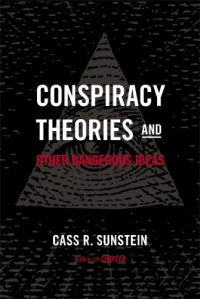 A Review of Conspiracy Theories and Other Dangerous Ideas by Cass Sunstein (based on an earlier paper co-authored with Adrian Vermeule); In Defense of Troublemakers: The Power of Dissent in Life and Business by Charlan Nemeth; and Conspiracy Theories and the People Who Believe Them, edited by Joseph E. Uscinski
On January 25 2018 YouTube unleashed the latest salvo in the war on conspiracy theories, saying “we’ll begin reducing recommendations of borderline content and content that could misinform users in harmful ways—such as videos promoting a phony miracle cure for a serious illness, claiming the earth is flat, or making blatantly false claims about historic events like 9/11.”
At first glance that sounds reasonable. Nobody wants YouTube or anyone else to recommend bad information. And almost everyone agrees that phony miracle cures, flat earthism, and blatantly false claims about 9/11 and other historical events are undesirable.
But if we stop and seriously consider those words, we notice a couple of problems. First, the word “recommend” is not just misleading but mendacious. YouTube obviously doesn’t really recommend anything. When it says it does, it is lying. … continue
Blog Roll
 Aletho News
- “Historic Russia”: The Land Putin Will Not Give Back
- How the Cambridge Analytica scandal still haunts Mark Zuckerberg
- The Ongoing Cancellation Campaign Against a Dissenting Academic in Norway
- Yemen and ‘the Houthis’: Challenging Sami Hamdi’s Narrative
- No, Christians did not invent Zionism
- AIPAC-led lobbying network opens branches in Cypriot, Greek parliaments
- Araghchi blasts ‘parasitic’ alliance as US taxpayers pay for Israel’s war on Iran
- Easy fix for Europe’s chaos? Stop fueling war against Russia
- Putin’s key remarks on peace talks and Europe’s ‘schizophrenia’
- Trita Parsi: Israel Set a Trap for Total War in the Region
- If Americans Knew
- An error has occurred; the feed is probably down. Try again later.
- No Tricks Zone
- Two New Studies Find Thwaites Glacier Melt Cannot Be Driven By Human Activity Or A Warming Ocean
- E-Cars Reduce CO2 Emissions By Only 41% Compared To Internal Combustion Engine Vehicles
- Predictions Made By Renowned Climate Professor Over Past Decades Have Been Proven To Be Poor
- New Study Suggests Large Regions Of The Pacific Ocean Have Been Cooling For The Last 80 Years
- Germany’s Green Energy Debacle: High Energy Costs Force Kahla Porzellan to Close After 182 Years!
- New Study: 50 Years Of The Most Aggressive ‘Net Zero’ Policies Can Only Affect The Global Climate By 0.03°C
- US September “Heat” Was No Record…Many Records Set Decades Ago
- Latest European Green Energy Debacle; Portugal’s Largest Flagship Solar Park Insolvent!
- Green Energy Debacle: German Expert Professor Fritz Vahrenholt Warns Of Severe Economic And Social Consequences
- Two More Paleo Reconstructions Affirm Meters-Higher Sea Levels Across Ireland, Brazil 7000-6000 Years Ago

