US Funded Virus Research And Used Outbreak Against Us
By Dr. Joseph Mercola | Principia Scientific | March 20, 2021
While the outrageously conflicted investigative commission put together by the World Health Organization has dismissed the possibility of SARS-CoV-2 being a lab-leaked virus, deciding to pursue the imported frozen food theory instead,1,2,3 the lab-origin story refuses to die, and for good reason.
There’s just too much evidence pointing in that direction. Evidence of U.S. involvement is also mounting, although it hasn’t received quite as much coverage. Two individuals who have been heavily implicated are:
• Dr. Anthony Fauci, director of the National Institute of Allergy and Infectious Diseases (NIAID) who rose to national prominence as the leader of the White House Coronavirus Task Force.
• Peter Daszak, Ph.D., president of EcoHealth Alliance, a nonprofit organization focused on pandemic prevention that has worked closely with bat coronavirus researcher Shi Zhengli and others at the Wuhan Institute of Virology (WIV).
Daszak was chosen to be on two separate commissions charged with investigating the origin of SARS-CoV-2, one by the WHO4 and one by The Lancet.5 His inclusion has been widely criticized, as he played a central role in the plot to obscure the lab origin of SARS-CoV-2 from the very beginning by crafting a scientific statement condemning such inquiries as “conspiracy theory.”6,7
[youtube https://www.youtube.com/watch?v=R6y8dlhoMpo?start=345&w=560&h=315]In the video above, begining at 5:45, Chris Martenson, Ph.D., reviews Newsweek’s reporting8,9 on NIAID-funded gain-of-function research on bat coronaviruses at the WIV. Newsweek wrote a series of articles on this in late April 2020.
Read the rest here: articles.mercola.com
China Hit With Sobering Splash of Reality as Alaskan Talks Melt Under Heat of U.S. Belligerence
By Matthew Ehrett | Strategic Culture Foundation | March 24, 2021
They had some reason to make their hopeful assumptions as the U.S. State Department press releases announced that the meetings would “highlight cooperation that promotes peace, security and cooperation in the Indo-Pacific region and around the world.”
The Chinese certainly hoped that the sanctions imposed under Trump’s watch might be rolled back by the new administration and that the new team might respect China’s sovereign right to pursue its economic interests without being seen as an opponent to the decaying western empire. They have understandably gotten quite tired of dealing with the constant unipolar intimidation as has been so common since Obama’s Asia Pivot was first announced in 2012. In response to the pressure of a dying empire attempting to insecurely impose its will on a growing nation which will soon find itself as the economic leader of the world, China has responded consistently with class and restraint calling for cooperation and dialogue.
At various times over recent years, China has offered the USA and other western nations desperately in need of real economic development, opportunities to cooperate on the Belt and Road Initiative, space research and other sectors of win-win cooperation citing these domains as being inclusive of all and beneficial to all participants. The fact that the Chinese have made these offers isn’t surprising. The USA is economically bankrupt, sitting upon a derivatives-fueled hyperinflationary bubble ripe to blow, devoid of any significant manufacturing capacities it once enjoyed and militarily over-extended beyond belief. So it isn’t as if cooperating on the BRI isn’t in the interests of the USA… as a sovereign nation.
But the USA isn’t really a sovereign nation state these days. It’s something else.
This sad fact slapped the Chinese delegation across the face moment U.S. representatives Anthony Blinken and Andrew Sullivan opened their mouths during the keynote remarks and spewed nothing but belligerent poison at their Asian counterparts. Blinken began his condescending chastisements of China’s disruptive influence to “international rules-based order”, condemned China for its alleged cyber-attacks and the apparently vicious treatment of Uyghurs, Hong Kong, Tibetans and Taiwan. Sullivan followed suit promoting the importance of the anti-Chinese “Quad” (often dubbed the “NATO of the Pacific) and virtue signalled “American ingenuity” and leadership.
Using the best newspeak available to an American diplomat these days, Blinken condemned the “might makes right” outlook which has caused so much injustice over the years and which apparently guides China thinking, saying: “The alternative to a rules-based order is a world in which might makes right and winners take all, and that would be a far more violent and unstable world for all of us.”
Of course, one might be confused by this claim since China has only one foreign military base in Djibouti, has started no new wars in generations and has lifted nearly a billion people out of poverty, but that’s only because you don’t receive quality CIA briefings like Blinken and Sullivan.
Yang Jiechi and Wang Yi’s responses provided a sobering sledgehammer of reality as both statesmen took the opportunity to spend 42 minutes laying out in stark terms the scale of hypocritical poison in extolling democracy abroad while not being able to win the support of its own population citing BLM. Jiechi also contrasted the USA’s obsessive use of regime changes and wars across the world in defense of the Washington-run “rules based order” with China’s track record in ending extreme poverty winning the support of its citizens and building great infrastructure projects abroad.
Calling out the disingenuous intention behind the U.S. delegation’s organization of the talks, Jiechi stated:
“isn’t this the intention of the United States – judging from what, or the way that you have made your opening remarks – that it wants to speak to China in a condescending way from a position of strength? So was this carefully all planned and was it carefully orchestrated with all the preparations in place? Is that the way that you had hoped to conduct this dialogue? Well, I think we thought too well of the United States. We thought that the U.S. side will follow the necessary diplomatic protocols.”
Jiechi continued:
“So let me say here that, in front of the Chinese side, the United States does not have the qualification to say that it wants to speak to China from a position of strength. The U.S. side was not even qualified to say such things even 20 years or 30 years back, because this is not the way to deal with the Chinese people. If the United States wants to deal properly with the Chinese side, then let’s follow the necessary protocols and do things the right way.”
In the ensuing days of meetings, it should not come as a surprise that very little in the way of serious conflict resolution occurred. In fact, the only solid points of agreement which the U.S. side would permit involved two joint protocols that fall perfectly into alignment with the Malthusian closed system objectives of the Great Reset agenda attempting to reign in a post-nation state world order in the wake of the oncoming economic meltdown. These included 1) a joint program to coordinate more closely on fighting global warming via green finance and green energy grids and 2) coordinating on COVID-19 vaccination programs.
Nothing which China is doing that relates to actual scientific and technological growth, long term conditionality-free banking or poverty extermination was permitted by the U.S.-side for reasons which should be obvious to the informed reader by now.
While Blinken did announce in the post-conference press release that space cooperation between the two powers was discussed, it is a fact as true as gravity that the imperial technocrats running the Biden White House are so ideologically opposed to the sort of open-system programs which space cooperation creates that Blinken’s remarks are sure to remain dead words.
What is clear coming out of the Alaska meeting is that the Biden Administration is committed to accelerating the worst elements of the “hard imperial” practices of military encirclement of China while building up the QUAD military alliance on the one hand while also advancing the “soft imperial” practices of pulling China into unbreakable de-carbonization treaties and medical health regimes controlled by supranational technocrats on behalf of the Anglo-American oligarchy.
Continue readingBoulder Shooter Threatened Fake Hate Crime Charges Against Classmates He Attacked
By Paul Joseph Watson | Summit News | March 24, 2021
The gunman in Boulder who killed 10 people at a supermarket would routinely threaten his classmates with threats of filing fake hate crime charges after violently attacking them, eyewitnesses told the media.
As we highlighted yesterday, Ahmad Al-Issa would typically be described as an “anti-racist activist,” with his Facebook page having featured criticism of Donald Trump, advocacy for refugees and Muslim immigrants.
Despite the gunman’s family telling the Daily Beast that the reason for his rampage was as a result of him being the victim of “bullying” in high school, Al-Issa’s classmates say the opposite is true.
A Fox 31 report reveals that Al-Issa once punched a classmate and continued to hit him as he lay on the ground.
Al-Issa tried to justify the attack by claiming the victim “had made fun of him and called him racial names weeks earlier,” although no other classmates could corroborate this.
The shooter’s wrestling team classmate Dayton Marvel also told the Denver Post that in Al Issa’s senior year, “during the wrestle-offs to see who makes varsity, he actually lost his match and quit the team and yelled out in the wrestling room that he was like going to kill everybody.”
“Nobody believed him. We were just all kind of freaked out by it, but nobody did anything about it,” said Marvel.
“He would talk about him being Muslim and how if anybody tried anything, he would file a hate crime and say they were making it up,” he added.
Given this history and the fact that Al-Issa was an avid reader of mainstream media, questions now must be asked about his real motivation given that all the gunman’s victims were white and whether he was radicalized by anti-white racism that has been institutionalized by the press.
Dark New Dem Bill Uses “Counter American Intelligence” To Wage War on MAGA

Last week, HBO released Part 1 of its 6-part docuseries “Q: Into The Storm.” It’s the latest douse of lighter fluid on a growing pyre of Regime Media agitprop against “conspiracy theories tearing democracy apart.”
Not to be outdone, CNN Clockwork Orange’d the country’s airport terminal captives with another round of “She’s losing her parents to QAnon. Listen to her plea”:
Evidently, “When parents become strangers: How QAnon is tearing families apart” and “’They’re unrecognizable’: One woman reflects on losing her parents to QAnon” were such box office blockbusters the industry keeps churning out sequels.
In turn, the right-wing internet trended the meme “Blue Anon,” a counter-concept designed to mock left-wing conspiracy theories. The results were predictable: Google banned the term Blue Anon from the front page of its search results. Internet slang repository Urban Dictionary banned the entry for the term “BlueAnon” altogether. … continue
11 Million School-Age Children To Be Vaccinated By Autumn
By Richie Allen | March 24, 2021
The Telegraph claims that it has seen provisional government plans to begin vaccinating children as early as August. Two sources told the paper, that August is the earliest that children under-18 could receive a vaccine.
Oxford University is currently trialling covid vaccines on children. Safety data is expected sometime in June or July. If the data is positive, the government will roll-out the jabs for children.

It has been estimated that at the current vaccination rate, roughly three million jabs a week, most of the country’s 11 million schoolchildren could be vaccinated before the Autumn term.
Government advisers are keen to vaccinate every child in the country, claiming it’s the best way to limit the spread of infection. Critics point to the fact that the virus barely brushes children. Kids are unlikely to contract covid-19 and those who do, rarely fall ill.
In fact, the government admitted last week, that children returning to school has not led to a rise in infections. Of the 2,762,775 lateral flow tests that were carried out on secondary pupils since they went back, just 1,324 were positive, according to the first official figures.
That’s right. Millions of tests were given to secondary school children and only 0.05 per cent of them tested positive for the virus. Kids don’t get it. Kids don’t carry it. Kids don’t pass it on.
So why vaccinate them? Why vaccinate anyone? UK Chief Medical Officer Chris Whitty admitted last night that most people who get covid have mild or no symptoms. “It’s very difficult to find” he said.
No sane parent would allow their child receive an experimental treatment for an illness that presents no risk whatsoever to children.
Russian Foreign Ministry on Biden’s Character Assassination of Putin
By Stephen Lendman | March 20, 2021
Biden’s denigration of Vladimir Putin, calling him a soulless “killer,” threatening to make him “pay a price” for nonexistent Russian US election meddling, nonexistent poisoning of Navalny, and other invented reasons, imposing multiple rounds of lawless sanctions on Moscow with more to come along with other dirty tricks, demands sharp retaliation well beyond words alone.
Washington considers Russia a mortal enemy — for its sovereign independence, for smashing US supported ISIS and its other jihadist foot soldiers, for turning the tide of battle in Syria, for defeating Washington’s imperial project in the country.
No prospect exists for improved bilateral relations. Good faith diplomatic outreach to the US is a waste of time.
Promises when made by its ruling authorities are hollow, betrayal virtually always following.
Moscow should cut ties to the US. They exist in name only.
A state of undeclared US war on Russia by other means exists — chances for turning a page for normalized relations rejected by its dominant hardliners.
Both right wings of its war party go all out to undermine Russia and other independent countries politically, economically, and militarily.
So far, it’s short of preemptive war against Russia, China, and Iran, nations able to hit back hard if attacked.
Yet what’s unthinkable is possible by accident or design.
The Pentagon has war plans drawn and updated against all invented US adversaries.
For dominant hardliners in Washington, normalization of relations with nations free from their control is off the table, why pursuing them by Russia, China and other independent countries assures failure when tried.
US ruling authorities demand subservience from the world community of nations.
Ones unwilling to bend to their will are targeted for regime change — by whatever it takes in trying to achieve their diabolical aims.
On Thursday, Russian Foreign Ministry spokeswoman Maria Zakharova accompanied tough talk condemnation of Biden’s denigration of Putin with customary Russian softness in separate remarks — viewed as weakness by dominant US hardliners.
Zakharova: “The current US (regime) never ceases to surprise us with its absurd public statements.”
“It’s not just about the unseemly attacks against Russia’s top officials, but also the absurd accusations of Russia’s interference in last year’s presidential election in the United States, in which, as you are aware, Joe Biden was the winner.”
Corrections: Unacceptable Biden regime accusations of Russian US election interference, poisoning Navalny, and other phony claims are bald-faced Big Lies.
Calling them “absurd” isn’t strong enough.
Trump defeated Biden as Russia and everyone paying attention knows, not the other way around.
Zakharova got tougher about fake accusations of Russian US election interference, saying:
“We consider this yet another fabrication which is built entirely on the groundless belief that ‘Russian influencers, including Donald Trump’s support base if you follow this line of thinking, were behind the massive online criticism of the (Dem) candidate.”
“Meanwhile, if there was anyone who tried to ‘influence’ the voting, it was the pro-(Dem) internet juggernauts that blocked the social media accounts of the incumbent president and hundreds of thousands of his supporters.”
Indeed and she added:
“There is no evidence of Russian government agencies’ interference in US domestic affairs, something you can’t say about the US officials’ endless attempts to control political processes in other countries, including Russia, and to issue direct orders to marginal opposition groups in order to sow instability, discord and strife.”
“We clearly saw this in their response to the unauthorized demonstrations in Moscow in January, in which their organizers tried to involve even minors.”
“(T)he US is held captive by illusions as it strives to unleash a senseless campaign of Russophobic attacks.”
“This only leads to further degradation of bilateral relations, which contradicts the fundamental interests of the peoples of Russia and the United States.”
“It appears that Washington is not ready to understand the ensuing risks to peace and security.”
The above tough talk is long overdue and welcome, even though not as tough as what’s needed — accompanied by bold actions.
No longer should Russia refer to US officials as “colleagues” and “partners.” They’re mortal enemies.
When tough talk like the above occurs, time and again it’s followed by softness, diplomatic outreach for improved relations.
It’s obvious to everyone paying attention that US authorities have no intention normalizing ties with governments unwilling to bend to their will, no intention to pursue peace and cooperative relations with other nations on a level playing field, according to the rule of law.
Dominant US hardliners demand obedience, submission to their will.
Hardball targets outliers, countries wanting their sovereign rights and territorial integrity respected.
Washington plays by other rules, its own — demanding everything, offering nothing in return but broken promises and toughness.
The only effective response is by giving its ruling authorities a taste of their own medicine, short of war.
Nothing else gets their attention.
Treating the US like a normal country assures failure every time tried and self-inflicts harm.
Russia, China and other nations free from its imperial control need to assert their sovereign rights through strength, not weakness.
It’s the only language hardliners in Washington understand.
Cristina Fernandez Scores Major Win on Google’s Defamation Case

Vice President of Argentina Cristina Fernandez de Kirchner, Buenos Aires, March 20, 2021. Photo: Twitter/ @thesunpostnews
teleSUR | March 20, 2021
In May 2020, Google defamed the Argentina’s Vice President Cristina Fernandez de Kirchner by calling her “Thief of the Argentine Nation” instead of making reference to her position.
Argentina’s Supreme Court dismissed the appeal filed by Google against the ruling which forces the company to keep the defamatory information against Cristina Fernandez de Kirchner.
Last year, Cristina filed a petition with her country’s justice system demanding that U.S. tech giant Google preserve the data naming her as “Thief of the Argentine Nation.”
The nickname appeared on Google’s platform replacing the information about her current positions when entering the Vice President’s name. The result was displayed without referring to any third-party website but under the sole responsibility of Google.
The Supreme Court ruling forces Google to keep the data associated with Fernandez from May 17, 2020, until the end of the investigation process, which will allow to get proofs and assess the defamation.
“Google’s reach in the world is immeasurable, so the damage generated in this opportunity is difficult to calculate without the results of the expert evidence,” said the former president’s lawyer Carlos Berardi.
Former president Cristina Fernandez (2007-2015) declared that if she wins the defamation case and there is compensation for the caused damages, the payment will be donated to the “Sor Maria Ludovica” Children’s Hospital in La Plata.
UPDATED: President Magufuli dead at 61
A corporate coup has removed Tanzania’s “Covid denying president”, and nobody should be surprised.
OffGuardian | March 18, 2021
UPDATE 19/03/21 – Tanzania’s vice-President Samia Suluhu Hassan has been officially sworn in as the new President. Details.
After weeks of being out of the public eye, Tanzania’s President John Magufuli has died age 61, according to the country’s Vice President.
The global press are reporting the death of Tanzania’s “Covid denying President” with barely disguised glee.
The official cause of death is rumoured to be a heart attack, but some are implying it may have been due to the virus. The Economist, for example reports:
“Many believe the virus was to blame.”
As if what “many believe” really means anything.
However it happened – whether virus or heart attack or, ahem, “suicide” – the long and short of it is that Magufuli is gone. Just as we predicted only a few days ago.
So what now for the East African nation? Well presumably Magufuli’s successor – be it the Vice-President, or a hastily elected new leader (perhaps the head of the opposition, given so many column inches in recent weeks) – will take the reins of the country.
Will they continue their predecessor’s “Covid denying” policies? I would be astounded.
If what happened in Burundi last summer is any guide, the Tanzanian Covid approach will be totally reversed within a day or two of the President dying.
As the Council on Foreign Relations reported, only last week:
“… a bold figure within the ruling party could capitalize on the current episode to begin to reverse course.”
Expect that “Bold Figure” to rise to prominence very soon, and receive the kind of glowing write-ups in the Western press, that only their hand-picked men ever get.
Bloomberg is already reporting that:
Tanzania’s Next Leader to Face Predecessor’s Covid Denialism
And that:
New leader must decide whether to change course on Covid-19
The Covid reversals have actually already begun, they were being put in place even before the President was reported dead, with WHO spokespeople praising Tanzania’s “new position” on Covid as early as March 12th.
The “new position” will likely be enforced with industrial blackmail. Bloomberg reports:
“Magufuli spearheaded a major infrastructure investment drive, and pending decisions on whether to proceed with several mega-projects will now fall to his successor.”
It’s not hard to see the obvious financial threat here. “Change your Covid position, or foreign investors will pull out of your infrastructure projects”.
Plus, there are the former President’s plans to part-nationalise the mining industry, which his successor may well be forced to halt, for fear of “alienating international investors”:
The nation’s new leader will also need to decide whether to run the risk of alienating international investors and press ahead with controversial mining reforms that Magufuli said were needed to ensure the nation derives greater benefit from its natural resources.
It seems fairly obvious there’s been a major powerplay in Tanzania, a soft coup using business in place of bullets. But what do you think?
- What will President Magufuli’s successor do now?
- Will the WHO be invited back into the country?
- Will they start mass testing?
- Will Tanzania’s “hidden pandemic” suddenly come to light?
- Did Magufuli really die of natural causes?
- For those of you who answered yes to question 5, would you like to buy a bridge?
*
UPDATE 19/03: As of this morning (the 19th) Magufuli’s Vice-President has been officially sworn in as his successor. Samia Suluhu Hassan, who was part educated in Britain, is the countries first female President, which the Western press are naturally all over.
In her inauguration speech, she called upon the country to “come together” and warned this was “not a time for pointing fingers”, demonstrating she’s aware of how suspicious this transition of power appears, and how tenuous her grip on power will be in these early days of replacing a very popular leader.
Remember yesterday when we predicted “glowing write-ups” for Magufuli’s successor?
Well, she’s being described as a “conciliator” in the press, which is Western journalism talk for “someone who will do as they are told”. Human Rights Watch has predicted Tanzania will experience a “revival of democracy” under her leadership, and The Guardian is already reporting:
“DaMina Advisors, a political risk advisory firm, predicted the new president was likely to make a public U-turn on her predecessor’s policy of Covid denial and his generally negative attitudes toward foreign investors.”
It really couldn’t be more obvious what has happened here.
Tanzanian President Who Was Skeptical of Western Vaccines DEAD After Missing for Two Weeks
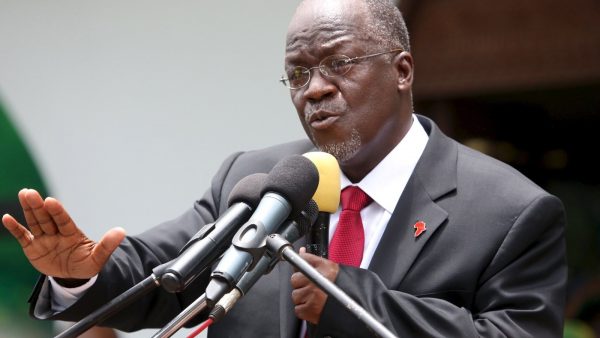
By Brian Shilhavy | Health Impact News | March 17, 2021
It is being reported today that Tanzania’s president, John Magufuli, has died after being missing for more than two weeks.
The President’s death was announced today by the country’s vice-president Samia Suluhu, who said the president died of heart failure. He was 61.
About two weeks ago Health Impact News published an article that was written by Rishma Parpia of The Vaccine Reaction reporting that both President John Magufuli, and his health minister, Dorothy Gwajima, had announced that their country has no plans in place to recommend widespread use of COVID-19 vaccines in the African country.
On Feb 2, 2021, Tanzania’s health minister, Dorothy Gwajima, announced that her country has no plans in place to recommend widespread use of COVID-19 vaccines in the African country.
The announcement came a few days after Tanzania’s President John Magufuli expressed concern about the safety and effectiveness of COVID-19 vaccines developed and manufactured in Western countries.
President Magufuli said that the health ministry will only accept COVID-19 vaccines after Tanzania’s experts have examined and certified them. Health Minister Dorothy Gwajima explained,
“We are not yet satisfied that those vaccines have been clinically proven safe.”
President Magufuli reiterated that he will not allow Tanzanians to be used as guinea pigs in COVID-19 vaccine trials conducted by vaccine manufacturers. He warned that COVID-19 vaccines could be harmful and has been urging Tanzanians to stop living in fear and adopt common sense disease control measures and lead a healthy lifestyle. Health Minister Gwajima said:
We must improve our personal hygiene, wash hands with running water and soap, use handkerchiefs, herbal steam, exercise, eat nutritious food, drink plenty of water, and [use] natural remedies that our nation is endowed with.
See:
Almost immediately after this article was published, President Magufuli disappeared from public life.
Last week, Kit Knightly, writing for Off-Guardian, wrote an article titled: Tanzania – The second Covid coup?
President John Magufuli’s disappearance makes him potentially the 2nd “Covid denier” head of state to lose power.
JOHN MAGUFULI, PRESIDENT OF TANZANIA, HAS DISAPPEARED. HE’S NOT BEEN SEEN IN PUBLIC FOR SEVERAL WEEKS, AND SPECULATION IS BUILDING AS TO WHERE HE MIGHT BE.
The opposition has, at various times, accused the President of being hospitalised with “Covid19”, either in Kenya or India, although there remains no evidence this is the case.
To add some context, John Magufuli is one of the “Covid denier” heads of state from Africa.
He famously had his office submit five unlabelled samples for testing – goat, motor oil, papaya, quail and jackfruit – and when four came back positive and one “inconclusive”, he banned the testing kits and called for an investigation into their origin and manufacture.
In the past, he has also questioned the safety and efficacy of the supposed “covid vaccines”, and has not permitted their use in Tanzania.
In the Western press Magufuli has been portrayed as “anti-science” and “populist”, but it is not fair to suggest that the health of the people of Tanzania is a low priority for the President. In fact it’s quite the opposite.
After winning his first election in 2015 he slashed government salaries (including his own) in order to increase funding for hospitals and buying AIDs medication. In 2015 he cancelled the Independence Day celebrations and used the money to launch an anti-Cholera campaign. Healthcare has been one of his administration’s top priorities, and Tanzanian life expectancy has increased every year while he has been in office.
The negative coverage of President Magufuli is a very recent phenomenon. Early in his Presidency he even received glowing write-ups from the Western press and Soros-backed think tanks, praising his reforms and calling him an “example” to other African nations.
All that changed when he spoke out about Covid being hoax.
If we are about to see the sudden death and/or replacement of the President of Tanzania, he will not be the first African head of state to suffer such a fate in the age of Covid.
Last summer Pierre Nkurunziza, the President of Burundi, refused to play along with Covid and instructed the WHO delegation to leave his country…before dying suddenly of a “heart attack” or “suspected Covid19”. His successor immediately reversed every single one of his Covid policies, including inviting the WHO back to the country.
That was our first Covid coup, and it looks like Tanzania could well be next.
Kit Knightly is looking more and more like a modern day prophet. Read his full article here.
President Magufuli could hardly be “anti-science.” He had masters and doctorate degrees in chemistry from The University of Dar es Salaam. In 2019 he was awarded an honorary doctorate by the University of Dodoma for improving the economy of the country.
I would expect that the incoming new administration will be quick to accept western COVID experimental “vaccines” now, similar to what happened in Burundi.
Trade-Off ahead on Syria and Yemen
By Ghassan Kadi for the Saker Blog | March 16, 2021
In the past few weeks much has happened in the area of diplomacy on the part of Russia. Russia is forging ahead after stepping up its presence in the Middle East in the past decade, taking a strong pro-active political role. Moscow during this period has been intent on consolidating its efforts in re-establishing itself as the key player in any political settlements in the Middle East. Ever since Kissinger in the late 1970’s pulled the rug out from underneath the feet of the USSR, striking a deal between Israel and Egypt, excluding the USSR and the rest of the Arab World, the political influence of Russia in the Middle East significantly waned until it came back with deciding force when Russia responded to the Syrian Government’s request for help in September 2015.
Lately, the economic crisis has deepened in Syria following the drastic Western sanctions. And specifically after the implementation of the Caesar’s Act, the Syrian currency took a huge tumble and the cost of living has soared to unprecedented levels. This left many cynics wondering and pondering what was Russia going to do in the face of the collapsed Syrian economy after having achieved an impressive military victory, taking its troops outside its former USSR borders for the first time and heralding the end of the single super power status of the USA.
To this effect, and on the diplomatic side, Russian FM Lavrov has recently visited Saudi Arabia, Qatar and the UAE for talks pertaining to an array of issues. The agenda issues that transpired to the media include trade, the Russian Sputnik V vaccine, as well as issues of global and regional security, albeit vague in details as what ‘security issues’ mean.
It appears that in these meetings, discussions included the return of Syria to the Arab League and the cost of reconstruction of Syria after ten years of war, a bill touted to exceed $Bn200. Expectations have existed for some time that the Arab Gulf states will fork out a huge chunk of this cost. As mentioned above, the bottom line here is that Russia’s military success in its operation in Syria needs to be followed by political success. Partly, this is achieved within the Astana talks which include Turkey and Iran. However, the very same Arab States instrumental in the ‘War on Syria’ are also instrumental in facilitating the return of Syria to the Arab League, the reconstruction efforts in Syria and the easing of sanctions. The Gulf states have always reiterated that there will be no return of Syria to the Arab League for as long as Iranian forces remain on the ground. The UAE seemed more open than Saudi Arabia to the prospects of Syria’s return to the Arab League and financing the reconstruction process.
But why would the Gulf States, the same states that spent tens of billions of dollars in order to destroy Syria, be suddenly now interested in the reversal of the process? This is a fair question to ask.
Quite unexpectedly, and almost immediately after the return of Lavrov to Moscow, a top delegation of Hezbollah, headed by Mohamad Raad, was invited to Moscow for talks. Apparently, the visit was cloaked in a veil of secrecy in Russia and was not at all covered in Western media, even though it made news in Arabic mainstream media. It would be politically naïve to imagine that Lavrov’s visit to the Gulf has no relation to this. All issues in the Middle East are related to each other, including the war in Yemen.
To put it succinctly, the UAE had already stepped away from the Yemen war. However, Saudi Arabia remains bogged down in this travesty and seven years on, must have come to the humiliating and painful realization that it is a war it cannot win. This is where Iran and Hezbollah can have leverage in any direct or indirect negotiations with the Saudis, and Russia is the only arbitrator who is able to communicate with all parties involved.
All parties in the Middle East are looking for face-saving tradeoffs; at least partial and interim ones. The Saudis in particular are tired and exhausted.
In an interview given to Sputnik Arabic, one not widely reported in other media, not even Sputnik English, Raad praised the cooperation between Hezbollah and Russia, stating that ‘the invitation we received aims to reopen the dialogue about the next phase after having reached the achievements that serve the interests of the people of the region in the recent past’ .
This is Raad’s first visit to Moscow since 2011. Of that visit, I am not trying to speculate in hindsight of the purpose of it and the achievements of it. Furthermore, Hezbollah has not ever been party to any international dis-engagement or peace negotiations in the past, except for ones relating to exchange of prisoners. The economic demise of Syria and Lebanon, as well as the Saudi-Yemeni impasse, may well have placed Hezbollah in a position of participating in peace-deals negotiations this time.
I am neither referring to peace deals with Israel here, nor any deal involving disarmament. Hezbollah will not be prepared to negotiate disarming itself under any political settlement either today or in the foreseeable future, and Moscow is totally aware of this.
According to my analysis, the deal that Moscow is most likely to suggest is a mutual withdrawal of Iran and Hezbollah from Syria on one hand, and an end of the Saudi war on Yemen. It is simple, Saudi Arabia to leave Yemen and Iran/Hezbollah to leave Syria. I believe that Lavrov has already secured the Saudi acceptance of those terms, terms that will not only end the war in Yemen, but also the return of Syria to the Arab League and a possible easing of the Western economic sanctions on Syria. Had Lavrov not secured the Saudi assurance, he would not have invited Hezbollah for talks.
A deal of this nature can potentially end the criminal human tragedy in Yemen in a manner that will portray the Saudis as the real losers in the war, and this is where they need a face-saving trade-off in Syria. In Syria, they will be perceived as winners by securing an Iranian/Hezbollah exit. But most importantly perhaps for the Saudis, this will put an end to a very costly and humiliating war in Yemen, one which is beginning to draw criticism from some quarters of the international community, including alleged talk of America considering placing arms deal embargos on Saudi Arabia.
On the other hand, if Iran and Hezbollah end their presence in Syria, many sanctions are likely to be lifted and the severe economic pressure in Syria will be eased. Such a deal will be a humanitarian win for Syria and Yemen, a strategic win for Saudi Arabia and Iran, and a diplomatic win for Russia.
What will be in it for Hezbollah will largely depend on what Lavrov has put on the table, and it seems obvious that it is Hezbollah that will need more convincing than Iran, and this is why the talks are now with Hezbollah; not with Iranian officials. Perhaps the deal already has the tacit approval of Iranian officials.
It goes without saying; Israel will be watching these developments with keen interest. Israel wants Iran and Hezbollah out of Syria. But the trade-off deal I am talking about is not one in which Israel is a direct party.
What is known at this stage is that a meeting has already taken place between the Hezbollah delegation and Russian officials. As I write this, I am not aware if other meetings are to follow and or whether or not the Hezbollah delegation is back in Lebanon.
Was the 2011 Moscow visit of Raad a prelude for Hezbollah to enter Syria? Will the 2021 visit be prelude for Hezbollah to leave Syria? We don’t know. We may never find out the actual detailed outcome of the mysterious-but-not-so-mysterious current Hezbollah visit. It may not even end up with a press release, but in the next coming days, we will find out if a Syria-Yemen trade-off is indeed looming.
Bolivian Court Issues Warrants for Arrest of Former Interim President Jeanine Añez, Other Ministers
By Morgan Artyukhina – Sputnik – 12.03.2021
Last week, Jeanine Añez, the former self-proclaimed interim president of Bolivia, refused a summons to meet with the state prosecutor in her home province of Beni, paving the way for her arrest for giving security forces a “license to kill” protesters who challenged her interim government’s rule in 2019 and 2020.
A Bolivian court has issued arrest warrants for Jeanine Añez, the former interim president who seized power in a coup d’etat in late 2019, alongside several of her senior ministers, warning they are a “flight risk.”
According to the court filing shared by Bolivian news outlet Kawsachun News, Añez and nine other senior officials from her administration are charged with terrorism, sedition and conspiracy.
In response to the arrest warrants being issued, Añez took to Twitter on Friday to beg for support.
”The political persecution has begun,” she wrote. “The MAS has decided to return to the styles of the dictatorship. A shame because Bolivia does not need dictators, it needs freedom and solutions.”
Rise and Fall of the House of Añez
Añez left office in early November when Luis Arce from the Movement for Socialism (MAS) took office, having won in a landslide election on October 18. The vote was repeatedly postponed, sparking protests and fueling fears of a turn even further from democracy.
A former senator from the lowland Beni region in northeastern Bolivia, Añez rose to power in the chaos of November 2019, when a coordinated campaign by domestic and international forces attempted to void the re-election of MAS leader and then-President Evo Morales the previous month. After right-wing militias and sympathetic police forces locked out MAS lawmakers and Añez found herself the head of a rump parliament, she declared herself the interim president on November 12.
US media and the US government both provided support to the anti-MAS forces in the country, with then-US President Donald Trump and allies like Brazilian President Jair Bolsonaro quickly extending recognition to Añez’s declared interim government. However, after months of claiming Morales had stolen the vote, US papers like the Washington Post were forced to admit that the Organization of American States report underpinning those claims was “deeply flawed.”
“There is not any statistical evidence of fraud that we can find – the trends in the preliminary count, the lack of any big jump in support for Morales after the halt, and the size of Morales’s margin all appear legitimate,” the Post wrote in February 2020, after months of street violence between Añez’s police and military forces and the indigenous-led protests against them had solidified her rule.
A backer of former President Evo Morales scuffles with police in La Paz, Bolivia, Wednesday, Nov. 13, 2019. The opposition senator who has claimed Bolivia’s presidency Jeanine Anez, faces the challenge of stabilizing the nation and organizing national elections within three months at a time of political disputes that pushed Morales to fly off to self-exile in Mexico after 14 years in power.
New elections were originally slated for May 2020, but after the spread of the COVID-19 pandemic earlier in the year, Añez’s government repeatedly postponed the elections until ten days of mass demonstrations forced it to commit to October 18. Ironically, the leading contender in the race was the MAS candidate Luis Arce, who swept the October elections with 55% of the vote.
In the weeks that followed, the new Plurinational Legislative Assembly, Bolivia’s parliament, issued indictments for Añez in connection with a series of massacres of protesters by police under her watch. She and 11 of her then-ministers were implicated in massacres in the indigenous-majority communities of Senkata, Sacaba and Yapacani and accused of genocide for giving police a “license to kill.”
Last week, she refused a summons to meet with the state prosecutor in Beni on pain of arrest.
Get Jabbed for Covid and Die? No Life Insurance Benefits?
By Stephen Lendman | March 11, 2021
Mass-jabbing for covid is high-risk with no rewards, no protection as falsely claimed.
According to tapnewswire.com, many life insurance companies won’t honor their obligation if policyholders die from covid jabbing with experimental, unapproved drugs.
Pfizer and Moderna mRNA technology and Johnson & Johnson’s vaccine received emergency use authorization, not FDA approval — because of inadequate testing and hazards these drugs pose.
Some insurance are accepting life insurance applications from jabbed individuals. Others refuse.
Policies may contain a clause to deny payouts if policyholders die from unapproved covid jabs.
It’s crucial to check to find out if perishing from covid jabbing invalidates life insurance coverage.
According to reports, some, likely most, may all insurers are delaying applications from individuals testing positive for covid — even if the test result is false which is highly likely.
Currently, life insurers are asking applicants the following questions:
Have you tested positive for covid?
Are you currently self-isolating?
Do you or have you had covid symptoms?
Have you had direct contact with someone diagnosed with covid?
The vast majority of positive PCR test results are false.
Individuals who’ve been ill from the common cold that passes most often in short order with no lingering side effects may be denied coverage.
Anyone considered high-risk for covid may be permanently denied it.
The same goes for individuals who’ve been ill from heart disease, cancer, diabetes, or other diseases considered high-risk.
All of the above aside, protecting and preserving health demands rejection of experimental, high-risk, unapproved drugs for covid or anything else.
It’s our health, our choice, our lives, our welfare — our right to protect ourselves free from harmful government, media supported, mandates or recommendations.
There’s nothing safe and effective about hazardous drugs that risk irreversible harm when used as directed.
Separately according to the Wall Street Journal :
“America’s self-anointed virus experts and social-media giants are…silencing doctors with contrarian views in an apparent effort to shut down scientific debate.”
Facebook, Twitter, and You Tube et al are anti-social media censoring machines.
The same goes for gatekeeper Google.
They’re enemies of ordinary people everywhere, censoring content that diverges from the falsified official narrative.
“He who controls the past controls the future. He who controls the present controls the past,” Orwell explained.
He who controls the message controls groupthink, suppressing dissent, manipulating the public mind to reach consensus with the official narrative, wanting an obedient submissive public – distracted by bread and circuses.
Social and other major media operate as a collective Ministry of Truth.
Controlling the message is the defining feature of totalitarian rule — what Orwell called “reality control.”
We’re being manipulated by dark forces and their media press agents to self-inflict harm on the false promise of being protected.
Following their advice is hazardous to health and potentially lethal.
Featured Video

ARE PATIENTS BEING PROPERLY INFORMED ABOUT OZEMPIC?
or go to
Aletho News Archives – Video-Images
New Book
Breast Cancer: Before You Consent
A new Unbekoming paperback
Lies are Unbekoming | September 18, 2026
Peter Gøtzsche reviewed every randomised mammography screening trial ever conducted for the Cochrane Collaboration. Cochrane’s headline is that, assuming a 15% mortality reduction, one woman in 2000 avoids dying of breast cancer over ten years. Ten are overdiagnosed and treated. Two hundred experience false alarms.
But that headline assumes the reduction. When Gøtzsche looked only at the trials with adequate randomisation — the higher-quality ones — the reduction disappeared. No effect on breast cancer mortality. No effect on all-cause mortality.
This is the Cochrane finding, published in the establishment’s own database of systematic reviews.
No woman being asked to consent to a mammogram this week knows it.
That is why the new Unbekoming paperback exists. … continue
Blog Roll
 Aletho News
- ARE PATIENTS BEING PROPERLY INFORMED ABOUT OZEMPIC?
- US lawmaker blocks $2.8 billion weapons sale to Israel: Report
- Yemeni army claims responsibility for strikes on sensitive sites in Saudi capital, Aramco facilities in Yanbu
- Iran Judiciary issues indictments against 159 US, Israeli officials for assassination of Leader, commanders
- Turkiye revokes Iranian bank license under US sanctions campaign
- US-Denmark Agreement on Greenland Is ‘PR Stunt’ Ahead of Midterms
- Araghchi: Military intervention cannot create security; coercion cannot bring peace
- Fraud Squared
- Breast Cancer: Before You Consent
- Iran’s Plan to Shut Down AI in the Persian Gulf
- If Americans Knew
- Inside Gaza’s death trap of collapsing, bombed-out buildings
- The everyday items Israel bans from Gaza every day
- Inside the siege, the ruined buildings of Gaza – Daily Update
- Debunking The Claim That Macklemore Has A “History Of Antisemitism”
- CPJ demands release of arrested Palestinian-US journalist near Bethlehem
- Robert Kraft: The Billionaire Friend of Netanyahu Pulling The Strings Behind the Macklemore/Ed Sheeran Blow Up
- Columbia Administered Fund Gives Big Money to Pro-Israel Groups
- Deportation Case of Palestinian Activist Salah Sarsour Tests First Amendment
- ‘We Will Not Forget’: Palestinians Mark 44 Years since Sabra and Shatila
- Why do we let Zionists decide what we can and can’t say?
- No Tricks Zone
- New Study: ‘Global Drought Shows No Detectable Recent Acceleration Under Climate Warming’
- Economic Masterminds: German Socialists Suggest Taxing Productivity Gains Stemming From Using AI
- The South China Sea Has Not Been Cooperating With The Climate Change Narrative
- Energy Crisis: Germany Enters Heating Season With Historically Low Gas Reserve Fill Levels
- New Study: The Antarctic Ice Sheet Gained Mass From 2020-2024 Due To Staggering Snow And Ice Accumulation
- Study: Ocean Heating Rates From Thousands Of Years Ago ‘Dwarf’ Modern Ocean Heating Rates
- Climate Extremists Target, Attack Large-Scale Power Grid Infrastructure In Germany!
- New Study: Antarctic Ice Melt Has Contributed Less Than 1 Centimeter To Sea Level Rise In The Last 30 Years
- Fear Of Debate: Alarmist German Climate Scientist Calls On Mainstream Media To Discredit Skeptic Voices
- End-Of-August Arctic Sea Ice Extent Hasn’t Fallen In 20 Years, Official Data Show!
 Aletho News