Coronavirus: Virological findings from patients treated in a Munich hospital
Charité – Universitätsmedizin Berlin | April 3, 2020
In early February, research teams from Charité – Universitätsmedizin Berlin, München Klinik Schwabing and the Bundeswehr Institute of Microbiology published initial findings describing the efficient transmission of SARS-CoV-2. The researchers’ detailed report on the clinical course and treatment of Germany’s first group of COVID-19 patients has now been published in Nature*. Based on these findings, criteria may now be developed to determine the earliest point at which COVID-19 patients treated in hospitals with limited bed capacity can be safely discharged.
In late January, a group of patients in the Starnberg area near Munich became Germany’s first group of epidemiologically linked cases of COVID-19. Nine patients from this ‘Munich cluster’ subsequently received treatment at München Klinik Schwabing. “At that point time, we really knew very little about the novel coronavirus which we now refer to as SARS-CoV-2,” says one of the study’s lead authors, Prof. Dr. Christian Drosten, Director of the Institute of Virology on Campus Charité Mitte. He adds: “Our decision to study these nine cases very closely throughout the course of their illness resulted in the discovery of many important details about this new virus.”
“The patients treated at our hospital were all young to middle-aged. Their symptoms were generally mild and included flu-like symptoms like cough, fever and a loss of taste and smell,” explains the other lead author, Prof. Dr. Clemens Wendtner, Head of the Department of Infectious Diseases and Tropical Medicine at München Klinik Schwabing, a teaching hospital of LMU Munich. “In terms of scientific significance, our study benefited from the fact that all of the cases were linked to an index case, meaning they were not simply studied based on the presence of certain symptoms. In addition to getting a good picture of how this virus behaves, this also enabled us to gain other important insights, including on viral transmission.”
All nine patients underwent daily testing using both nasopharyngeal (nose and throat) swabs and sputum samples. Testing continued throughout the course of their illness and up to 28 days after the initial onset of symptoms. The researchers also collected stool, blood and urine samples whenever possible or practical. All of the samples collected were then tested for SARS-CoV-2 by two separate laboratories working independently of each other: the Institute of Virology on Campus Charité Mitte in Berlin and the Bundeswehr Institute of Microbiology, an institution which forms part of the German Center for Infection Research (DZIF).
According to the researchers’ observations, all COVID-19 patients showed a high rate of viral replication and shedding in the throat during the first week of symptoms. Sputum samples also showed high levels of viral RNA (genetic information). Infectious viral particles were isolated from both pharyngeal (throat) swabs and sputum samples. “This means that the novel coronavirus does not have to travel to the lungs to replicate. It can replicate while still in the throat, which means it is very easy to transmit,” explains Prof. Drosten, who is also affiliated with the DZIF, and is a professor at the Berlin Institute of Health (BIH). Due to genetic similarities between the new virus and the original SARS virus, the researchers initially assumed that, just like the SARS virus, the novel coronavirus would predominantly target the lungs – thus making human-to-human transmission more difficult. “However, our research involving the Munich cluster showed that the new SARS coronavirus differs quite considerably in terms of its preferential target tissue,” says the virologist, and adds: “Naturally, this has enormous consequences for both viral transmission and spread, which is why we decided to publish our initial findings in early February.”
In most cases, viral load decreased significantly during the first week of symptoms. While viral shedding in the lungs also decreased, this decline happened later than in the throat. The researchers were no longer able to obtain infectious virus particles from day 8 after the initial onset of symptoms. However, levels of viral RNA remained high in both the throat and lungs. The researchers found that samples with fewer than 100,000 copies of viral RNA no longer contained any infectious viral particles. This allowed the researchers to draw two conclusions: “A high viral load in the throat at the very onset of symptoms suggests that individuals with COVID-19 are infectious very early on, potentially before they are even aware of being ill,” explains Colonel PD Dr. Roman Wölfel, Director of the Bundeswehr Institute of Microbiology and one of the study’s first authors. “At the same time, the infectiousness of COVID-19 patients appears to be linked to viral load in the throat and lungs. In hospitals with limited bed capacity and the resultant pressure to expedite patient discharge, this is an important factor when it comes to deciding the earliest point at which a patient can be safely discharged.” Based on these data, the study’s authors suggest that COVID-19 patients with less than 100,000 viral RNA copies in their sputum sample on day 10 of symptoms could be discharged into home-based isolation.
The researchers’ work also suggests that SARS-CoV-2 replicates in the gastrointestinal tract. However, the researchers were unable to isolate any infectious virus from patients’ stool samples. None of the blood and urine samples tested positive for the virus. Serum samples were also tested for antibodies against SARS-CoV-2. Half of the patients tested had developed antibodies by day 7 following symptom onset; antibodies were detected in all patients after two weeks. The onset of antibody production coincided with a gradual decrease in viral load.
The Munich- and Berlin-based research groups plan to conduct additional research on the development of long-term immunity against SARS-CoV-2, both within the first German cluster and in other patients. This type of research will also play an important role in the development of vaccines.
*Comprehensive research data now published in Nature.
###
A joint press release by Charité, München Klinik Schwabing and the Bundeswehr Institute of Microbiology
First COVID-19 Death Reported in Asia’s Largest Slum, Dharavi
teleSUR | April 3, 2020
Asia’s largest slum located in India’s financial capital of Mumbai has reported its first COVID-19 fatality, according to local reports.
The patient, a 56-year-old man, had no travel history and was admitted to a local hospital with a fever on Sunday and tested positive for the new coronavirus on Wednesday, an official of the Brihanmumbai Municipal Corporation (BMC) said, according to Al Jazeera.
The authorities have sealed the building where he lived, which is located in a redeveloped part of the Dharavi slum, local media reported.
Also, seven members of his family were quarantined and tested on Thursday for the virus that causes the COVID-19 disease, the Xinhua news agency said.
Mumbai authorities are concerned over the possible spread of the new coronavirus, as Dharavi is known as the most densely populated slum in Asia. At the same time, a doctor and a worker from a municipal corporation also tested positive.
An estimated 700,000 to 1 million people live crammed in Dharavi – a roughly five-square-kilometer maze of narrow lanes, dilapidated buildings, huts, and open sewers.
Public health experts say it would be difficult to contain the virus if it spread in a slum-like Dharavi where eight to 10 people often share a room.
The population density is about 270,000 per square kilometer, making social distancing almost impossible. Scores of people share water sources and sanitation facilities, Al Jazeera reported.
Dharavi’s cases have raised concern that India may be experiencing community transmission of the disease despite a countrywide lockdown since March 25, as well as exposing the harsh reality and problems of inequality in the country.
For his part, Prime Minister Narendra Modi insisted that “testing, isolation and quarantine” will remain priorities in the coming weeks, ignoring the situation of places like Dharavi, the problems of its population, as well as the needs that have arisen in the public health system in the country.
The death toll due to the COVID-19 in India stands at 62 as of Thursday, according to the latest data, while the number of confirmed cases in the country is around 2,547.
Bodies of Covid-19 victims pile up in streets of Ecuador as residents beg authorities for help

A vehicle carrying a coffin lined up to enter a cemetery, in Guayaquil, Ecuador April 2, 2020. © Reuters / Vicente Gaibor del Pino
RT | April 4, 2020
As the coronavirus pandemic rips through Ecuador, some cities are struggling to cope with a deluge of fatalities, pushing residents to make harrowing pleas for help as the bodies of loved ones accumulate in the streets.
The port city of Guayaquil, some 260 miles south of the capital of Quito, has been hit especially hard in the outbreak, leaving hospitals and morgues utterly overwhelmed in a flood of new patients and deaths. With local authorities unable to keep up with the influx of casualties, President Lenin Moreno has created a task force to tackle the problem, tapping Jorge Wated, board chairman at BanEcuador – a self-described “public development bank” – to lead the effort.
Seeking to ramp up the collection of bodies, Wated has allowed funeral homes to sidestep a nationwide curfew to work into the night to gather the deceased, and has dispatched teams of soldiers and police to pick up corpses from homes, hospitals and even streets around the city.
The efforts have still fallen short, however, sending countless citizens to social media to make desperate pleas for help, appealing directly to Wated through his Twitter account, where he shares frequent updates on the grim task at hand.
“Help me for the love of God,” one person said to Wated earlier this week, providing a home address and the name of a deceased man. “Nobody takes him … what do I do? I beg you.”
“Jorge. I have a case. Deceased going for 3 days. Already decomposed. Please … contact me,” another man wrote.
Left with few other options, social media appears to be the last recourse for many residents, with some of Wated’s tweets garnering dozens of similar urgent requests.
“On Monday my grandmother passed away, we do not know where else to call to remove the body and [need help] with the death certificate.”
Yet another appeal reads: “Dear Jorge Wated, a friend without Twitter asks for help, her brother died today 4 pm … and they still do not coordinate the removal of the corpse.”
Though Ecuador has reported only some 3,300 infections and 145 fatalities in its Covid-19 outbreak – over 100 of them in Guayaquil – the official disease and death tolls depend on the number of tests administered, and Ecuador has faced a shortage of test kits, leaving health officials unable to verify cases and add them to official tallies.
“The truth must be told. We know that both the number of infections and the official records fall short. Reality always exceeds the number of tests,” Ecuador’s president said in a recent address.
Well over 1 million cases of Covid-19 have been confirmed worldwide as of Friday, with the global death toll fast approaching 60,000. The United States remains the top hot spot for the illness, counting more than 266,000 cases – over twice that of the next largest outbreak, in Italy – and some 7,000 deaths. Still yet to reach the peak of its outbreak, the US has seen infections soar by the tens of thousands each day this week, breaking records for deaths and cases time and again.
EU Demands Serbia to Help Kosovo During Coronavirus But Restricts Assistance for Bosnian Serbs
By Paul Antonopoulos | April 2, 2020
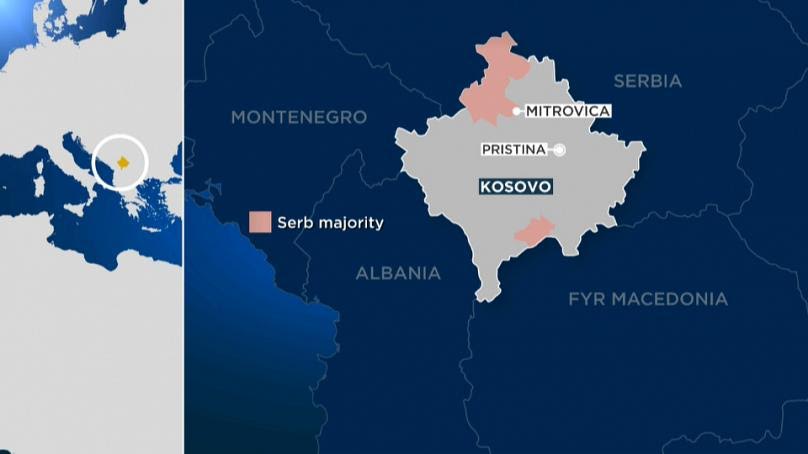
The Working Group for the Chapter 35 of the Serbian National Convention on the European Union (EU) has called for the authorities in Serbia and Kosovo to create a cooperation to reduce the spread of the coronavirus pandemic.
“We witness the coronavirus pandemic (COVID-19) representing a great danger everywhere in the world and the health systems increasingly burdened with the number of infected patients. The pandemic has shown that the spread of the disease goes beyond borders, national and ethnic origin or religion of the affected, and can only be combatted through joint action, cooperation and solidarity. Cooperation is necessary primarily for the sake of humanity and responsibility for human lives in these difficult times,” the press release reads.
In times of crisis, the EU proclaims that Kosovo is in fact Serbia’s responsibility. This unprincipled nature of the EU is solely guided by the interests of its major members and aims to palm off the medical responsibility of the illegal breakaway province of Kosovo back to Serbia. The EU did nothing to suppress Albanian separatism. In fact, the EU supports the illegality of Kosovo’s independence by deploying over 1,000 police officers under the European Union Rule of Law Mission in Kosovo mandate and all member states with the exception of Greece, Cyprus, Romania and Slovakia, recognizing Kosovo’s independence.
The EU Task Force on Chapter 35 calls for communication channels between medical staff in Serbia and Kosovo to be open as it would allow the exchange of information on the pandemic to be crossed over on a daily basis. This could also perhaps even contribute significantly to the reconciliation of the two entities. Even though Serbia is under EU pressure to help Kosovo, Belgrade should not give in to any concessions offered by Brussels on the Kosovo issue. The promise of EU membership will certainly be mentioned.
The EU is trying to force Serbia to expend their resources to send aid to Kosovo without expecting any acts of good will from the Albanian side. This is a policy that requires Serbia to treat Kosovo as its own territory while the EU still attempts to make Belgrade accept that Kosovo is an independent state. A similar appeal was sent to Serbia from the EU at the time of the migrant crisis when the EU also isolated itself from the problems in Kosovo and asked Belgrade to cooperate with Pristina in controlling migrant flows and make records of illegal immigrants traveling via Kosovo in 2015 and 2016.
While Serbia is expected to help Kosovo, despite the EU’s insistence that it is independent, Serbia is not able to assist the Republika Srpska in Bosnia. As part of Bosnia’s independence deal, two entities were formed, the Serbian-majority Republika Srpska and the Federation of Bosnia and Hezegovina, where the majority of Muslims and Croatians in Bosnia live. Sarajevo’s political leaders are vetoing the decision of the Republika Srpska National Assembly to introduce a state of emergency in its territory to stop the spread of the coronavirus. For political reasons, Muslim Bosnians are stopping life-saving security measures, which are supported by the international community, and while Serbia is expected to help Kosovo, it cannot help the Republika Srpska.
Bosnia blocked the Republika Srpska so that the borders between the two entities could not be closed as the Serbian entity wanted to do. However, if we look internationally to places like Australia, states in the same country have closed their own borders to those who do not live in a particular state. According to the laws of Bosnia, Republika Srpska cannot close their border without approval from Sarajevo.
Therefore, Sarajevo’s moves are about antagonism and political contradiction at a time when coronavirus can engulf both entities of the country. The Bosnian Muslims have no argument for denying measures to protect people from coronavirus and are using this situation to stir up ethnic tensions rather than seeing this as a medical issue. As already shown earlier, it is not a contradiction to close the borders of the entities as many states and regions around the world have closed their borders despite being the same country.
The Republika Srpska is trying to take the coronavirus pandemic seriously and its National Assembly even voted in a majority to declare a state of emergency. Even EU High Representative to Bosnia, Valentin Incko, welcomed the decision and the commitment of Republika Srpska President Željka Cvijanović to use extraordinary powers in the interest of public health. Incko also pointed out that stopping the spread of the coronavirus and saving the lives of citizens must be priorities for all Bosnian authorities. However, his recommendations did not go into the realm of pressuring Bosnian authorities, and so long as the borders remain open, the people of Republika Srpska remain susceptible to higher rates of infection.
While Serbia is expected to assist Kosovo on the behalf of the EU, despite not being an EU member and the EU insisting on Kosovo’s independence, Belgrade also cannot assist Republika Srpska without being accused of interfering in Bosnian affairs. It is little wonder then that Belgrade has lost interest in appeasing Brussels and no longer responds to promises of EU membership, and rather it continues to build its relations with traditional ally Russia as well as emerging superpower China.
Paul Antonopoulos is a Research Fellow at the Center for Syncretic Studies.
West Trying to Take Advantage of Venezuela’s Coronavirus Woes to Topple Gov’t – Moscow
Sputnik – April 2, 2020
The West is trying to take advantage of Venezuela’s difficulties during the coronavirus outbreak to depose the Maduro government, Russian Foreign Minsitry said on Thursday.
“Unfortunately, we see that a number of countries are still guided by the desire to take advantage of the difficult situation in the world and the epidemiological situation in Venezuela in particular to achieve political goals”, spokeswoman for the Foreign Ministry Maria Zakharova said during a briefing on Thursday.
According to her, the idea of a coup that would lead to the ouster of the legitimately elected president of the country still remains in the minds of some political forces in the West.
“We object to the blocking of assistance to Caracas through the IMF. We condemn the US far-fetched drug-trafficking accusations against the head of a sovereign state”, she added.
Venezuela has so far registered 143 COVID-19 cases and three deaths. Last week, Russia delivered the first batch of 10,000 coronavirus test kits to the country and vowed to continue this assistance. China, in turn, sent a team to medical experts to help the sanctioned and the cash-strapped country. Both nations have called for lifting sanctions on Venezuela.
Amid these developments, Pompeo said on Tuesday that an interim government could be established in Venezuela, consisting of National Assembly members and accepted by both Caracas and the opposition, to serve until the next presidential and legislative elections. The US pledges to remove sanctions should the conditions of its plan, including “the departure of foreign security forces” and free elections, be met.
Venezuelan Foreign Minister Jorge Arreaza rejected firmly on Tuesday Washington’s crisis settlement plan, which envisions the creation of an interim government and elections within the next year.
The US was named the best equipped country to deal with a pandemic not a year ago — what happened there?
By Peter Andrews | RT | March 31, 2020
Just last year, the US topped a list of the countries best equipped to deal with a pandemic. But the experts have egg on their face as America spirals into Covid-19 catastrophe. What went wrong?
It looks clear now that the US is going to be one of the countries worst affected by the coronavirus pandemic. Their stock market has gone into full blown meltdown, and is set for its worst quarter of all time. It seems inevitable that their economy will be plunged into a second Great Depression.
Soon they will overtake China’s number of deaths from Covid-19. Their figures now stand at almost 165,000 people infected, and having doubled in three days, the death toll has surpassed 3,000 people. President Trump has had to quickly recant his rhetoric about the lockdown being lifted and the country being put back to work by Easter. It now appears that the US, and its economy, is in for a long dark summer.
A bad bet
In October of last year, the Global Health Security Index was published. Its website bills it as “the first comprehensive assessment of global health security capabilities in 195 countries.” Developed by the Johns Hopkins Center for Health Security and the Nuclear Threat Initiative, in collaboration with The Economist Intelligence Unit, its major funders were the Bill & Melinda Gates Foundation, the Open Philanthropy Project and the Robertson Foundation.
Ever since the West African Ebola epidemic of 2014, which the Global Health Security Index calls “a wake-up call,” projects like this have been created to put better mechanisms in place for future pandemics of all kinds; be they naturally occurring viruses or genetically engineered bioweapons.
The tests the Index was based on concerns whether countries have “functional, tested, proven capabilities for stopping outbreaks at the source” which are then “regularly tested and shown to be functional in exercises or real-world events.” Pretty serious stuff, then.
Countries were assessed based on six criteria: “Prevention, Detection and Reporting, Rapid Response, Health System, Compliance with International Norms, and Risk Environment.” Of those six, the US topped the field in four, even scoring an almost perfect 98.2 in “Early Detection & Reporting.” (So much for that.)
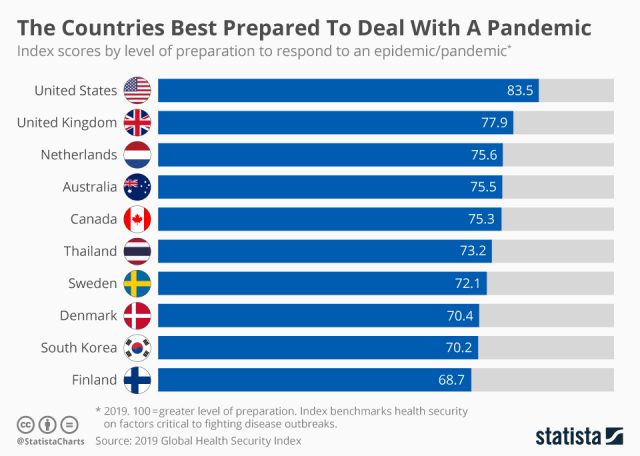
Overall, the US put the rest of the world to shame, scoring 83.5 out of a possible 100. In second place was the United Kingdom, followed by the Netherlands, Australia and Canada. Italy is in 31st place overall, and China is in 51st place. Most of the lowest scoring countries are small islands or African countries, and Equatorial Guinea gets the wooden spoon. The full list and report can be viewed here.
A comedy of errors
Being one of the richest countries in the world at the cutting edge of scientific innovation and medicine should have gone some way towards making America pandemic-proof. So why, then, are they in such big trouble now? The answer lies in their government’s poor decision-making from the very beginning, which has sent them on the most dangerous of all possible paths.
They were too slow to begin testing suspected cases, and when they did, the Centers for Disease Control and Prevention bungled the rollout. Their cases really began to spike around mid-March, but now that they have taken the lead in confirmed cases outside of China, one feels that they will not look back. Just how bad the situation could deteriorate in the US remains to be seen.
A lot of very clever think tanks and one of the nation’s top universities collaborated on this project, and it turned out to be completely wrong. Their ’About’ page lists no fewer than 21 members of their International Panel of Experts, all with a list of qualifications and job titles as long as their arm.
If the experts could have looked into the future, they would have seen that South Korea, Singapore and China probably should have scored highest on the Index. Perhaps next time their predictions will be more accurate. That is, if the US economy has not been too badly decimated to fund research like this in the future.
Peter Andrews is an Irish science journalist and writer based in London. He has a background in the life sciences, and graduated from the University of Glasgow with a degree in genetics.
UAE’s Rapprochement With Syria Aimed Against Turkey
By Paul Antonopoulos | March 31, 2020
In the midst of the coronavirus crisis, Syria’s President Bashar al-Assad and Abu Dhabi’s Crown Prince Mohammed bin Zayed Al-Nahyan, the head of United Arab Emirates (UAE), spoke by phone on Friday in the first such communication since the Syrian War began in 2011. This shows a metamorphosis of alliances and geopolitics in the Middle East and the wider region considering the UAE was one of the main backers of terrorist organizations who fought to remove Assad from power. However, for more than a year, the UAE has been sending signals showing a change in policy towards Syria. The phone call was after a long series of rapprochement that began in late 2018 with the reopening of the Emirati embassy in Damascus.
“I have discussed with the Syrian president… updates on the coronavirus. I assured him of the support of the UAE and its willingness to help the Syrian people,” Prince Mohammed said on Twitter. “Humanitarian solidarity during trying times supersedes all matters, and Syria and her people will not stand alone.”
A diplomatic source close to the case was quoted by the Lebanese daily L’Orient-Le Jour as saying the “Westerners, the Americans and French particularly, were against” a Syrian-Emirati rapprochement. According to the diplomatic source, the UAE is trying to gain favours from Moscow and has already won dozens of contracts, including in armaments, gas and infrastructure, but also with space cooperation. This is part of a broader geostrategic context and the stakes go far beyond Syria and the UAE. Rather, the UAE has acknowledged that Russia has taken a greater interest in the region, in particular in Syria and Libya.
Relations between the Gulf monarchies and the United States, traditional allies, have greatly deteriorated in recent years. The gradual disengagement of American forces from the region, but especially the lack of support from Washington against Turkey, made the monarchies with the exception of Qatar, lose the confidence they once had in the United States. According to the diplomatic source quoted by L’Orient-Le Jour, the UAE is trying to get closer to Beijing and Moscow, and the Crown Prince’s phone call to Assad is evidence of that. The call also comes as relations with Iran softened, especially seen with the many Emirati delegations who visited Iran last year, however this has not softened the UAE’s brutal Yemeni policy. None-the-less, this suggests a change in foreign policy that appeals to Moscow.
It appears then that the UAE’s turn around in its Syria policy serves two purposes: first – to strengthen relations with Russia, second – to form an anti-Turkish bloc.
As Turkey actively pursues the establishment of a neo-Ottoman Empire, the UAE is aggressively undermining the project as it opposes the Muslim Brotherhood, an organization that Turkish President Recep Tayyip Erdoğan has openly supported and backed in Syria, Libya and Egypt. The UAE recognized the Muslim Brotherhood as a terrorist organization in 2014 after the fundamentalist group made plans to infiltrate and destabilize the Gulf country to take control – the main reason for the ever-increasing deterioration in relations between the UAE and Turkey.
Since then, the UAE has been actively countering Turkish influence across the region. As part of its efforts to create an anti-Turkish block, the UAE have strengthened their relations with Saudi Arabia and Egypt. Both Saudi Arabia and Egypt fear being taken over by Muslim Brotherhood rule. However, the UAE’s pursuit of countering Turkey has not been reduced to only the Islamic world.
Greece, considered the “Old Enemy” by the Turks, received 11 tons of medical aid from the UAE on Thursday, with a Greek government press release stating that relations “began as economic cooperation, but thanks to the trust that was developed, it evolved into a strong bond.” This came as a working meeting of the Greece-UAE Broader Strategic Cooperation Forum was held in Athens on February 19 following the Greek Prime Minister Kyriakos Mitsotakis’ visit to UAE. In 2019 and 2020, the UAE and Greece has conducted joint military drills and military heads have been meeting each other often in a clear directive against Turkey.
In Libya, the UAE has not held back in supporting the Libyan National Army in their struggle against the Muslim Brotherhood government in Tripoli, headed by the ethnic Turk Fayez al-Sarraj who has the full backing of Erdoğan. The UAE’s material assistance has been crucial in the success of the Libyan National Army’s battle against Muslim Brotherhood forces, a clear demonstration that the UAE are willing to directly check Turkey’s ambitions to exert its influence and power across the region.
By securing close relations with Greece and directly countering Turkey in Libya, the UAE’s rapprochement with Syria is another step in formulating an anti-Turkish bloc, with itself at the head. While Turkey has acted to strangulate countries who oppose its hegemony in the region, it now appears that it is the UAE who is pressurizing Turkey and isolating it. There is every chance that the UAE will begin sending material aid to Syria that will be crucial in its future battles to expel the Turkish military and their jihadist proxies from Syrian territory. This will once again undermine Turkey’s efforts to dominate Syria and be the main power in the region, a move that Erdoğan would not have expected.
Paul Antonopoulos is a Research Fellow at the Center for Syncretic Studies.
Coronavirus hastens an Arab rapprochement
By M. K. BHADRAKUMAR | Indian Punchline | March 28, 2020
A phone call by the UAE Crown Prince Sheikh Mohamed bin Zayed Al Nahyan to Syrian President Bashar al-Assad on Friday signifies in many ways a major development in regional politics.
The official UAE news agency WAM modestly placed the UAE initiative “within the framework of Sheikh Mohamed’s contacts to follow up the humanitarian conditions in sisterly and friendly countries” in the wake of the coronavirus outbreak in the region.
The agency said the two leader “reviewed precautionary and preventive measures… and the possibility of helping sisterly Syria to fight the virus.” But it added that “Sheikh Mohamed stressed the need for countries to place the humanitarian solidarity over political issues during this common challenge …. [and] affirmed that Syrian – the sisterly Arab country – will not be left alone during these delicate and critical circumstances.”
The report ended by taking note that Assad welcomed the Crown Prince’s “collaborative initiative while praising the UAE humanitarian stance.”
The Syrian news agency SANA succinctly highlighted that the UAE Crown Prince “affirmed that the UAE supports the Syrian people during these extraordinary circumstances, saying that Syria will not remain alone in these critical circumstances.”
Clearly, a serious normalisation process has begun between Abu Dhabi and Damascus and this must be counted as one of the geopolitical fallouts of rampage of coronavirus.
The UAE was one of the main backers of the “regime change” project in Syria and a key promoter of jihadi groups. But a rethink apparently began sometime around late 2016 following the Russian intervention in Syria the previous year, which swung the military balance dramatically in favour of Assad’s government.
The UAE made a course correction once it became apparent that the regime change project had floundered. Its support for the extremist Islamist groups tapered off. Cool realism, which is UAE’s trademark, prevailed. (We see the realism also in the UAE’s disengagement from the Saudi-led war in Yemen.)
Most certainly, President Trump’s detached attitude toward the Syrian conflict would have played its part in the UAE rethink. Among other factors, the UAE’s growing rapport with Russia, involving the two leaderships at a personal level, encouraged the UAE to reassess the Syrian situation from a new perspective. At any rate, the UAE reopened its mission in Damascus in 2018.
Without doubt, one major consideration for the UAE has been the proactive and repeated Turkish military interventions in northern Syria in the period since 2016 starting with Operation Euphrates Shield, which steadily evolved into a Turkish occupation in northern Syria.
The Turkish-Emirati relations have been very poor in the recent years following President Recep Erdogan’s accusation that the UAE had a hand in the 2016 failed coup attempt to overthrow him. Basically, the leitmotif of this discord lies in Erdogan’s kinship with the Muslim Brotherhood, whom the UAE regards as an existential threat.
To be sure, the antipathy toward the Brothers, whom Turkey (and its regional ally Qatar) promotes as the vehicle of the Arab Spring, has been a key factor in the budding UAE-Syria rapprochement — as indeed in the growing rapport between Damascus and Cairo.
Interestingly, Syria finds itself on the same page as the UAE, Egypt, Saudi Arabia and Russia in opposing the Turkish intervention in Libya as well. Recently, the Libyan warlord General Khalifa Haftar’s faction (which opposes the Turkey-backed government in Tripoli) was allowed to take over the Libyan embassy in Damascus.
Indeed, the UAE is playing a long game to isolate Turkey (under Erdogan) in the Middle East by drawing together forces in the region that abhor political Islam — Muslim Brotherhood in particular. How far Russia encourages such an alignment in regional politics is anybody’s guess but it won’t be a surprise, given the difficulties Moscow is currently facing in managing the mercurial personality of Erdogan and a possibility that Russian-Turkish relations could be on a collision course any day over northern Syria if a Turkish-Syrian military confrontation in Idlib erupts.
Interestingly, the UAE Crown Prince’s overture to Assad comes within six weeks of a visit by the director of Russia’s Foreign Intelligence Service, Sergey Naryshkin, a top Kremlin official close to President Vladimir Putin, to Dubai. Tass news agency reported that “that the approaches assessing regional crises and solutions to them (Russia and UAE) are similar or close.”
Interestingly, both Russia and the UAE have direct dealings with the Kurdish separatist groups that operate in Syria and Turkey. No doubt, Russia will view with satisfaction the acceleration of the UAE-Syrian rapprochement. Emirati assistance in Syria’s reconstruction and rehabilitation will come as a big relief to Moscow.
Also, the return of Syria to the Arab family can only enhance Russia’s room for manoeuvre, apart from giving Assad much-needed “strategic depth”. All this helps in the stabilisation of the Syrian situation. Can we expect Syria’s readmission to the Arab League? It’s entirely conceivable.
The bottom line is that the UAE-Syrian normalisation holds the potential to redraw regional alignments. Despite the calamities of the 9-year old conflict, Syria still remains the throbbing heart of Arab nationalism, although, tragically, it came to symbolise in the recent years the deep divisions across the Middle East.
On the ground, besides the tragic loss of lives, Syria has gone through destruction on a colossal scale that would take decades to reverse. Nonetheless, a nascent opportunity arises here for Syria to climb out of the deep divisions and regain its regional standing.
Can social distancing hide Biden from voters until November?
By Stanley DeWitt | RT | March 26, 2020
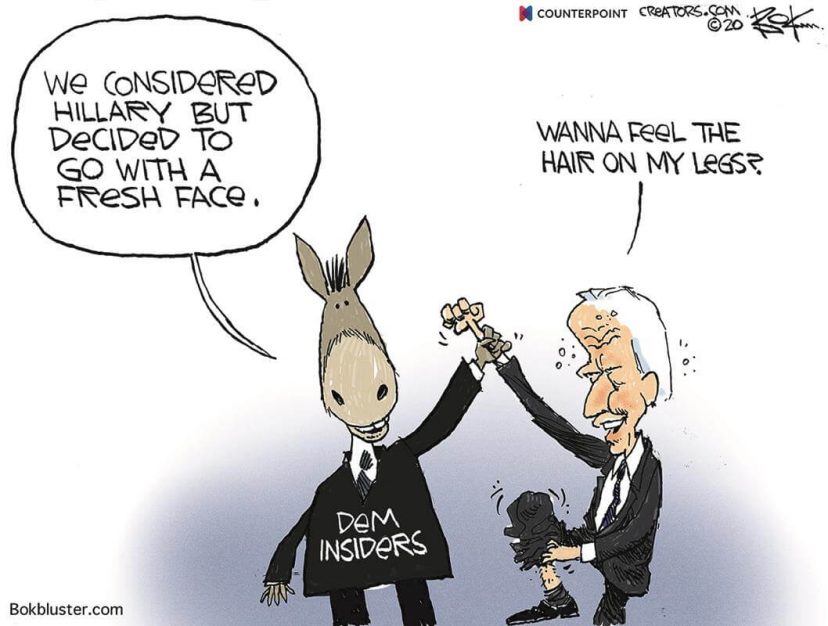
Democratic Party front-runner Joe Biden has rejected the possibility of holding a televised debate with challenger Bernie Sanders, raising questions about his campaign’s strategy going forward.
Asserting that “we’ve had enough debates,” the former vice president claimed that he is focused on combating the coronavirus outbreak. “My focus is just dealing with this crisis right now,” Biden said on Wednesday, when asked if he wanted another debate next month. “I think we should get on with this.”
Mainstream media is generally treating his decision as an understandable reaction to the new realities of social distancing, with the New York Times reporting that “Biden has been forced off the physical campaign trail because of the coronavirus outbreak, and is grappling with new ways to connect with voters and break through in the news media.”
But his dismissal of the opportunity to meet his opponent in a one-on-one debate fueled speculation that his campaign is afraid of giving him too much public exposure. With hashtags such as #WhereIsJoeBiden trending on Twitter, critics pointed out that the DNC had promised 12 Democratic debates and there have been just 11 so far.
The rejection of another debate with Sanders comes after several public appearances that drew widespread scrutiny for signs of Biden’s apparent cognitive decline and possible health concerns. In a series of interviews this week, Biden repeatedly coughed and acted confused, sometimes making statements that made little sense.
In a discussion on The View about the need for a vaccine for the coronavirus, Biden left everyone scratching their heads when he said, “We have to take care of the cure. That will make the problem worse no matter what.”
At other times his sentences have tapered off without completing a thought. In a live interview on MSNBC, he started to express pride in the frontline responders to the coronavirus but failed to finish his sentence. “I’m so darn proud,” he said, “of those poor people who have lost…. anyway.”
These gaffes have led to interviewers looking visibly uncomfortable, with Biden’s apparent cognitive difficulties on display for all to see.
President Trump’s supporters are already seizing on some of Biden’s slips to ridicule the presumptive nominee, with the Trump War Room Twitter account noting on Wednesday that “Joe Biden literally forg[ot] he was Vice President of the United States” in an appearance he made on CNBC.
The Biden campaign is now struggling to control the damage of these disastrous public appearances, but critics are claiming that Biden has abdicated national leadership by disappearing for days in the middle of the coronavirus pandemic.
While some in his campaign would no doubt like to hide him until the general election in November, this is not realistic, especially considering that the country is in the grip of a public health emergency. So it looks like he will be forced to choose his forums with increasing care.
How the campaign walks this tightrope could determine his chances against Trump heading into the general election later this year.
Ministry: Seven new coronavirus cases detected in Gaza
Palestine Information Center – March 26, 2020
GAZA – The ministry of health has announced that seven new coronavirus cases were detected in Gaza Strip.
The ministry said in a terse statement late Wednesday that the new persons affected with the virus had mingled with the first two cases in Gaza detected last Sunday.
It pointed out that the seven new cases were all security personnel who were at the quarantine and still are there and did not leave or mix with anyone else.
The statement noted that no corona victims were reported in the besieged enclave.
The number of corona-infected cases in Gaza has thus reached nine.
US State Dept offers $15 MILLION REWARD for help arresting Venezuela’s Maduro after indictments
RT | March 26, 2020
The US State Department is dangling millions of dollars in reward money in exchange for information that could be used to arrest Venezuelan President Nicolas Maduro, his VP, or other senior officials on drug trafficking charges.
The eye-popping reward of up to $15 million is being offered for “information related to Nicolas Maduro Moros” with regard to his alleged involvement in “international narcotics trafficking,” the State Department announced on Thursday, signaling a hard shift in its regime-change policy against the socialist nation.
Tips leading to the narcotrafficking arrest or conviction of National Constituent Assembly President Diosdado Cabello Rondon, retired generals Hugo Carvajal Barrios and Clive Alcala Cordones, or Minister for Industry and National Production Tareck Zaidan El Aissami Maddah can net as much as $10 million, the statement continued.
The rewards were unveiled on the same day as the US Justice Department unsealed indictments against the Venezuelan leaders for the same drug trafficking crimes – suggesting that Washington’s evidence isn’t as solid as Attorney General William Barr has claimed.
Indictments in Miami and New York accuse the officials of participating in a “narco-terrorism conspiracy” with Colombian guerrilla group FARC, to “flood the United States with cocaine.” But if evidence against Maduro and his compatriots is at such a premium that the State Department will pay $15 million for it, the Venezuelans are unlikely to see the inside of a US court anytime soon.
The one-two punch is a profoundly cynical move in the US’ continuing assault on sanctions-starved Venezuela, especially in the midst of the global coronavirus pandemic.
After over a year of pushing its preferred leader, Juan Guaido, accomplished nothing except wearing out the latter’s welcome in the opposition National Assembly, Washington appears to have lost patience with their golden boy’s failed coup attempts, pushing him aside to play hardball.
The last Latin American leader charged with drug trafficking by the US was Panama’s Manuel Noriega, whom Washington essentially stabbed in the back after a long and profitable partnership running drugs with the CIA, invading his country and hauling him back to Miami to stand trial on drug trafficking and money laundering charges.
Iran to US: Do not politicize ex-FBI agent’s case, avoid exploiting his family’s emotions
Press TV – March 26, 2020
Iran has warned the United States against politicization of the possible death of a former FBI agent, whom the US administration alleges has been imprisoned in the Islamic Republic, after Washington claimed on Wednesday that he has died in detention in Iran.
Speaking on Thursday, Foreign Ministry Spokesman Abbas Mousavi said if Washington has made sure about the retired agent Robert Levinson’s death, “then it can [simply] announce this matter without politicization and attempting to take advantage of the Levinson family’s emotions.”
The US has, for long, been alleging that Levinson disappeared on the southern Iranian Kish Island in 2007. Tehran has categorically denied any involvement in his disappearance.
On Wednesday, Levinson’s family cited the US government as claiming he had died in Iranian custody.
The Iranian Foreign Ministry spokesman said the Islamic Republic has, over the recent years, done its utmost to find any evidence pointing to Levinson’s exact fate.
“Based on credible evidence, the aforementioned person left the Iranian soil for an unspecified destination years ago,” Mousavi said. He also reminded that the US itself had confirmed his departure back then.
On January 19, 2016, after years of pointing the finger to Iran for his fate, the White House Press Secretary Josh Earnest announced for the first time that “we have reason to believe that he no longer is in Iran.” Back then, Earnest said he rested assured that Iran would search for Levinson.
Elsewhere in his remarks, Mousavi emphasized that Tehran’s investigation has not yielded any leads pointing to Levinson’s still being alive, and condoled with his family over his likely demise.
‘US officials knew Levinson died on rogue CIA mission’
Until last December, the administration of US President Donald Trump would claim that Levinson was in Iranian custody and ask Tehran to hand him over.
Despite recent claims by his administration that Levinson has died in such a condition, there is ample evidence pointing to the fact that US officials already knew that he had died while on an unauthorized mission for the CIA some place outside Iran.
The fact that he was on a rogue mission had been already admitted in an article by The Washington Post, which wrote on December 12, 2013 that “an American man, who disappeared in Iran more than six years ago had been working for the CIA in what US intelligence officials described as a rogue operation that led to a major shake-up in the spy agency.”
The Post, back then, described the nature of the mission by citing emails and other documents that had shown “he had gone to Iran at the direction of certain CIA analysts who had no authority to run operations overseas.”
The New York Times also carried a piece on Wednesday, in which it said that the preceding administration of Barack Obama had at one point been tipped off about intelligence showing that “the remains of an American had been buried in [Pakistan’s] Balochistan.”
“American officials assumed that the remains were Mr. Levinson’s,” the paper wrote.
‘Repercussions for CIA’
The revelations showing the nature of the CIA mission enlisting Levinson, The Post noted, prompted “a major internal investigation” within the US spy agency.
The probe eventually had its leadership “discipline 10 employees, including three veteran analysts, who were forced out of their jobs.”
‘CIA paid off family’
The Post also said that the CIA reached an extrajudicial settlement with Levinson’s family after the emergence of his dealings with the agency. The agreement saw the agency paying the family “a $2.5 million annuity and an additional $120,000, the cost of renewing Mr. Levinson’s contract.”
“Both sides wanted to avoid a lawsuit that would publicly reveal details of the arrangement,” The Post noted.
See also:
Featured Video

The Truth About the Trump Shootings with Ken Silva
or go to
Aletho News Archives – Video-Images
From the Archives
Trans ‘milk’ as good as the real thing – NHS
RT | February 18, 2024
The drug-induced nipple secretions of trans women are as good as mothers’ breast milk for babies, the University of Sussex Hospitals NHS Trust claimed in a letter to campaigners made public in a report by British think tank the Policy Exchange on Sunday.
The healthcare trust’s medical director, Rachel James, argued that the off-label prescription drug cocktail men transitioning to female take in order to produce milk was “similar to the natural hormones which encourage lactation to develop when the baby is newly born.”
“The evidence which is available demonstrates that the milk is comparable to that produced following the birth of a baby,” James wrote in the letter, sent to Children of Transitioners last August.
Biological men who wish to lactate must first take hormones to grow milk glands and then take high doses of either domperidone or metoclopramide to stimulate milk production. Neither drug is approved for this use, though they are occasionally prescribed off-label to biological women who have trouble lactating.
However, domperidone’s own manufacturer, Janssen, warns patients the drug “may cause unwanted side effects affecting the heart in a breastfed baby” and “should be used during breastfeeding only if your physician considers this clearly necessary.” … continue
Blog Roll
 Aletho News
- Leaked: Britain’s Sham Conviction Of Hashim Thaci
- Seyed M. Marandi: U.S. Strike Imminent – Toward Total War in the Middle East
- Russia Voted Under Fire. Washington Is Loading the Tankers.
- 12 Things Your Oncologist Was Trained Not to Tell You
- Anthrax Attacks Paved Way for COVID-Era ‘Junk Drugs and Vaccines’
- How Real Is the Impact of Western Sanctions on Israel?
- France, You Are Guilty: How Paris Turned Western Sahara into the Maghreb’s Powder Keg
- 2025 Nature Paper Claiming Worsening Global Drought Gets RETRACTED …Heavily Flawed
- Your Milk Is Not the Problem
- The Truth About the Trump Shootings with Ken Silva
- If Americans Knew
- Salah Sarsour’s Legal Team Says DHS Has Not Met Its Burden to Prove He Is Deportable
- An analysis of tax forms by The Intercept show Kraft’s charity and LLC have donated to Friends of the IDF and AIPAC’s super PAC.
- Israeli attacks kill four Palestinians in Gaza – Daily Update
- Inside Gaza’s death trap of collapsing, bombed-out buildings
- The everyday items Israel bans from Gaza every day
- Inside the siege, the ruined buildings of Gaza – Daily Update
- Debunking The Claim That Macklemore Has A “History Of Antisemitism”
- CPJ demands release of arrested Palestinian-US journalist near Bethlehem
- Robert Kraft: The Billionaire Friend of Netanyahu Pulling The Strings Behind the Macklemore/Ed Sheeran Blow Up
- Columbia Administered Fund Gives Big Money to Pro-Israel Groups
- No Tricks Zone
- 2025 Nature Paper Claiming Worsening Global Drought Gets RETRACTED …Heavily Flawed
- New Study: ‘Global Drought Shows No Detectable Recent Acceleration Under Climate Warming’
- Economic Masterminds: German Socialists Suggest Taxing Productivity Gains Stemming From Using AI
- The South China Sea Has Not Been Cooperating With The Climate Change Narrative
- Energy Crisis: Germany Enters Heating Season With Historically Low Gas Reserve Fill Levels
- New Study: The Antarctic Ice Sheet Gained Mass From 2020-2024 Due To Staggering Snow And Ice Accumulation
- Study: Ocean Heating Rates From Thousands Of Years Ago ‘Dwarf’ Modern Ocean Heating Rates
- Climate Extremists Target, Attack Large-Scale Power Grid Infrastructure In Germany!
- New Study: Antarctic Ice Melt Has Contributed Less Than 1 Centimeter To Sea Level Rise In The Last 30 Years
- Fear Of Debate: Alarmist German Climate Scientist Calls On Mainstream Media To Discredit Skeptic Voices
 Aletho News