An edited extract from Web of Deceit: Britain’s Real Role in the World
During the decolonisation process in the 1960s Britain created a new colony – the British Indian Ocean Territory (BIOT). This included the Chagos island group which was detached from Mauritius, and other islands detached from the Seychelles. Mauritius had been granted independence by Britain in 1965 on the barely concealed condition that London be allowed to buy the Chagos island group from it – Britain gave Mauritius £3m. “The object of the exercise was to get some rocks which will remain ours”, the Permanent Under Secretary at the Foreign Office, its chief civil servant, said in a secret file of 1966. The Colonial Office similarly noted that the “prime object of BIOT exercise was that the islands… hived off into the new territory should be under the greatest possible degree of UK control [sic]”.
In December 1966 the Wilson government signed a military agreement with the US leasing the BIOT to it for military purposes for fifty years with the option of a further twenty years. Britain thus ignored UN Resolution 2066XX passed by the General Assembly in December 1965 which called on the UK “to take no action which would dismember the territory of Mauritius and to violate its territorial integrity”. Higher matters were at stake: Diego Garcia, the largest island in the Chagos group, was well situated as a military base. Britain allowed the US to build up Diego Garcia as a nuclear base and as the launch pad for intervention in the Middle East, notably in Afghanistan and Iraq. Diego Garcia’s role “has become increasingly important over the last decade in supporting peace and stability in the region”, a Foreign Office spokesman managed to say with a straight face in 1997.
To militarise Diego Garcia, Britain removed the 1,500 indigenous inhabitants of the Chagos islands – “the compulsory and unlawful removal of a small and unique population, Citizens of the UK and Colonies, from islands that had formed their home, and also the home of the parents, grand-parents and very possibly earlier ancestors”, as the Chagossians’ defence lawyers put it. The islanders were to be “evacuated as and when defence interests require this”, against which there should be “no insurmountable obstacle”, the Foreign Office had noted.
The Chagossians were removed from Diego Garcia by 1971 and from the outlying islands of Salomen and Peros Banhos by 1973. The secret files show that the US wanted Diego Garcia to be cleared “to reduce to a minimum the possibilities of trouble between their forces and any ‘natives’”. This removal of the population “was made virtually a condition of the agreement when we negotiated it in 1965”, in the words of one British official. Foreign Office officials recognised that they were open to “charges of dishonesty” and needed to “minimise adverse reaction” to US plans to establish the base. In secret, they referred to plans to “cook the books” and “old fashioned” concerns about “whopping fibs”.
The Chagossians were described by a Foreign Office official in a secret file: “unfortunately along with birds go some few Tarzans or man Fridays whose origins are obscure”. Another official wrote, referring to a UN body on women’s issues: “There will be no indigenous population except seagulls who have not yet got a committee (the status of women committee does not cover the rights of birds)”. According to the Foreign Office, “these people have little aptitude for anything other than growing coconuts”. The Governor of the Seychelles noted that it was “important to remember what type of people” the islanders are: “extremely unsophisticated, illiterate, untrainable and unsuitable for any work other than the simplest labour tasks of a copra plantation”.
Contrary to the racist indifference of British planners, the Chagossians had constructed a well-functioning society on the islands by the mid-1960s. They earned their living by fishing, and rearing their own vegetables and poultry. Copra industry had been developed. The society was matriarchal, with Illois women having the major say over the bringing up of the children. The main religion was Roman Catholic and by the first world war the Illois had developed a distinct culture and identity together with a specific variation of the Creole language. There was a small hospital and a school. Life on the Chagos islands was certainly hard, but also settled. By the 1960s the community was enjoying a period of prosperity with the copra industry thriving as never before. The islanders were also exporting guano, used for phosphate, and there was talk of developing the tourist industry.
Then British foreign policy intervened. One of the victims recalled: “We were assembled in front of the manager’s house and informed that we could no longer stay on the island because the Americans were coming for good. We didn’t want to go. We were born here. So were our fathers and forefathers who were buried in that land”.
Britain expelled the islanders to Mauritius without any workable resettlement scheme, gave them a tiny amount of compensation and later offered more on condition that the islanders renounced their rights ever to return home. Most were given little time to pack their possessions and some were allowed to take with them only a minimum of personal belongings packed into a small crate. They were also deceived into believing what awaited them. Olivier Bancoult said that the islanders “had been told they would have a house, a portion of land, animals and a sum of money, but when they arrived [in Mauritius] nothing had been done”. Britain also deliberately closed down the copra plantations to increase the pressure to leave. A Foreign Office note from 1972 states that “when BIOT formed, decided as a matter of policy not to put any new investment into plantations” [sic], but to let them run down. And the colonial authorities even cut off food imports to the Chagos islands; it appears that after 1968 food ships did not sail to the islands.
Not all the islanders were physically expelled. Some, after visiting Mauritius, were simply – and suddenly – told they were not allowed back, meaning they were stranded, turned into exiles overnight. Many of the islanders later testified to having been tricked into leaving Diego Garcia by being offered a free trip.
Most of the islanders ended up living in the slums of the Mauritian capital, Port Louis, in gross poverty; many were housed in shacks, most of them lacked enough food, and some died of starvation and disease. Many committed suicide. A report commissioned by the Mauritian government in the early 1980s found that only 65 of the 94 Illois householders were owners of land and houses; and 40 per cent of adults had no job. Today, most Chagossians continue to live in poverty, with unemployment especially high.
British officials were completely aware of the poverty and hardships likely to be faced by those they had removed from their homeland. When some of the last of the Chagossians were removed in 1973 and arrived in Mauritius, the High Commission noted that the Chagossians at first refused to disembark, having “nowhere to go, no money, no employment”. Britain offered a miniscule £650,000 in compensation, which only arrived in 1978, too late to offset the hardship of the islanders. The Foreign Office stated in a secret file that “we must be satisfied that we could not discharge our obligation… more cheaply”. As the Chagossians’ defence lawyers argue, “the UK government knew at the time that the sum given [in compensation] would in no way be adequate for resettlement.”
Ever since their removal, the islanders have campaigned for proper compensation and for the right to return. In 1975, for example, the islanders presented a petition to the British High Commission in Mauritius. It said: “We, the inhabitants of the Chagos islands – Diego Garcia, Peros Banhos and Salomen – have been uprooted from these islands because the Mauritius government sold the islands to the British government to build a base. Our ancestors were slaves on those islands but we know that we are the heirs of those islands. Although we were poor we were not dying of hunger. We were living free… Here in Mauritius… we, being mini-slaves, don’t get anybody to help us. We are at a loss not knowing what to do.”
The response of the British was to tell the islanders to address their petition to the Mauritian government. The British High Commission in Mauritius responded to a petition in 1974 saying that “High Commission cannot intervene between yourselves as Mauritians and government of Mauritius, who assumed responsibility for your resettlement”. This, as the British government well knew, was a complete lie, as many of the Chagossians could claim nationality “of the UK and the colonies” (see below). In 1981, a group of Illois women went on hunger strike for 21 days and several hundred women demonstrated in vain in front of the British High Commission in Mauritius.
The Whitehall conspiracy
The British response was: after removing the islanders from their home, to remove them from history, in the manner of Winston Smith. In 1972 the US Defence Department could tell Congress that “the islands are virtually uninhabited and the erection of the base would thus cause no indigenous political problems”. In December 1974 a joint UK-US memorandum in question-and-answer form asked “Is there any native population on the islands?”; its reply was “no”. A British Ministry of Defence spokesman denied this was a deliberate misrepresentation of the situation by saying “there is nothing in our files about inhabitants or about an evacuation”, thus confirming that the Chagossians were official Unpeople.
Formerly secret planning documents revealed in the court case show the lengths to which Labour and Conservative governments have gone to conceal the truth. Whitehall officials’ strategy is revealed to have been “to present to the outside world a scenario in which there were no permanent inhabitants on the archipelago”. This was essential “because to recognise that there are permanent inhabitants will imply that there is a population whose democratic rights will have to be safeguarded”. One official noted that British strategy towards the Chagossians should be to “grant as few rights with as little formality as possible”. In particular, Britain wanted to avoid fulfilling its obligations to the islanders under the UN charter.
From 1965, memoranda issued by the Foreign Office and then Commonwealth Relations Office to British embassies around the world mentioned the need to avoid all reference to any “permanent inhabitants”. Various memos noted that: “best wicket… to bat on… that these people are Mauritians and Seychellois [sic]”; “best to avoid all references to permanent inhabitants”; and need to “present a reasonable argument based on the proposition that the inhabitants… are merely a floating population”. The Foreign Office legal adviser noted in 1968 that “we are able to make up the rules as we go along and treat inhabitants of BIOT as not ‘belonging’ to it in any sense”.
Then Labour Foreign Secretary Michael Stewart wrote to prime Minister Harold Wilson in a secret note in 1969 that “we could continue to refer to the inhabitants generally as essentially migrant contract labourers and their families”. It would be helpful “if we can present any move as a change of employment for contract workers… rather than as a population resettlement”. The purpose of the Foreign Secretary’s memo was to secure Wilson’s approval to clear the whole of the Chagos islands of their inhabitants. This, the prime minister did, five days later on 26 April. By the time of this formal decision, however, the removal had already effectively started – Britain had in 1968 started refusing to return Chagossians who were visiting Mauritius or the Seychelles.
A Foreign Office memo of 1970 outlined the Whitehall conspiracy: “We would not wish it to become general knowledge that some of the inhabitants have lived on Diego Garcia for at least two generations and could, therefore, be regarded as ‘belongers’. We shall therefore advise ministers in handling supplementary questions about whether Diego Garcia is inhabited to say there is only a small number of contract labourers from the Seychelles and Mauritius engaged in work on the copra plantations on the island. That is being economical with the truth.”
It continued: “Should a member [of the House of Commons] ask about what should happen to these contract labourers in the event of a base being set up on the island, we hope that, for the present, this can be brushed aside as a hypothetical question at least until any decision to go ahead with the Diego Garcia facility becomes public”.
Detailed guidance notes were issued to Foreign Office and Ministry of Defence press officers telling them to mislead the media if asked.
The reality that was being concealed was clearly understood. A secret document signed by Michael Stewart in 1968, said: “By any stretch of the English language, there was an indigenous population, and the Foreign Office knew it”. A Foreign Office minute from 1965 recognises policy as “to certify [the Chagossians], more or less fraudulently, as belonging somewhere else”. Another Whitehall document was entitled: “Maintaining the Fiction”. The Foreign Office legal adviser wrote in January 1970 that it was important “to maintain the fiction that the inhabitants of Chagos are not a permanent or semi-permanent population”.
Yet all subsequent ministers peddled this lie in public, hitting on the formula to designate the Chagossians merely as “former plantation workers”, while knowing this was palpably untrue. For example, Margaret Thatcher told the House of Commons in 1990 that: “Those concerned worked on the former copra plantations in the Chagos archipelago. After the plantations closed between 1971 and 1973 they and their families were resettled in Mauritius and given considerable financial assistance. Their future now lies in Mauritius”.
Foreign Office minister William Waldegrade said in 1989 that he recently met “a delegation of former plantation workers from the Chagos Islands”, before falsely asserting that they “are increasingly integrated into the Mauritian community”. Aid minister Baroness Chalker also told the House that “the former plantation workers (Illois) are now largely integrated into Mauritian and Seychellese society”.
New Labour continued the lie into the twenty-first century, continuing to peddle the official line in the court case that the islanders were “contract labourers”. As I write this, the Foreign Office website contains a country profile of the British Indian Ocean Territory that states there are “no indigenous inhabitants”.
Another issue that the British government went to great lengths to conceal was the fact that many of the Chagossians were “citizens of the UK and the colonies”. Britain preferred to designate them Mauritians so they could be dumped there and left to the Mauritian authorities to deal with. The Foreign Secretary warned in 1968 of the “possibility… [that] some of them might one day claim a right to remain in the BIOT by virtue of their citizenship of the UK and the Colonies”. A Ministry of Defence note in the same year states that it was “of cardinal importance that no American official… should inadvertently divulge” that the islanders have dual nationality.
Britain’s High Commission in Mauritius noted in January 1971, before a meeting with the Mauritian prime minister, that: “Naturally, I shall not suggest to him that some of these have also UK nationality …always possible that they may spot this point, in which case, presumably, we shall have to come clean [sic]”. In 1971 the Foreign Office was saying that it was “not at present HMG’s policy to advise ‘contract workers’ of their dual citizenship” nor to inform the Mauritian government, referring to “this policy of concealment”.
Ministers also lied in public about the British role in the removal of the Chagossians. For example, Foreign Office minister Richard Luce wrote to an MP in 1981, in response to a letter from one of his constituents, that the islanders had been “given the choice of either returning [to Mauritius or the Seychelles] or going to plantations on other islands in BIOT” [sic]. According to this revised history, the “majority chose to return to Mauritius and their employers… made the arrangements for them to be transferred”.
Ministers in the 1960s also lied about the terms under which Britain offered the Diego Garcia base to the US. The US paid Britain £5 million for the island, an amount deducted from the price Britain paid the US for buying the Polaris nuclear weapons. The US asked for this deal to be kept secret and Prime Minister Harold Wilson complied, lying in public. A Foreign Office memo to the US of 1967 said that “ultimately, under extreme pressure, we should have to deny the existence of a US contribution in any form, and to advise ministers to do so in [parliament] if necessary”.
A Foreign Office memo of 1980 recommended to then Foreign Secretary that “no journalists should be allowed to visit Diego Garcia” and that visits by MPs be kept to a minimum to keep out those “who deliberately stir up unwelcome questions”. The defence lawyers for the Chagossians, who unearthed the secret files, note that: “Concealment is a theme which runs through the official documents, concealment of the existence of a permanent population, of BIOT itself, concealment of the status of the Chagossians, concealment of the full extent of the responsibility of the United Kingdom government…, concealment of the fact that many of the Chagossians were Citizens of the UK and Colonies… This concealment was compounded by a continuing refusal to accept that those who were removed from the islands in 1971-3 had not exercised a voluntary decision to leave the islands”.
Indeed, the lawyers argue, “for practical purposes, it may well be that the deceit of the world at large, in particular the United Nations, was the critical part” of the government’s policy.
Searching for the Catastrophe Signal:The origin of the Intergovernmental Panel on Climate Change by Bernie Lewin.
Published by the Global Warming Policy Foundation. Paperback $16.00, Kindal $7.00. Available from Amazon
This book is a must read for those interested in the current climate debate and its origin. The book does not argue the science as much as it challenges the narrative of the “consensus.” It challenges the popular notion that the primary drivers of climate change are greenhouse gases and that the theory originated in climate and environmental science departments. One cannot read the book without concluding that the theory hadn’t originated anyplace but the national nuclear labs of the United States government. Lewin’s is the first book on the subject I have read compatible with the history of the modern theory of catastrophic anthropogenic global warming that I lived through.
In 1973 I hoped to dedicate my life to studying human impacts on climate and weather. I went to the University of Virginia which had perhaps the only department in the US which was actively studying the subjects. My research concerned the lower atmosphere and the effect that changes in its heat capacity and albedo had on atmospheric circulation. I took what I believe was the first course offered on human impacts on climate, titled Urban Meteorology which was taught by Roger Pielke and Mike Garstang. We spent many hours discussing the effects of deforestation, desertification, aerosols and urbanization on climate. We did not spend much time on the greenhouse effect. Estimates of the effect were small compared to the other effects and the planet was not warming.
There are many things which could cause the climate to change. There is the natural variation of the sun and a periodic variation of volcanic dust. Human industry can throw smoke into the atmosphere which clouds out the sun’s energy. Cutting, draining, plowing, and paving can change the amount of energy the earth absorbs and how fast it heats up and cools off. This was the subject of decades of research, strong correlations, and reasonable models. Most of which are now ignored.
The first time I heard a positive discussion of the theory that CO2 could catastrophically change earth climate, it was from speakers sponsored by the Nuclear Engineering department. Their motivation was obvious.
Lewin describes how the funding for the study of non-greenhouse gas mechanisms of climate change was cut while funding for the study of greenhouse gas effects was increased. I lived through this and I appreciate that someone finally wrote it down.
So I thank Bernie Lewin for assembling an accurate history of the climate debate.
Mike Papantonio and Author Carey Gillam discuss her new book which reveals how Monsanto viciously worked to cover-up the fact that their weed-killer could cause cancer.
On January 31, the Boston Professor Gene Sharp died aged 91. In his youth, he refused to serve in the American army and fight in Korea. He was jailed for 9 months, after which Sharp left the United States and lived in Europe for nine years.
Sharp became known for writing of instructions for the political destruction of states. He was called a modern day philosopher, but rarely appeared at philosophical meetings. He was called a political technologist, but he never led any group and rarely participated directly in anything to do with revolutions. That’s if we don’t count that government power in various countries was overthrown by his textbooks.
The most famous work is “From dictatorship to democracy”; 198 methods of nonviolent actions. For example – number 22 – undressing in protest, 124 – boycotting of elections, 161 – non-violent psychological exhaustion of the opponent. Although not everything in Sharp’s writing is so non-violent – point 148 is rebellion.
The “Orange Revolution” in Ukraine in 2004 is a classical implementation of the recommendations of Gene Sharp. Without any imagination whatsoever. Earlier, Professor Sharp’s know-how was implemented in the “bulldozer revolution” in Yugoslavia, when protesters on a bulldozer stormed a television station.
Later, Sharp’s ideas were implemented in the “Tulip Revolution” in Kyrgyzstan, “Rose Revolution” in Georgia, “Jasmine Revolution” in Tunisia in 2010-2011 . Egypt and the “Arab Spring” also utilised Sharp’s technology.
To generalize, the main goal in any “color revolution” is to create a point of public discontent in a limited space and claim that this crowd of people, is “the people”, out and about revolting in a “grass-roots” movement.
An attempt at a colour revolution was also tried in Russia in the winter of 2011-1012 – with white ribbons, prior to the presidential elections. Sharp himself made a remark to the “negligent pupils” – “It’s a real false start, the organizers of the rally were too quick. You can’t do it before the elections take place,” Sharp said in an interview.
Later, Sharp had founded the Boston Einstein Institution, which had very few employees. Yet it was financed very generously – these funds financed protest movements in countries where the United States required regime change. Sharp’s money came primarily from the National Endowment for Democracy, which is maintained by the Congress, and from the International Republican Institute (director – John McCain).
Why does America participate in “color revolutions”? It’s simple – it solves military tasks by non-military means, destroys states and puts the country’s resources in the service of the United States. People as a result of the revolution generally live worse than before the uprising.
“This is military technology, but a substitute for war and other violence,” Sharp said.
Sharp’s work was also engaged in the Soviet Union – technologies of collapse were similar. As we now understand, the same methods were utilised in the countries of Eastern Europe – take at least “Solidarity” in Poland in the late 80’s.
Now, when the United States once again would like to destroy Russia, Sharp’s tactics are also useful. Let us turn again to its numbered points: 89th – tightening of credit/loans, 96th – international trade embargo, 154th – deterioration of international diplomatic relations.
But the original Sharp recommendations are similarly growing obsolete – he could never have imagined the new subversive opportunities through the power of the Internet, technologies able to process large databases – big data, sanctions and all sorts of “enemy lists” of America, the use of terrorist armies to overthrow a disliked leader. For America, this is also “not war”, which means that it is also a “non-violent” method for achieving military tasks.
Sharp has died, but his legacy lives on and is snowballing new methods.
Bill Browder is the man responsible for much of the anti-Russian sentiment in the West in recent years through his lobbying for the Magnitsky Act, which sanctions individuals believed to have been involved in the death of Russian “lawyer” Sergei Magnitsky in 2009.
Browder told his story in a book called Red Notice, in which he paints himself as a totally innocent victim of a Russian campaign to destroy him. But Krainer dissects Browder’s account piece by piece, showing that he was anything but an innocent businessman.
In addition to deconstructing Browder’s self-serving lies and rampant Russophobia, Krainer gives a concise history of the crisis Russia went through in the 90s, how a handful of Russian oligarchs and Westerners like Browder siphoned the country’s wealth, and how Putin turned all that around in the years after he came to power in 1999.
Due to pressure from Browder’s legal team, Amazon censored the book by delisting it. Krainer has made it available for free here and here.
“And thus the U.S. left leadership sits in the left chamber of the hall of mirrors, complaining about conspiracy theories while closing its eyes to actual conspiracies crucial to contemporary imperialism.” – Graeme MacQueen, Beyond Their Wildest Dreams: September 11, 2001 and the American Left
It is well known that effective propaganda works through slow, imperceptible repetition. “The slow building up of reflexes and myths” is the way Jacques Ellul put it in his classic, Propaganda. This works through commission and omission.
I was reminded of this recently after I published a newspaper editorial on Martin Luther King Day stating the fact that the United States’ government assassinated Dr. King. To the best of my knowledge, this was the only newspaper op-ed to say that. I discovered that many newspapers and other publications (with very rare exceptions), despite a plethora of articles and editorials praising King, ignored this “little” fact as if it were inconsequential. No doubt they wish it were, or that it were not true, just as many hoped that repeating the bromide that James Earl Ray killed Dr. King would reinforce the myth they’ve been selling for fifty years, despite overwhelming evidence to the contrary that is available to anyone wishing to investigate the truth.
The general attitude seemed to be: Let’s just appreciate MLK on his birthday and get on with it. Don’t be a spoil-sport.
That this is the approach of the mainstream corporate media (MSM) should not be surprising, for they are mouthpieces for official government lies. But when the same position is taken by so many liberal and progressive intellectuals and publications who are otherwise severely critical of the MSM for their propaganda in the service of empire, it gives pause. Like their counterparts in the MSM, these liberals shower King with praise, even adding that he was more than a civil rights leader, that he opposed war and economic exploitation as well, but as to who killed him, and why, and why it matters today, that is elided. Amy Goodman at Democracy Now! in a recent piece on an upcoming documentary about King is a case in point. Not once in this long conversation about a film about the last few years of King’s life and his commitment to oppose the Vietnam War and launch the Poor People’s Campaign is the subject of who killed him and why broached. It is a perfect example of the denial of the truth through omission.
Propaganda, of course comes in many forms: big lies and small; half-truths, whispers, and rumors; slow-drip and headlong; misinformation and disinformation; through commission and omission; intentional and unintentional; cultural and political, etc. Although it is omnipresent today – 24/7 surround sound – when it comes from the mouths of government spokespeople or corporate media the average person, grown somewhat suspicious of official lies, has a slight chance of detecting it. This is far more difficult, however, when it takes the form of a left-wing critique of U.S. government policies that subtly supports official explanations through sly innuendos and references, or through omission. Reading an encomium to Dr. King that attacks government positions on race, war, and economics from the left will often get people nodding their heads in agreement while they fail to notice a fatal flaw at the heart of the critique. The Democracy Now! piece is a perfect example of this legerdemain.
I do not know the motivations or intentions of many prominent leftist intellectuals and publications, but I do know that many choose to avoid placing certain key historical events at the center of their analyses. In fact, they either avoid them like the plague, dismiss them as inconsequential, or use the CIA’s term of choice and call them “conspiracy theories” and their proponents “conspiracy nuts.” The result is a powerful propaganda victory for the power elites they say they oppose.
Orwell called it “Crimestop: [it] means the faculty of stopping short, as though by instinct, at the threshold of any dangerous thought. It includes the power of not grasping analogies, of failing to perceive logical errors, of misunderstanding the simplest arguments if they are inimical to Ingsoc, and of being bored or repelled by any train of thought which is capable of leading in a heretical direction. Crimestop, in short means protective stupidity.”
There are many fine writers and activists who are very frustrated by their inability, despite a vast and continuous outpouring of excellent critiques of the machinations of the oligarchical rulers of the U.S., to convince people of the ways they have been brainwashed by government/media propaganda. Most of their anger is directed toward the most obvious sources of this intricate psychological warfare directed at the American people. They often fail to realize, however – or fail to say – that there are leftists in their ranks who, whether intentionally or not, are far more effective than the recognized enemies in government intelligence agencies and their corporate accomplices in the media in convincing people that the system works and that it is not run by killers who will go to any lengths to achieve their goals. These leftist critics, while often right on specific issues that one can agree with, couch their critiques within a framework that omits or disparages certain truths without which nothing makes sense. By truths I do not mean debatable matters, but key historical events that have been studied and researched extensively by reputable scholars and have been shown to be factual, except to those who fail to fairly do their homework, purposely or through laziness.
There is no way to understand today’s world without confronting four key historical events out of which spring today’s conditions of oligarchic rule, constant war, and the growth of an intelligence apparatus that makes Orwell’s 1984 look so anachronistic.
They are: the assassinations of JFK, MLK, and RFK by elements within the U.S. intelligence services, and the insider attacks of September 11, 2011. These are anathema to a group of very prominent left-wing intellectuals and liberal publications. It is okay for them to attack Bush, Obama, Clinton, Trump, the Democratic Party, Bernie Sanders, liberals in general, creeping fascism, capitalism, the growth of the intelligence state, etc.; but to accept, or even to explore fairly in writing, what I assert as factual above, is verboten. Why?
When President Kennedy was murdered by the CIA, the United States suffered a coup d’état that resulted in years of savage war waged against Vietnam, resulting in millions of Vietnamese deaths and tens of thousands of American soldiers. The murder of JFK in plain sight sent a message in clear and unambiguous terms to every President that followed that you toe the line or else. They have toed the line. The message from the coup planners and executioners was clear: we run the show. They have been running it ever since.
When Martin Luther King declared his opposition to the Vietnam War and joined it to his espousal of a civil rights and an anti-capitalist program, he had to go. So they killed him.
Then, when the last man standing who had a chance to change the direction of the coup – Robert Kennedy – seemed destined to win the presidency, he had to go. So they killed him.
To ignore these foundational state crimes for which the evidence is so overwhelming and their consequences over the decades so obvious – well, what explanation can leftist critics offer for doing so?
And then there are the attacks of September 11, 2001, the fourth foundational event that has brought us to our present abominable condition. One has to be very ignorant to not see that the official explanation is a fiction conjured up to justify an endless “war on terror” planned as perhaps the prelude to the use of nuclear weapons, those weapons that JFK in the last year of his life worked so hard to eliminate after the Cuban Missile Crisis of 1962.
In refusing to connect the dots from November 22, 1963 through April 4 and June 5,1968 and September 11, 2001 until today, prominent leftists continue to do the work of Crimestop. For the moment I will leave it to readers to identify who they are, and the numerous leftist publications that support their positions. There are two famous left-wing American intellectuals, one dead and one living, who are often intoned to support this work of propaganda by omission: Noam Chomsky and Howard Zinn, both of whom dismissed the killing of JFK and the attacks of September 11 as inconsequential and not worthy of their attention. They have quite a few protégés whose work you probably read and agree with, despite the void at the heart of their critiques. Why they avoid accepting the truth and significance of the four events I have mentioned, only they can say. That they do is easy to show, as are the dire consequences for a united front against the deep-state forces intent on reducing this society and the world to rubble because of their refusal to confront the systemic evil that they render unspeakable by their acquiescence to government propaganda.
In his groundbreaking book on the assassination of John Kennedy, JFK And The Unspeakable: Why He Died & Why It Matters, James Douglass quotes his guide into the dark underworld of radical evil and our tendency to turn away from its awful truths, the Trappist Monk Thomas Merton, who said of the Unspeakable: “It is the void that contradicts everything that is spoken even before the words are said; the void that gets into the language of public and official declarations at the very moment when they are pronounced and makes them ring dead with the hollowness of the abyss.”
It is with a heavy heart that we inform Consortiumnews readers that Editor Robert Parry has passed away. As regular readers know, Robert (or Bob, as he was known to friends and family) suffered a stroke in December, which – despite his own speculation that it may have been brought on by the stress of covering Washington politics – was the result of undiagnosed pancreatic cancer that he had been unknowingly living with for the past 4-5 years.
He unfortunately suffered two more debilitating strokes in recent weeks and after the last one, was moved to hospice care on Tuesday. He passed away peacefully Saturday evening. He was 68.
Those of us close to him wish to sincerely thank readers for the kind comments and words of support posted on recentarticles regarding Bob’s health issues. We read aloud many of these comments to him during his final days to let him know how much his work has meant to so many people and how much concern there was for his well-being.
I am sure that these kindnesses meant a lot to him. They also mean a lot to us as family members, as we all know how devoted he was to the mission of independent journalism and this website which has been publishing articles since the earliest days of the internet, launching all the way back in 1995.
With my dad, professional work has always been deeply personal, and his career as a journalist was thoroughly intertwined with his family life. I can recall kitchen table conversations in my early childhood that focused on the U.S.-backed wars in Central America and complaints about how his editors at The Associated Press were too timid to run articles of his that – no matter how well-documented – cast the Reagan administration in a bad light.
One of my earliest memories in fact was of my dad about to leave on assignment in the early 1980s to the war zones of El Salvador, Nicaragua and Guatemala, and the heartfelt good-bye that he wished to me and my siblings. He warned us that he was going to a very dangerous place and that there was a possibility that he might not come back.
I remember asking him why he had to go, why he couldn’t just stay at home with us. He replied that it was important to go to these places and tell the truth about what was happening there. He mentioned that children my age were being killed in these wars and that somebody had to tell their stories. I remember asking, “Kids like me?” He replied, “Yes, kids just like you.”
Bob was deeply impacted by the dirty wars of Central America in the 1980s and in many ways these conflicts – and the U.S. involvement in them – came to define the rest of his life and career. With grisly stories emerging from Nicaragua (thanks partly to journalists like him), Congress passed the Boland Amendments from 1982 to 1984, which placed limits on U.S. military assistance to the contras who were attempting to overthrow the Sandinista government through a variety of terrorist tactics.
The Reagan administration immediately began exploring ways to circumvent those legal restrictions, which led to a scheme to send secret arms shipments to the revolutionary and vehemently anti-American government of Iran and divert the profits to the contras. In 1985, Bob wrote the first stories describing this operation, which later became known as the Iran-Contra Affair.
Contra-Cocaine and October Surprise
Poster by street artist and friend, Robbie Conal
Parallel to the illegal arms shipments to Iran during those days was a cocaine trafficking operation by the Nicaraguan contras and a willingness by the Reagan administration and the CIA to turn a blind eye to these activities. This, despite the fact that cocaine was flooding into the United States while Ronald Reagan was proclaiming a “war on drugs,” and a crack cocaine epidemic was devastating communities across the country.
Bob and his colleague Brian Barger were the first journalists to report on this story in late 1985, which became known as the contra-cocaine scandal and became the subject of a congressional investigation led by then-Senator John Kerry (D-Mass.) in 1986.
Continuing to pursue leads relating to Iran-Contra during a period in the late 80s when most of Washington was moving on from the scandal, Bob discovered that there was more to the story than commonly understood. He learned that the roots of the illegal arm shipments to Iran stretched back further than previously known – all the way back to the 1980 presidential campaign.
That electoral contest between incumbent Jimmy Carter and challenger Ronald Reagan had come to be largely dominated by the hostage crisis in Iran, with 52 Americans being held at the U.S. embassy in Tehran since the 1979 Iranian Revolution. The Iranian hostage crisis, along with the ailing economy, came to define a perception of an America in decline, with former Hollywood actor Ronald Reagan promising a new start for the country, a restoration of its status as a “shining city on a hill.”
The hostages were released in Tehran moments after Reagan was sworn in as president in Washington on January 20, 1981. Despite suspicions for years that there had been some sort of quid pro quo between the Reagan campaign and the Iranians, it wasn’t until Bob uncovered a trove of documents in a House office building basement in 1994 that the evidence became overwhelming that the Reagan campaign had interfered with the Carter administration’s efforts to free the hostages prior to the 1980 election. Their release sooner – what Carter hoped would be his “October Surprise” – could have given him the boost needed to win.
Examining these documents and being already well-versed on this story – having previously travelled three continents pursuing the investigation for a PBS Frontline documentary – Bob became increasingly convinced that the Reagan campaign had in fact sabotaged Carter’s hostage negotiations, possibly committing an act of treason in an effort to make sure that 52 American citizens continued to be held in a harrowing hostage situation until after Reagan secured the election.
Needless to say, this was an inconvenient story at a time – in the mid-1990s – when the national media had long since moved on from the Reagan scandals and were obsessing over new scandals, mostly related to President Bill Clinton’s sex life and failed real estate deals. Washington also wasn’t particularly interested in challenging the Reagan legacy, which at that time was beginning to solidify into a kind of mythology, with campaigns underway to name buildings and airports after the former president.
At times, Bob had doubts about his career decisions and the stories he was pursuing. As he wrote in Trick or Treason, a book outlining his investigation into the October Surprise Mystery, this search for historical truth can be painful and seemingly thankless.
“Many times,” he wrote, “I had regretted accepting Frontline’s assignment in 1990. I faulted myself for risking my future in mainstream journalism. After all, that is where the decent-paying jobs are. I had jeopardized my ability to support my four children out of an old-fashioned sense of duty, a regard for an unwritten code that expects reporters to take almost any assignment.”
Nevertheless, Bob continued his efforts to tell the full story behind both the Iran-Contra scandal and the origins of the Reagan-Bush era, ultimately leading to two things: him being pushed out of the mainstream media, and the launching of Consortiumnews.com.
I remember when he started the website, together with my older brother Sam, back in 1995. At the time, in spite of talk we were all hearing about something called “the information superhighway” and “electronic mail,” I had never visited a website and didn’t even know how to get “on line.” My dad called me in Richmond, where I was a sophomore at Virginia Commonwealth University, and told me I should check out this new “Internet site” he and Sam had just launched.
He explained over the phone how to open a browser and instructed me how to type in the URL, starting, he said, with “http,” then a colon and two forward slashes, then “www,” then “dot,” then this long address with one or two more forward slashes if I recall. (It wasn’t until years later that the website got its own domain and a simpler address.)
I went to the computer lab at the university and asked for some assistance on how to get online, dutifully typed in the URL, and opened this website – the first one I had ever visited. It was interesting, but a bit hard to read on the computer screen, so I printed out some articles to read back in my dorm room.
I quickly became a fan of “The Consortium,” as it was called back then, and continued reading articles on the October Surprise Mystery as Bob and Sam posted them on this new and exciting tool called “the Internet.” Sam had to learn HTML coding from scratch to launch this online news service, billed as “the Internet’s First Investigative ‘Zine.” For his efforts, Sam was honored with the Consortium for Independent Journalism’s first Gary Webb Freedom of the Press Award in 2015.
X-Files and Contra-Crack
At some point along the way, Bob decided that in addition to the website, where he was not only posting original articles but also providing the source documents that he had uncovered in the House office building basement, he would also take a stab at traditional publishing. He compiled the “October Surprise X-Files” into a booklet and self-published it in January 1996.
Original 1996 Consortium merchandise
He was also publishing a newsletter to complement the website, knowing that at that time, there were still plenty of people who didn’t know how to turn a computer on, much less navigate the World Wide Web. I transferred from Virginia Commonwealth University to George Mason University in the DC suburbs and started working part-time with my dad and Sam on the newsletter and website.
We worked together on the content, editing and laying it out with graphics often culled from books at our local library. We built a subscriber base through networking and purchasing mailing lists from progressive magazines. Every two weeks we would get a thousand copies printed from Sir Speedy and would spend Friday evening collating these newsletters and sending them out to our subscribers.
The launching of the website and newsletter, and later an even-more ambitious project called I.F. Magazine, happened to coincide with the publication in 1996 of Gary Webb’s “Dark Alliance” series at the San Jose Mercury-News. Webb’s series reopened the contra-cocaine controversy with a detailed examination of the drug trafficking networks in Nicaragua and Los Angeles that had helped to spread highly addictive crack cocaine across the United States.
The African-American community, in particular, was rightly outraged over this story, which offered confirmation of many long-standing suspicions that the government was complicit in the drug trade devastating their communities. African Americans had been deeply and disproportionately affected by the crack epidemic, both in terms of the direct impact of the drug and the draconian drug laws and mandatory minimum sentences that came to define the government’s approach to “the war on drugs.”
For a moment in the summer of 1996, it appeared that the renewed interest in the contra-cocaine story might offer an opportunity to revisit the crimes and misdeeds of the Reagan-Bush era, but those hopes were dashed when the “the Big Media” decided to double down on its earlier failures to cover this story properly.
Big Papers Pile On
The Los Angeles Times launched the attack on Gary Webb and his reporting at the San Jose Mercury-News, followed by equally dismissive stories at the Washington Post and New York Times. The piling on from these newspapers eventually led Mercury-News editor Jerry Ceppos to denounce Webb’s reporting and offer a mea culpa for publishing the articles.
The onslaught of hostile reporting from the big papers failed to address the basic premises of Webb’s series and did not debunk the underlying allegations of contra-cocaine smuggling or the fact that much of this cocaine ended up on American streets in the form of crack. Instead, it raised doubts by poking holes in certain details and casting the story as a “conspiracy theory.” Some of the reporting attempted to debunk claims that Webb never actually made – such as the idea that the contra-cocaine trafficking was part of a government plot to intentionally decimate the African-American community.
Gary Webb with his front-page Contra story
Gary Webb and Bob were in close contact during those days. Bob offered him professional and personal support, having spent his time also on the receiving end of attacks by journalistic colleagues and editors who rejected certain stories – no matter how factual – as fanciful conspiracy theories. Articles at The Consortium website and newsletter, as well as I.F. Magazine, offered details on the historical context for the “Dark Alliance” series and pushed back against the mainstream media’s onslaught of hostile and disingenuous reporting.
Bob also published the book Lost History which provided extensive details on the background for the “Dark Alliance” series, explaining that far from a baseless “conspiracy theory,” the facts and evidence strongly supported the conclusion that the Reagan-Bush administrations had colluded with drug traffickers to fund their illegal war against Nicaragua.
But sadly, the damage to Gary Webb was done. With his professional and personal life in tatters because of his courageous reporting on the contra-cocaine story, he committed suicide in 2004 at the age of 49. Speaking about this suicide later on Democracy Now, Bob noted how painful it is to be ridiculed and unfairly criticized by colleagues, as his friend had experienced.
“There’s a special pain when your colleagues in your profession turn on you, especially when you’ve done something that they should admire and should understand,” he said. “To do all that work and then have the New York Times and the Washington Post and the Los Angeles Times attack you and try to destroy your life, there’s a special pain in that.”
In consultation with his family, Bob and the Board of Directors for the Consortium for Independent Journalism launched the Gary Webb Freedom of the Press Award in 2015.
The Disastrous Presidency of George W. Bush
The presidency of George W. Bush was surreal for many of us, and no one more so than my dad.
In covering Washington politics for decades, Bob had traced many stories to “Dubya’s” father, George H.W. Bush, who had been implicated in a variety of questionable activities, including the October Surprise Mystery and Iran-Contra. He had also launched a war against Iraq in 1991 that seemed to be motivated, at least in part, to help kick “the Vietnam Syndrome,” i.e. the reluctance that the American people had felt since the Vietnam War to support military action abroad.
As Bob noted in his 1992 book Fooling America, after U.S. forces routed the Iraqi military in 1991, President Bush’s first public comment about the victory expressed his delight that it would finally put to rest the American reflex against committing troops to far-off conflicts. “By God, we’ve kicked the Vietnam Syndrome once and for all,” he exulted.
The fact that Bush-41’s son could run for president largely on name recognition confirmed to Bob the failure of the mainstream media to cover important stories properly and the need to continue building an independent media infrastructure. This conviction solidified through Campaign 2000 and the election’s ultimate outcome, when Bush assumed the White House as the first popular-vote loser in more than a century.
Despite the fact that the U.S. Supreme Court had halted the counting of votes in Florida, thus preventing an accurate determination of the rightful winner, most of the national media moved on from the story after Bush was sworn in on Jan. 20, 2001. Consortiumnews.com continued to examine the documentary record, however, and ultimately concluded that Al Gore would have been declared the winner of that election if all the legally cast ballots were counted.
At Consortiumnews, there was an unwritten editorial policy that the title “President” should never precede George W. Bush’s name, based on our view that he was not legitimately elected. But beyond those editorial decisions, we also understood the gravity of the fact that had Election 2000 been allowed to play out with all votes counted, many of the disasters of the Bush years – notably the 9/11 tragedy and the Iraq War, as well as decisions to withdraw from international agreements on arms control and climate change – might have been averted.
As all of us who lived through the post-9/11 era will recall, it was a challenging time all around, especially if you were someone critical of George W. Bush. The atmosphere in that period did not allow for much dissent. Those who stood up against the juggernaut for war – such as Phil Donahue at MSNBC, Chris Hedges at the New York Times, or even the Dixie Chicks – had their careers damaged and found themselves on the receiving end of death threats and hate mail.
While Bob’s magazine and newsletter projects had been discontinued, the website was still publishing articles, providing a home for dissenting voices that questioned the case for invading Iraq in late 2002 and early 2003. Around this time, former CIA analyst Ray McGovern and some of his colleagues founded Veteran Intelligence Professionals for Sanity and a long-running relationship with Consortiumnews was established. Several former intelligence veterans began contributing to the website, motivated by the same independent spirit of truth-telling that compelled Bob to invest so much in this project.
At a time when almost the entire mainstream media was going along with the Bush administration’s dubious case for war, this and a few other like-minded websites pushed back with well-researched articles calling into question the rationale. Although at times it might have felt as though we were just voices in the wilderness, a major groundswell of opposition to war emerged in the country, with historic marches of hundreds of thousands taking place to reject Bush’s push for war.
Neck Deep, published by Media Consortium in 2007
Of course, these antiwar voices were ultimately vindicated by the failure to find weapons of mass destruction in Iraq and the fact that the war and occupation proved to be a far costlier and deadlier enterprise than we had been told that it would be. Earlier assurances that it would be a “cakewalk” proved as false as the WMD claims, but as had been so often the case in Washington, there was little to no accountability from the mainstream media, the think tanks or government officials for being so spectacularly wrong.
In an effort to document the true history of that era, Bob, Sam and I co-wrote the book Neck Deep: The Disastrous Presidency of George W. Bush, which was published in late 2007. The book traced the work of Consortiumnews, juxtaposing it against the backdrop of mainstream media coverage during the Bush era, in an effort to not only correct the record, but also demonstrate that not all of us got things so wrong.
We felt it was important to remind readers – as well as future historians – that some of us knew and reported in real time the mistakes that were being made on everything from withdrawing from the Kyoto Protocol to invading Iraq to implementing a policy of torture to bungling the response to Hurricane Katrina.
Obama Era
By the time Barack Obama was elected the 44th president, Consortiumnews.com had become a home to a growing number of writers who brought new perspectives to the website’s content. While for years, the writing staff had been limited primarily to Bob, Sam and me, suddenly, Consortiumnews was receiving contributions from journalists, activists and former intelligence analysts who offered a wide range of expertise – on international law, economics, human rights, foreign policy, national security, and even religion and philosophy.
One recurring theme of articles at the website during the Obama era was the enduring effect of unchallenged narratives, how they shaped national politics and dictated government policy. Bob observed that even a supposedly left-of-center president like Obama seemed beholden to the false narratives and national mythologies dating back to the Reagan era. He pointed out that this could be at least partially attributed to the failure to establish a strong foundation for independent journalism.
In a 2010 piece called “Obama’s Fear of the Reagan Narrative,” Bob noted that Obama had defended his deal with Republicans on tax cuts for the rich because there was such a strong lingering effect of Reagan’s messaging from 30 years earlier. “He felt handcuffed by the Right’s ability to rally Americans on behalf of Reagan’s ‘government-is-the-problem’ message,” Bob wrote.
He traced Obama’s complaints about his powerlessness in the face of this dynamic to the reluctance of American progressives to invest sufficiently in media and think tanks, as conservatives had been doing for decades in waging their “the war of ideas.” As he had been arguing since the early 1990s, Robert insisted that the limits that had been placed on Obama – whether real or perceived – continued to demonstrate the power of propaganda and the need for greater investment in alternative media.
He also observed that much of the nuttiness surrounding the so-called Tea Party movement resulted from fundamental misunderstandings of American history and constitutional principles. “Democrats and progressives should be under no illusion about the new flood of know-nothingism that is about to inundate the United States in the guise of a return to ‘first principles’ and a deep respect for the U.S. Constitution,” Bob warned.
He pointed out that despite the Tea Partiers’ claimed reverence for the Constitution, they actually had very little understanding of the document, as revealed by their ahistorical claims that federal taxes are unconstitutional. In fact, as Bob observed, the Constitution represented “a major power grab by the federal government, when compared to the loosely drawn Articles of Confederation, which lacked federal taxing authority and other national powers.”
Motivated by a desire to correct falsified historical narratives spanning more than two centuries, Bob published his sixth and final book, America’s Stolen Narrative: From Washington and Madison to Nixon, Reagan and the Bushes to Obama, in 2012.
Along with revenues from book sales, growing donations from readers enabled Bob to not only pay writers but also to hire an assistant, Chelsea Gilmour, who began working for Consortiumnews in 2014. In addition to providing invaluable administrative support, Chelsea also performed duties including research, writing and fact-checking.
Political Realignment and the New McCarthyism
Although at the beginning of the Obama era – and indeed since the 1980s – the name Robert Parry had been closely associated with exposing wrongdoing by Republicans, and hence had a strong following among Democratic Party loyalists, by the end of Obama’s presidency there seemed to be a realignment taking place among some of Consortiumnews.com’s readership, which reflected more generally the shifting politics of the country.
In particular, the U.S. media’s approach to Russia and related issues, such as the violent ouster in 2014 of Ukrainian President Viktor Yanukovych, became “virtually 100 percent propaganda,” Bob said.
He noted that the full story was never told when it came to issues such as the Sergei Magnitsky case, which led to the first round of U.S. sanctions against Russia, nor the inconvenient facts related to the Euromaidan protests that led to Yanukovych’s ouster – including the reality of strong neo-Nazi influence in those protests – nor the subsequent conflict in the Donbass region of Ukraine.
Bob’s stories on Ukraine were widely cited and disseminated, and he became an important voice in presenting a fuller picture of the conflict than was possible by reading and watching only mainstream news outlets. Bob was featured prominently in Oliver Stone’s 2016 documentary “Ukraine on Fire,” where he explained how U.S.-funded political NGOs and media companies have worked with the CIA and foreign policy establishment since the 1980s to promote the U.S. geopolitical agenda.
Bob regretted that, increasingly, “the American people and the West in general are carefully shielded from hearing the ‘other side of the story.’” Indeed, he said that to even suggest that there might be another side to the story is enough to get someone branded as an apologist for Vladimir Putin or a “Kremlin stooge.”
The PropOrNot logo
This culminated in late 2016 in the blacklisting of Consortiumnews.com on a dubious website called “PropOrNot,” which was claiming to serve as a watchdog against undue “Russian influence” in the United States. The PropOrNot blacklist, including Consortiumnews and about 200 other websites deemed “Russian propaganda,” was elevated by the Washington Post as a credible source, despite the fact that the neo-McCarthyites who published the list hid behind a cloak of anonymity.
“The Post’s article by Craig Timberg,” Bob wrote on Nov. 27, 2016, “described PropOrNot simply as ‘a nonpartisan collection of researchers with foreign policy, military and technology backgrounds [who] planned to release its own findings Friday showing the startling reach and effectiveness of Russian propaganda campaigns.’”
As Bob explained in an article called “Washington Post’s Fake News Guilt,” the paper granted PropOrNot anonymity “to smear journalists who don’t march in lockstep with official pronouncements from the State Department or some other impeccable fount of never-to-be-questioned truth.”
The Post even provided an unattributed quote from the head of the shadowy website. “The way that this propaganda apparatus supported [Donald] Trump was equivalent to some massive amount of a media buy,” the anonymous smear merchant said. The Post claimed that the PropOrNot “executive director” had spoken on the condition of anonymity “to avoid being targeted by Russia’s legions of skilled hackers.”
To be clear, neither Consortiumnews nor Robert Parry ever “supported Trump,” as the above anonymous quote claims. Something interesting, however, did seem to be happening in terms of Consortiumnews’ readership in the early days of the Trump presidency, as could be gleaned from some of the comments left on articles and social media activity.
It did appear for some time at least that a good number of Trump supporters were reading Consortiumnews, which could probably be attributed to the fact that the website was one of the few outlets pushing back against both the “New Cold War” with Russia and the related story of “Russiagate,” which Bob didn’t even like referring to as a “scandal.” (As an editor, he preferred to use the word “controversy” on the website, because as far as he was concerned, the allegations against Trump and his supposed “collusion” with Russia did not rise to the level of actual scandals such as Watergate or Iran-Contra.)
In his view, the perhaps understandable hatred of Trump felt by many Americans – both inside and outside the Beltway – had led to an abandonment of old-fashioned rules of journalism and standards of fairness, which should be applied even to someone like Donald Trump.
“On a personal note, I faced harsh criticism even from friends of many years for refusing to enlist in the anti-Trump ‘Resistance,’” Bob wrote in his final article for Consortiumnews.
“The argument was that Trump was such a unique threat to America and the world that I should join in finding any justification for his ouster,” he said. “Some people saw my insistence on the same journalistic standards that I had always employed somehow a betrayal.”
He marveled that even senior editors in the mainstream media treated the unproven Russiagate allegations as flat fact.
“No skepticism was tolerated and mentioning the obvious bias among the never-Trumpers inside the FBI, Justice Department and intelligence community was decried as an attack on the integrity of the U.S. government’s institutions,” Bob wrote. “Anti-Trump ‘progressives’ were posturing as the true patriots because of their now unquestioning acceptance of the evidence-free proclamations of the U.S. intelligence and law enforcement agencies.”
An Untimely End and the Future of Consortiumnews
My dad’s untimely passing has come as a shock to us all, especially since up until a month ago, there was no indication whatsoever that he was sick in any way. He took good care of himself, never smoked, got regular check-ups, exercised, and ate well. The unexpected health issues starting with a mild stroke Christmas Eve and culminating with his admission into hospice care several days ago offer a stark reminder that nothing should be taken for granted.
And as many Consortiumnews readers have eloquently pointed out in comments left on recentarticles regarding Bob’s health, it also reminds us that his brand of journalism is needed today more than ever.
“We need free will thinkers like you who value the truth based on the evidence and look past the group think in Washington to report on the real reasons for our government’s and our media’s actions which attempt to deceive us all,” wrote, for example, “FreeThinker.”
“Common sense and integrity are the hallmarks of Robert Parry’s journalism. May you get better soon for you are needed more now then ever before,” wrote “T.J.”
“We need a new generation of reporters, journalists, writers, and someone always being tenacious to follow up on the story,” added “Tina.”
As someone who has been involved with this website since its inception – as a writer, an editor and a reader – I concur with these sentiments. Readers should rest assured that despite my dad’s death, every effort will be made to ensure that the website will continue going strong.
Indeed, I think that everyone involved with this project wants to uphold the same commitment to truth telling without fear or favor that inspired Bob and his heroes like George Seldes, I.F. Stone, and Thomas Paine.
That commitment can be seen in my dad’s pursuit of stories such as those mentioned above, but also so many others – including his investigations into the financial relationship of the influential Washington Times with the Unification Church cult of Rev. Sun Myung Moon, the truth behind the Nixon campaign’s alleged efforts to sabotage President Lyndon Johnson’s Paris peace talks with Vietnamese leaders in 1968, the reality of the chemical attack in Syria in 2013, and even detailed examinations of the evidence behind the so-called “Deflategate” controversy that he felt unfairly branded his favorite football team, the New England Patriots, as cheaters.
Reviewing these journalistic achievements, it becomes clear that there are few stories that have slipped under Consortiumnews.com’s radar, and that the historical record is far more complete thanks to this website and Bob’s old-fashioned approach to journalism.
Nuclear weapons
But besides this deeply held commitment to independent journalism, it should also be recalled that, ultimately, Bob was motivated by a concern over the future of life on Earth. As someone who grew up at the height of the Cold War, he understood the dangers of allowing tensions and hysteria to spiral out of control, especially in a world such as ours with enough nuclear weapons to wipe out all life on the planet many times over.
As the United States continues down the path of a New Cold War, my dad would be pleased to know that he has such committed contributors who will enable the site to remain the indispensable home for independent journalism that it has become, and continue to push back on false narratives that threaten our very survival.
Thank you all for your support.
In lieu of flowers, Bob’s family asks you to please consider making a tax-deductible donation to the Consortium for Independent Journalism.
The story in the New York Times (which is part of a book which is coming out) is a typical Mossad planted story in US media. Notice that there is an attempt to show that humanitarian consideration went into planning to kill Arafat. The most fervent effort by Israel to kill Arafat was in the summer of 1982 during the savage siege of Beirut.
As I lived those times, I remember how whole apartment buildings would be bombed by concussion bombs from the air ON THE SUSPICION that Arafat was in the building. I remember that there were hundreds of people who were incinerated by Israeli fighter jets merely because they lived in apartments where Arafat was suspected by dumb Mossad agents of being there. There are massive sites of bombing that people visited and knew that this was due to wrong Israeli intelligence. But in the article somewhere toward the end they mention this group: “With Eitan’s blessing, Ben-Gal appointed the man he considered the I.D.F.’s top expert in special ops, Meir Dagan, to lead the efforts in south Lebanon. The three of them set up theFront for the Liberation of Lebanon From Foreigners.” The story says in passing that “hundred of people were killed” by them. But this is what they don’t tell you: this front specialized in car bombs in crowded neighborhoods. They would plant car bombs in West Beirut for purposes of sheer terror. I would estimate that the number of innocent victims killed by this group was in the thousands and not the hundreds. This is the record of Israel which many Lebanese and non-Lebanese Arabs won’t forget. These are part of the war crimes for which Arabs hold Israel responsible, in addition to the illegal occupation of Palestine–all of Palestine.
PS The title of the book from which this was excerpted is “The Secret History of Israel’s Targeted Assassinations.” Targeted assassinations when most of those “operations” were actually car bombs and bombing by fighter jets? It should be titled: Israel secret history of murdering and incinerating civilians in the hope that Arafat was among them.
Because he was not a partisan in the Cold War between the U.S./NATO and the U.S.S.R, Albert Camus was an oddball. As a result, he was criticized by the right, left, and center. His allegiance was to truth, not ideologies. He opposed state murder, terrorism, and warfare from all quarters. An artistic anarchist with a passionate spiritual hunger, an austere and moral Don Juan, this sensual man of conscience and honor earned his reputation by a lifelong literary meditation on death in all its guises: disease (he was constantly threatened by tuberculosis), murder, suicide, capital punishment, war, etc.; deaths both “happy” and absurd, sudden and slow. His enemy was always injustice and those powerful ones who thought they had the right to make others suffer and die for their perverted purposes. An artist compelled by history to enter the political arena, he spoke out in defense of the poor, oppressed, and powerless. Among his enemies were liberal imperialism and Soviet Marxism, abstract ideologies used to enslave and murder people around the world.
Popularly known for his writing about absurdity (which for him was but a necessary step toward revolt), when he died on January 4, 1960 in a car crash on a straight country road in France with an unused train ticket in his pocket, the press played up the absurd nature of his death. They still do. But was it such?
In 2011, the media were abuzz with a report out of Italy that, rather than an accident, Camus may have been assassinated by the Soviet KGB for his powerful criticism of the Soviet invasion of Hungary in 1956, their massacre of Hungarian freedom fighters, and for his defense and advocacy of Boris Pasternak and his novel, Doctor Zhivago, among other things. These reports were based on an article in the Italian newspaper Corriere della Sera, and were based on the remarks of Giovanni Catelli, an Italian academic, Slavic scholar, and poet. Catelli said that he had read in a diary, published as a book, Ceĺ́ý zͮivot, written by Jan Zábrana, a well-known poet and translator of Doctor Zhivago, the following:
I heard something very strange from the mouth of a man who knew lots of things and had very informed sources. According to him, the accident that had cost Albert Camus his life in 1960 was organized by Soviet spies. They damaged the tyre on the car using a sophisticated piece of equipment that cut or made a hole at speed.
This claim was quickly and broadly rejected by Camus’ scholars and it just as quickly disappeared from view.
But in 2013 Catelli published a book on the case, Camus deve morire (Camus Must Die), that, oddly enough considering its explosive claims, has not been published in English (or French, as far as I know). I have recently read an English translation kindly provided to me by Catelli, and while I am still studying and researching his thesis, I will say that there may be more to it than those early dismissals of the Corriere della Sera report indicate. One has only to harken back to the 2013 mysterious death of journalist Michael Hastings in the United States when his car accelerated to over 100 miles per hour and exploded against a tree on a straight road in Los Angeles to make one think twice, maybe more. Tree lined straight roads, no traffic, outspoken writers, anomalous crashes, and different countries and eras – tales to make one wonder. And probe and research if one is so inclined.
Whatever the cause of Albert Camus’ death, however, it is clear that we could use his voice today. I believe we should honor and remember him on this day that he died, for as an artist of his time, an artist for our time and all time, he tried to serve both beauty and suffering, to defend the innocent in this murderous world. Quintessentially a man of his age, he was haunted by images that haunt us still, in particular those of being locked in an absurd prison threatened by madmen brandishing weapons small and large, ready to blow this beautiful world to smithereens with weapons conjured out of their hubristic,́ Promethean dreams of conquest.
This world as a prison is a metaphor that has a long and popular tradition. In the past hundred or more years, however, with the secularization of Western culture and the perceived withdrawal of God, the doors of this prison have shut upon the popular imagination, with growing numbers of people feeling trapped in an alien universe, no longer able to bridge the gulf between themselves and an absent God. Death, once the open avenue to the free life of eternity, has for many become the symbol of the absurdity of existence and the futility of escape. Camus was haunted by these images, intensified as they were by a life of personal isolation beginning with the death of his father in World War I when he was a year old and continuing throughout his upbringing by a half-deaf, emotionally sterile mother. His entire life, including his tragic art, was an attempt to find a way out of this closed world.
That is why he continues to speak today to those who grapple with the same enigmas, those who strive to find hope and faith to defend the defenseless and revel in the glory of living simultaneously. Not absurdly, he left clues to that quest in his briefcase on the road where he died – the unfinished manuscript to his beautiful, posthumously published novel, Le Premier Homme (The First Man). It was as if, whether he died in an accident or was murdered, the first man was going to have the last word.
Short summary: scientists sought political relevance and allowed policy makers to put a big thumb on the scale of the scientific assessment of the attribution of climate change.
The importance of this book is reflected in its acknowledgements, in context of assistance and contributions from early leaders and participants in the IPCC:
This book would not have been possible without the documents obtained via Mike MacCracken and John Zillman. Their abiding interest in a true and accurate presentation of the facts prevented my research from being led astray. Many of those who participated in the events here described gave generously of their time in responding to my enquiries, they include Ben Santer, Tim Barnett, Tom Wigley, John Houghton, Fred Singer, John Mitchell, Pat Michaels . . . and many more.
Read the whole book, it is well worth reading. The focus of my summary of the book is on Chapters 8-16 in context of the theme of ‘detection and attribution’, ‘policy cart in front of the scientific horse’ and ‘manufacturing consensus’. Annotated excerpts from the book are provided below.
The 1970’s energy crisis
In a connection that I hadn’t previously made, Lewin provides historical context for the focus on CO2 research in the 1970’s, motivated by the ‘oil crisis’ and concerns about energy security. There was an important debate surrounding whether coal or nuclear power should be the replacement for oil. From Chapter 8:
But in the struggle between nuclear and coal, the proponents of the nuclear alternative had one significant advantage, which emerged as a result of the repositioning of the vast network of government-funded R&D laboratories within the bureaucratic machine. It would be in these ‘National Laboratories’ at this time that the Carbon Dioxide Program was born. This surge of new funding meant that research into one specific human influence on climate would become a major branch of climatic research generally. Today we might pass this over for the simple reason that the ‘carbon dioxide question’ has long since come to dominate the entire field of climatic research—with the very meaning of the term ‘climate change’ contracted accordingly.
This focus was NOT driven by atmospheric scientists:
The peak of interest in climate among atmospheric scientists was an international climate conference held in Stockholm in 1974 and a publication by the ‘US Committee for GARP’ [GARP is Global Atmospheric Research Programme] the following year. The US GARP report was called ‘Understanding climate change: a program for action’, where the ‘climate change’ refers to natural climatic change, and the ‘action’ is an ambitious program of research.
[There was] a coordinated, well-funded program of research into potentially catastrophic effects before there was any particular concern within the meteorological community about these effects, and before there was any significant public or political anxiety to drive it. It began in the midst of a debate over the relative merits of coal and nuclear energy production [following the oil crisis of the 1970’s]. It was coordinated by scientists and managers with interests on the nuclear side of this debate, where funding due to energy security anxieties was channelled towards investigation of a potential problem with coal in order to win back support for the nuclear option.
The emergence of ‘global warming’
In February 1979, at the first ever World Climate Conference, meteorologists would for the first time raise a chorus of warming concern. The World Climate Conference may have drowned out the cooling alarm, but it did not exactly set the warming scare on fire.
While the leadership of UNEP (UN Environmental Programme) became bullish on the issue of global warming, the bear prevailed at the WMO (World Meteorological Organization). When UNEP’s request for climate scenario modelling duly arrived with the WCRP (World Climate Research Programme) committee, they balked at the idea: computer modelling remained too primitive and, especially at the regional level, no meaningful results could be obtained. Proceeding with the development of climate scenarios would only risk the development of misleading impact assessments.
It wasn’t long before we see scientific research on climate change becoming marginalized in the policy process, in context of the precautionary principle:
At Villach in 1985, at the beginning of the climate treaty movement, the rhetoric of the policy movement was already breaking away from its moorings in the science. Doubts raised over the wildest speculation were turned around, in a rhetoric of precautionary action: we should act anyway, just in case. With the onus of proof reversed, the research can continue while the question remains (ever so slightly) open.
Origins of the IPCC
With regards to the origins of the IPCC:
Jill JÅNager gave her view that one reason the USA came out in active support for an intergovernmental panel on climate change was that the US Department of State thought the situation was ‘getting out of hand’, with ‘loose cannons’ out ‘potentially setting the agenda’, when governments should be doing so.An intergovernmental panel, so this thinking goes, would bring the policy discussion back under the control of governments. It would also bring the science closer to the policymakers, unmediated by policy entrepreneurs. After an intergovernmental panel agreed on the science, so this thinking goes, they could proceed to a discussion of any policy implications.
While the politics were already making the science increasingly irrelevant, Bert Bolin and John Houghton brought a focus back to the science:
Within one year of the first IPCC session, its assessment process would transform from one that would produce a pamphlet sized country representatives’ report into one that would produce three large volumes written by independent scientists and experts at the end of the most complex and expensive process ever undertaken by a UN body on a single meteorological issue. The expansion of the assessment, and the shift of power back towards scientists, came about at the very same time that a tide of political enthusiasm was being successfully channelled towards investment in the UN process, with this intergovernmental panel at its core.
John Houghton (Chair of Working Group I) moved the IPCC towards a model more along the lines of an expert-driven review: he nominated one or two scientific experts—‘lead authors’—to draft individual chapters and he established a process through which these would be reviewed at lead-author meetings.
The main change was that it shifted responsibility away from government delegates and towards practising scientists. The decision to recruit assessors who were leaders in the science being assessed also opened up another problem, namely the tendency for them to cite their own current work, even where unpublished.
However, the problem of marginalization of the science wasn’t going away:
With the treaty process now run by career diplomats, and likely to be dominated by unfriendly southern political agitators, the scientists were looking at the very real prospect that their climate panel would be disbanded and replaced when the Framework Convention on Climate Change came into force.
And many scientists were skeptical:
With the realisation that there was an inexorable movement towards a treaty, there was an outpouring of scepticism from the scientific community. This chorus of concern was barely audible above the clamour of the rush to a treaty and it is now largely forgotten.
At the time, John Zillman presented a paper to a policy forum that tried to provide those engaged with the policy debate some insight into just how different was the view from inside the research community. Zillman stated that:
. . . that the greenhouse debate has now become decoupled from the scientific considerations that had triggered it; that there are many agendas but that they do not include, except peripherally, finding out whether and how climate might change as a result of enhanced greenhouse forcing and whether such changes will be good or bad for the world.
To give some measure of the frustration rife among climate researchers at the time, Zillman quoted the director of WCRP. It was Pierre Morel, he explained, who had ‘driven the international climate research effort over the past decade’. A few months before Zillman’s presentation, Morel had submitted a report to the WCRP committee in which he assessed the situation thus:
The increasing direct involvement of the United Nations. . . in the issues of global climate change, environment and development bears witness to the success of those scientists who have vied for ‘political visibility’ and ‘public recognition’ of the problems associated with the earth’s climate. The consideration of climate change has now reached the level where it is the concern of professional foreign-affairs negotiators and has therefore escaped the bounds of scientific knowledge (and uncertainty).
The negotiators, said Morel, had little use for further input from scientific agencies including the IPCC ‘and even less use for the complicated statements put forth by the scientific community’.
There was a growing gap between the politics/policies and the science:
The general feeling in the research community that the policy process had surged ahead of the science often had a different effect on those scientists engaged with the global warming issue through its expanded funding. For them, the situation was more as President Bush had intimated when promising more funding: the fact that ‘politics and opinion have outpaced the science’ brought the scientists under pressure ‘to bridge the gap’.
In fact, there was much scepticism of the modelling freely expressed in and around the Carbon Dioxide Program in these days before the climate treaty process began. Those who persisted with the search for validation got stuck on the problem of better identifying background natural variability.
The challenge of ‘detection and attribution’
Regarding Jim Hansen’s 1998 Congressional testimony:
An article in Science the following spring gives some insight into the furore. In ‘Hansen vs. the world on greenhouse threat’, the science journalist Richard Kerr explained that while ‘scientists like the attention the greenhouse effect is getting on Capitol Hill’, nonetheless they ‘shun the reputedly unscientific way their colleague James Hansen went about getting that attention’.
Clearly, the scientific opposition to any detection claims was strong in 1989 when IPCC assessment got underway.
Detection and attribution of the anthropogenic climate signal was the key issue:
During the IPCC review process (for the First Assessment Report), Wigley was asked to answer the question: When is detection likely to be achieved? He responded with an addition to the IPCC chapter that explains that we would have to wait until the half-degree of warming that had occurred already during the 20th century is repeated. Only then are we likely to determine just how much of it is human-induced. If the carbon dioxide driven warming is at the high end of the predictions, then this would be early in the 21st century, but if the warming was slow then we may not know until 2050.
The IPCC First Assessment Report didn’t help the policy makers’ ‘cause.’ In the buildup to the Rio Earth Summit:
To support the discussions of the Framework Convention at the Rio Earth Summit, it was agreed that the IPCC would provide a supplementary assessment. This ‘Rio supplement’ explains:
. . . the climate system can respond to many forcings and it remains to be proven that the greenhouse signal is sufficiently distinguishable from other signals to be detected except as a gross increase in tropospheric temperature that is so large that other explanations are not likely.
Well, this supplementary assessment didn’t help either. The scientists, under the leadership of Bolin and Houghton, are to be commended for not bowing to pressure. But the IPCC was risking marginalization in the treaty process.
In the lead up to CoP1 in Berlin, the IPCC itself was badgering the negotiating committee to keep it involved in the political process, but tensions arose when it refused to compromise its own processes to meet the political need.
However, the momentum for action in the lead up to Rio remained sufficiently strong that these difficulties with the scientific justification could be ignored.
Second Assessment Report
In context of the treaty activities, the second assessment report of the IPCC was regarded as very important for justifying implementation for the Kyoto Protocol.
In 1995, the IPCC was stuck between its science and its politics. The only way it could save itself from the real danger of political oblivion would be if its scientific diagnosis could shift in a positive direction and bring it into alignment with policy action.
The key scientific issue at the time was detection and attribution:
The writing of Chapter 8 (the chapter concerned with detection and attribution) got off to a delayed start due to the late assignment of its coordinating lead author. It was not until April that someone agreed to take on the role. This was Ben Santer, a young climate modeller at Lawrence Livermore Laboratory.
The chapter that Santer began to draft was greatly influenced by a paper principally written by Tim Barnett, but it also listed Santer as an author. It was this paper that held, in a nutshell, all the troubles for the ‘detection’ quest. It was a new attempt to get beyond the old stumbling block of ‘first detection’ research: to properly establish the ‘yardstick’ of natural climate variability. The paper describes how this project failed to do so, and fabulously so.
The detection chapter that Santer drafted for the IPCC makes many references to this study. More than anything else cited in Chapter 8, it is the spoiler of all attribution claims, whether from pattern studies, or from the analysis of the global mean. It is the principal basis for the Chapter 8 conclusion that. . .
. . .no study to date has both detected a significant climate change and positively attributed all or part of that change to anthropogenic causes.
For the second assessment, the final meeting of the 70-odd Working Group 1 lead authors . . . was set to finalise the draft Summary for Policymakers, ready for intergovernmental review. The draft Houghton had prepared for the meeting was not so sceptical on the detection science as the main text of the detection chapter drafted by Santer; indeed it contained a weak detection claim.
This detection claim appeared incongruous with the scepticism throughout the main text of the chapter and was in direct contradiction with its Concluding Summary. It represented a change of view that Santer had only arrived at recently due to a breakthrough in his own ‘fingerprinting’ investigations. These findings were so new that they were not yet published or otherwise available, and, indeed, Santer’s first opportunity to present them for broader scientific scrutiny was when Houghton asked him to give a special presentation to the meeting of lead authors.
However, the results were also challenged at this meeting: Santer’s fingerprint finding and the new detection claim were vigorously opposed by several experts in the field.
On the first day of the Madrid session of Working Group 1 in November 1995, Santer again gave an extended presentation of his new findings, this time to mostly non-expert delegates. When he finished, he explained that because of what he had found, the chapter was out of date and needed changing. After some debate John Houghton called for an ad-hoc side group to come to agreement on the detection issue in the light of these important new findings and to redraft the detection passage of the Summary for Policymakers so that it could be brought back to the full meeting for agreement. While this course of action met with general approval, it was vigorously opposed by a few delegations, especially when it became clear that Chapter 8 would require changing, and resistance to the changes went on to dominate the three-day meeting. After further debate, a final version of a ‘bottom line’ detection claim was decided:
The balance of evidence suggests a discernible human influence on global climate.
All of this triggered accusations of ‘deception’:
An opinion editorial written by Frederick Seitz ‘Major deception on “global warming” appeared in the Wall Street Journal on 12 June 1996.
This IPCC report, like all others, is held in such high regard largely because it has been peer-reviewed. That is, it has been read, discussed, modified and approved by an international body of experts. These scientists have laid their reputations on the line. But this report is not what it appears to be—it is not the version that was approved by the contributing scientists listed on the title page. In my more than 60 years as a member of the American scientific community, including service as president of both the NAS and the American Physical Society, I have never witnessed a more disturbing corruption of the peer-review process than the events that led to this IPCC report.
When comparing the final draft of Chapter with the version just published, he found that key statements sceptical of any human attribution finding had been changed or deleted. His examples of the deleted passages include:
‘None of the studies cited above has shown clear evidence that we can attribute the observed [climate] changes to the specific cause of increases in greenhouse gases.’
‘No study to date has positively attributed all or part [of the climate change observed to date] to anthropogenic [manmade] causes.’
‘Any claims of positive detection of significant climate change are likely to remain controversial until uncertainties in the total natural variability of the climate system are reduced.’
On 4 July, Nature finally published Santer’s human fingerprint paper. In Science, Richard Kerr quoted Barnett saying that he is not entirely convinced that the greenhouse signal had been detected and that there remain ‘a number of nagging questions’. Later in the year a critique striking at the heart of Santer’s detection claim would be published in reply.
The IPCC’s manufactured consensus
What we can see from all this activity by scientists in the close vicinity of the second and third IPCC assessments is the existence of a significant body of opinion that is difficult to square with the IPCC’s message that the detection of the catastrophe signal provides the scientific basis for policy action.
The scientific debate on detection and attribution was effectively quelled by the IPCC Second Assessment Report:
Criticism would continue to be summarily dismissed as the politicisation of science by vested interests, while the panel’s powerful political supporters would ensure that its role as the scientific authority in the on-going climate treaty talks was never again seriously threatened.
And of course the ‘death knell’ to scientific arguments concerned about detection was dealt by the Third Assessment Report, in which the MBH Hockey Stick analysis of Northern Hemisphere paleoclimates effectively eliminated the existence of a hemispheric medieval warm period and Little Ice Age, ‘solving’ the detection conundrum.
JC reflections
Bernie Lewin’s book provides a really important and well documented history of the context and early history of the IPCC.
I was discussing Lewin’s book with Garth Partridge, who was involved in the IPCC during the early years, he emailed this comment:
I am a bit upset because I was in the game all through the seventies to early nineties, was at a fair number of the meetings Lewin talked about, spent a year in Geneva as one of the “staff” of the early WCRP, another year (1990) as one of the staff of the US National Program Office in the Washington DC, met most of the characters he (Lewin) talked about…… and I simply don’t remember understanding what was going on as far as the politics was concerned. How naive can one be?? Partly I suspect it was because lots of people in my era were trained(??) to deliberately ignore, and/or laugh at, all the garbage that was tied to the political shenanigans of international politics in the scientific world. Obviously the arrogance of scientists can be quite extraordinary!
Scientific scepticism about AGW was alive and well prior to 1995; took a nose-dive following publication of the Second Assessment Report, and then was was dealt what was hoped to be a fatal blow by the Third Assessment Report and the promotion of the Hockey Stick.
A rather flimsy edifice for a convincing, highly-confident attribution of recent warming to humans.
I think Bernie Lewin is correct in identifying the 1995 meeting in Madrid as the turning point. It was John Houghton who inserted the attribution claim into the draft Summary for Policy Makers, contrary to the findings in Chapter 8. Ben Santer typically gets ‘blamed’ for this, but it is clearly Houghton who wanted this and enabled this, so that he and the IPCC could maintain a seat at the big policy table involved in the Treaty.
One might forgive the IPCC leaders for dealing with new science and a very challenging political situation in 1995 during which they overplayed their hand. However, it is the 3rd Assessment Report where Houghton’s shenanigans with the Hockey Stick really reveal what was going on (including selection of recent Ph.D. recipient Michael Mann as lead author when he was not nominated by the U.S. delegation). The Hockey Stick got rid of that ‘pesky’ detection problem.
I assume that the rebuttal of the AGW ‘true believers’ to all this is that politics are messy, but look, the climate scientists were right all along, and the temperatures keep increasing. Recent research increases confidence in attribution, that we have ‘known’ for decades.
Well, increasing temperatures say nothing about the causes of climate change. Scientists are still debating the tropical upper troposphere ‘hot spot’, which was the ‘smoking gun’ identified by Santer in 1995 [link]. And there is growing evidence that natural variability on decadal to millennial time scales is much larger than previous thought (and larger than climate model simulations) [link].
I really need to do more blog posts on detection and attribution, I will do my best to carve out some time.
And finally, this whole history seems to violate the Mertonian norm of universalism:
universalism: scientific validity is independent of the sociopolitical status/personal attributes of its participants
Imagine how all this would have played out if Pierre Morel or John Zillman had been Chair of WG1, or if Tom Wigley or Tim Barnett or John Christy had been Coordinating Lead Author of Chapter 8. And what climate science would look like today.
I hope this history of manufacturing consensus gives rational people reason to pause before accepting arguments from consensus about climate change.
The investigation into suspected collusion between US President Donald Trump and the Russian government has claimed its first three victims: one (Paul Manafort) for completely unconnected money laundering charges, and two (George Papadopoulos and Michael Flynn) for lying to investigators about things which were not themselves criminal, and which are therefore crimes which would never have happened had there never been an investigation. To date, the evidence of direct collusion between Trump and the Russians is looking a little thin, to say the least. Now, into this maelstrom steps Guardian reporter Luke Harding with his book Collusion: Secret Meetings, Dirty Money, and How Russian Helped Donald Trump Win.
Collusion spends over 300 pages insinuating that Trump is a long-standing agent of the Russian secret services, and hinting, without ever providing any firm evidence, that Trump and his team acted on orders from the Kremlin to subvert American democracy. I’ll be honest, and admit that I picked this book up expecting it to be a series of unsubstantiated conspiracy theories, and to be utterly unbalanced in its analysis, and in that sense I’m not an unbiased reader. At the same time, I was interested to see if Harding had come up with anything that everybody else had not, and was willing to give him a chance. I needn’t have bothered. For alas, my worst suspicions proved to be true, and then some.
The first thing to note about Collusion is that most of it is padding. That is to say, that it consists mainly of a lot of digressions in which Harding describes people and events not directly related to the main story of collusion. Whenever a new character is introduced, you tend to get pages of background information, along with descriptions of various places they’ve been to, things they’ve done in the past, and so on. At the start of the book, for instance, Harding introduces Christopher Steele, who prepared an infamous dossier purportedly based on secret sources within the Kremlin, which made all sort of extreme accusations against Trump. We learn about Steele’s parents, his childhood, his education, his career, and so on. Harding recounts how he met Steele. We learn about how they tried one café, then another, who drank what, etc, etc. This pretty much sets the tone for the rest of the book. There’s a lot of padding. This padding makes Collusion an easy read, and gives it colour, and the flavour of a spy novel. But none of it adds anything to our knowledge of Donald Trump and his relationship with Russia. It’s just filler, designed to cover up the fact that, when it comes to the matter of collusion, Harding doesn’t have a whole lot new to say and certainly doesn’t have enough to fill up an entire book.
The second thing to note is that Harding’s modes of argumentation and standards of evidence are not – how can I be polite about this? – what I’m used to as an academic. Let’s take the example of Trump’s former convention manager, Paul Manafort, to whom Harding devotes an entire chapter, obviously on the basis that the Trump-Manafort connection somehow proves a Trump-Kremlin connection. The problem Harding has is that, despite pages of fluff about Manafort, he hasn’t got any evidence that Manafort is a Kremlin agent. In fact, he quotes one source – a former Ukrainian official, Oleg Voloshin – as telling him that when Manafort worked as a political advisor to Ukrainian president Viktor Yanukovich:
Manafort was an advocate for US interests. So much so that the joke inside the Party of Regions [in Ukraine] was that he actually worked for the USA. … He supported Ukraine’s association with NATO and with the EU. He warned Yanukovich not to lock up [former Prime Minister Iuliia] Tymoshenko. “If it weren’t for Paul, Ukraine would have gone under Russia much earlier,” Voloshin told me.
This is pretty funny behaviour for a Kremlin agent, and Harding has to admit that, “It’s unclear to what extent, if any, Manafort was involved in supplying intelligence to Russia.” This doesn’t fit with the conclusion that Harding obviously wants readers to draw – that Manafort was a Kremlin agent, and so Trump must be too. So, he comes up with something else: some of Manafort’s associates in Ukraine “were rumoured to have links with Russian intelligence.” Note the use of the word “rumoured”. It’s not exactly convincing, but it’s good enough for Luke, who uses it to tell a story about one such associate, Konstantin Kilimnik. Harding recounts that he contacted Kilimnik by email to ask him about his relationship with Manafort. Kilimnik responds by telling him that the collusion accusations are “insane” and “gibberish”, and signs off his email with a bit of self-mockery: “Off to collect my paycheck at KGB. :))”
And here’s where it gets interesting. For Harding thinks there’s something suspicious about Kilimnik’s answer. He writes:
The thing which gave me pause was Kilimnik’s use of smiley faces. True, Russians are big emoticon fans. But I’d seen something similar before. In 2013 the Russian diplomat in charge of political influence operations in London was named Sergey Nalobin. Nalobin had close links with Russian intelligence. He was the son of a KGB general; his brother had worked for the FSB; Nalobin looked like a career foreign intelligence officer. Maybe even a deputy resident, the KGB term for station chief. On his Twitter feed Nalobin described himself thus:
A brutal agent of the Putin dictatorship : )
And that’s it. That’s Harding’s evidence. Just to make sure readers get the point, he follows the last line up with a double paragraph space. Stop and think what this means, he seems to be saying. Someone who “looked like a career foreign intelligence officer” uses smiley faces. Kilimnik uses smiley faces!!! Say no more.
This is the level at which Harding’s logic works. Harding recounts a meeting of Trump and Russian Foreign Minister Sergei Lavrov in the White House, a meeting which was photographed by someone from the Russian news agency TASS. As Harding tells us:
The Times put the photo of Trump and Lavrov on its front page. At the bottom of the photo taken inside the White House was a credit. It said: “Russian Foreign Ministry.”
Yet another double paragraph break follows, just to make sure that readers take in the implication of what this means.
Take another example. We learn (which in fact we knew already if we’d been following this story) that Trump’s short-lived National Security Advisor, and former head of the US Defense Intelligence Agency, Michael Flynn, attended a conference on the subject of intelligence at Cambridge University, where he met a Russian woman, Svetlana Lokhova. Harding admits that, “There is no suggestion she is linked to Russian intelligence.” Nevertheless, he feels it necessary to tell us that Flynn later corresponded with her by email. He writes:
In his emails, Flynn signed off in an unusual way for a US spy. He called himself “General Misha.”
Misha is the Russian equivalent of Michael.
Again, Harding then introduces a section break, leaving this ominous fact hanging in the air. Think of what it means, he is saying!
This is typical of how Harding argues. He puts in some suspicious sounding fact, or asks some question, and then just leaves it hanging. The implication is that the question doesn’t need answering, that the most damaging and extreme answer is obviously true. There’s an awful lot of this technique in Collusion. Harding spends pages on a digression about Russian billionaire Dmitry Rybovlev before telling us that Rybovlev’s private jet sometimes parks next to that of Donald Trump. Seems suspicious, huh? Except that Harding tells us that, ‘The White House … said that Trump and Rybovlev had never met. This appears to be true.” But Harding isn’t satisfied, and asks, “Had he [Rybovlev] perhaps met someone else from Trump’s entourage during his travels? Like, for example, Trump’s personal lawyer Michael Cohen?” Later, Harding tells us that Rybovlev’s yacht was once at Dubrovnik at the same time as Ivanka Trump’s yacht. “Was this perhaps planned” he asks.
Harding’s method is to ask these questions, as if asking was itself proof of guilt. Trump borrowed money from Deutsche Bank. Deutsche Bank was bailed out at one point by the Russian bank VTB. “Was there a connection?” Harding asks. But Harding doesn’t answer these questions. In fact, one of the interesting things about this book is that again and again the author has to confess that the facts don’t really fit what he’s trying to say. For instance, when discussing Trump and Deutsche Bank, and trying to make it sound as if Trump was in some way connected to the Kremlin because he was borrowing from the Germans, Harding writes, “The sources insist that the answer was negative. No trail to Moscow was ever discovered, they told us.”
This isn’t a lone example. Harding spends quite a few pages discussing Carter Page, a businessman who appeared on RT and gave a talk at the Higher School of Economics in Moscow, and who at one point had a marginal role in the Trump election campaign. It’s clear that he wants it all to sound really damaging. And yet, he writes that Page’s “attempts to meet Trump individually failed.” So, it turns out that there’s not much of a connection there after all. Likewise, when discussing Russian computer hackers, Harding writes: “By the second decade of the twenty-first century the cyber world looked like the high seas of long ago. The hackers who sailed on it might be likened to privateers. Sometimes they acted for the ‘state’, sometimes against it.” This rather undermines his claim that the Russian state was behind the hacking of the Democratic National Committee.
In another example, Harding discusses the sudden death of Oleg Erovinkin, who worked for the oil company Rosneft. He speculates that “Erovinkin was Steele’s source deep inside Rosneft,” and was murdered because word of Steele’s document had leaked out. The murder, he implies, is proof of the dossier’s validity. Except that Harding admits that, “there was nothing suspicious about Erovinkin’s sudden death” and “Steele was adamant that Erovinkin wasn’t his source.” Yet this doesn’t stop Harding from writing that, “in the wake of the dossier the Kremlin did appear to be wiping out some kind of American or Western espionage network. … It certainly looked that way.”
I could give other examples, but I can’t make this review too long. The point is that Harding ignores his own evidence. He argues by innuendo, and on occasion he just lets his imagination run away with itself. Steele’s dossier alleged that Trump had hired prostitutes while on a trip to Moscow. Vladimir Putin’s response was to crack a joke about Russian prostitutes being the best in the world. But to Harding it wasn’t a joke. As he writes:
Putin may have been sending a second message, darkly visible beneath the choppy, translucent waters of the first. It said: we’ve got the tape, Donald!
I wish I could say that this book was a joke. If you were going to write a parody of the collusion story, this is perhaps what it would look like. Unfortunately, Harding is deadly serious and I suspect that a lot of uncritical readers will soak it all up, not stopping to reflect on the awful methodology. So, I end on a word of warning. By all means read this book. But don’t do so in order to find out the truth about Donald Trump and Russia; do so in order to understand the methods currently being used to enflame Russian-Western relations. In that respect, Collusion is really quite revealing.
The arrest of Nazzal, a member of the General Secretariat of the Palestinian Journalists’ Syndicate and President of the Association of Democratic Journalists, sparked international protest, yet his imprisonment without charge or trial was renewed on multiple occasions. He was previously jailed in 1978 and 1988 and held in administrative detention without charge or trial; in 1986, Nazzal was held under house arrest for six months.
Issa Qaraqe, head of the Prisoners Affairs Commission, said that the book exemplifies the prisoners’ resistance to all attempts to destroy their will, spirit and national identity. A launch for the book will take place in Ramallah on Sunday, 26 November.
NEW YORK — For nearly two decades, one of the most overlooked and little known arrests made in the aftermath of the September 11 attacks was that of the so-called “High Fivers,” or the “Dancing Israelis.” However, new information released by the FBI on May 7 has brought fresh scrutiny to the possibility that the “Dancing Israelis,” at least two of whom were known Mossad operatives, had prior knowledge of the attacks on the World Trade Center. … continue
This site is provided as a research and reference tool. Although we make every reasonable effort to ensure that the information and data provided at this site are useful, accurate, and current, we cannot guarantee that the information and data provided here will be error-free. By using this site, you assume all responsibility for and risk arising from your use of and reliance upon the contents of this site.
This site and the information available through it do not, and are not intended to constitute legal advice. Should you require legal advice, you should consult your own attorney.
Nothing within this site or linked to by this site constitutes investment advice or medical advice.
Materials accessible from or added to this site by third parties, such as comments posted, are strictly the responsibility of the third party who added such materials or made them accessible and we neither endorse nor undertake to control, monitor, edit or assume responsibility for any such third-party material.
The posting of stories, commentaries, reports, documents and links (embedded or otherwise) on this site does not in any way, shape or form, implied or otherwise, necessarily express or suggest endorsement or support of any of such posted material or parts therein.
The word “alleged” is deemed to occur before the word “fraud.” Since the rule of law still applies. To peasants, at least.
Fair Use
This site contains copyrighted material the use of which has not always been specifically authorized by the copyright owner. We are making such material available in our efforts to advance understanding of environmental, political, human rights, economic, democracy, scientific, and social justice issues, etc. We believe this constitutes a ‘fair use’ of any such copyrighted material as provided for in section 107 of the US Copyright Law. In accordance with Title 17 U.S.C. Section 107, the material on this site is distributed without profit to those who have expressed a prior interest in receiving the included information for research and educational purposes. For more info go to: http://www.law.cornell.edu/uscode/17/107.shtml. If you wish to use copyrighted material from this site for purposes of your own that go beyond ‘fair use’, you must obtain permission from the copyright owner.
DMCA Contact
This is information for anyone that wishes to challenge our “fair use” of copyrighted material.
If you are a legal copyright holder or a designated agent for such and you believe that content residing on or accessible through our website infringes a copyright and falls outside the boundaries of “Fair Use”, please send a notice of infringement by contacting atheonews@gmail.com.
We will respond and take necessary action immediately.
If notice is given of an alleged copyright violation we will act expeditiously to remove or disable access to the material(s) in question.
All 3rd party material posted on this website is copyright the respective owners / authors. Aletho News makes no claim of copyright on such material.
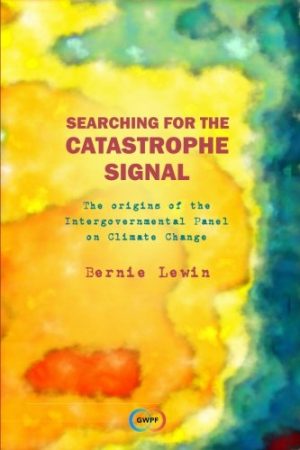
 Why does America participate in “color revolutions”? It’s simple – it solves military tasks by non-military means, destroys states and puts the country’s resources in the service of the United States. People as a result of the revolution generally live worse than before the uprising.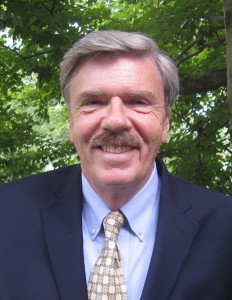
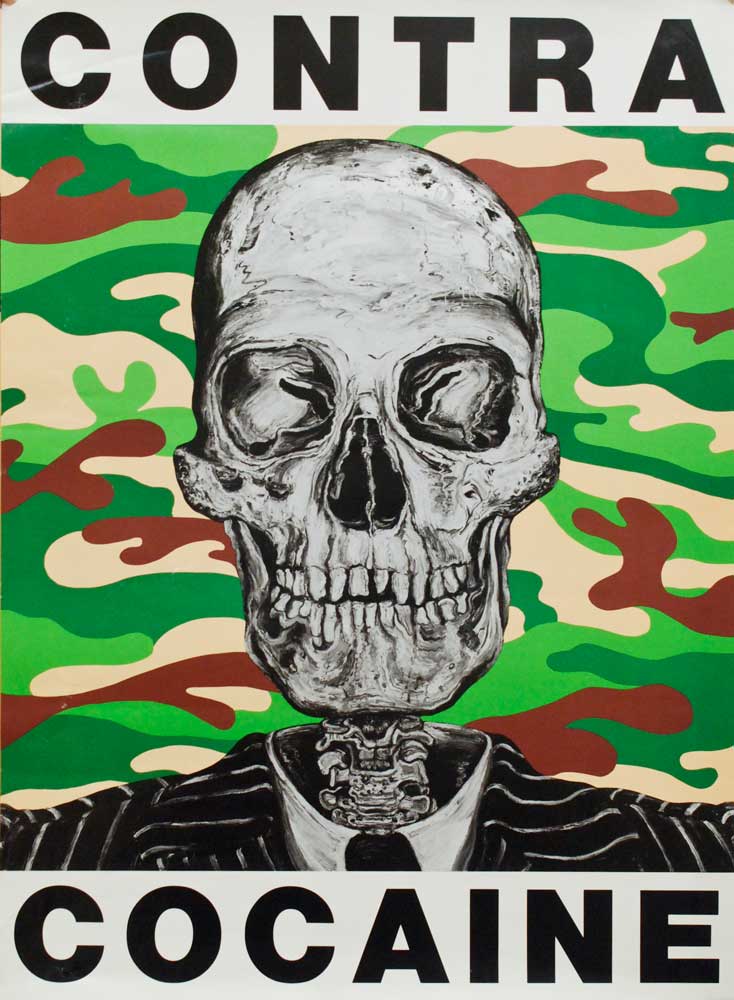
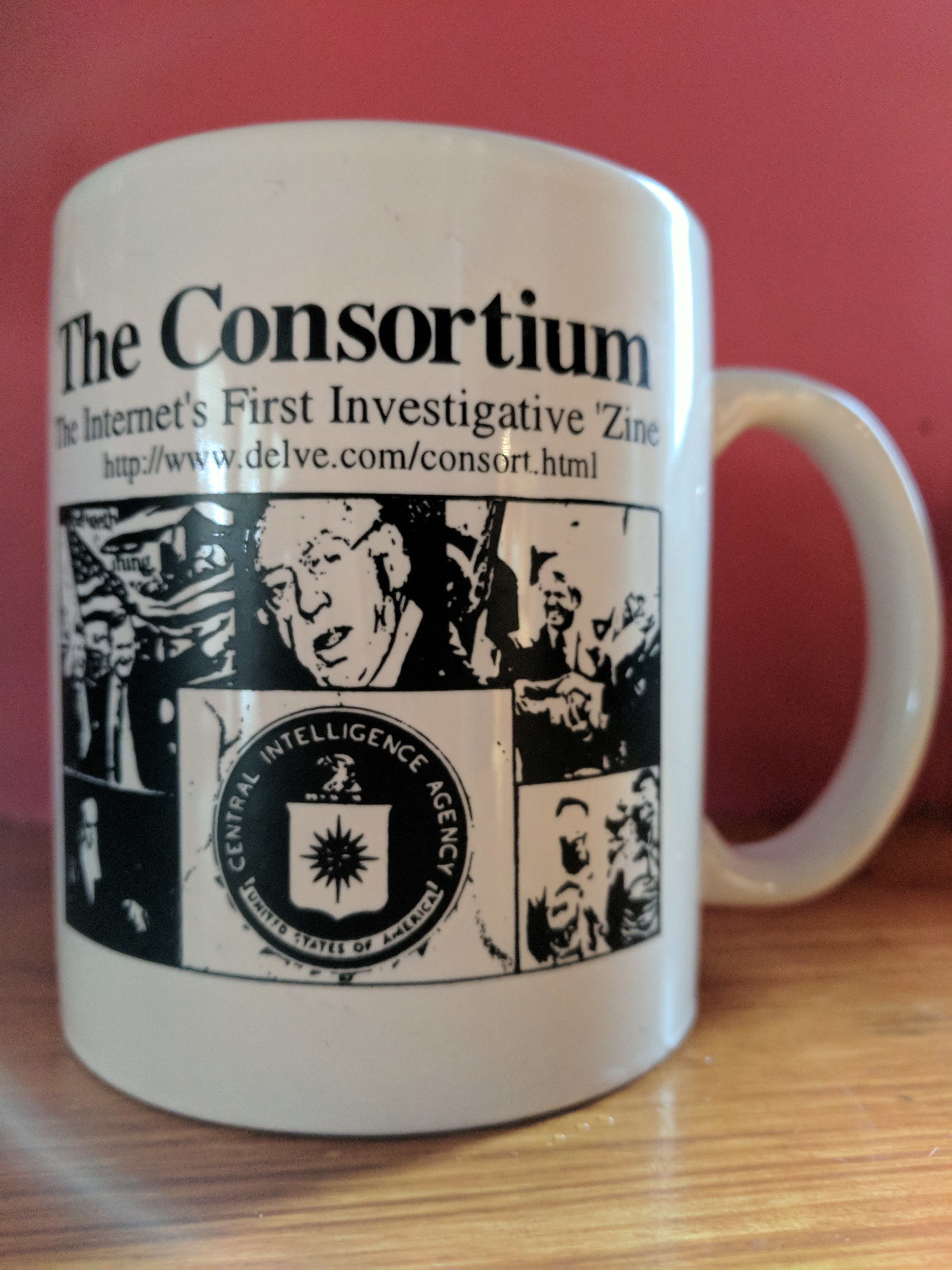
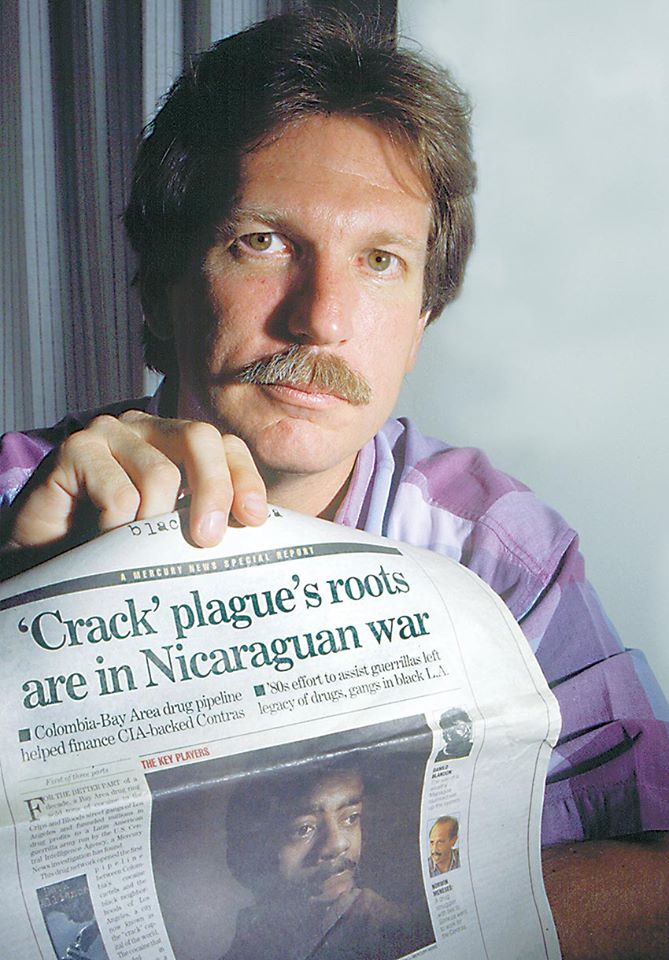
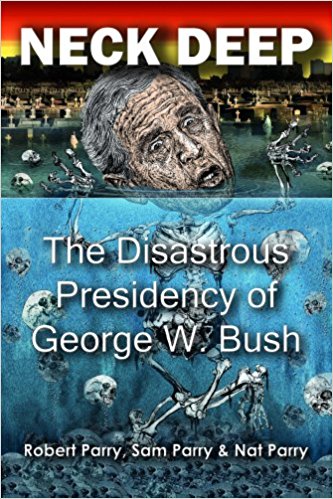

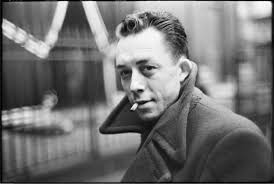
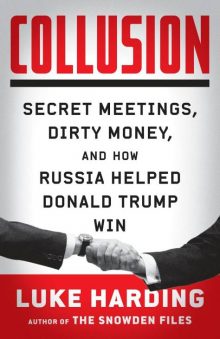 Collusion spends over 300 pages insinuating that Trump is a long-standing agent of the Russian secret services, and hinting, without ever providing any firm evidence, that Trump and his team acted on orders from the Kremlin to subvert American democracy. I’ll be honest, and admit that I picked this book up expecting it to be a series of unsubstantiated conspiracy theories, and to be utterly unbalanced in its analysis, and in that sense I’m not an unbiased reader. At the same time, I was interested to see if Harding had come up with anything that everybody else had not, and was willing to give him a chance. I needn’t have bothered. For alas, my worst suspicions proved to be true, and then some.