‘Zionism is a narrative based on fabricated ideas’
MEMO | November 18, 2018
The Palestinian case is a narrative as is Zionism, but the latter is made up “mostly if not entirely of fabricated ideas”, Palestinian author Ramzy Baroud told an international audience in Istanbul, Turkey, today.
Zionism, which is the basis of the state of Israel, “has been communicated to the Western world to be truth,” Baroud continued, but “it has so little to do with the truth or is the complete opposite of the truth. The Palestinian narrative is the truth.”
However, Palestinians “are losing” because “for 25 years we have been distracted by the narrative that is the peace process and anyone who deviates from this narrative is classed as either a radical, a terrorist or a terrorist sympathiser,” he said during a discussion on the “Global discourse of the Palestinian narrative”.
But Palestinians and those working to attain their rights “should not buy in to this nonsensical narrative that paints Palestinians as terrorists.”
Why should we feel any way accountable to prove that we are not terrorists? We should not apologise for it.
It is for this reason that “the Palestinian victim” was created, to spread another image of the cause in the media. Journalists, Baroud said, “are part of our resistance” and they “can resurrect once more the Palestinian unity … so we as Palestinian people can become whole again”.
Israel not only uses the Zionist narrative to serve its aims, the panel said, it also employs policies that create “a civilised us and an uncivilised them”, which “serve only one purpose and one purpose only: the apartheid state of Israel”, Palestinian historian and writer Johnny Mansour added.
“It is not sufficient for us to say it’s a racist state but that it’s an apartheid state which practices fascism,” former minister of the Bureau of Prisoners’ Affairs Issa Qaraqe told the audience.
As part of its fascist policies, he explained, is the fact that “since 2015 Israel has passed more than 185 laws which are against Palestinians including 15 against Palestinian prisoners in Israeli jails. Which protects the ill treatment of Palestinian prisoners by law.”
The point of these laws is to place all activities by Palestinians as terrorist acts and make Israel an innocent bystander but Israel supports with wages and funding Jewish criminals while it bans support for Palestinian prisoners.
The occupation’s policies have emptied Jerusalem of its citizens, Deputy Director-General of Al Quds International Institution Ayman Zeidan said. “Jerusalem is emptying out of a main part of its identity; Christians. They are spreading all over the world.”
“This city will remain in conflict as long as it remains occupied,” he warned.
Brexit Means Fudge
By Rob Slane | The Blog Mire | November 16, 2018
I’m thinking of starting a new line of sweets called Brexit Fudge. It will of course be inedible and no-one in their right mind will buy it, but I’m convinced that there may be a market for it in Westminster and at the BBC. If only I can get the marketing right.
My interest in Brexit waned fairly soon after 23rd June 2016, partly on account of becoming tired listening to the Downing Street Parrot hoodwinking people into thinking she actually believed in removing the UK from the EU, by the repeated squawking of the phrase “Brexit means Brexit”. But even more so was I numbed to the whole thing, since I was quite convinced from the morning of 24th June that the powers that be had no intention of actually honouring the votes of the 17 million+ plebeians who dared to vote in a way that they apparently ought not to have done.
As I wrote back here on 29th June 2016:
“I don’t usually like to indulge in prophetic utterances, and I’m not sure I would describe this as such an attempt – more an informed hunch – but I believe that the 17,410,742 people who just expressed their opinion in a democratic vote to leave the European Union are about to find themselves involved in what can only be described as the mother of all stitch ups. Brexit just isn’t going to happen!!!”
And this:
“Curiously, Brexit doesn’t seem to have brought forth the same gushing praise from these people for the wonders of people exercising their democratic rights. Instead, the talk is about “walking back” the result. Should this happen, and the democratic result be overturned by technique, obfuscation, delaying tactics, propaganda and sheer manipulation, then this time we will have ourselves another coup. Only this time it will be a coup on behalf of the regime against the people. I hate to say it, but be prepared for the mother of all stitch ups. Better trust in God and keep your powder dry.”
And so it is. After two years of “Brexit means Brexit”, we find out that “Brexit means Fudge”. But actually it’s much worse than that. I mean, fudge is normally very good and who could possibly be against it? But the draft Withdrawal Agreement? Who could possibly be in favour of it, except the woman who is determined to hang onto power by her fingernails, Mrs Theresa May (or John Major in a power-suit as I like to think of her), and some sad individuals who are more worried about their place in Parliament than the future of their country.
For those who are interested, there is a good summary here of the major problems with the deal, including:
- Being locked into the European Court of Human Rights
- Being bound to a Customs Union, the rules of which would be set by the EU, but over which we would have no say
- Being left without control of our fisheries, and only able to comment on (but not affect change) of the management of the Common Fisheries Policy.
But the biggie is this:
“Article 132: Notwithstanding Article 126, the Joint Committee may, before 1 July 2020, adopt a single decision extending the transition period up to [31 December 20XX].”
“It’s what you might call the Odysseus Clause. It’s Article 132 – where the drafters can barely commit to finally fully leaving the EU this century …
The drafters have not even bothered to put in 202X to make a point that they expect transition to take a decade or so at most. So all the problems with the transitional deal, accepted because they are seen as transitional, could quite plausibly turn out to be permanent — or at least, long lasting enough to cause serious damage to our economy, to our democracy, and to our national credibility.”
This is clearly not what 17,410,742 people thought they were voting for on 23rd June 2016. But just as crucially, it’s not even what the 16,141,241 who voted Remain thought they were voting against. The former voted to become an independent, sovereign state once again. The later voted to remain part of the European Union. Mrs John Major’s Withdrawal Agreement formally takes us out of the EU, but essentially leaves us in, only without any say, without any end in sight, and unable to decide when that end should be. If it’s Fudge, it’s Impotent Fudge.
The situation is pretty much what Peter Hitchens predicted back here:
“It seems to me that when you have a country where the political establishment, the legal profession and most of the media, particularly the BBC, is in favour of staying, it’d be very difficult to actually leave. That’s what’s now happening. The Leave vote is being frustrated. We will formally leave the EU but we go from being half-in the EU, which we are now, to half-out the EU.”
The problem, as he correctly identified it, was always that we had a political decision taken by the majority of people, but no political party to implement that decision, not to mention an entire establishment that, by and large, was and is and will continue to be against that decision. The spectacle of a pro-Remain Prime Minister charged with implementing a decision which she didn’t support, is one of the wonders of our time, and is a bit like a builder being asked to build a house that he hates and doesn’t actually want to build.
What happens next? Very difficult to say. But I imagine there will be a General Election fairly soon. But the question is, what would you actually be voting for? You’d have two parties who actively loathe the idea of actually carrying out the result of the referendum, and another party the majority of whose MPs also loathe the idea, but who would be asking you to vote for them as they are “the only ones who can be trusted to fulfil the result of the referendum.” Except that they’ve just proven that they can’t be trusted.
It’s an almighty mess and there’s a huge constitutional crisis brewing. I assume that if Mrs May fails to get this agreement passed, at some point the establishment will simply say we need a second referendum (which in itself will teach us all we need to know about the laughable claims that we are a democracy). But what would the question be? Could you even have the same binary question as in 2016? It would be a bit of a joke, wouldn’t it?
“Should the United Kingdom remain a member of the European Union?”
Sorry, we answered that back in 2016, didn’t we, but then there was no-one amongst the elite willing or competent enough to honour it. So my answer remains the same, which was no, but do I believe that any of the current political establishment actually has the desire, the ability and the savvy to achieve this? Nay, nay and thrice nay. Needless to say, it doesn’t bode well for the future of the country when so many people find themselves entirely unrepresented.
Perhaps we do need another referendum, but with an entirely different question:
“Do you believe the current political establishment has proven that it is unfit for purpose and needs replacing?”
Both Leavers and Remainers ought to be able to agree on that.
Talkin’ Jim Acosta Hard Pass Blues: Is White House Press Access a Constitutional Right?
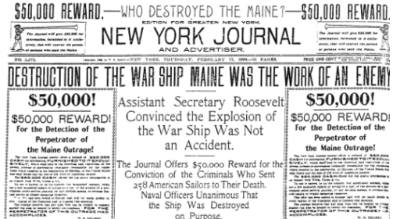
By Thomas L. Knapp | The Garrison Center | November 13, 2018
On the evening of November 7, administration officials suspended CNN White House correspondent Jim Acosta’s “hard pass.” A hard pass allows its holder “access to areas designated for journalists in the West Wing, on Air Force One, and in other secured areas during presidential trips, which are routinely covered by the White House press corps.”
The suspension followed a combative press conference during which US president Donald Trump repeatedly slammed reporters, referring to Acosta as “an enemy of the people,” and during which Acosta refused to hand a White House mic back to the intern who came to collect it when his haranguing — er, questioning — time ran out and either (depending on who you ask) accidentally brushed, or intentionally struck, the intern.
On November 13, CNN sued Trump and several other White House officials, accusing them of violating Acosta’s First Amendment (freedom of the press) and Fifth Amendment (due process) rights.
Insofar as the White House has specific and supposedly objective standards for granting hard passes to reporters, Acosta might indeed have a due process claim if yanking his pass didn’t conform to those standards. The First Amendment claim, on the other hand, seems pretty sketchy.
The First Amendment protects not only a free press but freedom of speech, freedom of religion, and freedom of peaceable assembly to petition the government for redress of grievances.
Does this mean that anyone who wants to report, speak, pray or just have a non-violent political get-together must be allowed to do so at the White House, on demand?
Well, maybe so. In Thomas Jefferson’s time, Americans could stroll the White House grounds at will and even visit with the president and first lady at lunchtime or after each day. Of course, things have changed since then, but I have no problem with the principle of the thing. The White House supposedly belongs to “the public.” Why shouldn’t we drop in any time we please?
That, however, is not what CNN contends. They’re not upset that you and I can’t plop ourselves down in White House press room chairs and start firing off questions at the president any time the spirit moves. Their lawsuit argues, rather, that because CNN is a popular cable channel and its White House correspondent is very special and important, Jim Acosta is entitled to a chair, a desk, and face time with Donald Trump.
I suspect a lawsuit on similar supposed First Amendment claims from, say, Caitlin Johnstone, Alex Jones, Chris Hedges, or the “White House Correspondent” of a small-town Kentucky newspaper would get laughed right out of court (and out of the “mainstream press”), even if they all agreed to hand the microphones back over when their time ran out.
Final Turnout in Donbass DPR’s Elections Reaches 80.1 Percent – Authorities
Sputnik – 12.11.2018
DONETSK/KIEV – The final turnout in the elections of the leader and members of parliament in the self-proclaimed Donetsk People’s Republic (DPR) has amounted to 80.1 percent, head of the breakaway republic’s Central Election Commission Olga Pozdnyakova said.
“As of the moment when the polling stations were closed, the turnout amounted to 80.1 percent,” Pozdnyakova said on late Sunday.
She pointed out that more than 1.6 million people had cast their ballots. “According to preliminary data, more than 1.6 million people [cast ballots],” Pozdnyakova added.
A total of four candidates are running for the DPR leader’s post, including the republic’s acting leader Denis Pushilin. According to the Central Election Commission, Pushilin is winning the election with 57.3 percent of votes. The commission has counted 27 percent of ballots.
The Ukrainian authorities have already said that they would not recognize the results of Sunday’s elections, while the Kremlin pointed out that the vote would not violate the Minsk agreements.
Meanwhile, Ukrainian President Petro Poroshenko on Sunday discussed with his French counterpart Emmanuel Macron and German Chancellor Angela Merkel the issue of sending a UN peacekeeping mission to Donbass.
“President of Ukraine Petro Poroshenko met with French President Emmanuel Macron and Chancellor of Germany Angela Merkel during the working visit to France … the parties discussed the issue of promoting Ukraine’s proposals on the introduction of peacekeepers in the occupied territory of Donbass and the support for Ukraine’s position by our partners in the Normandy format — Germany and France,” Poroshenko’s office said in a statement.
The Ukrainian president has also discussed the exchange of prisoners between Kiev and the Donbass republics as well as Russia at the trilateral talks, according to the press service.
Macron and Merkel said in a joint statement after a meeting with Poroshenko on the sidelines of World War I commemorations that “these so-called elections undermine the territorial integrity and sovereignty of Ukraine,” a joint statement said as quoted by AFP.
The Gift of Gab: Pennsylvania AG Abuses Authority to Chill Internet Speech

By Thomas L. Knapp | The Garrison Center | November 11, 2018
On November 8, Pennsylvania attorney general Josh Shapiro’s office issued a subpoena to web host and domain registrar Epik, pursuant to “an ongoing civil investigation.” The subpoena demands “any and all documents which are related in any way to Gab.”
Gab, as you’ve no doubt heard, was accused Pittsburgh synagogue killer Robert Bowers’s social media platform of choice. In the wake of the Tree of Life massacre, the site was cut off by its web host (Joyent), domain registrar (GoDaddy), and payment processors (PayPal and Stripe). After more than a week offline, it found a new home courtesy of Epik.
While Shapiro and company remain mum as to the subpoena’s purpose (and in fact asked Gab not to publicly disclose it, a request the site’s owners declined to honor), there’s nothing unclear about that purpose. Shapiro is abusing his position of legal authority to intimidate those who do — or might do — business with Gab, in hopes of driving it back offline.
In recent years, larger social media platforms like Facebook and Twitter (followed by payment processors, web hosts and domain registrars) have acted with ever-increasing vigor to silence selected voices in the public square.
Their excuses range from “Congress says they’re terrorists” to “that’s fake news” to “meddling in elections” to “hate speech,” but visibly looming over every such action is the shadow of potential government force.
The chilling message to social media companies from assorted agencies and congressional committees boils down to a thinly veiled “if you don’t censor for us ‘voluntarily,’ we’ll force you to.”
Shapiro isn’t talking to domestic news about the subpoena, but last month he was fairly forthcoming about his motives with foreign media. “My office is reviewing this platform [Gab], which was used by the killer to spread his hateful messages,” he told Israeli newspaper Haaretz, adding that “[w]e cannot tolerate” “speech that includes incitements to violence” or sites that “explain how violence is going to occur.”
Subpoenas to Gab itself might have served an understandable legal purpose — for example, determining whether Bowers acted alone or used the platform to conspire with others prior to the attack.
The only plausible purpose of this subpoena is to intimidate those who might provide microphones to speakers Josh Shapiro doesn’t want the rest of us to hear.
Josh Shapiro is proving himself far more dangerous than Gab. It is he who should be investigated — and hopefully shut down.
Thomas L. Knapp (Twitter: @thomaslknapp) is director and senior news analyst at the William Lloyd Garrison Center for Libertarian Advocacy Journalism (thegarrisoncenter.org).
Brennan and Clapper Should Not Escape Prosecution
By John Kiriakou | Consortium News | November 11, 2018
Republican Sen. Chuck Grassley of Iowa made a dramatic announcement this month that almost nobody in America paid any attention to. Grassley released a statement saying that four years ago, he asked the Intelligence Community Inspector General to release two “Congressional Notifications” written by former CIA Director John Brennan and former Director of National Intelligence James Clapper.
Grassley had had his requests to declassify the documents ignored repeatedly throughout the last two years of the Obama administration. He decided to try again because all of the Obama people at the CIA and DNI are gone now. This time, his request was approved.
So what was the information that was finally declassified? It was written confirmation that John Brennan ordered CIA hackers to intercept the emails of all potential or possible intelligence community whistleblowers who may have been trying to contact the Congressional oversight committees, specifically to the Senate Select Committee on Intelligence and the Senate Judiciary Committee.
Simply put, Brennan ordered his people to hack into the Senate email system—again. Grassley is the longtime chairman of Judiciary Committee, and he was understandably appalled.
First, let me explain what a Congressional Notification is. The CIA is required by law to inform the Congressional oversight committees whenever one of its officers, agents, or administrators breaks the law, when an operation requires Congressional approval because it is a “covert action” program, or whenever something happens at the CIA that’s potentially controversial and the Agency wants to save itself the embarrassment of explaining itself to Congress later.
Brennan apparently ordered his officers to spy on the Senate. Remember, back in 2014 his officers spied on Intelligence Community investigators while they were writing the Senate Torture Report. This time, he decided to inform Congress.
But Brennan and Clapper classified the notification. It was like a taunt. “Sure, I’m spying on Congress, which is illegal. But it’s classified, so what are you going to do about it?”
Grassley went through the proper channels. And even though Brennan and Clapper essentially gave him the middle finger, he didn’t say anything until the documents were finally declassified. He’s a bigger man than I.

John Brennan, left, and James Clapper. (LBJ Library / Flickr)
I think Grassley missed an opportunity here, though.
First, it’s my own opinion that John Brennan belongs in prison. He has flouted U.S. national security laws with impunity for years. That’s unacceptable. In these declassified notifications, he’s confessing to hacking into the Senate’s computer system. That’s a violation of a whole host of laws, from illegal use of a government computer to wire fraud to espionage. There ought to be a price to pay for it, especially in light of the fact that Brennan was the leading force behind the prosecutions of eight national security whistleblowers during the Obama administration, almost three times the number of whistleblowers charged under the Espionage Act by all previous presidents combined.
Second, it’s a crime, a felony, to overclassify government information. Most Americans have no idea that that’s the case. Of course, nobody has ever been charged with it. But it’s a serious problem, and it’s antithetical to transparency. The CIA Inspector General said of the notifications, “I could see no reason to withhold declassification of these documents. They contained no information that could be construed as sources and methods.” That’s an admission that the notifications were improperly classified in the first place.
Grassley added, “There is a strong public interest in (the notifications’s) content. I do not believe they need to be classified at all, and they should be released in their entirety.”
Grassley went so far as to call out Brennan and Clapper by name. “What sources or methods would be jeopardized by the declassification of these notifications? After four-and-a-half years of bureaucratic foot-dragging, led by Brennan and Clapper, we finally have the answer: None.”
So why weren’t they declassified four years ago? Remember, it’s illegal to classify a crime. And it’s illegal to classify something solely for the purpose of preventing embarrassment to the CIA. Yet those were the very reasons for classifying the documents in the first place. It was because Brennan and Clapper think they’re somehow special cases. (Recall that it was Clapper who lied directly to the Senate Intelligence Committee about intercepting the communications of American citizens. He also did that with impunity.)
Brennan and Clapper think the law doesn’t apply to them. But it does. Without the rule of law, we have chaos in our country. The law has to apply equally to all Americans. Brennan and Clapper need to learn that lesson the hard way. They broke the law. They ought to be prosecuted for it.
John Kiriakou is a former CIA counterterrorism officer and a former senior investigator with the Senate Foreign Relations Committee. John became the sixth whistleblower indicted by the Obama administration under the Espionage Act—a law designed to punish spies. He served 23 months in prison as a result of his attempts to oppose the Bush administration’s torture program.
Russian journalist observing US midterms briefly detained by FBI
RT | November 11, 2018
The FBI has reportedly questioned USA Really head Alexander Malkevich at Washington airport after his trip to cover the midterm elections. The Russian mission in the US has requested information on the incident.
“In connection with media reports concerning the detention of Russian journalist Alexander Malkevich by FBI officers in Washington airport, an inquiry regarding the circumstances of the event was sent to the US Department of State,” it said.
Malkevich, a member of the Russian Civic Chamber, was an observer during the November 6 elections in the US state of Maryland, according to the chamber’s website.
On Thursday, he said that the scale of violations in states ruled by Democrats had “deeply shocked” him. The next day, several FBI agents approached him in the airport “like in the movies,” and asked him to follow them, he told Federal News Agency (FAN).
The agents searched Malkevich’s luggage and questioned him for around half an hour. They suggested that he had better cooperate with them, he recounted.
At first, the agents tried to delve into the activities of the USA Really website, which Malkevich heads, and link the journalist to alleged Russian meddling in the 2016 US elections.
He described the questioning as really “funny,” especially the second part, in which the FBI wondered if he was a military intelligence (GRU) agent, and asked other questions that reflected myths about Russia that are fueled by Western mainstream media.
It eventually transpired that the purpose of this incident was to notify the journalist that USA Really may be required to register as a foreign agent. After the questioning, Malkevich was allowed to leave the US
Francis Fukuyama and the End of Social Media Freedoms
By Robert BRIDGE | Strategic Culture Foundation | 09.11.2018
The American political scientist known for promoting the “end of history” fish tale following the collapse of the Soviet Union and the spread of Liberal-capitalist values around the world now appears to be angling for ways – wittingly or unwittingly – to curtail the freedom of speech.
Writing in The American Interest as the virtual crackdown on Alex Jones was underway, Fukuyama argued that the usual suspects of the social media universe – Facebook, Twitter, YouTube, Apple, and all of their vast subterranean holdings – need to come clean by entering a two-step rehabilitation program where they must: (1.) “accept the fact that they are media companies with an obligation to curate information on their platforms,” and (2.) “accept the fact that they need to get smaller.”
I think we can safely skip the “need to get smaller” suggestion with a hearty chuckle and focus our attention instead on the question of social media being held to the same rules as those that regulate America’s squeaky clean media divas, like The Washington Post, CNN and MSNBC.

The social media monsters argue that since they do not create original content, but rather mindlessly provide the clean slate, as it were, for third-party developers to post their own thoughts, opinions, news and of course wild-eyed ‘conspiracy theories,’ they cannot be bound by the same rules and regulations as the mainstream media, which must bear ultimate responsibility for its increasingly damaged goods.
“We’re not a media company,” the late Steve Jobs of Apple fame told Esquire in a rough and tumble interview. “We don’t own media. We don’t own music. We don’t own films or television. We’re not a media company. We’re just Apple.” On that note, Jobs reached over and switched off the interviewer’s tape recorder, bringing an abrupt end to the strained conversation.
Thanks to the provisions laid out in Section 230 of the Communications Decency Act of 1996, the social media platforms are granted immunity from liability for users of an “interactive computer service” who publish information provided by third-party users.
The act was overwhelmingly supported by Congress following the verdict in the 1995 court case, Stratton Oakmont, Inc. v. Prodigy Services Co., which suggested that internet service providers that assumed an editorial role with regards to client content thus became publishers and legally vulnerable for any wrongdoing (libel and slander, for example) committed by their customers. At the time, when alternative voices on the social media frontier had not turned into actual competition for the legacy media, legislators deemed it more important to protect service providers from criminal proceedings than to nip freedom of speech in the bud. Honorable? Yes. But I wonder if they’d have made the same decision knowing the powerful forces they had unleashed.
At this point, Fukuyama summarizes the plight regarding the social media platforms with relation to their independent creators, who wish to express their freedom of speech.
“Section 230 was put in place both to protect freedom of speech and to promote growth and innovation in the tech sector. Both users and general publics were happy with this outcome for the next couple of decades, as social media appeared and masses of people gravitated to platforms like Facebook and Twitter for information and communication. But these views began to change dramatically following the 2016 elections in the United States and Britain, and subsequent revelations both of Russian meddling in the United States and other countries, and of the weaponization of social media by far-Right actors like Alex Jones.”
Despite being a learned and intelligent man, Fukuyama jumps headfirst into the shallow end of a pool known as ‘Blame Russia’, while, at the same time, blames the far-Right for the “weaponization” of social media, as though the Left isn’t equally up to the challenge of waging dirty tricks, in a crucial election year, no less.
Next, he genuflects before the Almighty Algorythm, the godhead of Silicon Valley’s Valhalla, which, as the argument goes, was responsible for attracting huge audiences to particular channels and their messages, instead of the other way around.
“Their business model was built on clicks and virality, which led them to tune their algorithms in ways that actively encouraged conspiracy theories, personal abuse, and other content that was most likely to generate user interaction,” Fukuyama surmises. “This was the opposite of the public broadcasting ideal, which (as defined, for example, by the Council of Europe) privileged material deemed in the broad public interest.”
In other words, had Mark Zuckerberg and friends not toggled their algorithmic settings to ‘conspiracy theories,’ then the easily manipulated masses would never have given a second thought to well-known catastrophes based on pure and unadulterated evil, like the Invasion of Iraq in 2003, which, as the tin-foil-hat crowd constantly crows, was made possible by the fake news of weapons of mass destruction.
Here, Fukuyama lays on thick his extra-nutty academic drivel: “This is the most important sense in which the big internet platforms like Facebook, Twitter, and YouTube have become media companies: They craft algorithms that determine what their users’ limited attention will focus on, driven (at least up to now) not by any broad vision of public responsibility but rather by profit maximization, which leads them to privilege virality.”
In other words, internet users are not inquisitive creatures by nature with fully functioning frontal lobe regions like the honorable Francis Fukuyama. They do not actively search out subjects of interest with critical reasoning skills and ponder cause and effect. And let’s not even mention the mainstream media’s disastrous coverage of current events, which led to the alienation of mainstream audiences in the first place. In Fukuyama’s matrix, otherwise normal people subscribe to ‘alternative facts’ or conspiracy theories because those damn algorithms kept popping up!
This ‘more righteous than thou’ attitude on the part of left-leaning Silicon Valley prompted hundreds of independent channels – the overwhelming majority from the right – to be swept away by a force known as ‘private ownership’ where brutal censorship has become the latest fad. Fukuyama, serving as the mouthpiece for both corporate and political interests, shrugs off this noxious phenomenon by arguing: “Private actors can and do censor material all the time, and the platforms in question are not acting on behalf of the U.S. government.”
Let’s give Fukuyama the benefit of the doubt. Maybe there really is no cooperation between the most powerful and influential industries for manipulating public opinion and the U.S. government. Yet we would do well to keep in mind some key facts that strongly suggest otherwise. During the two-term presidency of Barack Obama (2009-2016), Google executives met on average once a week in the White House with government officials. According to the Campaign for Accountability, 169 Google employees met with 182 government officials at least 427 times, a Beltway record for such chumminess. What is so potentially disastrous about such meetings is that Google, the chokepoint on news and information, which has the power to actually rewrite history, is fiercely Liberal in its political outlook as per some whistleblowers who escaped the well-manicured campus known for employee neck massages and free lunches. What was discussed in the White House? Nobody really knows. However, there is already a treasure trove of publicly available information detailing the intimate relationship between US intelligence and Google (as well as the other usual suspects).
Fukuyama tries to conclude with an upbeat, happy message by saying “private sector actors… have a responsibility to help maintain the health of [America’s democratic] political system.” However, judging by everything in the article that preceded that remark, I would have to guess Francis Fukuyama would fully support yet more intolerance in the world of social media as a means of preserving America’s freedom-squashing status quo.
New York Lawmakers Want Social Media History To Be Included In Gun Background Checks
By Tim Cushing | TechDirt | November 7, 2018
Legislation arising from tragedies is almost uniformly bad. One need only look at the domestic surveillance growth industry kick started by the Patriot Act to see that fear-based legislation works out very badly for constituents.
A few New York lawmakers are reacting to the horrific Tree of Life synagogue shooting in Pittsburgh, Pennsylvania with a gun control bill that makes zero sense. Expanding on criminal background checks, these legislators are hoping to give law enforcement the opportunity to dig through gun buyers’ online history.
Eric Adams, the president of Brooklyn Borough, and state Senator Kevin Palmer are currently writing the proposed legislation, which would give law enforcement authorities the power to check up to three years of an individual’s social media accounts and internet search history before they are allowed to buy a gun, WCBS Newsradio 880 reported. One of the main aims is to identify any hate speech shared by the users, as the politicians noted that such offensive comments are generally only discovered after mass shootings occur.
The facile explanation for this ridiculous piece of legislation is this: somehow the Pittsburgh shooter might have been prevented from buying a gun because he posted anti-Semitic content to a social media platform.
This premise will only make sense to those incapable of giving it more than a superficial examination. First off, gun ownership is Constitutionally-protected, whether these legislators like it or not. It doesn’t make sense to abridge someone’s rights over social media posts, even if the posts contain bigoted speech. That speech is also protected by the Constitution, so combining the two simply doubles the chance the law will be struck down as unconstitutional. Plenty of people engage in ignorant bigotry. Not all of them are would-be criminals.
This law would treat every gun buyer as a suspected criminal who may only take advantage of their guaranteed rights by engaging in government-approved speech. That’s completely the wrong way around. This Brooklyn lawmaker doesn’t seem to understand this inversion even when he directly, if inadvertently, addresses it.
“If the police department is reviewing a gang assault, a robbery, some type of shooting, they go and do a social media profile investigation,” the borough president pointed out.
Yes. But in these cases, a criminal act has occurred and an investigation is warranted. This legislative proposal treats gun buying as a crime and people’s social media history as some weird form of evidence. That’s fucked up, no matter how you might feel about the Second Amendment. Lots of shitposting and venting can look dangerous if viewed solely in the context of finding a reason to deny someone a gun.
Then there’s the still unaddressed question of what law enforcement is supposed to do if it decides someone’s social media posts are worrying enough they should be denied gun ownership. Are officers supposed to head out and arrest this person for being aggressively racist? Is that where this is headed? Are these legislators actually going to enable literal policing of speech?
And how is this supposed to be accomplished? Would potential gun buyers be forced to relinquish account info and passwords to ensure law enforcement is able to see everything purchasers have posted?
These are all worrying questions, none of which anyone involved with this bill seems to have answers for. Sure, it’s still early the legislative process, but these lawmakers are speaking about it publicly using specious reasoning and inapt comparisons. This suggests they like the idea they’ve had, but haven’t really thought about it past the point of “the Pittsburgh shooter posted racist memes, therefore this would definitely work.”
This quote, given to the New York Post, adds more words but no more clarity. And it certainly doesn’t do what Eric Adams claims it does:
Adams said the bills take the First Amendment right to free speech and the Second Amendment right to bear arms into the equation.
“We’re not talking about a person advertising ‘I hate a particular elected official. I hate a policy that’s passed,’” Adams said. “If there’s something that a law enforcement officer of a reasonable mind reviewed that shows this person does not hold the mental capacity to own a gun, then he should not be able to get a permit. We should use the same standard that determines whether a police officer can carry a gun.”
It doesn’t take either of those rights into account. It simply says police will now be allowed to view three years of social media history (along with search history from Google, Yahoo, and Bing) to determine gun ownership eligibility. All Adams says is it won’t be used to punish certain protected speech. (And it will be used to punish this specific protected speech because any law that can be abused by the government will be abused by it.)
To add to surreality of the proposal, Gab won’t be included in the social media monitoring despite this being the site where the Pittsburgh shooter posted the comments these legislators point to as the impetus for this terrible legislation.
No matter how it’s pitched, it all comes down to this: no Second Amendment rights for New Yorkers if they don’t use their First Amendment rights in a way their government approves.
CIA’s ‘surveillance state’ is operating against us all

© Getty Images
By Sharyl Attkisson | The Hill | November 5, 2018
Maybe you once thought the CIA wasn’t supposed to spy on Americans here in the United States.
That concept is so yesteryear.
Over time, the CIA upper echelon has secretly developed all kinds of policy statements and legal rationales to justify routine, widespread surveillance on U.S. soil of citizens who aren’t suspected of terrorism or being a spy.
The latest outrage is found in newly declassified documents from 2014. They reveal the CIA not only intercepted emails of U.S. citizens but they were emails of the most sensitive kind — written to Congress and involving whistleblowers reporting alleged wrongdoing within the Intelligence Community.
The disclosures, kept secret until now, are two letters of “congressional notification” from the Intelligence Community inspector general at the time, Charles McCullough. He stated that during “routine counterintelligence monitoring of government computer systems,” the CIA collected emails between congressional staff and the CIA’s head of whistleblowing and source protection.
McCullough added that he was concerned about the CIA’s “potential compromise to whistleblower confidentiality and the consequent ‘chilling effect’ that the present [counterintelligence] monitoring system might have on Intelligence Community whistleblowing.”
“Most of these emails concerned pending and developing whistleblower complaints,” McCullough stated in the letters to lead Democrats and Republicans at the time on the House and Senate Intelligence Committees — Sens. Dianne Feinstein (D-Calif.) and Saxby Chambliss (R-Ga.), and Reps. Mike Rogers (R-Mich.) and Dutch Ruppersberger (D-Md.).
The March 2014 intercepts, conducted under the leadership of CIA Director John Brennan and Director of National Intelligence James Clapper, happened amid what’s widely referred to as the Obama administration’s war on whistleblowers and mass surveillance scandals.
Is that legal?
According to the CIA, the spy agency has been limited since the 1970s to collecting intelligence “only for an authorized intelligence purpose; for example, if there is a reason to believe that an individual is involved in espionage or international terrorist activities” and “procedures require senior approval for any such collection that is allowed.”
But here’s where it gets slippery. It turns out the CIA claims it must engage in “routine counterintelligence monitoring of government computers” to make sure certain employees aren’t doing bad things. Poof! Now, all kinds of U.S. citizens and their communications can be swept into the dragnet — and it’s deemed perfectly legal. It’s just an accident or “incidental,” after all, if the CIA happens to pick up whistleblower communications with the legislative branch.
Or maybe it’s a lucky break for certain CIA officials.
The only reason we know any of this now is thanks to Sen. Chuck Grassley (R-Iowa), whose staffers were among those spied on. Grassley says it took four years for him to get the shocking “congressional notifications” declassified so they could be made public. First, Grassley says, Clapper and Brennan dragged their feet, blocking their release. Their successors in the Trump administration were no more responsive. Only when Grassley recently appealed to current Intelligence Community Inspector General Michael Atkinson, who was sworn in on May 17, was the material finally declassified.
“The fact that the CIA under the Obama administration was reading congressional staff’s emails about Intelligence Community whistleblowers raises serious policy concerns, as well as potential constitutional separation-of-powers issues that must be discussed publicly,” wrote Grassley in a statement.
Legal or not, there was a time when this news would have so shocked our sensibilities — and would have been considered so antithetical to our Constitution by so many — that it would have prompted a swift, national outcry.
But today, we’ve grown numb. Outrage has been replaced by a cynical, “Who’s surprised about that?” or the persistent belief that “Nothing’s really going to be done about it,” and, worst of all, “What’s so bad about it, anyway?”
Some see the intel community’s alleged abuses during campaign 2016 as its own major scandal. But I see it as a crucial piece of a puzzle.
The evidence points to bad actors targeting candidate Donald Trump and his associates in part to keep them — and us — from learning about and digging into an even bigger scandal: our Intelligence Community increasingly spying on its own citizens, journalists, members of Congress and political enemies for the better part of two decades, if not longer.
Sharyl Attkisson (@SharylAttkisson) is an Emmy Award-winning investigative journalist, author of The New York Times bestsellers “The Smear” and “Stonewalled,” and host of Sinclair’s Sunday TV program, “Full Measure.”
Making America as ‘secure’ as Israel – Israelis train U.S. police
By Alison Weir | CounterPunch | February 3, 2005
When you’re receiving advice “free” or otherwise, it’s wise to first evaluate the source. It’s probably not the best idea to hire a squinting optometrist, a limping podiatrist, or a toothless dentist. If you’re considering a heart surgeon and a search for his previous patients turns up too many graves, perhaps it’s time to reconsider. In fact, if he’s having heart pains, in all kindness perhaps you should call him a doctor.
In this vein, it seems time to examine a growing trend in this country. American officials still reeling from 9-11 and its escalating after-shocks are increasingly turning for help to Israeli “security experts.” Every few months there seems to be another report of local police officers somewhere in the country- Rhode Island, California, New Jersey -traveling to Israel for training in how to make America more secure.
These trips are paid for, interestingly, by the Anti-Defamation League (ADL), an organization whose once worthy goal of opposing bigotry long ago was superseded by a very different activity: advocacy for Israel. This advocacy consists of both carrots and sticks. Our officials, understandably perhaps, are chomping on the carrots.
At the same time as these junkets to Israel, more and more Israeli security experts are being hired here at home to advise us on how to make our nation safer. They’re popping up everywhere – at the local level, in state agencies, and throughout the federal government. They’re offering their services to the state department, and military officers are visiting the highest levels of the Pentagon.
Israeli experts are assisting us abroad, as well. They helped us interrogate prisoners at Abu-Ghraib, for example, and are present at Guantanamo making us safer.
At some levels, none of this is surprising. It is certainly tempting for our financially strapped municipalities to avail themselves of a lobbying group’s generosity, and there are all sorts of truisms to apply for example, “don’t look a gift horse in the mouth.” But the one that I suspect best fits is the old “there’s no free lunch.” Even more troubling, perhaps, are the cases where our over-extended federal government and struggling local ones are paying out good money for consultants whose merit is highly questionable at best.
It seems to me that before we go any further in this headlong rush for Israeli expertise to protect American citizens, it’s important to ask how secure Israeli experts and their policies have made Israeli citizens.
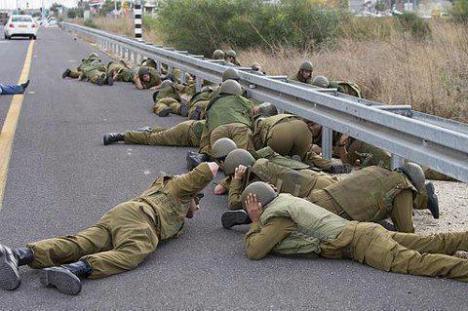 Anyone who has paid any attention to the news, of course, knows the answer.
The truth is, despite Israel’s enormous military might (paid for by American taxpayers to the tune of over $10 million per day), Israelis are among the most terrified populations in today’s world. Israelis feel unsafe in their cafes, on their streets, in their homes. They’re frightened to ride their own city buses. (The wealthy, of course, don’t. They take taxis and private cars.) And going to the mall in many parts of Israel is an experience that not many Americans would be eager to replicate here. Being searched by armed soldiers in combat gear before being allowed to enter, and then shopping amid people with loaded rifles strapped to their backs as they peruse the toy section is not a delight many of us would wish to copy.
Of course, you might point out, Israelis are living luxuriously compared to Palestinians. “Only” about 1,000 Israelis have been killed in the past five years, not over 3,500. “Only” approximately 100 Israeli children have been killed compared to more than 600 Palestinian ones. “Only” 7,000 Israelis have been injured, not 28,000. The unemployment rate is “only” 10 % not 50%. Israelis aren’t suffering malnutrition, being routinely imprisoned, grotesquely humiliated, regularly tortured.
There aren’t dozens of children with eyes injured and shot out, and while there are growing numbers of Israelis in wheelchairs, they don’t yet approach the hundreds of Palestinians whom Israeli bullets have permanently paralyzed. While many Israelis are maimed – arms missing, legs gone, faces mutilated – they’re “only” a fraction of the number you find in Palestine.
Nevertheless, despite their relative comfort, Israelis are not living in a condition that I wish to emulate.
The fact is, Israeli governmental security and policy “experts” have long promulgated policies of such ruthlessness and cruelty that a tiny but lethal number of their victims finally began to fight back. In the current intifada, 140 Palestinians were killed before a similar Jewish death on Israeli soil; 84 Palestinian children were killed before a single Israeli child. Now, as Palestinian deaths continue to spiral upward, Israeli deaths, while still significantly fewer, continue to grow as well. [See Timeline of deaths.]
It’s a very simple equation. The more that Israeli “experts” increase their actions to “protect” Israelis, the more they die.
Overall, in fact, Israelis have been so well served by their officials, that Israeli citizens are leaving the country in droves (hence, I suspect, the many “security consultants” now peddling their wares in the U.S. – security experts, too, know when to leave a sinking ship). In recent years, approximately ten percent of the population has left and some former American diplomats suspect the number of Israelis fleeing their country could easily be double that.
Personally, I’m proud of America’s history as a refuge for those “yearning to breathe free,” and I believe in doing our best to welcome those whom extreme need drives to our shores. I don’t, however, want anyone to bring “security” policies and “expertise” to our country that caused them to flee their own.
I’m not surprised that so many Israelis are moving to the US. I only wish we’d stop consulting them about how to make our own nation as safe as the one they’ve just fled.
Featured Video

When Israel Is Mighty
or go to
Aletho News Archives – Video-Images
From the Archives
US murdering 1 million Iraqis is democracy, Iran giving yogurt to Iraq is “domination”
By Ali Salaam | American Herald Tribune | July 31, 2017
The New York Times, owned by the Zionist Jewish supremacist Ochs-Sulzberger family, has no problem with Iraqi suffering as long as Iran is not the one behind it.
The Iraq War was a genocide of the Iraqi people by Zionist supremacists in the Bush administration. Over 1 million innocent people were killed based on a lie. American soldiers died in an Israeli war and now an average of 22 soldiers commit suicide every day because their consciences cannot cope with the fact they committed crimes in an illegal war that served no purpose other than to benefit Israel, not America.
Benjamin Netanyahu, Prime Minister of the Zionist regime, once said “We are benefiting from one thing, and that is the attack on the Twin Towers and Pentagon, and the American struggle in Iraq.”
Paul Wolfowitz had his sights on Iraq since his time in the first Bush administration. Former Israeli official and Bush administration official Richard Perle had his eyes on Iraq since at least his authorship of the Clean Break white paper. The Zionist regime had their eyes on Iraq since the 1980s when strategist Oded Yinon wrote his white paper in support of dividing the Arab-Muslim world along ethnic and sectarian lines. The global Zionist lobby has had their eyes on Iraq since Theodor Herzl stated that Eretz Israel’s true borders go from the Nile River in Egypt to the Euphrates River in Iraq. … continue
Blog Roll
 Aletho News
- MEP blasts ‘Euro-Gestapo’ for lecturing Russia on democracy
- Syria May Send Troops to Saudi Arabia Amid War with Ansar Allah
- UK whines about losing billions to ‘Putin tax’
- Baghaei to Rubio: Distorted narratives cannot erase US record of broken commitments
- Houthis Don’t Have to Conquer Saudi Arabia to Make It Pay
- MOE: Nearly 22,000 Students and Education Workers Killed
- Guterres in Islamabad: Genocide, cowardice, and the cage of Imran Khan
- Johnson, Marandi say Yemen holds upper hand over Saudi Arabia
- False flags won’t save aggressors, Iran FM spokesman says
- The Makkah Pact Enters Into Force: The End of American Dominance or Its New Form?
- If Americans Knew
- Report claimed Mark Levin used by Israeli government to influence Trump
- Over 2,000 Gazans have died awaiting medical evacuation amid Israel’s continued siege
- How a U.S. Diplomat Suppressed and Altered Reports Critical of Israel
- 5 Palestinians Die from Israeli Strikes in Gaza as Relentless Attacks Continue
- Report: Ceasefire Slows Killing but Leaves Devastation Intact
- Country Music Singer Zach Bryan Breaks Attendance Record at Robert Kraft’s Gillette Stadium While Wearing ‘Free Palestine’ Shirt for Second Night in a Row
- Three years of death and devastation: Israel’s war on Gaza in pictures
- Why Hamas believed the status quo was more dangerous than its 7 October gamble
- Debunking Israel’s latest list of ‘terrorist’ journalists in Gaza
- In Gaza, focus is on survival, “every step is a struggle” – Daily Update
- No Tricks Zone
- New Study: 50 Years Of The Most Aggressive ‘Net Zero’ Policies Can Only Affect The Global Climate By 0.03°C
- US September “Heat” Was No Record…Many Records Set Decades Ago
- Latest European Green Energy Debacle; Portugal’s Largest Flagship Solar Park Insolvent!
- Green Energy Debacle: German Expert Professor Fritz Vahrenholt Warns Of Severe Economic And Social Consequences
- Two More Paleo Reconstructions Affirm Meters-Higher Sea Levels Across Ireland, Brazil 7000-6000 Years Ago
- New Study: Earth And Venus Surface Warmth Largely Explained By Convection And Lapse Rate, Not CO2 Or Radiation
- 2025 Nature Paper Claiming Worsening Global Drought Gets RETRACTED …Heavily Flawed
- New Study: ‘Global Drought Shows No Detectable Recent Acceleration Under Climate Warming’
- Economic Masterminds: German Socialists Suggest Taxing Productivity Gains Stemming From Using AI
- The South China Sea Has Not Been Cooperating With The Climate Change Narrative

