Attorney-client privilege denied to us, used by Feds to keep the law secret
PrivacySOS | May 9, 2016
How do you spell chutzpah? I submit an alternate spelling: O-B-A-M-A D-O-J.
How the Obama administration interprets the phrase “government transparency,” in three acts.
Act One: Secret Law
The Obama administration is trying to keep secret a 2003 Office of Legal Counsel memo outlining how federal intelligence agencies interpret “commercial services agreements” between telecoms and their customers. The memo, which the ACLU seeks in a FOIA lawsuit, likely outlines the government’s legal position on how intelligence agencies can access information held by telecommunications companies. Senator Ron Wyden, who from his position on the Senate Intelligence Committee has routinely warned Americans of unconstitutional intelligence activities, has said the government’s “opinion is inconsistent with the public’s understanding of the law, and should be withdrawn.”
Wyden has also publicly stated that the DOJ misled a federal court during its legal fight to keep the memo secret. In a March 2016 letter, Wyden wrote that a DOJ memorandum of law filed in the case contains a “key assertion” that is false. “This assertion appears to be central to the DOJ’s legal arguments,” Wyden wrote.
Now the DOJ has fired back at Wyden, asserting in a brief in the ACLU lawsuit that the Senator’s claims about this “key assertion” were “wholly erroneous” and “based on a fundamental misunderstanding of the law.” The Justice Department claims the administration can keep the legal memo secret because it is not “working law,” but rather confidential legal advice. According to the DOJ, even though an agency may rely on an Office of Legal Counsel memo “by acting in a manner that is consistent with the advice,” the memo doesn’t necessarily “establish agency policy,” meaning it’s not “working law”—which is subject to public disclosure—but instead confidential legal advice.
(As Wyden noted, the DOJ “isn’t denying that this opinion is inconsistent with the public’s understanding of the law”; instead, it’s arguing that the legal memo at issue doesn’t constitute law.)
To repeat: The government is arguing that even if agencies “rely” on an OLC memo and act “in a manner consistent” with its advice, it isn’t law. Instead, it’s private legal advice, which just so happens to be something the government can keep secret from the public.
Act Two: Limitless Surveillance
In April 2016, the Office of the Director of National Intelligence (ODNI) released parts of a November 2015 Foreign Intelligence Surveillance Court (FISC) opinion about how the FBI, NSA, and CIA use information collected pursuant to Section 702 of the FISA Amendments Act. (The FISA Amendments Act, signed into law in 2008, put congress’ stamp of approval on the Bush administration’s warrantless wiretapping program.) Section 702 of that statute allows the intelligence agencies to warrantlessly wiretap Americans’ international communications, as long as Americans or people within the United States are not “targeted.” Part of that statute requires that the Attorney General and ODNI prepare annual reports, called “certifications,” to be reviewed by FISC judges. These certifications include information about how, why, and under what circumstances intelligence agencies “minimize” information about non-targets or US persons caught up in its dragnets.
The recently released November 2015 FISC opinion describes some of these minimization procedures in detail. Among them are procedures related to the capture, dissemination, and use of attorney-client privileged communications. The opinion reveals that the FBI can disseminate attorney-client privileged communications as long as the FBI’s lawyers approve it. The rules require the FBI to “advise recipients that the dissemination contains information subject to attorney-client privilege, that the information is being disseminated ‘solely for intelligence or lead purposes,’ and that it may not be further disseminated or used in any trial, hearing, or other proceeding without the approval of the AG or the Assistant AG for National Security.”
In other words: The US government allows itself to warrantlessly wiretap our international communications and even use our attorney-client privileged communications for intelligence purposes, as long as it doesn’t disclose to criminal defendants or courts that it has done so.
Act Three: Upside Down World
The US government refuses to disclose a legal memo that likely describes how intelligence agencies spy on our communications, claiming that the memo isn’t “working law” but instead constitutes “private” legal advice. Secret law is thereby justified by attorney-client privilege. In this case, the attorney and the client are one in the same: the executive branch.
At the same time, the government gives itself the power to warrantlessly wiretap, retain, disseminate, and use for intelligence purposes our attorney-client privileged communications—so long as the fact of agencies doing so never becomes public. Surveillance of attorney-client privileged communications is justified, as long as it remains secret.
Secret law, secret surveillance. Attorney-client privilege for government lawyers advising government agencies about government policy. No attorney-client privilege for ordinary people, who will likely never learn that the FBI or NSA has warrantlessly obtained their confidential communications.
Only in an upside down world could this administration choose this path, having called itself the “most transparent administration” in history.
4 members of Egyptian satire troupe Street Children referred to prosecution for ‘insulting the state’

Ahram Online | May 10, 2016
Four members of Street Children (Atfal Shawaree), a satirical performance art troupe, were referred Tuesday to a Cairo prosecution on accusations of inciting protests and publishing videos that insult state institutions, a judicial source told Ahram Online.
The artists were arrested on Monday and are being held at Cairo’s Sayeda Zeinab police station prior to the referral to Heliopolis prosecution.
On Sunday, the group’s sixth and youngest member, Ezz El-Din Khaled, 19, was ordered to be released on EGP 10,000 bail pending investigation into charges of inciting protests and publishing videos that insult state institutions.
Prosecution appealed the decision to release Khaled on Monday. The appeal was rejected on Tuesday and the 19-year-old was released.
Khaled was arrested from his home on Saturday evening.
The six-member performance group gained popularity among youths for their videos in which they that mock societal norms as well as the discourse of government officials and supporters.
Street Children released their first video in January 2016. The troupe’s last video was another satirical titled “Sisi is my president.”
Israel may force Palestinians to raise Israeli flag on Nakba Day
MEMO | May 10, 2016
Culture and sports centres in Israel, including Arabic institutions, should be made to raise the Israeli flag on Nakba Day, a senior minister has said yesterday.
Israeli Culture and Sport Minister Miri Regev instructed the ministry’s Director General Yossi Sharabi to put together an initiative that would see institutions raising the Israeli flag, YnetNews reported.
The news site reported informed sources saying: “Personal judgment should not factor in here.”
If Regev’s proposal is approved by the Knesset, it would force Al-Midan Theatre in Haifa and the Doha Stadium in Sakhnin, whose population is predominantly Arab, to raise the Israeli flag.
Since she took office, Regev promised to promote the Israeli flag’s prominence.
Egypt to try 67 people for assassinating top prosecutor
Press TV – May 9, 2016
Egyptian authorities have referred dozens of people to trial over the last year’s assassination of the country’s top prosecutor.
Prosecutor General Nabil Sadek sent 67 people to the criminal court on Sunday, without mentioning the exact date of the trial.
Sadek said in a statement that all the defendants were members of the outlawed Muslim Brotherhood movement, who “conspired” with members of the Palestinian resistance movement Hamas to assassinate Public Prosecutor Hisham Barakat in a bomb attack in the Cairo suburb of Heliopolis in late June 2015.
In March, Egyptian Interior Minister Magdy Abdel Ghaffar told a news conference in Cairo that both Muslim Brotherhood and Gaza-based Hamas were involved in the assassination.
The Hamas, however, has strongly rejected the allegation, calling it as “baseless.”
“Hamas calls on all parties in Egypt not to involve Palestinian factions in their internal differences,” Hamas spokesman Sami Abu Zuhri said in a press release on March 7, hours after Ghaffar’s comments.
There have been no credible claims of responsibility for the bombing that killed the 64-year-old state prosecutor just outside his house on June 29.
Erdogan Continues to Squeeze Power Into His Hands
By Salman Rafi Sheikh – New Eastern Outlook – 10.05.2016
Erdogan’s dream to revive Turkey’s ‘lost status’ as the most powerful Muslim country cannot be materialized, he and his advisers seem to believe, without first fundamentally altering Turkey’s own political system and this alteration is, he believes, incomplete without making him powerful. Hence, Erdogan’s emphasis on ‘constitutionally’ introducing presidential form of government in Turkey to concentrate all power into his personality. It is ironic to see the emphasis on this system coming at a time when Erdogan himself is Turkey’s president. However, the power-drive he is riding is likely to cost Turkey a lot in terms of political stability. Already Turkey is facing enormous difficulties due to its bad policies on the external front; and now the reported rift between Erdogan and Turkey’s prime minister is going to add fuel to the fire. In simplest terms, resignation of Turkey’s PM has made Erdogan the head of state, of the government and, of course, the party. What a tremendous way of becoming the head of ‘everything’! Any yet Erdogan continues to claim that Turkey is a ‘democracy.’
While Erdogan’s current constitutional status supposes him to act in a ‘neutral’ manner, his extremely narrowly self-defined political behaviour tends to defy Turkey’s constitution in the most ridiculous way. Despite the fact that Erdogan had picked Davutoglu’s concept of ‘Neo-Ottomanism’ as a means to re-establish Turkey’s relations with the former territories of Ottoman Empire, stretching from the Middle East, North Africa to the Balkan and Black Sea regions, they seem to have developed serious differences with regard to the changes in domestic political system that should precede the implementation of this new foreign policy outlook. For Erdogan, this change in the foreign policy—a policy that is aimed at reviving Turkey’s position of power in the region— and the objectives it envisages cannot be effectively materialized unless a strong centre is created.
That Erdogan is squeezing power into his own hands is evident from the statement Davutoglu gave after the crisis talks with the president failed. He was reported to have said that one important reason for stepping down was a decision by the party’s executive (Erdogan) to take away his (prime minister’s) authority to appoint provincial party leaders.
However, this is not only the reason. The rift is deep-rooted in two different visions that both of them have with regard to taking Turkey out of crisis. While Davutoglu believed in the way of dialogue with the Kurds, Erdogan believed in creating a strong presidency. As such, While Davutoglu spoke of the possibility of resuming peace talks with the Kurdistan Workers’ Party (PKK) if it withdrew armed fighters from Turkish territory, Erdogan said it was out of the question for the peace process to restart. Further disagreements took place after Davutoglu expressed opposition to the pre-trial detention of journalists accused of spying and academics accused of voicing support for the PKK.
For some, the reason for this crisis goes even deeper. The fact of the matter is that Erdogan had hand-picked his PM. Davutoglu did not, as such, have any strong base within the AKP’s structure. While this is yet another instance of how strong Erdogan continues to be and how explicitly he continues to defy his constitutional role, it also shows how creepy and fragile Turkey’s politics is becoming. This fragility is also showing its signs in some other aspects of polity too. The Turkish lira and the country’s stock market have fallen in recent days as investors shuddered at the prospect of a protracted leadership battle in a $720bn economy plagued by inflation, high foreign debt, a five-year long war on its border with Syria and a violent insurgency in its big cities.
This instability is, as a result of Davutoglu’s exit, likely to creep into Turkey’s relations with the West, particularly the EU, and damage it to a considerable extent. The reason why this is likely to happen is the rapport the Turkish PM had built with the EU and the deals he had made with regard to re-settlement of refugees.
Within the parameters of Turkey’s domestic politics, Davutoglu’s success in easing down Turkey’s relation with the EU meant—or it could be taken as such—that he was acquiring a relatively bigger stature than that of Erdogan—a sense that could have went against Erdogan’s push for presidential form of government.
It was this sense of ‘political status’ that was at the heart of problems between the PM and the President. And it is for this reason that Erdogan had to remind Davutoglu as well as Turkey’s public the true ‘hand-picked’ status of the prime minister. Addressing a group of local leaders on Wednesday, Erdogan was quoted as explicitly stating, “What matters is that you should not forget how you got to your post, what you should do there and what your targets are.” Given such an authoritarian stance, Davutoglu’s exit is going to put at risk Turkey’s ties with the West, which sees Erdogan with skepticism bordering on derision. Erdogan’s palace coup to ease out Davutoglu will only be seen in the West as a leap forward in the direction of authoritarianism.
Ironically, this is precisely what this development is all about. By paving the way for a more ‘sober’ and politically obedient and passive prime minister, Erdogan has underscored his own political power, putting himself in an ‘un-challengeable’ position, but indirectly also allowing Turkey to drift into experiencing an Ottoman-era type political tyranny. While Davutoglu dreamt of re-establishing Turkey’s relations with former territories of Ottoman Empire through his brain-child concept of ‘Neo-Ottomanism’, for Erdogan, this concept is incomplete without first turning his personality into the modern day ‘Sultan.’ Hence the question: will Turkey’s drift into ‘Ottomanism’ lead to its fall on the lines of the Ottoman Empire too? This question, as political behaviour of Erdogan and his team reveals, does not seem to have crossed their mind.
Salman Rafi Sheikh is a research-analyst of International Relations and Pakistan’s foreign and domestic affairs.
Reporters Without Borders – not independent but “strictly linked to US foreign policy”
By Graham Vanbergen | TruePublica | May 4, 2016
Reporters Without Borders has published the latest 2016 report on press freedom where Britain has fallen yet again with the organisation making the following statement about press freedom in Britain:
“Terrorist attacks have led to the adoption of draconian security legislation. The government reacted to the London public transport bombings in 2005 with a Terrorism Act the following year that restricts freedom of expression. The Regulation of Investigatory Powers Act (RIPA) adopted in 2000 allows the authorities to obtain the phone records of journalists in cases of threats to national security. Worse still, despite a law protecting the confidentiality of sources, the police have since 1984 been able to ask the courts to order media outlets to hand over unpublished journalistic source material “in the interests of justice.”
It is hardly surprising that Britain has fallen 4 places in 2016 behind such countries as; Tonga, Belize, OECS (Organisation of Eastern Caribbean States), Samoa, Ghana, Suriname, Namibia, Jamaica, with Burkino Faso and Botswana just behind, given recent legislative actions by the Conservative government since 2010.
The Guardian revealed in January 2015 that the British intelligence agency GCHQ described journalists as a “potential threat to security” and that huge quantities of emails of many journalists were among interceptions that went as far back as 2008. It was only the result of the Edward Snowden leaks that as many as 70,000 emails from journalists captured by Britain’s surveillance agency became known.
On the 15th October, Gordon Raynor, Chief Reporter at The Telegraph said– “Investigative journalism will be stopped dead in its tracks and local newspapers may be driven out of business when new laws restricting Britain’s free press come into force next month.” He continues – Media organisations face “the most substantial threat to press freedom in the modern era” as a result of the “menacing” laws passed in the wake of the Leveson Inquiry.
An independent report into the implications of the Crime and Courts Act, which came into force on November 3, says that The Telegraph’s landmark investigation into what turned out to be the most explosive political scandal in decades over MPs’ expenses would have been all but impossible under the new regime.
Britain sitting at number 38 flatters reality.
‘Freedom of Press’ is published by the US-based Freedom House, an NGO established in 1941 that has been ranking countries worldwide since 1980 in relation to democracy, human rights and press freedom. In May 2014 it reported that Britain has slipped down the global rankings for freedom of the press to 36th place.
According to Freedom House, “only 13 percent of the world’s population enjoys a free press—that is, where coverage of political news is robust, the safety of journalists is guaranteed, state intrusion in media affairs is minimal, and the press is not subject to onerous legal or economic pressures.” Although Britain is ranked as safe in press freedom terms one has to wonder given the very heavy handed behaviour by the government at The Guardian over the Snowden files and state surveillance over journalists more widely.
Meanwhile, without any sense of shame, US President Obama, the leader of the ‘free-world’, having presided over continual declines in press freedom sees the USA drop to a pitiful 41st place has the Whitehouse Briefing Room release the following statement (first paragraph):
“On World Press Freedom Day, we thank the journalists around the world without whom democracy could not flourish and whose courageous work helps hold authorities to account. These are the men and women who work to ensure that debate on public issues can be, in the words of Justice William Brennan, “uninhibited, robust, and wide open.”
One glaring component missing from all these so-called press freedom reports is that the biggest economic trade deals in the history of humanity are due to be signed in 2016 …. in total secrecy. In the EU, the European Commission is making the secret Transatlantic Trade and Investment Partnership (TTIP) trade deal even more secret than any normal person would think possible by the introduction of a new rule last year that means politicians can only view (some selected) TTIP text in a secure ‘reading room’ in Brussels. That is, of course, only after their mobile phones, memo pads, and pens have been taken away and two guards ominously placed in the room to ensure no notes are taken. And even then only after signing confidentiality agreements that threaten prosecutions for any leaks.
In the US, the same ‘reading room’ exists. As The Independent reports:
“In the basement of the US capitol, there is a room, a locked soundproof room, and the only people allowed in this room are US senators, and they can’t bring their assistants, they can’t bring their phones, they can’t even take notes in there. Inside this room is not the codes for our nuclear weapons, it’s not CIA files, it’s not the documents that tell us an alien landed in Roswell. No, in this room is the text of a trade deal (TTIP).”
Press freedom?? This type of secrecy, designed by corporations and the unelected politicians of the EU Commission would have made Joseph Goebbels in Nazi Germany proud. The EU Commission have now become completely independent of the politicians who represent the 508 million citizens of the 28 nation bloc where millions sign petitions and protest on the streets, get arrested and/or fined in their thousands and yet remain unheard. This is extreme press freedom censorship in every sense of the word. It says something when citizens have to rely on people like Wikileaks founder Julian Assange and whistleblower Edward Snowden for any real information on the matter – and both of them are in hiding from British and American police.
And so we come back to RWB who that as it turns out, is financed by none other than the US Congress and by various agencies tied to the US government – who coincidentally are conducting the talks on TTIP.
As GlobalResearch reports: “If we go to the RWB website to find who stands behind these self-anointed judges of world press freedom, we find nothing. Not even their board of directors are named, let alone their financial backers. Their annual published Income and Expenditure statements give no clue who stands behind them financially. RWB’s former Secretary General Robert Menard admitted that the budget for the organization was provided by “US organizations strictly linked with US foreign policy.”
Unfortunately, Reporters Without Borders are pretty much in the same boat as the International Consortium of Investigative Journalists amongst many others who have thoroughly important sounding names but in the end prove to be little more than propagandists for their masters.
We asked Reporters Without Borders why there had been no mention of TTIP in any of their reports. At the time of publication, we have received no reply.
‘EU Stays Silent on Erdogan Press Crackdown’
Sputnik – May 8, 2016
Two journalists from Turkey’s leading newspaper Cumhuriyet have been sentenced to five years in prison for revealing state secrets, but the case against them is purely political since the footage they published only confirmed what everybody already knows about Ankara’s activities in Syria, Turkish journalist Zeynep Oral told Radio Sputnik.
Two prominent Turkish journalists, Can Dudar and Erdem Gul, were sentenced on Friday to five years ten months and five years in prison, respectively, for publishing footage that appears to show Turkey’s National Intelligence Organization (MIT) smuggling arms to opposition groups in Syria.
However, the charges of terrorism and espionage that were levied against them are baseless because the supposed state secret that they divulged has been well known for some time, Zeynep Oral, President of PEN Center Turkey and a columnist for the daily newspaper Cumhuriyet, told Radio Sputnik.
“In fact both Can Dudar and Erdem Gul were put on trial for spying and terrorism, for attempting to put down the government and so many things, they were even prosecuted as terrorists, but the court acquitted them of all of these.”
“They are only being punished for what they have written. The court insisted that they have revealed ‘state secrets.’ Those secrets are not secrets; everybody knows about them, there are tons of publications about them, it’s not a secret any longer, this has already been published before.”
Oral believes that the current state of journalism in Turkey is the worst she’s seen in her 45-year career, and has resulted from the government’s political interference in the media and arbitrary use of the court system.
“I have lived through three different military coups and in none of them was it so bad. At least when you had the military coups you knew what you could write, what was forbidden to write, what was not forbidden to write, what was permissible.”
“Now there is uncertainty, you can be prosecuted for anything you write. The same article can be written by different names and one will be prosecuted and the other will not be prosecuted. For me this is a completely political court case, it has nothing to do with justice,” Oral said.
At first the Turkish government claimed the trucks were only taking humanitarian aid to Syria, then changed their story and said they were providing arms for the Turkmen in Iraq.
“Then the Turkmen said no, we’re not receiving any arms from the Turkish government.”
“Then Mr. Erdogan declared, ‘I shall not let them go free, they’ll have to pay for this.'”
“I think the court obeyed the orders of Mr. Erdogan.”
Oral said that while Turkey has a secular constitution, religion has been playing a greater role in political under the current government.”In the last ten years we have made a lot of concessions in the field of secularism. The education is being changed, the law system is being changed. The president of the parliament is saying, ‘we should change our constitution and take away secularism.'”
“All the resonances are becoming more and more religious. Of course, for me, that is unacceptable, not understandable, it’s a counter-revolution I would say.”
Turkey has recently become important to Europe “for the first time” because of its deal over the migrant crisis, but while the EU expresses concern about authoritarianism there, it will not interfere in support of European ideals regarding human rights, particularly freedom of expression, Oral said.
“They are ready to do anything to save their profits, their territory, I won’t say their ideals.”
“Profits and benefits are more important than ideals, these days, for the EU.”
US Ambassador to Hungary: Overthrow Assad, Let in Refugees, and Fight Russia… or Else!

US Ambassador to Hungary, Coleen Bell
By Daniel McAdams | Ron Paul Institute | May 6, 2016
If anyone wants a short course on what’s wrong with US diplomacy look no further than US Ambassador to Hungary Coleen Bell’s speech Friday to the Foreign Affairs Committee of the Hungarian Parliament. In typical diplo-speak there was plenty of flowery language about shared values, fish swimming together in the same water (?), sappy poetics like “together, out of that winter, we would force the spring,” and talk of together being “part of the world’s greatest military and political alliance.”
But make no mistake: Inside Ambassador Bell’s velvet glove is an iron fist, poised to strike should Washington’s annoyingly independent-minded Fidesz-led government step out of line on the big issues. And by “big” issues it should be understood that the US means the issues it considers in the interests of its own foreign policy, not those in Hungary’s interest.
Message to Hungary: do as we say or you will be sorry.
Ambassador Bell’s previous job was as a television soap opera producer, but raising more than two million dollars for the election of Barack Obama “earned” her the position of top US diplomat in Hungary.
The former television producer does know how to deliver her lines, though. She lectured the Hungarians about Syria, explaining to them that ISIS and Assad are both equally evil and both equally to blame for the disaster that is Syria.
ISIS has flourished in Syria, she told the Hungarians, because it “exploits the chaos of civil war in Syria, a conflict that has now claimed more than 250,000 lives.” But she does not mention that it was US backing for “regime change” in Syria — beginning at least in 2006, as we learn from a critical Wikileaks-released US Embassy Damascus memo — that created that very chaos she blames for the rise of ISIS.
In fact it is propaganda to call what is happening in Syria a “civil war,” as the forces battling the Syrian government are all sponsored by foreign powers like Saudi Arabia, Turkey, and the US. It is a proxy war against the Syrian government, not a civil war.
She then tells the Hungarians ISIS will never be defeated in Syria until Assad is overthrown:
[W]e know we won’t be able to defeat Daesh in Syria unless we also deal with the civil war and particularly with Assad. Because as long as Assad is there, he remains the most powerful magnet for foreign fighters and recruits to Daesh.
Does she assume Hungarians are so stupid that they believe that by attacking and beating ISIS back nearly to Raqqa (with Russian assistance), the Syrian government of Assad is actually benefitting ISIS? Attacking ISIS means Assad is on the side of ISIS?
“Since February, the cessation of hostilities reduced the violence in Syria, allowing millions of Syrian civilians to take the first steps toward reclaiming a normal life,” says the Ambassador, without even mentioning what brought the ceasefire about in the first place: Russian participation along with the Syrian army in the decimation of al-Qaeda and ISIS positions in northwest and central Syria. In fact it is absolutely bizarre that in the world of Ambassador Bell (and the State Department hacks who drafted her speech), the Russian intervention against al-Qaeda and ISIS simply never took place or was too inconsequential to mention.
Is any Hungarian so ill-informed that he would believe such nonsense?
Bell used the tragedy in Syria to pressure Hungary on the (largely American-made) refugee crisis. Hungary’s firebrand prime minister, Viktor Orban, has, along with several of his central European counterparts, stood up to Brussels’ (and Washington’s) demands that Hungary take in tens of thousands of migrants who heeded German Chancellor Angela Merkel’s call to come to Europe and enjoy lots of free stuff.
Last month Orban told Hungarian Radio that if he accepts the EU migrant resettlement plan, “it would be determined not in Hungary but in Brussels who we have to live together with, and how the ethnic composition of the country will look in future.” He has rejected such a notion.
“Every sovereign nation has the right and an obligation to protect its borders,” Bell told the Hungarian Parliament, “But every nation, as a part of the international community, also has a fundamental obligation to help refugee populations seeking safety.”
Translation: your sovereignty is not determined by you, but rather by us. It is a practice articulated by Orwell in 1984 whereby a person can think two completely contradictory thoughts at the same time seemingly without any mental conflict.
But here is where the iron fist inside Bell’s velvet glove glints in the sun. She pointedly condemned the Hungarian government position by praising those in Hungary who hold the opposite view, i.e. the Hungarian opposition:
We commend the humanitarian spirit of Hungarian leaders, law enforcement and military personnel, and ordinary citizens who are responding to this crisis with generosity and compassion.
Then she gives Hungary Washington’s marching orders:
We continue to stress that any solution to these migration challenges should focus on saving and protecting lives, ensuring the human rights of all migrants are respected, and promoting orderly and humane migration policies. That includes the support of all Member State governments for the refugee agreement forged between the EU and Turkey.
Translation: Hungary must support the EU agreement with Turkey which would see tens of thousands of migrants settled in EU member countries, including Hungary itself. The problem is that the Hungarian parliament explicitly rejected Brussels’ forced migrant settlement plans for Hungary and plans to hold a nationwide referendum on the subject. Bell is saying here that Hungary’s elected representatives and even the Hungarian voter must be ignored and Brussels’ dictate obeyed.
When it comes to Russia, Ambassador Bell also has some instructions for Budapest: Moscow is your enemy and don’t you forget it.
She told Hungarian parliamentarians:
As many Hungarians have reminded me, you need no introduction to the nature of Russian aggression. Your response has always been to show resolve. Our best weapons, in fact, are resolve and solidarity.
Weapons? Quite a loaded word.
Orban has been seen in Washington as insufficiently enthused about sanctions on Russia, which hurt Hungarian trade and business interests. Ambassador Bell makes it clear that Hungary must adhere to US demands of Russia, even if they are completely incoherent:
As the United States and Hungary have both stated many times, Russia has a simple choice: fully implement Minsk or continue to face sanctions. Russia must withdraw weapons and troops from the Donbas; Russia must ensure that all Ukrainian hostages are returned; Russia must allow full humanitarian access to occupied territories; Russia must support free, fair, and internationally-monitored elections in the Donbas under Ukrainian law; and most important, Russia must restore Ukraine’s sovereignty.
That last point should be taken to mean that Russia must ignore the will of the people of Crimea who voted in overwhelming numbers to re-join Russia after just 25 years as part of independent Ukraine.
Not to worry, Ambassador Bell is confident that Budapest will do everything Washington tells it to do:
More than this, Hungary is equal to the great challenges of our times, and the United States is counting on you.
To stiffen their spine, US Ambassador Bell reminds the Hungarians that they are part of “our global order” and touts the great examples set by the US, including:
Our system of international economic, political, and social norms and institutions have kept the peace and fostered prosperity for decades. Whether it is international law, environmental protection, trade regulations, anticorruption laws, child labor laws, human rights safeguards, the nonproliferation regime, public health systems, international financial institutions, UN peacekeeping, or a robust civil society – these norms and institutions give life and stability to our global order.
In the era of NSA spying on innocent Americans, Guantanamo, CIA torture, weapons sales to the world’s worst dictators (Saudi Arabia for one), destruction of the environment by the US war machine, “regime change” operations that violate the sovereignty of other states, and outright aggression in opposition to US and international law (Libya, etc.), Bell’s suggestion that “our global order” is the pinnacle of civilization should get a laugh out of most Hungarians. In fact, from Libya to Syria to Ukriane to Pakistan and Afghanistan, the US interventionist attempt to forge a global order with blood and bullets will go down in history along with the authoritarianisms of the 20th century as one of humanity’s darkest chapters.
Here is the short version of Ambassador Bell to Budapest: “to be our partner means you do what we say whether or not it is in your interest.”
Funny, that was Moscow’s message to Budapest from 1948 to 1989.
Gun attack on Turkish editor outside court during his trial for exposing Turkey-Syria weapons convoy

RT | May 6, 2016
An assailant has tried to shoot the editor-in-chief of Turkey’s Cumhuriyet newspaper Can Dündar , before the court was to announce the verdict on his case, Reuters reported, citing witnesses. The paper had published reports implicating the Turkish government in having links with extremists.
An assailant has tried to shoot the editor-in-chief of Turkey’s Cumhuriyet newspaper Can Dündar , before the court was to announce the verdict on his case, Reuters reported, citing witnesses. The paper had published reports implicating the Turkish government in having links with extremists.
The gunman shouted “traitor” before firing at least three shots at the journalist, an eyewitness told Reuters, adding that Dündar, who was unarmed, was not injured in the incident.
Reportedly at least one journalist who was covering Dündar’s trial was injured, however.
Dündar, 54, and his colleague, chief of Ankara bureau of Cumhuriyet, Erdem Gul, 49, stand accused of trying to topple the government, something they allegedly attempted to do in May 2015 by publishing a video purporting to reveal truckloads of arms shipments to Syria overseen by Turkish intelligence.
The Cumhuriyet report in May 2015 claimed that Turkey’s state intelligence agency was helping to transfer weapons to Syria by trucks.
Both Dündar and Erdem spent 92 days in jail, almost half of that time in solitary confinement, before the Constitutional Court ruled in February that their pre-trial detention was a violation of their rights.
President Recep Tayyip Erdogan repeatedly stated that the trucks really belonged to the MIT intelligence agency, but were carrying aid to Turkmens in Syria, who are fighting both Assad’s forces and Islamic State (IS, formerly ISIS/ISIL).
The journalists remain under judicial supervision and are banned from leaving the country, according to the state-run Anatolia news agency.
Their detention fuelled criticism from international human rights groups, as well as from the EU. US Vice President Joe Biden said that Turkey was setting a poor example for the region by intimidating the media.
The journalists’ arrests and trial prompted numerous protests across Turkey.
READ MORE:
‘Govt. trying to hide’: Turkey closes then postpones trials of two leading opposition journalists
Jailed Turkish journalists say arrests were aimed at sending ‘clear message’ to the press
Erdogan: ‘I don’t respect court ruling to free Cumhuriyet journalists’
The Labour of Judea Strikes Again
By Gilad Atzmon | May 5, 2016
The Labour Party may not have an issue with anti Semitism but they certainly have a serious issue with Black people and their history
Leading Black activist Jacqueline Walker of Thanet Momentum, is now suspended from the Labour party for comments about the primacy of Black suffering.
Ms Walker responded on Facebook to a question about the Holocaust by contrasting the Jewish holocaust to the “African holocaust.”
The mere mention of any other holocaust is a flagrant violation of the law against questioning the primacy of Jewish suffering. The Labour of Judea cannot tolerate such behaviour.
Walker wrote: “As I’m sure you know, millions more Africans were killed in the African holocaust and their oppression continues today on a global scale in a way it doesn’t for Jews.”
Walker wrote, “the chief victims of those failures however are not people of Jewish descent, but are the many other representatives of other minorities under-represented in the structures of the LP and discriminated against inside and outside the LP economically, culturally and politically in contemporary Britain.”
The Labour Party has a serious problem with the truth. Anyone who dares to describe the world as it is is immediately ousted by the Jewish Labour thought police (LFI, John Mann MP and others).
First Labour showed itself dismissive of the working class, now we know it is also not interested in racial equality. The Party is bewitched by shekels and this kind of interest does not come cheap.
To read more: In the last decade the French left together with the Jewish lobby has been harassing the genius French black comedian Dieudonné. Here is my take on The Meaning Of Dieudonné: http://www.gilad.co.uk/writings/the-meaning-of-dieudonne.html
Turkish govt shuts down Zaman newspaper following seizure
RT | May 5, 2016
The Turkish government is shutting down Zaman newspaper, previously a strong critic of President Erdogan, which it seized control of in March. A number of other media outlets are also being closed by Ankara, according to CNN Turk.
Zaman was taken over by Ankara in early March. Following the seizure, the government immediately appointed new trustees for Feza Media Group, which owned the paper.
Police also raided the newspaper’s offices to enforce a Turkish court order stating that the media outlet must be brought under government authority. The newspaper’s editor-in-chief, Abdulhamit Bilici, was fired soon after.
Once the state took over, the newspaper soon turned into a government mouthpiece. The first edition under the new ownership featured the image of President Recep Tayyip Erdogan.
Critics slammed the government for the move, with Zaman supporters taking to the streets of Istanbul in protest. Police deployed tear gas, water cannon, and rubber bullets on the demonstrators.
Along with Zaman, a number of other Feza Media Group outlets will be shut down, including Cihan News Agency. Küre.tv will also be closed.
Erdogan has been fiercely criticized for his crackdown on press freedom in recent months, including the pre-trial detention of two journalists who published a report which purportedly showed intelligence officials transporting arms to Syria.
In late April, Turkey barred foreign journalists from entering the country, without providing any explanation for the move.
News of the shutdown of the media publications comes as Turkish Prime Minister Ahmet Davutoglu effectively resigned following a rift with Erdogan, whose leadership has become increasingly authoritarian.
Read more:
Is the TSA Pressuring Americans Into Submitting to Background Checks?
By Jay Stanley | ACLU | May 5, 2016
The New York Times had a piece Tuesday on how security lines at airports are getting longer—in many cases, dramatically so, with waits of several hours at some times and airports. For example, the Times reported,
Ben Cheever, a support engineer for a cybersecurity firm, recently missed a flight in Seattle despite getting to the airport two hours ahead of his 6 p.m. departure to San Diego. Two lines spilled into the airport lobby, he said. A third was reserved for passengers who had signed up to a trusted traveler program called T.S.A. PreCheck that allowed them speedier access.
A lot of people love PreCheck. People not only like speedier lines, but it also plays to the natural human tendency to appreciate special treatment. But as I have noted before, there are serious questions about where this background-check program is headed. What is now a whitelist for a select few may turn into the normal manner of travel, subjecting virtually every passenger to increasingly intrusive database checks, excluding only an unfortunate few who become effectively blacklisted. As I observed last year,
by manipulating the system and the lines, the TSA can push more and more people to seek refuge from poor treatment within a government background check program that demands an ever-increasing amount of information about our lives.
What does the TSA say is the solution to longer security lines? According to the Times,
Both the airlines and the T.S.A. said that one way to alleviate the longer wait is to sign up for PreCheck, which allows eligible passengers to go through the speedier lanes without having to take off their shoes and belts or remove laptops and other electronic devices from their bags.
Is the TSA intentionally making everybody stand in long lines in order to pressure passengers into “voluntarily” submitting to (and paying for) background checks? I don’t believe that 3-hour waits are part of an intentional PreCheck-boosting plot, and the agency has incentives to avoid political backlash as angry travelers call their members of Congress. The Times cites a shortage of TSA screeners, budget cuts, and a growing number of passengers as the explanation for the longer waits. Nevertheless, when conditions are bad it’s a natural question to ask. The agency has a stated goal of moving as many Americans as possible into PreCheck, and will no doubt make use of the current situation to increase pressure on people to do so, as we saw officials doing in their comments to the Times. The structural logic of the situation gives the TSA an incentive to make life difficult for those who resist joining their background check program. It’s a parallel to the airlines’ incentive to make seats as uncomfortable as possible for those lowly passengers who hold out paying fees for “upgrades.” As Tim Wu put it, “in order for fees to work, there needs be something worth paying to avoid.”
Featured Video
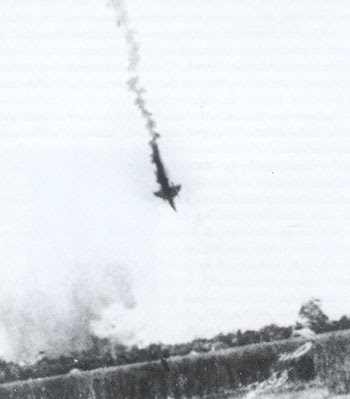
The Failed Air War Over Vietnam
or go to
Aletho News Archives – Video-Images
From the Archives
USS Liberty Massacre: A Pivotal Moment in the Hostile Takeover of America
By Kevin Barrett | Crescent | Dhu al-Qa’dah 24, 1445
In corporate America, hostile takeovers are commonplace. They occur when an aggressor—a larger corporation or rich individuals—seizes control of a smaller corporation without asking permission.
What few recognize is that the United States itself has been subjected to a hostile takeover. Since the aggressor, the illegitimate settler colony known as “Israel,” is much smaller than the US, the takeover has necessarily been surreptitious.
As of June, 2024, Israel’s gradual takeover of the US has become obvious and undeniable—a proverbial “elephant in the living room.” … continue
Blog Roll
 Aletho News
- Leaders Condemn Ansarallah Attack on Saudi Arabia While Ignoring Illegal War Against Yemen
- Leaked: Britain’s Covert Iraqi Psyops Network
- Yemeni Armed Forces Warn Airlines Against Using Saudi Airports, Exempt Mecca and Medina
- Iran security chief says powers greater than US tried to conquer Iran but ended in ‘dustbin of history’
- Europe’s mounting social chaos… chickens coming home to roost for proxy war against Russia
- US-Russia Diesel Deal Becomes Massive Defeat for Ukraine
- Hormuz and the Looming Economic Catastrophe
- Dhubab offensive, media blitz and the rapid unraveling of Saudi-backed coalition’s new gambit
- Putin Conveys to Trump Iran’s Vision on Possible Conflict Resolution – Kremlin
- The Search for Truth: Charlie Kirk’s Assassination One Year Later
- If Americans Knew
- For three years, Israel has killed a child in Gaza every 71 minutes – Daily Update
- Israeli forces kill another child in Gaza – Daily Update
- Gaza ceasefire exists in name only, say more than 100 organizations
- Nearly 2 Million in Gaza Need Urgent Shelter Assistance as Winter Looms: IOM Chief Warns
- Suppressing Palestinian resistance: US charity under fire for AI monitoring of Gaza classrooms
- Thousands Are Held in Israeli Torture Camps. This Is What Happens Inside
- Israel puts Gaza’s sick, injured, newborn in peril – Daily Update
- Report claimed Mark Levin used by Israeli government to influence Trump
- Over 2,000 Gazans have died awaiting medical evacuation amid Israel’s continued siege
- How a U.S. Diplomat Suppressed and Altered Reports Critical of Israel
- No Tricks Zone
- Germany’s Green Energy Debacle: High Energy Costs Force Kahla Porzellan to Close After 182 Years!
- New Study: 50 Years Of The Most Aggressive ‘Net Zero’ Policies Can Only Affect The Global Climate By 0.03°C
- US September “Heat” Was No Record…Many Records Set Decades Ago
- Latest European Green Energy Debacle; Portugal’s Largest Flagship Solar Park Insolvent!
- Green Energy Debacle: German Expert Professor Fritz Vahrenholt Warns Of Severe Economic And Social Consequences
- Two More Paleo Reconstructions Affirm Meters-Higher Sea Levels Across Ireland, Brazil 7000-6000 Years Ago
- New Study: Earth And Venus Surface Warmth Largely Explained By Convection And Lapse Rate, Not CO2 Or Radiation
- 2025 Nature Paper Claiming Worsening Global Drought Gets RETRACTED …Heavily Flawed
- New Study: ‘Global Drought Shows No Detectable Recent Acceleration Under Climate Warming’
- Economic Masterminds: German Socialists Suggest Taxing Productivity Gains Stemming From Using AI

