New Hampshire library to implement Tor above DHS objections—and how
PrivacySOS | September 16, 2015
A few weeks ago the Department of Homeland Security tried to intervene in a local library’s privacy program. Last night, the community roundly rejected those calls, explicitly choosing freedom over fear. Library board meetings don’t usually attract crowds, media, or protest. But something highly unusual—and extraordinarily encouraging—happened last night in a small town on the New Hampshire/Vermont border.
The drama unfolded in Lebanon, New Hampshire, where dozens of residents attended a library board meeting and spoke passionately about privacy and freedom before a gaggle of reporters and even some out of town activists. People in the room told me the energy was incredible. Some people cried. At the end of the meeting, the crowd that had gathered to passionately discuss issues at the heart of civic action and democracy erupted in cheers, elated at their collective success and lived commitment to the state motto: Live Free or Die.
The question before the public at the meeting last night was whether or not the Kilton Library in Lebanon should implement a Tor middle relay. Doing so would make the library a part of a global network of internet anonymity nodes offering users some measure of security and safety to people living under the terror of despotic regimes and abusive boyfriends alike. Weeks prior, the cops and the feds had managed to pull the plug on the project, a collaboration among the library, the Tor Project, and the Library Freedom Project.
But despite the Feds’ backroom fear mongering, the people of Lebanon, New Hampshire were not scared—and unlike DHS, which was mysteriously nowhere to be found last night, the people did their lobbying in full public view.
Nearly everyone who attended spoke in favor of the library’s plan to participate in Tor’s global internet freedom network. The only people who voiced opposition were the police chief and the town manager. But in the face of overwhelming community support, to include a local newspaper’s editors, even these few opponents were quick to temper their criticism of Tor, stressing that they would never tell the public it couldn’t do something like this if people want to.
People clearly want to. The room was so festive and pro-privacy that at the end of the meeting, the library board appeared unsure of what to do. It was so obvious that for a moment they just looked around. The people had spoken, and they weren’t scared, despite what DHS had told the local police, and what the local police had told the library. The library director stood up and proclaimed: the Tor node will return! The crowd cheered.
There were many remarkable moments during the public testimony. One woman, a library employee originally from Colombia, said that she wished a technology like Tor had existed in her country during a period of extreme repression in the early 2000s. It could have helped people, she said.
Library board chairman Francis Oscadal got philosophical, saying, “With any freedom there is risk. It came to me that I could vote in favor of the good … or I could vote against the bad. I’d rather vote for the good because there is value to this.” Please mark that quote and return to it; it’ll be endlessly relevant.
The Kilton Library and the community of Lebanon, New Hampshire have put the world on notice: privacy isn’t shameful and we don’t have to apologize for wanting to be free. We’d all do well to take heed, and gain some courage from their collective wisdom. Instead of fearing the bad in the world, and reacting based on those fears, we should vote for the good.
Britain Moves From Democracy to Authoritarian State in Pernicious Veil of Secrecy

By Graham Vanbergen | TruePublica | September 16, 2015
One should not forget that “Openness and participation are antidotes to surveillance and control”.
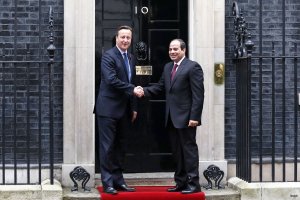
When David Cameron won the 2015 election one of the first things he said was; “For too long, we have been a passively tolerant society, saying to our citizens: as long as you obey the law, we will leave you alone”. This ominous statement immediately threw a dark shroud over Britain’s civil liberties laws, its openness and participation.
Few of the mainstream establishment press thought this was worthy of mention. From ZeroHedge – It’s not just those domestic extremists and crazy “conspiracy theory” kooks who took serious issue with UK Prime Minister David Cameron’s overtly fascist language when it comes to freedom of expression in Great Britain.” The Independent was more sanguine – “This is the creepiest thing David Cameron has ever said.”
New powers being brought in by the Conservatives should be of great concern to everyone. They are expected to be the introduction of banning orders for organisations who use hate speech in public places, but whose activities fall short of proscription and include;
- New Extremism Disruption Orders to restrict people who seek to radicalise young people;
- Powers to close premises where extremists seek to influence others;
- Strengthening the powers of the Charity Commission to root out charities who misappropriate funds towards extremism and terrorism;
- Further immigration restrictions on extremists;
- A strengthened role for Ofcom to take action against channels which broadcast extremist content.
Simply take out the word ‘extremist’ from those five points and you have the existence of something completely different. Of course you could be forgiven for thinking that the government would not abuse such laws. But they already allow for such abuses to take place on current terror laws, for instance:
- The BBC is using laws designed to catch terrorists and organised crime networks to track down people who dodge the £145.50 licence fee.
- The Metropolitan Police Service has also come under fire for using the same powers to access the phone logs of journalists on two newspapers to trace their protected sources.
- In addition, Big Brother Watch discovered 372 councils had been authorised (by gov’t) to use the terror laws 9,607 times -the equivalent of around eleven spying missions a day to hunt down non-payment of council tax.
- Seven public authorities, including the BBC, refused under the Freedom of Information Act to disclose why or how often they had used the powers. The BBC now refuses 48% of such requests.
What is most striking about these events are that publicly funded bodies such as the BBC, the Police and local authorities are refusing to answer perfectly reasonable Freedom of Information Act requests. They are exercising powers they shouldn’t have but were given by a government that the electorate were not consulted on and do not approve of in the first place.
There is proof that local authorities have even used terror laws to surveillance dog fouling, underage sunbed users and people breaking smoking bans.
Now that the Conservative government in Britain has it’s feet under the desk it is preparing to enact new legislation that, under the guise of the “war on terror,” that will vastly expand police-state powers and essentially criminalise speech and other political activity.
Presented officially as an anti-terrorism bill, the proposed measures will be targeted at any popular opposition to the government’s policies of aggressive militarism abroad and austerity measures in Britain, or for that matter anything the government deems worthy of oppressing.
The new bill will include a series of measures targeting groups and individuals deemed by the government to be “extremist.” This term is defined so vaguely as to encompass a wide array of political activity.
The new bill will create extremist “disruption orders” for individuals and “banning orders” for groups. The targets for these new police powers will be those who have conducted “harmful” behaviour.
The “harmful” behaviour covers activities that pose “a risk of public disorder, a risk of harassment, even alarm or just distress or creating a ‘threat to the functioning of democracy’.”
This will be used to criminalise campaigns critical of government policy and protests, which are frequently dispersed by the police on precisely the grounds that they disrupt public order. The language also indicates that the government would have the authority to target those merely planning such activity prior to it taking place – and they would do that through mass surveillance.
UK intelligence agency GCHQ has already been caught acting unlawfully by spying on two international human rights organisations. In addition, last year it was revealed that GCHQ were illegally eavesdropping on sacrosanct lawyer-client conversations in order to both disrupt and make gains on negotiations. GCHQ failed to follow its own secret procedures. “If spying on human rights NGOs isn’t off-limits for GCHQ, then what is?” said Privacy International.
From here we can see we now have a vast illegal state surveillance system that Mussolini would have had wet dreams about. The government is slowly closing down Britain’s very open society and they intend on doing so using one of Britain’s finest philosophers and a well tried theory.
The Panopticon is a type of institutional building designed by the English philosopher and social theorist Jeremy Bentham in the late 18th century. The concept of the design is to allow a single watchman to observe (-opticon) all (pan-) inmates of an institution without the inmates being able to tell whether or not they are being watched. Although it is physically impossible for the single watchman to observe all cells at once, the fact that the inmates cannot know when they are being watched means that all inmates must act as though they are watched at all times, effectively controlling their own behaviour constantly.
The internet has become the architecture of the state managed panopticon.
Speaking to the Guardian weeks after his appointment as the UN special rapporteur on privacy, Joseph Cannataci described British surveillance oversight as being “a joke”, and said the situation is worse than anything George Orwell could have foreseen.
Terror laws we have are already being abused. One is reminded of 82 year old Mr Wolfgang‘s pass being seized and he then detained under the Terrorism Act for interrupting Tony Blair’s speech at the Labour party conference in 2005.
Some of the most egregious cases of misuse include: a council in Dorset putting three children and their parents under surveillance to check they were in the catchment area for the school they had applied to.
Like the prisoners of Jeremy Bentham’s building – there is nowhere to hide in the panopticon.
A report by the House of Lords Constitution Committee, Surveillance: Citizens and the State, had warned in 2009 that increasing use of surveillance by the government and private companies was a serious threat to freedoms and constitutional rights, stating, “The expansion in the use of surveillance represents one of the most significant changes in the life of the nation since the end of the Second World War. The government’s of 2010 and 2015 have taken no notice at all.
‘Tempora‘ was one such government mass surveillance and spying programme among many. It is alleged that GCHQ produces larger amounts of metadata than America’s NSA. By May 2012 300 GCHQ analysts and 250 NSA analysts had been assigned to sort data.
The amount and type of data collected and stored is mind-boggling. Every email, phone call, location data, relationships, family and friends, affairs, work, income, expenditure, social habits, it simply has no end. You would not write down the passwords to your email account, bank or Amazon account, social media platforms and give a stranger the list. But that is exactly what GCHQ and other organisations have got.
‘Optic Nerve‘, another UK state surveillance mission, intercepted and stored the webcam images of millions of internet users not suspected of wrongdoing. They have stored naked pictures of you, your little daughter and pictures you have sent to family and friends in a whole new level of violation of our users’ privacy. This was a biometric exercise of epic scale – collating nearly 2 million citizen images in just a few months.
On May 13th 2013, Edward Snowden made a dash via Hong Kong to Moscow. That June the spying and surveillance revelations came forth. And what came forth was the stunning realisation that our government has been lying to us about the sheer scale of state surveillance conducted on a truly industrial scale.
Not happy with all this illegal state activity over its citizens, new orders that the government are now seeking contain bans on individuals broadcasting their views on television, and anyone subject to an order will be compelled to submit any written publication, including social media posts, to the police before it is printed. In addition, the orders will make it illegal for individuals to attend or address public gatherings or protests.
Banning orders will allow the government to outlaw any organisations it feels is not in their interests. If such a move is taken, anyone found to be a member of such an organisation will be guilty of a criminal offence. Authorities will also be able to shut down premises used by groups.
Human rights group Privacy International branded the new proposal as an “assault on the rights of ordinary British citizens.”
As the Guardian’s home affairs editor wrote in an analysis of the proposal, “the official definition of non-violent extremism is already wide-ranging” and, as Big Brother Watch has pointed out, the national extremism database already includes the names of people who have done little more than organise meetings on environmental issues.”
Last year the government even attempted to hold an entire terrorism trial in secret before abandoning it at the last minute.
Together with a sweeping attack on democratic rights and legal norms, the Conservatives’ anti-terror bills will further advance the government’s right-wing agenda. Cameron’s proposals make clear that the Conservatives are determined to vastly expand the repressive powers of the state.
In little more than five years the state has gone from an open society of democratic principle to one that resembles an authoritarian state. Soon, it will be impossible to have a dinner party with friends without the state knowing about it and wanting to know the purpose of your gathering. Quite the opposite of his ‘big society’.
The British government and its intelligence services are acting under a pernicious veil of secrecy to the detriment of all citizens.
EFF Urges Department of Justice Not to Fund LAPD’s Body Cameras
By Jennifer Lynch | EFF | September 16, 2015
Next week the Department of Justice will likely decide whether to issue a grant to the Los Angeles Police Department to purchase 700 body-worn video cameras. Because LAPD’s body camera policy fails to ensure accountability and transparency and would, in fact, hide almost all camera footage from the public, we are urging the DOJ to deny funding.
LAPD applied for the grant to fund its body-worn camera program through the Bureau of Justice Assistance (BJA) Body-Worn Camera Pilot Implementation Program earlier this year. After the shootings in Ferguson, Missouri and other places around the country created a national discourse about the need for police accountability, President Obama announced plans to “strengthen community policing,” including contributing $75 million over three years to provide a 50 percent match grant to states and localities that purchase body worn cameras. LAPD could be the first law enforcement agency to receive funds under the grant.
Los Angeles could also become the largest city in the country to use body cameras on a wide scale. LAPD has already purchased 860 cameras using private donations and plans to purchase 7,000 cameras total. The city has a goal of outfitting every LAPD officer with a body camera.
But amid these ambitious plans, LAPD has enacted a body camera use policy that runs completely counter to every reason to employ body cameras in the first place. At its heart, the policy appears designed to protect law enforcement officers rather than members of the public who they have sworn to serve.
The policy fails for four main reasons:
- It does not provide for any public access to body camera video—even in cases of shootings or alleged misconduct. In fact, LAPD has made clear that it will not release video footage unless required to do so in court—or unless the chief, in his discretion, believes it would be “beneficial.”
- It not only permits but requires officers to review body camera footage before they write up their reports—even before they provide an initial statement to investigators when they are involved in critical uses of force or accused of grave misconduct.
- It has no consequences for officers who fail to turn on their cameras during use-of-force incidents.
- It provides no clear rules to prevent LAPD from using body cameras as a tool to surveil the public at large. It doesn’t address the use of back-end analysis tools such as facial recognition on footage; nor does it provide guidelines for use of the cameras during First Amendment-protected activity.
Given LAPD’s notorious history of police misconduct, secrecy, unlawful surveillance, and resistance to outside review stretching back to at least the 1930s, perhaps it should come as no surprise that the agency has enacted a policy to protect its own rather than ensure accountability and transparency. The policy is also consistent with the hard-line stance LAPD has taken with respect to releasing automated license plate camera (ALPR) data. However, the DOJ should not add insult to injury by funding this program.
LAPD’s policy not only runs counter to recommendations from the ACLU, but also to recommendations from law enforcement organizations like the Police Executive Research Forum (PERF), an “independent research organization” whose board of directors is made up of police chiefs from agencies around the country. PERF has recommended that
with certain limited exceptions . . . , body-worn camera video footage should be made available to the public upon request—not only because the videos are public records but also because doing so enables police departments to demonstrate transparency and openness in their interactions with members of the community.
Even one of Los Angeles’ own police commissioners—who cast the lone dissenting vote against the policy—criticized it for its failure to address release of footage to the public and for allowing officers to review footage before writing reports. He said that LAPD’s process for adopting the policy “undermines the goal here of accountability and trust.”
LAPD’s policy also runs counter the BJA grant program’s requirements. The program requires recipients to enact policies for body camera use that, “at a minimum increase transparency and accessibility, provide appropriate access to information, allow for public posting of policy and procedures, and encourage community interaction and relationship building.” LAPD’s policy fails to meet even these baseline goals.
The President intended DOJ’s body camera program to “build and sustain trust between communities and those who serve and protect these communities.” But if the DOJ is really serious about doing so, this is not the way. The DOJ must send a message to other grant applicants by denying LAPD’s funding request. Police-worn body cameras are fraught with enough potential threats to civil liberties; we don’t need harmful policies designed to shield police action from public scrutiny reinforcing these threats.
Read our letter to the Department of Justice here.
‘Lipstick on a pig’: EC’s proposed corporate court system slammed by campaigners
RT | September 16, 2015
Campaigners sharply condemned a European Commission (EC) proposal to create a new corporate court system to replace its highly controversial Investor State Dispute Settlement (ISDS) mechanism on Wednesday.
The ISDS system is central to an EU-US trade agreement being negotiated behind closed doors, which could allow corporations to sue governments if they act against their interests.
Known as The Transatlantic Trade and Investment Partnership (TTIP), the trade deal has been shunned by almost 3 million European citizens. Some 97 percent of respondents to an EC consultation flatly rejected the trade deal’s ISDS dimension.
The EC put forward a proposal for an alternative court system on Wednesday – a move it said would make the ISDS mechanism more transparent and allow states to appeal against multinationals’ legal challenges. But campaigners say the suggested changes are merely cosmetic, and would still allow corporations to sue governments in secret court settings.
Another EU-Canada trade deal known as the Comprehensive Economic and Trade Agreement (CETA), which is currently awaiting ratification, contains an old version of the ISDS mechanism. It has also received widespread opposition from campaigners worldwide.
Global Justice Now director Nick Dearden said the EC’s proposed new court system is effectively “a PR exercise.”
“The European Commission says that this new proposal is based on ‘substantial input’ from its public consultation, but 97 percent of the thousands of responses it received in this consultation were clearly opposed to ISDS in any form,” he said on Wednesday.
“This alternative proposal is essentially a PR exercise to get around the enormous controversy and opposition that has been generated by ISDS.”
Dearden said the proposed corporate court system will still give corporations unnerving new powers.
“The Commission can try to put lipstick on a pig, but this new proposal doesn’t change the fundamental problem of giving corporations frightening new powers at the expense of our national democracies,” he said.
“Although a little more transparency is no bad thing, the real issue at hand here is that of corporate power.
“This change shows the European Commission is feeling the pressure of nearly 3 million people opposing TTIP and CETA, the two looming deals featuring ISDS,” Dearden added. He noted, however, that the EC has failed to halt the ratification of CETA.
Redacted documents detailing covert meetings between the EC and powerful tobacco lobbyists recently compounded fears TTIP would allow tobacco giants to sue governments that attempt to legislate in the public interest.
The documents, which confirmed the EC had met with lobbyists paid to peddle the interests of Big Tobacco, were published in late August.
This glaring lack of transparency sparked widespread fear among TTIP’s critics that the trade deal would empower tobacco giants to sue governments that seek to regulate the tobacco industry more stringently.
Powerful tobacco firms have previously used comparable trade deals to sue the governments of other states, who sought to crack down on its advertising.
US tobacco giant Phillip Morris previously took legal action against the Australian government after it introduced mandatory plain cigarette packaging. The firm is also embroiled in a $25-million lawsuit against Uruguay’s government in a bid to stop it from enlarging health warnings on cigarette packaging.
Are Neocons an Existential Threat?
By Robert Parry | Consortium News | September 15, 2015
The neoconservatives arguably have damaged American national interests more than any group in modern history. They have done more harm than the marginal Communists pursued by Sen. Joe McCarthy in the 1950s, more than the Yippies of the 1960s, more than Richard Nixon’s Watergate burglars in the 1970s or the Iran-Contra conspirators in the 1980s.
The neocons have plunged the U.S. government into extraordinarily ill-considered wars wasting trillions of dollars, killing hundreds of thousands if not millions of people, and destabilizing large swaths of the planet including the Middle East, much of Africa and now Europe. Those costs include a swelling hatred against America and a deformed U.S. foreign policy elite that is no longer capable of formulating coherent strategies.
Yet, the neocons have remained immune from the consequences of their catastrophes. They still dominate Washington’s major think tanks as well as the op-ed pages of virtually all the leading newspapers, including The Washington Post, Wall Street Journal and New York Times. They hold down key positions in the State Department, and their “liberal interventionist” pals have the ear of President Barack Obama.
Clearly, the neocons are skilled operatives, knowing how to arrange a steady stream of funding for themselves, from military contractors donating to think tanks, from U.S. taxpayers footing the bill for organizations like the National Endowment for Democracy, and from ideological billionaires set on aligning U.S. foreign policy with hard-line Israeli desires.
The neocons are adept at writing op-ed articles that twist any set of facts into support for their ideological cause; they supply just the right quote that fits into the news cycle’s latest narrative; and they host policy conferences that attract powerful politicians and fawning media coverage.
But are the neocons a force that can coexist with the American Republic? Have they become an existential threat not only to the constitutional structure crafted in 1787 but to continued life on the planet? Are they locked on a course of action that could lead to a nuclear holocaust?
Clearly, the neocons’ commitment to Israeli interests violates a key principle established by the nation’s early presidents who all warned against “foreign entangling alliances” as a fundamental threat to a citizens’ republic that would transform America into a warrior state that would inevitably sap the nation’s liberties.
That loss of liberty has surely happened. Not only is there now bipartisan support for a surveillance state that can spy on the personal lives of American citizens, but the U.S. government has wedded itself to the concept of “strategic communications,” a catch-phrase that merges psychological operations, propaganda and P.R. into a seamless approach toward managing public perceptions at home and abroad.
When information is systematically pushed through a filter designed to ensure consent, the core democratic concept of an informed electorate has been turned on its head: The people no longer oversee the government; the government manipulates the people.
Neocon Tactics
All this has been part of the neocon approach dating back to the 1980s when key operatives, such as Robert Kagan and Elliott Abrams, were part of inter-agency task forces designed to whip the American people into line behind the government’s aggressive war policies. Guided by seasoned CIA propagandists, such as Walter Raymond Jr., the neocons learned their lessons well.
But the neocons are no longer just threatening the existence of the Republic; they are now endangering the continuation of life itself. They have decided to launch a new Cold War against Russia that will push the world toward the brink of thermo-nuclear war.
Of course, the neocons will frame their doomsday strategy as all Vladimir Putin’s fault. They will insist that they are just standing up to “Russian aggression” and that anyone who doesn’t join them is a “stooge of Moscow” or “weak.” They will dictate the shape of the debate just as they have in countless other situations, such as guiding Americans to war in Iraq over non-existent WMD stockpiles.
The neocon pundits will write seemingly authoritative op-eds about devious Kremlin strategies which will glue black hats on the Russians and white hats on whomever is on the other side, whether the neo-Nazis in Ukraine or the Islamic State/Al Qaeda terrorists in Syria. Americans will be whipped up into a frenzy that will demand a direct clash with the “Russ-kies” or “regime change” in Moscow.
There will be little or no concern about the risks. With the neocons, there never is. The assumption is that if “Amur-ika” is tough, the other side will back down. Then, with U.S.-led economic sanctions from the outside and U.S.-funded NGOs stirring up trouble from the inside, “regime change” becomes the cure-all.
Everyone who’s important in Official Washington – everyone on the talk shows and op-ed pages – knows that these disruptive situations always play out just the way they’re diagramed inside the top think tanks. A hand-picked “democratic reformer” who’s traveled the think-tank circuit and gotten the seal of approval – the likes of Iraq’s Ahmed Chalabi – will easily be installed and then the target country will do whatever the neocons dictate. After all, that approach worked so well in Iraq. The neocons always know best.
Raising the Stakes
Yet, with Russia, the stakes are even higher than with Iraq. Yes, it’s easy to find fault with Vladimir Putin. I myself have a personal rule that men over 40 should keep their shirts on when out in public (unless maybe they’re actors in a Bond film or going for a swim at the beach).
But Putin at least is a rational player in global affairs. Indeed, he has tried to cooperate with President Obama on a variety of key issues, including convincing Syria to surrender its chemical weapons and getting Iran to make concessions in the nuclear deal – two contributions to world peace that infuriated the neocons who favored bomb-bomb-bombing both Syria and Iran.
At a dinner party in Europe this summer, I was asked by a well-informed British woman what should be done with Putin. My answer was that Putin doesn’t frighten me; it’s the guy who comes after Putin who frightens me – because despite the neocons’ confidence that their “regime change” plans for Moscow will install a malleable moderate, the more likely result would be a much harder-line Russian nationalist than Putin.
The idea of the nuclear codes being handed to someone determined to defend the honor of Mother Russia is what scares me. Then, the clumsily aggressive neocons in Washington would have their reckless counterpart in Moscow, with neither side having the wisdom of a John F. Kennedy or a Nikita Khrushchev as displayed during the Cuban Missile Crisis in 1962.
Would American neocons or a Russian super-nationalist have the wisdom and courage to back down, to compromise, to make the concessions necessary to avoid plunging over the edge? Or would they assume that the other guy would blink first and that they would “win” the showdown?
I recall what William R. Polk, one of Kennedy’s mid-level aides during the Cuban Missile Crisis, wrote recently about what happens to the human mind under such stress.
“Since human beings make the decisions, we must be aware of decision makers’ vulnerabilities,” Polk wrote. “During the Cuban Missile Crisis, I was one of about 25 civilians fully engaged in the events. I was not at the center but in the second or third ‘echelon.’ So I did not feel the full strain, but by the Thursday of the Crisis, I was thoroughly exhausted. My judgment must have been impaired even though I was not aware of it.
“I do remember, however, a terrible episode – fortunately lasting only a few minutes – at which I thought to myself, ‘let’s just get it over with.’ When later I met with my Soviet counterparts, I got the impression, although they denied it, that my feelings were not unique. How the strain impacted on the inner group I can only guess.”
If someone as stable and serious as Bill Polk had such thoughts – “let’s just get it over with” – what might happen when American neocons or hyped-up Russian nationalists are inserted into the decision process? That is an existential question that I don’t want to even contemplate.
Endless Putin-Bashing
And, if you doubt that the neocons will engage in over-the-top Cold War-style Putin bashing, you should read the op-ed by The Washington Post’s neocon deputy editorial page editor Jackson Diehl on Monday, entitled “Putin shifts fronts: With a move into Syria, he continues his in-your-face maneuvers.”
Diehl delves into Putin’s psyche – a process that is so much easier than doing real reporting – and concludes that Putin’s decision to join the fight in Syria against the Islamic State and Al Qaeda is just another attempt to stick his finger in the eye of the righteous but clueless United States.
Diehl, of course, starts off with the neocon-approved narrative of the Ukraine crisis, ignoring the key role of neocon Assistant Secretary of State Victoria Nuland (Robert Kagan’s wife) in midwifing the Feb. 22, 2014 coup that overthrew democratically elected President Viktor Yanukovych and installed an intensely anti-Russian regime on Russia’s border. Nuland even handpicked the new Prime Minister Arseniy Yatsenyuk, telling U.S. Ambassador Geoffrey Pyatt in a phone call several weeks before the coup that “Yats is the guy.”
The coup-makers then dispatched neo-Nazi militias (and Islamist militants) to wage a bloody “anti-terrorism operation” against ethnic Russian Ukrainians who resisted the “regime change.” [See Consortiumnews.com’s “Ukraine Merges Nazis and Islamists.”]
But all that complexity is neatly boiled down by American neocons and the mainstream U.S. media as “Russian aggression.” Regarding the Syrian civil war, some neocons have even joined with senior Israeli officials in claiming that a victory by Al Qaeda is preferable to the continuation of Assad’s secular regime. [See Consortiumnews.com’s “Syria’s Nightmarish Narrative.”]
Yet, however the story goes, the biggest bad guy is Putin, always with sinister motives and evil intent. So, in explaining the situation in Ukraine and Syria, Diehl writes:
“Throughout the summer, Russia’s forces in eastern Ukraine kept up a daily drumbeat of attacks on the Ukrainian army, inflicting significant casualties while avoiding a response by Western governments. On Sept. 1, following a new cease-fire, the guns suddenly fell silent. Optimists speculated that Vladimir Putin was backing down.
“Then came the reports from Syria: Russian warplanes were overflying the rebel-held province of Idlib. Barracks were under construction at a new base. Ships were unloading new armored vehicles. Putin, it turns out, wasn’t retreating, but shifting fronts — and executing another of the in-your-face maneuvers that have repeatedly caught the Obama administration flat-footed.”
The rest of the op-ed is similarly didactic and one-sided: Putin is the villain and Obama is the rube. In Diehl’s world, only he and other neocons have what it takes to take on Putin and put Russia down.
Any alternative explanation for Russia’s action in Syria is brushed aside, such as Putin deciding that a victory by either Al Qaeda’s Nusra Front – as favored by Israel – or the even more bloodthirsty Islamic State is unacceptable and thus Assad’s regime must be stabilized to avert a major geopolitical catastrophe.
Typically, the neocons breeze past the frightening logic of what the collapse of Assad’s military would mean for the Middle East, Europe and the world. After all, once Israeli leaders decided to throw in their lot with Al Qaeda in Syria, the die was cast as far as the neocons were concerned.
But the notion that the neocons can micromanage the outcome in Syria, with “moderate” Al Qaeda taking Damascus rather than the more “radical” Islamic State, reflects the arrogant know-nothing-ism of these U.S. opinion leaders. More likely, Al Qaeda’s Nusra Front would coordinate with their former allies in the Islamic State and share in the Sunni revenge against Syria’s Christian, Alawite, Shiite and other minorities.
So, while the Islamic State would busy itself chopping off heads of “heretics,” Al Qaeda could use its new headquarters in Damascus to plot the next round of terror attacks against the West. And, as destabilizing as the current refugee flow into Europe has been, it would multiply astronomically as the survivors of the Islamic State/Al Qaeda bloodletting flee Syria.
With Europe in chaos and the neocons still insisting that the real enemy is Russia, the possible consequences would be frightening to contemplate. Yet, this is the course that the neocons have set for the world – and nearly all the Republican candidates for president have signed on for the journey along with Democratic frontrunner Hillary Clinton.
In 2014, arch-neocon Robert Kagan, whom Secretary of State Clinton selected as one of her advisers while also promoting his wife, Victoria Nuland, told The New York Times that he could embrace a Clinton presidency: “If she pursues a policy which we think she will pursue … it’s something that might have been called neocon, but clearly her supporters are not going to call it that; they are going to call it something else.” [For more, see Consortiumnews.com’s “Is Hillary Clinton a Neocon-Lite?” and “Obama’s True Foreign Policy ‘Weakness.’“]
So far, virtually no one in the 2016 presidential race or in the mainstream U.S. news media is seriously addressing the reality of the neocons’ “regime change” chaos spreading across the Middle East and the prospect of a destabilized Europe. What limited discussion there is on the campaign trail mostly echoes Jackson Diehl’s Putin-bashing.
No one dares confront the existential question of whether the United States and the world can continue to tolerate and accommodate the neoconservatives.
~
Investigative reporter Robert Parry broke many of the Iran-Contra stories for The Associated Press and Newsweek in the 1980s. You can buy his latest book, America’s Stolen Narrative, either in print here or as an e-book (from Amazon and barnesandnoble.com).
Takedown Senders Must Consider Fair Use, Ninth Circuit Rules
By Parker Higgins and Daniel Nazer | EFF | September 15, 2015
A federal appeals court sided with EFF yesterday on several of the major questions at issue in the long-running Lenz v. Universal copyright case. Lenz – sometimes referred to as the “Dancing Baby” case because it centers on a 29-second home video of a toddler dancing with a song by the musician Prince in the background – has long been recognized as a test of the rights enjoyed by users, and the obligations facing people who want to take down online speech.
The big takeaway of yesterday’s opinion is, yes, that copyright holders must consider fair use before sending a takedown notice. But just as important is the basis of that conclusion: again today we have a federal court making it clear that fair use is not just a carve-out of the copyright system but a right on the same level of those described in the rest of the statute.
For example, the court states explicitly that “Fair use is not just excused by the law, it is wholly authorized by the law.” However well attested that principle is in the statute and in case law, it is still sometimes considered controversial. Hopefully this decision puts that debate to rest: whether the copyright holder grants permission or not, a fair use is an authorized use.
The court goes on to specify an important consequence of that fact: since fair use is authorized by the law, people enjoying their right to fair use are not infringing copyright. That’s important because Universal had argued that fair use has to be considered an “affirmative defense” of otherwise unlawful conduct. The panel of judges dismantled that idea:
Universal’s interpretation is incorrect as it conflates two different concepts: an affirmative defense that is labeled as such due to the procedural posture of the case, and an affirmative defense that excuses impermissible conduct. Supreme Court precedent squarely supports the conclusion that fair use does not fall into the latter camp: “[A]nyone who . . . makes a fair use of the work is not an infringer of the copyright with respect to such use.” Sony Corp. of Am. v. Universal City Studios, Inc., 464 U.S. 417, 433 (1984).
Given that 17 U.S.C. § 107 expressly authorizes fair use, labeling it as an affirmative defense that excuses conduct is a misnomer[.]
One reason this affirmation of fair use is so crucial is that it comes at a time when fair users should be enjoying new opportunities from unprecedented media tools and distribution options, but instead face similarly groundbreaking challenges and pushback from copyright holders. An interview with the video remix artist Elisa Kriesinger published just yesterday brings some of those points into focus: “Every few weeks, you are constantly having to defend your work … You thought you were clear two weeks ago, and now you’ve got to defend it again because someone else is saying that they own a portion of your work.”
In that interview, Kriesinger refers also to problems caused of algorithmic copyright enforcement, like YouTube’s Content ID system. The court addressed these systems in its opinion (as dicta, which means it’s expressly non-binding). Specifically, it cites a brief from the Organization for Transformative Works and Public Knowledge, which in turn refer to a joint statement of Fair Use Principles for User Generated Video Content that EFF first endorsed in 2007.
Some quick background on those principles: they were written as a response to a set of guidelines that did not consider fair use, put forward by a consortium of studios. It’s a testament to how far the national conversation around fair use has evolved, that a court should cite to a set of principles for protecting that essential right—and that, in a statement released after yesterday’s decision, MPAA should commend it.
For fair users, yesterday’s decision has another heartening element—the court has appropriately defined the damages available to targets of takedown abuse as broader than “actual monetary loss.” In practical terms, many people who are using their fair use rights online can’t easily demonstrate precise monetary costs of an improper takedown, but it can take a toll in terms of time and energy getting it restored and holding the senders accountable. It’s good to see a court recognize that idea. Accepting that a broad range of harm can and should make it easier for service providers and the public to hold accountable those that would abuse the DMCA.
Yesterday’s decision is not all good news, unfortunately. Applying an older Ninth Circuit decision called Rossi v MPAA, the court suggested that, although copyright owners must consider fair use, they only need to form a subjective good faith belief that the work is not authorized by law, even if this belief is objectively unreasonable on either the law or facts at issue. Those that would use the law to silence online speech should, at the very least, be required to act reasonably. Otherwise the law perversely rewards those who fail to properly educate themselves about fair use before sending a takedown.
It took eight years of litigation to get to this point. That’s right: it took eight years to establish that record labels like Universal must consider whether your speech is legal before they try to get it taken off the Internet. We are glad to finally have this result and we hope that this ruling will lead to less takedown abuse in the future.
Fears that Saudi Arabia is set to ‘crucify’ juvenile prisoner
Reprieve – September 15, 2015
Saudi Arabia has dismissed the final appeal of a prisoner sentenced to death as a child, leading to fears his execution could take place in a matter of days.
Ali Mohammed al-Nimr was arrested when he was 17 and initially held at a juvenile offenders facility. There is evidence that he was tortured and forced to sign a document amounting to a confession, which then formed the basis of the case against him.
Last week, his family found out that his final appeal had been heard in secret, without Ali’s knowledge, and dismissed. This means that there are now no remaining legal hurdles before he faces his sentence of ‘death by crucifixion,’ originally handed down on 27 May 2014.
Ali was arrested on 14 February 2012 in the wake of anti-Government protests, and has been accused by the authorities of participation in an illegal demonstration and firearms offences – no evidence has been produced for the latter charge, which he and his family strongly deny. The opaque nature of the Specialised Criminal Court (SCC) through which Ali was convicted makes it hard to determine the detail of the charges against him.
The Government appears to have rested its case against him in large part on his relation to Sheikh Nimr al-Nimr, a prominent religious leader in the Kingdom and human rights activist.
The Saudi Government has been widely criticised for its heavy-handed response against protesters and human rights activists since Arab Spring demonstrations began – including a death sentence for Sheikh Nimr. Ali is one of a number of people – thought to possibly include other juveniles – who has been sentenced to death following involvement in those protests. In January 2015, prominent Saudi blogger Raif Al-Badawi received the first of 1,000 lashes as part of his sentence for his statements critical of the Saudi regime in 2012.
The Saudi Government has carried out executions at a high rate since the coming to power of King Salman in January 2015, surpassing 100 for the year so far.
Commenting, Maya Foa, Director of the death penalty team at legal charity Reprieve said: “No one should have to go through the ordeal Ali has suffered – torture, forced ‘confession,’ and an unfair, secret trial process, resulting in a sentence of death by ‘crucifixion.’ But worse still, Ali was a vulnerable child when he was arrested and this ordeal began. His execution – based apparently on the authorities’ dislike for his uncle, and his involvement in anti-government protests – would violate international law and the most basic standards of decency. It must be stopped.”
‘Dozens of Egyptian dissidents died in prison in August’
Press TV – September 13, 2015
Dozens of dissidents have died across prisons in Egypt in the month of August alone, according to a non-governmental organization.
The Arab African Center for Freedoms and Human Rights documented deaths of 42 detainees.
According to the Cairo-based NGO, the captives mainly died due to medical negligence on the part of Egyptian authorities.
Human rights activists in the Egyptian capital have repeatedly said that many of those who die behind bars are in very critical condition due to torture upon arrest by Egyptian authorities.
Nearly 300 political prisoners have died in Egyptian detention facilities since 2013, according to activists.
The current military-backed government has harshly cracked down on dissent since the downfall of former President Mohamed Morsi in a military coup in July 2013.
Large numbers of supporters of the Muslim Brotherhood have been jailed since the rise of former military commander and current President Abdel-Fattah el-Sisi.
Benign State Violence vs. Barbaric Terrorism
By Matt Peppe | Just the Facts | September 12, 2015
Seven months ago, UK Prime Minister David Cameron lamented the “sickening murder” of Jordanian pilot Moaz al-Kaseasbeh by the Islamic State of Iraq and Syria (ISIS). President Barack Obama also decried the “viciousness and barbarity” of the act. In his home country, al-Kaseasbeh was remembered as a “hero” and a “martyr” by government officials. Obama even declared his murder demonstrated ISIS’s “bankrupt” ideology. The killing was seen by the Western coalition and allied Arab monarchies fighting ISIS as a symbol of the evilness of their enemies, and by contrast the righteousness of their own cause.
The act that precipitated such a strong outpouring was the purported execution of the 26-year-old al-Kaseasbeh. He was burned alive inside a cage after several months in captivity. As part of ISIS’s propaganda campaign, they posted the video on Youtube. The authenticity of the video has since been questioned, but there is no doubt that regardless of the method used, he was indeed killed.
Al-Kaseasbeh was not an innocent civilian. In fact, he was a pilot in the Royal Jordanian Air Force who was bombing territory controlled by ISIS in an F-16 fighter jet. That is to say, he was an active combatant in military hostilities. His combatant status would be equivalent to an ISIS pilot (if they had an Air Force) apprehended after bombing New York City or London. Though it was reported in the British newspaper The Telegraph that al-Kaseasbeh was “kidnapped,” a military combatant engaged in armed conflict on the battlefield cannot be kidnapped. He was captured.
According to the Geneva Conventions, Prisoners of War enjoy protected status that guarantees their humane treatment and eventual release at the end of hostilities. “POWs cannot be prosecuted for taking a direct part in hostilities. Their detention is not a form of punishment, but only aims to prevent further participation in the conflict. They must be released and repatriated without delay after the end of hostilities,” writes the International Committee of the Red Cross.
ISIS would have no legal grounds to kill al-Kaseasbeh, but it was cynical and sanctimonious for the Western coalition to react with such outrage when he was killed. Those same countries have embraced and celebrated summary assassinations and executions on a scale far more massive than anything ISIS could ever be capable of.
Several weeks ago, Cameron ordered the assassination of two British citizens in Syria alleged to be ISIS militants.
“The strike against British citizen Reyaad Khan, the ‘target of the strike,’ was committed without approval from Parliament. British citizen Ruhul Amin, who was killed in the strike, was deemed an ‘associate’ worthy of death,” writes Kevin Gosztola in Shadowproof.
The British government has not declared war on Syria and has not released any legal justification for its actions. Naturally, any legal documentation they did produce would be merely psuedo-legal cover that would never withstand real judicial scrutiny.
Cameron’s actions in ordering the murder of his own citizens follows the well-treaded path of Obama, whose large-scale drone program in as many as seven countries (none of which the US Congress has declared war on) have killed more than 2,500 people in six years. The President has quipped that he is “really good at killing people.”
By any measure, the drone assassination program has been wildly reckless and ineffective. One study determined that missile strikes from unmanned drones, launched by remote-control jockeys in air-controlled trailers in the American desert, kill 28 unknown people for every intended target. In Pakistan, a study revealed that only 4% of those killed have been identified as members of al Qaeda.
Among the victims have been 12 people on their way to a wedding in Yemen, and a 13-year-old boy who said that he lived in constant fear of “death machines” that had already killed his father and brother before taking his own life.
“A lot of the kids in this area wake up from sleeping because of nightmares from then and some now have mental problems. They turned our area into hell and continuous horror, day and night, we even dream of them in our sleep,” the now-deceased boy, Mohammed Tuaiman, told The Guardian.
Before Cameron did so, Obama also targeted citizens of his own country for assassination without trial. The most well known case is of Anwar al-Awlaki, killed by a drone strike in 2011. The government claimed he was operationally active in al-Qaeda, but this was never tested in court.
“It is likely the real reason Anwar al-Awlaki was killed is that he was seen as a radicalizer whose ideological activities were capable of driving Western Muslims to terrorist violence,” writes Arun Kundnani in The Muslims Are Coming!.
In other words, the Obama administration decided his speech was not protected by the 1st amendment to the US Constitution, and rather than being obligated to test this theory in court they unilaterally claimed the right to assassinate him, the way King John of England would have been able to order the execution of one of his subjects before signing the Magna Carta 800 years ago.
Three weeks later, al-Awlaki’s 16-year-old son was killed in a drone strike. An Obama adviser justified the strike by saying he should have “had a more responsible father.”
Writing on his blog, former British security services officer Craig Murray claims that in light of the decision 20 years ago by the European Court of Human Rights that targeted assassinations when an attack was no imminent were illegal, the British government cannot claim its drone strike in Syria “is anything other than murder.”
“For the government to claim the right to kill British people through sci-fi execution, based on highly unreliable secret intelligence and a secret declaration of legality, is so shocking I find it difficult to believe it is happening even as I type the words. Are we so cowed as to accept this?” Murray writes.
So what makes ISIS’s killing supposedly morally outrageous compared to the US and British drone strikes?
Was ISIS’s killing less morally justified? Al-Kaseasbeh was a combatant who had been dropping bombs on the people who eventually killed him. That much is beyond dispute. The US and UK kill people through drone strikes merely for being suspected militants who might one day seek to attack those countries.
Were ISIS’s methods less humane? Certainly burning a human being alive is sadistic and cruel. But is it any less so to incinerate a human being by a Hellfire missile? Former drone operator Brandon Bryant told NBC News that he saw his victim “running forward, he’s missing his right leg… And I watch this guy bleed out and, I mean, the blood is hot.” Is a drone strike less cruel because the operator is thousands of miles away from the bloodshed and watching on a screen rather than in person?
Were ISIS’s actions terrorism while the US/UK actions were not? As the late Mohammed Tuaiman attested, he and his neighbors were terrified by the omnipresence of the “death machines” that could at any second of the day blow him to pieces without warning or the possibility of escape. Were the people in ISIS controlled territory as terrorized as Tuaiman by the burning of the Jordanian pilot, who was specifically targeted because he had been caught after bombing the same people who now held him captive? Surely they were not more terrorized, though perhaps they might have been equally so.
It would by hypocritical to justify one form of extrajudicial killing while demonizing another. Yet that is exactly what happens when one form of violence is undertaken by a state and another is not. The New York Times is indicative of broader public opinion when it decries the “fanatical vision” of ISIS that has “shocked and terrified the peoples of Iraq and Syria,” while accepting Obama’s rationalizations of deaths via drone strikes as collateral damage, maintaining only that he should “provide a fuller accounting” to enable an “informed debate.”
The apologies for state violence enable the shredding of the rule of law as a method of accountability for those in power, while other states take advantage of technical advances to proliferate their own sci-fi violence against their own citizens and others.
“Pakistan is the latest member of a growing technological club of nations: those who have successfully weaponized drones,” writes Spencer Ackerman in The Guardian. “In addition to the US, UK and Israel, a recent New America Foundation report highlighted credible accounts that Iran, South Africa, France, China and Somalia possess armed drones, as do the terrorist groups [sic] Hamas and Hezbollah. Russia says it is working on its own model.”
One day in the not too distant future, the skies across the world may be full of drones from every country dispensing justice from Miami to Mumbai via Hellfire Missiles, relegating the rule of law and its method of trial by jury to the ash heap of history. And it will not be because of terrorist groups like ISIS that governments and the media are so forceful to condemn, but because of governments themselves and their lapdogs in the media who refuse to apply the same standards in judging violence to states that have their own Air Forces.
Cameron Calls UK Labour Party With New Leader ‘Threat to National Security’
Sputnik – 13.09.2015
LONDON — The Labour party, which elected Jeremy Corbyn its new leader on Saturday, has become a threat to the United Kingdom’s national and economic security, British Prime Minister David Cameron said Sunday.
“The Labour Party is now a threat to our national security, our economic security and your family’s security,” Cameron wrote in his Twitter account.
Corbyn has been widely referred to as one of the most “rebellious” members of UK parliament, as he had opposed Britain’s participation in the Iraq war, and spoke against the renewal of the British Trident nuclear deterrent infrastructure.
Also on Saturday, UK Defense Secretary Michael Fallon also said that Corbyn’s triumph will negatively affect the lives of ordinary Britons.
The Conservative party fears that Corbyn would breach a consensus between the two major British parties on major issues, such as nuclear weapons, taxation and others.
Corbyn won the UK Labour Party’s leadership race on Saturday obtaining some 59.5 percent of votes in the first round.
US War Theories Target Dissenters
By Todd E. Pierce | Consortium News | September 12, 2015
When the U.S. Department of Defense published a new Law of War Manual (LOW) this past summer, editorialists at the New York Times sat up and took notice. Their concern was that the manual stated that journalists could be deemed “unprivileged belligerents.” The editorial explained that as a legal term “that applies to fighters that are afforded fewer protections than the declared combatants in a war.” In fact, it is far more insidious than that innocuous description.
Here is the manual’s definition: “‘Unlawful combatants’ or ‘unprivileged belligerents’ are persons who, by engaging in hostilities, have incurred one or more of the corresponding liabilities of combatant status (e.g., being made the object of attack and subject to detention), but who are not entitled to any of the distinct privileges of combatant status (e.g., combatant immunity and POW status).”
The key phrase here is “being made the object of attack.” For slow-witted New York Times editorialists, that means journalists can be killed as can any enemy soldier in wartime. “Subject to detention” means a journalist deemed an unprivileged belligerent will be put into military detention if captured. As with any enemy belligerent, however, if “capture is not feasible,” they would be killed if possible, by drone perhaps if in a foreign country.
Currently, most U.S. captives deemed “unprivileged belligerents” are imprisoned in Guantanamo although some may be held in Afghanistan. It must be noted that the United States deems as an “unprivileged belligerent” anyone they target for capture or choose to kill.
That the New York Times’ concern only arose with publication of the new LOW manual suggests they may have been in a deep sleep since 9/11 as the Department of Defense (DOD) has openly worked to impose limitations on information sharing and news gathering since that event gave them a pretext. It is now a well-established pattern of the U.S. government to suppress rights guaranteed by the First Amendment whenever they can get by with it, as was seen with the New York Times own James Risen.
But the New York Times colluded with the CIA in censoring Risen’s reporting. Furthermore, they seemed to have ignored the U.S. government’s momentous argument of the unlimited power of the President to target journalists and activists for “expressive activities,” as the Department of Justice stated in the case of Hedges v. Obama, as described below.
It has frequently been noted there’s been an ongoing “war” against journalists since 9/11. The new DOD Law of War manual makes that official and potentially takes it to the highest level of conflict. While expressing concern, the Times’ editorialist does not seem to realize or care how ominous it is that the DOD now openly declares that journalists may be deemed “unprivileged belligerents,” unlawful combatants, as the DOD manual provides, instead of hiding the fact in coded language as done since 2001. Inherent to those classifications is that they represent the “enemy” and can be killed by U.S. officials.
That will come as no surprise to those acquainted with the foreign journalists who have been targeted and killed by drones in places such as Pakistan. Nor will it surprise Sami al-Hajj, the Al Jazeera journalist who was held in Guantanamo for years. But now it is clear that the same fate could be in store for U.S. journalists.
That coded language is embedded in the claim by Military Commissions prosecutors and the Justice Department that there is a “U.S. domestic common law of war.” What they claim is entirely based upon martial law orders of the Civil War and the military’s orders to remove Japanese-Americans from the their homes on the West Coast in World War II. All the cases they rely on for a “domestic law of war” today were judicially condemned during or almost immediately after the wars in which they were a part of.
U.S. Domestic Common Law of War
U.S. Military Commissions Chief Prosecutor Brig. General Mark Martins and his staff invented what they call the “U.S. domestic common law of war” in filings to the D.C. Circuit Court of Appeals. That invention consists only of the martial law precedents of the U.S. Civil War and the removal of the Japanese-Americans from the West Coast at the direction of General DeWitt. Both were later seen as examples of military despotism.
The American people have been inured by a deliberate effort of the U.S. military to accept invocation of the law of war as a talisman to permit any act by officials which would have been known as illegal before 9/11. But as the manual states: “Although the law of war is generally viewed as ‘prohibitive law,’ in some respects, especially in the context of domestic law, the law of war may be viewed as permissive or even as a source of authority. For example, the principle of military necessity in the customary law of war may be viewed as justifying or permitting certain acts.” (Emphasis added.)
“Military necessity” was the law of war basis for removal of the Japanese-Americans. Military necessity though indisputably a part of the law of war is a totalitarian precept when applied to a civilian population.
The LOW manual explains the object of war by quoting George H. Aldrich, Deputy Legal Adviser to the U.S. Department of State during the Vietnam War. He wrote of “a general acceptance of the view that modern war is aimed not merely at the enemy’s military forces but at the enemy’s willingness and ability to pursue its war aims. . . . In Viet-Nam political, rather than military, objectives were even more dominant. Both sides had as their goal not the destruction of the other’s military forces but the destruction of the will to continue the struggle.”
The “destruction of the will” of the adversary is always the object of war, according to Clausewitz and adopted by the U.S. military. But this has a totalitarian element to it; the adversary’s reciprocal object is to destroy our will. Consequently, “our” will must be protected by suppressing any dissent which could harm morale and the population’s willingness to “continue the struggle.”
That was the foundational belief underlying martial law during the Civil War. The Constitution was an obstacle again to suppressing dissent to a degree after the Civil War, but with the invention of a U.S. domestic common law of war and legalistic word play, this obstacle has once again been removed as the Justice Department argued in Hedges v. Obama.
The claim of being at war with internal and external enemies is always made by totalitarian states to justify their suppression of speech and a free press through repression. For a brief period in U.S. history, the Civil War, the U.S. military adopted military repression through martial law to suppress any dissent to its war practices.
Martial law was declared throughout the Union States, the North, on Aug. 8, 1862, by Secretary of War Edwin M. Stanton, at the request of President Abraham Lincoln. Orders were published to “arrest and imprison” any persons “discouraging volunteer enlistments” or “giving aid and comfort to the enemy” or for “any other disloyal practice.” A military commission would try the prisoners, and a second order “suspended” the writ of habeas corpus in their cases.
Martial law was more formally declared on Sept. 24, 1862, by President Lincoln himself in addition to suspending the writ of habeas corpus. Lieber’s Code was then prepared as the order giving effect to martial law. Contrary to how it is presented by the U.S. Army and credulous human rights commentators, Lieber’s Code was primarily a harsh martial law order with Prussian militarist law of war concepts introduced to the U.S. to criminalize any expressions of dissent as “war treason.”
Thus, Col. William Winthrop explained that among the greater number of individuals who were brought to trial before the military commissions during the Civil War, the offenses included “hostile or disloyal acts, or publications or declarations calculated to excite opposition to the federal government or sympathy with the enemy, etc.”
Whiting’s Guidance
Solicitor of the Department of War during the Civil War, William Whiting, gave legal guidance to the Union Commanders for enforcement of martial law. The “guidebook” was his own War Powers of the President. This book could have been used by any militaristic and totalitarian regime, which in fact it was as it was derived from authoritarian principles of martial law from Prussia. Those authoritarian principles remained in force under Prussia’s successor state, Germany, during two world wars, and were the legal basis of the infamous People’s Court which tried “war treason” cases; cases of “disloyal” expressive acts in most cases without more.
The guidance of Whiting was: “No person in loyal States can rightfully be captured or detained unless he has engaged, or there is reasonable cause to believe he intends to engage, in acts of hostility to the United States — that is to say, in acts which may tend to impede or embarrass the United States in such military proceedings as the commander-in-chief may see fit to institute.” This is the same argument that the U.S. government made in Hedges v. Obama.
What constituted an act of hostility? Whiting defines that to include a sentiment of hostility to the government “to undermine confidence in its capacity or its integrity, to diminish, demoralize . . . its armies, to break down confidence in those who are entrusted with its military operations in the field.”
An example of how martial law was to be carried out was in an order to a subordinate commander by the Army Department of the Pacific Commander in response to complaints from the Citizens of Solano County, California, of disloyal “utterances” they were hearing from fellow citizens.
The order read: “The department commander desires you to let the people understand generally that the order of the President suspending the writ of habeas corpus and directing the arrest of all persons guilty of disloyal practices will be rigidly enforced. . . . Practices injurious to the government or offensive to the loyal sentiment of the people will under no circumstances be permitted.”
Immediately after the Civil War, when it was freshest in their minds, the Supreme Court had this to say about martial law in Ex Parte Milligan: “What is ordinarily called martial law is no law at all. Wellington, in one of his despatches from Portugal, in 1810, in his speech on the Ceylon affair, so describes it. Let us call the thing by its right name; it is not martial law, but martial rule. And when we speak of it, let us speak of it as abolishing all law, and substituting the will of the military commander, and we shall give a true idea of the thing, and be able to reason about it with a clear sense of what we are doing.”
Martial law is a sub-part of the Law of War and since it is for application to a domestic population as with the Northern States during the Civil War by the Union Army, it is “moderated” ordinarily from the even harsher provisions of the Law of War which are now invoked in the Law of War manual. Yet precepts of both are being introduced domestically with Section 1021 of the 2012 National Defense Authorization Act and domestically and globally by the “U.S. domestic common law of war” precedents trumpeted by Chief Military Commissions Prosecutor, Brig. Gen. Mark Martins.
It must be noted that this is not to compare the Union unfavorably with the Confederacy. The Confederacy had the highest form of martial law: slavery. But the Defense Department only uses one legal precedent from the Confederacy today, which is “outlawry.”
Lieber’s Code addressed “outlawry” in Art. 148, which provided, in pertinent part: “The law of war does not allow proclaiming either an individual belonging to the hostile army, or a citizen, or a subject of the hostile government, an outlaw, who may be slain without trial by any captor, . . . on the contrary, it abhors such outrage.”
This was adopted in the Hague Regulations and as interpreted in earlier Army Law of Land Warfare manuals, prohibited assassinations as well as any declarations that an individual or group is outside the protection of the law of war, which is what designation as an unprivileged belligerent does. The prohibition of assassination has also been put aside with the routine practice of assassination with drones today by the U.S. military.
The Confederacy committed the offense of outlawry when its leaders declared all captured African-Americans fighting for the Union were outside the protection of the law of war (which did preexist Lieber’s Code) and would be placed into the indefinite detention of slavery. After 9/11, the U.S. government did the same with the invention of the unlawful combatant/unprivileged belligerent category and indefinite detention at Guantanamo Bay and any other location U.S. officials chose to place “unprivileged belligerents.”
Treason of the Professors and the Media
Ironically, shortly after the New York Times expressed its concern for journalists in early August, the Guardian reported in an article written by William C. Bradford, a recently hired assistant professor in the law department at the U.S. Military Academy at West Point. The article, entitled “Trahison des Professeurs: The Critical Law of Armed Conflict Academy as an Islamist Fifth Column,” was published in the National Security Law Journal of George Mason University Law School.
Bradford argued that the U.S. should be more aggressive in attacking Muslims to include attacks which are war crimes under the law of war. But it was his advocacy that the U.S. military attack other “lawful targets” in its war on terrorism, which include “law school facilities, scholars’ home offices and media outlets where they give interviews” that caught the most attention. These civilian areas were all places where a “causal connection between the content disseminated and Islamist crimes incited” exist, according to Bradford.
Furthermore, Bradford wrote, “Shocking and extreme as this option might seem, [dissenting] scholars, and the law schools that employ them, are – at least in theory – targetable so long as attacks are proportional, distinguish noncombatants from combatants, employ nonprohibited weapons, and contribute to the defeat of Islamism.” In other words, dissenting scholars are unprivileged belligerents and subject to attack, just as journalists are according to the Law of War manual.
Not to defend him but Bradford was articulating the underlying logic of the new Law of War manual’s position that dissenting journalists can be targeted as unprivileged belligerents. This, as stated above, is consistent with oppressive extra-constitutional martial law practices which Chief Prosecutor Mark Martins boasts of as “U.S. domestic common law of war.”
One has to ask: where are the supposed watchdogs of the press when military officers can so easily slide historical falsehoods past them in destroying freedom of the press? Further, Bradford argued that law professors who criticized the failure of the U.S. to abide by the Geneva Conventions and the Law of War represented a “treasonous” fifth column that could be attacked as enemy combatants.
If there is treason being committed in the United States, it must be seen in the acts of those reconstituting the extra-constitutional martial law cases of the Civil War period. That is, Brig. Gen. Mark Martins and associated government attorneys who, in effect, are engaged in an indirect coup d’etat of the U.S. Constitutional order. In fact, Bradford was alleged to have written in favor of a direct military coup d’etat as well.
As it turned out, Bradford had other ethical issues than just his incitement to commit war crimes and target law professors. A combination of factors led to his resigning his position at the Military Academy and this individual crisis would seem to have passed.
The home page of the National Security Law Journal in which his essay had been published carried a repudiation of it by the incoming editorial board. They summarized his article as follows: “Mr. Bradford’s contention that some scholars in legal academia could be considered as constituting a fifth column in the war against terror; his interpretation is that those scholars could be targeted as unlawful combatants.”
But substitute “journalists” for “scholars” and you have the position on journalists of the DOD’s new Law of War manual.
An insightful article in The Atlantic asks “how a scholar pushing these ideas seems not to have raised red flags any earlier.” That’s an excellent question. The article was entitled “The Unusual Opinions of William C. Bradford.” But here’s the point; these opinions are not unusual among some members of the military and right-wing law professors such as Adrian Vermeule of Harvard and Eric Posner of the University of Chicago.
Posner and Vermeule have carved out a niche in American legal discourse in advocating that the U.S. needs to turn to the legal “wisdom” of the German Nazi lawyer, Carl Schmitt. In Terror in the Balance, they suggest that the U.S. may need to adopt censorship for, among other reasons, “antigovernment speech may demoralize soldiers and civilians.” For precedent, they point out that “Martial law during the Civil War permitted the military to try and punish people who criticized the Lincoln administration’s conduct of the war.”
The Attack on ‘Lawfare’
Other prominent advocates of authoritarian legal practices present themselves as protecting against disloyal attorney who practice “lawfare,” which is defined as a form of “asymmetric warfare” that misuses domestic or international law to damage an opponent through legal actions in a courtroom. For instance, Ben Wittes of lawfareblog.com would seem to espouse this type of animosity toward public-interest lawyers who use the courts to defend First Amendment liberties.
A fallacious argument, made by Wittes in a paper which calls for “balancing” liberty and security, is his idiosyncratic belief that “in American constitutional law, for example, free speech does not exist as a general right of the public to communicate as much or as widely as it desires but as an individual right not to have government restrict one’s speech.”
This is contrary to the understanding of the Supreme Court which held in First Nat. Bank of Boston v. Bellotti, that: “[T]he First Amendment goes beyond protection of the press and the self-expression of individuals to prohibit government from limiting the stock of information from which members of the public may draw.” In other words, the First Amendment guarantees the public’s “right to know.”
Why does this matter? The Constitution’s Framers understood that an informed population was crucial for a Republic. As James Madison put it: “A popular Government, without popular information, or the means of acquiring it, is but a Prologue to a Farce or a Tragedy; or, perhaps both. Knowledge will forever govern ignorance: And a people who mean to be their own Governors, must arm themselves with the power which knowledge gives.”
This understanding of the criticality of the free flow of information for wise democratic decision-making is particularly important for national security where ignorance comes with the highest cost. This understanding formed Clausewitz’s belief in a broad-based civilian decision-making process in matters of national security strategic policy, and not one driven by military leaders with their one-dimensional thinking process.
The Vietnam War is Exhibit A as proof of this. If it had been left to the Generals to decide, the war would have continued “perpetually” even though wiser heads realized from the beginning that it was unwinnable by U.S. terms of maintaining an unpopular government in South Vietnam. The antiwar movement, whatever the motives of some, proved to be more strategically astute than General William Westmoreland who would have continued the war until the U.S. bankrupted itself in the manner that the Soviet Union would years later in Afghanistan. It was the American antiwar movement which gave effect to Clausewitz’s strategy that when a war’s costs exceed its “benefits,” a way must be found to end it.
Curiously, Wittes accurately notes in Law and the Long War that to claim “the President has all the powers of a normal war yet few of its restraints, that the whole world is his battlefield, and that this state of affairs goes on in perpetuity is really akin to claiming a kind of worldwide martial law.” In fact, that’s exactly what the Justice Department argued in Hedges v. Obama without the admission as to martial law.
Dissent as Treason
Since the Vietnam War, the belief that the media and other critics of government policies act as fifth columnists has become commonplace in military-oriented journals and with the American authoritarian-oriented political class, expressed in articles such as William Bradford’s attack on “treasonous professors.”
To the question “how a scholar pushing these ideas” did not raise a red flag, that might best be asked of the National Security Law Journal’s previous editorial board. It is worth noting however that the editors who chose to publish Bradford’s article are not neophytes in national security issues or strangers to the military or government.
As described on the NSLJ website, the Editor-in-Chief from 2014-2015 has broad experience in homeland and national security programs from work at both the Department of Justice and the Department of Homeland Security and currently serves (at the time of publication of Bradford’s article) as the Deputy Director for the Office of Preparedness Integration and Coordination at FEMA. A U.S. government official in other words.
The “Articles Selection Editor” is described as “a family physician with thirty years of experience in the foreign affairs and intelligence communities.” Websites online suggest his experience may have been acquired as a CIA employee. The executive editor appears to be a serving Marine Corps officer who attended law school as a military-funded student.
Significantly; Bradford was articulating precepts of the “U.S. common law of war” promoted by Chief Prosecutor Mark Martins because nothing Bradford advocated was inconsistent with William Whiting’s guidance to Union Generals. Except Whiting went even further and advised that judges in the Union states who “impeded” the military in any way by challenging their detentions were even greater “public enemies” than Confederate soldiers were.
This “U.S. common law of war” is a prosecution fabrication created by legal expediency in the absence of legitimate legal precedent for what the United States was doing with prisoners captured globally after 9/11. This legal invention came about when military commission prosecutors failed to prove that the offense of Material Support for Terrorism was an international law of war crime. So prosecutors dreamed up a “domestic common law of war.” This in fact is simply following the pattern of totalitarian states of the Twentieth Century.
Government-Media-Academic-Complex
The logic of Bradford’s argument is the same as that of the Defense Department in declaring that journalists may be deemed “unprivileged belligerents.” As quoted above, George H. Aldrich had observed that in Vietnam, both sides had as their goal “the destruction of the will to continue the struggle.”
Bradford argued that Islamists must overcome Americans’ support for the current war to prevail, and “it is the ‘informational dimension’ which is their main combat effort because it is U.S. political will which must be destroyed for them to win.” But he says Islamists lack skill “to navigate the information battlespace, employ PSYOPs, and beguile Americans into hostile judgments regarding the legitimacy of their cause.”
Therefore, according to Bradford, Islamists have identified “force multipliers with cultural knowledge of, social proximity to, and institutional capacity to attrit American political will. These critical nodes form an interconnected ‘government-media-academic complex’ (‘GMAC’) of public officials, media, and academics who mould mass opinion on legal and security issues . . . .”
Consequently, Bradford argues, within this triumvirate, “it is the wielders of combat power within these nodes — journalists, officials, and law professors — who possess the ideological power to defend or destroy American political will.”
While Bradford reserves special vituperation for his one-time fellow law professors, he states the “most transparent example of this power to shape popular opinion as to the legitimacy of U.S. participation in wars is the media.”
As proof, Bradford explained how this “disloyalty” of the media worked during the Vietnam War. He wrote: “During the Vietnam War, despite an unbroken series of U.S. battlefield victories, the media first surrendered itself over to a foreign enemy for use as a psychological weapon against Americans, not only expressing criticism of U.S. purpose and conduct but adopting an ‘antagonistic attitude toward everything America was and represented’ and ‘spinning’ U.S. military success to convince Americans that they were losing, and should quit, the war. Journalistic alchemists converted victory into defeat simply by pronouncing it.”
Space does not permit showing in how many ways this “stab in the back” myth is false. But this belief in the disloyalty of the media in Bradford’s view remains today. He wrote: “Defeatism, instinctive antipathy to war, and empathy for American adversaries persist within media.”
Targeting Journalists
The right-wing militarist Jewish Institute for National Security Affairs (JINSA), with mostly retired U.S. military officers serving as advisers, has advocated targeting journalists with military attacks. Writing in The Journal of International Security Affairs in 2009, retired U.S. Army Lt. Col. Ralph Peters wrote:
“Today, the United States and its allies will never face a lone enemy on the battlefield. There will always be a hostile third party in the fight, but one which we not only refrain from attacking but are hesitant to annoy: the media . . . . Future wars may require censorship, news blackouts and, ultimately, military attacks on the partisan media.” (Emphasis in original.)
The rationale for that deranged thinking was first propounded by Admiral Ulysses S. Grant Sharp and other authoritarian-minded officers after the Vietnam War. Sharp explained, our “will” was eroded because “we were subjected to a skillfully waged subversive propaganda campaign, aided and abetted by the media’s bombardment of sensationalism, rumors and half-truths about the Vietnam affair — a campaign that destroyed our national unity.” William C. Bradford apparently adopted and internalized this belief, as have many other military officers.
That “stab in the back” myth was propagated by a number of U.S. military officers as well as President Richard Nixon (as explained here). It was more comfortable to believe that than that the military architects of the war did not understand what they were doing. So they shifted blame onto members of the media who were astute enough to recognize and report on the military’s failure and war crimes, such as My Lai.
But those “critical” journalists, along with critics at home, were only recognizing what smarter Generals such as General Frederick Weyand recognized from the beginning. That is, the war was unwinnable by the U.S. because it was maintaining in power its despotic corrupt ally, the South Vietnamese government, against its own people. Whether or not what came later was worse for the Vietnamese people was unforeseeable by the majority of the people. What was in front of their eyes was the military oppression of American and South Vietnamese forces and secret police.
Information Warfare Today
In 1999, the Rand Corporation published a collection of articles in Strategic Appraisal: The Changing Role of Information in Warfare. The volume was edited by Zalmay Khalilzad, the alleged author of the Defense Department’s 1992 Defense Planning Guidance, which was drafted when Dick Cheney was Defense Secretary and Paul Wolfowitz was Under Secretary of Defense – and promulgated a theory of permanent U.S. global dominance.
One chapter of Rand’s Strategic Appraisal was written by Jeremy Shapiro, now a special adviser at the U.S. State Department, according to Wikipedia. Shapiro wrote that the inability to control information flows was widely cited as playing an essential role in the downfall of the communist regimes of Eastern Europe and the Soviet Union.
He stated that perception management was “the vogue term for psychological operations or propaganda directed at the public.” As he expressed it, many observers worried that potential foes could use techniques of perception management with asymmetric strategies with their effect on public opinion to “destroy the will of the United States to wage war.”
Consequently, “Warfare in this new political environment consists largely of the battle to shape the political context of the war and the meaning of victory.”
Another chapter on Ethics and Information Warfare by John Arquilla makes clear that information warfare must be understood as “a true form of war.” The range of information warfare operations, according to Arquilla, extends “from the battlefield to the enemy home front.” Information warfare is designed “to strike directly at the will and logistical support of an opponent.”
This notion of information warfare, that it can be pursued without a need to defeat an adversary’s armed forces, is an area of particular interest, according to Arquilla. What he means is that it necessitates counter measures when it is seen as directed at the U.S. as now provided for in the new LOW Manual.
Important to note, according to Arquilla, is that there is an inherent blurriness with defining “combatants” and “acts of war.” Equating information warfare to guerrilla warfare in which civilians often engage in the fighting, Arquilla states “in information warfare, almost anyone can engage in the fighting.”
Consequently, the ability to engage in this form of conflict is now in the hands of small groups and individuals, offering up “the prospect of potentially quite large numbers of information warfare-capable combatants emerging, often pursuing their own, as opposed to some state’s policies,” Arquilla wrote.
Therefore, a “concern” for information warfare at the time of the Rand study in 1999 was the problem of maintaining “noncombatant immunity.” That’s because the “civilian-oriented target set is huge and likely to be more vulnerable than the related set of military infrastructures . . . . Since a significant aspect of information warfare is aimed at civilian and civilian-oriented targets, despite its negligible lethality, it nonetheless violates the principle of noncombatant immunity, given that civilian economic or other assets are deliberately targeted.”
What Arquillo is saying is that civilians who are alleged to engage in information warfare, such as professors and journalists, lose their “noncombatant immunity” and can be attacked. The “blurriness” of defining “combatants” and “acts of war” was removed after 9/11 with the invention of the “unlawful combatant” designation, later renamed “unprivileged belligerent” to mimic language in the Geneva Conventions.
Then it was just a matter of adding the similarly invented “U.S. domestic common law of war” with its martial law precedents and a framework has been built for seeing critical journalists and law professors as “unprivileged belligerents,” as Bradford indiscreetly wrote.
Arquilla claims that information warfare operations extend to the “home front” and are designed “to strike directly at the will and logistical support of an opponent.” That is to equate what is deemed information warfare to sabotage of the population’s psychological will to fight a war, and dissidents to saboteurs.
Perpetual War
But this is a perpetual war driven by U.S. operations, according to a chapter written by Stephen T. Hosmer on psychological effects of information warfare. Here, it is stated that “the expanding options for reaching audiences in countries and groups that could become future U.S. adversaries make it important that the United States begin its psychological conditioning in peacetime.” Thus, it is necessary “to begin to soften the fighting will of the potential adversary’s armed forces in the event conflict does occur.”
As information warfare is held to be “true war,” this means that the U.S. is perpetually committing acts of war against those deemed “potential” adversaries. Little wonder that Vladimir Putin sees Russia as under assault by the United States and attempts to counter U.S. information warfare.
This same logic is applied to counter-insurgency. The 2014 COIN Manual, FM 3-24, defines “Information Operations” as information-related capabilities “to influence, disrupt, corrupt, or usurp the decision-making of adversaries and potential adversaries while protecting our own.”
Those we “protect ourselves from” can logically be seen as the internal enemy, as William Bradford saw it, such as critical law professors and journalists, just as Augusto Pinochet did in Chile with dissidents.
With the totalitarian logic of information-warfare theorists, internalized now throughout much of the U.S. government counter-terrorism community, it should be apparent to all but the most obtuse why the DOD deems a journalist who writes critically of U.S. government war policy an “unprivileged belligerent,” an enemy, as in the Law of War manual. William C. Bradford obviously absorbed this doctrine but was indiscreet enough to articulate it fully.
It Has Happened Here!
That’s the only conclusion one can draw from reading the transcript of the Hedges v. Obama lawsuit. In that lawsuit, plaintiffs, including journalists and political activists, challenged the authority provided under Sec. 1021 of the 2012 National Defense Authorization for removal out from under the protection of the Constitution of those deemed unprivileged belligerents. That is, civilians suspected of lending any “support” to anyone whom the U.S. government might deem as having something to do with terrorism.
“Support” can be as William Whiting described it in 1862 and as what is seen as “information warfare” by the U.S. military today: a sentiment of hostility to the government “to undermine confidence in its capacity or its integrity, to diminish, demoralize . . . its armies, to break down confidence in those who are intrusted with its military operations in the field.”
Reminiscent of the Sinclair Lewis novel It Can’t Happen Here where those accused of crimes against the government are tried by military judges as in the U.S. Military Commissions, a Justice Department attorney arguing on behalf of the United States epitomized the legal reasoning that one would see in a totalitarian state in arguing why the draconian “Law of War” is a substitute for the Constitution.
The Court asked Assistant U.S. Attorney Benjamin Torrance if he would agree, “as a principled matter, that the President can’t, in the name of the national security of the United States, just decide to detain whomever he believes it is important to detain or necessary to detain to prevent a terrorist act within the United States?”
Rather than giving a straight affirmative answer to a fundamental principle of the U.S. Constitution, Torrance dissembled, only agreeing that that description would seem “quite broad,” especially if citizens. But he added disingenuously that it was the practice of the government “not to keep people apprehended in the U.S.”
Which is true, it is known that people detained by the U.S. military and CIA have been placed everywhere but in the U.S. so that Constitutional rights could not attach. Under Section 1021, that “inconvenience” to the government would not be necessary.
When asked by the Court if he, the Justice Department attorney, would agree that a different administration could change its mind with respect to whether or not Sec. 1021 would be applied in any way to American citizens, he dissembled again, answering: “Is that possible? Yes, but it is speculative and conjecture and that cannot be the basis for an injury in fact.”
So U.S. citizens or anyone else are left to understand that they have no rights remaining under the Constitution. If a supposed “right” is contingent upon who is President, it is not a right and the U.S. is no longer under the rule of law.
In discussing whether activist and journalist Birgitta Jónsdóttir, a citizen of Iceland, could be subject to U.S. military detention or trial by military commission, Assistant U.S. Attorney Torrance would only disingenuously answer that “her activities as she alleges them, do not implicate this.” Disingenuous because he knew based upon the answer he previously gave that the law of war is arbitrary and its interpretation contingent upon a military commander, whoever that may be, at present or in the future.
What could happen to Ms. Jónsdóttir would be completely out of her control should the U.S. government decide to deem her an “unprivileged belligerent,” regardless of whether her expressive activities changed positively or negatively, or remained the same. Her risk of detention per the Justice Department is entirely at the sufferance of whatever administration may be in place at any given moment.
Any doubt that the Authorization for the Use of Military Force, along with Section 1021 of the National Defense Authorization Act of 2012, is believed by the U.S. Executive Branch to give it the untrammeled power that Article 48 of the Weimar Germany constitution gave to the German President in 1933 was settled by the arguments made by the Justice Department attorney in Hedges v. Obama.
Setting First Amendment Aside
One does not need to speculate that the U.S. government no longer sees First Amendment activities as protected. Government arguments, which were made in the Hedges v. Obama lawsuit, revealed that the Justice Department, speaking for the Executive Branch, considers protection of the Bill of Rights subordinate to the claim of “war powers” by the Executive. One can only be willfully blind to fail to see this.
By the Justice Department’s court arguments and filings, the protections afforded by the U.S. Bill of Rights are no more secure today than they were to Japanese-Americans when Western District military commander General DeWitt decided to remove them from their homes on the West Coast and intern them in what were initially called, “concentration camps.”
The American Bar Association Journal reported in 2014 that Justice Antonin Scalia told students in Hawaii that “the Supreme Court’s Korematsu decision upholding the internment of Japanese Americans was wrong, but it could happen again in war time.” But contrary to Scalia stating that Korematsu had been repudiated, Korematsu has never been overruled.
The court could get a chance to do so, the ABA article stated, in the Hedges v. Obama case “involving the military detention without trial of people accused of aiding terrorism.” But that opportunity has passed.
A U.S. District Court issued a permanent injunction blocking the law’s indefinite detention powers but that ruling was overturned by the Second Circuit Court of Appeals. A petition to the U.S. Supreme Court asked the justices to overturn Sec. 1021, the federal law authorizing such detentions and stated the justices should consider overruling Korematsu. But the Supreme Court declined to hear the case in 2014, leaving the Appeals Court’s ruling intact.
The Supreme Court’s decision to not overturn Korematsu allows General DeWitt’s World War II decision to intern Japanese-Americans in concentration camps to stand as a shining example of what Brig. General Marks Martins proudly holds up to the world as the “U.S. domestic common law of war.”
Todd E. Pierce retired as a Major in the U.S. Army Judge Advocate General (JAG) Corps in November 2012. His most recent assignment was defense counsel in the Office of Chief Defense Counsel, Office of Military Commissions. In the course of that assignment, he researched and reviewed the complete records of military commissions held during the Civil War and stored at the National Archives in Washington, D.C.