Austrian President creates political chaos as Green ideology fights against reality
By Patrick Poppel | January 10, 2025
The EU member state Austria is struggling with a weakening economy and a high government deficit. In the parliamentary elections at the end of September, the Freedom Party FPÖ became the strongest force in parliament for the first time with 28.85 percent of the vote. The conservative ÖVP (Austrian People’s Party) gained 26.3 percent, followed by the social democratic SPÖ with 21.1 percent.
It has been a few months since elections took place in Austria, but the country still has no government. After the NEOS(New Austria and Liberal Forum) withdrew from the talks in Austria, the negotiations between the ÖVP and SPÖ also failed.
Chancellor Nehammer announced his resignation. In Austria, negotiations between the Chancellor’s party ÖVP and the social democratic SPÖ have been broken off. A spokesman for ÖVP leader explained in a written statement to the newspaper Die Presse: “We have tried everything up to this point. An agreement is not possible on essential key points, so there is no point in a positive future for Austria.”
Nehammer stated in a video message that he wants to resign as the head of government and as the head of the conservative ÖVP. He said he would retire from the post in the coming days. Nehammer made it clear that he was still not prepared to hold coalition talks with the right-wing FPÖ under Herbert Kickl.
The conservative ÖVP had been in talks about a coalition with the SPÖ and the liberal NEOS since mid-November. It is normal for the Federal President to appoint the party that has the most votes from voters to form the government.
But Austrian Federal President Alexander Van der Bellen supported negotiations between the other parties in order to keep the FPÖ from participating in a government. But his plan totally failed.
The ÖVP repeatedly emphasized during the election campaign: there will be no coalition with the Kickl-FPÖ. But after the negotiations between ÖVP, SPÖ and NEOS failed, there should now be talks between ÖVP and FPÖ.
The parties are not strangers to each other on all points – even if it often seemed so in the heat of the election campaign. The ÖVP described Kickl as a right-wing extremist, conspiracy supporter and security risk for Austria. The new acting ÖVP boss, Christian Stocker, who was ÖVP general secretary during the election campaign, spoke particularly harshly against Kickl in parliament.
Now things look different, however. Stocker is supposed to lead the negotiations with Kickl for the ÖVP. And Stocker assumes that both sides will ignore everything that was said during the election campaign.
Many experts in Austria now assume that the FPÖ and ÖVP will have a much easier time with each other in the negotiations than the ÖVP, SPÖ and NEOS in the negotiations of the last three months. Because when it comes to financial policy, which caused the first coalition attempt to collapse, the ÖVP and FPÖ are much closer together.
Both parties are economically liberal and do not want to place additional burdens on large businesses and owners. ÖVP and FPÖ want to scale back climate policy and there are also similarities when it comes to asylum and migration as both want a restrictive policy.
The biggest differences are likely to be in foreign policy. The FPÖ repeatedly showed an understanding for Russia. Kickl calls for an end to military support for Ukraine and is skeptical about the European Union. The ÖVP, on the other hand, is a pro-EU party.
An exciting time is now beginning for Austria. Nehammer is still chancellor. Austrian Foreign Minister Alexander Schallenberg will now officially take over the office on an interim basis, as Federal President Van der Bellen’s office explained. However, Schallenberg does not want to take part in a possible FPÖ-led government.
Protests from the liberal and left-wing spectrum can now be expected. A call to participate in a planned “human chain to defend democracy” demonstration in front of the Federal Chancellery in Vienna comes from, among others, the Catholic Action Austria (KAÖ).
The protests are directed against a possible blue-black government led by the FPÖ. Behind the event are social and church organizations, as well as groups that support environmental issues and refugees. In this spirit, a new government must now be put together.
This political chaos is the result of the Federal President’s actions. Austria has not had a new government for over 100 days, the political mood on the streets is tense and the society is divided. It now remains to be seen how the new government will be put together.
Patrick Poppel is an expert at the Center for Geostrategic Studies in Belgrade.
Musk’s X should be banned in Poland during election campaign, says journalist on state-run television
Remix News | January 10, 2025
In the TVP Info program, journalist Dorota Wysocka-Schnepf, who hosts major television shows on the state-run network, suggested that the authorities should completely shutdown the X portal during the presidential election campaign, which would amount to a form of mass censorship not seen in Poland since communist times.
“We live in a situation where disinformation can come to us not only from the East, but the West can also poison us with content that will have nothing to do with the truth,” said Dorota Wysocka-Schnepf.
The shocking suggestion was made on the “Dangerous Liaisons” program, which is broadcast by state-run TVP Info. Dorota Wysocka-Schnepf’s guests were Prof. Anna Siewierska-Chmaj from the University of Rzeszów and Dr. Katarzyna Bąkowicz from SWPS, according to Polish outlet Do Rzeczy.
In response, Dr. Katarzyna Bąkowicz said: “We know that there are organized criminal groups that spread disinformation. It’s not just Russia or China. We have to remember that disinformation has become an element of political struggle. What Elon Musk and Mark Zuckerberg, who joined in, are doing is opening Pandora’s box.”
Prof. Anna Siewierska-Chmaj responded with what appeared to be supportive statements, saying that Elon Musk does not hide the fact that he is fascinated by European politics and wants to change it, with Musk’s comments about Great Britain the latest example.
“What shocks me the most is Germany and its support for the post-fascist AfD, and we should be afraid of that,” said Wysocka-Schnepf.
“Of course, the AfD’s victory fuels the Polish right, so it is de facto influencing the Polish elections,” replied Prof. Siewierska-Chmaj.
Then, the journalist’s shocking words about the need to consider closing Musk’s portal for the duration of the election campaign were uttered.
“We are in such a situation, more and more countries are announcing the closure of TikTok for fear of Chinese propaganda, so should we seriously consider that maybe X should be closed for the duration of the election campaign,” said Dorota Wysocka-Schnepf.
“This would be a very radical solution… but we need to think about regulating this area,” replied Dr. Bąkowicz.
150 EU officials expected to monitor Elon Musk conversation with Alice Weidel, possible ban on the table
Remix News | January 9, 2025
The European Union’s outrage is only growing over a planned interview hosted by Elon Musk later today with Alternative for Germany (AfD) party co-chair Alice Weidel. Now, Politico is reporting that 150 EU officials are expected to attend the conversation between Musk and Weidel for the purpose of learning whether X is complying with EU rules. In addition, French politicians are already talking about an EU-wide ban.
The claim is that there are fears that Musk’s team will manipulate the algorithm to provide the interview more attention. However, Musk has over 200 million followers and nearly all of his posts receive millions and often tens of millions of views, which makes it certain that the interview, which has also been widely advertised, will receive significant attention.
Weidel has also taken to X about the surveillance of the upcoming interview.
“Big Brother is watching you: 150 EU officials are supposed to monitor my conversation with @elonmusk. An EU that uses its bureaucracy to exercise censorship on social media is instilling the spirit of unfreedom. The #dsa threatens democracy!” she wrote
The officials overseeing the interview are “given relatively extensive power,” according to Politico. They will be able to use, among other things, the Digital Services Act (DSA) to monitor how the algorithm works and how content is being displayed to users.
Politico writes that Musk allegedly pushed certain posts in the past, including one about the Super Bowl in the past. The alleged reason was that Musk was mad that one of President Biden’s posts were getting more attention.
The EU officials are working with experts from the European Center for Algorithmic Transparency” in Seville to determine if such an action will occur once again. However, they will not release this information immediately. Instead, it will like be added to a general procedure against X.
A wide range of EU leaders fear losing power due to shifting public sentiment, and Musk’s X represents their top threat. French Foreign Minister Jean-Noël Barrot, on Wednesday, called for a decisive stand against political influence. When asked whether a ban on X, in the same style as Brazil, was possible, he responded: “That is possible under our laws.”
Spanish Prime Minister Pedro Sanchez also claimed Musk was pushing “hate” and warned against the rise of fascism in Europe.
SPD General-Secretary Matthias Miersch said that Musk’s influence on Germany’s elections now “call into question the foundations of democracy.”
However, Musk is unlikely to manipulate the algorithm in favor of Weidel especially when enough people are already likely to watch the interview without any interference. Absent some overt manipulation, it is unclear what could possibly be illegal about such an interview. Musk is allowed to interview Weidel. That is his right and her right. The bigger problem would be if he censored anyone who criticized such an interview or manipulated the algorithm to suppress this criticism, which is undoubtedly what the old Twitter regime did before his purchase — all of which the EU actively supported
The head of Germany’s Federal Network Agency, Klaus Müller, appeared to take a more measured approach to the issue.
“Not everything that you get upset about is also illegal,” said Müller on Thursday morning on Deutschlandfunk. “In election campaigns, you also have to put up with things that you personally find inappropriate, indecent or unacceptable.” Freedom of expression always means “the freedom of those whose opinion you do not share.”
He said that the excitement over the Musk interview was “understandable” but it must first be observed whether any laws are actually broken during the process. He noted, however, that people could choose simply not to listen to the interview.
Germany: Green-led agency warns Facebook of potential sanctions after Zuckerberg says he will end censorship regime
Remix News | January 8, 2025
Germany and the European Union are in an uproar after Meta CEO Mark Zuckerberg said he was going to take efforts to end censorship on Facebook and Instagram, including the termination of Meta’s relationship with fact-checkers who Zuckerberg accused of political bias.
Given that much of the EU power runs on political censorship, Brussels and member states like Germany are worried they might lose control of the political narrative, especially when left-liberal leaders are falling from power across the Western world.
The Federal Network Agency in Germany, which reports to German Economic Minister Robert Habeck, is threatening that Facebook could more likely face sanctions if it does not continue its “fact checking” relationship with controversial organizations like Correctiv, known for its hit pieces on the Alternative for Germany (AfD).
The Green Federal Network Agency boss is threatening Facebook with sanctions if it does not resume working with “fact checkers” such as “Correctiv”. This has led to censorship on a large scale, as Zuckerberg admitted.
Klaus Müller, of the Greens and who runs the Federal Network Agency, wrote on X on Wednesday morning according to the Digital Service Act (DSA), “the cooperation of very large online platforms with fact-checking organizations is not mandatory, but their risk of sanctions is reduced if they do so in the EU.” EU election guidelines also note that the presence of fact checkers is considered “a risk-minimizing measure in elections” with regard to “systemic risks.”
“If a (Very Large Online Provider) VLOP does not work with fact checkers, it must prove that it is taking other, equally effective risk-minimizing measures,” he further wrote.
Zuckerberg admits that these fact-checkers have helped drive a regime of censorship on his platform. He notes that these organizations have exerted pressure to “censor more and more.”
However, German media reports that Facebook is still currently working with Correctiv. It is unclear when that relationship will end — if ever.
Zuckerberg says he now wants to switch to a community notes system like the one deployed by Elon Musk on X. Notably, he wants to lift restrictions on certain issues, such as immigration and gender issues, and adjust filters to allow free expression on the platform.
As Remix News reported, our own news site has come under attack from Facebook censors in the past, reducing our reach from millions of views a week to a few thousand a week as of now.
Telegram supported freedom of speech when it was less ‘safe’ – Durov
RT | January 8, 2025
It’s easy to support freedom of speech when one doesn’t have to face any risks for doing so, Telegram founder and CEO Pavel Durov wrote on Wednesday, in a post on his messenger platform. The entrepreneur was apparently commenting on recent announcements by Meta – the parent company of Facebook, Instagram, WhatsApp and Threads – which has announced some major policy changes.
On Tuesday, Meta CEO Mark Zuckerberg said that his company would ditch its controversial third-party fact-checking program in the US. He admitted that such services did more harm than good, as they “shut out people with different ideas.” He also said that Donald Trump’s victory in the November presidential elections was one of the developments that prompted the policy change.
Zuckerberg called the recent US elections a “tipping point” towards prioritizing freedom of speech, and vowed to reduce censorship.
“It’s easy to say you support something when you risk nothing,” Durov wrote in his Telegram post the next day, adding that some “platforms are announcing they’ll now have less censorship.” He did not cite Meta by name in his post, though.
Those making such changes only now would face a “real test of their newly discovered values” when “the political winds change again,” the Telegram CEO predicted, adding that his company’s values “don’t depend on US electoral cycles.”
“I’m proud that Telegram has supported freedom of speech, long before it became politically safe to do so,” Durov said.
His words came just a week after the Telegram CEO himself said that his platform was facing certain restrictions in the EU due to anti-Russia sanctions. At that time, Durov stated that Russians had more media freedom than Europeans did, given that all Western media outlets were “freely accessible” on Telegram in Russia while “certain Russian media has been restricted in the EU under DSA/sanctions laws.”
Durov also faced major legal challenges in the EU last year. The Russian entrepreneur, who is also a citizen of France, the UAE, and Saint Kitts and Nevis, was detained in France and faced 12 criminal charges, including complicity in distributing child pornography, drug dealing, and money laundering. French authorities claimed that Telegram’s supposedly lax moderation rules had allowed criminals to flourish on the platform.
The businessman was released on bail but barred from leaving France. In September 2024, he announced an update to Telegram’s Terms of Service and Privacy Policy, which would make it clear that that IP addresses and phone numbers of those who violate the messenger’s rules “can be disclosed to relevant authorities in response to valid legal requests.” In October of the same year, he also admitted that the platform had already been sharing such information with relevant authorities, as it had been possible to do so since 2018.
Keir Starmer’s Censorship Playbook
By Christina Maas | Reclaim The Net | January 8, 2025
At a time when public trust already teeters on a knife’s edge, UK Prime Minister Keir Starmer has decided that what we really need is a lecture on “misinformation.” Yes, the same Starmer who spent years navigating political quagmires with the dexterity of a politician reading polling data, and someone accused of lying to the public in the manifesto that got him elected, now fancies himself the arbiter of “truth” and “decency.” And what better way to assert moral authority than by weaponizing one of Britain’s darkest scandals—the rape gang crises—and reframing criticism of government failures as the “poison of the far-Right”?
Criticism: The New Extremism
During his January 6 press conference, Starmer ditched accountability in favor of a moral crusade against critics. He accused them of peddling “lies,” “misinformation,” and—brace yourself—aligning with the “far-right.” “We’ve seen this playbook many times,” Starmer said, oozing conviction.
But the public has seen his playbook too.
If you express concern about how successive governments ignored victims, allowed systemic failures to fester, and dragged their feet on justice, you’re basically a neo-Nazi. Starmer’s rhetorical sleight-of-hand here is stunning—turning widespread outrage into something inherently sinister.
By lumping legitimate grievances in with the ravings of extremists, he effectively tars everyone with the same brush. Victims and their advocates? Extremists. Grassroots activists demanding reforms? Extremists. It’s a brilliant move if your goal is to shut down meaningful conversation while appearing noble.
Blaming Musk: A Modern-Day Scapegoat
But Starmer wasn’t done. Enter the obligatory bogeyman of modern discourse: Elon Musk. When the X owner criticized MP Jess Phillips for refusing to support a public inquiry into the grooming gang scandals, Starmer leaped at the opportunity to accuse him of endangering her safety. Musk, Starmer implied, had crossed some vague and undefinable “dangerous threshold” by calling out a politician’s inaction.
There’s no denying threats against MPs are a serious matter, especially in today’s climate, but let’s not pretend Musk was personally drafting hate mail. Criticism of public officials, even harsh criticism, isn’t equivalent to endorsing violence. Yet, Starmer’s play here is clear: frame dissent as inherently harmful and wrap it in the protective cloak of “safety.” It’s a chillingly effective tactic that sets the stage for conflating free speech with hate speech—a distinction that seems increasingly inconvenient for those in power.
The New Gatekeepers of “Decency”
Starmer’s framing of these issues points to a larger, more insidious trend: the slow, deliberate erosion of public discourse under the guise of safeguarding “truth” and “decency.” Dissenting voices are no longer just misguided or even wrong—they’re now dangerous, toxic, and unworthy of a platform.
What makes this particularly egregious is the context. The grooming gang scandals are a grotesque example of institutional failure. Victims were ignored for years as authorities feared accusations of racism, prioritizing optics over justice.
What Starmer presents as a defense of democracy is, in fact, a calculated effort to consolidate narrative control. If criticism can be dismissed as “far-Right poison,” then any dissenting voice—no matter how valid—can be silenced without debate.
Sliding Toward Silence
Starmer’s approach represents the classic slippery slope of censorship. First, the extremists are silenced (fair enough, many argue). Then, the vaguely problematic voices are muted. Finally, anyone who veers too far from the approved script is deemed an enemy of “truth.”
This isn’t only about online discourse or high-profile figures like Musk. It’s about ordinary people—victims, activists, and concerned citizens—who now risk being labeled as agitators simply for demanding accountability.
The Real Threat: Manufactured Consensus
Starmer’s insistence on equating criticism with extremism creates a vacuum where only the government’s narrative is allowed to thrive. And when the only voices left are the ones singing praises of the status quo, we’re no longer talking about democracy; we’re talking about a PR campaign with parliamentary decorum.
James Cleverly, former Home Secretary, didn’t mince words when he weighed in on the fiasco, summing up what many in Britain are quietly, or not-so-quietly, thinking. “Accusing those who disagree with him, or who seek legitimate answers about repeated failures of child protection, as ‘far-Right’ is deeply insulting and counterproductive,” Cleverly said, in a rare moment of plain speaking from a political figure.
As Cleverly pointed out, branding dissent as extremism doesn’t bridge divisions; it widens them, pouring accelerant on an already polarized public square.
Maggie Oliver, the whistleblower who exposed the Rochdale scandal, spoke for many when she called Starmer’s remarks “insulting in the extreme.” Oliver, who resigned from Greater Manchester Police in protest over their inaction, knows better than most how hard it is to get the system to listen. To see campaigners lumped in with extremists, she argued, “sets a terrifying precedent.”
The “Misinformation” Blueprint: Starmer’s New Censorship Arsenal
If Prime Minister Starmer’s handling of criticism over the UK’s rape gang scandal feels less like leadership and more like a prelude to mass censorship, that’s because it likely is. With the newly minted Online Safety Act and provisions under the National Security Act 2023, Starmer’s buzzword-heavy rhetoric about “misinformation” starts looking less like clumsy damage control and more like the calculated groundwork for a chilling clampdown on dissent.
For years, “misinformation” has been a convenient scapegoat for governments worldwide to suppress inconvenient truths. Now, in the UK, the term threatens to become a legal cudgel, ready to pummel any narrative that strays too far from the government-approved script.
Weaponizing the Online Safety Act
Starmer doesn’t need to introduce sweeping new legislation to suppress dissent—his government already has a powerful set of tools at its disposal. The Online Safety Act, sold to the public as a safeguard against harm, contains provisions that are broad enough to suppress not only malicious lies but also legitimate criticism under the guise of protecting the public. Here’s how it could play out:
1. Section 179: False Communications Offense
This is where Starmer’s “misinformation” rhetoric gets teeth. Section 179 criminalizes knowingly false communications intended to cause “non-trivial psychological or physical harm.” The wording here is as vague as it is dangerous. What qualifies as “non-trivial psychological harm”? If the government decides that criticisms of its handling of the grooming gang scandal cause emotional distress to MPs—or, conveniently, to the public—it could label them as harmful misinformation.
Imagine this: a social media user accuses Starmer’s government of ignoring systemic abuse in grooming gang cases. Even if the criticism is grounded in fact, the government could argue that the way it’s framed constitutes psychological harm. Once flagged, tech platforms—obligated under the Online Safety Act to prevent such offenses—could preemptively remove posts or ban users entirely.
The chilling effect is immediate. Knowing the penalties—up to 51 weeks in prison and unlimited fines—citizens may think twice before questioning the government on sensitive issues. And that’s the goal: silence through fear.
2. Schedule 7, Section 37: Foreign Interference
The National Security Act 2023 adds another weapon to Starmer’s arsenal: the foreign interference clause. This provision criminalizes any “misrepresentation” on behalf of a foreign power, even if the information shared is true. While the law ostensibly targets foreign espionage, its scope is alarmingly wide.
Starmer could use this to neutralize high-profile international critics like Elon Musk. If Musk’s tweets about UK safeguarding policies are deemed to influence British political discourse, Starmer’s government could accuse him of “foreign interference.” The penalties? Up to 14 years in prison for violators and mandatory platform censorship of related content.
Any UK citizen amplifying criticism that the government ties to a foreign agenda—whether real or imagined—could face scrutiny under this Orwellian provision.
3. Section 152: Advisory Committee on Disinformation and Misinformation
Perhaps the most insidious element of the Online Safety Act is the creation of a disinformation advisory committee under Ofcom. This unelected body will have the power to define what counts as “misinformation,” aligning platforms’ moderation policies with government narratives.
Given Starmer’s framing of dissent as extremist “poison,” it’s easy to imagine how this committee could become a government lapdog. If dissenting views about rape gang scandals—or any politically sensitive issue—are labeled misinformation, platforms would have little choice but to silence those voices.
4. Section 165: Media Literacy
Ofcom’s mandate to promote media literacy sounds harmless enough, but in practice, it’s a PR goldmine for governments looking to control narratives. Imagine a state-backed campaign equating criticism of the grooming gang scandal to conspiracy theories, painting dissenters as dangerous purveyors of hate. This would prime the public to distrust any view that deviates from the official line, effectively preempting free debate.
Starmer’s Record: A Preview of What’s to Come
Starmer’s embrace of censorship isn’t theoretical—it’s historical. When riots broke out in the summer of 2023, his government oversaw the arrest of individuals for inflammatory social media posts. While some cases involved genuine incitement, others targeted people simply expressing anger at systemic failures or “misinformation.” The precedent was clear: if your post made the government uncomfortable, you were a target.
Fast forward to today, and Starmer’s buzzword-laden rhetoric—“misinformation,” “extremism,” “poison”—looks suspiciously like a blueprint for round two. His invocation of these terms isn’t casual; it’s calculated. Each one is a trigger for the machinery of censorship already baked into British law.
Pro-independence leader rebuffs Trump’s plan to buy Greenland
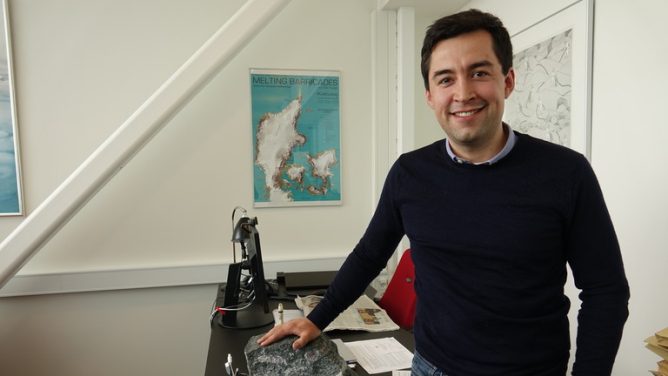
Greenland’s natural resources minister Mute Egede in his office in Nuuk, Greenland, on May 4, 2017. © Julia Waeschenbach / Getty Images
RT | January 8, 2025
Greenland’s pro-independence leader has rejected US President-elect Donald Trump’s proposal to buy the Arctic self-governing island from Denmark.
Trump has revived his old idea of acquiring the mineral-rich territory as he is preparing to assume the presidency on January 20. “Greenland is an incredible place, and the people will benefit tremendously if, and when, it becomes part of our nation,” Trump wrote on his Truth Social platform recently, vowing to “protect it, and cherish it, from a very vicious outside world.”
Greenland’s prime minister, Mute Bourup Egede, who has been campaigning for the island’s independence, reiterated that Greenland should not belong to any foreign power.
“Let me repeat – Greenland belongs to the people of Greenland. Our future and fight for independence is our business,” Egede wrote on Facebook on Tuesday.
“While others, including Danes and Americans, are entitled to their opinions, we should not be caught up in the hysteria and external pressures distract us from our path. The future is ours and ours to shape,” he added. Egede reaffirmed that his government was working towards Greenland’s eventual break with Denmark.
The former Danish colony of around 57,000 people has been a self-governing territory since 1979. In 2009, Greenland was granted the right to declare independence through a referendum.
Trump first floated the idea of purchasing Greenland in 2019, when it was rejected by the local government and officials in Copenhagen. The president-elect’s son, Donald Trump Jr., made an unannounced trip to the island on Tuesday. “Greenland loves America and Trump!!! Incredible people with an equally awesome reception,” he wrote on X.
Danish Prime Minister Mette Frederiksen has said that she welcomes US investment in Greenland, but stopped short of endorsing Trump’s renewed interest in the island. “The starting point of the government is very clear: the future of Greenland should be decided in Greenland. Greenland belongs to the Greenlanders,” she told TV 2.
“The United States is Denmark’s most important ally. Today’s discussion does not change that,” the prime minister added.
Trump has floated other bold foreign policy ideas, such as transforming Canada into America’s “51st state” and reclaiming US control over the Panama Channel. The leaders of Canada and Panama have rejected these proposals.
YouTube CEO Neal Mohan Says YouTube is a “Bastion of Free Speech”
By Christina Maas | Reclaim The Net | January 6, 2025
If you believe Neil Mohan, YouTube’s CEO, the platform is a modern-day Agora—a self-described “bastion of free speech” where the world’s most pressing debates thrive. Though, “just because it’s an open platform, it doesn’t mean that anything goes,” Mohan told The Financial Times in the last week. Translation: Free speech is alive and well—until it isn’t. Because on YouTube, the marketplace of ideas comes with a bouncer, a velvet rope, and an ever-expanding list of banned words and topics.
This month, YouTube is eager to remind everyone it’s “committed” to free expression, a sentiment as convincing as a fast-food chain promising “health-conscious dining.” Over the last five years, the platform has turbocharged its content moderation policies, leaning on AI overlords and human censors to police conversations ranging from vaccine skepticism to who gets to call a virus a “lab leak.”
It’s a delicate balance, they claim—one requiring the finesse of a trapeze artist. But if the past is any guide, the only thing YouTube’s balancing act reliably delivers is corporate doublespeak and a pile of censored creators.
Moderation or Muting?
Mohan, the relatively new captain of YouTube’s Titanic, insists that the company welcomes “broad views” but won’t tolerate “anything goes.” Consider their “community guidelines,” a vague, shape-shifting set of rules that could find your grandma’s knitting tutorial in violation if it dares question Big Pharma.
Behind this rhetoric is an algorithmic enforcement machine programmed to flag, demonetize, or outright remove content at lightning speed—accuracy be damned. And when the AI overlords fumble, the human moderators step in, wielding their own biases like blunt instruments.
Critics, including banned creators, point out that YouTube’s moderation seems to skew conveniently in one direction. Questioning the CDC? Misinformation. Broadcasting claims about ivermectin? Censored. But when a mainstream outlet gets caught peddling unverified or downright wrong information, it’s business as usual.
The COVID-19 Information Iron Curtain
Of course, nothing showcases YouTube’s free speech schizophrenia better than its pandemic policies. To combat “medical misinformation,” the platform instituted a strict purge of dissenting voices, silencing everyone from epidemiologists to concerned moms armed with anecdotal evidence and Facebook memes.
Let’s not forget the lab leak theory, a hypothesis once relegated to tinfoil hat territory. When early adopters of the theory dared to post about it, their content was struck down faster than you could say “gain-of-function research.” Fast forward a couple of years and the lab-leak theory is now a “credible hypothesis,” endorsed by experts and even government agencies.
Oops.
But don’t expect an apology or even acknowledgment from YouTube for playing arbiter of acceptable science. They’ve quietly updated policies and moved on, leaving censored creators wondering why their “misinformation” turned out to be, well, information.
Advertiser-Friendly Speech Only
The real driver of YouTube’s overzealous content policing, of course, is money. Back in 2017, a wave of advertiser boycotts over “hateful” and “controversial” content sent the platform scrambling. The solution? Stricter guidelines are needed to ensure that only the most sanitized, brand-safe content remains.
While no one would argue against booting child exploitation, the crackdown didn’t stop there. It extended into politically sensitive areas, conveniently targeting independent creators and smaller voices while leaving corporate media to do as they pleased.
What’s worse is the blatant double standard. Want to critique vaccine mandates or discuss alternative COVID treatments? Good luck. But if you’re a major network spouting unverified claims about weapons of mass destruction or “imminent threats,” go right ahead. After all, those ad dollars won’t chase themselves.
YouTube’s Legacy of Censorship
Mohan’s lofty rhetoric about fostering “broad views” might play well in interviews, but the reality on the ground is clear: YouTube’s commitment to free speech is as reliable as a politician’s campaign promise. The platform has repeatedly chosen corporate image over open discourse, advertisers over authenticity, and control over community.
And yet, it continues to parade as a defender of free expression. Perhaps Mohan and his team truly believe in their own doublespeak. Or maybe they’re banking on the fact that most users will never notice the glaring contradictions. Either way, YouTube’s hypocrisy isn’t an accident—it’s a business model.
The next time you hear Neil Mohan wax poetic about “free speech,” remember this: On YouTube, freedom comes with conditions, and the only real winners are the ones writing the checks.
Ohio Governor DeWine Vetoes “Medical Free Speech” Provision
By Cindy Harper | Reclaim The Net | January 7, 2025
Ohio Governor Mike DeWine has vetoed a provision in House Bill 315 that sought to shield medical professionals from state disciplinary actions over medical opinions conflicting with state-sanctioned guidance. The measure, described as a “medical free speech” safeguard, was removed through a late-night line-item veto on Thursday.
The provision aimed to bar regulatory entities, such as the Ohio Medical Board, from disciplining or threatening to discipline medical practitioners for expressing opinions—whether publicly or privately—that deviated from those of the board or other state agencies.
However, DeWine justified his veto by warning of potential harm to public health. In his message accompanying the veto, the governor stated, “it is not in the public interest and instead could lead to devastating and deadly consequences for patient health.”
DeWine also elaborated to reporters on how such a measure might undermine the state’s ability to hold doctors accountable for malpractice. He expressed concern that the provision could allow practitioners to avoid scrutiny simply by framing negligent actions as personal medical opinions. “All the doctor would have to say in defense is, ‘Well, it’s my opinion,’” DeWine remarked in late December, signaling his intent to veto the provision. “This would totally gut our ability to regulate health professionals.”
The proposal has faced resistance from DeWine’s administration since its initial introduction in an earlier bill, House Bill 73.
That legislation, spearheaded by Representative Jennifer Gross, R-West Chester, sought to expand patient access to off-label prescriptions and grant legal immunity to pharmacists filling such prescriptions. According to a nonpartisan analysis of H.B. 73, the bill aimed to protect both patients and medical providers engaging in treatments outside conventional practices.
Gross, a nurse practitioner, has consistently advocated for medical freedom, testifying before the Ohio House Health Provider Services committee in support of shielding health professionals from retaliation when utilizing what she described as “life-saving treatments.” Her stance reflects a broader push to ensure that neither patients nor medical practitioners face punitive consequences for pursuing unconventional or off-label medical options.
Facebook Dumps ‘Fact-checkers’ One Day After CHD Asks Supreme Court to Hear Censorship Case Against Meta
By Suzanne Burdick, Ph.D. | The Defender | January 7, 2025
Less than 24 hours after Children’s Health Defense (CHD) petitioned the U.S. Supreme Court to hear its censorship case against Facebook’s parent company, Meta, Mark Zuckerberg announced the company is ending its third-party “fact-checking” program.
“It’s time to get back to our roots around free expression on Facebook and Instagram,” Zuckerberg told viewers in a press release video. Meta also owns Instagram.
CHD sued Meta in November 2020 over the social media giant’s censorship practices. The company de-platformed CHD from Facebook and Instagram in August 2022 and has not reinstated the accounts.
Commenting on today’s news, CHD CEO Mary Holland told The Defender, “It’s clear that Mark Zuckerberg is worried about new anti-censorship policies of the incoming administration — as he should be. The record in CHD v. Meta clearly shows Facebook’s close collaboration with the White House to censor vaccine-related speech, even pre-COVID.”
Holland added:
“CHD has taken its case to the Supreme Court, and Facebook doubtless realizes there are Justices there that are very dubious about Facebook’s role in censoring speech at the behest of the government in the new public square.
“Zuckerberg may imagine that by making this announcement he is mooting this case, or making it no longer significant. That’s not the situation — the country needs closure that this kind of fusion of state and industry to censor unwanted information will never happen again.”
CHD’s lawsuit against Facebook’s parent company, Meta, and its founder and CEO, Zuckerberg, alleges that government actors partnered with Facebook to censor the plaintiffs’ speech — particularly speech related to vaccines and COVID-19 — that should have been protected under the First Amendment.
The suit also named “fact-checking” firms Science Feedback, and the Poynter Institute and its PolitiFact website. On Aug. 9, 2024, the 9th Circuit U.S. Court of Appeals ruled against CHD.
Lawyers with CHD urged the Supreme Court to reconsider the decision. They wrote in their petition, filed Monday:
“This case goes to the heart of our constitutional design, raising critical questions in the Internet Age about the availability of open debate free from government censorship-by-proxy.
“The practical consequences of leaving the decision below intact are enormous: the levers of censorship on the mega-platforms will always be sore temptation for executive office-holders — and not just about vaccines or Covid.”
National healthcare and constitutional practice attorney Rick Jaffe called Meta’s announcement a “very big deal for the country and for CHD.”
Jaffe represents CHD in some of its cases, including cases involving doctors’ right to speak freely about COVID-19. He told The Defender :
“For the last five-plus years, CHD — largely through Robert F. Kennedy Jr., Mary Holland, and the group’s supporters — have been at the forefront of defending free speech on social media … Meta’s action today shows the effect of the changing public’s view on censorship by social media companies which Meta could no longer ignore.
“So, congrats to CHD and its legal team who helped this happen. The work isn’t over yet, so onwards.”
Meta shifts to content moderation model used on X
Rather than turning to third parties to fact-check posts, Meta will use a “Community Notes model” in which social users themselves decide when posts are potentially misleading and need more context, said Meta’s Chief Global Affairs Officer Joel Kaplan in a statement. “We’ve seen this approach work on X,” Kaplan said.
The change will take a few weeks to implement, Kaplan said.
Meta also will lift restrictions on topics such as immigration and gender identity. “It’s not right that things can be said on TV or the floor of Congress, but not on our platforms,” Kaplan said.
The Defender asked Meta if it will lift restrictions on discussions about vaccine safety and COVID-19 but did not receive a response by deadline.
Meta is also changing how it enforces its policies. “Up until now,” Kaplan said, “we have been using automated systems to scan for all policy violations, but this has resulted in too many mistakes and too much content being censored that should haven’t been.”
Zuckerberg said there’s “legitimately bad stuff out there — drugs, terrorism, child exploitation.” The company will continue to take those things “very seriously” by using automated systems to scan for them.
However, for less severe violations, Meta will rely on a person reporting an issue before taking action against an account user.
Zuckerberg said he always cared about freedom of expression but that in recent years, his company responded to pressure for stricter speech restrictions. “Governments and legacy media have pushed to censor more and more,” Zuckerberg said. “A lot of this is clearly political.”
He acknowledged that some of the “complex systems” Meta built to moderate content made mistakes. “We’ve reached a point where it’s just too many mistakes and too much censorship.”
Will Meta’s policy changes stick?
Zuckerberg said Meta’s policy changes were also prompted by the recent U.S. elections that were a “cultural tipping point toward once again prioritizing free speech.”
Jenin Younes, a civil rights attorney who represented some of the plaintiffs in the landmark censorship case Murthy v. Missouri, told The Defender she was “cautiously optimistic” about Meta’s announcement.
Meta appeared to be making the changes because of a new presidential administration, Younes said. “That means that Meta could change course in another four years under a different administration. We need major social media platforms — the modern public square — to adopt principled free speech positions that don’t change with the wind.”
If platforms don’t adopt strong free speech positions, public dialogue suffers, Younes said. “Censorship on Meta, especially during the COVID era, strangled public debate and even went so far as to prevent vaccine-injured individuals from corresponding with each other in private groups.”
Kim Mack Rosenberg, CHD general counsel, told The Defender Meta’s announcement does not undo the years of the damage done to CHD and many other individuals and groups.
“What is important is not only that Meta is making these changes but also that steps are taken to make sure this cannot be repeated, which makes our ongoing cases — including the recently filed petition to the U.S. Supreme Court — critically important.”
This article was originally published by The Defender — Children’s Health Defense’s News & Views Website under Creative Commons license CC BY-NC-ND 4.0. Please consider subscribing to The Defender or donating to Children’s Health Defense.
FBI Is Still Hiding Details of Russiagate, Newly Released Document Shows
By Aaron Maté | RealClearInvestigations | January 6, 2025
As Donald Trump re-enters the White House on a pledge to end national security state overreach, the Federal Bureau of Investigation is still hiding critical details on the Russia conspiracy investigation that engulfed his first term.
In response to a Freedom of Information request filed by RealClearInvestigations in August 2022, the FBI on Dec. 31, more than two years later, released a heavily redacted copy of the document that opened an explosive and unprecedented counterintelligence probe of the sitting president as an agent of the Russian government.
The Electronic Communication, dated May 16, 2017, claimed to have an “articulable factual basis” to suspect that Trump “wittingly or unwittingly” was illegally acting on behalf of Russia, and accordingly posing “threats to the national security of the United States.” The FBI’s “goal,” it added, was “to determine if President Trump is or was directed by, controlled by, and/or coordinated activities with, the Russian Federation.” It additionally sought to uncover whether Trump and unnamed “others” obstructed “any associated FBI investigation” – a reference to Crossfire Hurricane, the initial FBI inquiry into the Trump campaign’s suspected cooperation with an alleged Russian interference plot in the 2016 election.
While Crossfire Hurricane, which was formally opened on July 31, 2016, had by that point focused on members of Trump’s orbit, the May 2017 probe was specifically targeted at the president himself during his fourth month in office. The investigation of Trump was undertaken at the behest of then-acting FBI director Andrew McCabe, one week after Trump had fired his former boss and mentor, James B. Comey.
According to the declassified document, McCabe’s decision was approved by FBI Assistant Director Bill Priestap, who had also signed off on the opening of Crossfire Hurricane; and Jim Baker, the FBI general counsel. Baker was a longtime friend of Michael Sussmann, a lawyer for the presidential campaign of Hillary Clinton, and a key figure in the dissemination of Clinton-funded disinformation to the FBI that falsely tied Trump to Russia. In his FBI role, Baker personally circulated the conspiracy theory, manufactured by “researchers” working with the Clinton campaign, that the Trump campaign and Russia were communicating via a secret server. After leaving the FBI, Baker served as deputy general counsel at Twitter, where he backed the company’s censorship of reporting on the contents of Hunter Biden’s laptop, based on yet another conspiracy theory that the laptop files were Russian disinformation.


FBI via RealClearInestigations
While the declassified document records the FBI’s theory that then-President Trump might be involved in illegal – and potentially treasonous – behavior, the “articulable factual basis” for this suspicion is redacted. Only a few paragraphs of the six-page document have not been withheld.
Along with Crossfire Hurricane, the May 2017 counterintelligence probe was folded into the Special Counsel investigation led by Robert Mueller, who was appointed just one day after the FBI began portraying Trump internally as a possible Russian agent or conspirator. Mueller’s final report “did not establish that members of the Trump campaign conspired or coordinated with the Russian government in its election interference activities.”
Asked about his reasoning for opening the probe and related matters, McCabe, who now works as an on-air commentator at CNN, did not respond to RCI’s emailed questions by the time of publication.
Details about the FBI’s motivation can be gleaned, however, from other public disclosures.
According to a January 2019 account in the New York Times, which first revealed the FBI’s decision to investigate Trump, the Steele dossier – a collection of conspiracy theories funded by Trump’s rival, Hillary Clinton – was among the “factors” that “fueled the F.B.I.’s concerns.”
Just two days before McCabe opened the May 2017 probe, the FBI, via Justice Department official Bruce Ohr, renewed contact with dossier author Christopher Steele despite having terminated him as a source back in November 2016. As RCI’s Paul Sperry has previously reported, this sudden outreach to Steele right before the opening of a new Trump-Russia conspiracy investigation indicated that the FBI was seeking to re-engage the Clinton-funded British operative to help it build a case against the president for espionage and obstruction of justice. At the time, the FBI was still relying on Steele’s fabrications for its surveillance warrants against Trump campaign volunteer Carter Page. The following month, the FBI filed the last of its four FISA court warrants based on Steele’s material. The Justice Department has since invalidated two of those warrants on the grounds that they were based on “material misstatements.”
The FBI re-enlisted Steele despite possessing information that thoroughly discredited him. Five months before it newly sought Steele’s help to investigate the sitting president, the FBI interviewed Igor Danchenko, whom Steele had used as his dossier’s key “sub-source.” In that January 2017 meeting, Danchenko told FBI agents that corroboration for the dossier’s claims was “zero”; that he had “no idea” where claims sourced to him came from; and that the Russia-Trump rumors he passed along to Steele came from alcohol-fueled “word of mouth and hearsay.” The FBI had also been unable to corroborate any of Steele’s incendiary claims.
A previously disclosed document also shows that former CIA Director John Brennan – who insistently advanced the Trump/Russia conspiracy theory – informed then-president Barack Obama in July 2016 that the Clinton campaign was planning to tie Trump to Russia in order to distract attention from the controversy over Hillary Clinton’s use of a private email server while serving as secretary of state. By that point, the Clinton campaign was already paying for the fabricated reports produced by Steele, who made contact with the FBI as early as July 5.
Although the newly declassified document attempts to suggest that the FBI had actionable intelligence to suspect Trump of being a Russian agent, McCabe’s subsequent comments indicate that there was no such evidence on offer. Instead, McCabe has said his counterintelligence probe of Trump was primarily motivated by the president’s firing of Comey. In a February 2019 interview with CBS News, McCabe explained his thinking as follows: “[T]he idea is, if the president committed obstruction of justice, fired the director of the of the FBI to negatively impact or to shut down our investigation of Russia’s malign activity and possibly in support of his campaign, as a counter intelligence investigator you have to ask yourself, ‘Why would a president of the United States do that?’ So all those same sorts of facts cause us to wonder is there an inappropriate relationship, a connection between this president and our most fearsome enemy, the government of Russia.”
McCabe therefore had no evidence that Trump had a “connection” to Russia, and in fact could only “wonder” if there was one. Yet because Trump had fired Comey, whose FBI was already investigating Trump’s campaign for Russia ties and relying on the Clinton-funded Steele dossier in the process, McCabe decided that he had grounds to order an espionage investigation of the commander in chief.
With the official predicate for that May 2017 investigation still redacted by the FBI, McCabe’s public statements offer the only insider window into why it was opened. In all of the investigations related to alleged Russian interference to date, the Justice Department has pointedly avoided the question.
Despite inheriting McCabe’s probe – and debunking claims of a Trump-Russia conspiracy related to the 2016 election – Special Counsel Mueller made no mention of the Trump as Russian agent theory in his final report of March 2019. Without informing the public, the FBI closed down the Trump counterintelligence investigation the following month. The case’s closing Electronic Communication, which has previously been declassified in redacted form, states that the McCabe probe “was transferred to FBI personnel assisting” the Mueller team, and entailed the use of “a variety of investigative techniques.”
An inquiry led by Department of Justice Inspector General Michael Horowitz of the FBI’s conduct during Crossfire Hurricane also ignored McCabe’s decision to investigate Trump as an agent of Russia. And in a footnote in his final report of May 2023, John Durham – the Special Counsel appointed to launch a sweeping review of the Russia investigation – claimed that McCabe’s May 2017 probe was outside of his purview.
By contrast, when it comes to Crossfire Hurricane, Durham’s report concluded that the FBI did not have a legitimate basis to launch that investigation, repeatedly ignored exculpatory evidence, and buried warnings that Clinton’s campaign was trying to frame Trump as a Russian conspirator.
While the original Trump-Russia investigation has been discredited, the public remains in the dark about why the FBI launched a follow-up counterintelligence probe that targeted Trump while he was newly in the White House – and what ends it took to pursue it.
With Trump set to be inaugurated this month after vowing to clean up the nation’s premier law enforcement agency, the FBI will have a fresh opportunity to break its longstanding secrecy on the decision to investigate the sitting, and newly returning, president as an agent of Russia.
Featured Video

Trita Parsi: Middle East Unraveling — Are We on the Path to World War?
or go to
Aletho News Archives – Video-Images
New Book
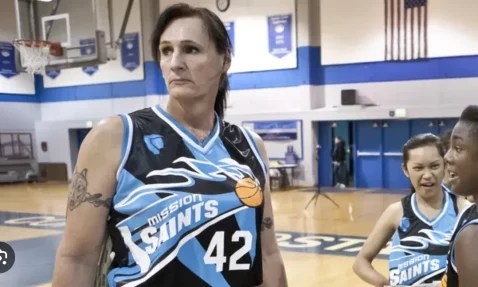
Trans agenda is ‘normalization of sadism’ – US author
RT | September 23, 2026
The US Democratic Party has embraced a transgender agenda that amounts to “the normalization of sadism,” author A.J. Rice has said, warning that radical trans policies would return if the party is allowed to regain power.
Speaking to RT’s America First host Scotty Nell Hughes about his new book, ‘The Curse of the Bearded Lady: How the Trans Mafia Whacked American Sanity’, Rice argued that activists have gained significant influence in schools, medicine, and corporate America while people who questioned the agenda have faced pressure to stay silent.
The author described the “trans mafia” as the sprawling network of people and institutions that have helped the movement gain influence. He singled out parts of academia, wealthy backers, and corporations, and stated that providers of transition-related treatment also have a financial incentive to keep young people in their care indefinitely.
Rice argued that the consequences of these policies ultimately fall on children who are being drawn toward gender-affirming medical treatments and on girls who are expected to share locker rooms or compete in sports with biological males.
He noted that while voters rejected the Democrats’ approach to gender in 2024, the party, which has been “captured by madness,” has since only doubled down and is seeking what is effectively “the normalization of sadism.” … Full report
Blog Roll
 Aletho News
- German chemicals giant reveals details of downsizing
- Refaat Al-Areer Was The Canary In The Coal Mine In Israel’s War On The Truth
- Israeli election committee bars candidate from Knesset race over Gaza war opposition
- French-Lebanese man files war crimes complaint over Israeli attacks
- Mahan Air Flight Lands in China Despite US Threat against Iranian Airlines
- US eyes $10bn fund to rebuild war-battered Gulf infrastructure
- Trump meets Rodríguez near Maduro’s prison as Venezuela’s oil flows to US
- Trita Parsi: Middle East Unraveling — Are We on the Path to World War?
- Iran FM meets with US envoy on UN meeting’s sidelines at American side’s insistence: Report
- Qatar PM calls for Gulf security framework with Iran, says war must be ‘wake-up call’
- If Americans Knew
- Caught on Tape: AIPAC CEO Boasted of Controlling Trump’s National Security Officials
- Why Hamas Attacked Israel in October 2023 – Israeli professor Ilan Papé
- They see them, then kill them: Israeli quadcopters track, deliberately target civilians in Gaza
- Winter could turn Gaza’s treacherous, war-damaged buildings into deathtraps
- Majority of Democratic Voters Want to Prosecute Both Biden and Trump Administration Officials Over Gaza
- As Gaza languishes, world leaders gather at the UN – Daily Update
- Sanctions are collective punishment: immoral and self-defeating
- Phosphorus Munitions Fired by Israel Burn Groves, Orchards in Southern Lebanon
- Israel Carries Out New Ceasefire Violations Across Gaza
- AI – Emphasis on the ‘I’: Israel Is Funding AI Chatbot Propaganda
- No Tricks Zone
- New Study: Earth And Venus Surface Warmth Largely Explained By Convection And Lapse Rate, Not CO2 Or Radiation
- 2025 Nature Paper Claiming Worsening Global Drought Gets RETRACTED …Heavily Flawed
- New Study: ‘Global Drought Shows No Detectable Recent Acceleration Under Climate Warming’
- Economic Masterminds: German Socialists Suggest Taxing Productivity Gains Stemming From Using AI
- The South China Sea Has Not Been Cooperating With The Climate Change Narrative
- Energy Crisis: Germany Enters Heating Season With Historically Low Gas Reserve Fill Levels
- New Study: The Antarctic Ice Sheet Gained Mass From 2020-2024 Due To Staggering Snow And Ice Accumulation
- Study: Ocean Heating Rates From Thousands Of Years Ago ‘Dwarf’ Modern Ocean Heating Rates
- Climate Extremists Target, Attack Large-Scale Power Grid Infrastructure In Germany!
- New Study: Antarctic Ice Melt Has Contributed Less Than 1 Centimeter To Sea Level Rise In The Last 30 Years

