Obscure Government Agency Brings Criminal Charges against 107 Bankers, but Stays Clear of Wall Street
By Noel Brinkerhoff | AllGov | December 11, 2013
A little-known federal office has demonstrated that bankers have not avoided criminal prosecution altogether since the 2008 financial crisis. Experts note, however, that those thrown in jail have largely been from small institutions, leaving counterparts at Wall Street powerhouses untouched.
The Office of the Special Inspector General for the Troubled Asset Relief Program (SIGTARP) was originally created to oversee the government bailout of the auto and financial industries. But it has used its congressional authority to pursue bank executives who misused bailout funds.
To date, SIGTARP has gone after 107 senior bank officers, most of whom have been sentenced to prison, according to The Washington Post. Its work also has produced $4.7 billion in restitution paid to victims and the government.
Not bad for an agency with only 170 employees and a budget of $41 million, putting them at a disadvantage in terms of resources and manpower compared to government regulators like the Securities and Exchange Commission and the Office of the Comptroller of the Currency.
What it lacks in size it makes up for in terms of criminal authority authorized by Congress. Unlike regulators, SIGTARP can issue search warrants, seize property and even make arrests.
But those targeted by SIGTARP have run community banks, not the national institutions that dominate Wall Street.
“Essentially, we’re looking for lies and greed,” SIGTAR chief Christy L. Romero told the Post. “Usually, people have gone to such great lengths to try to hide the schemes that we find that they end up violating several laws, which leads to long sentences.”
The average sentence given to those convicted of crimes as a result of SIGTARP investigations is five years and nine months, which is twice the length of the average sentence for white-collar crime in the U.S. SIGTAR currently has 150 ongoing criminal and civil investigations.
Mark Williams, a former bank examiner who teaches finance at Boston University, told the Post that it’s been less difficult for SIGTARP to go after the small fish.
“The amount of direct evidence of banker wrongdoing in these smaller bank cases is easier to show,” he said.
Williams added that SIGTARP’s work nonetheless sets “an important precedence that bad banker behavior will not be tolerated and [will be] aggressively prosecuted.”
To Learn More:
SIGTARP Proves That Some Bankers Aren’t Too Big to Jail (by Danielle Douglas, Washington Post)
Treasury Dept. Fails to Implement Two-Thirds of Post-Bailout Recommendations (by Noel Brinkerhoff and David Wallechinsky, AllGov)
Comparing Current Draft of Egypt’s 2013 Neo-liberal Constitution to that of the Publicly Approved Constitution of 2012
By Scott Creighton | American Everyman | December 7, 2013
In order to show various so-called “alternative” and “anti-globalist” activists what the real cause of the State Department sponsored coup in Egypt back in July of this year was all about, I have put together just a few comparisons of the publicly approved Egyptian constitution of 2012 and their respective counterparts in the new draft constitution being put together by the illegal junta run by their new dictator, al Sisi.
As many of the fake alternative journalists have often raged against the “Islamist” nature of the previous constitution without ever linking their readers to the document so they could read it and judge it for themselves, I resolve to provide links to both the translated Egyptian Constitution of 2012 and the current draft version written by the technocrats and advisers on behalf of Big Global Business and the financial elites.
Here is a link to the publicly approved Egyptian Constitution of 2012
What I have done is taken a few articles and simply listed them side by side for you to view. I have created 4 PDFs of this which I will link to below and 4 JPEGS so you can view them without having to download the other files. The PDFs are obviously easier to read, but I will do my best with the pics. I sincerely hope that you will take the time to read both the original 2012 version as well as the new neo-liberal one.
If you wish to know why I spent so much time working on this when the story of the illegal coup in Egypt is all but over, remember this…
They are currently working on producing a climate in this country which will provide them the needed pretext to begin rewriting our constitution. It’s not that far off folks. Heard some “progressives” on NPR chatting about that very thing just yesterday.
You want to see how they (the Chicago School of Economics technocrats) remake constitutions? The Egyptian model should serve as a fine example of what we can expect to see very soon.
Here are the PDF versions:
- 2012 to 2013 Layout1 (1)
- 2012 to 2013 Layout1 (2) (1)
- 2012 to 2013 Layout1 (3) (1)
- 2012 to 2013 Layout1 (4) (1)
And here are the photos (JPEGs)


The new constitution institutionalizes entry points for various global multinational corporations and financial institutions, setting as a priority the notions of the creation of a financial environment which will encourage hot money speculation and foreign investment. It’s all about “sustainable development” and protecting the “economic services” industry (i.e. financial institutions)
Notice that the new constitution states that the natural resources “belong to the people” but make no mention of their right to the profits of those resources they own. The 2012 constitution did.
The 2012 constitution said the property of the state is not to be disposed of while the neo-liberal 2013 draft says it can be under law.
The slickness of the legalese is notable as well. Notice how the new constitution, rather than guaranteeing the people various rights like the 2012 constitution does, instead they “aim” or “commit” to these ideals as if they were goals they promise to attempt to fulfill. Legally speaking, big difference.
I only scratched the surface with this comparison. Others have pointed out that the 2013 draft empowers the elements in Egypt that sided with the Obama administration during the coup like the judiciary, the military and the police.
Some have pointed out that the new constitution allows for military detentions of civilians, which it does.
Given the nature of the current dictatorship in Egypt (the way they are outlawing political parties like the Apartheid government did to the ANC based on the arbitrary ruling that they are a “terrorist organization”, the way they are arresting peaceful protesters if they don’t just shoot them dead in the streets) it’s quite remarkable that anyone who claims to be opposed to our imperialist interventions across the globe could possibly still imagine that this illegal coup has any form of legitimacy whatsoever. I hope that this simple comparison will make it clearer what is happening in Egypt and more importantly, why it happened.
Related article
- Army Powers Expanded in Egyptian Draft Constitution (mascareignas.blogspot.com)
Meet CO-TRAVELER: The NSA’s Cell Phone Location Tracking Program
By April Glaser and Kurt Opsahl | EFF | December 5, 2013
An article yesterday in the Washington Post disclosed the NSA’s massive cell phone location program. The program, codenamed CO-TRAVELER, is designed to track who meets with whom and covers everyone who carries a cell phone, all around the world.
With neither public debate nor court authorization, CO-TRAVELER collects billions of records daily of cell phone user location information. It maps the relationships of cell phone users across global mobile network cables, gathering data about who you are physically with and how often your movements intersect with other cell phone users. The program even tracks when your phone is turned on or off.
The trillions of collected records, which add up to twice the amount of data in the Library of Congress’ print collection, are saved and stored in the NSA’s mammoth database called FASCIA. While allegedly aimed at foreigners and mobile phones overseas, the NSA admits that it has “incidentally” collected location information on U.S. persons.
CO-TRAVELER ignores fundamental values in the Constitution the NSA has sworn to uphold, including the right against unreasonable search and seizure as well as freedom of association. Thinking globally, the program disregards international human rights law, which is currently in the process of being reaffirmed in a draft resolution by the UN General Assembly.
The Fourth Amendment Protects Cell Phone Location Data
EFF has been working for years to get the courts to recognize that the government must get a warrant before seizing cell phone location records. The court decisions are split. In 2008 the Third Circuit federal appeals court correctly held that federal magistrates have the discretion to require the government to get a search warrant based on probable cause before obtaining cell phone location records. But the Fifth and Sixth Circuit have approved the seizure of cell phone location records without a warrant. The Supreme Court has yet to rule on cell phone location, but did hold that planting a GPS device on a car requires a warrant, without reaching a decision on whether the warrantless tracking itself would violate the Fourth Amendment.
CO-TRAVELER does not simply collect location information. It creates a portrait of travel times and people who crossed paths, revealing our physical interactions and relationships. The cell site information goes beyond email and phone calls and ordinary telephony data, allowing the U.S. government to know who we are with in-person and where. This is information that would be impossible to collect using traditional law enforcement methods.
An NSA official said that the agency’s collection methods are “tuned to be looking outside the United States.” This appears to be an attempt to assert that U.S. law does not apply because they are not “targeting” U.S. persons. Without the protections of U.S. law, the spying is regulated only by Executive Orders–orders by the President that are not subject to substantive oversight, and can modified at any time. It’s likely that this program falls under Executive Order 12333. EO 12333 has few limits on surveillance overseas, even if it is a U.S. person.
CO-TRAVELER Violates the First Amendment
The CO-TRAVELER program is based on guilt by association, tracking location to determine our relationships and where we meet. The First Amendment protects our right to associate with individuals and groups without disclosing that information to the government. This is an essential right because it allows people to discuss their ideas, concerns, and feelings with others without the shadow of government surveillance. And this is not just a right recognized in the United States: the right to freely associate with individuals or groups has also been recognized in the UN Universal Declaration of Human Rights, the European Convention on Human Rights, and in countless other human rights charters.
EFF is currently representing 22 organizations from across the political spectrum who sued the NSA for violating their First Amendment right of association by illegally collecting their call records. The case, First Unitarian v. NSA, brings to light the real implications of mass surveillance–people are afraid to associate and meet based on likeminded interests.
Equally threatening to the rights guaranteed by the First Amendment are the speech-chilling effects of cell phone location tracking. Even if you use encryption online, when you meet someone in person and aren’t even on the phone, your movements may be tracked and recorded and stored. The Washington Post article reports that the NSA tracks when a cell phone has been turned off, for how long, and what nearby devices are also being used and shut off. The NSA provides further scrutiny of people who switch their phones on and off for brief periods or use throw-away phones.
Yet these security practices are common methods that journalists (or anyone else who might be privacy conscious) use to ensure security and trust when they meet with confidential sources and conduct investigations. Under this program, it is harder than ever for a journalist to guarantee a reasonable degree of privacy and security to their sources.
Privacy is an Internationally Recognized Human Right
While the NSA likes to claim it takes great care in not collecting the data of U.S. persons, the billions of people tracked by their programs have a basic human right to privacy. Right now the United Nations General Assembly is discussing a resolution that reaffirms that the human right to privacy is carried over and effective in the digital age.
EFF is part of the global movement demanding the protection of our most basic right to privacy, no matter the country or citizenship of a person. We signed on to a list of thirteen principles that a state should use to determine whether or not a surveillance program will encroach on fundamental human rights. Join us by adding your name to the global petition for privacy today.
We will continue to fight against the NSA’s unconstitutional and over-broad surveillance programs in the courts and in Congress, and advocate for deeper oversight of the NSA from all branches of government.
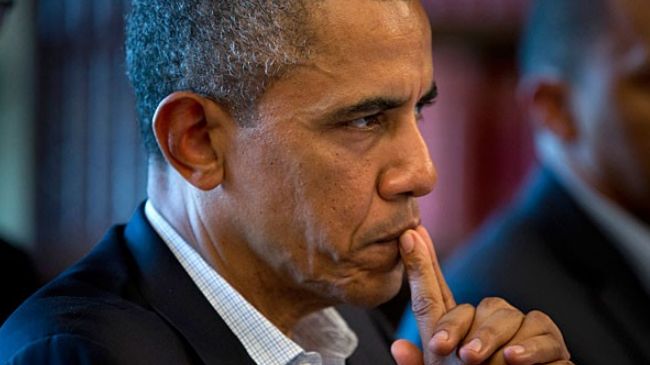
Obama’s Popularity Among the Young Falls in US
Prensa Latina | December 5, 2013
Young people in the US are disappointed with President Barack Obama’s administration and disapproved of his management of the main problems in the country, a poll revealed today.
Young people were the main support to the president in his election in 2008 and reelection in 2012. That sector of the population is currently showing a marked decrease in their support.
The poll by the Institute for Politics of the University of Harvard that included people from 18 to 29 years of age revealed that 44 percent of that sector disapproves of Obama’s work, compared to 41 percent in support.
The data shows an 11-point fall compared to a poll by the same entity this past spring, and to another poll in the fall of 2009, when 58 percent of the young supported him and 39 percent voted against.
According to Trey Grayson, director of Harvard’s Institute for Politics, this is the lowest level of support for the president since he assumed office in 2009.
Of those polled, 55 percent said they had voted for Obama, 33 percent said they voted in favor of Mitt Romney and four percent chose another politician.
Being asked today about their vote intention, 46 percent said they would vote for the current White House tenant, while 35 percent would do it for Romney and 13 percent would choose someone else.
Asking opinions about health reform, 61 percent of those polled disapproved of Obama’s administration and 57 percent rejected Obamacare, and also 44 percent consider that health care will worsen, while 34 percent said it will remain the same and just 17 percent think that it will improve.
The poll also revealed that frustration is not only against Obama, because 59 percent of those polled do not support democrats in Congress, while 35 percent approved them, but also two thirds of them do not support republicans and just 19 percent support them.
The poll included 2,089 people and defining their political inclination: 41 percent of the young defined themselves as independents, 33 percent as democrats and 24 percent as republicans, and predicted a large number of non-participants in the primary elections in 2014.
Montreal deploying fleet of facial recognition drones for 24/7 patrols
RT | December 4, 2013
The City of Montreal has purchased 24 drones to help law enforcement tackle crime as authorities look to cut back the police force over the next 15 years. The UAVs, equipped with facial recognition technology, will be armed to ‘neutralize suspects’.
“It’s very exciting,” the chief of police for the borough where the drones will be deployed, Montreal North, told the Montreal Journal.
“The drones with facial recognition will patrol the streets 24 hours a day. Officers will interrogate individuals suspected of criminal acts or searched directly through speakers and microphones installed in the drones, but soon they can be provided with equipment capable of neutralizing on-site suspects pending the intervention of the law enforcement officers. It will mainly make our work less dangerous, especially in an area where there is a lot of social tension,” he said.
When asked to clarify what intermediate weapons would be used to neutralize suspects, a Royal Canadian Mounted Police (RCMP) spokesman told the Journal the “UAVs [unmanned aerial vehicles] will carry persuasive technologies, but non-lethal types, such as electric shock, blinding or paralyzing gases.”
He added that despite the seemingly limitless possibilities, only non-lethal weapons are “intended for the moment.”
The drones are set to be deployed in early 2014.
Despite the $400-million- plus price tag, the drones are intended to facilitate cutbacks to the city’s police force in line with nationwide efforts to curb RCMP expenditures, which have doubled over the last 15 years.
Employing new technology to create leaner, more effective law enforcements agencies, however, remains highly contentious.
A late 2012 poll conducted by Jennifer Stoddart, the privacy commissioner of Canada, found the public remains ambivalent about the use of UAVs in policing.
While 80 percent of those surveyed were comfortable with police use of drones for search-and-rescue missions, only 40 percent of respondents felt comfortable with their use in monitoring public events or protests.
“Considering the capacity of UAVs for surreptitious operation, the potential for the technology to be used for general surveillance purposes, and their increasing prevalence — including for civilian purposes — our office will be closely following their expanded use,” the report read.
“We will also continue to engage federal government institutions to ensure that any planned operation of UAVs is done in accordance with privacy requirements.”
The RCMP national drone is thus far in its infancy, with Mounties promising they will not be used to conduct general surveillance against the public.
A study released last month – Unmanned Eyes in the Sky – found that despite drones’ potential benefits for police, law enforcement had not “sought feedback from the public on how UAVs should or should not be adopted as a tool to serve the public interest,” the Canadian Press reported.
The study concluded that in light of the “potential for intrusive and massive surveillance,” Canadians needed reassurances that they would not be spied on once the drone program goes into full swing.
Related articles
- Facial recognition, once a battlefield tool, lands in San Diego County (backcountryvoices.wordpress.com)
- Montreal buys 24 drones with facial recognition that will interrogate suspected criminals (blacklistednews.com)
UN to probe security agencies’ snooping
RT | December 3, 2013
The United Nations is set to carry out an investigation into the spying activities of the US and UK, a senior judge has said. The probe will examine the espionage programs and assess whether they conform to UN regulations.
UN special rapporteur Ben Emmerson QC told British newspaper The Guardian that the UN will conduct an inquiry into the NSA and the GCHQ’s spying antics. Following Edward Snowden’s revelations, which blew the whistle on both agencies’ intelligence gathering programs, Emmerson said the issue was at “the very apex of public interest and concerns.”
The report will broach a number of contentious issues, said Emmerson, including whether Snowden should be granted the legal protection afforded to a whistleblower, whether the data he handed over to the media did significant harm to national security, whether intelligence agencies need to scale down their surveillance programs and whether the UK government was misled about the extent of intelligence gathering.
“When it comes to assessing the balance that must be struck between maintaining secrecy and exposing information in the public interest, there are often borderline cases,” Emmerson told The Guardian.
Emmerson also mentioned the raid this summer on The Guardian’s London offices in search of hard drives containing data from Snowden. Addressing the allegations made by the chiefs of British spy agencies MI5, GCHQ and MI6, that publishing Snowden’s material was “a gift to terrorists,” Emmerson said it was the media’s job to hold governments to account for their actions.
“The astonishing suggestion that this sort of responsible journalism can somehow be equated with aiding and abetting terrorism needs to be scotched decisively,” said Emmerson, who will present the conclusions of his inquiry to the UN General Assembly next autumn.
Guardian editor-in-chief Alan Rusbridger is set to appear before a Commons home affairs committee in a hearing about the newspaper publishing of Snowden’s security leaks. British Prime Minister David Cameron issued a statement in September, warning of a possible crackdown if media continued to publish information on covert intelligence gathering programs.
He said the government had not yet been “heavy-handed” in its dealings with the press, but it would be difficult not to act if the press does not “demonstrate some social responsibility.” Cameron added that the UK was a more dangerous place after the Guardian published Snowden’s material.
Snowden’s revelations of the international spying activities of the UK and US have embarrassed the White House and Downing Street. Recent leaks show that the NSA and GCHQ not only monitored millions of civilian communications using programs such as PRISM and Tempora, but also eavesdropped on high-profile businessmen and politicians. Moreover, it was revealed that the NSA also spied on the UN’s headquarters in New York.
Both nations have sought to justify their intelligence gathering programs as being in the interests of national security.
Related article
NSA spied on 2010 G8, G20 summits in Toronto with Canadian help
RT | November 28, 2013
The National Security Agency conducted widespread surveillance during the 2010 G8 and G20 summits with the blessing of host country Canada’s government.
Documents supplied by former NSA contractor Edward Snowden show the US converted its Ottawa embassy into a security command for six days in June 2010 as world leaders met in Toronto. The covert operation was known to Canadian authorities, CBC News reported.
The documents do not reveal targets of the espionage by the NSA – and possibly by its counterpart, the Communications Security Establishment of Canada (CSEC). The NSA briefing notes say the operation was “closely co-ordinated with the Canadian partner.”
Ultimately, the documents obtained by the CBC do not give exact specifications of CSEC’s role, if any, in the Toronto spying. Former Guardian reporter and Snowden’s chosen journalist to receive the NSA documents, Glenn Greenwald, co-wrote the story for CBC.
But the documents do spell out that CSEC’s cooperation in the venture was crucial to ensuring access to telecommunications systems needed to spy on targets during the summits.
Both NSA and CSEC were implicated, along with British counterpart GCHQ, for monitoring phone calls and email of foreign leaders and diplomats at the 2009 G20 summit in London. In addition, it was recently reported that CSEC hacked into phones and computers at the Brazilian government’s department of mines. These revelations also came via documents from Snowden, who has received asylum in Russia.
The revelations also contradict a statement made by an NSA spokesman to The Washington Post on August 30, which said that the US Department of Defense – of which the NSA is is part of – “does not engage in economic espionage in any domain, including cyber.”
The NSA briefing document says the operational plan at the 2010 summit included “providing support to policymakers.”
The Toronto summit was chock full of major economic issues following the 2008 recession. Measures like the eventually-nixed global bank tax were strongly opposed by the US and Canadian governments. Further banking reform, international development, countering trade protectionism and other issues were on the docket – and on NSA’s list of main agenda items in the aim of supporting “US policy goals.”
The partnerships by some Western spying arms at the Toronto and London summits, not to mention other stories that have come out based on the Snowden documents, call attention once again to the “Five Eyes” surveillance coalition among Australia, Canada, New Zealand, the UK and the US.
Featured Video

New positive ivermectin evidence
or go to
Aletho News Archives – Video-Images
From the Archives
Fanatical Followers of the Covid Regime: A Jim Jones-Style Cult?
By Professor Roger Watson and Dr. Niall McCrae | The Daily Sceptic | November 15, 2021
As scholars at leading British universities over recent decades, we witnessed the replacement of critical thinking and debate by narrative: facts are discrimination and scientific method is imperialism; truth, instead, is derived from ‘progressive’ values. This educational trend may be a major contributory factor to the ease in which society has been inculcated to the Covid ‘new normal’ of masking, testing, and repeated doses of vaccines for a disease of similar risk to severe influenza.
One doesn’t need much critical reasoning to observe the flawed logic of some vaccination enthusiasts, such as people who respond to experiencing any side effects, however debilitating, by saying “at least I know it’s working”, or, after contracting the disease despite their promised inoculation (over 90% effective, according to initial drug company claims), “I’d have been worse off without the jab.” … continue
Blog Roll
 Aletho News
- New positive ivermectin evidence
- Met Office Caught Fabricating Daily Temperature Record Claims
- Merck Virologists Admitted to Falsely Certifying Vaccine Efficacy
- Mandatory Folic Acid for every man, woman & child
- Pro-Palestine protesters arrested outside UK’s ruling Labour Conference in Liverpool
- Mauritius denies landing permit to flight from Israel, forcing cancellation: Tour operator
- Israeli finance minister calls for genocidal war on West Bank, annexation of south Lebanon
- 12 Things Your Psychiatrist Was Trained Not to Tell You
- From Unipolar Universalism to Multipolar Civilizational Distinctiveness
- RSF military group defects, joins Sudanese army: State media
- If Americans Knew
- Israel forces Gazans to live in constant peril – Daily Update
- Deconstructing Netanyahu’s pants-on-fire UN rant – Daily Update
- Trump betrayed voters with his campaign lies and prioritized a foreign country once he took office
- Netanyahu calls Israel’s war in Gaza ‘opposite of genocide’ in UN speech to near-empty hall
- Settler Kidnappings: Torture, Sexual Abuse and Terrorisation of Palestinian Abductees as Israel Deepens Annexation of West Bank
- Gaza winter nears as 162,000 tents become unusable, raising fears of humanitarian crisis
- Netanyahu says, “It’s the opposite of genocide”; UN says Gaza economy is world’s ‘most severe crisis on record’ – Daily Update
- Israel’s US-Backed Assault on Gaza Has Created the ‘World’s Most Severe Economic Crisis on Record’: UN
- ‘Protecting U.S. Citizens’… From Israel
- ‘This is where I live now, the back of a truck’: a day in the life of a grandmother in Gaza
- No Tricks Zone
- New Study: Earth And Venus Surface Warmth Largely Explained By Convection And Lapse Rate, Not CO2 Or Radiation
- 2025 Nature Paper Claiming Worsening Global Drought Gets RETRACTED …Heavily Flawed
- New Study: ‘Global Drought Shows No Detectable Recent Acceleration Under Climate Warming’
- Economic Masterminds: German Socialists Suggest Taxing Productivity Gains Stemming From Using AI
- The South China Sea Has Not Been Cooperating With The Climate Change Narrative
- Energy Crisis: Germany Enters Heating Season With Historically Low Gas Reserve Fill Levels
- New Study: The Antarctic Ice Sheet Gained Mass From 2020-2024 Due To Staggering Snow And Ice Accumulation
- Study: Ocean Heating Rates From Thousands Of Years Ago ‘Dwarf’ Modern Ocean Heating Rates
- Climate Extremists Target, Attack Large-Scale Power Grid Infrastructure In Germany!
- New Study: Antarctic Ice Melt Has Contributed Less Than 1 Centimeter To Sea Level Rise In The Last 30 Years

