These once-secret memos cast doubt on Joe Biden’s Ukraine story
By John Solomon – The Hill – 09/26/19
Former Vice President Joe Biden, now a 2020 Democratic presidential contender, has locked into a specific story about the controversy in Ukraine.
He insists that, in spring 2016, he strong-armed Ukraine to fire its chief prosecutor solely because Biden believed that official was corrupt and inept, not because the Ukrainian was investigating a natural gas company, Burisma Holdings, that hired Biden’s son, Hunter, into a lucrative job.
There’s just one problem.
Hundreds of pages of never-released memos and documents — many from inside the American team helping Burisma to stave off its legal troubles — conflict with Biden’s narrative.
And they raise the troubling prospect that U.S. officials may have painted a false picture in Ukraine that helped ease Burisma’s legal troubles and stop prosecutors’ plans to interview Hunter Biden during the 2016 U.S. presidential election.
For instance, Burisma’s American legal representatives met with Ukrainian officials just days after Biden forced the firing of the country’s chief prosecutor and offered “an apology for dissemination of false information by U.S. representatives and public figures” about the Ukrainian prosecutors, according to the Ukrainian government’s official memo of the meeting. The effort to secure that meeting began the same day the prosecutor’s firing was announced.
In addition, Burisma’s American team offered to introduce Ukrainian prosecutors to Obama administration officials to make amends, according to that memo and the American legal team’s internal emails.
The memos raise troubling questions:
1.) If the Ukraine prosecutor’s firing involved only his alleged corruption and ineptitude, why did Burisma’s American legal team refer to those allegations as “false information?”
2.) If the firing had nothing to do with the Burisma case, as Biden has adamantly claimed, why would Burisma’s American lawyers contact the replacement prosecutor within hours of the termination and urgently seek a meeting in Ukraine to discuss the case?
Ukrainian prosecutors say they have tried to get this information to the U.S. Department of Justice (DOJ) since the summer of 2018, fearing it might be evidence of possible violations of U.S. ethics laws. First, they hired a former federal prosecutor to bring the information to the U.S. attorney in New York, who, they say, showed no interest. Then, the Ukrainians reached out to President Trump’s personal lawyer, Rudy Giuliani.
Ukraine’s new president, Volodymyr Zelensky, told Trump in July that he plans to launch his own wide-ranging investigation into what happened with the Bidens and Burisma.
“I’m knowledgeable about the situation,” Zelensky told Trump, asking the American president to forward any evidence he might know about. “The issue of the investigation of the case is actually the issue of making sure to restore the honesty so we will take care of that and will work on the investigation of the case.”
Biden has faced scrutiny since December 2015, when the New York Times published a story noting that Burisma hired Hunter Biden just weeks after the vice president was asked by President Obama to oversee U.S.-Ukraine relations. That story also alerted Biden’s office that Prosecutor General Viktor Shokin had an active investigation of Burisma and its founder.
Documents I obtained this year detail an effort to change the narrative after the Times story about Hunter Biden, with the help of the Obama State Department.
Hunter Biden’s American business partner in Burisma, Devon Archer, texted a colleague two days after the Times story about a strategy to counter the “new wave of scrutiny” and stated that he and Hunter Biden had just met at the State Department. The text suggested there was about to be a new “USAID project the embassy is announcing with us” and that it was “perfect for us to move forward now with momentum.”
I have sued the State Department for any records related to that meeting. The reason is simple: There is both a public interest and an ethics question to knowing if Hunter Biden and his team sought State’s assistance while his father was vice president.
The controversy ignited anew earlier this year when I disclosed that Joe Biden admitted during a 2018 videotaped speech that, as vice president in March 2016, he threatened to cancel $1 billion in U.S. loan guarantees, to pressure Ukraine’s then-President Petro Poroshenko to fire Shokin.
At the time, Shokin’s office was investigating Burisma. Shokin told me he was making plans to question Hunter Biden about $3 million in fees that Biden and his partner, Archer, collected from Burisma through their American firm. Documents seized by the FBI in an unrelated case confirm the payments, which in many months totaled more than $166,000.
Some media outlets have reported that, at the time Joe Biden forced the firing in March 2016, there were no open investigations. Those reports are wrong. A British-based investigation of Burisma’s owner was closed down in early 2015 on a technicality when a deadline for documents was not met. But the Ukraine Prosecutor General’s office still had two open inquiries in March 2016, according to the official case file provided me. One of those cases involved taxes; the other, allegations of corruption. Burisma announced the cases against it were not closed and settled until January 2017.
After I first reported it in a column, the New York Times and ABC News published similar stories confirming my reporting.
Joe Biden has since responded that he forced Shokin’s firing over concerns about corruption and ineptitude, which he claims were widely shared by Western allies, and that it had nothing to do with the Burisma investigation.
Some of the new documents I obtained call that claim into question.
In a newly sworn affidavit prepared for a European court, Shokin testified that when he was fired in March 2016, he was told the reason was that Biden was unhappy about the Burisma investigation. “The truth is that I was forced out because I was leading a wide-ranging corruption probe into Burisma Holdings, a natural gas firm active in Ukraine and Joe Biden’s son, Hunter Biden, was a member of the Board of Directors,” Shokin testified.
“On several occasions President Poroshenko asked me to have a look at the case against Burisma and consider the possibility of winding down the investigative actions in respect of this company but I refused to close this investigation,” Shokin added.
Shokin certainly would have reason to hold a grudge over his firing. But his account is supported by documents from Burisma’s legal team in America, which appeared to be moving into Ukraine with intensity as Biden’s effort to fire Shokin picked up steam.
Burisma’s own accounting records show that it paid tens of thousands of dollars while Hunter Biden served on the board of an American lobbying and public relations firm, Blue Star Strategies, run by Sally Painter and Karen Tramontano, who both served in President Bill Clinton’s administration.
Just days before Biden forced Shokin’s firing, Painter met with the No. 2 official at the Ukrainian embassy in Washington and asked to meet officials in Kiev around the same time that Joe Biden visited there. Ukrainian embassy employee Oksana Shulyar emailed Painter afterward: “With regards to the meetings in Kiev, I suggest that you wait until the next week when there is an expected vote of the government’s reshuffle.”
Ukraine’s Washington embassy confirmed the conversations between Shulyar and Painter but said the reference to a shakeup in Ukrainian government was not specifically referring to Shokin’s firing or anything to do with Burisma.
Painter then asked one of the Ukraine embassy’s workers to open the door for meetings with Ukraine’s prosecutors about the Burisma investigation, the memos show. Eventually, Blue Star would pay that Ukrainian official money for his help with the prosecutor’s office.
At the time, Blue Star worked in concert with an American criminal defense lawyer, John Buretta, who was hired by Burisma to help address the case in Ukraine. The case was settled in January 2017 for a few million dollars in fines for alleged tax issues.
Buretta, Painter, Tramontano, Hunter Biden and Joe Biden’s campaign have not responded to numerous calls and emails seeking comment.
On March 29, 2016, the day Shokin’s firing was announced, Buretta asked to speak with Yuriy Sevruk, the prosecutor named to temporarily replace Shokin, but was turned down, the memos show.
Blue Star, using the Ukrainian embassy worker it had hired, eventually scored a meeting with Sevruk on April 6, 2016, a week after Shokin’s firing. Buretta, Tramontano and Painter attended that meeting in Kiev, according to Blue Star’s memos.
Sevruk memorialized the meeting in a government memo that the general prosecutor’s office provided to me, stating that the three Americans offered an apology for the “false” narrative that had been provided by U.S. officials about Shokin being corrupt and inept.
“They realized that the information disseminated in the U.S. was incorrect and that they would facilitate my visit to the U.S. for the purpose of delivering the true information to the State Department management,” the memo stated.
The memo also quoted the Americans as saying they knew Shokin pursued an aggressive corruption investigation against Burisma’s owner, only to be thwarted by British allies: “These individuals noted that they had been aware that the Prosecutor General’s Office of Ukraine had implemented all required steps for prosecution … and that he was released by the British court due to the underperformance of the British law enforcement agencies.”
The memo provides a vastly different portrayal of Shokin than Biden’s. And its contents are partially backed by subsequent emails from Blue Star and Buretta that confirm the offer to bring Ukrainian authorities to meet the Obama administration in Washington.
For instance, Tramontano wrote the Ukrainian prosecution team on April 16, 2016, saying U.S. Justice Department officials, including top international prosecutor Bruce Swartz, might be willing to meet. “The reforms are not known to the US Justice Department and it would be useful for the Prosecutor General to meet officials in the US and share this information directly,” she wrote.
Buretta sent a similar email to the Ukrainians, writing that “I think you would find it productive to meet with DOJ officials in Washington” and providing contact information for Swartz. “I would be happy to help,” added Buretta, a former senior DOJ official.
Burisma, Buretta and Blue Star continued throughout 2016 to try to resolve the open issues in Ukraine, and memos recount various contacts with the State Department and the U.S. embassy in Kiev seeking help in getting the Burisma case resolved.
Just days before Trump took office, Burisma announced it had resolved all of its legal issues. And Buretta gave an interview in Ukraine about how he helped navigate the issues.
Today, two questions remain.
One is whether it was ethically improper or even illegal for Biden to intervene to fire the prosecutor handling Burisma’s case, given his son’s interests. That is one that requires more investigation and the expertise of lawyers.
The second is whether Biden has given the American people an honest accounting of what happened. The new documents I obtained raise serious doubts about his story’s credibility. And that’s an issue that needs to be resolved by voters.
John Solomon is an award-winning investigative journalist whose work over the years has exposed U.S. and FBI intelligence failures before the Sept. 11 attacks, federal scientists’ misuse of foster children and veterans in drug experiments, and numerous cases of political corruption. He serves as an investigative columnist and executive vice president for video at The Hill.
US and EU Gang up to Demonize Iran Over Saudi Airstrikes
Strategic Culture Foundation | September 27, 2019
The European Union’s statement this week condemning Iran over the recent airstrikes on Saudi Arabia’s key oil industry sites was a tawdry piece of political cowardice. Not only tawdry, but dangerous as well.
For the EU is giving credence to Washington’s intensified attempts to demonize Iran, imposing ever-harsher economic sanctions and escalating tensions that could explode into an all-out war. Ironically, this is in spite of the EU claiming to be facilitating diplomacy to promote peace and security in the Middle East.
To be more precise, it wasn’t an EU joint statement issued at the United Nations general assembly this week. It was a statement formulated by only three members of the bloc: Britain, France and Germany. In practice, however, the biggest members of the EU were speaking on behalf of the others. (Full statement here.)
British Prime Minister Boris Johnson, French President Emmanuel Macron and German Chancellor Angela Merkel stated the following:
“We condemn in the strongest terms the attacks on oil facilities on Saudi territory on September 14, 2019 in Abqaiq and Khurais, and reaffirm in this context our full solidarity with the Kingdom of Saudi Arabia and its population. It is clear to us that Iran bears responsibility for this attack. There is no other plausible explanation. We support ongoing investigations to establish further details.”
Thus, the Europeans are repeating assertions made by the United States and Saudi Arabia by which they accuse Iran of being responsible for firing drones and cruise missiles at the vital Saudi oil installations. No credible proof has so far been presented to support such an assertion.
The European powers are engaging in a reprehensible blame game which will only embolden further Washington’s reckless aggression against Iran.
Tehran has categorically rejected all accusations that it was in some way involved in the airstrikes against Saudi Arabia. The Yemeni Houthi rebels have from the outset following the attacks claimed full responsibility.
Iran may support the Yemeni rebels and have at some time provided weapon technology, but the Houthis are capable of developing and deploying their own fire power.
By blaming Iran, the US and Europeans are giving political cover to Saudi Arabia and its nefarious role in starting and waging a genocidal war against Yemen for the past four years. It is arguably the right of the Yemenis to retaliate against Saudi Arabia in acts of self-defense. And it is in Iran’s right to support the Yemenis, just as the US, British and French support Saudi Arabia. Why should there be a double standard?
What is even more despicable is that the European trio (the so-called E3) have been massive weapons suppliers to Saudi Arabia, in particular Britain and France. The British and French (and Americans, of course) have made hundreds of millions of dollars in recent years from weaponizing the Saudi war on Yemen, even though that has led to nearly 100,000 civilian deaths. Why doesn’t the E3 issue condemnation, rather than “solidarity” to the Kingdom of Saudi Arabia, over this genocidal slaughter?
A further aspect to the joint statement issued by Britain, France and Germany is that these powers are signaling their support for US President Donald Trump’s efforts at sabotaging the international nuclear accord with Iran. That landmark deal was co-signed by the US, France, Britain, Germany, Russia and China back in July 2015.
Trump reneged on the UN-endorsed treaty when he unilaterally walked away from it in May 2018. It was typical American bad faith and backsliding whenever international agreements don’t suit their selfish interests.
Russia and China continue to support the Joint Comprehensive Plan of Action (JCPOA, as the nuclear deal is known formally as). Iran has recently begun to suspend certain commitments, such as increasing stocks of enriched uranium. The Iranian position of partial non-compliance is understandable. The US has trashed its obligations to the deal, and the Europeans have barely stepped up to the plate to implement sanctions relief for Iran, which is mandated by the JCPOA. Four years after the deal was done!
Britain, France and Germany claim to be still committed to the nuclear deal, according to a press statement by EU Foreign Affairs Commissioner Federica Mogherini at the UN this week.
But it is evident that, on the contrary, the E3 troika is instead moving to undermine the JCPOA. Blaming Iran with groundless accusations of attacking Saudi Arabia is part of the sinister shift by stealth. The day before the E3 issued their joint statement, Britain’s Boris Johnson was disparaging the nuclear as a “bad deal” and urged a renegotiation for what he sycophantically called a “Trump deal”.
Here is another weasel-worded section from the EU joint statement:
“Conscious of the importance of collective efforts to guarantee regional stability and security, we reiterate our conviction that the time has come for Iran to accept negotiation [sic] on a long-term framework for its nuclear program as well as on issues related to regional security, including its missiles program and other means of delivery… We urge Iran to engage in such a dialogue and refrain from further provocation and escalation.”
That is a clear – albeit with backhanded verbosity – attempt to pressure Iran into accepting Trump’s demand for the JCPOA to be replaced by further restrictions on Iran’s rights to pursue self-defense and normal regional and international relations. In weak-kneed fashion, the EU is augmenting Trump’s agenda of demonizing and criminalizing Iran so that it might succumb to subjugation.
Why the Europeans are acting with such cynicism is to conceal the glaring fact of their own weakness vis-a-vis Washington’s dictates and imperialist bullying. They should be admonishing the Americans for bad faith and reckless aggression; they should be condemning Saudi Arabia for a merciless slaughter in Yemen; they should be with-holding lucrative weapons sales to Saudi Arabia if they were really interested in peace; and if the Europeans really were genuine about non-proliferation and Middle Eastern stability, they should be whole-heartedly implementing the nuclear accord with Iran and providing the country the normalized economic trade that it is entitled to – just as Russia and China have done.
But no. And so to cover up their spinelessness, the Europeans are obliged to gang up with Washington to blame the victim of imperialist abuse – Iran. Such European cowardice is leading to more conflict.
US cracking down on $10 billion Israeli scam that steals life savings

Employees of Israeli binary options firm Yukom Communications receive cars for achieving high sales quotas in 2015. The company is believed to have defrauded tens of thousands of victims out of more than $100 million.
Israel-based binary options companies have been cheating Americans out of millions of dollars, causing ruin and misery. Finally, when Israel failed to rein them in, the FBI took action, and so far,15 Israelis have been indicted in the U.S. for the scams.
Two dual citizen Americans working for an Israeli company have just been sentenced in Maryland for cheating senior citizens and veterans out of their live savings.
Israeli law enforcement has ‘proven unable or unwilling to effectively tackle the country’s internet scams, despite the fact that they have operated at an industrial scale…’
By Alison Weir | If Americans Knew | September 26, 2019
Israel-based financial scammers have been cheating Americans and others out of billions of dollars, causing ruin to individuals and families and resulting in at least one suicide. Recently, 15 Israelis have been indicted in the U.S. for binary options scams, and two have just been sentenced.
While Israel has been aware of the practice for years and made it illegal in Israel, its parliament did nothing about stopping the companies’ fraudulent actions abroad until 2017. Legislation now on the books contains loopholes that enable the practice to continue unabated.
An Israeli attorney summarized the situation: “We export financial fraud.”
Israel’s blind eye to scam that brings in billions
For over 10 years, the Israeli government, which gets over $10 million per day in aid from American taxpayers, turned a blind eye to the scam. The Israeli parliament made it illegal in Israel, but permitted the Israel-based companies to continue operating around the world.
The Times of Israel describes the operations: “They would dupe victims worldwide into believing that they were successfully investing and earning money, encouraging them to deposit more and more into their accounts, until the company eventually cut off contact with the investors and disappeared with all or almost all of their money.”
The Times of Israel reports that at its height, the “widely fraudulent Israeli binary options industry” was estimated to have generated up to $10 billion a year through hundreds of companies that employed thousands – perhaps tens of thousands – of Israelis.
The US government believes that the binary options scheme by one Israeli company alone has bilked more than $100 million from tens of thousands of victims across the United States and the rest of the world.
According to a Canadian securities official who helped blow the whistle on the binary options fraud, it’s “well known that the bulk of the boiler rooms – the places that are making the calls, are happening in Israel.”
After an outcry “among overseas law enforcement agencies, with the FBI at the forefront, that Israel was allowing this ‘monstrous’ fraud to flourish year after year,” the Times of Israel reports, Israel belatedly passed legislation against the international victimization in 2017. The bill contained a number of loopholes, and the Israeli government continues to do little to stop the multi-billion dollar industry.
The Times of Israel reported at the time that the 2017 law against binary options was watered down, “creating loopholes through which binary options and other rogues, simply by retooling what they do, will be able to continue to prosper.”
Doing the right thing for the wrong reasons
When Israel finally officially stopped permitting the scammers to operate internationally, its reason for acting was not about ethics. The change came because the scandal was hurting Israel’s image. Notes on behalf of the legislation warned that “Israeli binary option companies risked damaging the country’s reputation and ‘could foment anti-Semitism’.”
In introducing the bill, the Knesset member emphasized: “We worry about the BDS movement. This industry has a huge impact on how Israel is viewed throughout the world. Our government officials go to international conferences and their colleagues abroad raise their eyebrows because of this industry.”
The Times of Israel reports that in spite of the 2017 legislation, “Many binary options operatives continue to operate from Israel and abroad, some of them offering fraudulent forex, cryptocurrency or other financial products as opposed to binary options.”
According to TOI, “Perpetrators have enriched themselves at the expense of victims around the world while enjoying impunity and suffering little social stigma here. Israeli law enforcement has proven unable or unwilling to effectively tackle the country’s internet scams, despite the fact that for several years they have operated at an industrial scale.”
“The fraudulent firms ostensibly offer customers worldwide a potentially profitable short-term investment. But in reality — through rigged trading platforms, refusal to pay out, and all manner of other ruses — these companies fleece the vast majority of customers of most or all of their money. The fraudulent salespeople routinely conceal where they are located, misrepresent what they are selling and use false identities.”
Two dual citizen Americans have just been found guilty and sentenced for their roles in the fraud.
New York native Yair Hadar / aka ‘Steven Gold’
On September 23, Yair Hadar, a New York native and dual American and Israeli citizen, was sentenced to 8 months in prison for his role in a $145 million investment scam based out of Israel.
Hadar often went by the alias “Steven Gold” during his sales pitch. It appears that his full name is Israel Steven Hadar, and that he’s possibly a real estate agent with Doma Realty Group LLC. A phone call to Doma asking for information resulted in the phone being abruptly hung up.
U.S. District Judge Theodore D. Chuang noted that Hadar had cheated many people out of most of their savings, according to a report by Law360, a website focused on the legal profession.
“I wish you could have seen what this has done to the victims,” Judge Chuang told Hadar.
An affidavit by an FBI agent describing Hadar’s actions reported that he had brought in close to a million dollars from unsuspecting “investors.”
New York native Liora Welles / aka ‘Lindsay Cole,’ ‘Lindsay Wells,’ and ‘Lindsay Taylor’
On September 20, California native Liora Welles, a dual American and Israeli citizen, was sentenced to 14 months in prison for her role in a $145 million binary options scam based out of Israel.
In sentencing Welles, the judge pointed out that the scam “literally cheated senior citizens out of their savings.”
Judge Chuang emphasized that Welles was particularly effective at “coaxing money from the elderly, veterans and other vulnerable targets.”
The prosecution said Welles’ purpose had been “to obtain the maximum deposit from investors and to take steps to ensure that investors lost the money in their accounts – thereby making money for themselves and their brand in the process.”
Court filings showed that the Israelis specifically targeted retirees, Social Security recipients, pension holders and veterans.
Welles acknowledged that she was “directly responsible” for obtaining approximately $2.4 million from victims. Two of them were 82-year-old Eugene Timmons and his wife, of Kansas City, who dipped into their life savings to invest approximately $110,000. They lost everything.
Welles appears to be from Santa Monica, California.
The fraud continues
As TOI predicted in its discussion of the law’s loopholes, the fraudulent industry has continued to flourish.
Law360 reports that the US prosecutors’ investigation is ongoing: “U.S. Department of Justice attorney Rush Atkinson told Judge Chuang that while the name for the scam has changed, the same fraud is still being carried out by the same players on a global scale.
“The trading scheme has since been banned by the Israeli government and the European Securities and Markets Authority, but Atkinson told the judge Friday that it’s likely still going on in Israel and is definitely continuing in other countries, though he said he’s not ‘comfortable’ going into detail.”
While the Times of Israel is covering the story in detail, U.S. news media seem to have published only a few, scattered reports on the scam. Apart from specialized websites, US news media failed to report on the recent convictions. As a result, relatively few Americans are aware of the scam and the Israeli connection.
Meanwhile, despite the Israeli government’s slowness in making it illegal for scammers to operate abroad and its minimal enforcement of the anemic new law, the US Congress is poised to give Israel $38 billion over the next 10 years, approximately $23,000 per Jewish Israeli family of four.
Victims of the fraud can call the Victim Assistance Line toll-free at (888) 549-3945 or email the U.S. Department of Justice at victimassistance.fraud@usdoj.gov.
**Go here to sign a petition saying No more aid to Israel while it allows its companies to victimize Americans.
Schiff’s ‘re-telling’ of Trump phone call with Ukraine head mocked as ‘unhinged Orange-Man-Bad fan fiction’
RT | September 26, 2019
With impeachment efforts against President Donald Trump resting on the content of a single phone call, who could blame Congressman Adam Schiff for embellishing the truth a little, all to sell his “Orange Man Bad” narrative.
Though Trump released a transcript of the call in question on Wednesday, the Democrat-controlled House Intelligence Committee pressed ahead with questioning Acting Director of National Intelligence Joseph Maguire on Thursday, about his handling of the whistleblower complaint that first thrust the phone call into the spotlight.
His thunder stolen by the release of the transcript – which failed to reveal the quid-pro-quo arrangement between Trump and Ukrainian President Volodymyr Zelensky that Democrats had alleged – Schiff added some dramatic flourishes to his summary of the call as Maguire’s hearing opened, describing “the essence of what the president communicates.”
“We’ve been very good to your country. Very good. No other country has done as much as we have. But you know what? I don’t see much reciprocity here. I hear what you want. I have a favor I want from you, though. And I’m gonna say this only seven times, so you better listen good.”
“I want you to make up dirt on my political opponent, understand, lots of it. On this and on that. I’m going to put you in touch with people… and by the way don’t call me again. I’ll call you when you’ve done what I asked.”
Sounds dramatic, but the only problem? Trump didn’t say any of this. Not a word. Schiff was mocked by Republican lawmakers and pundits for being so “desperate” that he resorted to rewriting the call into “unhinged ‘Orange Man Bad’ fan fiction.”
Chastised by Republicans on the committee, Schiff admitted that his mad-libbed re-telling of the call was “parody,” a stand-up routine of sorts from the California congressman. “It’s a shame that we started off this hearing with fictional remarks,” Rep. Brad Wenstrup (R-Ohio) said. “Unfortunately today, many innocent Americans are going to turn on their TV and the media is only going to show that section of what the chairman had to say.”
From his wooden delivery to his poor imitation of Trump, Schiff will unlikely be leaving Washington DC for Hollywood any time soon. However, the California Democrat is well versed in grandiose storytelling. Schiff branded the idea of probing Joe Biden’s son Hunter over his role at a Ukrainian gas holding as “making up dirt” – this from the same Schiff who kept audiences on edge for the last two years by promising to reveal “direct evidence” of “Russian collusion” hiding “in plain sight.”
Schiff’s promises never amounted to anything beyond the contents of Special Counsel Robert Mueller’s final report and, perhaps with Russia seeming a dead end, the congressman is now looking to Ukraine to satisfy his appetite for investigation.
The actual Trump quote on Biden in the conversation with Zelensky goes as follows: “The other thing, there’s a lot of talk about Biden’s son, that Biden stopped the prosecution [of the Burisma Holding where Hunter Biden was on board of directors] and a lot of people want to find out about that so whatever you can do with the attorney general [William Barr] would be great.”
Major Climate Paper Withdrawn By Nature
Retraction exposes lack of statistical expertise in climate science

Global Warming Policy Forum – 26/09/19
A major scientific paper, which claimed to have found rapid warming in the oceans as a result of manmade global warming, has been withdrawn after an amateur climate scientist found major errors in its statistical methodology.
The paper, from a team led by Laure Resplandy of Princeton University, had received widespread uncritical publicity in the mainstream media when it was published because of its apparently alarming implications for the planet. However, within days of its publication in October 2018, independent scientist Nic Lewis found several serious flaws.
Yesterday, after nearly a year’s delay, the paper was officially withdrawn.
Nic Lewis said
This is just the latest example of climate scientists letting themselves down by using incorrect statistics. The climate field needs to get professional statisticians involved up front if it is going to avoid this kind of embarrassment in future”.
Dr Benny Peiser, director of the Global Warming Policy Forum, said
Climatology is littered with examples of bad statistics, going back to the infamous Hockey Stick graph and beyond. Peer review is failing and it is falling to amateurs to find the errors. Scientists in the field should be embarrassed”.
Heated Climate Change Debates rage on after Climate Action Summit at UNGA
By Sarah Abed | September 26, 2019
The 74th United Nations General Assembly (UNGA) is in full swing in New York this week with discussions and debates ranging from climate change to trade deals and the growing tensions in the Middle East.
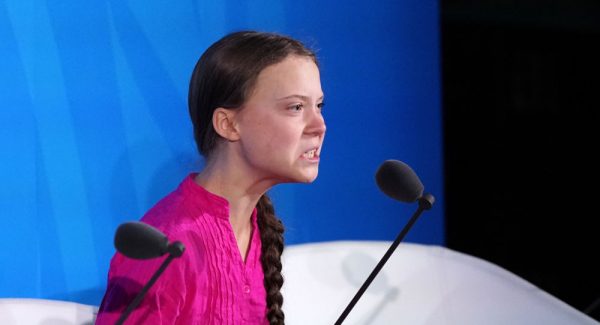
A few days prior to the UNGA however, there was a climate strike on September 20th. Participation took place in dozens of cities around the world with the largest being in New York and led by Greta Thunberg a Swedish youth climate activist who began the “Fridays for the Future” movement last year.
On Monday, the UNGA was mostly focused on the Climate Action Summit and for the first time high-level meetings and discussions about Universal Health Care (UHC) were covered in what is considered to be the most significant political meeting on UHC thus far.
The Climate Action Summit was hosted by Secretary General of the United Nations Antonio Guterres who started his speech by saying that nature is angry and we fool ourselves if we think we can fool nature because nature always strikes back and around the world nature is striking back with fury. Young adults and children demanded a response for climate change. A few took the stage including Greta Thunberg who started her first climate strike a year ago. When asked her message to world leaders she passionately began with “my message is we’ll be watching you”… she said we are in the beginning of mass extinction, and all you can talk about is money and economic growth, how dare you”.
Mr. Guterres gave a sense of urgency that we are in a race against time and must do everything in our power to stop the climate from warming before it stops us.
After the Climate Action Summit scientists and researchers have new data to study from the Intergovernmental Panel on Climate Change. The United Nations Environmental Program delegation was in NY for the UNGA and highlighted how governments, citizens, and civil society can take productive action when it comes to the environment, climate and sustainable development goals. UNEP highlights and updates are outlined on their site.
Philipino representatives delivered a statement on behalf of their country on Monday, during a meeting on Universal Health Coverage (UHC) stating that President Rodrigo Duterte passed a UHC law earlier this year that provides free basic services to all.
The Prime Minister of India Narendra Modi said that his nation will be spending $50 billion on water conservation in the new few years, signaling the high importance of water management and he also pledged to more than double India’s non-fossil fuel target to 400 gigawatts.
President Trump stated on Tuesday, that he is “ready, willing and able” to mediate the “complex” Kashmir issue if both Pakistan and India wanted him to get involved.
On Tuesday and Wednesday, a Political Forum on Sustainable Development (HLPF) took place.
Also on Tuesday, Turkish President Recep Tayyip Erdogan spoke about global injustice and highlighted a number of problems which threaten global peace and security saying, “The international community is losing the ability to find lasting solutions to challenges such as terrorism, hunger, misery, climate change” he criticized world powers for failing to take appropriate action to deal with crises around the globe. He also called for world leaders to support his plan for a safe zone to be established in Syria, he said that if the “peace corridor” is extended to the Deir El-Zor-Raqqa area that 3 million Syrian refuges can safely return home.
During his speech President Erdogan held up four maps illustrating Israel’s disregard for borders and its gradual occupation of Palestinian land. He also held up a map showing the safezone he wants to establish in Syria on his southern border. Erdogan likened the suffering of the people of Gaza to that of the holocaust.
President Erdogan also called on UN members to help support Turkey’s efforts to ensure security in Syria’s Idlib. He has mentioned previously that with or without the US’s support he will establish a safe zone on his southern borders to push back US-sponsored and backed Kurdish militias and help Syrian refugees currently living in Turkey return home.
US President Donald Trump led the Global Call to Protect Religious Freedom and introduced initiatives to end religious persecution on Tuesday, as well. During his press conference on Wednesday he proudly proclaimed that he is the first to lead a global call on this matter.
The launch of Hello Global Goals Collaboration took place on Tuesday with Japanese character Hello Kitty in the SDG Media Zone which has been a main feature of the UNGA high-level week conference since 2016. The SDG Media Zone brings together UN Member states, content creators, activists, influencers, media partners and highlights actions and solutions in support of Sustainable Development Goals. The SDG Media Zone offers impactful in-depth interviews, Ted-style talks, panel discussion and advances the 2030 Agenda, using impactful, dynamic, and in-depth conversations with decision makers, etc. Its events are live streamed on UN WebTV and focused on the main themes of the week including climate change, universal healthcare, financing for development and small island developing states.
On Thursday, a dialogue on Financing for Development (FFD) and a meeting on the elimination of nuclear weapons is taking place.
On Friday, the UNGA is holding a meeting to review progress made in addressing the priorities of Small Island Developing States (SIDS) through the implementation of the SIDS Accelerated Modalities of Action (SAMOA) Pathway.
All of this relates to the 2030 UN Agenda, which is a plan of action for people, the planet, and prosperity and is supposedly meant to strength universal peace in larger freedom, however some think this plan has a sinister underlying agenda and should be looked into further.
Sarah Abed is a political analyst with BRICS.
From Russiagate to Ukrainegate
By Finian Cunningham | Strategic Culture Foundation | September 26, 2019
With the “Russiagate” hoax proving to be the “most fraudulent political scandal in American history,” as Princeton Professor Stephen Cohen puts it, now we have emerging an alternative – “Ukrainegate”.
President Donald Trump is being accused of abusing his White House office to put pressure on Ukrainian counterpart Volodymyr Zelensky to dig into alleged corrupt dealings by Joe Biden, the top Democratic candidate for the forthcoming presidential elections in 2020.
To make matters worse for Trump, he is also accused of threatening to withhold $250 million of military aid as a way to pressure the Kiev authorities to investigate Biden’s past relations with Ukraine, when he was serving as Vice President in the Obama administration. That could amount to extortion by Trump, if proven.
Democratic political opponents and the anti-Trump liberal media are renewing demands for his impeachment. They are adamant that he has now crossed a clear red line of criminality by seeking a foreign power to interfere in US elections by damaging a presidential rival.
For his part, Trump denies his conversations with the Ukrainian president were improper. He said he phoned Zelensky back in July to mainly congratulate him on his recent election. Trump does however admit that he mentioned Biden’s name to Zelensky in the context of Ukraine’s notorious culture of business corruption. The American leader maintains that Joe Biden should be investigated for possible conflict of interest and abusing the office of vice president back in 2016 in order to enhance the business affairs of his son, Hunter.
Trump’s phone call to Ukraine hit the news last week when a US intelligence officer turned whistleblower to allege that the president was overheard in a conversation inappropriately making “a promise to a foreign leader”. The identity of the foreign leader was not disclosed. But immediately, the anti-Trump US media began speculating that it was Russian President Vladimir Putin. The keenness to point fingers at Putin showed that the Russiagate fever is still virulent in the US political establishment, even though the long-running narrative alleging Russian interference or collusion collapsed earlier this year when the two-year Robert Mueller “Russia investigation” floundered into oblivion for lack of evidence.
Turns out now that Trump’s telephone liaison was not with Putin, but rather Ukraine’s Zelensky. And the anti-Trump politicos and media are getting all fired up with “Ukrainegate” – as a replacement for the non-entity Russiagate.
Trouble is that this alternative conspiracy could backfire badly for Trump’s enemies. Because, despite the obsession with trying to impeach Trump, the renewed focus on Ukraine raises legitimate and serious questions about the past dealings of Joe Biden.
In March 2014, Biden’s son Hunter was slung out of the Navy Reserve for his cocaine habit. Then a month later, the younger Biden ends up on the executive board of Ukrainian natural gas firm Burisma Holdings. This was all only weeks after the Obama administration and European allies had backed an illegal coup in Kiev against the elected Ukrainian President Viktor Yanukovych.
Vice President Joe Biden was the White House’s point man to Ukraine, supporting the new regime in Kiev by organizing financial and military aid. Biden even boasted how he personally warned Yanukovych that the game was up and that he better step down during the tumultuous CIA-backed street violence in Kiev during February 2014. “He was a dollar short and a day late,” quipped Biden about the ill-fated president.
The appointment of Biden’s washed-up son to a plum job in Ukraine should have merited intense US media scrutiny and investigation. But it didn’t. One can only imagine their reaction if, say, it had been Trump and one of his sons involved.
Moreover, in 2016, when Ukraine’s Prosecutor General Viktor Shokin was conducting a probe into allegations of corruption and sleaze at the gas company Burisma, among other businesses, it was Vice President Joe Biden who intervened in May 2016 to call for the state lawyer to be sacked. Biden threatened to withhold a $1 billion financial loan from Washington if the prosecutor was not axed. He duly was in short order and the probe into Burisma was dropped.
Potentially, Joe Biden, the current top Democratic candidate for the 2020 presidency, could see his chances unraveling if “Ukrainegate” is pushed further. The dilemma for his supporters among the political establishment is that the more they try to beat up on Trump over his alleged horse-trading with Ukraine, the more the heat can be turned by him on Biden over allegations of graft and abuse of office to further his family’s business interests.
Senator Lindsey Graham, who sits on the Senate Judiciary Committee, is this week calling for an investigation into Biden’s conduct in Ukraine.
“Joe Biden said everybody’s looked at this and found nothing. Who is everybody? Nobody has looked at the Ukraine and the Bidens,” Mr. Graham told Fox News.
“There is enough smoke here,” Graham added. “Was there a relationship between the vice president’s family and the Ukraine business world that was inappropriate? I don’t know. Somebody other than me needs to look at it and I don’t trust the media to get to the bottom of it.”
Ukrainegate could turn out to be even far more damaging to the Democrats. Because there is evidence that it was the US-backed Kiev regime which helped seed political dirt on Paul Manafort, the former Trump campaign manager. Manafort is facing jail time for fraud and tax offenses unearthed by the Mueller probe. Mueller did not find any link between Manafort and a “Kremlin influence campaign”, as was speculated. However, because Manafort did work previously as a political manager for the ousted Ukrainian President Yanukovcyh, he was seen as a liability for Trump. Was Russiagate always Ukrainegate all along?
Apart from Biden’s potential personal conflict of interests in Ukraine, the country may turn out to be the key to where the whole Russiagate fiasco was first dreamt up by Democrats, Kiev regime operatives and US intelligence enemies of Trump.
Ukrainegate has a lot more political skeletons to tumble from the wardrobe. Those skeletons may bury Democrats and their liberal media-intelligence backers, rather than Trump.
Beware False Flag Drone Attacks
Opinion by Walrus | Sic Semper Tyrannis | September 21, 2019
The corollary to the Houthis brilliant use of do – it – yourself drones and perhaps cruise missiles, is that anyone else can do the same. This makes the possibility of false flag attacks using such weapons more likely in my opinion. Such attacks would not even necessarily require the resources of a State actor to execute, all the materials, bar perhaps the explosive, are freely available around the globe.
I will not explain the mechanics of manufacturing such weapons. Take it from me that a group of determined hobbyists could do so, provided they have sufficient security and money. Such weapons could be labeled for example “made in Iran” in such depth that it would be impossible to refute their origin, no matter how good ones forensics are.
A State actor, perhaps bent on mischief, could do this rather quickly. While this is just a guess, I would be surprised if various Western countries security services did not already have an operation underway to replicate the Houthi achievements, if only to answer the politicians question: “How did they do that??” and to start thinking about countermeasures.
My reason for being concerned enough to raise this topic is that President Trump has committed troops to Saudi Arabia and we already have other troops and assets in the region. If they were subject to attack and we took casualties, I don’t see how the President could avoid war assuming Iran was blamed.
What triggered me was this article in the WSJ (paywalled) whose opening sentence is:
Yemeni Rebels Warn Iran Plans Another Strike Soon
“BEIRUT—Houthi militants in Yemen have warned foreign diplomats that Iran is preparing a follow-up strike to the missile and drone attack that crippled Saudi Arabia’s oil industry a week ago, people familiar with the matter said.
Leaders of the group said they were raising the alarm about the possible new attack after they were pressed by Iran to play a role in it…”
Once technology is out of the box, as the Houthis have demonstrated, it can’t be returned. How do we avoid false flag attacks?
Laurel Canyon: Haven of Peace, Love and Military Intelligence

By John Wear | Inconvenient History, Vol. 11, No. 1 (2019)
During the first week of August 1964, warships under the command of U.S. Adm. George Stephen Morrison allegedly came under attack while patrolling the Tonkin Gulf off Vietnam. This attack was later called the Tonkin Gulf Incident. Although this attack probably never took place, it was used as an excuse to start the Vietnam War.[1]
Meanwhile, in the early months of 1965, an astounding number of musicians, singers and songwriters suddenly moved to a geographically and socially isolated community known as Laurel Canyon in Los Angeles. Within months, the “hippie/flower child” movement started in Laurel Canyon and began to protest the Vietnam War.[2] This article will show that this so-called peace movement was likely controlled by the same military/intelligence community that instigated the Vietnam War.
Musicians
One of the most iconic, controversial, critically acclaimed and influential figures to take up residence in Laurel Canyon was Jim Morrison of the band the Doors. Jim Morrison also happens to be the son of the aforementioned Adm. George Stephen Morrison. So while the father actively conspired to fabricate an incident that started the Vietnam War, his son moved to Laurel Canyon and became an icon of the peace/anti-war movement.[3]
John Phillips also moved to Laurel Canyon and played a major role in spreading the emerging “counterculture” across America. Phillips helped organize the Monterey Pop Festival and wrote the popular song San Francisco, which were both instrumental in luring the disaffected to San Francisco to create the Haight-Ashbury phenomenon and the 1967 Summer of Love. John Phillips was the son of U.S. Marine Corps Capt. Claude Andrew Phillips, and attended a series of elite military prep schools in the Washington, D.C. area, culminating in his appointment to the U.S. Naval Academy at Annapolis.[4]
Ellen Naomi Cohen, better known as Cass Elliot, was a childhood friend of John Phillips’s nephew. Elliot was born in Baltimore but grew up in Alexandria and attended the same high school as Phillips. John Phillips, Michelle Phillips, Denny Doherty and Cass Elliot formed the highly popular Laurel Canyon band the Mamas and the Papas.[5]
Stephen Stills was a founding member of two of Laurel Canyon’s most-acclaimed and beloved bands: Buffalo Springfield and Crosby, Stills & Nash. He was the product of yet another career military family, and was educated primarily at schools on military bases and at elite military academies. Stephen Stills claimed to have served in Vietnam before moving to Laurel Canyon and becoming an icon of the peace movement.[6]
David Crosby was one of Laurel Canyon’s most-flamboyant residents and a founding member of the Byrds as well as Crosby, Stills & Nash. Crosby is the son of World War II military-intelligence officer and Annapolis graduate Maj. Floyd Delafield Crosby. Crosby’s family tree includes numerous U.S. senators and congressmen, governors, mayors, Supreme Court justices, members of the Continental Congress, and high-ranking Masons. If there is a network of elite families that has shaped national and world events for generations, it is likely that David Crosby is a bloodline member of that network.[7]
Jackson Browne, who became a star of the Laurel Canyon scene a few years later, is also the scion of a career military family. Browne was born in a military hospital in Heidelberg, Germany because his father had been assigned to postwar reconstruction work in Germany.[8]
The three members of the band America—Gerry Beckley, Dan Peek and Dewey Bunnell—were also Laurel Canyon residents whose fathers were all members of the military/intelligence community. The three met in West Ruislip near London, where their fathers worked at the West Ruislip U.S. Air Force base, a facility deeply involved in intelligence operations.[9]
Mike Nesmith of the Monkees and Cory Wells of Three Dog Night both arrived in Laurel Canyon after serving with the U.S. Air Force. Gram Parsons, who briefly replaced David Crosby in the Byrds, was also a Laurel Canyon resident and the son of a decorated military officer and bomber pilot.[10]
Frank Zappa was Laurel Canyon’s father figure during the early years of its heyday. Although many of his recording artists were obscure, some such as psychedelic rocker Alice Cooper went on to superstardom. Zappa’s father was a chemical-warfare specialist assigned to the Edgewood Arsenal near Baltimore, Maryland. The Edgewood Arsenal is the longtime home of America’s chemical-warfare program and is frequently cited as being enmeshed in MK/ULTRA operations.[11]
Brian Wilson of the Beach Boys bought his first real home in Laurel Canyon in 1965. Wilson was heavily influenced by the work of Phil Spector, whose crack team of studio musicians, dubbed the Wrecking Crew, provided the instrumental tracks for countless albums by Laurel Canyon bands.[12]
David McGowan wrote:
All these folks gathered nearly simultaneously along the narrow, winding roads of Laurel Canyon. They came from across the country—although the Washington, D.C. area was noticeably over-represented—as well as from Canada and England, and, in at least one case, all the way from Nazi Germany. They came even though, at the time, there was no music industry in Los Angeles. They came even though, at the time, there was no live music scene to speak of. They came even though, in retrospect, there was no discernible reason for them to do so.[13]
Film
Lookout Mountain Laboratory was also located in Laurel Canyon. Originally envisioned as a fortified air-defense center, this facility by 1947 featured a fully operational movie studio that included sound stages, screening rooms, film-processing labs, editing facilities, an animation department and 17 climate-controlled film vaults. This studio produced approximately 19,000 classified motion pictures over its lifetime—more than all the Hollywood studios combined.[14]
Lookout Mountain Laboratory apparently had an advanced research and development department that was on the cutting edge of new film technologies such as 3-D effects. Hollywood luminaries including John Ford, Jimmy Stewart, Howard Hawks, Ronald Reagan, Bing Crosby, Walt Disney, Hedda Hopper and Marilyn Monroe worked at the facility on undisclosed projects. The facility also employed up to 250 producers, directors, technicians, editors, animators, etc.—all with top security clearances.[15]
Laurel Canyon in the 1950s was home to leading actors such as Marlon Brando, James Dean, and James Coburn. It was also home to Natalie Wood, who lived in the same home that Cass Elliot would later turn into a Laurel Canyon party house. Other former Laurel Canyon residents connected to the film industry include W.C. Fields, Mary Astor, Roscoe Arbuckle, Errol Flynn, Orson Welles and Robert Mitchum.[16]
A group that played a key role in promoting the new Laurel Canyon bands was Hollywood’s so-called Young Turks. This group included Peter Fonda, Jack Nicholson, Bruce Dern, Dennis Hopper and Warren Beatty, along with their female counterparts such as Jane Fonda, Nancy Sinatra and Sharon Tate. Many of these Hollywood stars forged very close bonds with the Laurel Canyon musicians, and some purchased homes in Laurel Canyon so that they could live and party among the rock stars.[17]
As with the Laurel Canyon musicians, the Young Turks had impressive establishment credentials. Bruce Dern’s godparents were Eleanor Roosevelt and two-time Democratic presidential nominee Adlai Stevenson. Dern’s mother was the sister of Archibald MacLeish, who held several offices in the Roosevelt Administration and was a member of the Skull and Bones society.[18]
Peter and Jane Fonda’s father, Henry Fonda, was a decorated U.S. Naval Intelligence officer during World War II and was once married to a Rothschild descendent. Dennis Hopper’s father was employed by military intelligence and was in the OSS during World War II. Sharon Tate was the daughter of career U.S. Army intelligence officer Lt. Col. Paul Tate, and Nancy Sinatra’s father, Frank Sinatra, had many associations with known Mafia figures.[19]
David McGowan wrote:
Let’s wrap up this chapter with a quick review of what we have learned about the people populating Laurel Canyon in the mid-to-late 1960s. We know that one subset of residents was a large group of musicians who all decided, nearly simultaneously, to flood into the canyon. The most prominent members of this group were, to an overwhelming degree, the sons and daughters of the military/intelligence community. We also know that mingled in with them were the young stars of Hollywood, who also were, to an astonishing degree, the sons and daughters of the military/intelligence community. And, finally, we know that also in the mix were scores of military/intelligence personnel who operated out of the facility known as Lookout Mountain Laboratory.
I’ve got to say that, given the relatively small size of Laurel Canyon, I’m beginning to wonder if there was any room left over for any normal folks who might have wanted to live the rock’n’roll lifestyle.[20]
Deaths
The “hippie/flower child” movement was supposed to be about peace, love and gentleness. Unfortunately, an astonishingly large number of Laurel Canyon residents suffered premature and often violent deaths.
The Charles Manson Family murders of Sharon Tate, Stephen Parent, Jay Sebring, Voytek Frykowski and Abigail Folger at 10050 Cielo Drive in Benedict Canyon had deep ties to Laurel Canyon. Frykowski and Folger lived in Laurel Canyon, and Jay Sebring’s hair salon sat right at the mouth of Laurel Canyon. Sharon Tate frequently visited friends in Laurel Canyon such as John Phillips, Cass Elliot and Abigail Folger, and when Tate wasn’t in Laurel Canyon, many of the Laurel Canyon residents visited her place on Cielo Drive.[21]
The unsolved murder of four people on July 1, 1981 at Wonderland Avenue in Laurel Canyon is regarded by Los Angeles homicide detectives as the most-brutal multiple murder in the city’s history. Ron Launius, Billy Deverell, Joy Miller and Barbara Richardson all died from extensive blunt-force trauma injuries. Only Launius’s wife, Susan Launius, miraculously survived the attack.[22]
These murders are hardly unique. For example, Diane Linkletter (daughter of Art Linkletter), comedian Lenny Bruce, actor Sal Mineo, actress Inger Stevens, and actor Ramon Novarro were all found dead in their homes, either in or at the mouth of Laurel Canyon, in the decade between 1966 and 1976. While only two of these people are officially listed as murder victims, it is likely that all five were murdered in their Laurel Canyon homes.[23]
Numerous other people connected to Laurel Canyon died during this period, often under very questionable circumstances. The list includes, but is certainly not limited to, all of the following people:
1) Marina Elizabeth Habe, whose body was carved up and tossed into the heavy brush in Laurel Canyon on December 30, 1968;
2) Christine Hinton, a girlfriend of David Crosby, who was killed in a head-on collision on September 30, 1969;
3) Jane Doe #59, a teenage girl who was never identified, found dumped into the heavy undergrowth of Laurel Canyon in November 1969. She had been stabbed 157 times in the chest and throat;
4) Alan Wilson of the Laurel Canyon band Canned Heat was found dead on September 3, 1970 at age 27. Wilson had moved to Topanga Canyon after the band’s Laurel Canyon home burned to the ground. Wilson’s former bandmate, Bob Hite, also died of a heart attack at age 36;
5) Brandon DeWilde, a friend of David Crosby and Gram Parsons, died in a freak accident in Colorado on July 6, 1972;
6) Christine Frka, the Zappa family’s former housekeeper, died in her early twenties of an alleged drug overdose;
7) Danny Whitten, who was with Neil Young’s band Crazy Horse, died of an overdose on November 18, 1972 at age 29;
8) Bruce Berry, a roadie for Crosby, Stills, Nash & Young, died of a heroin overdose in June 1973;
9) Clarence White, a 29-year-old guitarist who had played with the Kentucky Colonels and the Byrds, was run over and killed on July 14, 1973;
10) Gram Parsons allegedly overdosed on a speedball on September 19, 1973;
11) Amy Gossage, Graham Nash’s 20-year-old girlfriend, was stabbed to death in her San Francisco home on February 13, 1975;
12) Tim Buckley, a singer/songwriter signed to Frank Zappa’s record label, died of a reported overdose on June 29, 1975;
13) Phyllis Major Browne, the 30-year-old wife of Jackson Browne, reportedly overdosed on barbiturates on March 25, 1976;
14) Cass Elliot died in London at age 32, allegedly of heart failure. Some think she was killed because she knew too much;
15) Judee Sill, who sold a song to the Laurel Canyon band the Turtles and worked on an album in Mike Nesmith’s recording studio, died in November 1979 at age 35;
16) Steve Brandt, a friend of John Phillips, allegedly overdosed on barbiturates in November 1969;
17) Ricky Nelson, who had lived in Laurel Canyon, died in an unusual plane crash on December 31, 1985;
18) John Denver, whose father was a career U.S. Air Force officer, moved to Los Angeles in 1964 and became part of the Laurel Canyon scene. Denver died in 1997 when his self-piloted plane crashed soon after taking off from Monterey Airport;
19) Sonny Bono, who began his Hollywood career as a lieutenant for Phil Spector, died on January 5, 1998, after purportedly skiing into a tree;
20) Phil Hartman, who had substantial ties to the early Laurel Canyon scene, was murdered in his Encino home on May 28, 1998;
21) Lawrence Eugene “Larry” Williams was found dead in his Laurel Canyon home on January 7, 1980, with a gunshot wound to his head;
22) Brian Cole, bass player for the Laurel Canyon band the Association, was found dead on August 2, 1972, of a reported heroin overdose;
23) Lowell George, who had worked with Frank Zappa, died of a heart attack on June 29, 1979 at age 34;
24) Tim Hardin, a Laurel Canyon musician and close associate of Frank Zappa, died of a reported drug overdose on December 29, 1980 at age 39;
25) Natalie Wood, who died on November 29, 1981 in a drowning incident at Catalina Island that has never been adequately explained. Wood was 43 when she was laid to rest.
Also, as is widely known, Jim Morrison, Jimi Hendrix and Janis Joplin all died at Age 27 under questionable circumstances.[24]
On December 6, 1969, occasional Laurel Canyon residents Mick Jagger and Keith Richards along with permanent Laurel Canyon residents Crosby, Stills, Nash & Young staged a free concert at a desolate speedway known as Altamont. Four people died and another 850 people were injured at this concert. These deaths and injuries were caused mostly by members of the Hell’s Angels, who had ostensibly been hired by the Rolling Stones to provide security. Since it was widely known that the Hell’s Angels club was openly hostile to hippies and anti-war activists, the selection of this motorcycle club to provide security was probably done for malicious reasons.[25]
Conclusion
Many of the Laurel Canyon stars were openly using and dealing in illegal substances. The state could have utilized its law-enforcement and criminal-justice powers to silence many of its most prominent voices. However, that never happened. For example, David Crosby acknowledged that “the DEA could have popped me for interstate transport of dope or dealing lots of times and never did.” John Phillips, who was busted for drug trafficking and thought he would receive a 45-year sentence, served only 24 days in a minimum-security prison.[26]
The state also could have used the draft to silence its war critics. After all, there was a war going on, and hundreds of thousands of young men were being sent to Vietnam. However, none of the Laurel Canyon stars had their careers interrupted by the Vietnam War. The tricks used unsuccessfully by thousands of young men across the country to avoid the draft always seemed to work for the Laurel Canyon crowd.[27]
The state, working hand-in-hand with corporate America, also had the power to prevent the musical icons of the 1960s from ever becoming the megastars they became. The mass media could have easily prevented the entire countercultural movement from getting off the ground since it controlled the channels of communication. Instead, the mass media actively promoted the Laurel Canyon stars.[28] Books such as The Greening of America were even written to promote the ridiculous idea that the new countercultural icons were representatives of an advanced social consciousness.[29]
Vladimir Lenin once stated: “The best way to control the opposition is to lead it ourselves.”[30] The evidence indicates that the peace movement of the 1960s was not a grass-roots challenge to the Vietnam War. Rather, the “hippie/flower-child” movement was a fake opposition that could be easily controlled and neutralized. The Laurel Canyon musicians and other leaders of the countercultural movement were typically as much a part of the military/intelligence community as the people they were supposedly opposing.[31]
A version of this article appeared previously in the Barnes Review.
Notes
[1] McGowan, David, Weird Scenes inside the Canyon: Laurel Canyon, Covert Ops & the Dark Heart of the Hippie Dream, London: Headpress, pp. 11-12.
[2] Ibid., p. 12.
[3] Ibid., p. 13.
[4] Ibid., pp. 15-16.
[5] Ibid., pp. 205-207
[6] Ibid., pp. 16-17.
[7] Ibid., pp. 17-18.
[8] Ibid., p. 19.
[9] Ibid.
[10] Ibid., pp. 19-20.
[11] Ibid., pp. 13-14.
[12] Ibid., pp. 137, 254.
[13] Ibid., p. 20.
[14] Ibid., pp. 55-56.
[15] Ibid., p. 56.
[16] Ibid., pp. 57-58.
[17] Ibid., pp. 85-86.
[18] Ibid., pp. 89-90.
[19] Ibid., pp. 90-92.
[20] Ibid., p. 95.
[21] Ibid., pp. 26-28.
[22] Ibid., pp. 26, 28, 115; https://en.wikipedia.org/wiki/Wonderland_murders.
[23] Ibid., pp. 28-29.
[24] Ibid., pp. 30-37, 41-43, 109-118.
[25] Ibid., pp. 179-182.
[26] Ibid., p. 154.
[27] Ibid., p. 155.
[28] Ibid.
[29] Reich, Charles, The Greening of America, New York: Bantam Books, 1971.
[30] https://www.goodreads.com/quotes/38974-the-best-way-to-control-the-opposition-is-to-lead.
[31] McGowan, David, op. cit, pp. 23-24.
Why Does Chris Hedges Hedge His Bets?
By Edward Curtin | September 21, 2019
The revelations about the machinations of the so-called “deep state” often conceal deeper truths that go unmentioned. This is quite common, whether it is done intentionally or not.
Sometimes it is intentional and is directed by the intelligence agencies themselves or their accomplices in the media, who operate a vast propaganda network. In that case, it is because the secret rulers have been caught doing some evil deed, and, not being able to fully deny it, they admit to part of it while concealing deeper secrets. This is termed “a limited hangout.” It is described by ex-CIA Deputy Director Victor Marchetti, author of The CIA and the Cult of Intelligence, as follows:
Spy jargon for a favorite and frequently used gimmick of the clandestine professionals. When their veil of secrecy is shredded and they can no longer rely on a phony cover story to misinform the public, they resort to admitting—sometimes even volunteering—some of the truth while still managing to withhold the key and damaging facts in the case. The public, however, is usually so intrigued by the new information that it never thinks to pursue the matter further.
For the average person, it is very hard to read between the lines and smell a skunk. The subterfuge is often very subtle and appeals to readers’ sense of outrage at what happened in the past. After the Church Hearings in the 1970s, and then Carl Bernstein’s limited hangout article in Rolling Stone in 1977, where he named the names and “outed” many major media and individuals for having worked with the CIA, many people breathed deeply and consigned these evil and propagandistic activities to the bad old days. But these “limited hangouts” have been going on ever since, allowing people to express outrage and feel some sort of redemption is at hand in the naïve belief that the system is reformable. It is a pipe dream induced by the smallest puff on the media’s latest recreational drug, for which no prescription is needed. The media that more openly and proudly than ever reveal their jobs as stenographers for the intelligence agencies (see my US Media Propaganda. Drawing “Liberals” and “Leftists” into the CIA’s Orbit. NPR) .
In The Iceman Cometh, the playwright Eugene O’Neill puts the delusional nature of so much public consciousness thus:
To hell with the truth! As the history of the world proves, the truth has no bearing on anything. It’s irrelevant and immaterial, as the lawyers say. The lie of a pipe dream is what gives life to the whole misbegotten mad lot of us, drunk or sober.
Truth may never have been popular, but if one studies the history of propaganda techniques as they have developed in tandem with technological changes, it becomes apparent that today’s incredibly sophisticated digital technology and the growth of screen culture that has resulted in what Guy Debord has called “the society of the spectacle” has made the manipulation of truth increasingly easier and far trickier. News in today’s world appears as a pointillistic canvas of thousands of disconnected dots impossible to connect unless one has the desire, time, determination, and ability to connect the points through research, which most people do not have. “As a result,” writes Jacques Ellul in his classic study, Propaganda, “he finds himself in a kind of kaleidoscope in which thousands of unconnected images follow each other rapidly” and “his attention is continually diverted to new matters, new centers of interest, and is dissipated on a thousand things, which disappear from one day to the next.” This technology is a boon to government propagandists that make sure to be on the cutting edge of new technology and the means to control the flow of its content, often finding that the medium is the message, one that is especially confounding since seemingly liberating – e.g. cell phones and their easy and instantaneous ability to access information and “breaking news.”
Then there are writers, artists, and communicators of all types, whether consciously or not, who contribute to the obfuscating of essential truths even while informing the public of important matters. These people come from across the political spectrum. To know their intentions is impossible, unless they spell them out in public to let their audiences evaluate them, which rarely happens, otherwise one is left to guess, which is a fool’s game. One can, however, point out what they say and what they don’t and wonder why.
A recent article, Our Invisible Government, by the well-known journalist, Chris Hedges, is a typical case in point. As is his habit, he sheds light on much that is avoided by the mainstream press. Very important matters. In this piece, he writes in his passionate style that
The most powerful and important organs in the invisible government are the nation’s bloated and unaccountable intelligence agencies. They are the vanguard of the invisible government. They oversee a vast “black world,” tasked with maintaining the invisible government’s lock on power.
This, of course, is true. He then goes on to catalogue ways these intelligence agencies, led by the CIA, have overthrown foreign governments and assassinated their leaders, persecuted and besmirched the names of those – Edward Snowden, Julian Assange, et al. – who have opposed government policies, and used propaganda to conceal the real reasons for their evil deeds, such as the wars against Vietnam, Syria, Afghanistan, Iraq, and Libya. He condemns such actions.
He spends much of his article referencing Stephen Kinzer’s new book, Poisoner in Chief: Sydney Gottlieb and the CIA Search for Mind Control and Gottlieb’s heinous exploits during his long CIA career. Known as “Dr. Death,” this Bronx born son of Jewish immigrants, ran the CIA’s mind control programs and its depraved medical experiments on unknowing victims, known as MK-ULTRA and Artichoke. He oversaw the development of various poisons and bizarre methods to kill foreign leaders such as Fidel Castro and Patrice Lumumba. He worked closely with Nazi scientists who had been brought to the United States by Allen Dulles in an operation called Operation Paperclip. Gottlieb was responsible for so many deaths and so much human anguish and suffering that it is hard to believe, but believe it we must because it is true. His work on torture and mind control led to Abu Ghraib, CIA black sites, and assorted U.S. atrocities of recent history.
Hedges tells us all this and rightly condemns it as “the moral squalor” and “criminality” that it is. Only a sick or evil person could disagree with his account of Gottlieb via Kinzer’s book. I suspect many good people who have or will read his piece will agree with his denunciations of this evil CIA history. Additionally, he correctly adds:
It would be naive to relegate the behavior of Gottlieb and the CIA to the past, especially since the invisible government has once again shrouded the activities of intelligence agencies from congressional oversight or public scrutiny and installed a proponent of torture, Gina Haspel, as the head of the agency.
This also is very true. All these truths can make you forget what’s not true and what’s missing in his article.
But something is missing, and some wording is quite odd and factually false. It is easy to miss this as one’s indignation rises as one reads Hedges’ cataloguing of Gottlieb’s and the CIA’s obscenities.
He omits mentioning the Clinton administration’s dismantling wars against Yugoslavia, including 78 days of non-stop bombing of Serbia in 1999 that killed thousands of innocent people in the name of “humanitarian intervention,” wars he covered for the New York Times, the paper he has come to castigate and the paper that has a long history of doing the CIA’s bidding.
He claims that Gottlieb and the CIA’s scientists failed in their “vain quest” for mind control drugs or electronic implants that might, among other things, get victims to act against their wills, such as acting as a Manchurian candidate, and as a result, “abandoned” their efforts. That they failed is not true, and that they abandoned their efforts is unknowable, unless you wish to take the CIA at its word, which is a hilarious thought. How could Hedges possibly know they abandoned such work? A logical person would assume they would say that and continue their work more secretly. On one hand, Hedges says, “It would be naive to relegate the behavior of Gottlieb and the CIA to the past,” but then he does just that. Which is it, Chris? By definition, the “invisible” government, the CIA, never reveals their operations, and lying is their modus operandi, especially with their brazen in-your-face biblical motto: “And ye shall know the truth and the truth shall make you free.”
He says the invisible deep state “failed to foresee… the 9/11 attacks or the absence of Iraqi weapons of mass destruction.” This is factually wrong and quite absurd, as is well documented. They simply lied about these matters ex post facto. He suggests such failures were due to “ineptitude,” a coy word used by numerous other writers who find reasons to deny intentionality to the “deep state.”
He therefore is implying that the attacks of September 11, 2001, a subject that he has consistently failed to address over the years even while he has written in detail about so much else, did not involve America’s “invisible government forces.” The ineptitude explanation fails elementary logical analysis. Does he think it was intelligence ineptitude that allowed operatives to wire the highly-secure Twin Towers and Building 7 for controlled demolition that brought those buildings down, as the testimony of one’s eyes and that of hundreds of NYC firefighters who reported explosions throughout the buildings affirm? Ineptitude is another word for avoidance of evidence, gathered over the years by careful scholars and researchers. Ineptitude is another word for the belief “in miracles,” as David Ray Griffin has phrased it.
What does he think Colin Powell was doing at the United Nations on February 5, 2003 with CIA Director George Tenet sitting behind him when he lied repeatedly and fabricated evidence for Iraq having weapons of mass destruction to promote and justify the U.S. war against Iraq? Ineptitude? A failure of intelligence?
Chris Hedges is a very intelligent man, so why does he write such things?
Most importantly, why, when he writes about the past evil deeds of the intelligence operatives – Gottlieb and the CIA’s overseas coups and assassination of foreign leaders, etc. – does he fail to say one word about the CIA’s assassination of domestic leaders, including President John Kennedy in 1963, the foundational event in the invisible government’s takeover of the United States. Can an act be more evil and in need of moral condemnation? And how about the assassinations of Martin Luther King and Robert Kennedy in 1968, or Malcolm X in 1965? Why does Hedges elide these assassinations as if they are not worthy of attention, but Gottlieb’s sick work for the CIA is? Like the attacks of September 11, 2001, he has avoided these assassinations throughout the years.
I don’t know why. Only he can say. He is a very well-read man, who is constantly quoting from scholars about various important issues. His books are chock full of such quotations and references. But you will look in vain for references to the brilliant, scholarly work of such writers on these assassinations, the attacks of September 11, 2001, and the CIA’s criminal and morally repugnant activities as James Douglass, David Talbot, David Ray Griffin, William Pepper, Graeme MacQueen, Lisa Pease, and so many others. Is it possible that he has never read their books when he has read so much else? If so, why?
As I said before, Chris Hedges, who has a passionate but mild-mannered style, is not alone in his disregard of these key matters. Other celebrity names on the left have been especially guilty of the same approach: Noam Chomsky, Howard Zinn, and Alexander Cockburn, to name just a few (Zinn and Cockburn are dead). They have avoided these issues as if they were toxic. Nor would they logically explain why. The few times they did respond to those who criticized them for this, it was usually through a dismissive wave of the hand or name calling, a tactic such as the CIA developed with the term “conspiracy theory.” Cockburn was particularly nasty in this regard, priding himself on dismissing others with words such as kooks, lunatics, and idiots, even when his logic was deplorable. He liked to use ineptitude’s synonym, “incompetence,” to explain away what he considered intelligence agency failures. “Why,” he wrote in one piece attacking September 11 critics while upholding the government’s version, “does the obvious have to be proved?” “Brillig!” as Humpty Dumpty would say. Absolutely brillig!
The CIA’s mind control operations need to be exposed, as Hedges does to a degree in this latest article. But revealing while concealing is unworthy of one who condemns “creeps who revel in human degradation, dirty tricks, and murder.” It itself is a form of mind control.
Perhaps he will see fit to publicly explain why he has done this.
Even Saudis don’t believe fiction of Iranian attacks on oil plants – Zarif
RT | September 21, 2019
Saudi Arabia may have joined the US in blaming Iran for last week’s attack on its oil facilities, but the kingdom’s response clearly shows it doesn’t believe it to be true, Iranian Foreign Minister Mohammad Javad Zarif has said.
“Since the Saudi regime has blamed Iran – baseless as that is – for the attacks on its oil facilities, curious that they retaliated against Hodaideh in Yemen today – breaking a UN ceasefire,” Zarif wrote on Twitter.
“It is clear that even the Saudis themselves don’t believe the fiction of Iranian involvement.”
A key Saudi oil facility was seriously damaged last Saturday in a raid by drones and cruise missiles, leading to a sharp drop in production. Yemen’s Houthi rebels claimed responsibility for the attack, but Washington and Riyadh insist the group was incapable of launching such an elaborate assault, and accused Iran of being the perpetrator.
Despite this, Saudi Arabia launched bombing sorties in Yemen targeting the Houthi-controlled port of Hodeidah on Friday, which the Yemeni rebels called a dangerous escalation that could “blow up” a UN-negotiated truce between the two parties.
The Saudis have been intervening in Yemen since 2015 in an attempt to return a Riyadh-friendly president to power. The conflict is perceived by Saudi Arabia as a proxy war against Iran, its regional arch-rival. Tehran denies supporting the Houthis militarily.
Washington responded to the attack on Saudi oil infrastructure by deploying more troops to the Middle East. The incident was a major embarrassment for the US since its costly air defense systems failed to protect the site from the drones and missiles. Saudi Arabia is a leading buyer of American arms and has been using them extensively in Yemen, but last week’s debacle questions whether those investments were wise.
The US is also set to impose additional sanctions on the Iranian banking system in retaliation. Washington framed these as measures necessary to stop the funding of terrorism by Tehran, but Zarif said the US wants to stifle Iran’s foreign trade and “its access to food and medicine.”
“This move is unacceptable and dangerous,” the Iranian official said.
Iran is already living under increasingly harsh sanctions from the US, which the Trump administration has been ratcheting up since the president’s first months in power.
Featured Video
Diplomacy is Now a Crime in Britain / Ian Proud
or go to
Aletho News Archives – Video-Images
From the Archives
Genetic baloney in thick slices
MAYBE COULD BE INC.
By Jon Rappoport | No More Fake News | July 8, 2021
Gene research companies tend to come and go. They start out banging and popping like fireworks in the sky, and then they fade out—selling themselves to larger outfits who’ve hired better liars…
Once upon a time, it sounded easy. Start with a disease, find the gene responsible for the disease, and correct the problem.
Then, researchers wondered, was disease the result of one gene or a group of genes acting together?
Either way, the proof would be in devising cures for diseases using gene therapy. “Not yet, but soon…”
And regardless, the major need was: money. Lots and lots of money.
This need required good PR people. “We have to pump up the idea that we’re on the edge of tremendous breakthroughs. We’re always on that edge…”
This hype also needed to obscure the fact that there wasn’t (and isn’t) ANY gene cure for ANY disease. … continue
Blog Roll
 Aletho News
- Diplomacy is Now a Crime in Britain / Ian Proud
- UK Government Body Kept Files on People Criticizing Prevent Program
- US military withdrawal from Iraq and the collapse of US-Israeli hegemonic project in West Asia
- What does Europe want – a war with Russia?
- She Followed the Actual Data on COVID Vaccines and Masks — Her Career Took a Huge Hit
- Florida AG Sues Pfizer, Bourla Over Deceptive Marketing of COVID Vaccines
- Von der Leyen gifts her spin doctor a job for life
- 10K More U.S. Troops Deploy as Trump Weighs New Iran Strikes /Suliaman Ahmed
- Iranian crew declared Dena training vessel ‘unarmed’ to US warship before deadly torpedo strike: Report
- Iran’s NPT debate moves beyond parliament
- If Americans Knew
- Israel is squeezing the life out of Palestinians – Daily Update
- The Israeli Right Portrays Islam as Murderous. It Serves a Political Purpose
- Jordan Has Had Enough: King Abdullah’s Scathing Warning to Israel
- Israeli Colonizers (i.e. Settlers) Kill Palestinian Man Near Salfit
- New Google Maps images reveal massive scale of devastation in Gaza
- Jewish supremacy, anti-Palestinian bigotry on display in Israel – Daily Update
- Israeli Soldiers Abduct At Least 22 Across Occupied West Bank
- Eight Palestinians Killed in Israeli Attacks on Gaza
- Israeli former leaders and security chiefs threaten legal action over ‘Jewish terrorism’
- Israel map in LA Times ad includes all land from the river to the sea
- No Tricks Zone
- Green Energy Debacle: German Expert Professor Fritz Vahrenholt Warns Of Severe Economic And Social Consequences
- Two More Paleo Reconstructions Affirm Meters-Higher Sea Levels Across Ireland, Brazil 7000-6000 Years Ago
- New Study: Earth And Venus Surface Warmth Largely Explained By Convection And Lapse Rate, Not CO2 Or Radiation
- 2025 Nature Paper Claiming Worsening Global Drought Gets RETRACTED …Heavily Flawed
- New Study: ‘Global Drought Shows No Detectable Recent Acceleration Under Climate Warming’
- Economic Masterminds: German Socialists Suggest Taxing Productivity Gains Stemming From Using AI
- The South China Sea Has Not Been Cooperating With The Climate Change Narrative
- Energy Crisis: Germany Enters Heating Season With Historically Low Gas Reserve Fill Levels
- New Study: The Antarctic Ice Sheet Gained Mass From 2020-2024 Due To Staggering Snow And Ice Accumulation
- Study: Ocean Heating Rates From Thousands Of Years Ago ‘Dwarf’ Modern Ocean Heating Rates

