FBI provided Anonymous with targets, new leaks show
RT | June 5, 2014
Leaked documents pertaining to the case against an American computer hacker currently serving a 10-year prison sentence have exposed discrepancies concerning the government’s prosecution and raise further questions about the role of a federal informant.
The documents — evidence currently under seal by order of a United States District Court judge and not made public until now — shines light on several aspects of the case against Jeremy Hammond, a 29-year-old hacktivist from Chicago, Illinois who was arrested in March 2012 with the help of an online acquaintance-turned-government informant. Last May, Hammond entered a plea deal in which he acknowledged his role in a number of cyberattacks waged by the hacktivist group Anonymous and various offshoots; had his case gone to trial, Hammond would have faced a maximum of life behind bars if found guilty by jury.
Articles published in tandem by The Daily Dot and Motherboard on Thursday this week pull back the curtain on the government’s investigation into Hammond and reveal the role that Hector Monsegur, a hacker who agreed to cooperate with authorities in exchange for leniency with regards to his own criminal matters, played in directing others towards vulnerable targets and orchestrating cyberattacks against the websites of foreign governments, all while under the constant watch of the US government.
Two-and-a-half years before Hammond pleaded guilty, Monsegur did the same upon being nailed with hacking charges himself. In lieu of risking a hefty sentence, however, Monsegur immediately agreed to aid the authorities and serve as an informant for the Federal Bureau of Investigation, eventually helping law enforcement nab Hammond and others. Last week, Monsegur was finally sentenced for the crimes he pleaded guilty to back in 2012 and was spared further jail time by the same judge who in November sent Hammond away for a decade.
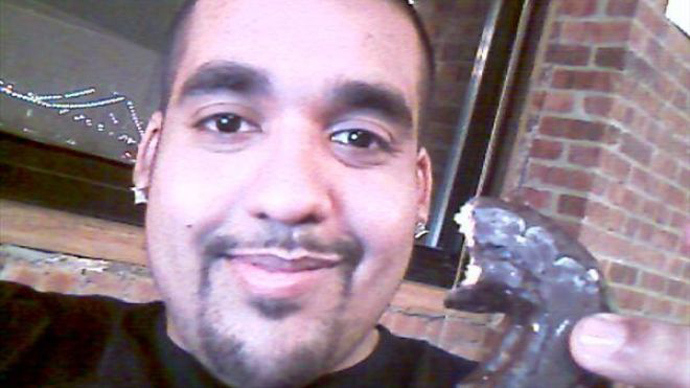
Hector Xavier Monsegur
According to this week’s revelations, Monsegur did more than just inform for the FBI after his arrest. The articles suggest rather that from behind his internet handle “Sabu,” Monsegur solicited vulnerabilities and targets from a wide range of hackers and then handed them off to other online acquaintances, including Hammond, in order to pilfer, plunder and otherwise ravage the websites and networks of foreign entities and at least one major American corporation.
Combined, the articles and the evidence contained therein corroborate very serious allegations concerning the Justice Department’s conduct in the case against Hammond and numerous other hacktivists, while raising numerous questions surrounding the FBI’s knowledge in hundreds of cyberattacks and its documented efforts to coordinate those campaigns using their informant.
Excerpts from previously unpublished chat logs and other evidence used in the Hammond case and obtained by the Dot and Motherboard are cited to provide a new point-of-view concerning two matters in particular: the December 2011 hacking of Strategic Forecasting, or Stratfor; and a January 2012 campaign led by Anonymous against government websites in Brazil and the US.
Contrary to the government’s claims, the Dot article alleges that Hammond did not mastermind the hack against Stratfor, but was rather told to target the Texas-based intelligence firm after Monsegur was made aware of a vulnerability in its network by a mysterious hacker who used the handle “Hyrriiya.” Weeks’ worth of private chats and group messages logged by Monsegur for the FBI after his arrest confirm that Hyrriiya breached Stratfor first, then sent details to the hacker he knew as “Sabu,” who in turn personally recruited Hammond to take the attack to the next level. For the first time, a clear timeline now exists to show exactly how the hack was hatched first by Hyrriiya, then Monsegur. A claim made ahead of Hammond’s sentencing hearing in which he claimed to have never even heard of Stratfor until he was fed the target by Sabu is authenticated with the logs.
Motherboard’s report focuses on a span of time only weeks after the Stratfor hack earned Anonymous headlines around the globe. Monsegur at that time was maintaining a list of targets in Brazil that would then be dispersed among members of Anonymous and other hackers to be defaced en masse as part of at least two concurrent cyber operations carried out in early 2012: an anti-corruption campaign against the Brazilian government; and another op in response to the shutdown of file-sharing site Megaupload.
“Sabu would say he wanted so-and-so, that another hacking team wanted this particular target,” Hammond told Motherboard from prison last month. “Some Brazilian was looking for people to hack them once I gave him the keys.”
Previously, Hammond said that Monsegur directed Anonymous to target websites belonging to no fewer than eight foreign governments while he was fully cooperating with the FBI. Only now, however, has documentation surfaced to verify that claim and others about alleged acts of cyberwar carried out by the the government by proxy.
“It’s completely outrageous that they made Sabu into this informant and then, it appears, requested him to then get other hackers to invade sites and look for vulnerabilities in those sites,” Michael Ratner, an attorney for WikILeaks, told Motherboard. “What that tells you is that this federal government is really — it’s really the major cybercriminal out there.”
The articles were first published Thursday morning and were a joint effort by journalists Dell Cameron of the Dot, Daniel Stuckey of Motherboard and RT’s Andrew Blake.
Mass babies’ grave scandal pushes Irish govt, Catholic Church toward inquiry
RT | June 5, 2014
 The Irish government is under pressure to order an inquiry into a recently uncovered mass grave for almost 800 children who died at a Catholic Church facility for unwed mothers and their children. Most of the bodies were dumped in a sewage tank.
The mass, unmarked grave in the town of Tuan, western Ireland, was unveiled by a local historian, Catherine Corless, who was gathering information on the mother-and-baby home which functioned there in the first half of the 20th century, run by the Bon Secours order of nuns.
Back then, unmarried pregnant women were ostracized by conservative Irish society and sent away to special church-run institutions, where mothers often had to engage in unpaid hard labor, while their children were taken away from them to be either adopted or raised in orphanages.
The burial place appeared to be one for the children who died at the facility.
“I was dismayed to find that in fact the number of children who died in the Home during its existence 1925-1961 numbered nearly 800,” Corless wrote on Facebook, commenting on her research. “I now have all those children’s names, date of death, and age at death, which will be recorded into a special book.”
Locals first learned of the mass burials in the 1970s. By that time the home for mothers and babies had been closed and the area turned in a residential one. Two boys accidentally broke apart the concrete slab over the mass grave and discovered little skeletons there. The place was then sealed again, but still remained unmarked for decades.
Corless is now engaged in a fundraising effort to get the place marked with a monument bearing all of the 769 names of the dead children. She says they died of malnutrition and neglect. A sewage tank served as a graveyard.
“If you look at the records, babies were dying two a week, but I’m still trying to figure out how they could [put the bodies in a septic tank],” Corless told the Irish Mail. “Couldn’t they have afforded baby coffins?”
“Harrowing details” as Children’s Minister Charlie Flanagan put it, of burial arrangements for children at the church-run institutions, have led to calls for an inquiry into what happened decades ago.
“Many of the revelations are deeply disturbing and a shocking reminder of a darker past in Ireland when our children were not cherished as they should have been,” Flanagan said in a statement cited by Reuters. A government report on the scandal is expected by the end of June.
Labor senator Lorraine Higgins has called for the Catholic Church to reveal more details of the incident.
“Now is the time for the church authorities to tell us where the rest of the bodies are,” Higgins said, The Irish Times reported. “We need to know how many died in each of these homes throughout the country. We need details about each one of these children and where their resting places are.”
The Archbishop of Tuam, Michael Neary, said that the diocese was not running the home. He told the order of nuns who did that it must co-operate with any inquiry into the discovery.
“Regardless of the time lapse involved, this is a matter of great public concern which ought to be acted upon urgently,” Neary said.
Archbishop of Dublin, Diarmuid Martin, told The Irish Examiner he would support exhumation of the children’s bodies if necessary for the investigation.
It’s not the first time that the Catholic Church in Ireland has found itself under fire over inhuman practices in its institutions in the past.
A year ago the Irish government agreed to pay up 58 million euros ($75 million) in compensation to hundreds of women, who were forced to work at the notorious Magdalene Laundries, also run by the Catholic Church. A teenage girl or young woman could be sent to the laundries just over suspicions that her behavior could be contrary to the Church’s conservative morals. The inmates at the institutions, run by Catholic nuns, were forced to do physically demanding work while living in prison-like conditions.
Black Lobbyists, Black Legislators Leverage Their “Brands” For Banksters, Military Contractors, Corporate Interests
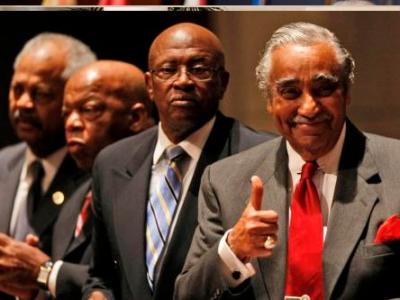
Ever wondered what the staffers of Congressional Black Caucus members do after their stints on Capitol Hill? The answer, according to a Huffington Post article by Ryan Grim and Zach Carter, is they do the same thing most of their white colleagues do. They go to work for the big corporations which fund the careers of their former bosses. They become lobbyists for giant telecoms, for greedy banksters, for military contractors, for agribusiness, Big Oil, Big Pharma, big gentrifiers and the rest, all of which are finding their black faces and their ties to the Congressional Black Caucus, and the CBC itself especially useful these days.
With Republicans controlling the House and Democrats the Senate these days, Grim and Carter explain, the appearance of bipartisanship is everything. Any measure that passes the House with exclusively Republican support will go nowhere in the Senate, and whatever sails through the Senate on the votes of Democrats alone is guaranteed dead on arrival in the House. But when particularly nasty pro-corporate measures – the HuffPo article cites as examples bills to allow certain kinds of banned derivatives trading, and laws to aid for-profit schools and colleges – when legislative turds like this are passed with lots of Republican votes and a smattering of Democrats, especially black Democrats, the moral authority of the Congressional Black Caucus protects those measures from attacks by white liberals in the House, the Senate and among pundits, reporters and policy advocates as well.
Nobody nailed the sense of it better than Breaking Brown’s Yvette Carnell, a black former Capitol Hill staffer herself, with the title of her piece riffing on the HuffPo revelations, Revealed: How the CBC Leverages Blackness to Work as a Tool for Wall Street.
But the identical phenomenon is at work not just in Congress, but in virtually every state legislature with more than a handful of black Democrats, on the governing boards of big counties and in city councils across the country. In Georgia where I live, a recent constitutional amendment designed to dissolve public schools and replace them with charters had substantial Republican support, but would never have passed without the support of key black Democrats with impeccable “civil rights” credentials, but deeply in the pocket of the charter and school privatization lobby. Whether the issue is the expanding the military budget and surveillance, building nukes in black communities, the potent combination of black lobbyists and black legislators provides vital cover to all kinds of corporate-friendly measures.
Nobody, as we at Black Agenda Report have observed many times before, celebrates the black Freedom Movement louder, longer, more often and more ostentatiously than the black political class, and this is why. It’s not just that this struggle led to the concessions allowing the number of black elected officials to grow from a few hundred nationwide to more than ten thousand in forty years. The fact is, the black political class’s appropriation of and ceaseless celebration of this era and its struggles – properly filtered and sanitized of course – constantly renews their store of moral legitimacy, keeping their sellout values high.
Politicians who consistently stand up for the poor and oppressed in the halls of power do not attract big campaign contributions, because everyone knows how they’ll vote. Without big campaign contributions they cannot rise to legislative leadership, and their ambitious staffers will not rise either. To be a player, you gotta play, and to get the big money you’ve got to command a respectable price when you sell out. Many CBC members and their employees want desperately to be fixers and players, like those on the TV series House of Cards, and they’ve learned exactly how. CBC members, goaded by black lobbyists, have been so eager to cross the aisle and make deals that they have often been leading co-sponsors and supporters of odious measures attracting few other Democrats. Carter and Grim show that when CBC members jumped on board with Republicans, these measures become law, or influence regulators. When CBC members hang back, most other Democrats do the same.
As the Huffington Post article says, the moral legitimacy of the Congressional Black Caucus, and by extension that of the entire black misleadership class is nothing but a hollowed out brand. The article is full of quotes from staffers and lobbyists about this or that CBC member’s “brand.” In plain English, brands are purposeful, deliberate, manipulative lies. Branding is a marketing strategy intended to evoke a given response in a target audience, summoning real or imagined memories, tastes, feelings or desires in order to get a response from the target audience which could not be obtained by appeals to fact or logic. When political players proudly admit among themselves that they are mere “brands”, black politics as a progressive force in these United States is over.
There was a time not so very long ago when black America was where the left lived. Black politics emanated from the streets, not the suites. This kind of politics from the bottom up projected demands to end unjust wars, for better housing, more aid to public education, public transit and the public sector in general, and for voting rights, so that a class of black elected officials might look to the interest of the black masses. Now that a prosperous, empowered and ambitious class of African American officials and lobbyists has been called into existence, it has flipped the script and turned black politics into a top-down affair. Black elected officials, from state and local level to the CBC and its staffers-turned lobbyists has become the hinge swinging the politics of the Democratic party and the nation ever rightward.
We said it a while back – black politics as we have known it is over, because black politicians and the black political class no longer believe justice or peace or full employment are possible. They haven’t been working for us for a long time now.
Bruce A. Dixon can be contacted at bruce.dixon(at)blackagendareport.com.
Fukushima Is Still a Disaster
By Harvey Wasserman | CounterPunch | June 4, 2014
The corporate media silence on Fukushima has been deafening even though the melted-down nuclear power plant’s seaborne radiation is now washing up on American beaches.
Ever more radioactive water continues to pour into the Pacific.
At least three extremely volatile fuel assemblies are stuck high in the air at Unit 4. Three years after the March 11, 2011, disaster, nobody knows exactly where the melted cores from Units 1, 2 and 3 might be.
Amid a dicey cleanup infiltrated by organized crime, still more massive radiation releases are a real possibility at any time.
Radioactive groundwater washing through the complex is enough of a problem that Fukushima Daiichi owner Tepco has just won approval for a highly controversial ice wall to be constructed around the crippled reactor site. No wall of this scale and type has ever been built, and this one might not be ready for two years. Widespread skepticism has erupted surrounding its potential impact on the stability of the site and on the huge amounts of energy necessary to sustain it. Critics also doubt it would effectively guard the site from flooding and worry it could cause even more damage should power fail.
Meanwhile, children nearby are dying. The rate of thyroid cancers among some 250,000 area young people is more than 40 times normal. According to health expert Joe Mangano, more than 46 percent have precancerous nodules and cysts on their thyroids. This is “just the beginning” of a tragic epidemic, he warns.
There is, however, some good news—exactly the kind the nuclear power industry does not want broadcast.
When the earthquake and consequent tsunami struck Fukushima, there were 54 commercial reactors licensed to operate in Japan, more than 12 percent of the global total.
As of today, not one has reopened. The six at Fukushima Daiichi will never operate again. Some 30 older reactors around Japan can’t meet current safety standards (a reality that could apply to 60 or more reactors that continue to operate here in the U.S.).
As part of his desperate push to reopen these reactors, Prime Minister Shinzo Abe has shuffled the country’s regulatory agencies, and removed at least one major industry critic, replacing him with a key industry supporter.
But last month a Japanese court denied a corporate demand to restart two newer reactors at the Ooi power plant in Fukui prefecture. The judges decided that uncertainty about when, where and how hard the inevitable next earthquake will hit makes it impossible to guarantee the safety of any reactor in Japan.
In other words, no reactor can reopen in Japan without endangering the nation, which the court could not condone.
Such legal defeats are extremely rare for Japan’s nuclear industry, and this one is likely to be overturned. But it dealt a stunning blow to Abe’s pro-nuke agenda.
In Fukushima’s wake, the Japanese public has become far more anti-nuclear. Deep-seated anger has spread over shoddy treatment and small compensation packages given downwind victims. In particular, concern has spread about small children being forced to move back into heavily contaminated areas around the plant.
Under Japanese law, local governments must approve any restart. Anti-nuclear candidates have been dividing the vote in recent elections, but the movement may be unifying and could eventually overwhelm the Abe administration.
A new comic book satirizing the Fukushima cleanup has become a nationwide best-seller. The country has also been rocked by revelations that some 700 workers fled the Fukushima Daiichi site at the peak of the accident. Just a handful of personnel were left to deal with the crisis, including the plant manager, who soon thereafter died of cancer.
In the meantime, Abe’s infamous, intensely repressive state secrets act has seriously constrained the flow of technical information. At least one nuclear opponent is being prosecuted for sending a critical tweet to an industry supporter. A professor jailed for criticizing the government’s handling of nuclear waste has come to the U.S. to speak.
The American corporate media have been dead silent or, alternatively, dismissive about the radiation now washing up on our shores, and about the extremely dangerous job of bringing intensely radioactive fuel rods down from their damaged pools.
Fukushima’s General Electric reactors feature spent fuel pools perched roughly 100 feet in the air. When the tsunami hit, thousands of rods were suspended over Units 1, 2, 3 and 4.
According to nuclear engineer Arnie Gundersen, the bring-down of the assemblies in Unit 4 may have hit a serious snag. Gundersen says that beginning in November 2013, Tokyo Electric Power removed about half of the suspended rods there. But at least three assemblies may be stuck. The more difficult half of the pile remains. And the pools at three other units remain problematic. An accident at any one of them could result in significant radiation releases, which have already far exceeded those from Chernobyl and from the bombings of Hiroshima and Nagasaki.
At least 300 tons of heavily contaminated Fukushima water still pour daily into the Pacific. Hundreds more tons are backed up on site, with Tepco apologists advocating they be dumped directly into the ocean without decontamination.
Despite billions of dollars in public aid, Tepco is still the principal owner of Fukushima. The “cleanup” has become a major profit center. Tepco boasted a strong return in 2013. Its fellow utilities are desperate to reopen other reactors that netted them huge annual cash flow.
Little of this has made its way into the American corporate media.
New studies from the Nuclear Regulatory Commission have underscored significant seismic threats to American commercial nuclear sites. Among those of particular concern are two reactors at Indian Point just north of New York City, which sit near the highly volatile Ramapo Fault, and two at Diablo Canyon, between Los Angeles and San Francisco, directly upwind of California’s Central Valley.
The U.S. industry has also suffered a huge blow at New Mexico’s Waste Isolation Pilot Project. Primarily a military dump, this showcase radioactive waste facility was meant to prove that the industry could handle its trash. No expense was spared in setting it up in the salt caverns of the desert southwest, officially deemed the perfect spot to dump the 70,000 tons of high-level fuel rods now backed up at American reactor sites.
But an explosion and highly significant radiation release at the pilot project last month has contaminated local residents and cast a deep cloud over any future plans to dispose of American reactor waste. The constant industry complaint that the barriers are “political” is absurd.
While the American reactor industry continues to suck billions of dollars from the public treasury, its allies in the corporate media seem increasingly hesitant to cover the news of post-Fukushima Japan.
In reality, those gutted reactors are still extremely dangerous. An angry public, whose children are suffering, has thus far managed to keep all other nukes shut in Japan. If they keep them down permanently, it will be a huge blow to the global nuke industry—one you almost certainly won’t see reported in the American corporate media.
Elections in Syria: The People Say No to Foreign Intervention
By Ajamu Baraka | Black Agenda Report | June 4, 2014
 Defying threats of violence, tens of thousands of ordinary Syrians went to the polls to cast a vote that was more about Syrian dignity and self-determination than any of the candidates on the ballot. After three years of unimaginable atrocities fomented by a demented and dying U.S. empire, with the assistance of the royalist monarchies of the Middle East and the gangster states of NATO, the Syrian people demonstrated, by their participation, that they had not surrendered their national sovereignty to the geo-strategic interests of the U.S. and its colonial allies in Europe and Israel.
The dominant narrative on Syria, carefully cultivated by Western state propagandists and dutifully disseminated by their auxiliaries in the corporate media, is that the conflict in Syria is a courageous fight on the part of the majority of the Syrian people against the brutal dictatorship of Bashar al-Assad. As the story goes, the al-Assad “regime,” (it is never referred to as a government), can only maintain its power through the use of force. By attacking “its own citizens,” the regime, representing the minority Alawite community, can only maintain its dominance over the rest of the country through sheer terror.
However, events in Syria, with the election being a dramatic example, continue to reveal fissures in that story.
First, it became clear that substantial numbers of non-Alawite people and communities support the government. And even those elements of Syrian society that were not enthusiastic supporters of the government grew to understand that the legitimate indigenous opposition had been displaced by powerful non-Syrian forces from the U.S. and the Gulf States who provided material, political and diplomatic support to an opposition that not only had tenuous ties to the country but seemed only committed to waging war. This convinced many that the only politically consistent option was to support the government, as an expression of support for Syria’s sovereignty and its’ national project.
As a result, not only did popular support for the government hold over the last three years of carnage, it expanded to include those in the opposition who were against the destruction of the country and the slimy Syrian ex-pats who traveled from one European capital to another begging for the U.S. and NATO to do what it did in Libya – destroy the infrastructure of the country through the use of NATO air power and flood the country with weapons.
But the most graphic undermining of the dominant Western narrative has been the participation of tens of thousands of ordinary Syrians who have braved threats and violence to participate in the election process.
Western corporate news outlets, especially in the U.S., were unable to explain the huge turnout of Syrian refugees voting in Lebanon preceding the election on Tuesday, so they just decided not to cover it. Images of Syrians displaced by war yet backing al Assad for president did not support the carefully crafted story that the only people fleeting war were those who had been terrorized to do so by the government.
Instead, the U.S. press raised the question of the “legitimacy” of elections taking place in a country involved in a “civil war,” a position consistent with their narrative of the war being one between the Syrian people and the government as opposed to what it has turned out to be – a war largely being fought by foreign forces, with the indigenous opposition forces allied with the feckless Syrian National Coalition; isolated, out-gunned and militarily irrelevant.
And while the U.S. press uncritically propagated the position of the U.S. state, which wrote off the election as illegitimate and a farce, the media seemed not to notice the contradictory position of the U.S. writing off the election in Syria because of conflict but giving enthusiastic support to the election in Ukraine in the midst of a conflict and contested legitimacy. The Western media could explore a few obvious questions if it was really independent, such as: what makes the election in Ukraine legitimate when half of the country boycotts the vote and the national army violently attacks its own citizens in Eastern Ukraine who refused to recognize the legitimacy of the coup-makers in Kiev?
Other questions might be: if they deem it appropriate to support an election in Ukraine, why would the Obama Administration violently oppose elections in Syria, especially if, as it claims, the majority of the people oppose the current government? Wouldn’t the illegitimacy of the government in Syria be confirmed by the low turnout, even in areas where there was a modicum of security? If Syrian authorities organized opportunities for displaced Syrians in various countries around the world to vote and very few participated, wouldn’t that verify the Administration’s position that the al Assad government lacks popular support?
Yet in various European capitals and other countries like Turkey, United Arab Emirates, Jordan and Egypt, efforts were made to block the opportunity for displaced Syrians to vote in their election – why? Were the authorities afraid that the narrative of non-support for al Assad might be challenged if there was a proliferation of images like the ones that came out of Lebanon showing thousands of Syrians marching to the polls holding signs of Bashar al Assad?
It will be interesting to see how the authorities and their spokespeople in the corporate media spin the voting process in Syria.
The U.S. position is a position of continued war in Syria
Secretary of State John Kerry declared that Syria’s presidential election was a “farce,” and that the U.S. and its partners are prepared to quickly redouble efforts to support opposition forces in the county. The meaning of this position is that it does not matter what kind of public display of support is given to al Assad or anyone who might emerge as the head of state in Syria, the U.S. objective is more death, more war and more chaos.
This is the essence of the “new” global strategy unveiled by President Obama during his foreign policy speech at West Point last week. The U.S. declaration that it will “change the dynamics on the ground in Syria” came out of a meeting of the so-called “Friends of Syria,” a motley collection of 11 Western colonial nations and their Arab creations. The Obama Administration intends to work through these kinds of regional formations and alliances to advance its strategic objectives with as minimal a cost to the U.S. as possible. Of course, the interests and desires of the states or peoples involved are of secondary concern. The desire on the part of the majority of the people to end the conflict in Syria is not even considered. As part of the effort to secure public support in the U.S. for destabilizing and then attacking Syria it was posited that by deposing the al Assad government a real democracy can be introduced. That is why policymakers pretended to back so-called moderate elements that support democracy. But over the last year or so, even that proposal has been eliminated. Democracy in Syria is as much a threat to U.S. imperialist interests as it is in Ukraine – and increasingly even in the U.S.
Policymakers in Washington and London have already made the shift to supporting what are being called “moderate” Islamists forces grouped around the Islamic Front (IF) with al Nusrah, al Qaeda’s official Syrian affiliate, operating in the background. The problem for the Syrian people is that these moderates the west is supporting are Salafi-Wahhabi fundamentalists who reject representative democracy and support the imposition of sharia law in Syria. So while the U.S. and their allies characterize the election in Syria a farce, their solution is to back forces who would eliminate even the pretext of democratic participation. This is the progress that is being imposed on the secular, pluralist society of Syria by the Western “liberators.”
It is not about al Assad, it is about the people of Syria and imperialism:
Questions of democratic legitimacy have never determined U.S. relationships with any state where the U.S. had strategic and economic interests. If a commitment to democracy and democratic governance was the determining factor for U.S. support, the Obama Administration would not be in alliance with the dictatorship of the royalists in the Gulf states, it would have condemned the coups in Honduras and Egypt, not given diplomatic or economic support to the coup in Ukraine, and would not be supporting right-wing elements in Venezuela attempting to destabilize the democratically-elected government in that country.
There was a time when this position would have been clear to the peace and anti-war, anti-imperialist progressive and left movements in the U.S. and the West. But over the last two decades, with the ideological infiltration of the left by liberalism, social democracy and the rightist tendencies of “anti-authoritarian” anarchism, the resulting political confusion has seen a consistent alignment of the left with the imperial project of the U.S. – from the attacks on the Federal Republic of Yugoslavia through to attacks on nationalist projects throughout the global South, from Libya to Syria. Since the last gasp of anti-imperialism solidarity represented by the massive marches in opposition to the illegal attack on Iraq in 2003, the peace, anti-war and anti-imperialist movements have been in relative disarray.
This disarray and ineffectiveness is taking place right at the historical moment when in order to maintain its global hegemony, the colonial/capitalist West has decided to revert to what it does best – spread death and destruction. For those of us who understand our responsibility situated, as we are, at the center of this monstrosity called the U.S., we have to strip away the veneer of humanitarianism that hides the ugly inner logic of domination and we have to “struggle” – a term now passé for the hip post-modern nihilist left.
When a people, like the people of Syria, demonstrate their commitment to the integrity of their own national experience in opposition to the efforts of the imperialist states that we reside in, the only principled position we can take is to stand in solidarity with those people, no matter how we see the internal contradictions of that nation/state. The people of Syria have said no to foreign intervention. Those of us in the imperialist West, can we do anything less?
Ajamu Baraka, a long-time human rights activist and organizer, is an editor and contributing columnist for Black Agenda Report. Baraka can be reached at info.abaraka@gmail.com and http://www.AjamuBaraka.com
U.S. Marshals Seize Local Cops’ Cell Phone Tracking Files in Extraordinary Attempt to Keep Information From Public
By Nathan Freed Wessler | ACLU | June 3, 2014
A run-of-the-mill public records request about cell phone surveillance submitted to a local police department in Florida has unearthed blatant violations of open government laws, including an incredible seizure of state records by the U.S. Marshals Service, which is part of the Justice Department. Today the ACLU and the ACLU of Florida filed an emergency motion in state court to preserve the public’s right of access to government records.
Over the past several months, the ACLU has filed dozens of public records requests with Florida law enforcement agencies seeking information about their use of controversial cell phone tracking devices known as “stingrays.” (The devices are also known as “cell site simulators” or “IMSI catchers.”) Stingrays track phones by mimicking service providers’ cell towers and sending out powerful signals that trick nearby phones — including phones of countless bystanders — into sending their locations and identifying information.
The Florida agencies’ responses to our requests have varied widely, with some stonewalling and others releasing records. The most recent request went to the Sarasota Police Department, and the fallout from that request has raised red flag after red flag.
RED FLAG #1: The Sarasota Police initially told us that they had responsive records, including applications filed by and orders issued to a local detective under the state “trap and trace” statute that he had relied on for authorization to conduct stingray surveillance. That raised the first red flag, since trap and trace orders are typically used to gather limited information about the phone numbers of incoming calls, not to track cell phones inside private spaces or conduct dragnet surveillance. And, such orders require a very low legal standard. As one federal magistrate judge has held, police should be permitted to use stingrays only after obtaining a probable cause warrant, if at all.
RED FLAG #2: The Sarasota Police set up an appointment for us to inspect the applications and orders, as required by Florida law. But a few hours before that appointment, an assistant city attorney sent an email cancelling the meeting on the basis that the U.S. Marshals Service was claiming the records as their own and instructing the local cops not to release them. Their explanation: the Marshals Service had deputized the local officer, and therefore the records were actually the property of the federal government.
We emphatically disagree, since the Sarasota detective created the applications, brought them to court, and retained the applications and orders in his files. Merely giving him a second title (“Special Deputy U.S. Marshal”) does not change these facts. But regardless, once the Sarasota Police Department received our records request, state law required them to hold onto the records for at least 30 days, to give us an opportunity to go to court and seek an order for release of the documents.
Instead of complying with that clear legal obligation, the local police allowed the records to disappear by letting the U.S. Marshals drive down from their office in Tampa, seize the physical files, and move them to an unknown location. We’ve seen our fair share of federal government attempts to keep records about stingrays secret, but we’ve never seen an actual physical raid on state records in order to conceal them from public view.
RED FLAG #3: Realizing we weren’t going to get hold of the Sarasota Police Department’s copies of the applications and orders anytime soon, we asked the county court if we could obtain copies from its files. Incredibly, the court said it had no copies. The court doesn’t even have docket entries indicating that applications were filed or orders issued. Apparently, the local detective came to court with a single paper copy of the application and proposed order, and then walked out with the same papers once signed by a judge.
Court rules — and the First Amendment — require judges to retain copies of judicial records and to make them available to the public, but the court (and the detective) completely flouted those requirements here.
The ACLU’s emergency motion seeks a temporary injunction preventing the Sarasota Police Department from transferring any more files to the U.S. Marshals, as well as a determination that the police violated state law by sending the stingray applications and orders to the Marshals Service in the first place and an order requiring the police to produce the records.
When the government obtains court authorization to use invasive surveillance equipment, the public should not be kept in the dark. We have open records laws for a reason, but they mean nothing if the government can violate their clear commands at its whim.
Media Distortions on the Syrian Elections
By Rick Sterling | CounterPunch | June 3, 2014
US Secretary of State Kerry has pronounced the Syrian election to be a “farce”. As if on cue, National Public Radio, Associated Press, ABC and other western media have presented stories which support that claim. A closer look reveals the media has been exaggerating, distorting and lying about the Syrian elections.
Following are a few examples from the past few days.
Example 1. “Thousands Flee before Syrian Elections” by Bassem Mroue, AP
On Saturday May 31 Associated Press distributed a story claiming that thousands of Syrian civilians have “fled government-held Syrian cities”. In my local newspaper there is an accompanying photo showing youth on a truck, photographed from behind. The impression to the casual viewer will be that these are some of the people fleeing. But the reality is the opposite: the photo shows youth enthusiastically encouraging voting in the election and flashing peace signs. Far from “fleeing”, they are driving around town expressing their enthusiasm for the election.
Where is the evidence to back up the AP claim? It’s all “according to opposition activists”. That’s it, no other evidence.
Contrary to the claim of this AP story, many people are flooding INTO Syria to vote in the election. There are Syrians flying from all over the globe to return home to vote. There are dozens of Syrian Americans from southern California flying there to vote.
Example 2. “How Fair can a Vote be in a War Zone?” , Frederick Pleitgen, CNN
This CNN story reports that opposition and Western countries “say it’s impossible to hold a vote when rebels are holding much of the north and east of the country. And they say the election won’t be free or fair, that it will be rigged and Assad declared the winner.” The CNN story fails to include such relevant information as:
a) Elections have recently been held in Afghanistan, Iraq and Ukraine where there are also conflicts and areas beyond the government control. The response of the US was not to dismiss the election but to congratulate the government and people!
b) The US held its 1864 election in the midst of the US Civil War.
As to the final claim about election rigging, that is simple propaganda without evidence. Perhaps CNN does not refer to polling or surveys because credible polls , including those contracted by Doha Qatar and NATO, have consistently shown Assad having wide support.
Example 3. ”Syria Election: Experts Weigh In” Voice of America , Cecily Hilleary, June 2, 2014
In this VOA report the “experts” have clearly been selected with bias. Only one of the eight is not vehemently anti-Assad. The “experts” proceed to voice all sorts of nonsense. For example Zaher Sahloul says the Syrian government is “targeting the healthcare system”. For a reality check interested readers can view the video of rebels blowing up of the Kindi Hospital in Aleppo. To the cries of Alahu Akhbar we see the truck slowly drive up the road and then blow up the new hospital which was to be a model for Syria. Sahloul continues as follows: “Syrians who are lucky enough to stay alive or be spared from displacement will have no choice but to vote and vote frequently for the ’exceptional’ leader”. This is untrue. There is no requirement to vote, nor is there any way to determine how a person votes if they do. It’s a secret ballot. Sahloul’s claim is part of the stream of false rumors and claims, assertions without evidence.
Example 4. “Five Things to Know about Tuesday’s Election in Syria“, ABC News, by Zeina Karam AP
According to this article “The election is an indication the civil war is likely to last a long time.” On the contrary, if the election confirms that the Syrian government has significant popular support, it will further undermine the credibility of the armed opposition and lead to ENDING the armed conflict. That, of course, is what they are worried about.
Another claim in this article is that “The so-called internal Syrian opposition groups … are also boycotting.” This is not true. The non-violent opposition parties and groups are actively participating in the election.
The article further claims that “About 2.5 million Syrian refugees are scattered across neighboring countries. Most of them have been either excluded or are boycotting the balloting.” This is not true. Those refugees who crossed the border into Lebanon or Jordan with passports stamped had their voting day last Wednesday May 28. The turnout of Syrians in exile was huge, greatly exceeding the expectations.
Those refugees who fled across the border over the past few years and only have their national ID card, were expected to vote at polling stations on the Syrian side of the border on election day June 3.
However in the wake of the massive turnout last Wednesday, the US allied Lebanese “Future Movement” has in the last 48 hours enacted a new law which will PREVENT Syrian refugees from voting on Tuesday! The law will not allow the refugees to return to their camp if they cross over into Syria to vote. It’s the Lebanese government, not the Syrian government, which is excluding the vote of Syrian refugees.
In summary, Syrian citizens abroad are not being allowed to vote in countries like USA and Canada where the Syrian Embassies have been shut down. They are not being allowed to vote in European countries such as Germany, Belgium and France where the host countries have prohibited voting. And now the refugees in Lebanon are not being allowed to cross into Syria to vote. The claims of the article are untrue. It’s the western powers and their allies who are preventing Syrians from voting.
WHAT IS AT STAKE
John Kerry and those seeking regime change in Damascus know the significance of the Syrian elections. That’s why Kerry has been so crude and forceful in his denunciation. The media, as in the past, has fallen into line and failed to report objectively.
The Syrian people, both those in the country and those abroad, also know the meaning of the election. That’s why they went in massive numbers in Beirut. That’s why Syrians have traveled from many countries around the globe, going to vote in their homeland. And that’s why it will be interesting to see how many boycott the election in Syria vs. how many vote. One thing is clear: We won’t find out from the mainstream media or their followers.
Rick Sterling is a founding member of Syria Solidarity Movement. He was in Damascus, Latakia and Homs in April with the International Peace Pilgrimage. He can be emailed at rsterling1@gmail.com
Left Forum Conference Ignores US-NATO Genocide
By Jay Janson | Dissident Voice | June 3, 2014
The Left Forum’s tenth annual conference was held this year at John Jay College of Criminal Justice, part of the City University of New York. Left Forum describes itself as “convening “the largest annual conference of a broad spectrum of left and progressive intellectuals, activists, academics, organizations and the interested public.”
The rather enigmatic theme for Left Forum 2014 was “Reform and/or Revolution: Imagining a World of Transformative Justice,” but one heard no mention of justice for the victims of sixty-nine years of US-NATO genocide presently ongoing in a dozen Muslim nations in the Middle-East and Africa as being a reason for either “reform” or “revolution.” The entire focus of the three day event, save in a a very small number of the three-hundred-and-eighty panel/workshops, was on “reform and/or revolution” to benefit Americans in America.
For this writer, the actual theme of Left Forum 2014 seems to have been: Martin Luther King was Wrong!: Americans CAN make a better America WHILE still continuing to kill the poor overseas in spite of the cost in human and financial resources that SHALL NOT stop Americans from making progress on social and justice issues at home.
Martin Luther King Jr. said:
I knew that America would never invest the necessary funds or energies in rehabilitation of its poor so long as adventures like Vietnam continued to draw men and skills and money like some demonic destructive suction tube. So, I was increasingly compelled to see the war as an enemy of the poor and to attack it as such. “I knew that I could never again raise my voice against the violence of the oppressed in the ghettos without having first spoken clearly … for the sake of the hundreds of thousands trembling under our violence. … Somehow this madness must cease. We must stop now. … I speak for those whose land is being laid waste, whose homes are being destroyed, whose culture is being subverted. I speak … for the poor of America who are paying the double price of smashed hopes at home, and … in sending their sons and their brothers and their husbands to fight and to die in extraordinarily high proportion relative to the rest of the population.
A few years ago there was a shining moment in that struggle. It seemed as if there was a real promise of hope for the poor — both black and white — through the poverty program. There were experiments, hopes, new beginnings. Then … I watched this program broken and eviscerated, as if it were some idle political plaything of a society gone mad on war.
Martin Luther King cried out, “For the sake of the hundreds of thousands trembling under our violence I cannot be silent!”
But Cornel West, now of New York Theological Seminary, the keynote speaker at Left Forum 2014’s Opening Plenary, and Harry Belafonte and Angela Davis, who spoke at its Feature Event, were silent on the sixty-seven years of US-NATO genocide overseas, the ongoing US-NATO slaughter of Muslims in a dozen nations in the Middle East and Africa and the covert violence around the world for “unjust predatory investments” that Rev. King condemned. Amazingly, their cries and exhortations were to fight for justice for Americans at home. Left Forum 2014 was a truly an ‘America First’ proposition.
All three most beloved African American celebrities of the Left railed against the injustices suffered by African Americans, Native Turtle Islanders, Latin Americans, and non-heterosexuals (including one supposes those returning from military duty in one or the more of the nations under military occupation or attack, and from US military bases in more than a hundred and fifty nations.)
The shouting was mainly about getting a better deal for Americans in America, Americans who King had held responsible for atrocity wars and covert genocide on three continents since 1945. Yours truly was uncomfortably aware that he sat in a college gymnasium filled with knowledgeable people, who, by virtue of their anti-government stance and protests, felt themselves innocent of the massive atrocities that King held himself responsible for, along with his fellow Americans.
Perhaps the most galling pill to swallow was the presence on stage of progressive media Democracy Now director Amy Goodman, long committed to false reporting to destroy the government and the population that supports it in Syria, having had a dedication to the destruction of beautiful, democratic and prosperous Libya and third world hero Muammar Gaddafi, and to dutiful backing of the Orange, Green and now Ukrainian “revolutions” sponsored by CNN and arranged by CIA and its many foreign branches.
I was gratified to find that quite a few panel facilitators and speakers at the three day conference were very knowledgeable and outspoken about the perfidy and treachery of Amy Goodman — and just as angry about her role in contributing to the death and maiming of so many innocent citizens by disseminating false propaganda in support of US-NATO bombings and funding of terror.
In fact, the panels I sought out were run and attended by dedicated scholars well aware of the traitorous nature of so many of those who pride themselves in being leftists and progressives critical, or even damning, of their government without realizing that not working firstly to stop the carnage of US-NATO deadly military operations and CIA’s equally deadly covert activities makes Leftists and Progressives more responsible for the genocide continuing than anyone else. For as the segment of society most informed about the horror of American actions overseas, yet refraining from referring to them as prosecutable crimes against humanity, not calling for their prosecution, and not seeking justice for America’s victims, makes such intellectuals, professors, historians and journalists accessories after the fact, even in some cases before the fact, for backhandedly protecting criminals in hindering the arrest and bringing to justice of all fellow Americans responsible. … Full article
Seymour Hersh: liar and pro-fascist propagandist?
Interventions Watch | June 3, 2014
On 19th December 2013, the London Review of Books published an article by Seymour Hersh, entitled ‘The Red Line and the Rat Line’, which challenged the Obama administration’s claims that only the Assad regime could have been responsible for the chemical weapon attacks in Ghouta on August 21st 2013.
The article attracted a lot of criticism and attempted ‘debunkings’, some of which I blogged about here.
The latest attempted ‘debunking’ comes from Muhammad Idrees Ahmad, an author and journalist, and has been published in the L.A. Review of Books.
It’s being widely circulated among those who have long been critical of Hersh’s claims in regards to Ghouta, with – for example – Peter Bouckaert of Human Rights Watch tweeting:
Thank u @im_PULSE 4 revealing Sy Hersh’s lies re Ghouta CW attack–we stand by @hrw findings of Assad resp. http://www.hrw.org/reports/2013/09/10/attacks-ghouta …
I agree: Sy Hersh’s @LRB writing on Ghouta chemical weapons attack = distortions of a propagandist, not journalism. http://lareviewofbooks.org/essay/dangerous-method-syria-sy-hersh-art-mass-crime-revisionism# …
Not only is Hersh being accused of being wrong, then, but he’s being accused of being both a liar and a propagandist – a couple of very serious, and potentially libellous, accusations.
For Bouckaert to justify making such serious allegations against Hersh, Ahmad’s article would have to demonstrate conclusively that Hersh is both a liar and a propagandist. And in my opinion, it fails to do so.
Let’s just deal with some of the claims made against Hersh:
1. Claims of Responsibility
Ahmad writes that:
Hersh claims that the Assad regime was innocent of the August 21 massacre, that indeed the attack was carried out by the Islamist rebel group Jabhat al-Nusra, as part of what Hersh’s source describes as “a covert action planned by [Turkish Prime Minister Recep] Erdoğan’s people to push Obama over the red line.”
This is Ahmad’s first error, and one that is commonly made among those seeking to ‘debunk’ Hersh.
Hersh is not in fact saying that the regime was innocent, and that the rebels were to blame, and has clarified this on a number of occasions.
In an interview with Mint Press News in April 2014, he said that:
No one is saying they know what happened . . . We don’t know.
In an interview with Democracy Now! in December 2013, he said that:
I certainly don’t know who did what, but there’s no question my government does not.
And in an interview with Almayadeen in April 2014, he said that (starts at 21:54):
I am not saying I know that one particular unit . . . we know nothing about who did what. Was there an Al Nusrah wing that did it? Was it done by a rogue unit of the Syrian army? Maybe, who knows? I’m not ruling out . . . I’m just saying what the President was told by the Joint Chiefs: the Sarin that we found was not military grade.
So Ahmad starts off by attributing an opinion to Hersh that he’s never actually held, and that he has openly denied holding on at least three separate occasions. Ahmad continues to repeat the error throughout the rest of the article.
Hersh is instead saying that there are people within the U.S. Intelligence community who suspect rebel culpability; who believe certain rebel groups have the capability to manufacture Sarin; and that this therefore directly contradicts the Obama administration’s initial claims that only Assad and Assad alone could have been responsible.
2. U.N Reports
In his article, Hersh relays claims that Sarin samples collected on the ground in Ghouta by a Russian agent were later tested by British defence scientists at Porton Down. These scientists apparently concluded that ‘the gas used didn’t match the batches known to exist in the Syrian army’s chemical weapons arsenal’, and so a message was relayed to the U.S. Joint Chiefs of Staff ‘that the case against Syria wouldn’t hold up’.
In response, Ahmad quotes a U.N. report from February 2014. Here is what Ahmad says exactly:
Samples were also recovered from the site by the UN. Hersh makes no mention of these. Whatever discoveries Porton Down might have made, they were superseded by what the UN inspectors extracted and studied first hand. The UN’s remit did not include assigning responsibility, but its judgment leaves little room for doubt. The perpetrators, it concludes, “had access to the chemical weapons stockpile of the Syrian military, as well as the expertise and equipment necessary to manipulate safely large amount of chemical agents.”
And here is what that U.N. report says in full:
The evidence available concerning the nature, quality and quantity of the agents used on 21 August indicated that the perpetrators likely had access to the chemical weapons stockpile of the Syrian military, as well as the expertise and equipment necessary to manipulate safely large amount of chemical agents.
http://www.globalr2p.org/media/files/a-hrc-25-65_en.pdf – p.19 (emphasis mine)
As you can see, Ahmad leaves the words ‘indicated’ and ‘likely’ out of the quote, perhaps because they’re qualifiers and do in fact suggest a degree of doubt.
That reading is strengthened by what the report says three paragraphs later. Namely, and in regards to allegations of chemical weapon usage in Syria in general, that:
In no incident was the commission’s evidentiary threshold met with regard to the perpetrator.
Again, if the U.N. are themselves saying that the evidentiary threshold has not been met in regards to the perpetrator, then quite a significant degree of doubt *is* suggested.
Ahmad then moves onto the alleged chemical weapon attack in Khan al-Assal in March 2013. Hersh quotes an anonymous source from the U.N. as saying that:
Investigators interviewed the people who were there, including the doctors who treated the victims. It was clear that the rebels used the gas. It did not come out in public because no one wanted to know
Ahmad again responds by quoting the U.N. report from February, which says:
Concerning the incident in Khan Al-Assal on 19 March, the chemical agents used in that attack bore the same unique hallmarks as those used in Al-Ghouta.
He then accuses Hersh of not having read the report.
But the report doesn’t pin the blame on the regime, does it? It just says the chemical agents allegedly used had the same hallmarks as those used in Ghouta – an attack for which, like all the others, no ‘evidentiary threshold was met with regard to the perpetrator’.
Further to this, a previous and more indepth U.N. report, released in December 2013, had said of the Khan al-Assal attacks that there is:
credible information that corroborates the allegations that chemical weapons were used in Khan Al Asal on 19 March 2013 against soldiers and civilians
https://unoda-web.s3.amazonaws.com/wp-content/uploads/2013/12/report.pdf – p.19 (emphasis mine)
A reasonable question to ask here might be ‘Why would the Syrian regime gas its own soldiers?’.
And for what it’s worth, Hersh’s anonymous U.N. source is not the only person from that organisation who has pointed the finger of suspicion at rebel groups, in regards to chemical weapon attacks carried out in the early part of 2013.
Carla Del Ponte, one of the overseers of the U.N. Commission of Inquiry on Syria, was reported as saying in May 2013 that:
According to their report of last week, which I have seen, there are strong, concrete suspicions but not yet incontrovertible proof of the use of sarin gas, from the way the victims were treated . . . I was a little bit stupefied by the first indications we got . . . they were about the use of nerve gas by the opposition.
http://www.bbc.co.uk/news/world-middle-east-22424188
Ahmad is entitled to his interpretation of the February 2014 report, and I would agree that it does, to an extent, look damning for the regime.
But he has clearly stripped all of the qualifiers out of the report he is quoting, which do indeed leave room for doubt. He then – at least in regards to the Khan al-Assal attack – ignores previous U.N. reports, and quotes from named and senior U.N. officials, which, in turn, look damning for the rebels.
Ahmad then quotes Hersh as saying, in regards to the U.N. team who investigated the Ghouta attack, that:
[Their] access to the attack sites, which came five days after the gassing, had been controlled by rebel forces
This quote actually comes from Hersh’s first LRB article on the chemical weapon attacks in Ghouta, ‘Whose Sarin?’, which was published in December 2013.
In Ahmad’s reading, this is Hersh ‘suggesting that the UN may have been constrained by the presence of the rebels’, while neglecting to mention that, in Ahmad’s words, ‘the visit “came five days after the gassing” because the regime refused access to the sites and instead subjected them to unrelenting artillery fire‘.
Ahmad, on the basis of this, accuses Hersh of employing ‘the distortion of a propagandist’.
Another way of looking at Hersh’s sentence is that it is simply true.
The U.N. investigative teams access to the affected areas had indeed been controlled by rebel forces, as the report itself says. Here is the relevant passage:
A leader of the local opposition forces who was deemed prominent in the area to be visited by the Mission, was identified and requested to take ‘custody’ of the Mission. The point of contact within the opposition was used to ensure the security and movement of the Mission, to facilitate the access to the most critical cases/witnesses to be interviewed and sampled by the Mission and to control patients and crowd in order for the Mission to focus on its main activities’.
Hersh’s article also quoted the part of the U.N. report which says that:
‘During the time spent at these locations, individuals arrived carrying other suspected munitions indicating that such potential evidence is being moved and possibly manipulated’.
The report, then, is clear: the teams access to the affected areas was controlled by the opposition, and the team also had concerns about the potential moving and/or manipulation of evidence.
Hersh doesn’t misrepresent or distort the report in any way.
The most Ahmad can pin on Hersh is that he didn’t outline why there was a five day delay in getting to the affected areas, but frankly, it’s weak tea indeed, and in no way justifies the description of ‘distortion’ and ‘propaganda’.
3. Technical claims
Ahmad takes issue with Hersh’s use, in an interview with Democracy Now!, of the phrase ‘kitchen sarin’, writing that:
one would also have to accept Hersh’s related claim that sarin can be produced in a kitchen. Bashar al-Assad shares this view, but chemical weapons experts understandably disagree. Sarin is a deadly substance; its production is a substantial technical, financial, and logistical undertaking. It is not the kind of thing one can conceal in a house; nor is it something one can load into homemade rockets using kitchen gloves.
But it’s clear from the full quote that Hersh is not saying that he thinks sarin can be ‘produced in a kitchen’. Here is the full quote:
And so, the Brits came to us with samples of sarin, and they were very clear there was a real problem with these samples, because they did not reflect what the Brits know and we know, the Russians knew, everybody knew, is inside the Syrian arsenal. They have—professionals armies have additives to sarin that make it more persistent, easier to use. The amateur stuff, they call it kitchen sarin, sort of a cold phrase.
The phrase ‘kitchen sarin’, then, is being used as a slang term to distinguish professionally manufactured sarin from ‘the amateur stuff’. I very much doubt it was intended to be taken literally, or that Hersh seriously believes sarin can be knocked up on a stove with a few pots and pans.
There is then an overview of the debate regarding the launch points of the rockets used in the Ghouta attacks, and about who is in possession of such rockets.
This basically pits Ted Postol, a well regarded defence technology expert at MIT, and Richard Lloyd, a former UN weapons inspector, against Eliot Higgins, a British blogger renowned as an expert on the munitions used in the Syrian conflict.
Postol and Lloyd are the main sources for Hersh’s technical claims, and Ahmad himself concedes that ‘They have produced valuable analyses on the payloads and ranges of the rockets used on August 21′, and that ‘There is little reason to doubt their expertise in this area’.
I’m not going to attempt to analyse the competing claims and counter-claims in this regard, because i’m not qualified to do so.
But Hersh relying on the expertise of Postol and Lloyd in making some of his claims in regards to the technical aspects of the attack doesn’t strike me as being particularly outrageous. They may be right, they may be wrong, but they are competent and credible sources.
However, Ahmad then accuses Ted Postol of a ‘determination to validate’ Seymour Hersh’s work, and in doing this, ignoring ‘all evidence that undermines them’. He quotes Emile Durkheim as calling this the ‘ideological method’, defined as ‘the use of “notions to govern the collation of facts, rather than deriving notions from them”.
But Postol himself has said that when he first started investigating the attacks, he was sure that no-one but the regime could have been responsible. To quote Postel himself:
My view when I started this process was that it couldn’t be anything but the Syrian government behind the attack. But now I’m not sure of anything.
http://www.mcclatchydc.com/2014/01/15/214656/new-analysis-of-rocket-used-in.html
If anything then, Postol’s trajectory has been the exact opposite of the one Ahmad attributes to him. When he started his investigations, he was sure that the regime was culpable, and that Hersh was wrong. But the facts he uncovered in the course of that investigation lead him to doubt and then discard his initial hunches.
That doesn’t stop Ahmad essentially dismissing some of his work as ideologically motivated.
Ahmad then accuses Hersh of a similar ideological motivation, saying that:
He ignores or obfuscates established facts that contradict his theory: the fact that the delivery system used in the attacks is peculiar to the regime, or that the UN has established that the sarin could only have come from government stockpiles
But you could argue that it is Ahmad who is obfuscating here.
The UN has never categorically reported ‘that the sarin could only have come from government stockpiles’, saying only that the perpetrators ‘likely’ had access to government stockpiles, but that the evidentiary threshold in regards to the perpetrators hasn’t been met.
Postol and Lloyd are both of the opinion that the ‘delivery system used’ could have been manufactured by a rebel group, and needn’t be peculiar to the regime.
Ahmad himself also ignores other evidence – such as Carla Del Ponte’s claims, or that regime soldiers appear to have been targeted in some cases – that points to rebel culpability for at least some of the chemical weapon attacks in Syria.
Ahmad finishes by wondering whether Hersh is just ‘credulous’, or whether ‘something less benign is at play’.
He basically accuses Hersh of wanting to see Assad retain his chemical arsenal, based on this paragraph from ‘Whose Sarin?’:
While the Syrian regime continues the process of eliminating its chemical arsenal, the irony is that, after Assad’s stockpile of precursor agents is destroyed, al-Nusra and its Islamist allies could end up as the only faction inside Syria with access to the ingredients that can create sarin, a strategic weapon that would be unlike any other in the war zone’.
Ahmad calls this ‘a dog-whistle case for Assad keeping his arsenal’, and expresses astonishment that LRB would publish it.
But I don’t see it as anything of the sort. Ahmad’s reading of Hersh here is, at best, tenuous and uncharitable, and at worst an outright smear that is the polar opposite of Hersh’s stated beliefs.
In his December 2013 interview with Democracy Now!, for example, Hersh said in regards to Obama’s acceptance of the Russian brokered disarmament deal:
He (Obama) decides overnight to go to Congress, and then he accepts a very rational deal—and I’m glad he did—that the Russians put forward, with the Syrians, to dispose of the chemical arsenal or the chemicals that are in Syria.
http://www.democracynow.org/2013/12/9/seymour_hersh_obama_cherry_picked_intelligence
So Hersh thinks the deal was ‘very rational’, and he is ‘glad’ Obama accepted it. Some ‘dog whistle’.
In summary, then, these are the most obvious and immediate errors and misrepresentations I found in Ahmad’s article:
1. That Hersh thinks the rebels were to blame for the attacks in Ghouta. This is flatly false, as Hersh’s own words show, and is not the point he’s making at all. Ahmad gets the basic premise of Hersh’s argument – which is that doubt over culpability exists where the Obama administration insists there is none – completely wrong.
2. That Hersh misrepresents, obfuscates or ignores U.N. reports to make his case. Again, this isn’t true, and if anything it’s Ahmad who has selectively quoted some U.N. reports, while totally ignoring others/senior U.N. officials, to make it look like they’re categorically blaming the regime.
3. That Hersh is wrong in regards to the technical claims, and that his sources are ideologically motivated.
All I can say is that it’s clear the technical debate is still raging, and that Hersh has some very credible sources on his side – one of whom, despite Ahmad’s insinuations, actually started his investigations convinced that the regime was to blame, and that Hersh was wrong.
It should also be noted that Ahmad’s own main source, Brown Moses, is far from infallible, and is less qualified and less experienced than both Postol and Lloyd.
4. That Hersh might not just be well meaning if wrong, and instead has another agenda, such as wanting Assad to keep his chemical weapon stockpile. This is based on the most uncharitable reading of Hersh’s work possible, is extremely tenuous, and is directly contradicted by Hersh’s own words.
Ahmad finishes by saying:
By now even the most dogmatic among Hersh’s publishers must have realized that they were hoaxed. Their ideological proclivities and eagerness for clicks made the deception easier. They got played — they relayed what is in effect pro-fascist propaganda.
And while this may ultimately turn out to be true, he doesn’t come anywhere near close to demonstrating it to be the case.
Nor is there any convincing evidence presented of Hersh being a liar or a propagandist, as opposed to just conveying claims from his sources that are potentially dishonest or mistaken.
But for those who are desperate to see Hersh discredited if not destroyed, I suppose it’ll have to do until the next attempt.
China and Russia to establish joint rating agency
RT | June 3, 2014
No more Fitch, Moody’s, or Standard & Poor’s for Russia and China, as they have agreed to establish a rating agency on joint projects, and later, international services, Russian Finance Minister Anton Siluanov said Tuesday.
“The establishment of an independent rating system is being discussed. Many countries would like to have more objectivity in the assessment of rating agencies,” Siluanov said.
“There will be a Russian-Chinese rating agency, which will use the same tools and criteria for assessing countries and regional investments that existing rating agencies use,” the minister said.
Israel’s timeline of terror
By Ibrahim Hewitt | MEMO | June 3, 2014
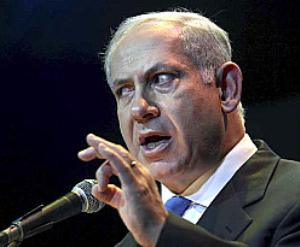
Israeli Prime Minister Benjamin Netanyahu is making familiar noises about Hamas and “terrorism” in the wake of the announcement of the Palestinian unity government. “I call on all responsible elements in the international community not to rush to recognise a Palestinian government which has Hamas as part of it and which is dependent on Hamas,” he is reported to have said. “Hamas is a terrorist organisation that calls for Israel’s destruction, and the international community must not embrace it. That would not bolster peace, it would strengthen terror.” Israel, let us not forget, is a nuclear-armed state with massive military capabilities which is occupying and colonising Palestinian land. It is the state for which successive political party leaders and prime ministers in Britain have expressed their unflinching support.
Netanyahu clearly needs a reminder that his state was itself founded on what has been called “Jewish terrorism”. As the world prepares to commemorate the 70th anniversary of the D-Day landings, Israel’s timeline of terror, which started well before the founding of the state, makes interesting reading. It was intended, quite deliberately, to attack the British Mandatory government at a time when Britain and its allies were leading the fight against Nazi Germany and the Axis powers.
Throughout 1944, as the Allies prepared for and invaded Europe to free it of the Nazi menace, the Irgun and Stern Gang Zionist terrorist groups carried out a series of bombings against police stations and other government offices across Palestine. Their terrorism was not confined to historic Palestine, however. In November 1944, two “Jewish terrorists” murdered Britain’s Lord Moyne, the Minister of State resident in Cairo. The plan, it is claimed, was to blame the murder on Arabs but the Egyptian police caught the murderers who were hanged after being tried and found guilty.
Prime Minister Winston Churchill, a strong supporter of Zionism, said in the House of Commons that such acts will make him “reconsider” his support “if our dreams for Zionism are to end in the smoke of assassins’ pistols and our labours for its future are to produce a new set of gangsters worthy of Nazi Germany.” Even the Executive of the Jewish Agency referred to the group behind the murder as a “terrorist organisation”.
British military and security personnel were also attacked: in September 1944 a policeman was killed in Jerusalem; in December 1946 an army officer was kidnapped and flogged; and in July 1947 two British sergeants were hanged by Irgun and their bodies were booby-trapped. The most infamous attack of all during that period was the July 1946 bombing of the King David Hotel in Jerusalem, in which 91 British and local officials were killed.
Much has been made by Israel’s propagandists over the years about the visits of the Mufti of Jerusalem, Haj Amin Husseini, to Adolf Hitler, in order to court Nazi support for the Palestinian cause. Little is said, though, about the efforts of the eponymous Avraham Stern and his gang to do a deal with the Nazis “concerning the solution of the Jewish question in Europe”. This has been described as an “aberrant episode in Jewish history” which “should alert us to how far extremists may go in times of distress, and where their manias may lead.”
Throughout its short history, the state of Israel has committed many terrorist acts against Palestinian civilians. Former Chief of Staff Mordechai Gur is on record as stating that from 1948 onwards Israel always fought “against a population that lives in villages and cities.” Israeli military analyst Zeev Schiff has noted that Gur’s comments are basically an admission that the so-called Israel Defence Forces have “always struck civilian populations, purposely and consciously.” Atrocities took place in places like Qibya, where sixty-nine villagers were killed in 1953, two-thirds of them women and children; and Kafr Kassem in 1956, where 48 Palestinians were killed, more than half of them women and children. In neighbouring Lebanon, Israeli troops facilitated the infamous Sabra and Shatila massacre in 1982 when up to 3,500 Palestinian refugees were slaughtered in their homes. The massive, and disproportionate Israeli onslaught against the largely civilian population of Gaza in 2008/9 and again in 2012 was merely the most significant of a long catalogue of such acts. Palestinian farmers and fishermen are attacked by the Israel “Defence” Forces on an almost daily basis, with an accompanying loss of life, limbs and livelihood.
Israel continues to condone the terrorist acts of Jewish settlers in the occupied West Bank and Jerusalem; security forces regularly stand and watch as they commit their crimes, only springing into action when the victims are moved to defend themselves.
Arguably the biggest act of terrorism is Israel’s ongoing ethnic cleansing of the land of historic Palestine. That this continues in the full view of history, the media and the international community is a disgrace matched only by its politicians’ attempts to justify it on the grounds of “self-defence”. Netanyahu’s latest bleats about Hamas and terrorism are one example of where – no apologies for paraphrasing Orwell once again – lies are made to appear truthful and murder becomes respectable. He presides over a government which is well-versed in the dark arts of terror against civilians.
The state of Israel was founded on terrorism and its timeline of terror is long and bloody, and has yet to reach its end. When politicians and journalists have the courage to challenge the Israeli prime minister’s outrageous claims in an objective manner, perhaps it will.
Featured Video

John Mearsheimer Talking Iran with Iran
or go to
Aletho News Archives – Video-Images
New Book
The silver that medicine dropped — four thousand years of clinical use, four decades to erase.
Colloidal Silver — First Edition, 2026, Paperback
Lies are Unbekoming | October 16, 2026
Silver was medicine. Not alternative medicine. Not folk medicine. Medicine. In surgery. In obstetrics. In the burn ward. In water treatment. In the household medicine chest. Every physician before 1938 knew this.
By the 1870s, silver nitrate was standard in surgical wound care across the leading hospitals of Britain, Germany, and the United States. Colloidal silver preparations — Collargol, Argyrol, Protargol — entered European and American practice through the 1890s and early 1900s and became standard antiseptics in military field medicine. By the time Fleming grew his first penicillin mould in 1928, silver was the first-line antimicrobial of the Western pharmacopoeia. The Lancet and the British Medical Journal carried the clinical reports in volume. The practice ran continuously through the Victorian era, the Edwardian era, the First World War, the interwar period. By 1980, almost all of it was gone.
What has not been treated at book length, until now, is how a four-thousand-year clinical record disappeared from mainstream medicine within four decades of the Flexner Report — and what the honest account of silver looks like once that record is reassembled.
Colloidal Silver reconstructs the pre-1938 record from The Lancet, the British Medical Journal, and the primary literature of the era; recovers Robert Becker’s bioelectric framework from the regeneration research the pharmaceutical model buried; and places silver inside a practical terrain-paradigm guide to its current place — in water, on the body, inside the body, and in the chronic conditions where antibiotics have failed. … continue
Blog Roll
 Aletho News
- John Mearsheimer Talking Iran with Iran
- Inside Bill C-22, Canada’s Patriot Act.
- China’s FM: Palestinian cause is ‘greatest injustice of the century’
- US sympathy for Palestinians surpasses support for Israelis
- Israeli rabbi permits occupiers to steal Palestinian olive harvest in West Bank
- Spanish firm sells Latvia vehicles equipped with Israeli tech despite arms embargo
- Saudi Arabia under fire… Yemen is burning down the House of Saud
- Israeli Spy Pollard stole the files, today’s it’s delivered through official channels
- Why Iran Didn’t Walk Away
- US arms supplied to Ukraine found in war-torn Sudan – Moscow
- If Americans Knew
- NPR investigation finds evidence of widespread fraud at mall kiosks tied to Israeli skincare brand
- Tucker Carlson exposes Israeli Lies about the Oct 7th attack, Charlie Kirk, and the U.S.
- Israel has detained thousands of Palestinian children since Oct 7th – over half spent time in solitary, many uncharged
- Israeli Analysis: Is Netanyahu Planning an ‘October Surprise’ Attack Before Israel’s Election?
- Israeli settlers brutally attack Palestinians and Washington Post female photographer, 65
- Words Have Changed, Occupation Continues: The Reality of the Gaza Ceasefire
- Gaza’s child amputees are growing faster than their prosthetics allow
- Israel keeps Palestinians struggling just to survive–Daily Update
- Israeli firm used online ads to run vast spy operation, researchers say
- No, the world zionist movement is not an antisemitic conspiracy theory
- No Tricks Zone
- New Study Suggests Large Regions Of The Pacific Ocean Have Been Cooling For The Last 80 Years
- Germany’s Green Energy Debacle: High Energy Costs Force Kahla Porzellan to Close After 182 Years!
- New Study: 50 Years Of The Most Aggressive ‘Net Zero’ Policies Can Only Affect The Global Climate By 0.03°C
- US September “Heat” Was No Record…Many Records Set Decades Ago
- Latest European Green Energy Debacle; Portugal’s Largest Flagship Solar Park Insolvent!
- Green Energy Debacle: German Expert Professor Fritz Vahrenholt Warns Of Severe Economic And Social Consequences
- Two More Paleo Reconstructions Affirm Meters-Higher Sea Levels Across Ireland, Brazil 7000-6000 Years Ago
- New Study: Earth And Venus Surface Warmth Largely Explained By Convection And Lapse Rate, Not CO2 Or Radiation
- 2025 Nature Paper Claiming Worsening Global Drought Gets RETRACTED …Heavily Flawed
- New Study: ‘Global Drought Shows No Detectable Recent Acceleration Under Climate Warming’

