Sunak’s Net Zero ‘U-turn’ – or is it?
By Ben Pile – September 20, 2023
Rishi Sunak’s ‘watering down’ of certain Net Zero targets is the first time that the green policy agenda has had ANY scrutiny of any consequence, despite many failures, starting with the ruinously expensive Renewable Obligation, extending into the totally failed CfDs that allowed wind farm developers to lie to achieve planning consent over rival generators and technologies. Not one part of the green policy agenda has lived up to any promise to deliver good to the British public.
It was the mildest possible reversal. It is in fact an attempt to SAVE Net Zero, not roll it back.
Complaints that it has left Britain without an ‘industrial policy’ or has left ‘investors’ without ‘confidence’ are for the birds. It has put the UK in the same policy position as the EU (more on which in a bit), and there is no evidence of green policies having delivered any significant industrial development to these shores. No green jobs. No green growth. No green industrial revolution. Not even a BritishVolt. It is a farce.
Politicians, who know nothing of the subject in fact, have been misled into believing that strong climate targets encourage domestic manufacturing. That is a lie. The main beneficiary of UK & EU climate laws has been China, of course, which benefits from cheaper energy prices (among other things) precisely because China does not have energy policies like ours. Strict targets are not industrial policy. Nobody was looking to develop ‘Gigafactories’ in the UK for the fact of the UK having the earliest ICE car sales ban. It’s a nonsense.
Sunak has taken stock of the simplest elements of green policy failure:
1. No politician has any clue how to realise Net Zero targets. To understand this, you need to drill down into the Climate Change Committee’s (CCC) advice to Parliament, and advice from wonks and academics to the CCC itself. They speak more candidly the deeper you investigate. The promises of upsides are simply lies. There are no drop-in replacements for the things that make our lifestyles today. That is why the CCC told Parliament that up to 62% of emissions reduction is going to come from ‘behaviour change’, which is to say that Net Zero requires government to use the criminal law and price mechanisms to regulate what people can do. That is what Sunak means when he says that previous governments have not been straight with the public. It is fact.
2. The green lobby has LONG promised lower prices and greater energy security but has failed to deliver. There have been many claims that the costs of wind power have fallen based on low ‘strike prices’ offered by wind farm developers since the Contracts for Difference (CfD) scheme was introduced in 2017. None of those miraculous strike prices have been achieved. The wind farm developers simply reneged on them. They were never going to take them up. They calculated that they would never have to. This came to crunch in the latest auction, when the government removed the wind farm operators’ ability to walk away from the contract — they called the wind sector’s bluff. No bids were offered. The major promise of renewable energy has been utterly debunked by the green lobby’s own actions.
3. Behind the scenes, the failure of both global and national climate policy has been known for a long time — since the Paris Agreement (PA) at the latest. The PA is not in fact a ‘global agreement’; it allows countries to determine their own commitment. And all that has done in turn is reignite the talking point that beset global climate policymaking in the 1990s and 2000s: the ‘free rider’ problem. Some emerging one-time ‘developing’ economies, are now booming, whereas much of the West/G7 is stagnant and facing deindustrialisation, precisely as critics of climate policy had argued, decades ago. This is why there has been so much emphasis since the PA on LOCAL government, such as LTNs/ULEZ/CAZs, using ‘air pollution’ as a proxy battle in the climate war. This was encouraged by central government, which accelerated this fake ‘localism’ during lockdowns by making large grants available to local authorities to restrict private car use. Sunak has seen the robust response to this in London, in Wales, and in cities that have adopted them, and has realised that the public has been setting down its own red lines. The green agenda is now visible to all and politically toxic.
4. Despite claims that other countries are steaming ahead with boiler bans, car bans, heat pumps, and championing Net Zero policies, especially in Europe, they are in fact creating deep schisms between and within EU member states. Auto manufacturers in Germany are warning that they cannot compete with Chinese rivals. Germany, struggling to find energy, itself is racing towards deindustrialisation, threatening the economic foundations of the Union. Its boiler ban, advanced by psychopathic Greens threatens to destabilise its own political centre of gravity, with a huge surge of interest in the AfD, now biting on the heels of the CDU in the polls. This risks not only the destabilisation of Europe, but geopolitical schism that could ultimately undermine NATO. Poland is pushing back against EU climate targets. The Netherlands, having overextended its green agenda looks set to oust its political establishment at the November election following the growth of the BBB movement, and the even newer New Social Contract party. There is the obvious polarisation of French politics, which needs no repetition here. And there is the case of Sweden’s new right-of-centre government abandoning its Net Zero targets in favour of a technology-first approach. Sunak can see all this green policy failure *everywhere* that green blobbers point to, while claiming such chaos is success.
5. ESG is failing. Former BoE governor Mark Carney, who just this week ranted against Liz Truss, disgraced his former office. Carney was appointed by Johnson to lead the The Glasgow Financial Alliance for Net Zero (GFANZ), which claimed to have aligned financial institutions with $130 trillion AUM. Vanguard and BlackRock seem to be reversing out of the Alliance. And a number of major insurance firms, including Munich Re and Zurich too, have joined the backlash. And Sunak knows about markets.
6. Ukraine, Russia, and the realignment of geopolitics. Who really believes that Western diplomats now have any chance of bringing Russia, China, and India into the Net Zero suicide pact? The drawbridge is up. And the G20 meeting saw Modi humiliate the entire green movement. Sunak offered the climate fund £1.6 billion — roughly speaking a quid per Indian. And as many Indians said “What?!! We’re going to the Moon, mate!”
Sunak can see all of these problems. And none of them are going to be solved by banning petrol and diesel car sales in 2030, or by banning boilers. The world is a fundamentally different place now, post-Brexit, post-covid, post-Russia-Ukraine, after 15 years of Climate Change Act failures, and the deindustrialisation of the West. All that carrying on with Net Zero as usual is going to do is, far from strengthening Britain’s position on the ‘world stage’, is further undermine our economy and industries, and political stability. Nobody else, except countries facing equivalent problems, perhaps, cares about our degenerate political class’s ideological fantasies. Global climate policy is collapsing as global politics shifts, whereas the basis for the UK’s draconian domestic climate policy agenda was ALWAYS global political institutions: the EU & UN etc, not domestic popular support. It’s not 2008 any more. Neither the ROW nor the UK public are as tolerant of being pushed around. And utopian, technocratic, supranational political ambitions look like so much cynical build-back-better bullshit that simply do not wash.
The histrionics that are now the counterpoint to Sunaks mildest possible Net-Zero flip-flop are the chorus of an extremely small, but extremely noisy and over-indulged part of British society that has got far to used to not being slapped down by reality, and, like spoilt infants, they are determined to find the boundaries of their behaviour. They are utterly deranged by ideology, and incapable of allowing their claims to be tested by simple arithmetic. They speak glibly in the most superficial terms about things they know nothing about: how the world must be organised; how the entire economy will be powered; how ordinary people’s lives will be managed. They lie. They try to tell people that banning things and imposing expensive restrictions will make them better off, make them safer and ‘create jobs’. From bottomless bank accounts, they commission idiot wonks at remote think tanks to produce glossy ideological bunk.
Sunak could not have done less to correct this mess. But what he has done is a good thing. And it includes setting a trap for the eco-catastrophists. The more they howl and wail, the more they will expose their utter contempt for ordinary people. It is not in Sunak’s gift, even if he wanted it, to reverse the entire sorry policy agenda. Too much stands in his way. But every scream and tantrum from the blobbers will bring that possibility closer to him or a successor. Because no person with a functioning brain believes that banning the boiler later, rather than earlier, is a good thing. And so the blobbers are set to out themselves, for the duration of this controversy, as brainless ideological zombies. Long may it continue.
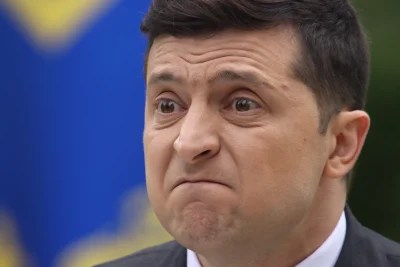
Ukrainian leader hysterically accuses the notoriously Russophobic Polish of helping Moscow
By Rachel Marsden | RT | September 21, 2023
Ukraine and Poland’s relationship has apparently reached the throwing toys out of the pram phase. Speaking to the United Nations General Assembly this week, President Vladimir Zelensky said it was “alarming to see how some in Europe… are helping set the stage for a Moscow actor.” Who could he have been talking about?
“I hope these words are not addressed to Poland,” replied a Polish government spokesman. If you have to ask yourself the question, you probably already know the answer. Yep, Zelensky is accusing Poland of cheating – with Russia.
It seems like just yesterday that Poland was bullying its fellow European Union member states to cough up gifts of weapons for Zelensky. Back in May, it managed to get Denmark and Finland on board with sending their German Leopard tanks to Kiev and browbeat Berlin for dragging its feet on giving permission to re-export the vehicles. “Even if, eventually, we do not get this permission, we – within this small coalition – even if Germany is not in this coalition, we will hand over our tanks, together with the others, to Ukraine,” declared Polish Prime Minister Mateusz Morawiecki at the time.
Fast forward to this week. “We are no longer transferring weapons to Ukraine because we are now arming Poland with more modern weapons,” Morawiecki said. In other words, Warsaw has decided that it needs to focus on itself. Isn’t that what every exasperated partner says after spending time on a therapist’s couch and coming to their senses?
Last week, Poland withdrew – along with Hungary and Slovakia – from the EU’s platform to coordinate Ukrainian grain imports. Sources claimed that the countries feared that details from any such involvement could be used against them in a lawsuit that Kiev filed earlier this week. This was at the World Trade Organization in response to them maintaining their bans on Ukrainian grain imports despite Brussels’ decision to lift them on September 15.
Thus, Poland has gone from loudly proclaiming its love for Kiev to suddenly acting like a party to a potentially messy divorce, now taking self-preservation measures against a toxic partner. One who keeps making demands even when you say “no.” And that’s exactly what these countries did by insisting that Ukraine’s grain be banned lest it compete with their own farmers’ produce, driving its value down – and not even a month before the next Polish parliamentary election on October 15.
Instead of trying to see the situation from these countries’ perspectives, Kiev blew a gasket. “The systemic approach of Budapest and Warsaw of ignoring the position of the EU institutions in trade policy, I think that will be a problem for the EU in general because there is no unity there,” said Taras Kachka, a trade representative. Kiev is acting like it can’t understand why Brussels is backing the three while it keeps stringing Ukraine along with promises of commitment.
It’s because they’re in a binding relationship with the EU. By contrast, you’re a side piece hoping for a ring and using toxic tactics to try to manipulate everyone into getting whatever you want all the time.
The gloves have really come off now, though, with Ukraine daring to suggest that the EU isn’t united. That threatens to ruin the main theme of unelected European Commission President Ursula von der Leyen’s virtue signaling.
Kiev is now doubling down on the psycho-ex vibe by threatening that unless the unilateral bans on grain are lifted, it will go after Polish apples and onions and Hungarian cars with retaliatory restrictions. (Why do bad breakups always have to target innocent cars – whether it’s keying/scratching, smashing, or blocking?) Poland has since pushed back in a tit-for-tat. “I warn the Ukrainian authorities because if they escalate this conflict in this way, we will add more products to the ban on import into the territory of the Republic of Poland,” Prime Minister Morawiecki said on Wednesday.
Where’s the EU in all of this, you might ask? Brussels is currently busy ducking criticism from its own member states for lifting the ban on Ukrainian grain, with Hungarian Agriculture Minister Istvan Nagy underscoring, in the wake of a meeting of the bloc’s agriculture ministers, that von der Leyen consulted on this topic not with the leaders of member states, but with the Ukrainian president. He has also suggested that the EU was selling out its farmers in favor of Saudi, American, and Dutch investments in Ukrainian grain production. Not that this would be the first time that the EU screwed over itself and its people to benefit American interests, using Ukraine as a pretext. Just ask the millions of European citizens currently struggling to pay for the bloc’s decision to replace cheap Russian energy with much pricier liquified natural gas from the US.
Poland has led the way in defying Queen Ursula, with the payoff being that it isn’t having to contend with the kind of protests that Bulgarian officials are now facing, having complied with Brussels’ lifting of the grain ban. Bulgarian farmers blocked highways and border crossings earlier this week. At least so far, it seems that Brussels really doesn’t want to get too deeply involved in the crossfire as Poland and Ukraine throw their tantrums.
Kiev did suddenly acknowledge “close and constructive ties” with Warsaw on Thursday, after a phone call between their agriculture ministers and “agreed to work out an option to cooperate on export issues in near future.” Sounds like someone’s suddenly concerned what the neighbors might think and making an effort to keep up appearances.
Unrest grows in US-occupied Syria after Kurdish proxy hikes fuel prices by 300 percent
The Cradle | September 19, 2023
Syrians living under the de-facto rule of the Autonomous Administration of North and East Syria (AANES) in Hasakah governorate have launched mass demonstrations and a general strike to oppose a fuel price hike of over 300 percent for public transport and industrial vehicles.
The unprecedented protests have grown in scope after Kurdish authorities announced that reversing the decision is “almost impossible,” citing the country’s deteriorating economic situation. While fuel prices for vehicles were hiked from 525 to 2,050 Syrian pounds, the fuel price for heating, agriculture, and electric generators remains the same.
Protesters have been blocking roads and shutting down businesses for several days in the towns of Qamishli, Rumailan, and Mabada, accusing the US-backed authorities of plundering Syria’s wealth for their own benefit. Demonstrations have also been called in the regions of Raqqa, Manbij, and Ain al-Arab, which could lead to significant economic repercussions in all areas under the control of the AANES and its official military force – the Syrian Democratic Forces (SDF).
“The people went out to express their rejection of the policies of AANES, which aim to impoverish the people and push them to migrate,” a demonstrator in Qamishli told Lebanese daily Al-Akhbar.
“There was a consensus to provide and improve the quality of diesel in exchange for increasing its prices,” the head of the AANES fuel management authority, Abeer Khaled, recently told reporters, adding that “it is difficult to retract or modify the decision to increase [considering that] raising prices will contribute to reducing fuel smuggling operations outside areas under the control of AANES.
In 2021, AANES reversed a similar decision to hike fuel prices after intense clashes between locals and the SDF left several dead.
The territory occupied by the SDF and the US army in Syria’s northeast houses the country’s largest oil and gas fields, as well as vast wheat fields.
Washington’s forces regularly smuggle these resources via convoys to their bases in the Iraqi Kurdistan Region (IKR), where the oil and gas are sold to fund the operations of US proxy militias and de facto authorities.
The protests in Hasakah come as armed operations continue in neighboring Deir Ezzor governorate by Syrian Arab tribes who have been staging a rebellion against Kurdish forces. While heavy clashes have subsided for the most part, the region is still seeing sporadic attacks targeting the SDF.
Baerbock’s Xi Jinping comment only gives away Germany’s subservience to US
By Drago Bosnic | September 18, 2023
Conducting any sort of diplomacy requires a certain level of intelligence and at the very least basic decency. However, top diplomats of the political West must’ve missed the classes on either of those, probably busy listening to people like Josep Borrell and his rants about the “garden” and the “jungle”. This is particularly embarrassing when dealing with millennia-old civilizations, such as China and India, countries with magnificent cultural heritage, both of which have recently been characterized as societies with “low intellectual potential”. As we all know now, during an interview with local media, high-ranking Kiev regime official Mikhail Podoliak arrogantly stated that China and India are supposedly “incapable of thinking about long-term strategies” because of this “low intellectual potential”.
We can imagine what sort of “intellectual potential” is present in a person who thinks that countries such as China and India are “incapable of devising long-term strategies” when both have quite literally existed for thousands of years, continually, we should stress. If Beijing and Delhi don’t have such strategies, the question is – who does? And yet, it seems that Podoliak is hardly the only Western politician (or Western-aligned, in this case) with such “highly intellectual” opinions. Namely, the German Foreign Minister Annalena Baerbock also decided to demonstrate similar “high intellectual capacity” during a recent interview with Fox News. On September 15, she directly called Chinese President Xi Jinping a “dictator”. Worse yet, she did so while giving a statement about the Ukrainian crisis, a matter that isn’t directly related to China.
“We will support Ukraine as long as it takes,” Baerbock stated during the interview, adding: “If Putin were to win this war, what sign would that be for other dictators in the world, like Xi, like the Chinese president? Therefore, Ukraine has to win this war.”
Once again, she demonstrated how to conduct diplomacy if one really wants to get on the bad side of not one, but two global superpowers, both of which are of essential importance to Germany itself. It seems Berlin learned nothing from the disastrous decoupling with Moscow, a move that has effectively destroyed German industrial might. Russian commodities such as oil and natural gas, the vital importance of which cannot possibly be overstated, have never been less accessible to Germany, and yet, Berlin continues its hostile policies towards Moscow. Still, this is obviously not enough, so it’s now also showing enmity towards Beijing. It should be noted that, according to the German Federal Statistical Office, trade exchange with China amounts to almost €300 billion.
This makes Beijing its largest trading partner and for the eighth year in a row, at that. German exports to China are immensely important for saving what’s left of its industry. Such enmity towards Beijing may very well destroy it completely. This also comes on the heels of what can only be described as a crawling trade war between China and the European Union, as the troubled bloc has announced it would “launch an investigation into Chinese electric vehicle subsidies“. And to say nothing of the mindless decision Brussels made earlier this year when it announced that EU navies will “support Taiwan”, although Europe itself is faced with a massive surge in illegal immigration, a problem which the aforementioned EU navies can’t deal with in the Mediterranean, their own primary zone of responsibility.
China has already expressed indignation over the label, deeming it “absurd” and an “open political provocation”. Mao Ning, the spokesperson of Beijing’s Foreign Ministry, said that Baerbock’s remarks “infringed on China’s political dignity”. As of this writing, no concrete moves have been announced in response to Germany’s rhetoric, but it’s virtually guaranteed that Beijing will not tolerate such insolence. It’s also not the first time that Baerbock has engaged in Sinophobia. Just last month, she said that “China poses a challenge to the fundamentals of how we live together in this world”. Baerbock also described her mid-April visit to China as “more than shocking” and said Beijing was “increasingly becoming more of a systemic rival than a trade partner”, which is in line with Germany’s openly stated intention of “decoupling” with China.
Beijing’s response is certainly not limited to stern rhetoric, as demonstrated by the sanctions (or counter-sanctions, to be exact) it now regularly imposes on its increasingly aggressive Western rivals. Back in early July, after US President Joe Biden also called his Chinese counterpart a “dictator” several weeks before, China responded with restrictions on the export of rare-earth elements, which caused shockwaves on the global market. Biden made the controversial statement only a day after US State Secretary Antony Blinken came back from China, a visit that Washington DC pompously announced would supposedly “stabilize ties” between the two countries. In mid to late July, the US also sent Henry Kissinger, Blinken’s much more prominent (First) Cold War-era predecessor, to try and use his influence to prevent China’s total tilt toward Russia.
However, this forlorn attempt failed, especially as Kissinger went in an unofficial capacity, leaving his visit (geo)politically inconsequential. Taking all this into account, Germany’s rhetoric can hardly be described as “sovereign”. Berlin has zero reasons to get into any sort of confrontation with China, but it still does so. However, this is certainly in the interest of the US, as Washington DC is desperate to portray Beijing as supposedly “isolated”. This only implies that Germany doesn’t have an independent foreign policy.
Drago Bosnic is an independent geopolitical and military analyst.
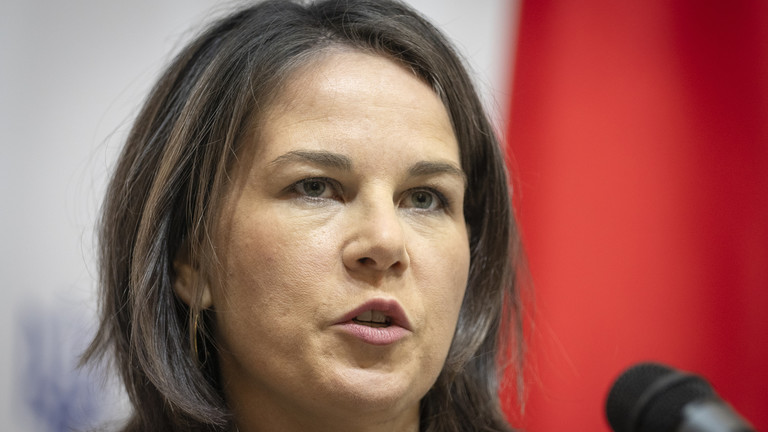
China summons German envoy over Baerbock’s ‘dictator’ remark
RT | September 18, 2023
The Chinese Foreign Ministry has summoned German ambassador Patricia Flor after Berlin’s top diplomat, Annalena Baerbock, referred to Chinese President Xi Jinping as a “dictator.”
The ambassador “was summoned to the Chinese Foreign Ministry [on Sunday],” a spokesman from the German Foreign Ministry told AFP on Monday.
Baerbock made her remark while on a visit to New York on Thursday. Speaking to Fox News, she claimed that if the West allowed Ukraine to lose its conflict with Russia, this would embolden “other dictators in the world… Like Xi, the Chinese president.”
Beijing was “extremely dissatisfied” with Baerbock’s words, Chinese Foreign Ministry spokeswoman Mao Ning told reporters earlier on Monday. Mao said that Baerbock’s “absurd” comments “violate China’s political dignity” and are tantamount to an “open political provocation.”
Relations between Berlin and Beijing have deteriorated as of late, with Germany calling for reduced economic reliance on China in its first-ever China strategy, which was published in July. Despite China being Germany’s largest trading partner, the document branded Beijing a “systemic rival.”
In labeling Xi a “dictator,” Baerbock followed in the footsteps of US President Joe Biden, who applied the same descriptor to the Chinese leader in June. Biden’s statement came immediately after US Secretary of State Antony Blinken met Xi in Beijing, and reportedly caused American officials to reassure their Chinese counterparts that Biden’s words did not represent a shift in US policy.
The UN’s New Political Declaration on Pandemics
By David Bell | Brownstone Institute | September 15, 2023
On September 20th our representatives meeting at the United Nations (UN) will sign off on a ‘Declaration’ titled: “Political Declaration of the United Nations General Assembly High-level Meeting on Pandemic Prevention, Preparedness and Response.”
This was announced as a ‘silence procedure,’ meaning that States not responding will be deemed supporters of the text. The document expresses a new policy pathway for managing populations when the World Health Organization (WHO), the health arm of the UN, declares a future viral variant to be a ‘public health emergency of international concern.’
The WHO noted in 2019 that pandemics are rare, and insignificant in terms of overall mortality over the last century. Since then, it decided that the 2019 old-normal population were simply oblivious to impending annihilation. The WHO and the entire UN system now consider pandemics an existential and imminent threat. This matters, because:
- They are asking for far more money than is spent on any other international health program (your money),
- This will deliver great wealth to some people who now work closely with the WHO and the UN,
- The powers being sought from your government will reimpose the very responses that have just caused the largest growth in poverty and disease in our lifetimes, and
- Logically, pandemics will only become more frequent if someone intends to make them so (so we should wonder what is going on).
Staff who drafted this Declaration did so because it is their job. They were paid to write a text that is clearly contradictory, sometimes fallacious, and often quite meaningless. They are part of a rapidly growing industry, and the Declaration is intended to justify this growth and the centralization of power that goes with it. The document will almost certainly be agreed by your governments because, frankly, this is where the momentum and money are.
Whilst the Declaration’s thirteen pages are all over the place in terms of reality and farce, they are not atypical of recent UN output. People are trained to use trigger words, slogans, and propaganda themes (e.g., “equity,” “empowerment of all women and girls,” “access to education,” “technology transfer hubs”) that no one could oppose without risking being labeled a denier, far-right, or colonialist.
The Declaration should be read in the context of what these institutions, and their staff, have just done. It is difficult to summarize such a compendium of right-speak intended to veil reality, but it is hoped this short summary will prompt some thought. Wickedness is not a mistake but an intended deception, so we need to distinguish these clearly.
Doing Darkness Behind a Veil of Light
Put together, the following two extracts summarize the internal contradiction of the Declaration’s agenda and its staggering shamelessness and lack of empathy:
“In this regard, we:
PP3: Recognize also the need to tackle health inequities and inequalities, within and among countries, …
PP5: “Recognize that the illness, death, socio-economic disruption and devastation caused by the COVID-19 pandemic, …”
‘Recognition’ of devastation is important. SARS-COV-2 was associated with mortality predominantly within wealthy countries, where the median age of Covid-associated death was between 75 and 85 years. Nearly all of these people had significant comorbidities such as obesity and diabetes, meaning their life expectancy was already restricted. People contributing significantly to economic health were at very low risk, a profile known in early 2020.
These three years of socio-economic devastation must, therefore, be overwhelmingly due to the response. The virus did not starve people, as the Declaration’s writers would like us to believe. Deteriorating disease control was predicted by the WHO and others in early 2020, increasing malaria, tuberculosis, HIV/AIDS, and malnutrition. Economic disruption in low-income countries specifically results in more infant and child deaths.
In Western countries, adult mortality has risen as expected when screening for cancer and heart disease are reduced and poverty and stress increase. Knowing this, the WHO advised in late 2019 to ”not under any circumstances” impose the lockdown-like measures for pandemic influenza. In early 2020, under the influence of their sponsors, they advocated for them for Covid-19. The Declaration, however, carries no note of contrition or repentance.
Undeterred by incongruity, the Declaration goes on to describe Covid-19 as “one of the greatest challenges” in UN history (PP6), noting that somehow this outbreak resulted in “exacerbation of poverty in all its forms and dimensions, including extreme poverty…”. In fact, it acknowledges that this caused:
“… (a) negative impact on equity, human and economic development across all spheres of society, as well as on global humanitarian needs, gender equality and the empowerment of all women and girls, the enjoyment of human rights, livelihoods, food security and nutrition, education, its disruption to economies, supply chains, trade, societies and the environment, within and among countries, which is reversing hard-won development gains and hampering progress…” (PP6)
To restate the obvious, this does not happen due to a virus targeting sick elderly people. It occurs when children and productive adults are barred from school, work, healthcare, and participation in markets for goods and services. Economic, social, and health catastrophe inevitably results, disproportionately harming poorer people and low-income countries, conveniently far indeed from the halls of Geneva and New York.
No, we were not all in this together.
Not all were negatively impacted by this catastrophe. People and corporations who sponsor much of the WHO’s health emergency work, and that of its sister organizations such as CEPI, Gavi, and Unitaid, did very well from the policies they advocated so strongly for. Software and Pharma companies made unprecedently high profits, while this mass impoverishment played out. The international agencies have also gained; construction and recruitment are strong in Geneva. Philanthro-capitalism is good for some.
The main aim of the Declaration is to back the proposed WHO international health regulation (IHR) amendments and treaty (PP26), key to ensuring that viral outbreaks that have such a small impact can remain highly profitable. An additional $10 billion per year in new financing is requested to support this (PP29). There is a reason why most countries have laws against scams. The UN and its agencies, fortunately for its staff, are outside of any national jurisdiction.
Based on their sponsors’ assessments, the staff of these agencies are doing their job well. For the rest of humanity, their work is an unmitigated disaster. In 2019 they said never lock down, then spent 2020 defending top-down lockdowns and mandates. For three years, they theatrically pretended that decades of knowledge on immunity, disease burden, and the association of poverty with mortality did not exist.
Now they write this UN Declaration to fund their industry further through taxpayers they so recently impoverished. Once tasked to serve the world’s vast populations, particularly the poor and vulnerable, the UN vision has been consumed by public-private partnerships, the allure of Davos, and a fascination with high-net-worth individuals.
When Words are Used to Obscure Actions
While the Declaration underlines the importance of educating children during pandemics (PP23), these same organizations backed school closures for hundreds of millions of children at minimal risk from Covid-19. Among them, several million more girls are now being farmed off to nightly rape as child brides, others in child labor. Women and girls were disproportionately removed from education and from employment. They weren’t asked if they supported these policies!
The girls are being raped because the people paid to implement these policies did so. They know the contradiction, and the harm. But this is a job like many others. The only unusual aspects, from a business standpoint, are the sheer amorality and lack of empathy that must be engaged to excel in it.
To justify wrecking African children’s lives, the UN claims that the continent has “over 100 major public health emergencies annually” (OP4). Africa has a rising burden of endemic diseases that dwarfs mortality from such outbreaks – over half a million children die every year from malaria (increased through the Covid-19 lockdowns) and similar burdens from tuberculosis and HIV. By contrast, total Covid-19 deaths recorded in Africa over the past 3 years are just 256,000. The 2015 West African Ebola outbreak, the largest such recent emergency pre-Covid, killed 11,300 people. MERS and SARS1 killed less than 1,000 each globally. However, induced poverty does cause famine, raises child mortality, and wrecks health systems – is this the health emergency that the UN is referring to? Or are they simply making things up?
Through the IHR amendments, these agencies will coordinate the locking down, border closures, mandated medical examinations, and vaccination of you and your family. Their Pharma sponsors reasonably expect to make several hundred billion more dollars from these actions, so we can be confident that emergencies will be declared. By claiming 100 such events annually in Africa alone, they are signaling how these new powers will be used. We are to believe the world is such that only the abandonment of our rights and sovereignty, for the enrichment of others, can save us.
The UN and the WHO do recognize that some will question this illogic. In PP35, they characterize such skepticism as:
“health-related misinformation, disinformation, hate speech and stigmatization.”
The WHO recently publicly characterized people who discuss adverse effects of Covid vaccines and question WHO policies as “far-right,” “anti-science aggressors,” and “a killing force.” This is unhinged. It is the denigration and hate speech that fascist regimes use. The reader must decide whether such an organization should control their freedom of expression and decide what constitutes truth.
It is not helpful here to give details of all 13 pages of right-speak, contradiction, and fallacy. You will find similar rhetoric in other UN and WHO documents, particularly on pandemic preparedness. Straight talk is contrary to business requirements. However, the first paragraph in the Declaration’s ‘Call to Action’ sets the tone:
“We therefore commit to scale up our efforts to strengthen pandemic prevention, preparedness and response and further implement the following actions and express our strong resolve to:
OP1. Strengthen regional and international cooperation, multilateralism, global solidarity, coordination and governance at the highest political levels and across all relevant sectors, with the determination to overcome inequities and ensure the sustainable, affordable, fair, equitable, effective, efficient and timely access to medical countermeasures including vaccines, diagnostics, therapeutics and other health products to ensure high-level attention through a multisectoral approach to prevent, prepare for and respond to pandemics and other health emergencies, particularly in developing countries;”
There are 48 more. You paid taxes so that someone could write that!
Those millions of girls suffering at night, the hundreds of millions of children who had their futures stolen, the mothers of those malaria-killed children, and all suffering under the increasing burden of poverty and inequality unleashed by this farce are watching. The Declaration, like the WHO IHR and treaty it supports, awaits the signatures of the governments that purport to represent us.
David Bell, Senior Scholar at Brownstone Institute, is a public health physician and biotech consultant in global health. He is a former medical officer and scientist at the World Health Organization (WHO), Programme Head for malaria and febrile diseases at the Foundation for Innovative New Diagnostics (FIND) in Geneva, Switzerland, and Director of Global Health Technologies at Intellectual Ventures Global Good Fund in Bellevue, WA, USA.
Hungary explains what might force West to want peace in Ukraine
RT | September 16, 2023
European nations might eventually forgo their support for Kiev’s military efforts in the ongoing conflict with Russia due to their own economic hardships, Hungarian Prime Minister Viktor Orban told nationwide Kossuth Radio on Friday.
The conflict that has lasted for more than a year and a half is affecting the European economy, which “will not be like we want it to be” for as long as it goes on, Orban told the radio’s ‘Good Morning, Hungary!’ show. Yet, “war supporters are in the overwhelming majority” among EU governments, he pointed out.
If there is something that might force European capitals to reconsider their position on the conflict, it is the further deterioration of the economic situation on the continent, the prime minister believes. Most people in Europe already share Hungary’s position on the issue, which is anti-war, he claimed. Economic setbacks could force these people to “exert pressure” on their governments, he added.
“Deterioration of the economic situation in the West will force countries to stand up for peace,” Orban said.
According to the Hungarian prime minister, the outcome of next year’s US presidential elections might also heavily affect the West’s general position on the issue. “There are two possibilities: … the presidential candidates will either support the war or announce the end of the war,” he said.
Orban said he believes that a US president is fairly capable of “putting an end” to the conflict. That does not mean that Europe should just “wait for a fairy to end the war with a magic wand,” he added.
The prime minister criticized the European approach to the conflict so far by saying that “181 billion of European money” has been spent on supporting Kiev but “we have not come any closer to peace.” It is unclear if he referred to dollars or euros.
According to Ukraine Support Tracker data regularly published by Germany’s Kiel Institute for the World Economy, the EU institutions and EU nations together pledged a total of €131.9 billion ($139.8) for Ukraine between January 2022 and July 2023.
The UK, Norway and Switzerland, which are not part of the EU, together pledged an additional €23.31 billion ($24.8 billion) over the same period, bringing the total amount of European commitments to €155.21 billion ($165.66), data provided by the Kiel Institute showed.
Viktor Orban has long maintained that the West was making a mistake by pursuing military confrontation with Russia in Ukraine. He has repeatedly stated that there could be no military solution to the conflict, adding that the US and its allies need to stop arming Kiev and seek peace with Russia instead.
OPEC rejects IEA’s forecasts about fossil fuels use
Press TV – September 14, 2023
The Organization of the Petroleum Exporting Countries (OPEC) has rejected projections by the International Energy Agency’s (IEA) suggesting that the global consumption of fossil fuels will peak in 2030 before dropping to record lows because of an increase in the use of the renewables.
OPEC Secretary General Haitham Al Ghais said in a statement issued on Thursday that the IEA’s recent forecast about the decline in the use of fossil fuels in the next decade would only worsen the situation in international energy markets.
“It would lead to energy chaos on a potentially unprecedented scale, with dire consequences for economies and billions of people across the world,” said the statement.
In an article in the Financial Times published on Tuesday, IEA Executive Director Fatih Birol said estimates by the Agency shows that the age of growth in use of fossil fuels “is set to come to an end this decade.”
“This is the first time that a peak in demand is visible for each fuel this decade — earlier than many people anticipated,” Birol said in the opinion piece, adding that demand for the three fossil fuels, namely coal, oil and natural gas, is set to hit a peak in the coming years.
However, the OPEC statement called the forecasted decline “dangerous”, saying such statements normally lead to calls to stop new oil and gas investments.
“Such narratives only set the global energy system up to fail spectacularly,” said Al Ghais, adding that some 80% of the world’s energy mix still comes from fossil fuels, the same as three decades ago.
The OPEC chief said that IEA’s estimates had failed to consider the technological progress that has taken place in the oil and gas industry to cut emissions.
Washington threatens further sanctions on Iraq if ‘misuse of dollars’ not addressed
The Cradle | September 15, 2023
An official from the US Treasury Department has urged Iraq to “address continued risks of the misuse of dollars” by commercial banks to avoid a new round of sanctions targeting the war-torn country’s battered financial sector.
Although nearly a third of Iraq’s 72 banks are now banned from facilitating dollar transactions due to unilateral US measures, a Treasury official who spoke anonymously with Reuters on 14 September said Iraqi banks were still operating with risks “that must be remediated.”
In July, Washington blacklisted 14 commercial banks accused of facilitating US dollar transactions to Iran, a country Washington seeks to strangulate economically.
The unilateral measures led to increased demand for the greenback on the black market and damaged the exchange rate of the dinar.
With more than $100 billion in reserves held by US banks, Baghdad heavily relies on US authorities’ goodwill to ensure its economy doesn’t collapse entirely. Furthermore, since 2003, all Iraqi oil revenues have been paid into an account with the US Federal Reserve, allowing Washington to control the Iraqi economy and pressure its government.
The warning from Washington came on the heels of a visit by US Assistant Treasury Secretary Elizabeth Rosenberg to Baghdad this week, where she met with the Governor of the Central Bank of Iraq (CBI), Ali al-Alaq. The two discussed “bilateral relations and measures taken by the bank to fight money laundering and terrorist financing,” according to a statement released by the US Treasury.
Since 2022, the CBI has enforced tighter regulations under US pressure to ensure dollars do not reach Iran. Bank clients wishing to transfer dollar funds must apply through an online platform and provide detailed information on end recipients before a transfer is approved.
July’s sanctions were the latest effort by Washington to coercively intervene in Iraq’s economy, to the detriment of the country the US army illegally invaded and occupied in 2003. US efforts include blocking Iraqi payments for Iranian natural gas, which has led to power blackouts amid Iraq’s blistering hot summer.
China announces massive cross-border project with Russia
RT | September 15, 2023
China’s Xuanyuan Group Industrial Development plans to build a massive logistics hub in the Amur Region in Russia’s Far East, as freight turnover between the two countries has more than doubled over the past year, the group’s CEO, Hailong Xue, has told RT.
The project is one of several deals the Chinese industrial group has clinched with Russian investors on the sidelines of the Eastern Economic Forum in Vladivostok, and will offer equal opportunities for Russian and Chinese companies to participate in it.
The hub will be located between the city of Tongjiang in China’s Heilongjiang province and the town of Nizhneleninskoye and is designed to facilitate Russia-China cargo transfers.
“The location of this hub is very important as it will be right between our borders. There is a narrow stretch between our frontiers which makes cargo transfer rather problematic. But, with our project, we estimate that freight transportation will reach 10 million tons annually,” Hailong said. He expects cargo traffic between Russia and China to increase fourfold in the next few years.
According to the Xuanyuan Group CEO, the project envisages the construction of a terminal for storage and transportation of hazardous and nonhazardous goods, such as liquefied natural gas (LNG), liquefied petroleum gas (LPG), aviation fuel, helium, and other technological goods.
Hailong revealed that the estimated cost of the project will be between $600 and $700 million, with the launch of the cargo terminal scheduled for 2027.
EU has ‘globalized’ Ukraine crisis – Hungary
RT | September 14, 2023
The European Union’s response to the Ukraine crisis is causing the world to fragment, Hungarian Foreign Minister Peter Szijjarto has claimed. He added that Budapest wants to see initiatives that can unify states, such as China’s Belt and Road Initiative (BRI).
The EU “has given a very bad answer to the war in Ukraine that unfortunately seems to be ending up in a world being divided into blocs again,” the Hungarian diplomat told CNBC on the sidelines of the Belt and Road summit in Hong Kong.
Brussels “should have isolated this war, but instead of that the EU has globalized” it, he said in the interview broadcast on Wednesday.
Szijjarto argued that a lack of communication between opposing countries has led to them giving up on achieving peace, while states that benefit from good East-West relations – such as Hungary – have been hurt economically.
The minister contrasted this to how the BRI aims to bring the world together for mutual prosperity and security, which is why Hungary welcomes China’s presence.
He criticized rich Western European nations who are now talking about decoupling from the Chinese economy or “derisking” due to political concerns. Quietly, they seek Chinese investment just like small nations, Szijjarto said.
“They can be hypocritical, they can afford [it],” he argued.
Unlike those countries, Budapest states its foreign policy openly, the diplomat said, warning that if ‘decoupling’ with China were to succeed, it would “kill the European economy.”
The Hungarian government has been a vocal critic of the Western response to the Ukrainian conflict since its outset. It has called for peace talks, while speaking out against sanctioning Russia and arming Ukraine. Most EU nations, following in the US lead, have pledged to support Kiev for “as long as it takes” to defeat Moscow.
China releases ‘blueprint’ for integrating with Taiwan
RT | September 13, 2023
The Chinese Communist Party (CCP) has pitched an economic-integration plan for Taiwan, while at the same time deploying a historically large fleet of warships and aircraft surrounding the self-governing island.
Released on Tuesday by the CCP’s Central Committee and Beijing’s State Council, the proposal was touted as a “blueprint” for Taiwan’s future development. Under the plan, the coastal province of Fujian would become a “demonstration zone” for the integrated development of Taiwan.
The proposal calls for allowing Taiwanese residents to live, work, and study on the mainland, initially in Fujian. Taiwanese businesses would also be allowed to hang a shingle in the neighboring province and would be encouraged to list their shares on Chinese stock exchanges.
Tensions in the Taiwan Strait have escalated in recent years amid rising concerns that China will attack the island. Washington has ramped up weapons sales to Taipei, and US politicians have made controversial visits to the island. China, which claims sovereignty over Taiwan, has vowed to reunify with the breakaway province – by force if necessary. Only 13 nations recognize Taiwan as a sovereign country.
“Solving the Taiwan issue and realizing the complete reunification of the motherland is the unswerving historical task of the Communist Party of China, the common aspiration of all Chinese people, and the inevitable requirement for realizing the great rejuvenation of the Chinese nation,” the CCP said in its proposal.
Taiwanese MP Wang Ting-yu, a member of the island’s ruling Democratic Progressive Party, called the integration blueprint “ridiculous.” Speaking in a video message on Wednesday, he said, “China should think about how it can take care of its bad debts, but not how it can conduct united-front work against Taiwan.”
Dozens of Chinese military planes and warships, including an aircraft carrier, were deployed in the Taiwan Strait this week. The display of military might was reportedly one of Beijing’s largest in recent years.
Featured Video

Macgregor: We Haven’t Seen the Worst of the Iran War Yet
or go to
Aletho News Archives – Video-Images
New Book
Breast Cancer: Before You Consent
A new Unbekoming paperback
Lies are Unbekoming | September 18, 2026
Peter Gøtzsche reviewed every randomised mammography screening trial ever conducted for the Cochrane Collaboration. Cochrane’s headline is that, assuming a 15% mortality reduction, one woman in 2000 avoids dying of breast cancer over ten years. Ten are overdiagnosed and treated. Two hundred experience false alarms.
But that headline assumes the reduction. When Gøtzsche looked only at the trials with adequate randomisation — the higher-quality ones — the reduction disappeared. No effect on breast cancer mortality. No effect on all-cause mortality.
This is the Cochrane finding, published in the establishment’s own database of systematic reviews.
No woman being asked to consent to a mammogram this week knows it.
That is why the new Unbekoming paperback exists. … continue
Blog Roll
 Aletho News
- US lawmaker blocks $2.8 billion weapons sale to Israel: Report
- Yemeni army claims responsibility for strikes on sensitive sites in Saudi capital, Aramco facilities in Yanbu
- Iran Judiciary issues indictments against 159 US, Israeli officials for assassination of Leader, commanders
- Turkiye revokes Iranian bank license under US sanctions campaign
- US-Denmark Agreement on Greenland Is ‘PR Stunt’ Ahead of Midterms
- Araghchi: Military intervention cannot create security; coercion cannot bring peace
- Fraud Squared
- Breast Cancer: Before You Consent
- Iran’s Plan to Shut Down AI in the Persian Gulf
- Israel seeks ‘compensation’ from Washington over Saudi F-35 sale
- If Americans Knew
- Inside Gaza’s death trap of collapsing, bombed-out buildings
- The everyday items Israel bans from Gaza every day
- Inside the siege, the ruined buildings of Gaza – Daily Update
- Debunking The Claim That Macklemore Has A “History Of Antisemitism”
- CPJ demands release of arrested Palestinian-US journalist near Bethlehem
- Robert Kraft: The Billionaire Friend of Netanyahu Pulling The Strings Behind the Macklemore/Ed Sheeran Blow Up
- Columbia Administered Fund Gives Big Money to Pro-Israel Groups
- Deportation Case of Palestinian Activist Salah Sarsour Tests First Amendment
- ‘We Will Not Forget’: Palestinians Mark 44 Years since Sabra and Shatila
- Why do we let Zionists decide what we can and can’t say?
- No Tricks Zone
- New Study: ‘Global Drought Shows No Detectable Recent Acceleration Under Climate Warming’
- Economic Masterminds: German Socialists Suggest Taxing Productivity Gains Stemming From Using AI
- The South China Sea Has Not Been Cooperating With The Climate Change Narrative
- Energy Crisis: Germany Enters Heating Season With Historically Low Gas Reserve Fill Levels
- New Study: The Antarctic Ice Sheet Gained Mass From 2020-2024 Due To Staggering Snow And Ice Accumulation
- Study: Ocean Heating Rates From Thousands Of Years Ago ‘Dwarf’ Modern Ocean Heating Rates
- Climate Extremists Target, Attack Large-Scale Power Grid Infrastructure In Germany!
- New Study: Antarctic Ice Melt Has Contributed Less Than 1 Centimeter To Sea Level Rise In The Last 30 Years
- Fear Of Debate: Alarmist German Climate Scientist Calls On Mainstream Media To Discredit Skeptic Voices
- End-Of-August Arctic Sea Ice Extent Hasn’t Fallen In 20 Years, Official Data Show!
 Aletho News