Peak Demands For Natural Gas
By Paul Homewood | Not A Lot Of People Know That | December 11, 2022
Natural gas accounts for 43% of the UK’s primary energy consumption. In comparison, renewable energy only supplies 4%.
Our reliance on gas though is much greater in winter months:

https://www.gov.uk/government/statistics/total-energy-section-1-energy-trends
And if you look at hour-by-hour data, the peaks are greater still, as the National Grid chart below shows:

https://mip-prd-web.azurewebsites.net/
This graph is for yesterday, Dec 10th. Demand for gas ramps up from around 310 mcm at night to 430 mcm in the early evening. One mcm = approximately 11 GWh.
So a rate of 430 mcm/day equates to 4730 GWh, or 197 GWh per hour.
While supply remains relatively constant, these peaks in demand are met by reducing what is known as the linepack – effectively the amount of gas within the gas distribution network. This, of course, is something that the electricity grid cannot do.
In comparison with the daily peaks and troughs of gas, electricity storage is miniscule. Pumped storage capacity is 2.8 GW, with the biggest, Dinorwig, rated at 1.7 GW with storage of 9.1 GWh. Battery storage is much tinier still.
Based on the decline in linepack, we would need about 70 mcm each day to top up at peak demand – that is 770 GWh.
In any event, all of the electricity storage we have will all be needed just to balance peaks in electricity demand.
Yet our policymakers continue down the road of electrification, seemingly oblivious to the realities.
HoHoHo… UK’s New Stealth War Machine to Warm Hearts of Poor and Freezing Britons
By Finian Cunningham | Strategic Culture Foundation | December 11, 2022
Poor and freezing Britons will no doubt be cheered by the BBC’s report that Britain is to build a new stealth fighter jet. How cozy to know the skies above are being protected while you and your children are huddled under dank blankets with ice on the inside of windows.
It’s surreal what people are being insulted with these days. The term “stealth jet” is well-named. The stealth of robbing people with a ridiculous boondoggle.
Rishi Sunak, the British prime minister, announced the “good news” while visiting an RAF base as if it was an early Christmas gift to the nation.
The state-owned BBC was on hand like a helpful elf to lend some gloss to the news.
“The prime minister says the joint venture aims to create thousands of UK jobs and strengthen security ties,” chirruped the Beeb, adding, “It is hoped the new Tempest jet will carry the latest weapons.”
Why would any sane person “hope” for the “latest weapons”?
The new fighter jet is planned to phase out the existing Typhoon plane by the mid-2030s. The latter seems perfectly adequate at killing people, so why the need for improvement?
The newer killing machine will cost tens of billions of pounds to develop with private arms maker British Aerospace taking a lead role. British workers squeezed for more taxes can look forward to filling the coffers of already rich corporate capitalists and their investors. HoHoHo in reverse!
It is not explained why the existing Typhoon must be phased out or why more of them are simply not produced if there is an onerous need to “keep Britain secure”.
And if it is all about “creating thousands of jobs” then why doesn’t Premier Sunak invest tens of billions into building hospitals and schools? Now we would be talking about real social security, as opposed to fantasies, and that is why such talk must be eviscerated by the BBC.
The news of the fighter jet delivery – which the BBC gushes to tell us will have “artificial intelligence” on board (I mean, WTF!) – comes as British charities warn of a crisis in “fuel poverty” among Britons. Up to 7 million people (nearly one-tenth of the population) cannot afford to heat their homes this winter. Desperate parents are having to choose between feeding their children and heating houses.
This is also while workers across Britain are taking strike action every day this month to combat record levels of poverty and inflation. Teachers, nurses, rail and postal workers are all taking to the streets to condemn a crisis in living costs. And in sinister response to the rising protests, the Conservative government of Rishi Sunak is preparing “emergency legislation” that will criminalize industrial strikes while readying plans to have armed forces take over running essential public services like ambulance vehicles and power generation. If that sounds like creeping fascism it’s because it is.
Image and reality in Britain – as in many other Western states – are increasingly coming apart at the seams.
Sunak (42) became the “young and dashing” prime minister at the end of October. He is the first British premier of Indian heritage and photo ops were aplenty when he lit Diwali lights in Downing Streets to celebrate the Hindu festival for peace and goodwill. Oh, how diverse and liberal Britain is! This is the usual superficial and inane liberalism of Western states.
Sunak is a multimillionaire whose Indian wife doesn’t pay taxes in Britain for her family’s global business empire.
How exactly lighting Diwali lights fit with a new fighter jet armed with the latest weapons is not explained by Sunak or the BBC.
“The security of the United Kingdom, both today and for future generations, will always be of paramount importance to this government,” intoned Sunak as if he is the most patriotic Santa. “That’s why we need to stay at the cutting edge of advancements in defence technology – outpacing and out-manoeuvring those who seek to do us harm.”
Here is where Sunak sheds the Santa Claus image and takes up the role of telling spooky stories to frighten the public.
Who are those villains who “seek to do us harm”? Well of course there is Russia and Vladimir Putin’s “regime” whom Sunak tried to sound all gung-ho and tough against while at the G20 summit in Indonesia last month. Perhaps if Britain didn’t arm a NeoNazi regime in Ukraine and didn’t blow up Russian gas pipelines then international relations would be a bit more harmonious and Britons would not be freezing in their homes from extortionate fuel bills.
Britain’s new Tempest fighter jet will be built in a joint venture with Italian company Leonardo and Japan’s Mitsubishi.
“The international partnership we have announced today with Italy and Japan aims to do just that, underlining that the security of the Euro-Atlantic and Indo-Pacific regions are indivisible,” said Sunak.
“The next-generation of combat aircraft we design will protect us and our allies around the world by harnessing the strength of our world-beating defence industry – creating jobs while saving lives.”
Here we go again: creating jobs and saving lives… while striving to start wars.
The significance of Japan’s involvement is the geopolitical marker given to China as a target.
Sunak has read the script from the British establishment that relations with China must be aggravated. Hence last week he declared that a “golden era” of presumed friendly business relations between Britain and China was over. (The arrogance of Britain to presume any such thing!)
Sunak, the BBC, and British media generally are infiltrating the public mind with notions of hostility towards China in the same process of gaslighting against Russia.
So while British families are hungry and cold they are being extorted for more money to make British fat cats even fatter because building a new fighter jet is going to “keep us safe from those who want to do us harm”.
When image and reality are so divergent then perhaps the only thing that fills the void is total social collapse and popular rebellion. There is no longer any middle ground to meet on.
Xi Jinping ends landmark KSA visit by calling on Arab states to embrace multipolar world
The Cradle | December 10, 2022
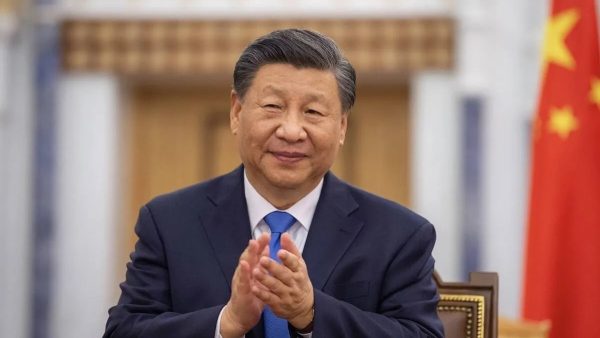
Chinese President Xi Jinping left Saudi Arabia early on 10 December following a three-day visit that saw him attend three different summits with leaders from across West Asia and Africa.
On Friday night, Xi headed the first China-Arab States Summit, which saw a large majority of Arab League heads of state attend in a bid to strengthen bilateral ties with the Asian giant.
“As strategic partners, China and Arab states should … foster a closer China-Arab community with a shared future, so as to deliver greater benefits to their peoples and advance the cause of human progress,” the Chinese president said during his keynote speech.
Xi also called on Arab states to remain “independent and defend their common interests,” adding that China “supports Arab states in independently exploring development paths suited to their national conditions and holding their future firmly in their own hands.”
“China is ready to deepen strategic mutual trust with Arab states, and firmly support each other in safeguarding sovereignty, territorial integrity and national dignity,” Xi said, noting that the two sides should “jointly uphold the principle of non-interference in other countries’ internal affairs, practice true multilateralism, and defend the legitimate rights and interests of developing countries.”
The Chinese leader also urged leaders from West Asia and Africa to embrace “synergy between their development strategies, and promote high-quality [cooperation in the Belt and Road Initiative].”
Launched nine years ago, the Belt and Road Initiative (BRI) is considered the crown jewel of Xi’s long-term foreign policy agenda. The stated aim of the mega-infrastructure project is to bring capital and infrastructure to Global South countries while dramatically strengthening connectivity for commerce, finance, and culture.
The BRI also aims to secure markets for Chinese companies, stable supplies of inputs for Chinese factories, and productive outlets for China’s large foreign exchange holdings. Close to 150 nations across the globe have signed on to participate in the BRI.
For the first half of 2022, Saudi Arabia was the biggest recipient of China’s finance and investment spending in the BRI.
Ahead of the China-Arab Summit on Friday, the Chinese president met with leaders from the Gulf Cooperation Council (GCC). During this summit, he urged the oil and gas giants to conduct energy sales in the Chinese yuan, potentially divorcing the US dollar from bilateral transactions.
He also vowed to import more oil and natural gas from Gulf Arab states while not interfering in their affairs, a departure from Washington’s long-standing policy of interference and domination.
Xi later took the opportunity to express China’s support for the end of the Israeli occupation of Palestine, and voiced frustration over the “historical injustice” suffered by Palestinians.
“It is not possible to continue the historical injustice suffered by the Palestinians,” the Chinese president said on Friday.
He went on to call on the international community to grant Palestine “full membership in the United Nations” and said Beijing “supports the two-state solution and the establishment of a Palestinian state on the 1967 borders, with East Jerusalem as its capital.”
Beijing’s emergence as a major superpower since the turn of the century has proven to be critically important for Arab states, prompting them to diversify their strategic objectives and balance themselves away from a decades-long Western dependency.
What Is CISA and Why Does It Matter?
By Jeffrey A. Tucker | Brownstone Institute | December 10, 2022
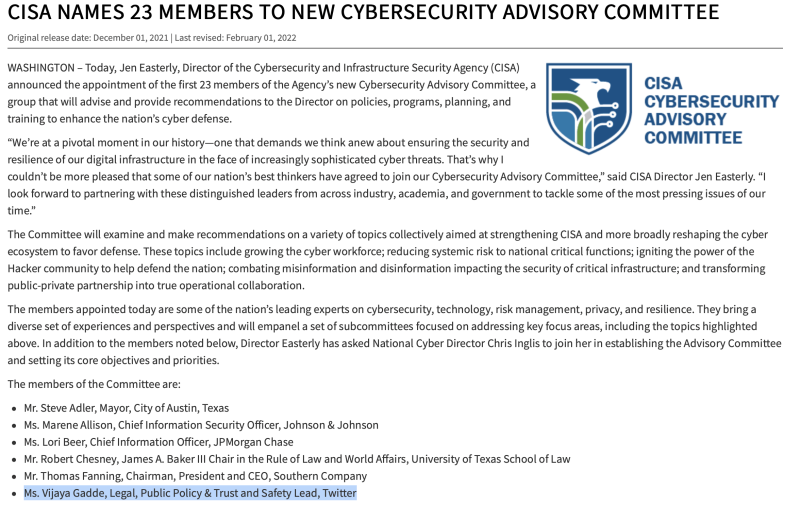
On October 27, 2022, Elon Musk fired Vijaya Gadde from her job at Twitter where she was general counsel and the head of legal, policy, and trust. It became quickly obvious to him and others on his team that it was she who drove the censorship policy within the company, including that which blocked all information about Hunter Biden’s laptop before the 2020 election and otherwise shut down critics of government Covid policy.
Her termination from Twitter did not leave her unemployed and homeless. A year earlier, she had already been tapped as an advisor to CISA, which is the government’s Cybersecurity and Infrastructure Security Agency headed by Jen Easterly, who was chosen to head the new agency (created in 2018) out of her tenure at the National Security Agency. As Freddy Gray puts it in the UK Spectator, “That seems fishy, to put it mildly.”
Easterly was called to give a deposition in the case brought by the Attorneys General of Missouri and Louisiana but the government rejected the idea. Fauci and others could be called but not the head of CISA. According to Epoch Times, the judge “ruled that three of the individuals—Murthy, Easterly, and Flaherty—will no longer be required to appear for a deposition after a federal appeals court blocked the move last month, stating that the judge had failed to consider whether alternative and less ‘intrusive’ means could be used to obtain the information being sought.”
Don’t want to be intrusive, right? That would be inhumane. Can’t make such a demand of the head of CISA.
And yet, it was CISA itself that gave the whole of the initial advisory in 2020 for all the stay-at-home orders that were imposed around the country. The agency is also the one primarily responsible for the division of the whole of the American workforce into sharp lines between essential and nonessential. It was a clear sign that something had gone very wrong, even to the point of feeling like martial law.
I’ve puzzled about where this all came from for almost three years. Thanks to research done by many Brownstone writers, we now know. It was CISA from the very beginning. Indeed the webpage laying it all out still survives, including a video. You can look at it all here.
The initial edict was issued March 19, 2020, three days following the catastrophic press conference that announced the need for universal social distancing and issued what is surely one of the most totalitarian edicts in the history of public policy: “indoor and outdoor venues where groups of people congregate should be closed.”
CISA explained the exception. It includes this helpful graphic of those who were entitled or even required to work while everyone else stays home.
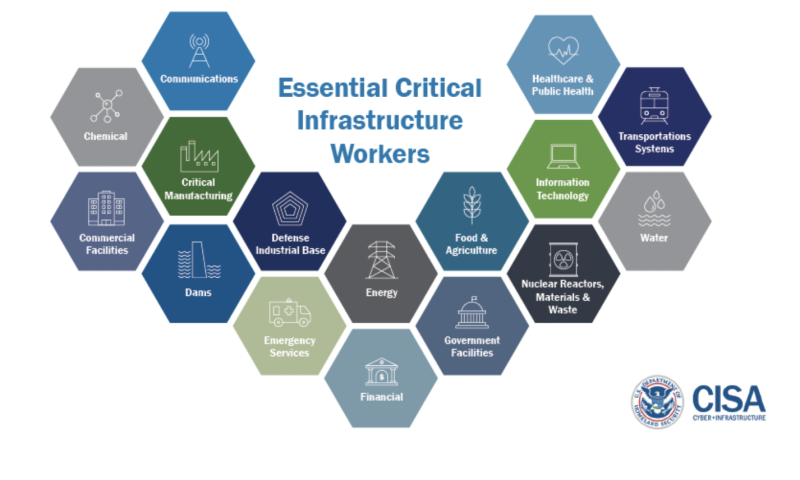
Note the inclusion of communications, which of course, means all media, and of course information technology, which means all Big Tech. As for “commercial facilities” that ended up meaning big-box chain stores while small businesses were brutally shut. Reinforcing the Trump administration’s fatwa against “bars, restaurants, and gyms,” they were closed immediately following the release of CISA’s order.
But of course, and consistent with all this machinery, CISA was careful to note that “This guidance was provided to clarify the potential scope of critical infrastructure to help inform decisions by state and local jurisdictions, but does not compel any prescriptive action.”
Further: “This guidance is not binding and is primarily a decision support construct to assist state and local officials. It should not be confused as official executive action by the United States Government.”
This way, like Fauci, CISA can claim that it didn’t force the shutdown of anything. It only made recommendations and state-level agencies took it from there. And yet here is a FAQ to give you a sense of the military footing that the whole country entered up on in the course of only a few days.
How is this different than traditional disasters or emergencies impacting critical infrastructure?
COVID-19 is different than any emergency the Nation has faced, especially considering the modern, tightly interconnected economy and American way of life. In traditional emergencies, government coordinates with the private sector to get businesses back to business. In this case, as the government works with partners to slow the spread of COVID-19, the economic goal is maintaining resilience of the Nation’s foundation—its critical infrastructure.
In retrospect, the whole thing seems truly hard to believe, all for a respiratory virus with an infection fatality rate that compares with the flu except with a huge risk gradient by age. A military-style cooperation was unleashed on the entire country even as basic therapeutics were completely neglected and concern for collateral damage to health, culture, education, and enterprise were tossed out the window.
The initial lockdowns were followed by quarantine rules, travel restrictions, violations of religious freedom, forced masking and eventually forced medicalization of quickly approved shots that most of the population never needed and vast numbers now regret.
As CISA said, this crisis was “different than any emergency the Nation has faced.” Instead of keeping business going, the response this time was massive destruction of everything except “critical infrastructure.”
Indeed, the whole country fell into complete shambles and trauma for the better part of 2020, leading up to the November elections that gutted Republican control of Congress and flipped the White House. We are now finding out with piles of evidence that this was the ambition of many employees at Twitter, including the general counsel who ended up as a consultant to the very agency that issued the stay-home advisory.
CISA is part of the Department of Homeland Security, created only in 2018 with an act signed by President Trump. As is clear from the text of the law, the whole point was to protect the nation against cyber attacks and develop a response. Nowhere in the text could one discern a broad edict to divide the whole workforce, crush civil liberties, smash businesses, and trample on the Bill of Rights, much less shepherd into being a vast machinery of censorship that would effectively nationalize all major tech platforms on behalf of regime priorities.
On the weekend of March 14-15, 2020, Trump surrounded himself with a handful of advisors including Fauci, Birx, Pence, Kushner, along with a few outside consultants from pharma and tech, and agreed to “15 days to flatten the curve.” It seems highly unlikely he knew that he was approving a complete takeover of the country by the national security arm of the government, much less empowering this one agency with the task of crushing the whole economy except that which government called essential.
We are finding out ever more about what went on behind the scenes, especially thanks to the exceptional research of Debbie Lerman, who has fleshed out the underlying shift that occurred in these days. We went from being a normal nation with all the usual struggles to a country under quasi-martial law, ruled by administrative bureaucrats drawn from the national security arm of government. CISA was an agency that led the charge. Did Trump have any idea what he had approved? I would say it is highly doubtful.
I’ve been unable to find out anything about the agency’s budget or payroll but we do know that it is hiring: “CISA is always searching for diverse, talented, and highly motivated professionals to continue its mission of securing the nation’s critical infrastructure. CISA is more than a great place to work; our workforce tackles the risks and threats that matter most to the nation, our families, and communities. With more than 50 career fields available CISA offers multiple opportunities as well as multiple tracks for employment.”
Jeffrey A. Tucker, Founder and President of the Brownstone Institute, is an economist and author. He has written 10 books, including Liberty or Lockdown, and thousands of articles in the scholarly and popular press.
Alberta passes ‘Sovereignty Act’ despite backlash from leftists, mainstream media
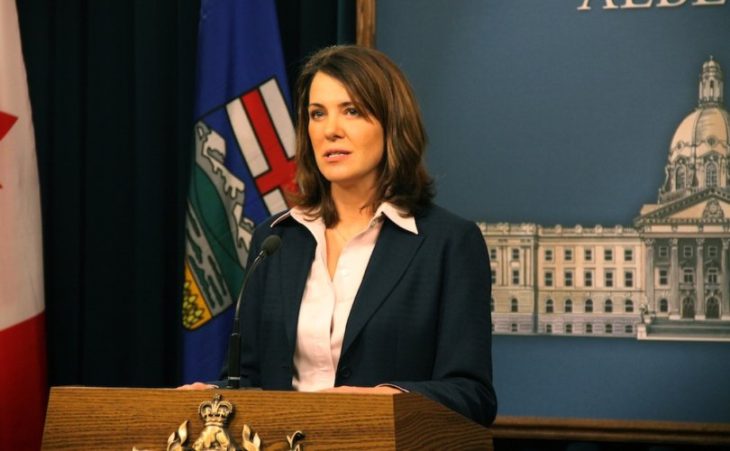
Alberta Premier leadership candidate Danielle Smith – Dave Cournoyer / Wikimedia Commons
Life Site News – December 9, 2022
EDMONTON — Alberta Premier Danielle Smith’s “Sovereignty Act” legislation was passed Thursday in the province’s legislature, despite pushback from left-wing critics including Prime Minister Justin Trudeau.
United Conservative Party (UCP) MLAs under Smith put their full support behind the bill to quicken its passage, which will now become law once it receives Royal Assent.
The act was passed with minor amendments made to it by the UCP, namely to make sure that Alberta’s regular legislative process is followed should a resolution be brought forth under the act.
The now-passed Sovereignty Act intends to prevent “unconstitutional” federal government overreach into matters of provincial jurisdiction, including but not limited to “firearms, energy, natural resources and COVID healthcare decisions.”
Smith had introduced the legislation, formally named Bill 1: Alberta Sovereignty within a United Canada Act, just nine days before its passing.
The bill will most notably help the province push back against federally-imposed rules that impact the region’s oil and gas sector, a major backbone of the western Canadian economy.
At the time of its introduction, the government explained that the act “will be used to push back on federal legislation and policy that is unconstitutional or harmful to our province, our people and our economic prosperity,” with Smith herself explaining that there is a “long and painful history of mistreatment and constitutional overreach from Ottawa has for decades caused tremendous frustration for Albertans.”
The bill was opposed by Alberta’s opposition party, the New Democratic Party (NDP), under former Premier Rachel Notley. The NDP claimed Smith’s Sovereignty Act was dangerous but did not bring forth any amendments to the bill.
Trudeau also took issue with the bill, threatening to take action against the Albertan government, saying all options remain on “the table.”
After the act passed yesterday, Trudeau slightly changed his tune and said his government would now work with Smith, but once again warned of Alberta’s efforts to “push back at the federal government.”
“We are not going to get into arguing about something that obviously is the Alberta government trying to push back at the federal government,” said Trudeau. “We are going to continue to work as constructively as possible.”
While many on the political left provided pushback, former Canadian Supreme Court justice John C. Major put his support behind the Sovereignty Act, rhetorically asking, “what’s so terrible about the province saying, ‘if you want to impose on us, you better be sure you’re doing it constitutionally?’”
Smith’s Sovereignty Act was a trademark of her campaign for leader of the UCP and premier of Alberta, promising throughout her run that if elected, she would table legislation to help make Alberta as independent from Ottawa as possible while staying in the Confederation.
Many have pointed out that Trudeau’s opposition to provincial autonomy, particularly with respect to the overseeing of natural resources in the western provinces, seem to mirror aspects of his own father’s policies.
In 1980, Trudeau’s father, then-Prime Minister Pierre Elliott Trudeau, famously attacked Alberta’s oil and gas sectors by introducing the much-hated national energy program (NEP), which severely hampered Alberta’s and other provinces’ energy industries.
French energy major makes costly exit from Russia
RT | December 10, 2022
French oil and gas giant TotalEnergies has announced on Friday it is giving up its stake in Russian gas producer Novatek and withdrawing its two representatives from the company’s board.
The exit will result in a “record” impairment of about $3.7 billion in the fourth quarter as Total will “no longer equity account for its 19.4% stake in Novatek.”
The French company said in a statement that the two directors have had to abstain from voting in Novatek board meetings, “in particular on financial matters,” due to Western sanctions imposed on Russia.
Unlike BP and Shell, which left Russia shortly after the conflict in Ukraine began in late February, TotalEnergies had held on to its projects in the country and faced international sanctions.
“Under these circumstances, the Board of Directors of TotalEnergies has decided to withdraw the representatives of the Company from the board of PAO Novatek with immediate effect,” the company announced.
The French energy major also said it cannot sell its stake in the Russian firm as “it is forbidden for TotalEnergies to sell any asset to one of Novatek’s main shareholders who is under sanctions.”
Apart from the stake in Novatek, the French company has minority holdings in Russian liquefied natural gas (LNG) projects Yamal LNG and Arctic LNG. According to Reuters estimates, exiting Russian projects will bring total impairments of TotalEnergies this year to $14.4 billion.
In addition, Total will no longer book reserves for its interest in Novatek, with an impact on the company’s reported proved reserves at the end of 2021 of 1.7 billion barrels of oil.
Deepening Turkiye tanker logjam snarls Russia oil sanctions
MEMO | December 9, 2022
Turkiye emerged as a critical stumbling block to a complex international plan to deprive Russia of wartime oil revenues as the number of tankers waiting to exit the Black Sea through Turkish Straits continued to rise on Friday, Reuters reports.
Ankara has declined to scrap a new insurance inspection rule it implemented at the beginning of the month, despite days of pressure from Western officials frustrated by the policy.
A total of 28 oil tankers are in a queue seeking to leave the Bosphorus and Dardanelles Straits, the Tribeca Shipping Agency said on Friday.
G7 wealthy countries, the European Union and Australia agreed to bar providers of shipping services, such as insurers, from helping export Russian oil unless it is sold at an enforced low price, or cap, aimed at depriving Moscow of wartime revenue.
Turkiye’s maritime authority said it would continue to keep out of its waters oil tankers that lacked appropriate insurance letters.
Western insurers said they cannot provide the documents required by Turkiye as it may expose them to sanctions if it emerged that the oil cargoes they cover were sold at prices that exceed the cap.
The Turkish authority said that, in the event of an accident involving a vessel in breach of sanctions, it was possible the damage would not be covered by an international oil-spill fund.
“(It) is out of the question for us to take the risk that the insurance company will not meet its indemnification responsibility,” it said, adding that Turkiye was continuing talks with other countries and insurance companies.
It added the vast majority of vessels waiting near the Straits were EU vessels, with a large part of the oil destined for EU ports – a factor frustrating Ankara’s Western allies.
The ship backlog is creating growing unease in oil and tanker markets. Millions of barrels of oil per day move south from Russian ports through Turkiye’s Bosphorus and Dardanelles Straits into the Mediterranean.
Kazakh oil
Most of the tankers waiting at the Bosphorus are carrying Kazakh oil and Treasury Secretary, Janet Yellen, said on Thursday the US administration saw no reason that such shipments should be subjected to Turkiye’s new procedures.
Washington had no reason to believe Russia was involved in Turkiye’s decision to block ship transits, she added.
The European Commission said on Friday the delays were unrelated to the price cap and Turkiye could continue to verify insurance policies in “exactly the same way as before”.
“We are therefore in contact with the Turkish authorities to seek clarifications and are working to unblock the situation,” a spokesperson told Reuters.
Turkiye has balanced its good relations with both Russia and Ukraine since Moscow invaded its neighbour in February. It played a key role in a United Nations-backed deal reached in July to free up grain exports from Ukrainian Black Sea ports.
Relations between NATO allies, Ankara and Washington, have at times been rocky, as Turkiye last month renewed calls for the United States to stop backing Syrian Kurdish forces.
The Biden administration levied sanctions on Thursday on a prominent Turkish businessman, Sitki Ayan, and his network of firms, accusing him of acting as a facilitator for oil sales and money laundering on behalf of Iran’s Revolutionary Guard Corps.
US betrays EU allies’ interests skillfully using Ukrainian conflict to its advantage
By Uriel Araujo | December 9, 2022
This week London announced it has ordered thousands of new anti-tank weapons to restock, after sending thousands of its units to Ukraine. Meanwhile, it has been reported that Washington is weighing Kiev’s requests to provide the country with cluster munition warheads. Both the UK and NATO have been almost running out of weapons for Ukraine. Recently, US President Joe Biden has been struggling to maintain his international coalition to support Kiev, but hardly succeeded due to domestic problems (both in the EU and in the United States). The conflict in Ukraine aggravates Europe’s energy crisis and this is one of the very reasons Washington has fueled this conflict.
University of Chicago political science professor John Mearsheimer has written extensively on how NATO’s enlargement policies over the years plus its strategy to move Ukraine out of Russia’s orbit by integrating it into the political West are the very root of the conflict which started in 2014 – and 8 years on, this is still the case.
For almost 8 years, the Donbass conflict was Europe’s forgotten war, even though in April 2021 Kiev escalated the violence there once more, with Washington’s full support. Since 2014, NATO has been aggressively provoking and encircling Russia (even in the Arctic), and its member states have been sending massive arms shipments to Ukraine.
Meanwhile, the Washington-led West, including media conglomerates, has white-washed Ukraine’s far-right problem and the blatantly neo-Nazi nature of its Azov Regiment, as well Kiev’s mass killings, its human rights infringements, genocidal policies, and chauvinistic nationalism aimed against ethnic Russians.
For example, on February 18, before the beginning of the current Russo-Ukrainian military conflict (February 24), Kiev started a nasty bombing campaign on Donbass, targetting civilian infrastructure and even a kindergarden in Lugansk. Ironically, the week before that, Moscow had withdrawn its troops from the area near the border, which should have de-escalated tensions – much to no avail.
Up to February 18, in a series of provocations, Ukraine’s military personnel often broke the cease-fire in Donbass and shelled the region so as to instigate the local militias into responding, thus providing a pretext for further Ukrainian aggression while NATO kept sending weapons and mercenaries to Kiev and further fueling tensions. All of that, one can argue, had been escalating to the point of potentially becoming casus belli for Russia. And here we are today. Whether one is critical of Moscow’s decision to launch its military campaign or not, all the above is part of the larger context that one should always keep in mind.
Why then has the US played such a destabilizing role and has supported all that? I’ve written on how the geopolitics of Washington’s strategies is intertwined with geoeconomics and energy interests. The United State’s persistent campaign against Nord Stream and against any Russian-European gas cooperation is part of that. Geoenergetic interests are one of the main issues and driving forces of the 21st century and Washington has been waging a largely unilateral economic war through sanctions and legislative measures.
Its goal has always been to have Europeans buying American LNG, which is more expensive, in fact, even though Russia is quite literally at the “doorstep” of the continent. The truth is that Europe’s energy crisis from the very beginning has served American interests well. In addition, the US-led “Green Agenda” which hampers African energy security quite ironically also hurts European’s own.
One could very well argue then that Washington’s economic war is being waged not only against Moscow, but in fact also against its own European allies. If this sounds far-fetched, one should consider the fact that Biden’s recent aggressive $369 billion subsidies package (which hurts Europe) has been described by French President Emmanuel Macron as an issue that could “divide the West”. EU diplomats have been quoted as saying that the American initiative “changes everything” to the point of making some of them ask “is Washington DC still our ally or not?”. EU industry chief Thierry Breton even stated Biden’s package poses an “existential challenge” to the European economy and industry.
The UK economy is also collapsing over the energy issue, while recession and even depression haunt Europe. Philip Pilkington, an Irish economist famous for his contributions on the empirical estimate of general equilibrium and other fields, has been writing on how post-Nord Stream Europe faces possible deindustrialization. If the high energy costs, related to the ongoing conflict in Ukraine, make European industry uncompetitive, Washington’s subsidy package is a nail in the coffin. In this scenario, Europe’s industry might be “wiped out by American rivals”, as Politico journalists Jakob Hanke and Barbara Moens put it. As the US stands ready to absorb European industrial potential, EU countries will face increasing unemployment, inflation and a decrease in living standards. That scenario of course promises social unrest.
In April, defeated French presidential candidate Marine Le Pen promised to pull France out of NATO. As temperatures decrease with the coming winter amid rising energy prices, one should expect European populism and the far-right to gain more and more political influence, as they have been successfully capitalizing on growing popular discontent with NATO and with the EU bloc itself. It is quite unfortunate that, in Europe, opposition to NATO and to suicidal policies has been largely marginalized to the point of almost becoming a monopoly of so-called extremist discourse.
It remains to be seen how European political elites will respond to the new developments, as the reality of an American economic war against their continent becomes increasingly impossible to deny.
EU had better become more independent from US to overcome crisis

By Lucas Leiroz | December 8, 2022
As the security crisis and energy instability worsen in Europe, mainly in Germany, the unfeasibility of continuing the current European model of automatic alignment with American foreign policy becomes increasingly evident. American rivalry with Russia, passively embraced by European states, seriously violates EU’s interests and places the entire bloc under a serious threat.
Germany is the most economically important country for the EU and at the same time the most dependent on Russia. Without any energy sovereignty and dependent on the partnership with Moscow to supply its internal market, Berlin sought for decades to maintain pragmatic relations with Russia, capable of overcoming any political or ideological rivalries, aiming exclusively at the well-being of the German people and the local economy. But this stance has been completely abandoned.
During the early days of the Russian special military operation in Ukraine, Germany was the first country to try to somehow resist American pressure for sanctions, at least as far as energy is concerned. But the Scholz government was absolutely unable to resist pressure from Washington and quickly “surrendered”, favoring the American anti-Russian strategy and harming German interests.
Obviously, without the energy to power its industry, the negative effects have already started to be seen in Germany, but the situation will only get worse as winter gets more severe in Europe. With high energy prices and no prospect of improvement in the short term, as well as under a strong crisis of legitimacy with constant mass protests, the country is truly immersed in a severe crisis which consequences spread beyond national borders, since, with the largest European economy weakened, the whole EU is affected.
However, energy and economy are just some of the problems facing Berlin. The German adherence to American sanctions was not the only anti-strategic attitude taken by the government, which also strived to become one of the biggest arms suppliers for the neo-Nazi regime in Kiev, to the point of causing irreversible damage to domestic military reserves.
Before the Russian operation in Ukraine, military experts already frequently reported the obsolescence of the German military apparatus and its inability to defend the country, whose only hope in a possible conflict situation would be to rely exclusively on the “goodwill” of its NATO partners. Now, with Berlin sending its few weapons to Kiev and with an industry weakened by the energy crisis, unable to continue replenishing stocks, the situation is even more hopeless, placing Germany at a very serious level of subservience to the US.
In fact, on December 8, 2022, Olaf Scholz marks one year in the German government, and, as we can see, his administration so far has been a real disaster for the strategic interests of the German state and the entire EU. To sum it up, it is possible to say that his rise to power marked the decline of any German participation in the proposal of a “sovereign” Europe. Earlier, Angela Merkel was an active advocate of increasing the EU’s political autonomy, despite her close ties with the US. Merkel even became Emmanuel Macron’s main partner when the French president announced in his Sorbonne speech the project of achieving a “European sovereignty”.
As a politically stable and considered for years the “de facto” leader of the EU, Merkel tried to make Germany the economic pillar of a more independent Europe in relation to the US. Macron has emerged as an important ally, considering France’s military power – having even proposed the creation of a European army outside NATO. Thus, both countries together would have the conditions to lead a new shift in the bloc, making it a more “distant” ally of the US, defending its own interests without automatic alignment. But the fragility of the Scholz government prevented any process in this direction.
Scholz’s weakness and unpopularity caused his government to passively accept foreign impositions and escalate participation in the Ukrainian conflict, harming its own economy and people. More than that, Scholz passively accepted the humiliation imposed by the West in the attacks on the Nord Stream pipelines. Several intelligence reports point to the involvement of the US, UK and Poland in the sabotage, and even so Germany remains inert and submissive.
These events hindered any idea about “European sovereignty”. Macron’s project for the continent has lost force and today France acts more independently. Germany was unable to play a leading role in managing a new future for the European bloc and has consolidated itself over the last twelve months as an American satellite state, also reflecting its subservience to other European states, economically weaker, which did not have any posture other than increasing the irrational automatic alignment with the US.
As a result, Europe loses the opportunity to become an independent bloc amidst the rise of a multipolar world. At some point in the near future, European leaders will try to reverse the mistakes that are being committed now, but they will find it much more difficult. Weakened, the US-led NATO will become more reactive and aggressive in the future, seeking to retain all zones of influence it still has. And, as Washington has already made clear with the Nord Stream attacks, sabotage and aggression are possible options for forcing Europe to maintain its submissive posture.
Lucas Leiroz is a researcher in Social Sciences at the Rural Federal University of Rio de Janeiro; geopolitical consultant.
About 10 Oil Tankers From Kazakhstan Stuck in Turkish Straits
Samizdat – 08.12.2022
Up to 10 tankers carrying oil from Kazakhstan remain stranded in the Turkish straits of the Bosphorus and Dardanelles, the head of the KazMunayGas Kazakh oil and gas company, Magzum Mirzagaliev, said on Thursday.
“As of yesterday, there were 21 tankers there, including six tankers with oil from TCO [Kazakh oil producer]. In general, we estimate that about eight tankers related to Kazakhstan — from eight to 10 — are among those stranded,” Mirzagaliev told reporters.
Mirzagaliev cited the Kazakh Energy Ministry as saying on Wednesday that the delay in the passage of ships through the Turkish straits had already lasted six days at that point. He also recalled the 14-day bottleneck in the same waters last December.
On December 1, Turkey started requiring from oil shippers crossing the Bosphorus Strait and the Dardanelles a letter from an insurer confirming that the vessel is covered by the necessary Protection and Indemnity Insurance (P&I).
On Monday, as the European Union’s sanctions on Russian oil exports by sea went into effect, media reported that about 19 oil tankers were prevented from passing through the Turkish straits.
Featured Video

ARE PATIENTS BEING PROPERLY INFORMED ABOUT OZEMPIC?
or go to
Aletho News Archives – Video-Images
From the Archives
Trans ‘milk’ as good as the real thing – NHS
RT | February 18, 2024
The drug-induced nipple secretions of trans women are as good as mothers’ breast milk for babies, the University of Sussex Hospitals NHS Trust claimed in a letter to campaigners made public in a report by British think tank the Policy Exchange on Sunday.
The healthcare trust’s medical director, Rachel James, argued that the off-label prescription drug cocktail men transitioning to female take in order to produce milk was “similar to the natural hormones which encourage lactation to develop when the baby is newly born.”
“The evidence which is available demonstrates that the milk is comparable to that produced following the birth of a baby,” James wrote in the letter, sent to Children of Transitioners last August.
Biological men who wish to lactate must first take hormones to grow milk glands and then take high doses of either domperidone or metoclopramide to stimulate milk production. Neither drug is approved for this use, though they are occasionally prescribed off-label to biological women who have trouble lactating.
However, domperidone’s own manufacturer, Janssen, warns patients the drug “may cause unwanted side effects affecting the heart in a breastfed baby” and “should be used during breastfeeding only if your physician considers this clearly necessary.” … continue
Blog Roll
 Aletho News
- 2025 Nature Paper Claiming Worsening Global Drought Gets RETRACTED …Heavily Flawed
- Your Milk Is Not the Problem
- The Truth About the Trump Shootings with Ken Silva
- ARE PATIENTS BEING PROPERLY INFORMED ABOUT OZEMPIC?
- US lawmaker blocks $2.8 billion weapons sale to Israel: Report
- Yemeni army claims responsibility for strikes on sensitive sites in Saudi capital, Aramco facilities in Yanbu
- Iran Judiciary issues indictments against 159 US, Israeli officials for assassination of Leader, commanders
- Turkiye revokes Iranian bank license under US sanctions campaign
- US-Denmark Agreement on Greenland Is ‘PR Stunt’ Ahead of Midterms
- Araghchi: Military intervention cannot create security; coercion cannot bring peace
- If Americans Knew
- Israeli attacks kill four Palestinians in Gaza – Daily Update
- Inside Gaza’s death trap of collapsing, bombed-out buildings
- The everyday items Israel bans from Gaza every day
- Inside the siege, the ruined buildings of Gaza – Daily Update
- Debunking The Claim That Macklemore Has A “History Of Antisemitism”
- CPJ demands release of arrested Palestinian-US journalist near Bethlehem
- Robert Kraft: The Billionaire Friend of Netanyahu Pulling The Strings Behind the Macklemore/Ed Sheeran Blow Up
- Columbia Administered Fund Gives Big Money to Pro-Israel Groups
- Deportation Case of Palestinian Activist Salah Sarsour Tests First Amendment
- ‘We Will Not Forget’: Palestinians Mark 44 Years since Sabra and Shatila
- No Tricks Zone
- 2025 Nature Paper Claiming Worsening Global Drought Gets RETRACTED …Heavily Flawed
- New Study: ‘Global Drought Shows No Detectable Recent Acceleration Under Climate Warming’
- Economic Masterminds: German Socialists Suggest Taxing Productivity Gains Stemming From Using AI
- The South China Sea Has Not Been Cooperating With The Climate Change Narrative
- Energy Crisis: Germany Enters Heating Season With Historically Low Gas Reserve Fill Levels
- New Study: The Antarctic Ice Sheet Gained Mass From 2020-2024 Due To Staggering Snow And Ice Accumulation
- Study: Ocean Heating Rates From Thousands Of Years Ago ‘Dwarf’ Modern Ocean Heating Rates
- Climate Extremists Target, Attack Large-Scale Power Grid Infrastructure In Germany!
- New Study: Antarctic Ice Melt Has Contributed Less Than 1 Centimeter To Sea Level Rise In The Last 30 Years
- Fear Of Debate: Alarmist German Climate Scientist Calls On Mainstream Media To Discredit Skeptic Voices
 Aletho News