Beware the Pentagon’s Pandemic Profiteers
Hasn’t the Military-Industrial Complex Taken Enough of Our Money?
By Mandy Smithberger | TomDispatch | May 3, 2020
At this moment of unprecedented crisis, you might think that those not overcome by the economic and mortal consequences of the coronavirus would be asking, “What can we do to help?” A few companies have indeed pivoted to making masks and ventilators for an overwhelmed medical establishment. Unfortunately, when it comes to the top officials of the Pentagon and the CEOs running a large part of the arms industry, examples abound of them asking what they can do to help themselves.
It’s important to grasp just how staggeringly well the defense industry has done in these last nearly 19 years since 9/11. Its companies (filled with ex-military and defense officials) have received trillions of dollars in government contracts, which they’ve largely used to feather their own nests. Data compiled by the New York Times showed that the chief executive officers of the top five military-industrial contractors received nearly $90 million in compensation in 2017. An investigation that same year by the Providence Journal discovered that, from 2005 to the first half of 2017, the top five defense contractors spent more than $114 billion repurchasing their own company stocks and so boosting their value at the expense of new investment.
To put this in perspective in the midst of a pandemic, the co-directors of the Costs of War Project at Brown University recently pointed out that allocations for the Food and Drug Administration, the Centers for Disease Control and Prevention, and the National Institutes of Health for 2020 amounted to less than 1% of what the U.S. government has spent on the wars in Iraq and Afghanistan alone since 9/11. While just about every imaginable government agency and industry has been impacted by the still-spreading coronavirus, the role of the defense industry and the military in responding to it has, in truth, been limited indeed. The highly publicized use of military hospital ships in New York City and Los Angeles, for example, not only had relatively little impact on the crises in those cities but came to serve as a symbol of just how dysfunctional the military response has truly been.
Bailing Out the Military-Industrial Complex in the Covid-19 Moment
Demands to use the Defense Production Act to direct firms to produce equipment needed to combat Covid-19 have sputtered, provoking strong resistance from industries worried first and foremost about their own profits. Even conservative Washington Post columnist Max Boot, a longtime supporter of increased Pentagon spending, has recently recanted, noting how just such budget priorities have weakened the ability of the United States to keep Americans safe from the virus. “It never made any sense, as Trump’s 2021 budget had initially proposed, to increase spending on nuclear weapons by $7 billion while cutting Centers for Disease Control and Prevention funding by $1.2 billion,” he wrote. “Or to create an unnecessary Space Force out of the U.S. Air Force while eliminating the vitally important directorate of global health by folding it into another office within the National Security Council.”
In fact, continuing to prioritize the U.S. military will only further weaken the country’s public health system. As a start, simply to call up doctors and nurses in the military reserves, as even Secretary of Defense Mark Esper has pointed out, would hurt the broader civilian response to the pandemic. After all, in their civilian lives many of them now work at domestic hospitals and medical centers deluged by Covid-19 patients.
The present situation, however, hasn’t stopped military-industrial complex requests for bailouts. The National Defense Industrial Association, a trade group for the arms industry, typically asked the Pentagon to speed up contracts and awards for $160 billion in unobligated Department of Defense funds to its companies, which will involve pushing money out the door without even the most modest level of due diligence.
Already under fire in the pre-pandemic moment for grotesque safety problems with its commercial jets, Boeing, the Pentagon’s second biggest contractor, received $26.3 billion last year. Now, that company has asked for $60 billion in government support. And you undoubtedly won’t be surprised to learn that Congress has already provided Boeing with some of that desired money in its recent bailout legislation. According to the Washington Post, $17 billion was carved out in that deal for companies “critical to maintaining national security” (with Boeing in particular in mind). When, however, it became clear that those funds wouldn’t arrive as a complete blank check, the company started to have second thoughts. Now, some members of Congress are practically begging it to take the money.
And Boeing was far from alone. Even as the spreading coronavirus was spurring congressional conversations about what would become a $2 trillion relief package, 130 members of the House were already pleading for funds to purchase an additional 98 Lockheed Martin F-35 jet fighters, the most expensive weapons system in history, at the cost of another half-billion dollars, or the price of more than 90,000 ventilators.
Similarly, it should have been absurdly obvious that this wasn’t the moment to boost already astronomical spending on nuclear weapons. Yet this year’s defense budget request for such weaponry was 20% higher than last year’s and 50% above funding levels when President Trump took office. The agency that builds nuclear weapons already had $8 billion left unspent from past years and the head of the National Nuclear Security Agency, responsible for the development of nuclear warheads, admitted to Representative Susan Davis (D-CA) that the agency was unlikely even to be able to spend all of the new increase.
Boosters of such weapons, however, remain undeterred by the Covid-19 pandemic. If anything, the crisis only seems to have provided a further excuse to accelerate the awarding of an estimated $85 billion to Northrop Grumman to build a new generation of intercontinental ballistic missiles (ICBMs), considered the “broken leg” of America’s nuclear triad. As William Hartung, the director of the Arms and Security Project at the Center for International Policy, has pointed out, such ICBMs “are redundant because invulnerable submarine-launched ballistic missiles are sufficient for deterring other countries from attacking the United States. They are dangerous because they operate on hair-trigger alert, with launch decisions needing to be made in some cases within minutes. This increases the risk of an accidental nuclear war.”
And as children’s book author Dr. Seuss might have added, “But that is not all! Oh, no, that is not all.” In fact, defense giant Raytheon is also getting its piece of the pie in the Covid-19 moment for a $20-$30 billion Long Range Standoff Weapon, a similarly redundant nuclear-armed missile. It tells you everything you need to know about funding priorities now that the company is, in fact, getting that money two years ahead of schedule.
In the midst of the spreading pandemic, the U.S. military’s Indo-Pacific Command similarly saw an opportunity to use fear-mongering about China, a country officially in its area of responsibility, to gain additional funding. And so it is seeking $20 billion that previously hadn’t gained approval even from the secretary of defense in the administration’s fiscal year 2021 budget proposal. That money would go to dubious missile defense systems and a similarly dubious “Pacific Deterrence Initiative.”
How Not to Deal With Covid-19
Along with those military-industrial bailouts came the fleecing of American taxpayers. While many Americans were anxiously awaiting their $1,200 payments from that congressional aid and relief package, the Department of Defense was expediting contract payments to the arms industry. Shay Assad, a former senior Pentagon official, accurately called it a “taxpayer rip-off” that industries with so many resources, not to speak of the ability to borrow money at incredibly low interest rates, were being so richly and quickly rewarded in tough times. Giving defense giants such funding at this moment was like giving a housing contractor 90% of upfront costs for renovations when it was unclear whether you could even afford your next mortgage payment.
Right now, the defense industry is having similar success in persuading the Pentagon that basic accountability should be tossed out the window. Even in normal times, it’s a reasonably rare event for the federal government to withhold money from a giant weapons maker unless its performance is truly egregious. Boeing, however, continues to fit that bill perfectly with its endless program to build the KC-46 Pegasus tanker, basically a “flying gas station” meant to refuel other planes in mid-air.
As national security analyst Mark Thompson, my colleague at the Project on Government Oversight (POGO), has pointed out, even after years of development, that tanker has little hope of performing its mission in the near future. The seven cameras that its pilot relies on to guide the KC-46’s fuel to other planes have so much glare and so many shadows that the possibility of disastrously scraping the stealth coating off F-22s and F-35s (both manufactured by Lockheed Martin) while refueling remains a constant danger. The Air Force has also become increasingly concerned that the tanker itself leaks fuel. In the pre-pandemic moment, such problems and associated ones led that service to decide to withhold $882 million from Boeing. Now, however, in response to the Covid-19 crisis, those funds are, believe it or not, being released.
Keep all of this behavior (and more) in mind when you hear people suggest that, in this public health emergency, the military should be put in charge. After all, you’re talking about the very institution that has regularly mismanaged massive weapons programs like the $1.4 trillion F-35 jet fighter program, already the most expensive weapons system ever (with ongoing problems galore). Even when it comes to health care, the military has proved remarkably inept. For instance, attempts of the Department of Veterans Affairs and the Department of Defense to integrate their health records were, infamously enough, abandoned after four years and $1 billion spent.
Having someone in uniform at the podium is, unfortunately, no guarantee of success. Indeed, a number of veterans have been quick to rebuke the idea of forefronting the military at this time. “Don’t put the military in charge of anything that doesn’t involve blowing stuff up, preventing stuff from being blown up, or showing up at a place as a message to others that we’ll be there to blow stuff up with you if need be,” one wrote.
“Here’s a video from Camp Pendleton of unmasked Marines queued up for haircuts during the pandemic,” tweeted another. “So how about ‘no’?” That video of troops without masks or practicing social distancing even shocked Secretary of Defense Esper, who called for a military haircut halt, only to be contradicted by the chairman of the Joint Chiefs of Staff, desperate to maintain regulation cuts in the pandemic moment. That inspired a mocking rebuke of “haircut heroes” on Twitter.
Unfortunately, as Covid-19 spread on the aircraft carrier the USS Theodore Roosevelt, that ship became emblematic of how ill-prepared the current Pentagon leadership proved to be in combatting the virus. Despite at least 100 cases being reported on board — 955 crewmembers would, in the end, test positive for the disease and Chief Petty Officer Charles Robert Thacker Jr. would die of it — senior Navy leaders were slow to respond. Instead, they kept those sailors at close quarters and in an untenable situation of increasing risk. When an emailed letter expressing the concerns of the ship’s commander, Captain Brett Crozier, was leaked to the press he was quickly removed from command. But while his bosses may not have appreciated his efforts for his crew, his sailors did. He left the ship to a hero’s farewell.
All of this is not to say that some parts of the U.S. military haven’t tried to step up as Covid-19 spreads. The Pentagon has, for instance, awarded contracts to build “alternate care” facilities to help relieve pressure on hospitals. The Uniformed Services University of the Health Sciences is allowing its doctors and nurses to join the military early. Several months into this crisis, the Pentagon has finally used the Defense Production Act to launch a process to produce $133 million worth of crucial N95 respirator masks and $415 million worth of N95 critical-care decontamination units. But these are modest acts in the midst of a pandemic and at a moment when bailouts, fraud, and delays suggest that the military-industrial complex hasn’t proved capable of delivering effectively, even for its own troops.
Meanwhile, the Beltway bandits that make up that complex have spotted a remarkable opportunity to secure many of their hopes and dreams. Their success in putting their desires and their profits ahead of the true national security of Americans was already clear enough in the staggering pre-pandemic $1.2 trillion national security budget. (Meanwhile, of course, key federal medical structures were underfunded or disbanded in the Trump administration years, undermining the actual security of the country.) That kind of disproportionate spending helps explain why the richest nation on the planet has proven so incapable of providing even the necessary personal protective equipment for frontline healthcare workers, no less the testing needed to make this country safer.
The defense industry has asked for, and received, a lot in this time of soaring cases of disease and death. While there is undoubtedly a role for the giant weapons makers and for the Pentagon to play in this crisis, they have shown themselves to be anything but effective lead institutions in the response to this moment. It’s time for the military-industrial complex to truly pay back an American public that has been beyond generous to it.
Isn’t it finally time as well to reduce the “defense” budget and put more of our resources into the real national security crisis at hand?
Mandy Smithberger, a TomDispatch regular, is the director of the Center for Defense Information at the Project On Government Oversight (POGO).
Copyright 2020 Mandy Smithberger
Iran breaks through US-led blockade to deliver record amount of oil to Syria
Al-Masdar News | April 28, 2020
Iran has managed to break through the U.S. blockade to deliver a large amount of oil to the Syrian Arab Republic, TankerTrackers website has revealed.
According to the website Tanker Trackers, Iran has significantly increased their oil exports to Syria, with several cargoes reportedly reaching the Port of Baniyas in the Tartous Governorate.
The website reported that Iran is currently delivering more than three times the normal amount they export to Syria, which is a significant increase to the Arab Republic, who relied heavily on the Islamic Republic’s oil last year.
“There can be several reasons why this is happening. Excess oil stocks in the midst of sanctions and a global oil glut is forcing Iran to ship and perhaps store the oil in a friendly country. Another reason is that Bashar Assad’s government and Hezbollah can be conduits to sell the oil on the black market. One place Hezbollah can manage to do this is Lebanon, where it has sway over the government,” the website Radio Farda reported.
However, despite these claims, the large oil exports to Syria have less to do with selling the petrol and more to do with the Arab Republic providing relief to its people.
Since the U.S. currently occupies some of Syria’s largest oil fields, the Arab Republic has been forced to find alternatives to meet the civil demand for this resource.
Globalization in the Widening Gyre of COVID-19

Excerpts from the COVID-19 Series by Maximilian Forte, April 27, 2020
Borders and Distancing
Typically over the past 20-30 years, anyone who openly worried about the prospect of international passenger jets carrying contagion, would likely have been called a reactionary Luddite, a xenophobic demagogue, or even a racist for implicitly linking “the foreign” with “danger”. This crisis must be exceedingly embarrassing and inconvenient for the orthodox scribes who attend to the upkeep of the once dominant narrative. We are waiting to be reminded of how globalization has made the world more stable, and made our lives better. Behold how peaceful and prosperous is a world shut down and quarantined by capitalist globalization. Let’s hear three more cheers for capitalism, how it has made everyone safer, and remember: “capitalism works”. The coronavirus also works, and without any of the armies which capitalism used to annihilate alternatives.
“The virus respects no borders”—this is what we heard from both the World Health Organization early on, and governments such as those of Canada, France, etc., that is until they did a radical about face. If borders really did not matter, then why self-isolate? Why the quarantines? Those are border-making processes. The neoliberal option was to transfer the principle of borders from the society-level, down to the individual level, in conformity with the neoliberal dictum that there is no society. Self-responsibilization was thus emphasized, as it too is a cornerstone of the neoliberal ethic. Thus we saw an ideologically-driven commitment to keeping borders open, even while imposing borders between individuals and sites within the society. The virus did not move magically across borders because it had some sort of contempt for borders, as if COVID-19 had been a regular participant at Davos gatherings. The virus had only to move inside people who were allowed to pass through borders. Saying that shutting down travel and restricting entry would be “ineffective” manifested the determined paralysis and deliberate inaction that purposefully sought to undermine basic principles of national sovereignty—at least for as long as it seemed politically feasible (not long at all). If restricting movement was truly ineffective, then so would quarantines and self-isolation.
Neoliberals such as Justin Trudeau did not shut down borders until the virus had been allowed ample entry into Canada, through multiple ports. Only when the virus began to rapidly escalate, and when other countries began restricting travel, did Canada follow suit. In any case, it didn’t matter: keeping borders open to countries that restricted travel made little sense. However, what was detectable for a couple of weeks was the neoliberal preference for open borders, and a society broken down into confined pockets. The primary goal was not in preventing people from getting sick, but preventing them from getting sick all at the same time. Political leaders are the technocratic managers of the transnational capitalist class, so their decisions in a time of crisis are instructive. Trudeau instructed Canadians that the length of the shutdown would “depend on the choices that Canadians make,” thus making individuals responsible for the policies imposed on them. He said so explicitly when he spoke of how Canadians needed to make “responsible choices”. This is the neoliberal idealization of agency. Canadians would need to automate their ability to act as a rational choice calculators, to deploy as informed and vigilant consumers, and to show deference to authority.
Yet in another respect, neoliberal management failed itself, because there is no winning in a crisis such as this one. The failure to enforce borders directly resulted in a shutdown of economic activity—a cardinal sin for any good neoliberal. “Creative destruction” is one thing, but this is starting to look like just destructive destruction. Stocks plunged to the most dramatic degree since the Great Depression, with unemployment skyrocketing to an extent also not seen in many decades. This was neoliberal mismanagement: a combination of dogma and indecision, of being actively deployed in a state of paralysis. There was no better example of this active paralysis than a quarantined prime minister and his infected wife, remaining in seclusion in his residence even after his wife’s recovery, pretending to operate the country via remote control.
One of the additional features of active paralysis has been absentee governance, or something approximating an absence of government at the federal level in Canada in terms of the reluctance to have elected parliamentarians sitting in the legislative assembly in Ottawa to do their jobs. Meanwhile, minimum-wage cashiers in supermarkets are required to risk their lives to serve the public. It is not just fear that would have a ruling party or head of government virtually or actually suspend parliament: it was out of a desire to avoid having to answer for their actions and decisions. Israel has now become a fully fledged dictatorship. Trump wanted to “adjourn” Congress—i.e., suspend parliament—while declaring that his power is total. (Next, he will cancel elections.) In Canada, Trudeau rules from isolation and digs his heels into the ground when it comes to having parliament sit.
What has become painfully evident to all of us is at least two things. One is that globalization, and the globalism that upholds it, have literally sickened people. All have been put in danger, many have already died, and more will die. Such a system cannot be allowed to continue, as a practical matter of survival. Concerns for “cost” and “efficiency” will necessarily have to be tossed aside. Goods may cost more, but it would also mean more local employment, and hopefully at higher rates of return. Emphasizing cheap costs means emphasizing low wages, which in turns means poverty creation and thus the production of a class of people who become especially vulnerable to viruses and to spreading them.
The second facet involves greater reflection on the wasteful, needless nature of the incessant travel that has occurred worldwide in ever increasing volumes over the past years and decades. People were jetting and cruising around as if it had been an ordinary, routine necessity of living—and now the reality that has exploded in everyone’s faces is just how harmful were such consumption patterns. In academia hopefully this will spell an end to the extreme travel culture that has taken hold, with many tens of thousands of academics jetting to-and-fro every week of the year to attend any of the countless conferences in dozens of disciplines, or to appear as guest speakers. Huge amounts of publicly funded research grants have been extinguished as exhaust in the atmosphere, by travellers who directly exposed themselves and their societies to needless exposure to actual or prospective viral outbreaks.
It is important that we become accustomed to Zoom video conferencing, or whatever alternative platform emerges. Personally, I would also recommend that universities move towards a greater mix in the delivery of courses, allowing some to be delivered online, or allowing some faculty (those who wish) to do all of their teaching online. Perhaps the latter move could reduce costs to students: a reduced tuition should follow from lessened demand on space and the various overhead expenses needed to maintain physical spaces. For cash-strapped universities, greater online teaching could free up enough physical space that whole buildings could be sold, or refitted and rented, immediately generating new revenue either way. Every university student and professor in North America today has had direct and recent experience with online teaching—so at least the very concept is no longer unthinkable. Online teaching has just entered the tried and tested column.
Distance Annihilates Globalization
Those in power have done something interesting by introducing the distancing ethic. Distancing is the exact opposite of the ethic of globalization. In Canada some in the media quibble over whether the better term is “physical distancing” instead of “social distancing,” when they amount to the same thing. Liberal Canadian media like to downplay the social impacts, reducing everything to individual human interest stories—they pretend that mediated “togetherness” is what counts most, and in-person distance is merely “physical”. The point is, however, that globalization promised an end to all distancing, particularly physical distancing. How “physical distancing” can become useful to the authorities is by reinforcing some other lessons: that your health is your responsibility; public health is a matter of individual decisions and individual practices. Physical distancing could emphasize individualism, if it magnifies and isolates the “I” and obliterates the “us”. On the other hand, individual distancing, motivated by a concern for the common good, would instead introduce a collectivist principle. In other words, little is really clear-cut in a crisis which has every social sector losing something. What is interesting to see is that globalization itself is proving to be one of the biggest of all the losers.
Among the famous phrases purporting to explain globalization, were ones such as “time-space compression,” and how “time had annihilated distance”. Globalization itself is projected to become one of the main “losers” of the coronavirus, both in the immediate and near-terms. That the new ethics of distancing and isolation, coupled with national self-supply, both mean the annihilation of globalization, is a fact that is now recognized by too many writers for all of them to have been lifelong, hard core anti-globalists. Outlines of the next economic model have come into focus.
However, to be clear not everything one may associate with globalization in all of its multiple forms, will just vanish. Some aspects may be strengthened, particularly the advance of digitization, Internet communication, and automation. Travel, hotels, airlines, international car rentals, AirBnB, all of these may suffer a deep and irreparable decline, and one can reasonably expect some businesses to fail utterly, including AirBnB. While travel and tourism can be expected to go into a deep and enduring decline, the value of the Internet has been enhanced. Thus de-globalization will be as partial and selective as globalization itself was.
Note also how the epicentres of the pandemic were most often the centres of the world economy: China, the US (particularly New York state), Italy and Spain in the EU, the UK. On the other hand, most of the periphery—minus major exceptions like Iran—still remains peripheral to the outbreak. COVID-19 is a disease that follows the pattern of global capitalist integration. The lesson here is a reverse of the globalist dogma taught in development studies for the past 30 plus years: now it’s those with fewer linkages that fare better. That does not mean that Africa, for example, has remained untouched—on the contrary, even the initial effects of the crisis have already been severe.
The new buzzwords in the North American media—still shy about calling it de-globalization—are “onshoring” (instead of the “offshoring” of companies, capital, and jobs), or “reshoring” (as in “bringing it back home” with reference to the production of strategic supplies). “De-coupling” is a rather oblique term, fashionable among Financial Times writers, for essentially speaking of de-globalization: a breaking off of linkages that rendered one country dependent on another. Suddenly it is common to hear about “supply chains,” particularly since it became evident that even supposedly major economies went into this crisis totally naked, without their own production and supply of masks, gloves, and medical gowns, let alone their own domestic supply of key pharmaceuticals. At the very least on the medical front alone, the post-COVID world will be remarkably altered, and it is already altering rapidly. This is not a hypothesis as much as an observation. We can expect that in academia new life will be breathed into Dependency Theory, which now seems much more relevant and useful than four decades of fluffy globalization theories.
As we now collectively begin to speak of national self-reliance, and look to ourselves and our own resources, skills, and abilities in meeting our own needs, another old realization will come back to the fore: we do not need any foreign master. We do not need any foreign master, whether new or old, whether it is China or the US. Some think (wishfully, not analytically) that it is only China’s alleged plan to become the centre of global power that will be harmed from this pandemic—but it is US hegemony that will now meet its fullest and most visible decline.
As an anthropologist I want to challenge readers to stop thinking of the world necessarily being polar, whether uni-polar, bi-polar, or multi-polar. The fact of the matter is that for the vast majority of the time that humans have existed on this planet, our planet was non-polar. Global “poles” are an invention of the last 500 years—not a particularly good invention, rarely a welcome invention, and clearly not a sustainable invention. As we increasingly turn into a New Old World, let’s hope that the “old” part is really old.
Part 3 of this series turns squarely to questions of geopolitical dominance, especially where the two contending powers—China and the US—have both rooted their power in a highly deficient process: globalization.
The Covid-19 pandemic exposes deep flaws in America’s broken healthcare system
By Margaret Flowers | RT | April 26, 2020
The coronavirus crisis is demonstrating why it’s time we replaced a system that exists purely for profits with one that puts public health first.
When it comes to the number of Covid-19 cases and deaths, the United States is off the charts compared to other countries. Although the USA comprises five percent of the global population, 32 percent of Covid-19 cases and 25 percent of deaths worldwide are there. By contrast, China, where the novel coronavirus originated, has one-tenth of the number of cases and deaths, despite having a population that is four times larger.
A disaster scenario is playing out across the United States, particularly in New York City where scores of refrigerator trucks have been brought in to hold the dead, hundreds of people are dying in their homes without medical attention every day, mass graves are being used to store bodies while mortuaries are overwhelmed, and health professionals lack basic personal protective equipment (PPE), ventilators, and dialysis machines.
Dr Mike Pappas, a doctor there, has described the difficulties he and other health professionals are facing. The shortage of PPE means doctors and nurses are reusing masks and gowns and are sometimes working without them. They are wearing trash bags over their bodies to protect themselves and their patients from becoming infected. In an interview, Dr Pappas spoke about the stress of not having enough staff, having to clear hallways and the cafeteria to make bed space, and the reluctance of hospital administrators to buy more ventilators.
As people in America struggle to wrap their heads around the twin crises of the rampant pandemic and collapsing economy, it is easy to blame the Trump administration for its failures to take rapid and effective action to contain the spread of infection and provide financial support. In reality, the roots of the crises precede Trump. The US would have fared poorly during a pandemic under any president.
It’s the system, stupid
The current disaster exists in large part because the US healthcare system is the opposite of what is needed. It is fragmented, discriminatory and designed for corporate profits, not the wellbeing of the public. Even before the pandemic, the United States had the highest number of preventable deaths compared to other wealthy nations and a declining life expectancy.
Nearly every facet of the system, which is twice as expensive as other developed countries, is designed to extract profit whether it is the hundreds of private health insurers that compete for the healthiest enrollees while avoiding those with health conditions, or the pharmaceutical corporations that charge whatever the market will bear. Even hospitals are shutting down essential departments such as obstetrics and pediatrics to make space for more lucrative areas like cardiology and orthopedics.
Two-thirds of US bankruptcies are caused by medical bills
There are now more than 30 million people without health insurance. In the past five weeks, as more than 26 million people filed for unemployment benefits for the first time, five million of them lost their health insurance. The number of uninsured is expected to rise by more than 13 million by June. On top of that, tens of millions of people with health insurance can’t afford care because of the thousands of dollars in out-of-pocket costs they must pay before their insurance benefits begin.
Even if a person has health insurance, there may not be anywhere to go for care. Over the past 45 years, as the US population grew by over 100 million, the number of hospital beds shrunk by about 600,000. Hospitals closed in rural areas because they could not bring in enough revenue to keep their doors open. Another 453 rural hospitals are teetering on the edge of closure out of the 1,844 that remain. In cities, hospitals that served poor communities for over 100 years are being shuttered to make way for luxury housing or retail space in gentrifying areas.
Another flaw that has been exposed by Covid-19 is the supply chain for goods and equipment. In February and early March, when patients went to hospitals with symptoms of the virus, there were few to no tests for diagnosis because the US chose to create its own tests rather than purchasing them from the World Health Organization. There have been severe shortages of protective gear. States have been fighting with each other to get basic kits as suppliers raise prices by as much as 1,000 percent.
This situation has made the call for a national improved Medicare for All healthcare system grow louder. If the US already had Medicare for All, many of the problems being experienced would not exist. Under the Medicare for All system, as defined by the congressional bill in the House of Representatives, every person in the US would be covered from birth to death without requiring payment before care is given.
This would alleviate the real fear Americans experience of financial ruin. For example, in March a nurse sought care and testing for Covid-19 symptoms and subsequently received a bill for $35,000 even though she was never admitted to the hospital. Two thirds of personal bankruptcies in America are because of medical bills.
Put people before profits
There’s a more fundamental case for a more socialized approach: it works better. A look at healthcare systems around the world that have performed well during the pandemic finds universal coverage, central planning, and the principle of health over profit are essential features. Even countries that are suffering from economic sanctions are doing a better job of containing the spread of infection than the United States.
Under a national improved Medicare for All, hospitals would not be closing their doors or shutting down departments that don’t generate high revenues in favor of more lucrative ones. Every hospital and health facility would receive a budget to cover operating costs and capital expenses. The days of investment companies buying up hospitals, running them into bankruptcy and leaving them stranded would be over.
Another key feature would be that the federal government would purchase pharmaceuticals and medical supplies in bulk to lower the cost and ensure states have what they need. Bidding wars and price gouging would cease to exist.
The US is an outlier in this pandemic in terms of the number of Covid-19 cases and deaths, and an expert predicts the next winter will be even worse as the flu season begins. But the US has been an outlier for a long time for spending the most on healthcare and still having poor health outcomes. Around the world, the countries that have handled the pandemic well, such as China, South Korea, Cuba and Venezuela, share common features of their healthcare systems: central planning, universal coverage and a focus on public health.
Whether America finally adopts a similar system depends on what people do to demand it, but there certainly has not been a more opportune time to make that demand.
Margaret Flowers is co-director of Popular Resistance and is an adviser to the board of Physicians for a National Health Program. Follower her @MFlowers8
Airlines are in freefall amid Covid-19 pandemic, but why should taxpayers foot the bill?
RT | April 25, 2020
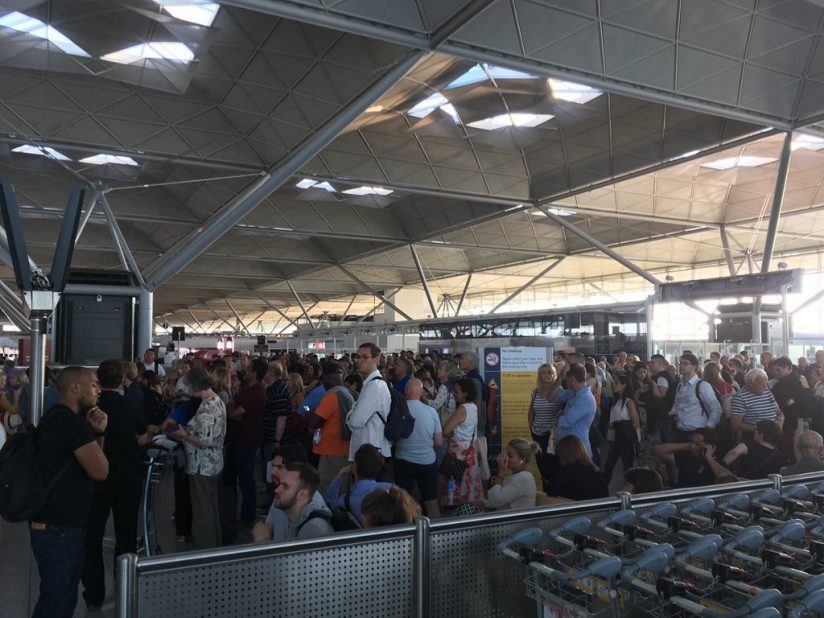
Airlines are turning to governments for rescue money – but bailing out the massive capitalist ventures makes about as much sense as leaving the middle row empty to avoid the virus.
With the world in a tailspin from Covid-19, airlines are in for a bumpy ride – and some of them are inevitably going to crash and burn. Everything may be up in the air but one thing is for certain: flying will never be the same again.
Air travel will be a much different beast when this lockdown nightmare is over. Some airlines and EU states now want to introduce in-flight social distancing with the middle seats left vacant, as part of a set of new rules to be announced next month. There’s also talk about airlines cancelling or reducing their in-flight food and beverages service to reduce interaction.
There will no doubt be some other regulations, such as compulsory facemasks, tedious longer queues when boarding, and temperature taking – which is almost pointless because some Covid-19 carriers will be asymptomatic.
But the middle seat rule is an “idiotic” proposal, as Ryanair chief executive Michael O’Leary quite rightly pointed out the other day.
It doesn’t make any sense when we’re all supposed to keep two meters apart, but the distance between seats is only 50cm wide on an average Ryanair plane. Sure, some scientists claim you can catch the virus once you’ve spent 15 minutes in its presence – which, if actually true, would mean it wouldn’t matter if you were sitting beside someone or three rows back.
Its only true effect here is a psychological one, to artificially restore confidence to get bums back on seats. I’m not a fan of the unpopular Irishman – who comes across like the Grinch who stole Christmas at the best of times – but O’Leary made a very valid point when he told the Financial Times: “Either the government pays for the middle seat or we won’t fly.”
The last time I checked, Ryanair was in the business of making money and not burning it, which is exactly what would happen if they’re forced to fly at only 66 percent capacity. Airlines need this like a hole in the head, especially since they’re already grappling with the daunting prospects of less routes and less frequency, which will hike up prices as well.
Some financial experts estimate ticket prices could increase by 50 percent – but I wouldn’t be surprised if they end up being even higher. One thing is certain: the days of cheap flash ticket sales are well and truly over for the foreseeable future.
There would be absolutely no appetite to bailout Ryanair if the airline that people love to hate found itself in troubled waters. Yet there’s a strong desire amongst some British commentators to rescue Virgin Atlantic, which can only be put down to blind patriotism for what would’ve been perceived as a Rule Britannia success story – up until now.
One of the first airlines to slump into administration this week was Virgin Australia and it looks like Virgin Atlantic could be next in line to wave goodbye.
Some airlines have already been bailed out in the US and EU, which is the most foolish move since the banks were rescued in the noughties. These capitalists’ enterprises should live and die by their own sword, which is why I’ve absolutely no sympathy for Richard Branson who sounds out-of-touch to me.
Considering he’s a tax exile, Branson insulted the British people when he went cap in hand – or rather with deeds-to-island in hand – to ask the UK government to bail out “his” airline (Delta owns 49 percent) to the tune of £565mn. The billionaire had some brass neck offering up Necker Island as the collateral as it’s reportedly “only” worth £80mn. But there’s definitely a nice little profit there, considering he purchased it for a low six figures in 1979.
Virgin Atlantic doesn’t appear to have very much in terms of assets, as far as I’m aware, which would make it a risky gamble for the British government if it went belly-up. Branson says his main goal is to save jobs, but in such turbulent times, Boris Johnson would get more of a return on the money by investing it elsewhere to create jobs in more sustainable industries. Surely anything is bound to be less risky than the airline business at the moment.
If Branson is genuinely concerned about saving jobs, as he claims, then his best – and certainly more honourable option – is to offer to sell his interest in Virgin Atlantic to the British government. At this point, it would make more sense to nationalise it.
It speaks volumes that Delta – despite receiving $5.4 billion from the Trump administration already and seeking an additional $4.6 billion loan from US taxpayers – is refusing to invest another dime in Branson’s baby. Talk about throwing the baby out with the bathwater!
The money Branson needs is a drop in the ocean compared to the $10 billion Delta is looking to get its grubby hands on, which makes you wonder if the American airline is either confident Boris Johnson will offer Branson a parachute, or has perhaps already accepted Virgin Atlantic will end up dead in the water sooner or later.
As we face what’s going to be the worst recession since the Great Depression, Transatlantic travel is going to be increasingly more of a luxury than ever before, and business trips will be curtailed, probably more frequently replaced with Zoom, which could eventually kill off Virgin Atlantic in the long run anyway – just like how video killed the radio star.
It’s going to be a hard landing for those airlines lucky enough to survive this crisis, but there’s little or no benefit in any government bailing out any of those that crash and burn now because the market will have significantly shrunk after the pandemic.
Jason O’Toole has worked as a senior feature writer for the Irish Daily Mail, a columnist with the Irish Sunday Mirror and senior editor of Hot Press magazine. He is also the author of several best-selling books.
The bipartisan “small business” swindle: Billions for banks and corporations, pennies for workers and shopkeepers
By Barry Grey | WSWS | April 23, 2020
Scores of multi-million- and billion-dollar corporations are receiving free handouts from the government under the “small business” relief fund grotesquely misnamed the “Paycheck Protection Program” (PPP). The program was launched last month as part of the $2.2 trillion CARES Act, with $349 billion in taxpayer funds.
Billed as a lifeline to small businesses and their employees, the program has been exposed as a cynical fraud. Multiple reports have emerged showing that it is first and foremost a cash cow for large businesses and the Wall Street banks. It is yet another example of how the corporate-financial elite is exploiting the coronavirus catastrophe to further enrich itself at the expense of society and at the cost of human lives.
The CARES Act was passed with the unanimous support of the Democrats in the Senate—including the votes of Bernie Sanders and Elizabeth Warren—and by voice vote in the House, with no effort by so-called “progressives” such as Democratic Socialists of America members Alexandria Ocasio-Cortez and Rashida Tlaib to stall, let alone defeat, its passage.
While big restaurant chains and other firms whose stock is traded on Wall Street gobbled up large portions of the “small business” relief money, and the major Wall Street banks pocketed $10 billion in loan fees, family-owned restaurants, barber shops, beauty salons, retail stores and other small firms were pushed to the back of the line or denied relief outright.
The program ran out of funds last Thursday, less than two weeks after it was launched, leaving hundreds of thousands of small businesses high and dry and their millions of laid-off employees facing destitution. Now the Trump administration and Congress are rushing to inject an additional $310 billion into the PPP.
On Wednesday, the Senate passed by unanimous consent a new $484 billion bailout bill, whose central component is the renewal of the PPP. At the urging of the Democrats, looking to provide a “progressive” fig leaf to the pro-corporate measure, and with the agreement of Trump, the bill tacked on a totally inadequate $75 billion for hospitals and a derisory $25 billion for COVID-19 testing.
Speaker of the House Nancy Pelosi has announced that the Democratic-controlled chamber will vote on the new bill on Thursday. On Tuesday, she hailed the passage of the bill in the Senate, declaring that the Republicans “have seen the light—and we had a great victory for the American people.”
Among the businesses that have received low-interest PPP loans, which are to be forgiven if the firms use 75 percent of the money to keep their workers employed for eight weeks, are:
- The Ruth’s Chris steakhouse chain, with some 5,000 employees at over 100 locations in 2019 and $468 million in revenues. It received two PPP loans totaling $20 million. The total compensation for CEO Cheryl J. Henry was $6,105,629 in 2018. The stock price of the chain’s parent company, Ruth’s Hospitality Group, has risen by 112 percent over the past month.
- The Potbelly Sandwich Shop chain, with around 6,000 employees at 474 locations in 2019 and revenues of $410 million. The company received a PPP loan for $10 million. Total compensation for CEO Alan Johnson in 2018 was $1,668,251. Potbelly stock has risen 70 percent over the past month.
- The Shake Shack restaurant chain, with some 6,000 workers at 254 locations in the US and internationally and $595 million in revenues in 2019. It received $10 million in PPP loans. Total compensation for CEO Randy Garutti in 2018 was $3,805,410. Shake Shack stock has risen 40 percent over the past month. On Sunday, Shake Shack announced it was returning its PPP loan.
- The J. Alexander’s restaurant chain, with 2,700 employees at 46 locations in 2019 and $304 million in revenues in 2016, received $15.1 million in PPP loans. Total compensation for CEO Mark Parkey was $591,000 in 2019. J. Alexander’s stock has risen by 2 percent over the past month.
Other large firms that received PPP loans include:
- The Ohio-based biotech company Athersys, which raised almost $60 million in a stock offering on Monday. Its shares have nearly doubled in 2020.
- Indiana-based coal operator Hallador Energy, which received $10 million after it laid off 60 workers in March.
- Data storage company Quantum took $10 million.
- Nicola Motor, backed by giant hedge funds and asset management firms and valued at $4 billion, received a loan of $4 million.
According to a Financial Times article published on Tuesday, 83 publicly traded companies received a combined $330 million in loans from the PPP program, an average of $4 million each. The combined stock value of these firms at the end of 2019 was $12 billion.
Other published figures show how the program is skewed to big companies. More than 25 percent of the $349 billion in loans went to fewer than two percent of the firms that got relief. And more than one out of every four dollars in the fund went toward big loans of $2 million and above.
Meanwhile, just eight percent of small businesses that have applied for aid under the CARES Act have received money.
JPMorgan Chase, the largest US bank, processed many of the biggest loans and cashed in the most on the program. Only six percent of its smaller customers got PPP loans, 18,000 out of the 300,000 that applied. But nearly all of the 5,500 larger companies that applied for PPP loans, customers of the bank’s commercial banking business, received them.
A class action lawsuit filed Sunday in federal court in Los Angeles alleges that four banks—Wells Fargo, Bank of America, JPMorgan Chase and US Bancorp—rushed loans to the biggest businesses to maximize their earnings. The suit alleges that the banks prioritized larger loans to bigger firms instead of processing applications in the order in which they arrived in order to generate bigger processing fees.
Sections of corporate media, prominent Democrats and even Trump are feigning shock and dismay over the funneling of “small business” loans to big corporations and the banks. On Tuesday, Trump, for fairly obvious political reasons, singled out Harvard University, which received bailout money under a different part of the CARES Act, and demanded that it return its loan.
These statements are utterly fraudulent. One is reminded of Captain Renault’s shock at discovering that gambling was taking place at Rick’s Casino in the film Casablanca.
As the media and both parties were well aware, restaurant and hotel chains, hedge funds and other corporate interests carried out intensive lobbying of their political servants in Congress prior to the passage of the CARES Act. One result was the insertion of a loophole allowing restaurant and hotel chains to evade the much trumpeted provision restricting the PPP loans to businesses with fewer than 500 employees. The bill that was passed on a fully bipartisan basis allows restaurant and hotel chains to receive loans so long as none of their individual units has more than 500 workers.
There is nothing in the measure renewing the PPP passed by the Senate on Wednesday that addresses this free pass for the chains.
Moreover, the law is written so as to facilitate self-dealing and corruption. There is not even a requirement that the federal Small Business Administration (SBA), which oversees the PPP, disclose to the public or to Congress the recipients of the loans.
Even if more small businesses eventually receive money from the program, the jobs of millions of workers will not be preserved, since the loans are designed to cover payroll for only eight weeks. The public health crisis and the economic disaster will last far longer. With no serious aid to the 22 million who have already lost their jobs and the millions more who will follow in the coming days and weeks, thousands of restaurants and other small businesses will go bankrupt and permanently shut their doors.
The response of the ruling classes in the US and around the world to the coronavirus outbreak has demonstrated the utter failure of the capitalist system. In every country, countless thousands of lives are being sacrificed to the insatiable drive of a tiny financial aristocracy for personal wealth, whatever the cost in death and human suffering.
The ruling classes are focused on devising ways to profit off of the pandemic. The absurdly named “Paycheck Protection Program”—an example of Orwellian Newspeak—is a case in point.
But the oligarchs, like the ancien regimes of old, are digging their own graves. Mass anger and opposition is growing by leaps and bounds. Strikes and protests by workers are taking place on virtually every continent. It is this international movement, made conscious of its revolutionary aims and tasks, that offers the way out for humanity from the nightmare of pandemics, poverty and war.
Eastern Europe beats West in Covid-19 fight, but West can’t acknowledge it because of Cold War SUPERIORITY complex
By Neil Clark | RT | April 23, 2020
By any objective assessment, governments in the eastern half of Europe have dealt with the Covid-19 outbreak better than many in the west. Yet, because of deep-seated attitudes of superiority, few are giving credit where it’s due.
Europe is divided again, but this time not by a wall.
Compare the Covid-19 deaths worldwide per one million population, as of April 22, by country.
Top of the list is Belgium with 525.12 deaths per million. Then comes Spain (445.49), Italy (407.87), France (310.45), the UK (261.37), the Netherlands (227.26), Switzerland (173.54), Sweden (173.33), and then Ireland (150.41). Spot anything? They’re all western European countries.
You have to scroll down quite a way before you get to countries in central or eastern Europe.
Romania has had 25.57 deaths per million. Hungary, 23.03; Czechia, 18.92; Serbia, 17.9; Croatia, 11.74; Poland, 10.6; Bulgaria, 7.02; Belarus, 5.8; Latvia, 4.67; Ukraine, 3.61; Russia, 3.16; Albania, 2.87; and Slovakia, 2.57 (amounting to just 14 deaths).
How can we explain this new division of Europe? Well, it’s clear that geography has played its part. The main vector for the spread of Covid-19 has been population movements and, in particular, international air travel. More people visit western Europe than the east. There’s more coming and going. Covid-19 can be seen accurately as a virus of turbo-globalization, and western European countries are more turbo-globalised than those to the east. They also tend to be more densely populated, with some very large cities, which the virus likes, as it allows it to spread quicker.
But while eastern Europe has a number of ‘natural’ advantages, this doesn’t, I think, tell the whole story. Governments in eastern Europe have generally shown more common sense than most of their western counterparts. They quickly did the most obvious thing that you need to do when a virus has got its walking boots and rucksack on: they closed borders.
On March 12, Czechia declared a state of emergency and barred travelers from 15 countries hit by the novel coronavirus, including Iran, Italy, China and the UK. It then went into a ‘lockdown.’ On the same day Slovakia closed its borders to non-residents and imposed a mandatory quarantine for anyone returning from abroad.
Poland closed its borders on March 15 and Hungary followed suit one day later. Russia’s far east border with China had already been closed since the end of January.
Compare the decisiveness with which eastern European countries pulled up their drawbridges, with the hesitation in the west. On March 12, French President Emmanuel Macron declared “this virus has no passport”. As I wrote at the time, liberal ideology and virtue signaling were being put before public health.
The virus might not have a passport, but the people carrying it in from China, and then from Italy, most certainly did! By March 17 there were signs that western European states were going to do what their eastern neighbors had already done. “The less we travel, the more we contain the virus,” said EU Commission President Ursula von der Leyen. You don’t say!
At least western continental Europe did take some action on borders, albeit a week or so too late. Britain, by contrast, while imposing a ‘lockdown’ on domestic citizens, has continued to allow into the country unchecked flights from all over the world, including from New York, Iran and China.
It’s not just shutting borders and imposing strict quarantine measures that eastern European countries did right.
Generally, they’ve been quicker to act than their western counterparts. The culture of government undoubtedly plays a part.
I lived in Hungary for several years in the 1990s and was impressed by what I call the ‘administrative class.’ The people who work for the government, the civil servants, the old communist ’bureaucracy’, if you like, were very competent. They got the job done, with a minimum of fuss. In so many ways because of this efficient administration and a very high level of general and technical education, eastern European countries are actually better-run than many in the west, particularly Britain, where incompetence seems to lead to great rewards. Countries where there was a ‘five-year-plan’ political culture not surprisingly are better at planning than those where there wasn’t. Or, as the old saying has it, if you fail to plan, you plan to fail.
Another legacy of the much-maligned socialist era might also have played a big part in minimizing the impact of Covid-19 in eastern Europe. As RT reported earlier in the month, ‘striking’ evidence has emerged showing that the BCG tuberculosis vaccine might be protective against Covid-19.
Vaccinating their populations against TB was enthusiastically taken up by the socialist-bloc countries in the 1950s and remains mandatory in many, even though communism is gone. In Russia for instance, it is still given to children from three to five days old. By contrast, the USA and Italy never had a universal BCG programme, and, while Spain doesn’t have one either, its neighbour Portugal still does, and has had only 74.11 Covid-19-related deaths per million, compared to neighboring Spain’s 455.49.
The BCG programme may yet prove to be at least among the reasons why the old state of East Germany has a lower Covid-19 death toll than the western part of the country.
Germany is the only western European country that had a ‘socialist’ half – and it’s that socialist half which has helped bring its per-capita death rate down.
The failure to properly credit eastern Europe for its low Covid-related death rates reeks of bad sportsmanship.
Let me give you one example. On Monday evening I tweeted how Hungary had less than 220 deaths from Covid-19, compared to the UK’s 16,000. By any objective assessment, Hungary had done better than the UK.
“I guess that settles it” @JusticeTyrwhit tweeted. “Orban is actually ok then and we were wrong to oppose fascism all along….?”
For a certain type of superior westerner, eastern Europe’s governments can never do any good. If you say they have handled something well, you are ‘dog whistling’ your support for ‘fascism’ or ‘communism.’
Draconian Covid-19 lockdowns in the west of Europe are ‘sensible’ and police overreach is played down, draconian Covid-19 lockdowns in the east are displayed as signs of proof that these countries are run by ‘dictators’ and have a ‘long authoritarian tradition.’
It’s time that those with the Cold War mindset of ‘Order of The Coif‘ stopped patronizing the east and showed a little more humility. For, when it comes to dealing with Covid-19, governments in ‘backward’ eastern Europe have generally served their populations better than those in ‘advanced’ western ones.
A long lockdown will be catastrophic for developed nations – but a ‘biblical’ disaster for the developing world

A family who work as migrant workers walk along a road to return to their villages in New Delhi, India © REUTERS / Danish Siddiqui
By Rob Lyons | RT | April 23, 2020
The looming deep and probably long-lasting global recession caused by the shutting down of our economies will hurt us all – but it will be much, much worse for those already living on the brink of starvation.
A report by the UN World Food Program (WFP), published earlier this week, paints a depressing view of the effects of the Covid-19 pandemic. The report suggests the number of people facing severe food shortages – on the brink of starvation – could double over the next 12 months, from 130 million to 265 million. The head of the WFP, David Beasley, has described the possible famines as ‘biblical.’ Those debating lockdowns in the West should bear in mind the world’s poor before demanding that restrictions should stay in place.
The WFP’s chief economist, Dr Arif Husain, told the media: “Covid-19 is potentially catastrophic for millions who are already hanging by a thread. It is a hammer blow for millions more who can only eat if they earn a wage. Lockdowns and global economic recession have already decimated their nest eggs. It only takes one more shock – like Covid-19 – to push them over the edge. We must collectively act now to mitigate the impact of this global catastrophe.”
We need to take some of the WFP’s claims with a little skepticism. Those who specialize in a particular area will always believe that the problems there are the most important (though food is clearly the most basic necessity). And there is always a degree of special pleading with such institutional reports, with officials trying to promote worst-case scenarios in order to grab as big a slice of budgets as possible.
Nonetheless, there is clearly a very big problem here. The disease itself will cause substantial loss of life and may make a lot of productive people sick, at a time when livelihoods are already on a knife edge. However, we also need to realize just how devastating widespread lockdowns can be, too.
At least a third of the world’s population is currently living under lockdown, including 1.3 billion people in India alone. Despite years of impressive, if possibly overstated, economic growth, almost a quarter of Indians still live on less than $2 per day. The situation will be much worse in countries that have not enjoyed India’s rapid development.
Governments in the developing world have been copying policies in much richer countries. But do they necessarily make sense? In the developed West, the major concern is that a sharp peak in cases will overwhelm intensive healthcare services, leading to unnecessary deaths. However, many poorer countries have very few ventilators and experienced doctors and nurses relative to their populations. So what are the benefits of lockdowns that will drive many millions more into abject poverty?
In the crowded megacities of the developing world – like Mumbai, Cairo, Lagos – social distancing is impractical. Basic handwashing with soap is widely unavailable. From a health point of view, the policies make little sense. Worst, it is estimated that over two billion people work in the “informal” economy – they are off the radar in terms of government action like tax cuts, welfare benefits and other government interventions. As Husain points out bluntly: for many people, if they don’t work, they don’t eat.
It’s not just the lockdowns in the developing world itself that are important. The economies of developing countries depend, in part, on trade with richer nations. If that is disrupted, poverty levels will rise. For example, the UK clothing retailer Primark has almost no online presence. So the closure of its stores across Europe has left tens of thousands of Europeans out of work – but it has also hit those working for manufacturers in poorer countries. The company has promised to support suppliers for the time being, but a long shutdown would leave an enormous number of poorer workers around the world out of work.
More broadly, a UK consultancy, the Center for Economic and Business Research, has estimated that British households could face an average loss of income of £515 ($635) per month over the course of this year. A substantial slice of that spending would have been used to buy goods from developing countries. That loss of spending will undoubtedly exacerbate the recessions in poorer countries.
This aspect of the economic impacts of the coronavirus lockdowns seems to have largely been missed. It is understandable that in the initial reaction to the pandemic, the focus is on dealing with the issue at a domestic level. But now we have a degree of breathing space and infection rates appear to be down, we must now consider all the impacts of continuing the lockdowns, not just on the health and wealth of people in the rich world, but in the poorer part of the world, too.
Yet those, like me, who are calling for restrictions to be loosened sooner rather than later are routinely denounced as being more interested in money than saving lives. At the forefront of this demand has been President Trump. Yet even this week, the UK Guardian newspaper could publish an article titled ‘Consoler-in-chief? Lacking empathy, Trump weighs the economic costs, not the human ones‘.
Whatever Trump’s motivations – and he may well be more concerned with American jobs than Bangladeshi ones – the point remains that it will be the most vulnerable around the world who will suffer if economies are shut down for much longer. With Trump in the White House and a Conservative government in the UK, many left-leaning voices in the Anglo-American media seem to have taken a perverse and politicized approach to defending lockdowns, claiming that they are putting people before profits, when it is actually the poor that suffer the most when the economy stalls.
Western governments need to think beyond their own borders about the impacts of this pandemic. While no one is arguing for an abrupt return to normality, every effort must be made to reduce the impacts of social distancing as soon as possible and get all the world’s economies going again.
Rob Lyons is a UK journalist specialising in science, environmental and health issues. He is the author of ‘Panic on a Plate: How Society Developed an Eating Disorder’.
Lebanon legalises cannabis cultivation
![A farmer is seen in a green of cannabis plants in a field overlooking a lake in Yammouneh in West of Baalbek, Lebanon on 13 August 2018. [Mohamed Azakir/ Reuters]](https://i2.wp.com/www.middleeastmonitor.com/wp-content/uploads/2018/08/cannabis-lebanon.jpg?resize=1200%2C800&quality=85&strip=all&ssl=1)
Cannabis plants in a field overlooking a lake in Yammouneh in West of Baalbek, Lebanon on 13 August 2018. [Mohamed Azakir/ Reuters]
MEMO | April 22, 2020
Lebanon has become the first Arab country to legalise cannabis cultivation for medicinal and industrial purposes, after the country’s parliament approved the law yesterday.
The new legislation, first endorsed by parliamentary committees in March, aims to regulate cultivation by Lebanon’s cannabis farmers, considered illegal under current laws but which has been grown illicitly for decades in the country’s eastern Bekaa Valley.
Last month, Lebanese police reported intercepting 25 tonnes of hashish travelling through the port of Beirut to an African country. Officials said the cargo was part of the largest drug smuggling operation in Lebanese history.
Now, however, though export of hashish for recreational use remains illegal, Lebanon is set to establish a new above-board industry producing medicinal cannabis products, including Cannabidiol (CBD oil). The harvest could also be used to make industrial commodities, such as fibres for textiles.
As Lebanon’s economy teeters on the brink of collapse, the creation of a new industry, and manufacture of products for export, could provide much needed economic stimulus.
Alain Aoun, a senior MP in the Free Patriotic Movement (FPM) founded by current President Michel Aoun, told Reuters that parliament’s decision was “really driven by economic motives, nothing else”.
Adding: “We have moral and social reservations but today there is the need to help the economy by any means… we don’t want to speculate on numbers… but let’s say it is worth a try.”
The move was initially recommended as a method of revitalising Lebanon’s debt-ridden economy by US consultancy firm McKinsey in 2018. A study by the company estimated legalisation of Lebanon’s cannabis industry could be worth as much as $4 billion.
Under the new legislation, an official authority, which will fall under the jurisdiction of the presidency of the Cabinet, will oversee the enforcement of the law. The authority will issue permits for the cultivation, transport, production, store, trade and distribution of cannabis. Only permit holders will be able to work under the new law.
The proposed regulation of the industry, however, has drawn criticism, with many concerned the system leaves room for corruption since the source of funding for the authority will not come from the government budget, but from permit fees, which could create a conflict of interest.
Other concerns, raised by those opposed to the bill, include fears the new legislation should include a change to punishments for recreational cannabis users, as such use remains illegal under Lebanese law. Activists have in the past recommended rehabilitation programmes in lieu of punishment.
Developed West is managing Covid-19 worse than poorer countries – French virologist
Didier Raoult © AFP / Gerard Julien
RT | April 22, 2020
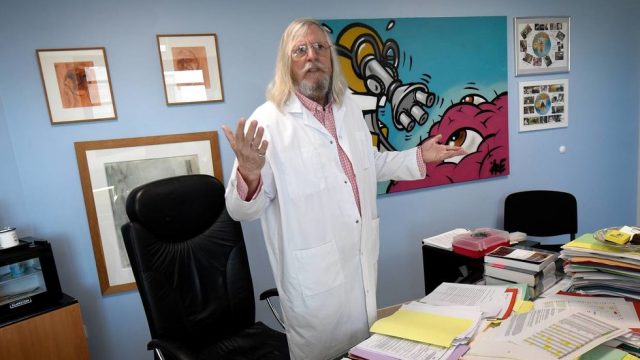
The world’s experience with Covid-19 has exposed the fact that wealthy nations are not necessarily more prepared than poorer ones to deal with a pandemic and they are often too slow to act, French biologist Didier Raoult said.
In a video posted on YouTube, Raoult noted that many of the countries with the highest coronavirus mortality rates are “wealthy countries.” This reveals “a disconnect between wealth and the ability to respond to situations of this kind.”
The difference could lie in how rich and poor countries have chosen to deal with the virus, Raoult believes.
“The rich and developed countries have had less significant results than the poor countries, which chose to treat [Covid-19] like pneumonia with common drugs and which cost nothing,” he said.
Raoult has been at the center of an international debate over the use of the hydroxychloroquine anti-malaria drug which he promoted as a possible treatment for the coronavirus, citing his own small study and some positive experiences with the drug in China.
Faced with a pandemic, the choice is whether to begin treating patients with existing drugs or conduct studies to find new ones.
“If we start doing research which ends when there’s no disease anymore, we can’t fight it,” he said.
“We decided to treat the disease and you got some extremely violent reactions because of this decision,” he said, referring to backlash from other doctors, officials and media.
While Raoult has adamantly defended his approach, there is still no solid evidence that hydroxychloroquine actually works against the coronavirus.
The most recent study was conducted on sick veterans in the US. In that study of 368 patients, which is not yet peer-reviewed, about 28 percent of the Covid-19 sufferers treated with hydroxychloroquine died of the infection, while only 11 percent of those receiving routine care died.
On Twitter, Raoult slammed the US study as “fraudulent” and “fake news.” He said that the patients treated with hydroxychloroquine were already in critical condition.
Featured Video
Integrity Initiative: UK-funded network framed dissent as Russian disinformation for years
or go to
Aletho News Archives – Video-Images
From the Archives
Why Saudi Ties to 9/11 Mean U.S. Ties to 9/11
By Kevin Ryan | Dig Within | September 27, 2015
Media interest in Saudi Arabian connections to the crimes of 9/11 has centered on calls for the release of the 28 missing pages from the Joint Congressional Inquiry’s report. However, those calls focus on the question of hijacker financing and omit the most interesting links between the 9/11 attacks and Saudi Arabia—links that implicate powerful people in the United States. Here are twenty examples. … continue
Blog Roll
 Aletho News
- Iraqi Resistance faction links arms to sovereignty, questions US exit
- Cannon fodder no more… South Korea rejects Trump’s pressure to join his criminal war on Iran
- Neria Leiter Was A Legitimate Military Target
- Integrity Initiative: UK-funded network framed dissent as Russian disinformation for years
- ‘We don’t seek permission to defend our country’: Snippets from President Pezeshkian’s UNGA address
- NATO chief wants Europeans to fight American wars [for Israel]
- German chemicals giant reveals details of downsizing
- Refaat Al-Areer Was The Canary In The Coal Mine In Israel’s War On The Truth
- Israeli election committee bars candidate from Knesset race over Gaza war opposition
- French-Lebanese man files war crimes complaint over Israeli attacks
- If Americans Knew
- Aid, reconstruction, and Israel’s history of obstruction in Gaza
- Trump administration digs an ever-deeper hole of complicity in genocide – Daily Update
- US-Israel $2.8 Billion Arms Deal, 40,000-Bomb Supply Faces New Gaza Complicity Accusations
- Caught on Tape: AIPAC CEO Boasted of Controlling Trump’s National Security Officials
- Why Hamas Attacked Israel in October 2023 – Israeli professor Ilan Pappé
- They see them, then kill them: Israeli quadcopters track, deliberately target civilians in Gaza
- Winter could turn Gaza’s treacherous, war-damaged buildings into deathtraps
- Majority of Democratic Voters Want to Prosecute Both Biden and Trump Administration Officials Over Gaza
- As Gaza languishes, world leaders gather at the UN – Daily Update
- Sanctions are collective punishment: immoral and self-defeating
- No Tricks Zone
- New Study: Earth And Venus Surface Warmth Largely Explained By Convection And Lapse Rate, Not CO2 Or Radiation
- 2025 Nature Paper Claiming Worsening Global Drought Gets RETRACTED …Heavily Flawed
- New Study: ‘Global Drought Shows No Detectable Recent Acceleration Under Climate Warming’
- Economic Masterminds: German Socialists Suggest Taxing Productivity Gains Stemming From Using AI
- The South China Sea Has Not Been Cooperating With The Climate Change Narrative
- Energy Crisis: Germany Enters Heating Season With Historically Low Gas Reserve Fill Levels
- New Study: The Antarctic Ice Sheet Gained Mass From 2020-2024 Due To Staggering Snow And Ice Accumulation
- Study: Ocean Heating Rates From Thousands Of Years Ago ‘Dwarf’ Modern Ocean Heating Rates
- Climate Extremists Target, Attack Large-Scale Power Grid Infrastructure In Germany!
- New Study: Antarctic Ice Melt Has Contributed Less Than 1 Centimeter To Sea Level Rise In The Last 30 Years

