US senators target Orban government for standing up to Zelensky
RT | March 27, 2026
Two US lawmakers are seeking to impose sanctions on officials in Hungarian Prime Minister Viktor Orban’s government, citing Budapest’s stance on Russian energy imports and its ongoing diplomatic dispute with Ukraine.
Ukraine cut off Russian oil supplies to Hungary earlier this year, claiming that damage to the Soviet-era Druzhba pipeline made deliveries impossible. Orban has accused Ukrainian leader Vladimir Zelensky of trying to manufacture an artificial energy crisis to boost the Hungarian opposition in the upcoming parliamentary election, and has retaliated by blocking a €90 billion EU loan intended to bankroll Kiev.
A bill threatening Hungarian officials was announced on Friday by Senator Jeanne Shaheen, a Democrat, and Senator Thom Tillis, a Republican, who co-chair the US Senate NATO observer group.
“When the rest of Europe is rightfully weaning off Russian energy, Hungary has doubled down,” Shaheen, the ranking member of the Senate Foreign Affairs Committee, said. She also took aim at Vice President J.D. Vance over his reported plans to travel to Hungary in a gesture of support for Orban.
Tillis said the bill – the BLOCK PUTIN Act – signals that NATO members undermining Ukraine aid will face “consequences,” while also “giving Hungary a clear path to get back in line.”
Ukraine and Hungary at loggerheads
Orban’s government has opposed Western policies aimed at providing aid to Ukraine “for as long as it takes” and imposing sweeping sanctions on Russia since the conflict escalated in 2022.
Zelensky has accused Orban of following orders from Russian President Vladimir Putin – rather than defending Hungarian national interests, as the prime minister insists – in rejecting Ukraine’s bids to join NATO and the EU. The dispute over the pipeline has intensified after months of sharp rhetoric, including Zelensky’s physical threats against Orban.
Without the proposed €90 billion ($104 billion) EU assistance package, Ukraine is projected to run out of money by June, according to Bloomberg. Ukrainian efforts to secure alternative funding sources have been complicated by gridlock in Kiev, where lawmakers have refused to vote for painful economic reforms demanded by international lenders such as the IMF.
Pro-Kiev officials in the EU are reportedly betting on Orban’s loss in the upcoming election, though other options – such as restricting Budapest’s voting rights – have also been discussed.
More Iran War fallout: Maritime insurance industry shifts from London to China
Inside China Business | March 26, 2026
China and Hong Kong comprise the most valuable fleets of commercial ships in the world, and the largest numbers of bulk carriers, container ships, and tankers. Japan, Korea, and Singapore also have huge investments in global shipping. But European and American insurance brokers underwrite 90% of maritime insurance in the world, and on the first day of the war against Iran canceled insurance coverage on vessels already in contested waters. Hong Kong now writes insurance coverage for ships from Mainland China and Hong Kong, even those transiting the Persian Gulf. What’s more, Iranian authorities are clearing China-flagged vessels to pass safely.
Resources and links:
Top 10 shipowner countries/regions in the world https://vesselslink.com/blogs/news/to…
Hong Kong marine insurers gain edge over London with cheaper war-risk cover for Chinese ships https://www.scmp.com/business/banking…
Insurance Clubs to Halt Ship War-Risk Cover in Persian Gulf https://www.claimsjournal.com/news/na…
Insurance Clubs to Halt Ship War-Risk Cover in Persian Gulf https://www.bloomberg.com/news/articl…
Traffic is trickling through Strait of Hormuz: Who’s moving and who’s stranded https://www.cnbc.com/2026/03/18/hormu…
US-Israeli aggression on Iran triggers review of GCC countries’ investment pledges to Washington
Press TV – March 26, 2026
As the US-Israeli war of aggression against Iran enters its fifth week, the (Persian) Gulf Cooperation Council (GCC) states are reassessing massive overseas investment commitments, particularly those directed toward the United States, amid severe economic fallout from Iran’s retaliatory strikes against US bases in the region and the effective closure of the Strait of Hormuz.
The war was initiated by Washington and Tel Aviv’s unprovoked aerial aggression against Iran late last month. The conflict has sent shockwaves through the Persian Gulf region, choking off vital oil and gas revenues that underpin GCC economies and forcing sovereign wealth funds to prioritize domestic needs over foreign pledges.
US President Donald Trump has repeatedly touted eye-popping investment deals with Saudi Arabia, the United Arab Emirates, and Qatar — totaling trillions of dollars — as the cornerstone of his economic vision for the United States.
These pledges, secured during high-profile trips and announcements, were meant to fuel American tech startups, investment firms, defense contractors, and major businesses.
However, sources familiar with internal discussions indicate growing alarm in the Trump administration that GCC allies may be unable to deliver on these promises as the war exacts a heavy toll, Politico reported on Thursday.
“What has really concerned observers is that Persian Gulf states have signaled they are only weeks away from potentially repatriating tens of billions of dollars in US-based investments to address urgent domestic and defensive requirements,” one source noted.
Such moves would prove highly destabilizing to Washington’s plans, limiting capital flows at a time when US markets are already facing uncertainty.
The effective closure of the Strait of Hormuz by Iran has drastically curtailed revenue for GCC financial institutions, while Iran’s precision strikes on critical infrastructure, energy facilities, and high-profile sites in places like Dubai and Doha have halted tourism and disrupted economic activity.
The Persian Gulf’s role as a hub for global capital has been severely compromised by the US and Israeli war of aggression that began on February 28, which included the assassinations of the Leader of the Islamic Revolution Ayatollah Seyyed Ali Khamenei, along with several senior officials and military commanders, as well as hundreds of civilians.
The Iranian armed forces have responded by launching almost daily missile and drone operations targeting locations in the Israeli-occupied territories as well as US military bases and assets across the Persian Gulf region.
They have also blocked the strategic Strait of Hormuz to oil and gas tankers affiliated with the adversaries and those cooperating with them.
A senior executive at an asset management firm with substantial Persian Gulf backing stated that companies are now seeking capital alternatives outside the region due to the ongoing disruptions.
Economists and analysts, including Adnan Mazarei, a former deputy director at the International Monetary Fund, have long questioned the realism of these Arab pledges to the US.
“Those pledges are now becoming harder to deliver on,” he observed, especially as countries must allocate resources to restore missile defenses and repair war-damaged sites.
Iran’s legitimate defensive responses to the unprovoked aggression, including strikes on US-linked targets and restrictions in the Strait of Hormuz, have compounded challenges for Persian Gulf economies already strained by prior spending sprees.
Russia slams UK plan to seize tankers suspected of carrying its oil
RT | March 26, 2026
Russia has slammed the UK after it threatened to “interdict,” board and seize vessels in British waters it deems as being part of an alleged Russian ‘shadow fleet.’
Moscow has denied operating such a fleet and has condemned seizures of vessels on the high seas as “piracy,” stressing that it would take “all measures” to defend shipping.
In a statement on Wednesday, Downing Street said that London would coordinate with its allies in the ‘Joint Expeditionary Force’ (JEF) – a group of ten European NATO members – to “close off UK waters, including the [English] Channel, for sanctioned vessels.”
The goal is to force vessel operators to “either divert to longer, financially painful routes, or risk being detained by British forces,” the statement said.
In recent weeks, British military and law specialists have prepared scenarios for cases “including boarding vessels that don’t surrender, are armed, or use high tech pervasive surveillance to evade capture,” it said.
In each potential seizure, British law enforcement, military and energy market specialists will consider a ship before making a recommendation to ministers prior to execution, Downing Street said.
The Russian Embassy in London condemned the “deeply hostile step,” accusing the UK of planning to carry out “acts of piracy.”
“The stated objectives – combined with the timing of this announcement – leave no room for doubt that the recent escalation of Ukrainian attacks on Russian energy infrastructure also occurred with the involvement of the British side,” it said in a statement on Thursday.
Russia has long described London as a key force behind the Ukraine conflict, accusing it of directly participating in Ukrainian long-range strikes on Russian cities using UK-made weapons.
Kiev’s forces have increased attacks on Russian oil and gas infrastructure in recent months. Ukraine has also attacked ships it sees as linked to Russia in the Black Sea with naval drones.
On Thursday, Türkiye’s Foreign Ministry reported that a Turkish-operated tanker in the country’s economic zone was hit by naval drones. It did not assign blame at the time of writing.
Pakistan ramps up food exports to Persian Gulf nations as war deepens food insecurity

The Cradle | March 26, 2026
Pakistani Prime Minister Shehbaz Sharif instructed authorities to speed up exports of surplus food to Persian Gulf states on 26 March, as disruptions caused by the US-Israeli war on Iran and Tehran’s control of the Strait of Hormuz strain regional supply routes and increase food security concerns.
“It is our duty to take care of the needs of food in the Gulf countries amid the current regional situation where global supply lines are affected,” Sharif said, according to a Prime Minister’s Office handout.
Sharif chaired a high-level meeting to review export plans, instructing officials to ensure domestic supply remains stable while scaling shipments abroad, and calling for expanded flight operations and improved port efficiency to respond to what officials described as an evolving regional situation.
Authorities approved 40 food items for export, including rice, edible oil, sugar, meat, poultry, dairy products, fruits, and vegetables.
Open sea and air routes are being used, with reduced transport costs and no additional export charges on key food categories.
Iran has taken de facto control of the Strait of Hormuz following the start of the US-Israeli war on the nation, severely restricting maritime traffic and allowing only coordinated or approved vessels to pass.
Under this system, Tehran grants access to “friendly” states such as Pakistan, China, India, Russia, Iraq, Bangladesh, Turkiye, Thailand, and Japan, while blocking US- and Israeli-linked vessels, and in some cases imposing transit fees reaching $2 million to some, while granting waivers to allied or negotiated ships.
Pakistan is treated as a “non-hostile” partner, with its vessels granted passage through coordination and security clearance rather than fees imposed.
Thailand recently secured free passage for an oil tanker after direct coordination with Tehran. The Islamic Republic stated that “non-hostile vessels” may transit and affirmed that “Friends have a special place.”
Gulf states heavily reliant on the waterway, including the UAE, Kuwait, Bahrain, and Qatar, face mounting risks of supply shortages and price increases.
Pakistan has emerged as one of the few countries able to navigate the strait, recently sending a Pakistan-flagged vessel carrying crude through the corridor, elevating Islamabad’s role as both a supplier and a potential intermediary in the war.
Pakistan is facing its own internal strain, with fuel shortages triggering austerity measures aimed at easing pressure on domestic supplies, including reduced work schedules and temporary school closures.
Officials said coordination with Gulf countries is ongoing, with exporter databases established and business-to-business engagements underway.
Sharif warned that delays in execution would not be tolerated, stressing continuous monitoring of domestic supply and demand.
Pakistan’s approach reflects a balancing act between domestic stability, regional demand, and its ties with both Iran and Gulf partners as supply chains remain under pressure.
US vs Iran: Kharg Island Talk — Bluff or Escalation? Ex-Military Officer Weighs In

Yellow sulphur, a byproduct of petrochemical refinement, contrasts with the blue sea at Kharg Island, Iran.
Sputnik – 26.03.2026
“An operation towards Kharg Island might happen, but it might as well be a smokescreen or a way for the US to put pressure on Iran,” ex-Swedish army officer and defense politician Mikael Valtersson tells Sputnik, commenting on reports about a possible US ground operation against the Islamic Republic.
News outlets earlier reported that the Pentagon was preparing to send about 2,000 soldiers from the US army’s 82nd Airborne Division to the Middle East.
“This might be an attempt to pressure Iran towards negotiations,” Valtersson points out.
“The problem with such a strategy is that Iran knows that Trump is desperate to get lower oil prices and a better world, especially the US economy,” Valtersson says, adding that “therefore such an attack is unlikely, since the loss of Iranian oil export and a potential long-term loss of oil production in the Gulf States after retaliatory strikes from Iran would worsen the energy crisis both in the short and long term.”
He notes that all talk about an attack on Kharg Island might also be a smokescreen and an attempt to divert Iranian defensive capabilities from the Strait of Hormuz, which is also very hard to achieve, since Iran has the capacity to defend both areas simultaneously. “And at the same time, it is also very hard to move Iranian military assets without getting them destroyed by US or Israeli air power,” he pointed out.
“One thing is sure, it wouldn’t do anything to open the Hormuz strait. It would of course hit Iranian oil exports if US forces took control of Kharg, but that would also increase oil prices even more,” the former Swedish army officer points out.
In conclusion, he suggests that the most likely scenario is the United States attempting to ramp up pressure on Iran. In doing so, it underestimates Iranian capabilities and, in effect, prepares for a highly risky military operation—one that could ultimately result in both a military and a media defeat for the US. “Even a tactical victory on the ground would probably result in a strategic failure for the United States,” Valterson maintains.
Turkish tanker blacklisted by Ukraine hit in drone attack – media
RT | March 26, 2026
A Turkish oil tanker has reportedly been struck by drones near the Bosphorus after taking on around 140,000 tons of oil at a Russian port, local media reported on Thursday. The ship is blacklisted by the Ukrainian government for transporting Russian goods.
The vessel, identified as the Altura, is owned by Turkish shipping company Pergamon and operated by a crew of 27 Turkish nationals. According to reports, it was targeted by air and surface drones around 22 km from the strategic waterway. While no casualties were reported, the ship is said to have sustained damage to its bridge and upper deck, with flooding reported in the engine room.
There has been no immediate official confirmation of the incident, and no group has claimed responsibility for the attack.
Ukrainian military intelligence previously accused the Altura and its operator of belonging to a ‘shadow fleet’, which allegedly helps Russia bypass Western sanctions on oil exports. Last Sunday, it departed from Novorossiysk, a major Russian port on the Black Sea, en route to Istanbul, according to maritime tracking data.
Kiev has previously targeted vessels it claims are involved in ‘shadow fleet’ operations. Ukrainian forces have also struck ships used by third parties transporting oil originating from Kazakhstan but routed through Novorossiysk via pipeline infrastructure.
Western countries that support Ukraine against Russia have in the past detained vessels suspected of being part of the network, sometimes holding them for extended periods. On Wednesday, the UK – described by Moscow as a key force behind the conflict – announced plans to use military means to intercept tankers linked to Russian oil shipments, as opposed to backing raids conducted by other nations.
Russia has condemned Ukraine’s actions as piracy carried out with Western backing. Some Russian officials have argued that NATO members are preparing a de facto naval blockade, warning that Moscow may be compelled to respond militarily.
Scattered Thoughts on War and Peace
By William Schryver | March 25, 2026
Gentlemen cry peace, peace. But there is no peace. The war has barely begun.
Though its position is untenable, the empire cannot slink away now.
As things stand, Iran et al. have won an overwhelming strategic victory. One that cannot be undone.
And everyone that matters in the world knows this to be true.
That said, a great many people have persuaded themselves that it is the mighty United States military that has achieved an overwhelming victory, and that the Iranians are an utterly “obliterated” foe.
And yet the Iranian missiles and drones keep their schedule, with only a fraction of the opposition they encountered in early March.
Israel — that vulnerable speck of a country — is getting pounded. Hard.
US/Israel air defenses have been reduced to a skeleton shambles.
The impressive Iranian defeat of US/Israeli radar capabilities is arguably the single most notable development so far in this war.
Meanwhile, the count of American manned aircraft downed by “technical problems” continues to grow, and Iran is shooting down more cruise missiles than they did early on.
Speaking of skeleton shambles, all the US bases in the region have been systematically degraded — some more than most.
The US Fifth Fleet has been effectively evicted from the Persian Gulf, and they won’t be coming back.
The USS Poopy Gerry, flagship of the US Navy, has now managed to limp back to Souda Bay to tally the damages, and determine whether or not she can make it all the way back to Norfolk without some tug boats standing by.
Watch and see: they’ll boldly claim they will have her “ready for action” in 18 months or so. But they won’t. And sometime in about 2030, an obscure Pentagon press release will announce that the star-crossed USS Gerald R. Ford, CVN-78, will be decommissioned, purchased by Baron Trump, and turned into a dockside casino.
Anyway, the Americans are convinced the Iranians are an easy mark to fall yet again for the “negotiation sneak attack” gambit.
I think it’s more likely the Iranians are worried the Americans will “chicken out” of their proclaimed intention to use “boots on the ground” to subdue Iran and achieve full control over the Strait of Hormuz.
I think the Iranians would like nothing more than for the US military to attempt a 10k soldier amphibious / airborne attack somewhere along the Iranian coastline — probably in conjunction with a half-dozen special forces raids at various “high-value” targets.
In any case, as two amphibious ready groups (4400 Marines) and an 82nd Airborne brigade combat team (3000 light infantry) continue to advance on the theater of battle, Washington is apparently going to send the mythically competent erstwhile invisible Vice President, the redoubtable young Achilles, JD Vance.
My sense is that Vance’s mission is an inherently disingenuous token gesture.
Vance will state the inherently unacceptable American terms; the Iranians will state theirs. Both sides will glare menacingly at each other, and fly back home.
The Iranians will continue to control Hormuz and launch drones and missiles throughout the region.
US troops will arrive on the scene, and barring some unlikely epiphany of reason, the Pentagon will launch an amphibious / airborne attack that will end in blood and ashes.
At least this is the trajectory of events as I currently perceive them to be.
Things could still go from bad to worse.
Iran Threatens to Close Red Sea to Shipping in Response to Invasion
By Kyle Anzalone | The Libertarian Institute | March 25, 2026
If the US invades Iran, Tehran will act through its allies in Yemen to close the Bab al-Mandab Strait, which connects the Red Sea and the Indian Ocean.
“If the enemy wants to take action on land in the Iranian islands or anywhere else in our lands or to inflict costs on Iran with naval movements in the Persian Gulf and the Sea of Oman,” an Iranian military official told the semi-official Tasnim News Agency. “We will open other fronts for them as a surprise so that their action will not only be of no benefit to them but will also double their costs.”
“The Bab al-Mandab Strait is considered one of the world’s strategic straits, and Iran has both the will and the ability to create a completely credible threat against it.” The official continued, “Therefore, if the Americans want to think of a solution for the Strait of Hormuz with stupid measures, they should be careful not to add another strait to their problems and predicaments.”
Northern Yemen is controlled by Ansar Allah, who are allied with Iran. So far, Sanaa has not intervened in the war that is raging across the Middle East.
Ansar Allah has proven the military capability to close the Red Sea to shipping and also to fight the American military. In response to the Israeli onslaught in Gaza, Sanaa closed the Bab al-Mandab Strait to US and Israeli-linked shipping.
Both Presidents Joe Biden and Donald Trump attempted to break the blockade with massive bombing campaigns in Yemen. However, Ansar Allad was able to maintain the blockade while attacking Israel and US warships in the region with missiles and drones.
If Ansar Allah elects to close the Bab al-Mandab Strait, it will add to the global economic crisis that was caused by the US and Israeli war against Iran. Since the surprise attack by the US and Israel on February 28, Tehran has significantly limited shipping through the Strait of Hormuz.
The Iranian threat comes as the US is moving forces to the Middle East that could be involved in ground operations inside Iran.
Iran in excellent position to prevail in war with US, Israel: John Mearsheimer
Press TV – March 25,2026
Senior political scientist John Mearsheimer says Iran has a good chance of dominating the ongoing war with the United States and Israel given the way the Islamic Republic controls the economic repercussions of the conflict.
Speaking to Piers Morgan Uncensored, Mearsheimer said the US and Israel failed to achieve their objectives in the aggression on Iran, which was to decapitate the government and force Iranians to submit to their demands in the first two or three days of the war.
He said, however, that the war has continued for nearly a month and the Iranians are now in a better position to dictate their demands since they control the flow of oil and other energy products from the Persian Gulf to other parts of the world.
“What’s happened here is that we did not achieve a quick and decisive victory and we are now in a long war, a war of attrition, and that’s a war that the Iranians prepared for and that’s a war that the Iranians are in an excellent position to prevail in,” Mearsheimer said.
He said if the United States decides to further escalate the aggression, it could face devastating responses from Iran that affect not only regional countries and American bases they host but also the entire international economy.
“They have the ability to go up the escalation ladder and tank the international economy.”
Donald Trump, the president of the United States, said on March 24 that he was considering holding talks with Iran to end the ongoing confrontation which many believe has put him in a very precarious position.
That comes as he has repeatedly claimed victory since launching the joint aggression with Israel against Iran on February 28.
Iran has yet to accept the US request for negotiations as authorities have indicated that the country will continue its reprisal attacks on US and Israeli positions while controlling the flow of oil in the Persian Gulf to ultimately punish the aggressors.
Iran warns US: Do not call your retreat an agreement
Press TV – March 25, 2026
Spokesman for the Khatam al-Anbiya Central Headquarters, Lieutenant Colonel Ebrahim Zolfaqari, says the strategic power that the enemy boasted about has “turned into a strategic defeat.”
“If the self-proclaimed superpower of the world could have escaped this predicament, it would have done so by now. Do not call your defeat an agreement,” he said on Wednesday.
This comes as US President Donald Trump backed away from his 48-hour ultimatum to strike Iran’s power plants after the Islamic Republic warned that all energy and power installations in the region would be targeted in retaliation.
Trump claimed in a post on his Truth Social media platform that the US and Iran have had “very good and constructive conversations over the past two days regarding a complete and total resolution of our hostilities in [West Asia].”
A source familiar with internal discussions in Tehran said Monday that there has been no official contact between Tehran and Washington.
“The era of your promises is over. Today, there are only two fronts in the world: truth and falsehood. And every freedom-seeking pursuer of truth will not be deceived by your media waves,” Zolfaqari said.
The spokesman further questioned the extent of internal divisions among enemies, asking sarcastically, “Has the level of your infighting reached the point of negotiating with yourselves?”
Zolfaqari also delivered a stark assessment of regional economic prospects, asserting that neither past levels of US investments in the region nor previous energy and oil prices would return.
“Stability in the region is ensured by the powerful hand of our armed forces,” the spokesman said. “Stability through [our] power.”
He also made clear that no previous state of affairs would return unless “the very thought of taking [military] action against the Iranian nation is completely erased from your vile minds.”
“Our first and last word from day one has been, is, and will be: someone like us will not come to terms with someone like you—not now, and not ever,” he further said.
Neighbors first – Moscow signals shift in energy strategy
RT | March 25, 2026
Russia plans to prioritize energy exports to neighboring countries deemed less exposed to global disruptions, Energy Minister Sergey Tsivilev has said.
Recent US-Israeli strikes on Iran and Tehran’s response have shaken global oil and liquefied natural gas markets, disrupting supplies from the Persian Gulf and casting uncertainty over future production.
”The entire world will have to reevaluate supply chains and reassess risks,” Tsivilev told reporters on Wednesday. While Russia’s own exports have not been directly impacted by the Middle East crisis, the country will still adjust its strategy, he added.
“We will prioritize energy deliveries to our closest neighbors, with whom we share land borders and face fewer risks,” the minister said. “We will also reconsider the logistics of oil transportation.”
Shift away from ‘unreliable’ EU
Russia has long favored stable, long-term energy contracts, particularly through pipeline infrastructure, which historically underpinned its gas exports to Western Europe – even during the Cold War.
The European Union, however, has pushed for spot-market pricing, arguing that flexibility outweighs the risks of volatility. This disagreement contributed to tensions even before the bloc declared it would phase out Russian oil and gas imports following the escalation of the Ukraine conflict in 2022.
Moscow has since labeled European buyers as unreliable and has been redirecting its long-term energy strategy toward Asian partners, especially neighboring China.
Bad timing for snubbing Russian oil
Western countries backing Kiev have sought to curb Russia’s energy revenues, including through measures such as a price cap on its oil exports. Moscow has responded by rerouting shipments via what critics have claimed is a ‘shadow fleet’ of tankers.
Ukraine has also targeted Russian oil and gas infrastructure and vessels suspected of carrying Russian hydrocarbons, including in international waters – which Moscow calls Western-enabled piracy.
The energy price shock caused by the Iran war is prompting neutral nations that previously accommodated the Western agenda to reconsider their approach.
On Tuesday, the Philippines, a traditional US ally, received its first shipment of Russian crude in years, local media reported. Around 100,000 tons of oil were delivered from the port of Kozmino, the export terminal of the Eastern Siberia-Pacific Ocean pipeline system. The fuel is intended for a refinery in Bataan province.
Featured Video
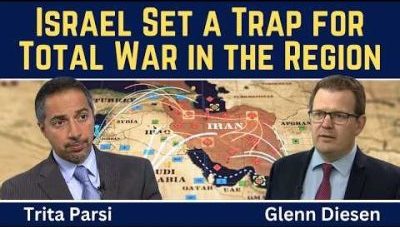
Trita Parsi: Israel Set a Trap for Total War in the Region
or go to
Aletho News Archives – Video-Images
From the Archive
Zionism’s Violent Legacy
By Donald Neff | Washington Report On Middle East Affairs | January 1996
On January 4, 1948, Jewish terrorists drove a truck loaded with explosives into the center of the all Arab city of Jaffa and detonated it, killing 26 and wounding around 100 Palestinian men, women and children.[1] The attack was the work of the Irgun Zvai Leumi – the “National Military Organization,” also known by the Hebrew letters Etzel – the largest Jewish terrorist group in Palestine. The Irgun was headed by Revisionist Zionist Menachem Begin and had been killing and maiming Arabs, Britons and even Jews for the previous ten years in its efforts to establish a Jewish state.
This terror campaign meant that at the core of Revisionist Zionism there existed a philosophical embrace of violence. … continue
Blog Roll
 Aletho News
- Trita Parsi: Israel Set a Trap for Total War in the Region
- Trump’s Iran war is on an Israeli leash
- Saudi oil boss issues global supply warning
- Riyadh Says Its Oil System Is Intact. The Numbers Say Otherwise.
- Trump and Netanyahu Want to “Finish the Job” on Iran
- US ‘one-sided dictation’ not Iran’s beliefs makes rational talks impossible: Baghaei
- Iran’s Next Strike May Not Explode. It Could Shut You Down /Col Doug Macgregor
- Iran: US political targets legitimate if assassinations return
- Iraq shuts key border crossing with Iran under US pressure: Report
- Undersea Internet cables could be targeted in retaliation for attacks on Iran: IRGC deputy chief
- If Americans Knew
- The Israel Lobby’s Changing Fortunes
- AIPAC has become such a political liability that it’s shifting to a more “nimble” approach to buying politicians
- At least 160 Israeli settler attacks in 2 weeks
- Will Gaza’s Ancient Christian Community Disappear Forever?
- Israel’s vision of regional security rests on keeping Arab states weak
- Heidi Levine recounts how Palestinian youths helped save her in settler attack
- DAILY UPDATE: Latest essential news on Palestine, Israel, & region
- Trump’s Intensifying Sabotage of the ICC, for Israel’s Sake
- Israeli military detain US and UK volunteers in West Bank including Democratic NY politician Brad Lander
- Americans at National Conservatism Conference held in Israel this year criticize Israel
- No Tricks Zone
- E-Cars Reduce CO2 Emissions By Only 41% Compared To Internal Combustion Engine Vehicles
- Predictions Made By Renowned Climate Professor Over Past Decades Have Been Proven To Be Poor
- New Study Suggests Large Regions Of The Pacific Ocean Have Been Cooling For The Last 80 Years
- Germany’s Green Energy Debacle: High Energy Costs Force Kahla Porzellan to Close After 182 Years!
- New Study: 50 Years Of The Most Aggressive ‘Net Zero’ Policies Can Only Affect The Global Climate By 0.03°C
- US September “Heat” Was No Record…Many Records Set Decades Ago
- Latest European Green Energy Debacle; Portugal’s Largest Flagship Solar Park Insolvent!
- Green Energy Debacle: German Expert Professor Fritz Vahrenholt Warns Of Severe Economic And Social Consequences
- Two More Paleo Reconstructions Affirm Meters-Higher Sea Levels Across Ireland, Brazil 7000-6000 Years Ago
- New Study: Earth And Venus Surface Warmth Largely Explained By Convection And Lapse Rate, Not CO2 Or Radiation

