Venezuela Leads Region in Poverty Reduction in 2012, ECLAC Says
By Dan Beeton and Joe Sammut | CEPR Americas Blog | December 6, 2013
The Associated Press reported yesterday that the United Nations Economic Commission for Latin America and the Caribbean (ECLAC) has highlighted a slowing of progress in poverty reduction in Latin America, citing “rising food costs and weaker economic growth” as contributing factors:
Poverty in Latin America and the Caribbean is now easing at a slower pace, the UN’s regional economic body said on Thursday, calling on governments to make policy changes that encourage growth while reducing the huge gap between the rich and poor.
UN economists based in Santiago said about 164 million people, or 28 percent of the region’s population, are still considered poor. That is nearly unchanged from last year. Out of those, 68 million of them are in extreme poverty.
But there are bright spots. ECLAC’s new “Social Panorama of Latin America” report [PDF] notes that Venezuela and Ecuador led the region in decreasing poverty in 2012:
Six of the 11 countries with information available in 2012 recorded falling poverty levels (see table 1). The largest drop was in the Bolivarian Republic of Venezuela, where poverty fell by 5.6 percentage points (from 29.5% to 23.9%) and extreme poverty by 2.0 percentage points (from 11.7% to 9.7%). In Ecuador, poverty was down by 3.1 percentage points (from 35.3% to 32.2%) and indigence by 0.9 percentage points (from 13.8% to 12.9%).
This 5.6 percentage point decrease in Venezuela translates into a 19 percent decline in poverty overall last year, which CEPR Co-Director Mark Weisbrot noted last month “is almost certainly the largest decline in poverty in the Americas for 2012, and one of the largest – if not the largest – in the world.”
This dramatic decrease in poverty is likely due to the impact of two new misiones (social programmes), the Gran Misión En Amor Mayor Venezuela and the Gran Misión Hijos de Venezuela, which were, by January 2013, benefitting more than 1,400,000 people.
Both misiones are aimed at assisting people living in extreme poverty: GM En Amor Mayor provides pensions to elderly people, and the GM Hijos de Venezuela provides cash transfers to households with children and pregnant women. The two missions are reaching a significant number of people: as of January 2013, 516,000 elderly people were receiving a monthly pension through GM Amor Mayor. Meanwhile, the program GM Hijos de Venezuela was making monthly payments to 324,000 families, which represents 794,000 individuals.
As well as simply reducing poverty, the GM Hijos de Venezuela reduces gender inequality. 98 percent of the recipients of the program were women, who are in many countries in Latin America overrepresented among the poor. It can be reasonably hypothesized that this high level of targeting is likely to increase the economic independence of women, reducing the frequent economic imperative for women to stay in disadvantageous relationships.
Obama’s Popularity Among the Young Falls in US
Prensa Latina | December 5, 2013
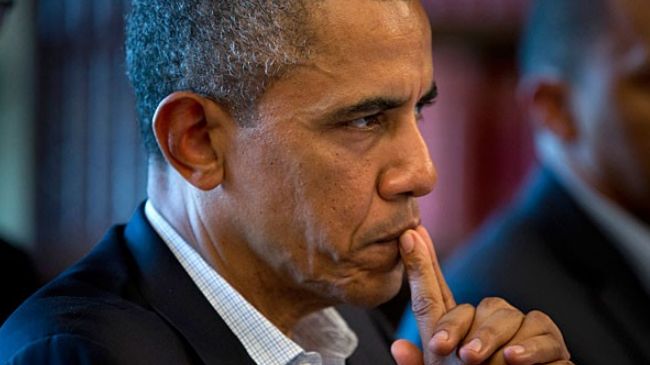
Young people in the US are disappointed with President Barack Obama’s administration and disapproved of his management of the main problems in the country, a poll revealed today.
Young people were the main support to the president in his election in 2008 and reelection in 2012. That sector of the population is currently showing a marked decrease in their support.
The poll by the Institute for Politics of the University of Harvard that included people from 18 to 29 years of age revealed that 44 percent of that sector disapproves of Obama’s work, compared to 41 percent in support.
The data shows an 11-point fall compared to a poll by the same entity this past spring, and to another poll in the fall of 2009, when 58 percent of the young supported him and 39 percent voted against.
According to Trey Grayson, director of Harvard’s Institute for Politics, this is the lowest level of support for the president since he assumed office in 2009.
Of those polled, 55 percent said they had voted for Obama, 33 percent said they voted in favor of Mitt Romney and four percent chose another politician.
Being asked today about their vote intention, 46 percent said they would vote for the current White House tenant, while 35 percent would do it for Romney and 13 percent would choose someone else.
Asking opinions about health reform, 61 percent of those polled disapproved of Obama’s administration and 57 percent rejected Obamacare, and also 44 percent consider that health care will worsen, while 34 percent said it will remain the same and just 17 percent think that it will improve.
The poll also revealed that frustration is not only against Obama, because 59 percent of those polled do not support democrats in Congress, while 35 percent approved them, but also two thirds of them do not support republicans and just 19 percent support them.
The poll included 2,089 people and defining their political inclination: 41 percent of the young defined themselves as independents, 33 percent as democrats and 24 percent as republicans, and predicted a large number of non-participants in the primary elections in 2014.
UK food poverty a ‘public health emergency’, say leading experts
RT| December 4, 2013
A group of high-profile academics has written an open letter warning that food poverty has become an “emergency” in the UK. Use of food banks has tripled in the past year alone, but the government says this does not mean more people are starving.
“This has all the signs of a public health emergency that could go unrecognised until it is too late to take preventive action,” said the letter, co-signed by six leading public health experts, and addressed to the prestigious British Medical Journal (BMJ).
The authors, led by David Taylor-Robinson from the Medical Research Council, speculate that “the rising cost of living and increasingly austere welfare reforms” from the Conservative-Liberal government are at fault.
“The effects of these policies on nutritional status in the most vulnerable populations urgently need to be monitored… Access to an adequate food supply is the most basic of human needs and rights.”
Official statistics show that the number of those admitted to hospitals with malnutrition has risen from 3,161 in 2008/09 to 5,499 in 2012/13.
Even those who are not on the verge of starvation are suffering. The signatories cite a recent report by the Institute for Fiscal Studies that claimed that families are spending 8.5 percent less on food than before the recession, and there has been a “reduction in quality” of produce consumed during a “substitution towards processed sweet and savoury food and away from fruit and vegetables” particularly by poorer and single-parent families.
Leading food bank charity The Trussell Trust, which operates 400 outlets, says that three times more people have asked it for help than just a year ago. Nearly 350,000 people have received at least three days’ worth of meals from it in the 12 months leading to October.
British Red Cross has also started its first food aid collection drive since World War II.
The government has not only refused to take blame for increased food poverty, but has questioned that there has been an increase at all.
“The benefits system supports millions of people who are on low incomes or unemployed and there is no robust evidence that welfare reforms are linked to increased use of food banks,” said an official statement in response to the open letter.
“In fact, our welfare reforms will improve the lives of some of the poorest families in our communities with the universal credit making three million households better off – the majority of these from the bottom two fifths of the income scale.”
Government officials have said that the rise of food banks – which are made up from private donations – has actually been the result of greater generosity from private citizens, and charities opening new access points. Another issue is that of entitlement to receiving meals from the food banks. In order to be given a free meal, a needy individual has to be issued a voucher by a local official, policeman, or church minister. In recent months, employment office workers have begun to offer more food vouchers, whereas before, they might have handed out cash benefits.
But no definitive, non-ideological estimations of the scale of the food poverty problem are likely at least until the publication of an official Department for Environment Food and Rural Affairs (Defra) report on the issue commissioned last February, which has been completed but not released to the public.
The authors of the BMJ letter and The Trussel Trust have both hit out at the government for failing to publish the report – supposedly finished in July – implying that it is hiding the devastating effect of its welfare reforms, which include stricter criteria for receiving state aid and greater penalties for those who fail to comply with them.
In response Defra has said that it is simply conducting the “necessary review and quality assurance process” before publication.
Inequality grows as CEOs blackmail the rest of us
By Yves Engler · December 4, 2013
Last week in Switzerland big money staved off an important challenge to big paychecks. But the sentiment that spurred a Swiss effort to tie executive compensation to common workers’ wages will not be defeated so easily.
A Sunday ago Swiss voters said no to a referendum question that would have capped executive compensation at 12 times the lowest paid worker in the firm. After gaining over 130,000 signatures to put the question to voters, proponents of the initiative were overwhelmed by a flood of money claiming a ‘yes’ vote would drive companies away. Early polls found 46% of the Swiss public opposed to the 12:1 pay measure but with opponents spending up to 50 times more than the ‘yes’ campaign, 65% ultimately voted ‘no’.
According to supporters of the measure, the average Swiss CEO made 43 times the average wage in 2011, up from six times in 1984. A number of top Swiss CEOs make more than 200 times their employees’ wage.
But Switzerland’s CEO-to-worker pay differential appears socialistic compared to North America’s. After the US, Canada has the second highest CEO-to-worker pay ratio. Last year, for instance, the CEO of BCE, George Cope, received $11.1-million in compensation. This staggering sum is nearly 200 times more than what a Bell Canada technician in Toronto makes and 2,000 times the pay of an Indian call-centre worker who responds to Bell customers.
Despite making 200 times the average industrial wage, Cope was not the best-paid executive in Canada. According to the Canadian Centre for Policy Alternatives’ summary of Canada’s 100 highest paid CEOs in 2011, the $11.1 million Cope made in 2012 would have placed him just off the top 15. Incredibly, the CEO of Canadian Pacific, Hunter Harrison, took home four and a half times Cope’s pay.
In recent years the difference between regular employees’ pay and CEO compensation has grown rapidly. A recent Globe and Mail survey found that ratio has reached 122-1 at Canada’s biggest firms, up from an average of 84-1 a decade ago. Using a different set of data, the CCPA and AFL-CIO put the Canadian CEO-to-worker pay ratio significantly higher.
As a flagrant symbol of growing inequality, executive pay is increasingly facing political challenge. While the 12:1 initiative was defeated, in March more than two-thirds of Swiss voters supported a referendum question requiring companies to give shareholders a binding annual vote on executives’ pay, while outlawing bonuses to executives joining or leaving a business or as part of a takeover. Similarly, some EU officials have suggested that shareholders should be given the right to vote on the ratio between a company’s best and worst paid workers.
The French government took office last year saying it would limit executive salaries at state-controlled companies to a maximum of 20 times that of the lowest-paid employees and on Wednesday Ontario New Democrat leader Andrea Horwath called for the salaries of CEO’s at the province’s hospitals, electrical utilities and other public sector agencies to be capped at $418,000, twice the premier’s annual salary.
Politicians should legislate a maximum pay differential between the best and worst paid workers in all companies. How about a ratio of 20 times that’s steadily reduced over time?
It may be difficult, but I’m sure CEOs like Bell’s George Cope could learn to cope on a million bucks a year.
PSA Peugeot Citroen, Renault ready to return to Iran market
Press TV – November 30, 2013
French automakers PSA Peugeot Citroen and Renault are planning to return to Iran’s market following a recent nuclear deal reached between Tehran and six major world powers in Geneva which will ease sanctions on auto industry.
According to the Geneva deal, the EU and US sanctions on Iran’s petrochemical export, gold and precious metals and auto industry as well as the supply of spare parts for the Iranian airplanes would be suspended.
French auto giants are poised to resume vehicle sales in Iran to reclaim their share of the huge Iranian market they lost after the implementation of sanctions against Tehran over its nuclear energy program in 2011.
Peugeot and Renault are among Western companies sending representatives to a crucial auto conference that was to open in the Iranian capital, Tehran, on Saturday.
Their participation in the conference has been interpreted by the media as a sign to mark their early return to the Iranian market before other competitors.
Renault and Peugeot have been production partners of Iran’s domestic majors – Iran Khodro and SAIPA.
Official data show the sanctions against Iran led to the unemployment of 100,000 workers and undermined the output of the two French giants.
A day after the nuclear deal between Iran and the six countries, Peugeot’s shares soared 4.50 percent to 10.69 euros and Renault rose 1.43 percent to 65.35 euros.
Iran used to be Peugeot’s second-biggest market in car sales volumes before Western sanctions against Tehran were toughened. In 2011, Iran accounted for 13 percent of Peugeot’s annual sales.
Peugeot has experienced an estimated four billion euros in lost sales after cutting ties with Iranian automaker Iran Khodro in February 2012 under pressure from its American partner company General Motors.
On July 26, Renault reported a huge fall in profits for the first half of 2013 after writing off the entire value of its business in Iran due to the US-led sanctions against Tehran.
The firm took a 512-million-euro (680-million-dollar) charge after halting its activities in Iran.
Last year, Renault sold a total of 100,783 vehicles in Iran, and had a 10-percent market share. The Middle Eastern country was Renault’s eighth-biggest global market by sales, above Italy where Renault sold 96,144 units and Spain where it sold 83,366 cars.
On November 24, Iran and the five permanent members of the United Nations Security Council – Russia, China, France, Britain and the US – plus Germany sealed an interim deal in the Swiss city of Geneva to lay the groundwork for the full resolution of the West’s decade-old dispute with Iran over its nuclear energy program.
Related article
- Iran Accord Sparks Race to Tehran as Automakers Target Deals (bloomberg.com)
NSA spied on 2010 G8, G20 summits in Toronto with Canadian help
RT | November 28, 2013
The National Security Agency conducted widespread surveillance during the 2010 G8 and G20 summits with the blessing of host country Canada’s government.
Documents supplied by former NSA contractor Edward Snowden show the US converted its Ottawa embassy into a security command for six days in June 2010 as world leaders met in Toronto. The covert operation was known to Canadian authorities, CBC News reported.
The documents do not reveal targets of the espionage by the NSA – and possibly by its counterpart, the Communications Security Establishment of Canada (CSEC). The NSA briefing notes say the operation was “closely co-ordinated with the Canadian partner.”
Ultimately, the documents obtained by the CBC do not give exact specifications of CSEC’s role, if any, in the Toronto spying. Former Guardian reporter and Snowden’s chosen journalist to receive the NSA documents, Glenn Greenwald, co-wrote the story for CBC.
But the documents do spell out that CSEC’s cooperation in the venture was crucial to ensuring access to telecommunications systems needed to spy on targets during the summits.
Both NSA and CSEC were implicated, along with British counterpart GCHQ, for monitoring phone calls and email of foreign leaders and diplomats at the 2009 G20 summit in London. In addition, it was recently reported that CSEC hacked into phones and computers at the Brazilian government’s department of mines. These revelations also came via documents from Snowden, who has received asylum in Russia.
The revelations also contradict a statement made by an NSA spokesman to The Washington Post on August 30, which said that the US Department of Defense – of which the NSA is is part of – “does not engage in economic espionage in any domain, including cyber.”
The NSA briefing document says the operational plan at the 2010 summit included “providing support to policymakers.”
The Toronto summit was chock full of major economic issues following the 2008 recession. Measures like the eventually-nixed global bank tax were strongly opposed by the US and Canadian governments. Further banking reform, international development, countering trade protectionism and other issues were on the docket – and on NSA’s list of main agenda items in the aim of supporting “US policy goals.”
The partnerships by some Western spying arms at the Toronto and London summits, not to mention other stories that have come out based on the Snowden documents, call attention once again to the “Five Eyes” surveillance coalition among Australia, Canada, New Zealand, the UK and the US.
Can Right and Left Rally Against Walmart?
By Ralph Nader | November 28, 2013
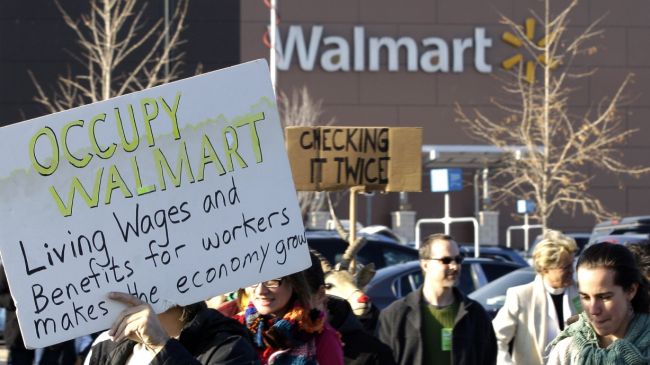
One of the most profitable corporations in America is having a holiday food drive. Sounds good — it’s the least Corporate America can do for those struggling to make ends meet while big companies rake in record profits and give so little back. But wait… there’s a catch. The food drive is for the company’s own underpaid, poverty-stricken workers. You really can’t make this stuff up.
Last week, it was reported that a Walmart store in Canton, Ohio is asking for food donations for its own employees. Photos of the food donation bins circulated online showing signs that read: “Please donate food items here so associates in need can enjoy Thanksgiving dinner.” (That’s if they even have a chance to — Walmart stores are open on Thanksgiving and are beginning their “Black Friday” deals at 6 p.m. on Thanksgiving Day to get a jump on the holiday shopping madness.)
Walmart is America’s largest employer with a workforce consisting of 1.3 million “associates.” The company made nearly $17 billion in profit last year. So why can’t Walmart afford to pay its own store workers enough for them to enjoy a holiday meal with their families? The answer is Walmart doesn’t really care about its workers.
If the Walmart food donation drive doesn’t get you properly steamed, then consider that Walmart CEO, Mike Duke, makes approximately $11,000 an hour — he took home about $20.7 million last year, plus ample benefits. Still not mad? It has also recently been reported that Duke has a retirement package worth more than $113 million! That is 6,200 times larger than the average 401k savings of a non-executive level Walmart employee! (Check out this recent report which charts other massive CEO pensions in relation to those of average workers)
One final fact to really get your dander up — The Walton family, heirs to the Walmart fortune, have accumulated more financial wealth than the entire bottom 40 percent of the population of the United States or 313 million Americans. That’s six Waltons worth a combined $102.7 billion!
No matter what one’s political leanings may be, the problem of massive income inequality and insatiable corporate greed is worsening year-by-year as CEO salaries rise, overall corporate profits soar and worker salaries stagnate. Liberal or conservative–all Americans should be outraged by this trend.
I recently wrote to conservative anti-tax advocate Grover Norquist to bring both sides of the political spectrum together on this troubling issue. In the past, Mr. Norquist and I have backed popular, reasonable policies, such as putting the full text of government contracts online, rolling back corporate welfare and opposing the civil liberties restrictive Patriot Act. As someone who claims to care about taxpayer protection, the issue of poverty-level wages and their major effect on taxpayers should be an important issue for Mr. Norquist.
Here’s why — low wages at the 10 largest fast food chains cost taxpayers $3.8 billion per year. Fifty-two percent of families of fast food workers have to rely on government assistance. McDonald’s’ “McResource” help line goes so far as to advise workers who cannot make ends meet from their poverty-level wages to sign up for government food stamps and home heating assistance. Is it fair that taxpayers have to shell out $1.2 billion a year to subsidize McDonald’s paying its workers while the fast food giant rakes in $5.5 billion in profit?
Walmart is even worse — according to a study from the Democratic staff of the House Committee on Education and the Workforce study, a single Walmart Supercenter store in Wisconsin can cost taxpayers upwards of $1.75 million in public assistance programs. If taxpayers have to cover over $1 million for just one 300-employee superstore, consider how much Walmart is costing taxpayers each year at their 4,135 stores in the United States. According to the 2012 “Walmart Associate Benefits Book”, which is distributed to employees, the company also advises its workers about getting on public assistance. Is this a fair or reasonable burden on taxpayers as Walmart reports $17 billion in profits?
Over the past five years, Walmart has had enough excess funds to buy back billions in its own stock. Walmart reportedly spent $7.6 billion last year buying back its shares. These funds are enough to raise the salaries of the lowest paid workers by $5.83 an hour. Catherine Ruetschlin, policy analyst at Demos, stated in a recent release: “These share repurchases benefit an increasingly narrow group of people, including the six Walton family heirs. But buybacks do not improve the fundamentals of the firm. If the funds were used to raise the pay of Walmart’s 825,000 low paid workers, it would not harm the retailer’s competitive ability and would add no cost to the consumer.”
(See the recent report from Demos titled: “A Higher Wage is Possible”)
The quickest way to lessen reliance on food stamp, EITC and Medicaid outlays is to raise the federal minimum wage. Raising the wage has the backing of 80 percent of Americans, 69 percent of Republicans, and even writers from The National Review and The American Conservative magazines. So why isn’t there more rage from the other end of the political spectrum? Even Rick Santorum and Mitt Romney supported raising the minimum wage to keep up with inflation — at least until Mitt Romney flip-flopped on the issue during the 2012 election.
The support of Grover Norquist and the Congressional followers of his no-tax pledge would be a significant boost for 30 million struggling workers who make less today than workers made in 1968, inflation adjusted. With a doubling in both worker productivity and the cost of living, there is no excuse for such a decline in their livelihoods.
Mr. Norquist, join this fight to protect taxpayers. Underpaid workers (who are also taxpayers) and their families need your support.
Probing US intentions in nuclear agreement with Iran
By Kaveh Afrasiabi | Press TV | November 27, 2013
Last Saturday, the ink on the historic “interim agreement” signed in Geneva had not dried yet when the early signs of trouble with the deal and its roadmap for a comprehensive final agreement emerged in the form of US Secretary of State’s explicit denial that the deal had recognized Iran’s right to enrich uranium.
Since then, John Kerry has repeated this claim, flatly contradicted by his Iranian counterpart, Mohammad Javad Zarif, on a half dozen occasions, thus raising questions regarding US’s sincerity.
Not only that, within hours of the late night breakthrough in Geneva, the White House published a “fact sheet” about the content of the agreement, which has now been contested by Iran’s Foreign Ministry as inaccurate, misleading and “one-sided interpretation.” As expected, there is absolutely no reference in this “fact-sheet” to Iran’s nuclear rights, including the right to enrich uranium, an important step in manufacturing fuel for the country’s reactors, which is enshrined in the articles of Non-Proliferation Treaty (NPT).
Indeed, one of the main problems with the US’s approach toward the Iran nuclear issue is, and always has been, its complete obliviousness toward and lack of respect for Iran’s inalienable nuclear rights, which are the centerpieces of Iran’s negotiation strategy.
Little wonder, then, that US President Barack Obama in his post-Geneva outreach to the Israeli Prime Minister Benjamin Netanyahu has reportedly emphasized the “shared goals” vis-à-vis Iran’s nuclear program, namely, the dismantling of Iran’s “nuclear weapons capability” that stems from its uranium enrichment program.
Israel has now dispatched a technical team to Washington to coordinate the US’s effort with respect to the final status agreement with Iran. This will probably mean even less of a “tactical difference” between US and Israel in the coming months with respect to Iran.
There is now even a shared US and Israeli linguistic (and policy) emphasis on “dismantling” the Iranian nuclear program. The word “dismantle” has seeped in the public statements of John Kerry, in contrast to his earlier hints at respecting Iran’s right to enrich uranium, e.g. in Financial Times in 2009.
Case in point, in his interview with ABC network on November 24th, Kerry stated, “While we are negotiating for the dismantling, they will not grow their program.” This echoed Kerry’s earlier admission, on November 10, 2013, that the US “is aiming to get Tehran to halt further nuclear development as a first step toward a complete dismantling of the program.”
By all indications, the US is pursuing this objective through a phased “roll back strategy,” whereby the Iranian nuclear energy program would be targeted for a gradual dismantling, in light of the statement by Tony Blinken, the US Deputy National Security Adviser, that “if we could have gotten an entire freeze of their program right away in one fell swoop, we would have done that.” This recalls Kerry’s other interview, with CBS’s Face the Nation on November 24, when he responded to the question of whether the agreement calls for the dismantling of some of Iran’s programs by saying “Not yet. That’s correct. Not yet. But you don’t get everything at first step. You have to go down the process here.”
The interim agreement is thus viewed by the US as a milestone in achieving the initial objectives of this “roll-back” strategy – by destroying Iran’s 20-percent enriched uranium, halting the completion of Arak heavy water reactor and the installation of new centrifuges, freezing the number of centrifuges and imposing a low-ceiling on enrichment – according to Kerry “3.5 percent,” even though the agreement specifically says 5 percent, and subjecting Iran’s program to unprecedented intrusive inspection, including “a number of facilities we have never been in before,” to paraphrase Kerry.
Since collecting information on Iran’s nuclear energy program is a must for the “roll-back” strategy, the US hopes that the implementation of the interim agreement will prove vital, given the American persistence on keeping the “military option on the table.” Equally important is “reversing key aspects of the Iranian program” via this deal, which Kerry has been fond of repeating since co-signing the deal in Geneva.
As for the agreement’s concluding statements that refer to Iran’s enrichment program in a final agreement, Kerry has put the emphasis on the sentence that subjects this to “mutual agreement.” In other words, Iran’s NPT right is now threatened with a contractual atrophy that subjects this right to the prerogatives of a select few governments and thus shrinks and compromises it.
The full text of that important paragraph is as follows: “Involve a mutually defined enrichment program with mutually agreed parameters consistent with practical needs, with agreed limits on scope and level of enrichment activities, capacity, where it is carried out, and stocks of enriched uranium, for a period to be agreed upon.”
In addition, Kerry has repeatedly turned attention to the agreement’s reference to the UN sanctions resolutions on Iran, which call for the suspension of Iran’s enrichment and reprocessing activities. In other words, as far as the US is concerned, the inclusion of the passage on UN resolutions is yet another stab at Iran’s defense of its right to enrich.
Notwithstanding the above-said, there is very little doubt that the US’s intention of the “first step” interim agreement is to downgrade the Iranian nuclear energy program and move steadily along the path of complete dismantling and dispossession of Iran’s nuclear fuel cycle.
Another point: the agreement places some of Iran’s centrifuges in standby, i.e. spinning without enriching, which can be hazardous to the equipment after a while, causing equipment decay and failure. Both the standby and shut down options have clear consequences for the physical condition of the centrifuges, which is why it is important not to extend this agreement beyond the six months. On this account alone, the US will likely drag its feet on a final deal, hoping that Iranian centrifuge program will increasingly suffer as a result of a lengthy state of ‘limbo.’
Consequently, it is important from Iran’s vantage to correctly tabulate what a “win” for the other side entails, and whether or not the “win-win” is balanced and evenly distributed, rather than triggering a process whereby the other side’s “win” would accumulate over time at Iran’s expense. In that case, it would simply culminate in a “lose-win,” to the detriment of Iran’s interests.
Of course, this is not even to mention the “psychological warfare” behind the White House “fact-sheets” hoopla about allowing the release of measly 4.2 billion of Iran’s oil proceeds in the next six months, while keeping the rest in an escrow. Clearly, the US’s intention is to weaken not only Iran’s resolve but also the spirit of resistance and national dignity, as part and parcel of its nuclear “roll-back.”
Yet, despite all the US’s clever “smart power” maneuvers mentioned above, what is rather remarkable about Iran’s counter-strategy, based on deft, skillful negotiation strategy, is how those maneuvers are neutralized and a broader anti-sanctions, pro-Iran momentum has been generated that is bound to grow stronger and introduce greater fissures between US and its Western partners, who happen to have greater vested economic interests with Iran. And this is precisely why Iran’s “win” in this stage of the nuclear game is irrefutable.
How NSA Mass Surveillance is Hurting the US Economy
By Trevor Timm | EFF | November 25, 2013
Privacy may not be the only casualty of the National Security Agency’s massive surveillance program. Major sectors of the US economy are reporting financial damage as the recent revelations shake consumer confidence and US trade partners distance themselves from companies that may have been compromised by the NSA or, worse, are secretly collaborating with the spy agency. Members of Congress, especially those who champion America’s competitiveness in the global marketplace, should take note and rein in the NSA now if they want to stem the damage.
The Wall Street Journal recently reported that AT&T’s desired acquisition of the European company Vodafone is in danger due to the company’s well-documented involvement in the NSA’s data-collection programs. European officials said the telecommunications giant would face “intense scrutiny” in its bid to purchase a major cell phone carrier. The Journal went on to say:
“Resistance to such a deal, voiced by officials in interviews across Europe, suggests the impact of the NSA affair could extend beyond the diplomatic sphere and damage US economic interests in key markets.”
In September, analysts at Cisco Systems reported that the fallout “reached another level,” when the National Institute of Standards and Technology (NIST) told companies not to use cryptographic standards that may have been undermined by the NSA’s BULLRUN program. The Cisco analysts said that if cryptography was compromised “it would be a critical blow to trust required across the Internet and the security community.”
This forecast was proven true in mid-November, when Cisco reported a 12 percent slump in its sales in the developing world due to the NSA revelations. As the Financial Times reported, new orders fell by 25 percent in Brazil and 30 percent in Russia and Cisco predicts its overall sales could drop by as much 10 percent this quarter. Cisco executives were quoted saying the NSA’s activities have created “a level of uncertainty or concern” that will have a deleterious impact on a wide-range of tech companies.
It is hard for civil libertarians to shed tears over AT&T losing business because of NSA spying, considering the company allowed the NSA to directly tap into its fiber optic cables to copy vast amounts of innocent Americans’ Internet traffic. AT&T was also recently revealed as having partnered with both the DEA and the CIA on separate mass surveillance programs. It is also hard to feel sorry for Cisco, which stands accused of helping China spy on dissidents and religious minorities. But the fact that the spying is hurting these major companies is indicative of the size of the problem.
This summer, European Parliament’s civil liberties committee was presented with a proposal to require every American website to place surveillance notices to EU citizens in order to force the US government to reverse course:
“The users should be made aware that the data may be subject to surveillance (under FISA 702) by the US government for any purpose which furthers US foreign policy. A consent requirement will raise EU citizen awareness and favour growth of services solely within EU jurisdiction. This will thus have economic impact on US business and increase pressure on the US government to reach a settlement.” [emphasis ours]
Meanwhile, Telenor, Norway’s largest telecom provider has reportedly halted its plans to move its customers to a US-based cloud provider. Brazil seems to be moving ahead to create its own email service and require US companies locate an office there if they wish to do business with Brazilian customers.
Laws like this mean that companies like Google “could be barred from doing business in one of the world’s most significant markets,” according to Google’s director for law enforcement and information security at Google, Richard Selgado. Google has been warning of this as far back as July, when in FISA court documents it argued that the continued secrecy surrounding government surveillance demands would harm its business.
Many commentators have been warning about the economic ramifications for months. Princeton technologist Ed Felten, who previously at the Federal Trade Commission, best explained why the NSA revelations could end up hurting US businesses:
“This is going to put US companies at a competitive disadvantage, because people will believe that U.S. companies lack the ability to protect their customers—and people will suspect that U.S. companies may feel compelled to lie to their customers about security.”
The fallout may worsen. One study released shortly after the first Edward Snowden leaks said the economy would lose $22 to $35 billion in the next three years. Another study by Forrester said the $35 billion estimate was too low and pegged the real loss figure around $180 billion for the US tech industry by 2016.
Much of the economic problem stems for the US government’s view that it’s open season when it comes to spying on non-U.S. persons. As Mark Zuckerberg said in September, the government’s position is“don’t worry, we’re not spying on any Americans. Wonderful, that’s really helpful for companies trying to work with people around the world.” Google’s Chief Legal Officer David Drummond echoed this sentiment last week, saying:
“The justification has been couched as ‘Don’t worry. We’re only snooping on foreigners.’ For a company like ours, where most of our business and most of our users are non-American, that’s not very helpful.”
Members of Congress who care about the US economy should take note: the companies losing their competitive edge due to NSA surveillance are mainstream economic drivers. Just as their constituents are paying attention, so are the customers who vote with their dollars. As Sen. Ron Wyden remarked last month, “If a foreign enemy was doing this much damage to the economy, people would be in the streets with pitchforks.”
Featured Video

No Vote, No Representation, No State: Democracy, Israeli Style
or go to
Aletho News Archives – Video-Images
From the Archives
Sanctions, War and the Policy of Dual Containment
By SASAN FAYAZMANESH | March 17, 2008
It is now nearly three decades since the Unites States adopted the policy of dual containment of Iran and Iraq. While much has been written about the containment of Iraq, there has been very little in-depth analysis of this policy when it comes to Iran. In a book that is going to be released on March 31, 2008, entitled The United States and Iran: Sanctions, Wars and the Policy of Dual Containment (Routledge), I attempt to address this shortcoming by investigating when and why the US policy of containment of Iran came about, how it evolved, and where it stands today.[1] To the extent that Israel has been involved in US policy making, the study will also include the role that Israel has played in the containment of Iran. Also, since the fate of Iran has been inextricably linked to that of Iraq, occasionally the investigation will overlap with the containment of Iraq.
The policy of dual containment of Iran and Iraq originated during the Carter Administration, but it was not until the Clinton Administration that the expression “dual containment” became popular. … continue
Blog Roll
 Aletho News
- Elmo Sold mRNA Jabs to Your Toddler. Now They Are “Off-Label.”
- British state targets Palestine Action with yet another crooked trial
- Americans are paying the price to preserve Israel’s nuclear hegemony
- Resistance factions are necessary to ensure a permanent US Iraq withdrawal
- How Israel destabilizes the Middle East: Denying sovereignty and the right to exist
- Europe’s Establishment Is Embracing War – and Losing Voters
- NATO chief advocates war of aggression
- No Vote, No Representation, No State: Democracy, Israeli Style
- Zionist Bought Senate Blocks Information About American Citizens Killed By Israel
- While Gaza dominates the UN, these are the people keeping it alive
- If Americans Knew
- Israeli Soldiers Abduct At Least 22 Across Occupied West Bank
- Eight Palestinians Killed in Israeli Attacks on Gaza
- Israeli former leaders and security chiefs threaten legal action over ‘Jewish terrorism’
- Israel map in LA Times ad includes all land from the river to the sea
- Inside Lebanon’s 200-page dossier on Israeli war crimes
- Flydubai, genocide, settler violence, Trump abuse of power to deport – Daily Update
- Counting Antisemitic Incidents: What the ADL Audit Reveals — and Obscures
- Mamdani releases plan to combat antisemitism and hate crimes in New York City
- Iran’s Revolutionary Guards Publish Letter to the American People
- DMFI launches $1 million ad campaign supporting Virginia’s Elaine Luria
- No Tricks Zone
- Green Energy Debacle: German Expert Professor Fritz Vahrenholt Warns Of Severe Economic And Social Consequences
- Two More Paleo Reconstructions Affirm Meters-Higher Sea Levels Across Ireland, Brazil 7000-6000 Years Ago
- New Study: Earth And Venus Surface Warmth Largely Explained By Convection And Lapse Rate, Not CO2 Or Radiation
- 2025 Nature Paper Claiming Worsening Global Drought Gets RETRACTED …Heavily Flawed
- New Study: ‘Global Drought Shows No Detectable Recent Acceleration Under Climate Warming’
- Economic Masterminds: German Socialists Suggest Taxing Productivity Gains Stemming From Using AI
- The South China Sea Has Not Been Cooperating With The Climate Change Narrative
- Energy Crisis: Germany Enters Heating Season With Historically Low Gas Reserve Fill Levels
- New Study: The Antarctic Ice Sheet Gained Mass From 2020-2024 Due To Staggering Snow And Ice Accumulation
- Study: Ocean Heating Rates From Thousands Of Years Ago ‘Dwarf’ Modern Ocean Heating Rates

