Jeff Blankfort: There’s never been a sit-in at the Israeli Airline El Al, the question is Why not?
INTERVIEW BY KATHLEEN WELLS – August 2010
Kathleen Wells: So, I mean, if what you’re saying is true, the organized Jewish establishment or this lobby has essentially bought Congress, at least with regards to issues regarding Israel. So, I mean, this is very disturbing to hear, and it says that something is wrong with our entire system of government.
Jeffrey Blankfort: They have been bought by every major sector/special interest of American society that represents American capitalism: the arms industry, and so on, and, in this sense, Israel and the Jewish establishment that supports it have been a major player. They had been responsible for, at least since World War II, at least 60 or more percent of the money that goes to the Democratic Party, making the Democratic Party, literally, a subsidiary of the Zionist establishment.
In 2000, Mother Jones Magazine ran what they called “Mother Jones [400],” which listed the top 400 contributors to the American political campaigns in that year. And of the top 400, of the top ten, seven were Jewish; of the top 20, 12 were Jewish; and of the top 250, where I stopped counting, at least 125 were Jewish. And 75 percent of their money went to the Democratic Party. In 2002, one Israeli-Egyptian born American named Haim Saban, who brags about his loyalty to Israel being his primary interest, he contributed $12.3 million to the Democratic Party, seven of which bought their office building in Washington, D.C., and that was only about a million and a half dollars less than the political action committee of the arms industry gave to both political parties. So this is the kind of clout that they have in Washington.
And there was once an institution, one independent think-tank in Washington that wasn’t in the pro-Israel lobby camp, and that was Brookings [Institution.] And in the same year, he [Saban] gave $12.3 million, the same number, to Brookings [Institution] to found Saban Center for Middle East Policy, thereby taking over Brookings’ role in the Middle East. And it was at Brookings where Andrew Shapiro gave his talk. And the head of Brookings is a man named Kenneth Pollack, whose book, “The Gathering Storm,” was one of the most instrumental pieces of propaganda that got us into the current Gulf war. I covered a lot of ground there but all …
Kathleen Wells: Yes. Yeah, and you know, the American people are not aware of this, the depth and breadth of this influence, and it’s a bit overwhelming to hear this. You were once a member of AIPAC, is that correct?
Jeffrey Blankfort: Well, I actually joined AIPAC in 1988. I had just begun editing the Middle East Labor Bulletin and co-founded a committee called the Labor Committee on the Middle East, which focused on the situation of Palestinian workers in Israel and in the occupied territories and in other Middle Eastern countries, which tried to show Palestinians as activists, as not just victims.
But I began to see the role of AIPAC and so I joined AIPAC, and I went to a luncheon that they gave in San Francisco. Now, every year in Washington, the biggest event of the year in Washington is the AIPAC Conference, in which at least half the members of Congress attend and have their names put on a roll so their constituents back home — Jewish constituents — know that they attended, and usually a major speaker from Israel or the U.S. Government, [the] Secretary of State, Vice President, and so on, speak there.
But they also have local conferences in cities around the country. In San Francisco, they have usually three events — two luncheons and one dinner in different parts of the Bay area, so I went to a luncheon in San Francisco. And I was astounded to see that all the local public officials had been invited to attend and were there at the Fairmont Hotel, which is one of the most flashiest, gaudiest hotels in San Francisco, where they were addressed by a major speaker — a U.S. Senator. These U.S. Senators or governors, they go around the country, and they speak at AIPAC events. The news media are not involved, are not invited. And back home, they don’t know about it either, wherever these senators come from.
But what was astounding to me was to see that all the important people in San Francisco were attending this luncheon. And when you come, you’re given a card that tells you how much you’ve contributed to AIPAC, and, of course, they collect money there. What happens after these meetings, and they take place all over the country, is that local Jewish community organizations — the Jewish Community Relations Council or Jewish foundations or federations — then spend the money and send these public officials — police chiefs, fire chiefs, mayors, city council people, supervisors — to Israel on all-expense-paid trips where they meet the prime minister, the defense minister, very important people. They go to Yad Vashem, the Holocaust Memorial Museum; they go visit the West Bank settlement; they come back to the United States, and they know they have very powerful friends in the Jewish community who accompanied them on the trip. And from this group of people, we get our members of Congress, since they are already indoctrinated into being pro-Israel even before they file for running for Congress.
So most Americans and actually most people — even pro-Palestinian supporters — are not aware of this. They don’t follow this because they’ve been told by Professor Chomsky and others that the problem is not the Israel lobby but U.S. imperialism — which is a pretty remote target for most people. If they thought it was their members of Congress who were involved in voting for money for Israel/supporting Israel policies, they might be sitting in at their offices.
For example, Nancy Pelosi, the Speaker of the House, has spoken at a number of AIPAC conferences in which she repeatedly pledges her loyalty to Israel, but there has never been any major protest against Pelosi for her support of Israel. As a matter of fact, she is the favorite of the liberals in San Francisco because she’s criticized China and she’s very good on the issue of gay rights, which is an important issue in the Bay Area.
Kathleen Wells: So you’re basically hitting on or touching on issues that the activist — pro-Palestinian activists — steps they should take to be more effective.
Jeffrey Blankfort: Well, yes, to this point the solidarity movement for Palestinians in this country is an utter failure. They have succeeded in doing absolutely nothing, and you see around the world the Boycott, Divestment, and Sanctions movement [BDS] targeting Israel has been gaining ground in Europe, among labor unions in England and Ireland and Scotland, and so on. And here, there is a movement that is developing, but it’s only targeting companies that do business in Israel, which is very positive, but there is no reason that it shouldn’t be like South Africa, in which you target the economy of the country that’s responsible, and that’s mainly Israel.
I mean during the anti-apartheid movement, which I was involved in, they had sit-ins at South Africa Airways and forced South African Airways to close its offices. But there’s never been a sit-in, as far as I know, at any offices of the Israeli Airline El Al, and they’re all over the place, and the question is Why not? There has never been a major campaign to call Congress to stop aid to Israel; whereas, for example, in the 80s when Congress was giving $15 million a year to the Contras to overthrow the Nicaraguan government, there was a national campaign to stop aid to the Contras — calling members of Congress — and it was successful. As a result, we had the Iran-Contra scandal. Why has there never been a similar campaign waged by the very same people who are also involved themselves in pro-Palestinian activities to do the same regarding Israel?
Kathleen Wells: Well I mean, let me ask you — Why? Why hasn’t that happened?
Jeffrey Blankfort: Well, because the left for many years has been predominantly Jewish, and this is because there’s a history of Jewish radicalism going back to the beginning of the trade unions in this country. Jewish radicals – – Jews — were very heavily involved in all progressive organizations — the civil rights movement, and so on, against the war in Vietnam. But, suddenly, when it came to Israel, it’s closer to home. And there was a reticence to put the blame on Jews. Israel calls itself a Jewish State, though 20 percent of the population is not Jewish, it’s Palestinian Arab. But there was this reticence to do that. It was a lot easier to blame U.S. foreign policy, U.S. imperialism. For example, when Israel was heavily involved in supporting the Contras in Nicaragua, supporting and arming the Salvadoran government, arming the government in Guatemala, the solidarity groups in those particular arenas were predominantly Jewish, but they refused to take critical positions on Israel arming Salvador, Israel arming [the] Nicaragua [Contras], and Israel arming Guatemala. And when I organized a demonstration in 1985, opposing Israel’s roles as a U.S. surrogate in South Africa and Central America, those organizations would not endorse the demonstration.
As a matter of fact, the Nicaraguan Solidarity Committee gave an excuse that they weren’t giving any more endorsements. Guatemala Solidarity Committee [Guatemalan News & Information Bureau] did finally endorse, but I had to call and threaten them with exposure, and it split the organization. And the same thing with CISPES around El Salvador.
Kathleen Wells: So what we are talking here is ethnic loyalties. So are you saying that ethnic …
Jeffrey Blankfort: We’re talking about a kind of tribalism that, even though these particular Jewish activists were anti-Zionist (they didn’t believe in a Jewish state), they became very defensive when it came to criticizing Israel specifically. And this is one of the reasons you had members of Congress who were very adamant about apartheid in South Africa, but when it came to Israel arming apartheid South Africa, they were silent. When it came [to the U.S. arming] the Contras [they spoke out]. But when it came to Israel helping the Contras, they were silent. [When] we had the Iran-Contra hearings, Israel was never named as a country. They were country A.
Kathleen Wells: So let me ask you, are these ethnic loyalties — or tribalism, as you term it — taking precedence over defending the rights of Palestinians?
Jeffrey Blankfort: It has. They would deny that this is the case. I have been attacked for suggesting that it is. But I see no other reason, because, I mean, I’ve been into this 40 years, and when I first came back from my trip to the Middle East (I happen to be Jewish, but I come from a non-Zionist family — non- Zionist, which later became anti-Zionist) and people I knew who’ve been active around civil rights, and before there was a civil rights movement, when they heard that I had been with the Palestinians, they went crazy. They literally became like Afrikaners because they had been traumatized by the holocaust. And this feeling of the victimization of Jews in World War II was something that Jews growing up with, including myself, felt very strongly. So the notion of blaming Jews was to them going back to periods of anti-Semitism and playing into a right wing and what they call “a neo-Nazi agenda.”
The fact of the matter is, however, that it was a Jewish state, done in the name of Jews, [that] had ethnically cleansed the Palestinians and it was Jewish organizations that were lobbying, not only in the United States, but throughout Western Europe, for continued support of what Israel was doing — not only ethnic cleansing but all its wars against the Palestinians, against the Lebanese. And whereas Professor Chomsky says, “None of this would have been done without the U.S. authorization,” it’s simply not true.
As a matter of fact, when Menachem Begin, the Israeli prime minister, annexed the Golan Heights in Syria, Ronald Reagan was on a trip to Europe and it was like [he was] blindsided.
Chomsky will also, by the way, point to a situation where the United States was very unhappy and complained when it was discovered that Israel had been selling Falcon radar warning devices to China without U.S. approval, and there were some U.S. parts in this. Now, Chomsky and his supporters say, “Where was the lobby on this?” And, in fact, the lobby was not informed and felt blindsided. It was very embarrassing for some of the neocons in Washington, like Douglas Feith, one of the instrumental people in giving us the war in Iraq. They felt blindsided by it because the Israelis, who basically have very little respect for their American counterparts — they had made a deal with China without notifying the Jewish establishment here in this country. So that was an embarrassment on their part, for them. And they were quite upset with their Israeli friends because they weren’t notified about it.
There are issues in which the Israeli lobby — actually, it’s more of a hotel or a Leviathan or an octopus — is not dominant, but it is when it comes to Middle East policies, certainly when it comes to Palestine and pushing toward the war in Iraq, pushing for the war against Iran. Up to now, they haven’t succeeded, largely because there are people in the Pentagon and the intelligence agencies that know that a war or attack on Iran would be a global disaster — not only bad for United States, but bad for the world economy.
Nevertheless, it seems now that the possibilities of an attack on Iran are greater than ever. And this has been at the top of the agenda of the Zionist establishment since the attack on Iraq. You could just go to the AIPAC website, the website of the American Jewish Committee, which is a very important, probably the second most important organization in the Jewish community. It’s the foreign policy arm of the Israel lobby with offices in Latin America, Africa, Europe. And they have been lobbying foreign governments for years to take pro-Israel positions.
The head of that organization, David Harris, is probably the most well-known American Jew outside the United States. He meets regularly with the heads of state of all the European countries — our NATO allies — with Mexico [and] countries in Latin America, Africa, and so on.
If there is going to be a war against Iran, there is no way that it could not be said that it is a war for Israel. As a matter of fact, the United States, since the defeat of George Bush, Sr., has increasingly made Israel’s enemies our enemies. So where Hezbollah and Hamas are not American enemies (they’re seen as Israel’s enemies) they have now become our enemies.
Yet Hezbollah has never [been] proven to have done anything to attack the United States [although] they were accused of being responsible for the bombing of the U.S. Marine barracks in Lebanon in 1983, where I happened to be at the time. Hezbollah formed as a resistance organization to the Israeli occupation, and there are a lot of questions as to who actually carried out that bombing, but it has never been proven that Hezbollah did it. Hezbollah has never launched a terrorist attack against the United States, nor has Hamas, and yet those two organizations are now considered to be U.S. enemies because they’re essentially Israel’s enemies.
Kathleen Wells: We’re covering a lot of ground here and I can hear your critics say that you are contending that there is a cabal driving U.S. foreign policy.
Jeffrey Blankfort: When it comes to the Middle East, there is no question about it. It is not only outside of the government. Let’s [look at] what it consists of: You have AIPAC; you have the American Jewish Community; you have the Anti-Defamation League, which is quick to call any critic of Israel an anti-Semite. It is actually an organization that has been spying on American leftists since the 1930s, including me and thousands of other political activists, including the NAACP — virtually every political group that might have an issue around Israel.
We have a group called the Israel Project, which is a propaganda arm of Israel which holds regular events, press conferences in Israel and has 18 members of Congress on its board of directors. Eighteen members of the U.S. Congress on the board of a pro-Israel lobbying group which, of course, is tax exempt [and is not required to register as a foreign agent.]
You have a number of think tanks: the Washington Institute for Near East Policy, which was founded by AIPAC in 1985, whose talking heads appear every Sunday, every … they’re on NPR, they’re on PBS, and they are never identified as being part of an Israeli lobby institution. The American Enterprise Institute is also a pro-Israel lobby institution. You have the Foundation for Defense of Democracies, which you never hear about, but this has members of Congress, senators, a former CIA chief, Jim Woolsey [who] is on every one of these pro-Israel lobbying groups — every one of them. You have JINSA, the Jewish Institute for National Security Affairs, founded in 1976, which has about 20 former generals and admirals on its board but also has many of the neocons: Michael Ledeen, Richard Perle, Max Kampelman. These are the ones — people who are very much involved in fomenting the Iraq war; Paul Wolfowitz. There was PNAC, Project for New American Century from 1997, which called for the overthrow of Saddam Hussein, which had some of the very same people on it — mostly Jewish neocons — which is largely a Jewish movement, although not exclusively Jewish.
Fomenting the war on Iraq was done on every single level in the media. You had op-ed pieces written by William Safire in the New York Times; Abe Rosenthal in the Washington Post. You had Kristol, Chuck Krauthammer, and you had Mortimer Zuckerman, who is the owner of the US News and World Report and the New York Daily News, writing op-ed piece after op-ed piece calling for an attack on Iraq. You had Kenneth Pollack, the head of the Brookings Institution Saban Center writing a book called “The Gathering Storm” endorsing the war on Iraq.
It is a cabal, and it’s not a hidden cabal. It’s quite public, except those people who don’t want to see it don’t look at it. It’s like the monkey: see no evil, hear no evil, speak no evil. This is how the solidarity movement has been when it comes to this cabal.
Kathleen Wells: You’ve written a piece titled “A War for Israel.” I want to touch on that piece, because last week* the last combat soldier left Iraq, and so many Americans — not all, but many Americans — are asking what was the war in Iraq about? And many will answer it was about oil. Give us your thoughts about that.
Jeffrey Blankfort: Well, it’s interesting. There is no record of oil companies wanting a war in Iraq. What the oil companies want is stability. They would like to have been able to purchase oil from Saddam Hussein, who would have liked to have sold it to them.
In fact, the same thing with Iran. Conoco, a major American oil company, had to cancel a contract with Iran under pressure from the Zionist lobby. The oil companies need stability [where they get their resources]. Their profits are guaranteed. They’d have an arrangement with Saddam Hussein like they would have with Saudi Arabia or with Kuwait. So the fact of the matter is that the war in Iraq threatened the stability of the oil companies’ [sources]. And it’s interesting that President George Bush, Sr., his Secretary of State James Baker, and his National Security Council — excuse me, National Security Adviser Brent Scowcroft — all of whom had closer ties to the oil industry itself than did Bush or Cheney — they opposed the war on Iraq because they thought it would destabilize the region and would bring the Shi’a into power in Iraq, which would then make Iraq closer to Iran.
Now, what’s happened after the war is that the major oil contracts have gone, not to American companies, but to China, for example. The largest contract for oil in Iraq went to China, and that was based on a contract that was, ironically, signed with China during the reign of Saddam Hussein.
Now why was this a war for Israel? I actually wrote this in 2004, and there’s much more evidence to that effect today. There was a plan put forth by an Israeli political analyst named Oded Yinon in the 80s. The idea was to divide the Arab countries, including Iraq, into their confessional states, making several confessional states based on religion. So instead of having a country called Iraq, you would have a Shi’a Iraq, a Kurdish Iraq, and a Sunni Iraq. That would be designed to weaken Israel’s Arab enemies, and Iraq was seen as a major threat to Israel.
Another reason was Israel also wanted to see the U.S. as an occupying force in the Middle East, just like it is, so the U.S. could then use Israeli “expertise” in occupying Palestine to occupy Iraq. And many of the same techniques that Israel has used to occupy both Lebanon in the past and to occupy the occupied territories in West Bank and Gaza were used by the United States in Iraq. Also, if the United States was occupying an Arab country, it would be less prone to criticize Israel for doing the same thing. And we saw there has been far less criticism by the U.S. government since 2003 than before in terms of what it was doing in the occupied territories.
Also, in 1995, you had a group of neocons — among them Richard Perle, Paul Wolfowitz, Douglas Feith, and Meyrav Wurmser, who wrote a paper called “A Clean Break.” But this was for Prime Minister Benjamin Netanyahu in Israel, calling on Israel to get rid of the regime of Saddam Hussein and stop peace talks with the Palestinians.
Netanyahu did not adopt that position, but these very same neocons then came into the administration of George W. Bush — W, Junior — with the same policies to get rid of Saddam Hussein [as did] the Project for a New American Century.
Now, it’s interesting in the First Gulf War, George Bush, Sr., was criticized by the Zionist establishment and its friends in the media for not dethroning Saddam Hussein. And this was when the neocons turned on Bush because they thought Israel’s main enemy in Iraq was going to be eliminated and there would be regime change there that would be more favorable to Israel and would reinstate the oil line that used to go from Iraq [to] Haifa. This was probably not going to happen. But in any case, they believed that Israel would benefit from the getting rid of Saddam Hussein.
Kathleen Wells: But why did they believe that? Give me one sentence as to why they believe regime change in Iraq would benefit Israel?
Jeffrey Blankfort: They saw Iraq as the most significant foe and threat to Israel — the largest Muslim Arab state. Egypt is now out of contention because of the Camp David agreement, and Iraq was considered to be a major threat. The Zionist lobby tells [us] that they didn’t really want us to attack Iraq; they wanted to attack Iran, but statements by Israeli officials, including Shimon Perez, called on the U.S. to dethrone Saddam Hussein, because by eliminating Saddam Hussein and hopefully breaking Iraq into a Shi’a, Kurdish, and Sunni states, they would eliminate Israel’s major threat in the Arab world.
Iran is not an Arab country, and for years Israel’s foreign policy had been based on making alliances with non-Arab regimes in the region such as Turkey, Iran, and the Kurds. And so they had a long, very close relationship with Iran under the Shah. Despite the statements made by Khomeini and Iranian leaders, we saw that during Iran-Contra, that the Iranians and the Israelis were dealing arms. And Turkey now, of course, has made close ties to Iran, and this has put the U.S. in a bind, because Turkey has been a real strategic asset to the United States since World War II. And the Israel lobby is pushing for the United States to break that relationship with Turkey, because Turkey is not bending to Washington’s wishes or Israel’s wishes when it comes to Iran or to the Palestinians.
Kathleen Wells: And you’re saying that Israel — the Jewish lobby — is pushing for the United States to break with Turkey? Is that what you just stated?
Jeffrey Blankfort: Well, the Israel lobby has gone so far as to get 87 senators to sign a letter to President Obama calling for the Turkish charity that sponsored the Gaza flotilla (the last one) to be put on the terrorist list by the United States, which would be a major attack on Turkish sovereignty, because this particular charity, IHH, is the most important Turkish charity [and close to Turkey’s ruling party].
Turkey has told Israel that unless Israel apologizes for the murder of eight Turks and one Turkish-American on board the Mavi Marmara, Turkish-Israel relations will not be restored. And Israel refuses to apologize, so the Zionist establishment and its friends in the media are pushing for the U.S. to break with Turkey. But Turkey is an essential part of U.S. imperial policy and U.S. regional policies since World War II, whereas Israel has been, as I say, more of a liability. Right now Israel, by provoking Turkey and by pushing its agents in the United States, the Zionist establishment, to break with Turkey, is causing a major problem for the United States. Now the United States has been telling Turkey that it has to toe the Israel line; otherwise, it’s going to have a problem with the United States. But Turkey doesn’t need the United States as much as the United States needs Turkey.
Kathleen Wells: And you said that 87 senators have signed a letter?
Jeffrey Blankfort: They did send a letter, about a month ago, to President Obama, calling for the IHH, the Turkish charity, to be put on the terrorist list. And they’re very upset that it hasn’t happened to date.
Kathleen Wells: And this letter was drafted by whom again?
Jeffrey Blankfort: It was probably drafted by AIPAC. Before President Obama had his first meeting with Netanyahu [in 2009], he received a letter on May 9, signed — he received actually two letters : one from three quarters of the Senate and the other from three-quarters of the Congress, in which they called on him, when he met with Netanyahu, not to put any pressure on Netanyahu. And the pdf, the file sent to [members of] Congress [for their signatures], was called “AIPAC letter.” Not a single U.S. newspaper published this story other than in a blog on the Washington Post, when Al Cayman wrote, he said, “Curiously, when we opened the attachment, we noticed it was named AIPAC letter, Hoyer Canter, May 2009 pdf.”
Kathleen Wells: And so it was signed by Hoyer — Senator Hoyer, Congressman Hoyer — and Congressman Canter.
Jeffrey Blankfort: Right.
Kathleen Wells: So this is … You have Congresspersons across the aisle, Republicans and Democrats coming together on one issue, and the issue being Israel.
Jeffrey Blankfort: This has historically been the case. And not only that, in that congressional recess a year ago, Congressman Hoyer, who is the House Majority Leader — he’s not just an ordinary congressman — he led a group of thirty Democrats, just after Cantor had led a group of twenty-five Republicans to go to Israel, where they met with Netanyahu, gave press conferences shown on Israeli television, and Steny Hoyer gave his press conference — by himself — in which he took the position of Israel against the U.S. President when it came to [Jewish] settlement in Jerusalem.
Now, were a congressman doing this for any other country besides Israel, it might be called treason. But not only was this not reported here in the United States, it was also ignored by those who say that they support the Palestinian struggle here in the United States. This was online. I actually played Steny Hoyer’s comments for my radio audience so they could see what I was talking about.
Kathleen Wells: You’re saying it’s not reported. So talk to me about the media when you say things are not being reported.
Jeffrey Blankfort: The media has been a target of the Zionist establishment since its inception — since Israel’s inception — because the media is what manufactures the consent of the public to U.S. policies. In the beginning, the Zionist establishment was on the outside looking in. But over the years, it has [built] a media stable in the major newspapers, such as the New York Times, the Washington Post, and the Wall Street Journal, whose columns are reproduced all over the United States. So it’s not just important that a Charles Krauthammer, for example, writes in the Washington Post. If it was only the Washington Post, it wouldn’t be so important, but Krauthammer’s columns appear all over the United States. You had William Safire in the New York Times, whose columns appeared everywhere. He was a close friend of Ariel Sharon. He was replaced by David Brooks, another neocon — Jewish neocon — whose columns appear everywhere around the country. You have Tom Friedman, the liberal support of Israel, whose columns [in the Times] appear all over the country. You have Jonathan Jacoby of the Boston Globe. You have Richard Cowan in the Washington Post.
You don’t have anybody anymore who is a critic of Israel writing in a mainstream newspaper. You used to have Anthony Lewis, who is Jewish, who’d write editorials or op-ed pieces for the New York Times critical of Israel. He was replaced by Tom Friedman who never does.
In 1979, the Washington Post was writing a number of articles critical of Israel. So the Jewish community leadership there complained and demanded that a representative of the Washington Jewish community be allowed to sit in the Washington Post newsroom for a week to watch how it worked. And the Washington Post editor agreed to let that happen. Over the years, the Washington Post went from being a responsible newspaper to being, editorially, a mouthpiece for the Israeli position and for the Israel lobby.
There have been exceptions. Just recently, when I was back in Washington, at the time Netanyahu was also there [and] met with President Obama — this time President Obama rolled out the red carpet; and Dana Milbank, who is their Washington columnist, wrote a column which he headed “Alliance or Dysfunctional Relationship?” And he wrote how when Netanyahu visited President Obama, White House officials, “instead of flying the U.S. flag, might have flown the white flag of surrender.”
He said [that] Tuesday, Obama, “routed and humiliated by his Israeli counterpart, invited Netanyahu back to the White House for what might be called the Oil of Olay Summit. It was all about saving face.” And then he writes “Obama came to office with an admirable hope of reviving Middle East peace efforts by appealing to the Arab world and positioning himself as more of an honest broker. But he has now learned the painful lesson that domestic politics won’t allow such a stand.” That’s pretty heavy.
Kathleen Wells: Yeah, everything you’re saying is pretty heavy, and I think that, [given] everything you are disclosing, you know, the charge of being a self-hating Jew is going to be leveled against you.
Jeffrey Blankfort: I’ve already surpassed that. I’ve been called an anti- Semite. This is like the last refuge of scoundrels, as far as I’m concerned. [chuckle] Patriotism is the first one. The charge of anti-Semitism in this case is the last.
But I’ve been following this problem for years, and when I started speaking out about the role of the Zionist lobby, I was marginalized. Now, fortunately, there are people speaking out about it. When John Mearsheimer and Steven Walt wrote the book “[The] Israel Lobby and American [U.S.] Foreign Policy,” it was a major breakthrough. Of course, they’ve been called imperialist hawks. They’ve been called anti-Semites. These are two distinguished university professors. There’s nothing, when you read their book, that is anti-Semitic, but it’s a way of trying to smear them, and the smears come not … They come not only from the right-wing, but they come also from the “left-wing,” Jews who claim to be anti-Zionist. They call Mearsheimer and Walt imperialist hawks. And there’s nothing to back that up.
My position is I’m a human being first and my responsibility is to humanity before it is to my Jewish history — my Jewish background. That’s the way I was brought up. And so, yeah, as far as I’m concerned, those criticisms only reflect the lack of arguments to challenge what I say. They have no arguments so they have to smear me.
Kathleen Wells: So President Obama will be resuming peace talks with President Netanyahu, Palestinian Authority President Abbas, King Abdullah of Jordan, and President Mubarak of Egypt on September 2. Give us your thoughts about these peace talks that are going to be taking place soon.
Jeffrey Blankfort: This reminds me of the comic strip “Peanuts,” in which every September, Lucy used to put out the football. And every time he would go to kick, she’d pull the football away. This game has grown old. There is simply no way, at this point in time, for a kind of solution — a two-state solution, or even a one-state at this point — without severe economic pressure brought to bear on Israel.
There are no pre-conditions for this peace talk. As a matter of fact, I read today that the only pre-condition that the Palestinians had was that Hillary Clinton would say — would not say — that there were no pre-conditions, and she went and said there were no pre-conditions. So the Palestinians are miffed because Abbas, who is not legally anything — his term of office expired more than a year ago. There has not been an election. [Their representation is a fiction.]
He does not even have the support of a substantial part, or even what’s left of the Palestinian Authority. A number of important Palestinians in the West Bank did not appear, simply did not show up to take a vote on him going to come and meet with President Obama. That he’s coming to meet with Obama [is] because he’s been pressured to do that, but Abbas has to be remembered as being one of the people who drafted the Oslo Agreement back in ’93, which actually betrayed the Palestinians and turned over part of the land of Palestine to Israel, which is, in fact, against international law, but that’s been ignored.
Kathleen Wells: So you’re saying President Abbas doesn’t have the authority to negotiate peace.
Jeffrey Blankfort: He really doesn’t. I mean, he doesn’t have the support of the Palestinians. If there would be some incredible deal in which Israel would agree to withdraw to the 1967 borders, he would have some credibility, but he has none. When the Goldstone Report came out criticizing Israel for its brutal behavior, brutal attack on Palestinians in Gaza, Abbas wanted to suppress the report.
I’m saying that the Palestinians don’t expect anything in these talks. This is all like a political charade, and it has been in every case.
Kathleen Wells: I was just going to ask you that. And then you mentioned the fact that there are no pre-conditions. In fact, Assistant Secretary Shapiro said last July at the Brookings [Institution] that for the fiscal year 2010 the Obama administration has requested $2.775 billion in security assistance funding specifically for Israel. And this is the largest request in history — in U.S. history — and Congress has … Go ahead.
Jeffrey Blankfort: Yeah. This is part of a ten-year package that was first negotiated by George W. Bush at the end of his term, but it was signed with President Obama’s approval. That amount of money is also not the total amount of money.
For example, President Obama, to gain the favor of the Jewish community, which is now turning on him or certain elements of it are, approved $205 million for something called the Iron Dome — a defensive shield for Israel to protect itself against rockets from Hezbollah the next time Israel launches a war on Lebanon, which is considerably more than the United States has offered to Pakistan to help the Pakistanis in what is the largest global disaster in modern times.
The United States has come up with less than $200 million for Pakistan at this particular point in time. And, in fact, [it] had the Pakistani Army divert waters that would have covered a military base there and which drowned a Pakistani town.
The United States’ commitment to Israel is, unfortunately, virtually unbreakable at this point in time, unless there is a mass movement from the American people to change it. It doesn’t appear that it’s happening, because nobody is really calling for it, even on the side of those who support the Palestinians. Or say they do.
Kathleen Wells: So let me ask you. Since our support — or Obama’s support rather — the administration’s support of Israel is so generous and effective, why is President Obama so unpopular in Israel?
Jeffrey Blankfort: Well, first of all, it begins with his speech in Cairo. Well, maybe that continues. The Israeli public, the Ashkenazi — the European Jewish public –is very racist. They’re racist against the Ethiopian Jews that emigrated there from Ethiopia. They’re racist against dark-skinned Jews, who are really the Arab Jews who emigrated from Arab countries. One of the reasons that the right wing Likud came into power in 197[7] was because the European Ashkenazi Jews who ran the Labor Party looked down on the Jews from the Arab lands, dark-skinned Jews who were indistinguishable physically from Palestinian Arabs, whereas the European Jews were white. I guess they lost their color after leaving ancient Palestine 2000 years ago.
In any case, the racism is a great part of it, the same kind of racism that we see here against Obama on the part of a significant segment of the American public that has nothing to do with his policies. The idea that his name, of course, is Barack Hussein Obama and then he was born to a Muslim father only added to this. We see today that 20 percent of Americans think that Obama is a Muslim.
Kathleen Wells: And he is not, I want to …
Jeffrey Blankfort: And he’s not.
Kathleen Wells: Yes.
Jeffrey Blankfort: But the point is that the Israelis are used to having a President who bends over and kisses the behind of whoever is the Israeli Prime Minister. And that was the case with Bill Clinton. It was the case with George W. Bush. And they expected the same with Obama. The first George Bush, however, was the last President to really stand up to Israel, and he paid for it at election time when he lost to Clinton. He probably …
Kathleen Wells: Oh, I thought Kennedy was the last President to stand up to …
Jeffrey Blankfort: No, Kennedy took three positions that were red lines for Israel. One, Kennedy supported the Palestinian “right of return” — Resolution 194 — which called for Palestinians as individuals to determine whether they would take compensation or return to their homes in Palestine. Kennedy realized that all Palestinians couldn’t return, but he believed a significant number should be allowed to return, and he supported that. Israel was adamantly against that.
President Kennedy was adamantly opposed to Israel’s nuclear weapons, both publicly and privately, as he was with the Palestinian “right of return,” and he was very upset with the way the Israelis lied to him about what they were doing in Dimona — that they were building [a] nuclear reactor for peaceful purposes, a propaganda lie that was propagated by the American Zionist Council here in the United States, which they bragged about.
The third position of Kennedy was that his Justice Department, under his brother Bobby, was making a serious effort to get the American Zionist Council, which was a predecessor to AIPAC, to be registered as a foreign agent. And they refused to do so. They kept stalling and stalling until Kennedy was assassinated, and then under Johnson, all these particular campaigns were allowed to die. And Johnson became the first really pro-Israel President we’ve had. Most of that is not known about Kennedy. Professor Chomsky never writes about it. He doesn’t consider it to be important. It would interfere with his position that the United States supports Israel because it’s an asset. That’s not the way Kennedy saw it.
Jeffrey Blankfort: Now Bush, Sr., in 1991, decided that he wanted to force Israel to come to the peace table. It should be noted that when Bush was Vice President, when Israel bombed the Iraq nuclear reactor, Bush wanted Israel to be sanctioned. He was outvoted by President Reagan and Secretary of State Alexander Haig. When Israel invaded Lebanon in 1982, Bush also wanted Israel to be sanctioned. Again he was outvoted by Reagan and Haig. This is documented by Moshe Arens, Israel’s Foreign Minister at the time, in his book “Broken Covenant: The US Israel Relationship and the Bush Presidency.” – (The book title is Broken Covenant: American Foreign Policy and the Crisis Between the U.S. and Israel.)
In 1991, when Israel came to Bush and wanted ten billion dollars in loan guarantees from the U.S. government at a time when our economy was hurting, Bush saw this as Israel’s way of not engaging in peace talks, and he told Israel … He asked the Israeli Prime Minister Shamir to postpone his request for four months. Shamir decided he would not do it and he would go over his head to Congress. When Bush Sr. found out and realized that Congress would override his veto of the $10-billion loan guarantees, he went to the American people [on TV] on September 12, 1991, and [held] a press conference/statement, in which he said, “There are a thousand lobbyists up here on Capitol Hill against little old me.” And he told the American public the amount of money that each Israeli citizen — man, woman, and child — was getting in aid from the United States.
At this time there were a thousand — at least a thousand — Jewish lobbyists on Capitol Hill talking to members of Congress about passing the loan guarantee legislation. And so the very next day the polls showed that the American public was behind Bush by 85 percent. This really scared the lobby and members of Congress. And so they retreated. But the head of AIPAC at the time, a man named Thomas Dine, made a statement that September 12, 1991, would be a day that would live in infamy. And from that moment on, even Republicans such as William Safire in the New York Times began attacking Bush over the economy. They wouldn’t attack over this issue but over the economy.
And in February of ’92, when Bush again would not approve the loan guarantees, they went after him big time. This is all very well documented. The Congressional Record is filled with speeches attacking the President and supporting Israel. The only person who spoke against the loan guarantees was the late Senator Robert Byrd, but you did not read what he had to say in the American press because the American press by 1992 was parroting essentially the Israeli line.
Jeffrey Blankfort: The failure to get the loan guarantees, at that time, embarrassed Shamir, and he was defeated by Rabin for Prime Minister, and with the November elections rolling around, Bush then agreed to give loan guarantees to Israel while deducting the amount of money that was being spent on the settlements. Bush was adamantly against the Jewish settlements; he wanted a freeze on the settlements. He did not want any Russian Jews going to the settlements.
Kathleen Wells: Hasn’t Obama been trying to impose a settlement freeze on Netanyahu?
Jeffrey Blankfort: He did in the beginning, but, unfortunately, he found out that Congress was not behind him. And unlike at the time when the first George Bush did it, there was nobody writing editorials or op-ed pieces in the American press that was supporting it. So in a sense he found himself out on a limb spending political capital that he could not afford to spend. When you have the U.S. Congress supporting the position of a foreign government and that being ignored by those who criticize our government, it’s quite an astonishing situation.
Kathleen Wells: I interview members of Congress. Do you think I can get any members of Congress to sit down and have an interview with me about this issue?
Jeffrey Blankfort: Well, you could probably get ex-members of Congress. Once somebody is out of Congress, they’re usually more willing to talk about it. Lynn Woolsey in Marin County told a group of visiting constituents, including my sister a couple of years ago, that half the people in Congress are afraid of AIPAC or they hate AIPAC, and they’re intimidated by AIPAC. And then Congressman Henry Waxman from Los Angeles, who’s the liberals’ darling but is a hatchet man for AIPAC within Congress, told Woolsey that if somebody opposed her in the Democratic primary who’s a serious candidate, they would support that person because of a couple of votes she had taken against the AIPAC position.
And we have Maxine Waters, now under investigation in Los Angeles for a charge that is nothing compared to what so many members of Congress have done to enrich their own pocketbooks. But Maxine Waters made a couple of mistakes. Back in, actually, 1991, when Congress was supporting loan guarantees for Israel, she tried to circulate a petition among her fellow members of Congress for loan guarantees for American cities at a time when the economy was hurting. She only got 38 signatures, and then under pressure, she pulled it. That was also never reported in [the] American media, but I did report it in my Middle East Labor Bulletin.
Then in 2004, when Cynthia McKinney was running to get back into Congress, Maxine Waters went to Atlanta, Georgia, to speak on behalf of McKinney, where I interviewed her, and recently she has taken some votes that AIPAC doesn’t like. And so now she is in their cross-hairs or the cross-hairs of the House Ethics Committee, which might as well be speaking for the Israel lobby.
Kathleen Wells: Why do you say that? Why do you say the House Ethics Committee is speaking for the Israeli lobby?
Jeffrey Blankfort: Well, because there are a number of unethical positions that have been taken by members of Congress who are very strong supporters of Israel over the years who have not found themselves targeted. I mean, when you find members of Congress, particularly in the Senate Banking and Finance Committee, getting millions of dollars in contributions from the savings and loans and banks, and so on, and becoming millionaires by the time they get out of Congress, some real questions need to be asked, but they’re never asked.
Kathleen Wells: Haven’t you written a book or a pamphlet called, “If Americans Only Knew?” Did you write something like that?
Jeffrey Blankfort: No. Actually, If Americans Knew is a website — excellent website — which has some of my articles and information about how the Zionist lobby influences United States politics and the media. If Americans Knew is run by an activist named Alison Weir, and I recommend that to all of your listeners.
Kathleen Wells: Speak to me about how the American labor unions have been influenced by the lobbies.
Jeffrey Blankfort: One of the cornerstones of the support for Israel in this country has been the American labor unions, which were predominantly Jewish in leadership because of Jewish activity in labor unions in the 30s and 40s. So they were early supporters of the State of Israel. And it was interesting, in 1983 there was an article in the Hadassah Courier — Hadassah being the leading Jewish women’s organization — which began, as I recall, saying in the lobby of the AFL-CIO headquarters in Washington, there is a bust of Golda Meir, the former Prime Minister of Israel, and that’s not surprising because, next to the organized Jewish community, the strongest support for Israel has been from American labor unions. And the article goes on to talk about the millions of dollars in State of Israel bonds that the American labor unions have purchased with their members’ dues, but their members aren’t aware of this. The article, by the way, was written by Wolf Blitzer, who is a former staff member of AIPAC, now frequently seen on CNN. He also wrote for the Jerusalem Post.
What happens is you have about 1,700 labor unions who have invested in State of Israel bonds, which obliges them to be lobbyists for Israel on the basis that, as long as the Israeli economy is in good shape, their bonds are in good shape; but if the Israeli economy will go south, so will their investments. The Israeli bond corporation, which is part of the Israel government, has sold State of Israel bonds to about half the states in the union, to many, many pension funds, and most of their members are not aware of it. It is very difficult to get this information — who exactly owns what and how much — unless you have an inside or an in with these organizations.
Kathleen Wells: How did you become aware of it?
Jeffrey Blankfort: When I read this article in 1983 by Wolf Blitzer, it was what encouraged me to accept the suggestion of my friend, Steve Zeltzer — who is also Jewish, a labor union activist — to form the Labor Committee on the Middle East and start doing research on the labor unions’ ties with Israel. And they are very, very strong.
The AFL-CIO is the lone international labor union that has not taken a position supporting Palestinian workers. They are very close to the Israeli Labor Federation, Histadrut, which is discriminating against Palestinian workers and is historically part of the Israeli problem. They were the main organization that organized the businesses and industries of pre-state Israel. It also had close ties with South Africa during the apartheid regime.
Kathleen Wells: You’ve mentioned that you disagree with Chomsky’s views regarding the boycott, divestment and sanction tactics/strategies. Recently, I know that California launched a BDS campaign. Elaborate on how you and Chomsky differ and the recent campaign launched in California.
Jeffrey Blankfort: Well, actually, I believe Professor Chomsky endorses the campaign launched in California recently to get on the ballot next year. What Chomsky opposes is Israel itself being a target for sanctions — Israeli companies, Israeli cultural — actors, actresses, musicians, and so on — academics. This boycott … A boycott of Israel totally has been called for by representatives of Palestine’s … Palestinian civil society.
They believe that this should be the same kind of boycott that was inflicted on South Africa and helped to end apartheid there. What Professor Chomsky and many of those who support him and live in this country believe [is] that the boycott divestment and sanctions should only be targeted on companies and businesses that invest or are active in the occupied territory that participate in the oppression and occupation of the Palestinians. So the question is: Is Israel allowed to get off the hook? And the Palestinian civil society says no.
Professor Chomsky believes that for Americans to support that position is hypocritical because they should be calling for a boycott of the United States, since Professor Chomsky believes that Israel only does actions that are authorized by the United States and that Israel is not the main culprit but the United States is. And I beg to differ with him on that.
Also, he believes that those who support targeting Israel are actually harming the Palestinian cause — that includes the Palestinian themselves — because this information, this attitude, would be used by hardliners within Israel and the United States to damage the Palestinian cause. There’s been no evidence of that, and he gives no example of that.
So this is an important difference between Professor Chomsky and I, between Professor Chomsky and the Palestinian Civil society. Many organizations are calling for an international boycott, divestment and sanctions against Israel, which is supported around the world by a number of trade unions, a number of cultural actors and actresses — people who’ve been involved in the anti-apartheid work and see the same kind of struggle taking place in trying to bring Israel to its knees.
Kathleen Wells: So California is the first state in the United States that has launched a BDS campaign. Talk to me … Give me some specifics how this program, this campaign, will be launched.
Jeffrey Blankfort: As I understand it, it was launched in Los Angeles by a group of people, pro-Palestinian supporters, and the idea is to let the American or the California citizenry vote as to whether state pension funds in California should be required to divest from investments that they have in Israel that benefits Israel’s occupation of Palestine. Not Israel per se, but Israel’s occupation of Palestine.
They need 400,000 signatures to get it on the ballot next year, and it will be the first kind of a campaign of its type and what is … It will be mightily opposed by the Israel lobby and probably by all of the nation — nationwide media, not just California media. And we expect to see all kinds of money and activity coming in to try and stop this event, but if we could get 400,000 signatures to put this on the ballot — it is a possibility to educate the public about this issue in a way they’ve never been educated before.
Kathleen Wells: Now, when you make this distinction between they’re not campaigning against Israel per se, but rather Israel’s occupation of Gaza …
Jeffrey Blankfort: Well, no, occupation of the West Bank. And of course, it’s not officially of Gaza, but Gaza has a large prison camp which they control. It’s essentially … it’s the same, but they have no investments in Gaza. But there are a number of American businesses, companies — Caterpillar, Motorola, IBM, Intel — have investments in the occupied territories, do business there. There are millions of dollars involved in investing in Israel — in the occupied territories — and so the idea is to cause those institutions that have those investments to divest them. I think they’re talking about the state institutions, not private institutions.
Kathleen Wells: Oh, state institutions.
Jeffrey Blankfort: Right.
Kathleen Wells: I’m just trying to figure out how you make this distinction between not campaigning against Israel per se, as opposed to Israel’s occupation of the West Bank. How do you draw that distinction? I’m not clear on it.
Jeffrey Blankfort: I don’t actually draw that distinction. Probably to get more people to sign this, it would seem that Israel itself is not being punished but just Israel’s occupation. However, supporters of Israel will treat this as if it was Israel itself because they are now propagating a campaign around the world saying that the boycott, divestment and sanction movement is a movement to de-legitimize Israel. And, of course, there’s nothing in any of the statements that say that. What is being de-legitimized is a country that occupies other people’s land for decades, and if Israel has a problem with its own legitimacy, so do many other people, among them myself.
Kathleen Wells: Because to say it’s not against Israel, but Israel is occupying the West Bank, so I don’t see…
Jeffrey Blankfort: Yes. So the idea is to only punish that aspect of Israel, those investments that are directly in the West Bank, those companies that have businesses or factories in the West Bank, or those companies that produce materials, like Caterpillar and their bulldozers that are used to demolish Palestinian homes; they have a special bulldozer for that. And so there’s been a long campaign, which has not been very successful so far, to get Caterpillar to not sell its bulldozers to Israel. And this is kind of an escalation of that.
Kathleen Wells: And then how will California residents be involved? What … say, assuming they get the requisite number of signatures, what is that? 400,000?
Jeffrey Blankfort: Something like that.
Kathleen Wells: Yeah. And they get those signatures and then will it be California residents asking that their pension funds …
Jeffrey Blankfort: There are a number of state pension funds, and those pension funds were the ones that would have to divest. That would also include the universities, I presume. I’m not sure of all the details. I haven’t read the fine print. But I assume any state institution that invested in any business that did business in the occupied territories or contributed to enhancing or maintaining the occupation would be a legitimate target. And they would have to divest those funds if the voters of California approved that.
Kathleen Wells: Now we talked dramatically about the pro-Israel influence with Democrats in D.C. Elaborate on this notion how this influence — this pro- Israel influence — in D.C. is also … whether or not it’s a bipartisan effort?
Jeffrey Blankfort: There is probably no more bipartisan effort on a critical issue — not a Mother’s day resolution or a resolution to thank our veterans. There is no other issue in which both political parties have historically marched in locked step with one another. So you have Senator Boxer here in California arm-in-arm with former Senator Jesse Helms. The most right-wing racist senators, congressmen, and the most liberal of Democrats march arm-in-arm when it comes to pledging their allegiance to Israel. The Democrats get the most money, but the Republicans, now, in more recent years, get money from Christian-Zionists, who are even more zealous than so many Jewish Zionists about Israel maintaining every inch of the West Bank and even more.
But what happens if you are a Republican and you step out of line and you criticize Israel, you will be targeted. Then the three famous cases of Charles Percy — Senator Charles Percy of Illinois, who was very pro-Israel — I mean he was also … believed the Palestinians should have their rights.
When he, in 1981, voted for what they call the AWACS, the Advanced Air Warning System, to sell this advanced warning system to Saudi Arabia which would protect it from hostile attack, President Reagan lobbied personally to get Charles Percy to change his vote. And Charles Percy changed his vote and voted for AWACS to sell to Saudi Arabia and it passed. And the Israel lobby organization – AIPAC — then targeted Charles Percy — deliberately, openly, publicly — to get some congressman [Paul Simon] to run against him. And they succeeded and Percy was defeated.
There was another Illinois congressman, Paul Findley, who also spoke favorably of the Palestinians. He later wrote a book about it called “They Dared to Speak Out”. He was also targeted. “They Dared to Speak Out” was a story of what happens to people in this country — not just politicians, but teachers and so on — who have dared to publicly speak out against the Israel lobby and the policies of the State of Israel.
Finally, there was my lawyer, Pete McCloskey, a marine veteran from California who openly supported the Palestinians [in Congress]. He supported Israel, he supported two-state solution before it was acceptable. There was a time when anyone who supported two states was considered anti-Israel. Twenty years ago, if you called for two states, you were anti-Israel. Pete McCloskey called for two states; he was targeted. So Republicans know, just like Democrats, that if they speak out against Israel or are critical of Israel policy, they are going to be just as much of a target as a Democrat.
So what you see are these 400 to four votes, 99 to one in the Senate. The one now is dead — the late Bobby Byrd, Robert Byrd. So the votes now will be 100 to nothing when it comes to pro-Israel positions. It’s a pretty ugly situation. There’s no other issue that is of such importance to America and to the world in which both houses of the U.S. Congress come together. No parliament in France, England, anywhere else is like this, even those countries that support Israel. There’s nothing comparable to this, because they don’t have the money in their politics that we have in ours.
Kathleen Wells: So you’re saying that it used to be 99 to one with the late Senator Byrd being the only senator that would vote against Israel on legislation?
Jeffrey Blankfort: Or any issue that might involve Israel, critical of Israel. Byrd was the only one who would do that. He was well-liked and well-loved. He brought a lot of money back to West Virginia. He took care of West Virginia very well and so he was not the kind of person that AIPAC would think of attacking. They just ignored him. He would make statements on the floor of Congress critical of Israel, and the newspapers would not publish them.
Kathleen Wells: Okay. This is my last question, I promise. What prescriptions can you offer for an effective pro-Palestinian movement?
Jeffrey Blankfort: We need to recognize that, as someone once said, “All politics is local,” and the Israeli-Palestine issue is no exception. When we have schools firing teachers, when we have healthcare limited, when we don’t have universal healthcare, when we have serious economic problems in all our communities, all our localities, the notion that we are contributing, giving money to Israel … They’re not buying these weapons with their money. That we are giving them the money to buy these weapons [is outrageous]. And we are fighting wars that they want — sending our soldiers to fight and die and kill innocent people on an agenda that was Israel’s before it was ours.
Members of Congress [who] support that they should be targeted and exposed with the speeches that they have made. It’s all available online. You go to the AIPAC website, aipac.org, and you look at all the letters that have been sent to various persons by members of Congress over the years, it’s all there. It’s not secret. And those members of Congress should be held to account. And I’m sure, for example, if the American public could have heard the speech of Andrew Shapiro, which I played for my listeners — and it enraged them — to the Brookings Institution about the U.S.-Israel relationship, they would be enraged. But the point is we have to speak to ordinary Americans who have no vested interests in the outcome in the Middle East, either Jewish or Arab Americans. This is an issue that is the responsibility of all Americans. This is what needs to be done and, of course, Israel itself should be targeted. Israeli institutions should be targeted.
We didn’t bring up the example of the USS Liberty, the ship that was attacked and [almost] sunk by the Israelis in 1967 in which 34 sailors were killed and 171 wounded [during] more than an hour of attacks, and the survivors were not allowed to talk about it by President Johnson under penalty of court martial. The American public doesn’t know about that. But my experience is, when I talk to people about the Liberty, they do get angry, and they would get angrier if they knew what Israel has been doing with our support.
I would like to bring up the role of certain members of Congress who consider themselves to be agents of Israel rather than United States. And there was one I wrote about named Steven Solarz, who back in 1980 sent his constituents very proudly a letter in which he wrote … It was titled, “Delivering for Israel,” and I quote. He said, “It is a story of how legislative maneuvering and political persistence managed to prevail over physical constraints and bureaucratic resistance.” This is how they got an additional $660 million in foreign aid for Israel and how, he said, “given that this was an election year.”
He also wrote to his constituents, largely Jewish at the time, I quote. He said, “We also gently suggested to the Secretary Cyrus Vance that we were prepared to take the fight for increase in aid to the floor of Congress. That it might put the administration in an election year in a bad light with some of its most important constituencies if it would be seen to be opposing in an effort to help Israel.”
And then, shortly thereafter, Secretary Vance [said] the administration had decided to recommend an increase of from $1 billion to $1.2 billion in additional military assistance, but to keep at the same level — $785 million — the amount of economic assistance for Israel. So an additional half of a billion dollars of U.S. money went to Israel as a result of the pressure of Steven Solarz and his fellow agents for Israel in the U.S. Congress in 1980, when the U.S. economy was in the doldrums as it is today.
Kathleen Wells: As it is today.
Jeffrey Blankfort: And you have the same thing happening today, 30 years later, except Solarz is no longer in Congress. We have Howard Berman. We have Charles Schumer. We have Jane Harman. We have Henry Waxman. We have Eric Cantor. We have Eric Weiner, Eliot Engle, Gerald Nadler, and I could keep on and on and on.
Kathleen Wells: And why hasn’t there been a national campaign to educate Americans about U.S. aid to Israel and an attempt to end it?
Jeffrey Blankfort: Well, there is an organization. There are campaigns, but they’re not conducted with enthusiasm, and they don’t have the enthusiastic support of people in the solidarity movement who believe that the problem is U.S. imperialism and not Israel.
In their slogans, they keep repeating, “End the occupation. End the occupation.” I would say that the majority of Americans, if you ask them on the street, and you say “End the occupation,” they won’t know what you’re talking about. But if you say, “Stop aid to Israel” and you tell them how much money is involved, particularly at this point in time, they would put their heads up, and they would wonder, and they would be concerned, especially when after-school programs are being cut and when their teachers are no longer able to get jobs. And when they themselves are out of work.
Kathleen Wells, J.D., is a political correspondent for Race-Talk. Kathleen is a native of Los Angeles and has degrees in political science and law, from UCLA and UC Berkeley, respectively. She writes/blogs on law and politics.
The Original Audio Version (Part 1, 2 and 3) : http://www.race-talk.org/?p=5833
Arab homes in city of Lod targeted
Palestine Information Center – 06/11/2010
OCCUPIED JERUSALEM — Arab MK Mohammed Baraka, speaking Saturday before the Israeli Knesset, offered evidence suggesting that NIS 40 million of the NIS 130 million budget set aside to develop the city of Lod will be used to demolish Arab homes that were allegedly built without permits.
Baraka accused the Israeli government of promoting the development project without discussing details. “But when we read that NIS 40 million of the total amount for the plan, which is nearly 31 per cent of the total allocated budget, will be spent on what the government calls ‘applying the law against building violations’, we know in what way the government will develop the city of Lod,” he said.
Baraka added that the decision ignores the real causes of the distress of Arab citizens in Lod, abuses them, and abuses their rights to live in their city.
“This is a plan to Judaize the city of Lod and take the property, rights, and place of Arabs in it, and not to develop it,” the head of the democratic front party for peace and equality went on to say.
Responding to Baraka’s charges, Israeli financial minister Meshulam Nahari claimed the budget was aimed to develop the city’s infrastructure for the welfare of citizens, a step he said would involve construction and housing planning.
Baraka interrupted: “Construction without permits in Lod and elsewhere is not because of the will to violate planning laws, but a result of the policy of cracking down on Arabs and denying them building areas. In Lod in particular there have been attempts for many years to overpower Arabs from the city, especially in this manner.”
“The Arabs will remain in their city of Lod, and the government must offer solutions inside the city,” Baraka concluded.
Ali Abunimah at Stanford
SCAIatStanford | November 05, 2010
Lecture that Ali Abunimah gave at Stanford on Wednesday, November 3rd 2010 entitled “What is the alternative to peace talks to nowhere?” Sponsored by Students Confronting Apartheid by Israel (SCAI).
Thought crimes in Israel
Neve Gordon | Redress | 5 November 2010
Would Meryl Streep, Spike Lee, Tim Robbins or Susan Sarandon be willing to swear an oath of loyalty to the United States and its policies in order to receive public funding for feature films that they star in, direct or produce? In Israel, the far-right Knesset member Michael Ben Ari has proposed a bill that would require entire film crews to pledge allegiance to Israel as a Jewish and democratic state, and to declare loyalty to its laws and symbols, as a condition for receiving public funding. It’s just one of more than 10 bills to be discussed during the Knesset’s winter session that several commentators in the Israeli newspaper Ha’aretz have characterized as proto-fascist.
As in most countries, all new Israeli citizens must declare loyalty to the state and its laws, but the cabinet last month decided to support (22 in favour, eight against) an amendment to Israel’s citizenship law that would require all newly naturalized citizens to declare loyalty to the Jewish character of the state. In Britain, this would be like requiring Jews, Muslims and atheists who wish to become citizens to declare loyalty not only to the laws of the United Kingdom but also to the Church of England.
The Association for Civil Rights in Israel has warned that this amendment, which will soon become law, is the tip of an iceberg. Some of the bills now going through the Knesset, which have a good chance of being ratified, would make support for an alternative political ideology, such as the idea that Israel should be a democracy for all its citizens, a crime.
A proposed amendment to the existing anti-incitement bill, for instance, stipulates that people who deny Israel’s Jewish character will be arrested. This extension to the penal code, which has already passed its preliminary reading, incriminates a political view. Another bill lays the groundwork for turning down candidates for membership in communal settlements built on public land if they do not concur with the settlement committee’s political views or are adherents of a different religion. The point of this is to make it legal to deny Palestinian citizens of Israel access to Jewish villages.
Still another bill that has already passed its first reading stipulates that institutions marking the Palestinian Nakba of 1948 will be denied public funds. This is like denying public funding to schools in the United States that wish to commemorate slavery or to memorialize the crimes perpetrated against Native Americans.
Then there is a bill against people who initiate, promote, or publish material that might serve as grounds for imposing a boycott against Israel. According to this proposed law, which has also passed a preliminary reading, anyone proven guilty of supporting a boycott will be ordered to pay affected parties about 8000 US without the plaintiff’s need to demonstrate any damages.
Finally, eight Knesset members are proposing a bill to ban residents of East Jerusalem from operating as tour guides in the city, potentially putting hundreds out of work. The rationale behind this is that Palestinian residents of Jerusalem should not be certified guides because they do not represent Israel’s national interest well enough “and in an appropriate manner”.
UN will be judged on whether it upholds Palestinian rights
Richard Falk, The Electronic Intifada, 5 November 2010
 |
UN Special Rapporteur Richard Falk holds a press conference on the final report of his mandate, 22 October 2010. (UN Photo) |
The following is an oral presentation made by Richard Falk, Special Rapporteur on the Situation of human rights in the Palestinian Territories occupied since 1967, to the United Nations General Assembly on 20 October 2010:
As this is my last report to the General Assembly in my term as Special Rapporteur on the Situation of human rights in the Palestinian territories occupied since 1967 it seems appropriate to describe some of the special difficulties that have faced the mandate-holder in discharging the functions of the position. The most salient of these difficulties involves the non-cooperation of the Government of Israel. Israel has refused to fulfill its obligations as a member of the United Nations by its repeated failures to allow the special rapporteur to enter Israel so as to visit periodically the occupied territories of the West Bank, East Jerusalem and Gaza ever since his expulsion on 14 December 2008 from Ben Gurion Airport when attempting to enter the country. This level of non-cooperation greatly exceeds that associated with the efforts of my predecessor, the distinguished South African international lawyer John Dugard who was allowed to enter Israel for purposes of the mandate, but denied access to Israeli political and military officials charged with administering the occupation. It should be pointed out that this record of non-cooperation was extended to such related important UN undertakings, including the “Fact Finding Mission on the Gaza Conflict,” widely known as the Goldstone report, and more recently in relation to the fact-finding panel appointed by the UN High Commissioner for Human Rights to investigate the allegations surrounding the flotilla incident of 31 May 2010. In each of these instances Israel reinforced this posture of non-cooperation by engaging in a politics of deflection, defaming the messenger and the auspices rather than contesting and responding to the findings and recommendations of the reports.
The United Nations may also be faulted by its failure to respond more strongly to complaints arising from this Israeli pattern of non-cooperation. It sets a most unfortunate precedent that has been coupled by the unwillingness to implement the recommendation made by my prior reports, as well as in relation to the Goldstone report. Widely-held impressions of Israeli impunity are thereby encouraged, as well as the lack of political will within the United Nations itself to take the obligations of international law seriously, and even those associated with its own Charter.
This mandate has also been hampered to some extent, as well, by the Human Rights Council and by the Palestinian Authority. In my initial report to the Human Rights Council I proposed that the mandate be reformulated to allow for the consideration of Palestinian violations of international human rights law, international humanitarian law and international criminal law, but this proposal was widely criticized and ignored. There were understandable concerns about creating the misleading impression that both parties, the occupier and the occupied, were equally responsible in a situation where one side was in control and the other being victimized. The realities of fact and law preclude an indulgence of such a false symmetry, and would only have had the public relations advantage of balancing the apparent scope of inquiry. Such an adjustment would have taken some account of criticisms suggesting that an impression of bias and unfairness was embedded in the mandate, but it was not to be due to strong opposition among the majority of governments represented in the Human Rights Council to making any modifications in the existing language of the mandate. Although in recent months I have enjoyed helpful cooperation from the Palestinian Authority by way of feedback and the supply of helpful information pertaining to the occupation, earlier in my tenure I felt considerable pressure from the Palestinian Authority on my independence as a special rapporteur, particularly with respect to reporting accurately on the situation within Gaza. I was also disappointed by the failure of the Human Rights Council to do more to support my independence, despite my forwarding of a formal complaint to the Coordinating Committee. As with the issue of non-cooperation, there is an unfortunate precedent set if the Human Rights Council is not vigilant in its protection of the independence of its mandate holders.
My latest report itself focuses on several important developments pertaining to the occupation. It points out that due to the very acute issues associated with the persisting blockade of Gaza, there has been a tendency to overlook Israeli encroachments on the rights of the Palestinian people living in the West Bank and East Jerusalem. It concludes that the cumulative effects of the settlements, the security wall and the extensive settler only road network has been to establish a new political reality — converting the conditions of de jure occupation into a set of circumstances properly understood as de facto or creeping annexation. In a different manner, but with comparable results, the extension of Jewish presence in East Jerusalem by way of unlawful settlements, house demolitions, revocations of Palestinian residence rights, makes it increasingly difficult to envisage a Palestinian capital in East Jerusalem, another widely-assumed premise of the Quartet Roadmap and expectations associated with past and present inter-governmental negotiations.
Such an assessment is important as it has been assumed that the occupation was temporary and reversible in conformity to Security Council Resolution 242 calling for Israeli withdrawal from territory occupied during the 1967 War and forming the political and ethical foundation for the widely-held assumption that Palestinian rights of self-determination would be satisfied by the establishment of an independent and sovereign Palestinian state on presently occupied territories. International negotiations, including those presently paused, have proceeded on that assumption. However, if the conditions on the West Bank and East Jerusalem are substantially irreversible for political and practical reasons, it becomes misleading and diversionary to continue adherence to the two-state consensus. To the extent that this annexationist perception is accurate it lends credibility to the assertion that the Israeli occupation has many features of settler colonialism, and if so, runs directly contrary to the rights of all peoples to live free of alien rule, a position affirmed in common Article 1 of both UN human rights covenants and an elemental feature of international customary law. This view is furthered by the apartheid features of the occupation based on dual and discriminatory legal structure for the occupied Palestinians and the unlawfully present settler population, the restrictions on Palestinian mobility, permit and residence manipulations, and roads on which Palestinians are disallowed. To indicate these apartheid features is not intended to set up a comparison with apartheid South Africa, but to call attention to the anti-apartheid norm embodied in the Convention Against the Crime of Apartheid, and then incorporated into the Rome Statute of the International Criminal Court (1998) that in Article 7 made apartheid a distinct crime against humanity.
Because so much attention has been devoted to Gaza during the course of the last several years it is often assumed that material conditions in the West Bank are acceptable. Such an impression is strengthened by reports that economic growth in the West Bank reached 8.5 percent in 2009, mainly as a result of capital investment clustered around Ramallah. What is not sufficiently noticed is the actual living realities of the people. For instance, in a 2009 study by Save the Children, UK (STCUK) entitled “Life on the Edge” it was reported that in Area C, which is totally under Israeli military administration and comprises 60 percent of West Bank territory, the conditions of the more than 40,000 Palestinians are worse than in Gaza. According to STCUK 79 percent of the communities in Area C are unable to provide sufficient nutritious food to the Palestinian inhabitants as compared to 61 percent of communities in Gaza. STCUK concluded that the overall situation in Area C for all human necessities including health clinics, food, water and shelter had reached “a crisis point.” Another important set of issues surrounds a surge of settler violence directed against the person and property of Palestinian living in the West Bank and East Jerusalem, including documented attacks on mosques and the burning, and even poisoning, of many olive trees on Palestinian land. Here, too, the response of the international community to this unlawful violence has been disappointing, as has been consistent failures of the Israeli occupying forces to fulfill their obligations to protect Palestinian and their property and to apprehend Israeli perpetrators.
The situation is Gaza remains disturbing from the perspective of human rights and international law despite the welcome partial easing of the comprehensive blockade in the aftermath of the 31 May attack on the six-ship flotilla carrying humanitarian assistance. As the British Prime Minister observed on 27 July 2010 during a visit to Turkey, “Gaza cannot and must not be allowed to remain a prison camp.” According to the latest available information the entry of basic necessities to Gaza remains at one-third the level that existed prior to when the blockade was established in June 2007. Furthermore, the economy of Gaza had depended on the ability to export, and this has continued to be prohibited by Israeli policy, with the resulting destruction of more than 90 percent of Gazan entrepreneurial activity. The blockade is a form of collective punishment, prohibited by Article 33 of the Fourth Geneva Convention, and was declared unlawful by the Human Rights Council panel tasked with investigating the flotilla incident on the further reasoning that the suffering inflicted on the civilian population of Gaza was disproportionate to any Israeli security justification. The panel report also found, in conformity with the overwhelming consensus among informed opinion, that the attacks on the flotilla in international waters were contrary to international law and reliant on excessive force. It should be pointed out that the isolation of the 1.5 million residents of Gaza for several years, including the disallowance of study in West Bank universities and normal social contact with family members, exerts enormous psychological pressure that is contrary to the obligations of the occupying power to ensure as much normalcy as possible for the occupied civilian population, subject only to legitimate security concerns.
Finally, Mr. Chairman, it seems relevant to call attention to two of the recommendations in the report that arise from the legal analysis of the occupation. In particular, it is time, after 43 years, to acknowledge the intolerable burdens of prolonged occupation on a civilian population. The report urges a formal study of the human rights aspects of prolonged occupation under either the auspices of the Human Rights Council or of a respected nongovernmental organization such as the International Committee of the Red Cross or Human Rights Watch. Such a study should pay particular attention to the plight of persons confined to refugee camps in the occupied territories and neighboring countries, as well as to overall human rights, which is an aggravated consequence of occupation. The other recommendation that seems responsive to recent developments is to encourage UN support for both efforts to send humanitarian assistance direct to the people of Gaza in defiance of the persistence of the unlawful blockade and the boycott, divestment and sanctions (BDS) campaign that seeks to respond to the failure of Israel to uphold its obligations under international law with respect to the Palestinian people. The BDS campaign represents a recognition that neither governments nor the United Nations are prepared or able to uphold Palestinian rights. In this respect, it should be recalled that the anti-apartheid campaign of the late 1980s was strongly endorsed by the United Nations.
It is important, distinguished delegates, that urgent and tangible attention be devoted by this body to the ongoing ordeal of the Palestinian people whose fundamental rights are being daily violated in numerous and ways. This intolerable, immoral and unlawful occupation must be brought to an end, and there is no present prospect that traditional diplomacy will achieve this goal. The United Nations will be judged now and in the future by whether it contributes, at long last, to the long-deferred realization of the Palestinian right of self-determination, and thereby brings a just peace to both peoples.
The Real Yitzhak Rabin
November 4, 2010 by Alex Kane
Today marks the fifteenth anniversary of when former Israeli Prime Minister Yitzhak Rabin was assassinated by a right-wing Israeli extremist for Rabin’s signing of the Oslo Accords with Yasir Arafat. With the anniversary comes the obligatory mourning of Rabin as a “man of peace,” as the Israeli leader who, had he survived, might have been the one who brought lasting peace to Israel and Palestine.
While that’s the conventional wisdom of Rabin, it’s based on a total erasure of his sordid role in the Israeli military establishment as well as a fundamental misreading of what the Oslo accords were intended to do. The only way that wisdom holds is if you shut out Palestinian views of Rabin, which is what happens in U.S. media and political discourse.
Former President Bill Clinton’s Op-Ed in today’s New York Times is emblematic of the narrative about Rabin in the United States. Clinton says Rabin had a “vision for freedom, tolerance, cooperation, security and peace”; that had he lived, “I am confident a new era of enduring partnership and economic prosperity would have emerged”; and that the “the cause for which Yitzhak Rabin gave his life” was “building a shared future in which our common humanity is more important than our interesting differences.”
The reality of Rabin is that he was a key player in the expulsion of tens of thousands of Palestinians during the 1947-49 war that led to Israel’s founding, which Palestinians refer to as al-Nakba, or the Catastrophe. During the First Intifada, or Palestinian uprising, Rabin infamously gave orders to “break the bones” of Palestinians participating in the uprising against the then-twenty year old Israeli occupation of the West Bank and the Gaza Strip. And the Oslo accords were never really about peace; it was a successful attempt to “subcontract” the occupation out to the newly formed Palestinian Authority, as Israeli professor Neve Gordon puts it in his excellent book Israel’s Occupation.
In The Ethnic Cleansing of Palestine, Ilan Pappe writes:
Israel’s ‘peace’ axioms were re-articulated during the days of Yitzhak Rabin, the same Yitzhak Rabin who, as a young officer, had taken an active part in the 1948 cleansing but who had now been elected as prime minister on a platform that promised the resumption of the peace effort. Rabin’s death – he was assassinated by one of his own people on 4 November 1995 came too soon for anyone to assess how much he had really changed from his 1948 days: as recently as 1987, as minister of defence, he had ordered his troops to break the bones of Palestinians who confronted his tanks with stones in the first Intifada; he had deported hundreds of Palestinians as prime minister prior to the Oslo Agreement, and he had pushed for the 1994 Oslo B agreement that effectively caged the Palestinians in the West Bank into several Bantustans.
Ha’aretz columnist Amira Hass gave voice to what Palestinians think of Rabin in this article:
Before the handshake on the White House lawn, before the Nobel Prize and before the murder, when Palestinians were asked about Rabin, this is what they remember: One thinks of his hands, scarred by soldiers’ beatings; another remembers a friend who flitted between life and death in the hospital for 12 days, after he was beaten by soldiers who caught him drawing a slogan on a wall during a curfew. Yet another remembers the Al-Amari refugee camp; during the first intifada, all its young men were hopping on crutches or were in casts because they had thrown stones at soldiers, who in turn chased after them and carried out Rabin’s order.
As for the goals of the Oslo accords, here’s what Gordon writes:
The Oslo process was, to a large extent, the result of Israel’s failure to crush the intifada, and Israel’s major goal in the process was to find a way of managing the Palestinian population while continuing to hold on to their land. As Edward Said, Noam Chomsky, and several others pointed out from the outset, Oslo was not an instrument of decolonization but rather a framework that changed the means of Israel’s control in order to perpetuate the occupation. It constituted a move from direct military rule over the Palestinians in the OT to a more indirect or neocolonial form of domination.
And what has the creation of the Palestinian Authority, perhaps the most lasting legacy of the tenure of Rabin, brought to the Palestinian people? Collaboration with Israel and repression of dissent.
Let’s save the lauding of Rabin as a “man of peace” for someone who is really working towards peace and justice in Israel and Palestine.
Israel Clashes with UNESCO in Row over Holy Sites
Al-Manar – 04/11/2010
Israel on Wednesday said it would reduce cooperation with the United Nations’ cultural watchdog after the body classified Bilal Mosque or Masjid Al-Ibrahimi (called by Jews as Rachel’s Tomb) in the West Bank as a mosque.
Deputy Foreign Minister Danny Ayalon said Israel would not cooperate with UNESCO – the United Nations Educational, Scientific and Cultural Organization – in administering five protected sites in Palestinian territory as a dispute that has escalated in recent weeks came to a head.
The ancient Mosque, which lies between Jerusalem and the nearby Palestinian city of Bethlehem, is traditionally regarded as the burial place of a biblical matriarch and is holy to Christians, Muslims and Jews.
Speaking with journalists in occupied Jerusalem, Ayalon blamed the Palestinians for influencing the UN to side against Israel. “This is another attempt at de-legitimization by the Palestinian Authority,” he said.
Ayalon’s spokeswoman said that Israel would cut off relations with UNESCO altogether – but shortly after said that the announcement had been made in error and retracted the statement.
UNESCO had become a “rubber stamp” for the Palestinian government of President Mahmoud Abbas, Ayalon added: “Decisions like this take us farther away from peace and understanding between our two nations.”
Israel’s boycott follows an angry statement last week by Prime Minister Benjamin Netanyahu condemning UNESCO’s ruling on the ‘tomb’.
“The attempt to detach the people of Israel from its heritage is absurd,” the statement said. “If the places where the fathers and mothers of the Jewish nation are buried, Abraham, Isaac, Jacob, Sarah, Leah and Rachel some 4,000 years ago are not part of the Jewish heritage then what is?”
In its biannual session which ended last week, UNESCO adopted five proposals initiated by Arab member states regarding Jewish and Muslim holy sites.
UNESCO’s board voted 44 to one, with 12 abstentions, to reaffirm that the site was “an integral part of the occupied Palestinian territories and that any unilateral action by the Israeli authorities is to be considered a violation of international law”.
Israeli colonies expand, Palestinians face home demolitions
Report, The Electronic Intifada, 2 November 2010

A Palestinian home demolished in Beit Hanina, occupied East Jerusalem, July 2009. (Silan Dallal/ActiveStills)
Bulldozers, backed by Israeli soldiers and police forces, razed a Bedouin Palestinian encampment in Isawiya, a village northeast of Jerusalem on Wednesday, 27 October. Israeli forces destroyed tents and other structures that were home to six families, according to Ma’an News Agency (“Israel Razes Bedouin Camp,” 27 October 2010).
“Hani al-Eisaway of the Isawiya Land Defense committee said that the Israeli [forces] bulldozed more than 50 dunams (12.5 acres) of land,” Ma’an reported. The encampment was close to the Israeli settlement of Maale Adumim.
Israel has designated the area where the homes were razed as the “E1 zone,” an area in the occupied West Bank and centered in East Jerusalem, where Maale Adumim and other nearby settlement blocs are being planned to connect together.
The massive settlement project would incorporate Givat Zeev and Ariel settlement blocs in the north, Maale Adumim in the center, and Gush Etzion in the south. The plan would also stretch east, connecting to settlements in the West Bank’s Jordan Valley — which Israel has designated a closed military zone, making it off-limits to most Palestinians.
All of Israel’s settlements in the West Bank, including East Jerusalem are illegal under international law and violate several United Nations resolutions. There are currently more than half a million Israelis living in such illegal settlements.
Demolition orders issued in East Jerusalem
Elsewhere in East Jerusalem, protests broke out in the Old City on 25 October after Israeli police handed out 231 demolition orders to Palestinians in Silwan, Shufat, Beit Hanina, Isawiya, Wadi al-Dam and the al-Ras area in Wadi al-Joz, and other neighborhoods across the city, Bethlehem-based International Middle East Media Center reported (“Israel Hands 231 Orders Targeting Arab Homes In Jerusalem,” 26 October 2010).
Israeli police posted notices on the doors of five homes in the Palestinian neighborhood of al-Bustan in Silwan. The notices stated that the houses are “illegal” and therefore could face demolition, promting protests by residents, Ma’an reported. The head of the local popular committee, Fakhri Abu Diab, said “a large force of Israeli border guards ransacked the area, using homes as vantage points to fire tear-gas canisters, stun-grenades and rubber bullets ‘in all directions'” when the protests broke out (““Israeli ministers back new Jerusalem bill,” 24 October 2010).
Many Palestinian homes in Silwan have been demolished and more more are under regular threat as the neighborhood has been a target by the Israeli-controlled Jerusalem municipality. The Israeli government intends to destroy dozens of houses and turn the area into a Jewish historical theme park which would incorporate Jewish-only settlement housing units. Israeli settlers, police and armed forces frequently attack Palestinians in Silwan, prompting clashes and regular protests, while settler takeovers of Palestinian homes continue apace (“Home demolitions, arrest raids as Israel implements Jerusalem ‘Master Plan’,” 2 July 2010).
According to Israeli human rights group B’Tselem, Palestinians in occupied East Jerusalem are faced with discriminatory housing and building policies, forcing residents to build homes without obtaining building permits, thereby designating the homes as “illegal” and subject to demolition. “The Jerusalem Municipality enforces the building laws on Palestinians much more stringently than on the Jewish population, even though the number of violations is much higher in the Jewish neighborhoods,” states B’Tselem (“East Jerusalem: Policy of discrimination in planning, building and land expropriation“).
According to an August report by Human Rights Watch (HRW), demolitions in East Jerusalem have seen a significant spike in 2010. While Israel continues to demolish more Palestinian homes, “it continues to subsidize the Jewish settlements nearby,” stated Sarah Leah Whitson, Middle East director of HRW (“Israel: New Peak in Arbitrary Razing of Palestinian Homes,” 19 August 2010).
The Israeli government and the municipal authorities have allocated “only 13 percent of East Jerusalem for Palestinian construction, compared with 35 percent for Israeli settlements,” HRW states in its report. “While Israel has built 50,000 housing units for Jewish settlers in East Jerusalem, it has built virtually none for Palestinians, according to Israeli nongovernmental organizations.”
Settlement-building increases four-fold
Israeli daily Haaretz reported on 15 October that 240 building plans were approved by the Israeli housing ministry for units in Ramot and Pisgat Zeev, settlements in northeastern Jerusalem (“Netanyahu approves tenders for 238 homes east of Green Line,” 15 October 2010).
Illegal settlement construction in the occupied West Bank, including East Jerusalem has currently increased up to four-fold that of the estimated rate before the so-called settlement moratorium began in December 2009, according to Israeli settlement watchdog group Peace Now (“Settlers confirm work has begun on up to 600 homes,” Associated Press, 25 October 2010). In the same report, Peace Now added that 600 settlement housing units are currently under construction following the end of the moratorium on 27 September.
Additionally, inside Israel itself, the Palestine News Network reported that several Palestinian-owned homes were demolished in the city of Lydd, near Tel Aviv (“Five Demolition Orders Given to Jerusalem Residents, Two Homes Leveled In Lod,” 26 October 2010).
“Before demolition, soldiers arrested two family members for trying to stop the bulldozers,” PNN reported. “A state spokesman said the homes were built without permission.”
PLO official: Dissolving PA an option
Ma’an – 02/11/2010
BETHLEHEM — PLO negotiator Nabil Sha’ath said Tuesday that dissolving the Palestinian Authority would be considered as a last resort if efforts to end Israel’s occupation failed.
The Fatah official told Ma’an radio that if the PA was unable to meet its responsibilities, it would be shameful to retain authority. “Its decisions are shot down by the occupation, as the people of the West Bank can’t visit Gaza and Gazans can’t live in the West Bank. It is not permitted for anyone to build a new Palestinian village or city, which is unacceptable.”
If Israel’s right-wing administration continues to ignore its obligations, the dissolution of the PA could force Netanyahu to find a solution for the conflict, Sha’ath said.
However, there are alternatives to dissolving the PA to be considered first, Sha’ath said, adding that the PA is ready to return to negotiations “tomorrow” if Israel stops expanding. If Netanyahu continues to refuse, the PLO will seek recognition of statehood from the UN Security Council, the US and the EU, he said.
The Arab League follow-up committee gave the US one month to resolve the current deadlock in negotiations, which stalled when Netanyahu resumed full-scale settlement building across the West Bank in late September.
Sha’ath questioned the ability of the US to put pressure on Israel, which has continued to build on Palestinian land despite signing agreements. “How will they stop the occupation?” he asked.
Anti-Arab Campaign Intensifies in Safed, With Public Humiliation of Elderly Man Who Rents to Arabs
By Saed Bannoura – IMEMC News – November 03, 2010
An 89-year old Jewish man has become the latest target of an organized campaign to rid the Israeli town of Safed of Palestinian-Israelis (Palestinians with Israeli citizenship). On Tuesday, posters appeared all over town denouncing the man for renting an apartment to three Palestinian-Israeli students studying at Safed College.
The public humiliation of the elderly gentleman comes just days after a gang of around thirty Jewish youth attacked a building housing Palestinian-Israeli students, breaking windows and illegally firing a government-issued rifle with live ammunition while shouting “Death to Arabs”.
The elderly apartment owner told reporters that he has also been threatened with violence by anti-Arab leaders in the town, and was told that his building would be torched if he did not evict the Arab students.
While the violence and threats have mainly been carried out by youth, the town’s leadership, including the Chief Rabbi of Safed, have encouraged the campaign with anti-Arab rhetoric and edicts. Chief Rabbi Eliyahu was one of 17 rabbis who issued a public edict to the residents of Safed to refuse to rent property to Arab students. The town’s mayor has also spoken against the presence of Arab students in Safed.
Three weeks ago, the town leadership held an ’emergency council’ to decry the increase in Arab students enrolled in the local college this term, and calling for the students to be removed from the town.
The 89-year old long-time resident of Safed who was targeted in Tuesday’s campaign, said that although he is scared, he knows that he has the support of other long-term residents of the town, many of whom, like him, moved there as refugees from Europe after World War II. He told reporters with the Israeli daily Ha’aretz that he felt an obligation to house the students because “They’re in school every day and needed a place to sleep at night.”
Prior to the creation of the state of Israel in 1948, Safed was a Palestinian town, but was depopulated by Jewish gangs in 1948, and the ‘Arab quarter’ became a haven for Jewish artists and mystics.
Progressive Canadians must challenge JNF’s charitable status
Yves Engler, The Electronic Intifada, 1 November 2010
Last month, Greg Selinger, the New Democratic Party (NDP) Premier of the Province of Manitoba, and two of his ministers visited Israel. Among other things, the official delegation strengthened the longtime “progressive” government’s ties to the Jewish National Fund (JNF). The trip was a sad spectacle that should embarrass every Canadian who opposes racism. Indeed, J.S. Woodsworth, the Winnipeg-based founder of Canada’s social democratic party, must be turning in his grave.
The province and JNF signed an accord to jointly develop two bird conservation sites while Manitoba water stewardship Minister Christine Melnick spoke at the opening ceremony for a park built in Jaffa by the JNF, Tel Aviv Foundation and Manitoba-Israel Shared Values Roundtable. During the trip Mel Lazerek, a regional JNF president, was also appointed Manitoba’s special representative to Israel for Economic and Community Relations.
Manitoba’s ties to this openly racist institution are shocking, but also part of a decades-old pro-Israel policy of the NDP that must be challenged by real progressives.
Shutting out Palestinian citizens of Israel, JNF lands can only be leased by Jews. A 1998 United Nations Committee on Economic, Social and Cultural Rights found that the JNF systematically discriminated against Palestinians in Israel. According to the UN report, JNF lands are “chartered to benefit Jews exclusively,” which has led to an “institutionalized form of discrimination.” In 2005, Israel’s high court came to similar conclusions. It found that the JNF, which owns 13 percent of the country’s land and has significant influence over most of the rest, systematically excluded Palestinian citizens from leasing its property.
JNF Canada officials are relatively open about the racist character of the organization. In May 2002, Mark Mendelson, JNF Canada’s executive-director for Eastern Canada, explained that “We are trustees between world Jewry and the land of Israel.” This sentiment was echoed by JNF Canada’s head Frank A. Wilson in July 2009. Wilson stated that the “JNF are the caretakers of the Land of Israel on behalf of its owners, who are the Jewish people everywhere around the world.”
Established in 1910, JNF Canada is one of the most important Israel-focused charities registered in Canada. It raises about $10 million annually in tax-deductible donations. Despite projecting itself as “an environmentally friendly organization concerned with ecology and sustainable development,” it is a linchpin of Zionist colonialism.
The Canadian branch of the JNF has been directly complicit in Palestinian dispossession. At the end of the 1920s, a JNF representative came to Canada to raise $1 million for the lands of Wadi al-Hawarith (or Hefer Plain). A 30,000 dunam (roughly 7,500 acres) stretch of coastal territory located about half way between Haifa and Tel Aviv, the land was home to a Bedouin community of 1,000 to 1,200 persons. Without consulting the Palestinians living on the land, in 1928 the JNF acquired legal title to Wadi al-Hawarith from an absentee landlord in France.
For four years the tenants of Wadi al-Hawarith resisted British attempts to evict them. In All That Remains historian Walid Khalidi explains that “The insistence of the people of Wadi al-Hawarith to remain on their land came from their conviction that the land belonged to them by virtue of their having lived on it for 350 years. For them, ownership of the land was an abstraction that at most signified the landlords’ right to a share of the crop.”
The conflict at Wadi al-Hawarith became a lightning rod for the growing Palestinian nationalist movement. In 1933 a general strike was organized in Nablus to support the tenants of Wadi al-Hawarith. Palestinians, especially those without title to their lands, resented the European influx into their homeland.
After the June 1967 War, JNF Canada raised $15 million to build Canada Park on illegally occupied land. Three peaceful villages (Beit Nuba, Imwas and Yalu) were demolished to make way for the park.
Despite repeated attempts, the 5,000 expelled Palestinians were not allowed to return home. A 1986 UN Special Committee reported to the Secretary-General that it considers it “a matter of deep concern that these villagers have persistently been denied the right to return to their land on which Canada Park has been built by the JNF Canada and where the Israeli authorities are reportedly planning to plant a forest instead of allowing the reconstruction of the destroyed villages” (UN Report A/41/680, 20 October 1986).
The JNF Canada, which launched a $7 million campaign to refurbish the park in 2007, replaced most traces of Palestinian history with signs devoted to Canadian donors such as the Metropolitan Toronto Police Department, the City of Ottawa and former Ontario premier Bill Davis. Inaugurated by former Canadian Prime Minister John Diefenbaker in 1975, the Diefenbaker Parkway bisects the park.
In the early 1980s JNF Canada helped finance an Israeli government campaign to “Judaize” the Galilee, the largely Arab northern region of Israel. “The government is building Jewish settlements on our land, surrounding us and turning our villages into ghettos,” Khateeb Raja, mayor of Deir Hanna, a Palestinian-Israeli town in the Galilee, told The Globe and Mail in 1981. Ishi Mimon told the paper that he planned to move his family to the newly settled “Galil Canada” area because “the Galilee should have a Jewish majority” (John Goddard, “14 settlements financed Canada’s stake in the Galilee,” The Globe and Mail, 27 June 1981).
JNF Canada’s representative in Israel, Akiva Einis, described the political objective of Galil Canada stating that “The government decided to stop the wholesale plunder (by Israeli Arabs) of state lands [conquered in the 1947/48 war]. … The settlements are all on mountain tops and look out over large areas of land. If an Arab squatter takes a plow onto land that is not his, the settlers lodge a complaint with the police.”
JNF Canada spent tens of millions of dollars ($35 million was the total fundraising target) on 14 Jewish settlements in Galil Canada. In the contested valley of Lotem a stone wall and monument was erected, reported the Globe, with “hundreds of small plaques etched with names and home towns of Canadians who have contributed money to the Galilee settlements.” Most of the donors to Galil Canada were Jewish, “but a Pentecostal congregation in Vancouver, the Glad Tidings Temple, has given $1-million.”
Tawfiz Daggash, Deir Hanna’s deputy mayor, denounced Canadian financial support for the settlements. “I want to say to the people of Canada that every dollar they contribute [to JNF] is helping the Israeli government in its attempt to destroy the Arab people here.”
The JNF has long been supported by key figures in the Canadian political elite. Former Prime Ministers John Diefenbaker, Lester Pearson and Brian Mulroney have all spoken at JNF events and leading politicians continue to endorse the organization. In addition to this political support, the JNF is a registered charity, which means that up to a third of its budget effectively comes from public coffers. Yet Canada is supposed to outlaw institutional racism.
In 2007, Lebanese-Canadian Ronald Saba filed a detailed complaint concerning the JNF’s charitable status with the Canadian Human Rights Commission. The claim was leveled at the “Government of Canada for violating the Canadian Human Rights Act and Canada Revenue Agency Policy Statement CPS-021 by subsidizing racial discrimination through granting and maintaining charitable status for the Jewish National Fund.”
Considering the group’s political connections, it’s not surprising that Canadian officials refused to address Saba’s complaint or follow-up ones (all the documents can be found at Montreal Planet Magazine). With the government’s failure to address Saba’s legitimate complaint, it is now time to launch a political campaign to push the Canada Revenue Agency to revoke the JNF’s charitable status.
Victory won’t be easy but the educational work involved in such an endeavor will be invaluable. With quasi-state status in Israel, the JNF is at the heart of Israeli apartheid and drawing attention to this institution is a way to discuss the racism intrinsic to Zionism.
Real progressives in Canada have never shied away from difficult, but important tasks such as fighting racism wherever it raises its ugly head.
Yves Engler is the author of Canada and Israel: Building Apartheid and The Black Book of Canadian Foreign Policy. For more information visit yvesengler.com.
‘Settlers up assaults on Palestinian kids’
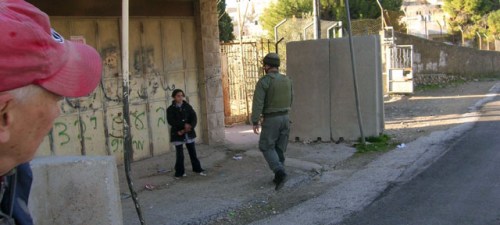
Press TV – November 1, 2010

A new study has revealed that Israeli settlers have intensified acts of violence against Palestinian children over the past two years.
The study conducted by Defense for Children International-Palestine (DCI) said on Monday that it has investigated 38 cases of settler violence against minors.
The attacks caused the deaths of three children and left 42 others injured, the rights group said.
The study also found the attacks are usually carried out in groups and include verbal harassment, intimidation, physical assault and the destruction of property.
Physical assault and intimidation was reported in at least 15 cases, and stone throwing in another nine incidents. In 13 of the cases, settlers opened fire, killing three children and injuring another 10.
Verbal abuse was documented in almost every case, according to the report.
“Continued settlement expansion and a growing settler population in the occupied territory have severely impacted the security of the Palestinian population, particularly children, whose lives are increasingly threatened by willful attacks perpetrated by extremist settlers,” the report said.
In eight cases, soldiers colluded with the assailants either by joining in, turning a blind eye to or punishing the victims rather than the perpetrators.
Israel’s failure to enforce the law and hold the perpetrators accountable for their actions has “created an atmosphere in which settlers enjoy impunity and Palestinians live in fear,” the DCI study concluded.
Featured Video

They Double Down on BLOOD PRESSURE Guidelines!
or go to
Aletho News Archives – Video-Images
From the Archives
The Ten Commandments of War Propaganda
By Michael Feldman · The Dissident · November 22, 2022
While researching World War I censorship for a larger project a few years ago, I stumbled upon a fascinating analysis of war propaganda.
In 1928, Baron Arthur Ponsonby published Falsehood in Wartime: Propaganda Lies of the First World War. Although Ponsonby’s book was eye-opening and remains relevant to media propaganda today, another work inspired by Ponsonby really caught my attention.
In 2001, Belgian historian Anne Morelli published Principes élémentaires de propagande de guerre (Basic Principles of War Propaganda). Based on Ponsonby’s writings, Morelli identified ten principles, often known as the Ten Commandments of War Propaganda:
1. We don’t want war. We are only defending ourselves!
2. Our adversary is solely responsible for this war!
3. Our adversary’s leader is inherently evil and resembles the devil
4. We are defending a noble cause, not our particular interests!
5. The enemy is purposefully committing atrocities; if we are making mistakes, this happens without intention
6. The enemy makes use of illegal weapons
7. We suffer few losses; the enemy’s losses are considerable
8. Recognized intellectuals and artists support our cause
9. Our cause is sacred
10. Whoever casts doubt on our propaganda helps the enemy and is a traitor
What’s most fascinating is that Morelli’s principles are based on a 73-year-old book, yet the commandments ring true today. You can pick just about any war, especially those in the twenty-first century, and see the commandments in action. … Full article
Blog Roll
 Aletho News
- I’M SO BLOODY FURIOUS: They Double Down on BLOOD PRESSURE Guidelines!
- The Israeli Nuclear Doctrine and the Turning Point of the Kennedy Assassination
- Striking Matches Near the Powder Keg
- Prominent Russia hawk: European leaders privately talk about war with Russia, first need ‘mass casualty event’
- China warned Trump not to touch Iran’s oil tankers: Larry Johnson
- EU Central Banker Plans To Plant Barren AI Crops Across The Continent
- Macron’s Strategic Autonomy Paradox: France Rearms on Debt and Depends on Foreign Fuel
- Nigel Farage vs Tucker Carlson: Who is right about Hitler and Britain?
- Chocolate Gives Statins a $29 Billion Run For Their Money
- Hypotheses on the collapse of U.S. computer systems
- If Americans Knew
- DAILY UPDATE: Latest essential news on Palestine, Israel, & region
- Reporting Raises Fresh Questions About Israeli Role in CNN’s ‘Preposterous’ Iranian Dirty Bomb Story
- DAILY UPDATE: Latest essential news on Palestine, Israel, & region
- Under the West’s watch, genocide apologism has become entirely respectable
- Israeli Diplomat Offered Iowa Attorney General Free Trip, Then Asked for Favors
- On World Children’s Day, 350 Palestinian Children Remain in Israeli Prisons
- Why Is Israel Jailing a Palestinian Student Without Trial? Because It Can
- ICJ ruling on Rohingya genocide could strengthen South Africa’s case against Israel
- DAILY UPDATE: Latest essential news on Palestine, Israel, & region
- Newly nominated House Speaker funded Gaza genocide
- No Tricks Zone
- New Study: Modern Temps Are Among The Coldest Of The Last 10,000 Years In East Central Europe
- Germany’s Renewable Energies Lead to 1.4 Billion Euro Electric Power Trade Deficit
- Argentina’s Perito Moreno Glacier Joins Antarctica and Arctic In Defying Doomsday Melt Claims
- New Study: Barents Sea Temperatures Were Warmer And Sea Ice Less Extensive In The 1700s Than Today
- German Authorities Start Initiative To Evaluate Public Register For Climate “Disinformation” Spreaders!
- Zonal Asymmetry of Temperature Change in the Antarctic Circumpolar Current
- New Study: The Net Fossil Fuel Contribution To Rising Atmospheric CO2 Has Been Zero For 500 Years
- Germany’s Green Energy Transition Becoming Increasingly Expensive…Another 6 Trillion Euros!
- Sudden Stratospheric Warming, Powerful El Niño Combination May Lead To Extreme Europe Cold, Energy Crisis!
- Two New Studies Find Thwaites Glacier Melt Cannot Be Driven By Human Activity Or A Warming Ocean

