‘Elbit 8’: Palestine Action activists conclude legal fight for disrupting Israeli arms trade
By Reza Javadi | Press TV | December 27, 2023
In a significant development, a group of Palestine Action activists, known as the ‘Elbit Eight’, have been acquitted for their role in shutting down UK Elbit Systems, Israel’s largest arms producer, whose lethal weapons are being used against Palestinians in the Gaza Strip.
Elbit Systems’ weaponry prompted the Palestine Action activists to face a total of 12 charges, including criminal damage, burglary, blackmail, and encouraging criminal damage.
The charges were related to anti-Israel protests held between July 2020 and January 2021, immediately after the pro-Palestinian network was founded in early 2020.
The trial, which commenced on November 13, saw the Crown Prosecution Service (CPS) amending the indictment, eventually bringing thirteen counts against the activists: seven counts of damaging property (criminal damage), three counts of burglary with intent to commit criminal damage, one count of possessing articles with intent to damage property, one count of threatening to damage property, and one count of encouraging others to commit the offense of criminal damage.
Since the group’s inception in 2020, and in protest against the Israeli regime’s atrocities against the Palestinians, they have led several mobilizations in the UK as well as in the US, targeting the factories and offices of firms that supply munitions used in Israel’s occupation of Palestine.
Their protest methods have included sit-ins, blockades and paint jobs.
The group’s actions, including occupying Elbit Systems’ drone and weaponry factories in Shenstone and Oldham, aimed to challenge Elbit’s operations in Britain and prevent the manufacturing of weapons destined for the Israeli regime.
The defense case
At the beginning of the trial that lasted six weeks, the eight activists received a plea deal: if Huda Ammori and Richard Barnard pleaded guilty, others would be acquitted.
Rejecting the plea deal, the activists spent six weeks in Snaresbrook Crown Court pleading not guilty, asserting that Elbit and Israel bear responsibility for the offenses, not Palestine Action.
Echoing the defense’s narrative presented during the trial, Richard Barnard, co-founder of Palestine Action, underscored the group’s primary goal to terminate British complicity in the Israeli apartheid regime’s crimes against Palestinians.
Barnard was convicted by a 10-2 majority of one count of criminal damage, for an action at the now-closed Elbit Ferranti factory in Oldham. The jury failed to reach a majority decision regarding the remaining 23 charges.
“The idea was – and the idea still is – to end the British complicity in the Israeli apartheid regime,” he told the jury. “I am trying to prevent war crimes … I am trying to stop bombings and trying to stop drones [in Palestine].”
Meanwhile, two of the Elbit Eight activists, Genevieve Scherer and Jocelyn Cooney, were unanimously acquitted on all charges faced.
Other activists highlighted their personal experiences and the urgency driving their direct actions, contending that conventional means, such as divestment campaigns, were insufficient in addressing the ongoing human rights violations in Gaza.
Huda Ammori, charged with six counts including damaging property and burglary, stressed her Palestinian-Iraqi background, narrating formative experiences such as the Iraq War and the ongoing ethnic cleansing of native Palestinians in Gaza.
She stressed that direct action was the only viable solution to end such atrocities perpetrated by the occupying regime, given the ineffectiveness of legal avenues and divestment campaigns.
“All other attempts fell short. Our exports to Israel are against our own license rules and against international law, but they can’t be stopped by the courts,” Ammori said.
“Divestment campaigns, after years of work, were taking way too long; it wasn’t matching the reality of the urgency of the situation. Every day, Palestinians were being killed, imprisoned – surveilled under these drones 24/7.”
Direct action is the only option
Ammori, a co-founder of the Palestine Action network, hastened to add that if the UK government continues to ignore facts and violate rules, then the only option is “direct action”, which means to “stop weapons from going there.”
“After pushing back our case for two years, the state has failed again to deter an ever-growing global direct-action movement. Every day we’ve been on trial, more Palestinians have been massacred using Elbit’s weaponry,” she asserted.
“The duty of the people is clear – to take all direct action possible to Shut Elbit Down wherever you are. Justice will be complete when Palestine is free.”
Robin Refualu, another activist of the group, charged with burglary and damaging the drone factory UAV Engines, shared his experiences from Palestine and spoke of the direct action he was involved in there to stop home demolitions and illegal settlements and emphasizing the trial’s relevance to the broader Palestinian struggle over the past 75 years.
“This trial is not about us, it’s not even about Palestine Action, in my opinion,” Refualu said. “It’s about what’s happening in Gaza at the moment and what’s been happening in Palestine for the last 75 years.”
Genevieve Scherer, drawing on her upbringing in Uganda, criticized the futility of criminal damage charges when Elbit Systems and those they arm cause havoc in Gaza.
She underscored how British law prioritizes property over human lives.
Caroline Brouard emphasized the obligation to prevent an ongoing genocide and stated that when governments fail to uphold duties, it falls on the people to act. She believed that actions at UAV Engines in Shenstone could immediately impact stopping bombings in Gaza.
“The drones malfunction all the time, needing replacement parts, and UAV Engines has a 24hr dispatch policy – we stopped these engines getting to Israel and so stopped the drones from flying,” Brouard asserted.
Urgency of stopping crimes
Jocelyn Cooney, a frontline social worker, joined Palestine Action to address the urgency of stopping crimes. She referred to Elbit Systems as the “muscle” enabling genocide in Palestine.
“So I think we all have a responsibility as humans to step up and take direct action to stop this company from producing weapons to murder people,” she said.
Emily Arnott, charged with damaging property and burglary, spoke about her time in Palestine, highlighting the impact of apartheid and the Israeli regime’s brutal domination over Palestinian lives.
Nicola Stickells, charged with criminal damage, emphasized the necessity of action when other efforts were ineffective. She pointed to ongoing war crimes in Gaza and questioned why activists faced legal consequences while those responsible for genocide profited freely.
The Israeli regime forces are “rounding up men.. and taking them to undisclosed places, stripped, kneeling blindfolded, this genocide is occurring as we speak,” said Stickells, a mother of two who was raised in a working-class family in the English county of Kent.
“How can we be the criminals when the perpetrators of… [what] we now know is a genocide … are free to profit and we have to spend weeks and weeks in court for an action that we took three years ago?” she asked.
“When you try and stand for human rights, you become the criminal. This is not right.”
Palestine Action UK has escalated actions against Elbit Systems since October 7, including activists climbing factory roofs in various cities.
“Palestine Action activists occupy the roof of the Israeli weapons factory Elbit Systems in the town of Shenstone, England, in protest of its production of equipment used in Israel’s murder of innocent Palestinians,” Palestine Action UK said in a statement on October 31.
UK complicity in Israeli crimes
The trial comes on the heels of nationwide protests in the UK in solidarity with the Palestinian people and against the genocide in Gaza. These demonstrations have been met with intensive state monitoring, harassment, and muzzling of pro-Palestinian voices and actions.
The trial also draws attention to the broader issue of the UK’s arms sales to the Israeli regime, given Elbit Systems’ significant role as a major supplier to the Israeli military.
The weapons company is Israel’s largest private arms company in the UK that supplies the Israeli military with 85 percent of the drones used against Palestinians. The British government has been criticized for being “complicit in Israeli crimes” due to its relations with this company.
Two of Israel’s biggest weapons factories, Elbit and Rafael, both have operations in the UK.
Declassified UK recently revealed that the British government has approved at least £472m in arms sales to the Israeli regime in the past eight years, ignoring the genocide in Gaza and the occupied West Bank.
Time to fix Canada’s anti-Palestinian tax code
By Yves Engler | December 26, 2023
At the start of the month Sylvan Adams gave US$100 million to Ben-Gurion University. During a Toronto gala for the university’s Canadian fundraising branch the Canadian billionaire announced the money for “rebuilding and strengthening the south … in the wake of the Oct. 7th attack against Israel’s southern border communities.” Over the past ten weeks United Israel Appeal Canada has raised $100 million. After a recent Jewish National Fund of Canada fundraiser the registered charity’s executive Director Jeff Springer said, “We raised money for the war during this event.”
Throughout its history flare ups in Israeli violence have prompted an outpouring of financial assistance from Canadian Zionists. A significant share of that money has been underwritten by the public.
The Canadian tax code has long been used to subsidize projects in Israel and pro-apartheid groups have received large amounts in public grants. While little discussed, the ‘Zionifaction’ of charitable status is Canada’s most significant contribution to Palestinian dispossession.
Canadians provide a massive, unique, subsidy to Israel. Close to hundreds of million dollars a year in public money is funneled to a country that has long committed the crime of apartheid and tens of millions of dollars more goes to groups promoting anti-Palestinian policies within Canada.
Benefiting from the ability to grant tax credits covering as much as half of a donation, registered charities finance projects in Israel as well as Canada’s apartheid lobby. Additionally, many Canadian apartheid lobby groups receive direct government grants.
Over 200 registered Canadian charities finance projects in Israel. It’s difficult to quantify exactly how much they funnel to a country with a GDP per capita equal to Canada’s, but Just Peace Advocates research has put it at around a quarter billion dollars annually. A third of that sum would be covered by taxpayers through charitable write-offs.
Most years United Israel Appeal Canada is the largest single source of charity funds for Israel, sending between $50 and $110 million. It’s overseen by the Jewish federations of Toronto, Montréal, Winnipeg, Windsor, Calgary, Edmonton, Hamilton, London, Ottawa, Vancouver and Atlantic Canada. In addition to the funds raised by United Israel Appeal, the Jewish Federations raise hundreds of millions of dollars annually. Some of those funds are sent directly to projects in Israel.
The Federations organize Toronto’s Walk with Israel and Montréal’s annual Israel Day Celebration. The Federations also operate Israel Engagement initiatives that host Israeli teens who defer their military service for one year to volunteer to “teach about Israel through creative programs and challenging discussions.”
The Centre for Israel and Jewish Affairs (CIJA), Canada’s most influential apartheid lobby group, “is the advocacy agent of Jewish Federations across Canada”. The Federations fund many other apartheid lobby groups and Israel ‘lobby sustaining’ organizations, which are pro-apartheid but not principally focused on Israel campaigning.
Beyond benefiting from charitable status, the federations receive tens of millions of dollars in direct federal, provincial and municipal grants. Last December Ottawa put up $25 million for the Vancouver Jewish Community Centre, which includes an “Israeli Department” and is adorned with Israeli flags. Similarly, Montreal’s Sylvan Adams YM-YWHA received $8 million in federal funding in March. The facility operated by the Montréal Federation is named after a billionaire who has plowed hundreds of millions of dollars into campaigning for Israel. In 2012 UJA Toronto received $30 million in federal and provincial funding to build a new community centre.
The Federations receive tens of millions of dollars more in government grants for various initiatives ranging from security assistance to educational projects. Overseen by Federation CJA, the Montréal Holocaust Museum recently received $40 million in provincial, municipal and federal funding for its expansion (as well as a similar amount in tax subsidized donations). But the Museum is a sponsor of the ongoing Montreal Israeli Film Festival with the Israeli Consul General, Israel Bonds and other groups. The Holocaust Museum says it “is proud to have taken part in the Canadian delegation” that helped develop the International Holocaust Remembrance Alliance’s (IHRA) anti-Palestinian definition of antisemitism. When the Project Montréal municipal government refused to heed the apartheid lobby’s push to adopt the IHRA’s definition of antisemitism in 2020, the museum released a statement criticizing the party headlined “The Montreal Holocaust Museum regretfully notes the Montreal Mayor’s refusal to support the definition.”
In the last federal budget the Liberals provided $2.4 million for the Toronto Holocaust Museum, which is overseen by that city’s federation. An advocate of the IHRA’s anti-Palestinian definition of antisemitism, the Toronto Holocaust Museum also received half a million dollars in provincial funding. At the June launch of the museum speakers stood in front of Canadian, Ontario and Israeli flags.
The Federations provide funding to a slew of Israel lobby sustaining organizations from private schools to Hillels. One of those groups is Birthright Canada, which spends over three million dollars a year paying for young Jews to go to Israel. A dozen campus based Hillels are also among the federation assisted Israel lobby ‘sustaining’ registered charities. So are Israel studies and pro-apartheid Jewish studies programs established at universities by donors receiving generous tax credits.
As part of a “counterattack” against pro-Palestinian activism at Concordia, David Azrieli spent $5 million to establish Israel studies at that Montréal university (as well as $1 million on Jewish studies). More than $10 million in tax-deductible donations were made to the University of Toronto to establish the Anne Tanenbaum Centre for Jewish Studies and the Andrea and Charles Bronfman Chair in Israeli Studies. Millions more were donated to launch similar initiatives at the University of Calgary, York, McGill and other universities.
Probably the most significant cog in the lobby ‘sustaining’ wheel, private Jewish schools generally indoctrinate young minds into worshiping a violent far away state oppressing millions. TanenbaumCHAT, Bnei Akiva and more than a dozen other registered charity schools raise around fifty million dollars annually in donations. With Québec offering unique support to private schools, pro-apartheid Jewish schools receive around $10 million in direct public grants annually.
After CIJA, B’nai B’rith is the second most influential Israel lobby group. The registered charity raises about ten million dollars a year (through multiple arms). Another influential charity lobby group is Friends of Simon Wiesenthal Centre with a $7 million budget.
Honest Reporting Canada, StandWithUs Canada and Hasbara Fellowships Canada are almost entirely focused on apartheid campaigning. These registered charities have a combined annual budget of $2 million.
Israel lobby and ‘sustaining’ organizations receive upwards of $100 million a year in direct government grants. Additionally, registered charities funneling money to Israel or Canadian apartheid lobby organizations raise half a billion dollars a year (around a third covered by taxpayers).
The ability to secure significant public assistance obviously reflects Israel lobby power. Simultaneously, it strengthens the lobby’s power as well as apartheid in Israel.
The subsidies must be countered. The first step to upending Canadian assistance to apartheid and the Israel lobby is to map it, which Just Peace Advocates is doing. Additionally, anti-apartheid forces should state clearly their opposition to the Jewish Federations receiving government grants so long as they funnel money to Israel and sponsor CIJA. While that demand will garner little immediate political traction, it’s an essential step towards politicizing the federations.
More immediately relevant are ongoing efforts to press the Canada Revenue Agency to apply its own rules regarding charities its empowered with special tax status. The CRA currently forbids registered charities from supporting foreign militaries, explicitly racist organizations and West Bank settlements yet a slew of Israel focused charities do just those things. Over the past year complaints have been submitted to the CRA detailing about a dozen different charities’ – with over $100 million in revenue – violating these rules. (CRA investigations and audits are confidential so the status of the complaints is unclear.) Many other charities should be challenged and more campaigning is needed to press the CRA to take action, which they have done with Israel-focused charities. (In recent years the CRA has revoked the charitable status of a dozen organizations providing funds to Israel.)
Removing groups’ charitable status and dampening the flow of public funds to the apartheid lobby is paramount, but there’s also an ideological value to the campaigning. While apartheid apologists complain incessantly about Israel being unfairly “singled out”, pushing the CRA to apply its own rules towards massive subsidies highlights how Israel is in fact singled out for special treatment. No other wealthy, faraway, country receives a remotely comparable amount of charity fundraising.
In essence, Canada’s tax code and government grant system are structured to enable a wealthy, apartheid state, committing genocide in Gaza at the expense of the colonized Palestinians. Whether through legal or political channels, it’s imperative to push back against the staggering sums of public funds subsidizing Israel and sustaining the apartheid lobby in Canada.
Biden’s plan to ‘revive Palestinian Authority’ fizzles out: Report
The Cradle | December 26, 2023
The US government has run into a significant hurdle in its campaign to “revitalize” the Ramallah-based Palestinian Authority (PA) as possible successors to Hamas in the Gaza Strip, failing to convince Israel to unblock funds necessary to prevent the PA from total collapse.
“Even if we agreed [to take over for Hamas in Gaza], how can we implement it? The policy of Israel is to weaken the authority, not strengthen it,” PA Deputy Prime Minister Nabil Abu Rudeineh told the Washington Post. “We cannot even pay the salaries of our soldiers, our employees,” he added.
Despite round-the-clock visits to the heavily fortified PA headquarters in Ramallah and meetings with Israeli authorities, US officials have made little progress in securing the release of millions in Palestinian tax money that Israel has blocked since 7 October.
Two months ago, the Israeli finance ministry – led by Jewish supremacist official Bezalel Smotrich – froze the transfer of tax revenues amounting to some $188 million monthly to the PA.
“The PA didn’t see fit to distance itself from these barbarian actions, and officials in the authority even expressed support for the awful massacre […] Furthermore, the PA is acting against Israel at the International Criminal Court and the International Court of Justice,” Smotrich said on 30 October.
The tax revenues – known in Palestine as maqasa – are collected by the Israeli government on behalf of the PA on Palestinian imports and exports. Israel earns a commission of 3 percent of collected revenues.
On Friday, the European Commission said it was preparing a $130 million aid package to help plug the gap.
According to Sabri Saidam, a member of the central committee for the Fatah party and close adviser to PA President Mahmoud Abbas, plans for Palestinians to receive their tax revenue have “collapsed.”
Besides finding ways to avert the financial collapse of the PA, US officials have also been pushing for “changes and new faces in key positions” in a last-ditch effort to improve the public image of the deeply unpopular organization.
According to a recent poll from the Palestinian Center for Policy and Survey Research, 88 percent of Palestinians want Abbas to resign as PA President, up 10 points from three months ago.
Meanwhile, the popularity of Hamas has soared in the occupied West Bank, from 12 percent to 44 percent.
“It’s always this colonizing mentality, whereby, ‘We decide your leadership, we are the ones basically designing your strategy for the day after, we tell you how to live, we tell you how to breathe, and we tell you how to run your land,’” Saidam told the Washington Post.
The PA was established in 1994 based on the first Oslo Accords (1993) between Tel Aviv and the now-defunct Palestine Liberation Organization (PLO). It was initially established as a temporary governing body to lay the foundation for an independent Palestinian state.
However, after decades of corruption allegations, collaboration scandals, and a poor human rights record, the PA was in a state of “total inertia” before the Al-Aqsa Flood Operation unfolded on 7 October.
Complicating matters further for Washington, Israeli Prime Minister Benjamin Netanyahu is staunchly opposed to a PA-controlled Gaza.
“Expectation that the Palestinian Authority will demilitarize Gaza is a pipe dream,” Netanyahu says in an op-ed published by the Wall Street Journal (WSJ) on Monday.
“[The PA] has shown neither the capability nor the will to demilitarize Gaza,” the premier added, claiming that Ramallah “currently funds and glorifies terrorism […] and educates Palestinian children to seek the destruction of Israel.”
“For the foreseeable future, Israel will have to retain overriding security responsibility over Gaza,” Netanyahu stressed.
Israel Paying a Heavy Price for Its Crimes
BY KEVIN BARRETT | DECEMBER 25, 2023
So Netanyahu is now saying that (Israel is paying) is a heavy price. How heavy is the price?
Netanyahu is not admitting how heavy the price really is. The actual number of Israeli casualties is much higher than the official count. We know that because we’ve actually seen that the resistance fighters have filmed themselves taking out tanks and trucks and other military vehicles by the hundreds. They’ve filmed many of their other operations as well. So we can see that just based on what’s out there in the resistance film footage, the casualty count has to be a lot higher than Netanyahu is admitting.
He also is ignoring the fact, at least publicly, that Israel has lost something like 7% of its population. They haven’t been killed, they’ve fled the country. This has happened occasionally before, but this time it’s not certain that they’ll be coming back, because the Israeli economy is in shambles. The northern edge of the country is now uninhabited, as they’ve all been evacuated due to the northern front of Hezbollah.
And the Israeli economy may not come back. It’s heavily dependent on tourism, and that’s completely shut down now. The usual tourist hotels are full of Israelis who fled the war zones in the north. And so that of course is bad enough. But (the main reason) the future of the Zionist entity looks incredibly bleak is because of the way that they’ve managed to commit the most horrendous genocide ever seen on live television, and they’ve sickened and appalled pretty much the entire world. Their only supporters now are in Washington DC. And even in the United States of America polls show that the majority of young adults want the resistance to win and put an end to Israel.
So they have lost the military battle. They can’t get their hostages back. They can’t succeed in their ground operations. They can’t stop Hamas as they say they are going to. They’ve lost their economic battle. They’ve lost in their propaganda war, where they’re making up ludicrous stories about beheaded babies that nobody believes. Nobody believes anything they say any more. They’ve blown all their credibility, blown up their economy, and shown that they’re a military paper tiger. The end of the Zionist entity is near. And Netanyahu knows that his own political end is even nearer.
US jets strike resistance sites in Iraq
The Cradle | December 26, 2023
US warplanes launched airstrikes against several sites belonging to the Kataib Hezbollah faction early on 26 December, in Washington’s latest response to ongoing drone and missile attacks launched by the Iraqi resistance on US bases in Iraq and Syria.
The strikes resulted in large explosions south of Iraq’s capital, Baghdad, an Al-Mayadeen correspondent reported. One was killed and over a dozen wounded, according to an official statement.
The US hit “three locations utilized by Kataib Hezbollah and affiliated groups focused specifically on unmanned aerial drone activities,” a US National Security Council spokesman said in a statement.
The attack “likely killed several Kataib Hezbollah militants,” according to CENTCOM.
The Iraqi government said in a statement that the attack “harms bilateral relations between the two countries and represents an unacceptable violation of sovereignty,” which “harms” Baghdad’s bilateral ties with Washington. The statement added that an Iraqi service member was killed, while 18 were injured, including civilians.
Defense Secretary Lloyd Austin said the attack was a response to ongoing Iraqi operations targeting US bases, in particular one attack on the Erbil air base on Monday, 25 December, which left three US soldiers wounded, including one in critical condition.
An Iraqi Ministry of Interior official told AFP that the US airstrikes targeted a Popular Mobilization Forces’ site in the city of Hillah, the capital of Babylon Governorate in central Iraq. A site in the Wasit Governorate was also targeted, resulting in the wounding of at least four people.
In a statement, leader of the Nabni Coalition Hadi al-Amiri stressed his “strong condemnation and denunciation of the repetition of the sinful American attacks that were embodied at dawn this day in the provinces of Babil and Wasit.”
On the afternoon of Christmas Day, the Islamic Resistance coalition in Iraq said in a statement that it targeted “the occupied Harir base near Erbil Airport in northern Iraq with drones.”
The statement vowed that the Iraqi resistance would continue the “destruction of enemy strongholds” in line with its goals of “resisting the American occupation” in Iraq and responding to “the Zionist entity’s massacres against our people in Gaza.”
The Iraqi resistance also struck the US Green Village base in northern Syria, the group said in a separate statement earlier that day.
Following Operation Al-Aqsa Flood and the start of the Gaza-Israel war in October, Iraqi resistance groups banded together under a single coalition. They launched near-daily attacks on US bases in both Iraq and Syria in solidarity with the Palestinian resistance and in rejection of Washington’s support for the Israeli assault on Gaza.
The attacks also aim to hasten the withdrawal of US forces from Iraq.
The US air force has launched several attacks in response. One strike in early December resulted in the killing of five Iraqi resistance fighters.
While the US presence in Iraq is coordinated with the government of Prime Minister Mohamed Shia al-Sudani, a political alliance of Shia parties represented in his parliament are staunchly opposed to it.
In 2020, following the assassination of Iranian Quds Force commander Qassem Soleimani, Iraq’s parliament voted in favor of expelling the US from Iraq. The resolution specifically called for the cancellation of Iraq’s formal request for US military assistance against ISIS, which was issued in 2014.
Washington rejected the resolution and threatened to impose sanctions on Baghdad.
Israel massacres at least 70 Palestinians in airstrike on Gaza refugee camp
Press TV – December 25, 2023
An Israeli airstrike targeting a refugee camp in the central part of the Gaza Strip has killed at least 70 Palestinians as the regime’s genocidal war across the besieged territory continues unabated.
Gaza’s Health Ministry reported the massacre in a late Sunday statement, saying the fatalities came after the regime’s air raid hit a number of houses at the al-Maghazi refugee camp.
According to the ministry’s spokesman, the strike destroyed a “residential block” and the “toll is likely to rise” given the large number of families residing there and the fact that many people are still under the rubble.
“What is happening at the al-Maghazi camp is the annihilation of an entire residential square,” Ashraf al-Qudra said.
The ministry also noted that another Israeli strike on a house in the Jabalia refugee camp in northern Gaza has killed 10 members of the same family.
The ministry’s spokesman said the regime’s forces “are bombing the main roads between the [refugee] camps … to impede the arrival of ambulances and civil defense vehicles to the targeted locations.”
“Most of the martyrs who arrived from the Maghazi camp were children, women, and the elderly,” the spokesman for Al-Aqsa Martyrs Hospital was quoted by the Palestinian media as saying.
Gaza’s Government Media Office said the Israeli strike saw the regime’s military bombing “four inhabited homes” at al-Maghazi.
“We call on all countries of the world to put pressure on the criminal occupation in order to stop the genocidal war … against our Palestinian people and against children, women and civilians,” it added.
The Gaza-based Palestinian resistance movement Hamas also reacted to the Israeli attack, describing it as a “horrific massacre.”
Hamas called the strike “a new war crime extending the genocide” that the Israeli regime “commits against children and unarmed civilians.”
The movement said Israel perpetrated “this treacherous and cowardly bombing…in an attempt to renovate the image of its defeated army.”
Hamas noted that Israel’s onslaught on Gaza is being “supported by [US] President [Joe] Biden’s administration, [which is] the primary partner of the Zionist entity in its crimes and fascist aggression” against the blockaded territory.
The Israeli war machine launched its military aggression on October 7 following an operation by Gaza’s resistance movements, dubbed Operation Al-Aqsa Storm. Over 20,400 people, most of them women and children, have been killed in the Israeli genocide so far.
As the regime’s most dedicated ally, the US has supplied it with more than 10,000 tons of military equipment since the onset of the aggression.
Washington has also cast its veto against all the United Nations Security Council resolutions that called for implementation of an immediate ceasefire across Gaza.
Biden’s disregard for truce speaks volumes of US heartless approach to Gaza genocide: CAIR
Press TV – December 25, 2023
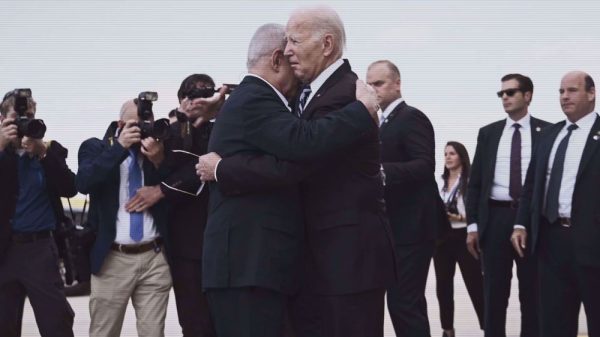
The Council on American-Islamic Relations (CAIR) has slammed US President Joe Biden’s administration for “actively supporting” Israel’s ongoing “genocide and ethnic cleansing” in the Gaza Strip and indifference to the genocide there.
In a statement on Sunday, CAIR national communications director of the US-based Muslim advocacy group said Biden’s actions will “stain” the US “international reputation.”
“The Biden administration’s callous indifference to – and active support for – the ongoing genocide and ethnic cleansing being carried out by [Israel] will stain our nation’s international reputation for generations to come,” Ibrahim Hooper said.
“The fact that President Biden admits that he did not even ask for a ceasefire in a recent conversation with [Israeli prime minister Benjamin] Netanyahu speaks volumes about the administration’s heartless and immoral approach to the genocide in Gaza,” he added.
On Saturday, Biden told reporters that his conversation with Netanyahu over the war on Gaza was a “long talk,” but he did not ask for a ceasefire in that call.
“Israel has now killed probably more than one in every 100 people in Gaza. That shocking figure alone should be all the evidence that is needed to finally acknowledge the truth of the ‘genocide’ label,” Hooper said.
The statement came as Israel’s deadly air raid on the al-Maghazi refugee camp in central Gaza killed at least 70 people, including pregnant women and children on Monday.
An Al Jazeera reporter in Gaza interviewed eyewitnesses who said Israeli forces killed pregnant women “without mercy.”
“The women were reportedly raising white flags as they were attempting to reach the Al-Awda Hospital when they were shot by Israeli forces,” the reporter said.
On Saturday, CAIR called on Americans of all backgrounds to demand that the Biden administration act to “end the slaughter, starvation and ethnic cleansing.”
The call came after several reports revealed that Israeli forces massacred 76 members of an extended family in Gaza, Israeli-imposed famine is widespread, and that bodies are decaying in the streets and are being dug up by Israeli bulldozers.
The group said more than 110,000 Americans have used CAIR’s action alert to contact their members of Congress and call for an end to the violence and occupation.
Previously, CAIR called on the Biden administration to stop sending what it called “genocide bombs” to Israel after the New York Times revealed that US-supplied 2,000-pound bombs were “routinely” used against Palestinian civilians in so-called “safe areas” in Gaza.
CAIR also said the Biden administration must stop “justifying war crimes” Israel has perpetrated against hospitals after an investigation by the Washington Post debunked claims that Gaza’s Al Shifa Hospital had to be attacked because it was a military command center.
Israel waged the war on Gaza on October 7 after the Palestinian resistance movement Hamas carried out Operation Al-Aqsa Storm against the occupying entity in response to the Israeli regime’s decades-long campaign of death and destruction against Palestinians.
The Israeli attacks have so far killed at least 20,400 Palestinians, including 6,200 women and 8,200 children, and wounded 53,688 others in the besieged territory, where the Zionists cut off fuel, electricity, food, and water to Gaza’s 2.3 million population.
Despite its shortcomings, UNSC vote will tie Israel’s hands
By MK Bhadrakumar | The Cradle | December 25, 2023
The adoption of a resolution by the United Nations Security Council (UNSC) on Friday with focus on a pause in the fighting in Gaza to allow for the delivery of more humanitarian aid can be seen as a turning point in the tortuous journey toward imposing a sustainable ceasefire.
But a caveat must be added that the ultimate litmus test lies in the implementation of the UNSC resolution, as the past history of such resolutions on Palestine does not give cause for optimism.
In fact, Israel’s defiance was in full view already. As the Security Council passed the resolution, Israeli forces pushed ahead with their offensive into Gaza on Friday and ordered residents in Al Bureij — an area in central Gaza where Israel had not previously focused its offensive — to evacuate. The Israeli military’s chief spokesman Rear Adm. Daniel Hagari said on Thursday: “Our forces continue to intensify ground operations in northern and southern Gaza.”
UN Secretary General António Guterres was spot on when he told reporters after the resolution was passed that “a humanitarian ceasefire is the only way to begin to meet the desperate needs of people in Gaza and end their ongoing nightmare.”
The resolution itself is the outcome of week-long intense negotiations between the United States and the Arab countries that sponsored it — the UAE and Egypt, in particular — to settle for the lowest denominator, which meant accepting a Washington-friendly text that enabled the Biden administration to evade responsibility for another veto, for the third time since 7 October.
Unsurprisingly, the US negotiators brazenly resorted to pressure tactics by drawing on their usual diplomatic tool box — blackmail, arm-twisting and ultimatums — to water down the text to the extent that important provisions relating to a ceasefire and a UN mechanism to facilitate the delivery of humanitarian aid to Gaza and ensure its monitoring were abandoned.
And, yet, the US abstained in the vote at the end of the day, registering its reservations — principally, that the resolution was silent on the attack by Hamas on 7 October.
The unkindest cut of all is that the resolution accommodated the US diktat to replace the language describing an immediate cessation of violence with an ambiguous phrase calling on the parties to “create conditions for a cessation of hostilities.” The wording meets the Israeli requirement to have a free hand to continue with its barbaric military operations.
This anomaly, coupled with the absence of any reference to the condemnation of indiscriminate attacks by the Israeli military against civilians almost delivers the wrong signal that the Security Council is effectively becoming an accomplice to the destruction of Gaza — a misnomer that agitated Russia so much that it proposed a last-minute amendment to replace the phraseology in the resolution: “to create the conditions for a sustainable cessation of hostilities” with the unambiguous call “for urgent steps toward a sustainable cessation of hostilities.”
Russia’s demand for an immediate ceasefire was in line with a resolution overwhelmingly passed by the UN General Assembly recently, but the Americans would have nothing of that sort. The unfortunate part is that the Arab sponsors of the resolution caved in to US blackmail to veto the resolution. What transpired between the protagonists behind the scenes is not known.
The paradox is that, in reality, the Americans themselves were desperately keen to avoid casting a veto — the third in as many months — that would have made a mockery of President Joe Biden’s bombastic remark in his September speech at the UN last year that the permanent members of the Security Council should cast vetoes only under “rare, extraordinary situations to ensure the council remains credible and effective.”
All indications are that the US is acutely conscious of finding itself “diplomatically isolated and in a defensive crouch,” as the New York Times put it in an acerbic commentary on the Biden administration’s plight as “an increasingly lonely protector of Israel … (that) puts it at odds with even staunch allies such as France, Canada, Australia, and Japan.”
The commentary says that what rankles most is that first, when the US seems to have green-lit a massive Israeli military response to 7 October “without guardrails,” it:
“painfully confirmed to many in the (global) south this sense that there was a double standard” — and second, even more, “the Russian strategy works, because beyond the United Nations what everyone sees is Russia standing up for international law — and the US standing against it.”
The crux of the matter is that Israel’s Gaza operation is running into a Cornelian dilemma (dilemme cornélien) where sooner rather than later, it is obliged to choose one option from a range of options, all of which reveals a detrimental effect on itself.
Hamas’ top leaders have evaded capture so far, and Gaza’s armed resistance groups have continued to fire rockets into Israel, including two barrages that reached Tel Aviv and its environs last week.
According to another New York Times report,“ political commentators and some military experts have been lowering expectations for a quick and decisive Israeli victory.
“Nobody should imagine that there will be a situation where we put a flag on top of a hill and say: OK, we won, and now Gaza will be peaceful and safe. It will not happen,” said Gabi Siboni, a colonel in the reserves and a fellow at the conservative-leaning Jerusalem Institute for Strategy and Security. “The reality is that we are going to be fighting in Gaza for years to come.”
But is that sustainable — even if Israel controls the US Congress? Conceivably, Israel’s main goal in Gaza was to ethnically cleanse the Strip and drive the Palestinian population to Egypt and Jordan by killing and starving them and making Gaza unlivable.
The real significance of the UNSC resolution, therefore, lies in that such an Israeli game plan will not fly. By not vetoing the resolution, the US may also have signaled that it will not allow the ethnic cleansing. There seems to be an understanding on this score between the US and the Arab protagonists at the political level — Egypt, in particular.
On the other hand, can Israel really destroy Hamas while the Palestinian population remains in Gaza? No, it will not be possible. Now, there is reason to believe that Hamas is inflicting significant damage to the Israeli military. The retreat of the Golani Brigade from the Gaza operation also points in that direction.
The bottom line is that the Israeli operation in Gaza will have to take a different form during the next several weeks — one that is anchored on surgical strikes rather than continuing with the extended ground operation and open-ended Israeli occupation. With warts and all, the Security Council resolution that was passed on Friday paves the way for such a transition.
IRGC’s veteran military advisor in Syria martyred in Israeli strike
Press TV – December 25, 2023
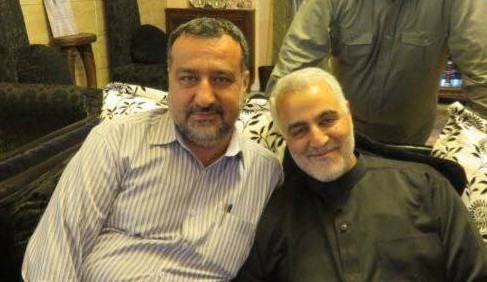
A veteran member of Iran’s Islamic Revolution Guards Corps (IRGC), who was serving as a military advisor in Syria, has been martyred in an Israeli airstrike in the Sayyeda Zeinab neighborhood of Damascus.
The senior IRGC commander, Seyyed Razi Mousavi, was martyred by the Israeli regime on Monday while on an advisory mission, Press TV’s correspondent in Damascus reported.
Mousavi was one of the companions of Iran’s top anti-terror commander, Lieutenant General Qassem Soleimani, who was assassinated by the US in Iraq four years ago.
General Soleimani, commander of the Quds Force of the IRGC, and his Iraqi trenchmate Abu Mahdi al-Muhandis, the second-in-command of Iraq’s Popular Mobilization Units (PMU), were martyred along with their companions in a US drone strike on January 3, 2020.
The Israeli regime has for years targeted what it calls Iran-linked positions in Syria.
In a statement, the IRGC said Mousavi was martyred in a criminal missile attack by the “fake and child-killing Zionist regime” adding that the usurping and savage Israeli regime would undoubtedly pay the price for this crime.
Israeli deaths mount in Gaza as Tel Aviv plans ground withdrawal
The Cradle | December 24, 2023
At least ten Israeli soldiers were killed in intense battles across the Gaza Strip on 23 December, bringing the official death toll for this weekend to 14 soldiers.
Five soldiers in the Combat Engineering Corps and an army medic were killed by an anti-tank guided missile in southern Gaza, the military said. Four others were killed in explosive attacks carried out by the Palestinian resistance.
“Ten soldiers were killed on Saturday,” the Times of Israel reported on 24 December.
The army announced the deaths of four other soldiers on Friday, 22 December.
Since the launch of a full-scale assault into Gaza, the Israeli army has admitted to the deaths of 153 soldiers. However, hospital records indicate that Tel Aviv is significantly underreporting casualties.
Israel’s Channel 13 reported three days ago that the army’s elite Golani Brigade withdrew from Gaza following 60 days of fighting to “reorganize its ranks” after facing unprecedented losses.
According to retired Israeli general Moshe Kaplinsky, the Golani Brigade lost 88 soldiers since 7 October. Seventy-two were killed on the first day of the war – amounting to a quarter of the entire brigade, Kaplinsky said.
As Israeli casualties continue to mount, the Israeli Broadcasting Authority revealed this week plans within the government to switch to a new phase of the war “in the coming weeks,” bringing an end to ground operations and shifting the focus to continued heavy airstrikes on the Gaza Strip.
Local reports say the Israeli army has already begun withdrawing from specific areas.
Featured Video

AIDS Inc. by Gary Null (2007)
or go to
Aletho News Archives – Video-Images
From the Archives
Clash of Civilization, Iran Part II
By Jamal Kanj – Intifada-Palestine.com – January 14, 2011
Israel’s survival kit is: perpetuate conflict, insecurity to rationalize collective hate and finally playing victim.
Devoid of conflict, Israel implodes internally; without hate, Zionism loses its justification; and playing eternal victim to continue blackmailing the West. Absence of this holy trinity, Israel ceases to exist.
From its inception, the house of Zion has mastered exploiting adversarial powers to advance Israel’s cause. For instance, their influence over the Democratic Party in the US began with President Truman’s bid for 2nd term election in 1948.
Responding to strong opposition from Secretary of State General George Marshall and Department experts urging against recognition of Israel, President Truman replied: “I’m sorry gentlemen but I have to answer to hundreds of thousands [Jewish voters] who are anxious for the success of Zionism. I do not have hundreds of thousands of [voting] Arabs among my constituents”
Zionists influence over liberal American politics was matched with the doctrinal school of Conservative theoreticians aligning the Republican Party’s platform with Israel’s objectives. The Neoconservative Zionists, coined Zioncons, invented the “Clash of Civilization” concept to fight Israel’s wars. … continue
Blog Roll
 Aletho News
- Merck Virologists Admitted to Falsely Certifying Vaccine Efficacy
- Mandatory Folic Acid for every man, woman & child
- Pro-Palestine protesters arrested outside UK’s ruling Labour Conference in Liverpool
- Mauritius denies landing permit to flight from Israel, forcing cancellation: Tour operator
- Israeli finance minister calls for genocidal war on West Bank, annexation of south Lebanon
- 12 Things Your Psychiatrist Was Trained Not to Tell You
- From Unipolar Universalism to Multipolar Civilizational Distinctiveness
- RSF military group defects, joins Sudanese army: State media
- Ireland goalkeeper refuses to play ‘Israel’ as squad weighs boycott
- China pushes back against US on Cuba, Iran
- If Americans Knew
- Israel forces Gazans to live in constant peril – Daily Update
- Deconstructing Netanyahu’s pants-on-fire UN rant – Daily Update
- Trump betrayed voters with his campaign lies and prioritized a foreign country once he took office
- Netanyahu calls Israel’s war in Gaza ‘opposite of genocide’ in UN speech to near-empty hall
- Settler Kidnappings: Torture, Sexual Abuse and Terrorisation of Palestinian Abductees as Israel Deepens Annexation of West Bank
- Gaza winter nears as 162,000 tents become unusable, raising fears of humanitarian crisis
- Netanyahu says, “It’s the opposite of genocide”; UN says Gaza economy is world’s ‘most severe crisis on record’ – Daily Update
- Israel’s US-Backed Assault on Gaza Has Created the ‘World’s Most Severe Economic Crisis on Record’: UN
- ‘Protecting U.S. Citizens’… From Israel
- ‘This is where I live now, the back of a truck’: a day in the life of a grandmother in Gaza
- No Tricks Zone
- New Study: Earth And Venus Surface Warmth Largely Explained By Convection And Lapse Rate, Not CO2 Or Radiation
- 2025 Nature Paper Claiming Worsening Global Drought Gets RETRACTED …Heavily Flawed
- New Study: ‘Global Drought Shows No Detectable Recent Acceleration Under Climate Warming’
- Economic Masterminds: German Socialists Suggest Taxing Productivity Gains Stemming From Using AI
- The South China Sea Has Not Been Cooperating With The Climate Change Narrative
- Energy Crisis: Germany Enters Heating Season With Historically Low Gas Reserve Fill Levels
- New Study: The Antarctic Ice Sheet Gained Mass From 2020-2024 Due To Staggering Snow And Ice Accumulation
- Study: Ocean Heating Rates From Thousands Of Years Ago ‘Dwarf’ Modern Ocean Heating Rates
- Climate Extremists Target, Attack Large-Scale Power Grid Infrastructure In Germany!
- New Study: Antarctic Ice Melt Has Contributed Less Than 1 Centimeter To Sea Level Rise In The Last 30 Years

