The targeted killing of Palestinians is the next Israeli crime to be normalised

By Ramona Wadi | MEMO | October 3, 2022
For decades, the international community has sought to portray the occupied West Bank as being distinct from Gaza by focusing on the Palestinian Authority in terms of diplomacy, and showcasing Ramallah as an example of prosperity. Israel’s colonial violence in the occupied West Bank and the PA’s “sacred” security collaboration to oppress Palestinians don’t suit this narrative. Neither does it suit the PA’s financial backers to speak about how Palestinians in the West Bank and Jerusalem are also active in legitimate anti-colonial resistance, against both the PA and Israel.
The truth is that while Palestinians’ experiences in Gaza differ from those of Palestinians under the PA in the occupied West Bank, colonial violence is a reality across the occupied Palestinian territories and Israel has the power to implement measures that can make both on a par in terms of violence, because it enjoys unparalleled international impunity.
Despite the efforts by Israel and the PA, particularly given Washington’s insistence that the latter should be strengthened to avoid the possibility of Hamas gaining ground politically, the Palestinian people have reclaimed their anti-colonial struggle from the manipulation of political factions. The refugee camps in particular have displayed unity in resistance which has prompted Israel to approve the use of drones during raids by the Israeli military, thus making targeted killings of Palestinians another violation to which the international community will soon be turning a blind eye.
According to Israeli media reports, drones will now be used “not only as cover and intelligence for forces during operations but also to carry out strikes should armed gunmen be identified as posing imminent threats to their troops.” The targeted killings of Palestinians are thus the next Israeli crimes to be normalised.
Both Israel and the PA have attempted to write off Palestinian refugees as irrelevant. For Israel, refugees represent an absolute demographic alteration if their legitimate right of return is ever implemented. During the Trump administration, Israel sought to change the definition of who constitutes a Palestinian refugee to the point of their elimination altogether. The PA, on the other hand, has written off Palestinian refugees and the right of return as symbolic references in its rhetoric, while removing their relevance to the formation of a Palestinian state by diluting the already compromised right of return, and has no apparent issue at all with Zionist colonialism.
Palestinian anti-colonial struggle has been moving towards its roots, recognising the strength within communities on the ground and uniting with a common objective. The emergence of new brigades which are not affiliated to political factions is also evidence of the changes which Palestinians are now displaying. Mistrust of the PA, largely due to its security services carrying out purges within the occupied West Bank for the benefit of Israel and PA leader Mahmoud Abbas, have prompted Palestinians to reclaim not only their narrative, but also their political expression.
Extending not only the use of drones, but also the targeted killings of Palestinians, should prompt us all to questions about Israel and its accomplices, including the PA. Just months ago, an Israeli sniper murdered Palestinian American journalist Shireen Abu Akleh, who posed no threat to the Israeli army at the time of her killing. The absence of on the ground contact in Israel’s new page of aggression against the Palestinians will take targeted killings like that of Akleh to a new level. In the past, such killings made headlines due to the involvement of Israel’s domestic security agency, Shin Bet. The Israeli plan to normalise such violence within the occupied Palestinian territories using the latest technology is upping the ante against Palestinian refugees, while extending the boundaries of what constitutes normalised and acceptable violence, as long as Palestinians are the victims.
We have to ask both the PA and the international community why they continue to speak of a “two-state solution” even while Israel is seeking to make the killing of Palestinians even easier. Why are they not talking about protecting Palestinians from, and their right to resist, Israel’s brutal military occupation?
WAFA documents 26 Israeli violations against Palestinian journalists and media in September
WAFA – October 1, 2022
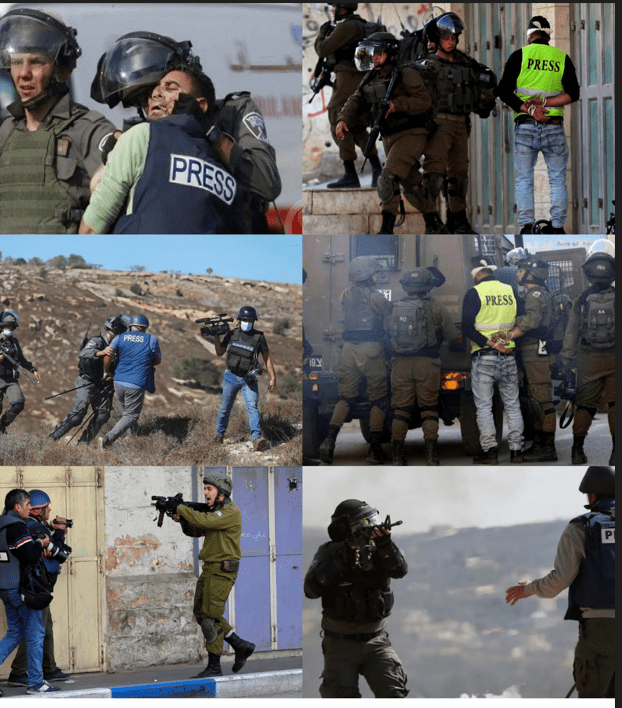
RAMALLAH – The Palestinian News and Information Agency, WAFA, documented 26 Israeli violations against Palestinian journalists and media in the occupied territories during September.
It said in its monthly report on Israeli violations against journalists and media outlets published today that the Israeli occupation forces continued to deliberately target Palestinian journalists with an aim to limit their coverage of the Israeli army practices and violations against the defenseless Palestinian citizens.
The report said 11 journalists were hurt in September from rubber-coated metal bullets and tear gas canisters fired by soldiers, as well as severe beatings and other attacks.
In addition, 13 cases were recorded in which soldiers detained, seized press cards or opened fire at journalists without causing injury, while two cases were documented in which soldiers damaged press equipment and attacked media outlets.
Whose side is the PA on?
By Ramzy Baroud | MEMO | September 27, 2022
The arrest of a couple of prominent Palestinian activists, one of whom was Musab Shtayyeh, by Palestinian Authority police on 20 September was not the first time that the notorious Preventive Security Service (PSS) has arrested someone who is wanted by Israel. The PSS is largely linked to the routine arrest and torture of Palestinians who are active against the Israeli occupation.
Several Palestinians have died as a result of PSS violence, the latest being Nizar Banat who was tortured to death on 24 June last year. The killing of Banat ignited a popular revolt against the PA across occupied Palestine.
For years, various Palestinian and international human rights groups have criticised the PA’s violence against dissenting Palestinian voices, quite often within the same human rights reports critical of Israel’s military occupation of Palestine. The de facto Hamas government in Gaza also has to take its fair share of blame in terms of violence against dissenters.
In its January 2022 World Report, Human Rights Watch said that, “The Palestinian Authority (PA) manages affairs in parts of the West Bank, where it systematically arrests arbitrarily and tortures dissidents.” This was neither the first nor the last time that a human rights group has made such an accusation.
The link between Israeli and Palestinian violence targeting political dissidents and activists is equally clear to most Palestinians, even though some may at one point have believed that the PA’s role is to serve as a transition between their national liberation project and full independence and sovereignty on the ground. Nearly thirty years after the formation of the PA, though, such a notion has proved to be wishful thinking. Not only has the PA failed to usher in the coveted independent State of Palestine, but it has also morphed into a massively corrupt institution whose existence more or less serves the interests of a small class of Palestinian politicians and business people; in Palestine, they are largely one and the same group.
PA corruption and violence aside, what continues to irk most Palestinians is that the authority, with time, has become another manifestation of the Israeli occupation, curtailing Palestinian freedom of expression and carrying out arrests on behalf of the occupation security services. Sadly, many of those arrested by the Israeli military in the West Bank have experienced arrest by PA goons as well.
Riots in Nablus following Shtayyeh’s arrest were reminiscent of the riots against Israeli occupation forces in the northern West Bank city and elsewhere in occupied Palestine. Unlike previous confrontations between Palestinians and PA police — following the killing of Banat, for example — this time the violence was widespread, and involved protesters from all Palestinian political groups, including the ruling Fatah faction.
Perhaps unaware of the massive collective psychological shift that has taken place in Palestine in recent years, the PA was desperate to contain the violence. Subsequently, a committee that represents united Palestinian factions in Nablus declared on 21 September that it had agreed a “truce” with PA security forces in the city. The committee, which includes prominent Palestinian figures, told Associated Press and other media that the agreement restricts any future arrests of Palestinians in Nablus to the condition that the individual must be implicated in breaking Palestinian, not Israeli, law. That provision alone implies a tacit admission by the PA that the arrest of Shtayyeh and Ameed Tbaileh was motivated by an Israeli, not a Palestinian agenda.
But why would the PA bow down so quickly to pressure from ordinary Palestinians on the street? The answer lies in the changing political mood in Palestine.
In considering this matter it must be stated that resentment of the PA has been brewing for years. One opinion poll after another has indicated the low regard that most Palestinians have of their leadership, of PA President Mahmoud Abbas and particularly of the PA’s “security coordination” with Israel.
Moreover, the torture and death of political dissident Banat last year erased whatever patience Palestinians had with regard to the leadership. Banat’s death demonstrated that the PA is not an ally of the people, but a threat to the people.
It also has to be said that the Unity Intifada of May 2021 has emboldened many segments of society across occupied Palestine. For the first time in years, Palestinians have felt united around a single slogan and are no longer hostage to the geography of politics and factions. A new generation of young Palestinians has advanced the conversation beyond Abbas, the PA and their endless and ineffectual political rhetoric.
Finally, armed struggle in the West Bank has been growing so rapidly that the Israeli army Chief of Staff, Aviv Kochavi, claimed on 6 September that since March, around 1,500 Palestinians have been arrested in the West Bank and that, allegedly, hundreds of attacks against the Israeli military have been thwarted.
In fact, evidence of an armed intifada is growing in the Jenin and Nablus regions. What is particularly interesting, and alarming from the Israeli and PA viewpoint, about the nature of the budding armed struggle, is that it is largely led by the military wing of the ruling Fatah party, in direct cooperation with Hamas and other Islamic and national military wings.
For example, on 9 August, the Israeli army assassinated Ibrahim Al-Nabulsi, a prominent Fatah military commander, along with two others. Not only did the PA do little to stop the Israeli military machine from conducting more such assassinations, but six weeks later it also arrested Shtayyeh, a close comrade of Nabulsi.
Interestingly, Shtayyeh is not a member of Fatah, but a commander within the Hamas military wing, Al-Qassam Brigades. Although Fatah and Hamas are meant to be intense political rivals, their political tussle seems to be of no relevance to military groups in the West Bank.
Unfortunately, more violence is likely to follow because Israel is determined to crush any armed intifada in the West Bank before it spreads across the occupied territories; there is a leadership transition looming within the PA due to Abbas’s old age; and unity is growing among Palestinians around the issue of resistance.
While the Israeli response to all of this can easily be gleaned from its legacy of violence, the PA’s future course of action will likely determine its relationship with Israel and its western supporters on the one hand, and with the Palestinian people on the other. The question has to be asked: whose side is the PA on?
From Exodus to Marvel: A brief history of Hollywood’s justification of Israeli war crimes

By Ramzy Baroud | MEMO | September 24, 2022
The introduction of an Israeli Mossad agent as the latest Marvel movie character crosses the line, even by Hollywood’s poor moral standards. However, the Israeli superhero, Sabra, must be understood within the rational progression of the Israelification of Hollywood, a phenomenon that is surprisingly new.
Sabra is a relatively old character, dating back to Marvel comic The Incredible Hulk in 1980. On 10 September, however, it was announced that the Israeli character would be included in an upcoming Marvel film, Captain America: New World Order.
Expectedly, many pro-Palestine activists in the US and around the world fumed. It is one thing to introduce an ordinary Israeli character with the mere aim of normalising Israel, an unrepenting apartheid state, in the eyes of Marvel’s impressionable young audiences. However, it is far more sinister to normalise a state intelligence agency, Mossad, known for its numerous bloody assassinations, sabotage and torture.
By adding Sabra to its cast of superheroes, Marvel Studios has shown its complete disregard for the massive campaign by millions of fans around the world who, in 2017, protested the inclusion of former Israeli soldier Gal Gadot as Marvel’s Wonder Woman. Gadot is a vocal supporter of the Israeli government and military.
In response to the news, many rightly highlighted Hollywood’s inherent bias, starting in the 1960s movie Exodus by Otto Preminger, with Paul Newman as the lead actor. The film provided pseudo-historical justification for the colonisation of Palestine by the Zionists. Ever since, Israel has been elevated, celebrated and included in an ever-positive context by Hollywood, while Muslims, Arabs and Palestinians continue to be vilified.
Although Israel was represented in a positive light by Hollywood filmmakers, the Israelis themselves were quite marginal in the content creation process. Until recently, the Israeli construct was mostly built on behalf of Israel, not by Israel itself. “Things began to change in 1997,” wrote Brian Schaefer in Moment Magazine. It was then that the LA Federation’s Entertainment Division and the Jewish Agency launched the project, the Master Class, which: “For nearly 15 years… brought countless actors, directors, producers, agents, managers and top studio and network executives to Israel, introducing many of them to the country for the first time, and taught Israelis how to pitch their projects.”
The indoctrination of American actors and filmmakers through these visits and the introduction of many Israeli actors and filmmakers to Hollywood paid dividends, leading to a major change in the narrative on Israel. Instead of simply communicating Israel to American and international audiences using references to historical victimisation, positive association or even humour, Israelis began to make their case through Hollywood directly. And, unlike the haphazardness of past messages – good Israel, bad Arabs – the new messages are far more sophisticated, tailored around specific ideas and designed with full awareness of the politics of each era.
Steven Spielberg’s movie Munich (2005) was released within the cultural context of the US invasion of Iraq as part of Washington’s so-called “war on terror“, where human rights were violated on a global scale. Munich was a selective “historical” account of the supposedly difficult choices that Israel, namely Mossad, had to make to fight its own “war on terror”. That was the era when Tel Aviv tirelessly underscored its affinity to Washington, now that both countries are purportedly victims of “Islamic extremists”.
Unlike Munich, the popular TV series Homeland was not just another pro-Israel American argument that justifies Israeli wars and violence. The series itself, one of the most racist, Islamophobic shows on television, was entirely modelled on the Israeli show HaTufim. The writer and director of the Israeli show, Gideon Raff, has been included in the American version, serving as an executive producer.
The change in the ownership of the narrative may seem superficial – as pro-Israel Hollywood propaganda is being replaced by organic Israeli propaganda. However, this is not the case.
The pro-Israel agenda of the past – the romanticisation that followed the creation of Israel in 1948 – did not last long. The Israeli defeat of Arab armies in 1967 – thanks to the massive US military support of Tel Aviv – replaced the image of nascent, vulnerable Israel with that of the brave Israeli army, capable of defeating several militaries at once. It was then that Israeli soldiers toured US colleges and schools, talking about their heroism on the battlefield. The Israeli invasion of Lebanon and the subsequent massacres, like that of Sabra and Shatila, forced a rethink.
Throughout the 1980s and 1990s, Israel largely existed in Hollywood as comic relief, from shows like Friends, Frasier and, more recently, The Big Bang Theory. References to Israel were often followed by laughter – a clever and effective way of linking Israel with positive, happy associations.
The “war on terror”, starting in 2001, coupled with the creation of the Master Class project, allowed Israel to return to the Hollywood universe, not as an occasional reference, but as a staple, with Israeli shows or joint US-Israeli productions, defining a whole new genre: making difficult choices to fight terrorism and ultimately save the world.
The exploitation of Israeli women on magazine covers, for example, Maxim, was an entirely different shady business, catering to a different audience. The half-naked Israeli army girls have succeeded, in the minds of many, in justifying war through sexual imagery. This genre became particularly popular following the bloody Israeli wars on Gaza, which killed thousands.
Israel’s growing influence on Marvel movies is a combination of all of these elements: the sexualisation of the supposedly strong, empowered woman, the normalisation of those who carry out Israeli crimes – Gadot, the soldier, Sabra, the Mossad agent – and the direct injection of Israeli priorities as part of everyday American reality.
Yet, there is a silver lining. For decades, Israel has hidden behind false, romanticised historical notions, making its case to the US and other Western public, often indirectly. The wars on Gaza, the exponential growth of the Palestinian boycott movement and the proliferation of social media have, however, forced Israel out of hiding.
The new Hollywood Israel is now a warrior, often forced to make difficult moral choices, but it is, like its American counterpart, ultimately a force for good. Whether Israel will succeed in maintaining this image will depend on several factors, including the pro-Palestinian communities’ ability to counter such falsehood and hasbara.
Soldiers Kill A Palestinian Whose Car Accidentally Collided With With Empty Police Vehicle

IMEMC | SEPTEMBER 24, 2022
On Saturday, Israeli soldiers fatally shot a Palestinian whose car accidentally collided with an empty police vehicle near Nablus, in the northern part of the occupied West Bank.
Media sources said the slain Palestinian, Mohammad Ali Hussein Abu Kafia, 36, was from Beit Ijza village, northwest of occupied Jerusalem.
He was a teacher, an education counselor, and a married father of three children; the youngest is only six years of age.
The Israeli army and various Israeli media outlets justified the fatal shooting by describing the traffic accident as a “deliberate ramming attack.”
Some Israeli media sources claimed the two officers were injured, but the Israeli police later released a statement denying the reports.
The Israeli police said its officers were interrogating a Palestinian when the other driver, Mohammad, was reportedly driving fast and crashed into an empty Police vehicle.
The Israeli army issued a brief statement claiming that the officers opened fire at the Palestinian car when the “driver tried to run them over,” however, it added that “there was no way to verify this allegation immediately.”
It is worth mentioning that many Palestinians, including several women, have been killed or seriously injured after Israeli soldiers or police officers opened fire at them in similar traffic accidents, simply because they are Palestinians, and the other party of the accident was an Israeli soldier, officer, or colonialist settler.
Mohammad’s cousin, Ramadan Abu Kafia, said Mohammad was driving back home from Qalqilia, in the northern West Bank, when he had a traffic accident with an empty police vehicle parked at the side of the street near Havat Gilad illegal colony, southwest of Nablus.
He added that the soldiers immediately decided that he was carrying out a ramming attack” and opened fire at him even though their lives were not in any danger, and they could have easily arrested him to investigate the incident.
A week ago, the soldiers shot and seriously injured a young Palestinian man in a traffic accident in Huwwara town, south of Nablus.
The Palestinian Ministry of Foreign Affairs and Expatriates issued a statement denouncing the killing of Mohammad Abu Kafia and said it is yet another Israeli crime against the Palestinian civilians in occupied Palestine.
It added that the Israeli political and military leaderships issued various legislations and laws allowing the soldiers and the police to resort to fatal means against the Palestinians merely if they suspect the Palestinians “intended to carry an attack out.”
The Foreign Affairs Ministry called on the International Community to act on providing the needed protection for the Palestinian people and called on the International Criminal Court to immediately start investigating Israeli crimes against Palestinian civilians.
Chile’s Boric wasted an opportunity for Palestine at the UN General Assembly
By Ramona Wadi | MEMO | September 24, 2022
Chilean President Gabriel Boric may currently be the most outspoken leader in Latin America on Palestinian rights and Israeli violations. However, his rhetoric leaves much to be desired. It, in turn, raises questions about how Chile – the country with the largest Palestinian community in the region – can differentiate itself from other countries to become a model to follow, rather than following international consensus over the two-state compromise and Israel’s security narrative.
In his first address to the United Nations General Assembly (UNGA), Boric spoke about Palestine’s right to freedom and sovereignty while mangling his message by including a false equivalence with Israel that eliminates the colonial context. “[Palestinian people] should yield to their inalienable right to establish their own free and sovereign state. In the same way, [let’s] guarantee Israel’s legitimate right to live within secure and internationally recognised borders,” Boric asserted.
Boric’s speech was pronounced “politically correct”, while noting that Chile’s stance has always advocated for the recognition of Palestinian people’s rights and Israel’s rights while promoting the two-state compromise, like the rest of the international community. In which case, Boric’s activist stances as president are unlikely to leave any impact on Chilean diplomacy. Under Boric, the Chilean government is advocating for the same stance that his predecessor Sebastian Pinera adhered to, which is a bonus for Israel, despite the grievances Israeli media aired upon Boric’s electoral victory.
Days before his UNGA speech, Boric postponed accepting the credentials of the new Israeli ambassador to Chile, Gil Artzyeli, in response to the Israeli forces’ killing of 17-year-old Palestinian Odai Trad Salah in Kufr Dan near Jenin. However, his stance, which made headline news in major media outlets worldwide, was diminished by the UNGA speech that attempted equivalence between the coloniser and the colonised while simplifying, to the point of obliteration, the reason why Palestinians are deprived of a state, possibly permanently.
Boric is not unaware of the Palestinian plight as a result of Zionist colonisation. Neither is he oblivious to the fact that Palestinians and the indigenous people of Chile – the Mapuche – have suffered similar forms of aggression because of governments criminalising their struggle for land reclamation and political autonomy. Yet, it is possible that, as president, Boric’s activist stances will be mellowed by diplomatic requirements, such as abiding by the two-state compromise, which has failed Palestinians and become defunct in all but international rhetoric.
Prior to the presidency, Boric stood out as one of the most vocal activists in Chile. As president, Boric is navigating a complex reality that includes the legacy of Augusto Pinochet’s dictatorship and ties to Israel during that period, as well as the country’s reliance on securing military and surveillance equipment from Palestine’s oppressors.
To cast Israel and legitimacy together is an aberration, particularly when using such descriptions to balance advocating for Palestinian rights. Boric wasted an opportunity at his first UNGA speech to call out Israel’s colonial violence and how it invalidates legitimacy. It is not up to the international community to guarantee Israel’s existence, but Boric knows that Chile can play a pivotal role in ensuring that the international community gravitates towards the legitimacy of the Palestinian people’s political demands.
Iran president: Israel’s ‘savagery is not ending’
MEMO | September 22, 2022
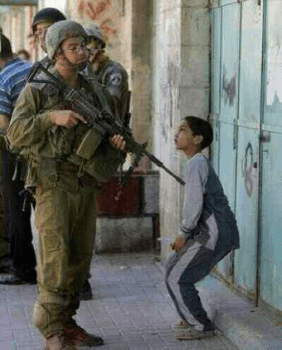 Israel’s “savage power” and its “savagery is not ending”, Iranian President Ebrahim Raisi told the UN General Assembly yesterday.
“The region has not seen an occupying savage power such as the Zionist regime in its midst in the past,” Raisi said.
He explained: “The killing of children and women are present in the dark report card of the Zionist regime. It has managed to form the biggest prison in the world in Gaza and the expansion of settlements and housing illegally on Palestinian territories.”
“The killing of Palestinian women and children shows everyone that seven decades of Israeli occupation and savagery is still with us and not ending.”
“The occupying Zionist power that has occupied Jerusalem and other lands in the region cannot be a partner for security and stability,” he continued.
To solve the Israeli-Palestinian conflict, Raisi proposed a vote by all Palestinians — “Muslims, Christians and Jews” — to establish a single state.
The 9/11 “Double-Cross” Conspiracy Theory
BY LAURENT GUYÉNOT • UNZ REVIEW • SEPTEMBER 6, 2022
Is it true that “9/11 was an inside job”? Yes, insofar as Israel is “inside” the U.S. But for the 9/11 truthers who have identified Israel as the main perpetrators, “9/11 was an inside job” is at best a half-truth, and at worst an integral part of the Zionist operation, like a secondary flag sewn as a lining under the false flag of Islamism. Victor Thorn (1963-2017) wrote in his book 9/11 made in Israel: The Plot Against America (2011): “In essence, the ‘9-11 truth movement’ was created prior to Sept. 11, 2001 as a means of suppressing news relating to Israeli complicity. . . . The slogan ‘9-11 was an inside job’ was quite possibly the greatest example of Israeli propaganda ever devised.” In milder terms, it is “controlled opposition”.
A genuine truth movement would have pointed to Israel as the prime suspect from the start. From day one, it was obvious who would benefit. At 1 pm New York time on the day of the attacks, George Friedman (“born in Budapest, Hungary, to Jewish parents who survived the Holocaust,” Wikipedia informs us) wrote gleefully on his geopolitical website STRATFOR:

It’s pretty simple: 9/11 is best understood as a case of “triangulation”, by which two parties are drawn into conflict with each other by the invisible hand of a third party. In this case, the desired “clash of civilization” between the West and the Muslim world was triggered by Israel, 9/11 being only one operation in this ongoing strategy. Triangulation is the favored tactic of the Mossad, described by the U.S. Army School for Advanced Military Studies, on the eve of 9/11, as having “capability to target U.S. forces and make it look like a Palestinian/Arab act.”[1] Triangulation is also used to create civil strife within a nation (intra-national clashes of civilization, so to speak) for various purposes. In most cases, Israel’s hand is invisible only to the extent of the authorities’ and the people’s voluntary blindness (the proverbial elephant in the room).
If, instead of comparing 9/11 to Operation Northwoods that never happened, the most widely watched early 9/11 conspiracy film (Loose Change) had reminded Americans of the attack on the USS Liberty, the 9/11 Truth movement would have moved in a totally different direction than the one it took under the leadership of Alex Jones. No one would think of calling the USS Liberty attack an “inside job” or “a self-inflicted wound.”
Filling the background with other documented Israeli false flag operations (the bombing of the King David Hotel in 1946, the Lavon Affair in 1954, Israel bombing its own embassies in Argentina in 1992 and in London in 1994, etc.) could have turned such a movement into a tsunami. The “inside job” theory, on the other hand, can never reach a critical mass, for a simple reason: the idea that the U.S. government would, by itself, deceive and terrorize its own citizens by killing thousands of them to justify wars in the Middle East that are not even in the nation’s interest is just too hard to believe for the vast majority of Americans — harder to believe than the official narrative with its material impossibilities. By comparison, Israel attacking America under the false flag of Islamic terrorists to win American support against their Arab enemies makes plain common sense. It is only with the hypnotic power of Zion-controlled corporate medias, and with the complicity of a well-organized “controlled opposition” that such a natural idea was suppressed from the minds of average Americans.
Nevertheless, the belief that “9/11 was an Israeli job” is gaining ground all over the world. Sooner or later, the tsunami will come. And the sooner the better. I am hoping that my film, “9/11 and Israel’s Great Game,” now in English, will help bring it about. Pass it around if you judge it useful:
This film, unfortunately, was shunned from all 9/11 Truth festivals this month. The organizers, I have been told, “decided not to muddy the waters with a film about Israel’s involvement in 9/11.” This must be ironic, for evidence of Israel’s involvement brings clarity, while muddy waters are what Israel needs. However, the film will be streamed on noliesradio.org on October 9th, followed by a debate between Alan Sabrosky, Kevin Barrett, and myself. …
US Senator dismisses Israeli military probe on Abu Akleh’s murder
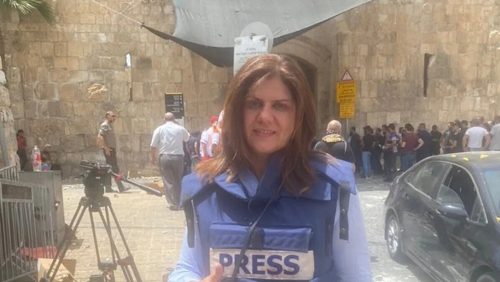
Palestinian journalist Shireen Abu Akleh
Press TV – September 7, 2022
A US Senator has dismissed an Israeli military investigation that claims there is a “high possibility” that veteran Palestinian journalist Shireen Abu Akleh was “accidentally hit” by an Israeli soldier in the occupied West Bank four months ago.
Democratic Senator Chris Van Hollen for Maryland posted a tweet on Wednesday, saying the existing evidence did not support the claim that a soldier accidentally killed Abu Akleh in the midst of a gun battle in Jenin.
Van Hollen said the United Nations and reconstructions by major news outlets had found the female journalist was not in the immediate vicinity of fighting with the Palestinian resistance fighters and could not have been caught in the crossfire.
“The crux of the ‘defense’ in this military report is that a soldier was ‘returning fire’ from armed Palestinians” when Abu Akleh was struck, Van Hollen said. “But investigations … found no such firing at the time. This underscores need for independent US inquiry into this American journalist’s death.”
The Committee to Protect Journalists has labeled the Israeli report “late and incomplete.”
“They provided no name for Shireen Abu [Akleh’s] killer and no other information than his or her own testimony that the killing was a mistake.”
Palestinian officials, rights advocates, and family of the slain journalist have already denounced the findings of the Israeli inquiry.
The journalist’s niece, Lina Abu Akleh, said the family had no confidence in the report. “We could never expect any type of accountability or legitimate investigation from the very entity responsible for gunning down an unarmed and clearly identifiable journalist.”
The family said an independent American investigation was “the bare minimum the US government should do for one of their own citizens.” The family also said Abu Akleh’s killing was a “war crime.”
On Monday, the Israeli military admitted that the journalist was “accidentally” killed by the regime’s gunfire on May 11, saying, however, that it will open no criminal investigation into the assassination.
The acknowledgement came after a final Israeli investigation concluded there was a “high possibility” the journalist had been shot dead by an Israeli soldier who mistook her for an armed Palestinian.
The report claimed she could have been shot by Palestinian gunfire even though all independent investigations on the shooting have totally dispelled the allegation.
Wearing press attire, the 51-year-old journalist was murdered in cold blood while covering an Israeli military raid. Later, her funeral was also attacked by the regime forces.
Israel’s account shifted several times over the four months. However, eyewitness accounts and videos of Abu Akleh and the area around her at the time of her killing do not show a gun battle.
A United Nations investigation earlier found Israeli soldiers fired “several single, seemingly well-aimed bullets” at Abu Akleh and other journalists.
Investigations by the New York Times, Washington Post, and CNN have questioned the official Israeli version of the episode.
Abu Akleh’s tragic death sent shock waves across the region, drawing global condemnation. Critics say the Israeli military has a long history of dissembling and making false claims over the killings of civilians.
Featured Video

False Flags and the Dawn of Bioterrorism
or go to
Aletho News Archives – Video-Images
From the Archives
How 1960’s French Nuclear Tests Are Still Claiming Lives in Algeria
Sputnik – 15.02.2018
On February 13, 1960, France carried out its first nuclear test in Algeria’s southern Reggane region. According to official statistics, 17 nuclear tests were carried out in total over the next 6 years. The area remains affected, and local scientists say that radioactive contamination has caused genetic mutations and irreversibly changed the region.
There are no official statistics on the number of victims. The only figures can be found in the records kept by the French representative of the local church, which lists 42,000 victims of nuclear tests. Three years ago, the French Ministry of Defense issued a statement, putting the number at 27,000 people. The victims include French soldiers as well as local Algerians who lived in the surrounding areas. … continue
Blog Roll
 Aletho News
- Using nuclear weapons, the US-Israeli alliance still can’t beat Iran
- Sunset on the Quality of Western Propaganda: Arrival of the Dr Strangelove Moment
- Ukrainian general accused of protecting crime bosses
- US-‘Israel’ alliance faces growing rupture after midterms
- GOP’s Crushing Midterm Loss Could Reshape US Political Landscape – Analyst
- Midterm loss gives Congress power to rein in US war on Iran
- Midterms Were ‘Vote of No Confidence’ in GOP, But Iran Has No Illusions About Democrats – Marandi
- Israeli Soldiers Inadvertently Prove Their Own Genocidal Guilt
- Ukraine arrests woman who exposed Azov battalion’s ‘torture chamber’
- Did Israel lose the midterms?
- If Americans Knew
- An error has occurred; the feed is probably down. Try again later.
- No Tricks Zone
- New Study: The Net Fossil Fuel Contribution To Rising Atmospheric CO2 Has Been Zero For 500 Years
- Germany’s Green Energy Transition Becoming Increasingly Expensive…Another 6 Trillion Euros!
- Sudden Stratospheric Warming, Powerful El Niño Combination May Lead To Extreme Europe Cold, Energy Crisis!
- Two New Studies Find Thwaites Glacier Melt Cannot Be Driven By Human Activity Or A Warming Ocean
- E-Cars Reduce CO2 Emissions By Only 41% Compared To Internal Combustion Engine Vehicles
- Predictions Made By Renowned Climate Professor Over Past Decades Have Been Proven To Be Poor
- New Study Suggests Large Regions Of The Pacific Ocean Have Been Cooling For The Last 80 Years
- Germany’s Green Energy Debacle: High Energy Costs Force Kahla Porzellan to Close After 182 Years!
- New Study: 50 Years Of The Most Aggressive ‘Net Zero’ Policies Can Only Affect The Global Climate By 0.03°C
- US September “Heat” Was No Record…Many Records Set Decades Ago

