Secretary General of the Lebanese Hezbollah resistance movement, Sayyed Hassan Nasrallah, says when southern Lebanon was occupied by Israel, no country in the world except Iran and Syria helped the country to end occupation.
Nasrallah made the remarks while delivering a speech in commemoration of the 17th anniversary of the liberation of the southern Lebanon from the Israeli occupation.
Addressing the nation from the southern city of Hermel, Nasrallah said resistance has gotten strong enough not to wait for support from the rest of the world or from inside the country or outside.
Lambasting the world’s indifference toward the occupation of Lebanon by Israel, he said when Lebanon was occupied no country in the world, neither the Organization of Islamic Cooperation, nor the Arab League, nor the United Nations or America helped Lebanon.
“Only the Islamic Republic of Iran and Syria helped Lebanon against Israeli occupation,” the Hezbollah chief added.
He noted that the only time that resistance was helped against Israel was under former president, Émile Lahoud, parliament speaker, Nabih Berri, and former prime minister, Selim al-Hoss.
Sayyed Hassan Nasrallah described the close cooperation between Lebanese army troops and Hezbollah fighters as the main reason behind the 2000 victory over the Israeli regime’s aggression and winning back the occupied lands of southern Lebanon.
He stressed that during the occupation, Western countries stood by Tel Aviv throughout the 15 years in which the Lebanese territories were occupied by Israel’s military forces.
He also praised the steadfastness of the Lebanese nation in the face of Israel and foreign-sponsored Takfiri militant groups.
Riyadh meeting aimed to threaten Iran, resistance
Referring to a recent meeting among leaders of several Muslim countries in the Saudi capital, Riyadh, which was also attended by US President Donald Trump, the Hezbollah chief said anything that was said and decided during the Riyadh meeting would have no effect on the situation in Lebanon, because since the new president has come to office, good consensus has been reached inside the country over a host of issues.
Pointing to participation of an official Lebanese delegation in the Riyadh meeting and that the al-Mustaqbal party had hailed the final statement of the Riyadh summit, he said, “We have reached an understanding in Lebanon to differ over political matters, but follow the same line on economic and security matters.”
He added that the final statement of the Riyadh summit was not acceptable for the resistance movement and it would have no effect on the situation in Lebanon.
Nasrallah also noted that Muslim leaders attending the Riyadh summit had no information whatsoever about the meeting’s final statement, and had emphasized that they will not take heed of the statement.
The Riyadh summit was simply organized in order to glorify US President Donald Trump, the Hezbollah chief said, adding that the meeting sought to threaten the Islamic Republic of Iran as well as the resistance in Iraq and neighboring Syria.
‘Saudi Arabia is the center of world terrorism’
Taking Saudi rulers to task for inviting Trump to the Riyadh summit, Nasrallah described Trump as the US president, who has disrespected Islam as well as Arab nations the most during his presidential campaigning.
He added that Saudi Arabia simply invited Trump to get his support in the face of rising global criticism of Riyadh’s role in fostering terrorism.
“The entire world knows that Saudi Arabia is behind the spread of terrorist Takfiri ideology,” he said adding that the Saudi-backed terrorists were wreaking havoc across the world and that their damage was not limited to a single country or the Islamic world, but had spread to the Western countries as well.
“Saudi Arabia is the center of world terrorism. It is responsible for the creation and supplying arms and munitions to al-Qaeda, Taliban and Daesh terrorist groups. The kingdom’s Wahhabi ideology is fanning the flames of sectarianism and sedition in the Muslim world,” he said.
Nasrallah slams Bahrain’s “heinous assault” on peaceful protesters
Elsewhere in his remarks, the secretary general of Hezbollah censured Bahrain’s Al Khalifah regime for the brutal crackdown on peaceful pro-democracy protests in the tiny Persian Gulf kingdom.
He termed the assaults against supporters of the country’s prominent Shia cleric, Sheikh Isa Qassim in the northwestern village of Diraz as “heinous,” calling for the immediate release of the 77-year-old cleric, who is the spiritual leader of the country’s dissolved opposition bloc, the al-Wefaq National Islamic Society.
Riyadh trying to isolate Tehran due to is support for resistance
Turning to Saudi Arabia’s military onslaught against Yemen, Nasrallah hailed the Yemeni nation’s steadfastness, emphasizing that the Riyadh regime is perpetrating crimes against humanity in the impoverished country through starving and slaughtering ordinary people.
The Hezbollah leader underlined that Saudi Arabia was haplessly seeking to isolate Iran, because of its support for anti-Israel resistance movement, including in Yemen.
He added that Saudi officials had paid billions of dollars to US statesmen in this regard forgetting all about the plight of poor Muslims.
Noting that Saudi Arabia’s aggression of Yemen was a clear political and military failure, Nasrallah advised Saudi authorities to put hostility towards Iran aside and engage in negotiations with the Islamic Republic.
He also leveled strident criticism against Arab leaders for their disregard of the important role that Iran is playing against terrorism in the Middle East region.
Nasrallah also dismissed allegations against the Hezbollah resistance movement as “repetitive,” stressing that members of the group were unfazed by ongoing threats and were fully prepared to defend their land, nation and the future of their children.
The Hezbollah chief stressed that the resistance movement in the region was stronger than ever, adding that Daesh terrorists will soon be defeated in both Iraq and Syria.
Speech by Hezbollah Secretary General Sayed Hassan Nasrallah on May 2, 2017, on the occasion of the Day of the Wounded
Transcript:
[…] Two words on the general situation (in the Middle East).
The first thing to be said about the general situation in the region concerns the struggle for freedom and dignity that 1500 Palestinian prisoners are leading and… we are today on the 16th day of their hunger strike, with a supportive response from the Palestinian street, inside (occupied Palestine) and outside, towards this movement.
As usual, we naturally support and unite with them, and we announce our firm and total solidarity with this action of jihad and strong resistance by Palestinian prisoners for their legitimate and natural demands. But we want to learn from what is happening there.
In this first point concerning the situation of the region, I have two points.
First, I want to learn the lessons on which we can build a permanent political path. Well, on the opposite side, Israel turns a deaf ear… They are not ready to negotiate or to respond to the demands. The demands of the prisoners are not the liberation of Palestine nor the liberation of Al-Quds (Jerusalem). The prisoners’ demands concern the natural rights of all prisoners, humanitarian rights. Israel is turning a deaf ear and, as usual, relies on the passing of time, the weariness, and the withdrawal of Palestinian prisoners, hoping that this movement will be nothing but a vain eruption.
Nothing else can be expected of Israel, the usurping, terrorist, occupying enemy. But look at the rest of the world. Look at the rest of the world. Where are the Arab regimes? Where are the Arab peoples? Where is the Union of Arab Countries? Where is the Organization of Islamic States, the Organization for Islamic Cooperation? Where is the world? Where is Europe? Where is the West? Where is the UN? Where’s the Security Council? All those who often get angry at the most trivial stories that happen in this or that place of the world, where are they? We are on the 16th day, and nothing happens in the world, nothing at all.
For the commemoration of the martyr leaders, I stirred up the roses’ pot, when I said that they brought us, the Arab world and the region, to the point where Palestine became the forgotten cause. This is proof.
Today, tell me where the kings and the Arab presidents are. Soon, it will be said that the Sayed (Nasrallah) attacks the kings and Arab presidents. Where are the Arab regimes? Where is the Union of Arab Countries? Where is the serious reaction, where are the real pressures? The pressure on your American friends, the pressure on your European friends?… Where are the organizations for the defense of human rights? Where is the Arab voice? Where are the Arab media? Where are the Arabic TV channels? Where are the Arabian pens?
If this happens, oh my brothers and sisters, if this was happening in a country that was not allied or aligned with the United States, allied or aligned with the West, you would have seen the whole world rise (of indignation) without sitting back. I do not even say whether it was in Iran, Syria or I do not know where. In any country that is not aligned with the United States and the West, which is not subject to their will and diktat, which is not part of their project, you would have seen the Council of Security, the UN, the White House, foreign ministers, human rights organizations and the whole world stand up. Not on the 16th day, from the first hour. And the state or government that refuses to negotiate with these prisoners and respond to their demands would have been accused of aggression, cruelty, inhuman treatment, oppression, torture, tyranny, and so on.
But it is Israel, the spoiled child of the United States, the advanced military base of the West in our region… (So) no!… Let Netanyahu do what he wants. Let him take his ease, he has all his time. No problem. Just as he had absolutely all the time in the world for the wars against Gaza. He has all his time once again, whether it be for the question of prisoners or any other; for the question of colonies or any other.
Well, if we’re trying to collect comparable evidence, whether it’s less than a year ago, or since 2003, in Iraq, since 2003, Takafi terrorist organizations have carried out thousands of suicide operations, not to mention the others operations, and they killed Shiites, Sunnis, Arabs, Kurds, Turkmens, they did not spare anyone in the Iraqi people. And daily massacres, to the point that car bombs have become a normal and natural daily occurrence in Iraq. And the world (whole) remains silent. And the world knows who supports them, who finances them, who protects them, and who helps them in the media so far: there are Arab channels which, in this battle of Mosul, are with ISIS. They are not with the Iraqi government or the Iraqi forces. And the whole world says nothing of all these helpers, supporters, assistants, media protectors, funders and facilitators (of ISIS). Why? Because the Iraqi people must be subjugated, humiliated, silenced and integrated into this (American) project.
Well, let’s consider Yemen. A few days ago, the UN Secretary-General read a speech of mourning, saying that while we are talking, 50 Yemeni children are dying. Well, the whole world speaks of millions of people threatened by famine in Yemen. While the whole world knows who is besieging Yemen, who bombards Yemen, who starves Yemen. Does anyone dare open his mouth (about it)? Does anyone dare to talk?
And if I begin to describe things as they are, I am told that I jeopardize tourism in Lebanon. If I say what the whole world knows, that Saudi Arabia and its allies are besieging, starving and killing the Yemeni people every day and every night, I am accused of jeopardizing tourism in Lebanon. A simple word of truth (is worth this accusation). But a world that remains silent in the face of millions of people dying of hunger, what does the death of thousands of people killed and bombed mean to him, and hundreds of thousands injured? How could they matter to them? Although the whole world and the UN recognize this situation. Simply because it is Saudi Arabia, the ally of the United States, the West, who pays fortunes, the hundreds of billions of dollars that it pays to the United States. And Trump is coming now to take from them the money they have left.
But as for the poor Yemeni people, they have no money to pay to the United States, they have no money to pay to Trump, they have no money to pay to the British prime minister or to the French President so that they move and say “Enough, we will end the siege, the war and the aggression against Yemen.”
Well, let’s look at Syria. A few days ago, a massacre was perpetrated against the inhabitants of Fou’a and Kafraya who left their besieged towns in the Al-Rachidin district at the entrance to the city of Aleppo. A bloodthirsty suicide bomber came with a van, and attacked the bus convoy. What was in the convoy? 5,000 civilians, an overwhelming majority of civilians, most of whom were women and children. In short, the attack caused hundreds of martyrs, wounded and disappeared. What did the world do? What did it do?roo
In the agreement, the Syrian State and ourselves have guaranteed the safety of the evacuees (of the terrorist enclaves of) Madaya, Zabadani, Biqqin, Sarghaya, Blodan and Borj Blodan, so that they be conveyed to a safe point beyond the city of Aleppo. Imagine that a person (there are no suicide bombers in our camp), by mistake, took a machine gun and fired (on their convoy), or fired a RPG rocket on a bus and killed a certain number of persons. Who would have spared us (his condemnations)? Who would have spared the Syrian army, Hezbollah and the parties that guaranteed this agreement? The Security Council, the US, Trump and the whole world would have entered in a great anger, and may even have launched an air attack (against Syria).
So look at the existing situation, the actual situation. Of course, I do not bring anything new. I only want to confirm a long-established idea, which is confirmed every day, every day, every day, in the face of the people opposing our point of view, whom we would like to see bring us the least evidence, the least element (which confirms their vision).
But when the Khan Sheikhoun event happened and the regime was accused of using chemical weapons, well, guys, do an investigation, but they do not want to do anything, no investigation. My dear friends, who proved that the regime really used chemical weapons? Yes, he did (so they say). Well, what is the proof? No one has any evidence. Well, are these images that have circulated, are they made up or is it the truth? Nobody knows. Well, send a commission of inquiry, for example, Russia, Iran, other countries of the world… Oh, we’re just asking for a commission of inquiry, but the US does not want a commission of inquiry. They do not accept inquiry! We just want to know the truth, in order to condemn the criminal who used chemical weapons, whoever he may be. But they refuse any commission of inquiry.
On the contrary, from the very first moment, Trump and the American administration, as usual, established themselves as Attorney General, Investigator, Judge and Executioner, and they came to strike at Shu’eirat airport, and considered to have achieved a great feat. And congratulations began to be fired from all sides, from Saudi Arabia, Turkey, some Gulf countries, political forces (who said) “Congratulations, God bless you and reward you, give you a fine end And increase your resources.” Is it not what they told them?
Well, on what basis? For the one who is targeted here (Bashar al-Assad) is not a collaborator, a follower or a submissive, they want to subjugate, humiliate and break him. This is the equation.
Today, if we came to any corner of a country not aligned with the USA, and imagine there was a city completely besieged, with hundreds of men and women standing under the sun, day and night, to protect a pure man, a great scholar in Bahrain, His Eminence Ayatollah Sheikh Issa Qassem, and this for 7 or 8 months, soon a year, in a very severely besieged region. It is a forgotten thing, which does not interest anyone in the world. Because these people are in a subdued, aligned, part of the (American) project, and therefore no pressure will be exerted on the issue. Why would they ask them anything? They will be congratulated instead for the beautiful kohl of their eyes, and will be told “Very well, continue.”
That’s it. It is not necessary that I multiply the examples, I was rather long already, but the conclusion that must be drawn is this: O our brothers, O our sisters, O our people (and we express ourselves with experience, and these examples only confirm the idea, which is ours from the beginning), today if our territory is liberated, if our prisoners in the Israeli jails have returned (there are still files awaitng), if our country is free in the face of Israeli threats, no one has played any role in this, neither the UN Council, the US, the West, the Union of Arab International resolutions or anyone at all.
It is thanks to you alone, the noble people, the Army, the People and the Resistance, the martyrs, the wounded. Today, if Lebanon enjoys freedom, dignity and security, it is thanks to your lofty souls, your wounded bodies, the pure blood of your martyrs, and the blood of your bodies, which was poured on the land of that country and in that region. Only, only, only (thanks to you and no one else).
Do not expect anything from this world, this international community, America and the West, do not expect justice, impartiality, or the recognition of truth. That does not mean we do not ask for it, but we do not expect anything. And in any case, we do not regret that they ignore us, that they do not take the required position and that they exert no pressure (on the oppressors). For basically they are the enemy, so beware of them! The basis of our ills is them. The very people we are asking for positions, declarations and measures are the problem at the first level. As for the others, they are merely instruments, they merely follow, they are merely the pawns of a game of chess which serve the projects of domination of our countries. What do they want, friends? They want to plunder our choices, our resources, our oil, our gas, and now they want to plunder us more. We do not have time to talk about the new American policy: more obvious looting, explicit looting.
It is therefore necessary that we rely on our presence in the squares and fields (of battle), on our strength. What I have always said to you today, all the events and developments that are happening, I repeat to you again: we live in a world of wolves. There is no international law, there is only the law of the jungle. The strong eats the weak. If we are weak, we shall be eaten. If we are stronger, the world will respect us.
When we have a weight on equations and interests… This world seeks interests, it does not seek principles or values. Therefore, our strength is there, our interests are there, and our destiny and our future stop at our strength, our unity, our presence, the endurance of our people, the conscience of our (Islamic) Community.
These are the lessons we must learn from what is happening now. […]
Israeli Prime Minister Benjamin Netanyahu says the US has increased its military aid to Tel Aviv by tens of millions of dollars.
“Three days ago, the US added another $75 million to the aid package,” Netanyahu said on Wednesday, without giving a time frame for the money’s arrival.
The announcement comes just days after Netanyahu personally greeted US President Donald Trump on his first visit to Israel.
Trump had arrived from Saudi Arabia where he signed a massive $110 billion arms deal with Riyadh.
Based on a September 2016 agreement, the US will be bankrolling Israel’s military spending to the tune of around $38 billion dollars effective from 2019 for the next 10 years.
Under the deal, Israel will be allowed to upgrade most of its fighter aircraft, improve its ground forces’ mobility and strengthen its missile systems.
Washington has also been providing Israel with $3.1 billion annually since a 2007 agreement with the administration of former President George W. Bush.
In April, Washington approved a proposal to sell Israel more weapons, including naval guns and technical support worth an estimated $440 million.
As the United States prepared to sign a multi-billion dollar arms deal with Saudi Arabia, royal forces laid siege to al-Awamiya, a restive town of approximately 30,000 in the Qatif district of the country’s Eastern Province. Bulldozers, backed by armored tanks and helicopter gunships, systemically leveled homes and put entire families on the street in the historic Mosawara neighborhood. This came under the guise of a development and “renovation” project for the long-neglected and impoverished city although the regime saw fit to post doctored images of allegedly captured weapons to imply that it was also a security operation.
Last month, anticipating such a move, United Nations experts on poverty, culture and housing rights, “ … called on the Government of the Kingdom of Saudi Arabia to immediately halt the planned demolition of a 400-year-old walled neighborhood in the village of Awamia. The UN experts warned the development plan for the Al-Masora quarter threatens the historical and cultural heritage of the town with irreparable harm, and may result in the forced eviction of numerous people from their businesses and residences.
“The area is of importance not only to local people and the entire cultural landscape of Awamia, but also has national significance for the history and cultural heritage of Saudi Arabia,” said the UN Special Rapporteur in the field of cultural rights, Karima Bennoune. “The planned demolition would erase this unique regional heritage in an irreversible manner.” As the report makes clear, the project did not provide for the construction of residential buildings in place of those destroyed.
Awamiya was home to the late Sheikh Nimr al-Nimr, the fiery cleric who nonetheless peacefully demanded equal rights for the marginalized, oppressed Saudi Shia community. He was ultimately executed by the government in January 2016 after his capture in July 2012. Awamiya is no stranger to aggression, but this past week’s attack and ongoing siege is a new escalation by those yet to be satiated by the killing of Sheikh al-Nimr.
The city’s planned “development” was marked by blocking ambulance access, cordoning off the entrance to Mosawara with concrete barriers, cutting power and shooting at residents. As one said, “It is really painful to demolish a historic and archaeological city like Almosara whose lifespan extends for hundreds of years. Some people who want to close their eyes to the truth and are not affected by the demolition will believe in the lie of development.”
The action comes on the heels of an interview by deputy Crown Prince Muhammad bin Salman’s interview on state television in which he vowed to take the country’s standoff with Tehran inside of Iran’s borders. The offensive was still against Shia Muslims but instead within Saudi borders and the victims his fellow citizens.
It is erroneous and somewhat simplistic to frame the assault strictly in sectarian terms or as a move to appease the religious establishment’s anti-Shia proclivities. Rather, it was meant to send a message to all in the Kingdom of the fate of those who would oppose the authority and the legitimacy of the monarchy. It was to widen the narrow streets of Mosawara to allow tanks easy passage for future operations. It was a reminder to those in the Qatif who might still be emboldened by Sheikh Nimr’s famous declaration, “A century of oppression … enough, we will not be silent and we will not fear. We will call for separation even from this country and let be what will be. Our dignity is dearer than the unity of this land.”
Most importantly, it was to demonstrate that even when the President of the United States visits Saudi Arabia to speak about combating extremism, the regime itself can be extremist without consequence or reproach.
Qana, Lebanon has been the subject of two vicious Israeli attacks and massacres. Gaza withstood untold suffering from a suffocating blockade followed by attack from land, sea and air. The poor villages outside of Manama, Bahrain, have withered under the pervasive repression of the al-Khalifa dynasty. Now another has joined their ranks.
Marwan Barghouti has stopped drinking water. He started his hunger strike thirty-six days ago, together with 1,500 other Palestinians who are being held in Israeli prisons. Each day the strikers have been drinking water mixed with salt, the salt needed to keep their electrolytes functioning to stay alive, but their health has reached a critical phase in which they are experiencing vomiting, fainting and loss of vision. Barghouti, who has been in Israeli prisons for 15 years, is wagering with his own life in a bid to obtain better conditions for the 6,500 Palestinians in Israeli detention, most of whom have been imprisoned on faux terrorism related charges by military tribunals that have a 90% conviction rate. Nearly 500 children are among the prisoners, some of whom are only 12 years old, and there are also an estimated 500 Palestinians held in administrative detention, which permits the Israeli authorities to confine them indefinitely without any charges or any trial.
The Israeli authorities describe the hunger strike as a “violation of prison rules.” In the past, they have responded to such protests by bringing in doctors to help restrain and supervise force feeding of the strikers, but the practice proved very controversial among members of the medical profession and has been suspended, though there have been suggestions that “foreign” doctors might be brought in to do the dirty work. So it is to be presumed that the strike will continue until the protesters either win, begin to die or choose to cease and desist.
I have had the pleasure of speaking recently with Marwan’s youngest son Arab, a graduate of St. Mary’s College of California with a master’s degree in financial analysis, who has begun a campaign to publicize his father’s resistance against the Israeli prison authorities. He has been asking supporters to themselves drink salt water as a sign of solidarity with the hunger strikers. Many prominent Palestinians have done so publicly and the practice has become widespread both in Gaza and on the West Bank as well as among activists in Europe and the United States. It is also gaining strength on the social media, most particularly on Facebook, with videos of supporters of the Salt Water Challenge Salt Water Challenge inviting their friends to join the movement. Hunger striking is the ultimate personal statement, a peaceful form of protest that can only be effective if it helps to mobilize other forces to bring about change. With that in mind, the account of the suffering of Marwan Barghouti and his comrades in prison deserves the widest possible dissemination worldwide.
Marwan Barghouti is, not surprisingly, a controversial figure. His resistance to the Israeli occupation of his homeland began early at age 15 when he joined Fatah and eventually went on to co-found the organization’s youth movement. He later assumed leadership of its paramilitary wing Tanzim, though he eventually distanced himself from Fatah due to its corruption and for a short time headed his own reform party. He subsequently rejoined Fatah in 2006 and is now a member of the Palestinian Parliament. He is widely regarded as the most popular of Palestinian leaders even though he is in prison, or perhaps in part because of that.
Barghouti’s biography reads like a work of fiction. One of seven children, his father was a migrant worker. He completed high school while in an Israeli prison, where he learned Hebrew, and then went on to complete a BA in history and political science followed by an MA in international relations, both at the Palestinian Birzeit University. It required 15 years to complete his degrees because he was exiled to Jordan by the Israelis from 1987 to 1994 for his involvement in the First Intifada after being charged with “incitement,” a favorite catch-all phrase frequently used by Israel to indict anyone who is perceived as an opponent or critic when no actual charges can be plausibly supported by evidence.
Marwan Barghouti was indeed prominent in both the First and Second Intifadas due to his undoubtedly correct belief that a powerful Israel had no interest in any peaceful accommodation with the beleaguered Palestinians. He supported sometimes violent resistance and provocations directed at Israeli soldiers and settlers on the West Bank, though he did not consider Israeli citizens inside Israel legitimate targets. In 2002, he was arrested in Ramallah by the Israelis during the Second Intifada and eventually convicted of five counts of murder plus additional charges. He was given the maximum sentence of five cumulative life sentences for the alleged murders plus forty additional years for attempted murder and membership in an illegal organization.
In his trial Barghouti denied everything but refused to defend himself, claiming that the court had no jurisdiction and that he was legitimately resisting the Israeli occupation of his home. No one was able to demonstrate that he had actually killed anyone but the prosecution insisted that he had given the orders to do so. It should be noted that it was a political rather than a criminal event and completely illegal as he was a Palestinian living in Ramallah who was being tried in an Israeli court and sentenced to prison in Israel. The Inter-Parliamentary union subsequently reviewed the case and found that it had violated the accused’s rights and that numerous international legal agreements and norms were contravened.
Since 2002, there have been growing demands for Marwan Barghouti’s release, including from some Israeli politicians and peace groups, based on his relative moderation and desire to see a peaceful transition into a two-state solution for Israel and Palestine. He has sometimes been likened to Nelson Mandela as someone who could potentially bring order and justice to an apparently intractable situation. Barghouti is undeniably more popular than either Mahmoud Abbas of Fatah or Ismail Haniya of Hamas. If he were free and an election were held today, he would undoubtedly be elected Palestinian president.
It is important to understand the context of the plight of the Palestinian prisoners to appreciate where Barghouti’s struggle for Palestinian rights derives from. Israel shoots to kill Arab demonstrators, including children, who throw stones. It engages in illegal mass, arbitrary arrests of Palestinians who do not reside in Israel but are nevertheless subject to control by the Israeli military authorities who have a relatively free hand on the West Bank. Once convicted by a military court, which is almost always the case, the prisoners are then held in Israel, a violation of international law, while their homes back in the Palestinian territories are frequently demolished to collectively punish the families. The trip through Israeli security barriers from the West Bank to the prisons requires 20 hours travel each way, leading to a 45 minute visit with a barrier in between so no one can actually see anyone else. A one visit per year limit for anyone over 16 is part of a process intended to further punish the families. Prisoners are routinely tortured by Israel, including the “Palestinian Chair”, an excruciating procedure which was developed by the Israel Defense Force’s interrogators and later taught to Americans and used at Abu Ghraib. Hundreds of Arabs have also been killed while in custody and reports of organ harvesting have surfaced in the international media.
Over the past fifty years, an estimated 800,000 Palestinians have been imprisoned by Israel at one time or another, fully 40% of the adult male population. Meanwhile, Israeli settlers run amok on the West Bank, protected by the police and army as they attack Palestinians at random and systematically destroy their livelihoods. They are rarely arrested and, if they are, they are tried in Israeli civil courts where they are nearly always acquitted. It is a situation that would be unimaginable nearly anywhere else in the world but Israel gets away with it due to a sympathetic Jewish dominated media in the U.S. and lickspittle politicians worldwide who can easily be bought or coerced.
Numerous international laws and the Geneva Conventions have been violated in the horrific treatment of the Palestinians but Israel continues to act with impunity. Israel’s colonial occupation and theft of Palestinian land are illegal and have been frequently condemned by world bodies like the United Nations. The United States agrees that the settlements are illegal, though it avoids the word, but it balks at calling out the brutal Israeli military occupation for what it is. The U.S. has also served as Israel’s protector in the U.N. and elsewhere, meaning that there is no pushback against Israeli actions that is in any way commensurate to the crimes that its government commits.
The current American Ambassador to the U.N. Nikki Haley is a virtual echo chamber for Israel’s Foreign Ministry. She sells out U.S. interests to pander to the powerful domestic Israel Lobby which uses its money and political access to corrupt American politicians as well as judicial processes worldwide, as Alison Weir has recently demonstrated with her brilliant analysis of how any criticism of Israel is now being conflated with anti-Semitism and increasingly regarded as a universal “hate crime.”
Israeli apologists like to frame the Palestinian “problem” as a group of unredeemable terrorists who have to be dealt with harshly, a narrative that portrays all Arabs as a threat. But the reality is that Israel has overwhelming power and exercises brutal control over the Palestinian population, which is treated as if it were subhuman. Indeed, many Israelis believe that Arabs are subhuman and deserve to be “ethnically cleansed.” But a people under occupation, even if relatively powerless, has a right to resist under international law, to include the use of violence, which is what the two Intifadas were all about.
One has to hope that Marwan Barghouti succeeds in his resistance and that his son Arab will be able to reach the widest possible audience to publicize what exactly is going on in Israel’s prisons and by extension in its cruel occupation and settlement of what remains of Palestine. And we should not forget other prisoners of conscience like Israeli nuclear whistleblower Moredechai Vanunu, who has yet again had his liberty restricted by the country’s Supreme Court. Israel is an essentially racist police state in spite of its frequent boasts about its alleged democracy but the important message for us Americans is that we have unfortunately served as Benjamin Netanyahu’s enablers. The Palestinians deserve a state of their own and the time has come for the United States to demand that Israel free all political prisoners like Marwan Barghouti and allow that to happen.
Those who claim that Israel is opposed to Donald Trump’s now openly warm relations with Saudi Arabia are missing the actual point. On the surface, many assume that Israel and Saudi Arabia have poor relations. Neither country has diplomatic relations with one another, one is a self-styled Jewish state while the other is a Wahhabi Sunni monarchy.
But they both have the same regional goals, they both have the same enemies and both are intellectual anachronisms in a 20th century that has seen the fall of multiple monarchies, the end of traditional European colonialism and the fall of segregated regimes in Africa (Apartheid South Africa and UDI Rhodesia for example).
Israel and Saudi Arabia have always been enemies of secular, Arab nationalist states and federations. Whether an Arab state is Nasserist, Ba’athist, socialist, Marxist-Leninist or in the case of Gaddafi’s Libya a practitioner of the post-Nassierist Third Political Theory: Israel and Saudi Arabia have sought to and in large part have succeeded, with western help, at destroy such states.
Unlike Israel’s Apartheid military state and Saudi Arabia’s human rights free monarchy, the aforementioned Arab styles of government are worthy of the word modern. These are countries which had progressive mixed economies, had secular governments and societies, had full constitutional rights for religious and ethnic minorities, they championed women’s rights and engaged in mass literacy programmes and infrastructural projects. In the case of the Syrian Arab Republic, such things still apply.
Such things still have wide appeal not just in the Arab world but universally. The very charter of the UN subtly implies that such goals are the way forward.
Secular Arab governments have therefore not fallen due to their lack of popularity but they have fallen due to political and military aggression from Israel, monetary blackmail and terrorism funded from and by Saudi Arabia and a combination of all of the above from the United States and her European allies. Useful idiots in the west who claim that groups like the obscurantist and terroristic Muslim Brotherhood represent majoritarian public opinion in secular Arab states are simply worse than useful idiots: they are lying, dangerous idiots.
This is why Syria is a country that Israel and Saudi Arabia are both interested in destroying. Both countries have indeed invested time and money into destroying Syria and thus far they have not been successful.
Syria is the last secular Arab Ba’athist state in the world. Unlike in Israel, minorities have full constitutional rights and unlike in Saudi Arabia, all religions are tolerated. In Syria, women can act, speak and dress as they wish.
Syria’s independence has in the past thwarted Israel’s ambition to annex Lebanon, Iraq, Jordan, Egypt and additional parts of Syria itself (Israel still occupies Syria’s Golan Heights). Syria has also been a true ally of the oppressed Palestinians living under Israeli occupation.
Likewise, Syria has hurt Saudi Arabia and fellow backward Gulf state Qatar’s ambitions to expand their petro-empires. Qatar remains desirous to construct a pipeline running through Syria, something Qatar wants done on its terms and its terms alone.
Furthermore, since Saudi Arabia has little to offer the world in terms of culture, Saudi attempts to control and colonise their more educated and worldly Levantine Arabs is done through a combination of bribery and through the use of Salafist terrorist proxies such as ISIS and al-Qaeda.
There is also a psychological element to the mutual warfare which Saudi Arabia and Israel have waged on secular states like Syria.
So long as Syria exists, Saudi Arabia cannot say that there is no alternative to its backward style of government in the Arab world. Of course, others like Iraq, Lebanon and Egypt are secular states (Iraq less so now than at any time since independence), but these states have been wholly compromised through war and in the case of Egypt through political malaise.
Syria remains strongly independent and refuses to surrender its values.
Both countries also seek to destroy Iran. Iran unlike Saudi Arabia and Israel, practices an ethical foreign policy. Far from wanting to export its Islamic Revolution, Iran has been a staunch ally to secular Syria and has been at the forefront of the fight against Salafist terrorism like ISIS and al-Qaeda.
Iran has also taken a principled stance on Palestine, whilst most Arab states with the exception of Syria, have long ago given up on the Palestinian cause.
Israel and Saudi Arabia have superficial differences in foreign policy, but their main goals are exactly the same. Both seek to retard the progress of the Arab world and to taint Islam as something it is not.
Saudi Arabia and Israel both want non-Muslims to think of Islam as something representing bombs, female enslavement, physical mutilation and barbarity. Syria has shown the world that real Islam looks a lot like Christianity and frankly a lot more like Christianity than atheistic Europe does in 2017.
Saudi Arabia and Israel are allies in the material and psychological war against secular, modern Arab countries. It is a war which the United States has been fighting on behalf of Riyadh and Tel Aviv for decades.
The Palestinian Center for Human Rights documents crimes committed in the occupied Palestinian territories in weekly reports. We summarize their reports and stories from other news agencies with the goal of informing Americans of the ongoing violence that Palestinian families face each day under Israel’s occupation of their ancestral lands. The Israeli government receives $3 billion per year in direct military aid from U.S. taxpayers.
May 11, 2017 – May 17, 2017
West Bank
The Israeli military continued its 50-year long military occupation of Palestinian land in the West Bank, under which the 2.8 million Palestinians living there are subjected to a different set of laws and treatment than Jewish settlers (numbering 588,000) are.
An Israeli sharpshooter shot 22-year-old Saba’ Obeid in the heart at demonstration supporting the Palestinian mass hunger strike, killing him. Israeli soldiers shot other demonstrators with rubber-coated steel bullets and teargas canisters and prevented journalists from entering the area.
An Israeli police office killed Jordanian man Mohammad al-Kasaji, 57, in Jerusalem’s Old City after the man reportedly stabbed him. Palestinian sources said the officer is known for assaulting worshipers who come to Al-Aqsa Mosque (a Muslim holy site), including women.
Hundreds of Palestinian political prisoners in Israeli jails continued their hunger strike, which reached the 4-week mark. Many are now suffering life-threatening conditions, unable to move or stand, are vomiting blood, and and have had their salts confiscated by Israeli prison authorities. Many have been placed in solitary confinement, are being transferred from prison to prison, and are forced to stand to be counted or face severe fines in spite of their deteriorating health. Israeli officials continue to refuse to negotiate with them.
Israeli forces attacked demonstrations in support of the Palestinian hunger strikers and wounded 40 Palestinians, 13 of them children. Roughly half of the wounded were shot with live bullets or rubber-coated bullets. Israeli forces also damaged three ambulances.
Israeli forces attacked the weekly demonstrations against Israeli’s Separation Wall in Bil’in and Nil’in villages, dispersing the protesters with tear gas and live bullets, and beat some of them.
Israeli forces carried out 62 invasions of Palestinian communities, raiding and searching homes, and arrested 79 civilians, 9 of them children. One of those arrested and jailed was 67-year-old academic and writer Ahmad Qatamesh, who already spent 8 years of his life in Israeli jails without any charges or trial. A teenage girl was also arrested after soldiers invaded her family’s home at 2:00 in the morning.
Israeli authorities announced they planned to demolish four buildings in a Palestinian neighborhood because they were built too close to Israel’s illegal Apartheid Wall.
An Israeli police officer hit a Palestinian child with his vehicle in Jerusalem and fled the scene. In a different incident in the West Bank, a Jewish settler hit a Palestinian man with his vehicle and deserted the scene.
Israeli forces erected several temporary checkpoints, restricting movement for even more Palestinians. (There are 27 permanent checkpoints and hundreds of physical roadblocks placed by Israeli forces. Palestinians are prohibited from using 41 roads totaling 700 kilometers in the West Bank; only Israelis can travel on them.)
Gaza Strip
Israel continued its 10-year illegal land, sea, and air blockade of the Gaza Strip, strictly controlling the movement of all 2 million Palestinians living there.
Israeli navy forces killed Mohammad Bakr, a 23-year-old fisherman and married father of two, off the shores of Gaza on the 69th anniversary of the Palestinian Nakba. The Israeli gunmen chased the boat, opened fire on the four cousins on it, shot Mohammad in the stomach, and ordered his cousins to hand him over before taking him away. He died of his wounds later that day.
Israeli navy forces opened fire at fishing boats off the coast of the Gaza Strip most days. They arrested six Gaza fisherman, including two children, confiscated a boat, and damaged another.
At 1:00 am, Israeli forces raided and searched the home of Hamas leader Essa al-Jabari, 51, interrogated him, pointed weapons at his wife and daughters, and then arrested him and confiscated his car.
Israeli forces continued to prevent most Gazans from entering or exiting the Strip (via the Israeli-controlled Erez crossing), allowing less than 2,000 people to travel.
Israeli forces arrested a Palestinian patient who was on his way to the West Bank with his mother to receive medical care.
Israeli forces opened fire on Palestinian agricultural lands near the border.
Israeli forces continued to prevent most exports from Gaza, allowing only some produce items, fish and aluminum scraps. There is just one Israeli-controlled crossing (Kerem Shalom) for the movement of goods. Israel’s strict limits continue to severely cripple Gaza’s economy. Israeli officials told the U.S. that their goal is to keep Gaza “on the brink of collapse” and “‘functioning at the lowest level possible consistent with avoiding a humanitarian crisis.”
Read the full PCHR report, which also contains daily summaries. The UN Office for the Coordination of Humanitarian Affairs (UN-OCHA) also publishes a “Protection of Civilians” report on the occupied Palestinian territories every two weeks. Their latest report covers May 2 to May 15.
It is safe to assume that when President Donald Trump lands in Israel Monday, he will not have been briefed on the irrefutable evidence that, nearly 50 years ago – on June 8, 1967 – Israel deliberately attacked the USS Liberty in international waters, killing 34 U.S. sailors and wounding more than 170 other crew. All of Trump’s predecessors – Lyndon Johnson, Richard Nixon, Gerald Ford, Jimmy Carter, Ronald Reagan, George H.W. Bush, Bill Clinton, George W. Bush and Barack Obama – have refused to address the ugly reality and/or covered up the attack on the Liberty.
It is not too late for someone to fill Trump in on this shameful episode, on the chance he may wish to show more courage than former presidents and warn the Israelis that this kind of thing will not be tolerated while he is president.
A new book by Philip Nelson titled: Remember the Liberty: Almost Sunk by Treason on the High Seas, is a must-read for anyone wishing to understand what actually happened to the Liberty and to contemplate the implications.
As I wrote in the book’s Foreword: Even today, scandalously few Americans have heard of the deliberate Israeli attack on the USS Liberty, because the cowardly U.S. political, military, and media establishments have managed to hide what happened. No one “important” wanted to challenge Israel’s lame “oops-mistake” excuse. Intercepted Israeli communications show beyond doubt it was no “mistake.”
Chief Petty Officer J.Q. “Tony” Hart, who monitored conversations between then-Defense Secretary Robert McNamara and Sixth Fleet Carrier Division Commander Rear Admiral Lawrence Geis, reported McNamara’s instructive reply to Geis, who had protested the order to recall the U.S. warplanes on their way to engage those attacking the Liberty. McNamara: “President Johnson is not going to go to war or embarrass an American ally (sic) over a few sailors.”
The late Adm. Thomas Moorer after interviewing the commanders of the U.S. aircraft carriers America and Saratoga confirmed that McNamara ordered the aircraft back to their carriers. Moorer called it “the most disgraceful act I witnessed in my entire military career.”
Thanks to this book, those who care about such things can learn what actually happened 50 years ago:
(1) On June 8, 1967, Israel attempted to sink the US Navy intelligence collection ship USS Liberty and leave no survivors. The attack came by aircraft and torpedo boat, in full daylight in international waters during the Six-Day Israeli-Arab War;
(2) The U.S. cover-up taught the Israelis that they could literally get away with murder; they killed 34 U.S. sailors (and wounded more than 170 others); and
(3) As part of an unconscionable government cover-up, the Navy threatened to court martial and imprison any survivor who so much as told his wife what had actually happened. (This, incidentally, put steroids to the PTSD suffered by many of the survivors.)
One Stab at Truth
The only investigation worth the name was led by Adm. Moorer, who had been Chairman of the Joint Chiefs of Staff. He led a blue-ribbon, independent commission to examine what happened to the Liberty. Among the findings announced by the commission on October 2003:
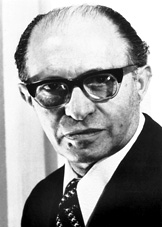
Israeli PM Menachem Begin
“…Unmarked Israeli aircraft dropped napalm canisters on the USS Liberty bridge, and fired 30mm cannon and rockets into the ship; survivors estimate 30 or more sorties were flown over the ship by a minimum of 12 attacking Israeli planes. …
“…The torpedo boat attack involved not only the firing of torpedoes, but machine-gunning of Liberty’s firefighters and stretcher-bearers. … The Israeli torpedo boats later returned to machine-gun at close range three of the Liberty’s life rafts that had been lowered into the water by survivors to rescue the most seriously wounded.”
Shortly before he died in February 2004, Adm. Moorer strongly appealed for the truth to be brought out and pointed directly at what he saw as the main obstacle: “I’ve never seen a President … stand up to Israel. … If the American people understood what a grip these people have on our government, they would rise up in arms.” [As quoted by Richard Curtiss in A Changing Image: American Perception of the Arab-Israeli Dispute.]
Echoing Moorer, former U.S. Ambassador Edward Peck, who served many years in the Middle East, condemned Washington’s attitude toward Israel as “obsequious, unctuous subservience … at the cost of the lives and morale of our own service members and their families.”
And the Six-Day War? Most Americans believe the Israelis were forced to defend against a military threat from Egypt. Not so, admitted former Israeli Prime Minister Menachem Begin 35 years ago: “In June 1967, we had a choice. The Egyptian army concentrations in the Sinai approaches do not prove that [Egyptian President] Nasser was really about to attack us. We must be honest with ourselves. We decided to attack him.” [The New York Times quoting an August 1982 Begin speech.]
Adm. Moorer kept asking why our government continues to subordinate American interests to those of Israel. It is THE question.
The War in Syria
Fast forward to the catastrophe that is now Syria. U.S. policy support for illusory “moderate rebels” there – including false-flag chemical attacks blamed on Syrian President Bashar al-Assad – can only be fully understood against the mirror of U.S. acquiescence to Israeli objectives.
New York Times Jerusalem Bureau Chief in 2013, Jodi Rudoren, received an unusually candid response when she asked senior Israeli officials about Israel’s preferred outcome in Syria. In a New York Times article on September 6, 2013, titled “Israel Backs Limited Strike Against Syria,” Rudoren reported the Israeli view that the best outcome for Syria’s civil war was no outcome:
“For Jerusalem, the status quo, horrific as it may be from a humanitarian perspective, seems preferable to either a victory by Mr. Assad’s government and his Iranian backers or a strengthening of rebel groups, increasingly dominated by Sunni jihadis.
“‘This is a playoff situation in which you need both teams to lose, but at least you don’t want one to win — we’ll settle for a tie,’ said Alon Pinkas, a former Israeli consul general in New York. ‘Let them both bleed, hemorrhage to death: that’s the strategic thinking here. As long as this lingers, there’s no real threat from Syria.’”
Obama may have read or been briefed on Rudoren’s article. In any event, last year he told journalist Jeffrey Goldberg how proud he is at having resisted strong pressure from virtually all his advisors to fire cruise missiles on Syria in September 2013. Instead, Obama chose to take advantage of Russian President Vladimir Putin’s offer to get the Syrians to surrender their chemical weapons for destruction, verified by the U.N., aboard a U.S. ship configured for such destruction. President Trump, in contrast, chose to go with his “mad-dog” advisors. It is not yet clear whether he was successfully mousetrapped, or whether he saw the April 4 chemical incident in Syria as an opportunity to “retaliate,” and get a bump in popularity.
There are wider ramifications of rank dishonesty and cover-up, at which Establishment Washington excels. Have we not seen this movie before? Think Iraq. Once again, the “intelligence” is being “fixed.”
Back to the Liberty, Adm. Moorer is right in saying that, if Americans were told the truth about what happened on June 8, 1967, they might be more discriminating in seeing through Israel’s rhetoric and objectives. Moorer insisted that we owe no less to brave men of the USS Liberty, but also to every man and woman who is asked to wear the uniform of the United States. And he is right about that too.
This book makes a huge contribution toward those worthy ends.
Ray McGovern works with Tell the Word, a publishing arm of the ecumenical Church of the Saviour in inner-city Washington. He served as a CIA analyst for 27 years, and was “on duty” when the USS Liberty was attacked.
Hamas has roundly dismissed US President Donald Trump’s allegations against the Palestinian resistance movement, stating his description of the anti-Israel group exhibits his “complete bias” in favor of the Israel regime.
“The statements describing Hamas as a terror group are rejected. They are a distortion of the image of our popular resistance and cause, and show full bias towards the Israeli Occupation,” Hamas spokesman Fawzi Barhoum said in a statement posted on his Facebook page on Sunday, Arabic-language Safa news agency reported.
He added, “Hamas is a national liberation movement that is legitimately defending the rights of the Palestinian nation and fighting against terrorism.”
“It is the Zionist entity that is practicing mass murder against our people and committing crimes against humanity, particularly the siege of the Gaza Strip, through the support of US officials,” Barhoum pointed out.
The statement came hours after Trump addressed the leaders of 55 Muslim countries in the Saudi capital city of Riyadh, and described Hamas as a terror organization.
The Israeli military frequently targets the Gaza Strip, which Hamas controls, with civilians being the main victims of such attacks.
Israel has also launched several wars on the Palestinian sliver, the last of which began in early July 2014. The 50-day military aggression, which ended on August 26, 2014, killed nearly 2,200 Palestinians, including 577 children. Over 11,100 others – including 3,374 children, 2,088 women and 410 elderly people – were also wounded in the war.
The Gaza Strip has been under an Israeli siege since June 2007. The blockade has caused a decline in living standards as well as unprecedented unemployment and poverty in the coastal enclave.
Mass incarceration is a central pillar of Israeli occupation. Hundreds of Palestinian prisoners are waging a hunger strike to fight it.
On April 17, on the anniversary of Palestinian Prisoners’ Day, over 1,500 Palestinians held in Israeli prisons launched a mass hunger strike. A month later, 834 of the prisoners remain on empty stomachs — with several dozens now placed on “close medical watch” by Israeli authorities. The strike has drawn a wave of solidarity among Palestinians and has been met with severe repression by Israeli authorities.
Weeks before the strike erupted, we visited the military courts in the West Bank as a part of a delegation from Stanford Law’s International Human Rights Clinic. Observing the court proceedings drove home how the prison system serves as a core pillar of the occupation — and why the prison strike has attracted so much support among Palestinians.
The prisoners are demanding better conditions: improved access to family visits and phone calls; access to books, newspapers, mail, and educational opportunities; and an end to administrative detention and solitary confinement.
Yet at the heart of their struggle lies a more insidious problem: the sprawling military court system that has stripped them of their dignity and incarcerated over one in three Palestinian men since 1967. Palestinians imprisoned in Israel are sentenced by a court system run by the Israeli military, without any of the safeguards of the Israeli civilian courts. These military courts are predicated on a legal double standard: they only prosecute crimes against Israeli citizens or property; they do not prosecute crimes committed by Israeli settlers living in the Occupied West Bank, or crimes with Palestinian victims.
As strike leader and political prisoner Marwan Barghouti has put it, Israel’s military courts are an “accomplice in the occupation’s crimes.”
Israeli authorities have cracked down swiftly on the hunger strike — not only have they punished those who have protested, but they are also reportedly looking into setting upa separate military hospital to force feed those still on strike. Far-right National Union activists, meanwhile, have organized a barbecue outside the prison, seeking to mock the hungry prisoners with the wafting scents of grilled meat. And Pizza Hut released an advertisement taunting Barghouti to end the strike with a slice of their pizza.
Israeli foreign ministry spokesman Emmanuel Nahshon has said that the Palestinian prisoners are not political prisoners, but “convicted terrorists and murderers” who were “brought to justice.”
Our observations of the military courts — and the statistics — tell a different story. The courts prosecute between five hundred and seven hundred children each year — 79 percent, between 2010 and 2015, for stone throwing, which under the Israeli military’s own classification is only a “public order” offense. This crime generally involves youth throwing stones at military targets so distant that no bodily harm occurs.
Several other offenses that the military courts process are also nonviolent in nature. Incitement — a catch-all crime that could include posting anti-occupation status on Facebook — increasingly appears on the docket. Infiltration — which involves Palestinians illegally entering Israel in order to work, usually as manual laborers — also accounts for a fair share of the men brought before military courts.
There is a good reason that the practice of trying civilians — especially children — in military courts for such a prolonged period of time is unprecedented in an ostensible democracy. International law does allow military courts for civilians in the exceptional case of belligerent occupation. But the international laws governing occupation never contemplated a situation of a fifty-year occupation. And Israel’s military courts prove exactly why.
A staggering 99.74 percent of the cases heard in military court end in conviction: once accused, a Palestinian has little chance of mounting a successful defense. Evidence, especially when it pertains to children, is often the result of coerced confessions — but exclusion motions throwing out such illicitly obtained evidence are rarely successful. The court proceedings are entirely in Hebrew — a language almost all defendants, and most of their lawyers, don’t speak. Translations are often inadequate, or sloppy: we witnessed a translator walk out of the court midway through a proceeding. Most cases are resolved through guilty pleas — because, according to the attorneys we interviewed, defendants and defense lawyers alike are often punished for attempting to take cases to trial.
Palestinian prisoners, in short, are not just faced with harsh prison conditions, in prisons that their families have limited or no access to. They arrive in these facilities after facing a dehumanizing trial in a language that they do not speak, where the presumption of innocence does not apply, and where they face little chance of defending themselves successfully. When they put their bodies on the line with a hunger strike, they are doing so because the system offers them no other option.
That system must fall.
Mass incarceration is a central pillar of Israeli control over the West Bank. Improving prison conditions or adding procedural protections will not solve the problem. Only ending military control over the civilian population will deliver justice to the striking prisoners, as well as the millions suffering daily indignities on the outside.
Over 17.1 million live in a socially democratic, secular state, the Syrian Arab Republic, ravaged by overt and covert imperialist machinations supported by Turkey, the Gulf autocracies, and the Western capitalist states. Their government is led by the National Progressive Front (NPF), with its most foremost party the Arab Socialist Ba’ath Party which is joined by numerous radical and socially progressive parties. The NPF’s majority in the Syrian’s People’s Council, the Syrian parliament, was reaffirmed in the April 2016 elections by the Syrian people, elections which were predictably boycotted by the Western-backed opposition and predictably declared “unfree” by Western capitalists. President Donald Trump dealt the rationally-minded Syrians a blow that goes beyond his ill-fated show of strength manifested in the cruise missile attacks last month: direct US support of the Syrian Kurds who consist and are related to Rojava, officially called the “Democratic Federal System of Northern Syria” (NSR), “Syrian Kurdistan” or “Western Kurdistan,” to give a few names.
It is part and parcel of those in the Western and even international “left” to declare that the Rojava Kurds are “revolutionary” or somehow “liberated.” Here is a sampling from their arguments in favor of such a group when challenged on a radical left-leaning subreddit: (1) the Kurds are “very prudent” to get support from the West, (2) they aren’t against the Syrian government, they have “liberated people under ISIS control,” (3) the national borders were drawn by imperialists so “Kurdistan should have been a country in the first place,” and (4) Rojava have stated that they believe “a federal system is ideal form of governance for Syria.”1 This article aims to prove that such pro-Rojava perspectives are an unfounded and dangerous form of international solidarity.
US imperialist support for the Kurdish cause
Only a few days ago, Trump approved a Pentagon plan which would “directly arm Kurdish forces fighting in Syria,” specifically the Syrian Democratic Forces (SDF) comprised of the Kurdish People’s Protection Units (YPG) and Syrian Arab Coalition (SAC), all of which are elements of Rojava.2 The US plans to use these groups to “mount an assault on Raqqa,” the de facto capital of Daesh, called ISIS in the West, which sits in the heart of Syria. The arming of such forces is a reversal of Obama-era policy but only to an extent. The armed support, according to one account, would consist of “small arms, machine guns, ammunition, armored vehicles, trucks and engineering equipment.” Another account added that these fighters would receive “U.S.-manufactured night-vision goggles, rifles and advanced optics,” all of which are used by US special operations forces. As a result, YPG fighters would begin to “bear strong similarities to other American-trained foreign special forces.”This support may relate to possibly imminent “massive invasion of Syria” by US and Jordanian forces in an effort to support their Free Syrian Army (FSA) proxies and enter areas adjacent to those controlled by the Syrian Arab Army (SAA).
The US claimed it had been in “constant contact” with the Turks to assure them the Kurdish troops would not have “any role in stabilizing or ruling Raqqa after the operation,” with “local Arabs” (undoubtedly those chosen by the US and the West) governing the city afterwards. The Turks, who want the Western-backed FSA to lead the offensive, have been engaging in military strikes on PKK (Kurdish Worker’s Party) and YPG fighters within Iraq and Syria, which affects US special ops forces directly helping theses groups. The Deputy Prime Minister of Turkey, which has a complicated but still imperial inter-relationship with the US, Nurettin Canikli, showed his anger on May 10 when he said that “the supply of arms to the YPG is unacceptable. Such a policy will benefit nobody.” This position isn’t a surprise since the Turks see the YPG as a branch of the PKK and are undoubtedly strongly anti-Kurd. Predictably the announcement of direct armament was received well by the Rojava forces. A SDF spokesman said that “the US decision to arm the YPG… is important and will hasten the defeat of terrorism” and Saleh Muslim, co-chair of the Democratic Union Party (PYD), another Rojava element, declared that “the Raqqah campaign is running in parallel with the international coalition against terrorism. It’s natural that they would provide weapons” to such Kurdish forces. Keep in mind this is the same person who called for the US to expand its military strikes on the Syrian government to other groups with purported chemical weapons, saying that Trump’s cruise missile attack will “yield positive results.”
Anyone with sense knows he is wrong. Arming of these Kurds will be cheered by the editorial boards of the bourgeois Chicago Tribune and Bloomberg News, former imperial diplomat Antony “Tony” John Blinken, and the president of the Kurdistan National Assembly of Syria (KNAS), Sherkoh Abbas, among many others.3
The same day that the organs of US imperialism announced that these Kurds would get arms directly from the war machine, Trump declared a “national emergency” in regard to Syria.4 He called the country’s government an “unusual and extraordinary threat to the national security, foreign policy, and economy of the United States” saying that it supported terrorism, undermined US and international efforts to “stabilize” Iraq, brutalized the Syrian people, generated “instability throughout the region,” and called for regime change, saying that there should be a “political transition in Syria” that will benefit the US capitalist class. This declaration in particular, released the same day as similar reauthorizations of other Obama era “national emergency” orders for the Central African Republic and Yemen, buttressed a 2012 executive order which delineated sanctions on the state of Syria! All in all, the Western imperialists know that Syria does not constitute this “threat” but they choose to portray it that way in order to justify continued massive war spending, which comprises at least half of the US federal budget.
Beyond these declarations, the US support for the “good” Kurds (“Good” by Western standards) is nothing new, mainly since 2014. The bourgeois media has reported, especially since January, about the “U.S.-Kurdish alliance” consisting of the US support of the SDF and YPG as effective front forces to “fight ISIS,” angering the Turks who consider such forces to be utterly hostile since they see it as an extension of the PKK, but the US imperialists care little about this gripe.5 The US is supporting these forces with 500 US special ops forces (half of the 1000 US troops stationed in the country), armored vehicles, and warplanes as “air support” for their offensives, along with some arms, even prior to the recent announcement. Some call these forces, which have been attacked by Turkey in the past and “accidentally” by US bombs, as “the vanguard of U.S. proxy forces on the ground” in Syria, undoubtedly dismaying two deluded Marxists who thought they were fighting for an “egalitarian utopia.”6
Such individuals should not be surprised. After all, a top US commander has defended YPG actions, claiming that they did not attack into Turkey, almost serving as a de facto spokesperson of the group. Lest us forget a press conference just last month where US Colonel John Dorrian, spokesperson for the US-led coalition bombings in Iraq and Afghanistan, slyly admits that the YPG, Peshmerga, PKK, and SDF/SAC are partners in their “anti-Daesh” bombing efforts. Additionally, such Kurdish forces have gained other avenues of support from settler-colonist Canada (also see here) and from the Russian Federation, which has given them, according to reports, money, equipment, and a seat at the negotiating table. Russian support is interesting since they are also supporting the Syrian government in its fight against terrorism, making one possibly wonder if their support for these Kurds is for some unspoken reason.
It gets worse. “Good” Kurdish leaders have said behind the scenes that they are willing to cooperate with Israel, the apartheid and murderous Zionist state which has given limited military support to Iraqi Kurds and bought millions of barrels of their oil, in line with Mr. Netanyahu’s declaration that “we should … support the Kurdish aspiration for independence…[the Kurds are] a nation of fighters [who] have proved political commitment and are worthy of independence” and Justice Minister Ayelet Shaked who also called for an independent Kurdistan. These feelings add to their cooperation with the NATO criminals. It is evident that with the “help of US airpower” the YPG, along with SDF, has been able to take “control of an estimated 26,000 sq km (10,000 sq miles) of Syria,” including a 250 mile “stretch of territory along the Turkish border,” all of which constitutes Rojava.7 It is even more suspicious that US soldiers are advising and assisting SDF and YPG soldiers. They are, according to one report, assisting them in “targeting ISIS positions with mortars and laser guided air strikes,” with the YPG’s media office even telling local journalists, initially, to “not take video footage of the U.S. Special Forces” so people won’t know they are backed by ruthless imperialist foot soldiers.8
Even so, local fighters of the YPG are reportedly “pleased with the American presence.” In 2016, the State Department openly admitted such cooperation. Mark Toner declared that “coordination continues” with the YPG and SDF against the “common enemy” of Daesh. Spokesperson John Kirby said that the US had “provided a measure of support, mostly through the air” for such groups, “and that support will continue,” adding that “we have said that these Kurdish fighters are successful against Daesh…and we’re going to continue to provide that support” and spoke of a “partnership with Kurdish fighters.” More than these blanket statements, Talal Silo, a former SAA colonel and official spokesperson of the SDF, said the following, which shows that they are deeply tied to US imperial objectives:
It’s forbidden to negotiate with the Russians because we seek for an alliance with the United States. It’s impossible to communicate with any other party and to not lose the credibility of the international coalition. Of course, we are free, but we can not attack if there is not signal from the Americans. We will not unite with the Syrian army against ISIS because our forces operate only with the forces of the international coalition led by the United States. We are partners of the United States and the coalition. They make decisions. There can’t be a coordination between the Russians and us. Because first of all we have a strategic partnership with the international coalition led by the United States.
That’s not all. The US has also provided support to the Peshmerga, militia of the Kurdistan Region of Iraq, part of the Kurdistan Regional Government (KRG), and escorted a PKK senior leader, Ferhad Şahin or Şahin Cilo, with over a 1 million bounty on his head by the Turkish government, through a crowd.9 The support for the Peshmerga also increased dramatically in recent days. The US State Department approved the Pentagon sending $295.6 million “worth of weapons, vehicles and other equipment” which includes but is not limited to “4,400 rifles, 113 Humvees and 36 howitzers.”10 These armaments, which only need simple congressional approval, assured in this political climate, would be used to arm two brigades of Peshmerga light infantry and two artillery battalions to assist such units. While few governments are on the record as publicly supporting independent or autonomous states in Syria or Iraq, apart from hawkish John McCain, the Peshmerga have been armed by Western European countries such as France and Germany, along with the Turks, while British special forces reportedly lurk within Syria in an effort to achieve imperial objectives.11
Earlier this month, there was another development in this realm: a plan to link Rojava with the Mediterranean Sea. This action, for which they will ask the US to support them politically (and implied militarily), the SDF forces would “push west to liberate the city of Idlib” which Hediya Yousef, a high-ranking official in Rojava said is part of their “legal right” to have access to the Mediterranean, from which he claimed “everyone will benefit.”12 Such an action would possibly empower such “good” Kurds even more, even as it would outrage Turkey, and would require agreement with the Syrian government along with the Russian Federation, which is unlikely. If Rojava achieved access to the sea, they would be an even more “effective” imperial proxy group since Western capitalist states could bring their military supplies to the coastline, rolling in heavy machinery, tanks, and maybe even set up a base of some type. It would be chaos and disaster for Syria of the highest proportions, helping in the disintegration of the region into a divided mess that could be easily manipulated by Western imperialists.
Is Rojava revolutionary?
Many have claimed that Rojava is “revolutionary.” One article by Wes Enzinna, an editor at the White hipster/”dudebro”/trash website, Vice Media, is an example of this. He writes that neither the UN, NATO, or the Syrian government recognize the “autonomous status” of the area, but says that this area, with over 4.6 million people by his count, enacts “radical direct democracy” on the streets, in his perception.13 He goes on to say that the territory is a “utopia” that is governed by an affiliate of the PKK, which includes, but is not limited to, six political parties, including the PYD and Kurdistan Democratic Party of Syria (KDPS). Additionally, apart from the Syrian Democratic Council (SDC), the Self-Defense Forces (HXP), YPG and all-female protection units, YPJ, protect the region from threats, with the latter two organizations, along with the PYD, major allies for the US in the region. Most interesting is the presence of Abdullah Öcalan, one of the PKK’s founding leaders, with his philosophy used throughout Rojava where he, as Mr. Enzinna claims, “looms as a Wizard-of-Oz-like presence.” It is worth pointing out that Mr. Öcalan, who has been hounded by the Turkish government since 1998, “repudiated the armed struggle and… the independence of Kurdistan,” with the PKK dropping its demand for an independent Kurdistan when he went into jail. He also asked Kurds to lay down their arms and went even further by declaring that there should be a “democratic union between Turks and Kurds.”14 According to reports, he clearly favors anarchist and anti-Marxist Murray Bookchin, Michel Foucault, French historian Fernand Braudel, and US sociologist Immanuel Wallerstein (the only one of the four with credibility), among a litany of other authors he read in prison, which is troublesome. Hence, he called for “democratic confederalism” in 2005, a model used in Rojava.
Mr. Enzinna isn’t the only one who makes such claims. Reuters‘s Benedetta Argentieri declared that the region values “gender equality,” especially in its military forces and has its “ideological foundations…laid by Abdullah Öcalan,” while others have declared there was an “ecological society” in place.15 Many examples of such perspectives, showing that the perception of Rojava is “radical” and “liberatory” is widespread. Articles favoring this approach are in publications such as the Financial Times, the New York Times, The Guardian, Open Democracy, Slate, Dissent, Roar Magazine, Deutsche Welle, AFP, CeaseFire magazine, Telesur English, and Quartz.16 Writers have gone on to dub the region “a thriving experiment in direct democracy,” “a precious experiment in direct democracy,” “a remarkable democratic experiment,” “a revolution in consciousness,” and “a Kurdish region… ruled by militant feminist anarchists.” Others echo the same sentiment, calling it “a liberated area in the Middle East” (which is used in the title of this article), “political and cultural revolution,” “a social and political revolution,” “a participatory alternative to the tyrannical states of the region,” “the safest place in Syria,” and “a new radical society.”
Beyond this, AK Press’s A Small Key Can Open A Large Door: The Rojava Revolution, if it is to be believed at all, argues that the PYD launched a plan for the economy of the region which levies no taxes on the populace and abolished “traditional” private property such as “buildings, land, and infrastructure” but this did not extend to commodities such as automobiles, machines, electronics, and furniture. Even this book admits that only about a third of the worker councils have been set up in the region and that there is vagueness on how this region will relate to “other economies inside and outside of Syria.” After all, much of the economic activity in the region comes from, as the book argues, “black market oil… sold outside the region” and as a result there are looming questions about the mechanics “trading relationships between other governments” if the embargo levied on them by the Turks is lifted.
By saying all of this about Rojava, some supporters may be cheering, saying that they were right all along. In fact, they can’t be more wrong. For one, European Parliamentarians are chummy with the PYD, who says that Turkey still supports Daesh, even as they claim that their meeting with legislators of Western capitalist states is not a form of propaganda. This political party, the PYD, was even left out of Syrian peace talks originally, but later was allowed in, with the Russians, in their illegal and unconscionable draft for the Syrian constitution, decentralized powers, which could be seen as “a potential concession aimed to gain the favor of the de-facto autonomous Kurdish cantons of northern Syria.”17
This is only the tip of the iceberg. The co-chair of the PYD, Mr. Saleh Muslim, has spoken at the British Parliament and has met with the Catalan parliament, where he declared that they are mainly at “war” with Daesh, not dismissing hostile actions toward the Syrian government. He further declared that they do not want to continue “under the old model of nation-state,” which he claims exists in Iraq and Syria, and said “we want to be part of Syria, but part of a democratic Syria.” If this doesn’t sound in line with imperialist goals, then I don’t know what is. It is also worth pointing out that the PYD attended a conference in Western Europe, in Belgium, eight Rojava legislators had a six-day visit to Japan, high-ranking YPJ and PYD officials talked to the Italian parliament and met senior Italian officials. Additionally, Rojava representatives attended a “conference in Athens… to mark the 17th anniversary of the capture of Abdullah Ocalan” and met with French representatives (along with the YPJ). The latter is important to note since the French have supported these “good” Kurds on the battlefield, just like Albania, and even want to open a cultural center in Rihava.
Then there’s the undeniable fact that Rojava has representative offices in numerous Western capitalist countries: Sweden, the Netherlands, Germany, and France. Other news notes that the PYD has an office in Russia and has received support from Finland, which has begun “financing projects with development funds allocated to non-governmental organizations to strengthen Syrian Kurdish Region governance.” The only country that has rescinded diplomatic ties with Rojava is the Czech Republic, where a representative office opened in April but was shut down by December even as a story the previous month said that other than Albania, “the Czech Republic is one of the main sources of weapons flowing to the YPG via the US-led coalition against IS.” The representative office, as a story reported, was shut down because “it failed to win the recognition of Czech politicians” and the office seems to have faced problems related to security threats and diplomacy. Also, the “Turkish embassy in Prague [tried]… to undermine the activities of the office” even as Czech politicians see support of Rojava as a way to support an independent, autonomous Kurdistan, undermining the status of this office within the country.
The relationship between the “good” Kurds and Turkey is complicated. In 2013 and 2014, Turkey favorably received the PYD. However, as it currently stands, Turkey has an economic blockade on Rojava, as they attempt to diplomatically isolate them, opposes US support of the YPG, and supports anti-Rojava terrorists including Daesh.18 Turkey has gone even farther than just these measures. They’ve reportedly shelled Rojava, such as the settlements of Zur Maghar and Afrin, which has led to numerous civilians being killed, as Turkish Armed Forces (TSK) expand their military operations within Syria.19 In response, their actions were condemned not only by Germany but by Russia and neocon McCain. If Turkey engaged in such actions, they likely have public support. While Selahattin Demirtas, an imprisoned Kurdish leader of the “Kurdish-dominated People’s Democratic Party” or HDP, who has met with the President of the European Parliament, Martin Schulz, and the Russian and US governments, has argued for countries to recognize Rojava, the Turkish public may think differently.20 Conspiracy theories purportedly dominate the Turkish political discourse and the Kurds, more often than not, are seen as part of a plot against the Turkish nation, leading to support for never-ending war against the PKK and seeming stagnation of political discourse.
Notes
Other arguments ranged from claims that (1) Rojava wants some “degree of autonomy” while not fighting the Syrian government, (2) an independent Kurdistan could be anti-imperialist, (3) Rojava aren’t “disintegrating the region” but are rather “liberating people” from Daesh and will “unify with the Syrian government in the future,” that (4) such people are fighting “a battle for a better life way of living” while using available resources at their disposal, that (5) they have no choice but to ally with the West, (6) claims that Russia is imperialist, (7) that accepting weapons from the West forms “a positive relationship, in the hope for protection from Turkey,” and (8) that “Syria is by no means anti-imperialist.” The claims of Russia being imperialist is clearly incorrect by any reasonable measure, while saying that Syria is not anti-imperialist is a sentiment that hurts international solidarity. The one argument that accepting weapons from the West forms a “positive relationship” says it all.
Missy Ryan, Thomas Gibbons-Neff and Karen DeYoung, “In blow to U.S.-Turkey ties, Trump administration approves plan to arm Syrian Kurds against Islamic State,” Washington Post, May 9, 2017.
Editorial Board, “Fixing Syria, Step 1: Arm the Kurds,” Chicago Tribune, September 23, 2016; The Editors, “Arm the Kurds,” Bloomberg View, August 5, 2014; Antony J. Blinken, “To Defeat ISIS, Arm the Syrian Kurds,” New York Times op-ed, January 31, 2017; Ariel Ben Solomon, “Are Syrian Kurds the missing ingredient in the West’s recipe to defeat Islamic State?,” Jewish News Service(JNS), March 23, 2017. Also, the New Republic (“One Group Has Proven It Can Beat ISIS. So Why Isn’t the U.S. Doing More to Help Them?”), Ted Cruz, Rand Paul, Ed Royce, The Telegraph (“Water is not enough, we must arm the Kurds”), New York Post (“It’s time to really arm the Kurds”), The Guardian (“Arming the Kurds may help break up Iraq – but the alternatives are worse”), National Review (“Recognize Kurdistan and Arm It, against ISIS in Northern Iraq”), among others, support arming the Kurds, specifically those who support US objectives, of course.
Declaring a national emergency gives the President power to deal with “any unusual and extraordinary threat… to the national security, foreign policy, or economy of the United States.” Furthermore, such a declaration gives the President the power to “…investigate, regulate, or prohibit… any transactions… transfers of credit or payments… the importing or exporting of currency,” invalidate acquisitions by certain foreigners and even “confiscate any property” of foreigners coming from a country the US is at war with and are accused of planning, aiding, engaging, or authorizing hostilities against the United States.
Louisa Loveluck and Karen DeYoung, “A Russian-backed deal on ‘safe zones’ for Syria leaves U.S. wary,” Washington Post, May 4, 2017; Associated Press, “Tensions rise after Turkish attack on Syrian Kurds,” Washington Post, April 26, 2017; Philip Issa, “Turkey threatens further strikes on US-allied Syrian Kurds,” Associated Press, April 30, 2017; Matthew Lee, “US criticizes Turkey for striking Kurds in Iraq, Syria,” Associated Press, April 25, 2017; Karen DeYoung and Dan Lamothe, “U.S.: Kurds will participate in some form in attack on Raqqa,” Washington Post, March 1, 2017; Matthew Lee, “US criticizes Turkey for striking Kurds in Iraq, Syria,” Associated Press, April 25, 2017; Karen DeYoung and Dan Lamothe, “U.S.: Kurds will participate in some form in attack on Raqqa,” Washington Post, March 1, 2017; Kareem Fahim and Adam Entous, “No decision yet on arming Kurds to fight Islamic State, Trump tells Turkish leader,” Washington Post, February 8, 2017.; Ishaan Tharoor, “The Russia-Turkey-U.S. tussle to save Syria will still get very messy,” Washington Post, May 4, 2017; Ishaan Tharoor, “What you need to know about Turkey and the Trump administration,” Washington Post, March 30, 2017; Liz Sly, “Turkey’s Erdogan wants to establish a safe zone in the ISIS capital Raqqa,” Washington Post, February 13, 2017; Sarah El Deeb, “Turkey, Kurds, Russia, U.S. forces make up a confusing, violent pageant in Syria,” Chicago Tribune, March 11, 2017; Agence France-Presse, “Pentagon chief praises Kurdish fighters in Syria,” March 18, 2016.
Liz Sly, “How two U.S. Marxists wound up on the front lines against ISIS,” Washington Post, April 1, 2017; Karen DeYoung and Kareem Fahim, “Turkey deports foreigners working with Syrian refugees,” Washington Post, April 26, 2017; Loveday Morris and Kareem Fahim, “Turkey expands strikes against Kurdish militants in Syria and Iraq,” Washington Post, April 25, 2017; Thomas Gibbons-Neff and Missy Ryan, “U.S.-led coalition accidentally bombs Syrian allies, killing 18,” Washington Post, April 13, 2017; Liz Sly, “With a show of Stars and Stripes, U.S. forces in Syria try to keep warring allies apart,” Washington Post, March 8, 2017; Karen DeYoung and Kareem Fahim, “As a new relationship is tested, Turkey keeps high hopes for Trump,” Washington Post, March 9, 2017; Orhan Coskun, Tulay Karadeniz and Tom Perry, “Turkey’s Syria plans face setbacks as Kurds see more U.S. support,” Reuters, March 9, 2017.
BBC News, “Syria conflict: Kurds declare federal system,” March 17, 2016; Liz Sly and Karen DeYoung, “Ignoring Turkey, U.S. backs Kurds in drive against ISIS in Syria,” Washington Post, June 1, 2016.
Nancy A. Youssef and Wladimir van Wilgenburg, “U.S. Troops 18 Miles From ISIS Capital,” The Daily Beast, May 26, 2016; Jiyar Gol, “Syria conflict: On the frontline in battle for IS-held Manbij,” BBC News, June 15, 2016.
Suzan Fraser, “Turkey strikes Kurds in Iraq, Syria, drawing condemnation,” Associated Press, April 25, 2017; Martin Chulov and Fazel Hawramy, “Ever-closer ties between US and Kurds stoke Turkish border tensions,” The Guardian, May 1, 2017; Mahmoud Mourad and Ulf Laessing, “Iraq’s Shi’ite ruling coalition opposes Kurds’ independence referendum,” Reuters, April 20, 2017; Loveday Morris and Kareem Fahim, “Turkey expands strikes against Kurdish militants in Syria and Iraq,” Washington Post, April 25, 2017.
Eric Walsh, “U.S. approves $295.6 million military equipment sale to Iraq: Pentagon,” Reuters, April 19, 2017; UPI, “US State Department approves arms sale for Peshmerga forces,” April 20, 2017; Tom O’Connor, “U.S. Military Set to Make $300 Million Deal to Arm Kurds Fighting ISIS in Iraq,” Newsweek, April 20, 2017.
Karen Leigh, Noam Raydan, Asa Fitch, Margaret Coker, “Who Are The Kurds?,” Wall Street Journal, August 31, 2016; BBC News, “Germany to supply arms to Kurds fighting IS in Iraq,” September 1, 2014; Agence France-Presse, “Pentagon chief praises Kurdish fighters in Syria,” March 18, 2016.
Mark Townsend, “Syria’s Kurds march on to Raqqa and the sea,” The Guardian, May 6, 2017.
Wes Enzinna, “A Dream of Secular Utopia in ISIS’ Backyard,” New York Times Magazine, November 24, 2015.
BBC News, “Kurdish rebel boss in truce plea,” September 28, 2006.
Anna Lau, Erdelan Baran, and Melanie Sirinathsingh, “A Kurdish response to climate change,” OpenDemocracy, November 18, 2016; Benedetta Argentieri, “One group battling Islamic State has a secret weapon – female fighters,” Reuters blogs, February 3, 2015.
Carrie Ross, “Power to the people: a Syrian experiment in democracy,” Financial Times, October 23, 2015; Carne Ross, “The Kurds’ Democratic Experiment,” The New York Times opinion, September 30, 2015. Ross is “a former British diplomat and the author of “The Leaderless Revolution: How Ordinary People Will Take Power and Change Politics in the 21st Century,” is working on a forthcoming documentary film, “The Accidental Anarchist.””; David Graeber, “Why is the world ignoring the revolutionary Kurds in Syria?,” The Guardian, October 8, 2014; Jo Magpie, “Regaining hope in Rojava,” Open Democracy, June 6, 2016; Michelle Goldberg, “American Leftists Need to Pay More Attention to Rojava,” Slate, November 25, 2015; Meredith Tax, “The Revolution in Rojava,” Dissent magazine, April 22, 2015; Evangelos Aretaios, “The Rojava revolution,” Open Democracy, March 15, 2015; New Compass, “Statement from the Academic Delegation to Rojava,” January 15, 2015; Jeff Miley and Johanna Riha, “Rojava: only chance for a just peace in the Middle East?,” Roar Magazine, March 3, 2015; Felix Gaedtke, “A Kurdish Spring in Syria,” Deutsche Welle, May 22, 2013; AFP, “Syrian Kurds give women equal rights, snubbing jihadists,” November 9, 2014; Margaret Owen, “Gender and justice in an emerging nation: My impressions of Rojava, Syrian Kurdistan,” CeaseFire magazine, February 11, 2014; Benedetta Argentieri, “These female Kurdish soldiers wear their femininity with pride,” Quartz, July 30, 2015; Marcel Cartier, “‘The Kurds’: Internationalists or Narrow Nationalists?,” Telesur English, April 20, 2017.
John Irish, “Syrian Kurds point finger at Western-backed opposition,” Reuters, May 23, 2016.
Meredith Tax, “The Rojava Model,” Foreign Affairs, Oct. 14, 2016; Graham A. Fuller, “How Can Turkey Overcome Its Foreign Policy Mess?,” LobeLog, February 19, 2016; David L. Phillips, “Research Paper: ISIS-Turkey Links,” Huffington Post, September 8, 2016; Natasha Bertrand, “Senior Western official: Links between Turkey and ISIS are now ‘undeniable’,” Business Insider, July 28, 2015.
AFP, “Turkey accused of shelling Kurdish-held village in Syria,” The Guardian, July 27, 2015; Christopher Phillips, “Turkey’s Syria Intervention: A Sign of Weakness Not Strength,” Newsweek, September 22, 2016.
Ishaan Tharoor, “The U.S. should accept a Syrian Kurdish region, says Turkish opposition leader,” Washington Post, May 2, 2016.
Leftist Critic is an independent radical, writer, and angry citizen and can be reached at leftistcritic@linuxmail.org or on twitter, @leftistcritic.
Delegates at the 2009 Inter-Parliamentary Coalition for Combating Antisemitism convention in London. The organization issued a declaration calling on governments to use an Israel-centric definition of antisemitism and to outlaw and prosecute such “antisemitism.”
For two decades, some Israeli officials and Israel partisans have worked to embed a new, Israel-focused definition of antisemitism in institutions around the world, from international bodies and national governments to small college campuses in heartland America. This effort is now snowballing rapidly. As a result, advocacy for Palestinian rights is well on the way to being curtailed and even criminalized as “hate.”
As the world has witnessed the oppression and ethnic cleansing of Palestinians, many people have risen in protest. In response, the Israeli government and certain of its advocates have conducted a campaign to crack down on this activism, running roughshod over civil liberties (and the English language) in the process.
The mechanism of this crackdown is the redefinition of “antisemitism”[1] to include criticism of Israel, and the insertion of this definition into the bodies of law of various countries.
Where most people would consider “antisemitism” to mean bigotry against Jewish people (and rightly consider it abhorrent), for two decades a campaign has been underway to replace that definition with an Israel-centric definition. That definition can then be used to block speech and activism in support of Palestinian human rights as “hate.” Various groups are applying this definition in law enforcement evaluations of possible crimes.
Proponents of this Israel-centric definition have promoted it step by step in various arenas, from the U.S. State Department and European governments to local governments around the U.S. and universities.
While this effort has taken place over the last two decades, it is snowballing rapidly at this time. The definition is increasingly being used to curtail free speech and academic freedom, as well as political activism.
Furthermore, such politicizing of an important word may reduce its effectiveness when real antisemitism occurs, doing a disservice to victims of true bigotry.
As of this writing, the U.S. Congress has endorsed the distorted definition, the governments of the UK and Austria have officially adopted it (in December and April, respectively), various U.S. State legislatures are considering it, and numerous universities are using it to delineate permissible discourse. Many representatives and heads of other states around the world have embraced the new meaning, even if they have yet to officially implement it.
This article will examine the often interconnected, incremental actions that got us where we are, the current state of affairs, and the public relations and lobbying efforts that are promoting this twisting of the definition of “antisemitism” — often under cover of misleadingly named “anti-racism” movements.
Claims of “Antisemitism” Used to Silence Support for Palestinians
Israel long claimed that its 1948 creation was on “a land without a people for a people without a land,” and many people may still believe this founding myth. The fact is, however, that the land was originally inhabited by an indigenous population that was approximately 80 percent Muslim, 15 percent Christian, and a little under 5 percent Jewish. The Jewish State of Israel was created through the ejection of approximately three-quarters of a million people.
Over the decades since Israel’s founding in 1948, accusations of antisemitism have been leveled against many people who criticized Israeli actions. Indeed, the accusation was used effectively to silence very prominent critics.[2]
However, for most of that time, the meaning of the term itself was not in question. The standard definitionwas, in Google’s terms, “hostility to or prejudice against Jews.”[3] Around the turn of this century, though, certain advocates began promoting official and even legal definitions of antisemitism that included various kinds of criticism of Israel.
Conflating Criticism of Israel with Antisemitism
Natan Sharansky, Israeli minister, in 2003: “The State of Israel has decided to take the gloves off and implement a coordinated counteroffensive against anti-Semitism.” Sharansky’s formulation formed the basis for the new Israel-centric definitions adopted around the world.
Unsurprisingly, the new definitions appear to have originated from within the Israeli government, or at least with an Israeli government official.
The definitions adhere to a pattern set by a man named Natan Sharansky, who was Israel’s Minister for Jerusalem and Diaspora Affairs and chair of the Jewish Agency for Israel. Sharansky founded a Global Forum against Anti-Semitism in 2003, stating: “The State of Israel has decided to take the gloves off and implement a coordinated counteroffensive against anti-Semitism.”
But Sharansky apparently didn’t mean a counteroffensive against just anti-Jewish bigotry, but an offensive against criticism of Israel. The following year he wrote a position paper that declared: “Whereas classical anti-Semitism is aimed at the Jewish people or the Jewish religion, ‘new anti-Semitism’ is aimed at the Jewish state.”
Sharansky’s paper laid out what he called the “3-D Test of Anti-Semitism.” Sharansky applied the term “antisemitic” to criticism of Israel in three cases. First, he argued that statements that “demonize” Israel are antisemitic — by being, in his mind, unfairly harsh. (Some of those allegedly guilty of “demonizing” Israel are Jimmy Carter, Desmond Tutu, Alice Walker, Human Rights Watch, Swedish Prime Minister Olof Palme, French President François Mitterrand, and others.)
Second, Sharansky declared that it’s antisemitic to apply a “double standard” to Israel — in other words, to criticize Israel for actions that other states may also take. However, if one could never criticize, protest or boycott abuses without calling out every single other similar abuse, no one would ever be able to exercise political dissent at all.
Finally, Sharansky said it’s antisemitic to “delegitimize” Israel, or dispute its “right to exist” (a standard Israeli talking point for many years). In fact, insisting Israel has the “right” to exist amounts to saying it had the right to expel Muslim and Christian Palestinians in order to found a religiously exclusive state. (See “What ‘Israel’s right to exist’ means to Palestinians,” by John Whitbeck, published in the Christian Science Monitor.)[4]
Sharansky’s outline provided the pattern for a European agency to create a new definition of antisemitism the next year, 2005 — a definition that would then be adopted by a succession of organizations and governments, including the U.S. State Department.
Jean Kahn (R) with French President Francois Mitterand. Kahn initiated the creation of the European Monitoring Centre, which released an Israel-centric “working” definition of antisemitism.
There is a back story to how this all came about.
This European agency itself was founded and run by a man with important connections to Israel. It was called “The European Monitoring Centre on Racism and Xenophobia,” under the Council of the European Union. A Frenchman named Jean Kahn had convinced European heads of state to create it in 1997.
Kahn had been a President of the European Jewish Congress, elected in a plenary session in Israel, and said the Congress “would demonstrate its solidarity with Israel” and that he hoped European countries would “coordinate their legislation outlawing racism, anti-Semitism or any form of exclusion.”
Kahn was chairman of the Monitoring Centre’s management board and called the “personification” of the agency. Within three years, the Centre issued a position paper calling for the definition of anti-Semitic offenses to be “improved.”
A few years later, Israeli professor Dina Porat took up the effort to create a new definition. Working with her were Kenneth Stern and Rabbi Andrew “Andy” Baker of the American Jewish Committee. Stern reports that when the Monitoring Centre’s then head, Beate Winkler, had failed to deliver the desired definition, Andy Baker “smartly developed a working relationship with her.” Stern and others[5] then created a draft for the Monitoring Centre to use.
Israeli Dina Porat, Kenneth Stern, Rabbi Andrew Baker worked to draft what became the European Monitoring Centre definition of antisemitism.
In 2005 the agency issued its “Working Definition of Anti-Semitism,” largely based on that draft. It included an array of negative statements about Israel as examples of antisemitic offenses. While standard dictionary definitions of antisemitism didn’t even mention Israel, fully half of the newly devised Monitoring Centre definition referred to Israel.
Once the Monitoring Centre had created its expanded definition, certain Israel partisans used it to promote similar definitions elsewhere. And while the Monitoring Centre itself continued to term it only a “working” definition and its replacement organization eventually withdrew the definition, in other countries and agencies the expanded definition became official.
In addition, quite frighteningly, proponents pushed successfully to begin applying the Israel-centric definition to law enforcement.
In the United States
The same year Sharansky created his “3-D” antisemitism test — a year after he founded the Global Forum against Anti-Semitism — the U.S. Congress passed a law establishing exceptional government monitoring of antisemitism. The law created a special State Department envoy and office for this monitoring, over objections of the State Department itself.
The law, called the “Global Anti-Semitism Review Act,” included a line that subverted its meaning by enshrining a new definition of antisemitism aligned with Sharansky’s: “Anti-Semitism has at times taken the form of vilification of Zionism, the Jewish national movement, and incitement against Israel.”
The bill was introduced in April 2004. That June, a Congressional hearing was conducted about how to combat antisemitism. A major witness was Israeli minister Sharansky. In his testimony Sharansky proposed his “3-D” Israel-connected definition for anti-Semitism.[6]
State Department officials objected to the proposed legislation, saying the new office was unnecessary and would be a “bureaucratic nuisance” that would actually hinder the Department’s ongoing work. A State Department press release opposing the new office described the many actions that State was already taking against antisemitism.
Despite this opposition, the Senate bill acquired 24 cosponsors representing both parties, including Hillary Clinton, John Kerry, Diane Feinstein, Russ Feingold, Sam Brownback, Saxby Chambliss and Ted Stevens. Similar bills (here and here) were introduced in the House of Representatives, acquiring 35 cosponsors, again including both Republican and Democratic leaders. The legislation passed easily and quickly became law.
Gregg Rickman, first U.S. antisemitism envoy, later worked for AIPAC.
The first Special Envoy, Gregg Rickman, endorsed the European Monitoring Centre’s Working Definition in 2008. Rickman’s report called it a “useful framework” for identifying and understanding antisemitism. After Rickman left the State Department, he went to work for the American Israel Political Affairs Committee (AIPAC), the major Israel advocacy organization that lobbies Congress.
The next Special Envoy, Hannah Rosenthal, took this campaign a major step forward: In 2010 the office officially adopted the European Monitoring Centre’s definition.
Rosenthal was extremely proud of having achieved this “breakthrough” definition. She began making use of it quickly, establishing a 90-minute course on the new antisemitism at the Foreign Service Institute, the training school for diplomats.
“We have now a definition we can train people on,” she told the Times of Israel, “and we’ve been very aggressive in training foreign service officers.”
Rosenthal announced that with the new definition including criticism of Israel, their reporting on antisemitism improved “300 percent,” even though, she said, that didn’t mean that antisemitism had actually increased in all the countries monitored.
Hannah Rosenthal adopted the “breakthrough” Israel related definition and promptly used it in training U.S. diplomats.
The gloves were off. Now fully half of the official U.S. State Department definition of antisemitism had gone beyond the normal meaning of the world to focus on Israel.
Applying the New Definition to U.S. Citizens
The State Department uses the new definition to monitor activities overseas. But once the State Department definition was in place, efforts began to use it to crack down on political and academic discourse and activism within the U.S.
This past December (2016) the U.S. Senate passed a law to apply the State Department’s definition (i.e. the Sharansky-Stern-Rosenthal definition) of antisemitism to the Education Department, for use in investigating reports of religiously motivated campus crimes.
A companion bill for the House is supported by AIPAC, the ADL, the Jewish Federations of North America and the Simon Wiesenthal Center.
South Carolina’s House of Representatives recently passed legislation under which the State Department’s definition “would be used in probes of possible anti-Semitism at state colleges and universities.” The state senate will consider this in 2018. If passed, it will mean that the state will now probe criticism of Israel on state campuses.
Such efforts are also ongoing in California. In December Democrat Brad Sherman called on the California Secretary of Education to “expand its definition to include certain forms of anti-Israel behavior.” Pro-Israel organizations such as the Amcha Initiative have also been pushing the state legislature for several years to officially adopt the State Department definition. So far these have been defeated but continue to be promoted.
U.S. Campuses
A parallel effort has been occurring on U.S. campuses. In 2003 Sharansky said that college campuses were “one of the most important battlefields” for Israel.
In 2015 University of California President Janet Napolitano (head of 10 campuses) publicly supported adopting the state department definition, after 57 rabbis sent a letter to her and the University Board of Regents promoting the definition.
Student councils or other groups at various universities have passed resolutions adopting the State Department definition, which can then be used to block campus events about Palestine.
An AIPAC official announced at the 2010 convention: “We’re going to make certain that pro-Israel students take over the student government. That is how AIPAC operates in our nation’s capitol. This is how AIPAC must operate on our nation’s campuses.”
An ongoing campaign to ensure Israel partisans become influential in student government has supported these efforts. This campaign was announced by an AIPAC leader in 2010: “We’re going to make certain that pro-Israel students take over the student government,” he said. “That is how AIPAC operates in our nation’s capitol. This is how AIPAC must operate on our nation’s campuses.” (Video here.)
An example of these resolutions is the 2015 bill at Indiana University. The resolution denounced anti-Semitism “as defined by the United States State Department” and stated that the student government would not fund antisemitic activities or activities that “undermine the right of the Jewish people to self-determination.” It also said that IUSA executives and Congress members would undergo diversity training on anti-Semitism.
According to the student newspaper, the bill was written by Rebekah Molasky, a fellow with the international pro-Israel organization Stand With Us. After the resolution was passed, “the bill’s sponsors and outside supporters hugged and high-fived before gathering in the hallway to take a picture to commemorate the moment.”
As evidenced above, such resolutions can now be used to censor student events. The UC San Diego resolution largely replicated the Indiana format, announcing that the student government will not support activities that “promote anti-Semitism” under the new definition, including “denying Israel the right to exist.” Stand With Us applauded the resolution.
In 2012, an organization called the Louis D. Brandeis Center for Human Rights Under the Law was founded and immediately began promoting the new definition. Within a year it launched an initiative to establish student chapters at law schools throughout the U.S. to advance “the organization’s mandate to combat campus anti-Semitism through legal means.” The Center helped push the South Carolina legislation. It is one of numerous organizations promoting the new definition.
(Incidentally, former Supreme Court Justice Brandeis was a leader in the world Zionist movement and worked in public and covert ways to promote it — see here.)
“Thought Policing”
A number of analysts have pointed out some of the many significant flaws with such legislation.
Anthony L. Fisher at Reason.com writes of Congress’s December law applying the State Department definition to the Education Department: “It gives the federal government the authority to investigate ideas, thoughts, and political positions as violations of the Civil Rights Act of 1964.”
Fisher continues: “By specifically using the broad language of a 2010 State Department memo attempting to define anti-Semitism, the Senate bill wades into thought policing.”
Attorney Liz Jackson wrote in an opinion piece in the Los Angeles Times : “Anyone who values the constitutional right to express political dissent should worry about this development.”
NY Times columnist Bret Stephens says Jewish Americans should “do all we can to assure the survival of the Jewish State.”
On the other side of the debate is New York Times columnist Bret Stephens, formerly Wall Street Journal deputy editorial page editor and before that editor of an Israeli newspaper. Stephens, extremely hawkish on Israel, writes and speaks fervently against the movement to boycott Israel (BDS) and what he says is antisemitism on US campuses and elsewhere. In a Wall Street Journal editorial, he claimed that “anti-Semitism is the disease of the Arab world.”
In 2014 Stephens spoke at the Tikvah Fund, a philanthropic foundation committed to supporting the “Jewish people and the Jewish State,” opining that it would be a scandal if Jewish people failed “to do all we can to assure the survival of the Jewish State.”
U.S. and European Lawmakers Pressure Governments to Ban Criticism of Israel
During all this time, parallel efforts to promote the new definition continued in Europe.
In 2009 an organization called the Inter-parliamentary Coalition for Combating Antisemitism (ICCA) took up the effort to spread the expanded definition. The group says it brings together parliamentarians from “around the world” to fight antisemitism and lists a steering committee of six European and U.S. legislators.
UK politician (and later Prime Minister) David Cameron signed the Inter-Parliamentary Coalition statement calling on governments to outlaw certain forms of criticism of Israel, including calls to boycott Israel; to regulate criticism of Israel in the media; to monitor criticism of Israel online and elsewhere; and to prosecute critics of Israel under “hate crimes” legislation.
The group held a conference in London in 2009 at which it issued a “London Declaration on Combating Antisemitism,” which was signed by then British Prime Minister Gordon Brown and other heads of state and legislators. This declaration called on governments to use the European Monitoring Centre’s definition and to outlaw and prosecute such “antisemitism.”
It was couched in “anti-racism” terms, but when we look at the declaration’s recommendations combined with its definition of antisemitism, one thing becomes clear: In the declaration, numerous lawmakers of the Western world called on world governments to restrict political dissent.
Specifically, they called on governments to outlaw certain forms of criticism of Israel, including calls to boycott Israel; to regulate criticism of Israel in the media; to monitor criticism of Israel online and elsewhere; and to prosecute critics of Israel under “hate crimes” legislation.
Among numerous other demands, the lawmakers declared that governments:
“must expand the use of the EUMC [Monitoring Centre] ‘Working Definition of antisemitism’” including “as a basis for training material for use by Criminal Justice Agencies;”
should “isolate political actors” who “target the State of Israel;”
“should legislate ‘incitement to hatred’ offences and empower law enforcement agencies to convict;”
“should … establish inquiry scrutiny panels;”
“should utilise the EUMC [Monitoring Centre] ‘Working Definition of antisemitism’ to inform media standards;”
“should take appropriate and necessary action to prevent the broadcast of antisemitic programmes on satellite television channels, and to apply pressure on the host broadcast nation to take action to prevent the transmission of antisemitic programmes” (keeping in mind here that the declaration’s definition of “antisemitic” includes various criticism of Israel);
“should use domestic ‘hate crime’, ‘incitement to hatred’ and other legislation … to prosecute ‘Hate on the Internet’ where racist and antisemitic content is hosted, published and written” (again keeping in mind what is defined as “antisemitic”);
and that “education authorities should … protect students and staff from illegal antisemitic discourse and a hostile environment in whatever form it takes including calls for boycotts.”
In 2015 the European Commission created a special position to coordinate work on combating antisemitism and appointed German national Katharina von Schnurbein to the post. Schnurbein proceeded to promote the use of the Israel-centric definition.[8]
UK and Austria Adopt Definition
In December 2016, the UK announced it would formally adopt the Israel-centric definition. It was quickly followed by Austria, which adopted the definition in April 2017. The Austrian justice minister had previously announced that the new definition would be used in the training of new judges and prosecutors.
British Prime Minister Theresa May announced the adoption of the Israel-centric definition at a Conservative Friends of Israel event.
UK Prime Minister Theresa May made the announcement during a talk before 800 guests at the Conservative Friends of Israel’s annual lunch.
UPI reported: “The British police are already using this definition[9], which can now also be used by other groups, such as municipal councils and universities. The definition is not a law, but provides a formal interpretation of an illegal act that can serve as a guideline for criminal proceedings.” Shortly afterward the UK’s higher education minister sent a letter informing universities that the government had adopted the IHRA definition and directing them to utilize it.
(The London council quickly followed suit with its own adoption of the definition, and other cities have now done the same. In May the Israel-Britain Alliance (IBA) began asking candidates for Parliament to sign a pledge that they would support the new definition.)
A number of groups objected to the definition, arguing that the definition “deliberately equates criticism of Israel with hatred of Jews.”
Opponents said it was “vigorously promoted by pro-Israel lobbyists to local authorities, universities, Labour movement organisations and other public bodies.”
They stated that after its adoption there had been “an increase in bannings and restrictions imposed on pro-Palestinian activities, especially on campuses.” Some of the cancellationscited the IHRA definition. Oxford Professor Stephen Sedleywrote in the London Review of Books that the IHRA definition gives “respectability and encouragement to forms of intolerance which are themselves contrary to law.”
Professor Jonathan Rosenhead, recipient of the President’s Medal of the British Operational Research Society and Chair of the British Committee for the Universities of Palestine, said there were many examples of the definition creating a “chilling effect” on institutions’ willingness to permit lawful political activity, “even when the definition was not specifically cited.”
AJC’s Rabbi Andrew “Andy” Baker helped create and disseminate the new definition throughout Europe, Eurasia, the U.S., and Canada.
The American Jewish Committee, which has offices in Berlin, Brussels, Paris, Rome, and Warsaw, reported that it had “met with senior European government officials to encourage OSCE adoption of the definition.” However, adoption of the definition has so far been blocked by one member: Russia.
AJC leader Rabbi Andrew Baker wrote that the AJC would now work “to foster its greater use by the individual states of the OSCE and members of the European Union.”
Inter-Parliamentary Coalition’s American Representatives
Two American Congressmen are among the six-member steering committee of the Inter-parliamentary Coalition for Combating Antisemitism (CCA).
One is Florida Congressman Ted Deutch. Deutch’s Congressional website highlights his support for Israel as well as his work against antisemitism.
Florida Congressman Ted Deutch has pushed the use of the Israel-centric definition to curtail academic freedom and campus political dissent within the United States. Deutch’s website declares him “a passionate supporter of Israel whose advocacy for a strong U.S.-Israel relationship stretches back to his youth.”
According to the site, Deutch “works closely with his colleagues in the House and Senate to… pass resolutions strongly opposing manifestations of anti-Semitism at home in South Florida, across the United States, and around the world.”
Florida Congressman Ted DeutchThe website reports: “Congressman Ted Deutch is a passionate supporter of Israel whose advocacy for a strong U.S.-Israel relationship stretches back to his youth. Ted spent his summers at Zionist summer camp, worked as a student activist in high school and college, and served in leadership roles on several local and national Jewish organizations throughout his professional career. Today, Ted serves as Ranking Member of the House Foreign Affairs Committee’s influential Middle East and North Africa Subcommittee, where he continues to champion Israel’s security during a time of great volatility in the Middle East.”
Deutch is also a member of the Subcommittee on Europe, Eurasia, and Emerging Threats. His ICCA bio announces that he plans to use this position “to continue to publicly condemn anti-Semitism.”
Deutch receives considerable funding from the pro-Israel lobby.
In March Deutch led a bipartisan letter to Trump “Urging Forceful Action on Anti-Semitism.” It demanded ‘a comprehensive, inter-agency strategy that called for the Justice Department to investigate “anti-Semitic crimes” and “ensure the perpetrators are brought to justice.”
Deutch was one of two Congresspeople who introduced the December law to apply the State Department definition to education.
New Jersey Congressman Chris Smith, member of the Inter-Parliamentary Coalition, brought Sharansky to testify before Congress about his new definition.
The other U.S. Congressman on the steering committee of the ICCA is Republican Chris Smith of New Jersey. Smith is also a senior member on the House Foreign Affairs Committee. According to the website Open Secrets, a large proportion of his campaign donations are also from pro-Israel sources.
Natan Sharansky twice testified at hearings Smith chaired. In a speech at an event honoring Smith for his work against antisemitism, Smith remembered that Sharansky had “proposed what he called a simple test to help us distinguish legitimate criticism of Israel from anti-Semitism. He called it the three Ds: Demonization, double standard, and de-legitimization.”
Spreading the New Definition Under Cover of “Anti-Racism” Movement
UK universities have seen repression of pro-Palestinian activism on an epic scale. In 2007 the UK’s National Union of Students (NUS) adopted the new antisemitism definition at its national conference, when pro-Israel students introduced a motion entitled “AntiRacism: Challenging Racism on Campus and in Our Communities.” Some student unions at various UK universities then did the same.
This was a particularly ironic name for a pro-Israel motion, given that many people around the world consider Israel’s founding ideology, political Zionism, racist. In fact, in 1975 the UN General Assembly specifically passed a resolution that “Zionism is a form of racism.”
(The resolution was revoked In 1991, but not because the world body had changed its mind. In that year President Bush was pushing for the Madrid Peace Conference, which he hoped would end the “Arab-Israeli” conflict. When Israel said it would only participate in the conference if the UN revoked the resolution, the U.S. pressured member states to do just this.)
Through the years numerous entities have affirmed that Zionism is a type of racism, including conferences in South Africa and a recent UN commission which reported that Israel was practicing apartheid. (This report was then removed by the UN Director General, after Israeli and U.S. pressure.)
The UK student actions exemplify a trend that has pervaded this movement since the beginning: Efforts to shut down pro-Palestinian activism, curtail free speech and police thought both online and off are repeatedly packaged as “anti-racism” and sometimes “anti-fascism.”[10]
Campaign for New Definition Overcomes Hiccups
Taken together, these steps towards redefining “antisemitism” to include criticism of Israel, and then ban it, are effectively (and increasingly rapidly) producing significant results in terms of actual regulation and even law enforcement. Nevertheless, there apparently has been some resistance to the change.
In 2013, the successor organization to the European Monitoring Centre (called the European Fundamental Rights Agency) quietly dropped the working definition from its website. Without any public announcement, the definition was simply no longer on its site. When questioned about this, the agency’s director simply said that the organization had “no mandate to develop its own definitions.”
Proponents of the definition were outraged. Shimon Samuels of the Simon Wiesenthal Center complained that the agency’s “disowning of its own definition is astounding” and that “those who fight antisemitism have lost an important weapon.” (The Wiesenthal Center is a global organization that declares it “stands with Israel” with offices in Los Angeles, New York, Toronto, Miami, Chicago, Paris, Buenos Aires, and Jerusalem.)
However, the fact that the Monitoring Centre had never officially adopted the definition, and that its successor organization now had apparently discarded it, seems to have been ignored by those who had adopted it.
The U.S. State Department continues to use the discarded version. The only difference is that the PDF that gave its Monitoring Centre origins has been removed from State’s website.
The World Jewish Congress convention 2014, chaired by David de Rothschild, urged “all countries to adopt a binding definition of anti-Semitic crimes” based on the Israel-centric definition.
The following year, the World Jewish Congress, which represents Jewish umbrella bodies in 100 countries, called on “all countries to adopt a binding definition of anti-Semitic crimes based on the Working Definition of Anti-Semitism developed by the former European Union Monitoring Commission (EUMC) and used in a number of states’ law enforcement agencies.”
IHRA Picks Up the Ball
Other groups stepped into the vacuum and kept the definition alive. In 2016 The International Holocaust Remembrance Alliance (IHRA) adopted the definition.
The U.S. Brandeis Center applauded the move, saying that “because the IHRA has adopted it, the definition has now officially been given the international status that it was previously lacking.”
The Brandeis Center reported that this was the “culmination of a process initiated by Mark Weitzman, Director of Government Affairs at the Simon Wiesenthal Center, two years ago, with help from others including Ira Forman and Nicholas Dean of the U.S. Department of State.”
Ira Forman, antisemitism envoy under Obama and formerly of AIPAC, played a pivotal role in the IHRA adoption of the new definition.
Forman was the State Department Special Anti-Semitism Envoy under Obama, reportedly led Obama’s reelection campaign in the Jewish community, had worked for Bill Clinton, and had served as Political Director and Legislative Liaison for AIPAC, the pro-Israel lobbying organization. Nicholas Dean had been the State Department Special Envoy for the Holocaust.
The New York Jewish Week reported that Forman and Dean “played a pivotal role in diplomatic efforts that led to the recent adoption by the International Holocaust Remembrance Alliance of a Working Definition of Anti-Semitism.”
“This is the first-ever formal international definition of anti-Semitism, and a potentially crucial tool for forcing governments and international agencies to confront and take action against it,” the article continued.
Pressure On State Department to Continue Extra Monitoring
Among much budget slashing proposed by President Donald Trump were cuts to the State Department that would have ended funding for the antisemitism monitoring office and special envoy (though State Department monitoring of antisemitism would continue even after the cuts).
Various organizations are lobbying to keep the office and envoy, including the Anti-Defamation League (ADL), a U.S. organization whose mission is to “stop the defamation of the Jewish people” but which in effect seems to serve as an American extension of the most right-wing elements of Israel’s government. It has a long and infamous history of attacking critics of Israeli policy as “antisemites” and also uses an Israel-centric definition of antisemitism.
The ADL and allies pointed to a rash of bomb threats against Jewish institutions to strengthen their argument that this exceptional office must be funded. A letter with over a hundred signatories was sent to Trump demanding that he keep the dedicated State Department position, a bipartisan letter in support of retaining that special monitor was circulated in Congress, and over 100 Holocaust memorial groups and scholars urged Trump to keep the office.
As this political fight has raged, the ADL, which has a budget of over $56 million, sent out press releases to national and local media around the country reporting that antisemitic incidents have soared. The release was repeated almost verbatim in numerous national media and in individual states (as a random example, a Massachusetts headline declared: “Report: Anti-Semitism on the rise in Massachusetts.”)
However, it is impossible to know how many of the antisemitic incidents reported by the ADL were actually related to criticism of Israel, because the ADL didn’t release the data on which these results were based.
Israeli man arrested for over 2,000 bomb threats.
In addition, the ADL’s reported spike includes a spate of threats called in to Jewish organizations, schools and community centers that, thankfully, were hoaxes. The vast majority of threats (reportedly to over 2,000 institutions) apparently were perpetrated by an 18-year-old Jewish Israeli who reportedly suffers from medical and mental problems. (This alleged perpetrator is also accused of trying to extort a US Senator, threatening the children of a US official, and a range of other crimes.)
Another individual, an American in the U.S., apparently perpetrated eight hoax bomb threats in a bizarre campaign to get his former girlfriend in trouble.
A Jewish News Servicearticle says the threats by the Israeli teen made up a significant percentage of the ADL’s spike and reported: “The Anti-Defamation League’s (ADL) decision to count an Israeli teenager’s alleged recent bomb hoaxes as ‘anti-Semitic incidents’ is prompting criticism from some Jewish community officials.”
An ADL official admitted that the audit is an approximation, saying “the science on it is currently being written.” A regional ADL director said that “this is not a poll or a scientific study,” but rather “an effort to get a sense of ‘what’s going on in people’s hearts.’”
Regarding hard data, the report said that anti-Semitic assaults across the nation had “decreased by about 36 percent.”
The ADL blames various groups for antisemitism, pointing the finger at people of color with claims that Hispanic Americans and African Americans are “the most anti-Semitic cohorts,” at “white supremacists” and at Trump’s election — but not at the Israeli teen responsible for 2,000+ hoax threats that terrorized Jewish institutions, nor at its own distorted, Israel-connected definition.[11]
Claims of increased antisemitism are cited repeatedly in calls for the U.S. government to maintain funding for the special State Department monitoring.
Former US Ambassador to UN Samantha Power tweeted that the entire Trump administration should focus on antisemitism.
Former Ambassador to the UN Samantha Power and two Democratic congressional representatives, Reps. Nita Lowey of New York and Deutch of Florida, are among those demanding that Trump appoint a new antisemitism monitor and maintain this office at full strength, even while he cuts other federal spending.
Power tweeted: “Anti-semitism is surging in world. Entire Trump admin needs to focus on it & envoy position must be kept.”
Lowey demanded: “The president must show he takes the rise of anti-Semitism seriously by immediately appointing a special envoy to monitor and combat anti-Semitism and fully staffing the Special Envoy’s office.”
In a May 2017 speech, World Jewish Congress leader Ronald Lauder said, “Being anti-Israel is being anti-Semitic.” He announced that the congress “is creating a new communications department, or what you might call Hasborah” to counter this new “antisemitism.”
Dissenting Views
Many Jewish writers and activists dispute Lauder’s contention and oppose the campaign to conflate antisemitism with criticism of Israel. An article in Israel’s Ha’aretz newspaper points out that “were anti-Zionism a cover for the abuse of individual Jews, individual Jews would not join anti-Zionist groups. Yet many do. Jewish students are well represented in anti-Zionist groups like Students for Justice in Palestine.”
Rabbi Ahron Cohen of Naturei Kartei (“Guardians of the Faith”) writes that “Judaism and Zionism are incompatible and mutually exclusive.” Cohen states that antisemitism is “an illogical bigotry. Anti-Zionism, however, is a perfectly logical opposition, based on very sound reasoning, to a particular idea and aim.”
Cohen argues: “According to the Torah and Jewish faith, the present Palestinian Arab claim to rule in Palestine is right and just. The Zionist claim is wrong and criminal. Our attitude to Israel is that the whole concept is flawed and illegitimate. So anti-Zionism is certainly not anti-Semitism.”
The article, by Israeli journalist Gideon Levy, begins: “For three months, Dia Mansur was certain his mother was dead. He was 15 years old when he saw her collapse in the living room of their home, felled by a bullet fired by an Israel Defense Forces soldier that sliced into her face, tearing it apart. He saw his mother lying on the floor, blood oozing from her mouth…”
Gaza, 2014. Israel’s invasions and shelling of Gaza killed and injured thousands of children and left multitudes homeless.
Levy, citing a report by an Israeli human rights organization, writes that from September 2000 to through February 2017, “Israel killed 4,868 noncombatant Palestinian civilians, more than one-third of them (1,793) were children and adolescents below the age of 18.” (More info here.)
He continued: “Thousands of others, who were also not involved in fighting, have been wounded and permanently incapacitated.” (Photos here.)
Shifa Hospital, Gaza, 2014
A few weeks before that report, Ha’aretz published an article that described Israel’s month-long imprisonment of a 12-year-old Palestinian boy, one of over 200 Palestinian children taken by Israeli forces in a little over three months. The boy, accused of throwing stones against Israeli soldiers, would have been released from incarceration earlier, except that his impoverished family didn’t have enough money to pay the fine.
In the article, Israeli journalist Amira Haas reported that the boy’s father said that his son “wasn’t how he used to be before he was arrested.” “He used to joke,” the father said, “and he stopped doing that. He talked a lot, and now he is silent.”
Haas wrote that UNICEF had issued a report four years ago that Israel was “extensively and systematically abusing detained Palestinian children and youth.” Today, she reported, “The stories of physical violence, threats, painful plastic handcuffs and naked body searches remain almost identical.”
Sadly, every week there are similar stories.
Israeli soldiers arrest Palestinian boy in West Bank town of Hebron, June 20, 2014. “Human Rights Watch on Monday accused Israel of ‘abusive arrests’ of Palestinian children as young as 11 and of using threats to force them to sign confessions.” – AFP
To the multi-billion dollar network of lobbies advocating for conflating criticism of Israel with antisemitism, those who work to get such information to the American people – whose government gives Israel $10 million per day – are antisemitic.
Many others of all faiths and ethnicities have a different view.
Sixteen years ago I wrote: “Equating the wrongdoing of Israel with Jewishness is the deepest and most insidious form of anti-Semitism of all.”
It is ironic that it is the Israel lobby that is today doing this equating, and that it has worked to invert the very meaning of antisemitism itself. Rather than denoting only abhorrent behavior, as it once did, today the term is often officially applied to what many consider courageous actions against oppression.
More troubling, still, these lobbying groups are working to outlaw conduct that numerous people (including many Israelis and Jewish Americans) consider morally obligatory.
It seems imperative for Americans who wish for justice and peace in the Middle East, and who oppose Orwellian distortions of language and law, to speak out against this campaign – while we can.
#
N.B. I deeply hope that no one will exaggerate or misrepresent the information this article reveals. The actions above were taken by specific individuals and organizations. They alone are responsible for them, not an entire religious or ethnic group, most of whom quite likely have little idea that this is occurring.
Timeline for creating new Israel-centric definition of antisemitism
Following is a timeline of some of the key events in the creation, promotion and adoption of the Israel-focused definition of antisemitism. It provides an outline, but does not include every step of the process, all the key players, or every action.
1991 – Jean Kahn is elected president of the European Jewish Congress at its plenary session in Israel. He announces an ambitious agenda, including demonstrating solidarity with Israel and European countries coordinating legislation to outlaw antisemitism.
1997 – Kahn “convinces 15 heads of state” to create the The European Monitoring Centre on Racism and Xenophobia to focus on “racism, xenophobia and antisemitism.”
2000 – The Monitoring Centre issues a position paper calling for the definition of antisemitic offenses to be “improved.”
2003 – Israel’s minister for diaspora affairs Natan Sharansky founds the Global Forum against Anti-Semitism, stating: “The State of Israel has decided to take the gloves off and implement a coordinated counteroffensive against anti-Semitism.”
2004 – Sharansky, who is also chair of the Jewish Agency for Israel, issues a position paper that lays out the “3-D Test of Anti-Semitism:” statements that “demonize” Israel, apply a “double standard” or “delegitimize” Israel are “antisemitic.” These will form the blueprint for new definitions adopted by lobbying organizations and finally governments.
2004 – US Congress passes law establishing special office and envoy in the State Department to monitor antisemitism that includes statements about Israel under this rubric. (Sharansky is witness at Congressional hearing.)
2004 – American Jewish Committee directors Kenneth Stern and Rabbi Andrew “ Andy” Baker work with Israeli professor Dina Porat to draft a new antisemitism definition and push the Monitoring Centre to adopt it, according to Stern. Their draft drew on Sharansky’s 3 D’s.
2005 – Monitoring Centre issues a “Working Definition of Anti-Semitism” that includes Sharansky’s 3 D’s, based on Stern et al’s draft. While standard dictionary definitions of antisemitism didn’t even mention Israel, fully half of the newly devised Monitoring Centre definition referred to Israel.
2007 – UK’s National Union of Students (NUS) adopts the new antisemitism definition focused on Israel, after pro-Israel students introduce a motion misleadingly entitled “AntiRacism: Challenging Racism on Campus and in Our Communities.” Some student unions at various UK universities then follow suit.
2008 – The first U.S. State Department Special Envoy on antisemitism, Greg Rickman, endorses the Monitoring Centre working definition in State Department report to Congress. (Rickman later went to work for AIPAC.)
2009 – The Inter-parliamentary Coalition for Combating Antisemitism (CCA), which brings together parliamentarians from around the world, issues the London Declaration signed by then British Prime Minister Gordon Brown and others. The Declaration calls on governments to use the Monitoring Centre definition and to outlaw and prosecute such “antisemitism.” US Congressmen Ted Deutch and Chris Smith are members of the CCA’s steering committee.
2010 – Second US State Department Special Envoy on antisemitism Hanna Rosenthal officially adopts European Monitoring Centre definition; this is subsequently referred to as the State Department definition of antisemitism. Rosenthal creates course on antisemitism using this definition to train Foreign Service Officers.
2013 – Successor organization to the European Monitoring Centre (called the European Fundamental Rights Agency) quietly drops the working definition from its website. When questioned about this, the agency’s director says the organization had “no mandate to develop its own definitions.” (Groups using the definition continue to use it.)
2014 – Mark Weitzman, Director of Government Affairs at the Simon Wiesenthal Center, with help from Ira Forman and Nicholas Dean of the U.S. Department of State, initiates efforts for another agency to adopt and promote the working definition of antisemitism.
2015 – European Commission creates a special position to coordinate work on combating antisemitism, appointing German Katharina von Schnurbein to the post. Schnurbein proceeds to promote use of the Israel-centric definition.
2015 – Indiana University passes resolution denouncing “anti-Semitism as defined by the United States State Department and will not fund or participate in activities that promote anti-Semitism or that ‘undermine the right of the Jewish people to self-determination.’” University of California Santa Barbara and UCLA also pass such resolutions.
2016 – The International Holocaust Remembrance Alliance (IHRA), consisting of 31 Member Countries, adopts the definition; the goal is to inspire others to also adopt “a legally binding working definition.” An analyst writes that the IHRA action is “a potentially crucial tool for forcing governments and international agencies to confront and take action.”
December 2016 – U.S. Senate passeslaw to apply the State Department’s definition of antisemitism to the Education Department, for use in investigating reports of religiously motivated campus crimes. Now the law defines actions connected to criticism of Israel as “religiously motivated.”
December 2016 – UK announces it will formally adopt the Israel-centric definition–the first country to do so besides Israel. UK Prime Minister Theresa May made the announcement during a talk before 800 guests at the Conservative Friends of Israel’s annual lunch.
December 2016 – Adoption of the definition by the 57-member Organization for Security and Cooperation in Europe (OSCE), which had been heavily lobbied by the American Jewish Committee, is blocked by Russia. The AJC then says it will push for individual member states to adopt it.
March 2017 – South Carolina House of Representatives passes legislation under which the State Department’s definition “would be used in probes of possible anti-Semitism at state colleges and universities.” The Senate version will be discussed in 2018. Similar bills are being considered in Virginia and Tennessee.
Austria adopts the definition. (The Austrian justice minister previously announced that the new definition would be used in the training of new judges and prosecutors.)
The ADL, which uses Israel-centric definition of antisemitism, announces that antisemitism has risen by 86 percent in 2017, but includes questionable statistics. News organizations throughout the U.S. report the ADL claim.
Reports that Trump administration budget cuts might cause special antisemitism envoy position to remain vacant provokes outrage among Israel lobby groups and others. Samantha Power calls for entire Trump administration to focus on antisemitism. Soon, Trump administration says it will fill post.
All 100 US Senators send a letter to UN demanding it stop its actions on Israel and connects these to antisemitism.
May 2017 –
Israel-Britain Alliance begins asking candidates for Parliament to sign a pledge that they will support the new definition.
End Notes
[1] I’m using the newer, unhyphenated spelling of this word, which seems to be growing in popularity. I feel it is a more appropriate spelling, since the hyphenated version suggests that it refers to all Semites, which is incorrect. The word was created in 1879 specifically to refer to anti-Jewish prejudice.
[2] Former Israeli parliament member Shulamit Aloni explained this in a 2002 interview with Amy Goodman on Democracy now. “It’s a trick. ” she said. “We always use it. When from Europe somebody is criticizing Israel, then we bring up the Holocaust. When in this country people are criticizing Israel, then they are ‘anti-Semitic’.
Aloni noted that the pro-Israel lobby in the United States “is strong, and has a lot of money.” She continued: “Ties between Israel and the American Jewish establishment are very strong … their attitude is ‘Israel, my country right or wrong.’”
“It’s very easy,” she said, “to blame people who criticize certain acts of the Israeli government as ‘anti-Semitic’ and use that claim to justify everything Israel does to the Palestinians.”
Examples abound of critics of Israel silenced in this way. One telling story is that of once-famous journalist Dorothy Thompson, who was virtually erased from history after writing about the Palestinian cause. Read about her here and here.
[3] Dictionaries all agreed on this meaning, with one exception that caused considerable outrage. This was Merriam-Webster’s mammoth unabridged dictionary, which included a second meaning: “opposition to Zionism: sympathy with opponents of the state of Israel.”
When some people discovered this extra, Israel-related meaning in 2004 and raised objections to it, there was a general outcry that the additional meaning was inaccurate and should be removed, including by New York Times columnist and linguistics arbiter Jeffrey Nunberg, who wrote that it “couldn’t be defended.”
Merriam-Webster responded by saying that the extra meaning would “probably be dropped when the company published a new unabridged version in a decade or so.” The company hasn’t published a new version yet, but it seems to have followed through with this decision. The online version of the unabridged dictionary, which says it is updated with the latest words and meanings, makes no mention of Israel or Zionism.
[4] An increasingly common Israeli talking point is the claim that it’s antisemitic to deny the Jewish people their “right to self-determination.” This is disingenuous: Self-determination is the right of people on a land to determine their own political status, not the right of some people to expel others in order to form an exclusive state on confiscated land. In reality, the principle of self-determination would have had the Muslim, Christian and Jewish residents of historic Palestine forming a government for all of them, and today would give Palestinians living under Israeli occupation the freedom to determine their own destiny.
[6] The other witnesses were representatives of the Orthodox Union of Jewish Congregations, American Jewish Committee, U.S. Holocaust Memorial Council, Anti-Defamation League, National Conference for Soviet Jewry, B’nai B’rith International, World Jewish Congress, Conference of Presidents of Major American Jewish Organizations, Simon Wiesenthal Center, Shai Franklin, and Jay Lefkowitz of Kirkland & Ellis, LLP.
[7] An organization called Students Supporting Israel (SSI) takes credit for most of these initiatives. Created in 2012 at the University of Minnesota by Israeli Ilan Sinelnikov and his sister, Valeria Chazin, SSI now has chapters on over 40 college campuses around the U.S., at least three high schools, and some campuses in Canada. In 2015 Israel’s Midwest Consulate chose SSI to receive the award for “Outstanding Pro Israel Activism.” Campus Hillels are also frequently involved.
[9] The AJC’s Andy Baker reported: “It is part of police-training materials in the UK.”
[10] An antifa group in France, for example, reportedly shut down a talk by an anti-Zionist intellectual.
[11] A number of analysts have also suggested that some antisemitism may at times be an (inappropriate) response to Israeli violence and oppression of Palestinians. Yale Chaplain Bruce Shipman pointed out in a letter to the New York Times that an earlier period of reported rising antisemitism in Europe paralleled “the carnage in Gaza over the last five years, not to mention the perpetually stalled peace talks and the continuing occupation of the West Bank.” Israel partisans were outraged and Shipman was soon required to resign.
Reknowned economist M. Shahid Alamoffers this excellent critique of Noam Chomsky’s defective analysis of the relative influence of Oil versus the Israel lobby over US foreign policy: … continue
This site is provided as a research and reference tool. Although we make every reasonable effort to ensure that the information and data provided at this site are useful, accurate, and current, we cannot guarantee that the information and data provided here will be error-free. By using this site, you assume all responsibility for and risk arising from your use of and reliance upon the contents of this site.
This site and the information available through it do not, and are not intended to constitute legal advice. Should you require legal advice, you should consult your own attorney.
Nothing within this site or linked to by this site constitutes investment advice or medical advice.
Materials accessible from or added to this site by third parties, such as comments posted, are strictly the responsibility of the third party who added such materials or made them accessible and we neither endorse nor undertake to control, monitor, edit or assume responsibility for any such third-party material.
The posting of stories, commentaries, reports, documents and links (embedded or otherwise) on this site does not in any way, shape or form, implied or otherwise, necessarily express or suggest endorsement or support of any of such posted material or parts therein.
The word “alleged” is deemed to occur before the word “fraud.” Since the rule of law still applies. To peasants, at least.
Fair Use
This site contains copyrighted material the use of which has not always been specifically authorized by the copyright owner. We are making such material available in our efforts to advance understanding of environmental, political, human rights, economic, democracy, scientific, and social justice issues, etc. We believe this constitutes a ‘fair use’ of any such copyrighted material as provided for in section 107 of the US Copyright Law. In accordance with Title 17 U.S.C. Section 107, the material on this site is distributed without profit to those who have expressed a prior interest in receiving the included information for research and educational purposes. For more info go to: http://www.law.cornell.edu/uscode/17/107.shtml. If you wish to use copyrighted material from this site for purposes of your own that go beyond ‘fair use’, you must obtain permission from the copyright owner.
DMCA Contact
This is information for anyone that wishes to challenge our “fair use” of copyrighted material.
If you are a legal copyright holder or a designated agent for such and you believe that content residing on or accessible through our website infringes a copyright and falls outside the boundaries of “Fair Use”, please send a notice of infringement by contacting atheonews@gmail.com.
We will respond and take necessary action immediately.
If notice is given of an alleged copyright violation we will act expeditiously to remove or disable access to the material(s) in question.
All 3rd party material posted on this website is copyright the respective owners / authors. Aletho News makes no claim of copyright on such material.