University of Liverpool students vote for BDS
MEMO | November 19, 2015
Students at the University of Liverpool have voted to support the Boycott, Divestment and Sanctions (BDS) campaign, in a significant victory for Palestinian solidarity campaigners.
The motion commits the Liverpool Guild of Students to, among other things, advocate divestment from companies complicit in the Israeli occupation, and to lobby the university to similarly divest. The motion also mandates the Guild to stop stocking Israeli products.
 The full BDS motion can be read here.
More than 1,000 students participated in the Liverpool Guild of Students preferendum, in which they were presented with three options: ‘Yes’, ‘No’, or an alternative solution that rejected BDS, but encouraged the union to “raise awareness of the issue.”
Under the preferendum system, students could choose their favourite option from the three choices, or “your top two or rank all three in order of preference.” Points were then assigned “to each option based on the order of preference.”
There were a total of 1,866 points in support of BDS, with 934 opposed to the motion and 1,479 points supporting the alternative solution.
In a press release responding to the victory, the University of Liverpool Friends of Palestine (ULFOP) hailed “a landslide victory” despite a voting system they claimed meant the odds were against them.
“The ballot had one option to pass the motion and two options not to pass the motion. If students didn’t rank all of these options, then their one chosen option was given less weight.”
Despite this and other challenges, ULFOP stated that “the scale of the victory for BDS clearly shows that a large majority of the student body is, or has been made, aware of Israel’s apartheid regime and oppression of the Palestinians, and is prepared to make a stand against it.”
Zohra, a ULFOP member quoted in the press release, described the result as “a genuine reflection of the mood on campus – where students from all faiths and backgrounds believe that the Israeli occupation of the Palestinian people and their territories is unjust, akin to an apartheid system and thus cannot be allowed to continue.”
In a reference to objections by Israel’s defenders, ULFOP said “they wholeheartedly reject any claims that BDS is divisive on campus, instead recognising that the BDS movement is a non-violent and effective means of applying pressure on the Israeli government and the companies benefitting from the occupation of Palestine.”
Meanwhile, the Union of Jewish Students, who sent an official to Liverpool to support the ‘No’ campaign, described the result as “disappointing”, vowing to work with the Liverpool Jewish Society to continue making “the case against BDS” on campus.
Paris 13/11: Operation Gladio?
By Vanessa Beeley | thewallwillfall | November 18, 2015
“Where no counsel is, the people fall, but in the multitude of counselors there is safety.” – Mossad Motto
~
On the 13th November 2015 during the Paris attacks, 4.1 million people submitted their personal details to the Facebook Safety App, 360 million people received Facebook messages reassuring them of their friends and family’s safety. This information may well have been deposited into an Israeli intelligence bank.
Paris 13/11 aftershocks.
As the dust settles and the pall of grief envelops the scenes of the 13/11 Paris attacks, information begins to seep through the inevitable cracks in the mainstream media, security apparatus narrative.
Very few “subversive” media outlets in France do as good a job of deconstruction as Panamza. Their reporting on the Charlie Hebdo affair blazed a trail of evidence to counter the sprawling inaccuracies of the “official” storyline. Their articles over the last two days have motivated my investigation into the insidious drivers possibly behind the 13/11 attacks on the French capital.
Unsurprisingly the common denominator connecting both Charlie Hebdo and Paris 13/11 appears to be the covert involvement of the Israeli security apparatus.
Lets return to the scene of mayhem and bloodshed in Paris on Friday night. The panic that spread like wildfire across social media, tearful messages and desperate attempts to connect with loved ones, suspected to be in the firing zone.
Then suddenly, Facebook “sympathetically” employed its Safety Check APP, to enable terrified families to reconnect with their missing relatives and to reassure themselves of their safety as the bullets ricocheted off the walls & streets of Paris.
The Safety Check APP was originally named the Disaster Message Board and was introduced on October 15, 2014. Its first major deployment was on Saturday April 25 2015 in the wake of the April 2015 Nepal Earthquake. The tool has since been utilised after the May 2015 Nepal earthquake and the Pacific Hurricane Patricia October 2015.
The 13/11 Paris attack was the first time that this Safety Check APP was deployed for an “unnatural” disaster. Over 4.1 million people checked in with friends and relatives, a total of 360 million people received messages that their loved ones were “safe”.
Alex Schultz: Facebook’s vice president of Growth:
“We chose to activate Safety Check in Paris because we observed a lot of activity on Facebook as the events were unfolding. In the middle of a complex, uncertain situation affecting many people, Facebook became a place where people were sharing information and looking to understand the condition of their loved ones… This activation will change our policy around Safety Check and when we activate it for other serious and tragic incidents in the future. We want this tool to be available whenever and wherever it can help.”
Wonderful, I hear you exclaim! Wonderful for whom?
“During the 24 hours after the terror attack, 4.1 million people checked in with friends and relatives using Facebook Safety Check, a technology developed by Facebook Israel’s research and development department,” said a spokesperson for Facebook Israel. “A total of 360 million people received messages that their loved ones were safe.”

Roi Tiger and Guy Rosen of Onavo
The Facebook Safety Check was designed by Roi Tiger, currently Director of Engineering at Facebook, previously Co-Founder, with Guy Rosen, of Onavo which was bought by Facebook in October 2013.
Perhaps coincidence but this acquistion slots neatly into the timeline with the long since debunked Ghouta Chemical weapons claims against the Syrian Government and the seed funding of White House, UK Foreign Office, CIA, Soros backed and funded Syria Civil Defence Group aka the White Helmets.

Roi Tiger Facebook Profile Picture.
Roi Tiger is a graduate of IDC Herzliya, Tel Aviv, a “non profit” education organisation dedicated to the promotion of Zionist ideology and the fortification of the illegal state of Israel.
IDC HERZLIYA is committed to the fundamental values of a free and tolerant society, while maintaining a Zionist philosophy – first and foremost, freedom of the individual for self-realization in all realms of thought and action, while striving to strengthen the State of Israel.
Roi Tiger then went on to join the IOF Elite 8200 division, an Israeli Intelligence Corps responsible for collecting signal intelligence (SIGINT) and code decryption, described in 2010 by Le Monde diplomatique, as a massive spying operation. Also in 2010, implicated by US Intelligence in Operation Orchard, the 2007 Israeli air strikes on an alleged nuclear reactor in the Deir Ezzor region of Syria.
Full background to this 2007 Israeli illegal incursion into Syrian airspace here.
So, when people innocently clicked “safe” or put a name of their loved ones into the search box of the Facebook Safety app, it is quite probable that they fed a stream of information directly into the Israeli Intelligence data banks.

Web front page of Internet.org
Onavo, a relatively small start-up comprising 40 employees, was based in Tel Aviv and was bought by Mark Zuckerburg as part of his all consuming internet.org project which has as its objective, to create universal access to the Internet.
The significance of this purchase is manifold.
It is Facebook’s first foray onto Israeli territory. In 2012 they purchased Face.com, an Israeli company focused on powerful facial recognition but this had not precipitated an actual base in Israel. With the acquisition of Onavo, Facebook Israel was born.
According to TechCrunch, there’s no official figure attached to the deal, but Israeli paper Calcalist reports between $150-200 million and other sources put the figure closer to $100 million. Whether the real sum is closer to the low end or the high end of that range, it’s a massive amount of money for Onavo, which started three years ago and has previously raised around $13 million in venture funding. – www.digitaltrends.com
This purchase of Onavo and the development of the Safety APP will give Facebook increased capability of compiling one of the most extensive personal data bases in existence in the world today.
On November 11th, 2 days before the Paris attacks, Facebook published a blog report.
“This report, which covers the first half of 2015, provides information about the number of government requests we receive for data, as well as the number of pieces of content restricted for violating local law in countries around the world where we provide service. The report also includes updated information about the national security requests we received from US authorities under the Foreign Intelligence Surveillance Act and through National Security Letters.
Overall, we continue to see an increase in content restrictions and government requests for data globally. The amount of content restricted for violating local law increased by 112% over the second half of 2014, to 20,568 pieces of content, up from 9,707. Government requests for account data increased across all countries by 18% over the same period, from 35,051 requests to 41,214″
The full report is here. This is a deliberate policy of obscurantism by Facebook. When one reads their data policy it is obvious that there are no restraints on information sharing. Their figures cannot truthfully reflect the number of Government requests in France that would have spiked, following Charlie Hebdo and even if they do, out of a claimed 2,500+ Government requests for information, only a meagre 295 were “restricted” with very little explanation of what “restricted” actually means.

“We restricted access in France to content reported under local laws prohibiting Holocaust denial and the condoning of terrorism.”
This statement is rendered portentous by the wave of arrests and house searches sweeping France before the blood is even dry on the streets of Paris and certainly prior to the conducting of a full and objective investigation into the perpetrators of the “greatest atrocity committed on French soil since WWII.” This, according to media pundits reporting from Paris as the propaganda wagon rolls smoothly into its habitual groove.
It must be noted that this deliberately emotive media claim is an insult to the 200+ Algerians massacred by Paris police, during protests against France’s brutal neocolonialist war in Algeria, on the streets of Paris in 1961. Colonialist selective memory fails to honour the ghosts of these oppressed and marginalised souls, forbidden from protesting the genocide of their people and punished for daring to stand in solidarity with Algerian resistance against French hegemony. Paris police dumped the murdered bodies into the cold waters of the Seine, over 11,500 Algerians were arrested, beaten, starved and later tortured in the Palais des Sports.
The 13/11 Paris attacks with all the accompanying media frenzy will surely lead us further down the path to the implementation of Patriot Act equivalents in Europe.
As Patrick Henningsen states in his recent 21st Century Wire article: Orwell’s Razor: All of 21Wire’s predictions come true days after “Paris Attacks”
“Debate on Govt Spying and Privacy Rights, now off the table. As expected, politicians looking to appear ‘tough on terror’ and the growing gaggle of security lobbyists, and other assorted corporate fascists, have called for something akin to a ‘European Patriot Act’ – an end to the ‘Post-Snowden’ debate over bulk data collection and privacy – covering issues like NSA and GCHQ blanket spying on all citizens, and imposing more regulations and government monitoring of mandatory manufacturer ‘back doors’ for computers, mobile phones, gaming consoles, and also calls to make encryption illegal, except for government.”

“Special” police forces in St Denis, Paris 18/11/2015
CIA & Intelligence Connections
We must also take into consideration the worrying Cyber security developments in the UK:
Lord Mendelsohn: We welcome the appointment of the former British ambassador to Israel, Matthew Gould, who will have a key role in cyber security inside the Cabinet Office – a very useful and important position – Look Who’s in Charge of UK Government Cyber Security.
Matthew Gould, self proclaimed “passionate Zionist”, first Jewish British Ambassador in Tel Aviv and co creator of the controversial UK Israel Tech-Hub which was established to:
“Promote partnerships in technology and innovation between Israel and the UK, and is the first initiative of its kind for the British government and for an embassy in Israel. The hub’s creation followed an agreement between prime ministers David Cameron and Binyamin Netanyahu to build a UK-Israel partnership in technology.”
For full details on this burgeoning UK-Israel cyber marriage, read this excellent piece by Stuart Littlewood.
Now lets add a little more spice into the evolving narrative.
Two weeks prior to the 13/11 attacks on the 27th of October 2015, Washington Post columnist, David Ignatius was moderator for the CIA-GW [George Washington University] Conference.
Included on the panel of the “Shared 21st Century International Mission” were:
CIA Director John Brennan, former UK MI6 Chief John Sawers, Director of the French Directorate for External Security Bernard Bajolet, and former Israeli National Security Advisor Yaacov Amidror
Perhaps even more concerning is the subliminal message that can be interpreted from DGSE Director, Bernard Bajolet’s remarks, endorsed by CIA Director John Brennan.
“The Middle East will never go back to how it was. Syria and Iraq will never retrieve their pre-existing features and culture
Syria is already “partitioned”. The Syrian regime only controls a tiny part, perhaps less than one third of the country established post WWII.
The North is under Kurdish control and “we” have the central region under ISIS control [I have deliberately translated the French exactly as it was written]
The situation in Iraq is the same.”
John Brennan:
“When I look at the devastation in Syria, Iraq, Libya, Yemen it is hard to envisage a central government that would be capable of controlling and governing these post WWII territories.
It appears that the partitioning plan for the Middle East is resisting all efforts to reduce its holy grail status. The partitioning plan that best serves the Israeli Yinon plan for Greater Israel and ensures permanent sectarian strife and division in countries bursting at the seams with economic, resource and geopolitical jewels for the Imperialist crown.
The timing of this conference, a mere two weeks prior to the 13/11 Paris attacks that would almost certainly propel France and allies towards increased intervention in Syria & ensure revived calls for a No Fly Zone, must be considered a little more than purely coincidental.
Conclusions
While we must stress that no concrete conclusions may be drawn at this stage, previous Gladio operations, and we would include Charlie Hebdo in that list, lead us to see very clear parallels emerging between the events surrounding Paris 13/11 and those preceding other such attacks.
The omnipresence of the Israeli Intelligence apparatus in its many forms should, at least, motivate us to suspect foul play and to question the white noise mainstream media accounts. The tsunami of propaganda, the conversion of all icons to a French flag, even including Skype heart emoticons, must ring alarm bells.
Experience teaches us that, propaganda is intrinsically linked to government agendas and that terror attacks invariably engender an increase in global oppression, conflict, sectarian division and the suffering of the very peoples universally judged and condemned by scraps of evidence that bear no resemblance to the truth.
As Sayed Nasrallah has said we are living in the age predicted by George Orwell and Aldous Huxley, the propaganda serves to ensure our rapid descent through the layers of social conditioning, from regionalism to individualism, a state of mind where there is potential for the fabric of society to be shredded and scattered into the winds of the brewing “perfect storm”
“A really efficient totalitarian state would be one in which the all-powerful executive of political bosses and their army of managers control a population of slaves who do not have to be coerced, because they love their servitude.” – Aldous Huxley, Brave New World

St Denis, Paris 18/11/2015.
Police forces operate in Saint-Denis on Wednesday, November 18. Police say two suspects in last week’s Paris attacks, a man and a woman, have been killed in a police operation north of the capital.
Ill-informed first words on Ukraine by Canada’s new prime minister
New Cold War – November 17, 2015
Canada’s new prime minister is sounding not-so-new when it comes to the civil war that has devastated the lives of millions of people in eastern Ukraine. CBC News reports that Justin Trudeau directed critical and ill-informed words to Russian President Vladimir Putin two days ago during the G20 summit meeting in Antalya, Turkey. Trudeau’s words portend badly for the people of Ukraine if continued.
CBC cites Trudeau speaking of his exchange with Putin: “I pointed out that although Canada has shifted its approach on a broad range of multilateral and international issues, we remain committed to the fact that Russia’s interference in Ukraine must cease; that we stand with the Ukrainian people and expect the president to engage fully in the Minsk peace process.”
The reference to the Minsk ceasefire agreement of Feb 12, 2015 (‘Minsk-2’) is ill-informed or malevolent. Russia was a key international sponsor and negotiator of the agreement, along with Germany and France. Canada and the United States were nowhere to be seen or heard from. The agreement was effectively a refutation of the aggressive egging-on of Kyiv’s civil war in which the U.S., Canada and Britain have engaged ever since Kyiv launched its civil war–‘Anti-Terrorist Operation’–in eastern Ukraine in April 2014.
Minsk-2 sets out 13 very specific clauses which must be met by the governing regime in Kyiv and the rebel, pro-autonomy forces in Donetsk and Lugansk. Kyiv has violated every single one of those clauses. Today, only the first two of the clauses are close to being met by Kyiv–a ceasefire, and a withdrawal of heavy weaponry from the front line of the conflict which runs through the heart of the Donbas region (Donetsk and Lugansk oblasts).
Clause four requires the holding of local elections in Donetsk and Lugansk which would recognize principles of local autonomy. Clauses 11 and 12 require constitutional changes that recognize autonomy for Donbas. None of this has happened. On the contrary, Kyiv has crafted new political measures which block and deny said autonomy.
Clauses five and six require Kyiv to provide amnesty to combatants who resisted its civil war and to conduct a full prisoner exchange with the rebel side. It has failed on the first count, and Kyiv continues to hold many combatants and political prisoners it refuses to exchange.
Clause eight requires Kyiv to end its economic sanctions (cutting of social payments) against the population of the east which it implemented in the summer of 2014 and to end its obstruction and blocking of economic transactions. This has not occurred. Indeed, in the the latest in a string of human rights reports critically examining the situation in Ukraine, Commissioner for Human Rights of the Council of Europe Nils Muižnieks admonishes Kyiv for failing to end its economic blockade of eastern Ukraine. His report was issued on November 3.
Clause ten of Minsk-2 reads, “Pullout of all foreign armed formations, military equipment, and also mercenaries from the territory of Ukraine under OSCE supervision. Disarmament of all illegal groups.” Yet Canada, the U.S. and Britain dispatched soldiers to Ukraine in the months following February 12, under the guise of launching “training missions” of the Ukrainian army. And as for the disarming of “illegal groups” (referring to the extremist paramilitary battalions fighting alongside the Ukrainian army), Kyiv has solved that little problem by incorporating the battalions into its National Guard. This effectively worsens the situation by legitimizing the battalions and giving them more formal access to training and weaponry, including from the aforementioned NATO countries.
So if Ukraine has violated the clauses of Minsk-2 so widely, and if the human rights commissioner of the European Union(!) effectively acknowledges much of this, what is Justin Trudeau talking about when he blames a foreign country, Russia, for violations of the agreement?
Trudeau is either being played by the governing regime in Kyiv, or he and his government have decided to play along.
Last summer, Kyiv began to face up to the fact that it could not longer openly flout Minsk-2 and continue its shelling of Donbas. The military setbacks it suffered during 18 months of civil war cannot be easily fixed. Polls of Ukrainians show very high numbers of people wanting an end to the fighting. Kyiv’s economic and social disaster at home is looming ever larger, including an impending default on its foreign debt. And Berlin and Paris decided last summer that a continued war in Ukraine was not in their interest; they had bigger problems requiring their undivided attention. So as of September 1, Kyiv largely ceased its shelling and it began to match the withdrawals of heavy weaponry already begun by rebel forces. This was and remains a significant political setback to Kyiv’s efforts to crush resistance to its pro-Europe, anti-Russia and pro-austerity program.
The one card that remains for Kyiv to play in order to avoid its obligations under Minsk-2 and obfuscate the real situation is the enduring myth of a Russian invasion and occupation of eastern Ukraine. This is what Trudeau is talking about when he speaks of Russian violations of the agreement. He is parroting the wording to this effect that was begun by Kyiv as it faced its forced climbdown on September 1.
Trudeau can get away with uttering nonsense about Russia violating Minsk-2 because the Canadian population has been deeply misled and misinformed about the situation in Ukraine. Parliamentarians of all parties in Ottawa and the country’s corporate media are 100 per cent united behind a hostile, anti-Russia policy that blames all the ills in Ukraine on its large neighbour to the east. Much of the Canadian population knows of no other story of Ukraine than the one it has been aggressively fed for two years now. But the unfolding disaster of U.S., Canadian and European policy taking place in Syria and the Middle East, and the contrast to that of the apparent, early achievements of Russian diplomacy, have growing numbers of Canadians on full alert against more foreign policy deceptions and misadventures.
Justin Trudeau and his government, not to speak of the people of Ukraine, have nothing to gain and much to lose by a continuation of Stephen Harper’s aggressive and hostile policy towards Ukraine and Russia.
The Toronto Star report on Justin Trudeau’s encounter with Vladimir Putin explained, “Trudeau’s brief chat [with Putin] is in contrast with the lengthy discussion that unfolded here between Putin and U.S. President Barack Obama on the crisis in Syria.”
Transdniestria says its relations with Chisinau keep on deteriorating
TASS – November 17, 2015
TIRASPOL – Relations between Moldova and Transdniestria keep on deteriorating, Transdnieastria’s acting Foreign Minister Vitaly Ignatyev said on Tuesday at a meeting with Special Representative of the acting OSCE Chairman-in-Office for the Transdnistrian settlement process Radojko Bogojevic.
“The Moldovan side is seeking to evade contacts with Transdniestria,” he said. “Osipov [Moldova’s negotiator – TASS ] keeps on refusing to take part in talks in the bilateral format citing Moldova’s having no government as a reason. The dynamics of meetings of joint expert groups is very low as well.”
He said the two sides have accumulated a lot of problems in their relations. The most pressing of them, in his words, were Moldova’s and Ukraine’s decision to install joint customs control at the border with Transdniestria and criminal prosecution of Transdniestria’s officials.
Moldova’s acting Deputy Prime Minister Viktor Osipov said on Monday the talks between Moldova and Transdniestria were failing to yield any progress due to a gap in the parties’ positions. “Chisinau invited to discuss political issues, including a future status of unrecognized Transdniestria within Moldova, whereas Tiraspol says a certain atmosphere is needed for that,” he said after talks with Bogojevic. “We consider it as a violation of our earlier agreements. It is inadmissible to lay any conditions for the beginning of talks.”
Bogojevic, for his part, noted that Germany, which takes over presidency in the Organization for Security and Cooperation in Europe (OSCE) in 2016, will be tasked to get Moldova and Transdniestria back at the negotiating table in the 5+2 format. He admitted that despite all the efforts, the Serbian presidency in the OSCE had failed to resume the settlement talks. He said he had arrived in Moldova to prepare an OSCE ministerial meeting due in December and to prepare the ground for Germany’s presidency, which would have to deal with that problem.
Talks in the 5+2 format, involving Moldova and Transdniestria as parties to the conflict, the OSCE as a mediator, Russia and Ukraine as guarantors and the European Union and the United States as observers, have been stuck for the second year. Only two out of five scheduled meetings were held in 2014. Earlier, Transdniestrian leader Yevgeny Shevchuk said that Tiraspol could resume the talks in the extended format only on condition relevant documents were prepared. “I don’t see perspectives for holding a meeting in the 5+2 format unless expert groups prepare solutions that might ease the situation,” he said, adding that Moldova’s policy of pressure and economic sanctions “exerted jointly by Moldova and Ukraine” were hampering the negotiating process.
Hamas: Banning the Islamic Movement is an Israeli racist measure
Palestine Information Center – November 17, 2015
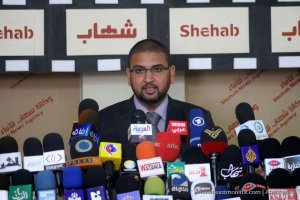 GAZA – The Hamas Movement strongly denounced the Israeli decision to outlaw the Islamic Movement in the 1948 occupied lands as “an act of racism.”
Hamas spokesman Sami Abu Zuhri stated in a press release on Tuesday that the Israeli ban measure against the Islamic Movement targets the Arab presence in the 1948 occupied territories.
“The Israeli decision is aimed at punishing the Islamic Movement and preventing it from continuing its role in protecting the Aqsa Mosque,” Abu Zuhri added, calling the decision as “a badge of honor” to the Islamic Movement.
The Hamas spokesman called on the international community to intervene to curb such Israeli racist measures against the Palestinians.
The Israeli security cabinet on Tuesday declared the Islamic Movement in the 1948 occupied lands an unlawful organization, effectively outlawing the group led by Sheikh Ra’ed Salah.
Following the decision, police forces raided over a dozen of the group’s offices in the 1948 occupied lands, seizing computers, files and funds.
The Israeli occupation authority also froze its bank accounts and said that 17 organizations affiliated with the Movement were served with orders to close down.
The police also called in several of the Movement’s officials for questioning, including Sheikh Salah, his deputy Sheikh Kamal Khatib, and the organization’s director of Jerusalem and Aqsa Mosque affairs, Salman Abu Ahmad.
Eye-witness account of a murder: ‘They didn’t want her alive, they want her dead, they meant to kill her”
International Solidarity Movement | November 16, 2015
Hebron, Occupied Palestine – On 25th October 2015, 17-year old Dania Arsheid was gunned down by Israeli forces in front of the Ibrahimi mosque in occupied al-Khalil (Hebron) and left to bleed to death. One of the shopkeepers nearby the Ibrahimi mosque witnessed the events leading up to this ruthless murder and agreed to make a statement.
After school finished around 1:20pm on that fateful Sunday, Dania was on her way from the Palestinian souq (market) in the Old City of al-Khalil towards the Ibrahimi mosque. She passed the first revolving gate and the metal detector without any problems – the metal detector did not indicate any metal objects. When passing the second revolving door, soldiers at the nearby checkpoint at the entrance of the mosque called for her to come there. Upon hearing this, the witness, who owns a shop, just meters away from the revolving gate, decided to go through the checkpoint to make sure that the girl was okay.
Dania passed yet another metal detector at the checkpoint at the mosque entrance and put her bag on the table there, as requested by the Israeli forces. They searched her entire bag but they were not able to find anything. Regardless of that, Israeli forces kept asking
Dania ‘where is the knife’ over and over again – completely ignoring her answer that ‘there is no knife’. When one of the soldiers suddenly shot a bullet between her feet yelling at her, she raised her hands and moved back down the stairs. Nevertheless, the soldiers continued questioning her aggressively about a knife – even though she had her hands raised and her bag had been searched with no knife found; and Dania repeatedly asserting that she did not have any knife.
After the first shot was fired, more and more soldiers arrived to the checkpoint, so that it was impossible to tell how many of them shot the 6-7 fatal bullets at Dania – a girl who had her hands up in the air, who had been searched extensively and who had at no point posed any threat. Immediately after she was gunned down, Palestinians in the area – including the witness – were forced to move back through the checkpoint into the souq. The soldiers pointed their assault rifles at the witnesses pushing them out of the area and immediately afterwards closed off the checkpoint for anyone to enter and exit for about an hour.
The first ambulance arrived about 15 minutes after Dania was gunned down. “They didn’t want her alive, they want her dead, they meant to kill her”, explains the witness, stating that they could have easily arrested her. At no point after her body was perforated with bullets was any first aid provided, and the shooters left her lying on the ground slowly bleeding to death. Instead of giving first aid, Israeli forces proceeded to block the view so nobody but them would be able to see the 17-year old school-girl bleed to death.
“She came [to the checkpoint] and didn’t do anything – and then she was killed.”
Terrorism and the Question of Humanity
By Brenda Heard | Aletho News | November 16, 2015
On 15 November, The New York Times published an article entitled “Beirut, Also the Site of Deadly Attacks, Feels Forgotten.” It highlights the disparity between the global solidarity expressed for Paris following the deadly 13 November attacks and the lack thereof expressed for Beirut after it too was attacked the day prior. But the headline suggests a petulant attitude from Lebanese who “feel forgotten,” as though they were a bratty child or a sniveling spouse.
Granted The Times expresses a degree of compassion for Beirut’s victims, who like those in Paris “were killed at random, in a bustling urban area, while going about their normal evening business.” But The Times also seems to be trying to wiggle out of appearing heartless in a previous Times article’s headline–“Deadly Blasts Hit Hezbollah Stronghold in Southern Beirut”—a headline that it now explains was “changed to be more precise.” The Times withdrew the headline’s phraseology “Hezbollah Stronghold,” which it admitted, “risks portraying a busy civilian, residential and commercial district as a justifiable military target.”
With images of civilian victims in circulation, the casual sneer of “Hezbollah stronghold,” quickly trumpeted by Reuters and the Associated Press, did seem rather. . . misleading. Yet despite even The Times’ own characterization of the stricken Bourj el-Barajneh municipality as typical “working-class Beirut, where Palestinians, Christians and Syrian refugees (mostly Sunnis) live, work and shop,” these descriptions are colored with an overriding exemption: “Hezbollah maintains tight security control” of the area. Only Reuters gives slight mention to the contradiction of this so-called “Hezbollah Bastion” hosting numerous Lebanese Army checkpoints.
So with a curious twist, The Times manages to undo the cliché “innocent civilian” as victim of a terror attack. The Beirut victims may have been civilian, the article concedes, but how dare they consider themselves innocent and thus worthy of solidarity. After all, the article tells us, Hezbollah is highly popular there. So why change and half-apologise for the phrase “Hezbollah stronghold”? Because The Times asserts that a Hezbollah stronghold would be a “justifiable military target.” And that assertion comes dangerously close to approving of this ISIS bombing, dangerously close to the sentiment expressed by a commenter on one of the initial UK reports: “So one bunch of barbaric Islamist terrorists has declared war on another bunch of barbaric Islamist terrorists. We should be celebrating. A win-win for the West and the civilized world.”
Sadly, this comment is mild in comparison to many across the web. They laugh and they rage with a brute callousness that is diametrically opposed to the compassion and solidarity expressed toward the French. When The Times article discussed how the Lebanese felt “forgotten,” it missed the point. It quoted Lebanese blogger Dr Elie Fares saying that “When my people died, no country bothered to light up its landmarks in the colors of their flag.” But if you read his article in its entirety, you will see that he was not bemoaning a lack of attention. Equally disturbed by the lack of concern from his fellow Lebanese, Fares was lamenting a lack of shared humanity. As he stated in a previous article, “The politics maybe change, but with so many victims dying for so little, petty politics become irrelevant.”
As Westerners, of course we are sickened by the violence inflicted upon our neighbors in Paris. We rightfully feel sad and scared. But the challenge is to be able to feel the pain of non-Western societies as well. How many times do we scroll right past headlines of a bombing in an Iraqi marketplace? a mass shooting in Latin America? a typhoon in Asia? Their skin may be brown or black, they make speak what sounds like noise to us, they may even eat with their hands. But they are parents and children, friends and lovers, brothers and sisters. They enjoy a cup of tea and laugh at a funny television show. But even if they view god or government differently than we do, their falling victim to indiscriminate killing should be neither accepted, nor applauded. Unless we want to live forever in fear, we need to condemn brutality and to nurture the notion of live and let live—consistently.
Brenda Heard is the founder and director of Friends of Lebanon, London. She is the author of Hezbollah: An Outsider’s Inside View (2015). She can be contacted at: brenda.heard@friendsoflebanon.org.
Pro-Palestinian Scottish lawmaker strip-searched on Israel trip
Press TV – November 14, 2015
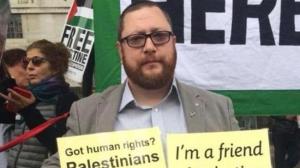 A pro-Palestinian Scottish lawmaker travelling to the occupied Palestinian territories on a parliamentary fact-finding mission has been strip-searched by Israeli forces upon arrival and refused entry.
Andrew Murray, the head of the Friends of Palestine group in the Scottish National Party (SNP), was detained at Tel Aviv’s Ben Gurion airport on Monday and held in custody for over 24 hours, he told AFP on Friday.
“They strip-searched me, scanned me, swabbed me everywhere,” Murray said, adding, “Twice I asked for representation from the British embassy, twice I was told no.”
He was later deported and banned from entering the occupied territories for 10 years, apparently over his campaign for Palestinian rights.
Carol Monaghan, a member of the SNP, said that she “absolutely condemned” the Israelis’ behavior, adding, “Andy was there on a peaceful, fact-finding trip.”
Sabine Haddad, a spokesperson for Israel’s interior ministry, claimed that Murray lied about the reason of his trip by saying he was a tourist.
Murray, however, responded that he did not lie about any of the questions asked.
The NY Times: In Praise of Israel’s Killing Squads
By Barbara Erickson | TimesWarp | November 13, 2015
In The New York Times it’s all part of a high stakes game, the good guys (Israelis) against the bad guys (Palestinians), and this time the good guys won, taking the prize through clever and audacious disguises.
Such is the tone of Isabel Kershner’s story today that tells of yet another outrage by Israel: Special forces invaded a hospital in Hebron, held the staff at gunpoint, killed a visitor point blank and kidnapped a patient recovering from surgery.
Condemnation of this atrocity and other recent attacks on Palestinian hospitals has come from Doctors Without Borders, Amnesty International, the International Committee of the Red Cross and a half dozen United Nations agencies, but none of their criticisms are included in the Times story.
Kershner, instead, only includes objections from Palestinians, and in the context of her writing, they come off as sore losers who would be expected to complain, in any case.
Her story opens with a description of the raid, as undercover Israelis disguised as Arabs enter the hospital, pushing a “pregnant woman” in a wheelchair, and it ends with several paragraphs looking back at other Israeli operations that involved masquerades: a 1972 action to foil a hijacking, a “famous” revenge assassination by former prime minister Ehud Barak, and a raid in Dubai to kill a Hamas commander.
In other words, it was all part of an illustrious Israeli tradition.
The Palestinians are described as “livid,” a term that implies a somewhat excessive rage and carries a hint of derision. It is not a neutral term in news writing, but Times editors apparently had no problem allowing it to stand.
The Israeli operation, on the other hand, is characterized as something of a breeze, not the bloody and outrageous affair that it was. They entered the hospital and then “about 10 minutes later they were on their way out.” They “whisked away” the suspect, Azzam Shalalda, leaving his cousin, Abdallah Shalalda, dead on the floor of the hospital room.
In describing a similar raid on a Nablus hospital last month, Kershner writes that Israeli forces “snatched” a suspect in a fatal shooting. Such vocabulary implies a kind of cinematic caper, devoid of real life complications.
Missing from her story is any mention of international humanitarian law, which forbids such violations of hospital and health care facilities. Amnesty International also noted that the killing of Abdallah Shalalda appeared to be a deliberate extrajudicial execution, and Tikun Olam blogger, Richard Silverstein, wrote that the undercover agents had entered the hospital expressly to kill Abdallah and arrest his cousin.
Kershner, however, is quick to quote the military, which claimed that “a suspect attacked the force, which responded to the assault and fired on the attacker.” Only later in her story does she note that hospital officials said he was shot not during an attack but when he emerged from a bathroom. Amnesty stated that his wounds were consistent with a deliberate execution.
Her story glosses over the recent raids on a Jerusalem hospital and UN demands that they cease. (Israel, however, has continued to invade the facility.)
In the eyes of Kershner (and the Times), it seems that there is no problem with Israeli violations of international law when the state wants to apprehend a Palestinian suspect. She writes that the raid was Israel’s way of saying that “there will be no safe haven for Palestinian suspects.”
By contrast, the Times has never bothered to report that Israel knows the identity of Jewish settlers responsible for burning to death three members of a Palestinian family but refuses to arrest them because it might reveal intelligence methods.
The terrible irony of this double standard is beyond the radar of Isabel Kershner and the Times editors. On the contrary, they present Israel’s lawless and bloody actions as evidence of ingenuity and daring, celebrating a “victory” over the ultimately helpless and endlessly oppressed Palestinians.
Netanyahu Ups the US Ante
By Ann Wright | Consortium News | November 12, 2015
President Barack Obama, having met with Israeli Prime Minister Netanyahu on Nov. 9 at the White House, is considering Israel’s request for a 50 percent increase of nearly $1.5 billion in U.S. military funding, which would bring the U.S. donation – used for killing Palestinians in the West Bank and Gaza – to $4.5 billion a year.
As it stands now, more that half of the U.S. foreign military aid for 2016 goes to Israel. As in all things, Israel gets special treatment by the U.S. allowing Israel to spend 25 percent of its U.S. gift to pay itself for buying weapons from its own weapons industry.
According to a recent congressional report, Israel has received $124.3 billion in military assistance from the U.S. since its founding in 1948. The report states that “strong congressional support for Israel has resulted in Israel receiving benefits not available to any other countries; for example, Israel can use U.S. military assistance both for research and development in the United States and for military purchases from Israeli manufacturers.
“In addition, U.S. assistance earmarked for Israel is generally delivered in the first 30 days of the fiscal year, while most other recipients normally receive aid in installments, and Israel (as is also the case with Egypt) is permitted to use cash flow financing for its U.S. arms purchases.
”In addition to receiving U.S. State Department-administered foreign assistance, Israel also receives funds from annual defense appropriations bills for rocket and missile defense programs. Israel pursues some of those programs jointly with the United States.”
As Obama was meeting Netanyahu, eight blocks away at the Palestine Center in Washington, D.C., a surgeon from Norway who works part of each year in al Shifa hospital in Gaza, told of the devastation, destruction and human suffering these American weapons and dollars cause.
Dr. Mads Gilbert spoke of 51 days of terror in Gaza in the summer of 2014 as the Israeli attack forces brutalized the people of Gaza with Israeli and U.S. artillery, drone ordnance for assassinations, F-16s, hellfire missiles and dense inert military explosives.
Gilbert said the 2014 Israeli attack on Gaza was 500 percent stronger than Israel’s 2009 attack, when he was also working at al Shifa hospital when the Israeli Defense Force (IDF) attacked Gaza. In 2014, the IDF fired 50,000 shells into Gaza and conducted over 6,000 air strikes, destroying over 3,500 buildings in Gaza City alone including over 50 percent of the hospitals in Gaza.
At the end of the 51-day attack, 2,250 Palestinians were dead, including 551 children and 299 women. Some 3,500 Palestinian children were wounded and the 1 million children and youth who live in Gaza were all deeply affected by the attacks. Sixty percent of the 1.8 million who live in Gaza are under the age of 22.
Dr. Gilbert’s presentation included photos of the carnage caused by Israeli attacks and the audio of the sounds of jets racing overhead, bombs exploding and buildings collapsing.
Citing the report of the United Nations Independent Commission of Inquiry on the 2014 Gaza Conflict, Gilbert said that the IDF purposefully targeted the civilian population including entire families and that the IDF purposefully targeted hospitals, ambulances and four UN shelter facilities.
The report said, “Hundreds of Palestinian civilians were killed in their own homes, especially women and children. At least 142 families lost three or more members in an attack on a residential building during the summer of 2014, resulting in 742 deaths. The fact that Israel did not revise its practice of air-strikes, even after their dire effects on civilians became apparent, raises the question of whether this was part of a broader policy which was at least tacitly approved at the highest level of government.”
Additionally, “the commission is concerned about Israel’s extensive use of weapons with a wide kill and injury radius; though not illegal, their use in densely populated areas is highly likely to kill combatants and civilians indiscriminately. There appears also to be a pattern whereby the IDF issued warnings to people to leave a neighbourhood and then automatically considered anyone remaining to be a fighter. This practice makes attacks on civilians highly likely. During the Israeli ground incursion into Gaza that began in mid-July 2014, hundreds of people were killed and thousands of homes destroyed or damaged.”
The commission report added: “Palestinian armed groups fired 4,881 rockets and 1,753 mortars towards Israel in July and August 2014, killing 6 civilians, including one child and injuring at least 1,600.” A total of 66 Israeli soldiers were killed in military operations inside Gaza.
The commission also reported: “In the West Bank including East Jerusalem, 27 Palestinians were killed and 3,020 injured between June and August 2014. The number killed in these three months was equivalent to the total for the whole of 2013. The commission is concerned about what appears to be the increasing use of live ammunition for crowd control by the Israeli Security Forces, which raises the likelihood of death or serious injury.”
The report continued, “Impunity prevails across the board for violations allegedly committed by Israeli forces, both in Gaza and the West Bank. ‘Israel must break with its lamentable track record in holding wrong doers accountable,’ said the commissioners, ‘and accountability on the Palestinian side is also woefully inadequate.’”
Signaling further attacks on Gaza during a Nov. 10 talk at the Center for American Progress in Washington, Netanyahu said Gaza has “become this poison thumb, this poison dagger that sends rockets” into Israel and that Israel must be prepared for a long period of tension.
The U.S. government’s blind backing for whatever Israel does, while providing the weapons for Israel to do it, is dangerous for both the United States and Israel.
As Israeli journalist Gideon Levy recently wrote concerning Hillary Clinton’s unwavering support for Israel: “support [for] the continued occupation is like a person who continues to buy drugs for an addicted relative. This is neither concern nor friendship; it is destruction. … ‘false’ friends of Israel – have been one of the curses on this country for years. Because of them, Israel can continue to act as wildly as it likes, thumbing its nose at the world and paying no price. Because of them, it can destroy itself unhindered.”
Levy’s comments about former Secretary of State Clinton equally applies to the unqualified support for Israel given by both Republican- and Democratic-led U.S. administrations.
Israeli attacks on people in Gaza and the West Bank will end only when we the citizens of the United States force our government to stop its military and diplomatic backing of the State of Israel.
Ann Wright served 29 years in the U.S. Army/Army Reserves and retired as a Colonel. She also was a U.S. diplomat for 16 years and resigned in 2003 in opposition to the war on Iraq. She has been in Gaza six times and was on the 2010 Gaza Flotilla that was attacked by the IDF, which executed nine passengers and wounded 50.
Settlement Reached in Case of Professor Fired for “Uncivil” Tweets
Center for Constitutional Rights | November 12, 2015
Chicago – Today, the Center for Constitutional Rights (CCR) and co-counsel Loevy & Loevy announced the settlement of Professor Steven Salaita’s case against the University of Illinois at Urbana-Champaign (UIUC) for firing him from his tenured position over his personal tweets criticizing the Israeli government’s assault on Gaza in 2014. Professor Salaita sued UIUC, the university Board of Trustees and high-level administrators for violating his First Amendment right to free speech and for breach of contract. Salaita’s firing became a flashpoint for debates over academic freedom, free speech, and the repression of Palestinian rights advocacy. In exchange for Professor Salaita’s agreement to release his claims, the university has agreed to pay $875,000.
“This settlement is a vindication for me, but more importantly, it is a victory for academic freedom and the First Amendment,” said Professor Salaita. “The petitions, demonstrations, and investigations, as well as the legal case, have reinvigorated American higher education as a place of critical thinking and rigorous debate, and I am deeply grateful to all who have spoken out.”
Professor Salaita’s firing prompted student walkouts; the cancellation of more than three dozen scheduled talks and conferences at the school; further pledges to boycott UIUC by more than 5,000 academics; a vote of no confidence in the university administration by 16 UIUC academic departments; and public condemnation by prominent academic organizations, including the American Association of University Professors (AAUP), the Modern Language Association, and the Society of American Law Teachers. In April, the AAUP released a scathing report on Salaita’s termination and, in June, voted to censure the UIUC for its actions. In August, a federal judge rejected the university’s argument that Professor Salaita had not actually been hired, despite a contract and his impending family move to the university, writing, “If the Court accepts the University’s argument, the entire American academic hiring process as it now operates would cease to exist.”
Within hours of the court’s decision, Chancellor Phyllis Wise, who sent Professor Salaita the letter notifying him of his termination a year prior, resigned from the UIUC. The following day, the university revealed that administrators had been using personal email accounts in an attempt to avoid publicly releasing their correspondence. In one email released under the Freedom of Information Act (FOIA), Chancellor Wise admitted that she was not only using her private email because of the litigation, but was deleting her messages after sending. Provost Ilesanmi Adesida resigned a few weeks later. Prior FOIA productions had revealed that wealthy UIUC donors had threatened to withhold funding unless Professor Salaita was terminated.
“Professor Salaita’s case galvanized champions of academic freedom and Palestinian rights activists alike, making clear that punishing speech―even speech that dares to criticize Israeli government atrocities―will not be tolerated. It resulted in widespread condemnation of the university’s actions and a federal court decision finding he had a contract and his tweets were protected by the First Amendment. Professor Salaita has in fact won―and this settlement permits him to move on and refocus on his work as a premier scholar and an excellent teacher,” said Center for Constitutional Rights Deputy Legal Director Maria LaHood.
In July 2014, after his contract with the university had been signed, Professor Salaita tweeted a number of strongly worded messages from his private account expressing his outrage and dismay at the Israeli government’s attacks in Gaza, which killed more than 500 children. Professor Salaita’s firing is part of a broader crackdown on activism for Palestinian rights that includes event cancellations, baseless legal complaints such as the ongoing case in Washington against Olympia Food Co-op board members for boycotting Israeli goods, administrative disciplinary actions, false and inflammatory accusations of terrorism and antisemitism, and legislation to prohibit boycotts of Israeli goods and institutions. The Center for Constitutional Rights co-authored a report this fall with the organization Palestine Legal on the widespread attempts to silence U.S. activists critical of Israel’s policies, called “The Palestine Exception to Free Speech”.
“Make no mistake: the size of this settlement is an implicit admission of the strength of Professor Salaita’s constitutional and contractual claims,” said Anand Swaminathan of Loevy & Loevy. “He has scored a major victory for those who care about free speech and academic freedom. In the future, university administrators will have to think twice before they choose the interests of wealthy donors and alumni over upholding their constitutional obligations. This legal victory could not have been possible without the support of a large and committed movement of activists and academics.”
For more information on the case, visit CCR’s Salaita v. Kennedy case page.
Loevy & Loevy is one of the nation’s largest and most successful civil rights law firms, dedicated to seeking justice for those whose civil rights have been violated and for whistleblowers. Our willingness to take hard cases to trial and win them has yielded a nationally recognized reputation for success in the courtroom. We only take cases we passionately believe in, we forge close bonds with our clients, and we are proud to have achieved outstanding results for them with truly uncommon consistency. Visit us at http://www.loevy.com.
The Center for Constitutional Rights is dedicated to advancing and protecting the rights guaranteed by the United States Constitution and the Universal Declaration of Human Rights. Founded in 1966 by attorneys who represented civil rights movements in the South, CCR is a non-profit legal and educational organization committed to the creative use of law as a positive force for social change.
Featured Video

Genocide-linked firm handles Britons’ NHS data
or go to
Aletho News Archives – Video-Images
Book Review
Book review: Boiling Point, How America Brought War to Ukraine
By Tim Kirby | Strategic Culture Foundation | November 14, 2026
Did Vladimir Putin just wake up one day on the wrong side of the bed and decide to invade Ukraine in February of 2022 or is there a lot more to this single decision that has been reshaping the 21st century geopolitical landscape?
Obviously, from the way that I just posed the question you can see that I am on the side that views the causes for the war in Ukraine to be very deep, long-term, historical and consciously nefarious, and most importantly, not from within the halls of the Kremlin. So it was a pleasure to take a look at the book “Boiling Point, How America Brought War to Ukraine” by author Stephen Kinzer, who like myself, also believes that the real reasons behind military conflicts around the world are not what CNN and the BBC have been telling you. The main thesis of this book was stated clearly by its creator; the war “may have been illegal, but it was definitely not unprovoked.” … continue
Blog Roll
 Aletho News
- The 10 Disease Renamings That Rescued the Vaccine
- NATO cancels 2027 leaders’ summit
- IAEA’s politicized use of safeguards undermines its impartiality: Russian envoy
- UK must be ready to strike Russian Arctic – ex-PM
- Fico’s Two Red Lines: Russian Energy and the Next Ukraine Loan
- Thousands rally for banned NATO-skeptic presidential candidate
- Ukraine Settlement and New European Security Architecture Must Go Hand in Hand – Kremlin
- Book review: Boiling Point, How America Brought War to Ukraine
- Israel Revives The ‘Iranian Assassination Threat Against Trump’ Deception In A Desperate Bid To Restart The War
- US rewrites history to dodge blame for illegal war on Iran: Foreign Ministry spokesperson
- If Americans Knew
- An error has occurred; the feed is probably down. Try again later.
- No Tricks Zone
- New Study: Barents Sea Temperatures Were Warmer And Sea Ice Less Extensive In The 1700s Than Today
- German Authorities Start Initiative To Evaluate Public Register For Climate “Disinformation” Spreaders!
- Zonal Asymmetry of Temperature Change in the Antarctic Circumpolar Current
- New Study: The Net Fossil Fuel Contribution To Rising Atmospheric CO2 Has Been Zero For 500 Years
- Germany’s Green Energy Transition Becoming Increasingly Expensive…Another 6 Trillion Euros!
- Sudden Stratospheric Warming, Powerful El Niño Combination May Lead To Extreme Europe Cold, Energy Crisis!
- Two New Studies Find Thwaites Glacier Melt Cannot Be Driven By Human Activity Or A Warming Ocean
- E-Cars Reduce CO2 Emissions By Only 41% Compared To Internal Combustion Engine Vehicles
- Predictions Made By Renowned Climate Professor Over Past Decades Have Been Proven To Be Poor
- New Study Suggests Large Regions Of The Pacific Ocean Have Been Cooling For The Last 80 Years

