US rewarding Myanmar for massacring Muslims

An undated photo shows a Rohingya refugee woman carrying a child in an unregistered camp in Kutupalong, some 400 kilometers southeast of Dhaka.
By Kevin Barrett | Press TV | August 26, 2012
I am writing to every contact listed at Buddhanet.info’s American Buddhist Directory to ask:
Are you aware of the ongoing genocide in Myanmar (Burma) — a genocide that is being committed in the name of Buddhism?
And did you know that the United States of America bears responsibility for this genocide, since the US has been rewarding the Myanmar regime with ever-closer political and economic ties during recent months of accelerating atrocities?
As American Buddhists, you are in a position to help stop this genocide, by pressuring the US and Myanmar governments as well as international human rights organizations. Your visible participation in the campaign to save the Rohingya people from extermination by murderous Buddhist fanatics will not only help draw the world’s attention to this horrific situation, but also help restore the image of Buddhism as a religion of compassion.
The facts about the genocide in Myanmar are not in dispute. The fanatical Buddhist nationalists, who unfortunately represent a large segment of the roughly 60 million Buddhists in Myanmar, admit that they are trying to uproot and exterminate the roughly one million Muslim Rohingya from land that the Rohingya have lived on for centuries.
Here is what a typical genocidal Buddhist fanatic from Myanmar wrote in a comment on a Wall Street Journal article:
“Burma is Buddhist nation created for the 135 Tibeto-Burman tribes. People do not get citizenship just because born there or illegally lived there for centuries. Please do not interfere with the law and internal affairs of Burma just as you do not like other nations to poke their nose in your internal affairs.”
“People do not get citizenship just because born there or illegally lived there for centuries.” This statement, which aptly sums up the official policy of the Burmese regime, could get the person who made it, and the government that follows it, hanged for crimes against humanity. Obviously, being born in a modern nation to a family that has been there for centuries automatically confers citizenship. And obviously, any modern nation that denies citizenship to such people, burns their homes and communities, and murders them en masse, with the aim of removing them from the nation of their birth, is committing the internationally-recognized crime of genocide.
In recent weeks, many thousands of homes, and more than 20 mosques, have been burned by murderous Buddhist mobs, backed by national security forces, in the Arakan state of Myanmar. Estimates of the number of Rohingya Muslims murdered, whether directly or by drowning in the Naf River, as they flee the killers, range from the thousands to the tens of thousands. Every one of the more than 500 mosques in Arakan has been taken over by the genocidal regime’s security forces and shut down, and they are being demolished one-by-one. (This happened during the holy month of Ramadan, when Muslims are supposed to spend as much time as possible in a mosque.)
Muslims have been living in Burma since roughly 800 c.e. — that is, nearly for as long as the religion of Islam has existed. And Arakan has been a Muslim region, ruled by Muslim kings and/or populated by Bengali Muslims, since 1430. The most notable population increase of Muslims in Arakan took place in the 1600s. The idea that the Rohingya people are somehow “recent immigrants” to the region is clinically insane — a symptom of the larger insanity known as nationalist fanaticism.”
Both Buddhism and Islam are universalist religions: They proclaim truths that are valid for all people, indeed for all of existence. And the core truth that both religions proclaim is the primacy of compassion. In Buddhism, a central feature of the Buddha nature is compassion for all beings. If one were to choose a single hallmark of a successful advanced practitioner of Buddhism, it would be a highly-developed sense of compassion.
Whatever has happened to the Myanmar Buddhists’ compassion for their fellow citizens who happen to be born as Rohingyas?
Islam, too, views compassion as a central reality of creation. Muslim theologians, like the more advanced Christian and Jewish religious thinkers, view God as ineffable; but the primary and overriding tangible characteristic of God in Islam (with the proviso that no tangible characteristics fully express the reality of the one ineffable God) is rahma, or compassion. The two adjectives Muslims use the most to “describe” God are ar-rahman ar-rahim, usually translated as “the merciful, the compassionate.” (The root of rahma and its cognates derives from the word for “womb,” suggesting that this “compassion” has something in common with the nurturing, all-embracing, unconditional love that mothers feel for their children.)
Additionally, both Buddhism and Islam teach us to transcend or even annihilate the (tribal) ego. Buddhism offers a set of teachings that take its practitioners beyond the ego, which is the source of the endless desire that is the cause of the pervasive suffering or disappointment that characterizes ordinary human existence. Likewise, Islam teaches its serious practitioners to annihilate the “ego that desires evil” through absolute submission to God. Each religion offers a very similar cure for the unhappiness of the ordinary human condition.
The kind of chest-thumping egotistical nationalism that proclaims “I am a Buddhist, my heroic nation is Buddhist, I am so much better than those non-Buddhists that I must kill them or exile them” is about as far from the compassionate teachings of the Buddha as it is possible to get. Likewise, extremist Muslims who proclaim that their narrow version of Islam is the only truth, and that everyone who disagrees should be killed, are equally far from the universal, all-compassionate message proclaimed by God through Prophet Muhammad (peace upon him).
Muslims and Buddhists ought to unite against ego-driven nationalist fanaticism, which is an affront to both religious traditions.
Related articles
- Bangkok Conference On The Rohingyas Of Myanmar – OpEd (eurasiareview.com)
- Democracy and slaughter in Myanmar: Gold Rush overrides Human Rights (Aletho News)
- Stateless Rohingya… Running on Empty (Aletho News)
Iranian Rhetoric and the History of the Cancer Analogy
By Nima Shirazi | Wide Asleep in America | August 24, 2012
“Injustice anywhere is a threat to justice everywhere.”
– Martin Luther King, Jr., April 16, 1963
The rhetoric used in recent speeches by top Iranian officials has garnered much attention in the mainstream media. In addition to the outrage expressed over the statement that the Israeli governmental system and guiding Zionist ideology is an “insult to humanity,” comments that the “Zionist regime” is a “cancerous tumor” have also met fierce condemnation.
The Israeli Ministry of Foreign Affairs has compiled a list of recent reported statements made by Iranian officials. National Security Council spokesman Tommy Vietor told the press that the United States government “strongly condemn[s] the latest series of offensive and reprehensible comments by senior Iranian officials that are aimed at Israel,” adding, “The entire international community should condemn this hateful and divisive rhetoric.”
Rabbi David Wolpe took to the pages of The Los Angeles Times to specifically condemn the cancer analogy. Wolpe incidentally did so by presenting a litany of outrageous statements of his own. He writes that the “state of Israel” is 3000 years old, thus absurdly conflating an ancient Biblical minority community with a modern, settler-colonial nation-state. He insists Israel is not expansionist, a claim that doesn’t stand up to even the most cursory awareness of basic facts, the historical record and current aggressive Israeli policy.
Wolpe also states that the cancer analogy “leads inevitably, inexorably, to the prospect of genocide,” which he obviously follows up by invoking the Holocaust and asserting that “Iran eagerly pursues nuclear weapons,” thereby ignoring the consistent conclusions of U.S. intelligence and IAEA inspections. He concludes by suggesting that, were Israel not to maintain such a destructive military capability, segregationist occupation infrastructure, rampant legal discrimination, and a two-tiered justice system, the result would be the “wholesale slaughter” of Jewish Israelis, presumably by vengeful Arab hordes.
Such a characterization recalls the ludicrous fears that beset the vast majority of white South Africans just years before Apartheid ended, many of whom were consumed by “physical dread” at the prospect of equality and their loss of racial dominance and superiority and foresaw a future full of “violence, total collapse, expulsion and flight.” Even in 1987, as Apartheid was becoming increasingly untenable, about 75% of white South Africans feared that their “physical safety…would be threatened” as a result of “black rule.” Nearly 73%, including over 85% of Afrikaners, believed “white women would be molested by blacks.” Incidentally, as recently pointed out in Ha’aretz, in 1987, “Israel was the only Western nation that upheld diplomatic ties with South Africa” and was one of the last countries to join the international boycott campaign.
Southern whites in the antebellum United States nurtured the same irrational apprehension, fearful that the violent and successful 1791 slave rebellion in Haiti would be replicated across the Gulf of Mexico, especially in states like South Carolina where slaves outnumbered whites two to one. Following emancipation, and in reaction to the Civil Rights Act of 1866, southern states enacted “black codes” restricting the voting, land ownership, and speech of former slaves. Whites feared that their loss of racial dominance and an enslaved labor force would not only ruin the southern economy, but also that the newly-freed black population would seek revenge on their masters and rape white women; this led to numerous race riots and the rise of the Ku Klux Klan that same year.
In April 1868, Alabama newspaper editor Ryland Randolph praised the Klan for opposing what he called the “galling despotism” of the federal government over the southern states, which he “deemed a fungus growth of military tyranny” with the goal of “degrad[ing] the white man by the establishment of negro supremacy.”
Forrest G. Wood writes in Black Scare: The Racist Response to Emancipation and Reconstruction:
Although white men certainly feared for their jobs and income, they were more alarmed by the threat to their physical safety that the “savage African” presented… Pointing to the absence of an advanced (by Western standards) African civilization, extremists described the Negroes as primitive, barbaric, and cruel… Freedom, the white supremacist now asserted, would stimulate the black man’s worst passions, leading him to crimes of arson, murder, and rape.
Newspapers often deliberately published grossly exaggerated or wholly fictitious stories of criminal acts and violence committed by blacks, stoking even more fear in the racist white population. For these white supremacists, rape was “the most frightful crime which negroes commit against white people” and the accusation of sexual assault (or even consensual interracial relationships) was a surefire way to spark a lynch mob.
Just this past Spring, Israel’s Interior Minister Eli Yishai said that many Israeli women have been raped by African migrants and refugees, “but do not complain out of fear of being stigmatized as having contracted AIDS,” insisting that “most of the African infiltrators are criminals.” At an anti-African rally, Tel Aviv resident Carmela Rosner held a sign that read: “They rape girls and elderly women, murder, steal, stab, burglarize. We’re afraid to leave home.”
Yishai said that Africans, “along with the Palestinians, will bring a quick end to the Zionist dream,” while Israeli Prime Minister Benjamin Netanyahu warned that the growing population of African immigrants “threatens our existence as a Jewish and democratic state,” as well as “the social fabric of society, our national security and our national identity.” Palestinians in Israel along with their actual and potential offspring are regularly referred to as a “demographic threat” and a “demographic bomb,” a racist construction that exposes the discriminatory and supremacist nature of Zionism itself.
Due to such incitement against minority communities, pogroms, race riots, and violence against non-Jews have become commonplace.
The Israeli Education Ministry is currently attempting to overturn a district court ruling that “migrant children… be fully integrated in the municipal school system and not be taught in a separate school.” The state appeal in favor of segregation claims that the education of Israeli children will suffer if done alongside the children of African immigrants. Meanwhile, extremist Jewish groups continue to try to “rescue” Jewish Israeli girls who date Palestinian men and threaten Palestinians with violence if they flirt with Jews.
In 2008, a Jewish Israeli woman filed a police report after discovering that a man she had just had consensual sex with was Palestinian and not Jewish, as she had assumed. After spending two years under house arrest, an Israeli court convicted the man of “rape by deception” and sentenced him to 18 months in prison. A former senior Justice Ministry official was quoted as saying, “In the context of Israeli society, you can see that some women would feel very strongly that they had been violated by someone who says he is Jewish but is not.”
This is to be expected, as The Palestine Center‘s Yousef Munayyer explains: “An ideology that seeks to build a society around a certain type of people defined by ethnicity or religion is inevitably going to feature racism, supremacy and oppression—especially when the vast majority of native inhabitants where such an ideology is implemented are unwelcomed.”
Unsurprisingly, commentators who routinely denounce cancer analogies when they come from Iranian officials blatantly avoid addressing the use of the identical rhetoric by Israelis themselves when referring to the growing presence of non-Jewish communities within areas controlled by Israel. When IDF chief Moshe Ya’alon referred to Palestinian babies as “cancerous manifestations” and Likud Knesset member Miri Regev called African migrants and refugees “a cancer in our body,” they were silent.
While calling the government and founding ideology of a state a “cancerous tumor” is certainly not a nice thing to say and supporters of that state’s policies have every reason to take offense to such a description, it is quite obviously a political statement. Iranian rhetoric attacks a political entity, namely the “Zionist regime“, which systematically discriminates against and oppresses people based solely on their ancestry and religious affiliation. In contrast, Ya’alon and Regev’s statements employ the cancer analogy to defend the concept of ethnic-religious exclusivity and have everything to do with people, whether Palestinian or African, who somehow threaten the continued dominance of a deliberately demographically engineered and maintained state.
To be sure, regardless of its intended target, this kind of rhetoric is purposefully harsh and often gratuitous. Yet, like Ahmadinejad’s “insult to humanity” line, the cancer analogy is neither new nor original. While Iranian officials have been employing it since 2000, it has long been wielded for the express purpose of condemning a political system or ideology one vehemently opposes.
In the 1820s, former president John Adams wrote to Thomas Jefferson that “slavery is a cancer to be isolated.” On October 16, 1854, in an stridently abolitionist speech in Peoria, Illinois, Abraham Lincoln likened the Constitution’s vague references to slavery to a “cancer,” hidden away, which an “afflicted man… dares not cut out at once, lest he bleed to death; with the promise, nevertheless, that the cutting may begin at the end of a given time.”
A New York Times article from September 8, 1863 quoted then-Tennessee Governor Andrew Johnson as telling a Nashville crowd in late August, “Slavery is a cancer on our society, and the scalpel of the statesman should be used not simply to pare away the exterior and leave the roots to propagate the disease anew, but to remove it altogether.” Johnson endorsed the “total eradication” of slavery from Tennessee.
In the final chapter of the first volume of Das Kapital (1867), entitled “The Modern Theory of Colonization,” Karl Marx excoriated British politician Edward Gibbon Wakefield for his efforts “to heal the anti-capitalistic cancer of the colonies.”
The 1968 platform of Bermuda’s first political party, the Progressive Labor Party, proclaimed, “No government can be either responsible or democratic while under the rule of another country, ” adding, “Colonialism is a cancer.”
A February 23, 1962 article in Time Magazine profiled U.S. General Paul Donal Harkins, the commander of a newly created U.S. Military Assistance Command in South Vietnam, which is described as “the first step in a more broadly based anti-Communist campaign.” Harkins is quoted early in the piece as defining his mission as “doing all we can to support the South Vietnamese efforts to eradicate the cancer of Communism.”
In early June 1983, just a few months after Ronald Reagan delivered his “Evil Empire” speech in which he declared his belief that “Communism is another sad, bizarre chapter in human history whose last pages even now are being written,” Illinois Representative Henry Hyde told the House Foreign Affairs Committee that, because “Communism is a cancer,” Congress should support covert action and assistance to Contras and anti-Sandinista forces in Latin America in an effort to “fight for freedom.”
Hamas reportedly used “Communism is a cancer inside the nation’s body and we will cut it out” as a political slogan in opposition to Fatah soon after its establishment in the late 1980s.
Perhaps most applicable, however, are the comments made by South African Reverend Allan Boesak who, in 1983, formed the United Democratic Front, a legal umbrella organization for hundreds of anti-Apartheid groups. In his opening address to the UDF, Boesak stated:
Apartheid is a cancer on the body politic of the world. A scourge on our society and on all human kind. Apartheid exists only because of economic greed and political oppression maintained by both systemic and physical violence and a false sense of racial superiority. So many have been forced into exile. So many have been thrown into jail. Too many of our children have been shot down mercilessly on the streets of our nation.
In the same speech, Boesak called Apartheid “a thoroughly evil system” that “can never be modernized or modified, it must be totally eradicated” and, in 1985, denounced the white South Africans who continued to support Apartheid as the “spiritual children of Adolf Hitler.”
In 1988, Jim Murray echoed Boesak in the Los Angeles Times, writing that “apartheid is a cancer on the world body politic–to say nothing of its soul. You combat it the best way you can.”
Just as many others, including numerous Israelis, have described the state of Israel as practicing Apartheid, Boesak himself has endorsed such a comparison, and has gone even further.
In a November 2011 interview, Boesak reaffirmed his statement that the oppression of and discrimination against Palestinians by Israel is “in its practical manifestation even worse than South African apartheid,” adding, “It is worse, not in the sense that apartheid was not an absolutely terrifying system in South Africa, but in the ways in which the Israelis have taken the apartheid system and perfected it, so to speak; sharpened it.”
He cited the physical barriers, travel and employment restrictions, and the “two separate justice systems” for Palestinians and Israelis in the West Bank as examples of why “in many ways the Israeli system is worse.” He offered his wholehearted support for the Palestinian civil society call for boycott, divestment, and sanctions to impel Israel to comply with international law.
When asked whether Palestinians could ever be expected to recognize Israel as a “Jewish State,” Boesak replied:
They can’t. There is no such thing as a specifically Jewish state. You can’t proclaim a Jewish state over the heads and the bodies and the memories of the people who are the ancient people who live there. That is Palestinian land we are talking about. Most of the Jews who are there come from Europe and elsewhere and have no claim on that land and we mustn’t allow it to happen to the Palestinians what happened to my ancestors who were the original people in this land (South Africa) but now there are hardly enough of them to be counted in the census. That is Palestinian land and that should be the point of departure in every political discussion.
Similarly, official Iranian state policy maintains that the international community must “allow the Palestinian nation to decide its own future, to have the right to self-determination for itself” and that in “the spirit of the Charter of the United Nations and the fundamental principles enshrined in it… Jewish Palestinians, Muslim Palestinians and Christian Palestinians [must] determine their own fate themselves through a free referendum. Whatever they choose as a nation, everybody should accept and respect.”
Hysteria over Iranian phraseology (rhetoric with a long political history) relies solely on the presumption – repeated ad nauseum by politicians and the press – that the nation’s leadership has threatened to attack Israel militarily and wipe it off the map. But Iran has never made such threats. Quite the contrary.
Speaking to Wolf Blitzer in April 2006, Iran’s representative to the IAEA, Ali Ashgar Soltanieh directly addressed claims that Iran seeks the physical destruction of Israel (whatever that means). Blitzer asked, “Should there be a state of Israel?,” to which Soltanieh replied, “If Israel is a synonym and will give the indication of Zionist mentality, no. But if you are going to conclude that we have said the people there have to be removed or they have to be massacred, this is a fabricated, unfortunate selective approach to what the mentality and policy of Islamic Republic of Iran is.”
In a June 2006 letter to The Washington Post, a spokesman for the Iranian Mission to the United Nations wrote, “Iran’s position is very clear: We have not threatened to use force nor have we used force against any country or government in the past 250 years. We’ve never done that in the past, and we’ll never do it in the future,” adding, “We wonder whether Israel or the United States can make the same statement.”
The letter also noted that, the same month, Iranian leader Ayatollah Ali Khamenei declared that “We have no problem with the world. We are not a threat whatsoever to the world, and the world knows it. We will never start a war. We have no intention of going to war with any state.”
In October 2006, President Ahmadinejad stated, “Nuclear weapons have no place in Iran’s defense doctrine and Iran is not a threat to any country… We are not a threat to anybody; even our solution to the Zionist regime is a referendum.” The following year, Ahmadinejad was asked by the Associated Press whether Iran “would ever make a first strike against Israel.” He replied, “Iran will not attack any country,” and insisted Iran has “always maintained a defensive policy, not an offensive one” and has no interest in territorial expansion, something Israel could never seriously claim.
In a 2008 CNN interview with Larry King, Ahmadinejad stated bluntly that “we don’t have a problem with the Jewish people,” and added, with specific reference to Israel, “We are opposed to the idea that the people who live there should be thrown into the sea or be burnt.”
The same year, at a news conference during the D8 Summit in Kuala Lumpur, Ahmadinejad told reporters that because he believes the Zionist enterprise of ethnic cleansing and colonization is “inherently doomed” to failure, “there is no need for Iranians to take action” to hasten the inevitable political outcome in Palestine. He also assured the press, “You should not be concerned about a new war.”
He also made his position clear in an NPR interview, saying, “Let me create an analogy here — where exactly is the Soviet Union today? It did disappear — but exactly how? It was through the vote of its own people. So therefore in Palestine too we must allow the people, the Palestinians, to determine their own future.”
During an October 2011 interview, Ahmadinejad told Al Jazeera that Iran “will never enter any war against the U.S. or against any other country. This is our policy… We have never attacked anybody. Why should we do that? Why should we start a war?”
This past July, Mohammad Khazaee, Iran’s ambassador to the United Nations said, “We will react if there is any provocative act from the other side. We will not initiate any provocative steps.”
Official assessments by both Director of National Intelligence James Clapper and Lieutenant General Ronald Burgess, Director of Defense Intelligence Agency have affirmed that “Iran is unlikely to initiate or intentionally provoke a conflict or launch a preemptive attack.”
The alarmism that inevitably follows boilerplate speeches by Iranian officials serves an agenda of decontextualized demonization that paints the Islamic Republic as a genocidal, eliminationist aggressor and Israel as a victim, just one spinning centrifuge away from eradication. In fact, it is Israel that consistently threatens Iran with an illegal military assault, not the other way around.
But it is not a military attack that actually threatens the future of Israel, it is exactly the kind of struggle undertaken by those like Allen Boesak, who fought against an unjust system of ethnocentrism and supremacy and prevailed.
Were Israel to finally respect international law, put an end to decades of racism, occupation and Apartheid, and begin to consider each and every human being as equal and worthy of the same human rights and dignity, freedom of movement and opportunity, it would no longer be subject to the harsh analogies that have for so long been directed at the most oppressive and inhumane ideologies the world has ever known.
Related articles
- Rabbi Warns Of Similarities Between Ahmadinejad And Hitler (raptureimminent.wordpress.com)
- Some Notes on Ahmadinejad’s “Insult to Humanity” Comment (alethonews.wordpress.com)
Jewish Settler’s Vehicle Rams Child in Hebron Hit and Run
By Saed Bannoura | IMEMC & Agencies | August 23, 2012
An Israeli settler driving in Jaber Neighborhood, in the southern West Bank of Hebron, hit a Palestinian child then drove off in what appears to be a ramming attack, medical sources reported.
Nasser Qabaja, a Red Crescent official in Hebron, said that the child was moved to an Israeli hospital upon request of her family.
Medical sources said that the child suffered moderate injuries, and that she suffered various cuts and bruises.
Late in January this year, an Israeli driver hit a Palestinian teenager at a checkpoint near Jerusalem, and then drove off in an apparent ramming attack.
Some of the witnesses present at the scene were able to document the license number of the vehicle, but Israeli police did not take the information when it was presented to them.
Although several previous ramming incidents have been reported to the Israeli police and military, no investigations of these incidents have been carried out by the Israeli authorities.
Related articles
- Israeli kills 2 Palestinians near Hebron (alethonews.wordpress.com)
- Israeli Court Approves Well Destruction In Bethlehem (alethonews.wordpress.com)
- French activist injured as Israeli troops attack Hebron (alethonews.wordpress.com)
- Six Palestinians Wounded, Some Seriously In Settler Firebomb Attack On Their Car Near Hebron (occupiedpalestine.wordpress.com)
- #VIDEO | Child Abuse | Palestinian child kicked by Israeli Border Police in Hebron (occupiedpalestine.wordpress.com)
- Israeli Settlers Attack Home, Attempt to Torch It (occupiedpalestine.wordpress.com)
- This Week in Palestine, August 17th, 2012 (indybay.org)
Israel: South Africa labeling decision ‘discrimination’
Ma’an – 23/08/2012
BETHLEHEM – Israel on Wednesday denounced South Africa’s cabinet decision to label goods from illegal Israeli settlements as produced in the occupied Palestinian territories.
In a statement, the Israeli foreign ministry said the decision “is without precedent, as no such measure has ever been adopted in South Africa or in any other country. It constitutes therefore a blatant discrimination based on national and political distinction.”
The statement added: “Israel and South Africa have political differences, and that is legitimate. What is totally unacceptable is the use of tools which, by essence, discriminate and single out, fostering a general boycott. Such exclusion and discrimination bring to mind ideas of racist nature which the government of South Africa, more than any other, should have wholly rejected.”
The ministry said South Africa’s ambassador would be summoned Thursday.
Israeli Court Approves Well Destruction In Bethlehem
By Saed Bannoura | IMEMC & Agencies | August 22, 2012
An Israeli military court approved, Tuesday, an order issued by the Israeli military demanding a Palestinian farmer from Al-Khader town, near Bethlehem, to demolish an irrigation well under the pretext that it is “close to the Annexation Wall”.
Ahmad Salah, coordinator of the National Committee Against the Wall and Settlements in Al-Khader, stated that the Beit El military court, near the central West Bank city of Ramallah, rejected an appeal filed by the well’s owner, Mahmoud Sbeih.
The well was dug by the Palestinian Agricultural Relief Committee, and was financed by Holland as part of a project to support Palestinian farmers in the area.
The Israeli court granted Sbeih two weeks to demolish his well; otherwise, the army will demolish it and send the hyped bill to the farmer.
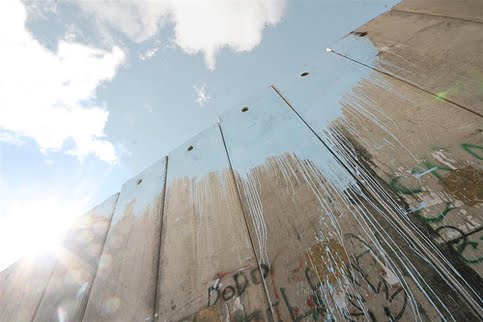
Israel’s illegal Annexation Wall was built in a manner that allows easy settlement construction and expansion at the expense of privately-owned Palestinian lands and orchards.
In July 2004, 14 of the 15 Hague judges of the International Court ruled that the construction of the Annexation Wall in the West Bank violated international law and “constituted illegal annexation.”
The court said Israel should stop the construction immediately, dismantle existing sections and compensate Palestinians harmed by its construction.
Israel ignored the ruling, considered it “irrelevant”, and went on to issue a 170-page response to the ruling protesting it, and claiming that “the court was looking at the wrong, outdated route”.
The Annexation Wall extends on more than 810 kilometers leading to the illegal annexation of thousands of Dunams of Palestinian lands, and isolates thousands of Dunams.
The route of the Wall is planned and implemented in a way that totally isolates several Palestinian villages, and enables the expansion of Israel’s illegal settlements in the West Bank, and in occupied East Jerusalem.
Related link:
The Annexation Wall – Fact-sheet
Related articles
- Settlers Seize More Land owned by 67 year old Khader Issa Near Bethlehem (occupiedpalestine.wordpress.com)
- A Primer on Settler Colonialism (alethonews.wordpress.com)
Echoes of the Past: Marikana, Cheap Labour and the 1946 Miners Strike
By Chris Webb | The Bullet | August 21, 2012
On August 4, 1946 over one thousand miners assembled in Market Square in Johannesburg, South Africa. No hall in the town was big enough to hold them, and no one would have rented one to them anyway. The miners were members of the African Mine Worker’s Union (AMWU), a non-European union which was formed five years earlier in order to address the 12 to 1 pay differential between white and black mineworkers. The gathering carried forward just one unanimous resolution: African miners would demand a minimum wage of ten shillings (about 1 Rand) per day. If the Transvaal Chamber of Mines did not meet this demand, all African mine workers would embark on a general strike immediately. Workers mounted the platform one after the other to testify: “When I think of how we left our homes in the reserves, our children naked and starving, we have nothing more to say. Every man must agree to strike on 12 August. It is better to die than go back with empty hands.” The progressive Guardian newspaper reported an old miner getting to his feet and addressing his comrades: “We on the mines are dead men already!”[1]

Mike Constable union-art.com

The massacre of 45 people, including 34 miners, at Marikana in the North West province is an inevitable outcome of a system of production and exploitation that has historically treated human life as cheap and disposable. If there is a central core – a stem in relation to which so many other events are branches – that runs through South African history, it is the demand for cheap labour for South Africa’s mines. “There is no industry of the size and prosperity of this that has managed its cheap labour policy so successfully,” wrote Ruth First in reference to the Chamber of Mines ability to pressure the government for policies that displaced Africans from their land and put them under the boot of mining bosses.[2]
Masters and Servants
Mechanisms such as poll and hut taxes, pass laws, Masters and Servants Acts and grinding rural poverty were all integral in ensuring a cheap and uninterrupted supply of labour for the mines. Pass laws were created in order to forge a society in which farm work or mining were the only viable employment options for the black population. And yet the low wages and dangerous work conditions kept many within the country away, forcing the Chamber of Mines to recruit labour from as far afield as Malawi and China throughout the nineteenth and twentieth centuries. Sordid deals between Portuguese East Africa and Apartheid South Africa ensured forced labour to be recruited for the mines and by 1929 there were 115,000 Mozambicans working underground. “It has been said,” wrote First in her study of migrant Mozambican miners, “that the wealth of Reef gold mines lies not in the richness of the strike but in the low costs of production kept down by cheap labour.”[3]
When AMWU was formed in 1941 black miners earned 70 Rand a year while white workers received 848 Rand. White miners had been organized for many years, but there was little solidarity between the two groups as evidenced by the 1922 Rand Rebellion led by the whites-only Mine Workers Union. White miners went on strike against management’s attempt at weakening the colour bar in order to facilitate the entry of cheaper black labour into skilled positions. Supported by the Communist Party of South Africa under the banner of “Unite and Fight for a White South Africa!” the rebellion was viciously crushed by the state leaving over 200 dead. The growth of non-European unions in the 1940s was dramatic and for the very first time the interests of African mineworkers were on the table. Their demands threatened the very foundations of the cheap labour system, and so in 1944 Prime Minister Jan Smuts tabled the War Measure 1425 preventing a gathering of 20 or more on mine property. Despite these difficulties the union pressed on and in 1946 they approached the Chamber of Mines with their demand for wage increases. A letter calling for last minute negotiations with the Chamber of Mines was, as usual, ignored.
By August 12th tens-of-thousands of black miners were on strike from the East to the West Rand. The state showed the utmost brutality, chasing workers down mineshafts with live ammunition and cracking down on potential sympathy strikes in the city of Johannesburg. By August 16th the state had bludgeoned 100,000 miners back to work and nine lay dead. Throughout the four-day strike hundreds of trade union leaders were arrested, with the central committee of the Communist Party and local ANC leaders arrested and tried for treason and sedition. The violence came on the cusp of the 1948 elections, which would see further repression and the beginning of the country’s anti-communist hysteria.

National Union of Mineworkers Poster on Fortieth Anniversary of 1946 Strike
While it did not succeed in its immediate aims, the strike was a watershed moment in South African politics and would forever change the consciousness of the labour movement. Thirty years later Monty Naicker, one of the leading figures in the South African Indian Congress, argued that the strike “transformed African politics overnight. It spelt the end of the compromising, concession-begging tendencies that dominated African politics. The timid opportunism and begging for favours disappeared.”[4] The Native Representative Council, formed by the state in 1937 to address the age old ‘native question,’ disbanded on August 15th and ANC president Dr. A.B. Xuma reiterated the demand for “recognition of African trade unions and adequate wages for African workers including mineworkers.”[5]
The 1946 mineworkers strike was the spark that ignited the anti-apartheid movement. The ANC Youth League’s 1949 Program of Action owes much to the militancy of these workers as does the Defiance Campaign of the 1950s and the emergence of the ANC’s armed wing Umkhonto we Sizwe (Spear of the Nation) in the 1960s. It is too early to say what sort of impact the current Lonmin strike will have on South African politics, but it seems unlikely that it will be as transformative as those of the past. The National Union of Mineworkers (NUM), arguably the heirs to the 1946 strike are currently engaged in a series of territorial disputes with the breakaway Association of Mineworkers and Construction Union (AMCU). Meanwhile COSATU’s muted response has echoed the ANC’s line of equal-culpability and half-mast public mourning. The increasingly incoherent South African Communist Party has called for the arrest of AMCU leaders with some of its so-called cadres defending the police action. Former ANC Youth League leader Julius Malema’s plea for miners to hold the line and form a more militant union reek of political opportunism.
Still Dependent on Cheap and Flexible Labour
What no one has dared to say, aside from the miners themselves, is that the mining industry remains dependent on cheap and flexible labour, much of it continuing to come from neighbouring countries. This has historically been the source of most miner’s grievances. A recent Bench Marks Foundation study of platinum mines in the North West province uncovered a number of factors linked to rising worker discontent in the region. Lonmin was singled out as a mine with high levels of fatalities, very poor living conditions for workers and unfulfilled community demands for employment. Perhaps most significant is the fact that almost a third of Lonmin’s workforce is employed through third party contractors.[6] This form of employment is not new in the mining industry. In fact, since minerals were discovered in the 19th century labour recruiters have scoured the southern half of the continent for workers. The continued presence of these ‘labour brokers’ on the mines and the ANC’s unwillingness to ban them – opting instead for a system of increasing regulation – is the bloody truth of South Africa’s so-called ‘regulated flexibility.’
There are a number other findings from the Bench Marks study that are worth mentioning as they illuminate some of the real grievances that have been lost amid photos of waving pangas. The number of fatalities at Lonmin has doubled since January 2011, and the company has consistently ignored community calls for employment, favouring contractors and migrant workers. A visit by the Bench Marks Foundation research team to Marikana revealed:
“A proliferation of shacks and informal settlements, the rapid deterioration of formal infra-structure and housing in Marikana itself, and the fact that a section of the township constructed by Lonmin did not have electricity for more than a month during the time of our last visit. At the RDP Township we found broken down drainage systems spilling directly into the river at three different points.”[7]
In fact, the study predicted further violent protests at Marikana in the coming year. The mass dismissal of 9,000 workers in May last year inflamed already tense relations between the community and the mine as dismissed workers lost their homes in the company’s housing scheme.
Once again, these facts are hardly new in the world of South African mining. Behind the squalid settlements that surround the mine shafts there are immense profits to be made. In recent years the platinum mining industry has prospered like no other thanks to the increased popularity of platinum jewellery and the use of the metal in vehicle exhaust systems in the United State and European countries. Production increased by 60 per cent between 1980 and 1994, while the price soared almost fivefold. The value of sales, almost all exported, thus increased to almost 12 per cent of total sales by the mining industry. The price rose so dramatically throughout the 1990s that it is on par with gold as the country’s leading mineral export.[8] South Africa’s platinum industry is the largest in the world and in 2011 reported total revenues of $13.3-billion, which is expected to increase by 15.8% over the next five years. Lonmin itself is one of the largest producers of platinum in the world, and the bulk of its tonnage comes from the Marikana mine. The company recorded revenues of $1.9-billion in 2011, an increase of 25.7%, the majority of which would come from the Marikana shafts.[9]
For risking mutilation and death underground workers at Marikana made only 4000 Rand, or $480 a month. As one miner told South Africa’s Mail and Guardian newspaper that, “It’s better to die than to work for that shit … I am not going to stop striking. We are going to protest until we get what we want. They have said nothing to us. Police can try and kill us but we won’t move.” These expressions of frustration and anger could be from 1922, 1946 or today. They are scathing indictments of an industry that continues to treat its workers as disposable and a state that upholds apartheid’s cheap labour policies.
Endnotes:
1. Monty Naicker, “The African Miners Strike of 1946,” 1976.
2. Ruth First, “The Gold of Migrant Labour,” Spearhead, 1962.
3. Ruth First, “The Gold of Migrant Labour,” Spearhead, 1962.
4. Monty Naicker, “The African Miners Strike of 1946,” 1976.
5. Dr. A.B. Xuma quoted in Monty Naicker, “The African Miners Strike of 1946.”
6. The Bench Marks Foundation, “Communities in the Platinum Minefields,” 2012.
7. The Bench Marks Foundation, “Communities in the Platinum Minefields,” 2012.
8. Charles Feinstein, “An Economic History of South Africa,” Cambridge: Cambridge University Press, 2005, 211.
9. Marketline Advantage Reports on South Africa’s Platinum Group Metals, 2011.
•
Chris Webb is a postgraduate student at York University, Toronto where he is researching labour restructuring in South African agriculture. He can be reached at christopherswebb_AT_yahoo.ca.
Related articles
- Striking South African miners defy Lonmin ultimatum (guardian.co.uk)
- South Africa tells Lonmin to drop threat to sack striking miners (guardian.co.uk)
NY state senator poses with weapon on Syria border

Photo released August 15, 2012 shows NY State Sen. David Storobin (L) and his chief of staff, Paul Gullo, (R) with Israeli Gen. Shmulik Olansky (C) on Syrian border
Press TV – August 19, 2012
A New York state senator has taken up arms while posing for a picture in an Israeli army uniform on the Syrian border during an official trip to Israel.
A New York state senator has been photographed with a weapon in his hands and posing for a picture in an Israeli army uniform on the Syrian border during an official trip to Israel.
A photo posted online on August 15 showed State Sen. David Storobin in an Israeli army uniform and with a rifle in his hands side-by-side with Israeli officers.
Storobin, who is running for reelection as a Republican, is seen standing next to Gen. Shculik Olansky, who is in charge of Israel’s Golan Heights Armor Division.
Storobin’s chief of staff, Paul Gullo, also appears in the image released by Storobin’s campaign.
The provocative move is the latest show of US support for armed gangs attempting to topple the Syrian government.
Syria has been experiencing unrest since March 2011. Damascus says outlaws, saboteurs, and armed terrorists are the driving factor behind the unrest and deadly violence while the opposition accuses the security forces of being behind the killings.
The Syrian government says that the chaos is being orchestrated from outside the country, and there are reports that a very large number of the armed militants are foreign nationals, mostly from Egypt, Algeria, Saudi Arabia, and Afghanistan.
Featured Video

Get ready for the big Israeli false flag cyber-attack
or go to
Aletho News Archives – Video-Images
From the Archives
Chocolate Gives Statins a $29 Billion Run For Their Money
By Sayer Ji · GreenMedInfo · April 17, 2012
With the blockbuster cholesterol-lowering class of drugs known as statins being widely promoted for the primary prevention of cardiovascular disease, despite their having over 300 documented adverse health effects (including heart failure!), how does chocolate sound as a viable, heart-friendly alternative?
We already connect amorously with chocolate (to the tune of 6 billion lbs of cocoa consumed annually worldwide), revealing in heart-felt expressions like “I love it,” and “this is to die for!” how comfortable we are with publicly declaring our affection. But did you know that while it makes our emotional hearts sing, it may actually keep our physical hearts happy, alive and ticking longer, as well?
Indeed, back in 2006, researchers found that for elderly men, eating cocoa was inversely associated with blood pressure and 15-year cardiovascular and all-cause mortality. … continue
Blog Roll
 Aletho News
- Striking Matches Near the Powder Keg
- Prominent Russia hawk: European leaders privately talk about war with Russia, first need ‘mass casualty event’
- China warned Trump not to touch Iran’s oil tankers: Larry Johnson
- EU Central Banker Plans To Plant Barren AI Crops Across The Continent
- Macron’s Strategic Autonomy Paradox: France Rearms on Debt and Depends on Foreign Fuel
- Nigel Farage vs Tucker Carlson: Who is right about Hitler and Britain?
- Chocolate Gives Statins a $29 Billion Run For Their Money
- Hypotheses on the collapse of U.S. computer systems
- Discover Iran: North Khorasan’s medicinal plants, spices, and sustainable economic potential
- ‘Stop Putting Drugs in Our Food’: Scientists Link Folic Acid in Food to Rising Rates of Colorectal Cancer
- If Americans Knew
- An error has occurred; the feed is probably down. Try again later.
- No Tricks Zone
- New Study: Modern Temps Are Among The Coldest Of The Last 10,000 Years In East Central Europe
- Germany’s Renewable Energies Lead to 1.4 Billion Euro Electric Power Trade Deficit
- Argentina’s Perito Moreno Glacier Joins Antarctica and Arctic In Defying Doomsday Melt Claims
- New Study: Barents Sea Temperatures Were Warmer And Sea Ice Less Extensive In The 1700s Than Today
- German Authorities Start Initiative To Evaluate Public Register For Climate “Disinformation” Spreaders!
- Zonal Asymmetry of Temperature Change in the Antarctic Circumpolar Current
- New Study: The Net Fossil Fuel Contribution To Rising Atmospheric CO2 Has Been Zero For 500 Years
- Germany’s Green Energy Transition Becoming Increasingly Expensive…Another 6 Trillion Euros!
- Sudden Stratospheric Warming, Powerful El Niño Combination May Lead To Extreme Europe Cold, Energy Crisis!
- Two New Studies Find Thwaites Glacier Melt Cannot Be Driven By Human Activity Or A Warming Ocean

