MK Zoabi: Struggle for democracy is a struggle against Zionism
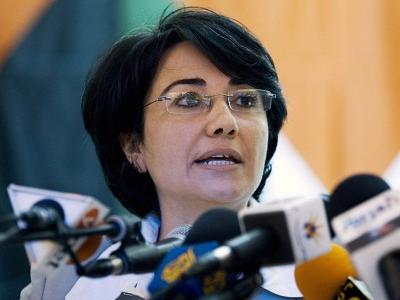
Haneen Zoabi, an MK from the Balad party, speaks to Elsa Rassbach about Land Day and her relationship as a Palestinian to Zionism and citizenship.
By Elsa Rassbach | +972 | March 29, 2012
 Since the 1980s, Palestinians have marked every March 30 with protests to celebrate Land Day. The day commemorates the first widespread struggle of Arab Israelis against processes of land confiscation intended to create Jewish majorities in certain communities. The marches and general strikes began in the Galilee in 1976, and resulted in the killings of six unarmed Arab citizens of Israel. Solidarity protests spread to the occupied West Bank, Gaza and the refugee camps in Lebanon. Since then, the day has marked the first common struggle for a Palestinian national cause following the founding of the State of Israel in 1948, an event Palestinians call the Nakba. This year on Land Day, worldwide Boycott, Divestment and Sanctions (BDS) activities will take place against Israeli policies, as well as the Global March to Jerusalem, which will call attention to the continuing Judaization and ethnic cleansing in the city that was supposed to be the multi-ethnic, multi-religious capital of a future Palestinian state.
Haneen Zoabi, 43, became a Knesset member in 2009, as the first Palestinian woman elected on an Arab party’s list. She is a member of the Balad party, which seeks to transform Israel into a democracy for all of its citizens, irrespective of national, ethnic or religious identity. Zoabi was born in Nazareth to a Muslim family. In 2010, she participated in the Gaza flotilla on board the Mavi Marmara. I spoke with her recently by Skype.
What does Land Day mean to you?
To me, Land Day is a day of ongoing and a continuous struggle around the issue of “land property.” This is still the crucial issue between us and the state. The core of the Zionist project is a continuous stealing of land from the Palestinians and transferring it to the Israeli Jews. Renaming the places, the junctions, the villages, the streets, and giving Jewish names to the landscape is part of this “confiscation.” It’s a way to steal from us and confiscate our historical relation with our homeland. This is the meaning of Ariel Sharon’s famous statement in the Knesset in 2002 when he said that the Palestinians inside Israel, whom he called “Israeli Arabs,” in effect have only temporary “rights in the land,” the land not yet confiscated, but “all the rights over the Land of Israel are Jewish rights.”
During the 63 years since 1948, Israel has confiscated 85 percent of our land and turned it over to the exclusive use of the Jews. It has developed and built 1,000 towns, cities and villages, all of them only for the Jews. And zero for the Palestinians. We live now on 2 percent of our land. We don’t even have permission to build our own houses on our own land and thus have no rights to use our land that hasn’t been confiscated.
How does Israel’s definition of itself as a “Jewish state” affect the Palestinian citizens of Israel?
The “Jewish state” is a state that has been established by Jews and is run by the Jews for the sake of the Jews – all at the expense of the Palestinians. It’s a racist definition. The state declares me to be an outsider in this land, though I’m the opposite. I’m the indigenous people. I didn’t immigrate to Israel; it was Israel that immigrated to me.
The State of Israel claims that it can be Jewish and democratic at the same time, as if there were no contradiction between the two. Any debate within Israel regarding the inherent contradiction between being a Jewish state and being a democratic state is considered no less than a “strategic threat.” If we are not Jewish and refuse to give up our rights, then obviously we present not just an alternative view, but something that contradicts the state’s very legitimacy: Zionism.
How you define your struggle as Palestinian citizens of Israel in relation to the struggle of the rest of the Palestinian people?
Our struggle has two components, as citizens and also as Palestinians. And unlike the state, we don’t see why both components — our citizenship and our nationality – should clash.
On the contrary, citizenship should be inclusive. We are fighting for normal citizenship with full recognition of our national rights as indigenous people that would include our history, our identity, our culture and our nationality.
My citizenship is conditioned by the Jews’ privileges. It’s even conditioned to my loyalty to these privileges! Therefore, there is no way to struggle for full equality and full citizenship without challenging the concept of “Jewish state.” To struggle for democracy in Israel is to struggle against Zionism. And this is what unifies our struggle with the wider Palestinian struggle. Racism, Oppression, Judaisation, Apartheid and Undemocracy inside Israel; Apartheid, Occupation, Oppression, and Judaisation in the West Bank and the Gaza Strip; and the denial of the right of return – all of these mechanisms of control serve the same ideological project: Zionism.
Nakba Day, the first intifada, the second intifada – all of these days are days of unity. But still our struggle is not united, because it lacks a unifying vision and a unifying framework of legitimacy. The Palestinian issue did not begin in 1967 and does not only concern the territories occupied in 1967. It concerns the entire Palestinian people, and even the wider Arab region.
After the Oslo Accords of 1993 defined the Palestinians inside Israel as an internal Israeli matter, we reformulated our national project in a manner that secures our reintegration into the Palestinian people and guarantees our place as an integral part of the Palestinian issue, both as part of the conflict and as part of the solution. Our demand for a “state of all its citizens” has put the Palestinians in Israel at the heart of the direct confrontation with the Zionist enterprise and has forced the “Jewish state” to admit the primacy that it grants to Jewish-Zionist values over democratic values, and to recognixe the impossibility of coexistence between the two.
This is the role we play.
Elsa Rassbach is a filmmaker and journalist from the United States, now based in Berlin. Her award-winning film, ”The Killing Floor,” an historical dramatic film about a union’s struggle against racism in the Chicago Stockyards, will be re-released this year.
Related articles
- On the eve of Land Day: Al Quds anticipates the Global March (alethonews.wordpress.com)
- Scores Injured as Israeli Troops Attack West Bank land Day Protests (alethonews.wordpress.com)
- Palestinian lawmaker wounded in Land Day protest (alethonews.wordpress.com)
- Palestinians in Israel – Book Review (alethonews.wordpress.com)
Israeli police water-cannon, tear-gas Palestinians on Land Day
RussiaToday | March 30, 2012
A Gaza youth has reportedly been killed while over 200 people have been wounded throughout the West Bank.
Related articles
- Scores Injured as Israeli Troops Attack West Bank land Day Protests (alethonews.wordpress.com)
- Palestinian lawmaker wounded in Land Day protest (alethonews.wordpress.com)
- On the eve of Land Day: Al Quds anticipates the Global March (alethonews.wordpress.com)
Palestinian lawmaker wounded in Land Day protest

Palestinian lawmaker Mustafa Barghouti
Press TV – March 30, 2012
Palestinian lawmaker Mustafa Barghouti has been injured by Israeli forces attacking peaceful demonstrations marking international Land Day, Press TV reports.
Barghouti was wounded on Friday in the city of al-Quds (Jerusalem) where he attended a Land Day rally.
Israeli forces opened fire on peaceful pro-Palestinian rallies across the occupied Palestinian territories, with clashes underway between Israeli troops and Palestinians in the occupied West Bank city of Qalandiya.
Earlier reports said at least two protesters were injured by Israeli troops and several others were arrested.
More demonstrations were planned for after the Friday Prayers across the West Bank and Gaza Strip as well as in East al-Quds (Jerusalem) despite Tel Aviv restricting access to al-Aqsa Mosque for the weekly prayers.
Pro-Palestinian rallies have been held near border areas in Lebanon and similar demonstrations are expected in Egypt, Jordan, and Syria where activists will also march towards the Palestinian borders.
The rallies, joined by international human rights activists, are part of an international campaign named Global March on al-Quds (Jerusalem), a peaceful international movement that also condemns the Israeli occupation of the holy city.
The event marks Land Day and the Israeli military’s deadly attack on Palestinians peacefully protesting Tel Aviv’s land policies in 1967.
The demonstrations have prompted Tel Aviv to deploy thousands of police and armed forces across the occupied Palestinian territories and around border areas near Lebanon and Jordan.
Related articles
- Marwan Barghouti: A Decade of Defiance (alethonews.wordpress.com)
- On the eve of Land Day: Al Quds anticipates the Global March (alethonews.wordpress.com)
- The Global March to Jerusalem, a brave and admirable attempt to awaken the world’s conscience (altahrir.wordpress.com)
- Israel Warns Against Global March to Jerusalem (alethonews.wordpress.com)
- American arms used to kill Palestinians; US complicit in Israeli crimes: Report (alethonews.wordpress.com)
On the eve of Land Day: Al Quds anticipates the Global March
29 March 2012 | International Solidarity Movement, West Bank
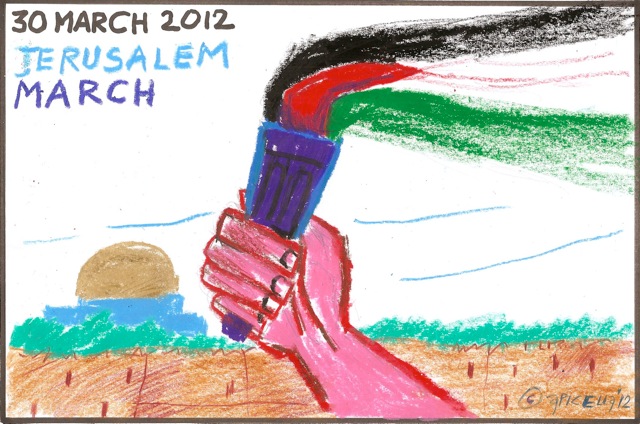
March 30 is Land Day in Palestine. The events of the day annually commemorate the events of 1976, when Israeli authorities seized massive quantities of land from Palestinian owners, and then killed several and injured dozens to crack down on the general strike called to protest the theft.
This year on Land Day, March 30, people from around Palestine and the world will march towards Al Quds (Jerusalem) to protest the theft in progress today: the isolation and ethnic cleansing taking place in Al Quds, as well as throughout occupied Palestine through illegal settlement activity. Marches are planned towards Al Quds from multiple points in the West Bank, Gaza, inside the Green Line, Jordan, Lebanon, Egypt, and Syria, as well as in Asia, North America, and Europe. The global march aims to highlight the colonization of Al Quds by Zionists and the refusal of access for Palestinians to the holy city.
According to multiple treaties and UN resolutions, Al Quds is recognized as the capital of a future Palestinian state. Israel seized control of the city in 1967. Al Quds has long been the center of religious, cultural, health, and commercial life for Palestinians, and an estimated 270,000 Palestinians reside in the eastern parts of the city (OCHA 2011).
The Palestinian population and presence in Al Quds is currently under extreme pressure from Israeli authorities and illegal settlers as the Zionist state seeks to take complete control of the city, drive out the Palestinian inhabitants, and eliminate any hope of its future as a Palestinian capital. This pressure is manifested in various ways:
Isolation
Fadwa Khader, an Al Quds resident and organizer of the Global March on Jerusalem remembers a time when Al Quds was “the most important place in Palestine.” Now, the apartheid wall and associated military closures prevent the majority of Palestinians from traveling to Al Quds for any reason. The city’s status as a center of Palestinian life is fading, due to its isolation from the rest of the West Bank. But material realities will not erase Al Quds’s place in the hearts of the Palestinian people. One needs only to view the multitude of images of Al Aqsa mosque in Palestinian homes, businesses, and streets to understand this.
Removal and Denial of Residency
In a systematic effort aimed at reducing the number of Palestinian residents of Al Quds, Israeli authorities seize any opportunity to rescind the residency permits of individuals, even those who are born and have lived their entire lives in the city. If Palestinian residents are known to have lived in the West Bank or abroad, even temporarily, they risk the withdrawal of their residency rights and may never be allowed into Al Quds again, even to visit family.
Fadi, whose name has been changed to protect his identity, is a Palestinian who resided in Jordan for example, has retained his Jerusalem IDs. Yet his children who were born in Jordan and whose mother is a Palestinian refugee, have been unable to attain their Jerusalem IDs. “My family’s history is in this city,” said Faid. “The lack of jobs, and the bleak future of Palestinians here forced me to seek these elsewhere. Now that I have returned and have brought my children with me, my children are unable to maneuver throughout the city as they are undocumented in their own father’s hometown. Israel refuses to recognize them as the children of a Jerusalemite, but we will remain here, even if that means that my children and wife live without an ID or any rights.” Fadi continued after a long silence and the evident hurt in his eyes. “This is our resistance to Zionism.”
This policy has the effect over time of reducing the Palestinian population in Al Quds and preventing residents from traveling or living elsewhere for fear of losing residency.
Pressure on existing residents
Fadwa Khader noted another component of Israel’s campaign for the complete colonization and ethnic cleansing of Al Quds: the application of pressure to Palestinian residents in order to drive them out of the city. One way this is manifested is in the denial of municipal services in the eastern parts of the city inhabited by Palestinians.
The residents here pay the same taxes as the Jewish residents of West Al Quds. Despite this, the municipality of Jerusalem does not provide adequate services to the Palestinian neighborhoods of the city. Ninety percent of the municipality’s sewer lines and paved roads and sidewalks are in West Al Quds (B’tselem). In some neighborhoods, cleaning services come only once every three days as opposed to three times a day in West Al Quds. n February the Wadi Hilweh Information Center reported the Jerusalem Municipality created a dump at the door of Palestinian neighborhoods.
Khader notes the dual nature of this denial of services: First, to make life in Al Quds miserable and untenable in an effort to convince existing residents to leave. Second, to demonstrate to the internationals that visit Al Quds that the Palestinian residents “don’t care about their neighborhoods” and live in filth.
Pressure is also applied to Palestinian resident through settlement of East Al Quds neighborhoods by extremist Israelis, evictions of Palestinian families, and demolitions of Palestinian homes. The neighborhoods of Sheikh Jarrah and Silwan have been particularly affected by this strategy. The goal of the Israeli authorities and Zionist activists is to forcibly settle Jews in East Al Quds through the seizure of land and homes and settlement of Israelis in these areas. In addition, home demolitions make life increasingly untenable for affected residents.
The Global March this Land Day will seek to highlight these issues and call for an end to Israeli Zionist settlement policy, access restrictions, occupation, and ethnic cleansing in Al Quds and throughout occupied Palestine.
Khader has a message for the international Palestine solidarity movement:
“We want to live in peace and liberty and to feel free. Can you imagine how we suffer and sacrifice for this dream?”
She noted that there can never be a real Palestinian state as long as the Israelis continue to steal land and water, to control borders, and to separate cities and villages of Palestine from each other.
Still, she is hopeful.
“We won’t give up hope. We believe in you (international solidarity activists). You are our voice outside of Palestine, calling for dignity, liberation, and an end to the occupation.”
Related articles
- PRESS RELEASE: Israel’s Criminal Policy in Al Quds (Jerusalem) (altahrir.wordpress.com)
ISRAEL: Water being used to coerce Bedouin villagers, says NGO
IRIN | March 29, 2012

Photo: Jillian Kestler-D’Amours/IRIN
The Bedouins in Umm al-Hieran village live several kilometers away from a source of clean water and rely on trucks to get their supply
UMM AL-HIERAN, NEGEV DESERT – Salim Abu al-Qi’an’s family live in Israel’s Negev desert in the “unrecognized” Bedouin village of Umm al-Hieran, 9km from the nearest source of clean water.
“There is no water in the village. We truck it in. It costs about 50 shekels [US$13.4] per cubic metre of water,” explained the 53-year-old village leader. “There is a pipe that’s about 8km long, but it’s too old, and the planning authorities don’t allow us to put a new one under the ground. We are asking for better access to water, a new pipe that should be close to the village.”
The Israeli authorities forced Umm al-Hieran residents to move to the area where the village now sits in 1956, shortly after the military had evicted them from their original homes in the Wadi Zuballa area of the Negev desert.
In 2004, the villagers faced a new threat of expulsion, as the Southern District Planning Committee unveiled a master plan which involves once again displacing Umm al-Hieran, and building the Jewish community of Hiran in its place. According to the Israeli government, the 500 residents of Umm al-Hieran are trespassers who are illegally squatting on state land.
Some 80-90,000 Bedouin citizens of Israel live in unrecognized villages in the southern Negev, according to a report by the Association for Civil Rights in Israel. As a result of their unrecognized status, nearly every structure in these communities can be demolished at any time, and residents do not receive basic services from the state, including electricity, paved roads, healthcare facilities, schools, and water.
Constitutional right
In June 2011, however, the Israeli Supreme Court ruled that the right to water was a constitutional right, and that the state must guarantee a “minimum access to water” for the residents of the unrecognized villages. Still, the court did not specify what constituted a fair minimum.
Shortly thereafter, a Haifa court, acting as a water tribunal, rejected Umm al-Hieran’s application to be connected to the local water network. The court argued that the villagers had minimum access to water, and suggested they buy water from private citizens in towns connected to the water network, or move into nearby government-planned Bedouin townships.
According to Sawsan Zaher, an attorney at Adalah, the Legal Center from Arab Minority Rights in Israel, which has represented al-Qi’an’s family and the residents of Umm al-Hieran in their legal struggle, the water tribunal’s decision means that “a constitutional right, which is the right to water as part of the right to a minimal standard of living, [will] be provided by private actors and not by the state. This is in contradiction to constitutional law. The duty is on the state to fulfil this right and protect it even.”
Adalah has filed an appeal to Israel’s Supreme Court, asking that “minimum access to water” be explicitly defined, and challenging the constitutionality of forcing Umm al-Hieran residents to purchase water from non-state actors.
“Despite the fact that they are citizens, they are not entitled to the same level of rights as other citizens of Israel. Why? Because they are living in unrecognized villages,” Zaher told IRIN.
“We want you to move out”
“The purpose is not hidden any more. It is revealed and it’s very official: we are not connecting you to water because we want you to move out. This is the policy. It’s a kind of punishment. This is in huge contradiction with human rights and logic and humanity – to come and punish people by not giving them water for political purposes,” Zaher said.
In a 9 March report, the UN Committee on the Elimination of Racial Discrimination raised concerns about Bedouin communities in Israel, particularly with regard to Bedouin home demolitions, and inequalities between Bedouin and Jewish citizens’ access to land, housing, education, employment and public health.
Israel’s proposed Law for the Regulation of Bedouin Settlement in the Negev, which would forcibly displace 30,000-60,000 of the 80,000-90,000 Bedouins living in unrecognized villages, should be shelved, the UN Committee found, since it legalizes “the ongoing policy of home demolitions and forced displacement of the indigenous Bedouin communities”.
According to Salim Abu al-Qi’an, forcibly displacing residents of Umm al-Hieran to the nearby government-planned Bedouin township of Hura is indeed the motivation behind denying them direct access to high-quality water.
“They want to push us to leave the village and to displace us,” he told IRIN. “Even though we are an unrecognized village, this is nicer than to live in Hura. There are no services there. Sewage and garbage is in the street. There’s not enough space. It’s another refugee camp.”
Related articles
- Stop the JNF campaign makes steady gains as Israel charity goes “on the retreat” in UK (alethonews.wordpress.com)
- 2,600 Bedouins threatened with displacement as Israeli settlements expand (alethonews.wordpress.com)
- Professor of Hate: Israeli “scholar” urges ethnic cleansing of Bedouins (alethonews.wordpress.com)
- Jewish Agency: goal of Israeli government plan to block Bedouin “incursion” (alethonews.wordpress.com)
- Israeli bulldozers destroy Palestinian wheat crops in Negev (altahrir.wordpress.com)
Deal reached to free Hana Shalabi
Ma’an – 29/03/2012
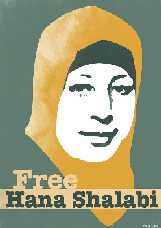 BETHLEHEM — A deal to release Palestinian hunger-striker Hana Shalabi to the Gaza Strip temporarily was reached late Thursday, officials with knowledge of the negotiations told Ma’an.
The officials say Shalabi will be sent to Gaza for three years in exchange for giving up a 43-day strike against Israel’s policy of holding detainees without charge.
The Palestinian prisoners society confirmed the deal in a statement praising Shalabi’s resolve. It expressed its appreciation for her efforts to bring attention to Israel’s policies toward prisoners.
Qadoura Fares of the prisoners society said Shalabi agreed to the deal “in return for ending her strike and being freed. … We reject deportation, but this is her decision and her own life,” Fares said.
Shalabi’s lawyer, Jawwad Boulous, also confirmed the agreement.
According to a high-ranking Palestinian source, the deal was reached after Palestinian officials and Red Cross intervened to confirm that Shalabi approved.
The Palestinian Authority minister of civil affairs, Hussein al-Sheikh, said the leadership in Ramallah was not involved in the negotiations as it rejects Israel’s deportation policy.
The deal apparently followed talks between Shalabi and the Israeli government, he said.
Al-Sheikh added that Israel is responsible for the hunger-striker’s well-being and should instead release Shalabi unconditionally to her home and family in the West Bank, not to Gaza. … Full article
Related articles
- Palestinian hunger striker Hana Shalabi hospitalized (alethonews.wordpress.com)
- Hana Shalabi to continue hunger strike despite sentence reduction (alethonews.wordpress.com)
- Hana al-Shalabi on hunger strike against renewed administrative detention (alethonews.wordpress.com)
- Lawyer: Hana Shalabi’s health is deteriorating (altahrir.wordpress.com)
- Palestinians protest Israeli detention of woman without charges (rt.com)
Israeli settlers storm into Palestinian home, occupy residence
Al Akhbar | March 29, 2012
Israeli settlers invaded a home in a Palestinian-owned building in the occupied West Bank city of Hebron and took up the apartment as their own, residents and Israeli security forces said on Thursday.
“At 1:30am we heard noises and it was the settlers,” Montasser Abu Rajab, who lives on the first floor of the building in Hebron’s Old City, said.
“They broke the main door and brought their furniture in, accompanied by the army, who locked us in our house,” he said.
Palestinian sources in Hebron said that the property belonged to the Abu Rajab family, who had sold the second floor of the house to another Palestinian family.
But the Israeli army – who confirmed the incident – claimed that “the title to the property is contested.”
“The area has been declared a closed military zone, and soldiers have been put in place to keep the calm,” a spokeswoman for the Israeli army said.
Israeli police spokesman Micky Rosenfeld said “police have been dispatched to the scene to verify the legal status of the house and the property titles that are apparently the subject of litigation.”
The settlers also claimed that they had titles to the property, which is located near a prominent religious site for both Muslims and Jews.
Speaking to Israeli public radio, right-wing Israeli lawmaker Michael Ben Ari, of the National Union party, said it was “time to recover all the Jewish homes in Hebron stolen by the enemy.”
Right-wing Israeli politicians and figures often incite violence against Arabs, with Palestinians frequently attacked and harassed by settlers as well as the Israeli military, often with impunity.
House demolitions and evictions are among the serious threats indigenous Palestinians face on their native land, as Israel continues to build Jewish-only settlements in the West Bank, including in Hebron, in defiance of the international community.
Israeli settlements in the West Bank are considered illegal under international law, with the territory being only a fraction of historical Palestine on which the Israeli state is now situated.
Israel maintains a military occupation of the West Bank and Jerusalem, imposing harsh restrictions on native Palestinians while providing privileges to illegal Jewish settlers.
(Al-Akhbar, AFP)
Related articles
- Hebron teen ‘shot by Israeli settler’ (alethonews.wordpress.com)
- Settlers Attack Two Towns Near Hebron (alethonews.wordpress.com)
- Settler Violence: Broken Glass on Shuhada Street (alethonews.wordpress.com)
- Settlers Install New Outpost Near Hebron (alethonews.wordpress.com)
- International Solidarity Movement volunteers encounter settler attack and sexual harassment in Hebron (alethonews.wordpress.com)
- Israeli demolition ‘displaces 120′ in Hebron village (alethonews.wordpress.com)
- Soldiers raid community center, arrest local activist (alethonews.wordpress.com)
Settlers ‘block entrance’ to Nablus village
Ma’an – March 28, 2012
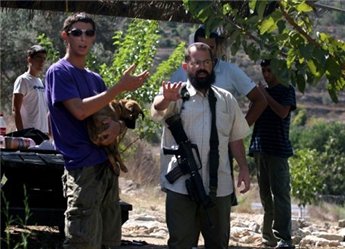 NABLUS – Dozens of Israeli settlers blocked the entrance to a village near Nablus on Wednesday, officials said.
Palestinian Authority official Ghassan Doughlas told Ma’an that residents of Itamar and Elon Moreh settlements arrived at Beit Dajan in around 15 cars and closed the main gate to the village.
The settlers were protesting the reopening of the main road from Beit Dajan to Nablus a day earlier, Doughlas said.
The road had been closed by the Israeli military for 12 years, forcing villagers to take long detours to reach Nablus, the nearest city.
Doughlas said Israeli forces arrived and dispersed the settlers.
An Israeli military spokeswoman did not immediately return a call seeking comment.
Related articles
- Soldiers destroy 5 agricultural sheds in Nablus (altahrir.wordpress.com)
- Israeli forces demolish main road near Nablus (alethonews.wordpress.com)
- Settlers Attack Two Towns Near Hebron (alethonews.wordpress.com)
- Settlers ‘raid Nablus village’ (altahrir.wordpress.com)
Featured Video
Get ready for the big Israeli false flag cyber-attack
or go to
Aletho News Archives – Video-Images
From the Archives
Chocolate Gives Statins a $29 Billion Run For Their Money
By Sayer Ji · GreenMedInfo · April 17, 2012
With the blockbuster cholesterol-lowering class of drugs known as statins being widely promoted for the primary prevention of cardiovascular disease, despite their having over 300 documented adverse health effects (including heart failure!), how does chocolate sound as a viable, heart-friendly alternative?
We already connect amorously with chocolate (to the tune of 6 billion lbs of cocoa consumed annually worldwide), revealing in heart-felt expressions like “I love it,” and “this is to die for!” how comfortable we are with publicly declaring our affection. But did you know that while it makes our emotional hearts sing, it may actually keep our physical hearts happy, alive and ticking longer, as well?
Indeed, back in 2006, researchers found that for elderly men, eating cocoa was inversely associated with blood pressure and 15-year cardiovascular and all-cause mortality. … continue
Blog Roll
 Aletho News
- The Israeli Nuclear Doctrine and the Turning Point of the Kennedy Assassination
- Striking Matches Near the Powder Keg
- Prominent Russia hawk: European leaders privately talk about war with Russia, first need ‘mass casualty event’
- China warned Trump not to touch Iran’s oil tankers: Larry Johnson
- EU Central Banker Plans To Plant Barren AI Crops Across The Continent
- Macron’s Strategic Autonomy Paradox: France Rearms on Debt and Depends on Foreign Fuel
- Nigel Farage vs Tucker Carlson: Who is right about Hitler and Britain?
- Chocolate Gives Statins a $29 Billion Run For Their Money
- Hypotheses on the collapse of U.S. computer systems
- Discover Iran: North Khorasan’s medicinal plants, spices, and sustainable economic potential
- If Americans Knew
- An error has occurred; the feed is probably down. Try again later.
- No Tricks Zone
- New Study: Modern Temps Are Among The Coldest Of The Last 10,000 Years In East Central Europe
- Germany’s Renewable Energies Lead to 1.4 Billion Euro Electric Power Trade Deficit
- Argentina’s Perito Moreno Glacier Joins Antarctica and Arctic In Defying Doomsday Melt Claims
- New Study: Barents Sea Temperatures Were Warmer And Sea Ice Less Extensive In The 1700s Than Today
- German Authorities Start Initiative To Evaluate Public Register For Climate “Disinformation” Spreaders!
- Zonal Asymmetry of Temperature Change in the Antarctic Circumpolar Current
- New Study: The Net Fossil Fuel Contribution To Rising Atmospheric CO2 Has Been Zero For 500 Years
- Germany’s Green Energy Transition Becoming Increasingly Expensive…Another 6 Trillion Euros!
- Sudden Stratospheric Warming, Powerful El Niño Combination May Lead To Extreme Europe Cold, Energy Crisis!
- Two New Studies Find Thwaites Glacier Melt Cannot Be Driven By Human Activity Or A Warming Ocean

