Al-Aqsa Mosque and its surrounding area attacked 100 times during 2011
MEMO | February 22, 2012
A study conducted by Al-Aqsa Foundation for Endowment and Heritage in Israel has revealed that Al-Aqsa Mosque and its surrounding area has been subjected to around 100 attacks and violations in 2011 alone. The study noted that the attacks varied between physical attacks and plots which pose threats to the sanctity and security of the mosque. The study also documented provocative statements constituting incitement by Israelis to damage the third holiest site in the Muslim world.
The report claims that around 5,000 Israelis, including Jewish settlers and members of other extremist groups, stormed into Al-Aqsa in 2011. The intruders performed Talmudic rituals, sometimes in public, other times in secret, including carrying parts of the Torah inside the mosque.
There has also been an escalation in the frequency of incursions by Israeli intelligence officers and political and official figures into Al-Aqsa Mosque.
More than 200,000 tourists were granted admittance to the mosque, sometimes violating its sanctity by wearing scanty clothing.
Al-Aqsa has witnessed a campaign of unprecedented military presence; strict measures preventing Muslims from going to the mosque; and acts aimed at decreasing the continuous Muslim presence in the Noble Sanctuary, through banning orders and limiting entry to certain age groups. The Israeli Occupation Authorities also prevented 3.7 million Palestinians from the West Bank and Gaza Strip from reaching Occupied Jerusalem and Al-Aqsa Mosque to conduct acts of worship therein.
While the Israelis have blocked essential maintenance and reconstruction within the mosque compound, Jewish organisations’ calls for the mosque to be destroyed and a temple to be built in its place have increased in number. The year 2011 saw a campaign of excavations and the construction of long, interlinked tunnels underneath Al Aqsa and the surrounding area in all directions. The tunnels are to have “Jewish synagogues and Judaisation centres”. What has been notable about the excavations last year is that they have been more overt, unlike previous years.
Israeli efforts to Judaise the area have included work at the Muslim-owned Buraq (“Wailing”) Wall and the proposed demolition of the historic Magharba Gate Bridge. The report notes that the latter was saved, temporarily at least, by the effects of the Arab Spring and concerns raised by Israeli Prime Minister Benjamin Netanyahu.
Israel has plans to transform the area around Al-Aqsa into so-called “Talmudic gardens”, which will incorporate tourist centres and commercial shopping malls. All of this is in addition to the increasing number of illegal Jewish settlers and settlements in districts such as Ras Al-Amoud.
The Al-Aqsa Foundation for Endowment and Heritage has issued a warning that the Israeli Occupation Authorities could seek to capitalise on the developments of the Arab Spring so as to damage Al-Aqsa Mosque and Sanctuary in 2012. Intelligence reports, it says, predict serious attacks against Al-Aqsa by extremist Jews. Such predictions follow statements by former Knesset (Israeli Parliament) Member Avraham Burg that Al-Aqsa will be demolished or torched while Netanyahu is in office; and this, he claimed, will be followed by the establishment of the so-called Third Temple. In the light of these serious threats to the Holy Mosque, the Foundation called on Muslims and Arabs to put Jerusalem and Al-Aqsa at the top of their priorities for action.
Related articles
- Israeli forces invade al-Aqsa Mosque (altahrir.wordpress.com)
- Palestinian factions warn against Likudists entry of Al-Aqsa mosque (altahrir.wordpress.com)
- Israeli Likud Party Calls to Storm al-Aqsa Mosque (altahrir.wordpress.com)
- Settlers Enter The Al Aqsa Mosque (altahrir.wordpress.com)
Municipality creates garbage dump inside Bab Alsbat cemetery next to Lion Gate in the Old City
22 February 2012 | Wadi Hilweh Information Center – Silwan

Large quantities of waste are being piled by the Jerusalem Municipality inside the Islamic cemetery (Bab Alsbat) next to Lions Gate in the old city, in a move that has upset and offended the City’s thousands of Muslim inhabitants. The Lions Gate, which lies close to the sacred Al-Aqsa Mosque, is now awash with the overpowering stench of accumulated garbage.
One resident stated that the Jerusalem Municipality “is unashamedly discriminatory in its practices. They not only use a sacred place as a rubbish dump, they even burn the rubbish here, inside a holy place the Bab Alasbat cemetery. Why has UNESCO not tried to stop the Municipality?”
A resident Christian priest of the Old City told Silwanic that he considered the Municipality’s actions unlawful, and encouraging of racism in Jerusalem.
Related articles
- Family of 12 faces eviction in East Jerusalem (alethonews.wordpress.com)
- Brutal assault on 16 year old boy (alethonews.wordpress.com)
- Arabic place names erased in Municipality’s campaign to Hebrew-ize Jerusalem (alethonews.wordpress.com)
- Ethnic Cleansing in a Zionist Fairyland (alethonews.wordpress.com)
- Zionist plan to build 60,000 settlement units in Jerusalem (alethonews.wordpress.com)
- Israeli police close soccer club, charity fund in Silwan (alethonews.wordpress.com)
- Israeli national park expropriates Palestinian land (alethonews.wordpress.com)
Settler Violence: Broken Glass on Shuhada Street
21 February 2012 | International Solidarity Movement, West Bank
Five years ago Abed Seder’s wife, Kefah, was shot five times in the chest by Israeli soldiers as she went onto her roof to check her water tank. She was 23 years old and left three sons motherless. He tells me his sons are afraid to go on the roof, which overlooks the illegal Zionist settlement of Beit Hadassah. To an international community, Abed’s struggle is one of trauma and loss, but he tells it with shockingly familiar regularity.
Abed´s home is sandwiched inbetween Beit Hadassah and Beit HaShisha settlements, from which he receives regular torrents of abuse and violence. Rubbish and broken glass bearing Hebrew writing litters the path to his front door, bypassing the nets which attempt to catch the used nappies and toilet roles. His windows have been boarded up from the outside by Israeli soldiers in an attempt to prevent settlers from throwing molotov cocktails into Abed´s home. Abed shows me the view from his caged bedroom window, which looks directly onto a neatly planted playground, complete with basket ball court where the children of immigrant Zionists can enjoy the sunshine. As one of them raises their middle finger, Abed tells me that they regularly throw water and beer bottles so they try to keep the window closed.
Perhaps the saddest victim of this has been Abed´s 6 year old son Wadia, who was left blind after Abed´s neighbours threw chloric acid from their rooftops two years ago. He was just four years old. Wadia has since been seeking treatment in a hospital in Jordan while Abed and his wife can only afford to visit him once every three months.
In 1967 Israel occupied Hebron along with the rest of the West Bank. The settlement of Kiyat Arba was established on the outskirts of Hebron in 1968, later allowing for communities of settlers to illegally occupy properties such as the Hadassah Hospital and other Palestinian neighbourhoods such as Tel Rumeida. Hebron is currently home to over one hundred thousand Palestinians, who are suffering at the hands of some 500-800 settlers protected by a constant Israeli military presence.
Since the Second Intifada, settler violence has escalated in the city of Hebron with illegal settlers routinely attacking and violating the rights of their Palestinian neighbours. B’tselem has recorded incidents of physical assaults, including beatings, stone throwing and hurling of refuse, sand, water, chlorine and empty bottles. Settlers have destroyed shops and doors, committed thefts and chopped down fruit trees. Settlers have also been involved in gunfire, attempts to run people over, poisoning of a water well, breaking into homes, spilling of hot liquid on the face of a Palestinian, and the killing of a young Palestinian girl.
“Price Tagging” has become a coined phrase for the violent, illegal, Zionist settlers “struggle” as they continue to illegally steal land throughout the West Bank. On 24 July 2008, after Israeli security forces removed a bus that had been placed in the Adey Ad outpost, the head of the settlers’ struggle headquarters in Yitzhar was quoted in Ha’aretz as saying,
“The police have to understand that there will be a very high price tag on any event of this kind.”
He described the harm to Palestinians as “a display of good citizenship that is intended to help the police enforce the planning and building laws in the area on Palestinians, too.” Collective punishment is illegal under international law and is a violation of the Geneva Convention.
B’Tselem has investigated many incidents of settler violence and stated to have found that “Israeli forces intervened late, usually when Palestinians begin throwing stones at their attackers. The late response cannot be justified, as these incidents are part of a pattern and can be predicted. They conclude that “the security forces must prepare in advance in a way that will enable them to prevent harm to Palestinians.” B´Tselem stated that the authorities have systematically failed to enforce law and order against violent settlers attacking Palestinians.

Abed Seder stands before his home in Al Khalil
Human rights worker Hisham Shabarati explains the relationship between the soldiers and the settlers as a kind of role play, whereby “settlers are able to make the actions the military can’t.” He describes settlers as a political instrument able to carry out random and brutal attacks under the protection of Israeli soldiers.
“They have the same agenda; to make life unbearable for the Palestinians.”
Abed Seder’s home in the Old City of Hebron is four hundred years old. His brother and four children live above him and his great-grandfather lived here before them. For Abed, the act of resisting occupation stretches for as far as he can continue to live in the home which he legally owns. Its traditional arched doorways and original winding stairways make his home a desirable target for many settlers looking to move into an area which former Prime Minister David Ben Gurion described as “more Jewish even than Jerusalem.”
As long as Israel protects the rights of illegal settlers in Hebron over the rights of the Palestinian people, Abed and his family will suffer.
Related articles
- The massacre of 1929 and the War of Narratives (alethonews.wordpress.com)
- Settlers Install New Outpost Near Hebron (alethonews.wordpress.com)
- International Solidarity Movement volunteers encounter settler attack and sexual harassment in Hebron (alethonews.wordpress.com)
- Settlers torch cars in Beit Ummar (alethonews.wordpress.com)
- Extremist settlers hurl concrete blocks at Hebron’s Old Market (alethonews.wordpress.com)
- Israeli occupation forces detain Palestinians, settlers attack others (alethonews.wordpress.com)
2013 Budget: ‘Difficult Cuts’ for Americans, Jackpot for Israel

By Josh Ruebner | Palestine Chronicle | February 21, 2012
Speaking before students at Northern Virginia Community College on February 13, President Obama unveiled his 2013 budget request, in which he proposed “some difficult cuts that, frankly, I wouldn’t normally make if they weren’t absolutely necessary. But they are.” These budget cuts are unavoidable, the President argued, because “the truth is we’re going to have to make some tough choices in order to put this country back on a more sustainable fiscal path.” In a sad commentary on the misplaced priorities of the Obama Administration, however, these “tough choices” will affect the delivery of basic services to U.S. citizens while the Israeli military hits the jackpot at taxpayer expense.
As part of its budget request, the White House released a 205-page document detailing the cuts, consolidations, and savings the Obama Administration is proposing. These proposed cuts include $5 million to the USDA to analyze food-borne pathogens, potentially making the U.S. food supply even less safe than it already is after 30 people died last year after eating listeria-infected cantaloupe; a $359 million cut to the EPA to provide grants to states for water infrastructure projects when an estimated 1.7 million Americans shockingly lack access to basic water and sanitation services according to the Water Infrastructure Network; and a whopping $360 billion cut over ten years in Medicare, Medicaid, and other health programs even though the World Health Organization rates the U.S. health system as only 37th globally in health care performance.
Given these “difficult cuts” to the budget, it is easy to agree with Israeli journalist Ran Dagoni, who wrote last year in the Israeli business newspaper Globes, that “the time has come to bid goodbye to the military aid that the US extends to Israel, that generous package… that enables the Israeli taxpayer to share the cost of procuring equipment for the IDF [Israel Defense Forces] with the US taxpayer.” After all, Israel – the 28th wealthiest country in the world in 2011, with a per capita gross domestic product greater than Korea and Saudi Arabia according to the International Monetary Fund – hardly needs U.S. charity more than we need safe food, clean water, and health care.
Yet, instead of reducing or even just freezing levels of U.S. military aid to Israel, President Obama wants to provide Israel with $3.1 billion of U.S. taxpayer-funded weapons next year, an increase from $3.075 billion in 2012, making the State Department’s claim that this budget request “maintains last year’s record funding levels” for Israel both immodest and inaccurate. By comparison, of the nine other Near Eastern countries receiving U.S. military aid, the budget request for eight of them is unchanged from last year’s budget while the request for Tunisia declined.
Were Israel using these weapons for legitimate purposes and to further U.S. foreign policy objectives, then perhaps a persuasive case could be constructed for why the United States does not need to make any budgetary “tough choices” when it comes to Israel. However, Israel misuses U.S. weapons, in violation of U.S. laws, to commit grave and systematic human rights abuses against Palestinians in furtherance of its 44-year military occupation of the Palestinian West Bank, East Jerusalem, and Gaza Strip and its illegal colonization of the West Bank and East Jerusalem. From 2000 to 2009, the United States provided Israel with more than $24 billion of military aid and delivered more than 670 million weapons, rounds of ammunition, and related military equipment. During that same period, according to the Israeli human rights organization B’Tselem, Israel killed at least 2,969 Palestinians “who did not take part in the hostilities and were killed by Israeli security forces (not including the objects of targeted killings).”
Israel often kills Palestinians with these same U.S. weapons provided at taxpayer expense. Such was likely the case last December when an Israeli soldier fired a high-velocity tear gas canister at 28-year-old Mustafa Tamimi, a resident of the West Bank village of Nabi Saleh, who was protesting against Israeli settlers seizing land on which his village’s natural spring is located. The canister, fired from an Israeli armored vehicle, struck the activist in the face. He died the next day from his wounds. Strong evidence exists that the tear gas canister that killed Mustafa was made by Combined Systems, Inc. of Jamestown, Pennsylvania and likely could have been one of more than 595,000 tear gas canisters and other “riot control” equipment, valued at more than $20.5 million, which were funded by U.S. taxpayers and given to the Israeli military between 2000 and 2009.
Not only does U.S. military aid to Israel make U.S. taxpayers complicit in Israel’s human rights abuses of Palestinians; it also acts as a disincentive for Israel to work in tandem with the Obama Administration to achieve stated U.S. foreign policy goals of freezing Israeli settlement expansion, ending Israeli military occupation, and establishing a Palestinian state and a just and lasting Israeli-Palestinian peace.
The United States cannot afford the moral and economic costs of providing ever-increasing amounts of U.S. taxpayer-funded weapons to Israel. In this era of “tough choices” for the budget, here is a clear-cut example of a subsidy that should be ended.
– Josh Ruebner is the National Advocacy Director of the US Campaign to End the Israeli Occupation and a former Analyst in Middle East Affairs at Congressional Research Service.
Jodi Rudoren, Another Member of the Family: Meet the New York Times’ New Israel-Palestine News Chief

Past & Present NY Times Jerusalem Bureau Chiefs: Jodi Rudoren, Ethan Bronner, Steven Erlanger, Thomas Friedman
By ALISON WEIR | CounterPunch | February 21, 2012
Michael Lerner, the editor of Tikkun Magazine, is known for his frequent condemnations of Israeli violence against Palestinians. He is labeled “pro-Palestinian” for such statements and is regularly attacked by pro-Israel zealots who charge that he is disloyal to the Jewish state.
Yet, in reality, Lerner frequently speaks of his devotion to Israel and states that his actions are taken in considerable part to protect it.
A while ago Lerner explained the difference in his feelings about Israelis compared to his feelings about Palestinians. “[T]here is a difference in my emotional and spiritual connection to these two sides,” Lerner said.
“On the one side is my family; on the other side are decent human beings. I want to support human beings all over the planet but I have a special connection to my family.”
This statement comes to mind when one considers the New York Times bureau chiefs who cover Israel-Palestine.
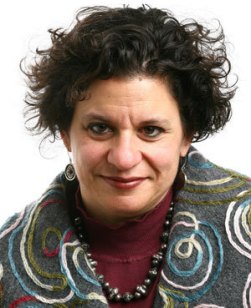
The most recent person to be chosen for this powerful post at arguably the most influential newspaper in the United States is Jodi Rudoren. She takes the place of Ethan Bronner, who was preceded by Steven Erlanger, who was preceded by James Bennet, who was preceded by Deborah Sontag. All, according to an Israeli report, are Jewish.
Most Americans — particularly those who would object to only white reporters covering racial issues or only male reporters covering gender issues — are reluctant to discuss the potential bias in such a profoundly un-diverse system, having been conditioned to fear that such discussion would be “anti-Semitic” or would open the commentator to this extremely damaging accusation.
In Israel, however, it is considered appropriate to discuss the Jewish roots of American politicians and journalists since Israel was created specifically to be “the Jewish state,” Jews have elevated status in it, and the vast majority of Israeli land is officially owned by “world Jewry” (although some individuals have publicly opted out).
An article on the Jerusalem Post website, a major Israeli newspaper, focuses on this aspect. The article, “Judaism at the New York Times”, reports that “all New York Times’ bureau chiefs for at least the last fifteen years have been Jewish.”
The article’s author, Ashley Rindsberg, notes that “the Times doesn’t consistently send Russian Americans to its Moscow bureau… or Mexican Americans to lead its Mexico City bureau…” and asks, “Why does the New York Times consistently send Jewish journalists to head their central office in the Jewish State?”
Rindsberg, who like many conservative Israelis considers the Times’ reporting anti-Israel, provides a somewhat convoluted answer. The Times’ Jewish owners, Rindsberg posits, are uncomfortable with their Jewish identity. Therefore, he claims, they “would just as soon as not have reporters who could be identified for their Jewishness. And to prove it, they send Jews to the Jewish State to report in a most un-Jewish way.”
The Times’ history of pro-Israel coverage
Despite Rindsberg’s view of the Times, analysis shows its coverage to be consistently pro-Israel. A 2005 study found that the Times reported on Israeli deaths at rates up to seven times greater than its reports on Palestinian deaths, even though Palestinian deaths occurred first and in far greater numbers.
A 2007 study of the Times’ coverage of various international reports on human rights violations by Israelis and by Palestinians found that the Times covered reports condemning Israeli human rights violations at a rate only one-twentieth the rate that it covered reports condemning Palestinian human rights violations. The investigation found that during the study period there had been 76 reports by humanitarian agencies condemning Israel for abuses and four condemning Palestinians for abuses. The Times carried two stories on each side.
In its early years the Times specifically avoided assigning Jewish reporters to cover Israel out of concern that such journalists would have an inherent conflict of interest. This policy was reversed in 1979 after Abe Rosenthal became the paper’s executive editor and explicitly decided to choose Jewish journalists for the position.
While his first attempt failed (he had thought his choice, David Shipler, was Jewish), the Columbia Journalism Review reports that most of the journalists who succeeded Shipler, beginning with Thomas Friedman, have been of Jewish ethnicity. The article notes that “for a century [the Times] has served, in effect, as the hometown paper of American Jewry.”

Former NY Times executive editor Max Frankel, who was an editor at the Times from 1972 through 2000, admitted in his memoirs: “I was much more deeply devoted to Israel than I dared to assert … Fortified by my knowledge of Israel and my friendships there, I myself wrote most of our Middle East commentaries. As more Arab than Jewish readers recognized, I wrote them from a pro-Israel perspective.”
An article by star reporter and author Grace Halsell describes her firsthand experience with pro-Israel bias at the Times in the early 1980s.
Halsell had written books about the plight of Native Americans, African Americans, and undocumented Mexican workers. She was a great favorite of New York Times matriarch Iphigene Ochs Sulzberger, whose father had acquired the Times in 1896, whose husband and then son had run it next, and whose grandson is now in charge.
When Halsell next wrote a powerful book describing the Palestinian plight, she incurred Mrs. Suzberger’s displeasure and was quickly dropped by the Times. Halsell writes: “I had little concept that from being buoyed so high I could be dropped so suddenly when I discovered—from her point of view—the ‘wrong’ underdog.”
In her article Halsell quotes a revealing statement by an Israeli journalist following Israel’s 1996 shelling of a U.N. base in Lebanon that killed more than 100 civilians sheltering in it: “We believe with absolute certitude that right now, with the White House in our hands, the Senate in our hands and The New York Times in our hands, the lives of others do not count the same way as our own.”
Since 1984 New York Times bureau chiefs have lived in a house that was acquired for the Times by then Jerusalem Bureau Chief Thomas Friedman (now the Times’ lead foreign policy columnist). The building originally belonged to a Palestinian family forced out in Israel’s 1947-49 founding war. Israel afterward prevented the family from returning and reclaiming their home. Therefore, Times’ bureau chiefs are in the strange position of living in a home that was stolen from Palestinians (acquiring property by violent conquest is illegal in today’s world).
Recent Situation: Bronner, Kershner, & Khader Adnan
 Rudoren’s predecessor as Jerusalem bureau chief, Ethan Bronner, has a son who enlisted in the Israeli military. When this conflict with impartiality was exposed, even the Times’ own ombudsman suggested that journalistic ethics required that Bronner be moved to a different beat. Yet, Times then-editor Bill Keller insisted that this gave Bronner “special sophistication” and kept him in his position.
Bronner’s colleague at the bureau has been Isabel Kershner, who will apparently be staying on. J.J. Goldberg, editor of the Forward, writes: “Isabel Kershner immigrated to Israel from her native England as a young woman and spent a couple of decades in Israeli journalism and Jewish education before joining the Times a few years ago. By now she’s thoroughly Israeli (and, for full disclosure, a friend).”
While pro-Israel Zealots vehemently attack Bronner and Kershner when they cover Palestinian victimization, the truth is that they overlook a great many instances. For example, a 33-year-old Palestinian father of two young girls (another child is on the way) was on a hunger strike that lasted for 66 days. He was was near death when he reportedly decided to end it on Feb 21.
The young man, Khader Adnan, was protesting his imprisonment by Israel – he was never charged with a crime – and the beatings and humiliations he endured from Israeli interrogators. There was an extended international campaign about him that grew even more urgent when doctors began warning after 45 days that he was at risk of death. Eventually, there was so much pressure world wide (including by UN Special Rapporteur Richard Falk and EU Foreign Policy Chief Catherine Ashton) that Israel announced it would release Adnan at the end of his “sentence.”
Yet, Bronner and Kershner – and Times columnists who frequently bemoan the alleged lack of a Palestinian Gandhi – did not publish a single story on Adnan until the 66th (and last) day of his hunger strike – after the Washington Post had finally carried a report two days before. The Times’ headline was the very bland, “Hearing for Palestinian on Hunger Strike Is Set.

While Adnan’s is the longest Palestinian hunger strike on record, through the years there have been hundreds of hunger strikes by multitudes of Palestinians in Israeli prisons; the Times almost never reports on them. It’s revealing to compare their numerous stories on the Israeli tank gunner captured by Palestinians, Gilad Shalit, to the sparsity of their reporting on Adnan and others.
Overall, the thousands of Palestinian prisoners held by Israel seem largely to have been invisible to Times’ reporters. While there have been gruesome reports of their torture for decades, there is little indication that Bronner or Kershner have investigated this or made much, if any, effort to visit Palestinians in Israeli prisons.
Who is Jodi Rudoren?
Now that Bronner’s four-year term has come to an end (he says he initiated the transfer himself and was not pushed out over conflict of interest), it is not clear what went into new editor Jill Abramson’s decision to choose Rudoren for this powerful position.
A cum laude graduate from Yale, Rudoren’s journalistic experience appears to be limited to domestic subjects. Most recently she had been head of the Times’ Education bureau. She speaks what she calls “functional Hebrew” but no Arabic. It’s unknown how much time, if any, she has spent in Israel, whether she has family there, or whether she has family members in the Israeli military.
When Rudoren received a tweet by Palestinian-American author Ali Abunimah, who noted that she would be moving into stolen Palestinian property, she responded: “Hey there. Would love to chat sometime. About things other than the house. My friend Kareem Fahim [a New York Times associate] says good things.”
This friendly but somewhat flip response to a serious subject has caused Israel zealots to attack her. The Atlantic’s Jeffrey Goldberg somewhat hysterically equated Abunimah, an author known for his intellectual analysis, with Israeli Jewish supremacists known for their violence.
Goldberg suggested that Rudoren should have “twinned” her tweet to Abunimah by reaching out to Kahanists — a group listed by both Israel and the U.S. as terrorists. Goldberg should be pleased to learn that Rudoren said she had done just that, telling the Jerusalem Post, “One of the people I followed before reaching out to Abunimah was David Ha’ivri.”
Ha’ivri is an extremist settler rabbi who was involved with Jewish Defense League founder Meir Kahane’s Kach terror group, celebrated the assassination of former Prime Minister Yitzhak Rabin when he had begun to make peace with Palestinians, and was convicted some years ago for desecrating a mosque.
Abunimah, on the other hand, has written a book called “One Country: A Bold Proposal to End the Israeli-Palestinian Impasse,” in which he describes how Israelis and Palestinians can live together in peace.
Rudoren’s knowledge of Hebrew may have been bolstered by her summertime attendance at Camp Yavneh, a Jewish camp in New Hampshire that has an Israeli flag at the top of its website and boasts of its “strong Israeli programming.” It features a six-weeks “summer in Israel” program, though it’s unknown whether Rudoren attended this.
The camp website states that the current boys’ head counselor “grew up in Gush Etzion, Israel, and has served as a Lieutenant Commander in the Israeli Army in charge of 150 soldiers in the Givatti Brigade.” Another counselor is a resident of the Israeli settlement of Efrat, which, like all Israeli settlements, is built on confiscated Palestinian land and is illegal under international law.
Despite an upbringing that appears to have included considerable immersion in Zionist mythology, indications are that Rudoren may be working to widen her view. She raves about a book by Peter Beinart called “The Crisis of Zionism” and retweeted a message by blogger Sami Kishawi. It’s interesting to note that the Times’ only other female Jerusalem bureau chief, Deborah Sontag, often provided exemplary coverage; her term seems to have ended early.
Tweeting like a J-Street official?
Jeffrey Goldberg – who moved to Israel, became an Israeli citizen, joined the Israeli army, and worked as a prison guard at one of Israel’s most brutal prisons – assures readers that Rudoren is still within the pro-Israel fold, commenting, “I don’t know Rudoren… I do know her sister, from synagogue, mainly, and I don’t think Jodi is some sort of anti-Israel activist…”
Goldberg is concerned, however, that she is tweeting “as if she’s a J Street official.” For Goldberg this veers dangerously toward anti-Israelism.
In reality, however, J Street is a pro-Israel organization whose positions are dictated by what is good for Israel. Its founder has just published a book entitled “A New Voice for Israel.” If Goldberg’s assessment of Rudoren is accurate, then it appears that once again the Times has a person at the helm of its reporting on Israelis and Palestinians for whom Israelis are “family.” Quite possibly, literally.
Rudoren may be intending to cover the region accurately and with fairness. To do so, however, it appears that she will need to overcome enormous ingrained bias, relentless and vitriolic objections of the organized pro-Israel community (quite likely including friends and family), and pressure by many powerful Times advertisers and colleagues.
On top of this, unless she chooses a different lifestyle than her predecessors’, she will be living in Israel, her children will go to Israeli schools, and her home will be one of the thousands confiscated from Palestinians who are now living and suffering largely out of sight, their daily humiliations and victimization for the most part invisible.
These winds may be so strong that even when Rudoren believes she has stood upright against them, an outside view may show her tilted far over in the Israeli direction, her reporting on Israel-Palestine, to paraphrase Dorothy Parker, covering the gamut from A to C.
Let us hope that this doesn’t occur.
Let us hope Rudoren understands that good reporting does not equate a false narrative with a factual one; that she will not be, in Abunimah’s words, yet “another New York Times reporter for whom Palestinians are just bit players in someone else’s drama.”
Let us hope she understands that living in stolen property is not a good base from which to report honestly; that “balance” achieved by under-reporting Palestinian suffering while exaggerating that of Israelis is not balance, it is distortion. Let us hope, most of all, that she does not view some human beings as more important than others, but instead views all, regardless of their religion or ethnicity, as family.
~
Alison Weir is executive director of If Americans Knew and president of the Council for the National Interest. She can be reached at contact@ifamericanslknew.org.
The massacre of 1929 and the War of Narratives
21 February 2012 | International Solidarity Movement, West Bank
If you ask an Israeli settler in or around Al-Khalil (Hebron) what calls them to live on contested land, most will speak to a religious connection to the city and the Cave of the Machpelach (“patriarchs”), where Jews, Muslims, and Christians come to revere the biblical figures believed to be buried there. A series of signs posted nearby along Shuhada Street, the once-main road and market district now closed to Palestinians, tell a story of Hebronite Jewish habitation dating from biblical times, brought to a sharp and bloody end with a 1929 pogrom, which resulted in the deaths of 67 Jewish residents and the displacement of the survivors. Citing this narrative, many of today’s settlers justify their occupation of the old city as a rebirth and continuation of this community, a story echoed in publications distributed by the Gutnick Center (a Jewish cultural center) and soldier-escorted weekly tours through the Palestinian market. The problem with this narrative is that no one, not even the survivors’ descendants, agrees on it.

On Monday, February 20th, the Jerusalem Post published an article presenting the conflict between the survivors’ descendants as a microcosm for Jewish public opinion, some of whom support the settlements and a growing number who oppose Hebron’s especially active settler community, one which Yair Keidan calls “a loaded bomb that can blow up peace altogether.” Both sides have signed petitions to the Israeli government, asking variously to maintain, evacuate, and/or halt settlement activity, and both groups claim a right to the legacy of their parent community.
“You can’t bring back the dead,” said Ya’acov Castel, a survivor from 1929, “but there are people living here now who are carrying out the dream of the Jews who lived here for hundreds of years.” Yona Rochlin, whose family went back many generations in pre-1929 Hebron, argues the opposite—pointing out that the majority of settlers are US immigrants, who have settled in a foreign city unfamiliar with the customs, language, or neighborly habits of the people they claim as spiritual forebears. Unlike the predominantly Sephardi and Mizrahi (Spanish/North African and Middle Eastern respectively) Jewish minority that coexisted with a Muslim majority for five centuries, she says that today’s settlers “came to the city to take revenge for the 1929 massacre and their main idea was to drive out the Arabs and turn Hebron into a Jewish city.”
Hebronite settlers have many claims to fame, including the first West Bank settlement Kiryat Arba (founded 1968, pop. 7200) and the only settlements within the bounds of a Palestinian city—Avraham Avinu, Beit Hadassah, and Beit Romano, which lie at the heart of the Old City and fall under Israeli military control. They are also known to be among the most violent and hardline, with many claiming allegiance to the Kahanist, Gush Emunim, and other extremist Jewish political and religious sects. Particularly infamous Kahanists include Baruch Marzel, founder of the Jewish National Front, and Baruch Goldstein, who in 1994 massacred 29 and injured over 150 Muslims at prayer in the Mosque al-Ibrahimi. Today Goldstein, who was killed during the attack, is venerated as a hero and martyr—and his tomb in Kiryat Arba continues to draw extremist pilgrims, even though his shrine was removed in 1999.
Rochlin, a politically active parent and child of conservative Jewish parents, in 1996 coauthored an open letter to the Israeli government, “Message from the original Jewish community of Hebron: Evacuate settlers,” which stated, “[Hebronite settlers] are alien to the culture and way of life of the Hebron Jews, who in the course of generations created a heritage of peace between peoples and understanding between faiths.” She sees evidence of this tradition in the fact that Muslim neighbors intervened to save her family and over 400 more when the Jewish community was attacked in 1929. Who exactly did the killing, and from where, is uncertain—but there is surprisingly little disagreement over the 19+ Palestinian families that sheltered and defended Jews. Although some Palestinian community members invited their neighbors to stay or return, by 1936 the British Mandate had relocated the remaining Jews to Jerusalem, Tel Aviv and elsewhere.
Curiously, although the Israeli Jews’ narratives tell radically different stories, many area Palestinians also know a great deal about the pogrom and mourn the loss of friends and neighbors. For Muhammad, head of the Abu Aisha family who live in the famed ‘caged house’ on Tel Rumeida, where their home is surrounded by settlement homes, it is a matter of family pride that his father is named among the Palestinians to save Jewish residents. Nonetheless, the Abu Aisha family struggles with daily harassment at the hands of settlers, who occupy land all around the home. Hajj Yussef, one of the few surviving Palestinians who responded in 1929, talks about “our Palestinian Jews,” who dressed and spoke like non-Jewish neighbors. To Yussef, like the children of his refugee neighbors, the obstacle to peace in Hebron lies not in difference but attitude and actions: “I have no problem living with the Jews, like we lived many years ago. But today’s settlers are not Palestinian Jews, they came here from abroad. And I have a problem if the Jews live in my country as occupiers and settlers.”
Open Shuhada Street, the international campaign to end Israeli Apartheid in Al-Khalil/Hebron will continue February 20th through 25th, with actions and cultural events in Khalil and around the world. Each day, we will cover a different aspect of the Occupation’s effects on Shuhada Street and the city generally.
Continue to follow www.palsolidarity.org throughout the week for more stories and analysis.
Related articles
- Settlers Install New Outpost Near Hebron (alethonews.wordpress.com)
- International Solidarity Movement volunteers encounter settler attack and sexual harassment in Hebron (alethonews.wordpress.com)
- Soldiers raid community center, arrest local activist (alethonews.wordpress.com)
- Under Attack – the Golani Brigade’s war on the Palestinian population of Al-Khalil/Hebron (alethonews.wordpress.com)
- Israeli demolition ‘displaces 120′ in Hebron village (alethonews.wordpress.com)
- This Week in History: The second Hebron massacre (altahrir.wordpress.com)
- Hebron: Occupation and Sterilization (alethonews.wordpress.com)
- Settlers torch cars in Beit Ummar (alethonews.wordpress.com)
- An exclusive corner of Hebron (arunwithaview.wordpress.com)
Zionist group fails to disrupt Ilan Pappe’s tour at California state universities
By Nora Barrows Friedman | The Electronic Intifada | February 18, 2012
The California State University (CSU) system has sent a letter in response to a Zionist group, rejecting their claim that Ilan Pappe, an Israeli historian and a frequent contributor to The Electronic Intifada, should not receive CSU sponsorship during his upcoming campus tour because of his criticism of Israeli policies.
Tammi Rossman-Benjamin and Leila Beckwith, professors and co-founders of the AMCHA initiative, appealed to the CSU chancellor and the presidents of CSU-Northridge, Cal Poly, and CSU-Fresno, urging them to “revoke sponsorship of Ilan Pappe’s tour.”
As I reported last month, Rossman-Benjamin and Beckwith are at the forefront of a campaign to discredit and punish professors who speak out against Israeli policies. Their targets include CSU-Northridge professor David Klein, who has been under attack from AMCHA for his outspoken support of the boycott, divestment and sanctions movement and for his organizing against CSU’s resumption of the Israel study abroad program.
In their appeal to the CSU administration, AMCHA wrote:
As you may know, Ilan Pappe is an Israeli Jew who harbors deep animus towards the Jewish state, has publicly called for its elimination, and engages in activities to harm its citizens, such as a campaign to boycott Israeli academics, which he helped to found. In addition, he openly supports the terrorist organization Hamas and falsely accuses Israel of “crimes against humanity,” including “genocide” and “ethnic cleansing.”
Pappe has readily acknowledged that his “scholarship” is driven by his anti-Israel political agenda, and his historical writings have been repudiated by numerous eminent scholars of Israel and the Middle East. Moreover, much of the rhetoric Pappe uses to demonize and delegitimize the Jewish state is anti-Semitic according to the working definition of anti-Semitism employed by the U.S. State Department, as is the academic boycott which he promotes in his talks and writings.
Although we are dismayed that Ilan Pappe is coming to speak at three CSU campuses, our concern is not with the events per se, but rather with the fact that these events are being organized and promoted by faculty and administrators of the California State University system, using the name, resources, and imprimatur of CSU, in order to vilify and harm the Jewish state and its supporters.
The letter included dramatic claims that professors who have organized Pappe’s lectures “have been permitted to exploit their University positions and taxpayer-funded University resources to promote their hatred of the Jewish state and their efforts to harm it.”
Additionally, the AMCHA initiative wrote that the lecture tour is in “clear violation of the will and intention of the CSU Trustees who formally resolved that ‘outside speakers brought to the campus will contribute to educational values, that is the pursuit of truth and citizenship values, and not be brought in for propagandizing purposes.’ Indeed, this resolution of the CSU Trustees introduces CSUF’s 2005 policy on outside speakers and events.”
They go on, wanting to appear as though they’re not asking to censor Pappe:
Please understand that we are NOT asking that these three events be cancelled or that Ilan Pappe be censored. Rather, we are calling on you to rescind all CSUF, Cal Poly, and CSUN sponsorship and support from the Ilan Pappe events, for the following reasons:
… These events are in violation of CSU policy and the California Education Code (89005.5), which prohibit the use of the name of any CSU campus for the support, endorsement, or advancement of political or partisan activity or program, with “boycott” specifically named.
The fact that events which will undoubtedly foment hatred of the Jewish state and its supporters are being organized and promoted by University faculty, senior administrators, departments, and colleges cannot help but create a hostile environment for Jewish students at CSUF, Cal Poly, and CSUN, in violation of Title VI of the 1964 Civil Rights Act.
However, despite their hysterical pleas and citation of codes to fit their specific purpose of silencing dissent and discussion on campuses, CSU decided to unanimously stand up for academic freedom and dismissed AMCHA’s pressure. CSU officials stated in a letter:
Universities are charged with teaching students how to think for themselves. This includes accessing and processing knowledge and ideas and considering, discussing and debating them.
… There is no danger to a free society in allowing opposing views to be heard. The danger, instead, is in censoring them. It is easy to support free speech when we agree with what is being said. The real test is when we are asked to defend the expression of views with which we disagree.
Ilan Pappe’s CSU tour begins next week.
Click here for full CSU letter
Related articles
- The Ethnic Cleansing of Palestine by Ilan Pappe (alethonews.wordpress.com)
- Confronting intimidation – Ilan Pappe (coalitionforpalestine.org)
- New Pappe book highlights plight of forgotten Palestinians (alethonews.wordpress.com)
- Socialist Worker: Interview Ilan Pappé Unequal under the law (themisanthropichumanist.wordpress.com)
- California professor under attack for opposing “study in Israel” scheme (alethonews.wordpress.com)
- Only 127 US academics (many retired) sign to oppose study abroad in Israel programs (alethonews.wordpress.com)
Featured Video
Get ready for the big Israeli false flag cyber-attack
or go to
Aletho News Archives – Video-Images
From the Archives
Chocolate Gives Statins a $29 Billion Run For Their Money
By Sayer Ji · GreenMedInfo · April 17, 2012
With the blockbuster cholesterol-lowering class of drugs known as statins being widely promoted for the primary prevention of cardiovascular disease, despite their having over 300 documented adverse health effects (including heart failure!), how does chocolate sound as a viable, heart-friendly alternative?
We already connect amorously with chocolate (to the tune of 6 billion lbs of cocoa consumed annually worldwide), revealing in heart-felt expressions like “I love it,” and “this is to die for!” how comfortable we are with publicly declaring our affection. But did you know that while it makes our emotional hearts sing, it may actually keep our physical hearts happy, alive and ticking longer, as well?
Indeed, back in 2006, researchers found that for elderly men, eating cocoa was inversely associated with blood pressure and 15-year cardiovascular and all-cause mortality. … continue
Blog Roll
 Aletho News
- The Israeli Nuclear Doctrine and the Turning Point of the Kennedy Assassination
- Striking Matches Near the Powder Keg
- Prominent Russia hawk: European leaders privately talk about war with Russia, first need ‘mass casualty event’
- China warned Trump not to touch Iran’s oil tankers: Larry Johnson
- EU Central Banker Plans To Plant Barren AI Crops Across The Continent
- Macron’s Strategic Autonomy Paradox: France Rearms on Debt and Depends on Foreign Fuel
- Nigel Farage vs Tucker Carlson: Who is right about Hitler and Britain?
- Chocolate Gives Statins a $29 Billion Run For Their Money
- Hypotheses on the collapse of U.S. computer systems
- Discover Iran: North Khorasan’s medicinal plants, spices, and sustainable economic potential
- If Americans Knew
- An error has occurred; the feed is probably down. Try again later.
- No Tricks Zone
- New Study: Modern Temps Are Among The Coldest Of The Last 10,000 Years In East Central Europe
- Germany’s Renewable Energies Lead to 1.4 Billion Euro Electric Power Trade Deficit
- Argentina’s Perito Moreno Glacier Joins Antarctica and Arctic In Defying Doomsday Melt Claims
- New Study: Barents Sea Temperatures Were Warmer And Sea Ice Less Extensive In The 1700s Than Today
- German Authorities Start Initiative To Evaluate Public Register For Climate “Disinformation” Spreaders!
- Zonal Asymmetry of Temperature Change in the Antarctic Circumpolar Current
- New Study: The Net Fossil Fuel Contribution To Rising Atmospheric CO2 Has Been Zero For 500 Years
- Germany’s Green Energy Transition Becoming Increasingly Expensive…Another 6 Trillion Euros!
- Sudden Stratospheric Warming, Powerful El Niño Combination May Lead To Extreme Europe Cold, Energy Crisis!
- Two New Studies Find Thwaites Glacier Melt Cannot Be Driven By Human Activity Or A Warming Ocean

