Palestinian Minister Condemns Ongoing Destruction of West Bank Water Cisterns
PNN – 31.01.11
Ramallah – Dr. Shaddad Attili, Minister of the Palestinian Water Authority (PWA), issued on Monday a press statement condemning Israel’s ongoing destruction of Palestinian water cisterns in the West Bank, saying they are vital to the survival of Palestinian communities with little access to water.
Israel has recently intensified its campaign targeting Palestinian water cisterns, Dr. Attili said. His comments coincided with the 10th anniversary of the 2001 Israeli-Palestinian Joint Water Committee’s “Joint Declaration to Keep the Water Infrastructure Out of the Cycle of Violence.”
“The Government of Israel uses water to target some of the most vulnerable and marginalized Palestinian communities in the occupied West Bank,” said Dr. Attili. “This includes Israel’s destruction of household and community water cisterns used by Palestinians to capture rainwater runoff. Some of these cisterns are centuries old, and many are vital to the survival of Palestinian communities who have little access to water.”
“In addition to preventing the rehabilitation of Palestinian water cisterns, particularly in Area C,” he continued, “the Government of Israel has recently intensified its campaign of destroying these same cisterns. The rehabilitation of water cisterns does not require prior approval from the Joint Water Committee (JWC), nor does it require a construction permit from the Israeli Civil Administration.”
He added, “The destruction of Palestinian water-related infrastructure is in clear violation of the 2001 Israeli-Palestinian Joint Water Committee ‘Joint Declaration for Keeping the Water Infrastructure out of the Cycle of Violence.’”
Today marks the 10th anniversary of the Joint Declaration, signed by both parties at the Erez Crossing on January 31, 2001. The declaration is intended to protect water infrastructure and the welfare and rights of civilians who need it.
According to the Palestinian Water Authority, many Palestinian communities in Area C, under Israeli army control, are not connected to a water network due to severe infrastructure development restrictions imposed by Israel. For most, water cisterns serve as the only available source of water alongside tankard water, which remains prohibitively expensive. The most marginalized communities rely on this water for their livelihoods, since it is primarily used for livestock and agriculture.
Huckabee Calls Settlement Freeze ‘ Irrational’
IMEMC News – February 01, 2011
Mike Huckabee, Republican Party US presidential frontrunner, visited the Israeli Knesset on Monday as part of a tour of Israel and the occupied West Bank.
Huckabee took part in a special session of the Knesset Committee for Immigration, Absorption and Diaspora Affairs, centering on the challenges of anti-Semitism that face Israel and the Diaspora
Addressing a group of MKs he said that, “Good Israeli-U.S. relations are not just an option, they are rather a necessity for both sides, and an obligation upon all of us in the American government.”
With reference to the now-defunct freeze on settlement construction on occupied Palestinian land, Huckabee told his audience, “I don’t see why bedrooms for their children built by Jews on a hilltop in Samaria pose a threat to world peace. It’s the lack of construction that is irrational, not the opposite… Those who aim their rifles at Jewish babies are irrational; the danger is not the weapons, but the hatred behind the weapons. Why should Israel give any territory to people who don’t recognize its right to exist?.”
He went on to say he would continue to work to preserve the Nation of Israel’s historic right to live in the Land of Israel.
MK Yulia Shamalov-Berkovitz (Israel Our Home) praised Huckabee for having spoken “very Zionistically,” adding that there are some Israelis who could learn from him.
Israel announces new land seizure near Bethlehem
Ma’an – 01/02/2011
HEBRON — Israel’s Civil Administration announced in the newspapers on Tuesday plans to seize some 600 dunums of lands southwest of Bethlehem, in the southern West Bank.
Residents of Wadi An-Nis and Beit Ummar, locals said, could produce ownership documents for at least 400 dunums of the land.
According to an announcement made in the Arabic papers, “agricultural land will be used for an educational institution according to article 20/24 of construction law number 79 of the year 1966.”
The announcement gave residents 60 days to contest the seizure in Israeli court.
Beit Ummar resident Mahmoud Awwad said his family owned 400 dunums near the site identified in the newspaper, and said he was told that the land would be used to build a school for Ultra-Orthodox Jewish students.
Awwad said he believed the other 200 dunums belonged to the Ikhleil and Sabarna families. His own family, he said, had been working the land near Wadi An-Nis for more than 200 years.
Ownership certificates for the land, he explained, were registered in the Ottoman, British Mandate and Jordanian eras of rule over the area.
Representatives from the Civil Administration did not answer calls for comment.
Golan Heights activist: “We dream of freedom”
By Adri Nieuwhof, The Electronic Intifada, 28 January 2011
Since the Syrian Golan Heights were occupied during the June 1967 War, the indigenous Arab population has resisted Israeli control. The Electronic Intifada contributor Adri Nieuwhof interviews Taiseer Maray, general director of the non-profit organization Golan for Development, about the situation in the occupied Golan Heights.
Adri Nieuwhof: Tell us about the activities of the Golan for Development.
Taiseer Maray: The Golan for Development was established in 1991 in the occupied Golan Heights. We are working on development projects as a method to resist Israel’s occupation and control. We provide basic services in many different projects. We cover most of the health services in all five Arab villages, and we increase awareness of health issues. We offer agricultural outreach services to the farmers. We have a theater project, and in our music center fifty pupils receive music lessons. We run a kindergarten for children, we organize teaching courses and activities for women. We also developed a project on alternative tourism. With our research project we monitor the Israeli settlements in the Golan and relevant issues in our society. We are innovative. For example, we have developed a new technique of growing shitake mushrooms on apple wood. We researched and published information about this.
AN: The media does not cover the situation in the occupied Golan Heights. What can you tell us about it?
TM: In 1967, before the June War, 130,000 Arabs lived in 139 villages and more than sixty farms in the Syrian Golan Heights. After the war, about 60,000 to 90,000 Syrians remained in the Golan. Within two months following the June [1967] war, the Israeli forces transferred the rest of the population. People were pushed out of their houses. Only about 6,300 Syrians remained in five villages, mainly farmers. People were frightened at that time. You don’t hear much about us because of our small numbers. In 1981, Israel annexed the Golan Heights. The people resisted, there were clashes and demonstrations. We were attractive to the press then. Israel tried to force us to take Israeli citizenship. We refused.
In the 1990s, Israel understood that putting pressure on the Arabs in the Golan Heights led to more unity and resistance. Now they want us to assimilate into Israeli society. We don’t face hard Israeli policies like in the 1970s and 1980s. They are trying to destroy our cultural heritage by forcing us to assimilate. The fight is about education, and against the silent attack on our cultural heritage and identity. It makes resistance more difficult. Israel tries to control the brains of the new generation through education. We have to study Hebrew, Zionist history, Jewish history. The culture of Arabs that is taught is in the best case half the truth. In Syria, we have a culture of resisting occupations, by the French, the Ottomans. Our resistance is reflected in our poetry, but the Arab poetry that is taught in school is about love. The Israeli educational curriculum brainwashes the youth.
AN: What are Israel’s motivations for maintaining its occupation of the Golan Heights?
TM: It goes back to the history of the Zionist movement. The Golan Heights has been part of Zionist ambition since its establishment. In the literature you find how the Zionists asked the British to include the Golan Heights in the plans for the new Jewish state. Water is the main reason for Israel to occupy the Golan Heights. The Jordan River springs into the Golan Heights. We in the Golan get about 1,000 mm of rain per year. About 25 percent of the water Israel uses is from the Golan Heights. The biggest water company from Israel, Eden Springs, bottles our water in a factory on our land and exports it worldwide.
Another reason is that we have very fertile land. Since 1967, Israel has used all the potential of the Golan Heights: agriculture, tourism, minerals, grazing land, vineyards. Israeli wine produced from grapes from the vineyards in the Golan Heights is sold in the Netherlands. Flowers grown by Israel in the Golan are exported, also to the Netherlands. There is an Israeli olive oil factory in the Golan. We have lots of Israeli industries on our land.
AN: What does the Israeli occupation look like for the Arabs in the Golan Heights?
TM: In the 43 years of the Israeli occupation we have seen different strategies. The first ten years we were under military rule. Hundreds of people were taken to jail for political resistance in the 1970s and 1980s. You were taken to jail for discussing politics. After the annexation of the Golan Heights in 1981, we resisted and had clashes with the Israeli military forces. They tried to suppress and break us. We resisted and still do not have Israeli citizenship. Israel’s policies change. Now, they opened the gates to work, to assimilate us into Israeli society.
We fight about land and water resources. We fight to cultivate our land, while the settlers have free access to land and free access to water. Arab farmers may only use 150 cubic meters per dunam, which is one thousand square meters. A settler may use 700 cubic meters for one dunam. Water costs us about $1 per cubic meter, settlers pay $0.25 cents. The last four to five years Israel has uprooted more than 10,000 apple trees. Israel claimed it was state land. People went to the land collectively and replanted it with apple trees.
The farmers in the Arab villages in the Golan produce forty percent of the apples and fifty percent of the cherries for the Israeli market. We want to export our produce to the occupied West Bank and Gaza, but we don’t have access to them. We want to export to Europe. Maybe Fair Trade could be an option.
The last four years we could sell about ten percent of our apples to the Syrian market — to Damascus. We negotiated that the apples can pass the demarcation line with Syria. And now Israel tries to use it for political pressure. To use the sale of our apples as an example of normalization. But our apples are a Syrian product, grown by Syrian farmers on our land with our water. The apples are sold to our government in Damascus.
We fight about the education system. We have a big fight about building areas and rights. The municipalities in the Golan Heights are not elected. Israel appoints the mayors. Since 1981 we are forced to pay taxes but we receive nothing in return. We pay more taxes than the settlers. Our population grew from 6,300 in 1967 to 21,000. Israel controls the land near our villages to claim it for future needs of the settlers. We are fed up with it. With a few thousand people we went to the mountain near the village and opened roads. We are going to hand out our land to villagers to build on it.
AN: Do you see similarities between the occupation of the Golan Heights and the occupation of the West Bank and the Gaza Strip?
TM: We are the same people under the same occupation. At present our reality is different. The political prisoners of the Golan Heights spend their time in jail with Palestinians from the West Bank and Gaza. People say the first Palestinian intifada was inspired by the resistance in the Golan Heights. The Palestinians supported our struggle. We had a six-month strike and could not survive without the support of the Palestinians from the West Bank, Gaza and Israel. The first Palestinian intifada was a sort of continuation of what happened in the Golan Heights in the 1980s. We had lots of demonstrations to support the Palestinians. In 2008, during Israel’s invasion of Gaza, we collected food and sent trucks to Gaza. We keep close relations, we have the same struggle against the same aggressor. We have the same policy, the same goals. Israel tries to limit our development.
AN: What is the dream of the Arabs living under occupation in the Golan Heights for the future?
TM: Freedom for all of us. We dream that the Golan Heights will be given back to Syria. That Palestinians should be liberated and have their own state. We dream of the liberation of the Jewish people from the Zionist ideology. We dream of a Middle East where we have equal rights. We are not against Jews. No, we should be equal. I want to see Israel become a free, democratic country with no fascism and racism. This is an important step for our liberation from the Israeli occupation.
Photo by Ayman Abu Jaba/Golan for Development.
Adri Nieuwhof is a consultant and human rights advocate.
The Neo-con Plot Against Lebanon
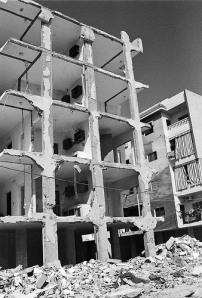 Tip of the Hat to Syria Comment | January 26, 2011
Michael Young, “Lebanon’s False Choice Between Stability and Justice” (via Elliott Abrams)
…..Hezbollah, egged on by Tehran, will fight to ensure that any new Lebanese government distances itself from the special tribunal. But if the tribunal can prove its accusations, Hezbollah may be caught in a vise. If the party resorts to intimidation to stifle dissent and condemnation after the accusations come out, it could plant the seeds of its own destruction. Browbeating its domestic partners will only further isolate Hezbollah and rally other Lebanese communities against it.
A Hezbollah leader lording over Lebanon will represent an invitation for an attack by Israel, which might see an opening to cripple the party if it is isolated. And this time, the Israelis have repeatedly warned that a war would be far worse than in 2006 and Shiite suffering much greater. Even among Shiites, patience with a militant organization that offers only perpetual conflict may wear thin, especially at a time when the community yearns for stability to consolidate its newfound political and economic standing in Lebanon….
Beirut (Photo Credit – Amelia Opalinska)
Richard Falk Responds to Harsh Criticism of 9/11 Comments
In Response to Harsh Comments by the UN Secretary General and the U.S. Ambassador to the UN
By Richard Falk | January 27, 2011
Because my blog prompted by the Arizona shootings has attracted many comments pro and con, and more recently has been the object of a more selective public attack on me personally, I thought it appropriate to post a supplementary blog with the purpose of clarifying my actual position and re-focusing attention on the plight and suffering of the Palestinian people being held in captivity. In the background, are crucial issues of free speech, fairness in public discourse, and responsible media treatment of sensitive and controversial affairs of state.
Both the UN Secretary General and the U.S. Ambassador to the United Nations harshly criticized some remarks in my personal blog that mentioned the 9/11 attacks. They referred to the views expressed there as ‘despicable and deeply offensive,’ ‘noxious, ‘inflammatory,’ and ‘preposterous.’ Their comments were apparently made in response to a letter written to the UN Secretary General by the head of UN Monitor, a Geneva-based highly partisan NGO, that called misleading attention to this passage in the blog. Ambassador Rice called for my dismissal from my unpaid post as an independent Special Rapporteur of the UN Human Rights Council with a mandate to report upon the Israeli observance of “human rights in Palestinian territories occupied since 1967.”
For anyone who read the blog post in its entirely it should be plain that the reference to the 9/11 issues is both restrained and tangential. What is stressed in the blog is the importance of carefully examining evidence before drawing conclusions about political and legal responsibility for highly sensitive public acts, and the importance for the serenity of the society of achieving closure in a responsible manner. I never endorsed doubts about the official version of 9/11 beyond indicating what anyone who has objectively examined the controversy knows– that there remain certain gaps in the official explanation that give rise to an array of conspiratorial explanations, and that the 9/11 Commission unfortunately did not put these concerns to rest. My plea was intended to encourage addressing these gaps in a credible manner, nothing more, nothing less. I certainly meant no disrespect toward the collective memory of 9/11 in the country and elsewhere. On the contrary, my intention was to encourage an investigation that might finally achieve closure with respect to doubts that remain prevalent among important sectors of the public, including among some 9/11 families.
What seems apparent from this incident, which is itself disturbing, is that any acknowledgement of doubt about the validity of the official version of the 9/11 events, while enjoying the legal protection of free speech, is denied the political and moral protection that are essential if an atmosphere of free speech worthy of a democracy is to be maintained. When high officials can brand someone who raises some doubts in the most cautious language as ‘an enemy of the people,’ then there are either things to hide or a defensive fury that is out of all proportion to the provocation. To seek further inquiry into the unanswered questions about 9/11 is surely not an unreasonable position
What is dismaying to me is that neither the office of the Secretary General nor the U.S. Mission to the United Nation made any effort to contact me to seek clarification of my remarks on these issues that are not connected with my UN role prior to making their insulting criticisms damaging to my reputation. I would think that as a representative of the UN and a citizen of the United States, I am at least entitled to this minimal courtesy, and more substantially, that whatever criticisms are made are based on what I said rather than on a manifestly inflammatory letter written by the UN Monitor, that has made a habit of publicly attacking me in consistently irresponsible and untruthful ways, presumably with the intention of diverting attention from my criticisms of Israel’s occupation policies in the Palestinian territories. It is always more tempting to shoot the messenger than heed the message. A similar tactic, what I call ‘the politics of deflection’ was deployed over a year ago in a shabby attempt to discredit the distinguished South African jurist, Richard Goldstone, a person of impeccable credentials as an international public servant. The intention was again to avoid a proper focus upon the devastating findings and recommendations of the Goldstone Report submitted to the United Nations after conducing a scrupulous inquiry into the allegations of violation of law associated with the Israeli attacks on Gaza between December 27, 2008 and January 18, 2009.
I remain determined to report as fully and honestly as possible about the massive human rights violations confronting Palestinians who have now lived without rights under occupation for more than 43 years, and to do my best not to let such personal attacks impair my capacity to carry out the assignment that I was invited to perform by the UN.
What the United States Government, the Secretary-General and the media should be focused on is the ongoing, widespread and systematic violation of Palestinians’ human rights by Israel. Only since the beginning of 2011, at least four Palestinian civilians have been killed by Israeli forces and more than 33 others have been injured. This is in addition to the expansion of settlements, home demolitions, forced evictions and displacement of Palestinian families, revocation of residency permits and forced transfers, particularly devastating in East Jerusalem, detention and mistreatment of over 6000 Palestinians, including children, as well as the illegal blockade of Gaza. My forthcoming report to the Human Rights Council addresses these and other severe ongoing violations of Palestinian rights by Israel.
Palestine Papers confirm Israeli rejectionism
By Jonathan Cook, The Electronic Intifada, 25 January 2011
 |
Israel often claims it has no partner for peace. (Omar Rashidi/MaanImages) |
For more than a decade, since the collapse of the Camp David talks in 2000, the mantra of Israeli politics has been the same: “There is no Palestinian partner for peace.”
This week, the first of hundreds of leaked confidential Palestinian documents confirmed the suspicions of a growing number of observers that the rejectionists in the peace process are to be found on the Israeli, not Palestinian, side.
Some of the most revealing papers, jointly released by AlJazeera television and Britain’s Guardian newspaper, date from 2008, a relatively hopeful period in recent negotiations between Israel and the Palestinians.
At the time, Ehud Olmert was Israel’s prime minister and had publicly committed himself to pursuing an agreement on Palestinian statehood. He was backed by the United States administration of George W. Bush, which had revived the peace process in late 2007 by hosting the Annapolis conference.
In those favorable circumstances, the papers show, Israel spurned a set of major concessions the Palestinian negotiating team offered over the following months on the most sensitive issues in the talks.
Mahmoud Abbas, the Palestinian Authority president, has tried unconvincingly to deny the documents’ veracity, but has not been helped by the failure of Israeli officials to come to his aid.
According to the documents, the most significant Palestinian compromise — or “sell-out,” as many Palestinians are calling it — was on Jerusalem.
During a series of meetings over the summer of 2008, Palestinian negotiators agreed to Israel’s annexation of large swaths of East Jerusalem, including all but one of the city’s Jewish settlements and parts of the Old City itself.
It is difficult to imagine how the resulting patchwork of Palestinian enclaves in East Jerusalem, surrounded by Jewish settlements, could ever have functioned as the capital of the new state of Palestine.
At the earlier Camp David talks, according to official Israeli documents leaked to the Haaretz daily in 2008, Israel had proposed something very similar in Jerusalem: Palestinian control over what were then termed territorial “bubbles.”
In the later talks, the Palestinians also showed a willingness to renounce their claim to exclusive sovereignty over the Old City’s flashpoint of the Haram al-Sharif, the sacred compound that includes the al-Aqsa mosque and is flanked by the Western Wall. An international committee overseeing the area was proposed instead.
This was probably the biggest concession of all — control of the Haram was the issue that “blew up” the Camp David talks, according to an Israeli official who was present.
Saeb Erekat, the PLO’s chief negotiator, is quoted promising Israel “the biggest Yerushalayim in history” — using the Hebrew word for Jerusalem — as his team effectively surrendered Palestinian rights enshrined in international law.
The concessions did not end there, however. The Palestinians agreed to land swaps to accommodate 70 percent of the half a million Jewish settlers in the West Bank, including East Jerusalem and to forgo the rights of all but a few thousand Palestinian refugees.
The Palestinian state was also to be demilitarized. In one of the papers recording negotiations in May 2008, Erekat asks Israel’s negotiators: “Short of your jet fighters in my sky and your army on my territory, can I choose where I secure external defense?” The Israeli answer was an emphatic “No.”
Interestingly, the Palestinian negotiators are said to have agreed to recognize Israel as a “Jewish state” — a concession Israel now claims is one of the main stumbling blocks to a deal.
Israel was also insistent that Palestinians accept a land swap that would transfer a small area of Israel into the new Palestinian state along with as many as a fifth of Israel’s 1.4 million Palestinian citizens. This demand echoes a controversial “population transfer” long proposed by Avigdor Lieberman, Israel’s far-right foreign minister.
The Palestine Papers, as they are being called, demand a serious re-evaluation of two lingering — and erroneous — assumptions made by many Western observers about the peace process.
The first relates to the United States’ self-proclaimed role as honest broker. What shines through the documents is the reluctance of US officials to put reciprocal pressure on Israeli negotiators, even as the Palestinian team make major concessions on core issues. Israel’s “demands” are always treated as paramount.
The second is the assumption that peace talks have fallen into abeyance chiefly because of the election nearly two years ago of a right-wing Israeli government under Benjamin Netanyahu. He has drawn international criticism for refusing to pay more than lip-service to Palestinian statehood.
The Americans’ goal — at least in the early stages of Netanyahu’s premiership — was to strong-arm him into bringing into his coalition Tzipi Livni, leader of the centrist opposition party Kadima. She is still widely regarded as the most credible Israeli advocate for peace.
However, Livni, who was previously Olmert’s foreign minister, emerges in the leaked papers as an inflexible negotiator, dismissive of the huge concessions being made by the Palestinians. At a key moment, she turns down the Palestinians’ offer, after saying: “I really appreciate it.”
The sticking point for Livni was a handful of West Bank settlements the Palestinian negotiators refused to cede to Israel. The Palestinians have long complained that the two most significant — Maale Adumim, outside Jerusalem, and Ariel, near the Palestinian city of Nablus — would effectively cut the West Bank into three cantons, undermining any hopes of territorial contiguity.
Livni’s insistence on holding on to these settlements — after all the Palestinian compromises — suggests that there is no Israeli leader either prepared or able to reach a peace deal — unless, that is, the Palestinians cave in to almost every Israeli demand and abandon their ambitions for statehood.
One of the Palestine Papers quotes an exasperated Erekat asking a US diplomat last year: “What more can I give?”
The man with the answer may be Lieberman, who unveiled his own map of Palestinian statehood this week. It conceded a provisional state on less than half of the West Bank.
Jonathan Cook is a writer and journalist based in Nazareth, Israel. His latest books are Israel and the Clash of Civilisations: Iraq, Iran and the Plan to Remake the Middle East (Pluto Press) and Disappearing Palestine: Israel’s Experiments in Human Despair (Zed Books). His website is www.jkcook.net.
Featured Video

They Double Down on BLOOD PRESSURE Guidelines!
or go to
Aletho News Archives – Video-Images
From the Archives
Chocolate Gives Statins a $29 Billion Run For Their Money
By Sayer Ji · GreenMedInfo · April 17, 2012
With the blockbuster cholesterol-lowering class of drugs known as statins being widely promoted for the primary prevention of cardiovascular disease, despite their having over 300 documented adverse health effects (including heart failure!), how does chocolate sound as a viable, heart-friendly alternative?
We already connect amorously with chocolate (to the tune of 6 billion lbs of cocoa consumed annually worldwide), revealing in heart-felt expressions like “I love it,” and “this is to die for!” how comfortable we are with publicly declaring our affection. But did you know that while it makes our emotional hearts sing, it may actually keep our physical hearts happy, alive and ticking longer, as well?
Indeed, back in 2006, researchers found that for elderly men, eating cocoa was inversely associated with blood pressure and 15-year cardiovascular and all-cause mortality. … continue
Blog Roll
 Aletho News
- I’M SO BLOODY FURIOUS: They Double Down on BLOOD PRESSURE Guidelines!
- The Israeli Nuclear Doctrine and the Turning Point of the Kennedy Assassination
- Striking Matches Near the Powder Keg
- Prominent Russia hawk: European leaders privately talk about war with Russia, first need ‘mass casualty event’
- China warned Trump not to touch Iran’s oil tankers: Larry Johnson
- EU Central Banker Plans To Plant Barren AI Crops Across The Continent
- Macron’s Strategic Autonomy Paradox: France Rearms on Debt and Depends on Foreign Fuel
- Nigel Farage vs Tucker Carlson: Who is right about Hitler and Britain?
- Chocolate Gives Statins a $29 Billion Run For Their Money
- Hypotheses on the collapse of U.S. computer systems
- If Americans Knew
- An error has occurred; the feed is probably down. Try again later.
- No Tricks Zone
- New Study: Modern Temps Are Among The Coldest Of The Last 10,000 Years In East Central Europe
- Germany’s Renewable Energies Lead to 1.4 Billion Euro Electric Power Trade Deficit
- Argentina’s Perito Moreno Glacier Joins Antarctica and Arctic In Defying Doomsday Melt Claims
- New Study: Barents Sea Temperatures Were Warmer And Sea Ice Less Extensive In The 1700s Than Today
- German Authorities Start Initiative To Evaluate Public Register For Climate “Disinformation” Spreaders!
- Zonal Asymmetry of Temperature Change in the Antarctic Circumpolar Current
- New Study: The Net Fossil Fuel Contribution To Rising Atmospheric CO2 Has Been Zero For 500 Years
- Germany’s Green Energy Transition Becoming Increasingly Expensive…Another 6 Trillion Euros!
- Sudden Stratospheric Warming, Powerful El Niño Combination May Lead To Extreme Europe Cold, Energy Crisis!
- Two New Studies Find Thwaites Glacier Melt Cannot Be Driven By Human Activity Or A Warming Ocean

