Note: he spoke of a black SUV. Note also that he got verbal confirmation from off-camera. This indicates that there were other eyewitnesses.
The only eyewitness identifications that I can find speak of three white men.
I looked at several published timelines of the shootings. You can, too. Search for “timeline,” “Farook,” “San Bernardino.” No victim identified the two suspects immediately after the shootings, which had ended by the time the police and firefighters arrived at 11:05 a.m. The police had no clues regarding Farook and his wife. The two were shot in a firefight at 3 p.m. They were in a black SUV . . . four hours after the attack.
Four hours. What were they doing during this time? Where were they?
The New York Daily News reported this: “The suspects had escaped the blood-spattered murder scene without swapping a single gunshot with the horde of law enforcement descending on the center, a social services facility for people with developmental disabilities.”
The SUV was spotted four hours later, two miles from the crime scene. How did the police find this SUV? The Daily News says only this: “a tip.”
Think about this. Two people shoot 35 people, and escape unnoticed the police. They then disappear for four hours. Then “a tip” informs the police of their whereabouts: two miles away from the crime scene.
As the police close in on the vehicle, which is traveling surprisingly slowly, it is not clear whether the gunshots heard are being fired by cops or by the suspects.
‘They’re killing that guy,’ the man taking the video shouts as he ducks for cover.
Just moments later, after the recording ended, police stopped the SUV and killed the two suspected shooters in a gun battle that left an officer injured.
Note: the report does not say that a policeman was shot, only injured.
Watch this video. There is an introduction by a reporter, then the video. As the SUV drives slowly down the street, the driver is turning the headlights off and on. Why? There is no shooting at this point. The SUV passes by. Then the shooting starts.
The post-shootout photo of the SUV shows the windshield riddled with bullet holes. These bullet holes came from in front of the SUV. The media report says this: they fired 76 rounds, while police fired 380.
Who did the counting? When? Who verified this?
How did they shoot at police from inside the SUV? For how long? How long would it take to fire 76 rounds with semi-automatics? This time includes replacing empty clips. We are supposed to believe that it took 380 rounds to kill them. If so, these are not sharpshooters.
The two are dead. So, there is no legal liability for naming them the killers. There is no “alleged” visible in the media. This ends all discussion. Of course they acted alone. Everyone knows this.
“What are you, a conspiracy theorist?” Yes, I am. We conspiracy theorists — revisionist historians — have a highly developed sense of smell, developed over years of sniffing around. We know when official accounts do not pass the smell test. This story does not pass it.
Here is what I have been waiting for: a forensics report that identifies some of the estimated 100 spent bullets at the massacre with at least one of the rifles recovered in the SUV. I have searched the Web for this report. I have not found it. Is this too much to ask of the authorities? You bet it is.
We need more unofficial investigations. We are not going to get any further official investigation. Case closed. “Move along. There’s nothing to see here.”
My advice: Don’t believe the first official government report. Suspend judgment. Keep snooping. Things are not always what they seem.
Theoretically, it would be a great story for the American press: an autocrat so obsessed with overthrowing the leader of a neighboring country that he authorizes his intelligence services to collaborate with terrorists in staging a lethal sarin attack to be blamed on his enemy and thus trick major powers to launch punishing bombing raids against the enemy’s military.
And, after that scheme failed to achieve the desired intervention, the autocrat continues to have his intelligence services aid terrorists inside the neighboring country by providing weapons and safe transit for truck convoys carrying the terrorists’ oil to market. The story gets juicier because the autocrat’s son allegedly shares in the oil profits.
To make the story even more compelling, an opposition leader braves the wrath of the autocrat by seeking to expose these intelligence schemes, including the cover-up of key evidence. The autocrat’s government then seeks to prosecute the critic for “treason.”
But the problem with this story, as far as the American government and press are concerned, is that the autocratic leader, President Recep Tayyip Erdogan, is in charge of Turkey, a NATO ally and his hated neighbor is the much demonized Syrian President Bashar al-Assad. Major U.S. news outlets and political leaders also bought into the sarin deception and simply can’t afford to admit that they once again misled the American people on a matter of war.
The Official Story of the sarin attack – as presented by Secretary of State John Kerry, Human Rights Watch and other “respectable” sources – firmly laid the blame for the Aug. 21, 2013 atrocity killing hundreds of civilians outside Damascus on Assad. That became a powerful “group think” across Official Washington.
Though a few independent media outlets, including Consortium News, challenged the rush to judgment and noted the lack of evidence regarding Assad’s guilt, those doubts were brushed aside. (In an article on Aug. 30, 2013, I described the administration’s “Government Assessment” blaming Assad as a “dodgy dossier,” which offered not a single piece of verifiable proof.)
However, as with the “certainty” about Iraq’s WMD a decade earlier, Every Important Person shared the Assad-did-it “group think.” That meant — as far as Official Washington was concerned — that Assad had crossed President Barack Obama’s “red line” against using chemical weapons. A massive U.S. retaliatory bombing strike was considered just days away.
But Obama – at the last minute – veered away from launching those military attacks, with Official Washington concluding that Obama had shown “weakness” by not following through. What was virtually unreported was that U.S. intelligence analysts had doubts about Assad’s guilt and suspected a trap being laid by extremists.
Despite those internal questions, the U.S. government and the compliant mainstream media publicly continued to push the Assad-did-it propaganda line. In a formal address to the United Nations General Assembly on Sept. 24, 2013, Obama declared, “It’s an insult to human reason and to the legitimacy of this institution to suggest that anyone other than the regime carried out this attack.”
Later, a senior State Department official tried to steer me toward the Assad-is-guilty assessment of a British blogger then known as Moses Brown, a pseudonym for Eliot Higgins, who now runs an outfit called Bellingcat which follows an effective business model by reinforcing whatever the U.S. propaganda machine is churning out on a topic, except having greater credibility by posing as a “citizen blogger.” [For more on Higgins, see Consortiumnews.com’s “‘MH-17 Case: ‘Old Journalism’ vs. ‘New’.”]
The supposedly conclusive proof against Assad came in a “vector analysis” developed by Human Rights Watch and The New York Times – tracing the flight paths of two rockets back to a Syrian military base northwest of Damascus. But that analysis collapsed when it became clear that only one of the rockets carried sarin and its range was less than one-third the distance between the army base and the point of impact. That meant the rocket carrying the sarin appeared to have originated in rebel territory.
But the “group think” was resistant to all empirical evidence. It was so powerful that even when the Turkish plot was uncovered by legendary investigative reporter Seymour M. Hersh, his usual publication, The New Yorker, refused to print it. Rebuffed in the United States – the land of freedom of the press – Hersh had to take the story to the London Review of Books to get it out in April 2014. [See Consortiumnews.com’s “Was Turkey Behind Syria Sarin Attack?”]
The Easier Route
It remained easier for The New York Times, The Washington Post and other premier news outlets to simply ignore the compelling tale of possible Turkish complicity in a serious war crime. After all, what would the American people think if – after the mainstream media had failed to protect the country against the lies that led to the disastrous Iraq War – the same star news sources had done something similar on Syria by failing to ask tough questions?
It’s also now obvious that if Obama had ordered a retaliatory bombing campaign against Assad in 2013, the likely winners would have been the Islamic State and Al Qaeda’s Nusra Front, which would have had the path cleared for their conquest of Damascus, creating a humanitarian catastrophe even worse than the current one.
To confess to such incompetence or dishonesty clearly had a big down-side. So, the “smart” play was to simply let the old Assad-did-it narrative sit there as something that could still be cited obliquely from time to time under the phrase “Assad gassed his own people” and thus continue to justify the slogan: “Assad must go!”
But that imperative – not to admit another major mistake – means that the major U.S. news media also must ignore the courageous statements from Eren Erdem, a deputy of Turkey’s main opposition Republican People’s Party (CHP), who has publicly accused the Erdogan government of blocking an investigation into Turkey’s role in procuring the sarin allegedly delivered to Al Qaeda-connected terrorists for use inside Syria.
In statements before parliament and to journalists, Erdem cited a derailed indictment that was begun by the General Prosecutor’s Office in the southern Turkish city of Adana, with the criminal case number 2013/120.
Erdem said the prosecutor’s office, using technical surveillance, discovered that an Al Qaeda jihadist named Hayyam Kasap acquired the sarin.
At the press conference, Erdem said, “Wiretapped phone conversations reveal the process of procuring the gas at specific addresses as well as the process of procuring the rockets that would fire the capsules containing the toxic gas. However, despite such solid evidence there has been no arrest in the case. Thirteen individuals were arrested during the first stage of the investigation but were later released, refuting government claims that it is fighting terrorism.”
Erdem said the released operatives were allowed to cross the border into Syria and the criminal investigation was halted.
Another CHP deputy, Ali Şeker, added that the Turkish government misled the public by claiming Russia provided the sarin and that “Assad killed his people with sarin and that requires a U.S. military intervention in Syria.”
Erdem’s disclosures, which he repeated in a recent interview with RT, the Russian network, prompted the Ankara Prosecutor’s Office to open an investigation into Erdem for treason. Erdem defended himself, saying the government’s actions regarding the sarin case besmirched Turkey’s international reputation. He added that he also has been receiving death threats.
“The paramilitary organization Ottoman Hearths is sharing my address [on Twitter] and plans a raid [on my house]. I am being targeted with death threats because I am patriotically opposed to something that tramples on my country’s prestige,” Erdem said.
ISIS Oil Smuggling
Meanwhile, President Erdogan faces growing allegations that he tolerated the Islamic State’s lucrative smuggling of oil from wells in Syria through border crossings in Turkey. Those oil convoys were bombed only last month when Russian President Vladimir Putin essentially shamed President Obama into taking action against this important source of Islamic State revenues.
Though Obama began his bombing campaign against Islamic State targets in Iraq and Syria in summer 2014, the illicit oil smuggling was spared interdiction for over a year as the U.S. government sought cooperation from Erdogan, who recently acknowledged that the Islamic State and other jihadist groups are using nearly 100 kilometers of Turkey’s border to bring in recruits and supplies.
Earlier this month, Obama said he has had “repeated conversations with President Erdogan about the need to close the border between Turkey and Syria,” adding that “there’s about 98 kilometers that are still used as a transit point for foreign fighters, ISIL [Islamic State] shipping out fuel for sale that helps finance their terrorist activities.”
Russian officials expressed shock that the Islamic State was allowed to continue operating an industrial-style delivery system involving hundreds of trucks carrying oil into Turkey. Moscow also accused Erdogan’s 34-year-old son, Bilal Erdogan, of profiting off the Islamic State’s oil trade, an allegation that he denied.
The Russians say Bilal Erdogan is one of three partners in the BMZ Group, a Turkish oil and shipping company that has purchased oil from the Islamic State. The Malta Independentreported that BMZ purchased two oil tanker ships from the Malta-based Oil Transportation & Shipping Services Co Ltd, which is owned by Azerbaijani billionaire Mubariz Mansimov.
Another three oil tankers purchased by BMZ were acquired from Palmali Shipping and Transportation Agency, which is also owned by Mansimovandwhich shares the same Istanbul address with Oil Transportation & Shipping Services, which is owned by Mansimov’s Palmali Group, along with dozens of other companies set up in Malta.
The Russians further assert that Turkey’s shoot-down of a Russian Su-24 bomber along the Syrian-Turkish border on Nov. 24 – which led to the murder of the pilot, by Turkish-backed rebels, as he parachuted to the ground and to the death of a Russian marine on a rescue operation – was motivated by Erdogan’s fury over the destruction of his son’s Islamic State oil operation.
Erdogan has denied that charge, claiming the shoot-down was simply a case of defending Turkish territory, although, according to the Turkish account, the Russian plane strayed over a slice of Turkish territory for only 17 seconds. The Russians dispute even that, calling the attack a premeditated ambush.
President Obama and the mainstream U.S. press sided with Turkey, displaying almost relish at the deaths of Russians in Syria and also showing no sympathy for the Russian victims of an earlier terrorist bombing of a tourist flight over Sinai in Egypt. [See Consortiumnews.com’s “Obama Ignores Russian Terror Victims.”]
New York Times columnist Thomas L. Friedman expressed the prevailing attitude of Official Washington by ridiculing anyone who had praised Putin’s military intervention in Syria or who thought the Russian president was “crazy like a fox,” Friedman wrote: “Some of us thought he was just crazy.
“Well, two months later, let’s do the math: So far, Putin’s Syrian adventure has resulted in a Russian civilian airliner carrying 224 people being blown up, apparently by pro-ISIS militants in Sinai. Turkey shot down a Russian bomber after it strayed into Turkish territory. And then Syrian rebels killed one of the pilots as he parachuted to earth and one of the Russian marines sent to rescue him.”
Taking Sides
The smug contempt that the mainstream U.S. media routinely shows toward anything involving Russia or Putin may help explain the cavalier disinterest in NATO member Turkey’s reckless behavior. Though Turkey’s willful shoot-down of a Russian plane that was not threatening Turkey could have precipitated a nuclear showdown between Russia and NATO, criticism of Erdogan was muted at most.
Similarly, neither the Obama administration nor the mainstream media wants to address the overwhelming evidence that Turkey – along with other U.S. “allies” such as Saudi Arabia and Qatar – have been aiding and abetting Sunni jihadist groups, including Al Qaeda and Islamic State, for years. Instead, Official Washington plays along with the fiction that Saudi Arabia, Turkey and others are getting serious about combating terrorism.
The contrary reality is occasionally blurted out by a U.S. official or revealed when a U.S. intelligence report gets leaked or declassified. For instance, in 2009, then-Secretary of State Hillary Clinton noted in a confidential diplomatic memo, disclosed by Wikileaks, that “donors in Saudi Arabia constitute the most significant source of funding to Sunni terrorist groups worldwide.”
According to a Defense Intelligence Agency report from August 2012, “AQI [Al Qaeda in Iraq, which later morphed into the Islamic State] supported the Syrian opposition from the beginning, both ideologically and through the media. … AQI declared its opposition of Assad’s government because it considered it a sectarian regime targeting Sunnis.”
The DIA report added, “The salafist, the Muslim Brotherhood, and AQI are the major forces driving the insurgency in Syria. … The West, Gulf countries, and Turkey support the opposition.”
The DIA analysts already understood the risks that AQI presented both to Syria and Iraq. The report included a stark warning about the expansion of AQI, which was changing into the Islamic State. The brutal armed movement was seeing its ranks swelled by the arrival of global jihadists rallying to the black banner of Sunni militancy, intolerant of both Westerners and “heretics” from Shiite and other non-Sunni branches of Islam.
The goal was to establish a “Salafist principality in eastern Syria” where Islamic State’s caliphate is now located, and that this is “exactly what the supporting powers to the opposition” – i.e. the West, Gulf states, and Turkey – “want in order to isolate the Syrian regime,” the DIA report said.
In October 2014, Vice President Joe Biden told students at Harvard’s Kennedy School that “the Saudis, the emirates, etc. … were so determined to take down Assad and essentially have a proxy Sunni-Shia war … [that] they poured hundreds of millions of dollars and tens of thousands of tons of military weapons into anyone who would fight against Assad except the people who were being supplied were Al Nusra and Al Qaeda.”
Despite these occasional bursts of honesty, the U.S. government and the mainstream media have put their goal of having another “regime change” – this time in Syria – and their contempt for Putin ahead of any meaningful cooperation toward defeating the Islamic State and Al Qaeda.
This ordering of priorities further means there is no practical reason to revisit who was responsible for the Aug. 21, 2013 sarin gas attack. If Assad’s government was innocent and Ergogan’s government shared in the guilt, that would present a problem for NATO, which would have to decide if Turkey had crossed a “red line” and deserved being expelled from the military alliance.
But perhaps even more so, an admission that the U.S. government and the U.S. news media had rushed to another incorrect judgment in the Middle East – and that another war policy was driven by propaganda rather than facts – could destroy what trust the American people have left in those institutions. On a personal level, it might mean that the pundits and the politicians who were wrong about Iraq’s WMD would have to acknowledge that they had learned nothing from that disaster.
It might even renew calls for some of them – the likes of The New York Times’ Friedman and The Washington Post’s editorial page editor Fred Hiatt – to finally be held accountable for consistently misinforming and misleading the American people.
So, at least for now — from a perspective of self-interest — it makes more sense for the Obama administration and major news outlets to ignore the developing story of a NATO ally’s ties to terrorism, including an alleged connection to a grave war crime, the sarin attack outside Damascus.
Investigative reporter Robert Parry broke many of the Iran-Contra stories for The Associated Press and Newsweek in the 1980s. You can buy his latest book, America’s Stolen Narrative, either in print here or as an e-book (from Amazon and barnesandnoble.com).
What Makes Recep Run? The Making of a Modern Pasha
Erdogan began his ascent to power as a social reformer in opposition to the power elite; he was a rabble-rouser for popular Islam and social welfare. Once he takes political power he enriches his family and the business elite and purges adversaries and rivals.
With political power and economic connections, he amasses personal wealth through illicit business transactions.
With political power and personal wealth, he seeks prestige and status among the Western elites by serving imperial interests: He shoots down a Russian military jet over Syrian territory and thereby threatens hundreds of Turkish businesses and loses a major source of personal enrichment. When the Russians threaten to cut off energy exports to Turkey, Erdogan’s opponents suggest he heat his own palace and villas with cow dung this winter.
The Two Faces of Erdogan
Turkish President Recep Tayyip Erdogan has a long and ignoble history of betraying political associates, trading partners and military allies; of pledging friendship and then bombing his ‘friends’ and murdering citizens; of negotiating ‘in good faith’ and then killing rivals; of playing democrat then behaving like an ordinary demagogic dictator.
Erdogan appeals to the plebian and austere values of the Anatolian provincial petty bourgeoisie, while building the largest luxurious presidential palace in the world – fit for a 21st century Pasha. He repeatedly pronounces his fealty to the ‘Turkish Nation’, while he robs the Turkish treasury by repeatedly accepting bribes and pay-offs from building contractors who then double charge for publically-funded projects.
More recently, Erdogan claims to oppose terrorism and fight ISIS, while the major Turkish and regional newspapers, journalists and most domestic observers document the massive flow of illegal arms across the Turkish-Syrian border to ISIS terrorists.
Erdogan’s ‘Carnal Relation’ with ISIS
Erdogan supports ISIS by bombing the Syrian Kurdish fighters who resist the jihadi mercenaries; by shooting down a Russian military jet defending the Damascus government against the terrorists; by smuggling and selling oil which ISIS had stolen from Iraq and Syria; by providing medical assistance to wounded ISIS fighters; and by training and arming ISIS terrorists in Turkish bases.
There is a reciprocal relationship: Erdogan uses ISIS operatives to terrorize his own domestic opposition, including terror bombing a gathering of Kurdish ‘socialist youth’ in the town of Suruç on July 20, 2015, which killed 33 and the massive bombing in Ankara on October 10 of a ‘peace and justice’ march, which killed over 100, targeting trade unionists, leaders of professional associations, community activists and members of a democratic Kurdish electoral party and wounded many hundreds.
During the legislative election of 2015 ISIS terrorists and thugs from Erdogan’s Justice and Development Party (AKP) attacked the offices, meetings and candidates of the opposition parties, especially of the Kurdish People’s Democratic Party (HDP), to ensure that Erdogan secured a super-majority.
In other words, Erdogan has three uses for ISIS serving his external and internal interests:
(1) To attack and destroy secular Kurdish forces resisting ISIS in Syria and Iraq, thus preventing the formation of an independent Kurdish state on the Turkish border.
(2) To attack and destroy Syria’s independent Baathist government under Bashar Al-Assad, dismantle the multicultural secular state apparatus and install a Sunni Islamist client in Damascus subordinate to Erdogan’s AKP.
(3) To attack and terrorize the Turkish domestic opposition, including the broad-based Kurdish HDP, and the leftist trade union confederation (DISK).
Erdogan has a decade-long strategic alliance with the militant Wahhabi terrorists who now make up ISIS. He intends to ‘remake’ the map of the Middle East to serve his own expansionist ambitions. In part this explains why Erdogan has provided large-scale arms and material to the terrorists, trained thousands of mercenaries and provided medical aid to wounded ISIS fighters. It also explains why Erdogan took the unprecedented and extremely provocative step of shooting down a Russian military jet over Syrian territory, which had been bombing Erdogan’s ISIS allies. Russian and Syrian Army successes against ISIS have threatened his ambitions.
Erdogan’s transformation from ‘Muslim democrat’ to bloody authoritarian Islamist ruler with pretensions of becoming the dominant Middle Eastern Pasha has to be seen in light of his rise to power over the past 40 years.
What Makes Recep Run?
Erdogan, early on, showed his affinity for extremist Islamist politics. In the 1970’s he was head of the youth branch of the Islamist Salvation Party (MSP), a virulent anti-communist, anti-secular party committed to converting Turkey, a huge multi-ethnic secular state, into a theocratic regime (along the lines of contemporary ISIS).
After the military coup of 1980 the MSP was dissolved and reappeared as the Welfare Party. Erdogan became a leader of the new (re-named) Islamist party.
Erdogan and the Welfare Party exploited Turkish mass discontent with the corrupt and authoritarian military. The Welfare Party embraced a populist social welfare program with Islamist religious undertones in order to build a formidable grassroots organization in the working class neighborhoods in Istanbul. Erdogan was elected mayor of Turkey’s largest city in 1994.
As Mayor, Erdogan over-reached his power by preaching militant Islamism and was convicted in 1998 of sedition against the secular state. He served 4 months of a 10-month sentence.
Henceforth he changed tactics: His Islamist fanaticism was disguised. He changed the party name from Welfare to the modern sounding Justice and Development Party (AKP). Erdogan then launched a series of political maneuvers, in which he cleverly manipulated adversaries to gain power and then… stabbed each of them in the back.
Erdogan: Embrace and Back-Stab
Despite his earlier conviction for sedition against the secular state, the ‘reformed’ Erdogan allied with the Kemalist, secular Republican Peoples Party (CHP) to overturn the military’s ban on his participation in politics in 2002. He was elected Prime Minister in 2003. After the AKP won the general election it cut its ties with the CHP. Erdogan was re-elected Prime Minister in 2007 and 2011.
Erdogan allied with the pro-US Islamist leader Fethullah Gülen’s Hizmet or Cemaat Movement, which was influential within the judicial system, police and army. Together they launched a purge against secular military and judicial officials, journalists and media critics.
The Erdogan – Gülenist state apparatus arrested and jailed 300 secular military officers, judges and journalists and replaced them with Erdogan and Gülen loyalists – all Islamists.
Dubbed “Operation Sledgehammer” the entire purge was based on fabricated charges of treason and conspiracy. Yet it was described by the Western media in terms that flattered Erdogan’s democratic credentials, calling it an ‘effort to consolidate democracy’ against the military.
It had nothing to do with democracy: The purge consolidated Erdogan’s personal power and allowed him to pursue policies that were more overtly neo-liberal and Islamist. The purge of the judiciary further allowed Erdogan to enrich crony capitalists and family members.
Erdogan: The Birth of a Neoliberal Pasha
Erdogan then embraced an IMF-designed ‘stabilization and recovery’ program, which reduced wages, salaries and pensions while privatizing public sector enterprises and activities. This attracted a large inflow of capital as foreign investors and cronies snapped up the goodies at bargain prices. Most emblematic of this ‘free-for-all cronies’ approach to the economy was the Soma coal mine disaster in May 2014 when over 300 miners were killed in a previously state-owned mine, which had suffered a breakdown of worker safety conditions after it had been privatized to an Erdogan-crony. Despite local and international outrage, Recep ignored the scandal and unleashed police on the demonstrating miners.
Erdogan’s combination of Islam with brutal neo-liberalism attracted support from Brussels, Wall Street and the City of London. Large inflows of speculative foreign capital temporarily inflated Turkey’s GNP and Erdogan’s wealth and ego!
In the beginning of his rule Erdogan’s concessions, tax incentives, government contracts to big capital were broadly distributed to most sectors, but especially to his crony capitalists within the construction and real estate sectors.
As the capitalist boom continued and his power increased, Erdogan became more obsessed with his role as the savior of Turkey. By 2010, a serious difference developed between Erdogan and his Gülenist partners over the division of power. Erdogan moved rapidly and brutally. He launched another massive purge of suspected ‘Gülenist officials’. He arrested, fired, jailed and relocated Gülen sympathizers among judges, police and civil servants despite the fact that these were officials who had served him well during the earlier purge of the secular military.
Erdogan is not willing to share power with any other party, movement or group. Pasha Recep wanted to monopolize power. He has attacked critical newspapers, businesses and conglomerates claiming these were ‘Gülen controlled’. Erdogan ensured that only capitalists completely loyal to him would receive regime patronage. In other words, he strengthened the size, strength and importance of crony capitalists: especially in the real estate and construction sector.
Pasha Recep’s Assault on Civil Society
Turkey, under Erdogan’s absolute power, has seen a geometric increase in corruption and mindless ‘development projects’, leading to the degradation and usurpation of public spaces. His arbitrary and destructive policies have provoked sustained civil society protests, especially in the center of Istanbul – during the Gezi Park demonstrations, which began in May 2013.
In response to civil society demonstrations, Erdogan shed all pretensions, ripping off his ‘modern democratic’ mask and brutally repressing the peaceful protestors in the heart of Istanbul– resulting in 22 deaths, hundreds wounded and more arrested and sentenced to long jail term. Erdogan subsequently targeted liberal critics and business leaders, who had criticized his brutal use of force.
2013, the year of the Gezi Park Movement, was a turning point – Erdogan and family members were implicated in a $100 million-dollar corruption scandal while liberal critics of the regime were purged.
Facing opposition from sectors of the elite as well as popular classes, Erdogan became more rabidly ‘Islamist’, chauvinistic and megalomaniacal – ‘Neo-Ottoman’.
In short order, he re-launched his attack on the Turkish Kurds and increased his support to the Islamist terrorists in Syria, including what would become ISIS. These policies were designed to complement his ongoing war against the secular Kurds in Iraq and Syria.
Erdogan: Backstabbing Secular Syria and “Best Friend” Russia
From the beginning of his rule, Erdogan cultivated the ‘best of relations’ with Syria’s Bashar Al-Assad and Russian President Vladimir Putin. He signed dozens of trade agreements with Damascus and Moscow. Putin was welcomed to Ankara and Erdogan to Moscow where they signed billion-dollar energy deals and mutual co-operative agreements.
Up to 3 million Russian tourists visited Turkish resorts each year, a bonanza for one of Turkey’s major industries.
Erdogan’s regime was ebullient, effusive, embracing Moscow and Damascus while systematically preparing the ground for more backstabbing!
By 2011, Erdogan had been deeply involved in preparing the ground for what would become the bloody Islamist uprising in Syria. Early on, hundreds of armed foreign Islamist terrorists crossed the Turkish border into Syria. Their presence overwhelmed local Syrian dissidents. Armed Islamists seized villages and towns brutally purging them of Christians, Kurds, Alawites and secular Syrians. They took over the oil fields. From one day to the next, Erdogan was transformed from loving friend to deadly foe of neighboring Syria demanding ‘regime change’ through terrorist sectarian violence.
Erdogan embraced the most extreme, sectarian Wahhabi Islamist groups because they were committed to undermining the nationalist aspirations of the Syrian Kurds as well as overthrowing the secular Al-Assad government. Erdogan’s covert alliance with ISIS and other Islamist terrorist groups was motivated by several strategic considerations, which are outlined below:
1) The alliance serves to prevent the establishment of an autonomous Kurdish enclave on the Syrian-Turkish border in the event of a Damascus defeat, which Erdogan fears would then link armed Syrian Kurds with the huge disaffected Kurdish population in southeastern Turkey and lead to the formation of an autonomous secular Kurdish state.
2) Erdogan’s alliance with jihadis in Syria has served Ankara’s ambition to impose a puppet Sunni-Islamist regime in Damascus.
3) The ISIS regime controlling the Syrian and Iraqi oil fields provides Turkey with a source of cheap fuel and lucrative profits for the regime. Recep’s son, Necmettin Bilal Erdogan owns and operates the BMZ Group which buys the contraband Syrian and Iraqi oil in Turkey and sells it overseas (especially to Israel) earning nearly a billion dollars a year for ‘the family’.
It is not a surprise that the Erdogan family directly financed ISIS, which uses the cash from contraband oil, pillaged antiquities and ‘tribute’ taxes, to purchase heavy and light arms, military and transport vehicles and communications equipment in Turkey and elsewhere to support its terror campaign in Syria and Iraq. Well-informed Turkish observers believe that Erdogan’s intelligence officials are directly involved in recruiting ISIS terrorists to operate within Turkey and attack Erdogan’s internal opposition, especially the Kurdish electoral party HDP and the broad-based Turkish left and trade union movements. Observers claim Turkish intelligence operations had a direct role in the ‘ISIS’ bomb attacks in Suruç and Ankara this year, which killed and maimed hundreds of Erdogan opponents and civil society activists.
Erdogan and ISIS developed a co-dependent relation, one of mutual manipulation. Each has publicly declared their tactical enmity to the other, while busily pursuing joint strategic aims.
Ankara uses the pretext of fighting ISIS in order to bomb the Kurds in Syria who are resisting the jihadis. ISIS uses the pretext of opposing the NATO member Turkey in order to cover its massive oil and weapons trade deals with Erdogan’s family and crony business enterprises.
The Pasha Stabs the Bear and the Bear Bites Back – One Stab Too Many
Russia’s highly effective aerial bombing campaign against the jihadi and ISIS terrorist networks in Syria was in response to a formal request for military intervention by the legitimate government of President Bashar Al-Assad. Russia has long-standing ties to the Baathist regime in Damascus. The intervention has threatened to undermine Erdogan’s regional power ambitions and illicit business operations in Syria. First and foremost, it ended Erdogan’s plan to annex a large swathe of Northern Syria and call it a ‘no fly zone’. The Turkish-controlled ‘no fly zone’ in Syria would expand Turkish military training bases for ISIS and other jihadi terrorists and secure the transport routes for ISIS oil shipments smuggled out of Iraq and Syria.
Unlike the US, which had rarely bombed the strategic Erdogan-ISIS oil smuggling operations, the Russians destroyed over a thousand oil trucks and numerous ISIS oil depots and logistical centers in the first month of its air campaign. By reducing the flow of smuggled oil, Russia cut off the main source of massive profit for Bilal Erdogan’s BMZ Company as well as for Turkish arms dealers.
Like gangsters, Erdogan, his family and cronies have been immersed in massive corrupt business activities at home and abroad; he can no longer operate within the context of the larger interests of the Turkish capitalist class with its $40 billion dollar annual trade and investment relations with Russia. Erdogan’s decision to shoot down a Russian jet in Syrian territory, on November 24, 2015, was largely motivated by his fury at Russia’s successful interruption of the ISIS oil convoys. By protecting his own family interests, Erdogan stabbed more allies in the back: The Russians, as well as large sections of the Turkish capitalist class!
Up until Erdogan’s act of war against Russia, he had publicly embraced Putin as an ally, friend and partner. The two leaders had cordial relations for over a decade. The Turkish military was fully informed about Russian military operations in Syria, including its flight paths. Then suddenly in November 2015 he risked a total rupture in relations and invited retaliation against Turkey from Russia by shooting down a Russian jet.
Russia immediately responded by upgrading its most advanced weapons systems to defend its operations and bases in Northern Syria and intensified its bombing of the ISIS – Turkish oil operations.
Russia retaliated by imposing visa restrictions and economic sanctions on Turkey, adversely affecting the multi-billion dollar tourist business. Strategic energy deals were terminated. Large-scale Turkish construction contracts were ended. Turkish agricultural exports to Russian markets virtually stopped.
The Pasha Bites His own Tail
Erdogan’s unilateral actions were clearly against the broad interests of Turkey’s large export sector. From Gezi to Gülen, from one purge to another, Erdogan, the former ‘poster boy’ of neo-liberal Turkish capital, has become a self-centered despot, acting on behalf of a narrowing circle of corrupt family and crony capitalists. Erdogan set himself up as a modern day pasha more in the image of the self-indulgent Ibrahim I (the Madman) than the far-seeing Suleyman I (the Wise).
Once Erdogan realized the damage that his fit of egomaniac fury against the Russians had provoked abroad and his growing isolation within Turkey, he rushed to NATO on bended knee to beg for support. True to his authoritarian personality, Recep Erdogan crawls on his knees before his ‘superiors’ (NATO-US) while grabbing the throats of his ‘inferiors’ (the Turkish people)!
Conclusion
Erdogan’s road to absolutist power is strewn with indiscriminate purges, terror and deceit; violence against environmental and liberal protesters in Gezi Park and moderate Gülen Islamists; jail sentences and firing of journalists and publishers, military officials and judges; repression of workers and capitalists; terror bombing against activists and democrats; and war against Kurds and Syrians.
Erdogan’s paranoid and greed-driven vision of politics precludes any trust and stable relations. He thinks he is very clever with his combination of charm and broken promises, but he fools nobody. He reignites the war against the Kurds in Turkey and Syria but they retaliate!
He attacks Russia and provokes a very costly retaliation so far limited to the Turkish economy.
He increases his personal power, but undermines the interests of the Turkish nation and its people. Erdogan believes he is the rising regional hegemon, indispensable to the West. He blackmails the EU for billions of Euros to control the flood of refugees fleeing violence in Syria and Iraq with his promises to warehouse desperate refugees in Turkish concentration camps. But Europeans must know that their money can never buy trust and loyalty from the Pasha.
His oil deals with ISIS are in tatters. Russian bombs ensure that Erdogan will have to find other sources of illicit profit. Worst of all, Erdogan’s furious actions have lost markets, allies and domestic support. He faces enemies from all sides – liberal professors, students, big business owners and organized workers in Istanbul; small business people in the tourist trade; construction and oil companies in Ankara; farmers in Anatolia, and, above all, the coal miners in Soma Manis.
Who knows under what circumstances Pasha Recep (the ‘Megalomaniac’) will be replaced?
It was the chemical weapons attack that so nearly led to direct war between the US, the UK, France and the Syrian government; a war which most likely would have delivered the whole of Syria to IS and Al-Qaeda extremists.
The horrific Ghouta attack of August 21, 2013, which killed hundreds of civilians, including many children, was blamed on President Assad and his government by Western political leaders and elite media commentators.
Those who dared to question this version of events were predictably denounced as ’conspiracy theorists’ and/or ’Assad apologists’.
Today, however, new evidence has emerged that questions the ‘official’ narrative. Could it be that, as was the case with Iraqi WMDs, we were lied to again by those individuals desperate to launch another ‘regime change’ war in the Middle East?
Interestingly, the US and its allies never publicly produced any hard evidence showing that Syrian government forces had carried out the attacks, but told us that it had to be them because no one else possessed or had the capability to use chemical weapons.
But now Turkish MP Eren Erdem has told RT that Islamic State terrorists, then going under the name of Iraqi Al-Qaeda, received all the necessary materials to produce deadly sarin gas via Turkey.
Erdem, who is now being charged with treason for his comments, revealed that an investigation by Turkish police was started but then the case was closed, and all the suspects were released near the Turkish/Syrian border. He accused the Turkish authorities of a high-level cover up.
The Turkish MP says the evidence shows that IS, and not the Syrian government, was responsible for the Ghouta attacks.
“This attack was conducted just days before the sarin operation in Turkey. It’s a high probability that this attack was carried out with those basic materials shipped through Turkey. It is said the regime forces are responsible, but the indictment says it’s ISIS. UN inspectors went to the site but they couldn’t find any evidence. But in this indictment, we’ve found the evidence. We know who used the sarin gas, and our government knows it too,” Erdem said.
It’s not just Erdem’s testimony that challenges the official version of events.
US experts do too. A Massachusetts Institute of Technology (MIT) report by former UN weapons inspector Richard Lloyd and Professor Theodor Postol challenged the intelligence on which US claims against the Syrian government were made.
They revealed that the range of the rocket which was supposed to have carried the nerve gas was too short to have been launched from government-controlled areas.
“The Syrian improvised chemical munitions that were used in the August 21 nerve gas attack in Damascus have a range of about two kilometers. This indicates that these munitions could not possibly have been fired at East Ghouta from the ‘heart’ or the eastern edge of the Syrian government controlled area in the intelligence map published by the White House on August 30th 2013,” the report concluded.
The report pointed out that all the possible launching points for the rocket were in rebel-controlled areas.
“My view when I started this process was that it couldn’t be anything but the Syrian government behind the attack,” said the report’s co-author, Professor Postol. “But now I’m not sure of anything. The administration narrative was not even close to reality. Our intelligence cannot possibly be correct.”
Award-winning investigative journalist Seymour Hersh also countered the ‘administration narrative’ in articles published in the London Review of Books.
“Most significant, he (President Obama) failed to acknowledge something known to the US intelligence community: that the Syrian army is not the only party in the country’s civil war with access to sarin,” Hersh wrote in a piece entitled ’Whose Sarin?’ in December 2013.
Logic and sheer common sense also suggests that President Assad was not responsible for the attacks.
Imagine you were Bashar al-Assad in August 2013. You know that some of the most powerful nations on earth are desperately looking for an excuse to bomb you, as they know that the ‘rebels’ they’ve been backing aren’t strong enough to topple you and your government without air support.
So what do you do? Well, at the very moment when a team of UN chemical weapons inspectors are in Damascus, you order a chemical weapons attack just 12 kilometers from the center of the capital.
Does that sound logical? If we think that’s what Assad did, then we must believe that he is not only a brutal leader but a foaming at the mouth madman. But what evidence do we have that a man who has ruled Syria since 2000 is actually insane? That’s effectively what the neocons/pro-war lobby are expecting us to believe i.e. that Assad would, right when the UN are in town, do the very thing that the US/UK and others want him to do in order to provide them with a pretext for an attack. What a very obliging fellow that Mr. Assad is!
The faulty logic behind the war lobby’s claims was highlighted by George Galloway MP in his memorable speech against bombing Syria in the British Parliament. “To launch a chemical weapons attack in Damascus on the very day a UN chemical weapons team arrives in Damascus must be a new definition of madness,” Galloway declared.
It’s worth noting where the ’evidence’ that Assad’s forces were responsible for the attack originated. “The bulk of evidence proving the Assad regime’s deployment of chemical weapons, which would provide legal grounds essential to justify any Western military action, has been provided by Israeli military intelligence, the German magazine Focus has reported,” announced the Guardian on August 28, 2013.
According to Fox News, an Israeli military intelligence listening unit, called number 8200 “helped provide the intelligence intercepts that allowed the White House last weekend to conclude that the Assad regime was behind the attack.”
Israel did not publicly release these so-called intercepts, and of course that country had, and still has, a very obvious vested interest in toppling a government allied to Hezbollah and Iran.
The Ghouta chemical attack looked as if it would be the shocking event that would give the war-hawks the chance to bomb Syria and topple the Assad government.
But, unexpectedly, the British Parliament threw a spanner in the works and voted against war. It probably didn’t help that even Prime Minister David Cameron admitted that there was “no 100 percent certainty” about who was responsible for Ghouta.
The bitterness and anger of the neocons afterwards, which I detailed here, told us how badly they had wanted their ’regime change’. Ex-CIA analyst Ray McGovern revealed how he had been in a TV studio with two uber-hawks, Paul Wolfowitz and Joe Lieberman, and remarked on the “distinctly funereal atmosphere.”
“I felt I had come to a wake with somberly dressed folks (no pastel ties this time) grieving for a recently, dearly-departed war.”
Over two years on, it’s frightening to think what would have happened if the neocons had got their war in 2013. The RAF would effectively have become the air force of Al-Qaeda and ISIS. If the Syrian government had fallen in late 2013 or early 2014, radical Islamists and not non-existent ‘moderate rebels‘ would have been the beneficiaries. The black flag of ISIS would be flying high in Damascus and religious executions would be commonplace.
Yet incredibly, those who pressed so hard for war against a secular government fighting the Islamic State and al-Qaeda in 2013, are still upset that they didn’t get their way. UK Chancellor of the Exchequer and fanatical war-hawk George Osborne, said in September that Parliament voting not to bomb Syria in 2013 was “one of the worst decisions ever made.”
In the New Statesman magazine this week, Blairite Labour MP Mary Creagh called the failure to bomb the Syrian government post-Ghouta, “an understandable but unforgivable mistake and the one vote that I deeply regret.”
Yes, you read it right; an MP who voted to bomb ISIS two weeks ago deeply regrets not voting to bomb the government fighting ISIS and al-Qaeda affiliates two years ago.
Despite the official narrative on Ghouta unraveling before our eyes, some pro-Establishment Western media, including the BBC’s flagship current affairs program Newsnight, continues to assert that the chemical attack in Ghouta was carried out by the Assad government, as if it was all 100 percent proven.
My fellow RT Op-Edge columnist Dan Glazebrook lodged an official complaint with the BBC over its broadcasting “without comment,” and with an omission of the word “allegedly,” that President Assad had used chemical weapons at Ghouta.
The BBC replied: “You are right to point out that the UN did not establish that the Syrian government was responsible…. Nevertheless a number of governments concluded that the Syrian government was responsible.”
The governments the BBC referred to were of course those who were itching for an excuse to bomb Syria, namely the US, the UK and France.
We will probably never know for sure who were the evil people who fired the rockets on 21st August 2013, but taking everything into consideration, the likeliest explanation of Ghouta is that it was a ‘rebel’ operation, designed to pave the way for Western bombing of the Syrian government.
“As the months have passed… scientific studies amassing an impressive body of evidence have shown that, not only were Washington’s claims of “certainty” that Assad’s forces had used chemical weapons in their war with extremist fighters utterly baseless, but in fact the reality was quite the opposite, the rebels were the most likely culprits of the attack,” wrote Eric Draitser on the first anniversary of the attacks.
Now we have the explosive testimony of Eren Erdem too.
As was the case with Iraq’s non-existent WMDs, and Iran’s unproven nuclear weapons program, it looks, once again, as if the real conspiracy theorists were those at the top, and not those plucky souls who dared to question the war party line.
An investigation on treason charges has been opened against a Turkish MP who alleged in an exclusive interview with RT that Islamic State jihadists used Turkish territory as a transit route to deliver deadly sarin gas to Syria.
Ankara’s Chief Prosecutor’s Office opened the case against Istanbul MP Eren Erdem of Republican People’s Party (CHP) after his interview about sarin was aired on RT on Monday.
“Chemical weapon materials were brought to Turkey and put together in ISIS camps in Syria, which was known as the Iraqi Al-Qaeda at that time.”
Erdem noted that the chemicals used for the production of weapons did not originate from Turkey. “All basic materials are purchased from Europe. Western institutions should question themselves about these relations. Western sources know very well who carried out the sarin gas attack in Syria,” Erdem told RT.
As Turkish media reported Wednesday, the prosecutor’s office is planning to send a summary of proceedings to the Ministry of Justice on Thursday. Following that, the summary could be forwarded to the Turkish parliament, which could vote to strip Erdem of his parliamentary immunity.
Once Turkish mass-media reported the criminal investigation had been opened against Erdem, the hashtags #ErenErdemYalnızDeğildir – #ErenErdemYouAreNotAlone began to circulate in Turkish social networks.
On Tuesday, MP Erdem issued a written statement in his defense, saying he had become the target of a smear campaign because of his statements made in parliament.
As for his accusations about Turkish businessmen being involved in supplying Islamic State (IS, formerly ISIS/ISIL) with the poisonous gas sarin and other reactants needed for chemical warfare, Erdem maintained this statement was made based on the results of a Turkish court investigation in 2013.
Erdem revealed that five Turkish citizens had been arrested by the Adana Chief Prosecutor’s Office as a result of an investigation coded 2013/139. A Syrian national was prosecuted in Turkey for procuring chemical agents for Islamist groups in Syria. At the same time, Erdem noted all the persons arrested within the framework of the 2013/139 investigation were released a week later.
In his statement Eren Erdem claimed he had received death threats over social media following the publication of his interview to RT.
Eren Erdem said that the Turkish paramilitary organization Ottoman Hearths has published his home address on Twitter in an effort to enable at an attack on his house.
“I am being targeted with death threats because I am patriotically opposed to something that tramples on my country’s prestige,” MP Erdem said.
In an interview to Turkey’s Kanal 24 on Tuesday, Cem Küçük, a columnist at the pro-government Star daily, said that Erdem’s claims about sarin gas should be regarded as treason. Erdem should be stripped of his parliamentary immunity to “pay for his deeds,” Today’s Zaman cited Küçük as saying.
The Turkish public is “very much polarized” and those supporting the government and followers of the ruling Justice and Development Party (AKP) make up “about half of the country,” Hisyar Ozsoy, Turkish MP for leftist HDP party, told RT.
“They really do not care about what is happening in terms of freedom of expression,” Ozsoy said, adding that “anybody who is critical of the government is facing incredible pressure: indictments, court cases, even imprisonments.”
The Turkish government – and the president in particular – use polarization of the Turkish community as a mode of carrying out politics that very much worries the other half of the citizenry.
The most widely-reported chemical attack in Syria took place in the early hours of August 21, 2013, in Ghouta, on the outer fringes of Damascus. Rockets containing sarin gas were reportedly fired, killing more than 1,400 people, including no fewer than 426 children. It was on the very day a UN team of inspectors arrived in the city to investigate the alleged March 19 chemical attack in Khan al-Assal, northern Syria.
President Recep Tayyip Erdogan, the well-known fan of air defence systems, is facing impeachment for an endless list of crimes. We have only got to this point because he is probably guilty of most of them.
The Speaker of Parliament, accountable to parliament and not government, has the authority to unveil official documents concerning his actions which have been hidden until now. If that happens, it is very likely that Erdogan’s rule will come to an abrupt end, simply because the list of charges is so long that even if only 10% can be proven that will be enough to sink him.
Many unofficial sources are claiming that Erdogan is going mad at hearing that the nation is no longer following him. Even former supporters who stood by him when he was accused of corruption are now leaving him. Erdogan is blaming all this on his former American aide, the Islamist Sai Baba Fethullah Gulen, the leader of a worldwide movement which is halfway between a faith organization and bunch of jack-of-all-trade agents active from China to the US. But it is not Gulen but Erdogan himself who is the object of criticism, and it would come as no surprise if documents released by his own comrades brought about his downfall.
Big statements
One of the issues these documents might talk about is the bomb massacre at a rally in Ankara which made world news. Prime Minister Davutoglu has claimed that two suicide bombers committed this attack on behalf of both ISIL and the PKK, the Kurdish separatist movement, working together.
This claim smears all the Turkish public’s bogeymen at once, but is highly unlikely to be true. Many of the people taking part in the rally were Kurds, it having been organised by the democratic Kurdish party, the HDP. The Turkish government is keen to draw a distinction between ordinary Kurds, and their democratic representatives, and PKK terrorists. This is the basis of the accusation that the PKK must have planned the attack.
But the PKK knows it does not have the strength to destroy the HDP, or take full control of the Kurdish independence movement. It also knows that when a longstanding grievance is resolved by political means the more radical elements gain more public support if they then join the political process. In Northern Ireland, for example, the moderate Republican and Unionist parties dominated their communities until peace was achieved, but then the more extreme parties displaced them as soon as they renounced violence, being seen as stronger voices for their people.
The PKK is also fighting ISIL in the hottest combat regions and is fundamentally opposed to it ideologically. It has more to gain by helping Turkey and the US defeat ISIL, in exchange for a Kurdish state at the end of it, than trying to overthrow a Turkish government which retains international support due to the country’s strategic location. A Kurdish state would be an appropriate thank you for the “moderate Kurdish” contribution to the war on terrorism, granted willingly and with public support, providing a get-out for all sides in that conflict.
Word on the street in Ankara is that the terrorist bombing was the work of the local special services, not ISIL, and probably acting with foreign support. In this view, its purpose was to rally the nation round Erdogan, the face of law and order. However, his refusal to make an official statement about the Ankara bombing for days suggests he has spurned the opportunity allegedly provided him.
Erdogan was elected on a platform of reviving the Golden Age, whenever that was, and making Turkey great again. But he is now putting at risk the economic strength and regional political clout which have become effective levers for doing just that. This is causing many to question his conduct over a number of other matters, which the general thrust of his policy and success enabled him to get away with before. With the idea of being imprisoned keeping him awake at night, Erdogan may well be tempted to resort to measures such as murdering his own citizens to maintain his hold on power, like many another isolated ruler before him.
Ivory towers
The embattled leader has tried to shore up his position by using another well-worn tactic of leaders under pressure – engaging in foreign diplomacy, which opposition groups can’t do, to show his superiority. But when Angela Merkel – who despises him, and doesn’t try to hide the fact – visited Turkey for multilateral talks on immigration and stopping the flood of migrants to Europe, this was seen as nothing more than a political stunt, on her part as well as his, as she has no intention of pulling out of the wars which are creating these migrants.
Erdogan also piled more pressure on himself by his approach to the talks. He complained that the 3 billion EUR the EU has offered to help Turkey take tougher measures against immigration is much less than Turkey is spending on caring for refugees at present. However, it is widely known that Turkey is encouraging, not stopping, the flow of migrants to Europe so that they can be used as a political weapon whenever suitable. This demonstrates that, having failed to get into the EU by fair, diplomatic means, Erdogan is happy to resort to foul ones. It is this which forms the substance of the documents the Turkish parliament, and his colleagues, might now release.
Paper castles
As in Kazakhstan, governments can get away with a lot if their economies are booming. Its previous economic strength had encouraged Turkey to bid for regional leadership, which every country which has had an empire believes is theirs as of right. But now the Turkish currency is in deep crisis. Last May the official exchange rate was 3.5 Turkish Lira to the British Pound, but this August it was 4.7. This steep decline has made the TL the worst-performing currency in the emerging global economies, and is making entrepreneurs’ lives impossible.
Turkey has few primary resources and suffers from a deep technological gap. Consequently, it cannot produce most of the components industry needs. These have to be imported, processed and then exported to pay for their importation, and with the local currency so weak it is very expensive and not competitive to do this. The new Russian sanctions will cause even more problems.
The high rate of inflation, apparently the product of heavy printing by the central bank, will soon make several businesses go bankrupt. Public debt is also rising, and is calculated in dollars, making Turkey very vulnerable to interest rate decisions made across the Atlantic. Far from being a regional leader, Turkey has become the modern financial world’s equivalent of a banana republic. Its current political position has been given it as a sop, to keep it onside until the time comes to pull the rug from under it.
Emperor’s new clothes
All this is laying bare the fact that it is time to “Talk Turkey” about Turkey. It has always been a US ally because of where it is, not for any other reason. The US doesn’t want it as a trusted ally, or really care about it.
Turkey is traditionally a foe of what is now the political West, which fought wars to liberate Europe from the Ottoman yoke and to keep modern Turkey from allying with Hitler in World War Two. It was made part of the West to stop the Communists, who had encircled it, getting their hands on its strategic ports.
But the West has never liked Turkey or what it does, despite its consistent praise of “improvements” in its continually vicious internal politics or its “support” of US ambitions. It’s not seen as a Western country but a military base in hostile territory, which the West has no choice but to indulge as far as possible.
This grudging indulgence has always been part of broader US calculations in the region. Several years ago Georgia was made the US forward operating base in the region partly because it wanted a way out of Turkey. Georgia isn’t big enough to play this role all the time, but its previous government was nasty enough to let the US do whatever it wanted, including murder, torture, training terrorists and manufacturing and exporting biological weapons, so that some of the reasons it needed Turkey no longer applied.
Now the US operation has moved to Ukraine, and a lot of the nasty Georgians with it. Ukraine does have the size, military capacity and strategic location to replace Turkey to a large degree. At this stage there are still too many vested interests for the US to just walk away from Turkey. But with everybody else also wanting out, how long will Erdogan be able to bank on this remaining truth?
Former Georgian President Saakashvili, who always said he would be back without the need for elections, was recently caught on tape plotting a coup which would be conducted from Turkey. Saakashvili is arrogant enough to think that he can say what he wants without being called to account, but not so stupid as to be caught in such a way by routine methods. These tapes were made somehow, most probably by “protectors” for whom he, like Turkey, has become a deep embarrassment.
Crashing and burning
Those tapes give the West a convenient way out of both Saakashvili’s gang and Turkey, which have now outlived their usefulness. They were one of the reasons Turkey shot down the Russian plane. But this action has provided another reason for Erdogan to be removed, as it was politically inexpedient, a violation of international law and presents Turkey as a supporter of a terrorist organisation, giving the West ample reason to interfere in its affairs yet again.
If Russia responds to the attack militarily NATO is obliged to defend Turkey. However NATO is now trying like hell to avoid expanding to its east, despite the number of countries knocking on its door, precisely because it doesn’t want to find itself obliged to send its forces to these countries. NATO cannot get sucked into war with Russia, or reconstitute the Turkish state, which is not homogeneous to begin with?
The French are fond of talking about their “Fifth Republic”, meaning the state established in 1958, when its current constitution was adopted. France existed before then of course, but under different constitutions and political arrangements. On each occasion, the old France collapsed and was thrown into the dustbin and replaced by a new one, even though it was physically the same country. Erdogan might well achieve his longed-for place in history by being the last president of THIS Turkish Republic, even though it will mean “crashing and burning” with it.
Islamic State terrorists in Syria received all necessary materials to produce deadly sarin gas via Turkey, Turkish MP Eren Erdem has told RT, insisting there are grounds to believe a cover up has taken place.
The main opposition Republican People’s Party (CHP) member, Erdem, brought up the issue for public discussion in parliament last week, citing evidence from an abruptly-closed criminal case. He accused Ankara of failing to investigate Turkish supply routes used to provide terrorists with toxic sarin gas ingredients.
“There is data in this indictment. Chemical weapon materials are being brought to Turkey and being put together in Syria in camps of ISIS which was known as Iraqi Al Qaeda during that time,” Erdem told RT.
Sarin gas is a military-grade chemical that was used in a notorious attack on Ghouta and several other neighborhoods near the Syrian capital of Damascus in 2013. The attacks were pinned on the Syrian leadership, who in turn agreed to get rid of all chemical weapons stockpiles under a UN-brokered deal amid an imminent threat of US intervention.
Addressing parliamentarians on Thursday, Erdem showed a copy of the criminal case number 2013/120 that was opened by the General Prosecutor’s Office in the city of Adana in southern Turkey.
The investigation revealed that a number of Turkish citizens took part in negotiations with Islamic State (IS, formerly ISIS/ISIL) representatives on the supply of sarin gas. Pointing to evidence cited in the criminal case, he said that wiretapped phone conversations proved that an Al-Qaeda militant, Hayyam Kasap, acquired sarin.
“These are all detected. There are phone recordings of this shipment like ‘don’t worry about the border, we’ll take care of it’ and we also see the bureaucracy is being used,” continued Erdem.
Based on the gathered evidence Adana authorities conducted raids and arrested 13 suspects in the case. But a week later, inexplicably, the case was closed and all the suspects immediately crossed the Turkish-Syrian border, Erdem said.
“About the shipment, Republic prosecutor of Adana, Mehmet Arıkan, made an operation and the related people were detained. But as far as I understand he was not an influential person in bureaucracy. A week after, another public prosecutor was assigned, took over the indictment and all the detainees were released. And they left Turkey crossing the Syrian border,” he said.
“The phone recordings in the indictment showed all the details from how the shipment was going to be made to how it was prepared, from the content of the labs to the source of the materials. Which trucks were going to be used, all dates etc. From A to Z, everything was discussed and recorded. Despite all of this evidence, the suspects were released,” he said.
“And the shipment happened,” Erdem added. “Because no one stopped them. That’s why maybe the sarin gas used in Syria is a result of this.”
Speaking to RT, Erdem said that according to some evidence Turkish Mechanical and Chemical Industry Corporation was also involved, with some unconfirmed reports pointing in the direction of a government cover up, with Minister of Justice Bekir Bozdag’s involvement.
Certain evidence suggests Bozdag wanted to know beforehand from the sarin gas producer when and if the Islamists will use the chemical weapon.
“When I read the indictment, I saw clearly that these people have relationships with The Machinery and Chemical Industry Institution of Turkey and they don’t have any worries about crossing the border. For example in Hayyam Kasap’s phone records, you hear him saying sarin gas many times, saying that the ateliers are ready for production, materials are waiting in trucks which were supposedly carrying club soda,” he told RT.
The parliamentarian said that now he feels like there is a witch hunt against him, after he confronted the justice minister. Bozdag, according to Erdem denied only the part that he wanted to get notified about the operations beforehand.
Furthermore, Erdem argues that the West purposely blamed the regime of Bashar Assad for the August 2013 attacks and used it as part of the pretext to make US military intervention in Syria possible. The MP said that evidence in Adana’s case, according to his judgment, proves that IS was responsible.
“For example the chemical attack in Ghouta. Remember. It was claimed that the regime forces were behind it. This attack was conducted just days before the sarin operation in Turkey. It’s a high probability that this attack was carried out with those basic materials shipped through Turkey. It is said the regime forces are responsible but the indictment says it’s ISIS. UN inspectors went to the site but they couldn’t find any evidence. But in this indictment, we’ve found the evidence. We know who used the sarin gas, and our government knows it too,” he said.
At the same time, Erdem also accused the West and Europe in particular for providing “basic materials” to create such a powerful chemical weapon.
“All basic materials are purchased from Europe. Western institutions should question themselves about these relations. Western sources know very well who carried out the sarin gas attack in Syria. They know these people, they know who these people are working with, they know that these people are working for Al-Qaeda. I think is Westerns are hypocrites about the situation,” he concluded.
Is Turkey collaborating with the Islamic State (ISIS)? Allegations range from military cooperation and weapons transfers to logistical support, financial assistance, and the provision of medical services. It is also alleged that Turkey turned a blind eye to ISIS attacks against Kobani.
President Recep Tayyip Erdogan and Prime Minister Ahmet Davutoglu strongly deny complicity with ISIS. Erdogan visited the Council on Foreign Relations on September 22, 2014. He criticized “smear campaigns [and] attempts to distort perception about us.” Erdogan decried, “A systematic attack on Turkey’s international reputation, “complaining that “Turkey has been subject to very unjust and ill-intentioned news items from media organizations.” Erdogan posited: “My request from our friends in the United States is to make your assessment about Turkey by basing your information on objective sources.”
Columbia University’s Program on Peace-building and Rights assigned a team of researchers in the United States, Europe, and Turkey to examine Turkish and international media, assessing the credibility of allegations. This report draws on a variety of international sources — The New York Times, The Washington Post, The Guardian, The Daily Mail, BBC, Sky News, as well as Turkish sources, CNN Turk, Hurriyet Daily News, Taraf, Cumhuriyet, and Radikal among others.
Allegations
Turkey Provides Military Equipment to ISIS• An ISIS commander told The Washington Post on August 12, 2014: “Most of the fighters who joined us in the beginning of the war came via Turkey, and so did our equipment and supplies.”
• Kemal Kiliçdaroglu, head of the Republican People’s Party (CHP), produced a statement from the Adana Office of the Prosecutor on October 14, 2014 maintaining that Turkey supplied weapons to terror groups. He also produced interview transcripts from truck drivers who delivered weapons to the groups. According to Kiliçdaroglu, the Turkish government claims the trucks were for humanitarian aid to the Turkmen, but the Turkmen said no humanitarian aid was delivered.
• According to CHP Vice President Bulent Tezcan, three trucks were stopped in Adana for inspection on January 19, 2014. The trucks were loaded with weapons in Esenboga Airport in Ankara. The drivers drove the trucks to the border, where a MIT agent was supposed to take over and drive the trucks to Syria to deliver materials to ISIS and groups in Syria. This happened many times. When the trucks were stopped, MIT agents tried to keep the inspectors from looking inside the crates. The inspectors found rockets, arms, and ammunition.
• Cumhuriyetreports that Fuat Avni, a preeminent Twitter user who reported on the December 17th corruption probe, that audio tapes confirm that Turkey provided financial and military aid to terrorist groups associated with Al Qaeda on October 12, 2014. On the tapes, Erdogan pressured the Turkish Armed Forces to go to war with Syria. Erdogan demanded that Hakan Fidan, the head of Turkey’s National Intelligence Agency (MIT), come up with a justification for attacking Syria.
• Hakan Fidan told Prime Minister Ahmet Davutoglu, Yasar Guler, a senior defense official, and Feridun Sinirlioglu, a senior foreign affairs official: “If need be, I’ll send 4 men into Syria. I’ll formulate a reason to go to war by shooting 8 rockets into Turkey; I’ll have them attack the Tomb of Suleiman Shah.”
• Documents surfaced on September 19th, 2014 showing that the Saudi Emir Bender Bin Sultan financed the transportation of arms to ISIS through Turkey. A flight leaving Germany dropped off arms in the Etimesgut airport in Turkey, which was then split into three containers, two of which were given to ISIS and one to Gaza.
Turkey Provided Transport and Logistical Assistance to ISIS Fighters
• According to Radikal on June 13, 2014, Interior Minister Muammar Guler signed a directive: “According to our regional gains, we will help al-Nusra militants against the branch of PKK terrorist organization, the PYD, within our borders… Hatay is a strategic location for the mujahideen crossing from within our borders to Syria. Logistical support for Islamist groups will be increased, and their training, hospital care, and safe passage will mostly take place in Hatay… MIT and the Religious Affairs Directorate will coordinate the placement of fighters in public accommodations.”
• The Daily Mailreported on August 25, 2014 that many foreign militants joined ISIS in Syria and Iraq after traveling through Turkey, but Turkey did not try to stop them. This article describes how foreign militants, especially from the UK, go to Syria and Iraq through the Turkish border. They call the border the “Gateway to Jihad.” Turkish army soldiers either turn a blind eye and let them pass, or the jihadists pay the border guards as little as $10 to facilitate their crossing.
• Britain’s Sky News obtained documents showing that the Turkish government has stamped passports of foreign militants seeking to cross the Turkey border into Syria to join ISIS.
• The BBC interviewed villagers, who claim that buses travel at night, carrying jihadists to fight Kurdish forces in Syria and Iraq, not the Syrian Armed Forces.
• A senior Egyptian official indicated on October 9, 2014 that Turkish intelligence is passing satellite imagery and other data to ISIS.
Turkey Provided Training to ISIS Fighters
• CNN Turk reported on July 29, 2014 that in the heart of Istanbul, places like Duzce and Adapazari, have become gathering spots for terrorists. There are religious orders where ISIS militants are trained. Some of these training videos are posted on the Turkish ISIS propaganda website takvahaber.net. According to CNN Turk, Turkish security forces could have stopped these developments if they had wanted to.
• Turks who joined an affiliate of ISIS were recorded at a public gathering in Istanbul, which took place on July 28, 2014.
• A video shows an ISIS affiliate holding a prayer/gathering in Omerli, a district of Istanbul. In response to the video, CHP Vice President, MP Tanrikulu submitted parliamentary questions to the Minister of the Interior, Efkan Ala, asking questions such as, “Is it true that a camp or camps have been allocated to an affiliate of ISIS in Istanbul? What is this affiliate? Who is it made up of? Is the rumor true that the same area allocated for the camp is also used for military exercises?”
• Kemal Kiliçdaroglu warned the AKP government not to provide money and training to terror groups on October 14, 2014. He said, “It isn’t right for armed groups to be trained on Turkish soil. You bring foreign fighters to Turkey, put money in their pockets, guns in their hands, and you ask them to kill Muslims in Syria. We told them to stop helping ISIS. Ahmet Davutoglu asked us to show proof. Everyone knows that they’re helping ISIS.” (See HERE and HERE.)
• According to Jordanian intelligence, Turkey trained ISIS militants for special operations.
Turkey Offers Medical Care to ISIS Fighters
• An ISIS commander told the Washington Post on August 12, 2014, “We used to have some fighters — even high-level members of the Islamic State — getting treated in Turkish hospitals.”
• Taraf reported on October 12, 2014 that Dengir Mir Mehmet Fırat, a founder of the AKP, said that Turkey supported terrorist groups and still supports them and treats them in hospitals. “In order to weaken the developments in Rojova (Syrian Kurdistan), the government gave concessions and arms to extreme religious groups… the government was helping the wounded. The Minister of Health said something such as, it’s a human obligation to care for the ISIS wounded.”
• According to Taraf, Ahmet El H, one of the top commanders at ISIS and Al Baghdadi’s right hand man, was treated at a hospital in Sanliurfa, Turkey, along with other ISIS militants. The Turkish state paid for their treatment. According to Taraf’s sources, ISIS militants are being treated in hospitals all across southeastern Turkey. More and more militants have been coming in to be treated since the start of airstrikes in August. To be more specific, eight ISIS militants were transported through the Sanliurfa border crossing; these are their names: “Mustafa A., Yusuf El R., Mustafa H., Halil El M., Muhammet El H., Ahmet El S., Hasan H., [and] Salim El D.”
Turkey Supports ISIS Financially Through Purchase of Oil
• On September 13, 2014, The New York Timesreported on the Obama administration’s efforts to pressure Turkey to crack down on ISIS extensive sales network for oil. James Phillips, a senior fellow at the Heritage Foundation, argues that Turkey has not fully cracked down on ISIS’s sales network because it benefits from a lower price for oil, and that there might even be Turks and government officials who benefit from the trade.
• Fehim Taştekin wrote in Radikal on September 13, 2014 about illegal pipelines transporting oil from Syria to nearby border towns in Turkey. The oil is sold for as little as 1.25 liras per liter. Taştekin indicated that many of these illegal pipelines were dismantled after operating for 3 years, once his article was published.
• According to Diken and OdaTV, David Cohen, a Justice Department official, says that there are Turkish individuals acting as middlemen to help sell ISIS’s oil through Turkey.
• On October 14, 2014, a German Parliamentarian from the Green Party accused Turkey of allowing the transportation of arms to ISIS over its territory, as well as the sale of oil.
Turkey Assists ISIS Recruitment
• Kemal Kiliçdaroğlu claimed on October 14, 2014 that ISIS offices in Istanbul and Gaziantep are used to recruit fighters. On October 10, 2014, the mufti of Konya said that 100 people from Konya joined ISIS 4 days ago. (See HERE and HERE.)
• OdaTV reports that Takva Haber serves as a propaganda outlet for ISIS to recruit Turkish-speaking individuals in Turkey and Germany. The address where this propaganda website is registered corresponds to the address of a school called Irfan Koleji, which was established by Ilim Yayma Vakfi, a foundation that was created by Erdogan and Davutoglu, among others. It is thus claimed that the propaganda site is operated from the school of the foundation started by AKP members.
• Minister of Sports, Suat Kilic, an AKP member, visited Salafi jihadists who are ISIS supporters in Germany. The group is known for reaching out to supporters via free Quran distributions and raising funds to sponsor suicide attacks in Syria and Iraq by raising money.
• OdaTV released a video allegedly showing ISIS militants riding a bus in Istanbul.
Turkish Forces Are Fighting Alongside ISIS
• On October 7, 2014, IBDA-C, a militant Islamic organization in Turkey, pledged support to ISIS. A Turkish friend who is a commander in ISIS suggests that Turkey is “involved in all of this” and that “10,000 ISIS members will come to Turkey.” A Huda-Par member at the meeting claims that officials criticize ISIS but in fact sympathize with the group (Huda-Par, the “Free Cause Party”, is a Kurdish Sunni fundamentalist political party). BBP member claims that National Action Party (MHP) officials are close to embracing ISIS. In the meeting, it is asserted that ISIS militants come to Turkey frequently to rest, as though they are taking a break from military service. They claim that Turkey will experience an Islamic revolution, and Turks should be ready for jihad. (See HERE and HERE.)
• Seymour Hersh maintains in the London Review of Books that ISIS conducted sarin attacks in Syria, and that Turkey was informed. “For months there had been acute concern among senior military leaders and the intelligence community about the role in the war of Syria’s neighbors, especially Turkey. Prime Minister Recep Erdogan was known to be supporting the al-Nusra Front, a jihadist faction among the rebel opposition, as well as other Islamist rebel groups. ‘We knew there were some in the Turkish government,’ a former senior US intelligence official, who has access to current intelligence, told me, ‘who believed they could get Assad’s nuts in a vice by dabbling with a sarin attack inside Syria – and forcing Obama to make good on his red line threat.”
• On September 20, 2014, Demir Celik, a Member of Parliament with the people’s democratic party (HDP) claimed that Turkish Special Forces fight with ISIS.
Turkey Helped ISIS in Battle for Kobani
• Anwar Moslem, Mayor of Kobani, said on September 19, 2014: “Based on the intelligence we got two days before the breakout of the current war, trains full of forces and ammunition, which were passing by north of Kobane, had an-hour-and-ten-to-twenty-minute-long stops in these villages: Salib Qaran, Gire Sor, Moshrefat Ezzo. There are evidences, witnesses, and videos about this. Why is ISIS strong only in Kobane’s east? Why is it not strong either in its south or west? Since these trains stopped in villages located in the east of Kobane, we guess they had brought ammunition and additional force for the ISIS.” In the second article on September 30, 2014, a CHP delegation visited Kobani, where locals claimed that everything from the clothes ISIS militants wear to their guns comes from Turkey. (See HERE and HERE.)
• Released by Nuhaber, a video shows Turkish military convoys carrying tanks and ammunition moving freely under ISIS flags in the Cerablus region and Karkamis border crossing (September 25, 2014). There are writings in Turkish on the trucks.
• Salih Muslim, PYD head, claims that 120 militants crossed into Syria from Turkey between October 20th and 24th, 2014.
• According to an op-ed written by a YPG commander in The New York Times on October 29, 2014, Turkey allows ISIS militants and their equipment to pass freely over the border.
• Diken reported, “ISIS fighters crossed the border from Turkey into Syria, over the Turkish train tracks that delineate the border, in full view of Turkish soldiers. They were met there by PYD fighters and stopped.”
• A Kurdish commander in Kobani claims that ISIS militants have Turkish entry stamps on their passports.
• Kurds trying to join the battle in Kobani are turned away by Turkish police at the Turkey-Syrian border.
• OdaTV released a photograph of a Turkish soldier befriending ISIS militants.
Turkey and ISIS Share a Worldview
• RT reports on Vice President Joe Biden’s remarks detailing Turkish support to ISIS.
• According to the Hurriyet Daily News on September 26, 2014, “The feelings of the AKP’s heavyweights are not limited to Ankara. I was shocked to hear words of admiration for ISIL from some high-level civil servants even in Şanliurfa. ‘They are like us, fighting against seven great powers in the War of Independence,’ one said.” “Rather than the [Kurdistan Workers’ Party] PKK on the other side, I would rather have ISIL as a neighbor,” said another.”
• Cengiz Candar, a well-respected Turkish journalist, maintained that MIT helped “midwife” the Islamic state in Iraq and Syria, as well as other Jihadi groups.
• An AKP council member posted on his Facebook page: “Thankfully ISIS exists… May you never run out of ammunition…”
• A Turkish Social Security Institution supervisor uses the ISIS logo in internal correspondences.
• Bilal Erdogan and Turkish officials meet alleged ISIS fighters.
Mr. Phillips is Director of the Program on Peace-building and Rights at Columbia University’s Institute for the Study of Human Rights. He served as a Senior Adviser and Foreign Affairs Expert for the U.S. Department of State.
How is it possible that, in a matter of weeks, an obscure gang of thugs were able to seize control of a large swath of Syria, start an oil-export business while never coming under a credible threat by its alleged NATO enemies? There’s just one way.
Before we understand what is happening – and alas, not happening – in Syria a reality check is needed: The date is August 30, 2013 and British PM David Cameron has just suffered a historic loss in the House of Commons, which voted against the UK joining the US military in yet another Middle East misadventure, this time in Syria.
This unexpected reversal of fortune for NATO represented a humiliating blow to Washington’s Nobel-winning warlord, Barack Obama, who already has Libya’s head mounted above the executive fireplace.
But Cameron’s unexpected defeat cooled America’s jet engines, and Obama was forced to appear on television, telling the American people in a tear-jerking performance worthy of an Academy Award: “I have a deeply held preference for peaceful solutions.” Except, of course, when he is not attacking sovereign states, like Libya, and rudely crashing wedding parties with uninvited drone strikes.
Now this was right around the time that Russia – which wisely refused to get bogged down in the Ukrainian morass, thus giving NATO free play in the Middle East – was starting to make a real nuisance of itself as far as Washington was concerned.
Moscow, thanks to an alleged off-the-cuff remark by US Secretary of State John Kerry, managed to get the NATO dogs of war back on the leash as Putin convinced Syrian President Bashar Assad to surrender his chemical weapons to the United Nations.
As thanks for the commendable act of denying NATO yet another serial murder in broad daylight, Putin was recklessly vilified in a number of opinion pieces as the worst leader to walk the global stage since Hitler. Go figure.
For anybody who thought that would be the final chapter of the Syrian story does not understand the perseverance of the Western powers-that-be, especially when what it is at stake is one of the last countries on the planet that has not fallen under the domination of the global financial fascists.
ISIS, ISIS, who the heck is ISIS?
Suddenly, with all the fury of a sandstorm, a newly rebranded band of Islamic terrorists – ‘The Islamic State of Syria and the Levant (ISIS)’ – appeared on the scene with displays of violence and savagery so fantastic it often required the suspension of disbelief.
Exhibit Number One. In August 2014, one year after the US invasion of Syria got bogged down in crazy peace talk, a string of Western journalists found themselves conveniently kidnapped and duly decapitated by an English-speaking thug nicknamed ‘Jihadi John’. Yet with each released video a number of experts came out to declare the slick productions “staged.”
Stranger still, perhaps, is that the actual moments of decapitation were politely censored for viewing audiences, who have certainly witnessed worse spectacles in their neighborhood theaters on any given Friday night. But thanks anyways, Islamic State, for not totally grossing us out.
Following the alleged decapitation of James Foley, a forensic analyst told The Times that the video production was “rather odd” since no blood can be seen, even though the knife is drawn across the neck area at least six times.
“After enhancements, the knife can be seen to be drawn across the upper neck at least six times, with no blood evidence to the point the picture fades to black,” the analysis said.
Sounds purportedly made by Foley at the time of his alleged execution “do not appear consistent with what may be expected.”
And during Foley’s speech, there is a break in the tape that seems to indicate the kidnapped reporter had to repeat a line. Come again? The ruthless scum of Islamic State, which have gained notoriety for destroying ancient works of art, have now acquired the artistic flair to request a retake in the middle of an execution video?!
What would the ruthless Jihadi John tell his doomed captive in such an improbable scenario: “Ah, sorry mate, can you repeat that last line and with a little more enthusiasm this time?”
One expert commissioned to examine the footage was reported as saying: “I think it has been staged. My feeling is that the execution may have happened after the camera was stopped.”
Yet despite the speculation that this tape, and the others that appeared later, was about as real as an episode of The Flintstones, a warning was duly issued to the British people that viewing the cartoon could be considered a criminal act.
“We would like to remind the public that viewing, downloading or disseminating extremist material within the UK may constitute an offence under Terrorism legislation,” said UK Police Commissioner Sir Bernard Hogan-Howe in a statement.
A rather laughable statement considering that it is government-connected agencies disseminating these video productions in the first place.
Another western journalist, Steven Sotloff, was also reported to have been decapitated in the same type of videotaped execution given to Mr. Foley – that is, complete with the polite censorship of the actual beheading. It’s not that I personally would wish to watch such a grisly act, but rather that it does not follow Islamic State’s ultra-violent modus operandi to censor the action.
Meanwhile, a Ukrainian hacktivist group that calls itself CyberBerkut dropped a bombshell, saying they hacked the cell phone of an aid to John McCain when the US Senator paid a visit to Ukraine in June. While it is impossible to prove the veracity of the claim, the video appears to show a stage-managed beheading scene of the sort we’ve seen on so many other occasions.
“An actor dressed as an executioner of IS is holding a knife to behead the prisoner, and the “victim” depicts to be suffering.The Islamic State for Iraq and Levant or IS executions are allegedly stage-managed,” reported TechWorm.
One asinine question leads to another: Why would a band of ruthless terrorists find it necessary to produce videos that were not the real McCoy? Why would the actual moment of the beheadings be censored for public consumption? Why would the authorities warn the public they could be committing a crime for watching such sterilized material? None of this makes much sense.
Although the mainstream media talking heads beseech us to believe that Western journalists were mercilessly killed by Islamic jihadists, nothing that has been presented to date would stand up in a court of law as irrefutable proof that a single murder has actually been committed.
Once again, the West’s NATO subjects are expected to cheer on the war on terror on the basis of nothing more substantial than hearsay and apparent horseplay.
Out of SITE, out of mind
The question must be asked where these finally crafted Islamic State videos come from. I give up, where do they come from? In the majority of cases, from the same people who brought Osama bin Laden looming into our living rooms: a privately owned group known as the SITE Intelligence Group, which tasks itself with the job of monitoring terrorist groups on social media.
The group has deep connections to the government, as well as a checkered past.
“One of SITE’s founders, Rita Katz, is a government insider with close connections to former terrorism czar Richard Clarke and his staff in the White House, as well as investigators in the Department of Justice, Department of the Treasury, and the Department of Homeland Security, according to SourceWatch… ”
In October 2007, it was revealed that the SITE Intelligence Group discovered and issued to the Bush administration a copy of an Osama bin Laden video that had yet to be released by al-Qaeda.
“Katz issued the video via a private link to a SITE web page to White House counsel Fred F. Fielding and Joel Bagnal, deputy assistant to the President for Homeland Security. Within 20 minutes, computers registered to various parts of the Executive Branch began downloading the video, and within hours a transcript referencing SITE had appeared on Fox News,” Global Researchreported.
In 2004, The New York Timesreported that some Islamic groups feel unfairly targeted by the work of Ms. Katz and her group.
“Ms. Katz’s institute, which relies on government contracts and corporate clients, may be the most influential of those groups, and she is among the most controversial of the cyberspace monitors.
While some experts praise her research as solid, some of her targets view her as a vigilante. Several Islamic groups and charities, for example, sued for defamation after she claimed they were terrorist fronts, even though they were not charged with a crime.”
Is the US media, not to mention the US government, displaying a bit too much credulity in putting all of their terrorist video sources into one basket? Judging by Ms. Katz’s professional and personal background and experience, it may be much more prudent to let the government handle the work of tracking the terrorists as opposed to private organizations with their own axe to grind.
In any case, the twisted tale of Islamic State has produced the desired effect: Just one month after the first questionable videotape surfaced of Mr. Foley being decapitated, the United States was doing exactly what it wanted to be doing one year earlier: bombing Syrian territory.
On Sept. 22, 2014, The Los Angeles Times heroically described the opening wave of fearless attacks against the baddies of Islamic States: “The United States and several allies launched airstrikes inside Syria for the first time late Monday, the Pentagon said, a heavy bombardment against multiple targets that marked an aggressive expansion of President Obama’s war on Islamic State militants.
Waves of U.S. fighter jets, bombers and armed drones slipped behind Syria’s fortified air defenses to drop precision-guided bombs on militant positions, while Navy ships offshore fired lethal salvos of Tomahawk cruise missiles.”
However, as time would tell, even the Western attacks on Islamic State appeared to be equally staged, as the terrorist group was suffering no measurable toll from this “wave” of attack.
Only after Russia entered the fray did the terrorist group – together with its oil-exporting business – begin to suffer real losses.
Robert Bridge is the author of the book on corporate power, “Midnight in the American Empire”, which was released in 2013.
Next week, Part II: West opens invisible front against Islamic State
The question of how Sayed Farook could have mutated into a human monster capable of mass murder is just one of many questions plaguing the family of the man accused of carrying out Tuesday’s terrorist attack in San Bernardino. In an interview with CNN, the family’s attorney describes numerous ways that the official story of that horrible crime “doesn’t add up.”
“There’s a lot of disconnects, and there’s a lot of unknowns, and a lot of things that quite frankly don’t add up,” insisted attorney David S. Chelsey, who represents Farooq’s family when asked by CNN correspondent Chris Cuomo how the family “could explain how he went from someone they knew and loved to someone who could do something so monstrous.”
Witnesses and investigators have both described a terrorist onslaught carried out with military precision by suspects who were trained and capable. Farook and his wife, Tashfeen Malik, didn’t appear to have the necessary background and skillset, according to Chelsey.
He expressed particular skepticism that Malik, who was nursing a newborn child, was suitable to carry out a depraved mission of that kind: “She was only about ninety pounds, so it’s unlikely she could even carry a weapon, or wear some type of a vest, or do any of this.”
The most provocative claim made by Chelsey dealt with the condition of the alleged terrorists when their bodies were found:
“Where the couple was found, from what I understand, is that they were handcuffed, lying face-down in this truck, shot up.”
By all accounts, Farook’s family is cooperating fully in the investigation.
“We sat with the FBI for three hours, and they tried to identify some characteristics or some affiliations that he might have had that have led him to act in this way, and they were totally stumped, totally frustrated,” Chelsey reports. “Everyone is clueless.”
According to CNN, the couple had left damaged cell phones in a trash bin on the scene. Citing unnamed “authorities,” the network said that this suggested that the couple “was trying to hide their tracks, and make it impossible for investigators to see what was on their cell phones.” Of course, this could have been done more easily by not bringing the incriminating cell phones with them, rather than discarding them at the scene of the massacre.
Another oddity, according to CNN reports, is the composition of the explosives found in the couple’s home: The recipe followed in making the pipe bombs does not match any of the formulas associated with al-Qaeda, ISIS, or other known terrorist groups.
According to Mustafa Kuko, director of the Islamic Center of Riverside, California, Farook regularly attended worship services until about two years ago.
“We were all shocked” by the news that Farook had allegedly murdered 14 people, Kuko told the Los Angeles Times. That shock was compounded by news that one of the victims in the attack, a social worker who survived multiple gunshot wounds, also attends the mosque.
“It’s very likely that they knew each other, and Farook must have known she was there,” Kuko points out. “It just doesn’t make any sense. Why would he do this?”
The answers to those insistent questions may cause Farook’s family and friends to revise their assessment of a man they considered to be peaceful, well-adjusted, and sincerely friendly. Those answers might also require significant revisions in the emerging official narrative of the atrocity in San Bernardino.
Today saw another new low-point in American broadcast journalism, as members of the media and public ransacked the shooting suspects family home in Redlands, California. On closer examination, however, what is on display here has very little to do with journalism, and everything to do with staged ‘synthetic terror’.
It appears that both mainstream media and law enforcement are becoming increasingly desperate to sell an ever-more embellished and fantastic story line surrounding this latest alleged ‘Mass Shooting’ event that we’re told took place on Wednesday in San Bernardino, California.
Earlier, CNN’s official “terrorism analyst”, Paul Cruickshank, stated that San Bernardino’s staged event was, “the deadliest Islamist terrorism attack on US soil since 9/11”. If that was true, then any venues or sites related to this investigation would still be secured by law enforcement – and yet, less than 48 hours after what we’re told was a ‘mass shooting’ and ‘international terrorism’ event – members of the mainstream media and unidentified members of the public were let loose completely unsupervised, inside what authorities are claiming to be “the killers’ home” located in Redlands, California.
More than any other aspect of the contrived narrative currently being assembled by the mainstream media – this latest bit of media exhibitionism has provided clear proof that much of this story is a staged production – completely engineered by the media and members of certain government agencies…
‘PRESS GANG’: Media and public barge into the family home of alleged shooters.
This gives a new meaning to the term “press gang”. The media frenzy at the family’s Redlands home can only be described as a disturbing spectacle broadcast LIVE this morning over ten different major networks.
Today’s bizarre media stunt came only two hours after authorities and the media claimed it now had ‘evidence’ that Wednesday’s attack was “ISIS-inspired”. In a rush to establish a motive for Wednesday’s ‘Active Shooter Drill’ and staged terror event, a new piece of ‘virtual evidence’ appears to be as bizarre as it is laughable:
“We have evidence that while the attack was underway, the female shooter (Tashfeen Malik) is believed to have posted her allegiance to ISIS leader Abu Bakr al-Baghdadi – but not on her own Facebook account, rather on another different named account believed to be linked to her Facebook account.”
As 21WIREpointed out, authorities are intentionally not showing any photo or image of the alleged female shooter, Tashfeen Malik. It’s likely that this is because Malik was not actually involved in the shooting as the authorities are currently claiming. Based on this, we might expect investigators to turn around at a later date and claim that she “wasn’t actually one of the two shooters.’
Then things began to get even more ridiculous.
CNN’s reporter Victor Blackwell began today’s news segment joined by a large group of at least 150 persons, including 30-40 unidentified people filming on their cell phones which CNN claimed were “members of the victims’ families”, as well as at least 75-100 media personnel and cameramen, all of whom followed behind the property’s landlord, Doyel Miller, who appears to have given an unsupervised, guided tour to the media and unidentified members of the public.
Blackwell even admitted that locals from the neighborhood and their dogs could also be seen wandering through the property.
CNN’s Blackwell claimed to have simply walked into the house, and by chance, finds a 4 paged FBI Seizure Document dated 12/3/15, which details evidence removed in the supposed federal terrorism investigation. CNN’s Blackwell then goes on to read out loud on air, in what he describes as a list which paints “a really clear picture”, before reading out all the items:
“… ammunition, hard drives, laptops, thumb drives, rifle cleaners roll-a-dex, gun cleaning kit, bolt for M-4 style rifle, boxes of ammunition.”
Although CNN and others appear to have gone to great lengths to portray this bizarre news event as authentic, it’s quite clear the FBI or police had left their classified investigation documents and various items as staged, props for the media.
It is not yet clear whether or not members of the media had paid a sum of money to Miller for access to the property.
In what authorities have claimed is a crime scene and “federal investigation related to terrorism”, the alleged home of the shooters has no police tape and has already been opened to random members of the public and the media – who could be seen rummaging through the alleged shooters belongings with no police or federal agents to supervise what can only be described as a free for all.
“passports, driving license, an FBI evidence docket list of items removed from the house [just laying around for the media, we’re told]…”
MEDIA AGIT-PROP: CNN’s Anderson Cooper conducted today’s desperate media play, designed to shore-up the media’s latest “ISIS-inspired” narrative for this week’s ‘mass shooting’ staged event.
The entire fiasco was being stage-managed by the highly dubious CNN operative, Anderson Cooper, who is then flanked by CNN junior ‘reporter’ Stephanie Elam who clearly states, “I was the first person who walked into this room [bedroom] and saw how it was before everyone started touching it… I don’t want to show you these ID’s over here [as the camera then shows] just because I don’t want to show you those addresses on there, but I do believe they belong to the mother based on the ages that were there.”
So Elam had access and tampered with the entire crime scene. If it were a real federal crime scene, then this would be a violation of numerous state and federal laws, including a violation of the family’s rights to privacy. In addition, under California state law, all media members and public present are in violation of breaking and entering, vandalism, and theft as well in the event that any personal items were removed from the scene. The fact that no one has been arrested or charged is proof that this is not a real federal crime at all.
MEDIA VANDALISM OR STAGED ‘PRESS’ EVENT? Less than 48 hours after ‘the biggest attack since 9/11’, CNN’s Stephanie Elam leads a mob of media and public in ransacking the alleged family home of dead suspect Syed Farook.
CNN Reporter Carelessly Tosses Religious Prayer Beads, Religious Books
CNN’s Stephanie Elam then starts picking up and throwing the family’s personal religious items. “When I first walked in this group of prayer beads was sitting on the edge of the bed, Several prayer books that were all around, some business cards, receipts for store purchases, lotions and creams…”.
CNN’s Elam then picks up a set of prayer beads for the camera, before carelessly tossing religious items aside onto the bed below, and moving on to ransack the house along with the other members of the “press”. She clearly states that, “these items belong to the shooters’ parents” – as she and others carelessly rifle through the family’s personal belongings.
A media entourage of at least 40 reporters and 50 random members of the public (who the media claim were “victims’ family members”) appear to have been involved in a forced entry, or “breaking and entering”, as the entourage followed the landlord who, according to CNN junior reporter, “We watched him come back with a crow bar… and a drill… to remove the door that had been barricading with a piece of wood. Then everyone came in right after that.”
She then claimed that, “The police were ‘done’ with this building.”
Under the remote direction of Cooper, CNN’s on site cameraman then moves in for a close shot at a desk with a number of documents neatly arranged – including a passport, presumably belonging to family member of the alleged shooters.
STAGED: Passports were neatly on display for the media camera, in what appears to be staging of the supposed ‘crime scene’.
FRAMING THE STORY: CNN’s Elam claims as, “clear evidence of religious faith”.
San Bernardino: A Media Production
CNN’s law enforcement analyst Harry Houck then came on camera with Cooper to display some outrage, seemingly bedazzled and upset over, ‘how the FBI have allowed dozens of people to destroy the crime scene’.
What Houck and other media operatives are not asking is the real question here: if this were a real federal investigation and crime scene then, obviously there would be police tape, and the property would be supervised as it is less than 48 hours after such a high-profile ‘mass shooting’. Clearly, this is not a real crime scene – and by extension – we can conclude now that this entire event was likely to be a staged one.
One of the most incredible media reports was turned-in by Democratic Party-affiliated media outlet MSNBC, who could be seen going through the family’s personal effects and photographs, and showing “Muslim items” on camera. Shamelessly, MSNBC reporter Kerry Sanders rifles through childrens’ personal belongings in the room of Farook and Malik’s 6-month-old daughter (allegedly), and points out her crib and what appeared to be a “Muslim prayer rug”. The following viewing is disturbing, and almost unbelievable:
The bumbling MSNBC reporter Sanders seemed to be a bit desperate to make a case that these were ‘Islamic terrorists’, and whoever staged all the ‘evidence’ laying around the home – has clearly arranged passports and photos prominently in place for the media – in order for the hapless media to draw their own conclusions. One planted item is meant to be photos of Tafsheen Malik, shown here:
PLANTED PROP: Mystery photos: viewers are meant to think these photos belong to Tafsheen Malik, but “cannot be confirmed”.
MYSTERY WOMAN OR FBI HANDLER? The FBI and media have intentionally hidden the identity of the female suspect.
Once again, based on the FBI’s continued hiding of her identity, we can almost conclude that their supposed female suspect, Tafsheen Malik, was not involved in the staged shooting event at Inland Regional Center on Wednesday, but rather, could have been the FBI female handler of male suspect Syed Farook – a very similar scenario to a carbon copy modus operandi seen with Boston Bomber suspect Tamerlan Tsarnaev and his illusive white American, Muslim convert and CIA -linked wife, Katherine Russell.
Not surprisingly, not CNN, nor any other mainstream media organization, will ever chase up any of these leads, and after today’s debacle – we should all know why.
A detailed report published by the Guardian newspaper has shown how Britain is massively contributing to Saudi Arabia’s devastating war on Yemen as it suggests that London is not only supplying the bombs that fall on Yemenis, but it provides the personnel and expertise that keep the war going.
The comprehensive report by Arron Merat published on Tuesday showed that Britain was doing much of the killing in Yemen as the country continues to provide Saudi Arabia with everything it needs to turn its southern impoverished neighbor into a graveyard.
“Every day Yemen is hit by British bombs – dropped by British planes that are flown by British-trained pilots and maintained and prepared inside Saudi Arabia by thousands of British contractors,” said Merat in the report. … continue
This site is provided as a research and reference tool. Although we make every reasonable effort to ensure that the information and data provided at this site are useful, accurate, and current, we cannot guarantee that the information and data provided here will be error-free. By using this site, you assume all responsibility for and risk arising from your use of and reliance upon the contents of this site.
This site and the information available through it do not, and are not intended to constitute legal advice. Should you require legal advice, you should consult your own attorney.
Nothing within this site or linked to by this site constitutes investment advice or medical advice.
Materials accessible from or added to this site by third parties, such as comments posted, are strictly the responsibility of the third party who added such materials or made them accessible and we neither endorse nor undertake to control, monitor, edit or assume responsibility for any such third-party material.
The posting of stories, commentaries, reports, documents and links (embedded or otherwise) on this site does not in any way, shape or form, implied or otherwise, necessarily express or suggest endorsement or support of any of such posted material or parts therein.
The word “alleged” is deemed to occur before the word “fraud.” Since the rule of law still applies. To peasants, at least.
Fair Use
This site contains copyrighted material the use of which has not always been specifically authorized by the copyright owner. We are making such material available in our efforts to advance understanding of environmental, political, human rights, economic, democracy, scientific, and social justice issues, etc. We believe this constitutes a ‘fair use’ of any such copyrighted material as provided for in section 107 of the US Copyright Law. In accordance with Title 17 U.S.C. Section 107, the material on this site is distributed without profit to those who have expressed a prior interest in receiving the included information for research and educational purposes. For more info go to: http://www.law.cornell.edu/uscode/17/107.shtml. If you wish to use copyrighted material from this site for purposes of your own that go beyond ‘fair use’, you must obtain permission from the copyright owner.
DMCA Contact
This is information for anyone that wishes to challenge our “fair use” of copyrighted material.
If you are a legal copyright holder or a designated agent for such and you believe that content residing on or accessible through our website infringes a copyright and falls outside the boundaries of “Fair Use”, please send a notice of infringement by contacting atheonews@gmail.com.
We will respond and take necessary action immediately.
If notice is given of an alleged copyright violation we will act expeditiously to remove or disable access to the material(s) in question.
All 3rd party material posted on this website is copyright the respective owners / authors. Aletho News makes no claim of copyright on such material.







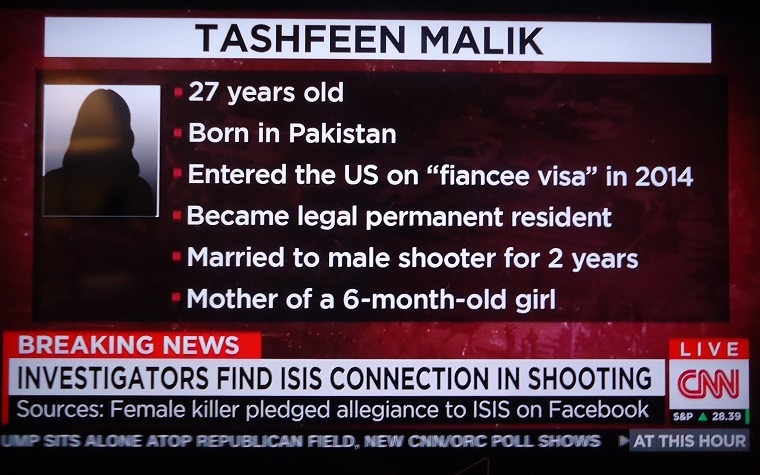
 Aletho News
