British attempts to blacklist Lebanese resistance movement end in failure
Press TV – June 5, 2013
The UK government has failed in its desperate attempt at the European Union to blacklist the Lebanese resistance movement Hezbollah as a “terrorist group”, local media reported.
The failure came after Britain was unable to convince its European allies that Hezbollah was behind an attack on Israeli tourists in Bulgaria last year, according to British media outlets.
The bombing happened last July in the Black Sea resort of Burgas, where five Israeli tourists, a Bulgarian driver and the bomber were killed.
This was considered as a crucial part of the UK government’s rationale to convince the EU to blacklist Hezbollah as a terrorist organization.
However, several EU countries voiced doubt over the evidence linking the resistance movement to the bombing.
Hezbollah enjoys a major political and social standing within the Lebanese society and the EU nation also voiced concerns that blacklisting it could create instability in Lebanon.
Meanwhile, after a one-year probe, the Bulgarian government too was unable to submit credible proof that Hezbollah was involved in the attack.
“An attack takes place and immediately all over the world, governments are saying it was Hezbollah,” said Elena Pavlova, a Middle East analyst based in Sofia. “Yet, we have waited a year and still no one has given any proof.”
Along with local journalist Ruslan Yordanov, she found al Qaida-linked martyrdom videos online, claiming responsibility a day after the bombing in Burgas.
They wonder whether evidence pointing towards alternative perpetrators was deliberately ignored to meet the demands of Israeli and Western governments seeking an excuse to ban Hezbollah.
Hezbollah has also dismissed allegations of involvement in the Burgas plot, and the attempt to blacklist the resistance movement has brought heated responses from Lebanon.
“Any listing of the group as a terrorist organisation will be considered as political provocation,” Lebanon’s acting foreign minister Adnan Mansour, who is seen as close to the Syrian government, said last week. “We know there are Israeli pressures practised on more than one international side in order to accuse Hezbollah of terrorism.”
Enough doubts remain to make several EU governments uncomfortable about blacklisting the group, and the support of all 27 members is needed for the motion to pass.
Related articles
- UK bid to blacklist Hezbollah fails to get EU backing (independent.co.uk)
- Why is the UK pushing the EU to designate Hezbollah as a “terrorist” group? (alethonews.wordpress.com)
US Muslim man sues FBI over months of torture abroad
Press TV – June 2, 2013
An American Muslim man has sued the US Federal Bureau of Investigation (FBI) and the State Department over the claim that he was subjected to torture at their behest while being held abroad.
On Thursday, Yonas Fikre, a Sudanese man of Eritrean descent, filed a lawsuit in US District Court in Oregon seeking USD 30 million in compensation as well as injunctions to prevent the US government from treating anyone else the way he was treated.
The plaintiff says that the FBI took an interest in him in 2009, when he decided to move from Portland, Oregon, to Sudan in order to open an electronics retail business in the North African country.
In April 2010, Fikre was summoned to the US embassy in Khartoum by a man claiming to be an official requiring advice on “how Americans might stay safe during a period of political turmoil in Sudan.”
Upon arrival, he was ushered into a small room and interrogated by FBI agents David Noordeloos and Jason Dundas for information on worshippers at Portland’s largest mosque, Masjid al-Saber.
The agents sought to recruit Fikre as an informant at the mosque, and were angered when he refused.
Fikre left Sudan in June 2010 and arrived in the United Arab Emirates in September 2010, where he obtained a residency permit.
He was apprehended by Emirati police in June 2011, when they “invaded” his house in Abu Dhabi.
Fikre was then incarcerated for 106 days in solitary confinement in a windowless cell, and was beaten repeatedly during the period.
Named in Fikre’s suit are US Attorney General Eric Holder, Secretary of State John Kerry, FBI Director Robert Mueller, FBI Terrorism Screening Center Director Timothy Healy, and FBI agents Noordeloos and Dundas.
Fikre’s story echoes those of Naji Hamdan, Amir Meshal, Sharif Mobley, Gulet Mohamed, as well as Yusuf and Yahya Wehelie.
The six American Muslim men say that, while traveling abroad, they were arrested, questioned, and in some cases abused by local security forces at the behest of the US government.
Iranian-American given 25-yr jail term
Press TV – May 30, 2013
An American judge has passed a 25-year prison sentence for the Iranian-American citizen Manssor Arbabsiar over allegations of his participation in a plot to kill the Saudi ambassador to the US.
On Thursday, New York federal Judge John Keenan passed the maximum sentence and said Arbabsiar must be taught a lesson for his involvement in a plot that Washington cannot tolerate.
His lawyers argued for a jail term of 10 years and said that he is suffering from mental disorders.
Arbabsiar was arrested at New York’s John F. Kennedy International Airport on September 29, 2011.
He was detained on charges of planning to assassinate Saudi Ambassador Adel al-Jubeir in a bomb attack at a restaurant in Washington.
Arbabsiar signed a plea bargain offered to him by Preet Bharara, US attorney for the Southern District of New York. He was represented by Sabrina Shroff, a federal public defender, appointed by the court.
Arbabsiar’s family says that the plea bargain was signed under duress. They add that Shroff misguided them about the terms of the plea agreement.
Iran has said the case was a false scenario made up by American and Israeli officials.
FBI shot Todashev in crown of head
Press TV – May 30, 2013
 Photos shown by the father of Ibragim Todashev, a young man who was killed by FBI agents during investigations into the Boston Marathon bombings, reveal he sustained six gunshot wounds, one in the crown of his head.
27-year-old Todashev was killed by the FBI while he was being questioned about his relationship with Tamerlan Tsarnaev, one of the Boston bombing suspects who was killed by police on April 19.
Law enforcement sources initially said Todashev was armed with a knife and that he “went crazy” brandishing the knife and stabbing an FBI agent. However, unidentified sources said Thursday that Todashev was not armed when the FBI shot him dead.
At a press conference on Thursday in Moscow, Ibragim’s father showed photos of his son’s body which were taken by Ibragim’s friends after the FBI handed the body to them.
“I can show you the photos taken after the killing of my son. I have 16 photographs. I just would like to say that looking at these photos is like being in a movie. I only saw things like that in movies: shooting a person, and then the kill shot. Six shots in the body, one of them in the head,” said Ibragim’s father at the press conference.
On May 22, the day the FBI killed Ibragim, ABC News reported that he was “about to sign a statement” confessing he and Tamerlan Tsarnaev were involved in a 2011 murder of three men in Massachusetts.
However, Ibragim’s father said that his son was questioned twice by the FBI about the Boston Marathon bombings but not about the 2011 murder.
Ibragim’s father also said that his son believed the April 15 Boston attack, in which three people were killed and more than 260 were wounded, was a “set-up.”
Moreover, investigative reporter Ralph Lopez revealed to The Digital Journal on Wednesday that the image released by the FBI as evidence that Tamerlan’s brother left a backpack at the scene of the Boston bombings was made with Photoshop.
Related articles
- What would it take? (alethonews.wordpress.com)
MI5 ‘tried to recruit’ Woolwich murder suspect
RT | May 25, 2013
UK intelligence service MI5 approached Woolwich killing suspect Michael Adebolajo to offer him a job, a friend of the alleged murderer claimed in a BBC interview. Shortly after his statement, police detained the interviewee for questioning.
Abu Nusaybah, who claims to be a close friend of Adebolajo, was promptly arrested on BBC premises following an interview regarding the brutal killing in Woolwich on Wednesday. During the interview, Nusayaba stated that Adebolajo told him MI5 had “harassed” him for information on repeated occasions, and had even attempted to recruit him.
“But after him saying that he didn’t know these individuals, what he said was they asked him if he would be interested in working for them. He was explicit in that he refused to work for them but he did confirm he didn’t know the individuals,” Nusayaba said.
The Metropolitan Police said in a statement on Friday that a 31-year-old man had been detained in London under the Terrorism Act. Police said the arrest was not directly related to Wednesday’s murder.
MI5 acknowledged on Thursday that Adebolajo had been known to them for eight years, prompting criticism that they could have taken steps to prevent the murder of 25-year-old Army Drummer Lee Rigby.
Michael Adebolajo and Michael Adebowale are suspected of hacking Rigby to death in broad daylight on Wednesday. The two suspects were shot by police during their arrest, and are now in hospital awaiting police questioning. Footage of Adebolajo surfaced showing him brandishing a bloody cleaver, claiming the attack was an “eye-for-an-eye” act to avenge Muslims killed abroad by UK troops.
Nusayaba claimed that when he became acquainted with Adebolajo, the murder suspect did not exhibit any extremist Islamist tendencies. However, following a trip to Kenya last year where Adebolajo was allegedly taken into custody by the Kenyan military and was tortured and sexually abused, Nusayaba said he changed.
“He was not his bubbly self,” Nasayaba said, adding that he became less talkative following the trip.
Relatively little is known about the two suspects who committed the atrocity in Woolwich on Wednesday, which was condemned in the UK press as “Baghdad-style violence.” It was confirmed that Adebolajo and Adebolawe are UK citizens from devout Christian families of Nigerian descent, who later converted to Islam.
He was also known to hand out radical Islamist leaflets that decried UK military involvement in Iraq and Afghanistan.
Police raided Adebolajo’s family home in Lincolnshire following the killing. The family reportedly moved away from London over concerns their son was becoming more radicalized.
There have been a number of arrests in London in connection with Wednesday’s murder. Detectives took a 29-year-old woman at a residential address in south London into custody on suspicion of conspiracy to commit murder on Thursday. A 29-year-old male was also arrested on suspicion of conspiracy to commit murder.
‘Never in his life’: Father of Tsarnaev’s friend questions FBI slaying of son
RT | May 22, 2013
An FBI agent shot Tamerlan Tsarnaev-linked triple murder suspect Ibragim Todashev in Florida, allegedly after the suspect attacked him with a knife. But Todashev’s father Abdulbaki told RT he strongly doubted his son could attack the agent first.
Following reports that a Chechen man Ibragim Todashev, suspected in a 2011 triple murder in Massachusetts alongside the elder Tsarnaev and questioned about the Boston bombings previously, was shot by an FBI agent during interrogation in Orlando, Florida, RT had a phone conversation with the suspect’s father.
The elder Todashev described his son as “a very calm” man, who wouldn’t become aggressive for no reason.
“Never in his life would he attack anyone unprovoked,” Abdulbaki Todashev stressed.
Abdulbaki, who lives in Grozny, Chechnya, said he was not contacted by anyone from the US, and his only sources about Ibragim’s fate were neighbors citing media agencies.
Having heard the reports that Ibragim was questioned by a group of people, including several policemen, Abdulbaki also said he does not believe he would rush to engage in a one-sided fight.
He explained that his 27-year-old son studied in the Russian city of Saratov, and later in Grozny, but decided to give up his education and move to the US after going on a student internship there.
Ibragim decided to leave for Florida because he “liked America,” Abdulbaki explained, adding he never got to know what occupation, if any, his son had in the US, other than practicing sports.
Abdulbaki said they were not acquainted with the Tsarnaev family at home in Chechnya. Ibragim knew Tamerlan Tsarnaev only because they went to the same gym when he stayed in Boston, he added.
Ibragim “couldn’t take part” in the Boston Marathon bombings as he was undergoing a surgical operation on his tendons in Florida days before the bombings and “had to learn how to walk again,” the father said.
Todashev’s friend Kushen Taramov said he and Ibragim had been interrogated about the bombings earlier this week.
But reports said that on Wednesday the investigators were questioning Todashev over his alleged role in an unsolved 2011 triple homicide in Waltham, Massachusetts, which the bombing suspects Tamerlan and Dzhokhar Tsarnaev have been implicated in, and that he was ready to sign a confession.
Todashev allegedly took out a knife and attacked the FBI agent questioning him, but was shot to death.
Taramov said Ibragim was going to fly back home to Chechnya, but the FBI insisted that he postpone his trip for “one last” interview. Abdulbaki also knew that his son was flying to Grozny on May 24.
Related articles
- This story is true; the facts have been fabricated to keep the false flag flying
- FBI’s Track Record On Creating Terrorism Destroys The Official Boston Marathon Bombing Narrative
- Boston Bombing investigation will mirror the Oklahoma City Bombing cover-up
- Israeli police head to US to aid in Boston Marathon bombing investigation
- Industry: biometrics business valued at $10 billion by 2018
- Rahm Emanuel Stresses Value Of Surviellance Cameras In Probe Of Boston Bombings
- Expanding Security State
This story is true; the facts have been fabricated to keep the false flag flying
By Greg Felton | Aletho News | May 9, 2013
For decades, pretentious wonks have declared that we live in “The Information Age,” as if information were a commodity unique to our time. Inanity aside, the claim is patently false, notwithstanding the advent of computers and virtually instant communication.
We do not live in an “Information Age” because “information” connotes data that is beneficial and objectively valid. Information can help solve problems, educate, and generally improve life. This was true of written language, movable type, the radio and the telephone, but look around today—do you see problems being solved, people becoming smarter, or life getting better? I thought not.
A more accurate expression for our time is “The Disinformation Age.” Though it is also not unique to our time, it at least captures the pervasive abuse of information that has made our society the opposite of an “informed” rational society: dissent is a subversive act; citizens are enemies of the state; the media conceal evidence; and the police enforce police-state edicts.
If these dystopian qualities were the basis for a movie or TV show, we could take comfort in the knowledge that justice would eventually prevail.
We’d be able to cheer for a rebellious anti-hero like John Connor (Terminator series), Det. Del Spooner (I, Robot), or Insp. Harry Callaghan (Dirty Harry series) to bring down the system. We would see detectives or scientists analyzing evidence (Columbo, CSI: Crime Scene Investigation, Bones) instead of destroying or ignoring it. We might be treated to the sight of the police treating a suspect humanely and reading him his rights (Kojak, Hill Street Blues, Dragnet). We might even see a dogged investigator exposing a cover up or government corruption (All The President’s Men, Erin Brockovich), instead of scheming to keep it hidden from the public.
This world of scripted entertainment, unreal though it may be, is able to depict healthy relationships between authorities and the truth, and between authorities and citizens. Such shows do not depict an idealized future; they give us fading afterimages of our society before the Military-Israel Complex and neo-conservative sociopaths gave us the “War on Terrorism” and declared justice obsolete. Here’s how the Boston Marathon bombing was scripted to serve the expanding surveillance state and stoke the “War on Terrorism.”
• Stage a lethal attack against a civilian U.S. target;
• Blame Arabs or some other Middle Eastern-looking types for the crime;
• Have FBI agents in place to ensure containment and control of the investigation;
• Justify their existence by having a “bomb drill” going on at the same time;
• Keep the public ignorant of the drill;
• Make sure the scapegoats are killed or otherwise kept away from the media;
• Stage conspicuous displays of gratitude for police agencies to reinforce the illusion that they are needed to fight “terrorism”; and
• Ensure that evidence is ignored or destroyed, and dissenting voices are harassed into submission so that the pre-established cover story can be marketed to a gullible public.
Like the 2001World Trade Centre Attack, which followed the same basic script although on a much larger scale, the Boston Marathon bombing story has come completely unraveled. Every couple of days it seems that some other detail comes out that demands to be investigated:
• No credible motive was ever given for the Tamerlan and Dzhokhar Tsarnaerv to have made the bombs.
• The FBI failed to disclose knowing the brothers; the agency had had a relationship with them going back at least two years.
• The FBI had to know them because the boys’ uncle Ruslan Tsarni (formerly Tsarnaev) is an ex-contractor for Halliburton, and was married to the daughter of Graham Fuller, a former vice chairman of the National Intelligence Council at the CIA and senior political scientist at RAND.
• Boston Police claim Dzhokhar Tsarnaev was shot in a gunfight, but video footage shows that he was unarmed.
• Dzhokhar was accused of leaving his bomb-laden backpack at the race, but a surveillance pic clearly shows him leaving with it.
• No explanation was given for the sudden appearance of Israeli police who just happened to be there to lend assistance.
• The public was not told that several members of a private security kill squad were on site.
This last omission, combined with the FBI’s immediate refusal to consider other suspects, clearly suggests a false-flag scenario. The following table identifies this kill squad.
Are these the Marathon bombers?

Click here for downloadable pdf enlargement.
To date, no news agency will touch this angle, even though these and other pics have been available on the Internet for weeks. Nevertheless, New Hampshire State Senator Sheila Tremblay correctly said that a black ops team was behind the bombing and even cast doubt on the claims of injury since one amputee did not look as if he were in pain. This was undoubtedly true because many of the amputees were paid actors who had already lost their limbs. Tremblay was pressured into issuing a political apology.
If this were part of a movie script, I guarantee there would be a crusading detective or journalist examining the evidence, interviewing people like Tremblay honestly, and asking intelligent questions like:
What was Craft International doing at the Marathon?
Why were they even needed?
How many Craft mercenaries were on site?
Who hired them—FBI, DHS, Boston police?
Why were amputee actors in the crowd, and who hired them?
What are the names of the two agents in pic #1?
Have these agents been interviewed regarding the missing backpack?
Has anyone proved that the exploded backpack even belonged to the Tsarnaev brothers?
 For an excellent example of how justice triumphs over police corruption in the world of entertainment, the 1997 movie L.A. Confidential has thematic elements in common with the Boston bombing. [CAUTION SPOILER ALERT]
The film, centres around the culture of violence and corruption that pervades the L.A. Police Department in the 1950s. The catalyzing event is a multiple murder that takes place late one night in a seedy diner. A car belonging to “three negroes” was seen in the area at the time, and so the precinct captain makes them the sole focus of police inquiries.
Under interrogation, a career-minded but idealistic lieutenant realizes the story doesn’t wash, and starts looking for answers. He finds unlikely support from a thuggish officer and a sergeant who works on a TV show.
If you’re wondering what an honest investigation into the Boston Marathon bombing might have looked like, here are a few scenes for your entertainment. Shows like this accurately reflect our police-state but they can inure us to disinformation. This kind of entertainment has to be seen not as a comforting, nostalgic escape, but the basis for a new reality script since the one we have is transparently indefensible.
Related articles
- FBI’s Track Record On Creating Terrorism Destroys The Official Boston Marathon Bombing Narrative
- Boston Bombing investigation will mirror the Oklahoma City Bombing cover-up
- Israeli police head to US to aid in Boston Marathon bombing investigation
- Industry: biometrics business valued at $10 billion by 2018
- Rahm Emanuel Stresses Value Of Surviellance Cameras In Probe Of Boston Bombings
- Expanding Security State
NYT on Chemical Weapons and War in Syria
By Michael McGehee | NYTX | May 6, 2013
“We have been very clear to the Assad regime but also to other players on the ground that a red line for us is, we start seeing a whole bunch of weapons moving around or being utilized.” — Obama Threatens Force Against Syria, The New York Times, August 21, 2012
When President Obama spoke these words last August he might have dug himself a hole twice as deep as the one he was in last week.
As four NYT journalists reported on Sunday’s front page article “Off-the-Cuff Obama Line Put U.S. in Bind on Syria”: “Confronted with evidence that chemical weapons have been used in Syria, President Obama now finds himself in a geopolitical box, his credibility at stake with frustratingly few good options.”
If there will be any effort to hold Mr. Obama’s feet to the fire the heat just got hotter.
Buried on page A9 of Monday’s edition of “the paper of record” was a statement by Carla del Ponte, a United Nations human rights investigator looking into the claims that chemical weapons were used in Syria:
The United Nations independent commission of inquiry on Syria has not yet seen evidence of government forces using chemical weapons, which are banned under international law, said Carla Del Ponte, a commission member.
“Our investigators have been in neighboring countries interviewing victims, doctors and field hospitals,” Ms. Del Ponte said in an interview with Swiss-Italian television. “According to their report of last week, which I have seen, there are strong, concrete suspicions but not yet incontrovertible proof of the use of sarin gas, from the way the victims were treated.”
“This was use on the part of the opposition, the rebels, not by the government authorities,” she added, speaking in Italian.
Question: Will President Obama hold the rebels accountable for crossing his red line?
In his own words he did say that he has “been very clear to the Assad regime but also to other players on the ground” [emphasis added] that the use of chemical weapons is a red line that even the Times saw last summer as a threat of force.
The question is not likely to be answered in the affirmative. This is the politics of war. For more than two years the rebels have been carrying out terrorist bombings, grisly executions, and other assorted attacks that would likely have had Washington and its allies foaming at the mouths were it the Assad regime who was the perpetrator.
Washington has failed to join the Syrian government in their own War on Terror, even though al Qaeda is active in the country. And it just goes to show as one more example: when al Qaeda is used as a boogeyman for war we should not take the pretext seriously, as in the case of Mali. If al Qaeda is on the same side as Uncle Sam, as they were in Afghanistan in the 1980s, the Balkans in the 1990s, Libya in 2011, and now Syria, then there will be no drone attacks on the terrorists.
And now we see al Qaeda-linked terrorists suspected of using chemical weapons. Don’t look for the U.S. to come to the defense of the Syrian government.
Already we can see the change of attitude reflected at The New York Times.
Not two weeks ago, on April 26, 2013, it was front page news at the NYT that “White House Says It Believes Syria Has Used Chemical Arms.”
From that moment the story became a sensation. It fit well into the parameters of the propaganda system. An official enemy who we are actively trying to overthrow may have used chemical weapons and provided a clear pretext for force. Here comes the march to war.
But when UN investigators looked into the matter and reported that “Syrian Rebels May Have Used Sarin,” the story fell from grace and was pushed to page A9.
This differential treatment signals the death of the “red line” story, which is too bad because it would have been interesting to see The New York Times, or anyone in the mainstream media, investigate how Syrian rebels could have gotten a hold of sarin, especially considering a former Bush official has openly considered the idea of Israel being behind the attack.
The differential treatment may possibly throw a wrench in the drive to war . . . for now. Because, also on page A9 of Monday’s edition of The New York Times is “Attacks on Syria Fuel Debate Over U.S.-Led Airstrikes,” a report of an Israeli attack in Syria:
WASHINGTON — The apparent ease with which Israel struck missile sites and, by Syrian accounts, a major military research center near Damascus in recent days has stoked debate in Washington about whether American-led airstrikes are the logical next step to cripple President Bashar al-Assad’s ability to counter the rebel forces or use chemical weapons.
That option was already being debated in secret by the United States, Britain and France in the days leading to the Israeli strikes, according to American and foreign officials involved in the discussions. On Sunday, Senator John McCain, who has long advocated a much deeper American role in the Syrian civil war, argued that the Israeli attacks, at least one of which appears to have been launched from outside Syrian airspace, weakens the argument that Syria’s air defense system would be a major challenge.
“The Israelis seem to be able to penetrate it fairly easily,” Mr. McCain said on “Fox News Sunday.”
While attacks in Syria might be easier than previously suspected, the justifications for war received a setback. But if history is any guide this is only a minor and temporary one.
Former Bush Administration Official Blames Israel for Use of Chemical Arms in Syria
Fars News Agency | May 5, 2013
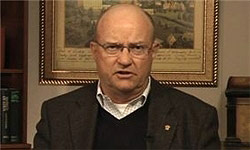 TEHRAN – Retired US Army Colonel Lawrence Wilkerson, who once served as Secretary of State Colin Powell’s Chief of Staff, believes that the chemical weapons used in Syria may have been an Israeli “false flag” operation aimed at implicating Bashar Assad’s regime.
Wilkerson made his astounding assertion in an interview on Current TV, the network once owned by former Vice President Al Gore and recently purchased by Al-Jazeera, Haaretz reported.
Wilkerson said that the evidence that it was Assad’s regime that had used the chemical weapons was “flaky” and that it could very well have been the rebels or Israel who were the perpetrators. Asked why Israel would do such a thing, Wilkerson said, “I think we’ve got a basically geostrategically, geopolitical inept regime in Tel Aviv right now.”
“I think we saw really startling evidence of that,” Wilkerson continued, “in the fact that President Obama had to tell Bibi Netanyahu ‘Pick up the phone, you idiot, call Ankara and get yourself out of this strategic isolation you’re in right now.'”
A “false flag” operation is a covert attack on foreign or domestic soil carried out by governments or organizations under a false identity, aimed at placing blame on the enemy. It originates with a ruse once used in naval warfare in which ships would hoist the enemy’s flags in order to infiltrate his ranks.
Wilkerson,63, a former Army helicopter pilot who flew combat missions in Vietnam, served as Colin Powell’s chief of staff in 2002-2005. He was responsible for reviewing the intelligence information used by Powell in his by now infamous February 2003 United Nations Security Council appearance on Saddam Hussein’s weapons of mass destruction.
After his retirement, Wilkerson described this presentation as “a hoax” and became an outspoken critic of the Bush Administration’s handling of the Iraq war. He now serves as a professor at Virginia’s William and Mary College and is a guest commentator on several US television networks.
Speaking on the Current’s Young Turks program, Wilkerson said that because of the instability in the Middle East, Israel’s current geo-strategic situation is “as dangerous as it’s been since 1948.” He added that President Obama “has got to be very circumspect about what he does in exacerbating that situation”.
“Netanyahu is clueless as to this,” Wilkerson said. “I hope President Obama gave him a lecture in geostrategic realities.”
Featured Video
Racist Seinfeld Dances for Joy as Bibi Unveils His New Map
or go to
Aletho News Archives – Video-Images
TV Drama Review
Japanese drama projects Japan’s wartime atrocities onto Chinese characters

Global Times | October 25, 2026
By portraying Chinese characters as perpetrators of ruthless violence while casting Japanese Self-Defense Forces (SDF) intelligence operatives as defenders, the season 2 of the Japanese drama Vivant has recently drawn criticism from Chinese netizens, who argue that its depiction turns historical reality on its head while ignoring Japan’s wartime atrocities.
The TBS drama series – a spy suspense story in which an alleged unofficial intelligence unit of the SDF operates across the globe — has attracted a passionate fanbase. Its currently airing season 2 opened with a household rating of 18.8 percent, the highest for a TV drama this year, according toa commentary article by Japanese media Toyo Keizai.
What draws attention is the portrayal of the enemies in the series, the article noted. Scenes in which the Chinese organization subjects kidnapped members of the SDF unit to brutal torture are repeated with unrelenting intensity.
It is rare for Japanese TV dramas to explicitly portray a real-life country as the enemy, the article noted.
Japanese Prime Minister Sanae Takaichi also made a reference to the drama, saying that she has been recording Vivant and hopes to binge-watch it over the year-end and New Year holidays, according to Japanese media outlets.
China’s CCTV News report on Sunday revealed that the drama features scenes in which Chinese personnel cut off the fingers of and stab Japanese intelligence operatives in the abdomen. Such acts bear striking similarities to the torture inflicted on Chinese nationals by invading Japanese troops during the World War II.
The drama distorts the truth by attributing these atrocities to modern Chinese characters. Beneath the surface, it subtly glorifies Japan’s cross-border overseas operations, blurs the functional boundaries of the SDF and implicitly promotes an expansionist narrative, per CCTV News. … continue
Blog Roll
 Aletho News
- Iran FM Araghchi: “Hormuz Will No Longer Be the Same”
- EU facing trillion-euro debt hole while seeking more cash for Kiev
- How US, Europe, Persian Gulf states exhausted missile stockpiles, splurged billions to defend Israel
- Up in arms… Koreans reject U.S. empire’s plan to make South Korea the next Ukraine
- Iran, Turkey, Pakistan, Saudi Arabia could advance region-led security framework in Tehran: FM spox
- Netizens condemn Japanese drama for projecting Japan’s wartime atrocities onto Chinese characters
- Racist Seinfeld Dances for Joy as Bibi Unveils His New Map
- A West Bank War for Netanyahu’s Election Campaign, Could It Backfire?
- Yemen denounces European Parliament’s ‘hypocritical’ push to blacklist Ansarullah
- Qalibaf: UAE’s UN bid aims to ‘clear the runway’ for ‘Greater Israel’, whitewash genocide
- If Americans Knew
- Israel punishes Palestinian prisoners with solitary confinement for making a cake
- US midterms: Where do candidates in key Senate races stand on Israel, Gaza, and Iran?
- Israeli forces demolish Hebron homes, displace thousands of Palestinians as raids expand
- Their Son Died in Israeli Prison. No Answers. No Body
- Biden’s Israel Catastrophe
- Why Israel’s latest assault on Hebron is so significant for the West Bank
- Israel Used “Where’s Daddy?” AI to Relentlessly Murder Palestinian Journalists and Their Families in Their Homes from October to December 2023
- DAILY UPDATE: Latest essential news on Palestine, Israel, & region
- Netanyahu Says Israel Must Prepare for Banking Sanctions, Floats Crypto as a Possible Bypass
- Latest updates from Israeli assault on West Bank
- No Tricks Zone
- Sudden Stratospheric Warming, Powerful El Niño Combination May Lead To Extreme Europe Cold, Energy Crisis!
- Two New Studies Find Thwaites Glacier Melt Cannot Be Driven By Human Activity Or A Warming Ocean
- E-Cars Reduce CO2 Emissions By Only 41% Compared To Internal Combustion Engine Vehicles
- Predictions Made By Renowned Climate Professor Over Past Decades Have Been Proven To Be Poor
- New Study Suggests Large Regions Of The Pacific Ocean Have Been Cooling For The Last 80 Years
- Germany’s Green Energy Debacle: High Energy Costs Force Kahla Porzellan to Close After 182 Years!
- New Study: 50 Years Of The Most Aggressive ‘Net Zero’ Policies Can Only Affect The Global Climate By 0.03°C
- US September “Heat” Was No Record…Many Records Set Decades Ago
- Latest European Green Energy Debacle; Portugal’s Largest Flagship Solar Park Insolvent!
- Green Energy Debacle: German Expert Professor Fritz Vahrenholt Warns Of Severe Economic And Social Consequences

