We all know the story of bin Laden and Al Qaeda, the story that was repeated ad nauseam in the days, weeks and months after the catastrophic, catalyzing events of 9/11. So often was that story repeated that the hypnotized public forgot that it was, at base, just that: a story. . . .
John Miller, an ABC News correspondent who would go on to become the FBI’s chief spokesman, ends an 11-day journey through the wilds of the Afghanistan-Pakistan border. The first thing he notices is the rumbling of the generators providing the camp with power and the smell of gasoline. The second thing he notices is a hail of bullets. Bin Laden’s convoy is arriving.
Osama bin Laden is flanked by seven bodyguards, who—as Miller immediately recognizes—are simply there to put on a show. “Their eyes darted in every direction for any attacker,” he later recounted. “This was either merely theatrical or entirely pointless, because with hundreds of rounds being fired into the air, it would have been impossible to pinpoint an assassin.”
Following the security detail into the hut, there Miller became one of the handful of western journalists to interview the elusive Osama bin Laden.
OSAMA BIN LADEN (VIA INTERPRETER): We believe that the biggest thieves in the world are Americans and the biggest terrorists on earth are the Americans. The only way for us to fend off these assaults is by using similar means. We do not differentiate between those dressed in military uniforms and civilians; they’re all targets in this fatwa.
Miller has traveled halfway around the world to interview bin Laden, the reclusive terrorist leader who has just issued a religious fatwa requiring Muslims to kill Americans. But this interview, too, is just for show. Forced to submit his questions in writing ahead of time, Miller is informed that the answers will not be translated for him. There will be no follow-up questions.
It is spectacle. Theater and little else. As such, it is a fitting introduction to the man who would become the bogeyman of the 21st century. The interview was followed in short order by a more explosive drama.
PETER BERGEN: What are your future plans?
OSAMA BIN LADEN: You’ll see them and hear about them in the media . . . God willing.
Osama bin Laden got his wish. Around the world, a frightened and confused public received their introduction to the age of terror on the morning of September 11, 2001, through the media. It was there, in the flickering images of their TV screens, that the masses began to learn about the world of Islamic terrorism and of the cave-dwelling Saudi exile in Afghanistan who was bringing that terror to their doorstep.
ANCHOR: Tell us a bit about Osama bin Laden, what sort of resources in manpower and money he’s got and what he’s trying to achieve.
KATIE COURIC: Meanwhile, Osama bin Laden is a name that we have been hearing all day long as an individual who may—and we emphasize may—be responsible for these terrorist acts.
We all know the story of bin Laden and Al Qaeda, the story that was repeated ad nauseam in the days, weeks and months after the catastrophic, catalyzing events of 9/11. So often was that story repeated that the hypnotized public forgot that it was, at base, just that: a story.
In the ahistorical fable of tv soundbites, terrorism is a modern invention—created out of whole cloth by Osama bin Laden and Al Qaeda. And, at the same time, Islamic fundamentalism is a force of nature, something that has always existed in the Middle East—the product, perhaps, of some sandstorm on the Arabian peninsula in the distant past.
But this is a lie. In truth, the rise of Islamic fundamentalism in the modern era and the rise of terrorism as a political tool cannot be understood without confronting some very well-documented but long-repressed history.
Ever since the mid-18th century—when the British East India Company gained dominion over the Indian subcontinent—the history of Islam as a political and cultural force has been intimately tied to the fortunes of Empire and the aims of the Western powers. The British Empire in particular did much to shape the map of the modern day Middle East and to influence the course of its religious and political forces.
This influence can be seen throughout the 18th and 19th centuries.
Britain’s gradual takeover of the Indian subcontinent led to the British Empire becoming, in the estimation of Winston Churchill, “[T]he greatest Mohammedan power in the world.”
The 19th century “Great Game” between Victorian England and Tsarist Russia for control of Central Asia saw the British propping up unpopular Islamic rulers throughout the region as a buffer between Russia and the “crown jewel” of the British Empire, India.
Britain’s desire to maintain its access to India led to the British conquest of Egypt in 1882, resulting in 40 years of British rule and a military presence in the country that was not removed until the Suez Crisis of 1956.
From Khartoum to Constantinople, Jerusalem to Jakarta, no part of the Muslim world could escape the influence of the British crown. Sometimes that influence was used to strengthen the rule of Islamic hardliners. Sometimes, as with the Mahdist rebellion in Sudan, that influence was used to put down Islamic uprisings. But in each case, the British Empire’s goal was clear: to use whatever means at its disposal to undermine movements and governments unfavourable to its rule, and to install and encourage those forces that were willing to cooperate with the crown.
This was evident in India, where George Francis Hamilton, secretary of state for India, wrote in 1886 of the British strategy of using Muslim and Hindu divisions in the country to their advantage along the lines of the old Roman imperial strategy of divide and rule:
I think the real danger to our rule, not now, but say 50 years hence is the gradual adoption and extension of Western ideas of agitation organisation and if we could break educated Indians into two sections holding widely different views, we should, by such a division, strengthen our position against the subtle and continuous attack which the spread of education must make upon our system of government. We should so plan educational text-books that the differences between community and community are further strengthened.
But perhaps no clearer example of the British Empire’s role in shaping the modern Muslim world can be found than the story of the ascendance of the House of Saud and the formation of the modern-day Kingdom of Saudi Arabia. Once again, British fingerprints can be found on every aspect of the story.
When Britain began contemplating a shift from its centuries-long policy of supporting the Ottoman Empire in the Middle East, it was Captain William Shakespear—a British civil servant and explorer—who made the first official contact with Ibn Saud, the progenitor of the Saudi dynasty who would go on to found the Kingdom of Saudi Arabia. In addition to taking the first photographs of the future Saudi king, Shakespear became Ibn Saud’s friend and military advisor, helping to steer the rising Arab leader away from alliance with the Ottomans and into a treaty with the British. Shakespear died on the battlefield at Jarab in 1915, where the British-backed Ibn Saud was battling his Turkish-backed rival, Ibn Rashid.
After Shakespear’s death, another British agent, Colonel Thomas Edward Lawrence, gained international fame as “Lawrence of Arabia” for his role in the Arab Revolt against Ottoman rule in the Middle East. Although his own self-serving autobiography and the Hollywoodization of his story cemented in the popular imagination the idea that Lawrence was motivated solely by his concern for the Arabs and their independence . . .
PETER O’TOOLE (AS T. E. LAWRENCE): We do not work this thing for Faisal.
ANTHONY QUINN (AS AUDA ABU TAYI): No? For the English then?
. . .the documented history of Lawrence’s actions and motivations tells a very different story. A memo on “The Politics of Mecca” penned by Lawrence for his intelligence handlers in 1916, reveals a more duplicitous British calculus for supporting certain factions of the Arab Revolt:
The Arabs are even less stable than the Turks. If properly handled they would remain in a state of political mosaic, a tissue of small jealous principalities, incapable of cohesion, and yet always ready to combine against an outside force. The alternative to this seems to be control and colonization by a European power other than ourselves, which would inevitably come into conflict with the interests we already possess in the Near East.
Later, in a report on the “Reconstruction of Arabia” Lawrence penned for the British Cabinet at the end of the war, he was even more explicit about the cynical divide-and-rule tactics at play in British support for the Arab Revolt: “When war broke out an urgent need to divide Islam was added, and we became reconciled to seek for allies rather than subjects. [. . .] We hoped by the creation of a ring of client states, themselves insisting on our patronage, to turn the present and future flank of any foreign power with designs on the three rivers.”
ALEC GUINNESS (AS PRINCE FAISAL): Lawrence! . . . Or is it Major Lawrence?
LAWRENCE: Sir!
FAISAL: Ah. Well, General, I will leave you. Major Lawrence doubtless has reports to make. About my people; and their weakness. And the need to keep them weak. In the British interest.
Lawrence and the military and diplomatic personnel of the British empire were indeed busy in the wake of WWI. In many ways, the aftermath of the war represented the zenith of that empire, and the culmination of centuries of British manipulation in the Middle East. Driven by a mixture of political necessity and imperial hubris, the imperial planners had entered into secret agreements that redrew the map of the Middle East and once again affirmed the centuries-old accusation that Perfidious Albion was not to be trusted.
In 1916, the British and French entered into a pact to divide up the territory of the Ottoman empire between themselves should they win the war. This treaty—known as the Sykes-Picot Agreement after the diplomats who negotiated the document—was a direct negation of the web of promises that the British had already made on the land, including the territorial promises they had made to Ali Ibn Husain, the Sherif of Mecca who led the Arab Revolt against the Turks, the Treaty of Darin that had promised Ibn Saud British protection for his conquests in the Arabian peninsula in return for his support in the war, and the Balfour Declaration promising the Zionists a Jewish homeland in Palestine.
Although the revelation of the secret Sykes-Picot Agreement by the Bolsheviks in 1917 proved a considerable embarrassment for the British and French, it did little to hinder their plans. The agreement provided a basis for the ultimate partitioning of the Ottoman empire after the war and the national borders that it helped to create have gone on to shape a century of strife and political conflict in the region.
But it was not enough merely to draw the lines on the maps that would define the post-war Middle East; the British had to shape the development of the region in its own interest, creating entire nations in the process. In the Arabian peninsula, they came to pin their hopes on Ibn Saud, whose sole focus on the conquest of Arabia, they calculated, would counteract the rise of a broader pan-Islamic movement that could challenge Britain’s supremacy in the region. As historian Mark Curtis writes in his book, Secret Affairs: Britain’s Collusion with Radical Islam:
[T]he British government of India had feared British sponsorship of an Arab caliph who would lead the entire Muslim world, and the effects this might have on Muslims in India, and had therefore favoured Ibn Saud, whose pretensions were limited to Arabia.
The subsidy from the British upon which Ibn Saud relied in his quest to unite the peninsula, which stood at £5,000 a month at the end of the war, was raised to £100,000 a year in 1922 by then-Colonial Secretary Winston Churchill. Churchill recognized that Saud’s fighters—the “Ikhwan,” or brotherhood of hardliners and adherents to the strict Wahabbi sect of Islam—were “austere, intolerant, well-armed and bloodthirsty” and “hold it as an article of duty, as well as of faith, to kill all who do not share their opinions and to make slaves of their wives and children.” So why, then, did the British support Saud and his men? “My admiration for him [Ibn Saud] was deep,” Churchill later confessed, “because of his unfailing loyalty to us.”
That loyalty paid off well. The British were the first to formally recognize Ibn Saud’s sovereignty over his newly-conquered territory on the peninsula, and in return Ibn Saud signed a treaty agreeing to stop his forces from attacking Britain’s neighbouring protectorates. In 1932, Ibn Saud became King Saud of the newly-formed “Kingdom of Saudi Arabia.” But even the nation’s new name was British. It was George Rendel, head of the British Foreign Office’s Eastern Department, who suggested it.
The British played similar games throughout the region; arming, funding and encouraging those who would work with them—including violent Islamic radicals—and undermining any potential challengers to British dominance.
In Palestine, the British pardoned Amin al-Husseini—who had been sentenced to 10 years in prison for his involvement in the 1920 Jerusalem riots—and appointed him the Grand Mufti of Palestine (a title invented by the British) on condition that he cooperate with the British authorities.
In Egypt, which became a British protectorate after WWI, the rise of the Muslim Brotherhood—an Islamist mass movement founded by Hassan al-Banna—was at times an explicit threat to the British military presence in the country. Nevertheless, its position as an alternative to both secular nationalism and communism—which Britain regarded as growing threats to its influence in the region—meant that the British were prepared to work with the Brotherhood against their common enemies, even covertly financing the group in 1942.
The extent of British influence over the region during the post-war period was, in retrospect, staggering. But the number of machinations, manipulations and shifting alliances that were required to keep this system of mandates, protectorates and puppet governments going was a sign that the British were not all-powerful. On the contrary. Their influence, and indeed their empire itself, was waning, soon to be replaced by the new rising world superpower, the United States.
The US did not even wait till the end of the Second World War and the dawn of Pax Americana to begin its own “diplomacy” with the Muslims in the region.
NEWSREADER: An American destroyer comes alongside a cruiser at Great Bitter Lake on the Suez Canal in Egypt. It brings Ibn Saud, king of the five million people of Saudi Arabia, to a conference with President Roosevelt, stopping off here on his return from the Crimea conference. The destroyer has been decked out with red carpets for the monarch. This 800-mile trip marks the first time that King Ibn Saud has ever left his native land.
President Franklin Roosevelt’s meeting with King Ibn Saud aboard the USS Quincy on Egypt’s Great Bitter Lake in February 1945 was no ordinary exchange of diplomatic pleasantries. King Saud’s first foreign trip involved a number of unusual requests and special arrangements. The Saudis insisted on bringing a contingent of 48 men even though the Americans had said they could accommodate only 10. They insisted on sleeping in tents pitched on the ship’s deck rather than in the cabins provided. They insisted on bringing their own sheep, as the king believed that good Muslims eat only freshly slaughtered animals.
But, irregularities aside, the meeting was momentous.
Firstly, it demonstrated the importance of the Saudi-US relationship at a time when much of the world knew little and cared less about the happenings on the Arabian peninsula.
Secondly, it established the terms of that relationship: namely, a US guarantee of military defense of Saudi Arabia (including Roosevelt’s promise to “do nothing to assist the Jews against the Arabs”) in return for Saudi concessions, including allowance for US airfields and flyover routes across the kingdom and access to Dharhan, where the California Arabian Standard Oil Corporation (which later became ARAMCO) had drilled the first commercially viable oil well in the country just seven years earlier.
And thirdly, it signaled the dawn of a new era. No longer was the British Empire the primary foreign power driving events in the region. From now on, one of the key foreign policy considerations of the Muslim world was the US and its enormous military and financial resources.
This changeover in world order was not instantaneous. For some time after the end of WWII, the US and British collaborated on operations that furthered their mutual interests in the region. These “interests” included opposing the rising threat of secular nationalist governments that—unlike the House of Saud and other Western-backed monarchies in the Middle East—were less pliable to bribes and more interested in nationalizing their countries’ resources.
In March 1951, the Iranian parliament voted to nationalize the Anglo-Iranian Oil Company—the British oil giant that struck oil near the Persian Gulf in 1908—and offered the premiership of the government to Mohammed Mossadegh, an outspoken secular nationalist. Immediately after taking office, Mossadegh effected the nationalization, stating:
Our long years of negotiations with foreign countries [. . .] have yielded no results this far. With the oil revenues we could meet our entire budget and combat poverty, disease, and backwardness among our people. Another important consideration is that by the elimination of the power of the British company, we would also eliminate corruption and intrigue, by means of which the internal affairs of our country have been influenced. Once this tutelage has ceased, Iran will have achieved its economic and political independence.
The nationalization put Tehran on a collision course with London. But Britain knew that a military intervention was not possible without American approval and, despite harsh economic sanctions on the country and a boycott of the newly nationalized oil industry that was joined by much of the Western world, they could not overthrow the Iranian government themselves. Instead, they had to turn to the US.
Although the Truman administration was initially hesitant to become involved, that changed with the election of Dwight D. Eisenhower and the installation of the Dulles brothers, Allen and John Foster, as Director of Central Intelligence and Secretary of State respectively. By June of 1953, the CIA was already adapting the British coup proposal into their own covert operation, dubbed Operation TPAJAX.
An open secret in the world of intelligence, the CIA/MI6 role in the overthrow of Mossadegh was officially denied by the US government for over half a century and is still unacknowledged by the British government to this day. Nevertheless, the CIA’s own internal history of the operation, first revealed to the public in the year 2000, confirms the extent of the American and British role in the coup. They convinced the Shah of Iran to agree to the plan. They hand-picked General Fazlollah Zahedi as Mossadegh’s successor. They rolled out a propaganda campaign to portray Mossadegh—a devout adherent to democratic nationalism who rigorously excluded the nation’s communist party from his government—as a communist sympathizer who would steer Iran into the arms of the Soviets; they spent hundreds of thousands of dollars bribing journalists, clerics, and even Iranian parliament members themselves to go along with the plot; and they used a network of agents and suitcases full of money to incite riots and protests across the country.
In the end, the operation was a success. Mossadegh was driven from power, General Zahedi took his place, the Western-backed Shah ruled the country with the iron fist of his feared secret police for the next 25 years, and a new agreement on sales of Iranian oil was reached. This time, though, the Anglo-Iranian Oil Company, now rebranded as British Petroleum, would not have a monopoly on the country’s lucrative oil reserves; an international consortium was put together to share in the profits, with American companies Chevron and Standard Oil cut into the deal.
But the eclipse of the old British Empire by the new American superpower became most obvious in Egypt during the Suez Crisis of 1956.
Lying on the key spice and trade routes linking Europe and Asia, the importance of Egypt to the British Empire went back centuries. It was the British Navy under Nelson and the British Army under General Ralph Abercromby that drove Napoleon out of the country during the French campaign there at the turn of the 19th century. But it was the opening of the Suez Canal in 1869 that cemented Egypt’s geopolitical importance for the British Empire.
The Suez Canal—linking the Mediterranean Sea to the Red Sea and drastically reducing sailing distances from Asia to Europe—was technically the property of the Egyptians, but the project had been spearheaded by the French and the concessionary company that operated the canal had been largely financed by French shareholders. An economic crisis in 1875, however, forced the Egyptian governor to sell his own shares to the British. As parliament was not in session at the time of the sale, British Prime Minister Benjamin Disraeli had to turn to his close personal friend, Lionel de Rothschild, for the £4,000,000 required to purchase the shares. After the British conquest of Egypt in 1882, an international agreement was signed declaring the Canal a neutral zone under the protection of the British, whose troops were now installed in the country.
This precarious balance of power lasted in various permutations for over 70 years, first under Britain’s so-called “Veiled Protectorate” of Egypt in the decades leading up to WWI, then in a formal British occupation of the country during WWI and its aftermath, and then under Britain’s unilateral declaration of Egyptian independence in 1922, which stipulated that the British would retain power over Egypt’s defence and foreign policy. Britain’s de facto control over the country was one of the grievances that gave rise to the Free Officers Movement, a cadre of Egyptian nationalists in the ranks of the Egyptian Armed Forces who toppled King Farouk and took over the government in the Egyptian revolution of 1952.
One of the movement’s leaders, Gamal Abdel Nasser Hussein, became President of Egypt in 1954 and began to implement a series of nationalist, anti-imperialist measures that, like Mossadegh, put him at odds with the British forces in his country. These measures culminated with Nasser’s nationalization of the Suez Canal on July 26, 1956.
The Suez Crisis led to a joint British-French-Israeli invasion of the country, but in this case, the US under Eisenhower declined to back the invasion. Instead, Eisenhower—still believing that diplomacy and pressure could turn Nasser from the Soviet orbit and help America leverage its influence over the Arab world—joined the USSR in forcing an end to the invasion.
The crisis marked a definitive turning point. The age of the British Empire were over. The age of the American superpower had begun. From now on, American military and financial power would be the determining factor in the Muslim world, and indeed the world in general.
But the Americans had learned well from their British predecessors. The same tactics of strategic and shifting alliances, double dealings and covert operations that the British had used to maintain their influence for centuries would now be employed by the Americans to leverage their own power.
They applied these lessons in Iran, where they supported the Shah’s brutal dictatorship even as they maintained a secret communication channel with exiled religious leader Ayatollah Khomeini.
They applied these lessons in Indonesia, where the US at various times supported the Islamic factions in their rebellion against the Sukarno government, the Sukarno government itself, and, eventually, Suharto, who slaughtered over half a million people on his US-backed rise to power.
They applied these lessons in the Sinai Peninsula, where, as declassified documents now show, US Secretary of State Henry Kissinger helped engineer the Yom Kippur War so that “the Arabs would conclude the only way to peace was through us” and the Israelis would conclude that “they had to depend on us to win and couldn’t win if we were too recalcitrant.”
And they applied these lessons in Saudi Arabia, where Treasury Secretary William Simon helped enshrine the US dollar’s central role in global geopolitics and saved the US from the 1973 oil crisis by negotiating the petrodollar system, a covert deal with the House of Saud to purchase Saudi oil and sell them weapons and equipment in return for a Saudi pledge to finance American debt by investing their oil revenue in US Treasuries.
This era of American-led intrigue and double dealing would culminate in one of the most important years for the Muslim world in the modern era: 1979.
That was the year of the Iranian revolution, when the American and British overthrow of Mossadegh in 1953 would come home to roost in the overthrow of the Western-backed Shah and the first major victory for the forces of political Islam in the creation of the Islamic Republic of Iran.
That was the year of the seizure of the Grand Mosque in Mecca, when Islamic hardliners shocked the Muslim world by storming the holiest mosque in Islam and, during a dramatic two-week stand off, calling for the overthrow of the House of Saud and the end of its attempts at Westernization.
That was the year Egyptian President Anwar Sadat signed a peace treaty with Israel, normalizing relations between the two countries and leading to Sadat’s assassination by members of Egyptian Islamic Jihad just two years later.
And that was also the year that developments in Afghanistan put in motion a chain of events that would lead to the creation of the group we now know as “Al Qaeda.”
On Christmas Eve, 1979, Soviet troops began an invasion of Afghanistan. Initially, this was portrayed to the American people as a spontaneous act of aggression, the opening salvo in a new campaign by the Russians to conquer the region and upset the world order.
JIMMY CARTER: Fifty thousand heavily armed Soviet troops have crossed the border and are now dispersed throughout Afghanistan, attempting to conquer the fiercely independent Muslim people of that country.
[. . .]
If the Soviets are encouraged in this invasion by eventual success, and if they maintain their dominance over Afghanistan and then extend their control to adjacent countries, the stable, strategic, and peaceful balance of the entire world will be changed.
But this was a lie. As historians with access to USSR document archives now know, the Soviet leadership was extremely reluctant to become entangled in Afghanistan. Well aware of the country’s reputation as a “graveyard of empires,” Soviet politicians and military leaders knew that any attempt to bring Afghanistan under military and political control would be extremely difficult.
Instead, the invasion was the end result of a series of events that threatened to plunge Afghanistan and the surrounding region into chaos.
Starting in the wake of WWII, the urban, cosmopolitan political elite of the rural and agrarian nation of Afghanistan began a series of reforms and development projects that, they hoped, would bring their country into the modern era. Seeking assistance in this task, these leaders turned to the USSR, who, in addition to providing $100 million in low-interest credit to finance the projects, also welcomed members of the country’s political and military elite for training at Soviet institutions. In turn, these young Afghan elites brought communism back to their country.
The Afhgan communists supported a bloodless coup in Kabul in 1973, overthrowing the king and instituting a one-party state whose government included representation by the People’s Democratic Party of Afghanistan (PDPA), a pro-Soviet, Marxist-Leninist party that boasted ties to the Afghan National Army. But the PDPA, frustrated by a perceived lack of progress toward communist goals on the part of this new government, precipitated another coup in 1978. This new communist government, led by Nur Muhammed Taraki, presided over a period of dramatic reform: Land reforms sought to limit how much land a family could own; social reforms abolished Shariah Law, began education of women and sought to end forced marriage and other traditional practices; and political dissidents were rounded up and resistant villagers massacred.
Violently opposed both by the Islamic fundamentalists and conservatives in the country as well as opposing factions within his own party, Taraki was overthrown in September of 1979 and killed the following month. Taraki’s sucessor and one-time protege, Hafizullah Amin, led an even shorter and more turbulent government. Taking over the presidency in September, Amin—who, the Russians feared, was seeking to improve Afghanistan’s relations with the United States—was deposed when Soviet forces entered the country and assassinated him on December 27th, 1979.
The official history—written by the CIA, echoed by the US State Department and propounded in Hollywood productions—maintains that the US response to the events in Afghanistan—a response that would go on to include billions of dollars in arms, funds and training for the Islamic resistance to the Soviet forces—began after the Soviet invasion in 1979.
TERRY BOZEMAN (AS “CIA AWARD PRESENTER”): The defeat and breakup of the Soviet empire, culminating in the crumbling of the Berlin Wall, is one of the great events of world history. There were many heroes in this battle, but to Charlie Wilson must go this special recognition.
Just 13 years ago, the Soviet Army appeared to be invincible. But Charlie, undeterred, engineered a lethal body blow that weakened the Communist empire. Without Charlie, history would be hugely and sadly different.
And so, for the first time, a civilian is being given our highest recognition, that of Honored Colleague. Ladies and gentlemen of the Clandestine Services, Congressman Charles Wilson.
But this, too, is a lie. In reality, the covert operation to aid the mujahideen “freedom fighters” did not begin after the Soviets invaded, and it was not the work of Charlie Wilson.
As former CIA director Robert Gates revealed in his 1996 autobiography, assistance to the Afghan mujahideen did not start after the Soviet invasion, but six months before, in July, 1979, with President Jimmy Carter signing off on a covert operation to assist and fund the resistance forces in Afghanistan. This was done in the full knowledge that these forces might antagonize and draw the Soviets into the country, which is precisely what a certain faction of the Carter White House—known as “the bleeders” for their propensity to “bleed” the Soviet Union through an engaged guerrilla conflict like the US had experienced in Vietnam—wanted to achieve.
This was confirmed two years later by Zbigniew Brzezinski, Carter’s National Security Advisor, in a 1998 interview.
According to the official version of history, CIA aid to the mujahideen began during 1980, that is to say, after the Soviet army invaded Afghanistan on December 24, 1979. But the reality, closely guarded until now, is completely otherwise: Indeed, it was July 3, 1979 that President Carter signed the first directive for secret aid to the opponents of the pro-Soviet regime in Kabul. And that very day, I wrote a note to the president in which I explained to him that in my opinion this aid was going to induce a Soviet military intervention.
The program that Carter signed off on—dubbed Operation Cyclone and billed as “the largest covert operation in history“—continued and expanded throughout the 1980s, leading to the rise of the Taliban and the encouragement of what Brzezinski called in that same interview “some agitated Muslims.”
KENNETH BRANNAGH: US National Security Advisor Brzezinski flew to Pakistan and set about rallying the resistance. He wanted to arm the mujahideen without revealing America’s role. On the Afghan border near the Khyber Pass, he urged the “Soldiers of God” to redouble their efforts.
ZBIGNIEW BRZEZINSKI (in Pakistan): We know of their deep belief in God and we are confident that their struggle will succeed. That land over there is yours, you’ll go back to it one day because your fight will prevail. You’ll have your homes and your mosques back again because your cause is right and God is on your side.
BRZEZINSKI (interview): The purpose of coordinating with the Pakistanis would be to make the Soviets bleed for as much and as long as is possible.
News of the struggle began to spread throughout the Arab world and soon the stories of the brave mujahideen fighting the communist infidels became a rallying cry for jihad. The Afghan resistance had made Peshawar, just over the border in Pakistan, their headquarters, and it was there that visitors from around the Muslim world heard first-hand the tales from the battles against the Soviets and saw for themselves the squalor of the refugees who had been forced from their homes by the Russian invaders.
One such visitor was Abdullah Azzam, a passionate young Palestinian whose militant activism had cost him his job as a lecturer at King Abdulaziz University in Jeddah and had prompted him to take a position in Islamabad so he could be closer to the Afghan jihad. But this was still not close enough, and he resigned his position to dedicate himself full time to the Afghan cause. He spent time in the refugee camps and mujahideen base at Peshawar, issued a fatwa arguing that Muslims had a duty to wage jihad in Afhganistan, and made frequent trips to Jeddah, where he recruited young Muslims for the cause. While in Jeddah, he stayed at the guest flat of a rich young Saudi named Osama bin Laden.
Osama bin Laden was the 17th of 54 children of Mohammed bin Awad bin Laden, an itinerant laborer from Yemen who had worked his way up in the Saudi construction industry to become one of the wealthiest non-royals in the Saudi kingdom. Mohammed bin Laden’s business— today known as the Binladin Group Global Holding Company and comprising a sprawling, multibillion dollar multinational conglomerate involved in some of the largest construction projects in the world—started from humble beginnings.
After arriving in Jeddah from his native Yemen in 1930, Mohammed bin Laden took a job as a dockworker, then as a bricklayer for Aramco during the country’s first oil boom. When Aramco sought to subcontract some of the construction work it had undertaken for the Saudi government, bin Laden used the opportunity to grow his own construction firm. His exacting building standards, combined with his energy, his honesty and his willingness to work shoulder-to-shoulder with his men earned Mohammed bin Laden a reputation as a craftsman and a teacher and brought him to the attention of King Ibn Saud’s finance minister.
The aging King Saud, by now largely confined to a wheelchair, gave bin Laden the chance to renovate his palace in Jeddah so that his car could be driven by ramp directly to his second-floor bedroom. Impressed with bin Laden’s work (and bin Laden’s gesture of personally driving the king’s car up the newly installed ramp to make sure it would hold the weight), the king awarded him with a number of increasingly important projects and even appointed him as an honorary minister of public works. Bin Laden’s business, later rebranded as the Saudi Binladin Group, would go on to construct most of the kingdom’s roads, renovate the Prophet’s Mosque at Medina and even renovate the Grand Mosque in Mecca itself.
Although Mohammed bin Laden’s fortune was split between dozens of heirs, and although Osama’s father divorced his mother shortly after he was born, the younger bin Laden was still born into a life of luxury that few in the kingdom outside the royal family would ever know. Osama bin Laden’s share of the family fortune has been estimated at $30 million and it was expected that he would, like many of his brothers, take up the family business. He studied economics and business administration at King Abdulaziz University, where he met and was influenced by Abdullah Azzam, who was by then was already known for his credo “jihad and the rifle alone: no negotiations, no conferences, and no dialogues.”
Accounts of when and how Osama bin Laden first ended up in Afghanistan differ. According to Osama himself, speaking to Robert Fisk in his first interview for the Western press in 1993: “When the invasion of Afghanistan started, I was enraged and went there at once – I arrived within days, before the end of 1979.” Others contend that Osama had never heard of Afghanistan before the Soviet invasion and that he didn’t set foot in the country itself until 1984.
Whatever the case, by the mid-1980s bin Laden was well-known as one of the key fundraisers for the Afghan cause in the Arab world, using his family connection to gather donations from rich Saudis and delivering them to Pakistan to assist the fighters in the field. In 1984, Osama and Azzam co-founded Maktab al-Khidamat (MAK), or the “Office of Services,” which the US government would later identify as “the precursor organization to Al Qaeda.” The group aimed to recruit the foreign fighters that were taking up Azzam’s call to join the jihad in Afghanistan, with bin Laden providing money through his fundraising connections and with direct contributions.
Initially little more than a guest house in Peshawar where foreign recruits for the Afghan war could stop on their way to the front, the operation quickly expanded as money poured in and more fighters began to arrive. Soon it caught the attention of other figures in the Afghan war, including Gulbuddin Hekmatyar—a brutal Afghan warlord supported by the US to the tune of $600 million who was known for killling more Afghans than Soviets—and Dr. Ayman Al-Zawahiri, the head of Egyptian Islamic Jihad who would go on to become Osama bin Laden’s right-hand man.
The New Yorker has called Zawahiri “The Man Behind Bin Laden.” Syed Saleem Shahzad, a Pakistani journalist with access to senior al-Qaeda commanders, has argued it was Zawahiri, not the “figurehead” bin Laden, who “formulated the organization’s ideological line and devised operational plans.”
Born in a suburb of Cairo in 1951 to a distinguished middle-class family, Zawahiri went on to study medicine at Cairo University, eventually earning a Master’s degree in surgery and serving three years as a surgeon in the Egyptian Army before establishing his own clinic. He wore Western dress, avoided the radical Islamist activism sweeping campus in his university days, and, according to one Westerner who met him in the mid-1970s, didn’t talk or act like “a traditional Muslim.”
But, we are asked to believe, this was all a front. In fact, according to the authors of the officially-sanctioned history of Al Qaeda, Zawahiri was a lifelong radical who had joined the Muslim Brotherhood in 1965 at the tender young age of 14 and was set on his path toward violent jihad the next year, after the execution of the Brotherhood’s then-leader, Sayyid Qutb.
Qutb was famous for his role in inspiring a generation of radical Muslims—including Azzam, Osama and Zawahiri—to take up violent jihad against the West and the forces of modernity in the creation of a new caliphate. Less remembered is Qutb’s assertion that —during the 1960s, when Saudi King Faisal was openly conspiring with the CIA and ARAMCO to stir up anti-socialist Muslim groups and undermine pan-Arabism and Arab nationalism—”America made Islam.”
The then 15-year-old Zawahiri, we are told, responded to Qutb’s execution by helping to “form an underground militant cell dedicated to replacing the secular Egyptian government with an Islamic one.” By the late 1970s, a number of these cells had merged into a larger militant organization, Egyptian Islamic Jihad, which, incensed by President Anwar Sadat’s signing of a peace treaty with Israel, assassinated him during a military parade on October 6, 1981.
Zawahiri was one of over 300 militants rounded up in the wake of the assassination and—having the best command of English among the defendants—became their spokesman for the international press.
PRISONER: For the whole world, this is our word by Dr. Ayman Zawahiri.
AYMAN AL-ZAWAHIRI: Now we want to speak to the whole world. Who are we? Who are we? Why did they bring us here? And what we want to say? About the first question: We are Muslims. We are Muslims who believe in their religion. [inaudible] We believe in our religion, both in ideology and practice, and hence we tried our best to establish an Islamic state and an Islamic society!
Before being arrested, Zawahiri had already spent some time in Peshawar, seeing first-hand the squalor of the refugee camps and even crossing the border into Afghanistan to witness the fighting itself. After his release from prison in Egypt in 1984, Zawahiri made his way to Jeddah and then back to Peshawar.
Thus, by the mid-1980s, all of the main characters that were associated with the rise of modern Islamic terror and the founding of Al Qaeda—Azzam, Osama, Zawahiri and their early associates—were now directly involved in the war in Afghanistan. They were not a single, cohesive group—Azzam and Zawahiri were rivals for Osama’s funds and attention, with Zawahiri even spreading rumours among the mujahideen that Azzam worked for the Americans. But together, they formed the backbone of what would come to be called the “Afghan Arabs,” an inaccurate term for all of the foreign jihadis who came to fight in Afghanistan, both Arab (including Saudis recruited by Osama and Egyptian members of Zawahiri’s Islamic Jihad group) and non-Arab (Turks, Malays and others from across the Muslim world).
The Afghan Arabs were not the main fighting force in Afghanistan. In fact, some argue they were almost totally irrelevant to the fight; making up only a small percentage of the total mujahideen, they often got into quarrels with the Afghan fighters and were responsible for almost no significant victories in the struggle against the Soviets. But the story of these “holy warriors” who had answered the call of jihad spread throughout the Muslim world, helped in no small part by their own propensity for self-promotion. Azzam launched Al-Jihad Magazineto help publicize the Afghan Arabs’ exploits and, with Osama’s funding behind him, was able to make it an international concern. Distributed in America by the Islamic Centre in Tucson, Arizona, the magazine sold thousands of copies per month in the US alone.
But for some time there has been debate about the nature of the US role in fostering and funding the Afghan Arabs. While historians, scholars and journalists agree that CIA funding for the Afghan jihad—estimated to be well over $3 billion—did find its way to the Arab fighters, it has long been debated whether there was any direct contact between American intelligence and Osama bin Laden.
In the officially sanctioned history of the Afghan-Soviet War, the Americans were aiding the people of Afghanistan, brave “freedom fighters” who were engaged in a heroic struggle against the evil Soviet Empire.
RONALD REAGAN: The fact that freedom is the strongest force in the world is daily demonstrated by the people of Afghan. Accordingly, I am dedicating on behalf of the American people the March 22nd launch of the Columbia to the people of Afghanistan.
REAGAN: The support that the United States has been providing the resistance will be strengthened, rather than diminished, so that it can continue to fight effectively for freedom. A just struggle against foreign tyranny can count upon worldwide support, both political and material. t
[cut to]
On behalf of the American people, I salute chairman Kalis, his delegation and the people of Afghanistan themselves.
This is the story propounded by the final report of the 9/11 Commission, which holds that the covert aid supplied for the operation by the United States went to Pakistan, who then distributed the funds and supplies directly to the Afghan fighters, not the Afghan Arabs. “Saudi Arabia and the United States supplied billions of dollars worth of secret assistance to rebel groups in Afghanistan fighting the Soviet occupation,” the 9/11 Commission explained in the section of its report dedicated to “The Rise of bin Laden and Al Qaeda.” “This assistance was funneled through Pakistan: the Pakistani military intelligence service (Inter-Services Intelligence Directorate, or ISID), helped train the rebels and distribute the arms. But bin Laden and his comrades had their own sources of support and training, and they received little or no assistance from the United States.”
Here the 9/11 Commission is in agreement with Zawahiri himself, who insisted in his 2001 book, Knights Under the Prophet’s Banner, “that the United States did not give one penny in aid to the mujahideen.” After all, he adds: “If the Arab Afghans are the mercenaries of the United States who have now rebelled against it, why is the United States unable to buy them back now?”
Zawahiri’s rhetorical question has not always been answered in the way he intended it. In fact, numerous sources over the years have pointed to just such direct contact between the US and the Afghan Arabs, and even between the CIA and Osama bin Laden himself.
There was Ted Gunderson, for example, a 27-year veteran of the FBI who claimed to have met bin Laden at the Hilton Hotel in Sherman Oaks, California, in 1986. Osama, Gunderson says, was introduced under the name “Tim Osman” and was in the midst of a US tour with a State Department handler, looking to procure weapons and support for the Afghan jihad. The only document that ever emerged to back this story up, however, was a crude, self-typed, single-page memo of unknown origin that only serves to throw an already dubious story into even further doubt.
Or there was journalist Joseph Trento’s claim in his 2006 book, Prelude to Terror: The Rogue CIA and the Legacy of America’s Private Intelligence Network, that “CIA money was actually funneled to MAK, since it was recruiting young Muslim men to come join the jihad in Afghanistan.” That claim, however, comes from a “former CIA officer” who couldn’t be identified because “at the time of the writing of this book, he was back in Afghanistan as a private contractor.”
Or there was Simon Reeve, who wrote The New Jackals—the first book on Al Qaeda—in 1998. In it, he states that US agents “armed [bin Laden’s] men by letting him pay rock-bottom prices for basic weapons.” This claim, too, sources to an anonymous former CIA official.
In 2000, The Guardian reported on “Bin Laden: the question facing the next US president,” stating flatly: “In 1986 the CIA even helped him [bin Laden] build an underground camp at Khost, where he was to train recruits from across the Islamic world in the business of guerrilla warfare.” No source is provided for the claim, however.
In 2003, MSNBC Senior Correspondent Michael Moran wrote that: “Bin Laden, along with a small group of Islamic militants from Egypt, Pakistan, Lebanon, Syria and Palestinian refugee camps all over the Middle East, became the ‘reliable’ partners of the CIA in its war against Moscow.” However, he conceded that “It should be pointed out that the evidence of bin Laden’s connection to these activities is mostly classified.”
Supporters of the official story, however, make a valid point: of all the things that the multimillionaire heir to the bin Laden family fortune needed on his rise to international infamy, money was not one of them. No, what bin Laden needed for his burgeoning terror group to thrive was not more money; it was protection.
As he turned from “Anti-Soviet warrior” to international terror mastermind, bin Laden needed officials to look the other way as his people moved across borders. He needed routine security procedures to be abandoned at key moments. He needed intelligence agencies to disconnect the dots and fail to act on information at their disposal. When members of his organization got caught, he needed strings to be pulled so his associates could continue their operation.
And, as we shall see, this is precisely the type of protection that Osama bin Laden and his associates were to receive time and again in the coming decades.
Regardless of direct western intelligence involvement in the arming, funding or training of Maktab al-Khidamat, the question soon became a moot point. As the Afghan war was drawing to its inevitable conclusion and the Soviets prepared to march back to Moscow, Osama bin Laden was already planning a new group to consolidate his international network of mujahideen and to take the jihad global.
According to documents obtained from a March 2002 raid of the Sarajevo offices of Benevolence International Foundation—a not-for-profit humanitarian relief organization that was declared a financier of terrorism in the wake of 9/11—the original idea for the founding of Al Qaeda was discussed in a meeting on August 11, 1988. In attendance at the meeting: Osama bin Laden, Ayman al-Zawahiri, Mohamed Atef—an Egyptian engineer and member of Zawahiri’s Egyptian Islamic Jihad who would go on to become Al Qaeda’s military commander—Jamal al-Fadl, a Sudanese militant recruited for the Afghan war from the MAK’s US headquarters in Brooklyn, and a dozen others.
There are conflicting stories about the origin of the name “Al Qaeda,” which means “the base” in Arabic. Bin Laden claims that “Al Qaeda” was simply the name used for the mujahideen training camps and “the name stayed.” Others attribute it to Abdullah Azzam, who published a brief article in al-Jihad Magazine in April, 1988, entitled “al-Qa’ida al-Subah,” or, “The Solid Base,” in which he wrote:
For every invention there must be a vanguard (tali’a) to carry it forward and, while forcing its way into society, endure enormous expenses and costly sacrifices. There is no ideology, neither earthly nor heavenly, that does not require such a vanguard that gives everything it possesses in order to achieve victory for this ideology. It carries the flag all along the sheer endless and difficult path until it reaches its destination in the reality of life, since Allah has destined that it should make it and manifest itself.
This vanguard constitutes the solid base (al-Qa’ida al-Subah) for the expected society.
In 2005, former British Foreign Secretary Robin Cook claimed that Al Qaeda was literally “the database,” that is, “the computer file of the thousands of mujahideen who were recruited and trained with help from the CIA to defeat the Russians.” He did not, however, provide proof for this claim, evidence of the existence of such a database itself, or an explanation of how he knew this information.
The founding document itself mentions “Al Qaeda Al Askariya” (“the Military Base”), explaining that: “The mentioned Al Qaeda is basically an organized Islamic faction, its goal will be to lift the word of God, to make his religion victorious.”
It lists the “Requirements to enter Al Qaeda”:
Members of the open duration.
Listening and obedient.
Good-manners.
Referred from a trusted side.
Obeying statutes and instructions of Al Qaida. These are from the rules of the work.
It gives the pledge for new members:
The pledge of God and his covenant is upon me, to listen and obey the superiors, who are doing this work, in energy, early-rising, difficulty, and easiness, and for his superiority upon us, so that the word of God will be the highest, and His religion victorious.
And it ends by noting that there were “thirty brothers in Al Qaeda, meeting the requirements, and thank God.”
The meeting was noted by no one. In the larger scheme of things, it meant nothing. A ragtag band of thirty fighters, even if that ragtag band was led and financed by a Saudi millionaire, could accomplish very little on their own, and in the wake of the seismic forces taking place in Afghanistan at the time, it did not even register as a blip on the radar of anyone in the region. But the assistance and protection that would help steward this group of jihadi miscreants into a brand name for international terror was already in effect.
The early glimmers of this protection could be seen in Maktab al-Khidamat’s efforts to recruit and train mujahideen for the Afghan jihad in the US. Starting in Tucson, Arizona, MAK would go on to open 30 branches in cities across the US, including their most important location, the Al Kifah Refugee Center based out of Brooklyn’s Faruq Mosque. The CIA’s role in aiding MAK and Al Kifah in their recruitment efforts has been an acknowledged fact for decades.
In 2001, Newsweekcalled the center “a dreary inner-city building that doubled as a recruiting post for the CIA seeking to steer fresh troops to the mujahideen.”
In 1995, New York Magazineexplained: “the highlight for the centre’s regulars were the inspirational jihad lecture series, featuring CIA-sponsored speakers. One week on Atlantic Avenue, it might be a CIA-trained Afghan rebel travelling on a CIA-issued visa; the next, it might be a clean-cut Arabic-speaking Green Beret, who would lecture about the importance of being part of the mujahideen.”
J. Michael Springmann, a visa officer at the US Consulate in Jeddah from 1987 to 1989, testified how his decisions to deny visas to enter the United States to clearly unqualified applicants were routinely overridden by CIA officers at the consulate as part of their effort to “help Osama bin Laden’s mujahideen in Afghanistan.”
J. MICHAEL SPRINGMANN: I was being pressured by the Consul, General Jay Philip Freres, by a consular officer—I’m sorry, not a consular officer, a commercial officer—and various other people throughout the consulate: “We need a visa for this guy.”
It wasn’t a visa for a friend, it wasn’t a visa for a prospective business contact. It was for somebody like the two Pakistanis who were going to a trade show in the United States: they couldn’t name the trade show, they couldn’t name the city in which it was being held, but a CIA case officer concealed in the commercial section demanded a visa for these people within the hour of my refusing them.
And I said, “No. They can’t tell me where they’re going, they can’t tell me why they’re going. The law is very clear: these are intending immigrants unless and until they can prove otherwise, and they haven’t done it. Do you have some information that was not available to me when they applied?” He said, “No.” I said, “They’re not going.” He went to justice Stevens, the chief of the consular section, and got a visa for these guys.
[cut to]
And it wasn’t until I was out of the Foreign Service (when my appointment had been terminated for unspecified reasons) that I learned from three good sources—Joe Trento, the journalist; a fellow attached to a university in Washington, DC; and a guy with expert knowledge on the Middle East who had worked for a government agency—they said, “It’s very simple. The CIA and its asset, Osama bin Laden, were recruiting terrorists for the Afghan war.”
They were sending them to the United States for training, for rewards, for whatever purpose and then sending them on to Afghanistan. And most likely the problems they had with the liquor at the consulate large amounts be disappearing and being sold at very high markups and so forth was being used to fund this.
In a 1994 debriefing of his experience at Jeddah, Springmann cited Sheikh Abdel-Rahman as one of the “CIA operatives” with “terrorist ties” who were being aided by this program.
Omar Abdel-Rahman, better known as “the Blind Sheikh,” was born in Egypt in 1938 and lost his eyesight at just 10 months old. Studying a braille version of the Qur’an, Rahman was sent to an Islamic boarding school, and, inspired by the writings of Sayyid Qutb, earned a doctorate in quranic interpretation from Al-Azhar University in Cairo. He made a name for himself among Islamic fundamentalists for his forceful denunciations of the secular government of Nasser, who imprisoned Rahman without charge for several months. It was Rahman who issued the fatwa that was used to justify the assassination of Sadat, and it was in prison, on trial for his part in the assassination, that Rahman met Zawahiri.
After his release from prison, the Blind Sheikh made his way to join the jihad in Afghanistan, where, as even mainstream sources note, he “is said to have established links with the Central Intelligence Agency.” The CIA, it was later reported, had paid for Rahman to travel to Peshawar and “preach to the Afghans about the necessity of unity to overthrow the Kabul regime.”
These CIA “links” served the Blind Sheikh well. As one of the most notorious Islamic radicals in the Middle East, the Blind Sheikh was on a US State Department terrorist watch list that should have barred him entry to America. Nevertheless, in May, 1990, he obtained a tourist visa to enter the United States from a consul in the US Embassy in Khartoum. When the visa was first reported to the public in December of that year, a spokesperson for the State Department insisted that the consul had “made a mistake,” explaining that they “didn’t follow the procedures” and failed to check Rahman’s name against the State Department watchlist.
It wasn’t until July of 1993, five months after the bombing of the World Trade Center directed by Rahman and aided by an FBI informant, that the truth was revealed: “Central Intelligence Agency officers reviewed all seven applications made by Sheik Omar Abdel Rahman to enter the United States between 1986 and 1990 and only once turned him down because of his connections to terrorism” reported The New York Times, adding that, “while the practice is somewhat sensitive and not widely known, it is not unusual for a low-level CIA officer to be assigned a post as a consular official, as they had been in each of the seven cases.” It was later reported that the visas had been “a reward for [Rahman’s] services” to the CIA in Afghanistan.
Incredibly, this was not the end of the string of “lucky breaks” that allowed Rahman, the leader of the first Islamic terror cell to operate on US soil, to continue his operations unmolested.
In November of 1990, his CIA-approved tourist visa was revoked, “but because of a procedural error [immigration officials] were not aware that he was in the country” and had to begin an investigation before he could be deported. Despite all of this, Rahman was still able to obtain a green card for permanent residence in the United States in April of 1991. After leaving the country and returning in August of that year, immigration officials identified that he was on a watch list and “began proceedings to rescind his residency status,” but “they allowed him to re-enter the United States anyway.” His green card was revoked in March of 1992 but he was still allowed to remain in the country while he applied for political asylum and plotted the World Trade Center bombing out of the MAK-founded, CIA-connected, Al Qaeda stronghold in Brooklyn, the Al Kifah Refugee Center.
But as remarkable as the Blind Sheik’s story is, it is not unique. Rahman was not the only person associated with Al Qaeda’s Al Kifah Center who proved able to freely enter the US despite being on a watchlist.
In the late 1980s and early 1990s, Ayman Al-Zawahiri, the future leader of Al Qaeda, made at least three visits to the United States. Despite having been imprisoned in Egypt for three years after the assassination of Sadat and despite his known role as the leader of Egyptian Islamic Jihad, Zawahiri was able to enter the US and, using an alias and posing as a representative of the Kuwaiti Red Crescent society, engage in fundraising for his terror group. His trip was made possible by one of his most important operatives, Ali Mohamed, who had arranged the trip and provided him with the fake passport he used to enter the country.
It is in the story of Ali Mohamed, dubbed “Al Qaeda’s triple agent,” that the incredible ties between US intelligence and Al Qaeda are revealed. Indeed, the tale of Mohamed’s unlikely career—described as “the most tantalizing and complex story in the history of al Qaeda’s war against America”—is so utterly unbelievable that a Hollywood scriptwriter would reject it for being too implausible.
The son of a career soldier in the Egyptian Army, Mohamed attended the Cairo Military Academy and obtained two bachelor’s degrees and a master’s degree in psychology from the University of Alexandria. Mohamed followed in his father’s footsteps, joining the Egyptian Army and quickly rising to the rank of major. An intelligence officer in the Egyptian Special Forces, Mohamed was a member of the same unit that carried out the assassination of Sadat in 1981. But he was not in Egypt when it happened. He was training with the US Green Berets at Fort Bragg on a foreign officer exchange program.
The FBI would later allege that it was during this training course that Mohamed was first approached by the CIA, who sought to recruit him as a foreign asset. That same year, Mohamed joined Zawahiri’s Egyptian Islamic Jihad and raised the suspicions of the Egyptian Army not just for his ties to the Sadat assassination unit, but his conspicuous acts of Islamic fundamentalism, including taking time for the five daily prayers and loudly proclaiming his Islamic beliefs to anyone who would listen.
Discharged from the Egyptian Army in 1984, Mohamed—at the behest of Zawahiri—landed a job as a counterterrorism security advisor for Egypt Air. Impressed by Mohamed’s abilities, Zawahiri tasked him with a seemingly impossible challenge: infiltrate an intelligence service of the US government. Remarkably, according to the official history of Al Qaeda propounded by the very intelligence services Mohamed was tasked with infiltrating, that was exactly what he did.
According to that official story, in 1984 Mohamed turned up at the CIA station in Cairo, offering his services. The CIA took him up on the offer, sending him to Hamburg, Germany, to infiltrate a Hezbollah-linked mosque there. Upon arrival in Hamburg, Mohamed immediately announced that he had been sent by the CIA. The agency, learning of the betrayal, officially cut their ties with him, putting Mohamed on a State Department watchlist that should have prevented him from entering the US. But, as government sources later told The Boston Globe, he was able to enter the country in 1985 anyway with the help of “clandestine CIA sponsorship.” According to the report, Mohamed “benefitted from a little known visa-waiver program that allows the CIA and other security agencies to bring valuable agents into the country, bypassing the usual immigration formalities.”
What happened next defies all credulity. On his flight from Athens to New York, Mohamed sat next to Linda Lee Sanchez, a single medical technician from Santa Clara, California 10 years his senior. After spending the flight in conversation, the two agreed to meet again and six weeks later they were married at the Chapel of the Bells in Reno, Nevada. Now applying for US citizenship, Mohamed enlisted in the US Army in August 1986, completing basic training at Fort Jackson, South Carolina, and receiving an Army Achievement Medal for his exemplary performance. Completing jump school and qualifying as an expert marksman on the M-16, Mohamed quickly reached the rank of E-4 and was then inexplicably posted to the Special Operations Command at Fort Bragg, where he had earlier trained as a foreign exchange officer. Working as a supply sergeant for a Green Beret unit, he was soon lecturing on the Middle East to students at the John F. Kennedy Special Warfare Center, the training center for US special forces.
ALI MOHAMED: Islam cannot survive in an area without political domination. Islam itself, as a religion, cannot survive. If I live in one area, we have to establish an Islamic state, because Islam without political domination cannot survive.
Even his commanding officer, Lt. Col. Robert Anderson, was stunned by the incredibly unlikely rise through the ranks of this watchlisted Muslim radical.
“I think you or I would have a better chance of winning Powerball (a lottery), than an Egyptian major in the unit that assassinated Sadat would have getting a visa, getting to California . . . getting into the Army and getting assigned to a Special Forces unit,” Anderson later told The San Francisco Chronicle. “That just doesn’t happen. ”
But it did. And the unbelievable story of Ali Mohamed did not stop there; in fact, it was only just beginning.
In 1987, Mustafa Shalabi, the emir of the Al Qaeda-linked Al Kifah Refugee Center in Brooklyn, transmitted a request from the mujahideen in Afghanistan for Ali Mohamed to come and train rebel troops in the camps there. Mohamed requested a 30-day leave from the Army and made his preparations to travel to Paris, and from there on to Afghanistan using forged documents provided to him by mujahideen agents.
Mohamed made no attempt to hide his plan and Lt. Colonel Steve Neely, the JFK Special Warfare Center instructor who hired Mohamed as a lecturer, was so upset at the idea—a US soldier heading to a war zone to engage in training and, inevitably, combat, without the permission of the Army—that he sent a report up the chain of command informing his superior officers about Mohamed’s plan. But he never heard back.
Ali Mohamed went to Afghanistan where he not only provided training to the mujahideen, but, according to his own story, even fought and killed two Soviet special forces officers. When he returned to his duties at Fort Bragg after his 30 day leave, he even presented one of his mementos—a belt from one of the Soviet soldiers he had killed—to his commanding officer.
NARRATOR: Fort Bragg, North Carolina. A month after he left for Afghanistan, Ali Mohammed returns here 25 pounds lighter and brandishing a war trophy.
LT. COL. ROBERT ANDERSON: Then he came back and gave us a debriefing with maps and even bought back this Russian Special Forces belt. He said that he’d killed the Russian Special Forces soldier.
NARRATOR: Colonel Anderson says he sent two separate reports to his superiors criticizing Ali Mohamed for his Afghan adventure. He receives no response. Anderson says he did not have enough evidence to bring charges against Mohamed.
So outrageous was Mohamed’s behaviour that his commanding officer came to believe that he was being “sponsored” by a US intelligence agency. “I assumed the CIA,” he told The San Francisco Chronicle. Anderson was not alone in this belief. Back in California, Mohamed’s friends also assumed his CIA ties. “Everyone in the community knew he was working as a liaison between the CIA and the Afghan cause,” Ali Zaki, a San Jose obstetrician who was close to Mohamed, told The Washington Post.
CIA sponsorship would explain Mohamed’s incredible ability to break Army regulations at will with complete impunity. While serving in the US Armed Forces, Mohamed spent his weekends traveling from Fort Bragg to Brooklyn, where he lectured at the Al Kifah Refugee Center and began providing military training and stolen US Special Forces documents to a cell of Islamic militants based there.
Despite all of this, Mohamed received an honourable discharge from active duty in November, 1989. Among the commendations he received: one for “patriotism, valor, fidelity and professional excellence.” He remained a member of the US Army Reserve as he returned to his wife in California and began the next leg of his career.
As we shall see, this increasingly implausible story involved Mohamed becoming an FBI informant while simultaneously training and steering the terror cells that would be linked to the World Trade Center bombing, the US Embassy bombings and the other spectacular attacks in the 1990s that would make Al Qaeda synonymous with international terrorism, evading the justice system for years and then disappearing off the face of the planet.
By the time Mohamed left active duty at the end of 1989, the world order was beginning to shift. The Soviets had retreated from Afghanistan and within two short years the Soviet Union itself had ceased to exist. The Cold War was over and the public was promised a new world of peace and tranquility.
GEORGE H. W. BUSH: We stand tonight before a new world of hope and possibilities for our children, a world we could not have contemplated a few years ago. The challenge for us now is to engage these new states in sustaining the peace and building a more prosperous future.
But this promised “new world of hope” never arrived. Instead, the world was about to be thrust into a new age of terror. And the public face of that terror, a young Saudi millionaire who was still being touted as an “Anti-Soviet Warrior,” had just cobbled together his band of Islamic militants, his Al Qaeda “base,” in the training camps of Afghanistan.
And, as we will see, as the world plunged into this new era of violence, the planners of the American Empire—like the planners of the British Empire before them—were more than willing to aid, protect and use these radical Muslims to attain their own ends.
A new report says a recent decision by the US Navy’s 5th Fleet to launch a drone task force is a step towards the establishment of a joint maritime unit comprising Persian Gulf Arab countries and Israel for proxy missions in the region.
On Wednesday, the 5th Fleet based in Bahrain announced that it will launch the new task force that incorporates airborne, sailing and underwater drones after years of maritime attacks linked to ongoing tensions with Iran.
US Navy officials declined to identify which systems they would introduce from their headquarters in Bahrain, but said the coming months would see the drones stretch their capabilities across the region.
“We want to put more systems out in the maritime domain above, on and below the sea,” said Vice Adm. Brad Cooper, who leads the 5th Fleet. “We want more eyes on what’s happening out there.”
“These measures are in line with the launch of a joint maritime unit between Persian Gulf Arab countries and the Zionist regime. Using the equipment announced, the unit is supposed to play a role in proxy missions thanks to the support of the United States,” Iran’s Nour News agency wrote on Saturday.
“Successive failures in costly military campaigns in West Asia have led to a new US national security strategy, under which the American military focus in the region will change in favor of the development of presence in East Asia and the Chinese Sea,” it added.
According to the report, Washington is expected to hand over part of the missions of its military units in West Asia to Arab states and Israel to make its absence in West Asia and the Persian Gulf not conspicuous.
On September 1, the Tel Aviv regime officially moved into the US Central Command’s (CENTCOM) area of responsibility, taking over from the European Command (EUCOM).
Nour News said the move paved the way for Israel to design and implement evil acts in the region with the help of some of the Persian Gulf Arab states.
“The new strategy, which lays the ground for the pursuit of the new national security doctrine, began by creating artificial tensions in the region based on a pre-designed scenario,” it added.
In late July, the US, the UK and Israel blamed Iran for a deadly drone attack on an Israeli-managed oil tanker, the Mercer Street, off the coast of Oman.
A few days later, Reuters claimed that “Iran-backed forces” were believed to have seized the Panama-flagged Asphalt Princess tanker off the coast of the United Arab Emirates (UAE).
The Associated Press, citing information from MarineTraffic.com, reported that four tankers – the Queen Ematha, the Golden Brilliant, Jag Pooja and Abyss – broadcast over the Automatic Identification System (AIS) that their vessels were “not under command.”
Later, however, it emerged that all those contradictory reports of maritime incidents were circulated by the Zionists to justify their own evil acts in the region and portray Iran as the country that is causing insecurity, Nour News said.
“The depth of the Zionists’ lies became more evident after the Golden Brilliant docked at Iran’s Bandar Abbas port days after rumors about its possible hijacking.”
Press TV’s website can also be accessed at the following alternate addresses:
The 20th anniversary of September 11, 2001 is a particularly somber one, not just because of the horrific nature of events of that day reaching its second-decade milestone, but because of how little we seem to have learned in that amount of time.
The fear and trauma generated by the events of 9/11 were used by the U.S. national security state and its civilian allies to great effect to divide the American population, to attack independent reporting as well as independent thought, to gut the anti-war movement, and to normalize the U.S. government’s overt and persistent degradation of the country’s Constitution. This, of course, is in addition to the illegal U.S. occupations and drone wars in the Middle East and elsewhere that were also born out of this event.
The true beneficiaries of 9/11
As a nation, the U.S. populace has failed to grapple with these realities, and many others, in the two decades since the Twin Towers and WTC Building 7 fell. Far from bringing any benefit to the alleged masterminds of the event, the results of 9/11 instead overwhelmingly favored the ambitions of a powerful faction within the U.S. national security state that had long sought to bring the dissident-elimination efforts it spent decades implementing abroad – from the Phoenix Program in Vietnam to Operation Condor in South America – home to roost.
As a result, the response of the U.S. government to the attack supposedly launched by those “who hate us for our freedom” was to work to reduce our freedoms and civil liberties. Now, 20 years on, the sophisticated “War on Terror” apparatus has been fully turned into a “War on Domestic Terror,” with many of those who once opposed the war on terrorism abroad now cheering on the ratcheting up of its domestic equivalent.
Yet, the domestic terror apparatus being swiftly created and implemented very clearly targets individuals and ideologies on both sides of the political divide. It is also extremely vague, essentially leaving it up to those holding the reins of political power – whether Democrat, Republican or something else – to decide who is “terrorist” and who is not. Perhaps unsurprisingly, it was Joe Biden back in the mid-1990s who introduced legislation that would have given the president sole and unappealable authority to define what constitutes “terrorism,” a fact that was omitted from media coverage of last year’s presidential campaign and the past several months of his presidency.
A crisis of courage
It seems clear at this point that one of the key reasons the U.S. continues to hemorrhage its remaining civil liberties, either as a result of the new “War on Domestic Terrorism” or as a response to COVID-19, is that it is undergoing a crisis of conscience and courage in grappling with not just the true nature of the events of 9/11 itself, but with the orthodoxy over the “official story” of those events.
Even two decades after the fact, it is still deemed too controversial or unthinkable to question whether the official story is an accurate portrayal of the events that transpired on and led to that day. This is despite the fact that the official story itself, presumably the same story told by the 9/11 Commission report, has been labeled incomplete, and unable to answer major questions about that day, by its very authors. In addition, the official story relies heavily on testimony obtained through extreme torture, meaning it is of questionable accuracy.
Many of those who have been quick and vocal to point out the lies of the U.S. government when it comes to the invasions of Afghanistan and Iraq and other consequences of the War on Terror have been unable to even consider that the official story of 9/11 may not be legitimate and may indeed have been dealt from the same pack. This may be for a variety of reasons, including a strong desire to not be de-legitimized by their peers as bearers of the “conspiracy theorist” smear and an unwillingness to face a political reality where U.S. government officials may have been complicit in a deadly attack on American soil. In those two examples, however, the failure of such individuals, particularly in media, to even consider that there may be more to the story boils down to a desire for self-preservation in the case of the former and preservation of a particular worldview in the case of the latter. Yet, in both cases, the casualty is the truth and the cause is cowardice.
By failing as a society to thoroughly examine the events of 9/11 and why those events occurred, the American public has shown the powers that be that their desire to preserve a “safe” worldview — and to preserve their own careers, in the case of certain professional classes — is enough to keep people from questioning world-altering events when they emerge. Those powers are well aware of this refusal and have been using it to their advantage ever since.
The poison remains in our system
Today, with the COVID-19 crisis still dragging on, we are similarly immersed in a situation where nuance and facts are being cast aside, militantly in some cases, in favor of the establishment narrative. Is everyone who chooses not to take this particular vaccine a “conspiracy theorist” and “anti-vaxxer”? Does it really make sense to so dramatically divide the public into groups of vaccinated and unvaccinated through a new ID system when the vaccine claims to reduce the severity of illness but not to stop disease transmission? Should those that question the motivation of politicians, powerful pharmaceutical corporations and mainstream media “experts” be censored from expressing those views online?
You do not need to agree with those who hold such views, but what is wrong with hearing what they have to say and debating their evidence with your own? We are losing the ability to have rational public discourse about these issues — and losing it swiftly, at a speed comparable to what took place in the aftermath of 9/11, when questioning the motives of the Bush administration, U.S. intelligence agencies and other groups, as well as their proposed responses and “solutions,” was deemed “unpatriotic” and even “treasonous” by some. Calls were made to strip an entire class of Americans of their freedom for merely sharing the same ethno-religious identities as those we were told attacked us, and many went along with it. Freedom became treated as a privilege only for certain groups, not as a right, and this insidious fallacy has reared its head yet again in recent months in relation to the COVID-19 vaccine debate and also the war on domestic terror.
Our pandemic of fear
Though the failure to consider explanations for 9/11 that deviate from the official story can be called cowardice, the most enduring lesson 20 years on from 9/11 is perhaps that fear was and remains the most powerful tool that has been consistently used to whittle down our freedom and civil liberties. While the divide-and-conquer strategies have raged on from 9/11 to the present, the largest wealth transfers in history have occurred, creating an unaccountable and ultra-wealthy super-elite that dominates an ever-growing underclass.
The march towards this de facto neo-feudalism certainly didn’t begin on or after 9/11, but our collective failure to grapple with the narrative orthodoxies of that day have prevented us from fully understanding the big picture of that event as well as many subsequent and similarly consequential events. For too long, the desire to preserve our self-image, our reputation, and the worldview we are taught in school has all too often made hard, difficult truths a casualty.
In order to truly understand the War on Terror, the domestic surveillance state and our current reality, we must accept that we were lied to about 9/11. We must ask the hard questions and accept hard truths. We must put an end to the 20-plus-year-long pandemic of fear over “invisible enemies,” fear that has pushed us to surrender the very freedoms that we are told we are protecting.
The United States, and much of the world, is quickly becoming an unrecognizable and authoritarian dystopia. We cannot wait another two decades to grapple with the difficult questions and realities that arose after 9/11 and persist into the present. We will either be remembered as a country that took freedom and liberty for all seriously or we will be remembered as a nation of cowards who, driven by fear, were willing to deprive this group, then that group, of their freedom — before losing that freedom entirely.
Whitney Webb has been a professional writer, researcher and journalist since 2016. She has written for several websites and, from 2017 to 2020, was a staff writer and senior investigative reporter for MintPress News. She currently writes for her own outlet Unlimited Hangout and contributes to The Last American Vagabond and MintPress News
TWO decades after 9/11, which was eleven years to the day after President George H W Bush delivered his famous ‘new world order’ speech, the historical significance of both events is now much clearer.
Two decades of permanent ‘most favoured nation’ trading status for China has produced the largest transfer of wealth, technology, manufacturing capacity and markets in human history, and destroyed the American industrial economy.
Two decades of the ‘War on Terror’ and the cancerous growth of a global surveillance state has destroyed Western liberty and obliterated civil rights.
Two decades of the corporate internet, social media and smartphones has lobotomised Western culture, destroyed key Western institutions, engineered a rolling mass psychosis and transferred regional political and economic power to Silicon Valley and Wall Street.
Two decades of the occupation of Afghanistan, then Iraq, drone war and collateral murder in Pakistan, attacks on Libya, Syria and Yemen has destroyed the authority of the United States and its allies to the point where the senile winner of a crooked election mumbling prepared talking points inside a fortified Capitol is the nominal leader of what was once called the free world.
Before 9/11 it was still almost possible to believe America’s idealised story of itself. Today the USA can be compared to the most corrupt regimes in history, and may even be the most corrupt, given the scale of corruption now possible.
Gangster states, which are merely criminal rather than sadistic and depraved, now look at the United States with justified disgust.
But America is also no longer really America, just as Britain is no longer really Britain. Both are no more than holding companies of a global commercial conglomerate hostile to national power as a barrier to global domination, just as developing national power in an earlier era was determined to weaken regional power.
All this was accelerated after 9/11 through the imposition of a war whose structural outcome, if not objective, was the demolition of the democratic West, and it is now being accelerated yet further via the pandemic.
Once again shock propaganda has been used to declare a state of emergency and enable the seizure of power from the people to State and transnational organs. Here, too, a highly profitable permanent war has been declared against an invisible enemy with no definable conditions of victory, or even coherently stated aims.
Again, the winners are the same global political, economic and security elites who consolidated after 9/11 by destroying the independence and competence of the institutions over which they had acquired control in the process of converting them into instruments of domination.
Here too, beyond a lingering and misplaced respect for institutional authority, the plausibility-effect produced by endless, mantra-like repetition, and the production of irrelevant distractions, the official story remains unpersuasive.
In the days which followed 9/11 questions were already being asked about the relationship between the official story, the actual pattern of the evidence and a series of imponderables, and they have continued to be asked.
What is without question is that one hour after the attack in New York, former Israeli Prime Minister Ehud Barak had identified the likely perpetrator as Osama Bin Laden (Bin Laden would later deny any involvement) and called for the declaration of a global ‘war against terror’ extending beyond the perpetrators of 9/11 itself to confront terror generally.
The paradigm was adopted wholesale by George Bush in a speech to Congress nine days later. ’Our war on terror begins with Al Qaeda,’ Bush said, ‘but it does not end there. It will not end until every terrorist group of global reach has been found, stopped and defeated.’
Islam itself was not the enemy, we were told. Al Qaeda had only ‘hijacked’ Islam for the purpose of ‘remaking the world and imposing its radical beliefs on people everywhere’.
In subsequent years this vague and ambiguous distinction would be used to support the extension of police state surveillance not just of rapidly growing Muslim populations across the West (to monitor evidence of dangerous radicalization) but also anyone articulating suspicion towards Muslims. By 2019 more ‘Right-wingers’ than Islamic activists were being referred to the Prevent programme. Last month the Department of Homeland Security issued a bulletin implying that if Americans question and challenge the COVID shot mandates, they are now considered potential ‘Domestic Violent Extremists’.
In truth, Bush and his associates and masters had hijacked Al-Qaeda and Islam for the purpose of imposing their own radical agenda. Spun between a belligerent discourse of Islamofascism and a police discourse of Islamophobia, a schizoid and insulting fantasy of a liberal Islam became the object of a new imperialism in the stated cause of Western values, and in reality enacting their destruction.
Just as recent calls to ‘Save the NHS’ have served to camouflage the liquidation of the NHS, the rhetoric of ‘nation-building’ efforts to extend Western democracy across the world have, in reality, destroyed democracy everywhere.
Even as mass Muslim immigration into the West accelerated following their destruction of their countries, a steady drumbeat of slaughter and atrocity in London, Madrid, Paris and elsewhere, staged by actors invariably known to intelligence agencies, maintained a climate of hostility and madness to the benefit of the occupational elites. The language of permanent terror bled into a culture (what is a safe space but a refuge from a world of terror?) as a psychologically brutalized population regressed into a cloying “thoughts and prayers” martyrology, in fact promoted or exploded into murderous psychosis, combining in cases like Usman Khan, who shortly before his London Bridge rampage attended a conference on criminal rehabilitation as a rehabilitated criminal. https://www.conservativewoman.co.uk/the-indoctrination-of-the-justice-system/ (The Millwall supporter who helped to disarm him, Roy Larner, was later added to terror watchlist.)
In February 2007, when former US national security adviser Zbigniew Brzezinski denounced before the Senate ‘a historical, strategic and moral calamity . . . driven by Manichaean impulses and imperial hubris’, the full extent of the damage was not yet clear. What now is clear is that the War on Terror was a weapon directed against the West itself which has succeeded beyond all expectations.
Whether through a conscious plan or what Hegel called the cunning of reason, the West has been destroyed. What now exists is a shadow West, which still speaks as if it was the West for camouflage, but in the service of completely different goals. It is not a coincidence that the characters promoted and rewarded for their participation in the War on Terror have either remained in place or returned to play a role in the pandemic: from their perspective there has been no error. What has materialised over the last thirty years, and especially the last eighteen months, is a new system of power, which although still defined within the context of the history of the nation-state, represents its ultimate destruction.
It is impossible to overemphasize the importance of this book. It is a tour de force that blows away twenty years of U.S. government lies and obfuscations about the mass murders of September 11, 2001, the foundational event of recent times that claimed thousands of victims whose relatives still cry out for truth and justice.
Reading Unanswered Questions will roil you to the depths of your soul and illuminate your mind as author Ray McGinnis presents fact after fact backed up by almost one thousand endnotes and twelve years of meticulous research. There is nothing speculative about this book. It is not a “conspiracy theory.”
McGinnis ingeniously and brilliantly documents those murders through the eyes of victims’ relatives and their decades-long, agonizing efforts to seek honest answers from the U.S. government. To have their simple and obvious questions answered. To know the truth about why their loved ones died and who killed them.
Their struggles have been met with cruel indifference from four presidents (Bush, Obama, Trump, and Biden), three New York City mayors (Giuliani, Bloomberg, and de Blasio), the 9/11 Commission, and so many others in positions of authority who have turned deaf ears to their cris de coeur. The corporate mass media have rubbed salt in their wounds as they have stage-managed the lies and coverups. And controlled opposition operatives have played slick games to direct attention away from the heart of the matter.
The families’ search for answers to their questions have been either ignored or answered with lies and dissimulation piled upon dissimulation to protect the guilty. McGinnis is their champion. He insists on answers.
He powerfully unfurls layer upon layer of facts and the government’s fictions in a timeline that brings us to the twentieth anniversary of these atrocities. While reading it, one cannot help but think of the thousands of innocent victims of that terrible day and their suffering families, and the millions of innocent victims throughout the world who have been murdered by the U.S. government in the name of 9/11. The “war on terror” has been waged by a government that continues to refuse to tell the truth about who the “terrorists” were on September 11, 2001.
By refusing to answer the families’ questions and thereby hypothetically claiming the Fifth Amendment for fear of incriminating themselves, government officials have ironically incriminated themselves.
For McGinnis is like a prosecuting attorney who works not for the state but for the people. He forces the issue by asking the questions his clients want answered. Like them, he is persistent and requests answers to a litany of interrogations that are met with silence. The government’s stonewalling is deafening, and readers – who are the jury – are left to decide the case partially based on those non-answers, often justified under the sham of “national security” or just plain arrogance. When answers are forthcoming, they are incomplete and disingenuous.
Seventy per cent of the questions the Family Steering Committee asked the 9/11 Commission were left unanswered in The 9/11 Commission Report. Those that were answered raised more questions than they answered.
But the reason that this book is so powerful is because McGinnis answers the questions that the government does not. And so his title – Unanswered Questions – is ironically false while also being true.
This should in no way put off those who still cling to the official story. For McGinnis is exceedingly fair in assessing and presenting the facts and readily admits when there are disagreements.
While focusing on a core group of bereaved families called The Family Steering Committee who are insistent on answers, a group that includes four New Jersey widows known as “The Jersey Girls” whose husbands died in the Twin Towers, he includes many others and does not shy away from saying when they are at odds. The only way a fair-minded person can assess the book is to read it. And if you don’t read it and you have bought the government’s official fabrications or are still sitting on the fence, you are in flight from truth. This book demands attention.
As far as I know, while there have been many excellent books critiquing the government’s account of 9/11, led by about a dozen extraordinary works by David Ray Griffin, and many books supporting the government’s explanation led by The 9/11 Commission Report, Unanswered Questions is the first to approach the subject from the perspective of the questions asked by the relatives of the victims.
For many people, the murders of that day are abstract, although they naturally stir the human emotions of pity, fear, and terror. But from a distance, for they are now fading into history and are not personal. For some, there may have been a catharsis with The 9/11 Commission Report which they no doubt never read although it was said to be a “best-seller.” That would be fake catharsis, for such fiction fails to tell the truth since it was written by people blind in mind and ears as well as in their eyes. But then again, who reads Sophocles or Aeschylus any longer? Better to read The New York Times, Slate magazine, Time, The New Republic, The Nation, etc., all of which effusively praised the 9/11 Commission Report when it was released. As McGinnis reports, “The New York Times called the Report ‘an uncommonly lucid, even riveting narrative’ and an ‘improbable literary triumph.’” This is simply propaganda.
But let us take a look inside Unanswered Questions, a genuine non-fiction book motivated by a deep compassion for the victims and a scholar’s dedication to the truth. It is divided into four parts, each containing multiple chapters.
“Part One: From Grief to Advocacy” is the briefest and introduces the reader to firefighters, first responders, and family members who lost loved ones in the calamity. We learn how their grief turned to advocacy when they formed many groups to channel their energies. We learn how President Bush and his minions (or was Bush the minion and others like Cheney in charge?) opposed establishing a special commission to probe into the events of September Eleventh and how when his opposition was overcome he had the audacity to try to name Henry Kissinger to head the 9/11 Commission and how this was stopped. Finally, McGinnis tells us how the families’ questions were greatly expanded after discovering Paul Thompson’s extraordinary Internet timeline with its vast numbers of links to news reports that was later published as The Terror Timeline.
“Part Two: Family Steering Committee Statements to the 9/11 Commission” examines how the 9/11 Commission was a setup from the start, not even close to being an impartial investigation. It began with the naming of Philip Zelikow as the Director. Zelikow had deep ties to the Bush administration and its neocons. He had been a member of Bush’s transition team. Even “Richard Clarke, chairman of the ‘Counterterrorism Security Group,’ said ‘the fix is in’” when Zelikow was appointed. Zelikow completely controlled the investigation and the final report despite many conflicts of interest. He essentially wrote the report before the hearings commenced. He had authored a book with Condoleezza Rice and was an advocate for preemptive war that was used to attack Iraq in early 2003, etc. His appointment was a sick joke, and the Family Steering Committee called for his immediate resignation but was rebuffed just as quickly by Chairman Thomas Kean and Lee Hamilton. As a result, the final report ended being a fictional account authored by Zelikow (who has now been named to head a Covid-19 commission).
This section also covers the lies told by Mayor Rudy Giuliani when he testified. Three hundred and forty-three FDNY members were killed that day, heroes who didn’t have to die. Giuliani’s testimony so outraged the families of first responders that their fury was uncontained. McGinnis tells us:
They held up signs that read ‘lies’ and ‘liar.’ Family Steering Committee member Sally Regenhard held up a sign that read ‘FICTION.’ She hollered, ‘My son [Christian Regenhard, a probationary firefighter] was not told to get out! He would’ve gotten out! My son was murdered, murdered because of your incompetence and radios that didn’t work!
McGinnis captures the increasing anger felt by family members throughout this section as the final report was rammed through despite their protests.
“Part Three: The Family Steering Committee’s Unanswered Questions” is the heart of the book. It contains eleven chapters devoted to questions addressed to NORAD, the FAA, the CIA/SEC/FBI, Mayor Giuliani, President Bush, the Port Authority/WTC/City of New York, Vice President Cheney, and Secretary of Defense Donald Rumsfeld but never answered. Over a thousand questions were posed to the 9/11 Commission to aid the investigation. McGinnis writes:
The questions were intended to direct the focus of the inquiry, and ask those most directly involved what led to the failures that day. They understood that it would not be the FSC members themselves asking the questions. Instead, they would be posed to witnesses by 9/11 commissioners in public hearings, or asked by Commission staff behind closed-door proceedings.
Some of these questions were directed at the North American Aerospace Defense Command (NORAD). One question the FSC asked the 9/11 Commission was: ‘Why weren’t NORAD jets able to intercept the hijacked planes if they were airborne within eight minutes of notification?’
NORAD had an extremely successful history of intercepting errant aircraft, and a part of their mission was “surveillance and control of the [domestic] territorial airspace “ in the U.S. and Canada. Nevertheless, on September 11, 2001 none of the hijacked aircraft were intercepted even though they were allegedly being flown by inexperienced and incompetent hijackers who, according to experts, could never fly such massive commercial airliners into the World Trade Towers or the Pentagon. Government witnesses either lied about the systemic failures to intercept the planes, omitted important details, or gave contradictory stories. Of course, they were then promoted. And although there was an unprecedented number of war games being “coincidentally” held on September 11, none of the 9/11 Commissioners asked any witnesses about them.
It was clear that all the questions about the failure to intercept the planes would not be answered, but McGinnis makes it obvious that their non-answers were indeed answers by omission, for in this section and all the others, he makes sure the questions are indeed answered and the cumulative effect is devastating. He does this not simply by expressing his own opinions but by quoting others and always giving sources.
In a similar vein, the FSC wished to know from the Federal Aviation Administration (FAA) why these hijacked planes were able to evade all of the highly sophisticated radar? McGinnis says, “The 9/11 Commission concluded that NORAD had failed to do its job on September Eleventh; NORAD’s decisions impaired the FAA radar operator’s conduct.” Of course the radar questions were linked to the war games issue and since the war games questions were never asked, these massive failures were explained away in gobbledygook worthy of the Three Stooges.
Mindy Kleinberg, a FSC member whose husband Alan died in the North Tower, told the Commission that its theory of luck was bullshit, although she phrased it more diplomatically:
With regard to the 9/11 attacks, it has been said that the intelligence agencies have to be right 100% of the time and the terrorists only have to get lucky once. This explanation for the devastating attacks of September 11, simply on its face, is wrong in its value. Because the 9/11 terrorists were not just lucky once; they were lucky over and over again… Is it luck that aberrant stock trades were not monitored? Is it luck when 15 visas were awarded on incomplete forms? Is it luck when Airline Security screenings allow hijackers to board planes with box cutters and pepper spray? Is it luck when emergency FAA and NORAD protocols are not followed? Is it luck when a national emergency is not reported to top government officials on a timely basis? To me luck is something that happens once. When you have this repeated pattern of broken protocols, broken laws, broken communication, one cannot still call it luck.
Comically, The 9/11 Commission Report concluded that, as McGinnis notes, “The reason for the attacks was due simply to a [U.S. government] failure of imagination.”
In regard to foreknowledge of the attacks, the families asked the CIA, the SEC, and the FBI for the names of the individuals and financial institutions who placed “put” orders on American and United Airlines in the three weeks prior to 9/11.
This involved the number three man at the CIA, CIA Executive Director Alvin “Buzzy” Krongard, former Vice Chairman of the board at Bankers Trust that had been acquired by Deutsche Bank through which many of these suspect stock trades passed. This insider trading that anticipated the 9/11 attacks was connected to a security firm named Stratesec that provided security to Dulles Airport, the World Trade Center, and United Airlines, and to Wirt Walker III, a business partner of the president’s brother, Marvin Bush. Walker III was a board member of the Carlyle Group that was in turn connected to the bin Laden and Bush families.
Despite these and other highly suspect connections, the “9/11 Commission wasn’t interested in exploring leads about possible foreknowledge of the attacks.” Nor were they interested in the strange matter of Larry Silverstein, who had already owned World Trade Center Building 7, but who obtained a 99-year lease on the Twin Towers two months before the attack and who insisted that insurance cover a terrorist attack for $3.5. billion dollars. Silverstein was later awarded $4.55 billion when it was determined that there had been two suicide attacks.
Silverstein later claimed that there was agreement to “pull” (a controlled demolition term) Building 7, which happened at 5:20 PM that day despite never having been hit by a plane. Questions about the collapse of Building 7 were of course never answered, but the videos of its collapse are available for all to see with their own eyes. An excellent film about Building 7, Seven by Dylan Avery, should be seen by all. Seeing is believing, and what any objective observer can only conclude is that the building was taken down by controlled demolition, which the government denies.
Which brings us to other key questions that the FSC asked, McGinnis explores, and that went unanswered: Why did President Bush enter a Sarasota, Florida elementary classroom, stay there as the attacks unfolded, and not immediately return to Washington, D.C.? Why did he enter that classroom at 9:03 AM and remain there for fifteen minutes when it was clear the U.S. was under a terrorist attack? Why was he, unlike Dick Cheney, not immediately taken out of the building by the Secret Service but was allowed to sit and read to children and not depart the building until 9:34 A.M.?
“The vice president was reported by President Bush’s personal secretary as being ‘seized by arms, legs, and his belt and physically’ carried out of his office at 9:03 A.M. Cheney was taken to the Presidential Emergency Operations Center below the White House, where Secretary of Transportation Norman Mineta saw him prior to 9:25 A.M.” Yet Bush stayed to read a book when colleagues of the Secret Service agents protecting him had already been evacuated from the largest Secret Service Field Office in WTC 7.
“However,” writes McGinnis, “on December 4, 2001, President Bush made the following statement at a Town Hall meeting about the moment – 9:01 a.m. – that he said he learned about the attack. ‘And I was sitting outside the classroom waiting to go in, and I saw an airplane hit the tower – the television was obviously on, and I used to fly myself, and I said, “That’s one terrible pilot.” And I said, “It must have been a horrible accident.” But I was whisked off there – I didn’t have much time to think about it.’”
You can’t make this stuff up, yet it’s offered to the public and the victims’ families as acceptable. Bush was informed that a second plane had hit the South Tower by Andrew Card who came into the classroom and whispered in his ear. But three months later he claims he saw on television the first plane hit the North Tower when no one could have seen it since video of the first plane hitting the building at 8:46 A.M. was not available until much later.
These ridiculous discrepancies and other questions the FSC wished the 9/11 Commission to ask Bush under oath in sworn public testimony went unasked and unanswered. Instead, as McGinnis writes:
But, the meeting with Bush and Cheney took place in secret on April 29, 2004. It was not held under oath. No transcript was made available of their conversation with the commissioners. Nothing was learned about why the president remained at an elementary school during the attacks. Nothing was learned about what the president knew regarding foreign intelligence agencies forewarning the U.S. Nothing was learned about why the president had authorized America to prepare for war against Afghanistan in the days and weeks prior to the attacks of September 11.
Nor was anything learned about why Pentagon brass suddenly cancelled flights scheduled for September 11. Nothing about who warned them and why.
Essentially all the key questions the families asked were not answered. But McGinnis answers them, including those addressed to Cheney, Rumsfeld, Giuliani, the CIA, and the Port Authority/WTC/City of New York. By using the documented records against them, he does the job the 9/11 Commission refused to do. He unravels the lies, circumlocutions, and straightforward propaganda used to hide the truth, including the following:
Cheney’s deceptions about when he got to the Presidential Emergency Operations Center and what he was doing there and his orders to his young assistant about the hijacked plane headed toward the capitol.
Rumsfeld with his lies about not knowing anything about the World Trade Center attacks until fifteen minutes before the Pentagon was hit and why the Pentagon was not defended.
Giuliani and the obvious controlled demolition of Building 7 at 5:20 P.M. and the lies about the faulty telephones the firefighters carried.
Since this is not meant to be a book about a book but a book review, I will stop there. I would be remiss, however, if I failed to mention “Chapter 22: The Missing Accounts: FDNY.”
It is part of Part Four: Acceptance And Dissent that leads to McGinnis’s conclusion. Whatever one’s position on the events of September 11, it is generally accepted that firefighters and first responders are objective and brave in the extreme. Of the emergency workers who responded to the call to help save the people in the Twin Towers, the vast majority who lost their lives in attempting to save their fellow human beings were firefighters – 343 of them perished that day. They were doing their duty. So their surviving colleagues’ testimonies are priceless and beyond dispute. They had absolutely no reasons to lie. McGinnis tells us:
On September 11, 2001, Thomas Von Essen, the fire commissioner of New York City, ordered that oral histories be gathered from first responders, firefighters, and medical workers. He wanted to preserve the accounts of what they experienced at the World Trade Center. In the weeks and months following 9/11, 503 oral histories were taken. However, they were not released to the public. The 2002 mayor of New York City, Michael Bloomberg, refused.
The Family Steering Committee asked the 9/11 Commission why, but the Commission refused to answer their question. After a law suit, the oral histories that run to 12,000 pages were released. They contain copious accounts of explosions going off in the Towers before the Towers collapsed.
FDNY firefighter John Coyne, who was in the South Tower, recalls how he had called his father and said:
I finally got through to my father and said ‘I’m alive. I just wanted to tell you, go to church, I’m alive. I just so narrowly escaped this thing.’ He said, ‘Where were you? You were there?’ I said, ‘Yeh, I was right there when it blew up.’ He said, ‘You were there when the planes hit?’ I said, ‘No, I was there when it exploded, the building exploded.’ He said, ‘You mean when it fell down?’ I said, ‘No, when it exploded.’ … I totally thought it had been blown up. That’s just the perspective of looking at it, it seemed to have exploded out.
Captain Karin DeShore, who was standing outside, said she saw a sequence of orange and red flashes coming from the North Tower:
Initially it was just one flash. Then this flash…kept popping all around the building and that building started to explode … These popping sounds and the explosions were getting bigger, going up and down and the all around the building.
Keith Murphy: “There was tremendous damage in the lobby… like something had exploded out… a distant boom sounded like three explosions.”
Assistant Commissioner Stephen Gregory: “I saw low-level flashes… [at] the lower level of the building. You know when they demolish a building?”
Explosions were being reported everywhere and by reporters as well. Researchers Graeme MacQueen and Ted Walter viewed 70 hours of television coverage and found that most reporters were saying the Towers came down as a result of explosions and demolition. Take a look here.
There were explosions reported in the sub-basements before the planes hit. William Rodriguez, who was in the sub-basement of the North Tower and heard and felt very loud multiple explosions, told this to 9/11 Commission staff and this never appeared in The 9/11 Commission Report.
The evidence for explosives planted in the Towers and Building 7 is overwhelming but was completely discounted by the 9/11 Commission and the mass media complicit in its coverup. In fact, the demolition of Building 7 at 5:20 P.M was not worthy of a mention in the best-selling report. It should be obvious to any objective thinker that if these building were wired for explosives and were brought down via controlled demolition, then this could not have been done by Osama bin Laden or his followers but only by insiders who were granted secret access to these ultra-high security buildings.
Bob McIlvaine, whose son Bobby died in the North Tower, has persevered for twenty years to expose the lies surrounding September 11. McGinnis reports on his 2006 interview with the Canadian Broadcasting Corporation host Evan Solomon:
I believe 100% that the US orchestrated 9/11 with the help of other agencies around the world… There’s people within the US that knew it happened, that planned this to happen.
To Solomon’s question “You think your son was therefore murdered by Americans?” McIlvaine replied, “absolutely.”
He is joined by many others, including Matt Campbell, a British citizen and family member, whose brother Geoff Campbell died on the 106th floor of the North Tower. Matt Campbell and his family have recently demanded a new inquest based on a 3,000 page scientifically-backed dossier claiming the buildings were blown up from within.
After reading Unanswered Questions, you very well might believe it too.
Learning about the determination of such stalwart souls as McIlvaine, Campbell, the FSC, and so many others to extract truth and justice from a recalcitrant and guilty government is inspirational. They will never give up. Nor should we.
There is no doubt that this extraordinary book will answer many questions you may or may not have had about the mass murders of September 11, 2001.
So don’t turn away.
It will break your heart but restore your faith in what a writer dedicated to the truth can do for those family members who have so long sought the bread of truth and were handed stones of silence.
In their ongoing grief, Ray McGinnis has handed them the gift of a bitter solace. He has answered them.
He has also given the public an opportunity to see the truth and demand an independent investigation forthwith.
Welcome to New World Next Week – the video series from Corbett Report and Media Monarchy that covers some of the most important developments in open source intelligence news. This week:
Families Issue Statement Over MSM Smear Job: “We are not conspiracy theorists… We are family members seeking the truth about the murder of our loved ones.”
Who Were the Israelis Living Next to Mohammed Atta?
What was in the Van on the New Jersey Shore?
How did Two Hijackers Land on Watch List Weeks Before 9/11?
Who Shut Down Fox News’ Carl Cameron?
On the afternoon of September 11, 2001, an FBI bulletin known as a BOLO – “be on lookout” – was issued with regard to three suspicious men who that morning were seen leaving the New Jersey waterfront minutes after the first plane hit World Trade Center 1. Law enforcement officers across the New York-New Jersey area were warned in the radio dispatch to watch for a “vehicle possibly related to New York terrorist attack”:
White, 2000 Chevrolet van… with ‘Urban Moving Systems’ sign on back seen at Liberty State Park, Jersey City, NJ, at the time of first impact of jetliner into World Trade Center… Three individuals with van were seen celebrating after initial impact and subsequent explosion. FBI Newark Field Office requests that, if the van is located, hold for prints and detain individuals.
At 3:56 p.m., twenty-five minutes after the issuance of the FBI BOLO, officers with the East Rutherford Police Department stopped the commercial moving van through a trace on the plates. According to the police report, Officer Scott DeCarlo and Sgt. Dennis Rivelli approached the stopped van, demanding that the driver exit the vehicle. The driver, 23-year-old Sivan Kurzberg, refused and “was asked several more times [but] appeared to be fumbling with a black leather fanny pouch type of bag”. With guns drawn, the police then “physically removed” Kurzberg, while four other men – two more men had apparently joined the group since the morning – were also removed from the van, handcuffed, placed on the grass median and read their Miranda rights. They had not been told the reasons for their arrest. Yet, according to DeCarlo’s report, “this officer was told without question by the driver [Sivan Kurzberg], ‘We are Israeli. We are not your problem. Your problems are our problems. The Palestinians are the problem.’” Another of the five Israelis, again without prompting, told Officer DeCarlo – falsely – that “we were on the West Side Highway in New York City during the incident”.
From inside the vehicle the officers, who were quickly joined by agents from the FBI, retrieved multiple passports and $4,700 in cash stuffed in a sock. According to New Jersey’s Bergen Record, which on September 12 reported the arrest of the five Israelis, an investigator high up in the Bergen County law enforcement hierarchy stated that officers had also discovered in the vehicle “maps of the city … with certain places highlighted. It looked like they’re hooked in with this”, the source told the Record, referring to the 9/11 attacks. “It looked like they knew what was going to happen when they were at Liberty State Park.”
The five men were indeed Israeli citizens. They claimed to be in the country working as movers for Urban Moving Systems Inc., which maintained a warehouse and office in Weehawken, New Jersey. They were held for 71 days in a federal detention center in Brooklyn, New York, during which time they were repeatedly interrogated by FBI and CIA counterterrorism teams, who referred to the men as the “high-fivers” for their celebratory behavior on the New Jersey waterfront. Some were placed in solitary confinement for at least forty days; some were given as many as seven liedetector tests. One of the Israelis, Paul Kurzberg, brother of Sivan, refused to take a lie-detector test for ten weeks. Then he failed it.
Meanwhile, two days after the men were picked up, the owner of Urban Moving Systems, Dominik Suter, a 31- year-old Israeli national, abandoned his business and fled the United States for Israel. Suter’s departure was abrupt, leaving behind coffee cups, sandwiches, cell phones and computers strewn on office tables and thousands of dollars of goods in storage. Suter was later placed on the same FBI suspect list as 9/11 lead hijacker Mohammed Atta and other hijackers and suspected al-Qaeda sympathizers, suggesting that U.S. authorities felt Suter may have known something about the attacks. The suspicion, as the investigation unfolded, was that the men working for Urban Moving Systems were spies. Who exactly was handling them, and who or what they were targeting, was as yet uncertain.
It was New York’s venerable Jewish weekly The Forward that broke this story in the spring of 2002, after months of footwork. The Forward reported that the FBI had finally concluded that at least two of the men were agents working for the Mossad, the Israeli intelligence agency, and that Urban Moving Systems, the ostensible employer of the five Israelis, was a front operation. Two former CIA officers confirmed this to me, noting that movers’ vans are a common intelligence cover. The Forward also noted that the Israeli government itself admitted that the men were spies. A “former high-ranking American intelligence official”, who said he was “regularly briefed on the investigation by two separate law enforcement officials”, told reporter Marc Perelman that after American authorities confronted Jerusalem at the end of 2001, the Israeli government “acknowledged the operation and apologized for not coordinating it with Washington”. Today, Perelman stands by his reporting. I asked him if his sources in the Mossad denied the story. “Nobody stopped talking to me”, he said. In June 2002, ABC News’ 20/20 followed up with its own investigation into the matter, coming to the same conclusion as The Forward. Vincent Cannistraro, former chief of operations for counterterrorism with the CIA, told 20/20 that some of the names of the five men appeared as hits in searches of an FBI national intelligence database. Cannistraro told me that the question that most troubled FBI agents in the weeks and months after 9/11 was whether the Israelis had arrived at the site of their “celebration” with foreknowledge of the attack to come. From the beginning, “the FBI investigation operated on the premise that the Israelis had foreknowledge”, according to Cannistraro. A second former CIA counterterrorism officer who closely followed the case, but who spoke on condition of anonymity, told me that investigators were pursuing two theories. “One story was that [the Israelis] appeared at Liberty State Park very quickly after the first plane hit. The other was that they were at the park location already”. Either way, investigators wanted to know exactly what the men were expecting when they got there.
Before such issues had been fully explored, however, the investigation was shut down. Following what ABC News reported were “high-level negotiations between Israeli and U.S. government officials”, a settlement was reached in the case of the five Urban Moving Systems suspects. Intense political pressure apparently had been brought to bear. The reputable Israeli daily Ha’aretz reported that by the last week of October 2001,some six weeks after the men had been detained, Deputy Secretary of State Richard Armitage and two unidentified “prominent New York congressmen” were lobbying heavily for their release. According to a source at ABC News close to the 20/20 report, high-profile criminal lawyer Alan Dershowitz also stepped in as a negotiator on behalf of the men to smooth out differences with the U.S. government. (Dershowitz declined to comment for this article.) And so, at the end of November 2001, for reasons that only noted they had been working in the country illegally as movers, in violation of their visas, the men were flown home to Israel.
Today, the crucial questions raised by this matter remain unanswered. There is sufficient reason – from news reports, statements by former intelligence officials, an array of circumstantial evidence, and the reported acknowledgment by the Israeli government – to believe that in the months before 9/11, Israel was running an active spy network inside the United States, with Muslim extremists as the target. Given Israel’s concerns about Islamic terrorism as well as its long history of spying on U.S. soil, this does not come entirely as a shock. What’s incendiary is the idea – supported, though not proven, by several pieces of evidence – that the Israelis did learn something about 9/11 in advance but failed to share all of what they knew with American officials. The questions are disturbing enough to warrant a Congressional investigation.
Yet none of this information found its way into Congress’s joint committee report on the attacks, and it was not even tangentially referenced in the nearly 600 pages of the 9/11 Commission’s final report. Nor would a single major media outlet track the revelations of The Forward and ABC News to investigate further. “There weren’t even stories saying it was bullshit”, says The Forward’s Perelman. “Honestly, I was surprised”. Instead, the story disappeared into the welter of anti-Israel 9/11 conspiracy theories.
It’s no small boon to the U.S. government that the story of 9/11-related Israeli espionage has been thus relegated: the story doesn’t fit in the clean lines of the official narrative of the attacks. It brings up concerns not only about Israel’s obligation not to spy inside the borders of the United States, its major benefactor, but about its possible failure to have provided the U.S. adequate warning of an impending devastating attack on American soil.
Furthermore, the available evidence undermines the carefully cultivated image of sanctity that defines the U.S.- Israel relationship. These are all factors that help explain the story’s disappearance – and they are compelling reasons to revisit it now.
Torpedoing the FBI Probe
All five future hijackers of American Airlines Flight 77, which rammed the Pentagon, maintained addresses or were active within a six-mile radius of towns associated with the Israelis employed at Urban Moving Systems. Hudson and Bergen counties, the areas where the Israelis were allegedly conducting surveillance, were a central staging ground for the hijackers of Flight 77 and their fellow al-Qaeda operatives. Mohammed Atta maintained a mail-drop address and visited friends in northern New Jersey; his contacts there included Hani Hanjour, the suicide pilot for Flight 77, and Majed Moqed, one of the strongmen who backed Hanjour in the seizing of the plane. Could the Israelis, with or without knowledge of the terrorists’ plans, have been tracking the men who were soon to hijack Flight 77?
In public statements, both the Israeli government and the FBI have denied that the Urban Moving Systems men were involved in an intelligence operation in the United States. “No evidence recovered suggested any of these Israelis had prior knowledge of the 9/11 attack, and these Israelis are not suspected of working for Mossad”, FBI spokesman Jim Margolin told me. (The Israeli embassy did not respond to questions for this article.)
According to the source at ABC News, FBI investigators chafed at the denials from their higher-ups. “There is a lot of frustration inside the bureau about this case”, the source told me. “They feel the higher echelons torpedoed the investigation into the Israeli New Jersey cell. Leads were not fully investigated.” Among those lost leads was the figure of Dominik Suter, whom the U.S. authorities apparently never attempted to contact.
Intelligence expert and author James Bamford told me there was similar frustration within the CIA: “People I’ve talked to at the CIA were outraged at what was going on. They thought it was outrageous that there hadn’t been a real investigation, that the facts were hanging out there without any conclusion.”
However, what was “absolutely certain”, according to Vincent Cannistraro, was that the five Israelis formed part of a surveillance network in the New York – New Jersey area. The network’s purpose was to track radical Islamic extremists and/or supporters of militant Palestinian groups like Hamas and Islamic Jihad. The former CIA counterterrorism officer who spoke anonymously told me that FBI investigators determined that the suspect Israelis were serving as Arabic speaking linguists “running technical operations” in northern New Jersey’s extensive Muslim communities.
The former CIA officer said the operations included taps on telephones, placement of microphones in rooms and mobile surveillance. The source at ABC News agreed: “Our conclusion was that they were Arab linguists involved in monitoring operations, i.e., electronic surveillance. People at FBI concur with this”. The ABC News source added, “What we heard was that the Israelis may have picked up chatter that something was going to happen on the morning of 9/11”. The former CIA counterterrorism officer told me: “There was no question but that [the order to close down the investigation] came from the White House. It was immediately assumed at CIA headquarters that this basically was going to be a cover-up so that the Israelis would not be implicated in any way in 9/11. Bear in mind that this was a political issue, not a law enforcement or intelligence issue. If somebody says we don’t want the Israelis implicated in this – we know that they’ve been spying the hell out of us, we know that they possibly had information in advance of the attacks, but this would be a political nightmare to deal with.”
Israel’s “Art Student Spies”
There is a second piece of evidence that suggests Israeli operatives were spying on al-Qaeda in the United States. It is writ in the peculiar tale of the Israeli “art students”, detailed by this reporter for Salon.com in 2002, following the leaking of an internal memo circulated by the Drug Enforcement Administration’s Office of Security Programs. The June 2001 memo, issued three months before the 9/11 attacks, reported that more than 120 young Israeli citizens, posing as art students and peddling cheap paintings, had been repeatedly – and seemingly inexplicably – attempting to penetrate DEA offices and other law enforcement and Defense Department offices across the country. The DEA report stated that the Israelis may have been engaged in “an organized intelligence gathering activity”, but to what end, U.S. investigators, in June 2001, could not determine. The memo briefly floated the possibility that the Israelis were engaged in trafficking the drug ecstasy. According to the memo, “the most activity [was] reported in the state of Florida” during the first half of 2001, where the town of Hollywood appeared to be “a central point for these individuals with several having addresses in this area”.
In retrospect, the fact that a large number of “art students” operated out of Hollywood is intriguing, to say the least. During 2001, the city, just north of Miami, was a hotbed of al-Qaeda activity and served as one of the chief staging grounds for the hijacking of the World Trade Center planes and the Pennsylvania plane; it was home to fifteen of the nineteen future hijackers, nine in Hollywood and six in the surrounding area. Among the 120 suspected Israeli spies posing as art students, more than thirty lived in the Hollywood area, ten in Hollywood proper. As noted in the DEA report, many of these young men and women had training as intelligence and electronic intercept officers in the Israeli military – training and experience far beyond the compulsory service mandated by Israeli law. Their “traveling in the U.S. selling art seem[ed] not to fit their background”, according to the DEA report.
One “art student” was a former Israeli military intelligence officer named Hanan Serfaty, who rented two Hollywood apartments close to the mail drop and apartment of Mohammed Atta and four other hijackers. Serfaty was moving large amounts of cash: he carried bank slips showing more than $100,000 deposited from December 2000 through the first quarter of 2001; other bank slips showed withdrawals for about $80,000 during the same period. Serfaty’s apartments, serving as crash pads for at least two other “art students”, were located at 4220 Sheridan Street and 701 South 21st Avenue. Lead hijacker Mohammed Atta’s mail drop was at 3389 Sheridan Street – approximately 2,700 feet from Serfaty’s Sheridan Street apartment. Both Atta and Marwan al-Shehhi, the suicide pilot on United Airlines Flight 175, which smashed into World Trade Center 2, lived in a rented apartment at 1818 Jackson Street, some 1,800 feet from Serfaty’s South 21st Avenue apartment.
In fact, an improbable series of coincidences emerges from a close reading of the 2001 DEA memo, the 9/11 Commission’s staff statements and final report, FBI and Justice Department watch lists, hijacker timelines compiled by major media and statements by local, state and federal law enforcement personnel. In at least six urban centers, suspected Israeli spies and 9/11 hijackers and/or al-Qaeda–connected suspects lived and operated near one another, in some cases less than half a mile apart, for various periods during 2000–01 in the run-up to the attacks. In addition to northern New Jersey and Hollywood, Florida, these centers included Arlington and Fredericksburg, Virginia; Atlanta; Oklahoma City; Los Angeles; and San Diego.
Israeli “art students” also lived close to terror suspects in and around Dallas, Texas. A 25-year-old “art student” named Michael Calmanovic, arrested and questioned by Texas-based DEA officers in April 2001, maintained a mail drop at 3575 North Beltline Road, less than a thousand feet from the 4045 North Beltline Road apartment of Ahmed Khalefa, an FBI terror suspect. Dallas and its environs, especially the town of Richardson, Texas, throbbed with “art student” activity. Richardson is notable as the home of the Holy Land Foundation, an Islamic charity designated as a terrorist funder by the European Union and U.S. government in December 2001. Sources in 2002 told The Forward, in a report unrelated to the question of the “art students”, that “Israeli intelligence played a key role in helping the Bush administration to crack down on Islamic charities suspected of funneling money to terrorist groups, most notably the Richardson, Texas-based Holy Land Foundation, last December [2001]”. It’s plausible that the intelligence prompting the shutdown of the Holy Land Foundation came from “art student” spies in the Richardson area.
Others among the “art students” had specific backgrounds in electronic surveillance or military intelligence, or were associated with Israeli wiretapping and surveillance firms, which prompted further concerns among U.S. investigators. DEA agents described Michael Calmanovic, for example, as “a recently discharged electronic intercept operator for the Israeli military”. Lior Baram, questioned near Hollywood, Fla., in January 2001, said he had served two years in Israeli intelligence “working with classified information”. Hanan Serfaty, who maintained the Hollywood apartments near Atta and his cohorts, served in the Israeli military between the ages of 18 and 21. Serfaty refused to disclose his activities between the ages of 21 and 24, including his activities since arriving in the U.S.A. in 2000. The French daily Le Monde meanwhile reported that six “art students” were apparently using cell phones that had been purchased by a former Israeli vice consul in the U.S.A.
Suspected Israeli spy Tomer Ben Dor, questioned at Dallas-Fort Worth Airport in May 2001, worked for the Israeli wiretapping and electronic eavesdropping company NICE Systems Ltd. (NICE Systems’ American subsidiary, NICE Systems Inc., is located in Rutherford, New Jersey, not far from the East Rutherford site where the five Israeli “movers” were arrested on the afternoon of September 11.) Ben Dor carried in his luggage a print-out of a computer file that referred to “DEA Groups”. How he acquired information about so-called “DEA Groups” – via, for example, his own employment with an Israeli wiretapping company – was never determined, according to DEA documents.
“Art student” Michal Gal, arrested by DEA investigators in Irving, Texas, in the spring of 2001, was released on a $10,000 cash bond posted by Ophir Baer, an employee of the Israeli telecommunications software company Amdocs Inc., which provides phone-billing technology to clients that include some of the largest phone companies in the United States as well as U.S. government agencies. Amdocs, whose executive board has been heavily stocked with retired and current members of the Israeli government and military, has been investigated at least twice in the last decade by U.S. authorities on charges of espionage-related leaks of data that the company assured was secure. (The company strenuously denies any wrong-doing.)
According to the former CIA counterterrorism officer with knowledge of investigations into 9/11-related Israeli espionage, when law enforcement officials examined the “art students” phenomenon, they came to the tentative conclusion that “the Israelis likely had a huge spy operation in the U.S. and that they had succeeded in identifying a number of the hijackers”. The German daily Die Zeit reached the same conclusion in 2002, reporting that “Mossad agents in the U.S. were in all probability surveilling at least four of the 19 hijackers”.
The Fox News Channel also reported that U.S. investigators suspected that Israelis were spying on Muslim militants in the United States. “There is no indication that the Israelis were involved in the 9/11 attacks, but investigators suspect that the Israelis may have gathered intelligence about the attacks in advance, and not shared it”, Fox correspondent Carl Cameron reported in a December 2001 series that was the first major exposé of allegations of 9/11-related Israeli espionage. “A highly placed investigator said there are ‘tie-ins’. But when asked for details, he flatly refused to describe them, saying, ‘evidence linking these Israelis to 9/11 is classified. I cannot tell you about evidence that has been gathered. It’s classified information.’”
One element of the allegations has never been clearly understood: if the “art students” were indeed spies targeting Muslim extremists that included al-Qaeda, why would they also be surveilling DEA agents in such a compromising manner? Why, in other words, would foreign spies bumble into federal offices by the scores and risk exposing their operation? An explanation is that a number of the art students were, in fact, young Israelis engaged in a mere art scam and unknowingly provided cover for real spies. Investigative journalist John Sugg, who as senior editor for the Creative Loafing newspaper chain reported on the “art students” in 2002, told me that investigators he spoke to within FBI felt the “art student” ring functioned as a wide-ranging cover that was counterintuitive in its obviousness. DEA investigators, for example, uncovered evidence connecting the Israeli “art students” to known ecstasy trafficking operations in New York and Florida. This was, according to Sugg, planted information. “The explanation was that when our FBI guys started getting interested in these folks [the art students] – when they got too close to what the real purpose was – the Israelis threw in an ecstasy angle”, Sugg told me. “The argument being that if our guys thought the Israelis were involved in a smuggling ring, then they wouldn’t see the real purpose of the operation”. Sugg, who is writing a book that explores the tale of the “art students”, told me that several sources within the FBI, and at least one source formerly with Israeli intelligence, suggested that “the bumbling aspect of the art student thing was intentional.”
When I reported on the matter for Salon.com in 2002, a veteran U.S. intelligence operative with experience subcontracting both for the CIA and the NSA suggested a similar possibility. “It was a noisy operation”, the veteran intelligence operative said. The operative referred me to the film Victor, Victoria. “It was about a woman playing a man playing a woman. Perhaps you should think about this from that aspect and ask yourself if you wanted to have something that was in your face, that didn’t make sense, that couldn’t possibly be them”. The intelligence operative added, “Think of it this way: how could the experts think this could actually be something of any value? Wouldn’t they dismiss what they were seeing?”
U.S. and Israeli officials, dismissing charges of espionage as an “urban myth”, have publicly claimed that the Israeli “art students” were guilty only of working on U.S. soil without proper credentials. The stern denials issued by the Justice Department were widely publicized in the Washington Post and elsewhere, and the endnote from officialdom and in establishment media by the spring of 2002 was that the “art students” had been rounded up and deported simply because of harmless visa violations. The FBI, for its part, refused to confirm or deny the “art students” espionage story. “Regarding FBI investigations into Israeli art students”, spokesman Jim Margolin told me, “the FBI cannot comment on any of those investigations.” As with the New Jersey Israelis, the investigation into the Israeli “art students” appears to have been halted by orders from on high. The veteran CIA/NSA intelligence operative told me in 2002 that there was “a great press to discredit the story, discredit the connections, prevent [investigators] from going any further. People were told to stand down. You name the agency, they were told to stand down”. The operative added, “People who were perceived to be gumshoes on [this matter] suddenly found themselves hammered from all different directions. The interest from the middle bureaucracy was not that there had been a security breach but that someone had bothered to investigate the breach. That was where the terror was”.
Choking Off the Press Coverage
There was similar pressure brought against the media venues that ventured to report out the allegations of 9/11- related Israeli espionage. A former ABC News employee high up in the network newsroom told me that when ABC News ran its June 2002 exposé on the celebratory New Jersey Israelis, “Enormous pressure was brought to bear by pro-Israeli organizations” – and this pressure began months before the piece was even close to airing. The source said that ABC News colleagues wondered, “how they [the pro-Israel organizations] found out we were doing the story. Pro-Israeli people were calling the president of ABC News. Barbara Walters was getting bombarded by calls. The story was a hard sell but ABC News came through – the management insulated [reporters] from the pressure”.
The experience of Carl Cameron, chief Washington correspondent at Fox News Channel and the first mainstream U.S. reporter to present the allegations of Israeli surveillance of the 9/11 hijackers, was perhaps more typical, both in its particulars and aftermath. The attack against Cameron and Fox News was spearheaded by a pro-Israel lobby group called the Committee for Accuracy in Middle East Reporting in America (CAMERA), which operated in tandem with the two most highly visible powerhouse Israel lobbyists, the Anti-Defamation League (ADL) and the American Israel Public Affairs Committee (itself currently embroiled in a spy scandal connected to the Defense Department and Israeli Embassy). “CAMERA peppered the shit out of us”, Carl Cameron told me in 2002, referring to an e-mail bombardment that eventually crashed the Fox News.com servers. Cameron himself received 700 pages of almost identical e-mail messages from hundreds of citizens (though he suspected these were spam identities). CAMERA spokesman Alex Safian later told me that Cameron’s upbringing in Iran, where his father traveled as an archeologist, had rendered the reporter “very sympathetic to the Arab side”. Safian added, “I think Cameron, personally, has a thing about Israel” – coded language implying that Cameron was an anti-Semite. Cameron was outraged at the accusation.
According to a source at Fox News Channel, the president of the ADL, Abraham Foxman, telephoned executives at Fox News’ parent, News Corp., to demand a sit-down in the wake of the Cameron reportage. The source said that Foxman told the News Corp. executives, “Look, you guys have generally been pretty fair to Israel. What are you doing putting this stuff out there? You’re killing us”. The Fox News source continued, “As good old boys will do over coffee in Manhattan, it was like, well, what can we do about this? Finally, Fox News said, ‘Stop the e-mailing. Stop slamming us. Stop being in our face, and we’ll stop being in your face – by way of taking our story down off the web. We will not retract it; we will not disavow it; we stand by it. But we will at least take it off the web.’” Following this meeting, within four days of the posting of Cameron’s series on Fox News.com, the transcripts disappeared, replaced by the message, “This story no longer exists”.
What Did Mossad Know and Tell the U.S.?
Whether or not Israeli spies had detailed foreknowledge of the 9/11 attacks, the Israeli authorities knew enough to warn the U.S. government in the summer of 2001 that an attack was on the horizon. The British Sunday Telegraph reported on September 16, 2001, that two senior agents with the Mossad were dispatched to Washington in August 2001 “to alert the CIA and FBI to the existence of a cell of as many as 200 terrorists said to be preparing a big operation”. The Telegraph quoted a “senior Israeli security official” as saying the Mossad experts had “no specific information about what was being planned”. Still, the official told the Telegraph, the Mossad contacts had “linked the plot to Osama bin Laden”. Likewise, Die Zeit correspondent Oliver Schröm reported that on August 23, 2001, the Mossad “handed its American counterpart a list of names of terrorists who were staying in the U.S. and were presumably planning to launch an attack in the foreseeable future”. Fox News’ Carl Cameron, in May 2002, also reported warnings by Israel: “Based on its own intelligence, the Israeli government provided ‘general’ information to the United States in the second week of August that an al-Qaeda attack was imminent”. The U.S. government later claimed these warnings were not specific enough to allow any mitigating action to be taken. Mossad expert Gordon Thomas, author of Gideon’s Spies, says German intelligence sources told him that as late as August 2001 Israeli spies in the United States had made surveillance contacts with “known supporters of bin Laden in the U.S.A. It was those surveillance contacts that later raised the question: how much prior knowledge did Mossad have and at what stage?”
According to Die Zeit, the Mossad did provide the U.S. government with the names of suspected terrorists Khalid al-Mihdhar and Nawaf al-Hazmi, who would eventually hijack the Pentagon plane. It is worth noting that Mihdhar and Hazmi were among the hijackers who operated in close proximity to Israeli “art students” in Hollywood, Florida, and to the Urban Moving Systems Israelis in northern New Jersey. Moreover, Hazmi and at least three “art students” visited Oklahoma City on almost the same dates, from April 1 through April 4, 2001. On August 24, 2001, a day after the Mossad’s briefing, Mihdhar and Hazmi were placed by the CIA on a terrorist watch list; additionally, it was only after the Mossad warning, as reported by Die Zeit, that the CIA, on August 27, informed the FBI of the presence of the two terrorists. But by then the cell was already in hiding, preparing for attack.
The CIA, along with the 9/11 Commission in its adoption of the CIA story, claims that Mihdhar and Hazmi were placed on the watch list solely due to the agency’s own efforts, with no help from Mossad. Their explanation of how the pair came to be placed on the watch list, however, is far from credible and may have served as a cover story to obscure the Mossad briefing [See accompanying story on page 8 – “The Kuala Lumpur Deceit”]. This brings up the possibility that the CIA may have known about the existence of the alleged Israeli agents and their mission, but sought, naturally, to keep it quiet. A second, more troubling scenario, is that the CIA may have subcontracted to Mossad, given that the agency was both prohibited by law from conducting intelligence operations on U.S. soil, and lacked a pool of competent Arabic-fluent field officers. In such a scenario, the CIA would either have worked actively with the Israelis or quietly abetted an independent operation on U.S. soil. In his 9/11 investigative book, The Looming Tower, author Lawrence Wright notes that FBI counterterrorism agents, infuriated at the CIA’s failure to fully share information about Mihdhar and Hazmi, speculated that “the agency was shielding Mihdhar and Hazmi because it hoped to recruit them”. The two al-Qaeda men, Wright notes, “must have seemed like attractive opportunities; however, once they entered the United States they were the province of the FBI…” Wright further observes that the CIA’s reticence to share its information was due to a fear “that prosecutions resulting from specific intelligence might compromise its relationship with foreign services”
When in the spring of 2002 the scenario of CIA’s domestic subcontracting to foreign intelligence was posed to the veteran CIA/NSA intelligence operative, with whom I spoke extensively, the operative didn’t reject it out of hand. The operative noted that in recent years the CIA’s human intelligence assets, known as “humint” – spooks on the ground who conduct surveillances, make contacts, and infiltrate the enemy – had been “eviscerated” in favor of the NSA’s far less perilous “sigint”, or signals intelligence program, the remote interception of electronic communications. As a result, “U.S. intelligence finds itself going back to sources that you may not necessarily like to go back to, but are required to”, the veteran intelligence operative said. “We don’t like the fact, but our humint structures are gone. Israeli intel’s humint is as strong as ever. If you have an intel gap, those gaps are not closed overnight. It takes years and years of diligent work, a high degree of security, talented and dedicated people, willing management and a steady hand. It is not a fun business, and it’s certainly not one without its dangers. If you lose that capability, well… organizations find themselves having to make a pact with the devil. The problem [in U.S. intel] is very great”.
If such an understanding did exist between CIA and Mossad with regard to al-Qaeda’s U.S. operatives, the complicity would explain a number of oddities: it would explain the CIA’s nearly incoherent, and perhaps purposely deceptive, reconstruction of events as to how Mihdhar and Hazmi joined the watch list; it might even explain the apparent brazenness of the Israeli New Jersey cell celebrating on the morning of 9/11 (protected under the CIA wing, they were free to behave as they pleased). It would also explain the assertion in one of the leading Israeli dailies, Yedioth Ahronoth, that in the months prior to 9/11, when the Israeli “art students” were being identified and rounded up, the CIA “actively promoted their expulsion”. The implication in the Yedioth Ahronoth article was that the CIA was simply being careless, not trying to spirit the Israelis safely out of the country. At this point we cannot be certain.
Israeli spying against the U.S. is of course hotly denied by both governments. In 2002, responding to my own questions about the “art students”, Israeli embassy spokesman Mark Regev issued a blanket denial. “Israel does not spy on the United States”, Regev told me. The pronouncements from officialdom are strictly pro forma, as it is no secret that spying by Israel on the United States has been wide-ranging and unabashed. A 1996 General Accounting Office report, for example, found that Israel “conducts the most aggressive espionage operation against the United States of any U.S. ally”. More recently, a former intelligence official told the Los Angeles Times in 2004 that “[t]here is a huge, aggressive, ongoing set of Israeli activities directed against the United States”. It is also routine that Israeli spying is ignored or downplayed by the U.S. government (the case of convicted spy Jonathan Pollard, sentenced to life in prison in 1986, is a dramatic exception). According to the American Prospect, over the last 20 years at least six sealed indictments have been issued against individuals allegedly spying “on Israel’s behalf”, but the cases were resolved “through diplomatic and intelligence channels” rather than a public airing in the courts. Career Justice Department and intelligence officials who track Israeli espionage told the Prospect of “long-standing frustration among investigators and prosecutors who feel that cases that could have been made successfully against Israeli spies were never brought to trial, or that the investigations were shut down prematurely”.
The Questions That Await Answers
Remarkably, the Urban Moving Systems Israelis, when interrogated by the FBI, explained their motives for “celebration” on the New Jersey waterfront – a celebration that consisted of cheering, smiling, shooting film with still and video cameras and, according to the FBI, “high-fiving” – in the Machiavellian light of geopolitics. “Their explanation of why they were happy”, FBI spokesman Margolin told me, “was that the United States would now have to commit itself to fighting [Middle East] terrorism, that Americans would have an understanding and empathy for Israel’s circumstances, and that the attacks were ultimately a good thing for Israel”. When reporters on the morning of 9/11 asked former Israeli Prime Minister Benjamin Netanyahu about the effect the attacks would have on IsraeliAmerican relations, he responded with a similar gut analysis: “It’s very good”, he remarked. Then he amended the statement: “Well, not very good, but it will generate immediate sympathy [for Israel from Americans]”.
What is perhaps most damning is that the Israelis’ celebration on the New Jersey waterfront occurred in the first sixteen minutes after the initial crash, when no one was aware this was a terrorist attack. In other words, from the time the first plane hit the north tower, at 8:46 a.m., to the time the second plane hit the south tower, at 9:02 a.m., the overwhelming assumption of news outlets and government officials was that the plane’s impact was simply a terrible accident. It was only after the second plane hit that suspicions were aroused. Yet if the men were cheering for political reasons, as they reportedly told the FBI, they obviously believed they were witnessing a terrorist act, and not an accident.
After returning safely to Israel in the late autumn of 2001, three of the five New Jersey Israelis spoke on a national talk show that winter. Oded Ellner, who on the afternoon of September 11 had, like his compatriots, protested to arresting officer Sgt. Dennis Rivelli that “we’re Israeli”, admitted to the interviewer: “We are coming from a country that experiences terror daily. Our purpose was to document the event”. By his own admission, then, Ellner stood on the New Jersey waterfront documenting with film and video a terrorist act before anyone knew it was a terrorist act.
One obvious question among many comes to mind: If these men were trained as professional spies, why did they exhibit such outright oafishness at the moment of truth on the waterfront? The ABC network source close to the 20/20 report noted one of the more disturbing explanations proffered by counterintelligence investigators at the FBI: “The Israelis felt that in some way their intelligence had worked out – i.e., they were celebrating their own acumen and ability as intelligence agents”.
The questions abound: Did the Urban Moving Systems Israelis, ready to “document the event”, arrive at the waterfront before the first plane came in from the north? And if they arrived right after, why did they believe it was a terrorist attack? What about the strange tale of the “art students”? Could they have been mere hustlers, as they claimed, who ended up repeatedly crossing paths with federal agents and living next door to most of the 9/11 hijackers by coincidence? Did the Israeli authorities find out more about the impending attacks than they shared with their U.S. counterparts? Or did the Israeli spies on the ground only intercept vague chatter that, in their view, did not warrant breaking cover to share the information? On the other hand, did the U.S. government receive more advance information about the attacks from Israeli authorities than it is willing to admit? What about the 9/11 Commission’s eliding of reported Israeli warnings that may have led to the watchlisting of Mihdhar and Hazmi? Were the Israeli warnings purposely washed from the historical record? Did the CIA know more about pre-9/11 Israeli spying than it has admitted?
The unfortunate fact is that the truth may never be uncovered, not by officialdom, and certainly not by a passive press. James Bamford, who in a coup of reporting during the 1980s revealed the inner workings of the NSA in The Puzzle Palace, points to the “key problem”: “The Israelis were all sent out of the country”, he says. “There’s no nexus left. The FBI just can’t go knocking on doors in Israel. They need to work with the State Department. They need letters rogatory, where you ask a government of a foreign country to get answers from citizens in that country”. The Israeli government will not likely comply.
So any investigation “is now that much more complicated”, says Bamford. He recalls a story he produced for ABC News concerning two murder suspects – U.S. citizens – who fled to Israel and fought extradition for ten years. “The Israelis did nothing about it until I went to Israel, knocking on doors, and finally found the two suspects. I think it’d be a great idea to go over and knock on their doors”, says Bamford.
The suspects are gone. The trail is cold. Yet many of the key facts and promising leads sit freely on the web, in the archives, safe in the news-morgues at 20/20 and The Forward and Die Zeit. An investigator close to the matter says it reminds him of the Antonioni film “Blow-Up”, a movie about a photographer who discovers the evidence of a covered-up murder hidden before his very eyes in the frame of an enlarged photograph. It’s a mystery that no one appears eager to solve.
Christopher Ketcham is a freelance journalist who has written for Harper’s and Salon. Many of his writings, including his groundbreaking story on the Israeli art students, can be read on his website: christopherketcham.com, as can the Shea memo.
What does it mean when intelligence services start describing the next terror attack . . . despite having no intelligence about it? And what does it mean when former cabinet officials start comparing bodily autonomy advocates to suicide bombers? There’s a false flag coming. And don’t you believe it when they pull it off.
President Joe Biden is being praised in some circles because he finally ended the war in Afghanistan that in all likelihood should never have begun. President George W. Bush initiated the conflict on a series of lies about 9/11 and the Taliban role in that attack and what followed. After bringing about regime change, he decided to remake the country into a western style democracy. President Barack Obama subsequently allowed a “surge” which actually increased the militarization of the conflict and made things worse. The joint effort produced no free elections but delivered instead tens of thousands of deaths and a huge hole in the US Treasury. Bush and Obama were followed by President Donald Trump who actually promised to end the war but lacked the conviction and political support to do so, handing the problem over to Biden, who has bungled the end game but finally done the right thing by ending the fiasco. Biden also has been right to accede to a withdrawal of the last US combat troops from Iraq by year’s end, a move that will considerably ease tension with the Baghdad government, which has been calling for such a move since last January.
But America’s war on those parts of the world that resist following its self-defined leadership is not about to go away. An interesting recent article in the foreign policy establishment The Hill written by a former senior CIA operations and staff officer Douglas London sees an Orwellian unending war against major adversaries Russia and China. Derived from his own experience, he concludes that sustained and enhanced clandestine actions should now replace conventional military forces confrontation, which has been somewhat outdated as an option due to the development of relatively cheap missile technologies that have undermined classic conventional weapons. Some of the clandestine activity he appears to recommend would undoubtedly fall under cover of classic espionage “plausible denial,” i.e. that the White House could disavow any knowledge of what had occurred, but sabotage and cyber-attacks, particularly if implemented aggressively, would quickly be recognized for what they are and would invite commensurate or even disproportionate retaliation. This would amount to an all-out semi-covert war against powerful adversaries which could easily escalate into a shooting war.
The London article is an interesting insight into the thinking of those in both the Democratic and Republican parties who continue to argue that the United States is threatened by largely asymmetrical warfare being conducted by what are regarded as “autocratic” regimes in Moscow and Beijing as well as by non-governmental terrorist groups that is seeking to undermine confidence in US policymakers, the “democratic” government system and the stability of its other institutions.
That the White House is listening to at least some of the complaints coming from the neoconservatives and neoliberals calling for more “democracy promotion” and “regime change” would appear to be the case as there have been renewed calls for greater engagement in various fora, to include NATO leadership now urging the alliance to stand up to Russian “aggression.” The US has meanwhile also called on “friends” in the Middle East to block any attempts by China to establish “military bases” in that region, with the State Department arguing that “The current assessment is that China has a global strategy of pursuing military installations all over, including in the Middle East.” The United States, by one estimate, has nearly 1100 military bases worldwide while China has only one in Djibouti.
Admittedly this time, the US will have to go about its usual school bully behavior without much in the way of allies. The Europeans will not show up as they are disgusted with American vacillation and inability to anticipate obvious developments, as was the case in Afghanistan. Israel and Saudi Arabia will likely line up, or pretend to, while also continuing their collaboration with radical groups that Washington would prefer to avoid.
To be sure there are many in Washington who would be quite happy to continue the US naval build up in the South China Sea while also sending ships to the Black Sea to cruise defiantly off the Russian coast. And then there is also Iran and its ally Syria, both of which continue to be targets of opportunity for sabotage, covert action and the Israeli Air Force, which last week again attacked Syria after penetrating Lebanese air space. So there are always wars and rumors of wars available, which is precisely what the US military-industrial-congressional complex wants to sustain. And in so doing they know that they will have the mainstream media on board, which has the same objective.
But still, it is important to have a plausible threatening enemy, and China is still somewhat over the horizon in that context. So, you turn to the one-size-fits-all option, which is “international terrorism,” preferably Islamic, to continue to empower the central government and fatten one’s friends in the national security industry. And it doesn’t hurt along the way to label some domestic opponents in the same fashion to guarantee one’s political supremacy for the foreseeable future. It’s a win-win.
So, the Biden Administration is either inadvertently or by design setting up the next chapter in its “America goes to war” narrative even as it has not yet figured out how to extricate the soldiers it has sent to assist in the evacuation of Kabul and who are now potential hostages at the airport surrounded by heavily armed Taliban.
But key figures in the Administration and elsewhere inside and outside the government are already looking beyond that, arguing that the new Afghan state will become a terrorist haven and those radicals will look to the United States for a target, as al-Qaeda reportedly did. Jamil Jaffer, founder and executive director of the National Security Institute at George Mason University argues that “There’s no question that the return of the Taliban opens up space in this new Islamic emirate for al Qaeda to return, rebuild a base, and for other groups associated or previously associated with al Qaeda, like ISIS, to return to the region. Jihadi fighters of all stripes will now once again make Afghanistan their home, as they did in the lead-up to 9/11.”
Indeed, some of those “experts” are seeing the twenty years spent in Afghanistan as a plus as it kept in check those extremists who might have been inclined to act in Europe and the US. That of course ignores the continued existence of many other unsettled parts of the world where terrorists of various kinds have been able to flourish successfully without feeling any need to bomb New York. Senators Lindsey Graham and Mark Warner have warned of a likely resurgence in terrorism, as have both General Mark Milley, Chairman of the Joint Chiefs of Staff and Defense Secretary Lloyd Austin. Graham laments that “The likelihood of an attack coming from Afghanistan now is through the roof.” The Department of Homeland Security has also done its bit, warning that possible Afghanistan-derived attacks from Islamic extremists on or near the 20th anniversary of the 9/11 event “could serve as a catalyst for acts of targeted violence.”
Anyway, you look at it, terrorism with be the national security flavor du jour over the next year or more. The only real question is, “Will it be domestic or foreign?” Either way the seemingly endless wars in Afghanistan and Iraq will be history but the search for new enemies will continue no matter who is president or which party dominates congress.
As part of a concerted effort to pressurize Iran ahead of the expected resumption of nuclear talks in Vienna, Washington and its European allies appear to be using a mysterious and not entirely understandable attack on an oil tanker operated by Israel to extract additional concessions from Tehran. In doing so, says the well-informed Iranian newspaper Ettelaat, they are unwittingly playing into the hands of an Israeli scheme aimed at railroading the very nuclear deal that Washington and the Europeans are supposedly trying to revive. The controversy over the recent attack on the Israeli Mercer Street continues unabated, and the US and Britain rushed to bring the issue even to the UN Security Council. However, they failed to reach a consensus on Iran there.
In this connection, it may be recalled that an Israeli ship was attacked off the coast of Oman on July 29 while it was sailing from Dar es Salaam, Tanzania, to the Port of Fujairah, United Arab Emirates. An oil tanker operated by Zodiac Maritime, owned by Israeli shipping magnate Eyal Ofer, was reportedly attacked by suicide drones. A Zodiac Maritime spokesman said two crew members, British and Romanian nationals, died in the attack. The attack, for which Tel Aviv, London, and Washington instantly issued unsubstantiated accusations against Iran, marked the beginning of a coordinated diplomatic campaign against Tehran at a time when nuclear talks on the 2015 Iran nuclear deal had stalled after six rounds of painstaking negotiations in Vienna. The last round of talks in Vienna was completed more than a month ago, and differences over how to revive the Joint Comprehensive Plan of Action (JCPOA) are still unresolved. The US has steadfastly refused to lift all sanctions imposed by the Donald Trump administration and to give assurances that it will not withdraw from the JCPOA again, as it did in the past. The sixth round was also held when a transfer of power in Iran connected with the June 18 presidential elections, in which Ebrahim Raisi won a confident and predictable victory.
In a separate statement, US CENTCOM spokesman Capt. Bill Urban said that based on the fact that “the vertical stabilizer is identical to those identified on one of the Iranian UAVs designed and manufactured for the one-sided kamikaze attack, we could assume that Iran was actively involved in the attack.” In a joint statement, the foreign ministers of the G7 countries (Britain, Canada, France, Germany, Italy, Japan, and the United States) condemned Iran for the attack. “This was a deliberate and targeted attack and a clear violation of international law,” the statement said. “All available evidence points to Iran.” There is no excuse for this attack. Iranian Foreign Ministry spokesman Saeed Khatibzadeh instantly responded that the G7 condemnation consisted of unfounded accusations. “Israel is likely to be the real culprit behind the attack,” the spokesman added. “For experts and those who know the history of our region, it is nothing new that the Zionist regime is scheming such plots,” Said Khatibzadeh emphasized.
Sensing a change of plans in Tehran, the US and its European allies launched a diplomatic campaign to intimidate Iran into returning to the talks in Vienna without any new demands. Washington’s main concern was that the negotiating team of new President Ebrahim Raisi would return to Vienna with new spirit and demands, amounting to a reversal of the American progress made in the last six rounds. This concern is not groundless: the Tehran Times, which presents the official point of view, reported that the Iranians were even considering, among other options, abandoning the results of the Vienna talks under Hassan Rouhani. The same newspaper, citing official sources, concludes that Tehran may reject the results and set a new agenda for negotiations with the West to resolve the remaining issues in a new format and spirit. This is why the US, in an apparent attempt to influence the plans of the Iranian ayatollahs, has sought to increase diplomatic pressure on Iran since the end of the sixth round. They have threatened and are threatening to withdraw from negotiations, openly opposed to lifting all sanctions, and have even prepared new oil sanctions against Iran.
Then there was the incomprehensible attack on Mercer Street, which the US and its allies saw as a gift to exert further pressure on Iran. While the hype surrounding this attack is still going on, the known provocateur, Britain and its allies, in a spirit of high probability, have concocted several stories about the hijacking of commercial ships off the coast of the United Arab Emirates in the Gulf of Oman. Once again, they have accused Iran, without evidence and with impudence, of playing a role in these events. How can we not recall the dirty work of London and its notorious international organization Médecins Sans Frontières in accusing Damascus of the use of poisonous substances?
Iran fully understands the ulterior motives behind this drama, which the West has habitually turned into a farce. Iranian officials warned the West not to engage in dirty propaganda games to gain concessions. Commenting on the alleged attempted seizure of a ship in the Gulf of Oman, the Iranian Embassy in Britain stated on Twitter: “To mislead the public around the world for diplomatic gain in New York is not fair game.” But this unfair game can lead to the opposite result. The US and Britain have enlisted Israel’s help in their campaign of putting pressure on Iran, which is likely to have unintended consequences for them.
“We have just heard a distorted statement about the Mercer Street incident. Immediately after the event, Israeli officials blamed Iran for the incident. That’s what they usually do. This is a standard practice of the Israeli regime. Its purpose is to divert world attention from the regime’s crimes and inhumane practices in the region,” said Zahra Ershadi, the charge d’affaires ad interim of Iran’s permanent mission to the United Nations. She made the remarks after a closed-door UN Security Council meeting on the recent oil tanker incident in the Gulf of Oman.
Israel’s ambassador to the US and the UN, Gilad Erdan, threw aside his restraint and revealed some of these targets. He said that Israel would ultimately like to see the current regime in the Islamic Republic of Iran overthrown. “In the end, we would like [the government] to be overthrown and [for] regime change to take place in Iran,” Gilad Erdan said when asked about Israel’s strategy toward the Islamic Republic, according to the Times of Israel. The statement was made after Prime Minister Naftali Bennett’s blunt remarks that Tel Aviv allegedly knows for a fact that it was Iran that attacked Mercer Street.
Regardless of Israel’s goals for Iran, the current approach of London and Washington is unlikely to produce results, as Iranian President Ebrahim Raisi has unequivocally and firmly made it clear that the West is unlikely to succeed in intimidating the Iranians and the country’s leadership. Moreover, no one will force the Iranians to give up their legal rights and freedoms.
More than seven months have passed since an unarmed protester named Ashli Babbitt was shot dead inside the US Capitol while attempting to climb through an opening in a glass door.
Six months after her death, her killer – a police officer who apparently shot her without warning, and certainly without having made any effort to stop her short of putting a fatal bullet through her chest – has never been publicly identified, let alone charged or disciplined.
During those same seven months – during which every self-respecting liberal demanded a criminal penalty for the policeman who killed George Floyd – Ashli Babbitt, the victim of an equally questionable police killing, has been the target of an orgy of media character assassination.
When Donald Trump recently mentioned her death as “a terrible thing” (hardly a radical assessment), New York Magazine’s response seethed with victim-blaming outrage, insisting that the unarmed Babbitt, with no criminal history of any kind:
was leading the mob [inside the Capitol] violently forward toward its goal of threatening or killing officials.”
There’s no evidence that Babbitt intended to kill anyone, let alone that she actually tried to. And there’s plenty of reason to believe that her fatal shooting was illegal. But facts about Ashli Babbitt have never counted for much in liberal media.
For the press, the top priority has been to ensure that in any story told about the 2020 election, Donald Trump and his supporters are the ones who tried to destroy American democracy, while Joe Biden’s Democratic Party heroically came to its rescue.
In this respect, New York’s slander is altogether typical. Refracted through the editors’ invective, in which (among other things) Republican politicians are, weirdly, accused as the real culprits in Babbitt’s death, the underlying message emerges as an ideological tautology: Ashli Babbitt had to die because she joined the wrong sort of protest.
No wonder New York concluded that the hapless 35-year-old was killed “for a very good reason.”
The January 6 demonstration in which she participated has been as relentlessly demonized in the press as Babbitt herself.
According to mainstream media, the men and women who marched to the Capitol to protest the machinations by which Biden ousted Trump from the White House were – take your pick – “fascists” (PBS), “white supremacists” (CNN), “terrorists” (MSNBC), or a violent “mob” bent on paralyzing the United States government (USA Today), while virtually every mainstream media outlet still insists – against all evidence – that, collectively, the demonstrators staged an armed “insurrection” that only just failed to turn the United States into a right-wing dictatorship.
And anyone who imagined that, after seven months of this, the slanders against Ashli Babbitt couldn’t get any more venomous reckoned without the inflammatory effect of mass media Trump-hatred.
When, on July 12, the former President suggested that Babbitt’s killer should at least be publicly identified, the New Republic swung into anti-Republican overdrive, claiming in a hysterical screed that the unarmed Babbitt was a monster who had hoped for “the mass execution of Democratic politicians and prominent liberals” when she went to Washington to be killed on January 6.
Merciful heavens, the woman was so freaking bloodthirsty that she actually used to watch – Tucker Carlson!
Even that wasn’t all. The same rant that accused Ashli Babbitt of harboring dreams of mass murder described the January 6 protest as “a mob of thousands who…rampaged through the halls of Congress,” when in fact only a small fraction of the protesters entered the Capitol at all, and only a handful of those have been accused of possessing “weapons” (most of which seem to have been flagpoles); with a single exception, not one of the charged “insurrectionists” even thought to bring a gun to the coup. (The lone protester facing criminal charges who did carry a pistol into the Capitol never drew it, according to police.)
But hey, fantasy breeds fantasy: for liberals like the TNR editors, where there are Trump supporters, there’s just got to be mayhem.
Lest I be accused of playing an after-the-fact role in the “insurrection” myself, let me emphasize that I do not share Ashli Babbitt’s politics, and that I do not approve of the actions of the protesters who broke into the Capitol on January 6. Nor do I regard the 2020 presidential election as having been “stolen,” at least not in the sense that many of the protesters evidently believed it was – of which more presently.
But whether Ashli Babbitt was right about Donald Trump or about the 2020 election is ultimately beside the point. The plain truth is that as far as anyone can tell she was the victim of an extrajudicial execution – an execution made even more heinous by the fact that Babbitt’s actual offenses inside the Capitol involved no violence and placed no one in jeopardy.
It is an outrage that in the United States of America a police officer can shoot a woman dead for trespassing. And it is doubly an outrage that so few ostensible civil libertarians have been willing to say so.
Scores of liberals, politicians, op-ed writers and public moralists demanded a full-scale investigation into the fatal police shooting of Breonna Taylor. Why couldn’t one of them utter a single word of protest about the lethally trampled civil rights of Ashli Babbitt?
The smear campaign against Babbitt is more than the product of a pernicious double standard. It also serves to distract the public from the very real issues that spurred the protest in the first place.
I repeat: I don’t credit stories about the ghost of Hugo Chavez rising from the grave to manipulate secretly-programmed voting machines on Election Day. (In fact, I suspect these “theories” have been amplified in popular media precisely because they’re relatively easy to refute.)
But the January 6 protesters did have excellent reasons to be angry about the electoral process that put an end to Trump’s term of office. And since the popular press refuses to discuss the protesters’ legitimate grievances, allow me to enumerate three of the most important ones.
1. The balloting procedures used in key jurisdictions were probably illegal.
In several closely contested states – Georgia, Illinois, Michigan and Pennsylvania among them – state executives made unilateral changes in the election laws in order to facilitate voting by mail rather than at polling booths, citing the “killer virus” as a pretext. Yet in every such case, the applicable state constitution assigns questions of public policy – including the extent to which people can vote by mail – to the state’s legislators rather than the executive branch; these matters cannot legally be determined by gubernatorial fiat except in strictly defined “emergencies.”
Nor can it be claimed that COVID19 posed such an emergency. Even Atlantic Magazine, one of the most sedulous organs of coronavirus hysteria, conceded barely a month before the presidential election that “voting with a mask on is no more dangerous than going to a grocery store with a mask on – something millions of Americans do every week.”
That means that the balloting procedures used in several important states were fundamentally flawed – not only violating the relevant state constitutions but probably transgressing the “due process of law” requirement of the Fourteenth Amendment to the US Constitution itself. And while there’s no way to know whether these wrongly altered procedures actually changed the outcome of the election, Trump voters had every right to condemn them.
2. The election was effectively decided by mass media misinformation.
It is ironic that so much recent propaganda accuses Trump and his supporters of circulating “misinformation.” In fact, one of the most consequential misinformation campaigns of modern times was largely responsible for Trump’s defeat.
Post-election observers are in general agreement that Joe Biden – that mumbling mummy – would have stood little chance of besting Trump had it not been for the popular press’ relentless stoking of coronavirus hysteria.
Of particular impact was the claim – repeated in various forms in more venues than I can count – that Trump was “personally responsible for tens of thousands of deaths,” as one typical hit piece insisted in the run-up to the election.
But was he? For all the huffing and puffing, no one has presented any real evidence to support the accusation. Yes, the man in the bad wig behaved as anyone familiar with his record might have expected: he made some foolish remarks, picked needless feuds with Democratic governors, hogged the spotlight, reversed himself without acknowledgment, and took credit for things that would have happened just as well without him.
But the fact remains that presidential action had little effect on the virus or its consequences; nearly all the important decisions – including the disastrous lockdowns and small business closures, not to mention the suspension of representative democracy and the attacks on education, public worship and the arts – were made at the state level.
In all of this, the White House was largely irrelevant. Trump’s most culpable act – in my opinion – was backing the Food and Drug Administration as it cut the corners of the testing procedures that should have been required for the COVID19 “vaccines” and granted the manufacturers blanket legal immunity for any adverse medical consequences.
But on that point, remember, Trump was supported by the “experts” and even by his political opponents. Legitimate criticism never figured in the media blitz against the former President. Instead, he was blindsided over claims so vague they couldn’t even be specified, with dire-sounding but meaningless words like “downplaying” or “mishandling” repeated so often that eventually they seemed to prove themselves. It was an impressive display of emotion-churning propaganda. It contained little or no truth.
Did the avalanche of misinformation violate any election laws? Alas, no. But that fact certainly did not deprive angry voters of their right to protest.
3. Biden’s election guaranteed the worsening of the coronavirus coup.
The protesters’ conviction that Trump actually won the election probably won’t stand the test of time. But in one important sense, they did know perfectly well what they were fighting for – and so did we.
Joe Biden has never made a secret of his fondness for attacks on freedom in the name of “health” regulation. Less than two months into his term, Biden was openly mulling an executive fiat that would require the muzzling and six-foot separation of all American workers, even those who have submitted to the “vaccines.”
He has also suggested that anyone who declines to be a guinea pig for Big Pharma is unpatriotic, and has announced a plan to have “local health leaders” hawk the scantily-tested drugs from door to door to add even more pressure to the vaccination campaign – even as the unprecedented “gene therapy” has already figured in more than 5,300 deaths nationwide.
And this is clearly just the beginning.
Each passing week sees the lockdown-lovers flaunting still more contempt for the Bill of Rights. Mandatory muzzling has been reintroduced in Los Angeles County. Geraldo Rivera, a media stalking horse for the administration, has endorsed Jim Crow restrictions for the “unvaccinated” that would bar them from grocery stores and nearly all public places.
The US Surgeon General is publicly calling for still more censorship on social media (where dozens of accounts have already been canceled for disseminating information the authorities don’t like).
The nastiest aspect of all these police-state tactics is the growing intensity of the hate speech aimed at dissenters. “Look, the only pandemic we have is among the unvaccinated,” Biden insisted (falsely) on July 16.
Rochelle Walensky, head of the Centers for Disease Control and Prevention, took the incitement a step farther, blaming even infections among vaccinated Americans on “outbreaks of cases in parts of the country that have low vaccination coverage.” In other words: if you get sick, you can thank those dastardly freethinkers who still imagine they’re entitled to civil rights.
It’s a dangerous and divisive strategy. And anyone unsure where it leads need only look to Italy, France and Greece, where officials are already forcing health care workers to submit to vaccinations on pain of losing their livelihoods.
French President Emmanuel Macron, not even bothering to seek parliamentary approval, is mandating “vaccine passports” for anyone who wants to eat at a restaurant or to travel by train.
And these strong-arm tactics are doubtless intended to prepare us for worse still to come. Anthony Fauci himself has declared that COVID19 vaccination should be compulsory in as many places as possible – even though federal law holds otherwise, since the drugs have only been granted “emergency use” authorization – because he thinks it “horrifying” that people should decide the fate of their own bodies. (The good doctor sings a different tune on the question of legalized abortion, but since when have our ruling mandarins been consistent?)
In short, to say that a lot was at stake in the 2020 presidential election would be putting it very mildly. Liberal pundits have expressed shock at the willingness of thousands of people to converge on Washington to denounce the election results that effectively intensified the coronavirus coup. I think it would have been shocking had they not done so.
It’s not just that our government – and its tame mouthpieces in the press – is using the pretext of “health regulation” to demonize those citizens who choose to exercise their right not to be injected with an untested drug. The entire vaccine-blackmail program is premised on a lie.
The campaign necessarily assumes that the COVID19 “vaccines” prevent transmission of the virus from one person to another. They do no such thing.
The manufacturers have acknowledged, and the FDA has explicitly confirmed, the absence of any evidence that the new “vaccines” prevent either infection or transmission of SARS-CoV-2. The argument that vaccination is necessary to “protect the public” against COVID19 is simply fraudulent.
Not only does the fear-mongering about “the unvaccinated” falsely assume that the “vaccines” prevent transmission, it completely ignores the presence of genuine immunity among those who have already been exposed. As with any respiratory virus, exposure to SARS-CoV-2 triggers the development of antibodies and T-cells that serve to prevent future infections and, therefore, to block the virus’ transmissibility.
In October 2020, the prominent Oxford University epidemiologist Sunetra Gupta estimated that “three months, maybe six is sufficient time for enough immunity to accumulate…that the vulnerable could resume normal lives” in the United States. More than nine months have now passed since Gupta’s assessment.
Even if her estimate turns out to have been overly optimistic, there can be no doubt that enough natural immunity exists in the general population to have a profound effect on the transmissibility of COVID19, with or without the experimental drugs the government wants us to use. Any “analysis” that omits that obvious fact is patently dishonest.
And suppose, for argument’s sake, that one overlooks all this and accepts the “case” numbers peddled by the CDC. Even so, the statistical basis for all the shrieking about “a pandemic of the unvaccinated” is riddled with too many inconsistencies to be taken seriously.
The southern states of Mississippi and Arkansas, for instance, are both at the low end of the vaccination-level range, at 33.6% and 35.2% respectively.
If the Biden-Walensky propaganda were correct, those states would be inundated in comparable outbreaks of new COVID19 infections.
In fact, after adjusting for the small difference in population size, Arkansas’ most recent 7-day average for “new cases” is nearly 2.5 times higher than Mississippi’s. Such a disparity in the official numbers clearly cannot be explained on the basis of COVID19 vaccination rates.
And things are no different at the high end of the vaccination spectrum. Maryland has “fully vaccinated” 57.6% of its population, while New York lags just slightly behind at 55.8%. Yet, after adjustment for the different population sizes of the two states, New York still has nearly 2.5 times the 7-day average number of new “cases” of COVID19 that Maryland has – as big a gap as that between Mississippi and Arkansas.
Or consider the wildly different “case” levels to be found in California, which has a “fully vaccinated” rate of 51.5%, and in Pennsylvania, where the rate is 51.1%. Again, after adjusting for population, California’s latest “new case” average is well over double that of Pennsylvania’s – even though the vaccination level in the two states is virtually identical. Anomalies like these make nonsense of any argument that the US is experiencing a “pandemic of the unvaccinated.”
And what about the “vaccinated”? Here, too, the propaganda doesn’t withstand even cursory scrutiny. Recently, six “fully vaccinated” people at a single wedding – held in a “large, open-air tent” – all came down with COVID19. Of those six, two were hospitalized and one died.
In a rather desperate brush-off typical of mainstream media, Insider’s Hilary Brueck described this as a “small outbreak that underscores how effective vaccines are against even variants of the virus.”
Ah, how nimbly propagandists put about in a changing wind! A year ago, six symptomatic cases of COVID19 would have marked the ceremony where they originated as a dreaded “superspreader event” – it would have been touted as proof that anyone selfish enough to invite guests to a wedding ought to be treated as a public menace.
And if, on top of that, fully a third of those infected had been hospitalized, and over 16% of them had dropped dead – well, I will leave it to the reader to imagine the hysterical headlines that would have erupted about that. Are we really supposed to chant hosannas now that the identical evils are showing up in the wake of COVID19 “vaccinations”?
But let us return to January 6 and the conspiracy of silence surrounding the killing of Ashli Babbitt.
Apart from her violent death – the only one that occurred in the Capitol on January 6 – the incidents of that day were strikingly incommensurate with the media’s horrified depictions of the “storming” of Congress.
Yes, there were scuffles with police, but such things were hardly unprecedented in Washington. And the media’s obsessive use of the phrase “deadly riot” misrepresents the unfortunate but nonviolent deaths (other than Babbitt’s) that occurred during or immediately after the protest.
Brian Sicknick, the Capitol Police officer who died the following day, and whose death – as we were assured by the New York Times on the basis of “anonymous” reports – resulted from being clubbed over the head with a fire extinguisher by one of the “insurrectionists,” actually died of natural causes (as did two of the older protesters).
The only other supposedly “violent” death, that of protester Rosanne Boyland, was determined by the D.C. medical examiner’s office last April to be the consequence of “acute amphetamine intoxication,” though that didn’t prevent the Times from offering its readers back in January a gorily detailed – and false – account of how Boyland was “trampled” and “crushed” to death by “the mob.”
(By the way, I am not aware that the ostensibly meticulous fact-checkers at the Times have ever printed a directretraction of either of these two bogus articles. Innocent errors do sometimes merit a correction at the Paper of Record; malicious errors almost never do.)
The threat allegedly posed by the demonstrators to members of Congress seems also to have been greatly exaggerated. Despite the media’s early insistence that the “insurrection” was led by sinister “right-wing extremists,”only a handful of those who breached the Capitol had any ties to the Proud Boys, Oath Keepers, Three Percenters or Aryan Nations.
“More than four-fifths” of those charged for their actions on January 6 “come from various backgrounds, from business owners to white-collar professionals,” the BBC reported in February. The claim that the “rioters” brought zip-tie handcuffs to use on Democratic politicians turned out to be another falsification: the one protester photographed holding the “restraints” actually found them on a table inside the Capitol. The police had brought them there.
And frankly, I find it a little hard to believe the stories of lawmakers who say they feared for their lives during the “siege” when one of them, a Democrat from the Virgin Islands, could generate straight-faced media reports by claiming that she preferred a “possible confrontation with the insurrectionist mob” to sharing a “secure location” with some Republicans who were – gasp – not wearing masks!
True, her insistence that masks on the Republicans would have protected her, while her own would not, is part of the magical thinking we’ve all been asked to swallow throughout the propaganda campaign.
But would anyone who genuinely thought she was running from a lynch mob refuse a safe haven just because “I wouldn’t be able to see the virus as it was coming toward me” from a few un-muzzled legislators across the room? What was evidently meant to sound like a horror story reads, to me, much more like farce.
So it turns out that anyone genuinely concerned about “deadly violence” during the January 6 protest can have only one real subject to investigate: Ashli Babbitt. And the more one investigates her death, and the circumstances surrounding it, the less justifiable the whole scenario appears.
Just how, for instance, did protesters manage to enter the Capitol in the first place?
No one in power has offered any convincing answer to that question.
Federal government buildings in Washington are normally among the most zealously guarded in the world. And everyone knew that a large political protest was planned for January 6, the day Joe Biden’s election as President was to be officially certified.
Why couldn’t Capitol police use tear gas to stop the unarmed demonstrators as soon as they breached the entrances, especially since “tear gas munitions were used by other federal police agencies against protesters in front of Lafayette Park” just a few months earlier? And assuming the local police force was somehow unable to handle the crowd, where was the vaunted National Guard?
Some of the protesters believe that they were deliberately entrapped. As one of them later told the FBI, “law enforcement purposefully did not have enough resources there so that supporters of the former president could overrun the Capitol and be subsequently labeled as ‘intruders.’” I cannot prove this theory correct – but I also cannot dismiss it as implausible.
As early as February 4, Time Magazine’s Molly Ball reported that a “conspiracy” involving “an informal alliance between left-wing activists and business titans” had orchestrated a “vast, cross-partisan campaign” to ensure Biden’s smooth entry into office.
This “conspiracy” was so effective that it “got states to change voting systems” and, on the day of the January 6 protest itself, saw to it that the protesters who converged on the Capitol “were met by virtually no counterdemonstrators” who might otherwise “be blamed for any mayhem.”
Surely a cabal capable of that much could also arrange for the protest to get just far enough out of hand to guarantee media images that would discredit Donald Trump with the nation’s political elites – which, of course, is exactly what happened. Or was it all just coincidence?
Along similar lines, the strange absence of the National Guard on January 6 has been widely reported – but only as an inexplicable blunder.
Yet couldn’t this, like the parallel absence of counter-demonstrations, have been deliberate?
We know that the deployment of National Guard or military personnel to the Capitol would have required the consent of the Joint Chiefs of Staff. And we know that the Chairman of the Joint Chiefs was General Mark Milley, a man who (according to a soon-to-be-published book) told his aides that Trump reminded him of Hitler, and whose determination to ensure that Biden was installed as President – “come hell or high water” – went so far that he “informally planned for different ways to stop Trump” after the election, including private telephone conversations with (Democratic) House Speaker Nancy Pelosi.
In fact, credible reports maintain (though he denies it) that General Walter Piatt, director of Army staff, specifically refused to send National Guard troops to the Capitol on January 6 because “it wouldn’t look good.”
An honest press – if we had one – would be taking a hard look into the possibility that the “deadly riot” was really political theater, organized not by the protesters but by the very democracy-haters the protesters came to challenge. That would make Babbitt’s killing an even uglier miscarriage of justice.
Meanwhile, the refusal of the media, the pundits, the civil rights organizations, the politicians – just about everyone in power – to give Ashli Babbitt’s death the attention it deserves is more than a wrong in itself. It is part of a larger pattern of political gaslighting by which the victors in the 2020 election, while accusing Trump & Co. of an attempted “coup,” continue to advance a coup of their own.
Today the coup marches under the name “Delta variant.” But this is only a temporary phase. Specific terrors will vary from month to month, but there will always be some reason for whittling down our remaining freedoms. This latest scare is entirely typical.
Notwithstanding the ballyhoo, there’s no real evidence that the “Delta variant” is particularly dangerous – not even the CDC has attempted to make that case – and as a general rule, subsequent variants of a respiratory virus are less severe than those they follow.
(As a matter of fact, there’s only sketchy evidence that the new “variant” is even more transmissible than the original version, despite popular media’s insistence on this as a matter of fact: the CDC cites only one study about the alleged contagiousness of the “Delta variant,” which is based entirely on manifestly unreliable public “test” data. It’s also rife with anomalies, such as the finding that the variant spreads more rapidly among Asians than among white people, while among blacks it actually appears to be less transmissible. Go figure.)
In other words, like nearly everything the “experts” have claimed about COVID19 for the last seventeen months, the “deadly Delta” story is much less about facts than it is about maintaining public hysteria.
And the motive for the fear porn is perfectly clear. The Biden administration never intended to give the public anything more than a brief honeymoon from coronavirus terror.
True, there had to be some kind of reward for voting Donald Trump out of office. But now it’s time to get back to business – “business” being the deepening confinement of the American public.
“The carefree Covid season is over,” barked CNN on July 17. And the network was quick to identify the next targets of the crackdown: conservative media, for encouraging “vaccine hesitancy,” and “Republican-led states” that “have tried to outdo each other in limiting the power of cities and counties to impose Covid restrictions in case of a new outbreak.”
It’s a short step from condemning defenders of basic liberties to uprooting the liberties themselves. So if you thought this was all about roasting a TV commentator like Tucker Carlson or a politician like Ron DeSantis, think again: you ain’t seen nothing yet.
Can we still pry our country loose from the grip of the fear campaign? I hope so, believing as I do in the aspirations to which our political system is dedicated, and still more in the value of the human lives that have grown up under the influence of those ideals.
But if we want each life to matter, we have to prove that Ashli Babbitt’s life mattered too. We need to demand more from the federal Justice Department than the cynical conclusion that there was:
no evidence to establish that, at the time the officer fired a single shot at Ms. Babbitt, the officer did not reasonably believe that it was necessary to do so in self-defence or in defense of the Members of Congress and others evacuating the House Chamber.”
We need to seek an explanation for the fact that “the officer,” unlike Derek Chauvin – currently behind bars for killing George Floyd – has never faced charges of any kind for gunning down an unarmed woman under circumstances that placed no one in serious danger.
We must ask why there are no crowds in the streets to support the Babbitt family’s lawsuit against the Capitol police, as there would be if she had been killed by a cop during a Black Lives Matter rally.
It must be clear by now that the coronavirus coup isn’t going away of its own accord. If we don’t demand an end to it, there will be no end.
There will only be more fear porn, more manipulated elections, more wrecked livelihoods, more attacks on freedom – and more tragedies like the killing of Ashli Babbitt, who believed that by taking her protest to the seat of government she could make a difference.
Whether she was right about that is no longer up to her. It’s up to us.
Michael Lesher is an author, poet and lawyer whose legal work is mostly dedicated to issues connected with domestic abuse and child sexual abuse. His latest nonfiction book is Sexual Abuse, Shonda and Concealment in Orthodox Jewish Communities (McFarland & Co., 2014)
In the United States we now live under a government that largely operates in secret, headed by an executive that ignores the constitutional separation of powers and backed by a legislature that is more interested in social engineering than in benefitting the American people. The US, together with its best friend and faux ally Israel, has become the ultimate rogue nation, asserting its right to attack anyone at any time who refuses to recognize Washington’s leadership. America is a country in decline, its influence having been eroded by a string of foreign policy and military disasters starting with Vietnam and more recently including Iraq, Afghanistan, Libya, Syria, Yemen and the Ukraine. As a result, respect for the United States has plummeted most particularly over the past twenty years since the War on Terror was declared and the country has become a debtor nation as it prints money to sustain a pointless policy of global hegemony which no one else either desires or respects.
It has been argued in some circles that the hopelessly ignorant Donald Trump and the dementia plagued Joe Biden have done one positive thing, and that has been to keep us out of an actual shooting war with anyone able to retaliate in kind, which means in practice Russia and possibly China. Even if that were so, one might question a clumsy foreign policy devoid of any genuine national interest that is a train wreck waiting to happen. It has no off switch and has pushed America’s two principal rivals into becoming willy-nilly de facto enemies, something which neither Moscow nor Beijing wished to see develop.
Contrary to the claims that Trump and Biden are war-shy, both men have in fact committed war crimes by carrying out attacks on targets in both Syria and Iraq, to include the assassination of senior Iranian general Qasim Soleimani in January 2020. Though it was claimed at the time that the attacks were retaliatory, evidence supporting that view was either non-existent or deliberately fabricated.
Part of the problem for Washington is that the US had inextricably tied itself to worthless so-called allies in the Middle East, most notably Israel and Saudi Arabia. The real danger is not that Joe Biden or Kamala Harris will do something really stupid but rather that Riyadh or Jerusalem will get involved in something over their heads and demand, as “allies,” that they be bailed out by Uncle Sam. Biden will be unable to resist, particularly if it is the Israel Lobby that is doing the pushing.
Perhaps one of the more interesting news plus analysis articles along those lines that I have read in a while appeared last week in the Business Insider, written by one Mitchell Plitnick, who is described as president of ReThinking Foreign Policy. The article bears the headline “Russia and Israel may be on a collision course in Syria” and it argues that Russia’s commitment to Syria and Israel’s interest in actively deterring Iran and its proxies are irreconcilable, with the US ending up in an extremely difficult position which could easily lead to its involvement in what could become a new shooting war. The White House would have to tread very carefully as it would likely want to avoid sending the wrong signals either to Moscow or Jerusalem, but that realization may be beyond the thinking of the warhawks on the National Security Council.
To place the Plitnick article in its current context of rumors of wars, one might cite yet another piece in Business Insider about the July 30th explosive drone attack on an oil tanker off the coast of Oman in the northern Indian Ocean, which killed two crewmen, a Briton and a Romanian. The bombing was immediately attributed to Iran by both Israel and Washington, though the only proof presented was that the fragments of the drone appeared to demonstrate that it was Iranian made, which means little as the device is available to and used by various players throughout the Middle East and in central Asia.
The tanker in question was the MT Mercer Street, sailing under a Liberian flag but Japanese-owned and managed by Zodiac Maritime, an international ship management company headquartered in London and owned by Israeli shipping magnate Eyal Ofer. It was empty, sailing to pick up a cargo, and had a mixed international crew. Inevitably, initial media reporting depended on analysis by the US and Israel, which saw the attack as a warning or retaliatory strike executed or ordered by the newly elected government currently assuming control in Tehran.
US Secretary of State Tony Blinken, who could not possibly have known who carried out the attack, was not shy about expressing his “authoritative” viewpoint, asserting that “We are confident that Iran conducted this attack. We are working with our partners to consider our next steps and consulting with governments inside the region and beyond on an appropriate response, which will be forthcoming.”
The US Central Command (CENTCOM) also all too quickly pointed to Iran, stating that “The use of Iranian designed and produced one way attack ‘kamikaze’ UAVs is a growing trend in the region. They are actively used by Iran and their proxies against coalition forces in the region, to include targets in Saudi Arabia and Iraq.”
Tehran denied that it had carried out the attack but the Israeli Defense Minister Benny Gantz was not accepting that and threatened to attack Iran, saying predictably that “We are at a point where we need to take military action against Iran. The world needs to take action against Iran now… Now is the time for deeds — words are not enough. … It is time for diplomatic, economic and even military deeds. Otherwise the attacks will continue.” Gantz also confirmed that “Israel is ready to attack Iran, yes…”
New Israeli Prime Minister Naftali Bennett also made the same demand, saying Israel could “…act alone. They can’t sit calmly in Tehran while igniting the entire Middle East — that’s over. We are working to enlist the whole world, but when the time comes, we know how to act alone.” If the level of verbal vituperation coming out of Israel is anything to go by, an attack on Iran would appear to be imminent.
After the attack on the MT Mercer Street, there soon followed the panicked account the panicked account of an alleged hijacking of a second tanker by personnel initially reported to be wearing “Iranian military uniforms.” The “… hijacking incident in international waters in the Gulf of Oman” ended peacefully however. The US State Department subsequently reported that “We can confirm that personnel have left the Panama-flagged Asphalt Princess… We believe that these personnel were Iranian, but we’re not in a position to confirm this at this time.”
So, the United States government does not actually know who did what to whom but is evidently willing to indict Iran and look the other way if Israel should choose to start a war. Conservative columnist Pat Buchanan is right to compare the drone attack on the Mercer Street to the alleged Gulf of Tonkin Incident in 1964, which was deliberately distorted by the Lyndon B. Johnson Administration and used to justify rapid escalation of US involvement in the Vietnam War. Buchanan observes that it is by no means clear that Iran was behind the Mercer Street attack and there are a number of good reasons to doubt it, including Iranian hopes to have sanctions against its economy lifted which will require best behavior. Also, Iran would have known that it would be blamed for such an incident in any event, so why should it risk going to war with Israel and the US, a war that it knows it cannot win?
Buchanan observes that whoever attacked the tanker wants war and also to derail any negotiations to de-sanction Iran, but he stops short of suggesting who that might be. The answer is of course Israel, engaging in a false flag operation employing an Iranian produced drone. And I would add to Buchanan’s comments that there is in any event a terrible stink of hypocrisy over the threat of war to avenge the tanker incident. Israel has attacked Iranian ships in the past and has been regularly bombing Syria in often successful attempts to kill Iranians who are, by the way, in the country at the invitation of its legitimate government. Zionist Joe Biden has yet to condemn those war crimes, nor has the suddenly aroused Tony Blinken. And Joe, who surely knows that neither Syria nor Iran threatens the United States, also continues to keep American troops in Syria, occupying a large part of the country, which directly confront the Kremlin’s forces. Israel wants a war that will inevitably involve the United States and maybe also Russia to some degree as collateral damage. Will it get that or will Biden have the courage to say “No!”
Philip M. Giraldi, Ph.D., is Executive Director of the Council for the National Interest, a 501(c)3 tax deductible educational foundation (Federal ID Number #52-1739023) that seeks a more interests-based U.S. foreign policy in the Middle East. Website is https://councilforthenationalinterest.orgaddress is P.O. Box 2157, Purcellville VA 20134 and its email is inform@cnionline.org
By Donald Neff | Washington Report On Middle East Affairs | January 1996
On January 4, 1948, Jewish terrorists drove a truck loaded with explosives into the center of the all Arab city of Jaffa and detonated it, killing 26 and wounding around 100 Palestinian men, women and children.[1] The attack was the work of the Irgun Zvai Leumi – the “National Military Organization,” also known by the Hebrew letters Etzel – the largest Jewish terrorist group in Palestine. The Irgun was headed by Revisionist Zionist Menachem Begin and had been killing and maiming Arabs, Britons and even Jews for the previous ten years in its efforts to establish a Jewish state.
This terror campaign meant that at the core of Revisionist Zionism there existed a philosophical embrace of violence. … continue
This site is provided as a research and reference tool. Although we make every reasonable effort to ensure that the information and data provided at this site are useful, accurate, and current, we cannot guarantee that the information and data provided here will be error-free. By using this site, you assume all responsibility for and risk arising from your use of and reliance upon the contents of this site.
This site and the information available through it do not, and are not intended to constitute legal advice. Should you require legal advice, you should consult your own attorney.
Nothing within this site or linked to by this site constitutes investment advice or medical advice.
Materials accessible from or added to this site by third parties, such as comments posted, are strictly the responsibility of the third party who added such materials or made them accessible and we neither endorse nor undertake to control, monitor, edit or assume responsibility for any such third-party material.
The posting of stories, commentaries, reports, documents and links (embedded or otherwise) on this site does not in any way, shape or form, implied or otherwise, necessarily express or suggest endorsement or support of any of such posted material or parts therein.
The word “alleged” is deemed to occur before the word “fraud.” Since the rule of law still applies. To peasants, at least.
Fair Use
This site contains copyrighted material the use of which has not always been specifically authorized by the copyright owner. We are making such material available in our efforts to advance understanding of environmental, political, human rights, economic, democracy, scientific, and social justice issues, etc. We believe this constitutes a ‘fair use’ of any such copyrighted material as provided for in section 107 of the US Copyright Law. In accordance with Title 17 U.S.C. Section 107, the material on this site is distributed without profit to those who have expressed a prior interest in receiving the included information for research and educational purposes. For more info go to: http://www.law.cornell.edu/uscode/17/107.shtml. If you wish to use copyrighted material from this site for purposes of your own that go beyond ‘fair use’, you must obtain permission from the copyright owner.
DMCA Contact
This is information for anyone that wishes to challenge our “fair use” of copyrighted material.
If you are a legal copyright holder or a designated agent for such and you believe that content residing on or accessible through our website infringes a copyright and falls outside the boundaries of “Fair Use”, please send a notice of infringement by contacting atheonews@gmail.com.
We will respond and take necessary action immediately.
If notice is given of an alleged copyright violation we will act expeditiously to remove or disable access to the material(s) in question.
All 3rd party material posted on this website is copyright the respective owners / authors. Aletho News makes no claim of copyright on such material.
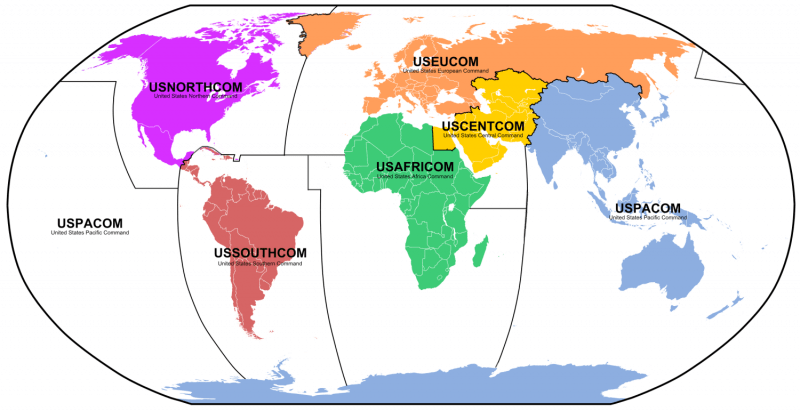
 More than seven months have passed since an unarmed protester named Ashli Babbitt was shot dead inside the US Capitol while attempting to climb through an opening in a glass door.
 Aletho News
