FBI Infiltration of Big Tech put US on fast track to Neofascist Technocratic Autocracy
By Ekaterina Blinova – Samizdat – 24.12.2022
The recently released sixth and seventh batches of the Twitter Files shed light on the FBI’s instructions to censor specific tweets and accounts for “violating” the company’s terms of service.
The internal documents also lifted the veil of secrecy on how the bureau launched an apparent damage control operation prior to the publication of the New York Post’s bombshell concerning Hunter Biden’s laptop.
On top of that, an email by Twitter’s former Deputy General Counsel Jim Baker revealed that the platform collected a staggering $3 million from the bureau at least on one occasion.
“My opinion – based on the evidence available – is the FBI did this because the FBI is fundamentally corrupt,” Jason Goodman, a US investigative journalist and founder of Crowdsource the Truth, told Sputnik. “Failure to investigate Hunter Biden based on the evidence on the laptop is bad enough. Evidence being revealed now by Twitter’s new management suggests the FBI actively worked to protect Hunter Biden from public scrutiny and hide their own lack of enforcement action. Broad knowledge of the evidence on Hunter Biden’s laptop would certainly have led to public outcry at least for further investigation. We have never witnessed such a brazen criminal act by a US government agency so nakedly exposed. For the past two years, any individual who even debates these facts online loses access to the major social media platforms.”
The Twitter Files exposure apparently hit the FBI’s raw nerve as the bureau issued an official statement claiming that “the men and women of the FBI” were doing their job, while “conspiracy theorists and others are feeding the American public misinformation with the sole purpose of attempting to discredit the agency.”
While commenting on the bureau’s statement, one prominent legal expert remarked that it is not clear “what is more chilling: the menacing role played by the FBI in Twitter’s censorship program or its mendacious response to the disclosure of that role.”
How It All Began
Make no mistake, this started long ago, noted Goodman: in fact, the groundwork was laid after September 11, 2001, with the passage of the Patriot Act.
“Prior to that, Americans were protected from undue search and seizure by the fourth amendment of the constitution,” the journalist explained. “In the newfound ‘war on terror’ the Patriot Act was sold to the American public as increased security. But it introduced several unconstitutional new laws and new law enforcement tools that removed our constitutional protection. One such tool was the National Security Letter (NSL).”
Goodman has drawn attention to the fact that prior to the advent of NSLs, investigators needed to get a warrant from a judge and had to have probable cause supported by some kind of evidence before they could lawfully investigate a person or their property, including electronic accounts, like email or Twitter.
However, with the Patriot Act, the FBI could simply write up an NSL under the suspicion that an individual was a national security threat and launch a probe into them, according to the journalist. “No warrant or evidence was required,” Goodman added. Moreover, the bureau could also reject the requests of those asking for proof on the basis that the evidence would risk revealing sources and methods and was also a national security threat, according to the journalist.
“These newfound powers were quickly and consistently abused,” Goodman continued. “Former FBI General Counsel Valerie Caproni was admonished by both the House and the Senate for gross abuses of NSLs and other unconstitutional acts.”
However, it appears that the US Congress’ attempts to rein in the bureau have not borne any fruit and the FBI has only grown more brazen in the years since.
“By alleging that the FBI was engaged in a counterintelligence investigation, they no longer had to adhere to the same rules or obey the constitutional protections that existed previously,” said Goodman. “This is exactly how the FBI began their shambolic investigation into the so-called Russian collusion with Trump.”
Hunter’s and Hillary’s Emails & APT28
Meanwhile, the story of the FBI’s attempts to shield Hunter Biden evokes strong memories of the Democratic National Committee (DNC) leak amid the Hillary Clinton presidential campaign. The disclosure of Hunter’s bombshell emails was downplayed and smeared as a “hack” and “disinformation” by “Russian APT28” just as the 2016 DNC email leak was.
According to Shellenberger, the bureau took Hunter Biden’s “laptop from hell” from Mac Isaac, a Delaware repair shop owner, on December 9, 2019. By August 2020, Isaac still had not heard back from the FBI, even though he had found alleged evidence of criminal activity on the device. So Isaac contacted lawyer Rudy Giuliani, “who was under FBI surveillance at the time,” and provided him with a copy of the laptop’s hard disk. In early October, Guiliani gave the disk to the New York Post.
On October 13, 2020, a day before the Post planned to release its bombshell, “FBI Special Agent Elvis Chan sent ten documents to Twitter’s then-Head of Site Integrity Yoel Roth through Teleporter, a one-way communications channel from the FBI to Twitter,” Shellinberger revealed citing internal Twitter documents. On October 14, 2020, the bombshell article saw the light of day but soon was banned and suppressed by major Silicon Valley giants, including Twitter.
But that is not all. According to Yoel Roth’s testimony, during all of 2020, the FBI warned him about the forthcoming Russian “hack and leak” operation “involving Hunter Biden” prior to the 2020 election. The bureau particularly referred to APT28, claiming that it’s a group of Russian hackers linked to Moscow’s intelligence services. In one of his recent interviews, Roth said that when Hunter’s emails finally emerged “it set off every single one of my finely tuned APT28 hack-and-leap campaign alarm bells.”
The “laptop from hell” posed a challenge to Hunter’s father, the Democratic presidential hopeful Joe Biden, as the bombshell suggested that the latter not only knew but also participated in his son’s murky financial schemes.
Similarly, the 2016 DNC leak threatened the Clinton campaign, demonstrating, in particular, that the party’s primaries were rigged in favor of Hillary. It was Clinton campaign lawyer Michael Sussmann who requested cyber security firm CrowdStrike’s help in investigating the alleged DNC hack.
CrowdStrike “detected” and “attributed” the alleged breach of DNC servers to Russia during the 2016 election cycle. The company claimed that the perpetrators were “two Russian espionage groups”: Cozy Bear (APT29) and Fancy Bear (APT28), suggesting with a “low” to “medium”-level of confidence that they may be affiliated with Russia’s Federal Security Service (FSB) and Main Intelligence Department (GRU), respectively. Moscow denied the claim as absurd.
For its part, the FBI relied on CrowdStrike’s conclusions, although the bureau has never physically examined the DNC servers and has only been provided with their “digital copies” instead.
According to Veteran Intelligence Professionals for Sanity (VIPS), a group of former US intelligence officers working within the CIA, the FBI and the NSA, there had been no hack: it was an inside job. Moreover, CrowdStrike President Shawn Henry admitted under oath in 2017 that the company does not have “concrete evidence” that the alleged “Russian hackers” exfiltrated any data from the servers.
The story of the DNC “hack” played a big role in smearing Russia and linking Donald Trump to Moscow. The Dems claimed that Moscow “hacked” the emails to help Trump win the 2016 elections. In summer 2016, the FBI launched Operation Crossfire Hurricane on the pretext of alleged “collusion” between Trump and the Kremlin. However, Special Counsel Robert Mueller investigation found no evidence to back the allegations, which were rubbished by Moscow from the very start as nonsensical.
“The true origin of the Russiagate hoax has not yet been revealed but it is becoming increasingly clear that top executives in the FBI have been involved in an ongoing coverup for a very long time,” said Goodman. “APT28 is likely a concoction of Dmitri Alperovitch’s Crowdstrike, which itself is an obvious FBI cutout. Crowdstrike co-founder Shawn Henry left the FBI to create the company, then shortly thereafter received $150 million from Google. Sounds fair enough but think about that for a moment. Google cannot easily hand $150 million to the FBI, but they can invest whatever they want in a startup tech company.”
It is not clear if the US public understands the legal games the FBI can play, according to the journalist.
“The FBI’s infiltration of Twitter is the tippy top of tip of the upper edge of the tip of the iceberg,” Goodman remarked. “We need to understand just how many private companies and non-profit organizations are secretly working with or for the incredibly dangerous and subversive US ‘Intelligence’ community. This hidden-in-plain-sight network of government agencies, non-profit organizations, and private industry is what is spoken of as the ‘Deep State’.”
Operation Mockingbird and Church Committee
The FBI’s attempts to control and infiltrate the work of social media giants resembles nothing so much as the US intelligence Operation Mockingbird which was first mentioned by CIA Director William Colby during his briefing to the Justice Department on December 31, 1974.
Later, the issue was touched upon by Watergate reporter Carl Bernstein in Rolling Stone in 1977. Bernstein revealed how numerous journalists, including Pulitzer-prize winners, wrote fake stories and disseminated propaganda at the CIA’s behest during the Cold War. The scale of the CIA’s huge international media network was described by one CIA official as ranging from Radio Free Europe to a third‐string guy in Quito who could get something in the local paper. According to the US mainstream press, the program has never been officially discontinued.
“It is essentially an extension of Operation Mockingbird,” Goodman said about the US intelligence community’s collusion with Big Tech. “The revelations of the Church Committee showed us the CIA’s intention. There is no reason to believe they would change. We see these ‘retired’ intelligence people on the news all the time. It should be obvious to anyone looking at the evidence if the FBI or any law enforcement or intelligence agency is doing anything other than tracking dangerous criminals on Twitter, they should not be doing it.”
The Church Committee was a US Senate select committee that investigated abuses by the CIA, NSA, FBI, and IRS in 1975.
Presently, it’s not a matter of the FBI getting away with what it has done (they already have), this is “an inflection point like none other in American history,” according to the journalist.
“We are in a dangerous moment,” Goodman warned. “The United States has become a neofascist technocratic autocracy. The new Congress must take bold steps to shut this down immediately and begin the journey back to the constitutional republic that was established in 1776 or it will only get worse (…) Another thing the Patriot Act created that most people are not aware of is the National Cyber Investigative Joint Task Force. It is an interagency intelligence-sharing operation overseen by the FBI. Critics say it eliminates the compartmentalization that is in place to prevent the types of abuses that are commonplace today. Without oversight, who knows what these interagency operations are capable of.”
DHS won’t hand over full details about “anti-disinformation” practices
By Didi Rankovic | Reclaim The Net | December 23, 2022
The Department of Homeland Security (DHS) is not giving the US Congress information necessary to put in place proper oversight of the agency regarding its “counter disinformation” activities, which have recently been gaining an ever more prominent role.
That is one of the key points conveyed in a letter to DHS head Alejandro Mayorkas by senators Charles Grassley and Josh Hawley.
We obtained a copy of the letter for you here.
Grassley, who is ranking member of the Senate Committee on the Judiciary, and Hawley first addressed the DHS expressing serious concerns in June by asking for answers to ten questions, but say that the response they received the same month fell short by either ignoring or downplaying those concerns, and in general, failing to actually answer any of the questions.
Instead, they received documents that were either already publicly available, or heavily redacted, as was the case with a batch of 500 pages of information.
“Based on our review of this material, it appears that many of the redactions are applied to pre-decisional and deliberative process material,” Grassley’s and Hawley’s December letter states.
The senators are taking issue with the plans the DHS is not hiding, and that is increasingly deeper involvement in “monitoring and mediating MDM” – that is, whatever’s labeled as misinformation, disinformation, and malinformation on social media. “Monitoring and mediating” here reportedly also means “directly engaging with social media companies to flag MDM.”
And the agency wants to cover a broad range of topics, such as Covid, race, all the way to the sudden US withdrawal from Afghanistan.
The Disinformation Governance Board, slammed in the letter as a “seriously misguided effort,” may have been bad enough, but the senators are concerned that these plans now go far beyond that “effort.”
The DHS is accused of ignoring not only the outright questions, but also the fundamentals of the US political system, where executive, legislative and judicial branches have “the separate and co-equal character.”
Therefore, the agency cannot get away with trying to work around requests from Congress members, the senators say.
Grassley and Hawley, however, seem determined not to let the DHS off the hook easily as it attempts to evade clarifying its role and intentions in this realm, and note that their letter was not sent as a Freedom of Information request, nor under DHS’ own procedures, based on which the DHS would be able to respond with redacted documents.
And they continue to await “full and complete” answers.
Canada redefined economic impact as “violence” to justify freezing protesters’ bank accounts
By Didi Rankovic | Reclaim The Net | December 20, 2022
Last February, Canadian authorities used whatever means they thought they could get away with to put an end to a peaceful political protest against Covid restrictions led by truckers, known as the Freedom Convoy.
Now, in trying to justify the government’s behavior, senior officials appear to be trying to “redefine” the meaning of (physical) violence, to make sure their actions fit within that definition.
The most controversial ones undertaken to stifle the protest – such as deploying riot police and freezing participants’ bank accounts – were done by evoking the Emergencies Act, in itself, a move controversial enough to warrant a commission inquiry.
The Public Order Emergency Commission (POEC) has issued a summary of a panel interview of four senior officials from the Prime Minister’s Office (PMO), while Prime Minister Justin Trudeau and several others were interviewed by the commission separately.
We obtained a copy of the summary for you here.
The summary shows that the panel identified areas that they “hoped the Commission could comment on;” one of them being threats to the economic security of Canada, “which carry with them a threat of tangible physical harm and violence.”
One of the PMO officials, the prime minister’s senior adviser on strategist and policy issues, Jeremy Broadhurst, is cited as saying that economic disruptions “can cause real, direct and personal harms in people’s lives.”
The truckers, whose work and livelihoods were first disrupted by Covid vaccine mandates and other restrictions, and then by the government seizing their bank accounts, would no doubt agree – but they had no government to protect them in this matter.
Instead, the government appears to have focused on protecting itself from political dissent back in February, and continues to do so today, as Broadhurst suggested that a “threat” to jobs, free movement of goods, etc. (caused by protests) is a threat “impossible to separate from the threat of violence, including physical violence.”
The question of what passes off as violence these days in Canada is important because in order to justify using martial law like the Emergencies Act, the government must meet the requirement of facing “an unmanageable threat to Canada,” as defined by the country’s Security Intelligence Services (CSIS) Act Section 2. (The Emergencies Act relies on the CSIS Act definition.)
In a previous exchange between a Freedom Convoy lawyer and the Ontario Provincial Police (OPP) commissioner, however, the former stated, “To your knowledge, there was no credible threat to the security of Canada as defined under Section 2 of the CSIS Act” – to which the commissioner replied, “That would be my understanding, yes.”
FBI accuses ‘conspiracy theorists’ of weaponizing Twitter Files
RT | December 22, 2022
Correspondence between the FBI and senior Twitter staff, revealing how the agency pressured the platform to suppress certain narratives, is not evidence of wrongdoing, the Bureau said in a statement on Wednesday, adding that “conspiracy theorists” are presenting their activities in a nefarious light.
The files turned over to journalists by Twitter CEO Elon Musk “show nothing more than examples of our tradition, longstanding and ongoing federal government and private sector engagements,” the FBI statement claims.
“It is unfortunate that conspiracy theorists and others are feeding the American public misinformation with the sole purpose of attempting to discredit the agency,” the statement concludes, reminding its critics that “the men and women of the FBI work every day to protect the American public.”
Messages appearing to show FBI agents pressuring Twitter staff to classify legitimate stories such as the Hunter Biden laptop revelations as foreign influence operations are, according to the Bureau merely examples of the FBI “provid[ing] critical information to the private sector in an effort to allow them to protect themselves and their customers.” Internal communications among platform employees suggest otherwise.
In communications published as part of the Twitter Files, staff repeatedly point out there is “no evidence” to substantiate FBI claims of foreign disinformation and express discomfort with the bureau’s meddling. Twitter’s former policy director observed a “sustained (if uncoordinated) effort by the IC [intelligence community]” to push Twitter to share more information against its own policies, while the FBI ultimately paid Twitter more than $3.5 million in taxpayer dollars to prioritize its censorship requests.
The White House has thus far refused to comment on the Twitter Files, referring reporters to the FBI, and the media establishment have largely ignored them. However, former Republican congressman Ron Paul argued they are proof the FBI colluded with Twitter to deprive Americans of their constitutional right to free speech.
A lawsuit filed earlier this year by the attorneys general of Missouri and Louisiana alleges that the FBI was not alone, and that officials from no fewer than 12 government agencies met weekly with representatives of Twitter, Facebook, and other Big Tech firms to decide which narratives and users to censor, with topics ranging from alleged election interference to Covid-19.
Twitter and Facebook chiefs practiced how to handle “fake” Hunter Biden docs, PRIOR to real story breaking
A “tabletop exercise” that was supposedly hypothetical
By Cindy Harper | Reclaim The Net | December 20, 2022
The latest batch of Twitter files, released by independent journalist Michael Shellenberger, revealed that the Aspen Institute held a “tabletop exercise” to influence coverage of a possible future Hunter Biden story. This was prior to the actual Hunter Biden laptop story breaking.
Shellenberger posted documents from the event held in September 2020, which was attended by Twitter’s former head of trust and safety, Facebook’s head of security policy, and top national security reporters at The Washington Post and The New York Times.
View the documents here.
The exercise by Aspen Digital involved an 11-day scenario which started with the imaginary release of “fake” documents related to Hunter Biden’s employment by Ukrainian energy company Burisma.
The company paid the younger Biden $1 million to serve on its board at a time when his father was the Vice President.
According to Shellenberger, “The goal was to shape how the media covered it [the Hunter Biden story] – and how social media carried it.”
The exercise was put to the test just a few weeks later when the New York Post first reported on Hunter Biden’s laptop, which it obtained after Hunter abandoned the laptop at a repair shop in Delaware. The mainstream media either downplayed or ignored it, while social media companies, including Twitter and Facebook, suppressed it.
On October 17, 2020, three days after The Post broke the story, journalist Garrett Graff sent a message to others who participated in the Aspen Institute exercise, saying, “Stephen was right!” However, it is not clear who Stephen is.

The exercise was organized by a former executive at National Public Radio, Vivian Schiller, NBC News, and The New York Times, according to Shellenberger. Schiller has been the executive director of Aspen Digital since January 2020.
The Aspen Institute claims that it “empowers policymakers, civic organizations, companies, and the public to be responsible stewards of technology and media in the service of an informed, just, and equitable world.”
In 2019, the institute, which holds week long seminars and a yearly 10-day “Ideas Festival” attended by business leaders, celebrities, and politicians was described by The Economist as “the mountain retreat for the liberal elite.”
Why was the FBI paying Twitter millions of dollars?
By Dan Frieth | Reclaim The Net | December 20, 2022
The latest batch of Twitter Files, released by independent journalist Michael Shellenberger on December 19, revealed that the FBI paid Twitter millions of dollars to process the bureau’s requests.
“I am happy to report we have collected $3,415,323 since October 2019!” wrote an employee at Twitter’s Safety, Content, & Law Enforcement (SCALE) team, in an email sent in February 2021.
“In 2019 SCALE instituted a reimbursement program for our legal process response from the FBI,” the email continued. “Prior to the start of the program, Twitter chose not to collect under this statutory right of reimbursement for the time spent processing requests from the FBI.”
The payout to Twitter, like many other things revealed through the Twitter files, is disturbing. However, Twitter’s “Guidelines for law enforcement” has a section titled “Cost reimbursement,” which states that “Twitter may seek reimbursement for costs associated with information produced pursuant to legal process and as permitted by law (e.g., under 18 U.S.C. §2706).”
The email suggests that the FBI’s reimbursement program for paying companies to process requests was there long before Twitter began accepting the payments. That means that other social media companies were also likely getting paid. What is not clear is which companies, how much the FBI has spent, and for how long it has been making the payments.
The amount spent to pay Twitter could be seen as bribing the company more than compensating it for the extra resources required to process the requests for information or simply buying information on users.
More on Anti-Antisemitism
BY PHILIP GIRALDI • UNZ REVIEW • DECEMBER 20, 2022
It seems that if there is one thing that those at the top of the United States government and the national media really want for the holidays it is to be able to accuse someone new of being an antisemite. Since the Kanye West story exploded, anti-antisemitism has suddenly become big business in America with the White House hosting a December 7th conference on that theme featuring the media and the usual agitprop suspects and groups proclaiming from on high how hatred of the Jewish people is surging. Of course, it is those very groups that compile the numbers on the alleged surge to benefit their argument and one sometimes wonders if a poster on a college campus wall announcing a meeting to support Palestine that annoys a Jewish student is really antisemitism.
One of the loudest voices calling for a crack-down on the alleged hate criminals, the Anti-Defamation League’s (ADL) Executive Director Jonathan Greenblatt, calls the latest developments a “national crisis.” He has been particularly vocal in demanding strong hate crime type countermeasures to deal with those who dare to challenge the reality of Jewish power in the United States and has inter alia been successful in helping to convince the federal government to define criticism of Israel as ipso facto antisemitism. That leaves many of us wondering what happened to the First Amendment right to free speech, particularly as Israel is a foreign country with a dubious human rights and foreign relations history that merits considerable criticism.
The posing by Israel and its supporting cast of characters as perpetual victims is somewhat ironic, as Jews are the wealthiest, best educated and most politically powerful demographic in the United States. Joe Biden’s special envoy to monitor antisemitism worldwide Deborah Lipstadt oddly disagrees, saying that “For too long, Jew-hatred has been belittled or discounted because Jews have erroneously been considered white and privileged. This is a very real threat to Jews…” but who is she trying to kid? Jews dominate and control the entertainment and news reporting sectors of the economy and are way over represented in many high profile, highly paid and high prestige professions, including medicine, law, financial services, government and academia. Beyond that, more than 90% of the discretionary spending by the Department of Homeland Security goes to Jewish groups and organizations to provide them with “security.”
Much of the Jewish success is due to persistent and successful networking within their ethnicity to advance themselves even when it is achieved at the expense of the common good. When necessary, both antisemitism and the so-called holocaust are cited to silence critics and justify the murderous and genocidal excesses committed by a succession of Israeli governments, likely reaching its peak when the new ultra-conservative government of Benjamin Netanyahu is formed in the next few days.
Politicians, understanding that being perceived as anti-Israel or opposed to the corruption of the political system itself wrought by Jewish money, quickly learn to avoid antagonizing the Tribe. Those who do not, are removed from the system as soon as possible, frequently when they find themselves running for their next office against an exceptionally well-funded and media endorsed opponent.
The recent White House sponsored closed-door meeting bringing together Jewish leaders to discuss what to do about the antisemitism problem was addressed by no less than Doug Emhoff, the Hollywood lawyer described as the “Second Gentleman” by virtue of his marriage to the woman who currently pretends to be the Vice President of the United States. He is the first Jewish spouse of a president or vice president.
Emhoff described his boyhood growing up Jewish in New Jersey and New York and lamented the developing “epidemic of hate” directed against Jews by certain entertainers and public figures. He elaborated ““Let me be clear — words matter. People are no longer saying the quiet parts out loud, they are screaming them,” Emhoff said. “We cannot normalize this. We all have an obligation to condemn these vile acts. We must not stay silent. There is no either or. There are no two sides. Everyone must be against this.”
The meeting, held in the in the Indian Treaty Room in the Eisenhower Executive Office Building on the White House Campus in Washington, also featured State Department anti-Semitism envoy Lipstadt and White House domestic policy adviser Susan Rice. There were representatives from a dozen Jewish organizations, including the United Synagogue of Conservative Judaism, Agudath, Conference of Presidents of Major Jewish Organizations, American Jewish Committee, Orthodox Union, Jewish on Campus, National Council of Jewish Women, Hillel, Secure Community Network, Religious Action Center, Anti-Defamation League, Integrity First for America and American Friends of Lubavitch.
Many of those present urged a major federal government effort to address the developing antisemitism problem, as they see it. Some stressed the importance of improving education on Jews and anti-Semitism in schools where such issues are not taught, which would mean wholesale adoption of the acceptable narrative on both Jewish issues and on what is increasingly referred to as holocaust denial.
The antisemitism meeting was preceded by a December 5th letter to the White House that was originated by Senator Jackie Rosen of Nevada and signed by 124 other Congressmen identifying themselves as the House and Senate Bipartisan Task Forces for Combating Antisemitism. The letter called on the White House to take action against the antisemites through a “unified national strategy.” President Joe Biden responded by setting up an interagency task force to focus on the antisemitism problem, directed by the National Security Council. The group’s first task is coming up with a strategy to tackle the problem. Presidential spokeswoman Karine Jean-Pierre elaborated how “This strategy will raise understanding about antisemitism and the threat it poses to the Jewish community and all Americans, address antisemitic harassment and abuse both online and offline, seek to prevent antisemitic attacks and incidents, and encourage whole-of-society efforts to counter antisemitism and build a more inclusive nation.”
So the United States government and the so-called Justice Department will soon likely be going to war against alleged antisemites. Like all of America’s pointless wars, this war will be expensive and fundamental liberties will be sacrificed as the government intrudes in the daily lives of its citizens to enforce complete conformity. There are perhaps other signs that the war has already begun, at least for some public figures. One of the most astonishing stories to appear recently concerns how the Democratic Party majority on the House Foreign Affairs committee by a 26 to 22 vote margin rejected a resolution presented by a group of Republican lawmakers that would initiate auditing of the money going to Ukrainian President Volodymyr Zelensky in an effort to determine how it is being spent (or wasted).
The bill had been introduced by controversial Representative Marjorie Taylor Greene (R-GA) and a small group of mostly conservative Republicans who either oppose or seek restraint on US aid to Ukraine, but it also received some strong support including from more hawkish Republicans who generally back the war. Republican congressmen Thomas Massie (KY), Matt Gaetz (FL), Barry Moore (AL), and Andrew Clyde (GA) cosponsored Greene’s bill.
Several Democratic congressmen alleged that the legislation to set up the audit was due to the sponsors having been taken in by Russian propaganda, but the prize for Democratic Party response must go to Congresswoman Susan Wild of Pennsylvania, who opined that the bill was “a political stunt designed to tie up and slow down our critical efforts to help Ukrainian forces.” But that was preceded by a personal rant attacking Marjorie Taylor Greene. Wild told her colleagues that “I want to begin on a personal note. As a Jewish American at a time when powerful public figures, including several celebrities with global platforms are putting Jewish communities across our country at risk of violent attacks by engaging in vicious antisemitism and holocaust denial […] it is beyond shameful to see support for a measure like this one introduced by representative Greene. I am not going to attempt to recite even a fraction of the patently false, bigoted, and hateful statements and actions that have characterized Representative Greene’s time as a member of this body. I will just say that her antisemitic conspiracy theories and trivializations of Nazism stand out as particularly reprehensible reflections of her ideology and approach to holding public office. I cannot in good conscience remain silent about any of this. I find the idea of Rep. Greene — the legitimacy that comes with elevating one of her pieces of legislation to be profoundly offensive.”
So, for someone in Congress the fate of a reasonable and much needed bill to audit the billions of dollars going to Ukraine turns out to be all about the alleged antisemitism of the legislation’s sponsor, which is not true in any event unless one defines criticizing the Rothschilds and globalist demon George Soros as antisemitism. Unfortunately, Susan Wild is far from unique.
Another antisemitism event heavily promoted in the media recently concerns Francesca Albanese, an Italian lawyer-diplomat who is currently the United Nations human rights special rapporteur in charge of monitoring the situation in the Palestinian territories. American officials sharply criticized several social media messages that Albanese wrote in 2014, which seemed to them to confirm charges of anti-Israel bias in the UN’s Human Rights Council (UNHRC), where Albanese’s office is located. Michele Taylor, the US Ambassador to the UNHRC exploded, saying “We are appalled. This is outrageous, inappropriate, corrosive, and degrades the value of the UN.”
So, what was among the Albanese messages, which appeared on Facebook? She opined that “America and Europe, one of them subjugated by the Jewish lobby, and the other by the sense of guilt about the Holocaust, remain on the sidelines and continue to condemn the oppressed — the Palestinians — who defend themselves with the only means they have (deranged missiles), instead of making Israel face its international law responsibilities.” In another message she described Israeli behavior as “greedy.”
After the wave of attacks on her Francesca Albanese maintained that the observations were made long ago and that she had failed to contextualize them properly. I will leave it up to the reader to judge the comments, but I find them perfectly acceptable given the reality of what is going on in Israel-Palestine as well as the de facto domination of the process and narrative by Israel and its powerful lobbies in both the anglophone world and Europe. In fact, I would go farther and suggest that the essentially contrived anti-antisemitism campaign that seems to be gaining momentum in both Europe and the US indicates that, if anything, Albanese has understated her case.
Philip M. Giraldi, Ph.D., is Executive Director of the Council for the National Interest, a 501(c)3 tax deductible educational foundation (Federal ID Number #52-1739023) that seeks a more interests-based U.S. foreign policy in the Middle East. Website is councilforthenationalinterest.org, address is P.O. Box 2157, Purcellville VA 20134 and its email is inform@cnionline.org.
‘Twitter Files’ Make it Clear: We Must Abolish the FBI
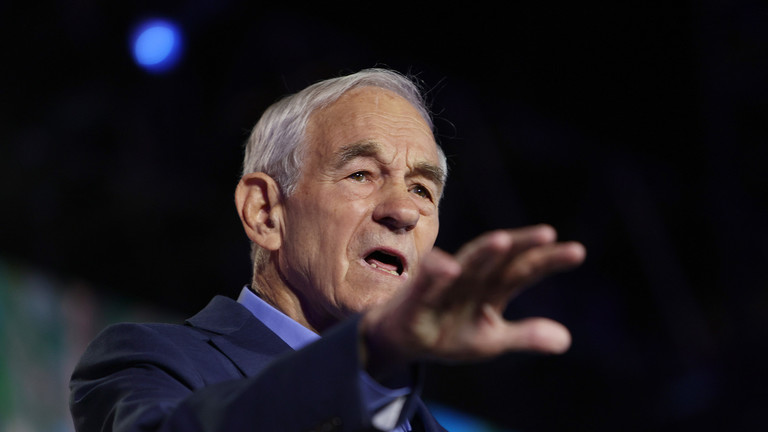
By Ron Paul | December 19, 2022
As we learn more and more from the “Twitter Files,” it is becoming all too obvious that Federal agencies such as the FBI viewed the First Amendment of our Constitution as an annoyance and an impediment. In Friday’s release from the pre-Musk era, journalist Matt Taibbi makes an astute observation: Twitter was essentially an FBI subsidiary.
The FBI, we now know, was obsessed with Twitter. We learned that agents sent Twitter Trust and Safety chief Yoel Roth some 150 emails between 2020 and 2022. Those emails regularly featured demands from US government officials for the “private” social media company to censor comments and ban commenters they did not like.
The Foreign Influence Task Force (FITF), a US government entity that included the FBI as well as other US intelligence agencies expressly forbidden from domestic activities, numbered 80 agents engaged regularly in telling Twitter which Tweets to censor and which accounts to ban. The Department of Homeland Security brought in outside government contractors and (government-funded) non-governmental organizations to separately pressure Twitter to suppress speech the US government did not like.
US Federal government agencies literally handed Twitter lists of Americans it wanted to see silenced, and Twitter complied. Let that sink in.
This should be a massive scandal and likely it would have been had it occurred under a Trump Administration. Indeed, Congress would be gearing up for Impeachment 3.0 if Trump-allied officials had engaged in such egregious behavior. But since these US government employees were by-and-large acting to suppress pro-Trump sentiment, all we hear are crickets.
What is interesting about these Twitter revelations is how obsessed the FBI and its government partners were with satire and humor. Even minor Twitter accounts with small numbers of followers were constantly flagged by the Feds for censorship and deletion. But knowledge of history helps us understand this obsession: in Soviet times the population was always engaged in joking about the ineptitude, corruption, and idiocy of the political class. Underground publications known as samizdat were rich with satire, humor, and ridicule.
Tyrants hate humor and cannot withstand satire. That is clearly why the FBI (and CIA) was determined to see a heavy hand raised against any American poking fun at the deep state.
There is good news in all of this, however. As Constitutional Law Professor Jonathan Turley wrote over the weekend, a new Harvard CAPS/Harris Poll found that even though the mainstream media has ignored the “Twitter files,” Americans have not. Nearly two-thirds of respondents believe that Twitter was involved in politically-motivated censorship in advance of the 2020 election. Some 70 percent of those polled believe Congress must take action against this corporate/state censorship.
As Professor Turley points out, although the First Amendment only applies to the US government, “it does apply to agents or surrogates of the government. Twitter now admits that such a relationship existed between its former officials and the government.”
So now we have proof that the FBI (along with US intelligence agencies and the Department of Homeland Security) have been acting through “private” social media companies to manipulate what Americans are allowed to say when they communicate with each other.
Is there anything more un-American than that? Personally, I find it sickening.
We do not need the FBI and CIA and other federal agencies viewing us as the enemy and attacking our Constitution. End the Fed… and End the Federal Bureau of Investigation!
Copyright © 2022 by RonPaul Institute
After Twitter revelations, Rep. Comer says Google and Facebook need to be investigated for similar censorship collusion
By Christina Maas | Reclaim The Net | December 18, 2022
Commenting on the recent Twitter Files’ revelation of the FBI’s constant communication with Twitter, including recommending account bans, Republican Ranking Member of the House Oversight Committee Rep. James Comer said investigations should go beyond Twitter to Google and Facebook.
“The entire FBI needs to be dismantled, we need to start all over. We need to enact strict reforms, and there need to be checks and balances at the FBI,” Comer said, speaking to Tammy Bruce on Fox News’ Hannity. He added that fixing and holding the FBI accountable should start with the budget process, which is why he is against the push for an omnibus.
“My concern was that this was a rogue FBI employee or two…but what we found today is the FBI had its own ministry of propaganda,” Comer continued.
“This is serious. What else are they involved in at the FBI? The entire FBI needs to be dismantled. We need to start all over. We need to enact strict reforms and there need to be checks and balances at the FBI.”
Bruce then asked, “I trust, though, that you are going to expand this beyond Twitter. You mentioned Google, you mentioned, perhaps, Facebook… are you going to expand and include those platforms, which we also know, at least from Mark Zuckerberg, he too was contacted by the FBI. I think we only know a portion of that. Are you going to expand this investigation?”
The Republican lawmaker, set to chair the Oversight Committee starting in January, replied: “Yes. This is going to take several committees focusing a lot of attention. Big tech is going to be a priority for the Republican majority…”
He added that “the FBI was involved in censorship… they have stepped in where the government does not belong. And this has to end. People have to be held accountable and we’re going to have to start with the budget, that’s what is so frustrating about what’s going on right now in Washington.”
Released files reveal how FBI grilled Twitter
RT | December 19, 2022
Twitter’s former safety chief has said he was baffled when the FBI grilled the company over assessed foreign influence threats on the platform, the latest trove of documents released by journalist Matt Taibbi and Twitter owner Elon Musk shows.
According to excerpts from internal communications that were published on Sunday, FBI agent Elvis Chan told Twitter’s former head of trust and safety, Yoel Roth, in July 2020 to expect written questions from the Foreign Influence Task Force, adding that the intelligence community sought “clarifications” from the company.
The FBI then sent a list of detailed questions, asking Twitter to explain why, during an earlier briefing for US security and intelligence agencies, “you indicated you had not observed much recent activity from official propaganda actors on your platform.” At the end of their letter, the FBI attached references to several news articles about Russian and Chinese “propaganda” campaigns on social media.
Roth shared the questionnaire with other Twitter executives, saying that he was “frankly perplexed by the requests here, which seem more like something we’d get from a congressional committee than the Bureau,” according to screenshots published by Taibbi.
The former safety head added that he felt “not particularly comfortable” with the FBI demanding written answers on the matter. According to the released files, Roth wrote that the premise of the questions “seems flawed,” arguing that the intelligence community had “fundamentally misunderstood” Twitter’s position on disinformation.
“We’ve been clear that official state propaganda is definitely a thing on Twitter,” Roth wrote, suggesting he contact Chan over the phone as soon as possible.
The exchange took place when US officials, think tanks and media outlets were warning about alleged foreign meddling in the ongoing US presidential election campaign and disinformation related to the Covid-19 pandemic.
Musk, who finalized his acquisition of Twitter in October, promised more transparency at the company, and fired some of its top executives.
The files previously released by Taibbi with Musk’s blessing revealed how Twitter staffers struggled to rationalize the permanent ban of former US President Donald Trump, and the blocking of a story about the laptop belonging to Hunter Biden, President Joe Biden’s son.
Fauci says not pushing back against online “misinformation” would be a blow to society
By Cindy Harper | Reclaim The Net | December 17, 2022
President Joe Biden’s outgoing chief medical adviser Anthony Fauci dismissed criticism from Twitter owner Elon Musk, adding that the platform has become a “cesspool of misinformation.”
“I don’t pay attention to that,” Fauci said in an interview with MSNBC’s Andrea Mitchell. “I mean, yeah, he has a big megaphone, but, I mean, the Twittersphere as it is has really gone berserk lately. It’s kind of become almost a cesspool of misinformation.”
Last Sunday, Musk criticized Fauci and called for his prosecution for lying to the American public and funding research that might have been the origin of the virus.
“My pronouns are Prosecute/Fauci,” Musk wrote.
He later shared a meme showing Fauci telling Biden, “Just one more lockdown, my king.”
In another interview on David Axelrod’s podcast, Fauci also dismissed criticism from Musk.
“I don’t respond to him,” Fauci said. “I don’t pay any attention to him because that’s merely a distraction,” he said. “And if you get drawn into that, and I have to be honest, that cesspool of interaction … there’s no value added to that, David. It doesn’t help anything.”
Dr. Fauci was asked by MSNBC host Andrea Mitchell if society was becoming “anti-science,” referring to the rise of what she called “disinformation and misinformation” spreading online.
“The answer is yes,” Fauci responded. “The short answer to your question, Andrea. But the other thing is that there is so much misinformation that we were experiencing the normalization of untruths. Where there is so much disinformation that spreads predominately through social media that people just get so used to the untruths that it becomes normalized which is really bad because then you don’t push back against it. You say, well, that’s just the way it is. That would be a terrible blow to society. And I believe to our democracy if all of a sudden people say, well, what’s the use?
“There’s so much untruth out there we might as well not even push back on it. It’s hopeless. We’ve got to not accept the normalization of untruths.”
Dr. Fauci is currently facing a lawsuit for allegedly working with social media platforms to suppress speech.
Two-Thirds of Voters Believe Social Media Engaged in Politically-Motivated Censorship and Demand Congressional Action
By Jonathan Turley | December 17, 2022
The December Harvard CAPS / Harris Poll is out this week and Mark Penn and his colleagues have some interesting results to share. Despite the refusal of many in the media to cover the Twitter files, nearly two-thirds of voters believe Twitter shadow-banned users and engaged in political censorship during the 2020 election. Seventy percent of voters want new national laws protecting users from corporate censorship.
This week, the media continued to fulfill that common view of a de facto state media by ignoring new evidence of FBI coordination in censorship targets with Twitter in the latest news blackout.
On Friday, Twitter released additional information showing that the FBI and CIA actively pushed for censorship, supplying lists of accounts to be suspended or banned.
Journalist Matt Taibbi described Twitter as acting as a “subsidiary” of the FBI and wrote that “between January 2020 and November 2022, there were over 150 emails between the FBI and former Twitter Trust and Safety chief Yoel Roth.”
The evidence continues to establish a system of censorship by surrogate or proxy. While the First Amendment applies to the government and not private corporations generally, it does apply to agents or surrogates of the government. Twitter now admits that such a relationship existed between its former officials and the government.
Once again, however, the major networks and newspapers have largely ignored the story. There has been a full mobilization of media, political, and business interests against Elon Musk and Twitter to oppose the restoration of free speech protections at the company. The media is heavily invested in suppressing this story after years of denials of any problems of censorship. Previously, they denied censorship was occurring. When such censorship became obvious, they denied that there was any involvement of the FBI and the government. Now that such involvement is confirmed, they are simply not covering the story.
Instead, the media is “all-in” on the doxxing suspensions (which Musk has now lifted). I have been critical of Musk’s response to the doxxing controversy. In part this is due to the scope of the suspensions and the fact that they occurred only 24 hours after the new policy was implemented. I would have preferred warnings and further clarity on the issue, particularly in what constituted doxxing in some of these tweets from journalists.
Despite the overwhelming coverage, there is little explanation of the media’s approach to the underlying doxxing question. Some have said that this is a “grey area” or may be below the threshold.
For years, the media has supported suspensions due to doxxing. In this case, the location of Musk’s plane may have been used by an individual to threaten his family. Most reports omit any discussion of whether the sending of such live locations information is doxxing. If it is, it has long been banned by most sites and journalists are not exempt.
Previously, figures connected with mainstream media from CNN to the Washington Post have been accused of doxxing. Liberal groups were accused of doxxing conservative justices and others, including dangerously posting information on the children of Justice Amy Coney Barrett. It does not seem to matter when the targets are conservative, Republican, or libertarian.
Writers who have long advocated the banning of others with opposing views are some of the loudest objecting in the wake of the doxxing controversy. The Washington Post’s Taylor Lorenz expressed fear that she could be next. It may not be a groundless fear since Lorenz has been previously accused of doxxing others and described the reintroduction of free speech protections for others as the opening of “the gates of hell.”
Jack Sweeney, the creator of this site (using publicly available information), has expressed shock at being sued and suspended. However, these articles continue to tellingly omit one of the critical issues. Is it doxxing to supply people with the minute-by-minute movement of the plane used by Musk and his family? That would seem relevant to weighing the merits of these suspensions.
Such slanted coverage is clearly losing its hold on the public or its view of Twitter. Indeed, the media continues to write off a large percentage of readers and viewers with openly biased coverage. The public is not buying it. It is buying Twitter. Not only are users signing up in record numbers, but a recent poll shows a majority of Americans “support Elon Musk’s ongoing efforts to change Twitter to a more free and transparent platform.”
In the wake of the latest release, the FBI issued a statement that said that there was nothing to see here and that “the FBI regularly engages with private sector entities to provide information specific to identified foreign malign influence actors’ subversive, undeclared, covert, or criminal activities.”
The statement is notable for what it does not contain: any recognition of the seriousness of the allegations or pledge to conduct its own investigation in whether this relationship crossed over to de facto government censorship. According to some reports, as many as 80 FBI agents may have been tasked to assist in the censorship efforts. Yet, the FBI has offered little more than a shrug in the face of credible constitutional concerns.
According to the Harvard/Harris poll, the public believes that such censorship occurred and warrants action. The denials of the FBI and the dismissal of the mainstream media will only serve to magnify such calls for action.
Featured Video

Trita Parsi: Middle East Unraveling — Are We on the Path to World War?
or go to
Aletho News Archives – Video-Images
New Book
Trans agenda is ‘normalization of sadism’ – US author

RT | September 23, 2026
The US Democratic Party has embraced a transgender agenda that amounts to “the normalization of sadism,” author A.J. Rice has said, warning that radical trans policies would return if the party is allowed to regain power.
Speaking to RT’s America First host Scotty Nell Hughes about his new book, ‘The Curse of the Bearded Lady: How the Trans Mafia Whacked American Sanity’, Rice argued that activists have gained significant influence in schools, medicine, and corporate America while people who questioned the agenda have faced pressure to stay silent.
The author described the “trans mafia” as the sprawling network of people and institutions that have helped the movement gain influence. He singled out parts of academia, wealthy backers, and corporations, and stated that providers of transition-related treatment also have a financial incentive to keep young people in their care indefinitely.
Rice argued that the consequences of these policies ultimately fall on children who are being drawn toward gender-affirming medical treatments and on girls who are expected to share locker rooms or compete in sports with biological males.
He noted that while voters rejected the Democrats’ approach to gender in 2024, the party, which has been “captured by madness,” has since only doubled down and is seeking what is effectively “the normalization of sadism.” … Full report
Blog Roll
 Aletho News
- Refaat Al-Areer Was The Canary In The Coal Mine In Israel’s War On The Truth
- Israeli election committee bars candidate from Knesset race over Gaza war opposition
- French-Lebanese man files war crimes complaint over Israeli attacks
- Mahan Air Flight Lands in China Despite US Threat against Iranian Airlines
- US eyes $10bn fund to rebuild war-battered Gulf infrastructure
- Trump meets Rodríguez near Maduro’s prison as Venezuela’s oil flows to US
- Trita Parsi: Middle East Unraveling — Are We on the Path to World War?
- Iran FM meets with US envoy on UN meeting’s sidelines at American side’s insistence: Report
- Qatar PM calls for Gulf security framework with Iran, says war must be ‘wake-up call’
- China condemns US extortion of Iranian airlines, rejects Washington’s ‘illegal’ sanctions threats
- If Americans Knew
- An error has occurred; the feed is probably down. Try again later.
- No Tricks Zone
- New Study: Earth And Venus Surface Warmth Largely Explained By Convection And Lapse Rate, Not CO2 Or Radiation
- 2025 Nature Paper Claiming Worsening Global Drought Gets RETRACTED …Heavily Flawed
- New Study: ‘Global Drought Shows No Detectable Recent Acceleration Under Climate Warming’
- Economic Masterminds: German Socialists Suggest Taxing Productivity Gains Stemming From Using AI
- The South China Sea Has Not Been Cooperating With The Climate Change Narrative
- Energy Crisis: Germany Enters Heating Season With Historically Low Gas Reserve Fill Levels
- New Study: The Antarctic Ice Sheet Gained Mass From 2020-2024 Due To Staggering Snow And Ice Accumulation
- Study: Ocean Heating Rates From Thousands Of Years Ago ‘Dwarf’ Modern Ocean Heating Rates
- Climate Extremists Target, Attack Large-Scale Power Grid Infrastructure In Germany!
- New Study: Antarctic Ice Melt Has Contributed Less Than 1 Centimeter To Sea Level Rise In The Last 30 Years

