Tensions grow between Apple’s censorship practices and Elon Musk’s Twitter
By Cindy Harper | Reclaim The Net | November 29, 2022
Elon Musk has claimed that Apple has threatened to “withhold” Twitter from the App Store without giving a reason.
“Apple has also threatened to withhold Twitter from its App Store, but won’t tell us why,” Musk tweeted on Monday.
The announcement came after Musk said that the iPhone maker had “mostly stopped advertising” on Twitter. He also posted a poll asking users if Apple should “publish all censorship actions it has taken that affect its customers.”
Apple is yet to respond to Musk’s claim. It is unclear what “withhold” means. In most cases, it could mean refusing updates to the app or even removing the app from the App Store completely until Twitter obeys its demands.
There have been various clues about Musk’s growing annoyance at Apple’s monopolistic practices. The Twitter owner criticized the App Store’s in-app purchases fee, calling it a “hidden 30% tax.”
Musk has said he is going to loosen the platform’s content censorship guidelines, and has already begun reinstating banned accounts.
Twitter quietly changes Covid-19 policy
RT | November 29, 2022
Twitter has said it will no longer enforce its coronavirus misinformation policy, according to an update on the platform’s Covid-19 transparency page that went largely unnoticed since it was posted last week. The move came as its new owner Elon Musk announced a “general amnesty” for previously suspended accounts.
The misinformation policy was initially developed in 2020 amid the outbreak of Covid-19 and was meant to combat “harmful” misleading posts about the coronavirus, government policies aimed at curbing its spread, and related vaccines.
Users who violated the rule received strikes. After two or three strikes, their accounts were suspended for 12 hours. After four, they would be locked out for a week, while offenders with more than five strikes were permanently banned from the platform.
According to statistics published by Twitter itself, between January 2020 and September 2022, the platform’s moderators challenged over 11.72 million accounts and suspended more than 11,000 for violating the rule. They also scrubbed nearly 100,000 pieces of content worldwide under the policy.
The extensive moderation policy became a topic of heated debate. Some called for more censorship of posts deemed to be harmful, while others argued this constituted suppression of free speech.
Since Musk acquired Twitter for $44 billion last month, he has made a number of dramatic changes at the company, including laying off nearly two-thirds of its staff and significantly cutting the site’s moderation and management teams.
Ahead of Thanksgiving, the billionaire also vowed to extend a “general amnesty” to an unspecified number of suspended accounts after holding a Twitter poll, in which more than 72.4% out of 3.1 million respondents supported the move.
Critics have argued that the social networking service could soon become a hotbed for misinformation, right-wing extremism and hate speech. Musk, however, has insisted that he wants Twitter to become a level playing field and a bastion of free speech where people can peacefully exchange their views on a wide range of topics.
Separate Tech and State
By Ron Paul | November 28, 2022
Senator Ed Markey (D-MA) recently got in touch with his inner mobster and threatened Elon Musk — the new owner of Twitter and the CEO of electric car company Tesla and space ventures company SpaceX. He told Musk, “Fix your companies” or “Congress will.” As part of this threat, Markey referred to an ongoing National Highway Traffic Safety Administration (NHTSA) investigation into Tesla’s autopilot driving system and Twitter’s 2011 consent decree with the Federal Trade Commission (FTC).
Markey has done more than make threats: He is one of a group of Democratic senators who wrote to the FTC urging an investigation into whether Musk’s actions as the new owner of Twitter violated the consent decree or consumer protection laws. Since FTC Chair Lina Khan wants to investigate as many businesses as possible, it is likely she will respond favorably to the senators’ letter.
President Biden has also endorsed an investigation into the role foreign investors played in financing Musk’s Twitter purchase. Biden may be concerned that Musk is not likely to ban tweets regarding Hunter Biden’s business deals.
Concerns that Musk would allow tweets containing information embarrassing (or worse) to the Biden administration point to the real reason many Democratic politicians and progressive writers and activists are attacking Musk. They support efforts to suppress conservative, libertarian, and other “non-woke” speech on social media. They view the prospect of a major platform refusing to silence those who dissent from the woke mob or the Democratic Party establishment as a threat to their power. Musk further angered the left by committing what, to many Democrats (and Liz Cheney), is the ultimate hate crime — allowing Donald Trump back on Twitter.
The threat against Musk shows the threat to liberty is not just from big tech; it is from the alliance between big tech and big government.
Some conservatives think that increasing government’s power over social media is the correct way to make big tech respect free speech. However, increasing the US government’s power over social media can just end up putting more power behind government threats like those from Rep. Markey. Expanded government control over how social media companies conduct their business can also further incentivize the companies to work with the federal government to shut down free speech.
Once the government steps in with increased regulation, the risk is that greater government control over what is communicated on social media will follow. The question will just be who is calling the shots on the exercise of that control. Will the result be an increase of the liberal or “woke” pressure on social media companies to silence conservatives, libertarians, opponents of teaching critical race theory and transgenderism in schools, and those who question the safety and effectiveness of covid vaccines? Alternatively, will a new sort of pressure become dominant, maybe pressure to comply with conservative or Republican preferred limits on speech? Either way, liberty loses.
Big tech companies silence their users to curry favor with politicians and bureaucrats, often after “encouragement” from politicians and bureaucrats. Therefore, to end big tech’s censorship, Americans should demand that all government officials — including the president — not violate the First Amendment. We must work to put an end to government officials pressuring or even “encouraging” social media platforms either to silence any American citizen because of his opinions or to downplay or suppress any news story. The way to protect free speech online is to separate tech and state.
Copyright © 2022 by RonPaul Institute.
British Media Minister Shows Double Standards on Free Speech in China and UK
Samizdat – 29.11.2022
The British government’s draft Online Safety Bill has previously come under fire from free speech campaigners and MPs — including current culture and media minister Michelle Donelan — for demanding social media sites censor posts which do not break any law.
The UK’s media minister has demanded Beijing grant British journalists freedom of speech — while suppressing it at home.
But her department is also spearheading new legislation to censor social media posts even if they do not break any laws against threats or incitement.
Speaking on a radio programme on Tuesday morning, Digital, Culture, Media and Sport Secretary Michelle Donelan said it was “absolutely shocking” that a reporter for British state media was arrested while covering protests against COVID-related restrictions in Shanghai.
“We believe in press freedom and the media to be able to report all over the globe,” Donelan said.
Chinese Foreign Ministry spokesperson Zhao Lijian accused the British media of “playing the victim” after it claimed cameraman Edward Lawrence was “beaten and kicked” by police.
Zhao urged foreign journalists not to engage in activities “unrelated to their role” — implying they were taking part in the protests rather than reporting them impartially.
The new draft of the Online Safety Bill, which Donelan’s department is pushing through Parliament, would force social media moderators to delete users’ posts if they have “reasonable grounds to infer” their content could cause “serious distress” to some individuals.
The previous version drafted under Donelan’s predecessor Nadine Dorries was criticised by MPs and free speech advocates for attempting to ban comments it dubbed “legal but harmful”.
Donelan herself said at the time that wording would create “a quasi-legal category between illegal and legal.”
A government factsheet published in May said the bill would only mandate censoring social media posts if some harm was “intended”, without a reasonable excuse or the defence of public interest — theoretically protecting satirical cartoons and statements of political opinion.
Ironically, Dorries was herself reportedly banned from a private WhatsApp group for Conservative Party MPs in December 2021 for defending then-Prime Minister Boris Johnson from her colleagues’ criticism.
Biden’s ex-disinfo czar registers as foreign agent
RT | November 28, 2022
The former disinformation czar for President Joe Biden’s administration has apparently landed on her feet after resigning amid controversy earlier this year. She has registered as a foreign agent representing a UK activist group that advocates for censorship of speech it finds objectionable.
Nina Jankowicz filed her registration paperwork with the US Department of Justice earlier this month, identifying herself as a representative for the London-based Centre for Information Resilience (CIR). Her work with CIR will include serving as an ambassador for the group with US policymakers, media outlets and technology companies.
Jankowicz resigned as the director of the newly created US Disinformation Governance Board last May, after the administration “paused” the initiative amid public outcry that it might operate as an Orwellian “Ministry of Truth.” She had contributed to such fears by calling for blue-check Twitter users like her to police commentary on the social media platform by editing tweets that they considered false or misleading.
Jankowicz had also been criticized for being a purveyor of false information herself. For instance, she called the New York Post’s October 2020 scoop on Hunter Biden’s abandoned laptop a “Trump campaign product” and warned that militant supporters of then-president Donald Trump would show up at the polls to intimidate voters. She called for Big Tech platforms to censor allegations that Covid-19 leaked from a Chinese lab and claimed that online mockery of Vice President Kamala Harris was a threat to national security and democracy.
CIR, which is funded partly by the UK government, bills itself as an independent “social enterprise” that counters disinformation, exposes human rights abuses and combats online behavior it deems harmful to women and non-white people. Its advisers include former CIA analyst Cindy Otis and former Estonian president Toomas Hendrik Ilves, who led his country’s accession to NATO.
Much of the group’s commentary is anti-Russia, especially as it relates to the Ukraine conflict. For instance, it accused Russian forces of committing various war crimes and claimed that Moscow illegally deported Ukrainian civilians to Russia. Last year, CIR claimed to have discovered a coordinated network of social media accounts that posted Chinese Communist Party propaganda.
CIR co-founder Ross Burley, a former British Foreign Office operative, has publicly called for social media platforms to ban certain independent journalists and outlets, such as the Grayzone, which he called a “Russian propaganda outfit.”
Reporter Who Offered Curious Details on Paul Pelosi Hammer Attack Not Seen on Air in Nearly a Month
By Ilya Tsukanov – Samizdat – 28.11.2022
Miguel Almaguer, the NBC News reporter whose reporting on last month’s Paul Pelosi hammer attack incident offered curious details which challenged the mainstream narrative at the time, has not been seen on air or tweeted since the media giant expunged his report and suspended him over unspecified “inaccurate information” in his report.
Almaguer, 45, reported on air on November 4 that Mr. Pelosi calmly opened the door to police officers responding to the 911 emergency call he placed after 2 am on October 28, but that he did not “declare an emergency” or try to leave the domicile, instead walking several feet into the foyer of his home toward the suspect, 42-year-old David DePape, who was armed with a hammer.
The report sparked questions about what 82-year-old Pelosi and DePape were doing before police showed up.
Almaguer’s reporting, which NBC has attempted to scrub from the internet, also challenged claims made by media that the attack was an act of “right-wing political violence” by an enraged Trump supporter “enflamed by right-wing conspiracy theories” and anti-Pelosi sentiment ahead of the November 8 midterm elections.
In a speech on November 3, President Biden attempted to tie the attack to the riots at the US Capitol on January 6, 2021, which he said had been fueled by the “dangerous” “lie” that the 2020 election had been stolen from Trump. “Thankfully, by the grace of God, Paul survived,” Biden said.
Further reporting uncovered that DePape was a Canadian national living in the US illegally, a nudism enthusiast suffering from drug addiction, and apparent supporter of liberal causes, hoisting a rainbow flag and a BLM sign on the rundown school bus he was living in.
DePape has been charged with attempted murder, assault with a deadly weapon and elder abuse and with federal charges of assault and kidnapping, with the latter carrying a maximum combined sentence of 50 years in prison. He has plead not guilty.
Pelosi was released from hospital on November 3 after recovering from surgery to treat a skull fracture and injuries to his hands and right arms.
Senator Markey calls for Twitter regulation after Elon Musk ignored his letter
Senator Markey wants social media regulated for “safety”
By Christina Maas | Reclaim The Net | November 27, 2022
Senator Ed Markey (D-Mass.) has called on Congress to pass new legislation to regulate social media after Elon Musk ignored his demand letter.
On November 11, Markey sent a letter to Musk asking about the new paid account verification feature. The first rollout of Twitter Blue made it easier for users to impersonate politicians, celebrities, and brands. The Washington Post was able to create a verified account of Senator Markey.

After Markey shared a copy of the letter on Twitter and highlighted that The Post was able to impersonate him, Musk joked with him, writing: “Perhaps it is because your real account sounds like a parody.” A few hours later, Musk wrote, “And why does your pp have a mask!?”

The billionaire was referring to Markey’s profile picture, which shows him in a face covering.
Markey later threatened the Tesla owner: “One of your companies is under an FTC consent decree. Auto safety watchdog NHTSA is investigating another for killing people. And you’re spending your time picking fights online. Fix your companies. Or Congress will.”
Musk had until November 25 to respond to Markey’s letter, which he did not.
“Elon Musk could respond to my tweets but failed to respond to my letter by yesterday’s deadline and answer basic questions about Twitter verification,” Markey tweeted on November 26. “Congress must end the era of failed Big Tech self-regulation and pass laws that put user safety over the whims of billionaires.”
Musk is yet to respond to Markey’s latest tweet. However, on Friday, he did appear to answer one of the senator’s questions by announcing a new verification system. It will require manual authentication and the check marks will have different colors depending on the type of user.
“Gold check for companies, grey check for government, blue for individuals (celebrity or not), and all verified accounts will be manually authenticated before check activates,” Musk said.
Former CIA analyst on Twitter: “this freedom of speech is just nonsense”
Bob Baer isn’t a fan of Elon Musk’s Twitter
By Dan Frieth | Reclaim The Net | November 27, 2022
Former CIA analyst Bob Baer, in an interview with CNN’s Boris Sanchez, said that the idea of “free speech” on Elon Musk’s Twitter is “nonsense.”
Sanchez started the discussion by noting that Musk recently said that banned accounts will be reinstated, after a poll the Tesla owner launched went in favor of granting amnesty to accounts that had been censored by Twitter.
Baer said, “Well Boris, I can tell you one thing, Putin is going to be all over Twitter.
“If there’s no regulations on this, fake accounts, spoofed accounts, the rest of it – this is a great opportunity for him. And so when he’s talking about the popular voice, Musk he’s really talking about Russian intelligence.”
He added: “The Russians are waiting for something like this. They need a propaganda campaign against the United States and against our support for Ukraine, and they’re gonna be all over Twitter – I guarantee this – supporting the far right, plans, demands to stop arming Ukraine. You just wait.”
Baer explained how Russia could use the platform for a disinformation campaign: “What Putin’s gonna do, and the Russians, is they’re gonna use this as a vehicle to save himself in Ukraine. And you know, whether it’s gonna work or not, I don’t know. But we’re gonna see, as soon as these restrictions come off, we’re gonna see the Russians all over it.”
Asked how Twitter can combat the spread of disinformation, Baer said that the platform was already doing it before Musk took over.
“Well that’s why the pre-Musk Twitter had 7000 people going through these accounts. You can pick ‘em out with algorithms, you can pick ‘em out by looking at ‘em. You can check IPs and the rest of it, and you simply block ‘em,” the CIA analyst explained.
7000 was the approximate total number of employees at Twitter, not the size of the moderation team.
Baer blasted Musk’s idea of free speech, saying, “And it’s not right. And you know, this freedom of speech is just nonsense, ’cause you can’t go into a movie theater and yell, ‘fire!’ It’s against the law,” – 🛡 repeating a statement that in itself is misinformation.
Musk Promises to Make ‘Alternative Phone’ If Twitter Gets Removed From App Stores
Samizdat – 26.11.2022
WASHINGTON – Twitter’s new owner, billionaire entrepreneur Elon Musk, says he will create a new smartphone if the social network is removed from the Apple and Google app stores.
“I certainly hope it does not come to that, but, yes, if there is no other choice, I will make an alternative phone,” Musk tweeted on Friday, in response to a user’s suggestion that Musk should produce his own phone instead of the “biased, snooping iPhone and Android,” if the Twitter app becomes unavailable on them.
On October 28, Musk finalized the acquisition of Twitter, which cost him $44 billion. Following the takeover, Musk changed the company’s day-to-day operations, including the termination of Twitter’s executives, who were responsible for the platform’s privacy and cybersecurity, as well as regular Twitter employees. The significant policy changes have caused a wave of concern.
The Washington Post reported on Wednesday, citing market research data, that more than one-third of Twitter’s top 100 advertisers had stopped putting ads on the social media platform in the two weeks following Musk’s takeover of the company.
Earlier this month, Twitter unblocked former US President Donald Trump’s account, banned after the January 6, 2021 events at the US Capitol, as the majority of participants in a survey conducted by Musk voted in favor of the measure.
Musk has promised that Twitter will reinstate blocked accounts after the majority of users voted for “general amnesty.”
Biden endorses G20 Declaration to censor “disinformation”
By Christina Maas | Reclaim The Net | November 24, 2022
During the summit held in Bali, Indonesia, the G20 Leaders signed a declaration endorsing the censorship of “disinformation.” The Biden administration endorsed the declaration by publishing it on the White House website.
The G20 Bali Leaders’ Declaration mainly focused on climate change, including Sustainable Development Goals (SGDs). However, the leaders have linked SDGs with online censorship.
Section 24 of the declaration says there is a need to censor online disinformation.
“The COVID-19 pandemic has accelerated the transformation of the digital ecosystem and digital economy,” the section began. “We recognize the importance of digital transformation in reaching the SDGs.”
It adds that for there to be “trust in the digital economy,” they should “create an enabling, inclusive, open, fair and non-discriminatory digital economy that fosters the application of new technologies, allows businesses and entrepreneurs to thrive, and protects and empowers consumers.”
The G20 leaders believe there is a need to censor “false” information for digital infrastructure to thrive: “We acknowledge the importance to counter disinformation campaigns, cyber threats, online abuse, and ensuring security in connectivity infrastructure.”
The White House endorsing a declaration that calls for more censorship is not surprising considering it is the subject of the lawsuit filed by Missouri’s and Louisiana’s Attorneys General alleging collusion between the government and social media companies to censor viewpoints surrounding Covid and more.
Why is the UN Commissioner For Human Rights Trying to Suppress Free Speech on Twitter?
BY DR DAVID MCGROGAN | THE DAILY SCEPTIC | NOVEMBER 22, 2022
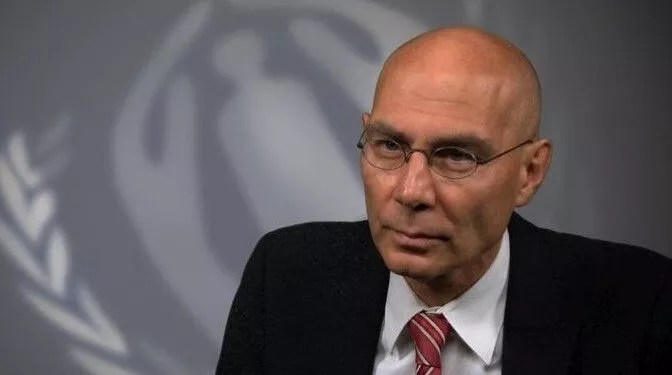
While there has been a great deal of hullabaloo concerning Elon Musk’s takeover of Twitter, one would probably not have expected senior officials at the United Nations to find it necessary to have their say on the matter. Yet on November 5th Volker Türk, the new UN High Commissioner for Human Rights, did indeed weigh-in, sending an open letter to Mr. Musk to express his “concern and apprehension” about Twitter’s role in the “digital public square”. He urged Musk to make sure human rights would be “central to the management of Twitter”, and to “address harms” associated with the platform, and also took the time for a bit of finger-wagging at Twitter’s new CEO for sacking Twitter’s human rights team (no, I had no idea it had one either).
The letter was almost certainly only sent so that Türk, who assumed office in mid-October and is a comparative unknown (some UN insiders were apparently hoping for Michelle Obama or Angela Merkel), can get a bit of recognition. But it is instructive nonetheless in giving stark expression to the awkward position which human rights advocates have found themselves adopting when it comes to one of the most salient issues of the day – the regulation of speech online and particularly the subjects of disinformation and misinformation.
This happens in the course of two short paragraphs. Starting off, Türk is keen to emphasise the importance of protecting free speech. Twitter, he notes, is being pressed by governments to take down content or use upload filters, and he urges it in clear terms to “stand up for the rights to privacy and free expression to the full [sic] extent possible under relevant laws”. So, on the one hand, he adopts a strong position against censorship, implying that speech should only be restricted online where it would cross the border into illegality.
Yet on the other hand, in the very next breath, he declares that “free speech is not a free pass” and that the “viral spread of harmful disinformation…results in real world harms”. Therefore, in his view, Twitter must take responsibility to “avoid amplifying content” that results in harms to people’s rights – whether or not, by implication, it is technically legal. Hence, for example, scepticism about the efficacy of vaccines, legally expressed, ought nonetheless to be supressed given the impact it might have on the right to health.
This can only be described as cakeism. For Türk, it is apparently desirable both to protect freedom of expression to the fullest extent possible under the law, and yet also to restrict lawful speech where it might result in ‘harms’. It is easy to see the appeal in the abstract of the idea that these positions can be reconciled, and Türk indeed concludes his letter by suggesting that “our shared human rights offer a unifying way forward”. But it is difficult to see from its content how this could be so. Does Türk believe that freedom of speech should be protected insofar as it is possible to do so? Or does he believe lawful speech should be suppressed to prevent harm? He can believe in one, but he surely cannot coherently believe in both.
The wider point is that human rights advocates like Türk have rather lost faith in their own model. For decades, it has been orthodox human rights doctrine that all human rights are, in UN-speak, “indivisible and interdependent”. The rights to freedom of expression, freedom of association, non-discrimination, health, food, housing, education, and so on, all support one another and, indeed, cannot properly be enjoyed without the others. It is therefore not only possible to secure (say) freedom of expression and the right to health – they actually bolster each other.
The rationale for this can be readily understood: if freedom of expression is secure, then people will have access to the full range of information and opinion available on any given topic, and therefore policymakers, healthcare providers, doctors and patients will be able to make better health-related decisions than they would otherwise. There is therefore a direct link between securing freedom of speech and the right to health. (And conversely, of course, securing the right to health means increasing opportunities for people to express themselves freely – one will find it much easier to actively participate in public discourse if one is in good health than not.) What is true in this example is true across the round, and the orthodox position in the UN human rights system has long been that these mutually-supportive linkages can be found throughout the human rights corpus.
This is not, however, the position that Türk adopts in his letter. To reiterate, for the new High Commissioner, freedom of expression and the right to health are not in fact “indivisible and interdependent”, but incommensurate. If people are able to express themselves freely, they will circulate dangerous disinformation about vaccines, and harm will result. Freedom of expression does not reinforce the right to health; it undermines it.
Türk is no loose cannon. As short as his letter to Musk is, it essentially summarises the position adopted in a recent report to the UN General Assembly by the Secretary-General himself. This report manages somehow to express a robust defence of the “right to hold opinions without interference” and an insistence that “free communication of information and ideas about public and political issues… is essential”, while at the same time advocating for state intervention to prevent the spread of inaccurate information concerning “public health, electoral processes or national security” and the demonetisation of legal-but-harmful content. The same schizophrenic attitude is adopted as in Türk’s letter, but the message is clear enough: while it is necessary to pay lip service to the importance of freedom of expression, the system as a whole now disavows the “indivisible and interdependent” doctrine, and instead sees freedom of expression as being potentially antagonistic to other rights.
What are we to make of this? The clue is in the types of harmful inaccurate information that both Türk and the Secretary-General identify as particularly dangerous and hence warranting state suppression – i.e., those implicating public health, electoral processes and national security. It is no accident that these subjects map pretty closely to the issues that are of greatest concern to the global bien pensant class in which these figures are so firmly entrenched – Covid vaccines, ‘election denialism’, and Russian disinformation. And it is not really a great surprise that when the chips are down and the consensus within that class is that oppositional views on those topics represent a genuine threat, the UN High Commissioner for Human Rights and Secretary-General suddenly find that freedom of expression is not so “indivisible and interdependent” with respect to other rights at all. Indeed, it is to be sacrificed where those particular concerns are raised. Human beings, as we know, can be remarkably flexible on points of principle when peer pressure is applied – even, it turns out, senior human rights lawyers and UN Secretary-Generals.
More broadly, if one were being especially cynical, one might say that this is further evidence supporting the long-term criticism of the international human rights system – that it is essentially a forum for pharisaical expressions of right-on opinions which vary in accordance with whatever the ‘current thing’ is. This would not be entirely fair – the UN human rights organs do very important work – but it is sometimes easy to see how this view proliferates. Türk’s letter is suggestive not so much of a commitment to the letter of human rights law, but rather only to the contemporary concerns of a particular elite constituency. This in turn indicates that the UN human rights apparatus as a whole is geared more toward addressing the anxieties of that constituency than it is towards standing up for human rights across the board. Is it any wonder, then, that ordinary people generally take a sceptical view about human rights in the round?
Dr. David McGrogan is Associate Professor of Law at Northumbria Law School.
Featured Video

Trita Parsi: Middle East Unraveling — Are We on the Path to World War?
or go to
Aletho News Archives – Video-Images
New Book
Trans agenda is ‘normalization of sadism’ – US author
RT | September 23, 2026
The US Democratic Party has embraced a transgender agenda that amounts to “the normalization of sadism,” author A.J. Rice has said, warning that radical trans policies would return if the party is allowed to regain power.
Speaking to RT’s America First host Scotty Nell Hughes about his new book, ‘The Curse of the Bearded Lady: How the Trans Mafia Whacked American Sanity’, Rice argued that activists have gained significant influence in schools, medicine, and corporate America while people who questioned the agenda have faced pressure to stay silent.
The author described the “trans mafia” as the sprawling network of people and institutions that have helped the movement gain influence. He singled out parts of academia, wealthy backers, and corporations, and stated that providers of transition-related treatment also have a financial incentive to keep young people in their care indefinitely.
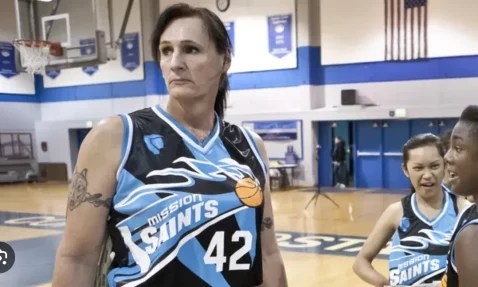
Rice argued that the consequences of these policies ultimately fall on children who are being drawn toward gender-affirming medical treatments and on girls who are expected to share locker rooms or compete in sports with biological males.
He noted that while voters rejected the Democrats’ approach to gender in 2024, the party, which has been “captured by madness,” has since only doubled down and is seeking what is effectively “the normalization of sadism.” … Full report
Blog Roll
 Aletho News
- NATO chief wants Europeans to fight American wars [for Israel]
- German chemicals giant reveals details of downsizing
- Refaat Al-Areer Was The Canary In The Coal Mine In Israel’s War On The Truth
- Israeli election committee bars candidate from Knesset race over Gaza war opposition
- French-Lebanese man files war crimes complaint over Israeli attacks
- Mahan Air Flight Lands in China Despite US Threat against Iranian Airlines
- US eyes $10bn fund to rebuild war-battered Gulf infrastructure
- Trump meets Rodríguez near Maduro’s prison as Venezuela’s oil flows to US
- Trita Parsi: Middle East Unraveling — Are We on the Path to World War?
- Iran FM meets with US envoy on UN meeting’s sidelines at American side’s insistence: Report
- If Americans Knew
- An error has occurred; the feed is probably down. Try again later.
- No Tricks Zone
- New Study: Earth And Venus Surface Warmth Largely Explained By Convection And Lapse Rate, Not CO2 Or Radiation
- 2025 Nature Paper Claiming Worsening Global Drought Gets RETRACTED …Heavily Flawed
- New Study: ‘Global Drought Shows No Detectable Recent Acceleration Under Climate Warming’
- Economic Masterminds: German Socialists Suggest Taxing Productivity Gains Stemming From Using AI
- The South China Sea Has Not Been Cooperating With The Climate Change Narrative
- Energy Crisis: Germany Enters Heating Season With Historically Low Gas Reserve Fill Levels
- New Study: The Antarctic Ice Sheet Gained Mass From 2020-2024 Due To Staggering Snow And Ice Accumulation
- Study: Ocean Heating Rates From Thousands Of Years Ago ‘Dwarf’ Modern Ocean Heating Rates
- Climate Extremists Target, Attack Large-Scale Power Grid Infrastructure In Germany!
- New Study: Antarctic Ice Melt Has Contributed Less Than 1 Centimeter To Sea Level Rise In The Last 30 Years

