Canada’s Heritage Minister panel: unregulated speech “erodes the foundations of democracy”
By Dan Frieth | Reclaim The Net | July 11, 2022
According to the Expert Advisory Group on Online Safety appointed by Heritage Minister Pablo Rodriguez, “misleading political communications” should be regulated because unregulated political disinformation and discussion “erodes the foundations of democracy.”
Rodriguez has insisted multiple times that censorship bill, Bill C-11, also known as the Online Streaming Act, would not regulate user-generated content.
“We made it very clear in the Online Streaming Act that this does not apply to what individual Canadians and creators post online,” said Rodriguez. “No users, no online creators will be regulated. Only the companies themselves will have new responsibilities.”
However, that claim has been contradicted by the Canada Radio-television and Telecommunications Commission (CRTC) and the Expert Advisory Group on Online Safety that he appointed. Online platforms would have to regulate based on the speech of its users.
“[Section] 4.2 allows the CRTC to prescribe by regulation user uploaded content subject to very explicit criteria. That is also in the Act,” said chair of CRTC Ian Scott in June 2022.
The same comments have been previously repeated severally by the Expert Advisory Group on Online Safety, whose role is to propose measures of regulating online content that it considers harmful, including, but not limited to “propaganda, false advertising and misleading political communications.”
Content that would be regulated includes Facebook posts, private Twitter DMs, Amazon listings, video games, and even listings on Airbnb.
“Many experts mentioned there is justification to look more widely at some interactive services like Airbnb and gaming platforms,” members of the group proposed in one meeting.
“Many experts supported the notion that private communications should be included under the scope of the legislative framework. Private messaging services should also be regulated.”
The advisory group also proposed the regulation of legal content, noting that legal but harmful content “poses unique challenges” and “it is difficult to reconcile the issue of disinformation with the freedom of expression.”
The Online Streaming Act passed in the House last month and is currently in the Senate.
Biden regime lets Israel off the hook in the case of Palestinian-American journalist’s death
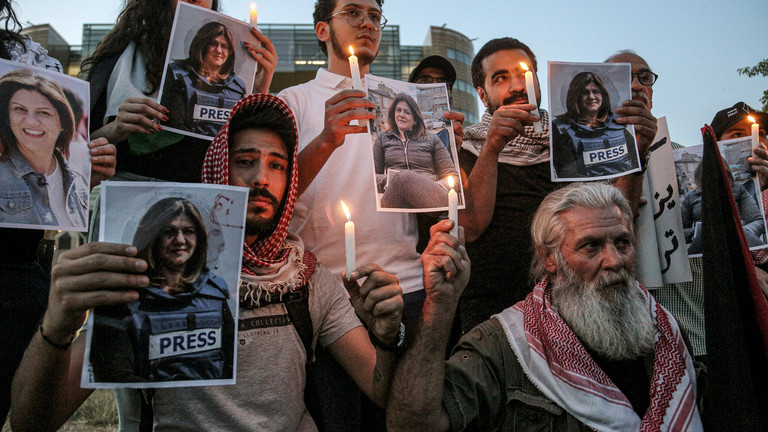
By Robert Inlakesh | Samizdat | July 10, 2022
The US State Department’s press release on Washington’s investigation into the killing of Palestinian-American journalist Shireen Abu Akleh has sparked outrage and triggered accusations of a whitewash.
Almost two months after the murder of the veteran Al-Jazeera reporter, Washington announced that an investigation by the US Security Coordinator (USSC) had concluded that Israeli gunfire was “likely responsible.” However, the statement asserted that the evidence was inconclusive and it could not say that Israeli forces were to blame, contradicting various other reports which had concluded the opposite. The US government also claimed that there is “no reason to believe” that the killing was intentional and instead was likely “the result of tragic circumstances,” to which Israel’s top human rights group B’Tselem responded by calling the investigation a “whitewash.”
“We are incredulous,” the family of Abu Akleh said in a statement of their own, in which they decried the State Department’s press release. What is perhaps most concerning about the State Department’s statement is its contradictory nature; it calls for accountability on the one hand, whilst simultaneously disagreeing with other reports that indicate Israeli guilt and making a poorly-substantiated assessment of intent. If the US government’s investigation cannot conclude Tel Aviv’s guilt or prove an Israeli soldier fired the shot, then how can it conclude that the “likely” culprit did not intend to kill Abu Akleh?
According to a CNN investigative report, Abu Akleh was killed in a “targeted attack by Israeli forces,” implying that the evidence suggested the killing was indeed intentional. The claim made by the Israeli government, that a firefight had occurred in the minutes leading up to the murder, was seemingly debunked by the Washington Post’s own investigation into the incident. This is important because the Israeli military’s argument as to why they say the shooting was unintentional is based upon their claim that Israeli soldiers were likely trying to fire at Palestinian militants. Furthermore, according to the Washington Post, “Abu Akleh and other journalists identified as press would likely have been visible from the IDF convoy’s position.”
The New York Times also conducted its own investigation, in which it “showed that there were no armed Palestinians near her when she was shot” and debunked the Israeli government’s claims as to how many bullets were fired in the journalist’s direction. The New York Times also stated that “the bullet that killed Ms. Abu Akleh was fired from the approximate location of the Israeli military convoy, most likely by a soldier from an elite unit.” The United Nations’ probe likewise came to conclusions “consistent with many findings out there that the shots that killed her came from Israeli Security Forces.”
The other troubling element surrounding the US investigation has been the White House’s flip-flopping on its approach to achieving justice. When news first broke of Abu Akleh’s death on May 11, State Department spokesperson Ned Price stated that “the Israelis have the wherewithal and the capabilities to conduct a thorough, comprehensive investigation,” and seemed to indicate that a US inquiry would not be necessary. Later, however, it was reported that Israel would not conduct an investigation into the killing, and then a statement from an IDF military lawyer suggested that if an Israeli soldier were to be found responsible for firing the fatal shot, they would not be guilty of any criminal misconduct “absent further evidence.”
The above information also has to be paired with the fact that Israel’s Foreign Ministry and various political figures distributed a video of Palestinian gunmen, following the killing, claiming that Palestinians had been responsible for the crime. The video that was being shared around was quickly debunked by B’Tselem, which proved through an on-the-ground investigation that the Palestinian gunmen shown in the video could not have possibly fired the kill shot. Then-Israeli Prime Minister Naftali Bennett claimed that it was likely Palestinians who were responsible, later altering his rhetoric when it became more difficult for him to defend the claim.
To rub salt into the wound, after Israeli forces had harassed the family of Abu Akleh, police violently assaulted the pallbearers at the slain journalist’s funeral in Jerusalem. Making things even worse, it appeared that the Israeli police doctored footage from the scene of their attack, to make it appear as if Palestinians had thrown objects at the police, prior to the assaults on mourners.
The USSC has not provided any clarity on how it was able to draw the conclusions it did. Investigations from the UN, various human rights groups, CNN, the Washington Post, the New York Times, and others, all point to Israeli guilt, but none were able to determine the exact intention of the Israeli soldier who fired the bullet. The US assertion that there is no evidence to suggest the attack was intentional contradicts multiple eyewitnesses who say it was. If the US investigation relied on claims that Israeli soldiers were engaged in firefights with Palestinian militants (likewise contradicted by the investigations mentioned above), then their conclusion is questionable. Above all, the USSC’s judgment of intent has now given Israel a convenient excuse to sweep the killing of an American citizen under the rug. Some may call it a whitewash, but what it really looks like is the US siding with Israel once again over the lives of its own people.
Robert Inlakesh is a political analyst, journalist and documentary filmmaker currently based in London, UK. He has reported from and lived in the occupied Palestinian territories and currently works with Quds News. Director of ‘Steal of the Century: Trump’s Palestine-Israel Catastrophe’.
Twitter Just Lost Its Last Chance To Remain Relevant
By Tyler Durden | Zero Hedge | July 9, 2022
After months of drama, it would appear the fate of social media giant Twitter has been decided, and the result is an inevitable path to the internet graveyard.
Many people will question the notion that Twitter could ever actually bite the dust, but they are probably unfamiliar with the company’s dismal performance as of late. The reality is, Elon Musk’s potential buyout was their last chance to stay afloat; now that Musk has exited the deal, they face a continued and steady decline into irrelevance like many other Big Tech companies before them.
While it’s possible that Musk’s decision is merely a play for a reduced sale price, it’s probably safe to assume there is not going to be a purchase anytime soon. This sets a chain of events in motion that bode very poor for Twitter given their track record the past couple of years, but first let’s consider the current situation.
While the initial argument from Twitter execs will be that Musk “waived” his rights to change the original deal and thus he is required to buy regardless, his waiver does not extend to his rights to review Twitter’s claims about their user base. The deal itself was predicated on Twitter giving honest assessments of the percentage of users that are actually bots (fake accounts). Twitter initially claimed that bots only made up around 5% of users; it would appear that Musk has discovered this to be false, and this is the position his lawyers have asserted through the SEC.
If it turns out that a large portion of Twitter is actually fake, then Musk surely has grounds to terminate the deal. A waiver against changing the deal does not negate the original requirements of the deal according to his legal council, and this makes perfect sense.
But why is Twitter so desperate to force Musk to buy when they were so resistant before, to the point that they were willing to use a “poison pill” maneuver to dilute his shares and prevent him from gaining a majority of holdings? Why are they so insistent when most of the company was up in arms only a month ago, frothing and raging over the chance that free speech might become policy on the platform? We have to look at the company’s financial health before Musk’s purchase announcement as well as what is likely to happen now that he has dumped it.
In truth, Musk could have saved the company from a slow but accelerating implosion. Twitter’s stock has been a relatively poor performer for a few years. In 2020 at the onset of the covid pandemic, it saw a massive jump along with most other Big Tech companies on the assumption that user rates would increase along with the covid lockdowns. This did not really happen.
In Fall of 2021 their stock value began to falter, with the price plunging by more that 50% just before Elon Musk announced his majority share interest.
In April, Twitter admitted that the company “might” have been overcounting its users. People with multiple accounts had those accounts linked together, but Twitter was still counting them as separate users. They indicated that up to 2 million users were created through secondary accounts (which means there are probably many millions more that they have not found or admitted to). On top of this and the bot issues, Twitter user base was in decline anyway.
In 2019, Twitter abandoned its original method of counting users and moved to a new metric which “discounted the loss of bot accounts.” This spurs the question that is now at the core of Musk abandoning the sale: How many users on Twitter are actually fake?
In February, despite the change in its metrics, Twitter announced its user numbers had still fallen short. On top of this, the company suffered a net income loss of $1.4 billion in 2020 and a loss of $221 million in 2021. After stock declines, the only thing left for Twitter was user growth, and they didn’t have it.
Musk’s possible purchase of the company lifted share prices at a time when the platform was nearing the edge of the Big Tech abyss – The moment when a website goes the way of Myspace. With their reputation in the gutter after consistent censorship of conservatives and alternative media sources, the alienation of their user base was becoming a real problem. The platform was now known as nothing more than a “blue checkmark” cult hangout for the extreme political left; in other words, not an inviting place for anyone without pronouns in their bio. Musk moving in revitalized public interest in the company, if only for a short time.
Despite their rabid distaste for free speech, Twitter needed Musk. In order to meet Musk’s demands for user data, they dumped their entire server in his lap, maybe to bury him in so much information that sifting through it would take too long to discover anything out of order. The mainstream media actually crowed about the tactic, applauding Twitter’s action as a way to stick it to Musk.
However, they did not seem to consider the implications of ALL of Twitter’s data now in the hands of outside interests. If there is fraud at Twitter against its shareholders, then it will eventually be known. Maybe this is all that Musk wanted in the first place.
What happens next in terms of the deal is unclear. No doubt court proceedings will go on for years, but Twitter likely doesn’t have that much time. Musk dropping out of the sale will result in an immediate drop in stock price and perhaps even a violent devaluation. The question among shareholders will be this: “What did Musk discover in his analysis of Twitter user accounts? Did he find an immense number of bots?”
People will err on the side of caution and sell their shares while they can.
It’s a lose/lose situation for Twitter, because as they push the issue in court there will be discovery. In discovery all the data will be laid bare, and if Twitter is actually a hollow company with huge fake user numbers then the public is going to hear about it. Their share prices will collapse even further, there will be an SEC investigation and many lawsuits. Even if large corporate interests like Blackrock or Vanguard stepped in to shore up stock prices, none of these companies have the social influence to encourage wider buying from individual investors. They would have to take increasing losses to save a company that cannot be saved.
The result could be the expedited death of the platform.
Whether or not you like Elon Musk is not important. What’s important is the exposure of one of the biggest social media conglomerates in the world to incredible scrutiny. Twitter’s web influence has been waning for some time, but they still hold a measure of power over the flow of information within our culture. Perhaps a reckoning is at hand, and maybe the public will get a peek behind the curtain of the Big Tech empire to see how things REALLY operate.
Family of Shireen Abu Akleh asks to meet with Biden

Raşid Necati Aslım/Anadolu Agency
MEMO | July 9, 2022
The family of slain Palestinian-American journalist Shireen Abu Akleh has accused the United States of providing impunity for Israel over her killing and asked to meet President Joe Biden in person during his trip to Israel next week, reports Reuters.
In a letter to Biden posted on Twitter on Friday, the family said the administration simply adopted the Israeli government’s conclusions over her death, which it described as extrajudicial killing while falling short of its own stated goal of ensuring full accountability.
“Your administration’s engagement has served to whitewash Shireen’s killing and perpetuate impunity,” said the letter, signed by her brother Anton Abu Akleh on the family’s behalf.
“It is as if you expect the world and us to now just move on. Silence would have been better.” The family asked to see all the information the administration has collected on the issue.
Abu Akleh was killed on May 11 during an Israeli raid in the occupied West Bank town of Jenin under bitterly disputed circumstances.
Last month the United Nations human rights office said evidence suggested Israeli military fire had killed Abu Akleh while she stood with other reporters and was identifiable as a journalist.
The State Department on Monday said she was likely killed by gunfire from Israeli positions but it was probably unintentional and independent investigators could not reach a definitive conclusion about the origin of the bullet that struck her.
Palestinian officials criticized the report and maintained she had been deliberately targeted by an Israeli soldier. Israel denied this.
In his first Middle East trip as president on July 13-16, Biden is expected to meet separately with Palestinian and Israeli leaders. The Abu Akleh case will be a diplomatic and domestic test for new Israeli Prime Minister Yair Lapid.
A group of 24 US senators in Biden’s Democratic Party last month urged him to ensure direct U.S. involvement in the investigation of Abu Akleh’s killing.
UK’s Online Safety Bill Shields Mainstream Media & Axes Alternative News Under Guise of Press Freedom
By Ekaterina Blunova – Samizdat – July 8, 2022
The British government has tabled an amendment to the Online Safety Bill seeking to prevent social media giants from taking down mainstream news without an appeal process. While London is declaring this to be a further boost to journalism protections, this new safety net is not meant to be applied on alternative media sources.
“Social media is now the main source of information about the world for 16-24-year-olds, and for all ethnic minorities in the UK,” explained Ellis Cashmore, honorary professor of sociology at Aston University in the UK.
“Yet platform moderators have practically unrestricted power to edit, and, if they wish, remove content. This is an unheard-of censorial power. I can’t think that, in history, proprietors have ever had such colossal power to control the flow and content of information, not just to one population, but to the world.”
The Online Safety Bill was first introduced in the British Parliament in March 2022 with the aim of holding social media platforms, search engines and various websites to account for hosting illegal activities or spreading harmful content.
The newly introduced amendment is “designed to guard against the arbitrary removal of articles from journalists at recognized news outlets when shared on social media platforms,” according to the UK government’s website. The authors of the amendment draw attention to the fact that half of British adults use social media for news, with Facebook*, Twitter and Instagram* being the most popular platforms. When it comes to 16-24 year-olds, the internet is the most-used platform.
Once the bill comes into force, social media giants would be required “to ensure recognized news publishers’ articles remain viewable and accessible on their sites even if they are under review by moderators.”
The introduction of the new amendment can be explained by the fact that the tech giants have proved themselves impossible to control, the professor explained.
“Tech companies operate in a relatively unrestricted way and governments around the world usually rely on the companies’ goodwill,” he said.
Still, the new amendment is focused on so-called “category one companies”, which include “the largest and most popular social media platforms”, and is not designed to shield alternative media sources.
The bill’s selective approach has been manifested by its earlier amendment obligating social media platforms “to proactively look for and remove disinformation from foreign state actors which harm the UK.” It specifically singles out Russian news, with an obvious reference to Sputnik News and RT – both presently banned by the EU and social media giants after the beginning of the Russian special operation to de-militarize and de-Nazify Ukraine.
“Freedom of speech and expression are highly valued principles in western Europe and North America,” says Cashmore. “But it is interesting that, after the beginning of the conflict in Ukraine, there were no protests at the decisions of western governments to prohibit broadcasts and news supplies from RT, Sputnik and maybe a few less important news outlets.”
The professor notes that wiping Russian news from the media sphere is senseless given that many westerners are interested in learning Russian perspectives. “This does not mean they would be persuaded or even influenced, but they feel entitled to make up their own minds independently. They have been denied that facility,” Cashmore stressed.
“Since February, Russia, its people and its values have been condemned, denounced and stigmatized,” said the professor. “Vladimir Putin has been personally vilified. It is difficult to see this ending, at least not for 30 years. Russia has been excluded from many world affairs and many believe Russia and the other BRICS countries may coalesce into an international configuration to rival NATO. This would become a new world order.”
Meanwhile, the bill’s amendments have raised concerns among British campaigners who are warning the government that in its current form the proposed internet safety laws are “on the verge of being unworkable,” according to The Independent.
In particular, campaigners have advocated for a number of measures to strengthen freedom of expression and rights safeguards to better protect people from marginalized backgrounds and expand transparency requirements on firms to boost access to data for researchers and academics.
*Facebook and Instagram are banned in Russia over extremist activities.
Stop the War on Doctors
My Rather Public Reply To The Threat Made Against Me By The American Board Of Internal Medicine
By Pierre Kory | July 2, 2022
Anyone in America who deviates from the group-think enforced by public health bureaucrats runs the risk of cancellation. Politicians, parents, comedians, teachers – now they’re even coming for the doctors.
As a lung and ICU specialist, I have practiced medicine for 14 years and successfully treated more than 450 patients during the pandemic. Long before anyone had heard of Covid-19, I was studying and implementing cutting-edge methods to treat critically ill patients. I’m the Senior Editor of a best-selling textbook in my field, now in its second edition, which has been translated into seven languages.
For my efforts, I now find myself on the receiving end of “disciplinary sanctions” from the American Board of Internal Medicine (ABIM), who sent me a letter threatening “suspension or revocation of board certification.”
The “sin” threatening to end my medical career was my unwillingness to go along with Fauci’s monolithic vaccines-above-all-else strategy. The failure of this approach is plain to see, and anyone with an ounce of curiosity knows there are many methods of treating the virus.
Ivermectin is one of them. This cheap, readily available generic medicine is approved by the FDA for certain uses in humans – but not for Covid-19, despite 85 controlled trials from around the world demonstrating its effectiveness. In Brazil, the largest study to date found a reduction in Covid mortality rate of 70%. In India, the second most populated country in the world, the drug has been credited with near eradication of the disease. Studies attempting to discredit ivermectin have been debunked again and again.
Other trials, such as the recent TOGETHER trial, are designed to fail from the start to drive a desired narrative. In the National Institutes of Health’s ACTIV-6, despite starting the majority of patients on treatment after five days of Covid-19 symptoms at a lower than recommended dose, they found a statistically significant reduction in the time to recovery, particularly among the most severely ill. Unsurprisingly, major newspapers reported that the study showed ivermectin was ineffective.
Despite ivermectin’s proven effectiveness, in the opinion of the ABIM, advocating for its usage is a form of “disinformation” and carries the penalty of losing one’s medical license and livelihood.
Throughout the pandemic, I’ve maintained an open mind, analyzed what works for patients, discussed strategies with fellow doctors, and conducted my own extensive research. When new data arose that changed my understanding, I admitted as much and changed course—like with the vaccines. If only the powers that be at the ABIM and our government could say the same.
Consider the evolution of accepted facts about Covid-19 safety measures from Fauci and his ilk. Despite government mandates, neither lockdowns nor cloth masks prevent transmission. They never have. It turns out former Surgeon General Jerome Adams had it right when he tweeted in March 2020 that masks are, “NOT effective in preventing general public from catching #Coronavirus” – a comment for which he was pilloried. We are only beginning to learn the impact of the societal costs of these early preventative measures, a price our children who were kept home from school will be paying for years.
Second, there is no evidence the vaccines stop Covid-19, despite the constant lecturing from the Biden Administration and the mainstream media. In the United States and globally, cases continue to rise and fall without any correlation to the pace or percentage of population vaccinated. This is not what we were promised. In 2021, Fauci said vaccinated people were “dead ends” for the virus, and President Biden declared, “You’re not going to get COVID if you have these vaccinations.” Today, approximately 110,000 cases are announced daily in America, where more than two thirds of the population is fully vaccinated.
There is a backlash brewing in America right now, and it goes beyond inflation rates and gas prices. People are tired of arrogant public officials and compromised institutions who believe they have all the answers but constantly get it wrong and make no apologies as they steamroll those who don’t support the current narrative. The ABIM’s sudden (and suspiciously well-funded) persecution of doctors who stray from the party line is only the latest example.
Doctors on the ABIM’s board and across the country need to stand up against this witch hunt. It’s demeaning to honest doctors and dangerous to the patients we’ve dedicated our careers to serving.
Pierre Kory, M.D., is president and chief medical officer of the Front Line COVID-19 Critical Care Alliance.
‘We Need to Be Allowed to Ask Questions,’ Says Canadian Prof Suspended for Questioning COVID Shots for Kids

By Julie Comber, Ph.D. | The Defender | July 5, 2022
A Canadian university professor suspended for comments he made during a December 2021 conference about COVID-19 vaccines in an interview this week with The Defender called for “openness, critical thinking and to stop believing what we are being told is the truth.”
“We need to be allowed to question again,” said Patrick Provost, Ph.D., an infectious and immune diseases researcher who learned June 13 that Laval University in Quebec City was suspending him for eight weeks without pay.
Laval University also suspended Nicolas Derome, Ph.D., a professor in the university’s biology department, for concerns he raised in November 2021 about Quebec’s campaign to vaccinate 5— to 11-year-olds.
In his interview with The Defender, Provost also discussed an article he wrote questioning COVID-19 policies, published June 22 on the Québecor media platform, then retracted a day later.
For the article, Provost used Quebec’s publicly available data to raise questions about the province’s management of the pandemic. The province of Quebec is home to about 8.5 million people, the second-most populous province in Canada.
“I was so happy when I found out my article was going to be published,” Provost told The Defender, “I really thought it would be a game-changer in the public debate about COVID-19 [in Quebec]. That finally, based on official public data, we could start to discuss the situation.”
However, by the next day, June 23, Québecor had removed Provost’s article from all of its websites.
Sébastien Ménard, publisher and editor-in-chief of the Journal de Québec, one of Québecor’s publications, tweeted (in French):
“Although we encourage debating ideas, we have decided to remove this letter [by Dr. Provost] from our websites. After verification, some of the elements it contained were inaccurate or could mislead the public, which we cannot support.”
Commenting on the retraction, Provost said:
“I’m really worried about the direction we are heading, about our democracy. Why hide the truth? These numbers are real, this was just my analysis of them. Maybe it’s a disturbing truth.”
Libre Média, a new Quebec-based independent media website, on June 24 published Provost’s article so it is still publicly available.
Libre Média prefaced the article with a note that it was publishing Provost’s article in full, “in accordance with its mission to protect freedom of the press.”
Criticism of COVID vaccines for young children led to suspension
Two days after Québecor removed his article, Provost went public with the news that Laval notified him on June 13 that the university was suspending him, effective June 14.
Provost filed a grievance through his union, the Union of Laval University Professors.
According to Provost, he sent an email to all his colleagues at Laval University last December, in which he urged them to engage in debates on COVID-19 vaccination and public health measures, because he felt public debate had been lacking.
In the email, he gave the example of a lecture he had given at a conference on Dec. 7, 2021, in which he criticized Quebec’s campaign to vaccinate 5- to 11-year-old children against COVID-19.
The conference was organized by Réinfo Covid Québec, a Quebec collective of caregivers, doctors and citizens “gathered around an idea: the need for a fair and proportionate health policy in Quebec and elsewhere in the world.”
“As a result of this, a professor from the faculty of medicine filed a complaint against me in January, outraged that I was raising questions,” Provost told The Defender. “In particular, that I said the risks of adverse effects [of Pfizer’s mRNA shot] outweighed the benefits for children.”
Provost said his suspension didn’t factor into Québecor’s decision this week to censor his article, as he had not made the news of his suspension public before the article was removed.
COVID mortality rate ‘greatly overestimated’ data show
In his article, Provost noted that the vaccine mandates for travel within Canada and for federal public servants had been suspended two days before, on June 20.
However, mandates could be reimposed, so Provost invited readers to consider a true portrait of the impact of COVID-19 in Quebec, based on the province’s own publicly available data.
As of June 19, when Provost accessed the cumulative data online, there were 15,462 deaths related to COVID-19 (Chart 2.1) out of a total of 1,077,256 confirmed cases of COVID-19 (Chart 1.1), for a calculated mortality rate of 1.44%.
Provost wrote:
“This mortality rate is greatly overestimated, mainly (i) by including, in the numerator, deaths with, and not because of, COVID-19, which were apparently as numerous, and (ii) by excluding, in the denominator, cases of asymptomatic or unreported infections, which were several times higher than the reported symptomatic infections.”
Provost then turned to official figures from the Institut de la statistique du Québec and the Institut national de santé publique du Québec (INSPQ), and made these five observations based on the data:
- There was no excess all-cause mortality since the beginning of the COVID-19 pandemic, except for people age 70 and over during the first wave (April to June 2020) and in January 2022, shortly after the lockdowns and curfews were imposed, which was also when the third vaccine doses were offered.
- More than 90% of people age 70 or older who died with or from COVID-19 had two or more pre-existing medical conditions (Table 2.2).
- 69.2% of the people who died were over the age of 80 (Figure 2.3), thus the average age of people who died with or from COVID-19 was beyond their life expectancy at birth.
- The number of deaths (Table 2.1) compared to the number of cases (Table 1.1) is 0.07% in people with no pre-existing conditions, 6 times higher in people with one pre-existing medical condition (0.4%), and 98 times higher in people with two or more pre-existing conditions (6 .9%), according to data last updated on May 2.
- Between 0 and 5 people under the age of 40 (with less than one pre-existing medical condition) have died in Quebec since the start of the pandemic (Table 2.2).
According to Provost, early on in the pandemic, the analysis of official government data showed two of the main risk factors for complications and death from COVID-19: “advanced age and the number of pre-existing medical conditions, in particular, obesity.”
“The threat of COVID-19 was very real,” wrote Provost, “but was it of the magnitude that we have been told?”
According to the public data available on the sites of INSPQ and of Quebec Data Partnership, from April 1, 2020, to March 31, 2021, there were 20,616 hospitalizations due to COVID-19 out of a total of 986,607 hospitalizations — so approximately 2.1% of hospitalizations were a result of COVID-19 infections.
At the worst point in the crisis, COVID-19 hospitalizations peaked at 5.9% of the total.
Given the above data, Provost asked if the public health measures taken were justified. He raised a series of questions, including:
- Did the data support imposing such severe and comprehensive health measures, rather than targeted ones that would protect those most at risk?
- Did the data justify not considering the collateral effects of restrictive health measures?
- Did the data justify preventing physicians from making individualized risk versus benefit assessments of a medical intervention (COVID-19 vaccination) with their patients?
Provost also asked if the data justified overriding the right of individuals to consent, in a free and informed manner, to an injection that is still experimental.
He questioned mass vaccination of the entire population for a disease that particularly affects the very old and sick, and of imposing vaccination on young people and workers.
Quebec used vaccine passports, and Provost asked if the data justified restricting the right to access public places and hindering the freedom of movement by train or plane of people who were not “adequately” vaccinated, “even though the shots do not prevent infection or transmission.”
With respect to governance, Provost said the government assumed power by self-proclaiming and perpetuating a state of health emergency and certain measures beyond the emergency period.
He noted that professionals and academics were muzzled if they were critical of health measures, through pressure from their professional organizations or their institutions, under penalty of losing their jobs.
He also pointed out that the polarized and polarizing media coverage sowed fear, anxiety and division, and that citizens were encouraged to discriminate against people who were not vaccinated against COVID-19.
As part of the remedy to what he viewed to be heavy-handed public health measures, Provost stressed the “importance of depoliticizing decisions that infringe on individual rights and freedoms by establishing, for example, by a Council of Scholars that is independent from the government, so that these decisions are based on science and are made more quickly.”
Provost closed his article by calling for a review of the management of the pandemic:
“An assessment of the management of this crisis, which has revealed the limits, even the flaws, of our system and our democratic life, is essential.
“We owe it to too many seniors whom we have failed to protect, as well as to those whose rights and freedoms have been violated for too long.”
Dozens of messages of support
Provost told the Defender that in the hours before his article was pulled, one idea was to have another professor write a rebuttal to his article.
But instead, Quebecor’s news sites simply deleted the article.
On Monday, Joel Monzée wrote an article in Libre Média about the censorship of Provost’s article and its implications for science. “Science is only science because it questions itself,” Monzée wrote.
Monzée said that with respect to the COVID-19 pandemic, “It is blithely claimed that there is a scientific consensus. However, this only exists because certain academic personalities seem to have enough influence over their colleagues to curb any questioning of the consensus, at least in public.”
Monzée asked, if there were inaccuracies in Provost’s article, then why not address them with a counter-analysis?
Provost is the supervisor of four Ph.D. students whose work has been affected by his suspension.
“Because of my suspension, I cannot go on the campus, enter the Research center or talk to them,” Provost said. “They are essentially left alone. They are collateral damage.”
Provost said that though the situation was difficult, in the past few days he had received dozens of messages of support, and also observed that a growing number of citizens “have a thirst for truth and openness.”
Provost told The Defender, “I would like to raise awareness about how our society is evolving, it’s not in a good direction. It is getting to the point where private interests will be directing our country, we will just be servants.”
© 2022 Children’s Health Defense, Inc. This work is reproduced and distributed with the permission of Children’s Health Defense, Inc. Want to learn more from Children’s Health Defense? Sign up for free news and updates from Robert F. Kennedy, Jr. and the Children’s Health Defense. Your donation will help to support us in our efforts.
Ukraine Crisis Highlights Concerns About Whether OPCW Still Has Any Global Relevance, Observers Say
Samizdat | July 6, 2022
The executive council of the Organization for the Prohibition of Chemical Weapons (OPCW) kicked off its hundredth session at The Hague on Tuesday. Last month, the global watchdog assured that it was “monitoring the situation” in Ukraine closely as far as the potential use of chemical weapons is concerned.
The OPCW’s lack of a coherent, objective and fair-minded response to recent crises centered around Syria and Russia demonstrates its politicization and domination by Western interests, and the longer the watchdog stays out of Ukraine, the better, former diplomats, geopolitical observers, and international legal experts have told Sputnik.
“In Ukraine the OPCW has fortunately not been pressed into action. This, I suspect, is because the US is satisfied with the situation as it is, with no need for the US itself to be drawn in, as would no doubt be the case if a chemical attack was fabricated,” Peter Ford, Britain’s former ambassador to Syria, said.
The veteran diplomat, who warned the British government against the folly of the 2003 invasion of Iraq, and stressed that Western powers’ campaign to topple the Syrian government in the 2010s could open a “Pandora’s box” of endless crises, said the Syria case demonstrated clearly that the OPCW is no longer an independent, impartial agency.
“The Syria crisis proved without a shadow of a doubt that the Western powers have bent the OPCW to their own will, destroying in the process the organization’s credibility, probably irretrievably. This is a tragedy for world peace,” Ford stressed, referring to documented OPCW efforts to censor and smear agency whistleblowers who revealed that the watchdog’s report on the April 2018 chemical attack in Douma, Syria was doctored to implicate the Assad government.
In Ukraine, Ford fears, the international community can now only depend on “self-interested restraint on the part of the Pentagon in controlling its proxies rather than the deterrent power of a genuinely impartial international watchdog.”
Chemical Weapons Danger in Ukraine
Since the escalation of the crisis in Ukraine in February, Russia has sent the OPCW and its technical secretariat over two dozen notes warning of possible staged provocations by Ukrainian forces or radical nationalists involving chemical weapons. Last month, the agency assured the international community that it was “closely monitoring the situation in Ukraine” for chemical weapons use.
On Wednesday, Russian military indicated that it had information on plans by Kiev to stage a provocation in the Donetsk People’s Republic using chlorine gas to accuse Moscow on indiscriminate attacks targeting chemically hazardous objects.
Alessandro Bruno, a Toronto-based geopolitical analyst and political observer at Lombardi Letter, says that while the OPCW’s official mission and goals are “certainly worth pursuing,” the problem is the watchdog’s control by Western interests seeking to obfuscate the truth and objectivity in favor of politicized objectives.
“They seem to have targeted only specific sides in specific wars to suit specific aims, which typically are those of Western powers. There have been many efforts to manipulate these organizations by the dominant powers, particularly in the West,” Bruno said.
The scholar recalled instances of claims by the US and its allies about Russia’s use of chemical weapons, from the allegation that Russia poisoned pro-Western Ukrainian presidential candidate Viktor Yushchenko in the mid-2000s, to the 2018 Novichok scandal in Britain, which “many thoughtful journalists have debunked,” to the Alexei Navalny “poisoning” saga of 2020, which doctors treating the opposition vlogger have debunked.
“Yet the accusations of chemical weapons that Russia used have persisted, even though they defied all logic. That’s the biggest issue with these organizations. They must be more neutral. Their headquarters must be in more neutral locations, because the fact that many of these organizations operate from Western capitals makes them more prone to Western media misinformation,” Bruno said.
The geopolitical analyst still fears that the West could use the pretext of ‘Russian chemical weapons use’ in Ukraine “to get more directly involved into the conflict and potentially trigger a much wider physical war.”
“So far, I think, some of the powers came to understand that making an accusation like that in this conflict would be riskier than the accusations they made in Syria and Iraq, Navalny and Yushchenko and so on, that this would have much bigger implications, that this would blow back against the West,” Bruno stressed.
Tool of US Interests
Christopher C. Black, an international criminal and human rights lawyer with 20 years of experience covering war crimes and international relations, echoed Bruno’s sentiments about the OPCW’s noble stated aims and their stark contrast with the body’s actual history, which “shows that [the watchdog] acts to serve the interests of the United States and its NATO and other allies.”
“We saw strong evidence of this when the USA tried to get rid of the Director General Jose Bustani of Brazil in 2002, when the United States was preparing its invasion of Iraq and John Bolton went to The Hague and threatened his family if he did not resign,” Black recalled, pointing to Bustani’s 2018 interview with The Intercept in which the former OPCW chief detailed the threats made against his children living in the United States.
“In August 2020, it was revealed through leaks from Austrian government sources that the OPCW and British claims that Novichok had been found in the blood of the Skripals allegedly poisoned in the UK were false, that in fact no such agent had been found in their blood at all. But the findings were suppressed and a false report issued to back the UK claims,” the lawyer added. “Similar results were seen regarding the alleged poisoning of Mr. Navalny. We can quickly understand what goes on behind the scenes at the OPCW,” Black said.
Black finds it unlikely that the chemical weapons watchdog will change “without a change in the balance of power in the world,” which is taking place, but whose effects on international organizations will be slow to appear.
In Ukraine, the lawyer fears, “We cannot expect any objective consideration of Kiev regime or NATO claims of Russia using chemical weapons in Ukraine for the reasons stated above, despite the fact that Russia has not used them, does not use them and will not use them. To the contrary we have a situation in which Kiev and NATO forces keep making false claims while themselves preparing chemical weapons attacks to be staged as false flag attacks to be blamed on Russia and when Russia asks the OPCW to investigate this, Russia is met with silence,” he said.
How OPCW Can Regain Credibility
Dr. Alfred De Zayas, a lawyer, writer and former independent expert on international order with the United Nations, similarly doubts the OPCW’s ability to reform in its current itteration, saying the agency “has long been instrumentalized to pursue the geopolitical interests of Western powers.”
The international legal expert is confident that agencies like the OPCW, the International Criminal Court and the Human Rights Council can regain their credibility by demonstrating impartiality. “This is possible if the BRICS countries become more vocal and more visible on the international scene. There is no reason why African, Asian and Latin American countries should dance to the tune of the ‘Washington consensus’,” De Zayas stressed.
In Ukraine, the OPCW’s assurance about “monitoring the situation” carries only a “purely propagandistic value,” and is “intended to charge and convict Russia even before there is any evidence of violations of the Chemical Weapons Convention,” the observer believes.
“If the OPCW investigates not only potential Russian war crimes, but also expands its investigation to potential chemical weapons violations and war crimes by Ukrainian forces and by foreign mercenaries, including US, UK, French, Georgian and others, then the OPCW might regain some credibility. That, however, would be ‘out of character’. It is not unlike the ICC, which in the eyes of many observers in the US, Canada, UK, France, Germany, Switzerland – has lost its little credibility and will have no authority unless and until it indicts Western politicians and bureaucrats including Tony Blair, George W. Bush, Paul Wolfowitz, Victoria Nuland, Barack Obama (the king of the drones), Donald Trump, Nikolas Sarkozy, etc.,” De Zayas concluded.
Financial Times Censors Criticism of Vaccine Article
BY TOBY YOUNG | THE DAILY SCEPTIC | JULY 5, 2022
Earlier today, the Financial Times removed a comment from a reader calling himself ‘Mykonos Mike’ underneath an article about why COVID-19 infection and vaccination are only partially effective – and, in some cases, completely ineffective after a certain period of time has passed – when it comes to reducing a person’s likelihood of becoming re-infected, infecting others, and ending up with a severe bout of the disease. The reason given for removing the comment, in spite of the fact that it was the most liked and commented on, was “violating our community guidelines”, although, needless to say, no more detail was provided.
In light of this, we thought it was only right to republish Mykonos Mike’s comment in full.
Is this the long winded drivel to explain how people who have taken four doses of a 95% effective vaccine can get infected multiple times? The science in the pandemic has been so wrong it entered fairy tale wonderland story telling level, almost from the beginning. This is volume 15 of series four of the story. I’ll provide a spoiler – nobody cares anymore. And the decisions made in relation to this virus were ineffective and have created massive social and economic problems that will last decades. Time to start calling it as it is FT, the media are hugely complicit in this nonsense. Governments, scientists, health authorities and pharmaceutical companies need to answer very direct questions.
You can read the FT article Mike is commenting on here. Here’s an excerpt.
A surge in COVID-19 hospital admissions driven by the BA.5 subvariant of Omicron, accompanied by the inability of vaccines to prevent reinfection, has prompted health policymakers to rethink their approach to boosters.
U.S. regulators last week recommended changing the design of vaccines to produce a new booster targeting Omicron — the first change to the make-up of shots since their introduction in late 2020. Research into immune imprinting, whereby exposure to the virus via either infection or vaccination determines an individual’s level of protection, is now driving the debate over the make-up of COVID-19 vaccines.
Immunologists say that, more than two years into the coronavirus pandemic, people have acquired very different types of immunity to the SARS-CoV-2 virus, depending on which strain or combination of strains they have been exposed to — leading to big differences in COVID-19 outcomes between individuals and countries.
“The effect is more nuanced than ‘more times you have it, less protection you get’,” said Professor Danny Altmann of Imperial College London, who is investigating the phenomenon with colleagues. “It’s more helpful to consider it as progressive fine-tuning of a huge repertoire. Sometimes this will be beneficial for the next wave, sometimes not.” …
A study of 700 U.K. healthcare workers by the Imperial team, published last month in the journal Science, found that Omicron infection had little or no beneficial effect of boosting any part of the immune system — antibodies, B-cells or T-cells — among people who had been imprinted with earlier SARS-CoV-2 variants.
The Daily Sceptic has addressed the claims being made about this study and the supposed loss of natural immunity with Omicron here.
London wants social media to “proactively” tackle would-be disinformation from states such as Russia
Samizdat | July 5, 2022
London has proposed new legislation that would require social media to “proactively” tackle “disinformation” that allegedly pours into the UK from foreign states such as Russia and harms the nation, the government said on Tuesday. Platforms failing to do so will be subject to huge fines or could be blocked.
The legislation, which is subject to parliamentary approval, would oblige social media platforms to hunt down what the government believes to be fake accounts that act in the interests of foreign states and seek to influence UK politics, including elections.
The new amendment will also compel social media, search engines and other websites to crack down on such accounts in order to minimize the number of people exposed to “state-sponsored disinformation.”
“We cannot allow foreign states or their puppets to use the internet to conduct hostile online warfare unimpeded,” said Nadine Dorries, the UK culture and digital secretary, pointing out that the Ukraine conflict has shown that Russia is ready to weaponize information.
According to the proposed law, social media will have to make creating fake accounts more difficult and will also need to fight bots used for misleading the public. Ofcom, the British media regulator, will have the authority to fine any internet resources that don’t comply up to 10% of their global turnover.
The amendment is set be included in the National Security Bill, which will be discussed by British MPs next week.
This latest move by the UK government would directly target, for instance, the Russian pranksters known as Vovan and Lexus, who had pulled a stunt on UK Defense Secretary Ben Wallace and Home Secretary Priti Patel. As a result, their channel was banned by YouTube in late May.
On Monday, Russian Foreign Minister Sergey Lavrov criticized the West for harassment of Russian journalists, saying that Western countries have “buried the freedom of speech with their own hands.” In his view, Western governments intentionally create their own laws allowing them to decide what is “freedom of information” and what is “propaganda.”
Twitter censors story of British mother who died after reaction to Covid vaccine
By Didi Rankovic | Reclaim The Net | July 4, 2022
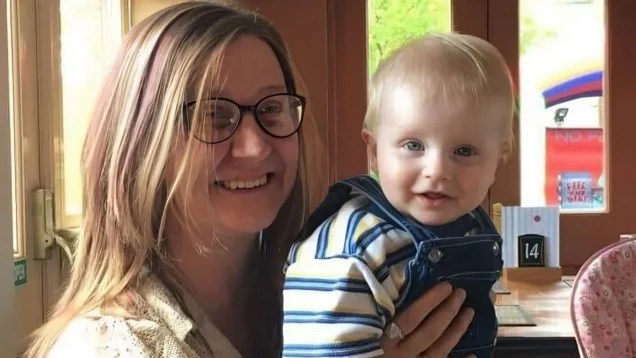
Three children in the UK were left without a mother after she died from a massive stroke determined to be caused by blood clots that formed after she received the AstraZeneca coronavirus vaccine, but Twitter is labeling conversations about this information taking place on the platform as “misinformation.”
Previously healthy Lucy Taberer, whose youngest is a five-year-old boy, succumbed to the consequences of the Covid shot 22 days after she was vaccinated. At first, the 47-year-old experienced mild side-effects, described in reports as common, to then develop a bruise, skin rash, and pain that the doctors at first dismissed as being caused by kidney stones.
In the end, it turned out that the victim’s reaction to the vaccine had been to develop blood clots that proved to be fatal.
Her death certificate reads that Taberer died of cerebral venous sinus thrombosis and vaccine-associated thrombosis with thrombocytopenia.
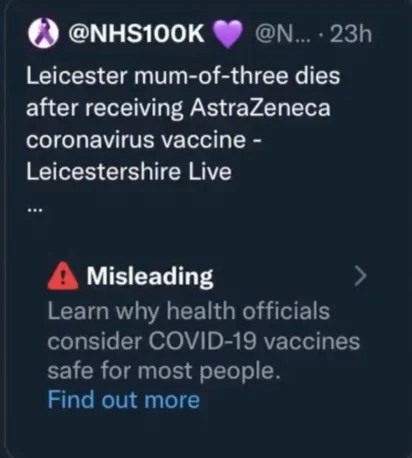
Local media, including Leicester Mercury, reported about it, and Taberer’s step daughter tweeted a link to the story, but was quickly shut down by Twitter, which labeled the post as “misleading.”
To add insult to injury, she was advised to click another link, provided by Twitter’s “fact-checkers,” that would “explain” why health officials think Covid vaccines are safe “for most people.”
Since the tweet about the woman’s death did not claim the vaccines were unsafe for most people, it remains unclear what logic drives Twitter’s censorship around the topic, other than the desire to stop any mention of the jabs in a negative context, whether true or false.
GB News reported on this, wondering if it wasn’t enough for a child to deal with the loss, but also “have to be insulted in their grief if they mention it on the internet.”
Host Mark Steyn noted that three guests who regularly appear on his show were among those awarded compensation after the UK government last week admitted Covid vaccines in some cases can be deadly. All three lost their loved ones to the vaccine.
But, he noted, social media have been slow (or not interested) in catching up, even as governments are starting to pay out compensation.
ICC: International Federation of Journalists to be lawsuit partner against Israel

MEMO | July 4, 2022
The International Federation of Journalists will be a partner in a lawsuit against Israel at the International Criminal Court (ICC) following the murder of Al Jazeera journalist Shireen Abu Akleh by an Israeli sniper, Wafa news agency has reported.
“Palestinian journalists are fighters who face on a daily basis the aggression of the occupation in all fields as well as the main project of the occupation to expel the Palestinians from their land,” Ali Youssef, a member of the federation’s executive board, told Wafa. He added that the IFJ has succeeded in exposing Israel’s acts of aggression against media professionals and the Palestinian people.
Palestinians argue that the Israeli military deliberately targeted and killed Abu Akleh. Israel denies this, claiming that she may have been hit by errant army fire or by a bullet from one of the Palestinian gunmen who were clashing with its forces at the scene. According to eyewitnesses, however, there was no such clash at the time that the journalist was killed.
The ICC recognised in a February 2021 ruling that it has jurisdiction over the situation in the occupied Palestinian territories of Gaza, the West Bank and East Jerusalem. This has paved the way for cases to be brought against Israel over alleged war crimes and crimes against humanity.
Last month, Palestinian Foreign Minister Riyad Al-Maliki handed the ICC prosecutor the official outcome of the Palestinian investigation into the murder of Abu Akleh. He noted that it constitutes a turning point in the crimes committed by Israel against the Palestinian people.
During the meeting with ICC Prosecutor Karim Khan, Maliki demanded that the criminals responsible for targeting civilians, children, women, journalists, doctors and other protected groups be brought to international justice.
Moreover, a video message by Nasser Abu Bakr, President of the Palestinian Journalists’ Syndicate, urged Prosecutor Khan to hold Israel to account. “Fifty Palestinian journalists have been killed since 2000 alone,” he explained. “Seven thousand crimes against Palestinian journalists have been documented.”
A detailed account of Abu Akleh’s killing was given by her colleague, Walid Al-Omari. “Why would they target Shireen?” asked Al Jazeera’s Jerusalem Bureau Chief. He suggested that Israel was seeking to inflict a direct and powerful blow against the network. By killing Abu Akleh, he suggested, the colonial-occupation state hoped to silence one of the most powerful voices in the Arab world.
Al Jazeera described Abu Akleh’s killing as a “blatant murder” that violates “international laws and norms”. In its statement following her murder, the network pointed out that according to Article 8 of the ICC Charter, “Targeting war correspondents, or journalists working in war zones or occupied territories by killing or physically assaulting them, is a war crime.”
Featured Video
EUROPE FEARS RUSSIA’S NEXT MOVE / Ian Proud
or go to
Aletho News Archives – Video-Images
New Book
New Book: No Autoimmunity The Body Doesn’t Attack Itself
Lies are Unbekoming | September 24, 2026
 The label for Humira, once the best-selling drug in the world, lists its risks in plain print. One of them, in the label’s own words, is new “autoimmune” disease.
A drug prescribed for a condition labelled autoimmune carries a warning that it can cause a condition labelled autoimmune. That contradiction sits in every box, on a folded paper almost nobody reads.
My new book starts there.
No Autoimmunity: The Body Doesn’t Attack Itself
For seventy years, “your body is attacking itself, and we don’t know why” has ended the conversation for people diagnosed with multiple sclerosis, lupus, rheumatoid arthritis, Hashimoto’s, Type 1 diabetes, Crohn’s and psoriasis. More than eighty conditions now carry the autoimmune label. The diagnosis comes with a prescription for life. It almost never comes with a question about cause.
This book asks the question and answers it from the framework’s own records: its drug labels, its journals, its regulatory filings, and its own experiments. … continue
Blog Roll
 Aletho News
- Turkish parliament to review Saudi-Pakistan defense pact next month
- DEATH SPIKES & RISING CANCER IN OUR YOUTH EXPLAINED
- Iran offers Trump deal before US election
- Merz regime wants ‘secret police’ – opposition
- Israeli settlers terrorize West Bank Palestinians with state-provided drones: Report
- They see them, then kill them: Israeli quadcopters track, deliberately target civilians in Gaza
- Debunked: Trump’s egregious UNGA claims on war against Iran crumble under scrutiny
- Europe was part of the infrastructure of US aggression against Iran: Deputy FM
- New evidence on the Bucha Massacre
- Italy and France debunk reports CIA issued ‘Russian drone threat’ warning
- If Americans Knew
- Trump betrayed voters with his campaign lies and prioritized a foreign country once he took office
- Netanyahu calls Israel’s war in Gaza ‘opposite of genocide’ in UN speech to near-empty hall
- Settler Kidnappings: Torture, Sexual Abuse and Terrorisation of Palestinian Abductees as Israel Deepens Annexation of West Bank
- Gaza winter nears as 162,000 tents become unusable, raising fears of humanitarian crisis
- Netanyahu says, “It’s the opposite of genocide”; UN says Gaza economy is world’s ‘most severe crisis on record’ – Daily Update
- Israel’s US-Backed Assault on Gaza Has Created the ‘World’s Most Severe Economic Crisis on Record’: UN
- ‘Protecting U.S. Citizens’… From Israel
- ‘This is where I live now, the back of a truck’: a day in the life of a grandmother in Gaza
- In UN Speech, Iran’s President Displays Pictures of Children Killed by US, Brings Attention to Israel’s Nuclear Arsenal
- Israel displaces hundreds of Palestinians amid wave of demolitions in West Bank
- No Tricks Zone
- New Study: Earth And Venus Surface Warmth Largely Explained By Convection And Lapse Rate, Not CO2 Or Radiation
- 2025 Nature Paper Claiming Worsening Global Drought Gets RETRACTED …Heavily Flawed
- New Study: ‘Global Drought Shows No Detectable Recent Acceleration Under Climate Warming’
- Economic Masterminds: German Socialists Suggest Taxing Productivity Gains Stemming From Using AI
- The South China Sea Has Not Been Cooperating With The Climate Change Narrative
- Energy Crisis: Germany Enters Heating Season With Historically Low Gas Reserve Fill Levels
- New Study: The Antarctic Ice Sheet Gained Mass From 2020-2024 Due To Staggering Snow And Ice Accumulation
- Study: Ocean Heating Rates From Thousands Of Years Ago ‘Dwarf’ Modern Ocean Heating Rates
- Climate Extremists Target, Attack Large-Scale Power Grid Infrastructure In Germany!
- New Study: Antarctic Ice Melt Has Contributed Less Than 1 Centimeter To Sea Level Rise In The Last 30 Years

