UK students urged to report ‘propaganda’
Samizdat | June 3, 2022
The University of Edinburgh in Scotland has urged its students to report “misinformation” after one of its teachers was accused of spreading false Russian narratives.
According to The Times and the BBC, while stating that it was committed to freedom of expression and creating a “safe space for staff and students to discuss controversial topics,” the university noted that it has a “strong view against the spread of misinformation” and asked students to report concerns they might have about teachers.
The academic in question – Tim Hayward, a professor of environmental political theory at the University of Edinburgh – had retweeted a statement made by a Russian representative to the UN, who claimed that the alleged Russian bombing of a maternity hospital in Mariupol, Ukraine was a false flag operation.
In March, Hayward also shared a link to an article questioning the reported Russian attack on a theater in Mariupol, and asked “what do we know of the reality?” The article suggested that the assault may have also been a false-flag operation carried out by Ukrainians in an attempt to generate public outrage and provoke a military intervention from the West.
Kvitka Perehinets, a Ukrainian student at the university, who says she has family members fighting now, told the BBC that she was deeply concerned over the professor’s social media activity, stating that: “The moment we start to equate the two sides in the story is the moment we lose our humanity. The oppressor — in this case Russia — should not be given the same kind of platform as those who are being oppressed.”
Perehinets told the outlet that she alerted the university to Professor Hayward’s tweets.
Another student, Mariangela Alejandro, expressed concern over Hayward’s statements on the alleged chemical weapons attack in Syria, and his critical view of the White Helmets organization, which he shared with students during a lecture.
According to a lecture obtained by the BBC, Hayward told his students that there were two prevailing narratives surrounding the alleged attack in Douma, Syria in 2018: “One narrative says the White Helmets helped rescue victims, provided evidence and gave witness statements about the chemical attack on Douma on 7 April 2018. The critics say the White Helmets were responsible for staging a false flag event to spur the West to attack the Syrian government.”
“In fact, dispute about this case is still current,” he noted.
The BBC wrote that Alejandro said she came away from Hayward’s lecture “thinking ‘it could be true’ that the attack was faked, until she spoke to a Syrian friend.” The article, however, did not specify what her friend said.
Hayward has defended his teaching by stating that his course simply asks whether a claim should be accepted solely on the basis of someone’s authority, adding that the concept extends to his own words as well.
He hit out against the BBC for what he considers to be attacks on him and other academics who are challenging the prevailing narrative. Following the BBC’s article, Hayward wrote on Twitter: “Academia should support open discussion of propaganda, not be constrained to tow an official line in an information war.”
US Republicans slam ‘misinformation’ tool
Samizdat | June 3, 2022
Republicans in Congress are sounding alarms over a partnership agreement between the NewsGuard ‘disinformation’ service and a major teachers’ union, arguing the tool is prone to bias and the union is deliberately politicizing American students.
In letters sent to both NewsGuard and the American Federation of Teachers (AFT), GOP Representatives Virginia Foxx (North Carolina), Jim Banks (Indiana), and Burgess Owens (Utah) slammed the two organizations for a “history of demonstrating left-wing bias,” according to Fox News.
“We can’t let this kind of left-wing propaganda into our schools, or let groups condemn so-called ‘misinformation’ while peddling it themselves,” Foxx – the ranking Republican on the House Education Committee – said during a recent interview.
“AFT has long demonstrated that its priority is politics, not education. It is painfully clear that NewsGuard does not have the judgement necessary to teach our nation’s children how to tell truth from fiction.”
According to NewsGuard’s website, the paid service offers “trust ratings” for thousands of publications, appending color-coded icons to news articles depending on their ‘reliability’, as determined by “real journalists.” The New York-based organization has worked with major institutions in the past, including Bing, Microsoft, MSN, the US State Department, the Pentagon, and the World Health Organization. It declared its new partnership with the AFT earlier this year, with the union’s president, Randi Weingarten, saying the tool would be a “game-changer” for helping “middle, high school and postsecondary students separate fact from fiction.”
However, some House Republicans are now echoing concerns previously raised by a number of education and tech policy groups, who said the tool posed “a new threat to the principles of free expression, open dialogue, diversity of political thought, and freedom from harassment in our classrooms.”
In a statement, Rep. Banks said “the left” is “obsessed with indoctrinating kids,” arguing that political advocacy groups “have no place in taxpayer funded public schools,” while Owens stated the partnership with the AFT “is not an honest attempt to separate fact from fiction. It’s yet another coordinated effort to politicize our academic institutions.”
NewsGuard has come under fire from conservative critics for “amplifying,” rather than “discrediting,” disinformation, some noting that the tool gave perfect ratings to a series of news outlets that dismissed the Hunter Biden laptop story first unearthed by the New York Post in 2020. While many mainstream publications have since acknowledged that the laptop was authentic, NewsGuard continues to dole out rock-bottom credibility scores to the Post and other right-leaning outlets.
The tool has also earned the ire of some on the left, including Joe Lauria, chief editor at Consortium News. In a story published on Thursday, Lauria said the investigative news outfit is now being “reviewed” by NewsGuard for allegedly “false” reporting on the conflict in Ukraine.
“It calls ‘false’ essential facts about Ukraine that have been suppressed in mainstream media,” he wrote, including US involvement in the country’s 2014 coup, as well as the influence of far-right groups and “neo-Nazism” within the Ukrainian government.
“NewsGuard considers these facts to be ‘myths’ and is demanding Consortium News ‘correct’ these ‘errors,’” Lauria added.
Uvalde failure stalls the argument for social media surveillance
By Christina Maas | Reclaim The Net | June 1, 2022
Digital surveillance technology that is currently in use is said to be insufficiently effective, with reports making this conclusion in the wake of the Uvalde mass shooting.
Keeping children safe is one justification given by schools who use services that monitor students’ social media activities in search of posts or behavior that would indicate violence was afoot. Justification is needed because the way these services operate can represent a threat to privacy and free speech.
It now turns out that the Uvalde school where the tragedy occurred had in the 2019/2020 school year bought a subscription to use one such surveillance service, Social Sentinel, that monitors students’ online conversations.
Reports currently cannot confirm that the tool was being used by the school at the time of the shooting, and if it was, clearly, it had failed miserably.
The entire concept seems to come down to the old adage about the futility of giving up liberty to purchase temporary safety – or the appearance of it. Social Sentinel is now owned by Navigate360, and this company is so far refusing to make any comment regarding the situation.
Some media seem to indicate that the problem is that Social Sentinel can only surveil public posts, while allegedly the Uvalde shooter’s posts indicative of violent intent were happening only in private messages.
Others, like representatives of Human Rights Watch who spoke for The Verge focused on the danger of harm being done to children by using “unproven and untested” surveillance technologies.
Before the Uvalde massacre, many reports and non profits were revealing not only that the use of surveillance tools targeting students’ social media presence was “exploding” in schools across the US – but that this technology was unreliable to the point that the use of the word “exploding” in the context in which it was just used could easily be flagged as “a threat.”
Posts that had students reference a movie called “Shooter,” or describe their credit score as “shooting up” were all incorrectly flagged – while actual treats were slipping through the cracks, in what is likely yet another example of how unreliable algorithms, including those based on machine learning, are as tools of surveillance and/or censorship.
“Though the efficacy of services like Social Sentinel is contested, investors have backed social media monitoring companies to the tune of tens of millions of dollars, betting on the longevity of digital surveillance as a feature of the educational landscape,” writes The Verge.
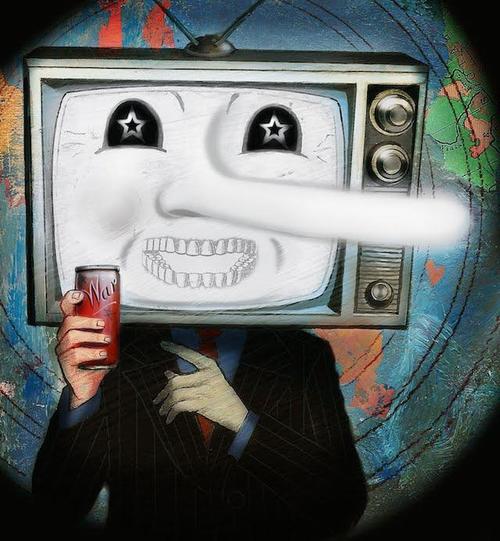
BBC joins crusade against dissenting academics via propaganda documentaries
Press TV – June 1, 2022
It seems the nefarious Inquisition in Europe, which brutally sought to rid the world of heresy and political rivalry for centuries, has reignited as its new protagonists in the British national broadcaster BBC strive to silence and delegitimize any dissenting viewpoints held by academics.
In a new documentary on BBC Radio 4’s Facts on File, and also in a report based on the documentary by the BBC News, two academics, namely Tim Hayward and Justin Schlosberg, have been falsely accused of supporting and spreading “Russian propaganda” and “misinformation” about Moscow’s military operation in Ukraine that began on February 24, either through their lectures or on Twitter.
Hayward, a professor of environmental political theory at the University of Edinburgh, had re-tweeted a representative of Russia to the United Nations, who stated that the Russian attack on a maternity hospital in Mariupol on March 9 was “fake news.”
“As long as we’re still able to hear two sides of the story we should continue striving to do so,” Hayward said.
While the West condemned Russia for targeting the hospital several times with airstrikes, the Russian foreign ministry strongly rejected the allegation, branding it as “information terrorism” against Moscow.
A few days later and in the House of Commons, legislator Robert Halfon from the Conservative Party denounced Hayward and also Dr. Tara McCormack, a lecturer in international politics at the University of Leicester, who had spoken about “ludicrous disinformation” of both Kiev and Moscow.
Halfon also urged the parliament to “contact these universities directly to stop them acting as useful idiots for” Russian President Vladimir Putin.
Education Secretary Nadhim Zahawi at the same session of the House of Commons described the said academics and the like as people who are “buying” Moscow’s “false narrative” about the war in Ukraine.
“It is a false and dangerous narrative and we will crack down on it hard,” Zahawi said.
The BBC quotes 21-year-old history and politics student Mariangela Alejandro as saying that things in Hayward’s class got “weird” when the professor stepped in the “realm of conspiracy theories about [Syrian President Bashar al] Assad and Russia.”
The British broadcaster even criticized, though implicitly, Hayward for a lecture in which he outlined an argument that the West-backed White Helmets group might have helped fake a chemical attack in Syria years ago. Russia and the Syrian government have stressed that the attack was “staged.”
The White Helmets group, which claims to be a humanitarian NGO, is known for its coordination with terror outfits in Syria to carry out staged chemical attacks in order to falsely incriminate Syrian government forces and fabricate pretexts for military strikes by a US-led military coalition present in Syria since 2014.
On April 14, 2018, the US, Britain, and France carried out a string of airstrikes against Syria over a suspected chemical weapons attack on the city of Douma, located about 10 kilometers northeast of the capital Damascus.
That alleged attack was reported by the White Helmets group, which published videos showing them purportedly treating survivors. Washington and its allies blamed Damascus for the Douma attack, an allegation strongly rejected by the Syrian government.
Hayward used an argument put forward by members of a collective of academics and bloggers he is a member of, known as the Working Group on Syria Propaganda and the Media (WGSPM).
“One narrative says the White Helmets helped rescue victims, provided evidence and gave witness statements about the chemical attack on Douma on 7 April 2018,” Hayward said during the lecture.
However, he added that “the critics say the White Helmets were responsible for staging a false flag event to spur the West to attack the Syrian government. In fact, dispute about this case is still current.”
Hayward told the BBC that he does not teach about Syria, but simply used an example in his class that he was familiar with.
The BBC, however, seems to be eager to lash out at Hayward when it quoted Dr Nader Hashemi, director of the Centre for Middle East Studies at the University of Denver and a visiting scholar at the University of Cambridge, as describing Hayward’s argument about the White Helmets and the staged chemical attack as “a deeply distorted set of teachings.”
Regarding Hayward’s stance on the purported Russian airstrikes against a maternity hospital in Mariupol that says “we should strive to hear both sides”, the BBC drew in Kvitka Perehinets, a Ukrainian student at the University of Edinburgh, who said “there are no two sides” to the conflict and that “The oppressor – in this case, Russia – should not be given the same kind of platform as those who are being oppressed.”
Although the University of Edinburgh claims that its programs are approved by a board of studies, emphasizing its commitment to “academic freedom”, it also stresses that it takes “a strong view… against the spread of misinformation” and encourages students to report concerns.
The university should be notified that one of the primary jobs of “academic freedom” is paving the way for academic research to distinguish true information from “misinformation” and “disinformation.”
However, the UK’s Department for Education (DfE), which is responsible for education in England, inquisitively controls the flow of research in universities, saying it expected “universities’ due diligence processes to consider the reputational, ethical and security risks of false and dangerous narratives, and ensure that students are not misled by views that are clearly false.”
When the academics’ tweets were raised in the Commons, Zahawi said the minister for Higher and Further Education, Michelle Donelan, was “contacting those universities”, a means of pressure on Hayward and the like who think differently from the mainstream in the West.
Another academic pressured by the BBC and the Education system in the UK is professor Schlosberg, who specializes in media and journalism at Birkbeck, University of London.
He has been lambasted for re-tweeting Russian state media questioning what occurred in the Ukrainian city of Bucha, 37 kilometers northwest of the capital Kiev.
Back on April 2, the mayor of Bucha in a video message claimed that 300 people had been killed by the Russian army with some appearing to have been bound by their hands and feet before being shot.
He also presented footage and photographs showing the dead bodies of those allegedly killed or executed by Russian troops, claiming that 280 bodies had been buried in mass graves while nearly 10 others were either unburied or only partially covered by earth. Later on, Kiev claimed a death toll of more than 1000 in the city.
A day later, the Ukrainian government urged major Western powers, including the United States, to impose crippling fresh sanctions on Moscow over what it called a “massacre” in Bucha, a newly liberated town at the time.
The Kremlin strongly rejected any involvement of Russian troops in the so-called massacre, with Russian President Sergei Lavrov stressing that the killings did not occur while Russian soldiers were in the city.
He added that the so-called dead bodies in footage circulating the internet were “staged” and the images of them plus Ukraine’s false version of events had been spread on social media by Kiev and Western countries.
On April 4, Schlosberg tweeted that “Russian troops left on 30th March. No mention of any ‘massacre’ or bodies lining the streets for 4 days.” He also re-tweeted a video of Bucha’s mayor speaking without mentioning a massacre.
The BBC, however, hurriedly stressed in its report that Russian media has been using the video to bolster the idea that the bodies appeared after the Russians had left the city.
It quoted the academic as saying that he had “no idea” regarding what really happened there.
“My only understanding is that I think no-one else really knows what happened. I think there is a very strong likelihood that there were very serious atrocities, almost certainly the vast majority of which were committed by Russia,” Schlosberg further told the BBC.
However, in a string of tweets on Wednesday, he denounced the broadcaster’s “grossly defamatory allegation.”
“Rather than engage with the actual meaning of my tweets, the BBC chose to uncritically endorse obvious manipulation by people who have been actively trying to silence and delegitimize any dissenting viewpoints since the start of” the current operation by Russia in Ukraine, Schlosberg said.
“The manner in which the program achieved this was so cynical and unguarded it beggars belief, even for those of us increasingly skeptical about the BBC’s commitment to basic journalistic standards, let alone its own lofty public service values,” he stressed.
UK “hate crime” plans could criminalize comedy, rights group says
By Cindy Harper | Reclaim The Net | May 31, 2022
The Home Office is working on a new hate crimes strategy to encourage more people to report hate crimes. Campaigners have warned that the new strategy might result in criminalizing comedians like Ricky Gervais, who question the trans ideology in comedy routines.
The strategy is being drawn up despite a court ruling last year that banned police from recording “gender-critical” comments as non-crime hate incidents (NCHIs).
“These plans suggest either that the Government is not paying attention, or that they have contempt for the Court of Appeal,” said a lawyer from campaign group Fair Cop.
“Either way, it is astonishing that legislators are planning to expand the discredited and unlawful practice of recording non-crime hate incidents [NCHIs]. Following Fair Cop’s win in the Court of Appeal in December, the College of Policing promised to publish revised hate crime guidance by the end of May this year. We’re still waiting. Police forces that record complaints against comedians – or any other lawful speech – as NCHIs will be piling illegality upon illegality.
“They will then find themselves in court with no legitimate defense. This quixotic strategy oozes arrogance, as if the law does not apply if you’re fighting for ‘the right side of history.’
“But how can you be on the right side of history if you’re repeatedly on the wrong side of the law?”
This news comes comedian Ricky Gervais faced a censorship mob from his recently aired Netflix Special SuperNature, where he covered the topics of cancel culture, transgender ideology, Hitler, and AIDS.
At some point he says: “The worst thing you can say today is, ‘Women don’t have penises,’ right?”
He was accused of “hate crimes” by some trans campaign campaigners, and would have probably been recorded for NCHIs if the new plans were already in place.
148 Israeli violations against Palestinian journalists in May
MEMO | June 1, 2022
An Arab NGO has documented 148 Israeli rights violations against Palestinian journalists in the occupied Palestinian territories last month, Anadolu News Agency reports.
In a statement on Wednesday, the Journalists Support Committee said the month of May witnessed a surge in attacks on Palestinian journalists by Israeli forces and settlers.
It termed the attacks as “an attempt to prevent Palestinian journalists from covering Israeli assaults against Palestinians and their holy sites.”
According to the NGO, the Israeli violations varied from arrests, intimidation, shooting, verbal and physical assaults to car-ramming incidents.
It said 11 journalists were detained by Israeli forces in the West Bank during May, while the custody of five others was extended without trial.
“Israeli forces, in collaboration with settlers, disrupted the work of 61 journalists and media institutions while covering Israeli violations in the cities of Jerusalem, Hebron and Jenin,” it added.
The NGO also noted that the social media accounts of 11 Palestinian journalists were suspended for alleged violations of publication rules.
Last month, Al Jazeera journalist, Shireen Abu Akleh, 51, was shot dead while covering an Israeli military raid in the West Bank city of Jenin.
Palestinian officials and her employer, Al Jazeera, said she was killed by Israeli forces.
There was no comment from Israeli authorities on the NGO’s report.
Fears of cover-up of vaccine caused deaths
Pathologist who said 30-40% of post-vaccine autopsies died of the vaccine went oddly silent and suddenly stopped carrying out autopsies
By Will Jones | The Daily Sceptic | May 31, 2022
If we are going to get to the bottom of whether and to what extent vaccines are contributing to the deaths of the vaccinated, autopsies are a crucial tool. So where are all the autopsies to help us answer these questions?
Back last summer, the Chief Pathologist at the University of Heidelberg, Dr. Peter Schirmacher, was pushing for many more autopsies of vaccinated people. His team had just finished conducting 40 autopsies of people who had died within two weeks of vaccination and concluded that 30-40% of them died from the vaccine.
Dr. Schirmacher warned of a high number of unreported deaths from vaccination and lamented that pathologists don’t notice most of the patients who die from a vaccination. The problem, he explained, is that vaccinated people do not usually die under clinical observation.
The doctor examining the corpse does not establish any context with the vaccination and certifies a natural death and the patient is buried. Or he certifies an unclear manner of death and the public prosecutor sees no third-party fault and releases the body for burial.
Dr. Schirmacher’s claims were dismissed at the time by Government scientists, but he stuck to his guns. “The colleagues are definitely wrong because they cannot judge this specific question competently,” he said. He clarified that he is in favour of the vaccines to fight Covid and has been vaccinated himself, but says the benefits and risks must be considered for each person. He argued in favour of “individual protection considerations” instead of quickly vaccinating everyone.
At the time, the Federal Association of German Pathologists was also pushing for more autopsies of vaccinated people. Johannes Friemann, head of the autopsy working group in the association, said this was the only way that connections between deaths and vaccinations could be ruled out or proven. The association had already in March 2021 sent a letter to Health Minister Jens Spahn requesting that German state governments instruct health authorities to order autopsies on site. Five months later, in August, this letter remained unanswered.
Following the reports in the media of his comments, Dr. Schirmacher fell oddly silent. Today, ten months later, no further autopsies by his group have been reported and no further calls for them have been heard. There are also no reports of autopsies being conducted specifically on those who died shortly after Covid vaccination in any other countries – save for the 15 done by Dr. Arne Burkhardt towards the end of 2021, which found “clear evidence of vaccine-induced autoimmune-like pathology in multiple organs” in 14 of 15 cases, but which were ignored by all health authorities and mainstream media.
Where are all the autopsies to investigate the role of vaccines in post-vaccine deaths, and why have Dr. Schirmacher and his colleagues gone quiet, after being so emphatic about the risks and the need?
This looks very much like a cover-up and a silencing. If it isn’t, then why don’t governments order autopsies to be carried out, to put the matter to rest? What have they got to hide?
Connecticut to hire “misinformation” expert who will urge social media sites to censor “false” posts
By Tom Parker | Reclaim The Net | May 31, 2022
Connecticut plans to pay a “misinformation” expert $150,000 per year to scour the internet for election content that they deem to be “false” and then urge social media platforms to flag or remove posts containing this information.
According to The New York Times, this misinformation expert will flag information that’s going viral, memes, and “emerging narratives.” They will also be instructed to look for this information on alt-tech platforms such as GETTR and Rumble.
Connecticut officials said they would prefer candidates that are fluent in English and Spanish so that they can target misinformation in both languages.
Connecticut is one of several Democrat-controlled states that are launching efforts to flag and censor misinformation in the run-up to the 2022 US midterm elections.
Colorado is redeploying a “Rapid Response Election Security Cyber Unit” that it created for the 2020 election. This unit is made up of three election security experts who will surveil the internet for election misinformation and report it to federal law enforcement.
And California’s office of the Secretary of State is working with the Department of Homeland Security (DHS) and academics to search for “patterns of misinformation across the internet.”
In addition to these flagging and censorship efforts, Colorado, Oregon, Idaho, and Arizona will also be spending millions of dollars on ad campaigns that push “accurate” election information.
Colorado’s Democratic Secretary of State, Jena Griswold, will head the Rapid Response Election Security Cyber Unit. She justified her team’s flagging of misinformation to federal law enforcement by claiming that “lies are being used to chip away at our fundamental freedoms.”
Connecticut’s Deputy Secretary of the State, Scott Bates, justified his state’s misinformation censorship program by insisting that the state needs to have “situational awareness by looking into all the incoming threats to the integrity of elections.”
Bates added: “Misinformation can erode people’s confidence in elections, and we view that as a critical threat to the democratic process.”
While representatives of these states are framing these programs as a way to boost confidence in elections and protect the democratic process, Tom Fitton, founder of the conservative, non-partisan educational foundation Judicial Watch, argued that these states are “setting up ‘Ministries of Truth’ to censor Americans.”
These programs are the latest of many online censorship initiatives pushed by politicians that raise First Amendment flags. Some other examples include the recently paused DHS “Disinformation Governance Board” which was launched with the intention of fighting “disinformation,” the Biden administration’s admission that it flags content for Facebook to censor, and Democrats working with Twitter to get tweets taken down.
Critics have argued that programs that involve public officials flagging speech for Big Tech platforms to censor violate the First Amendment because the government is coercing these private companies to censor on its behalf. However, courts have so far dismissed lawsuits that allege these public-private censorship initiatives violate the First Amendment.
A lawsuit that was filed in March and alleged that several of the Biden administration’s actions, including its admission that it flags content for Facebook to censor, violated the First Amendment was dismissed in May.
Journalist Alex Berenson’s December 2021 lawsuit, which accused Twitter of violating several laws when banning his account and alleged that the federal government coerced Twitter to deprive Berenson of his right to speak, was recently allowed to proceed but the First Amendment claim was dismissed.
Trudeau wants “new tools” to tackle online “misinformation”
No details given
By Christina Maas | Reclaim The Net | May 28, 2022
Canada’s Prime Minister Justin Trudeau announced that the government is investing in new tools for security agencies to fight extremism and online “misinformation.”
“We need new tools to fight all of these pending threats, and that’s why we’ve turned to all of our security agencies to look at new ways of ensuring peoples’ safety,” Trudeau said in a press briefing in Vancouver, without specifying the tools he was referring to.
“Because, as we know, what happens in the virtual world has impact in the real world. It doesn’t stay on the internet.”
Trudeau added that the tools were necessary to fight “new threats weighing in on our society and country,” mentioning the spike in disinformation and misinformation and foreign adversaries and domestic extremists weaponizing social media.
“Whether it’s extremist ideology and right-wing terrorism on the rise in Canada, or whether it’s examples like the illegal [Freedom Convoy] protests we saw in the winter, there are a whole new set of challenges that we need to be responding to,” Trudeau said.
The prime minister paid the usual lip service that politicians do when they bring in limits to speech, saying that the new tools would be deployed in a way that protects free speech and the right to protest.
Trudeau specified that the government was “working closely with organizations like the Canadian Security Establishment [CSE] around communications.”
The mention of communications suggest tools that would collect and analyze data from social media to identify potential threats.
ICC urged to end Israel’s ‘devastating impunity’, as war crimes probe includes Abu Akleh
MEMO | May 27, 2022
Palestinian journalists are being systematically targeted by Israel because of the “gift of impunity” granted to the Apartheid State, a press conference in London was told today in the wake of the killing of Al Jazeera journalist, Shireen Abu Akleh.
Convened by the International Centre of Justice for Palestinians (ICJP), lawyers working on an existing case filed at the International Criminal Court (ICC) over the targeting of Palestinian journalists by Israel announced that they will add the killing of Abu Akleh to the complaint issued in April.
Lawyers from Doughty Street Chambers and Bindmans LLP, along with representatives from the International Federation of Journalists (IFJ), the Palestinian Journalists’ Syndicate, and the ICJP, spoke about Israel’s systematic targeting of Palestinian journalists and the ongoing legal battle to bring prosecution against the Occupation State.
The same group of lawyers and unions submitted a formal complaint to the ICC accusing Israel of systematically targeting journalists working in Palestine and failing to properly investigate killings of media workers, which amount to war crimes. The ICC recognised, in a February 2021 ruling, that it has jurisdiction over the situation in occupied Gaza, West Bank and East Jerusalem. This has paved the way for legal prosecution to be brought against Israel over alleged war crimes and crimes against humanity.
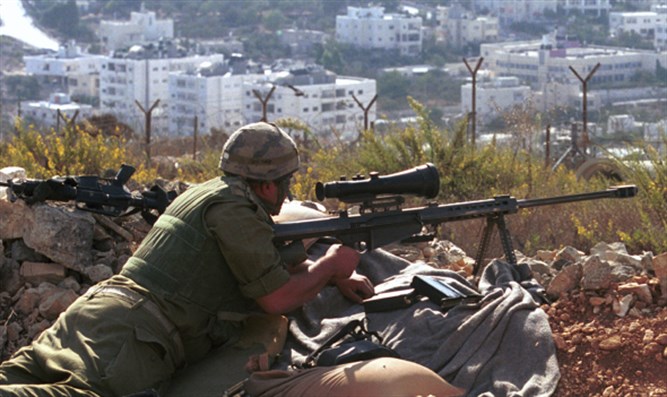
The complaint details the systematic targeting of Palestinian journalists on behalf of four named victims – Ahmed Abu Hussein, Yaser Murtaja, Muath Amarneh and Nedal Eshtayeh – who were killed or maimed by Israeli snipers while covering demonstrations in Gaza. All were wearing clearly marked PRESS vests at the time they were shot.
The complaint also highlights the targeting of media and bombing of the Al-Shorouk and Al-Jawhara Towers in Gaza City in May 2021, including the cases of Alam News, Al Hayat Newspapers, Mayadeen Media, Al Bawaba 24 and others. Complaints have also formally been submitted to the UN Special Rapporteurs (UNSR) setting out how the systematic targeting of journalists working in Palestine, as well as the failure to properly investigate killings of media workers.
“We are awaiting confirmation from the ICC’s Prosecutor’s Office about the action they intend to take, but the killing of Shireen and the shooting of Ali Al-Samoudi bring to sharp focus the need for urgent action by the ICC”, Bindmans LLP, the firm hosting the event, said before the press conference. “We will seek to add these cases to the complaint that is already before the ICC.”
Director of the ICJP, Tayeb Ali, and the solicitor in the case said. “The targeting of journalists in conflict zones anywhere in the world is unacceptable and must bring severe consequences for those who try to hide their crimes and violations by killing or maiming journalists.” Ali described how “Israel has enjoyed a devastating impunity” and that the “gift of impunity” granted to the Apartheid State by international community has endangered the lives of Palestinian journalists. He stressed that “evidence is not the problem … holding Israel to account is.” Ali citied the large pool of documented evidence which he claims proves Israel is targeting journalists.
Updating the press conference over the April complaint issued to the ICC and the next step to prosecuting Israel, Jennifer Robinson, a barrister at Doughty Street Chambers, also spoke of Israel’s systematic targeting of Palestinian journalists.
Robinson mentioned the findings of the 2019 Commission of Inquiry on the 2018 protests in Gaza. The Commission paid special attention to the protection of civilians and to groups warranting protection under international law, including children, women, health workers, journalists and persons with disabilities. Citing several individual cases including journalists that were shot in the abdomen, the Commission concluded that it had “found reasonable grounds to believe that Israeli snipers shot journalists intentionally, despite seeing that they were clearly marked as such”. The killing of Abu Akleh, said Robinson, is not one off. There exists a “pattern of targeting Palestinian journalists” she stressed, urging the ICC “to take action.”
Jim Boumelha, the former president of IFJ, a federation of some six thousand journalists world-wide, including Palestinian Journalists’ Syndicate, warned against the culture of impunity enjoyed by Israel. “Risk-free killing has become a norm” he said speaking about Israel’s systematic targeting of Palestinian journalists. The killing of Abu Akleh is a message to countless others that they could be next, Boumelha claimed. IFJ alone has documented 877 violations by Israel against media and journalists. Appealing to the ICC to do its job, Boumelha said that “Israel may be the only country in the world that refuses to accept Palestinian journalists as journalists.”
A video message by Nasser Abu Bakr, President of the Palestinian Journalists’ Syndicate, urged new ICC Chief Prosecutor Karim Khan to hold Israel to account. 50 journalists have been killed since 2000 alone said Abu Bakr. 7,000 crimes against Palestinian journalists have been documented.
A detailed account of Abu Akleh’s killing was given by her colleague, Walid Al-Omari. “Why would they target Shireen?” asked Al Jazeera’s Jerusalem Bureau Chief. He suggested that Israel was seeking to inflict a direct and powerful blow to Al Jazeera. By killing Abu Akleh, the Occupation State hoped to silence one of the most powerful voices in Arab media, Al Omari claimed.
Al Jazeera has called Abu Akleh’s killing a “blatant murder” that violates “international laws and norms”. In its statement on Thursday, the network said, according to Article 8 of the ICC Charter, “targeting war correspondents, or journalists working in war zones or occupied territories by killing or physically assaulting them, is a war crime”.
EU urges citizens to inform on sanctions violators
‘Whistleblower tool’ created for people to report on violators of restrictions on Russia and Belarus
Samizdat | May 27, 2022
The European Commission on Friday announced the introduction of an anonymous online platform for people to report any violations of sanctions on Russia and Belarus.
“Aware of anyone violating EU sanctions on Russia or Belarus? We have created an online tool for whistleblowers to contact us and report violations of EU sanctions,” the EC tweeted.
The commission also said on its website that “sharing first-hand information” can be a powerful tool to help uncover cases of violations, including evasion and circumvention.
“By voluntarily providing us with information about EU sanctions violations of which you might be aware, you can help us investigate such practices and ensure sanctions compliance in the EU,” it said.
The statement noted that anyone can report anonymously, with the guarantee that their identity will be protected.
Sweden’s “Psychological Defence Agency” issues warning about memes that “spread misleading information”

Hurtful meme requiring censorship for public safety
By Tom Parker | Reclaim The Net | May 26, 2022
Sweden’s “Psychological Defence Agency,” which is dedicated to preventing and countering “malign information” and “disinformation,” has taken aim at “misleading” memes in its new “Do Not Be Fooled” campaign.
On a page titled “Laughter that can hurt,” the agency warns that:
“Humor, parody and satire are usually harmless forms of entertainment that can sometimes be used to spread misleading information and ridicule or criticize people or opinions – for example in the form of memes.”
Not only is the Psychological Defence Agency warning Swedish citizens to be on the lookout for misleading memes but it also urges them to be wary of the persuasive power of memes.
“Memes can be used to shift focus from a particular issue, take over and change the direction of a debate, or to support a hidden agenda,” the agency states.
Another point of contention raised by the Swedish Psychological Agency in this campaign is the way memes spread. Apparently, popular memes don’t usually go viral because they’re funny and get lots of shares. Instead, the Laughter that can hurt page claims that they have “often gone viral through bots.”
Nemo Stjernström, the project manager for the campaign, told the Swedish magazine Resume that memes were included in this Do Not Be Fooled campaign because “misinformation and foreign influence can be clothed in the most innocent packaging.”
The communications manager at the Psychological Defence Agency, Mikael Östlund, tied the campaign to this year’s Swedish general election by noting that “it is becoming increasingly important to increase one’s own resilience [to information influence], not least in an election year like this.”
Sweden’s Psychological Defence Agency was launched in January. Its efforts include training thousands of public officials on how to respond to false information and working with social media companies to reduce its spread. When it launched, the head of the agency, Henrik Landerholm, insisted that it’s “not the Ministry of Truth or a State Information Board like we had during the Cold War.”
Outside of Sweden, mainstream media outlets, politicians, and activists have all taken aim at memes by suggesting that they need to be debunked, censored, or even banned. Big Tech platforms are also “fact-checking” and censoring memes.
Featured Video
Death Spikes & Rising Cancer In Our Youth Explained
or go to
Aletho News Archives – Video-Images
From the Archives
Politicians lie
By Mazin Qumsiyeh | Popular Resistance | August 18, 2013
There is no way to say this truth nicely: Politicians lie. That includes Japanese, American, Egyptian, Israeli, and Palestinian politicians! Is there something more common sense than that? Yet, so many citizens around the world believe their own politicians or wistfully acknowledge lies but think it is part of the job needed to run things. They believe even when politicians contradict themselves blatantly. This phenomenon is rather remarkable. It is a dissonance and disconnect from reality that many seem oblivious to. It is very dangerous because it can lead to accepting rationales for going to war. These can be deadly wars that lead to millions of lives lost as happened in what was called World War 1 and WW2. Even when incredible and declassified evidence abound, politicians continue to lie and old mythologies refuse to die. Here are just a few of the countless lies told to us over the past few decades… continue
Blog Roll
 Aletho News
- The day-after at the White House: USA and Xi Jinping
- The Geopolitical Balance in the Red Sea: The UAE Being Displaced by New Players
- Iraqi resistance group vows to stage airport sit-ins over Iran aerial blockade
- Turkish parliament to review Saudi-Pakistan defense pact next month
- DEATH SPIKES & RISING CANCER IN OUR YOUTH EXPLAINED
- Iran offers Trump deal before US election
- Merz regime wants ‘secret police’ – opposition
- Israeli settlers terrorize West Bank Palestinians with state-provided drones: Report
- They see them, then kill them: Israeli quadcopters track, deliberately target civilians in Gaza
- Debunked: Trump’s egregious UNGA claims on war against Iran crumble under scrutiny
- If Americans Knew
- Trump betrayed voters with his campaign lies and prioritized a foreign country once he took office
- Netanyahu calls Israel’s war in Gaza ‘opposite of genocide’ in UN speech to near-empty hall
- Settler Kidnappings: Torture, Sexual Abuse and Terrorisation of Palestinian Abductees as Israel Deepens Annexation of West Bank
- Gaza winter nears as 162,000 tents become unusable, raising fears of humanitarian crisis
- Netanyahu says, “It’s the opposite of genocide”; UN says Gaza economy is world’s ‘most severe crisis on record’ – Daily Update
- Israel’s US-Backed Assault on Gaza Has Created the ‘World’s Most Severe Economic Crisis on Record’: UN
- ‘Protecting U.S. Citizens’… From Israel
- ‘This is where I live now, the back of a truck’: a day in the life of a grandmother in Gaza
- In UN Speech, Iran’s President Displays Pictures of Children Killed by US, Brings Attention to Israel’s Nuclear Arsenal
- Israel displaces hundreds of Palestinians amid wave of demolitions in West Bank
- No Tricks Zone
- New Study: Earth And Venus Surface Warmth Largely Explained By Convection And Lapse Rate, Not CO2 Or Radiation
- 2025 Nature Paper Claiming Worsening Global Drought Gets RETRACTED …Heavily Flawed
- New Study: ‘Global Drought Shows No Detectable Recent Acceleration Under Climate Warming’
- Economic Masterminds: German Socialists Suggest Taxing Productivity Gains Stemming From Using AI
- The South China Sea Has Not Been Cooperating With The Climate Change Narrative
- Energy Crisis: Germany Enters Heating Season With Historically Low Gas Reserve Fill Levels
- New Study: The Antarctic Ice Sheet Gained Mass From 2020-2024 Due To Staggering Snow And Ice Accumulation
- Study: Ocean Heating Rates From Thousands Of Years Ago ‘Dwarf’ Modern Ocean Heating Rates
- Climate Extremists Target, Attack Large-Scale Power Grid Infrastructure In Germany!
- New Study: Antarctic Ice Melt Has Contributed Less Than 1 Centimeter To Sea Level Rise In The Last 30 Years

