Aussie cop charged for leaking footage of fellow officers beating detainee
RT | August 24, 2015
Gold Coast police officer Sergeant Rick Flori may spend up to seven years behind bars for leaking CCTV footage showing his fellow officers brutalizing a young chef, Noa Begic, while he was handcuffed in the Surfers Paradise Police Station basement.
Flori, who leaked the footage of the dramatic incident to the Brisbane Courier-Mail, was formally charged with misconduct in public office after being summoned to police headquarters in Brisbane last week, the newspaper reported. The footage taken in 2012 shows police officers slamming Begic’s face into the concrete floor before the 21-year-old is shoved into the back of a van and brutally punched a number of times by one cop while another holds him.
The video then shows Begic’s blood being routinely washed away by a senior-sergeant who would later quit the force before any adverse findings were made by internal investigators. The senior-constable who threw the punches was only given a suspended dismissal, according to the Courier-Mail. The other two officers involved were reportedly not disciplined at all.
According to Sydney Criminal Lawyers, police allege that Flori, who had spent a quarter of a century in the Queensland Police Force until he was suspended earlier this year, committed the offence by ‘inappropriately obtain[ing]’ confidential surveillance footage from the police CCTV room.
Section 91A of the Queensland Criminal Code 1899 makes it an offence for a public officer, including a police officer, to release information gained as a result of their office. The prosecution must now prove that the act was done with the intention of dishonestly gaining a benefit for Flori or another person, or dishonestly causing a detriment to another person, Sydney Criminal Lawyers report.
The victim of the bashing, Begic, was arrested and charged with ‘public nuisance’ and ‘obstructing police’. The charges against him were later dropped and he won a confidential settlement from the Queensland Police Service, the newspaper reported. After his charges were dropped in June 2012, Begic said it would be “a disgrace” if the officer who leaked the video was punished.
A complaint has been made by Council of Civil Liberties (a voluntary organization concerned with the protection of individual rights and civil liberties) to the Crime and Corruption Commission (CCC) which, according to Sydney Criminal Lawyers, is the same body that made the decision not to prosecute the officers involved in the bashing.
“How is it that the police who were shown on the video as belting the crap out of this particular person have not been charged and yet the person who has leaked it is now being charged with an offence which could put him in jail?” Deputy President Terry O’Gorman told the team of lawyers.
The acting chair of the CCC said she had asked staff involved in the incident to compile details about the matter.
“I accept that needs to be looked at and we agree that police excessive use of force is one of the top five problems with police and we will be looking at that,” she told ABC radio.
Last month supporters of Flori gathered outside the Southport Magistrates Court to praise the officer and show outrage over the four involved in the incident.
Aussie cop charged for leaking footage of fellow officers beating detainee
RT | August 24, 2015
Gold Coast police officer Sergeant Rick Flori may spend up to seven years behind bars for leaking CCTV footage showing his fellow officers brutalizing a young chef, Noa Begic, while he was handcuffed in the Surfers Paradise Police Station basement.
Flori, who leaked the footage of the dramatic incident to the Brisbane Courier-Mail, was formally charged with misconduct in public office after being summoned to police headquarters in Brisbane last week, the newspaper reported. The footage taken in 2012 shows police officers slamming Begic’s face into the concrete floor before the 21-year-old is shoved into the back of a van and brutally punched a number of times by one cop while another holds him.
The video then shows Begic’s blood being routinely washed away by a senior-sergeant who would later quit the force before any adverse findings were made by internal investigators. The senior-constable who threw the punches was only given a suspended dismissal, according to the Courier-Mail. The other two officers involved were reportedly not disciplined at all.
According to Sydney Criminal Lawyers, police allege that Flori, who had spent a quarter of a century in the Queensland Police Force until he was suspended earlier this year, committed the offence by ‘inappropriately obtain[ing]’ confidential surveillance footage from the police CCTV room.
Section 91A of the Queensland Criminal Code 1899 makes it an offence for a public officer, including a police officer, to release information gained as a result of their office. The prosecution must now prove that the act was done with the intention of dishonestly gaining a benefit for Flori or another person, or dishonestly causing a detriment to another person, Sydney Criminal Lawyers report.
The victim of the bashing, Begic, was arrested and charged with ‘public nuisance’ and ‘obstructing police’. The charges against him were later dropped and he won a confidential settlement from the Queensland Police Service, the newspaper reported. After his charges were dropped in June 2012, Begic said it would be “a disgrace” if the officer who leaked the video was punished.
A complaint has been made by Council of Civil Liberties (a voluntary organization concerned with the protection of individual rights and civil liberties) to the Crime and Corruption Commission (CCC) which, according to Sydney Criminal Lawyers, is the same body that made the decision not to prosecute the officers involved in the bashing.
“How is it that the police who were shown on the video as belting the crap out of this particular person have not been charged and yet the person who has leaked it is now being charged with an offence which could put him in jail?” Deputy President Terry O’Gorman told the team of lawyers.
The acting chair of the CCC said she had asked staff involved in the incident to compile details about the matter.
“I accept that needs to be looked at and we agree that police excessive use of force is one of the top five problems with police and we will be looking at that,” she told ABC radio.
Last month supporters of Flori gathered outside the Southport Magistrates Court to praise the officer and show outrage over the four involved in the incident.
Another Egyptian prisoner dies, 3rd in 48 hours

A file photo of Ahmed Hamed, an Egyptian political prisoner who died while in custody on August 21, 2015.
Press TV – August 22, 2015
Another Egyptian political prisoner has died while in custody, the third death in 48 hours and the 13th of the month of August.
Thirty-seven-year-old Ahmed Hamed, father of three children, was pronounced dead on Friday evening in a police station in the city of Faiyum, 100 kilometers southwest of the Egyptian capital Cairo.
Hamed, a supporter of Egypt’s Muslim Brotherhood, lost his life just four days after being “kidnapped” by security forces in civilian clothes from the premises of his residence in Faiyum.
According to Hamed’s family and human rights activists in the city, he died of torture. No further details on his death have been released yet.
This is the third similar case in just 48 hours in Egypt. A 40-year-old man passed away in custody on Wednesday in a hospital in Matariya district in northeastern Cairo. He was detained 15 days before his death on charges of belonging to the Muslim Brotherhood.
Human rights activists in the Egyptian capital had said the man was only transferred to hospital when he was already in a very critical condition also due to torture.
Also on Wednesday, a 72-year-old inmate, serving a three-year prison term on similar charges, died in the Borg El Arab prison in Egypt’s city of Alexandria in the north.
The victim, who was suffering from diabetes and high blood pressure, lost his life due to purported medical negligence upon his return from a court session a day earlier, where he had appeared in a wheelchair.
At least 13 political detainees are now known to have lost their lives inside detention facilities in August alone.
Human rights activists emphasize that “deliberate and systematic medical negligence” on the part of prison authorities, torture, overcrowded prisons, and overall “unhealthy and inhumane” conditions imposed on more than 40,000 political prisoners in Egypt’s detention facilities are the causes behind the deaths.
Nearly 300 political prisoners have died in Egyptian detention facilities since then army chief and current President Abdel-Fattah al-Sisi ousted Egypt’s first democratically-elected president, Mohamed Morsi, in July 2013 in a coup.
Sisi then launched brutal crackdown on pro-Morsi protesters and brotherhood members, leading to the killing of hundreds and the arrest and imprisonment of tens of thousands, many of whom have been sentenced to death and long prison terms in mass trials.
The New “Steps Towards Democracy” in South Korea
By Konstantin Asmolov | New Eastern Outlook | August 22, 2015
On July 15 2015, the police of the Republic of Korea in Seoul raided the office and residence of members of the civil movement, “Korean Alliance”, (in Korea – the association for independent reunification and the development of democracy), who advocate the expansion of ties with the DPRK. This organization was created in November 2011 to implement the independent reunification of the two Koreas without external influence. It demands the withdrawal of foreign troops (read – the US, because there are no others) from the Korean peninsula and advocates the abolition of the National Security Law (NSL), which (among other things) prohibits citizens of the Republic of Korea, any unauthorized contact with North Koreans and actions to support the DPRK.
According to law enforcement officials, the movement is suspected of “promoting North Korean ideology and actions in support of Pyongyang.” About 100 police officers went to the movement’s offices in order to seize documents for the investigation.
According to investigators, members of the movement, which the authorities consider “anti-government“, repeatedly published messages indicating a positive attitude towards the North Korean regime on the Internet, as well as organizing public events against the NSL. Furthermore, in 2013 during a stay in Germany, one of the members of the movement allegedly attended a seminar organized by the pro-North Korean group and was in contact with officials from the DPRK.
In addition, the chairman of the organization was the late pastor, Pak Chan Kyung, who, according to secret service agents, was previously deputy chairman of the pro-North Korean, organization “Korean Association for the Reunification of the Motherland.”
Its members are holding protests, calling for a stop to the investigation, but the chances of getting away with this are very slim. After all, at the same time the law-enforcement system in South Korea has taken “an important step toward democracy.” This entails the decision by the Constitutional Court on the issue of whether possession of North Korean literature is a political offense subject to proceedings under the Law on National Security. In comparison to the ban on the United Progressive Party, against which only one judge out of nine spoke up, the number of those voting “against” has risen to three, yet the ruling has been passed.
The decision was made in connection with the appeal by Hon, who was accused by the court of Suwon of violating the National Security Law. He was counted as belonging to the “anti-state organization” on the grounds that memoirs of Kim Il Sung were found on the hard drive of his computer, but he filed a protest, claiming that he held such materials to “better know the enemy.”
The court judgement confirmed that the NSL is vital in curbing social unrest, and necessary to ensure public safety and freedom by preventing actions that could lead to a violent regime change. Moreover, according to the Court, these restrictions did not violate freedom of speech. Of course, they could be used to suppress political opposition, but this should be separated from pro-North Korean activities. Such bans are precautions against possible social instability achieved by means of illegal protests.
As stated by the judges in their verdict, “given the current circumstances in the country, national security is critically dependent on the law which is being proposed for review. We recognize that, currently, there is no clear and direct threat, but it is in the public’s interest to restrain these violent ideas before they gain impetus.” Therefore, the storage of materials was sufficient for prosecution. “Given the level of modern scientific and technological progress, the rapid dissemination of materials via the Internet is very likely. The law prohibits the storage of individual anti-state literature without legal authorization.” In other words, anything that is not permitted is prohibited. Even if you’re just interested in North Korea without being a patented fighter with the Communists, this poses the threat of sedition.
It is curious that such an interpretation is, in fact, the assumption that a person that stores such information is, a priori, a supporter of North Korea.
Three of the judges, however, did not agree with this interpretation: the punishment for possession alone without proof of proliferation creates a great potential for errors or violations of the law. Too much depends on the personal opinion of the investigator. It requires additional evidence that the accused distributed these materials or kept them because they held similar views.
Let’s translate this law into the language of reality. Just the mere fact that you keep a copy of “Mein Kampf” at home automatically makes you a fascist and a suspect in a series of other crimes motivated by ethnic hatred, why else would a person keep this at home? And silly talk such as “how can you study Hitler, without reading Hitler?” are just flimsy excuses; if you are not registered as an official opponent of Hitler, then you must be one of his secret supporters, and so, face criminal prosecution. In general, if we compare this case with Russian practice, we have to ask ourselves who is catching up with the Russian Federation – North Korea, or even the Republic of Korea?
In this context, one cannot but recall the textbook for North Korea’s lawyers, issued by the Ministry of Public Security (i.e. by the ordinary, detective police) of North Korea in 2009. The book contains a great number of examples of various offenses, including an example very similar to the aforementioned, right up to the prescribed punishment.
Finally, here’s more recent news from July 31, 2015. The Constitutional Court has recognized the legitimacy of the Republic of Korea’s Law on the election of officials, which requires Internet users to use their real names during the electoral period. This relates to paragraph 6 of Article 82 and paragraph 1 of Article 261, which requires the user to specify their real names if they want to express opinions about political parties or candidates for leadership positions. For violation of these requirements, fines of up to 10 million Won, or 8.5 thousand Dollars are enforced. This requirement is effective only during the election period, because, according to the decision of the Constitutional Court dated August 23, 2010, the collection of users’ personal information when working with the Internet violates the constitutional rights of citizens. Thus, the 2007 requirement of the identification of Internet users was lifted, so as to prevent the interference with freedom of expression on the Internet.
Today’s decision by the Constitutional Court came in response to a complaint filed in 2013 by Daum, the web-portal whose headquarters are on the island of Jeju. The Jeju Provincial Electoral Commission fined the portal for breach of compliance with the requirement to indicate the real names of users during the 2012 presidential election. The Portal administration felt that this requirement was contrary to the decision of the Constitutional Court from 2010. Meanwhile, five of the nine judges found no violation of the law requiring users to indicate their real names. Especially, since it does not reveal the individual’s full personal information and is valid only during the election period. The other four judges considered that the requirement was unconstitutional because it required online-voters to disclose personal data, even if only for a limited period.
Here we should note the following: the Internet in South Korea is already only provided with passport identification. To register on a forum or to perform any transaction, it is necessary to submit a unique identification number. But here we are talking about the compulsory disclosure of personal data in any attempt to discuss politicized issues. Obviously, it’s not just for the sake of combating Internet trolling (which is usually cited to justify abolishing anonymity), but, so the state security organs could easily identify anyone whose thinking does not coincide with “the party line.”
This is an obvious crackdown. How it interfaces with the internal policies and whether it is possible, in this context, to say that conservative circles are regaining their former influence in the Republic of Korea will be in one of our forthcoming articles.
Konstantin Asmolov, PhD (History) is a Senior Researcher at the Institute of Oriental Studies of the Russian Academy of Sciences.
US ‘shamefully’ refuse to release Shaker Aamer from Guantanamo despite UK pressure

Shaker Aamer © Wikipedia
RT | August 20, 2015
American authorities are “shamefully” refusing to release Shaker Aamer, the last British resident detained at Guantanamo Bay, despite calls from Prime Minister David Cameron for the prisoner to be freed, a lawyer has claimed.
Aamer’s legal counsel Ramzi Kassem called on the British government to pressure the White House further after President Barack Obama promised to “prioritize” his case in January.
Kassem also blasted the US government for refusing to allow Aamer access to independent doctors, despite concerns over the neutrality of army medical personnel.
The New York-based lawyer said the physical condition of Aamer, who has been imprisoned without trial for 14 years, “deteriorates with each passing day.”
Kassem filed a 26-page motion at a court in Washington calling for the British resident to be examined by two independent doctors and an army doctor to gauge how Aamer is coping with post-traumatic stress.
The Department of Defense has rejected the request, claiming it is too “difficult.”
Aamer’s last independent assessment took place in October 2013, when Californian psychiatrist Dr. Emily Keram described he had been mentally “destroyed” by interrogators, who allegedly subjected him to sleep deprivation and beatings.
Law professor Kassem expressed dismay at the reluctance of US authorities to release Aamer.
“It is truly shameful that we have to litigate every step of the way despite the prime minister’s demand and the president’s pledge to prioritize Shaker’s case,” he said.
“The UK government must press the White House to make good on its promise. The only thing more shameful are the arguments the US government is making in court to prevent Shaker’s examination.”
Cameron raised the issue with Obama on his official visit to the US earlier this year.
Obama promised to “prioritize” the case in January, but Aamer’s legal team claim nothing has been done to progress his case.
Writing in the Guardian last Friday, Aamer’s UK lawyer Clive Stafford Smith claimed the US military has deliberately ignored Obama’s order in breach of the constitution.
“President Obama, it seems, has personally ordered Aamer’s release, and his subordinates have ignored and thwarted his order,” Smith wrote.
“The contravention of the president’s orders indicates that there is a profound problem with the state of democracy in America.”
Kassem slammed the US government for not taking Aamer’s physical and mental health seriously.
He condemned the United States’ “self-servingly attempts to dismiss Mr. Aamer’s reliably-diagnosed and grave ailments as only ‘minor long-term impairments.’”
Aamer has never been charged with a crime or faced trial since he arrived at the high security prison in Cuba.
In describing his treatment at Guantanamo Bay, Aamer said he was stripped of his pride.
“I was not a human being any more. I meant nothing to them. I lost my dignity, my pride,” he said.
“I had to take off my underwear and hand it to them. I had sleep deprivation for 11 days. That made me crazy. They poured cold water over me. They kept me standing for 20 hours a day. I had to hold my hands and arms out.
“All of the statements I made at Bagram were during the sleep deprivation. I would have said anything. I told them, ‘I will tell you I am Bin Laden if you want me to,’” he said.
Aamer was arrested in 2001 in Afghanistan and subsequently moved to Guantanamo Bay, where in 2007 the US military claimed he was a “close associate” of Osama Bin Laden and a “recruiter, financier, and facilitator” for Al-Qaeda.
The Saudi citizen has always insisted he was only in the country to perform charitable work and said he confessed to being a jihadist while being tortured at the hands of the CIA.
Obama Administration Supports Privacy-Invasive “Cybersecurity” Bill
By Mark Jaycox | EFF | August 20, 2015
Right before Congress left for its annual summer vacation the Obama Administration endorsed the Senate Intelligence Committee’s Cybersecurity Information Sharing Act (CISA). EFF opposes the bill because its vague definitions, broad legal immunity, and new spying powers allow for a tremendous amount of unnecessary damage to users’ privacy. Just last week the Department of Homeland Security agreed and criticized CISPA for its lack of privacy protections. More importantly, CISA fails to address the causes of the recent highly publicized data breaches.
The Obama administration’s endorsement is a complete reversal from its previous stance on privacy-invasive cybersecurity bills. In 2012, the White House published a detailed two-page veto threat against CISA’s antecedent, the Cybersecurity Information Sharing and Protection Act (CISPA). In the letter the Administration noted CISPA:
lacks sufficient limitations on the sharing of personally identifiable information between private entities
and that it would
inappropriately shield companies from any suits where a company’s actions are based on cyber threat information identified, obtained, or shared under this bill, regardless of whether that action otherwise violated Federal criminal law or results in damage or loss of life.
The same is true of CISA, which is why the Administration should’ve vetoed the bill. Like CISPA, CISA
- Adds a new authority for companies to monitor information systems to protect an entity’s hardware or software.
- Fails to mandate companies and the government remove unrelated personal information before sharing it with government agencies like the NSA.
- Grants broad legal immunity to companies for sharing more private information with the government than they’re currently permitted to do.
Lastly, CISA, like CISPA, doesn’t address problems identified by recent data breaches like unencrypted files, poor computer architecture, un-updated servers, and employees (or contractors) clicking malware links.
The administration has invested immense capital into looking strong on cybersecurity since January. And instead of publishing another veto threat, the White House Press Secretary urged the Senate to pass CISA. There was no deep analysis as in 2012. There was no explanation about CISA’s own privacy problems. And there was no acknowledgement about the White House’s sudden change in position.
Even though the President wants to sign the bill, the Senate must pass CISA first. Privacy advocates have defeated these “cybersecurity bills” five times in the past five years. In July, users and privacy advocates postponed a vote on CISA after sending over 6 million faxes opposing CISA to Senators during a Week of Action. Unfortunately, the vote was only postponed to mid-September when Congress gets back from vacation.
We must continue the pressure on the Senate to stop this bill. Please join us in continuing to tell our Senators to say no to CISA.
Rights group: 2,799 deaths by Egyptian authority in two years
MEMO | August 15, 2015
Some 2,799 Egyptians have been killed since the Egyptian authorities forcefully dispersed mass rallies in Cairo on August 14, 2013. The rallies were held as protest against the military coup which ousted the first every freely elected Egyptian president, an Egyptian rights group said on Friday.
Anadolu News Agency reported that the Egyptian Coordination of Rights and Freedoms stated that since June 30, 2013 until today, the Egyptian authorities’ varied methods of killing resulted in a large number of deaths.
According to the National Egyptian Council for Human Rights, on August 14, 2013, the Egyptian army and police dispersed the demonstrations against the military coup, killing 632 Egyptians. Meanwhile, national and international rights groups said the number of deaths was over 1,000.
Following the violent dispersal of the rallies, the Egyptian authorities adopted systematic killing, including torturing prisoners to death, liquidations and assassinations.
In June of this year, the Egyptian security forces assassinated nine unarmed Muslim Brotherhood leaders, claiming they were planning to make chaos in the country. The Muslim Brotherhood denied the accusations and stressed that the individuals were a team following up the families of Egyptians killed or wounded by the army and the police.
According to the report, which was divided into three stages, the first stage covered the period from June 30, 2013 until August 13, 2013, where 316 Egyptians were killed. The second stage covered August 14, 2013 until August 16, where 2007 Egyptians were killed. The third stage details the events from August 17, 2013 until August 12, 2015, where 476 Egyptians were killed.
Since the military coup against Mohamed Morsi, the Egyptian authorities have been cracking down on the Muslim Brotherhood, accusing it of “inciting violence and terror” in the country.
In December 2013, an Egyptian court designated the group as a “terrorist organisation” and ordered all of its leaders and members to be arrested and their property confiscated.
Hundreds of its leaders and members have been sentenced to death or life in prison since the announcement of that ruling.
When the NSA tells journalists things, those things are not necessarily true
PrivacySOS | August 15, 2015
If you find yourself reading a story about US war or spying that contains a variation on the phrase “according to US officials” in the top paragraph, you are likely biting into a whopper of state propaganda and lies. Today’s NYT reporting on Snowden documents provides just the latest example.
Back in February 2014, the Washington Post and Wall Street Journal published big time stories under the bylines of two of those newspapers’ most respected ‘national security’ and surveillance journalists. The Post story started like this:
The National Security Agency is collecting less than 30 percent of all Americans’ call records because of an inability to keep pace with the explosion in cellphone use, according to current and former U.S. officials.
Here’s the first paragraph of the Wall Street Journal story, reporting the same official claims:
The National Security Agency’s collection of phone data, at the center of the controversy over U.S. surveillance operations, gathers information from about 20% or less of all U.S. calls—much less than previously thought, according to people familiar with the NSA program.
AP’s Phillip Bump ran a story based on the Post’s version. Troublingly, his first paragraph dispensed entirely with the origin of the information. In Bump’s retelling, the information appears to have come from God—or at least is as good as The Word.
The NSA’s vaunted cell phone metadata collection program, often defended on the grounds that its comprehensive sweep of information allows the government to uncover unseen connections, only collected about 30 percent of all such information as of last summer.
The problem with these stories? Actual NSA documents (read: not NSA employee claims to journalists) show they are false.
The New York Times reports on documents disclosed by former NSA contractor and whistleblower Edward Snowden:
In 2011, AT&T began handing over 1.1 billion domestic cellphone calling records a day to the N.S.A. after “a push to get this flow operational prior to the 10th anniversary of 9/11,” according to an internal agency newsletter. This revelation is striking because after Mr. Snowden disclosed the program of collecting the records of Americans’ phone calls, intelligence officials told reporters that, for technical reasons, it consisted mostly of landline phone records.
I must quibble a bit with the New York Times excellent reporting here, only to suggest that what’s “striking” about the discrepancy between what journalists reported and the truth isn’t the fact that the NSA would lie to journalists. What’s striking is that journalists continue to print official, often anonymous, claims about government surveillance programs without a shred of evidence that those claims are true.
In February 2014, the NSA must have decided—perhaps in consultation with other parts of the US security state establishment—to lie to a few key journalists in order to propagate the myth that the all powerful intelligence agency couldn’t figure out how to obtain cell phone call records. At the time, not everyone believed it (myself included). But two powerful US newspapers were credulous, and printed the NSA’s claims as if they were fact—in the apparent absence of any documentation or other confirmation.
Everyone, including media consumers, needs to remember a very simple thing about intelligence agencies: they are professionals in deceit and manipulation. A good spy must be able to lie and connive in order to achieve their goals.
You wouldn’t expect a car mechanic to be a good oral surgeon. You also shouldn’t expect spies to tell the truth. Remember that the next time you read a newspaper article based off of undocumented, unproven “official” claims.
Palestinian photographer’s visa problem exposes British government’s double standards
MEMO | August 15, 2015
Palestinian Hamdi Abu Rahma is a gifted photographer whose work in Gaza has been highly acclaimed around the world. He is also now at the centre of a political storm after he was told that he could not travel to Britain in order to take part in the renowned Edinburgh International Festival. Scottish politicians and supporters have accused the British government of trying to damage the reputation of the festival by its “overly bureaucratic and insensitive decision” to refuse Abu Rahma a visa.
The row has erupted as Prime Minister David Cameron prepares to roll out the red carpet for Israeli leader Benjamin Netanyahu. The timing is particularly sensitive, as an online petition calling for Netanyahu to be arrested for war crimes when he arrives in London next month has already attracted more than half of the 100,000 needed to trigger a parliamentary debate.
Now that the decision to reject the young Palestinian’s visa application has been challenged by members of the Scottish Government, as well as festival organisers and pro-Palestinian activists, there are hopes that the UK Visa and Immigration agency will think again.
Already widely travelled to show his work at exhibitions around the globe, this is the first time that Abu Rahma has had a visa application rejected without warning. Some observers are particularly surprised since the focus of his photography is about the power of non-violent resistance in Palestine, which he has captured through his camera lens.
“The UK government refused to give me a visa today and the reason for refusal was that I didn’t show any bank statements or documentation to demonstrate my ability to support myself during my visit,” he said in a prepared statement. “Despite sending complete evidence of the sponsorship provided to fund my trip and all contact details of my sponsors, proving that all my travel and accommodation costs have been met, they still refused my application.”
Abu Rahma pointed out that he has travelled extensively in order to tell the Palestinian story through his photographs but Britain is the first country that has refused him entry. “We all know the real reason for this refusal,” he said. “Britain knows very well what my trip is about. I am not going there to claim asylum or beg in the streets. I am going there to educate the British people and pose some questions.” Such questions as: “Have you ever asked Israel why they kill and murder innocent men, women and children in Palestine? Do you know why Israel occupies Palestinian land illegally and destroys our homes, and why it allows colonial settlers to move into our homes illegally against international law?”
Expressing his “deep disappointment” at being unable to travel to Britain on this occasion, the young photographer thanked his friends across the country for their support and for being willing to host him in their homes.
Phil Chetwynd, one of the festival organisers who invited Abu Rahma said: “The Network of Photographers for Palestine raised the money through crowdfunding to finance Hamdi’s visit earlier this year.” All of his travel and subsistence expenses are covered by this, he explained. “I pledged to provide accommodation throughout the visit. Last month I tried to contact the visa office in Amman to back-up Hamdi’s application, but the process is so obscure that they didn’t seem to have a mechanism to add information to that already submitted by the applicant. It seems that the FCO has tendered out the whole process to another organisation.”
Despite the visa ban organisers have said that they will still exhibit Hamdi’s photographs and will ask a performer from another show to read out the speech that he has prepared. As news spread of the visa ban, an additional exhibition of his work may now also be shown at “Welcome to the Fringe: Palestine day at Out Of The Blue (OOTB)”. Other events organised for Hamdi to speak in Inverness, Dundee and Glasgow may still go ahead via a live link-up to his home in Gaza.
According to Sofiah MacLeod, the chair of the Scottish Palestine Solidarity Campaign, the visa rejection came as “no surprise”. She pointed out that the Cameron government is preparing to welcome the “war criminal” Benjamin Netanyahu to London in September. “As the petition calling on Netanyahu to be arrested for war crimes nears 55,000 signatories, the government’s visa denial to Abu Rahma will only strengthen our resolve to oppose its complicity in Israel’s ethnic cleansing project against the Palestinians.” MacLeod is adamant that Palestinian voices, including Abu Rahma’s, will be heard at this year’s Edinburgh Festival in “unprecedented” numbers. “We already know that the Israeli government has received our message loud and clear that it is not welcome during the festival, or at any other time.”
Scottish Parliamentarian Joan McAlpine of the SNP raised the issue with Sarah Rapson, the Director General of UK Visas and Immigration within hours of hearing about Abu Rahma’s visa being rejected. In a letter seen by MEMO, she told Rapson: “While I understand that immigration is a reserved matter, culture is not. I am the co-convenor of the Scottish Parliament’s Cross Party Group on Culture. I certainly feel that this decision is damaging to culture and the world’s greatest art festival in Edinburgh.”
McAlpine called for a rethink on what appeared to be “an overly bureaucratic and insensitive decision” adding: “I am particularly concerned that the decision means festival goers will miss the opportunity to hear this artist discuss his award-winning work, which of course has implications for freedom of expression.”
This is not the first time that Palestinian artistes have encountered difficulties at the hands of the UK Border Agency. Ali Abukhattab and Samah Al-Sheikh, a married couple also based in Gaza, were due to appear at the Institute for Contemporary Art in June 2013 as part of the Shubbak festival. They were to read from their own works and discuss how Palestinian writers in Gaza have responded to the ongoing Israeli siege and internal political situation.
Al-Sheikh, a short story writer and novelist, and Abukhattab, a poet and critic, are both established writers whose works have appeared in collections and anthologies. Both are also active in promoting the arts in Gaza, but that was not enough for the British government. In an increasingly familiar scenario for artists and writers seeking to visit this country, their visa applications were also rejected.
In April 2012, a tour by Palestinian Oud player Ahmad Al-Khatib and other musicians was delayed because of visa issues raised by the UK Border Agency. Discrimination by immigration officials has also hampered other Arab artists visiting the UK, including Iraqi poet Sabreen Kadhim, and even those only in transit through Britain’s airports, such as Syrian painter Tammam Azzam.
In an age when racial and religious discrimination is increasingly — and thankfully — more unacceptable, the fact that Arab artistes can still face what looks like systematic institutionalised discrimination is a huge concern. Instead of welcoming an alleged war criminal to London, perhaps David Cameron could look into this situation and start to treat all would-be visitors to Britain with fairness and justice.
Mexico’s War on Journalists
By Laura Carlsen | CounterPunch | August 14, 2015
Earlier this summer, Ruben Espinosa fled Mexico’s Gulf coast state of Veracruz after receiving death threats. His work as a photojournalist there had made him an enemy of the state’s governor, who presides over one of the most dangerous places in the world to be a reporter.
On July 31, Espinosa was found beaten and shot dead in a Mexico City apartment.
Eight months ago, Nadia Vera, a student activist and cultural worker, looked boldly into a camera lens and told an interviewer that if anything happened to her, Veracruz governor Javier Duarte and his cabinet should be held responsible. She also fled Veracruz to the nation’s capital after suffering attacks.
On July 31, Nadia Vera was found sexually tortured and murdered, shot point-blank in the same apartment.
Three more women were assassinated in the normally tranquil, upper-middle class neighborhood that afternoon — an 18 year-old Mexican named Yesenia Quiroz, a Colombian identified only as “Nicole,” and a 40 year-old domestic worker named Alejandra. The press generally refers to the case as “the murder of Ruben Espinosa and four women,” relegating the women victims to anonymity even in death.
At a recent demonstration of journalists and human rights defenders, the sense of dread was palpable. As communicators in Mexico, we’re angry and intensely frustrated at how so many of our ranks have been killed, disappeared, displaced, or censored with no repercussions.
For many, including me, this crime especially hit home. For a long time, whenever I was asked if I was afraid to speak out critically in Mexico, I answered that fortunately Mexico City was relatively safe. Drug cartels and their allies in government only kept close tabs on reporters in more disputed areas.
The quintuple homicide in a quiet corner of the city shattered that myth — and with it what was left of our complacency. Several days before his murder, Espinosa told friends that a man had approached him to ask if he was the photographer who fled Veracruz. When he said yes, the man replied, “You should know that we’re here.”
Once considered a haven, Mexico City has become a hunting ground in a country where, too often, journalists end up reporting on the brutal assassinations of their colleagues — and wondering who will be next.
Targets
Ruben Espinosa had photographed social movements in the state of Veracruz for the past eight years, including journalists’ protests over the murder of Regina Martinez in 2012, a journalist and colleague of Espinosa at Proceso magazine. He covered the protests against the disappearance of the 43 students of Ayotzinapa by local police in Guerrero and acts of repression by the Veracruz state government.
Espinosa captured a front-page photo of Governor Duarte, big-bellied and wearing a police cap, which appeared on the cover of Proceso alongside the title: “Veracruz, a Lawless State.” Espinosa noted that the governor was so enraged by the photo he had his agents obtain and destroy as many copies of the magazine as they could get their hands on. He reported that while he was taking pictures of the eviction of protesters, a government agent told him, “You better stop taking pictures or you´ll end up like Regina.”
The Mexican Special Prosecutor’s Office for Crimes Against Freedom of Expression recognizes 102 journalists murdered from 2000 to 2014.
Yet the Mexico City prosecutor didn’t even mention the threats and attacks against Nadia Vera, an activist and a member of the student organization YoSoy132, as a line of investigation in her murder. The UN High Commission on Human Rights in Mexico stated that Vera and the other female victims found with Espinosa showed signs of sexual torture. Mexico City investigators announced that they were applying investigative protocols for possible femicides, but didn’t say why or confirm the reports of rape and sexual torture.
The invisibility of the women victims in the press and the official statements has been partially compensated for by social media. In social networks, millions of posts and tweets have brought to light the lives of the women, and especially Nadia’s more public and activist past, in an impromptu campaign that insists that women’s lives also matter.
Signs of a Cover-Up?
Now, just days into the investigation, with the nation — and especially journalists — reeling from the news, there are already signs of a cover-up.
On August 2, Mexico City Attorney General Rodolfo Rios gave a press conference reporting on advances in the case. Although Rios promised to pursue all lines of investigation, he downplayed the possibility that this could be a political crime against freedom of expression, claiming that Espinosa was not currently employed.
Rios also stated that the photojournalist came to Mexico City to look for work — a thinly veiled attempt to pre-empt the dead journalist’s own version of the facts that he was forced to leave Veracruz due to ongoing persecution. The city attorney’s office has put forth robbery as the principal motive of the crime, despite the execution-style torture and killings, and hasn’t called on anyone from the Veracruz government to provide testimony.
These are signs that the city government may be trying to railroad the investigation, and they’ve outraged the public, especially journalists. The attorney general’s absurd claim that Espinosa was unemployed at the time of his murder, seemingly suggesting that his journalistic work wasn’t a motive, caused particular indignation.
On August 5, investigators announced that they’d arrested and were questioning a suspect based on a match with a fingerprint found in the apartment. Despite apparent advances, there’s a growing fear that the government has no intention of really investigating a crime that could lead straight to a powerful member of the president’s own party.
The U.S. Role
The involvement of the Mexican government in the crime itself, or at least in creating the climate that led to the crime and failing to prevent it, raises serious questions for U.S. policymakers as well. The watchdog organization Article 19 reports that nearly half of the aggressions against journalists registered were carried out by state agents.
Since 2008, the U.S. government — through the Merida Initiative and other sources — has provided some $3 billion to the Mexican government for the war on drugs. This is a period when attacks on human rights defenders and journalists have skyrocketed, and more than 100,000 people have been killed by criminals and security forces alike.
A fraction of that money has gone to mechanisms for protection that have so far proved worthless. Rather than helping, this serves to support the false idea that the Mexican state is the good guy in a war on organized crime. The cases of corruption, complicity, and abuse that pile up week by week have demolished this premise.
Supporting abusive governments and security forces while claiming to support the journalists and human rights defenders being attacked by them is like pretending to help the fox while arming the hunter — it just prolongs the hunt. Mexican citizens who speak up are being hunted, too often by their own government. It’s time the U.S. government came to grips with that and immediately suspended the Merida Initiative.
Until there is accountability and justice — and an end to the murder of those who tell the truth about what’s happening here — sending U.S. taxpayer money to Mexican security forces is a vile betrayal of Mexicans’ friendship and of the highest principles of U.S. foreign policy.
Laura Carlsen is the director of the Americas Program in Mexico City and advisor to Just Associates (JASS).
Ukraine Bans Human Rights Watchdog Book
By Alexander Dyukov | International Information Group on Crimes against the Person | August 12, 2015
The report ‘Massive Human Rights Violations during the Civil Conflict in Ukraine 2013-2014′ is included in the list of books banned by Ukraine for import into the country. The Russian-language book and report is the annual report of the International Information Group on Crimes against the Person (IGCP). The principle author of the report and the coordinator of the ICGP is Alexandr Dyukov, who lives in Russia.
The list of 38 banned books was prepared and issued by the State Committee for Television and Radio Broadcasting of Ukraine. It was published on the official page of the Customs Service of Ukraine on Facebook on August 7. “We present a list of books banned from importing to Ukraine in order to prevent informational war attacks and misinformation, the spread of anti-humanism, fascism, xenophobia and separatism, encroachment on the territorial integrity and the state system stipulated by the Constitution of Ukraine,” says the report of the Customs Service of Ukraine.
Massive Human Rights Violations during the Civil Conflict in Ukraine 2013-2014 was published at the end of June 2015. The book presents facts concerning crimes against the person and violations of civil rights and freedoms committed during the civil conflict in Ukraine. It contains summarized information about violations of the international norms of human rights by state authorities, non-state organisations and armed groups in Ukraine. At the same time, the publication lists violations of human and civil rights committed by all parties of the conflict.
“Our final report shows that large-scale human rights violations acquired a systematic character long ago,” says Alexandr Dyukov. “All parties of the conflict neglect human rights. Within the so-called anti-terror operation, the Ukrainian military regularly commit crimes which are, in fact, war crimes, such as murders, tortures, abductions and unselective attacks on civilians and infrastructure.
“These crimes have a systematic character with a certain involvement of the state authorities, thus they can be qualified both as war crimes and crimes against humanity. The information revealed in our publication gives a clear confirmation of this.”
Mr. Dyukov is not surprised with the ban of the book in Ukraine. “Let me remind you that in May, the Ukrainian Parliament officially announced the refusal of Ukraine to fulfil the undertaken international duties to protect human rights,” says Alexandr Dyukov. “After all, it’s a logical decision. Violations of basic human rights in modern Ukraine are not only daily life routine but also an element of the state structure. Consequently, collecting and spreading information about these violations is a seditious and anti-state act. However, we hope that due to the new ban, more people will learn about our book. Fortunately, there are no borders in the Internet.”
At the moment, the IGCP team is working on the English version of its report. The Russian-language version can be read and downloaded here. It is 344 pages long.
The International Information Group on Crimes against the Person (IGCP) was established in February 2014 as an international civil initiative. The group aims at collecting information about political and other crimes against the person committed in Ukraine since February 22, 2014, as well as informing people in Ukraine, the European Union and the Russian Federation about them.
IGCP is coordinated by Alexandr Dyukov, a Russian historian and head of the Historical Memory Foundation.
Featured Video
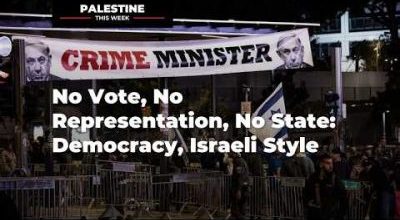
No Vote, No Representation, No State: Democracy, Israeli Style
or go to
Aletho News Archives – Video-Images
From the Archives
Sanctions, War and the Policy of Dual Containment
By SASAN FAYAZMANESH | March 17, 2008
It is now nearly three decades since the Unites States adopted the policy of dual containment of Iran and Iraq. While much has been written about the containment of Iraq, there has been very little in-depth analysis of this policy when it comes to Iran. In a book that is going to be released on March 31, 2008, entitled The United States and Iran: Sanctions, Wars and the Policy of Dual Containment (Routledge), I attempt to address this shortcoming by investigating when and why the US policy of containment of Iran came about, how it evolved, and where it stands today.[1] To the extent that Israel has been involved in US policy making, the study will also include the role that Israel has played in the containment of Iran. Also, since the fate of Iran has been inextricably linked to that of Iraq, occasionally the investigation will overlap with the containment of Iraq.
The policy of dual containment of Iran and Iraq originated during the Carter Administration, but it was not until the Clinton Administration that the expression “dual containment” became popular. … continue
Blog Roll
 Aletho News
- No Vote, No Representation, No State: Democracy, Israeli Style
- Zionist Bought Senate Blocks Information About American Citizens Killed By Israel
- While Gaza dominates the UN, these are the people keeping it alive
- New Report: “Scholasticide and Genocide in Gaza: Assessment, Testimonies and Legal Analysis”
- ‘THAAD Delusion’: Iran war exposes US missile shield limits – The Atlantic
- Moscow issues warning to NATO over Russian exclave
- Yes, the Iran war has destroyed Trump’s presidency
- The fallacy of US delusions about Iran’s economic collapse
- Hezbollah denies Syria cell link, warns of Israeli plan to sow discord
- The legacy of US sanctions, war, and occupation in Iraq
- If Americans Knew
- Mamdani releases plan to combat antisemitism and hate crimes in New York City
- Iran’s Revolutionary Guards Publish Letter to the American People
- DMFI launches $1 million ad campaign supporting Virginia’s Elaine Luria
- US Senate blocks resolution seeking report on Americans killed by Israel
- Israeli Attacks Kill Ten Palestinians in Gaza
- Massacre at Minab: The School That Became a Grave
- Israeli media: The IDF Shows It Doesn’t Turn a Blind Eye; It Actively Emboldens Settler Havoc
- As settlers ravage West Bank, Israeli forces kill 10 in Gaza – Daily Update
- New Report: “Scholasticide and Genocide in Gaza: Assessment, Testimonies and Legal Analysis”
- Ex-Biden officials are desperate for a Gaza scapegoat
- No Tricks Zone
- Green Energy Debacle: German Expert Professor Fritz Vahrenholt Warns Of Severe Economic And Social Consequences
- Two More Paleo Reconstructions Affirm Meters-Higher Sea Levels Across Ireland, Brazil 7000-6000 Years Ago
- New Study: Earth And Venus Surface Warmth Largely Explained By Convection And Lapse Rate, Not CO2 Or Radiation
- 2025 Nature Paper Claiming Worsening Global Drought Gets RETRACTED …Heavily Flawed
- New Study: ‘Global Drought Shows No Detectable Recent Acceleration Under Climate Warming’
- Economic Masterminds: German Socialists Suggest Taxing Productivity Gains Stemming From Using AI
- The South China Sea Has Not Been Cooperating With The Climate Change Narrative
- Energy Crisis: Germany Enters Heating Season With Historically Low Gas Reserve Fill Levels
- New Study: The Antarctic Ice Sheet Gained Mass From 2020-2024 Due To Staggering Snow And Ice Accumulation
- Study: Ocean Heating Rates From Thousands Of Years Ago ‘Dwarf’ Modern Ocean Heating Rates

