Do We Need to Bring Back Internment Camps?

By Ron Paul | July 27, 2015
Last week, Retired General Wesley Clark, who was NATO commander during the US bombing of Serbia, proposed that “disloyal Americans” be sent to internment camps for the “duration of the conflict.” Discussing the recent military base shootings in Chattanooga, TN, in which five US service members were killed, Clark recalled the internment of American citizens during World War II who were merely suspected of having Nazi sympathies. He said: “back then we didn’t say ‘that was freedom of speech,’ we put him in a camp.”
He called for the government to identify people most likely to be radicalized so we can “cut this off at the beginning.” That sounds like “pre-crime”!
Gen. Clark ran for president in 2004 and it’s probably a good thing he didn’t win considering what seems to be his disregard for the Constitution. Unfortunately in the current presidential race Donald Trump even one-upped Clark, stating recently that NSA whistleblower Edward Snowden is a traitor and should be treated like one, implying that the government should kill him.
These statements and others like them most likely reflect the frustration felt in Washington over a 15 year war on terror where there has been no victory and where we actually seem worse off than when we started. The real problem is they will argue and bicker over changing tactics but their interventionist strategy remains the same.
Retired Army Gen. Mike Flynn, who was head of the Defense Intelligence Agency during the US wars in Afghanistan and Iraq, told al-Jazeera this week that US drones create more terrorists than they kill. He said: “The more weapons we give, the more bombs we drop, that just … fuels the conflict.”
Still Washington pursues the same strategy while expecting different results.
It is probably almost inevitable that the warhawks will turn their anger inward, toward Americans who are sick of the endless and costly wars. The US loss of the Vietnam war is still blamed by many on the protesters at home rather than on the foolishness of the war based on a lie in the first place.
Let’s hope these threats from Clark and Trump are not a trial balloon leading to a clampdown on our liberties. There are a few reasons we should be concerned. Last week the US House passed a bill that would allow the Secretary of State to unilaterally cancel an American citizen’s passport if he determines that person has “aided” or “abetted” a terrorist organization. And as of this writing, the Senate is debating a highway funding bill that would allow the Secretary of State to cancel the passport of any American who owes too much money to the IRS.
Canceling a passport means removing the right to travel, which is a kind of virtual internment camp. The person would find his movements restricted, either being prevented from leaving or entering the United States. Neither of these measures involves any due process or possibility of appeal, and the government’s evidence supporting the action can be kept secret.
We should demand an end to these foolish wars that even the experts admit are making matters worse. Of course we need a strong defense, but we should not provoke the hatred of others through drones, bombs, or pushing regime change overseas. And we must protect our civil liberties here at home from government elites who increasingly view us as the enemy.
The War on Conspiracy Realists Continues
By Brandon Martinez | Non-Aligned Media | July 24, 2015
Do you believe that governments occasionally conspire to undermine the public good? Do you believe that governments manipulate people through fear to achieve nefarious ends such as war and intervention abroad? Do you believe that ‘elected’ officials serve rich and powerful special interests rather than the majority population?
If you answered yes to any of the above, and you are a British citizen, then you could be the target of a new ‘counter-extremism’ initiative spearheaded by that country’s perverse Prime Minister David Cameron. As part of his Orwellian ‘counter-extremism’ effort, Cameron has instituted a number of truly despotic measures intent on stifling free speech and extirpating ‘heretical’ viewpoints about false flag terrorism and the undue influence of Zionists on Western foreign policy.
While self-evident to most clear thinking people, the notion that the West is deliberately targeting Muslims and their countries in accordance with an intricately fashioned master plan of divide and conquer will now be a prohibited opinion that could put the British police state on your trail.
“Muslim conspiracy theorists,” Cameron proclaimed in a recent speech outlining his ‘five year strategy’ to combat extremism, who believe that “Jews exercise a ‘malevolent’ power, that [the] Israeli intelligence agency Mossad inspired 9/11 and that the UK allowed 7/7 because it wanted an anti-Muslim backlash” are to be singled out for suppression.[1]
Cameron’s 1984-style designs will give parents the ability to revoke their children’s passports if suspected of holding ‘extremist’ beliefs. Police will be given new surveillance powers as well as the authority to vet what certain ‘extremists’ and ‘conspiracy theorists’ post on social media. Additionally, Ofcom – Britain’s communications regulatory body – will also be empowered to “crack down on television channels broadcasting extremist messages.” ‘Extremist messages’ appears to be a thinly disguised euphemism for anything not consonant with Western and Zionist propaganda.
Cameron’s aggressive moves against free expression were not unforeseen. During a speech at the United Nations last September, the British leader decried “conspiracy theorists” as “non-violent extremists” who should be confronted with the “full force” of the British state.[2] The theory that Israel and Western intelligence agencies were involved in the fabrication of 9/11 and other false flag attacks was specifically mentioned by Cameron as one of those “dangerous ideas” that needs to be eliminated from public discourse. Inferences about Jewish-Zionist manipulation of Western foreign policy towards the Islamic world should also be combatted, said Cameron in the speech.
Distracting the Public from Western Sponsorship of ISIS
All of this disingenuous bluster rings hollow when one considers the fact that Western governments and their allies have supported, and many would argue created, ISIS to serve their duplicitous agenda in the Middle East.
The CIA, MI6 and Mossad, in conjunction with the oppressive autocrats of Saudi Arabia, have long worked with Wahhabi-Salafist extremist elements in the Middle East and North Africa to counter other more formidable, non-sectarian adversaries in the region such as Libya’s Gaddafi, Syria’s Assad, Lebanon’s Hezbollah and the Islamic Republic of Iran. A re-run of the CIA’s “Operation Cyclone” which empowered Mujahideen forces in Afghanistan against the Soviets in the 1980s is currently unfolding in the Middle East under the auspices of many of the same players.
Award winning reporter Seymour Hersh revealed in a 2007 report titled “The Redirection” that the Bush administration launched a joint covert operation with Israel and Saudi Arabia to augment “Sunni extremist groups” and other fanatics to weaken the influence of Syria, Iran and Hezbollah.[3] Obama picked up where Bush left off, flooding Syrian and Libyan insurgent groups with untold largesse and arms, using the corrupted Arab Gulf kingdoms as conduits for weapons transfers for the sake of plausible deniability.
Hersh’s sources close to the US government told him that the Saudis assured Washington that they exercised control over the extremist Wahhabi and Salafist groups, and would steer their fanaticism towards the Shiites. “It’s not that we don’t want the Salafis to throw bombs; it’s who they throw them at—Hezbollah, Moqtada al-Sadr, Iran, and at the Syrians, if they continue to work with Hezbollah and Iran,” Prince Bandar bin Sultan, Saudi Arabia’s then-National Security Advisor, purportedly told his American counterparts in the Bush administration. “We’ve created this movement, and we can control it.”[4]
Part of the arrangement, Hersh explained, was a guarantee from the Saudis that Israel’s security interests would be safeguarded, which clarifies why ISIS and its affiliates have not attacked Israel despite the country’s close proximity to the terrorists’ strongholds in Syria and Iraq. “Israel would be assured that its security was paramount and that Washington and Saudi Arabia and other Sunni states shared its concern about Iran,” Hersh noted was the first point in a series of “informal understandings about their new strategic direction” to combat Shiite influence led by Iran.[5]
ISIS themselves have mostly eschewed hostility towards Israel, posting an official statement on social media in July 2014 saying that they’re more interested in fighting “Muslim infidels” than the Zionist state.[6] Israeli officials have expressed similar sentiments, with Israel’s former envoy to the US, Michael Oren, stating in a September 2013 interview that Tel Aviv “prefers” ISIS and al-Qaeda over the “bad guys backed by Iran,” namely Syria’s Assad and Hezbollah. Oren forthrightly conceded that Israel is committed to defeating through terrorist violence “the strategic arc that extends from Tehran, to Damascus to Beirut” with Assad in Syria functioning as the “keystone in that arc.” “That is a position we had well before the outbreak of hostilities in Syria,” Oren told the Jerusalem Post. “With the outbreak of hostilities we continued to want Assad to go.”[7]
The unholy alliance between Israel and the Salafist jihadists came right out in the open in June 2015 when ISIS released a video threatening to topple Hamas in Gaza[8], promising to bring bloodshed and ruin to the Strip. Salafist elements tied to ISIS have in fact attacked Hamas havens in Gaza on multiple occasions over the past few months, showcasing their utility as pawns of Israel.[9][10][11] There are also well-documented direct connections between ISIS-linked militants and Israel. A 2014 report compiled by United Nations observers stationed in the area revealed that the Israeli military has provided anti-Assad militants with sanctuary on the Israeli side of the Golan region, ostensibly treating wounded fighters in Israeli field hospitals and even giving them caches of weapons and other supplies.[12] On top of material support for the terrorists that have besieged Syria, Israel has aided their onslaught through numerous air strikes against Syrian military targets since the turmoil began in earnest in 2012, effectively attempting to tip the tide of the war in the Takfiris’ favour.[13] In January 2015 Israel conducted an airstrike that wiped out a brigade of Hezbollah fighters on the Syrian side of the Golan Heights, once again highlighting the Takfiri-Tel Aviv nexus.[14]
In light of such treachery against Arabs and Muslims trying to liberate themselves from oppression and domination, ISIS’s primary function as an acquiescent tool of US-Israeli imperialism cannot be overstated.
Perfidious Albion
As Prime Minister Cameron feigns outrage and opposition to Islamic extremism, the British government under his watch has been an active and willing partner in the Machiavellian strategy of divide and rule in the Middle East spearheaded by the US and Israel.
The 2015 trial of Swedish national Bherlin Gildo – who fought for a militant group in Syria – confirmed London’s role in backing Takfiri insurgents battling Damascus. In his defense, Gildo’s lawyers introduced evidence that British intelligence agencies “were supporting the same Syrian opposition groups as he was, and were party to a secret operation providing weapons and non-lethal help to the groups, including the Free Syrian Army.” Confronted with this contradiction, the British court dropped all charges against Gildo, fearing more embarrassing evidence showcasing British complicity with Syrian rebels could surface during proceedings.[15]
In 2013, Roland Dumas, France’s former foreign minister, told a French television station that during a visit to Britain two years before the Syrian crisis began in 2011, British officials informed him of a secret plan to spark a rebel invasion of Syria.[16] “Britain was preparing gunmen to invade Syria,” Dumas said, pinpointing the origins of the scheme to Israel which, according to Dumas, sought to oust a neighbouring regime hostile to its imperial ambitions in the Levant. Dumas then recounted a conversation he had with an unnamed Israeli prime minister who allegedly told him that the countries in the Middle East that get in the way of Zionist objectives for the region would be swiftly eliminated.
In an April 2014 report entitled “The Red Line and the Rat Line,”[17] journalist Seymour Hersh uncovered British involvement with a CIA-led covert operation in Benghazi, Libya, wherein the Agency was secretly channeling the looted weapons stockpiles of the fallen Gaddafi regime to Western-backed Syrian rebels through a “rat line.” Commenting on Hersh’s report, The Independent’s Patrick Cockburn described the CIA/MI6 “rat line” project in Benghazi as a “supply chain for the Syrian rebels overseen by the US in covert cooperation with Turkey, Saudi Arabia and Qatar.”[18] He summarized Hersh’s findings in more detail as follows:
“The information about this comes from a highly classified and hitherto secret annex to the report by the US Senate Intelligence Committee on the attack by Libyan militiamen on the US consulate in Benghazi on 11 September 2012 in which US ambassador Christopher Stevens was killed. The annex deals with an operation in which the CIA, in cooperation with MI6, arranged the dispatch of arms from Mu’ammer Gaddafi’s arsenals to Turkey and then across the 500-mile long Turkish southern frontier with Syria. The annex refers to an agreement reached in early 2012 between Obama and Erdogan with Turkey, Saudi Arabia and Qatar supplying funding. Front companies, purporting to be Australian, were set up, employing former US soldiers who were in charge of obtaining and transporting the weapons. According to Hersh, the MI6 presence enabled the CIA to avoid reporting the operation to Congress, as required by law, since it could be presented as a liaison mission.”
In addition to conniving with the US and Israel to arm Takfiri rebel gangs that eventually overran Gaddafi and continue to menace Syria, the British government has also covertly collaborated with Wahhabi extremists in its own country who serve as cartoonish fodder for anti-Muslim war on terror propaganda. In a May 2013 report for the Asia Times, security scholar Nafeez Ahmed disclosed that the British-based Salafist group Al Muhajiroun has been secretly supported by the British intelligence services since its inception in 1996.[19] That group has spawned nearly all of the supposed Islamic extremists implicated in (and perhaps framed for) various attacks in Britain, including the alleged ‘shoe bomber’ Richard Reid, the alleged Woolwich killers of British soldier Lee Rigby, the alleged 7/7 bombers and many others accused or convicted of terrorism-related offenses. Ahmed contends that various dubious personalities acting as leaders of Al Muhajiroun over the years – including Abu Hamza, Omar Bakri, Haroon Rashid Aswat and Anjem Choudary – have been clandestine agents of British intelligence fronting as ‘Islamic radicals.’
Despite his vocal support for al-Qaeda and ISIS, outwardly championing their grotesque bloodletting in Syria and Iraq today, Anjem Choudary (the current leader of Al Muhajiroun which has re-branded and re-named itself several times) is left untouched by British authorities and appears frequently on mainstream media. How can this impunity be explained if Choudary and his organization are operating independently without state protection? “Almost every major terrorist attack and plot in the UK has in some way been linked to Choudary’s extremist network,” noted Ahmed in the aforesaid piece, yet the radical preacher and his organization “[continues] to function with impunity in new incarnations.”
“[T]hrough Al Muhajiroun,” Ahmed explained, “MI5 is spawning many of the plots it lays claim to successfully foiling – as the FBI is also doing.” The MI5-controlled front group essentially serves a dual purpose: 1) it functions as a repository for Muslim patsies used in US-Israeli-British false flag operations, and 2) it acts as a recruiting hub for Wahhabi-Salafist mercenaries wielded as cannon fodder in various battle zones where Western/Zionist geopolitical and economic interests are at stake.
Unraveling the Web of Intrigue
Those not learned in the dark arts of black operations will likely be confused by all of this. “The West is fighting a war on Islamic extremism,” the indoctrinated lemmings will proclaim with confidence, completely unaware that they are being played for fools by professional spooks trained to employ artifices against the masses.
The surface rhetoric that politicians employ is merely a pack of daft lies intended to divert attention from the real agendas that drive policy. The public is fed a steady diet of cover stories and feel-good rationales – fanciful tales of good vs. evil – to pacify adverse reactions to and deflect unwanted attention from nefarious plots designed to benefit rich people and their interests.
David Cameron himself inadvertently identified whom some of these wealthy string-pullers are: Jewish Zionists committed to overturning every regime in the Middle East that is not yet subordinated to Tel Aviv. The other half of that equation includes an assortment of profiteering Anglos, Americans, Europeans, Arabs, Russians, Chinese and other money-mad opportunists. The Cameron’s, Obama’s, Harper’s, Hollande’s and Merkel’s of the world are mere screens or dummies for the real power behind the throne: the unscrupulous financiers, oligarchs and speculators who dominate Wall Street and the City of London, and to a lesser extent Shanghai and Moscow.
The Zionists, however, seem to be the most organized, the most aggressive and the most committed to living out their grandiose messianic dreams. Whether that vision entails a “New Middle East” in which “Greater Israel” rules the roost or a global government headquartered in Jerusalem remains to be seen. Either way it spells disaster for most of the world’s peoples.
Sources
[1] “Parents may cancel children’s passports in war on IS,” The Week, July 20, 2015. https://web.archive.org/web/20150724070333/http://www.theweek.co.uk/64449/cameron-attacks-ludicrous-extremist-conspiracy-theories
[2] http://www.youtube.com/watch?v=0g-HqRP-ANk
[3] Seymour Hersh, “The Redirection,” The New Yorker, March 5, 2007. https://web.archive.org/web/20150318015442/http://www.newyorker.com/magazine/2007/03/05/the-redirection
[4] Ibid.
[5] Ibid.
[6] Elad Benari, “ISIS: Fighting ‘Infidels’ Takes Precedence Over Fighting Israel,” Israel National News, July 8, 2014. https://web.archive.org/web/20140831070443/http://www.israelnationalnews.com/News/News.aspx/182632
[7] Herb Keinon, “’Israel wanted Assad gone since start of Syria civil war’,” Jerusalem Post, Sept. 17, 2013. https://web.archive.org/web/20150112102133/http://www.jpost.com/Syria-Crisis/Oren-Jerusalem-has-wanted-Assad-ousted-since-the-outbreak-of-the-Syrian-civil-war-326328
[8] “ISIS Threatens To Topple Hamas In Gaza,” Reuters, July 1, 2015. http://www.huffingtonpost.com/2015/07/01/isis-hamas-gaza_n_7704360.html
[9] “Isis blamed for Gaza City bomb attacks,” The Independent, July 20, 2015. http://www.independent.co.uk/news/world/middle-east/isis-blamed-for-gaza-city-bomb-attacks-10400747.html
[10] “ISIS Allies Target Hamas and Energize Gaza Extremists,” New York Times, June 30, 2015. https://web.archive.org/web/20150713130805/http://www.nytimes.com/2015/07/01/world/isis-allies-target-hamas-and-energize-gaza-extremists.html?_r=0
[11] “ISIS supporters claim attack on Hamas base in Gaza Strip,” Russia Today, May 8, 2015. https://web.archive.org/web/20150713195921/http://rt.com/news/256941-isis-attack-gaza-hamas/
[12] “UN details Israel helping Syrian rebels at Golan Heights,” Russia Today, Dec. 8, 2014. https://web.archive.org/web/20150316140841/http://rt.com/news/212319-israel-helps-syrian-militants/
[13] “Head of Syrian army after alleged airstrikes: Israel working with ISIS and al-Qaida,” Jerusalem Post, Dec. 7, 2014. https://web.archive.org/web/20150316154301/http://www.jpost.com/Arab-Israeli-Conflict/Head-of-Syrian-army-after-alleged-airstrikes-Israel-working-with-ISIS-and-al-Qaida-383907
[14] “’Israel strike’ kills Hezbollah men in Syria’s Golan Heights,” BBC News, Jan. 18, 2015. https://web.archive.org/web/20150316090443/http://www.bbc.com/news/world-middle-east-30873402
[15] “Terror trial collapses after fears of deep embarrassment to security services,” The Guardian, June 1, 2015. https://web.archive.org/web/20150610080819/http://www.theguardian.com/uk-news/2015/jun/01/trial-swedish-man-accused-terrorism-offences-collapse-bherlin-gildo
[16] https://www.youtube.com/watch?v=jeyRwFHR8WY
[17] Seymour Hersh, “The Red Line and the Rat Line,” London Review of Books, April 17, 2014. https://web.archive.org/web/20150315050157/http://www.lrb.co.uk/v36/n08/seymour-m-hersh/the-red-line-and-the-rat-line
[18] Patrick Cockburn, “MI6, the CIA and Turkey’s rogue game in Syria,” The Independent, April 13, 2014. https://web.archive.org/web/20150110040831/http://www.independent.co.uk/voices/comment/mi6-the-cia-and-turkeys-rogue-game-in-syria-9256551.html
[19] Nafeez Ahmed, “UK pays price for MI5 courting terror,” Asia Times, May 30, 2013. https://web.archive.org/web/20130801060233/http://atimes.com/atimes/World/WOR-01-300513.html
Copyright 2015 Brandon Martinez
With New Spy Bill, France OKs Mass Surveillance
By Nadia Prupis | Common Dreams | July 24, 2015
France’s highest constitutional authority on Thursday approved a sweeping, controversial new surveillance law that greatly expands the government’s spying powers, despite widespread human rights concerns.
Making only minor changes to the legislation, which was approved by Parliament in May, the Constitutional Council ruled on Thursday that the bill generally aligns with the French constitution—even as privacy and civil liberties groups continue to call attention to its egregious rights violations.
“By validating almost all surveillance measures provided in the Surveillance Law adopted on 25 June, the French Constitutional Council legalizes mass surveillance and endorses a historical decline in fundamental rights,” said La Quadrature du Net, a Paris-based digital rights and civil liberties organization. “Only international surveillance has been deemed to be non compliant to the Constitution.”
The law gives French intelligence agencies power to tap phones and hack into computers; sweep up and analyze metadata of millions of civilians; and plant secret microphones, cameras, and ‘keystroke loggers’ in the homes of “suspected terrorists”—all without approval from a judge.
It also gives the government the power to authorize surveillance for reasons as vague as “major foreign policy interests” and preventing “organized delinquency.”
The government justified the bill by invoking recent attacks in Paris, which saw 17 people killed by gunmen in January at the satirical newspaper Charlie Hebdo and a kosher deli. President Francois Hollande’s move to have the law approved by the Constitutional Council is “unusual,” the Guardian writes. But while it is rare, Hollande’s motives are clear—the decision by the Council ensures that the law will not be challenged as illegal in the future.
By approving the bill, the Council “has disavowed its role as protector of fundamental rights and liberties,” La Quadrature continued. “By refusing to implement effective control over the intelligence services, it is rubber-stamping a historic step back for privacy and freedom of communication, thus undermining the very foundations of democracy. This evening the reason of state was brutally imposed over the rule of law.”
One of the most controversial provisions in the bill requires internet service providers and telecommunications companies to install equipment, referred to in previous debates as “algorithmic black boxes,” that sift through internet traffic and metadata for so-called “terrorist” activity and alert authorities when flagged. Opponents have warned that portion of the bill will “create permanent surveillance,” as Communist Senator Cécile Cukierman said during a June debate—a charge which officials deny.
The law comes into effect just two days after the United Nations Committee for Human Rights released a report warning that the bill “grants overly broad powers for very intrusive surveillance on the basis of vast and badly defined objectives” and calling on France to “guarantee that any interference in private life must conform to principles of legality, proportionality and necessity.”
[…] Privacy International, which submitted recommendations this month to the UNHCR on the right to privacy in France, said the bill legalized hacking. “Its use by any state authorities, particularly intelligence agencies, must be highly regulated to protect against abuses of power. Yet the bill makes no provision for judicial authorisation or oversight of hacking powers,” the organization wrote.
Building a Mass Surveillance Infrastructure Out of Light Bulbs
By Chad Marlow | ACLU | July 23, 2015
For almost a quarter century, General Electric’s corporate slogan was “GE: We Bring Good Things To Life.” Well, based upon a report in Sunday’s New York Times, the company may want to dig up that old slogan, repurpose it a bit, and roll it out as “GE: We Bring Mass Surveillance To Lights.”
According to the Times, “using a combination of LEDs and big data technology,” everyday street lights, as well as those used to illuminate parking lots, store interiors and other locations, will soon be equipped for mass data collection. Of course, the soft sell for this hybrid product—which, as reported by the Times and Reuters in 2013, is manufactured by several companies including GE and Sensity Systems—is based around largely benevolent goals. For one thing, the LED bulbs are far more energy efficient than the light fixtures currently used by most cities. That’s good. They also point out that the built in monitoring features can be used to ease traffic congestion and sense when garbage cans are full. Who wouldn’t like that? Of course, there’s more. These lightbulbs-of-the-not-so-distant-future will also be able to GPS track individual shoppers as they travel through stores. Wait. What? The light bulbs can function as tracking devices? We would have to imagine that if they can GPS-track shoppers in stores, they could work just as effectively to track people as they walk the streets of our cities and towns. In fact, if you traveled through Newark Liberty International Airport in the past year, these spy-bulbs lights were already watching you. And there’s more: the bulbs can be programmed to “pick() up on suspicious behavior.” What exactly does that mean? If two women wearing head scarves decide to chat in a parking lot after seeing a late night movie, are the police going to be notified?
I always figured Big Brother was going to be some giant face on a wall, not a tiny camera hidden inside a light bulb.
The ACLU strongly opposes the creation of infrastructures for ubiquitous mass surveillance including the widespread deployment of lightbulb spying technology. But what is particularly troubling here is the stealthy way in which the product is being marketed and pitched to the press; to wit, as an energy efficient light bulb with built-in monitoring technology. Given the limited use of the product as a lighting device and the broad scope of its tracking and surveillance features, what this product really appears to be is a mass surveillance device being disguised as an LED light bulb. I would bet that if we could see a breakdown of the device’s production costs, the lightbulb versus surveillance technology discrepancy would be equally pronounced.
There are no doubt an increasing number of cameras in our public spaces, but it would still be a big deal for governments to construct giant, stealth surveillance networks that are under their centralized control. And although these surveillance bulbs may have beneficial uses, I think we would be far better off keeping our privacy, finding other ways to combat full trash cans and traffic congestion, and not bringing mass surveillance to lights.
Germany must ‘throw off remains’ of allied occupation
RT | July 21, 2015
NSA spying scandals are being discussed by the public now, said Elsa Rassbach, anti-war activist from Code Pink. And this is a positive step towards throwing out the remains of having been occupied, she added.
WikiLeaks has published an intercept suggesting that the National Security Agency kept an eye on German Foreign Minister Frank-Walter Steinmeier and many other senior German officials for years.
RT: Do you believe the NSA spying scandals have a significant effect on relations between Germany and the US?
Elsa Rassbach: I think the very fact that they are being discussed shows a huge shift, because this spying has been going on heavily during the whole Cold War. But the thing is that it continued after Germany supposedly received its sovereignty through the Two plus Four Agreement in 1990 and 91. Germany has allowed this whole time this spying, and has known about it, and has also allowed the bases here to be used for wars that Germany has said that they did not agree with, I mean the US military bases. The fact that now it’s even being discussed is already a very positive step.
RT: So why do you think the German government’s outrage publicly hasn’t been greater?
ER: I think that the new story that “Oh [Angela] Merkel’s cell phone was being listened to,” was really a ploy. It’s well known what the NSA was doing the whole time, and was set up to do, was to spy broadly on everyone around the world, except US citizens. What they changed in 2001 after the attack on the World Trade Center is that they decided, or four people decided: President [George] Bush, Vice President [Dick] Cheney, and the heads of the CIA and the NSA, that they would throw out the US Constitution and allow also the spying upon US citizens.
I’m absolutely certain that Adenauer’s [Konrad Adenauer, the first post-war Chancellor of Germany from 1949 to 1963] staff, his telephones, and all were spied upon. But at that time Germany was occupied. My question is: Why has it taken so long since Germany achieved sovereignty and was reunified in 1991; why has it taken so long since then? There are some reasons for it, but still think that the way the things are now, it’s almost like an anachronism and Germany does need to throw off the remains of having been occupied.
RT: How much pressure is Merkel under because of these revelations? Does it have an effect on the domestic politics in Germany?
ER: We do see that even some members of the CDU [Christian Democratic Union, Merkel’s party] are making comments and making demands. I think that a lot of the pressure is a big shift in public opinion in Germany. There was recently a Pew study in 2008 where they were asking many countries in Europe: “What’s your opinion of the freedoms that the US gives its citizens. Germans said in 2008, 70 percent had a positive view of this. In 2013, just prior to the Snowden revelations, Germans were 80 percent in favor of their view of the US attitude toward personal freedoms.
It’s now plunged to 43 percent in the last two years, which is the lowest number of any of the major European countries. So there is a big shift on the ground. There is a peace movement, there is a lot of talk now about Ramstein [US Air Force base situated in south-west Germany], drones, and that this surveillance has to end. This was not happening two years ago, or three years ago in the peace movement here. How much that will ultimately relay into sufficient parliamentary pressure and so forth on Chancellor Merkel to do something, I don’t know. And I also wonder whether there would be any pressure from the different corporations who have also been spied upon, whether they will also put pressure on the government about this.
READ MORE: German intelligence cooperated with NSA as Merkel denied knowledge – report
Surveillance watchdog calls for ‘democratic control’ of spies
RT | July 14, 2015
Civil liberties NGO Privacy International (PI) has criticized a report on state surveillance, calling for improved regulatory oversight rather than self-reporting by spy agencies.
The civil liberties NGO was commenting on a Royal United Service Institute (RUSI) report published on Monday.
Titled ‘A Democratic License to Operate’, the study was conducted by the foreign policy think-tank as part of Britain’s Independent Surveillance Review.
PI agreed with some of RUSI’s findings but insisted that government-backed mass surveillance remains a deep concern.
“The RUSI report, from start to end, emphasizes how technological change has rendered the current legal system governing surveillance obsolete,” PI deputy director Eric King told RT on Tuesday.
“Every day, the highly technical GCHQ finds new ways to eavesdrop, while our oversight tries to cope with technical blind spots,” he added.
Privacy International warned that the current system relies on GHCQ to self-report errors. It called for a “better resourced, more technically equipped oversight body” with the power to take “GCHQ to task.”
It also called for “root and branch reform” to bring snoops and the agencies they work for “under democratic control.”
This surveillance versus privacy rights debate has long infiltrated British politics, as campaigners continue to criticize government spy base GCHQ’s invasive snooping practices.
Despite contentious leaks by ex-NSA computer analyst and whistleblower Edward Snowden, RUSI’s report said there is “no evidence that the British government knowingly acts illegally in intercepting private communications.”
It argued further that there is no proof that the British state’s ability to collect data in bulk is used by snoops as a perpetual window into the private lives of UK residents.
RUSI’s study makes a series of recommendations on how state surveillance should be conducted in the future, saying that the current legal framework for intercepting communications is unclear.
The think tank adds this legal framework “has not kept pace with developments in communications technology, and does not serve either the government or members of the public satisfactorily.
The think tank is calling for “a new, comprehensive and clearer legal framework” to regulate state surveillance.
At a confidential intelligence conference held at Ditchley Park in Oxfordshire in June, the views of a number of high-ranking intelligence officials came to light.
Investigative journalist Duncan Campbell, who attended the conference, posted on his website, “Perhaps to many participants’ surprise, there was general agreement across broad divides of opinion that Snowden – love him or hate him – had changed the landscape.”
According to Campbell, a number of senior officials felt that shift “towards transparency, or at least ‘translucency’” was long overdue and utterly necessary.
‘Censorship’: UK freezes bank account of Russian news agency, gives no reason
RT | July 13, 2015
Barclay’s bank froze a Rossiya Segodnya news agency account without explaining its reasons. The news first came to light on Monday. The agency’s head Dmitry Kiselyov has called it “censorship.”
“To close the account of one of the world’s leading news agencies is censorship, the direct obstruction of journalists’ work,” Dmitry Kiselyov said. “What kind of press freedom and democracy can Britain claim to have if it prevents one of the world’s largest news agencies from working in the country?”
No formal notification of the move or justification for it was immediately provided. A source in the banking sector told the agency the Exchequer has put Dmitry Kiselyov on an anti-Russian sanctions list, which could have led to the news agency’s account being frozen.
Kiselyov is one of the people subjected to financial and travel sanctions in the EU. These restrictions have been imposed on a number of Russian officials in connection with Moscow’s stance over Ukraine crisis.
The sanctions list, which includes the head of Rossiya Segodnya news agency, was published on March 21. It characterizes Kiselyov as “central figure of the government propaganda supporting the deployment of Russian forces in Ukraine.”
Israeli Official Orders Barring of “Palestine 1948” TV
IMEMC & Agencies | July 10, 2015
Israeli Police spokeswomen Luba Samri said, Thursday, that Israeli Public Security Minister Gilad Erdan has signed an official order shutting down “Palestine 1948 TV,” and barring all of its activities in the country.
Erdan said “Israel will not allow anybody to harm its sovereignty, or to grant the Palestinian Authority any foothold in the country.”
He alleged that the TV station never obtained any proper authorization to operate in Israel, and said “Palestine 1948″ began broadcasting, a month ago, from Nazareth. The order is valid for six months.
Head of the Palestine Public Broadcasting Corporation, Minister Riyad al-Hasan, said the TV is broadcasting from the West Bank city of Ramallah, and that Israel has no authority, or right, to shut it down.”
Al-Hasan told the WAFA News Agency that the Israeli threats also targeted production companies and media outlets that have business or cooperation with the TV station.
Arab Member of Knesset of the Joint Arab List, Basel Ghattas, issued a press release denouncing Erdan’s decision, and considered it as a “desperate Israeli move to control Arab media outlets.”
“This is a dangerous, uncivil, decision based on stupidity; it is an attempt to control and dominate media outlets,” he added, “While Israel claims democracy, and while media and technology continue to advance, Israel still tries to silence us.”
Related, June 18, 2015: Netanyahu Orders New Palestinian TV Shut, P.A Plans to Appeal Decision
Hillary Clinton: Use Congress and Corporations to End Boycott Israel Movement
By Naji Dahi – ANTIMEDIA – July 9, 2015
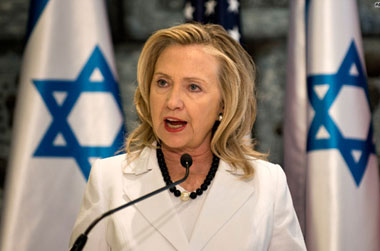
According to a letter from Hillary Clinton to pro-Israel donor, Haim Saban, she wants to be the top pro-Israel candidate in the race for the Democratic presidential nomination. More specifically, Clinton pledges her opposition to the BDS (Boycott, Divest, Sanction) movement. According to McClatchy,
“I know you agree that we need to make countering BDS a priority… we can work together…to reverse this trend with information and advocacy, and fight back against further attempts to isolate and delegitimize Israel… from Congress and state legislatures to boardrooms and classrooms, we need to engage all people of good faith, regardless of their political persuasion or their views on policy specifics, in explaining why the BDS campaign is counterproductive to the pursuit of peace and harmful to Israelis and Palestinians alike.”
It is no secret that Hillary Clinton is the Wall Street-sponsored candidate in the Democratic primary race. Data from Open Secrets for the 1999-2016 election cycles shows that three of her top five contributors were Wall Street firms (Citigroup, Goldman Sachs, and J.P. Morgan Chase). It seems that Clinton now wants to become the undisputed pro-Israel candidate, as well.
In the United States presidential elections, all major party candidates are obliged to show their loyalty to the state of Israel. In return, wealthy pro-Israel donors fill their election campaign coffers with much needed cash. In 2008, for example, the top three candidates in both parties (Obama, Clinton, McCain) were also the top three recipients of donations from pro-Israel groups and individuals. In 2012, history repeated itself with Mitt Romney and Barack Obama, the top two recipients of campaign cash from pro-Israel individuals and groups. While it is too early to tell, it is highly likely that the top two candidates from the two major parties will also be the top two recipients of pro-Israel campaign contributions.
Haim Saban, a billionaire who made his fortune in the entertainment industry, is a long time Democrat and ally of Hillary Clinton. He will likely promote pro-Israel, anti-BDS discourse in the Democratic Party. Sheldon Adelson, also a billionaire, is a long-time Republican whose job is to enforce pro-Israel, anti-BDS discourse in the Republican Party. According to The Times of Israel,
“Adelson said his prime focus… was to reverse the inroads being made by what he called ‘the BDS (Boycott, Divestment and Sanctions) and company… the anti-Israel and anti-Semitic organizations [that] are making a lot of headway on the campuses in the United States.’ He said he would encourage Jewish groups to work to have boycott decisions taken by student campus groups reversed… Saban made clear that he intended to fight back against any business groups inclining to boycott Israel, and create a climate in which they were deterred from doing so.”
The success of the BDS movement is becoming an issue for Israel—so much so, that Saban and Adelson held a secret summit in Las Vegas last month to address the matter. The two billionaires invited 50 pro-Israel groups and pledged to fund their efforts to fight BDS on American college campuses with the hope of branding the movement anti-Semitic. According to Haaretz,
”…of millions of dollars were raised to combat campus campaigns to boycott, divest from and sanction Israel — or BDS, as the movement is known… both [Adelson and Saban] stressed their view that BDS — a form of nonviolent protest promoted by a diverse array of groups opposed to Israel’s policies toward the Palestinians — as simply a form of anti-Semitism.”
With Hillary Clinton officially on board and the two billionaires raising $20 million for the anti-BDS cause, American college campuses will be interesting centers of debate this fall.
Featured Video
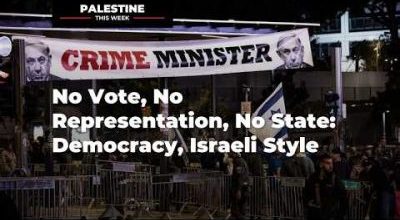
No Vote, No Representation, No State: Democracy, Israeli Style
or go to
Aletho News Archives – Video-Images
From the Archives
Sanctions, War and the Policy of Dual Containment
By SASAN FAYAZMANESH | March 17, 2008
It is now nearly three decades since the Unites States adopted the policy of dual containment of Iran and Iraq. While much has been written about the containment of Iraq, there has been very little in-depth analysis of this policy when it comes to Iran. In a book that is going to be released on March 31, 2008, entitled The United States and Iran: Sanctions, Wars and the Policy of Dual Containment (Routledge), I attempt to address this shortcoming by investigating when and why the US policy of containment of Iran came about, how it evolved, and where it stands today.[1] To the extent that Israel has been involved in US policy making, the study will also include the role that Israel has played in the containment of Iran. Also, since the fate of Iran has been inextricably linked to that of Iraq, occasionally the investigation will overlap with the containment of Iraq.
The policy of dual containment of Iran and Iraq originated during the Carter Administration, but it was not until the Clinton Administration that the expression “dual containment” became popular. … continue
Blog Roll
 Aletho News
- No Vote, No Representation, No State: Democracy, Israeli Style
- Zionist Bought Senate Blocks Information About American Citizens Killed By Israel
- While Gaza dominates the UN, these are the people keeping it alive
- New Report: “Scholasticide and Genocide in Gaza: Assessment, Testimonies and Legal Analysis”
- ‘THAAD Delusion’: Iran war exposes US missile shield limits – The Atlantic
- Moscow issues warning to NATO over Russian exclave
- Yes, the Iran war has destroyed Trump’s presidency
- The fallacy of US delusions about Iran’s economic collapse
- Hezbollah denies Syria cell link, warns of Israeli plan to sow discord
- The legacy of US sanctions, war, and occupation in Iraq
- If Americans Knew
- Mamdani releases plan to combat antisemitism and hate crimes in New York City
- Iran’s Revolutionary Guards Publish Letter to the American People
- DMFI launches $1 million ad campaign supporting Virginia’s Elaine Luria
- US Senate blocks resolution seeking report on Americans killed by Israel
- Israeli Attacks Kill Ten Palestinians in Gaza
- Massacre at Minab: The School That Became a Grave
- Israeli media: The IDF Shows It Doesn’t Turn a Blind Eye; It Actively Emboldens Settler Havoc
- As settlers ravage West Bank, Israeli forces kill 10 in Gaza – Daily Update
- New Report: “Scholasticide and Genocide in Gaza: Assessment, Testimonies and Legal Analysis”
- Ex-Biden officials are desperate for a Gaza scapegoat
- No Tricks Zone
- Green Energy Debacle: German Expert Professor Fritz Vahrenholt Warns Of Severe Economic And Social Consequences
- Two More Paleo Reconstructions Affirm Meters-Higher Sea Levels Across Ireland, Brazil 7000-6000 Years Ago
- New Study: Earth And Venus Surface Warmth Largely Explained By Convection And Lapse Rate, Not CO2 Or Radiation
- 2025 Nature Paper Claiming Worsening Global Drought Gets RETRACTED …Heavily Flawed
- New Study: ‘Global Drought Shows No Detectable Recent Acceleration Under Climate Warming’
- Economic Masterminds: German Socialists Suggest Taxing Productivity Gains Stemming From Using AI
- The South China Sea Has Not Been Cooperating With The Climate Change Narrative
- Energy Crisis: Germany Enters Heating Season With Historically Low Gas Reserve Fill Levels
- New Study: The Antarctic Ice Sheet Gained Mass From 2020-2024 Due To Staggering Snow And Ice Accumulation
- Study: Ocean Heating Rates From Thousands Of Years Ago ‘Dwarf’ Modern Ocean Heating Rates

