For the second time, the cricket world has provided a petty, vindictive and downright ridiculous example of the broader campaign by the powers-that-be to silence opposition to the Israeli genocide in Gaza.
In December 2023, the International Cricket Council (ICC) forbade Australian batsman Usman Khawaja from taking the field in international matches with shoes that read “all lives are equal” and “freedom is a human right.” The bureaucrats, who run the game from the ICC’s headquarters in the dictatorial United Arab Emirates, deemed those statements to be “political” because they were regarded as a reference to Israel’s mass murder of Palestinians.
The ICC’s suspicious and hostile attitude to professions of human rights and basic decency has now been matched by the Sports Entertainment Network, which runs the popular SEN sports radio broadcaster.
Over the weekend, SEN unceremoniously dumped Peter Lalor, a widely-respected cricket commentator, over posts he made on his X/Twitter account referencing Gaza. The sacking was done in a hurry. Lalor was in Sri Lanka as a freelance commentator commissioned by SEN to cover the ongoing Australia-Sri Lanka Test cricket series when he was dismissed.
Lalor had commentated the first test in Galle without incident, and was scheduled to cover the second. Why then the sudden rush by SEN to sever all ties with a leading cricket expert? For anyone familiar with the witch-hunts of the past 16 months that have accompanied the Israeli war crimes, inevitably “upset” and “offended” Zionists were in the picture.
As per Lalor’s account, “I was asked by station boss Craig Hutchison, who was civil, if I didn’t care that my retweeting of events in Gaza made Jewish people in Melbourne feel unsafe. I said I didn’t want anyone to feel unsafe.” Predictably, Hutchison reportedly related accusations that Lalor may be an antisemite, which has been the go-to line for shutting down opposition to the assault on Gaza.
Lalor went on: “The following day Hutchison told me that because the ‘sound of my voice made people feel unsafe’ and that people are ‘triggered by my voice,’ I could not cover the cricket for them anymore.”
If Zionists were telling SEN management that Lalor’s measured commentary of a Test cricket match was making them feel “unsafe,” the appropriate response would have been to dismiss the remarks as absurd.
More to the point, SEN should have noted that the complainants were making a cynical bid to have someone sacked for disagreeing with them politically. They should have told the witch-hunters to stop harassing their employee.
But, as has so often been the case with the Zionist witch-hunts, SEN management rolled over.
After Lalor’s sacking, Hutchison issued a nauseating statement. “SEN Cricket is a celebration of differences and nationalities,” it proclaimed, although those “differences” evidently did not extend to opposing the unfolding genocide or referencing the mass killing of Palestinians. To justify its censorship, the statement went on to describe the station as a “a place where our SEN audience can escape what is an increasingly complex and sometimes triggering world.”
Like the saga of Khawaja’s shoes, the most striking aspect of this incident is the complete mismatch between Lalor’s “offence” and the response. Lalor is not accused of ever having mentioned Gaza during a broadcast, so the references to the sound of his voice are presumably because it reminds the Zionists of his X/Twitter feed.
Moreover, the posts on his feed are simply not of a highly controversial character. In any objective assessment, Lalor comes across as a humane and democratically minded man, disturbed by the mass killing of Palestinians and wishing for an end to war.
Most of his posts were retweets from other accounts. As per Lalor’s account, Hutchison indicated that SEN was hit with complaints over Lalor during the first Test match, played from January 29 to February 1. It is difficult to determine when something was retweeted, as against when it was posted by the original account.
But some of Lalor’s X content around that time included retweeting a post reporting that “Palestine Red Crescent teams have recovered another 14 decomposed Palestinian bodies from several areas on the Rashid Coastal Road in Gaza.”
Another was a statement by a Palestinian Christian leader, condemning the invitation by US President Donald Trump for Israeli Prime Minister Benjamin Netanyahu to visit Washington. The pastor wrote, “The man who has an arrest warrant for him from the ICC [International Criminal Court] is invited to the White House as a guest of honor. This is the world we live in. Faith leaders must make their voices heard in times like this.” Other retweets by Lalor have highlighted the plight of Palestinian children and prisoners.
People instigating a witch-hunt over such content, which has nothing whatsoever to do with antisemitism, are simply supporters of war crimes.
Media and cricket figures have spoken out in defence of Lalor.
Khawaja declared on Instagram: “Standing up for the people of Gaza is not antisemitic nor does it have anything to do with my Jewish brothers and sisters in Australia, but everything to do with the Israeli government and their deplorable actions. It has everything to do with justice and human rights.” He concluded: “Pete is a good guy with a good heart. He deserves better.”
As per Lalor’s account of the sacking, “I was told in one call there were serious organisations making complaints; in another, I was told that this was not the case.”
Throughout the genocide, right-wing Zionist lobby groups that collaborate closely with the Israeli state and support its every crime against the Palestinians have fraudulently been depicted by governments and the media as representative Jewish organisations. Their every pronouncement has been reported uncritically and they have had access to the corridors of power.
These groups have repeatedly instigated witch-hunts targeting critics of Israel. Journalist Antoinette Lattouf is currently in the Federal Court, having brought a case against the Australian Broadcasting Corporation (ABC) for unlawful termination. Lattouf was sacked halfway through a week-long fill-in position, after a concerted campaign by Zionist lawyers who barraged the ABC with vexatious complaints.
Lattouf’s sacking, ostensibly because she shared a post to her personal social media from Human Rights Watch condemning Israel’s use of starvation as a weapon of war, occurred in December 2023. The dismissal of Lalor, more than a year later, in such similar circumstances, underscores the normalisation of witch-hunting and politically motivated sackings by the Australian political, media and corporate establishment.
Such repressive measures set a precedent for broader attacks on working people as they enter into struggle against the broader eruption of militarism, including Australia’s transformation into a frontline state for a US-led war against China, completed by the same federal Labor government that has consistently backed Israel’s war crimes in Gaza.
February 6, 2025
Posted by aletho |
Civil Liberties, Ethnic Cleansing, Racism, Zionism, Full Spectrum Dominance | Australia, Human rights, UAE, Zionism |
Leave a comment
American tech giant Google has faced regulatory scrutiny on numerous occasions amid accusations of antitrust violations. Google’s relationship with the CIA, ranging from early financial support to collaborative efforts have been decried as undermining privacy rights and free speech in the digital landscape.
Google’s creation played a crucial role in the US intelligence community’s scheme to attain global dominance by controlling information.
How it Started
- The Pentagon founded its private sector project the Highlands Forum during the Clinton administration in 1994, according to the INSURGE INTELLIGENCE project.
- Together with defense contractors, the group hammered out a strategy for “network-centric warfare.”
- The 9/11 terrorist attacks were seized upon by US spy agencies to justify not only military invasions across the Muslim world, but also mass surveillance of civilian populations.
CIA Steps In
- The CIA’s Massive Digital Data Systems (MDDS) program, which originated in the 1990s, was designed to enhance query techniques and track users’ digital footprints.
- To better serve its goals, in 1999, the CIA established its own venture capital firm, In-Q-Tel, to invest in potentially useful technologies.
- Ph.D. students at Stanford University, Sergey Brin and Larry Page, were working on precisely such a tech start-up.
- The design of the search engine and algorithms that ultimately evolved into Google was funded by CIA grants through a program aimed at enhancing mass surveillance capabilities.
PRISM
- Whistleblower Edward Snowden revealed in 2013 that the NSA had direct access to Google’s systems through its secret PRISM program, enabling the agency to harvest vast amounts of data on American citizens, Washington’s allies, and foreign nationals.
- Ex-CIA spooks are employed in almost every department at Google, according to a 2022 report based on the analysis of employment websites.
- Google has been slapped with multiple lawsuits stemming from its history of data misuse and privacy violations.
February 5, 2025
Posted by aletho |
Civil Liberties, Deception, Full Spectrum Dominance | CIA, Google, Human rights, NSA, United States |
Leave a comment
Remembering Merck’s Australian doctor hit list
This evening I pondered the news of Caroline Kennedy’s hit letter against her cousin, RFK, Jr., and the fact that she was the Biden Administration’s Ambassador to Australia, and the fact that she has served as a powerful ambassador for Merck’s Gardasil vaccine.
The association of Australia and Merck reminded me of the company’s “seek out and destroy” campaign against Australian doctors who expressed concern that the company’s blockbuster Vioxx seemed to be causing heart attacks and strokes. As was reported by CBS in May 2009:
Merck made a “hit list” of doctors who criticized Vioxx, according to testimony in a Vioxx class action case in Australia. The list, emailed between Merck employees, contained doctors’ names with the labels “neutralise,” “neutralised” or “discredit” next to them.
According to The Australian, Merck emails from 1999 showed company execs complaining about doctors who disliked using Vioxx. One email said:
“We may need to seek them out and destroy them where they live …”
During this same period in the United States, Merck was accused of concealing negative results of clinical Vioxx trials from the FDA and paying reputable doctors to put their names on research they did not conduct or write up. The company also published a fake journal, paying Elsevier to create a phony publication to serve as a marketing tool titled the Australasian Journal of Bone and Joint Medicine.
Ultimately the company was found guilty of knowingly concealing data about the elevated risk of stroke and heart attack from Vioxx and agreed to pay a class action settlement to stroke and heart attack victims totaling $4.85 billion.
I wonder if the nice folks at Merck would ever yield to the temptation to overstate the benefits of the HPV vaccine and downplay its risks, as some plaintiffs have alleged. I also wonder if the company’s PR department might yield to the temptation to smear RFK, Jr. during his Senate confirmation process.
Or am I just being cynical?
February 5, 2025
Posted by aletho |
Corruption, Deception, Full Spectrum Dominance, Science and Pseudo-Science | Merck, Vioxx |
Leave a comment
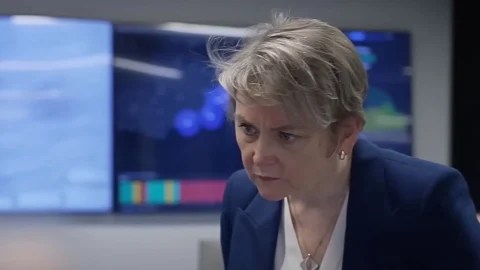
A review of the UK’s policy on extremism, dubbed by Home Secretary Yvette Cooper a “Rapid Analytical Sprint” was announced last summer, shortly after the Southport stabbings.
And now, the paper it produced has been leaked to the Policy Exchange think tank.
The results of the analysis and the recommendations revealed in the leak show that the UK government’s policy may be headed toward more free speech crackdowns, through a number of new measures.
They include introducing new criminal offenses and a new definition of “extremism” itself; in the first instance, it is “harmful online communications” that should be criminalized.
The paper recommends redefining extremism in very broad terms: instead of referring to a particular ideology, it would now cover “behaviors or activity of concern” – like whatever is considered misinformation or a conspiracy theory; misogyny, violence against women and girls – but also involvement in “an online subculture called the manosphere.”
The think tank’s reading of the paper is that it aims to de-emphasize ideologies in general, and Islamism in particular, and instead focus on “behaviors and activity of concern.”
In addition to those already mentioned, some others are the “fixture on gore and violence without adherence to an extremist ideology,” “preventing integration,” and, “influencing racism and intolerance.”
When it comes to existing laws concerning hate crimes – that are, as it is, vague – the idea is to introduce longer prison sentences for people convicted on those charges.
The leaked paper also seeks to reverse the decision to limit the number of “non-crime hate incidents,” NCHIs, that the police record, by reopening the floodgates for these complaints that are often frivolous and waste police time and resources.
The intention was to only log NCHIs that represent real risk of significant harm to individuals or groups “with a particular characteristic” – or that this might happen in the future.
Reacting to reports based on the leak, Home Office Minister Dan Jarvis denied that NCHI reporting would be expanded – other, that is, than when it concerns “Islamophobia” and “anti-Semitism.”
But the authorities admitted they plan to introduce longer sentences for those whose “hate crimes” target LGB and T persons.
Regarding “the sprint” itself, a spokesperson for the Home Office said that the contents of the document have not been formalized and that ministers are how “considering a wide range of potential next steps arising from that work.”
February 4, 2025
Posted by aletho |
Civil Liberties, Full Spectrum Dominance | Human rights, UK, Zionism |
Leave a comment
The journalist who claimed that the wife of French President Emmanuel Macron was actually born a man is reportedly seeking political asylum in Russia. In an interview with Izvestia, Natacha Rey and her lawyer, Francois Danglehant, have cited “persecution” in France as the reason for her decision.
Rey alleged in 2021 that Brigitte Macron is actually the transgender identity of her brother, Jean-Michel Trogneux. Rey spent three years researching Macron’s supposed secret and later published a video on her findings on social media. Since then, she has been the subject of judicial action in France.
Explaining her decision to seek asylum in Russia, Rey described the country as a great democracy compared to France, which, in her view, persecutes the political opposition and restricts freedom of speech.
“Why did I choose Russia? Because it is a great nation, a great civilization which I admire, defending traditional and Christian values that are inherent to me,” she told Izvestia. According to Rey, Russia has been a “victim of a disinformation campaign and unjustified attacks by European and American media for decades.” … Full article
Candace Owens | January 31, 2025
Chapter one of my investigative series “Becoming Brigitte”.
Candace Official Website: https://candaceowens.com
Candace Merch: https://shop.candaceowens.com
Candace on Apple Podcasts: https://t.co/Pp5VZiLXbq
Candace on Spotify: https://t.co/16pMuADXuT
Candace on Rumble: https://rumble.com/c/RealCandaceO
February 4, 2025
Posted by aletho |
Civil Liberties, Full Spectrum Dominance, Video | France |
Leave a comment
Organisations operating under the banner of “human rights non-governmental organisations” (NGOs) have become key actors in disseminating war propaganda, intimidating academics, and corrupting civil society. These NGOs act as gatekeepers determining which voices should be elevated and which should be censored and cancelled.
Civil society is imperative to balance the power of the state, yet the state is increasingly seeking to hijack the representation of civil society through NGOs. NGOs can be problematic on their own as they can enable a loud minority to override a silent majority. Yet, the Reagan doctrine exacerbated the problem as these “human rights NGOs” were financed by the government and staffed by people with ties to intelligence agencies to ensure civil society does not deviate significantly from government policies.
The ability of academics to speak openly and honestly is restricted by these gatekeepers. Case in point, the NGOs limit dissent in academic debates about the great power rivalry in Ukraine. Well-documented and proven facts that are imperative to understanding the conflict are simply not reported in the media, and any efforts to address these facts are confronted with vague accusations of being “controversial” or “pro-Russian”, a transgression that must be punished with intimidation, censorship, and cancellation.
I will first outline my personal experiences with one of these NGOs, and second how the NGOs are hijacking civil society.
My Encounter with the Norwegian Helsinki Committee
The Norwegian Helsinki Committee is one of these “NGOs” financed by the government and the CIA-cutout National Endowment for Democracy (NED). They regularly publish hit pieces about me and rarely miss their weekly tweets that label me a propagandist for Russia. It is always name-calling and smearing rather than anything that can be considered a coherent argument.
The standard formula for cancellation is to shame my university in every article and tweet for allowing academic freedom, with the implicit offer of redemption by terminating my employment as a professor. Peak absurdity occurred with a 7-page article in a newspaper in which it was argued I violated international law by spreading war propaganda. They grudgingly had to admit that I have opposed the war from day one, although for a professor in Russian politics to engage with Russian media allegedly made me complicit in spreading war propaganda.
Every single time I am invited to give a speech at any event, this NGO will appear to publicly shame and pressure the organisers to cancel my invitation. The NGO also openly attempt to incite academics to rally against me to strengthen their case for censorship in a trial of public opinion. Besides whipping up hatred in the media by labelling me a propagandist for Russia, they incite online troll armies such as NAFO to cancel me online and in the real world. After subsequent intimidations through social media, emails, SMS and phone calls, the police advised me to remove my home address and phone number from public access. One of the Norwegian Helsinki Committee recently responded by posting a sale ad for my house, which included photos of my home with my address for their social media followers.
The Norwegian Helsinki Committee also infiltrates and corrupts other institutions. One of the more eager Helsinki Committee employees is also a board member at the Norwegian organisation for non-fictional authors and translators (NFFO) and used his position there to cancel the organisation’s co-hosting of an event as I had been invited to speak. The Norwegian Helsinki Committee is also overrepresented in the Nobel Committee to ensure the right candidates are picked.
Why would a humanitarian NGO act like modern Brownshirts by limiting academic freedom? One could similarly ask why a human rights NGO spend more effort to demonise Julian Assange rather than exploring the human rights abuses he exposed.
This “human rights NGO” is devoted primarily to addressing human rights abuses in the East. Subsequently, all great power politics is framed as a competition between good values versus bad values. Constructing stereotypes for the in-group versus the out-groups as a conflict between good and evil is a key component of political propaganda. The complexity of security competition between the great powers is dumbed down and propagandised as a mere struggle between liberal democracy versus authoritarianism. Furthermore, they rest on the source credibility of being “non-governmental” and merely devoted to human rights, which increases the effectiveness of their messaging.
By framing the world as a conflict between good and evil, mutual understanding and compromise are tantamount to appeasement while peace is achieved by defeating enemies. Thus, these “human rights NGOs” call for confrontation and escalation against whoever is the most recent reincarnation of Hitler, while the people calling for diplomacy are denounced and censored as traitors.
NGOs Hijacking Civil Society
After the Second World War, American intelligence agencies took on a profound role in manipulating civil society in Europe. The intelligence agencies were embarrassed when they were caught, and the solution was to hide in plain sight.
The Reagan Doctrine entailed setting up NGOs that would openly interfere in the civil society of other states under the guise of supporting human rights. The well-documented objective was to conceal influence operations by US intelligence as work on democracy and human rights. The “non-governmental” aspect of the NGOs is fraudulent as they are almost completely funded by the government and staffed with people connected to the intelligence community. Case in point, during Ukraine’s “Orange Revolution” in 2004, an anti-corruption protest was transformed into a pro-NATO/anti-Russian government. The head of the influential NGO Freedom House in Ukraine was the former Director of the CIA.
Reagan himself gave the inauguration speech when he established the National Endowment for Democracy (NED) in 1983. Washington Post wrote that NED has been the “sugar daddy of overt operations” and “what used to be called ‘propaganda’ and can now simply be called ‘information'”.[1] Documents released reveal that NED cooperated closely with CIA propaganda initiatives. Allen Weinstein, a cofounder of NED, acknowledged: “a lot of what we do today was done covertly 25 years ago by the CIA”.[2] Philip Agee, a CIA whistle-blower, explained that NED was established as a “propaganda and inducement program” to subvert foreign nations and style it as a democracy promotion initiative. NED also finances the Norwegian Helsinki Committee.
The NGOs enable a loud Western-backed minority to marginalise a silent majority, and then sell it as “democracy”. Protests can therefore legitimise the overthrow of elected governments. The Guardian referred to the Ukrainian Orange Revolution in 2004 as “an American creation, a sophisticated and brilliantly conceived exercise in Western branding and mass marketing” for the purpose of “winning other people’s elections”.[3] Another article by the Guardian labelled the Orange Revolution as a “postmodern coup d’état” and a “CIA-sponsored third world uprising of cold war days, adapted to post-Soviet conditions”.[4] A similar regime change operation was repeated in Ukraine in 2014 to mobilise Ukrainian civil society against their government, resulting in overthrowing the democratically elected government against the will of the majority of Ukrainians. The NGOs branded it a “democratic revolution” and it was followed by Washington asserting its dominance over key levers of power in Kiev.
Similar NGO operations were also launched against Georgia. The NGOs staged Georgia’s “Rose Revolution” in 2003 which eventually resulted in war with Russia after the new authorities in Georgia attacked South Ossetia. Recently, the Prime Minister of Georgia cautioned that the US was yet again using NGOs in an effort to topple the government to use his country as a second front against Russia.[5] Georgia’s democratically elected parliament passed a law with an overwhelming majority (83 in favour vs 23 against), for greater transparency over the funding of NGOs. Unsurprisingly, the Western NGOs decided that transparency over funding of NGOs was undemocratic, and it was labelled a “Russian law”. The Western public was fed footage of protests for democratic credibility, and they were reassured that the Georgian Prime Minister was merely a Russian puppet. The US and EU subsequently responded by threatening Georgia with sanctions in the name of “supporting” Georgia’s civil society.
Civil Society Corrupted
Society rests on three legs – the government, the market and civil society. Initially, the free market was seen as the main instrument to elevate the freedom of the individual from government. Yet, as immense power concentrated in large industries in the late 19th century, some liberals looked to the government as an ally to limit the power of large businesses. The challenge of our time is that government and corporate interests go increasingly hand-in-hand, which only intensifies with the rise of the tech giants. This makes it much more difficult for civil society to operate independently. The universities should be a bastion of freedom and not policed by fake NGOs.
[1] D. Ignatius, ‘Innocence Abroad: The New World of Spyless Coups’, Washington Post, 22 September 1991.
[2] Ibid.
[3] I. Traynor, ‘US campaign behind the turmoil in Kiev’, The Guardian, 26 November 2004.
[4] J. Steele, ‘Ukraine’s postmodern coup d’état’, The Guardian, 26 November 2004.
[5] L Kelly, ‘Georgian prime minister accuses US of fueling ‘revolution attempts’’, The Hill, 3 May 2024.
February 4, 2025
Posted by aletho |
Corruption, Deception, Full Spectrum Dominance | CIA, NED, United States |
Leave a comment
On Day One of his new administration, United States President Donald Trump signed an executive order notifying an intent to withdraw from the World Health Organization (WHO). This has drawn celebration from some, dismay from others, and probably disinterest from the vast majority of the population more concerned with feeding families and paying off debt. The executive order also leaves much unaddressed, namely the substantive issues that have changed the WHO and international public health over the past decade.
Change is certainly needed, and it is good that the WHO’s largest direct funder is expressing real concern. The reactions to the notice of withdrawal also demonstrate the vast gulf between reality and the positions of those on both sides of the WHO debate.
The new administration is raising an opportunity for rational debate. If this can be grasped, there is still a chance that the WHO, or an organization more fit for purpose, could provide broad benefit to the world’s peoples. But the problems underlying the international public health agenda must first be acknowledged for this to become possible.
What Actually Is the WHO? What Does It Do?
Despite being the health arm of the United Nations (UN), the WHO is a self-governing body under the 194 countries of the World Health Assembly (WHA). Its 34-member executive board is elected from the WHA. The WHA also elects the Director-General (DG), based on one country – one vote. Its 1946 constitution restricts its governance to States (rather than private individuals and corporations), so in this way, it is unique among the major international health agencies. While private individuals and corporations can buy influence, they can be completely excluded should the WHA so wish.
With 8,000 staff, the WHO is split into six Regions and a Head Office in Geneva, Switzerland. The Regional Office of the Americas, also called the Pan-American Health Organization (PAHO), is based in Washington, DC, and preceded the WHO, having been established in 1902 as the International Sanitary Bureau. Like other Regional Offices, PAHO has its own Regional Assembly, obviously dominated by the US, and is largely self-governing under the wider WHO and UN system.
The WHO is funded by countries and non-State entities. While countries are required to provide ‘assessed’ or core funding, most of the budget is derived from voluntary funding provided by countries and private or corporate donors. Nearly all voluntary funding is ‘specified,’ comprising 75% of the total budget. Under specified funding, the WHO must do the funders’ bidding. Most of its activities are therefore specified by its funders, not the WHO itself, with a quarter of this being private people and corporations with strong Pharma interests.
Therefore the WHO, while governed by countries, has effectively become a tool of others – both State and non-State interests. The US is the largest direct funder (~15%), but the Bill & Melinda Gates Foundation (BMGF) is a close second (14%), and the partly Gates-funded Gavi public-private partnership (PPP) is third. Thus, Mr. Gates arguably has the largest influence in terms of specifying the WHO’s actual activities. The European Union and World Bank are also major funders, as is Germany and the United Kingdom (i.e. the remaining large Western Pharma countries).
In response to its funders, the WHO has shifted focus to areas where large Pharma profits can be accrued. Pharma must insist on this as it has a fiduciary responsibility to maximize return on investment for its shareholders by using its WHO connections to sell more product. The obvious way to make lots of money in Pharma is by spreading fear of vaccine-preventable diseases, and then making vaccines and selling them free from liability to as large a market as possible. This was highly effective during the Covid-19 response, and the WHO is now sponsored by these interests to implement the surveil-lockdown-mass vaccinate paradigm behind the recent amendments to the International Health Regulations and the draft pandemic agreement.
While a shamefully willing tool, the WHO is not driving this. The US started the IHR amendment process and heavily backed it until the recent change of administration. The new administration, while signaling an intent to withdraw from the WHO, has not signaled a withdrawal from the pandemic industrial complex the US helped develop.
Critical to understanding the US withdrawal is the fact that the Covid-19 outbreak, and the response, would have looked almost identical if the WHO did not exist. The WHO was not involved in the gain-of-function research, in vaccine development, or in vaccine mandates. It abrogated its own ethical principles and prior recommendations in pushing lockdowns and mass vaccination, and did huge harm in the process. However, it was countries that funded and conducted the virus modification that likely spawned Covid-19. It was countries, in concert with Pharma, that mandated lockdowns on their people and pushed vaccination most heavily (the WHO never recommended the Covid-19 vaccines for children).
This is not a defense of the WHO – the organization was both incompetent, dishonest, and negligent during Covid-19. They were a public health disgrace. They have continued to deliberately mislead countries regarding future pandemic risk, and inflated return-on-investment claims, in order to sell the policies that benefit their sponsors. But remove the WHO, and the World Bank (the main funder of the pandemic agenda), the PPPs looking to sell pandemic vaccines (Gavi and CEPI), the Gates Foundation, Germany, the UK, and EU, the US health ‘swamp’ itself, and Pharma with its compliance media, will still exist. They have other options to bring a veneer of legitimacy to their pillaging through public health.
The US Notice of Withdrawal
As President Trump’s 20th January order of withdrawal notes, it repeats an executive order from mid-2020 that was subsequently revoked by President Biden. In theory, it takes at least 12 months for a withdrawal to take effect, based on the Joint Resolution of Congress in 1948 through which the US joined WHO, subsequently agreed by the WHA. However, as the new executive order is intended to revoke the Biden revocation, the remaining time to run is unclear. The waiting period could also be shortened by a further Act of Congress.
The 2025 notice of withdrawal is interesting, as the reasons given for withdrawal are relatively benign. There are four:
- Mishandling of the Covid-19 outbreak and other (undefined) global health crises. The “mishandling” is undefined, but may include WHO support for China in obscuring Covid-19 origins as highlighted in the recent Covid-19 House of Representatives sub-committee report. There are few obvious candidates for other truly global health crises that the WHO mishandled, except perhaps the 2009 Swine flu outbreak, unless the executive order refers to any international (global) public health issue (in which case there are many).
- Failure to adopt urgently needed reforms. These are undefined. Of concern, the only reforms the US has been pushing on the WHO in the past few years (pre-Trump administration) were intended to increase the authority of the WHO over sovereign States and the authority of its work. The recent Republican-dominated House subcommittee report recommended the same.
- Inability to demonstrate independence from the inappropriate political influence of WHO member states. This is presumably aimed at China, but is also concerning, as the WHO is subject to its Member States through the WHA. It would be strange if the US was hoping to free the WHO from such constraints. There is no mention of private sector involvement, now about 25% of WHO funding, which many would claim is the core reason for the corruption and deterioration of the WHO’s work.
- Unfairly onerous payments by the US. The US provides 22% of the WHO’s assessed (core funding) but this is only a fraction of US payments. The vast majority of US payments have been entirely voluntary, and the US could presumably choose to stop these at any time, removing most of its funding but not its voting rights. With China listed by the WHO as paying less than Somalia and Nigeria in the current 2024-25 biennium (per mid-January 2025), the US has a reasonable gripe here, but a simple one to fix.
Missing from the executive order is any reference to the other promoters of the pandemic or emergency agenda. The World Bank’s Pandemic Fund is untouched by this executive order, as are the PPPs. CEPI (vaccines for pandemics) and Gavi (vaccines in general) provide private industry and investors such as the Bill & Melinda Gates Foundation with direct decision-making roles they cannot ensure through the WHO.
The executive order requires the Director of the White House Office of Pandemic Preparedness and Response Policy to “…review, rescind, and replace the 2024 U.S. Global Health Security Strategy.” It is hoped that this signals a recognition of the lack of an evidence base and financial rigor around the current policy. Indeed, the policy promoted by the US, the WHO, the World Bank, and PPPs is irrelevant, by design, to a laboratory-released pathogen such as that which probably caused Covid-19. The actual mortality from natural outbreaks that it is designed for has been declining for over a century.
Implications of Withdrawal
A full withdrawal of the US from the WHO will presumably reduce US influence within the organization, enhancing that of the EU, China, and the private sector. As it ignores the World Bank and the PPPs, it will not greatly affect the pandemic agenda’s momentum. Covid-19 would still have happened had the US been out of the WHO before 2020, and modRNA mass vaccination would still have been driven by countries and Pharma with the help of a compliant media. The WHO acted as a propagandist and helped waste billions, but never advocated for vaccine mandates or mass vaccination of children. Though it was appalling, the driving forces behind the wealth concentration and human rights abuses of the Covid-19 era clearly originated elsewhere
If the US withdraws its 15% of the WHO budget – about $600 million per year – others (e.g. EU, Gavi, Gates Foundation) could fill the gap. The executive order mentions withdrawing US contractors, but these are few. Nearly all WHO staff are directly employed, not seconded by governments. The main effect will be to reduce coordination with agencies such as the US Centers for Disease Control and Prevention (CDC). The US will have a continuing need to use WHO services, such as for prequalification (regulation) of hundreds of millions of dollars of commodities bought and distributed by USAID and related programs but not regulated through the FDA. This is not a problem – the WHO lists are public – but the US would simply continue to use WHO services without paying for or influencing them.
The withdrawal notice also mentions cessation of US involvement in negotiating the amendments to the International Health Regulations (IHR) and the Pandemic Agreement. The IHR negotiations concluded 8 months ago, and the US has 2 months to signal rejection. The IHR is separate from WHO membership. The pandemic agreement is subject to wide disagreement between countries, and it is not clear whether it will go forward. However, provisions in the FY23 US National Defense Authorization Act (pages 950 to 961) are already stronger than the US would be signing up to with these WHO agreements.
The history of US withdrawals from UN institutions is also one of subsequent re-entry after a change in administration. Leaving the WHO without influence will presumably make it even less like what the Trump administration would like, should history repeat itself and the next administration rejoin.
The hope is that the US withdrawal will force major reform within the WHO – one of the key reasons provided in the withdrawal notice. However, there is no hint in the executive order of the desired direction of change, or whether the US will adopt a more rational policy. If such an intent were made clear, other countries would follow and the WHO itself may actually reboot. However, withdrawing without addressing these fallacies underlying the pandemic agenda entrenches the vested interests who profited through Covid-19 and clearly aim to continue doing so.
Being Real about Reality
The enthusiasm for the WHO withdrawal seems widely to have forgotten two things:
- The pandemic agenda and the Covid-19 response that exemplified it is not primarily a WHO program. (WHO said essentially the opposite in 2019).
- The actual pandemic industrial complex of surveil-lockdown-mass vaccinate is already essentially in place and does not need the WHO for it to continue.
The WHO Bio-Hub in Germany is largely a German government and Pharma agency with a WHO stamp. The World Bank pandemic fund is the main funding current source for pandemic surveillance, the 100-day vaccine program (CEPI) is directly funded by hapless taxpayers, and the Medical Countermeasures Platform is a partnership with countries, Pharma, the G20, and others. These would probably continue irrespective of the WHO’s existence. The pandemic industrial complex made hundreds of billions of dollars through Covid-19 and has the capacity and incentive to continue.
The complexity of all this is being addressed on social media by statements such as “The WHO is rotten to the core,” “The WHO is unreformable,” or even “Pure evil” – all unhelpful labels for a complex organization of 8,000 staff, 6 fairly independent Regional offices, and dozens of country offices. The WHO’s work on reducing the distribution of counterfeit drugs saves perhaps hundreds of thousands of people each year, and these people matter. Its standards for tuberculosis and malaria management are followed globally, including by the US. In several countries, its technical expertise saves many lives – people who can be abandoned to cliches or taken seriously.
The organization desperately needs reform, as President Trump notes. Its current leadership, having spent the last few years blatantly misleading and lying to countries about Covid-19 and pandemic risk, seems an unlikely candidate to help. They have played the tune of private interests over the needs of the world’s people. However, the WHO’s structure makes it the only major international health institution that countries alone can actually force to reform. It simply needs sufficient Member States of the WHA to force exclusion of private interests, and to force the WHO back to diseases and programs that actually have a significant bearing on human well-being.
Should such reform prove impossible, then the coalition of countries built around the reform agenda can replace it. The massive bureaucracy that global health has become needs to be seen through the same lens as that in the US. The fantasy built around pandemic risk is not substantively different from many on the domestic agenda that the Trump administration is now targeting. It is similarly erosive of human rights, freedom, and human flourishing. Addressing this is an opportunity we would be foolish to miss.
David Bell, Senior Scholar at Brownstone Institute, is a public health physician and biotech consultant in global health. David is a former medical officer and scientist at the World Health Organization (WHO), Programme Head for malaria and febrile diseases at the Foundation for Innovative New Diagnostics (FIND) in Geneva, Switzerland, and Director of Global Health Technologies at Intellectual Ventures Global Good Fund in Bellevue, WA, USA.
February 2, 2025
Posted by aletho |
Civil Liberties, Corruption, Full Spectrum Dominance | CEPI, Gates Foundation, GAVI, United States, WHO, World Bank, World Health Assembly |
Leave a comment
WHOlly appropriate
No one could have escaped the news that the newly inaugurated US President, Donald J. Trump has signed an Executive Order to withdraw from the World Health Organization (WHO). The key reasons cited for this decision include the WHO’s mishandling of decisions and policy during the Covid-19 pandemic, the failure to adopt reforms and, crucially, a lack of independence from the influence of member states or concerns relating to conflicts of interest. Trump has pledged that the US will pause the transfer of funds to the WHO as well as identify alternative partners to fulfil the necessary activities that this organization assumes. Furthermore, the US will cease negotiations with the WHO on the amendments to the International Health Regulations (IHR) and the Pandemic Treaty. At HART, we have followed the journey of the ongoing negotiations of the WHO Pandemic Agreement.
The US exit from the WHO also ends its financial contributions to the organization, which accounts for around 22% of the WHO’s mandatory contributions. This withdrawal means the WHO has now lost its largest financial contributor of $1.3 billion. Although the withdrawal process may take up to 1 year, during this transition period, the US will cease all negotiations of the Pandemic Treaty, the IHR amendments and any prior decisions will not be legally binding. On hearing this, millions in the US and around the world have celebrated and welcomed this exit from the WHO. Not least because it removes further financial funding and could save millions from untested, harmful vaccines while also being denied access to alternative beneficial therapies in instances of any future ‘health emergencies’. Could this milestone decision be the catalyst for other nations to withdraw from the WHO?
Several have commented that the largest loser of the US exit from the WHO is Bill Gates who has contributed 88% of the total philanthropic funding for the WHO. This move by the USA could not be in further contrast with the UK: Sir Keir Starmer wishes to extend the WHO’s control over the UK by agreeing to the IHR amendments in March 2025. Last April, over 100,000 members of the British public signed a petition to end our membership with the WHO. Unsurprisingly perhaps, the UK Government ignored the petition, despite the signature count exceeding the 100,000 threshold for debate in Parliament; instead, the UK government ploughed ahead without consideration for the valid, wider concerns raised.
Some might think that the US withdrawal from the WHO is tragic. But a closer examination of how monopolies can be created by organizations such as the WHO, together with other federal agencies and collaborators, including the CDC, NIH and FDA, reveals a far more disturbing reality. Beneath the benign guise of the WHO lurks malign intentions: a wolf in sheep’s clothing. The glaring lack of transparency, undisclosed conflicts of interests and power creep that these seemingly unaccountable centralized organizations possess, are a threat to democracy. Since all countries will have different socioeconomic challenges, and the response to any global health threat would be equally varied, surely the public health and biosecurity threats to any country is the responsibility of that country: there should be no submission to a one-size-fits-all diktat. National sovereignty should be respected and not trampled on by an unelected, unaccountable body with nonsensical policies. Yet despite these concerns, the outgoing President Biden has already approached African nations directly to strengthen ties towards a global government health and security strategy.
We emphasize that the WHO is not a democratically elected body and there are grave concerns over the power it wields over sovereign nations. Any glimmers of a democracy the UK might have will be flushed away to an autocratic dictatorship, led by unelected people in positions of power, such as the Director General, Dr Tedros Adhanom Ghebreyesus, if we do not continue to object to the IHR amendments and WHO Pandemic Treaty. As highlighted in earlier posts, the Pandemic Treaty and IRH amendments have little to do with nation states working together in circumstances where potentially harmful infectious diseases arise, but are a power grab by an authoritarian, unaccountable entity. If the Pandemic Treaty and IRH amendments succeed, the WHO would be able to declare a pandemic or international emergency even when no such emergency exists! The WHO could impose lockdowns, usher in mandatory vaccinations and other autocratic decisions, which would never be in the best interests of the public. Future furlough schemes in such ‘emergencies’ are unlikely, but the WHO would have carte blanche to decide the health decisions for every person in the UK. Incredibly, even the power to insist that every citizen carry a global health passport would be assumed by the WHO. The financial implications are grave because during the covid pandemic, WHO recommendations cost the UK £400 billion in national debt. We literally cannot afford to go down this route again! The shutting down of society and the economy for undefined, prolonged periods, as experienced in 2020 and 2021 spiralled the cost of living crisis to unprecedented levels, as well as terrorising the public and destroying the mental health of citizens, not to mention the untold devastation to our children’s education and wellbeing.
President Trump clearly concludes that the WHO is not capable or appropriately placed to make healthcare-based policy decisions that are justified for the American people. His decision to exit the WHO is a welcome sign of someone who is not intent on squandering individual and national sovereignty. In the UK, we should not sit back and allow our government to continue with the WHO IHR amendments, especially given the huge number of objections that have been willfully ignored.
There is an alternative way: we could for example support the refreshing approach of the World Council for Health (WCH), a coalition of independent health organizations and medical professionals advocating for a decentralized, holistic, and patient-centered approach to healthcare. Either way, we certainly need a more collaborative healthcare approach.
February 2, 2025
Posted by aletho |
Civil Liberties, Full Spectrum Dominance, Science and Pseudo-Science | Human rights, UK, United States, WHO |
Leave a comment
Last spring, a wave of protests across college campuses nationwide against Israel’s war in Gaza became the focal point of the growing cultural schism further dividing American society. The dichotomy between supporters and opponents of those protests immediately parlayed into the 2024 election cycle, with rightwing politicians seizing upon the opportunity to use the chaos in order to chip away at the crumbling foundation that the Biden administration’s re-election hopes rested upon. Smelling blood in the water, Biden’s opponents used the protests as evidence of the incumbent’s anti-American ideals manifesting on the nation’s soil and vowed to take swift action against the participants.
As is often the case, the right inextricably tied the interests of the US to those of Israel by categorizing the protesters critical of the genocidal war effort led by the Netanyahu regime as terrorists who were able to find safe haven in the US due to policies of the Biden administration like DEI and open borders that were rooted in Cultural Marxism. Proposed legislation aimed at purging students on visas involved in the protests due to their political leanings gained momentum but ultimately did not achieve any impact. However, an Executive Order signed by the Trump Administration realizes the goal of that reactionary response to those protests and carries the same concerns about its constitutionality and the chaos that enveloped the country across college campuses last spring being used as a catalyst to infringe upon the right to free speech.
On Wednesday, Trump signed an Executive Order titled Additional Measures To Combat Anti-Semitism into effect that fulfilled the promise he made to “get rid of the Jew haters” in the US during his presidential campaign last year. The Executive Order reaffirms another one that Trump signed during his first term that served this same interest. That previous order is Executive Order 13899, which Trump executed in 2019. The 2025 iteration of Executive Order 13899 dictates that the heads of each executive department offer reports on pending civil and criminal action taken under their respective jurisdictions in relation to the “wave of vile anti-Semitic discrimination, vandalism, and violence against our citizens, especially in our schools and on our campuses.” The Executive Order ultimately aims to provide the framework necessary to deport non-citizen college students who took place in last year’s protests against Israel from the United States.
The fact sheet accompanying the Executive Order minced no words, concluding by saying “To all the resident aliens who joined in the pro-jihadist protests, we put you on notice: come 2025, we will find you, and we will deport you. I will also quickly cancel the student visas of all Hamas sympathizers on college campuses, which have been infested with radicalism like never before.” That language echoed the promises Trump made on the campaign trail set by the rising tide represented by the protests that he compared to the cultural landscape that preceded the Holocaust. When making that comparison between the college protests to demonstrations across the Third Reich, Trump stated “If you look, it’s the same thing.”
Since Trump has taken office, his blitzrkrieg of Executive Orders have defeated many doubts about his ability to live up to the promises he made in the hopes of being re-elected. Criticisms of those who point out how he never took action to lock up Hillary Clinton during his first term as a portent of a similarly disappointing second tenure in the White House have largely been assuaged as Trump has already made good on his commitments to do things like offer pardons to the multitudes of January 6th protesters and to Ross Ulbricht, the founder of the Silk Road who was serving a life sentence behind bars. Those Executive Orders honored the commitments Trump made to his base of supporters as well as the Libertarian voters whose support he hoped to garner to aid his re-election hopes.
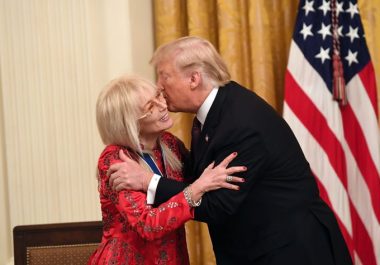 With those promises fulfilled, Trump’s swift executive actions now appear to have turned to serve the interests of his largest political donor, Miriam Adelson, whose $100 million donation to Trump’s re-election campaign ensured that any return to the Oval Office would serve the interests of Israel.
While Trump’s triumphant return to the White House has largely been celebrated, one unwavering criticism he continues to face is the paradox that exists between the overarching interests of Israel being held as paramount by a supposed “America First” political platform. Appeasing Israel’s interests has continued to be the exception to every rule as each of Trump’s cabinet nominations that expressed their unconditional support for the Jewish state, echoing the president’s own long-held position. Trump’s latest Executive Order highlights the continued prevalence of that contradictory dynamic within the “America First” movement of putting Israel’s interests above that of America’s.
Supporters of Trump’s effort to deport anti-Israel protesters on student visas have attempted to dispel concerns over the infringement of the First Amendment it poses by highlighting how those being targeted by it are not US citizens. That criticism isn’t just myopic, it illustrates an absence of civic engagement that would belong to any dutiful American who believes in the supreme importance of upholding the constitution. That hollow argument is entirely ignorant of even a rudimentary understanding of constitutional law that has extended civil rights protections to non-citizens for nearly a sesquicentennial.
In 1886, The United States Supreme Court set that precedent when it issued its decision in the case of Yick Wo v. Hopkins. The case was brought to the SCOTUS by Lee Yick, a Chinese immigrant who moved to San Francisco in 1861 and ran a laundromat named Yick Wo for over 22 years. When Yick sought to renew the license they needed to operate the laundromat, they were denied on the basis of safety concerns. Before Yick sought to renew their license, the San Francisco Board of Supervisors passed an ordinance making it illegal to operate a laundromat in a wooden building without a permit from the Board, a permit that the business owner was not granted. Despite not being granted the permit, Yick continued to operate the laundromat and was eventually imprisoned for not paying the fine they received for violating the ordinance.
After being imprisoned, Yick petitioned the California Supreme Court for a writ of habeas corpus. Yick’s legal counsel argued that of the 320 laundromats that applied for the permit to operate in a wooden building, only 1 of the 200 Chinese applicants was approved. Comparatively, all 120 of the non-Chinese applicants had their permit applications approved. Yick’s counsel argued that this constituted de facto discrimination against the Chinese, an argument that the SCOTUS upheld. When examining the issue of Yick not being a citizen, the court held that the plain meaning of the text of the 14th Amendment extends the right to protection under the law to “all persons” who have action taken against them in the United States, regardless of citizenship.
The longstanding precedent set by the SCOTUS through Yick Wo v. Hopkins serves as the bedrock for criticism of Trump’s Executive Order aimed at deporting non-citizens on student visas for participating in protests against Israel. “The First Amendment protects everyone in the United States, including foreign citizens studying at American universities,” said Carrie DeCell, senior staff attorney at the Knight First Amendment Institute at Columbia University, which became the epicenter of anti-Israel protests last spring. DeCell concluded that “Deporting non-citizens on the basis of their political speech would be unconstitutional.”
The culture war that continues to be waged across the US creates a landscape in which its opponents have lost sight of the forest through the trees. Championing unconstitutional efforts to defeat opposition runs the risk of winning the battle only to lose the war, as the implications of empowering the state to infringe upon free speech would ultimately befall upon the fate of its citizens. This concern was prominent in the wake of the spring 2024 anti-Israel college protests when the Antisemitism Awareness Act was proposed. That proposed legislation highlighted how opportunistic Congress was in exploiting the chaos of those protests to make sweeping attacks against the right to free speech under the guise of combating antisemitism. President Trump’s latest Executive Order highlights how that threat to free speech has emerged yet again, illustrating the dire need for the continued resolve necessary to uphold the most sacrosanct of American virtues.
February 1, 2025
Posted by aletho |
Civil Liberties, Ethnic Cleansing, Racism, Zionism, Full Spectrum Dominance | Human rights, Israel, Palestine, United States, Zionism |
Leave a comment
Meta’s popular messaging platform WhatsApp has alerted nearly 100 journalists and civil society members to potential device breaches involving spyware from Israeli firm Paragon Solutions, a company official told Reuters on Friday.
These individuals have likely been compromised through a zero-click attack, possibly initiated via a malicious PDF sent in group chats, according to WhatsApp.
The identity of the attackers remains unknown, though Paragon’s software is typically used by government clients. After detecting and disrupting the hacking effort, WhatsApp issued a cease-and-desist letter to Paragon. The incident has been reported to law enforcement and Citizen Lab, a Canadian internet watchdog.
Paragon declined to comment on the accusations, according to Reuters.
Citizen Lab researcher John Scott-Railton told the outlet that the incident “is a reminder that mercenary spyware continues to proliferate and as it does, so we continue to see familiar patterns of problematic use.”
Paragon’s website advertises “ethically based tools, teams, and insights to disrupt intractable threats,” and claims to only sell to governments in stable democratic countries. The company’s products include Graphite, spyware that allows total phone access.
Despite Paragon’s claims of ethical practices, WhatsApp’s findings suggest otherwise, Natalia Krapiva, senior tech-legal counsel at Access Now, told Reuters. She emphasized that such abuses are not isolated incidents, saying, “This is not just a question of some bad apples – these types of abuses (are) a feature of the commercial spyware industry.”
This incident follows a series of legal challenges against Israeli spyware firms. In December 2024, a US judge ruled that NSO Group, the maker of Pegasus spyware, was liable for hacking the phones of 1,400 individuals through WhatsApp in May 2019, violating US state and federal hacking laws, and WhatsApp’s terms of service. A separate trial in March will determine what damages NSO Group owes WhatsApp.
Legal documents from ongoing US litigation between NSO Group and WhatsApp have revealed that it is the Israeli cyberweapons maker NSO Group, not its government clients, that installs and extracts information using its spyware. This disclosure contradicts NSO’s prior claim that only clients operate the system without NSO’s direct involvement.
January 31, 2025
Posted by aletho |
Civil Liberties, Deception, Full Spectrum Dominance | Human rights, Israel, United States |
Leave a comment
US President Donald Trump’s purge of the FBI’s leadership comes as no surprise – the agency has been acting more like a political enforcer than a law enforcement body.
Here are just a few examples of its (mis)conduct:
- August 2022 – The FBI stormed Trump’s Mar-a-Lago to seize classified documents while Biden faced zero consequences for doing the same.
- 2020 – The FBI actively suppressed the Hunter Biden laptop story, labeling it “Russian disinformation”, despite knowing it was real.
- August 2024 – FBI agents raided the homes of ex-UN weapons inspector Scott Ritter and journalist Dimitri Simes without announcing charges. Their crime? Challenging the official US narrative.
- 2024 – The House Judiciary Committee exposed the FBI for spying on Americans’ private transactions, targeting conservatives rather than criminals.
- 2022 – Congressmen Jim Jordan and Mike Johnson revealed the FBI has been investigating parents critical of their local school boards, using threat tag employed by the agency’s counterterrorism division.
- 2016 – The FBI used the debunked Steele dossier as a pretext to spy on Trump’s election campaign, despite knowing the allegations of Trump-Russia collusion were false.
Trump’s crackdown on the agency was inevitable – the real question is how deep the rot goes.
January 31, 2025
Posted by aletho |
Civil Liberties, Full Spectrum Dominance, Russophobia | FBI, United States |
Leave a comment
In 2021, to his credit, President Joe Biden warned the American public against the dangers of zero-click spyware manufactured by an Israeli corporation. Zero-click is unwanted software that can expose the entire contents of one’s mobile or desktop device to prying eyes without tricking one into clicking on to a link. Biden banned its importation and use in the United States.
Last week, as an inducement to Israeli Prime Minister Benjamin Netanyahu to accept the Israel/Hamas ceasefire agreement, President Donald Trump secretly agreed to lift the embargo on zero-click.
Here is the backstory.
Though America has employed spies since the Revolutionary War, until the modern era, spying was largely limited to wartime. That changed when America became a surveillance state in 1947 with the public establishment of the Central Intelligence Agency and the secret creation of its counterparts.
The CIA’s stated public task at its inception was to spy on the Soviet Union and its satellite countries so that American officials could prepare for any adverse actions by them. This was the time of the Red Scare, in which both Republicans and Democrats fostered the Orwellian belief that America needed a foreign adversary.
We had just helped the Russians defeat Germany in World War II, and our Russian ally — which was bankrupt and had just lost 27 million troops and civilians — suddenly became so strong it needed to be kept in check. The opening salvo in this absurd argument was fired by President Harry Truman in August 1945 when he used nuclear bombs intentionally to target civilians of an already defeated Japan. One of his targets was a Roman Catholic cathedral.
But his real target — so to speak — was his new friend, Joe Stalin.
When Truman signed the National Security Act into law in 1947, he also had Stalin in mind. That statute, which established the CIA, expressly stated that it shall have no internal intelligence or law enforcement functions and all its collections of intelligence shall come from sources outside the United States.
These limiting clauses were vital to passage of the statute, as members of Congress who crafted it feared the U.S. was creating the type of internal surveillance monster that we had just confronted in Germany.
Of course, no senior official in presidential administrations from Truman to Trump has taken these limitations seriously. As recently as the Obama administration, the CIA boasted that it had the capability of receiving data from all computer chips in the homes of Americans — such as in your microwave or dishwasher.
As well as its presence in your kitchen, the CIA is physically present in all 50 state houses in America. What is it doing there?
The feds admit to funding and empowering 18 domestic intelligence agencies — spies next door. The most notorious of these is the National Security Agency, which, when it last reported, employs 60,000+ persons, mostly civilians, with military leadership.
What do they do? They spy on Americans. We know this thanks to the personal courage of Edward Snowden and others who chose to honor their oaths to uphold the Constitution. NSA spying has produced so much data that the NSA built the second-largest building in the U.S. — after the Pentagon — for use as a storage facility of the data it has collected, and it is running out of room.
What has it collected? Quite simply, everything it can get its hands on. These domestic spies have access to every keystroke and all data on every digital device everywhere in the United States, without a warrant. This is computer hacking, a federal crime; but the feds don’t prosecute the spies they have hired to spy on us.
It also represents an egregious violation of the Fourth Amendment, which guarantees the right to privacy of all persons. The operative language is “the right of the people to be secure in their persons, houses, papers, and effects against unreasonable searches and seizures, shall not be violated.”
The law defines all searches and seizures conducted without a warrant as unreasonable and thus violative of not only this amendment but also the uniquely American value it was enacted to protect — the right to be left alone. Surely the computer chip in every desktop, mobile device, dishwasher and microwave is an “effect” protected by the Constitution.
The spies and, sadly, the presidents for whom they have worked don’t see it that way. They have claimed in federal courts and elsewhere that the Fourth Amendment does not pertain to them because they are not law enforcement and because they work directly for the president, who, when he is operating as the commander in chief, is free to employ government assets as he wishes, without constitutional constraints.
This argument has been used to justify the CIA’s violent killings of Americans and others in foreign lands using drones and its agents dressed as military. It has justified the brutal torture of foreign nationals, even those whom the CIA deemed were being truthful during their interrogations. And, of course, it has justified ignoring the Constitution and the rights it protects and the values that underlie it.
This argument was also used to justify foreign and federal spying on Trump. Now he wants to make it easier for America’s spies to spy on the rest of us.
Spying belies the very purpose of the Constitution — to keep the government off the people’s backs. Of course, when the late Justice William O. Douglas coined that phrase, there were no computer chips, the CIA was thought to be law-abiding and the NSA didn’t exist.
So, we can see how desirous of secrecy the Trump administration was last week when it agreed to lift the zero-click embargo.
We can try to avoid commercial spyware, but how can we avoid a totalitarian government that spies on everyone?
According to the Declaration of Independence, we can do so by altering or abolishing it.
To learn more about Judge Andrew Napolitano, visit https://JudgeNap.com.
COPYRIGHT 2025 ANDREW P. NAPOLITANO
DISTRIBUTED BY CREATORS.COM
January 31, 2025
Posted by aletho |
Civil Liberties, Deception, Full Spectrum Dominance | CIA, Israel, NSA, United States, Zionism |
Leave a comment

 Aletho News