Syria’s Arab tribes revolt: US bases and allies become prime targets
The current uprising in Syria’s Deir Ezzor represents the growing armed resistance of local Arab tribes against US-backed Kurdish forces who control their land and resources – potentially opening up a new front for West Asia’s Axis of Resistance
By Haidar Mustafa | The Cradle | August 12, 2024
On 7 August, a coalition of Syrian Arab tribes recaptured several key towns from US-backed Kurdish forces in the eastern countryside of Syria’s Deir Ezzor governorate. These tribesmen, led by Sheikh Ibrahim al-Hafl, launched the largest assault on Syrian Democratic Forces (SDF) sites since the onset of the Arab tribal rebellion against the US-backed militia last year.
The renewed offensive has also reignited popular resistance against the US presence in the region, tracing its origins to the SDF leadership coup against the Deir Ezzor Military Council, which led to the arrest and removal of Arab leader Ahmed al-Khabil, also known as Abu Khawla.
The spark of resistance
In August 2023, the SDF’s arrest of the Deir Ezzor Military Council leader triggered a tribal uprising across several villages under SDF control – from Al-Baghouz to Al-Shuhail. This uprising quickly evolved into a more organized resistance when Sheikh Hafl announced in an audio statement the formation of a military command for the “Army of Tribes and Clans in the countryside of Deir Ezzor” last September.

Clashes along the Euphrates River in Deir Ezzor governorate
Since then, Hafl has become a constant menace to the SDF, with accusations flying that the Syrian government and Iran supported him. It is an obvious attempt to discredit the Arab tribal movement, which is genuinely focused on liberating land and reclaiming resources.
The SDF prematurely announced the “failure” of the attack, which it claims was carried out “upon the orders” of Hossam Louka, head of Syria’s General Intelligence Directorate. In a statement posted on Facebook, the SDF said:
Our sweep campaign continues against the remnants of the Syrian regime-backed mercenaries who attacked the villages of Al-Dhiban, Al-Latwa, and Abu Hamam.
US occupation forces have established prominent bases at the Al-Omar and Conoco oil fields, in a region largely inhabited by Arab communities who have long been persecuted by the SDF. When the US failed to control and co-opt these tribes into a loyal organization, it sought to instead characterize them as a threat aligned with Syrian and Iranian interests.
This narrative is consistent with the approach of the US project and its allies in the SDF, who seek to suppress any resistance movements that challenge their agenda and practices, including the theft of Syrian oil and wheat.
‘Iranian-backed’ tribal resistance
Sheikh Hafl called upon the tribes and clans, especially those beyond Syria’s borders, to support the resistance, leading to increased and sustained attacks against the SDF. The tribal resistance, primarily rooted in Dhiban, spread throughout the towns and cities east of the Euphrates, turning them into a continuous conflict zone.
This resistance posed a significant threat to US interests, with the so-called “Operation Inherent Resolve” reporting in its October–December 2023 quarterly update to the US Congress that tribal fighters have evolved into a “full-fledged resistance movement.”
These fighters, the report said, receive “explicit support from the Syrian regime and its Iranian allies on the western side of the Euphrates River, where resistance fighters resupply, rearm, and launch attacks across the river in SDF-controlled villages on the eastern side.”
Recognizing this threat, the US aircraft recently launched several raids targeting the Arab tribal forces to prevent them from advancing towards their bases or achieving their goal of expelling the SDF from “Arab land.”
Gaining ground as SDF lays siege to Hasakah
After a year of limited confrontations and small operations, Hafl re-issued the call to confront what he called the “Qandil” gangs. This announcement coincided with the launch of a violent attack by Arab tribal forces on SDF positions in the cities and towns of Deir Ezzor.
During this assault, tribal forces managed to cross into and expand control over areas including Dhiban, Al-Busaira, Ibriha, Al-Hariji, Al-Tayyaneh, Abu Hamam, Gharanij, Al-Kishkiya, and the entire riverbed. The SDF, in turn, responded by imposing a siege on the residents of Hasakah and Qamishli within Syrian government-controlled areas, cutting off supplies of flour, food, and water – a tactic the SDF frequently uses to pressure Damascus.
Insiders believe that the SDF is leading Hasakah into the unknown, as the imposition of a siege policy could trigger local confrontations within the city. This will not, however, deter the tribal “resistance” from continuing its project aimed at pressuring the US occupation and its Kurdish militias.
Notably, a Syrian-based Russian delegation arrived at Qamishli airport before Friday afternoon and held several meetings to mediate the crisis. According to Syrian daily Al-Watan, these discussions did not yield positive results after the SDF leaders rejected mediation and insisted on continuing the siege of Hasakah’s population.
Serving geopolitical goals
The US occupation of the Jazira region and the establishment of more than 20 American bases was not primarily to combat terrorism, as claimed by the international coalition, but rather because “ISIS” served as the pretext for strengthening the US obstruction of the strategic land links between the eastern Mediterranean, via Central Asia, to China, and to Iran on the Persian Gulf. The US further seeks to prevent the development of close ties between the Syrian and Iraqi arenas.
Political affairs writer and researcher Dr Ahmed al-Druze explains to The Cradle why the US continues to provide unlimited support for the SDF in opposition to the region’s inhabitants.
The American occupation will remain as long as it has the ability to do so, and it deals with the Arab tribes from this perspective.
Druze believes that the events unfolding today in Syria’s eastern region are a result of the repercussions of the Palestinian resistance’s Operation Al-Aqsa Flood and the broader spillover of conflicts across West Asia.
He highlights that, while some may view the recent developments as a local conflict – either between Arab clans or between Arab clans and Kurds – the reality suggests otherwise, as the clans find common cause and common targets with the Axis of Resistance.
Even if the situation temporarily stabilizes, with tribal forces retreating and the SDF lifting the siege on Hasakah and Qamishli, Druze believes the underlying international conflict will likely resurface, potentially tied to events in occupied Palestine and Gaza.
Though it may be premature to speak of a US existential predicament in the Jazira region, given that its losses currently remain limited, writer and political analyst Khaled al-Miftah argues that the US faces growing popular rejection and resistance.
The region is increasingly aware of Washington’s goals – to establish a separatist Kurdish entity and exploit Syria’s resources. Al-Miftah tells The Cradle that the US is beginning to feel the effects of the Turkish–Syrian rapprochement, which, if achieved under Russian auspices, could spell the end of the SDF’s separatist ambitions. Consequently, the US has begun to create obstacles to prevent this outcome.
Part of the region’s resistance
Despite the end of large-scale military conflict in most of Syria years ago, the eastern region remains embroiled in tension and ongoing strife. Armed confrontations between the SDF and pro-Turkish factions in the north continue, while the war with Arab tribal forces east of the Euphrates enters a new chapter, driven by different calculations than in past battles.
The tribes are now determined to expand their operations and have increased their readiness. US bases have become permanent targets for resistance forces on both the Syrian and Iraqi sides, with drones and rockets frequently striking occupation bases in the Omar and Conoco oil fields. Meanwhile, the tribes have expanded their control over villages that serve as the first line of defense for the SDF around US bases.
Meanwhile, with the SDF’s release of hundreds of ISIS fighters from prisons in July, ISIS continues its terrorist attacks in the region, despite the international coalition’s previous claims of having eliminated the group’s presence. ISIS cells periodically launch assaults on Syrian army positions and their allies in the Resistance Axis.
The Jazira region has essentially become a battleground where the US now reaps consequences from its forced occupation of Syrian territory, disregarding the impact on Syrian territorial unity and the strife it sows among the population.
The eastern region remains trapped in a cycle of escalation, with local and international actors involved, while the Syrian people bear the brunt, suffering both from ongoing violence and the theft of their resources.
Indonesia, Malaysia urge UN to forge consensus against Israel after latest massacre in Gaza
Press TV – August 11, 2024
Indonesia and Malaysia have urged the United Nations to reach a general agreement against Israel after its latest massacre in the Gaza Strip.
More than 100 Palestinians were killed on Saturday in an Israeli airstrike on a school sheltering displaced people in the east of the Gaza Strip. The Israeli regime has attacked schools at least 21 times in the past 40 days.
Southeast Asian nations have been critical of the Israeli regime, vocally supporting the defenseless Palestinian people trapped and massacred by the Zionist war machine in the besieged Gaza Strip.
On Sunday, both Indonesia and Malaysia called on the UN to unite against Tel Aviv to stop the mass killing of civilians in Gaza.
“The international community should no longer tolerate and accept the belligerence of Israel,” the Malaysian Ministry of Foreign Affairs said in its statement.
“Malaysia continues to call for Israel’s allies to compel Israel to immediately stop the killings of innocent Palestinians, and to stop providing Israel with the tools to continue this genocide. An immediate, urgent and decisive action by the UN Security Council is needed to enforce a permanent ceasefire.”
Malaysia said that Israel has shown “that it has no desire for peace” and urged other Muslim countries under the 57-member Organization of Islamic Cooperation to come together and work with UN member states to demand Tel Aviv comply with the UN Security Council resolution passed in June, which called for a ceasefire in Gaza.
The Israeli regime’s airstrike on Saturday sparked a new wave of international condemnation, with the UN Human Rights Office saying that it was at least the 21st attack on schools-turned-shelters that it has recorded since July 4.
Indonesia has also joined growing calls for the UN Security Council to “immediately conduct a comprehensive investigation” into the Al-Tabin school massacre.
“Indonesia also calls upon the international community to unite in stopping the crimes against humanity and genocide committed by Israel,” the Indonesian Ministry of Foreign Affairs said. “Israel must be held accountable for all these crimes, and all forms of impunity must be brought to an end.”
Backed by the US-led Western allies, the Israeli regime has since October launched a genocidal war on Gaza, enforcing a deadly siege of the Palestinian land by stopping the flow of potable water, medicine, and electricity into the coastal territory.
Israeli forces’ genocidal war on Gaza since early October has killed nearly 40,000 people, most of them women and children, with some 91,000 more injured.
Several Syrian soldiers killed in drone strike near Iraq border
The Cradle | August 11, 2024
Several Syrian army soldiers were killed and others wounded in an airstrike targeting a vehicle near Syria’s eastern city of Al-Bukamal on the Syrian-Iraqi border.
“A drone targeted a car carrying a number of fighters from the Syrian Arab Army’s (SAA) auxiliary forces, killing six members and wounding more than 15 others,” Sputnik’s correspondent in the eastern Deir Ezzor governorate reported on Sunday, citing local sources.
The military vehicle was carrying Syrian army personnel near the town of Al-Duwair in the eastern countryside of Deir Ezzor, as it was en route to a checkpoint near Al-Bukamal city, tasked with preventing ISIS infiltrations from Iraq into the Syrian border city, according to Sputnik.
“The wounded were taken to hospitals in Deir Ezzor city to receive treatment, and among them were critical cases,” the correspondent added.
Local sources told the outlet that the drone which targeted the car belonged to the US military.
The strike came as eastern Syria has witnessed significant escalation in recent days after a coalition of Syrian Arab tribes launched a massive offensive against Washington’s Kurdish proxy, the Syrian Democratic Forces (SDF), in Deir Ezzor’s countryside on 7 August, as part of a rebellion launched against the US-backed militants last year.
Damascus has been said to be supporting the Arab tribal rebellion against the SDF.
US airstrikes have targeted the Deir Ezzor countryside several times since the start of the tribal offensive.
A Syrian security source told Sputnik on Saturday that US helicopters bombed several villages in the eastern countryside of Deir Ezzor, enabling the SDF to regain villages and towns they lost days ago after violent battles with tribal forces.
“US warplanes, with the support of the SDF (Syrian Democratic Forces) militia, have launched several raids in Deir Ezzor, Hasakah, and Qamishli, targeting innocent civilians defending their families, villages, and properties,” the Syrian Foreign Ministry said on 10 August.
“The Syrian Arab Republic reaffirms that the US occupation of part of Syrian territory represents a flagrant violation of Syria’s sovereignty and the unity and integrity of its territories, and that US support for its agent separatist militias (SDF) represents a cheap tool to implement its hostile plans against Syria,” it added.
Syrian army shells US proxies in Deir Ezzor as tribal uprising continues
The Cradle | August 8, 2024
Syrian army troops shelled positions of the US-backed Syrian Democratic Forces (SDF) on 8 August, responding to attacks from the Kurdish militia on its territory in the countryside of the eastern governorate of Deir Ezzor.
The Syrian Arab Army (SAA) shelled SDF positions in Al-Busayrah city and the towns of Al-Sabha, Bariha, Jadid Bakara, and Al-Dahla in Deir Ezzor’s eastern countryside, Al Mayadeen reported on Thursday.
The SDF’s media center announced on 8 August that its militants targeted the Syrian army and allied forces in the Al-Zubari and Sa’lu villages of the Deir Ezzor countryside with artillery and mortar shells.
“The SDF artillery strikes came with support and cover from the US,” Al Mayadeen reported.
One day earlier, the SDF accused Hossam Louqa, head of the Syrian government’s General Intelligence Service, of orchestrating Wednesday’s large-scale tribal assault on the SDF in the Deir Ezzor countryside.
“Hussam Louqa was the one who ordered and planned the attack on the areas controlled by SDF in the Deir Ezzor countryside … the attacks failed to achieve their goals,” Washington’s Kurdish proxy said in a statement on 7 August.
SDF forces continued “search operations in the towns of Abu Hamam, Dhiban, and Gharanij in the eastern countryside of Deir Ezzor,” and were able “to regain control of some sites on the bed of the Euphrates River,” the statement added.
A coalition of Syrian Arab tribes, dubbed the Army of Tribes, seized several towns from the SDF in the countryside of eastern Syria’s Deir Ezzor governorate on 7 August.
Tribesmen launched the “largest” attack on SDF sites since the start of the Arab tribal rebellion against the US-backed militia last year, Sputnik reported.
The Arab tribal forces reached the vicinity of the US base in the Al-Omar oilfield in the Deir Ezzor countryside.
US army helicopters intervened and opened fire at the tribesmen, Al Mayadeen reported on Wednesday.
Arab tribes launched their rebellion against the SDF in late August last year, with fierce clashes raging for several weeks afterward.
Despite brief instances of de-escalation, tensions and armed clashes between the two sides have remained ongoing. At the time, it was said that the tribal forces were coordinating with and receiving military aid and training from the Syrian army.
Fighting was ongoing in the Deir Ezzor countryside on 8 August following the massive tribal assault the day before. Yet Al Mayadeen reported on Thursday that the clashes were “less intense.”
It added that the SDF has deployed large numbers of reinforcements and has maintained its supply lines, noting a “power imbalance” between the two sides in favor of the Kurdish militia.
Sources told the outlet on Thursday that the goal of the tribal assault “is not territorial control but to affirm the tribes’ rejection of the SDF and US forces’ presence in the area, their control over oil and gas, and their influence on civil and military decisions.”
Arab tribes seize control of US-occupied Syrian towns in large-scale assault
The Cradle | August 7, 2024
A coalition of Syrian Arab tribes seized several towns from US-backed Kurdish forces in the countryside of eastern Syria’s Deir Ezzor governorate on 7 August.
Tribesmen launched the “largest” attack on Syrian Democratic Forces (SDF) sites since the start of the Arab tribal rebellion against the US-backed militia last year, Sputnik reported, adding that the attack took place “under the cover of artillery and mortar shells.”
“Violent clashes have been ongoing since the early morning hours between the forces of the SDF-linked Deir Ezzor and Hajin Military Councils on the one hand, and the attacking groups of the ‘Army of Tribes’ coalition on the other, in the vicinity of the towns of Abu Hamam, Dhiban, Al-Lattwa, Al-Kashkiya, and Gharanij,” the news outlet’s correspondent said.
The clashes were concentrated in the towns of Al-Sabha and Al-Tayana, east of Deir Ezzor, the correspondent added.
The Arab tribes used RPGs and machine guns against the SDF during the onset of the attack, according to Al Mayadeen.
“SDF militants imposed a complete curfew in the towns under their control in the Deir Ezzor countryside, after the arrival of large military reinforcements from Hasakah and Raqqa, coinciding with a wide search operation in the villages surrounding the areas of clashes,” the Sputnik correspondent went on to say.
Residents told Sputnik that many people were displaced as a result and that three civilians were killed while seven others were injured due to the fighting. Local sources also told the outlet that at least 10 SDF militants were taken captive by tribal fighters, who also seized large amounts of light and heavy weapons.
The SDF and the tribal coalition also took some casualties.
“Arab tribal fighters managed to damage three Hummer military vehicles in the vicinity of the American base in the Al-Omar oilfield,” Sputnik said.
The SDF imposed security belts and closed roads around several areas in Hasakah, northeastern Syria.
“American helicopters targeted a group of tribal forces using machine guns near the banks of the Euphrates River in the town of Dhiban, east of Deir Ezzor,” Al Mayadeen’s correspondent reported on Tuesday.
The US army also deployed reinforcements to the vicinity of its base in the Al-Omar oilfield.
Sheikh Ibrahim al-Hafel, who led the tribal rebellion against the US-backed armed group last year, was quoted by Al Mayadeen as saying on 7 August: “We will not accept submission to the SDF militants … [the tribes and] their sons have the right to liberate their areas from these militants.”
Arab tribes launched their rebellion against the SDF in late August last year, with fierce clashes raging for several weeks afterward.
Despite brief instances of de-escalation, tensions and armed clashes between the two sides have remained ongoing. At the time, it was said that the tribal forces were coordinating with and receiving military aid and training from the Syrian Arab Army (SAA).
“After continuous training received by the tribal forces during the past months, the tribes led by Sheikh Ibrahim Al-Hafel launched a violent attack on the largest in the cities and towns of Deir Ezzor, and took control of several military points in the city of Al-Busayrah and the towns of Ibriha, Al-Harijiya, Al-Tayana, Abu Hamam, Gharanij, Al-Kashkiya, Dhiban, Al-Latwa neighborhood, and all the riverside points,” Syrian journalist Mohammad Dabaa said on 7 August.
The tribal assault came a month after the SDF released hundreds of ISIS fighters from their prison camps in northern Syria.
America’s Syrian Gulag
By Brad Pearce | The Libertarian Institute | August 1, 2024
At the beginning of last month the U.S. Deputy Assistant Secretary of State for Near Eastern Affairs, Ethan Goldrich, granted an interview to Rudaw, which is something like PBS for Iraqi Kurdistan. He emphasized that the United States has no plan to end its occupation of northeast Syria, where the U.S. continues to maintain some nine hundred troops under the guise of preventing the resurgence of the Islamic State. The U.S. claims it is in Syria under the authorization of United Nations Security Council Resolution 2254 to bring an end to the “Syrian Crisis,” however much of the crisis has ended, and where it has not it is primarily due to foreign occupation. Overall, the interview shows that the U.S. is continuing its dead-end policy, but Goldrich does say something interesting: the United States has concerns about providing “humanitarian” assistance for a network of prisons for IS fighters.
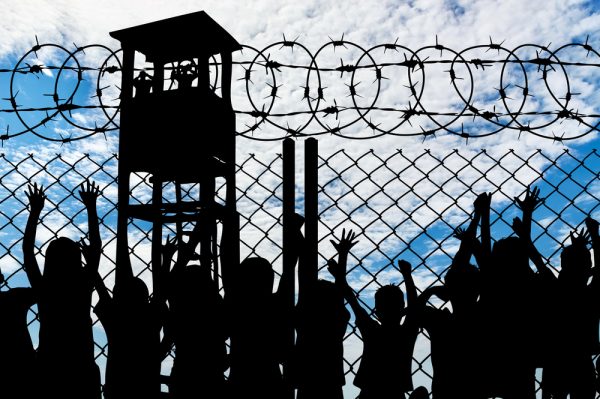
To those who know about the United States’ continued presence in Syria supporting the Kurdish separatists and their military known as the Syrian Democratic Force [SDF], it is commonly said that the American motive is to steal Syrian oil and grain. One would also wonder how much nine hundred soldiers could accomplish, but of course as usual they are actually there as hostages, to ensure that in Syria cannot try to retake this area without killing Americans and thus unleashing the wrath of the U.S. government. This prison network provides another important angle to the occupation. While the prisons in Syrian Kurdistan are not secret, they are also not well known. However, CNN (of all places) recently featured an excellent investigation exposing that more than 50,000 humans are kept in a network of twenty-seven facilities in Syria. CNN’s chief international correspondent Clarissa Ward was given rare access to the prisons and her reporting is illuminating. All of the inmates are denied access to any form of legal process and have no chance of release besides a vague hope that their home countries may repatriate them. Everything the United States has done in Syria, of course, it has been done in the name of human rights; but it seems to be the case that all of these individuals would have had a better chance of receiving some form of trial and definite sentencing under the government of the Syrian Arab Republic. At the very least, they could not be denied a legal process to a greater extent than they currently are.
There are two primary categories of prisoners the U.S.-funded facilities are holding in Syria. The first are accused Islamic State terrorists—most of them probably are fighters captured by the SDF, but in the absence of a legal process it is impossible to know—and families of Islamic State militants. The largest prison is known as “Panorama” and holds 4,000 inmates. According to CNN, legal experts have called it, “A U.S.-funded legal black hole, worse than Guantanamo Bay.” Clarissa Ward was allowed to see two cells and speak to a handful of prisoners. The first thing one notices is that this is a “nice” facility. One would imagine the SDF would hold prisoners in some ancient Ottoman fortress, but this is clearly a modern and newly built prison for which the U.S. taxpayer has paid a fortune. It is overcrowded, but nothing like the images one commonly sees of third world prisons. Of course it was a managed tour, as Ward acknowledged in her report. The problem is that the inmates have been there for years and have no legal rights, though an SDF official claimed that they intend to reintegrate these people into society; it has just not been possible to make progress in that regard as no country will take them.
While the men are mostly kept in conventional prisons, the women and children, who are not accused of any crime, are kept in what must be the world’s largest literal concentration camp, Al Hol. The camp holds 40,000 people. Five years after the fall of the caliphate there is no plan for what to do with the individuals stored at this desert camp. Many of the women remain ideologically committed, though Ward also spoke to one former American citizen who has fully turned against IS and even stopped covering in the camp, but she has had her U.S. citizenship stripped on grounds that there was an error in her naturalization process. At a certain age—supposedly eighteen, but according to inmates as early as fourteen—the boys are removed from the camp and sent to the prisons to stop the teens from marrying and producing a “new generation of Islamic extremists.” While the conditions appear to to be broadly humane, if bleak, it is indeed hard to imagine a better breeding ground for radical Islam than this desert city of IS wives denied human rights by a United States proxy. It is of course the case that IS arose from American managed prisons in Iraq in the first place.
The biggest question is why CNN was given this access, with the SDF volunteering information about a prison system which has been criticized by basically every major human rights organization. Based on the interviews it seems to me that the SDF wants out of this obligation. The United States is functionally making them run a Gulag Archipelago and even if they are paid for it, running the prisons consumes an enormous amount of man hours by personnel who could be put to other uses. Further, there is the constant risk of breakouts (as happened in 2022) and of terrorist groups trying to liberate the camp. However, the United States clearly has no other plan for the ultimate fate of these humans, unless they intend to use them to unleash a new wave of terrorism. This is simply yet another policy where our ruling class has no exit strategy. It seems that the U.S. will occupy northeast Syria forever, if only to imprison some 50,000 people without trial. The irony, of course, is that they will continue to justify their presence by saying they need to bring human rights to Syria, just not for those trapped in this desert Guantanamo.
Okinawa on Fire: Division Brewing in Japan Over US Militarizing & Nuclearizing
By Ekaterina Blinova – Sputnik – 31.07.2024
The US and Japan have made further steps towards closer military integration and an extension of Washington’s nuclear umbrella over its ally. Their increased military buildup in the Asia-Pacific region means a greater risk for war, particularly nuclear war, warns Okinawan rights activist Rob Kajiwara.
In the wake of their Security Consultative Committee (“2+2”) July 28 meeting in Tokyo, the US and Japan announced the strengthening of military ties and upgrading of the US Forces Japan (USFJ) to a warfighting command.
“The US and Japan are increasing the threat of war in the region,” Robert Kajiwara, an Okinawan rights activist and founder of the Peace For Okinawa Coalition, told Sputnik, stressing that the military buildup has nothing to do with Japan’s security and national interests.
Actually, the US is using Japan as a bulwark against Russia, China and North Korea in a bid to maintain its dominance in the Asia Pacific region, according to the pundit. “The world is seeking to become multipolar, but the US is intent on doing whatever it can to maintain hegemony,” he noted.
The American and Japanese delegations also discussed extending the US nuclear umbrella over Japan. While the US and Japan have coordinated on the issue since 2010 within the framework of the Extended Deterrence Dialogue (EDD), most recently the US has doubled down on its nuclear umbrella in the region.
It is expected that this year the US and Japan will specify under what conditions the US will use its nukes to “protect” Japan, according to Newsweek.
For its part, Chinese media believes Washington is planning to deploy nuclear weapons in their military bases in Japan, again. The “extended deterrence” means nothing but the US intent to use Japan as an outpost to strengthen its nuclear deterrence in Northeast Asia, according to Global Times.
Between 1954 and 1972, the US bases on Okinawa hosted a staggering 19 types of nuclear arms. In 2015, the US government officially admitted the fact that it stored hundreds of nuclear warheads in Japan during the Cold War. At the height of the Vietnam War, around 1,200 nuclear weapons were stationed in Okinawa.
“If there’s any country that should be against nuclear arms, it should be Japan, given the use of nuclear weapons against the cities of Hiroshima and Nagasaki. Japan should be strongly against the storing of nuclear weapons in its territory. Unfortunately, Japan hasn’t learned anything from World War II and appears destined to repeat its past mistakes,” the pundit argued.
Why Okinawa is Important for the US
Okinawa, which is part of the Ryukyu island chain, is of utmost strategic importance for the US as it serves as a stronghold for the Pentagon’s operations in the Western Pacific and deployment of troops directly to the Taiwan Straits and to the Korean Peninsula.
The US military installations in the region – which American troops have occupied since the late 1940s – were crucial for Washington’s invasions of Vietnam and North Korea in the past.
The US air and naval bases on Okinawa are located in close proximity to China’s mainland and even closer to Taiwan Island. Furthermore, the Ryukyu island chain presents a natural “wall”, allowing the US military to “control” China’s passage into the Pacific Ocean.
While Tokyo and Washington name Russia, China and North Korea as potential “threats” to the region’s stability, a considerable chunk of Japanese citizens think otherwise, Kajiwara said, referring to Okinawa Prefecture, a home to numerous US military bases and facilities – over 70% of their total number in Japan.
“The overwhelming majority (somewhere between 70-90%) of Ryukyuans [another name for Okinawans] do not consider Russia, China, or North Korea to be military threats,” the activist stressed.
Okinawans Oppose US Bases and Japan’s Militarization
Ryukyuans have opposed the US militarization of the island for decades, citing security and environmental issues, as well as repeated criminal acts committed by US troops against local residents.
In September 1995, three US soldiers kidnapped and raped a 12-year-old girl in Okinawa, prompting prefecture-wide rallies which brought together 92,000 protesters. This year, two rape cases committed by US soldiers against an Okinawan minor and a woman came to light in June. The first occurred in December 2023 and remained muted by the US military for almost six months.
“The US and [Japan’s central government] covered this up until after Okinawa Prefecture’s recent election,” said Kajiwara. “They wanted to avoid negative publicity before or during the election in order to prevent the [ruling] Liberal Democratic Party from losing votes. Is this democracy? Can the US and Japan rightly call this democratic?”
In another snub of Okinawans’ democratic freedoms, Japan’s central government overruled the Okinawan authorities’ ban on building a new US military base at Henoko-Oura Bay near Nago in 2023. In September last year, Okinawa Gov. Denny Tamaki sought international backing at a UN session, arguing that the concentration of the US military forces in the prefecture threatens peace.
“My petition against the construction of the military base at Henoko received over 212,000 signatures,” Kajiwara said. “The 2019 Referendum in Okinawa resulted in over 70% of Okinawans voting against the Henoko base. In spite of all this, the US and Japan continually ignore the voices of Ryukyuans.”
Who are Okinawans and Why Do They Differ From Japanese
Okinawa was previously an independent Ryukyu kingdom, which was conquered and annexed by Japan at the end of the 19th century, the expert pointed out.
Ryukyuans have our own history, culture, languages, values, and identity. According to Kajiwara, Ryukyu has a tradition of being a “bridge of nations” with the focus on mutually-beneficial trade and diplomacy. “Whereas Japan has a long history of warfare and samurai bushido culture, Ryukyu banned the public carrying of weapons during the 15th century in order to promote peace,” the pundit remarked.
“In 1879, Japan invaded Ryukyu as the first of its colonial conquests… From 1879 until 1945, Ryukyu had to deal with imperial Japanese militarism,” he said. “During World War II, Japan deliberately placed a heavy amount of military presence in Ryukyu with the intent of sacrificing Ryukyuans in order to ‘save Japan’.”
This resulted in the Battle of Okinawa in 1945, which amounted to nothing short of the Ryukyuan genocide, according to the activist.
“At least 123,000 Uchinaanchu (Native Okinawans) were killed during a time frame lasting only around three months, which was around one-third of the population at the time. Japanese soldiers deliberately killed Ryukyuan men, women, children, and elderly, claiming they were ‘Chinese spies,’ using them as human shields, and forcing thousands to commit suicide. It is said that every Okinawan family lost someone during the battle. Many of my own relatives were also killed,” Kajiwara continued.
Those who survived were sent to concentration camps by the US occupation forces. During the period from the end of 1945 to 1947 locals returned to their land to find many of their homes and farms bulldozed flat and turned into US military facilities. According to some estimates, at least 40,000 Okinawan landowners lost their land and were not compensated for the loss. The 1951 San Francisco Peace Treaty signed between Japan and the Allies “legitimized” the US occupation of Okinawa.
“From 1945 until 1972 Ryukyu was under direct US military rule. Since 1972 Ryukyu has been under joint US and Japanese rule. This, of course, has caused great hardship for Ryukyuans, such as economic deprivation, environmental destruction, water poisoning, military accidents, and crime,” he said.
Currently, Ryukyuans fear that the US-Japanese military buildup will invite another devastating war to their land, as per the expert.
“As we speak, Japan is continuing the construction of a new airfield at Henoko, paving over the coral reef in order to build it. The Okinawan dugong, an endangered creature, is being driven into extinction by this. This airfield, along with missiles being stationed around Ryukyu, poses a direct threat to Russia, China, and North Korea. So you see, the US and Japan really have no intention of decreasing Ryukyu’s military burden at all.”
Kajiwara emphasized that he and his team are continuing to raise awareness about the risks of the US-Japanese growing militarization, adding that Okinawans remain hostages to Tokyo’s warmongering. “We discuss all these things in our upcoming documentary film, ‘Occupied Okinawa.’ The film will be entered into international film festivals around the world starting in September,” the pundit concluded.
UAE, Israel expand spy bases in Yemen’s Socotra under US-sponsorship: Report
The Cradle | July 29, 2024
The UAE has, since 7 October, stepped up work on joint Emirati-Israeli military and intelligence infrastructure on the Socotra Archipelago off the coast of Yemen, Lebanese daily Al-Akhbar reported on 29 July.
The UAE has sought to establish control over the strategic archipelago, and has, over the past few years, begun constructing – in coordination with Tel Aviv – military and intelligence sites on the islands of the Socotra Archipelago, including the Island of Socotra itself.
According to the Al-Akhbar report, other Gulf Arab countries are involved in Emirati-Israeli plans for the archipelago, which comes as part of “an alliance being established … under an American umbrella.”
“The archipelago, in addition to other Yemeni islands and ports, is a central point in [this alliance] … the formation of the aforementioned alliance has become more urgent for all its parties,” Al-Akhbar writes, adding that since the start of Operation Al-Aqsa Flood on 7 October, “they accelerated the construction of its features, led by an Emirati-Israeli military base being built on Abd al-Kuri Island.”
Abd al-Kuri Island is the second largest island in the Archipelago after Socotra.
The “ultimate goal” of the project is “to link the armies and security services of Israel and the concerned Arab countries under the umbrella of US Central Command.”
The report adds that in late December last year, a UAE-flagged landing ship – designed for the deployment of military personnel and equipment – arrived at Socotra Island, remaining there until early January.
It then headed west towards Abd al-Kuri and anchored until 11 January, heading back to Socotra two days later. It then returned to the UAE on 18 January.
“It concealed its signal while stationed off the island’s shores, and remained this way until it reappeared again on 25 December in the Arabian Sea heading north, which suggested that it was carrying out suspicious activity at the time. Information indicates that the ship’s trips were intended to transport military supplies and specialized personnel supervising the development of an Emirati base.”
Following 7 October, a new pier and a helicopter landing pad were constructed on Abd al-Kuri, as well as an airstrip, which was revealed in satellite imagery released in March this year.
“This expansion allows for the accommodation of larger American military cargo aircraft and strategic bombers, such as the American C-5M Super Galaxy and B-1 bombers that were recently used in retaliatory attacks in Syria and Iraq. New housing and buildings were also built,” according to the report.
This is not the first report indicating Washington’s involvement in the militarization of the Socotra Archipelago. Sky News Arabia reported in March that Washington is looking to establish a presence in Socotra in response to Ansarallah and the Yemeni Armed Forces’ pro-Palestine operations.
An in-depth investigation released by The Cradle in March 2023 details the Emirati–Israeli presence on the Socotra archipelago.
The Al-Akhbar report comes as the forces of Yemen’s Sanaa government – which are aligned with Ansarallah – have been vowing a response to the recent Israeli strikes on the western Yemeni port of Hodeidah, which was carried out in response to a deadly Yemeni drone attack on Tel Aviv.
Sanaa has imposed a blockade on all shipping heading to Israeli ports in support of the people and resistance in Gaza, and has vowed not to stop until the genocidal war against Palestinians in the strip comes to an end.
It has also targeted the Israeli port city of Eilat with dozens of drones and missiles since the start of the war.
The Yemeni army has also been attacking US and UK warships in response to the violent bombing campaign that Washington and London began against Yemen in January. US-UK airstrikes have since failed to deter Yemen’s operations.
Erdogan, Assad to hold historic meeting in Moscow
Al Mayadeen | July 22, 2024
The first official meeting between Turkish President Recep Tayyip Erdogan and Syrian President Bashar al-Assad is set to take place in Moscow, the Daily Sabah reported citing sources familiar with the discussions.
The meeting, which is expected to occur as early as August, will be mediated by Russian President Vladimir Putin.
Iraqi Prime Minister Mohammed Shia al-Sudani may also be invited, though it is anticipated that Iran will not participate in the talks.
Following the outbreak of the war on Syria in 2011, relations between the two countries deteriorated due to Turkey’s military presence in Syria and the ongoing conflict with the PKK.
Rapprochement efforts last year faltered over Syria’s demand for the withdrawal of Turkish troops, which Ankara resisted due to security concerns.
Recent developments, including Damascus’ return to the international stage and Syia’s readmission to the Arab League, alongside shifting dynamics such as the upcoming US elections and increasing domestic discontent in Turkey regarding Syrian refugees, have paved the way for renewed dialogue.
China, Philippines reach provisional deal on grounded shoal at South China Sea
Press TV – July 22, 2024
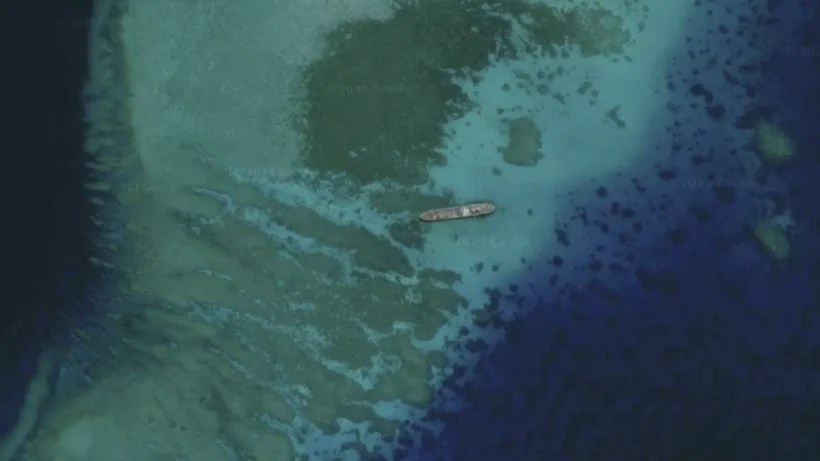
China and the Philippines have reached a provisional deal on resupply missions to a grounded Filipino ship in the South China Sea, amid efforts to ease maritime tensions.
The Philippines Department of Foreign Affairs (DFA) said on Sunday that Manila “reached an understanding” with Beijing on the resupply missions to the Sierra Madre.
The DFA did not elaborate on the “provisional arrangement” but said it followed “frank and constructive discussions” between the two countries earlier this month.
The Philippines deliberately grounded the ship, the Sierra Madre, on the reef of Ren’ai Jiao (aka Second Thomas Shoal) in 1999 to reinforce its claims over disputed waters surrounding it. Since then, it has maintained a small contingent of sailors aboard the vessel.
China and the Philippines have also agreed to jointly manage maritime differences and de-escalate the situation in the South China Sea.
“Both sides continue to recognize the need to de-escalate the situation in the South China Sea and manage differences through dialogue and consultation and agree that the agreement will not prejudice each other’s positions in the South China Sea,” the DFA said.
A Chinese foreign ministry spokesperson on Monday confirmed the “temporary arrangement”, but stated, “We continue to demand that the Philippines tow away the warship and restore Ren’ai Jiao’s state of hosting no personnel or facilities.”
“If the Philippines needs to provide supplies to the ship’s occupants before the Philippines tows away the beached warship, the Chinese side is willing to allow the Philippine side to carry out the transportation and replenishment on humanitarian grounds,” the spokesperson said, noting that the resupply process will take place after the Philippines informs China in advance and after on-site verification is conducted.
China reaffirmed that it won’t allow the establishment of “fixed facilities or permanent outpost” in the area.
“If the Philippines were to send large amount of construction materials to the warship and attempt to build fixed facilities or permanent outpost, China will absolutely not accept it and will resolutely stop it in accordance with the law and regulations to uphold China’s sovereignty.”
Philippine foreign ministry, however, rejected that the “provisional arrangement” required “prior notification and on-site confirmation.”
China says the Philippines has been violating its sovereignty and the Declaration on the Conduct of Parties in the South China Sea (DOC), especially Article 5 which stipulates that the parties should refrain from action of inhabiting on the uninhabited islands and reefs.
Beijing claims the South China Sea in its entirety. Vietnam, the Philippines, Malaysia, and Brunei have overlapping claims to parts of the waters.
How western Big Tech giants enable Israel’s occupation
By Kit Klarenberg | The Cradle | July 20, 2024
On 10 July, Hebrew newspaper Maariv reported that 46,000 Israeli businesses have been forced to shut down due to the ongoing Gaza war and its devastating effect on the economy. The outlet referred to Israel as a “country in collapse.”
Regular readers of The Cradle will be well aware of the scale of the occupation state’s economic collapse since the Gaza genocide began. Yet, its effect on the precipitous decline of Tel Aviv’s once-thriving tech sector remains underexplored.
Complicity in occupation infrastructure
In mid-June, mainstream news outlets reported that chip giant Intel was halting expansion of a major factory project in Israel, which was slated to pump an extra $15 billion into the occupation entity’s economy.
Intel is just one tech giant whose fortunes have soured since Palestinian freedom fighters breached Gaza’s concentration camp walls on 7 October 2023.
The same fate has been suffered by many tech companies profiteering from illegal Zionist settlement expansion, which also provide infrastructure and resources used to oppress Palestinians and enforce Tel Aviv’s apartheid.
Multiple consumer-facing western companies that not only profit from illegal Jewish settlement expansion but actively provide core infrastructure and resources used to oppress Palestinians and enforce Tel Aviv’s apartheid could now be subject to lawsuits.
This week, the International Court of Justice (ICJ) ruled that Israel’s continued presence in occupied Palestinian territory is unlawful and should come to an end “as rapidly as possible.” Notably, the court opened the door to “reparations” for any illegal actions carried out by Israel and other entities since 1967.
The ICJ’s landmark judgment means the long-term viability of these tech firms’ operations in the occupied territories is moribund – for fear of legal repercussions, if nothing else.
Fittingly, given Germany is currently in the dock at the ICJ for its support and facilitation of the genocide in Gaza, Munich-headquartered tech conglomerate Siemens is among the culprits.
The firm is “focused on automation and digitalization in the manufacturing industries, intelligent infrastructure for buildings and distributed energy systems, smart mobility solutions for rail transport, and medical technology and digital healthcare services.” Its products are profuse throughout the occupation state and its illegal settlements.
Traffic control systems and traffic lights produced by Siemens can be found in areas of the West Bank where Palestinian residents are forbidden from traveling. In 2014, the company’s Israeli subdivision RS Industries won a tender to provide traffic control systems across the Jerusalem Municipality too – East Jerusalem, designated as the capital of the Palestinian state, was occupied in 1967, and falls within the ICJ’s mandate.
Elsewhere, Siemens provides its DDEMU model cars for the Tel Aviv Jerusalem Fast Train and, in 2018, was awarded a $1 billion contract by the entity-owned Israel Railways to supply 330 electric cars as part of Israel’s electrification project, which includes the Tel Aviv – Jerusalem Fast Train (A1).
A highly controversial project that passes through two areas of the West Bank, including privately owned, occupied Palestinian land, it is intended for exclusive use by Israeli Jews.
Don’t Buy Into Occupation (DBIO) states: “Siemens’ activities are of concern, as they are linked to the provision of services and utilities supporting the maintenance and existence of settlements.”
However, the company’s activities extend far further. Through its Israeli representative, Orad Group, the company provides equipment and technology to the notorious Israel Prison Service (IPS).
In 2004, the Orad Group provided a Siemens technology-based perimeter security system to Gilboa prison — a detention center specifically designated for Palestinian political prisoners. Siemens also supplies the IPS with a sophisticated fire detection and extinguishing system.
Connecting settlements
US brand Motorola is widely recognized for its innovative smartphone devices. However, DBIO has meticulously documented the involvement of Motorola’s Tel Aviv division in settlement expansion over the past decade.
The tech giant has collaborated closely with Israeli occupation forces, the Ministry of Defense, and Zionist settlement councils across the illegally occupied territories. A prime example of this collaboration is the surveillance system “MotoEagle,” designed to monitor settlers on appropriated land, operate within occupation military bases, and oversee the Gaza concentration camp’s separation wall.
Notably, Motorola-produced radar stations have been installed on illegally appropriated private Palestinian land, restricting Palestinian movement in these areas. Furthermore, Motorola supplies the Ministry of Defense’s Zramim System, a smart card operation utilized at Israeli checkpoints to monitor goods transportation.
Palestinian drivers, merchants, and transport companies are compelled to register their personal information in this system, enabling Tel Aviv to monitor all entry and exit points meticulously.
The company is also a preferred contractor for internal security systems in numerous occupation settlements. The Jordan Valley regional council, encompassing more than 20 settlements in the occupied West Bank, employs multiple Motorola products, including command and control systems and surveillance cameras. Additionally, the Population and Immigration Authority in the settlement of Beitar Illit uses Motorola for its security needs.
In 2022, Motorola Solutions secured a contract to provide security cameras and entrance control resources for the Jerusalem Light Rail’s (JLR) entire Green Line. This route links the Gilo settlement in occupied East Jerusalem with the city center and the Ramat Eshkol, Ma’alot Dafna, and French Hill settlements, facilitating connectivity between settler enclaves and supporting settler movement. Consequently, Motorola has been listed in the UN’s database of firms profiting from illegal settlement expansion.
Powering apartheid
Hewlett Packard Enterprises (HPE), which split from personal computer and printer provider Hewlett Packard in 2015, is one of the most profitable US corporations. However, it is less well-known that HPE supplies and manages much of the technological infrastructure underpinning the occupation state’s apartheid and settler colonialism.
For example, HPE provides “Itanium” servers and maintenance services to Tel Aviv’s Population and Immigration Authority. This computerized Israel’s checkpoint system while storing vast amounts of information on all Palestinians with Israeli citizenship and non-citizen Palestinian residents of occupied East Jerusalem.
HPE directly contracts with the illegal settler municipalities of Modi’in Ilit and Ariel, two of the largest Jewish-only settlements in the West Bank, providing them with a range of services. Additionally, HPE maintains the central server system for the Israeli Prison Service (IPS), placing the company at the core of Tel Aviv’s use of mass incarceration to suppress Palestinian resistance. A 1994 Human Rights Watch report highlighted this by noting:
“The extraction of confessions under duress, and the acceptance into evidence of such confessions by the military courts, form the backbone of Israel’s military justice system.”
Moreover, HPE is the primary provider of the Basel system, an automated biometric access control system employed at Israeli checkpoints and the Gaza apartheid wall. ID cards distributed under Basel are integral to the systematic discrimination against Palestinians.
The checkpoints, by design, segregate and fragment the Occupied Palestinian Territories and its inhabitants, separating workers from their places of employment, students from their schools, and families from each other through electrified fences, watchtowers, and concrete barriers.
Electronic counter intifada
This system is part of a broader state of siege under which Palestinians have lived for decades, significantly intensified by the sealing off of Gaza and the West Bank. The Israeli navy, another HPE customer, relies on the company’s IT infrastructure and support services. The siege severely restricts the movement of goods and people in and out of Palestinian territories, aiming explicitly to crush Palestinian resistance.
In 2006, Dov Weisglass, an adviser to then-Israeli Prime Minister Ehud Olmert, explained: “The idea is to put the Palestinians on a diet, but not to make them die of hunger.” It was hoped hunger pangs through limited caloric intake might encourage Palestinians to reject Hamas or at least force its fighters to temper their resistance efforts. The starvation of Palestinians has only galvanized their support for Hamas and their yearning for freedom from Israeli occupation.
The occupation state failed to crush the Palestinian resistance via Operation Swords of Iron, an effort so catastrophic that even Israeli media has branded it a “total defeat.”
Following Iran’s successful 14 April retaliatory strikes against Israel, Tel Aviv’s reign of impunity appears to be nearing its long-overdue end. It is only a matter of time before major western tech firms like HPE, which facilitated the oppression of Palestinians, will face consequences for their complicity.
This investigation is the second in a series at The Cradle that examines illegal investments by western corporations in the occupied Palestinian territories and/or that assist Israel in implementing its apartheid system. The first investigation can be found here.
Featured Video
Trita Parsi: Israel Set a Trap for Total War in the Region
or go to
Aletho News Archives – Video-Images
From the Archive
Zionism’s Violent Legacy
By Donald Neff | Washington Report On Middle East Affairs | January 1996
On January 4, 1948, Jewish terrorists drove a truck loaded with explosives into the center of the all Arab city of Jaffa and detonated it, killing 26 and wounding around 100 Palestinian men, women and children.[1] The attack was the work of the Irgun Zvai Leumi – the “National Military Organization,” also known by the Hebrew letters Etzel – the largest Jewish terrorist group in Palestine. The Irgun was headed by Revisionist Zionist Menachem Begin and had been killing and maiming Arabs, Britons and even Jews for the previous ten years in its efforts to establish a Jewish state.
This terror campaign meant that at the core of Revisionist Zionism there existed a philosophical embrace of violence. … continue
Blog Roll
 Aletho News
- Trita Parsi: Israel Set a Trap for Total War in the Region
- Trump’s Iran war is on an Israeli leash
- Saudi oil boss issues global supply warning
- Riyadh Says Its Oil System Is Intact. The Numbers Say Otherwise.
- Trump and Netanyahu Want to “Finish the Job” on Iran
- US ‘one-sided dictation’ not Iran’s beliefs makes rational talks impossible: Baghaei
- Iran’s Next Strike May Not Explode. It Could Shut You Down /Col Doug Macgregor
- Iran: US political targets legitimate if assassinations return
- Iraq shuts key border crossing with Iran under US pressure: Report
- Undersea Internet cables could be targeted in retaliation for attacks on Iran: IRGC deputy chief
- If Americans Knew
- The Israel Lobby’s Changing Fortunes
- AIPAC has become such a political liability that it’s shifting to a more “nimble” approach to buying politicians
- At least 160 Israeli settler attacks in 2 weeks
- Will Gaza’s Ancient Christian Community Disappear Forever?
- Israel’s vision of regional security rests on keeping Arab states weak
- Heidi Levine recounts how Palestinian youths helped save her in settler attack
- DAILY UPDATE: Latest essential news on Palestine, Israel, & region
- Trump’s Intensifying Sabotage of the ICC, for Israel’s Sake
- Israeli military detain US and UK volunteers in West Bank including Democratic NY politician Brad Lander
- Americans at National Conservatism Conference held in Israel this year criticize Israel
- No Tricks Zone
- E-Cars Reduce CO2 Emissions By Only 41% Compared To Internal Combustion Engine Vehicles
- Predictions Made By Renowned Climate Professor Over Past Decades Have Been Proven To Be Poor
- New Study Suggests Large Regions Of The Pacific Ocean Have Been Cooling For The Last 80 Years
- Germany’s Green Energy Debacle: High Energy Costs Force Kahla Porzellan to Close After 182 Years!
- New Study: 50 Years Of The Most Aggressive ‘Net Zero’ Policies Can Only Affect The Global Climate By 0.03°C
- US September “Heat” Was No Record…Many Records Set Decades Ago
- Latest European Green Energy Debacle; Portugal’s Largest Flagship Solar Park Insolvent!
- Green Energy Debacle: German Expert Professor Fritz Vahrenholt Warns Of Severe Economic And Social Consequences
- Two More Paleo Reconstructions Affirm Meters-Higher Sea Levels Across Ireland, Brazil 7000-6000 Years Ago
- New Study: Earth And Venus Surface Warmth Largely Explained By Convection And Lapse Rate, Not CO2 Or Radiation

