Circus School calls on Cirque du Soleil not to perform in Israel
WAFA – July 2, 2012
RAMALLAH – The Palestinian Circus School sent a letter to the General Management of Cirque du Soleil calling on it not perform in Israel, according to statement issued Monday. Cirque du Soleil is scheduled to perform in August.
“We do not take lightly calling for Cirque du Soleil, or any circus for that matter, to not perform in Israel, especially since we ourselves are totally committed to the art of circus and are committed to bringing the circus everywhere we can,” said the letter.
“However, for circus to be faithful to its art form, we are also unrelentingly committed to human rights. Thus, we write to request that Cirque du Soleil reconsider its planned performance in Israel, a military occupying power and violator of international law and human rights, and join other artists from around the world who have called on you to support human rights and the right of all people to be free from military occupation,” said the letter.
“Our kids and youth are oppressed by a prolonged military occupation and deprived of their most basic rights. Many are still recovering from Israel’s onslaught on the Gaza Strip, known as Operation Cast Lead in the winter of 2008-2009, which left 1385 Palestinian dead, of which 318 were minors, and another 5,300 wounded,” it said.
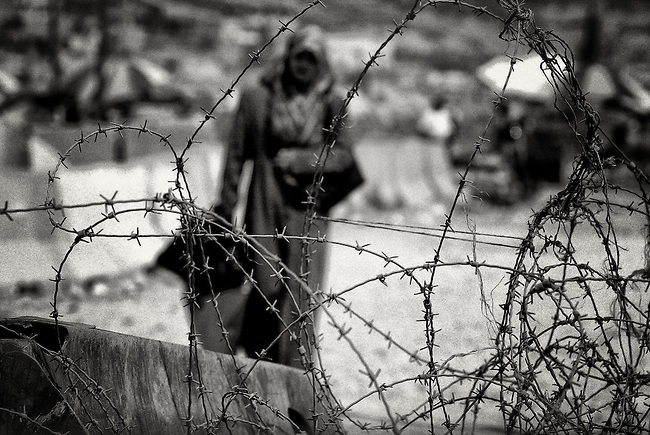
“Your visit to Israel will be fully facilitated by the Israeli authorities, at the time when our movement as students and artists of the Palestinian Circus School is permanently crippled by military law that denies us entry to Jerusalem, Jaffa, Akka, Haifa or Nazareth, not to mention the completely closed Gaza Strip,” added the letter.
“Those same Israeli authorities prohibit, by the use of force, our ability to participate in artistic performances or any exchange with our Palestinian friends and families in these areas. Not only do they limit our freedom of movement, they deport international circus artists who come to perform in Palestine, like the famous Spanish clown Ivan Prado, a prime example that received international attention,” it said.
The History of US-Israel Relations
How the “special relationship” was created
By Alison Weir | If Americans Knew | September 2011
While many people are led to believe that US support for Israel is driven by the American establishment and U.S. national interests, the facts don’t support this theory. The reality is that for decades U.S. experts opposed Israel and its founding movement. They were simply outmaneuvered and eventually replaced.
Like many American policies, U.S. Middle East policies are driven by a special interest lobby. However, the Israel Lobby, as it is called today in the U.S.[1], consists of vastly more than what most people envision in the word “lobby.”
As this article will demonstrate, the Israel Lobby is considerably more powerful and pervasive than other lobbies. Components of it, both individuals and groups, have worked underground, secretly and even illegally throughout its history, as documented by scholars and participants.
And even though the movement for Israel has been operating in the U.S. for over a hundred years, most Americans are completely unaware of this movement and its attendant ideology – a measure of its unique influence over public knowledge.
The success of this movement to achieve its goals, partly due to the hidden nature of much of its activity, has been staggering. It has also been at almost unimaginable cost.
It has led to massive tragedy in the Middle East: a hundred-year war of violence and loss; sacred land soaked in sorrow.
In addition, this movement has been profoundly damaging to the United States itself.
As we will see in this two-part examination of the pro-Israel movement, it has targeted virtually every significant sector of American society; worked to involve Americans in tragic, unnecessary, and profoundly costly wars; dominated Congress for decades; increasingly determined which candidates could become serious contenders for the U.S. presidency; and promoted bigotry toward an entire population, religion and culture.
It has promoted policies that have exposed Americans to growing danger, and then exaggerated this danger (while disguising its cause), fueling recent actions that dismember some of our nation’s most fundamental freedoms and cherished principles.
All this for a population that is considerably smaller than New Jersey.[2]
The beginnings
The Israel Lobby is just the tip of an older and far larger iceberg known as “political Zionism,” an international movement that began in the late 1800s with the goal of creating a Jewish state somewhere in the world. In 1897 this movement, led by a European journalist named Theodore Herzl[3], coalesced in the First Zionist World Congress, held in Basle, Switzerland, which established the World Zionist Organization, representing approximately 120 groups the first year; 900 the next.[4]
While Zionists considered such places as Argentina, Uganda, and Texas,[5] they eventually settled on Palestine for the location of their proposed Jewish State, even though Palestine was already inhabited by a population that was 95 percent Muslims and Christians, who owned 99 percent of the land.[6] As numerous Zionist diary entries, letters, and other documents show, Zionists planned to push out these non-Jews – financially, if possible; violently if necessary.[7]
Political Zionism in the U.S.
In the 1880s groups advocating the setting up of a Jewish state began popping up around the United States.[8] Emma Lazarus, the poet whose words would adorn the Statue of Liberty, promoted Zionism throughout this decade.[9] A precursor to the Israeli flag was created in Boston in 1891.[10]
In 1887 President Grover Cleveland appointed a Jewish ambassador to Turkey, which at that time controlled Palestine. Jewish historian David G. Dalin reports that presidents recognized the importance of the Turkish embassy for Jewish Americans, “… especially for the growing number of Zionists within the American Jewish electorate, since the Jewish homeland of Palestine remained under the direct control of the Turkish government.”
Every president, both Republican and Democrat, followed this precedent for the next 30 years. “During this era, the ambassadorship to Turkey came to be considered a quasi-Jewish domain,” writes Dalin.[11]
By the early 1890s organizations promoting Zionism existed in New York, Chicago, Baltimore, Milwaukee, Boston, Philadelphia, and Cleveland.[12] Reports from the Zionist World Congress in Basle, which four Americans had attended, gave this movement a major stimulus, galvanizing Zionist activities in American cities that had large Jewish populations.[13]
In 1897-98 numerous additional Zionist societies were founded in the East and the Midwest. In 1898 the first annual conference of American Zionists convened in New York on the 4th of July, where they formed the Federation of American Zionists (FAZ).[14]
By 1910 the number of Zionists in the U.S. approached 20,000 and included lawyers, professors, and businessmen. Even in its infancy, when it was still considered relatively weak, Zionism was becoming a movement to which Congressmen listened, particularly in the eastern cities.[15]
The movement continued to expand, and by 1914 several additional Zionist groups had cropped up. The religious Mizrachi faction was formed in 1903, the Labor party in 1905 and Hadassah, the women’s Zionist organization, in 1912.[16]
By 1922 there were 200,000 Zionists in the U.S. and by 1948 this had grown to almost a million.[17]
From early on Zionists actively pushed their agenda in the media, one Zionist organizer proudly proclaimed in 1912 “the zealous and incessant propaganda which is carried on by countless societies.”[18] The Yiddish press from a very early period espoused the Zionist cause. By 1923 only one New York Yiddish newspaper failed to qualify as Zionist. Yiddish dailies reached 535,000 families in 1927.[19]
The State Department Objects
Unlike politicians, State Department officials not dependent on votes and campaign donations, and charged with recommending and implementing policies beneficial to all Americans, not just one tiny sliver working on behalf of a foreign entity – were less enamored with Zionists, who they felt were trying to use the American government for a project damaging to the United States. In memo after memo, year after year, U.S. diplomatic and military experts pointed out that Zionism was counter to both U.S. interests and principles.[20]
Secretary of State Philander Knox was perhaps the first in the pattern of State Department officials rejecting Zionist advances. In 1912, when the Zionist Literary Society approached the Taft administration for an endorsement, Knox turned them down flat, noting that “problems of Zionism involve certain matters primarily related to the interests of countries other than our own.”[21]
Despite that small setback in 1912, Zionists` garnered a far more significant victory in the same year; one that was to have enormous consequences both internationally and in the United States and that was part of a pattern of influence that continues through today.
Louis Brandeis, Zionism, and the “Parushim”
In 1912 prominent Jewish American attorney Louis Brandeis, who was to go on to become a Supreme Court Justice, became a Zionist. Within two years he became head of the international Zionist Central Office, which had moved to America from Germany a little while before.[22]
While Brandeis is an unusually well known Supreme Court Justice, very few Americans are aware of the significant role he played in World War I and of his connection to Palestine.
Brandeis recruited ambitious young men, often from Harvard, to work on the Zionist cause – and further their careers in the process. Harvard author and former New York Times journalist Peter Grose, sympathetic to Zionism[23], writes:
“Brandeis created an elitist secret society called the Parushim, the Hebrew word for ‘Pharisees’ and ‘separate,’ which grew out of Harvard’s Menorah Society. As the Harvard men spread out across the land in their professional pursuits, their interests in Zionism were kept alive by secretive exchanges and the trappings of a fraternal order. Each invited initiate underwent a solemn ceremony, swearing the oath ‘to guard and to obey and to keep secret the laws and the labor of the fellowship, its existence and its aims.’”[24]
At the secret initiation ceremony, the new member was told:
“You are about to take a step which will bind you to a single cause for all your life. You will for one year be subject to an absolute duty whose call you will be impelled to heed at any time, in any place, and at any cost. And ever after, until our purpose shall be accomplished, you will be fellow of a brotherhood whose bond you will regard as greater than any other in your life–dearer than that of family, of school, of nation.”[25]
‘We must work silently, through education and infection’
An early recruiter explained: “An organization which has the aims we have must be anonymous, must work silently, and through education and infection rather than through force and noise.” He wrote that to work openly would be “suicidal” for their objective.
Grose writes: “The members set about meeting people of influence here and there, casually, on a friendly basis. They planted suggestions for action to further the Zionist cause long before official government planners had come up with anything. For example, as early as November 1915, a leader of the Parushim went around suggesting that the British might gain some benefit from a formal declaration in support of a Jewish national homeland in Palestine.”[26]
Brandeis was a close personal friend of President Woodrow Wilson and used this position to advocate for the Zionist cause, at times serving as a conduit between British Zionists and the president.
In 1916 President Wilson named Brandeis to the Supreme Court. Although Brandeis officially resigned from all his private clubs and affiliations, including his leadership of Zionism, behind the scenes he continued this Zionist work, receiving daily reports in his Supreme Court chambers and issuing orders to his loyal lieutenants.[27]
When the Zionist Organization of America (ZOA) was reorganized in 1918, Brandeis was listed as its “honorary president.” However, he was more than just “honorary.”
As historian Donald Neff writes, “Through his lieutenants, he remained the power behind the throne.” One of these lieutenants was future Supreme Court Justice Felix Frankfurter, another particularly well-regarded justice, and another whose Zionist activities have largely gone unnoted.[28]
Zionist membership expanded dramatically during World War I, despite the efforts of some Jewish anti-Zionists, who called the movement a “foreign, un-American, racist, and separatist phenomenon.”[29]
World War I & the Balfour Declaration
Unlike some wars, most analysts consider WWI a pointless conflict that resulted from diplomatic entanglements rather than some travesty of justice or aggression. Yet, it was catastrophic to a generation of Europeans, killing 14 million people.[30]
The United States joined this unnecessary war a few years into the hostilities, costing many American lives, even though the U.S. was not party to the alliances that had drawn other nations into the fray. This even though Americans had been strongly opposed to entering the war and President Woodrow Wilson had won with the slogan, “He kept us out of war.”
Americans today are aware of these facts. What few know is that Zionists pushed for the U.S. to enter the war on Britain’s side as part of a deal to gain British support for their colonization of Palestine.
From the very beginning of their movement, Zionists realized that if they were to succeed in their goal of creating a Jewish state on land that was already inhabited by non-Jews, they needed backing from one of the “Great Powers.” They tried the Ottoman Empire, which controlled Palestine at the time, but were turned down (although they were told that Jews could settle throughout other parts of the Ottoman empire and become Turkish citizens).[31]
They then turned to Britain, which was also initially less than enthusiastic. Famous English Arabists such as Gertrude Bell pointed out that Palestine was Arab and that Jerusalem was sacred to all three major monotheistic faiths.
Future British Foreign Minister Lord George Curzon similarly stated that Palestine was already inhabited by half a million Arabs who would “not be content to be expropriated for Jewish immigrants or to act merely as hewers of wood and drawers of water for the latter.”[32]
However, once the British were embroiled in World War I, and particularly during 1916, a disastrous year for the Allies,[33] Zionists were able to play a winning card. Zionist leaders promised the British government that Zionists in the U.S. would push America to enter the war on the side of the British, if the British promised to support a Jewish home in Palestine afterward.[34]
As a result, in 1917 British Foreign Minister Lord Balfour issued a letter to Zionist leader Lord Rothschild. Known as the Balfour Declaration, this letter promised that Britain would “view with favour the establishment in Palestine of a national home for the Jewish people” and to “use their best endeavours to facilitate the achievement of this object.”
The letter then qualified this somewhat by stating that it should be “clearly understood that nothing shall be done which may prejudice the civil and religious rights of existing non-Jewish communities in Palestine.” The “non-Jewish communities” were 90 percent of Palestine’s population at that time, vigorous Zionist immigration efforts having slightly expanded the percentage of Jews living in Palestine by then.[35]
The letter, while officially signed by British Foreign Minister Lord Balfour, was actually written by Leopold Amery, a British official who, it came out later, was a secret and fervent Zionist[36].
While this letter was a less than ringing endorsement of Zionism, Zionists considered it a major breakthrough as it cracked open a door that they would later force wider and wider open.
These Balfour-WWI negotiations are referred to in various documents. For example, Samuel Landman, secretary of the World Zionist Organization, described them in a 1935 article in World Jewry:
“After an understanding had been arrived at between Sir Mark Sykes and [Zionists] Weizmann and Sokolow, it was resolved to send a secret message to Justice Brandeis that the British Cabinet would help the Jews to gain Palestine in return for active Jewish sympathy and for support in the USA for the Allied cause, so as to bring about a radical pro-Ally tendency in the United States.”[37]
British Colonial Secretary Lord Cavendish, in a memorandum to the British Cabinet in 1923, reminded his colleagues: “The object [of the Balfour Declaration] was to enlist the sympathies on the Allied side of influential Jews and Jewish organizations all over the world… and it is arguable that the negotiations with the Zionists… did in fact have considerable effect in advancing the date at which the United States government intervened in the war.”[38]
Former British Prime Minister Lloyd George similarly referred to this deal, telling a British commission in 1935: “Zionist leaders gave us a definite promise that, if the Allies committed themselves to giving facilities for the establishment of a national home for the Jews in Palestine, they would do their best to rally Jewish sentiment and support throughout the world to the Allied cause. They kept their word.”
American career Foreign Service Officer Evan M. Wilson, who had served as Minister-Consul General in Jerusalem, writes that the Balfour declaration “…was given to the Jews largely for the purpose of enlisting Jewish support in the war and of forestalling a similar promise by the Central Powers [Britain’s enemies in World War I]”.[39]
In 1917 President Wilson, who had been voted into office by Americans who believed his promises that he would keep them out of the war, changed course and plunged the U.S. into a tragic and pointless European conflict in which hundreds of thousands were killed and injured.[40] Over 1,200 American citizens who opposed the war were rounded up and imprisoned, some for years.[41]
The influence of Brandeis and other Zionists in the U.S. had enabled Zionists to form an alliance with Britain, one of the world’s great powers, a remarkable achievement for a non-state group and a measure of Zionists’ immense power. As historian Kolsky states, the Zionist movement was now “an important force in international politics.”[42]
Paris Peace Conference 1919: Zionists defeat Christian leaders’ calls for self-determination
After the war, the victors met in a peace conference and agreed to a set of Peace Accords that addressed, among many issues, the fate of Ottoman Empire’s Middle East territories. The Allies stripped the defeated Empire of its Middle Eastern holdings and divided them between Britain and France, which were to hold them under a “mandate” system until the populations were “ready” for self-government. Britain got the mandate over Palestine.
Zionists, including Brandeis, Felix Frankfurter, the World Zionist Organization, and an American delegation, went to the conference to lobby for a Jewish “home”[43] in Palestine and to push for Balfour wording to be incorporated in the peace accords.[44] The official U.S. delegation to the Peace Conference also contained a number of highly placed Zionists.
Distinguished American Christians posted in the Middle East, who consistently supported self-determination, went to Paris to oppose Zionists. Numerous prominent Christian leaders in the U.S. – including two of the most celebrated pastors of their day, Harry Emerson Fosdick and Henry Sloane Coffin[45] – also opposed Zionism. However, as a pro-Israel author notes, they were “simply outgunned” by Zionists.[46]
The most prominent American in the Middle East at the time, Dr. Howard Bliss, President of Beirut’s Syrian Protestant College (later to become the American University of Beirut), traveled to Paris to urge forming a commission to determine what the people of the Middle East wanted for themselves, a suggestion that was embraced by the U.S. diplomatic staff in Paris.[47]
Princeton Professor Philip Brown, in Cairo for the YMCA, provided requested reports to the U.S. State Department on what Zionism’s impact would be on Palestine. He stated that it would be disastrous for both Arabs and Jews and went to Paris to lobby against it.[48]
William Westermann, director of the State Department’s Western Asia Division, which covered the region, similarly opposed the Zionist position. He wrote that “[it] impinges upon the rights and the desires of most of the Arab population of Palestine.” Westermann and other US diplomats felt that Arab claims were much more in line with Wilson’s principles of self-determination and circulated Arab material.[49]
President Wilson decided to send a commission to Palestine to investigate the situation in person. After spending six weeks in the area interviewing both Jews and Palestinians, the commission, known as the King-Crane commission, recommended against the Zionist position of unlimited immigration of Jews to make Palestine a distinctly Jewish state.[50]
The commissioners stated that the erection of a Jewish state in Palestine could be accomplished only with “the gravest trespass upon the civil and religious rights of existing non-Jewish communities in Palestine,” pointing out that to subject the Palestinians “to steady financial and social pressure to surrender the land, would be a gross violation of the principle [of self-determination] and of the peoples’ rights…”[51]
They went on to point out that “the well-being and development” of the people in the region formed “a sacred trust,” that the people should become completely free, and that the national governments “should derive their authority from the initiative and free choice of the native populations.”[52]
The report stated that meetings with Jewish representatives made it clear that “the Zionists looked forward to a practically complete dispossession of the present non-Jewish inhabitants of Palestine,” concluded that armed force would be required to accomplish this, and urged the Peace Conference to dismiss the Zionist proposals.[53] The commission recommended that “the project for making Palestine distinctly a Jewish commonwealth should be given up.”[54]
Zionists through Brandeis dominated the situation, however, and the report was suppressed until after the Peace Accords were enacted. As a pro-Israel historian noted, “with the burial of the King-Crane Report, a major obstacle in the Zionist path disappeared.”[55] The US delegation was forced to follow Zionist directives.[56]
Ultimately, the mandate over Palestine given to Britain, supported the Zionist project and included the Balfour language. According to the mandate, Britain would be “responsible for putting into effect the [Balfour] declaration … in favor of the establishment in Palestine of a national home for the Jewish people, it being clearly understood that nothing should be done which might prejudice the civil and religious rights of existing non-Jewish communities in Palestine….”[57]
Brandeis and Frankfurter vs. U.S. diplomat
The idea behind Zionism was to create a state where Jews worldwide could escape anti-Semitism.[58]
There are various documented cases in which fanatical Zionists exploited, exaggerated, invented, or even perpetrated “anti-Semitic” incidents both to procure support and to drive Jews to immigrate to the Zionist-designated homeland.[59] A few examples are discussed below.
One such case involved a young diplomat named Hugh Gibson, who in 1919 was nominated to be U.S. Ambassador to Poland. After he arrived in Poland, Gibson, who was highly regarded and considered particularly brilliant,[60] began to report that there were far fewer anti-Semitic incidents than Americans were led to believe. He wrote his mother: “These yarns are exclusively of foreign manufacture for anti-Polish purposes.”[61]
His dispatches came to the attention of Brandeis and his protégé (and future supreme Court Justice) Felix Frankfurter, who demanded a meeting with Gibson. Gibson later wrote of their accusations:
“I had [Brandeis and Frankfurter claimed] done more mischief to the Jewish race than anyone who had lived in the last century. They said… that my reports on the Jewish question had gone around the world and had undone their work…. They finally said that I had stated that the stories of excesses against the Jews were exaggerated, to which I replied that they certainly were and I should think any Jew would be glad to know it.”[62]
Frankfurter hinted that if Gibson continued these reports, Zionists would block his confirmation by the Senate.
Gibson was outraged and sent a 21-page letter to the State Department. In it he shared his suspicions that this was part of “a conscienceless and cold-blooded plan to make the condition of the Jews in Poland so bad that they must turn to Zionism for relief.”
In 1923 another American diplomat in Poland, Vice Consul Monroe Kline, echoed Gibson’s analysis: “It is common knowledge that Zionists are continually and constantly spreading propaganda, through their agencies over the entire world, of political and religious persecution.”[63]
Zionists and Nazis
Perhaps the most extreme case of Zionist exploitation of anti-Semitism to further their cause came during the rise of Adolf Hitler. Historians have documented that Zionists sabotaged efforts to find safe havens for Jewish refugees from Nazi Germany in order to convince the world that Jews could only be safe in a Jewish state.[64]
When FDR made efforts in 1938[65] and 1943[66] to provide havens for Nazi refugees, Zionists opposed these projects because they did not include Palestine.
Morris Ernst, FDR’s international envoy for refugees, wrote in his memoir that when he worked to help find refuge for those fleeing Hitler, “…active Jewish leaders decried, sneered and then attacked me as if I were a traitor. At one dinner party I was openly accused of furthering this plan of freer immigration [into the U.S.] in order to undermine political Zionism… Zionist friends of mine opposed it.”[68]
Ernst wrote that he found the same fanatical reaction among all the Jewish groups he approached, whose leaders, he found, were “little concerned about human blood if it is not their own.”[69]
FDR finally gave up, telling Ernst: “We can’t put it over because the dominant vocal Jewish leadership of America won’t stand for it.”[70]
Journalist Erskine B. Childers, son of a former Irish Prime Minister, wrote in the Spectator in 1960, “One of the most massively important features of the entire Palestine struggle was that Zionism deliberately arranged that the plight of the wretched survivors of Hitlerism should be a ‘moral argument’ which the West had to accept.”
He explained that “this was done by seeing to it that Western countries did not open their doors, widely and immediately, to the inmate of the DP [displaced persons] camps.”
Childers, author of several books on conflict resolution and peace-keeping who later became Secretary General of the World Federation of United Nations Associations, commented: “It is incredible that so grave and grim a campaign has received so little attention in accounts of the Palestine struggle – it was a campaign that literally shaped all subsequent history. It was done by sabotaging specific Western schemes to admit Jewish DPs.”[71]
Zionist fake “hate” attacks on Iraq Jews
Zionists wished for a massive “in-gathering of Jews” in one state, but most Iraqi Jews wanted nothing to do with it, according to Iraq’s then-Chief Rabbi, who stated: “Iraqi Jews will be forever against Zionism.”
“Jews and Arabs have enjoyed the same rights and privileges for 1,000 years and do not regard themselves as a distinctive separate part of this nation,” the rabbi declared.[72]
Zionists worked to change that by covertly attacking Iraqi Jews so as to induce them to “flee” to Israel. Zionists planted bombs in synagogues and in an American building “in an attempt to portray the Iraqis as anti-American and to terrorize the Jews,” according to Author and former CIA officer Wilbur Crane Eveland.
“Soon leaflets began to appear urging Jews to flee to Israel,” writes Eveland, and “… most of the world believed reports that Arab terrorism had motivated the flight of the Iraqi Jews whom the Zionists had ‘rescued’ really just in order to increase Israel’s Jewish population.”[73]
Similarly, Naeim Giladi, a Jewish-Iraqi author who later lived in Israel and the U.S., describes this program from the inside: “I write about what the first prime minister of Israel called ‘cruel Zionism.’ I write about it because I was part of it.”
Giladi states that “Jews from Islamic lands did not emigrate willingly to Israel.” In order “to force them to leave,” Giladi writes, “Jews killed Jews.” He goes on to say that in an effort “to buy time to confiscate ever more Arab lands, Jews on numerous occasions rejected genuine peace initiatives from their Arab neighbors.”[74]
The modern Israel Lobby is born
The immediate precursor to today’s pro-Israel lobby began in the early 1940s under the leadership of Rabbi Abba Hillel Silver, originally from Lithuania. He created the American Zionist Emergency Council (AZEC), which by 1943 had acquired a budget of half a million dollars at a time when a nickel bought a loaf of bread.
In addition to this money, Zionists had become influential in creating the United Jewish Appeal in 1939[75], giving them access to the organization’s gargantuan financial resources: $14 million in 1941, $150 million by 1948. This was four times more than Americans contributed to the Red Cross.[76]
With its extraordinary funding, AZEC embarked on a campaign to target every sector of American society, ordering that local committees be set up in every Jewish community in the nation. In the words of AZEC organizer Sy Kenen, it launched “a political and public relations offensive to capture the support of Congressmen, clergy, editors, professors, business and labor.”[77][78]
AZEC instructed activists to “make direct contact with your local Congressman or Senator” and to go after union members, wives and parents of servicemen, and Jewish war veterans. AZEC provided activists with form letters to use and schedules of anti-Zionist lecture tours to oppose and disrupt.
A measure of its power came in 1945 when Silver disliked a British move in 1945 that would be harmful to Zionists. AZEC booked Madison Square Garden, ordered advertisements, and mailed 250,000 announcements – the first day. By the second day they had organized demonstrations in 30 cities, a letter-writing campaign, and convinced 27 U.S. Senators to give speeches.[79]
Grassroots Zionist action groups were organized with more than 400 local committees under 76 state and regional branches. AZEC funded books, articles and academic studies; millions of pamphlets were distributed. There were massive petition and letter writing campaigns. AZEC targeted college presidents and deans, managing to get more than 150 to sign one petition.[80]
Rabbi Elmer Berger, executive director of the American Council for Judaism, which opposed Zionism in the 1940s and 50s, writes in his memoirs that there was a “ubiquitous propaganda campaign reaching just about every point of political leverage in the country.”[81]
The Zionist Organization of America bragged of the “immensity of our operations and their diversity” in its 48th Annual Report, stating, “We reach into every department of American life… ”[82]
Berger and other anti-Zionist Jewish Americans tried to organize against “the deception and cynicism with which the Zionist machine operated,” but failed to obtain anywhere near their level of funding. Among other things, would-be dissenters were afraid of “the savagery of personal attacks” anti-Zionists endured.[83]
Berger writes that when he and a colleague opposed a Zionist resolution in Congress, Emanuel Cellar, a New York Democrat who was to serve in Congress for almost 50 years, told them: “They ought to take you b……s out and shoot you.”
When it was unclear that President Harry Truman would support Zionism, Cellar and a committee of Zionists told him that they had persuaded Dewey to support the Zionist policy and demanded that Truman also take this stand. Cellar reportedly pounded on Truman’s table and said that if Truman did not do so, “We’ll run you out of town.[84]
Jacob Javits, another well-known Congressman, this one a Republican, told a Zionist women’s group: “We’ll fight to death and make a Jewish State in Palestine if it’s the last thing that we do.”[85]
Richard Stevens, author of American Zionism and U.S. Foreign Policy, 1942-1947, reports that Zionists infiltrated the boards of several Jewish schools that they felt didn’t sufficiently promote the Zionist cause. When this didn’t work, Stevens writes, they would start their own pro-Zionist schools.[86]
Stevens writes that in 1943-44 the ZOA distributed over a million leaflets and pamphlets to public libraries, chaplains, community centers, educators, ministers, writers and “others who might further the Zionist cause.”[87]
Alfred Lilienthal, who had worked in the State Department, served in the U.S. Army in the Middle East from 1943-45, and became a member of the anti-Zionist American Council for Judaism, reports that monthly sales of Zionist books totaled between 3,000 and 4,000 throughout 1944-45.
He reports that Zionists subsidized books by non-Jewish authors that supported the Zionist agenda. They would then promote these books jointly with commercial publishers. Several of them became best sellers.[88]
Zionists manufacture Christian support
Silver and other Zionists played a significant role in creating Christian support for Zionism, a project Brandeis encouraged.[89]
Secret Zionist funds, eventually reaching $150,000 in 1946, were used to revive an elitist Protestant group, the American Palestine Committee. This group had originally been founded in 1932 by Emanuel Neumann, a member of the Executive of the Zionist Organization. The objective was to organize a group of prominent (mainly non-Jewish) Americans in moral and political support of Zionism. Frankfurter was one of the main speakers at its launch.[90]
Silver’s headquarters issued a directive saying,“In every community an American Christian Palestine Committee must be immediate organized.”[91]
Author Peter Grose reports that the Christian committee’s operations “were hardly autonomous. Zionist headquarters thought nothing of placing newspaper advertisements on the clergymen’s behalf without bothering to consult them in advance, until one of the committee’s leaders meekly asked at least for prior notice before public statements were made in their name.”[92]
AZEC formed another group among clergymen, the Christian Council on Palestine. An internal AZEC memo stated that the aim of both groups was to “crystallize the sympathy of Christian America for our cause.”[93]
By the end of World War II the Christian Council on Palestine had grown to 3,000 members and the American Palestine Committee boasted a membership of 6,500 public figures, including senators, congressmen, cabinet members, governors, state officers, mayors, jurists, clergymen, educators, writers, publishing, and civic and industrial leaders.
Historian Richard Stevens explains that Christian support was largely gained by exploiting their wish to help people in need. Stevens writes that Zionists would proclaim “the tragic plight of refugees fleeing from persecution and finding no home,” thus linking the refugee problem with Palestine as allegedly the only solution.[94]
Stevens writes that the reason for this strategy was clear: “… while many Americans might not support the creation of a Jewish state, traditional American humanitarianism could be exploited in favor of the Zionist cause through the refugee problems.”[95]
Few if any of these Christian supporters had any idea that the creation of the Jewish state would entail a massive expulsion of hundreds of thousands of the non-Jews who made up the large majority of Palestine’s population, creating a new and much longer lasting refugee problem.
Nor did they learn that during and after Israel’s founding 1947-49 war, Zionist forces attacked a number of Christian sites. Donald Neff, former Time Magazine Jerusalem bureau chief and author of five books on Israel-Palestine, reports in detail on Zionist attacks on Christian sites in May 1948, the month of Israel’s birth.
Neff tells us that a group of Christian leaders complained that month that Zionists had killed and wounded hundreds of people, including children, refugees and clergy, at Christian churches and humanitarian institutions.
For example, the group charged that “‘many children were killed or wounded’ by Jewish shells on the Convent of Orthodox Copts… ; eight refugees were killed and about 120 wounded at the Orthodox Armenian Convent… ; and that Father Pierre Somi, secretary to the Bishop, had been killed and two wounded at the Orthodox Syrian Church of St. Mark.”
“The group’s statement said Arab forces had abided by their promise to respect Christian institutions, but that the Jews had forcefully occupied Christian structures and been indiscriminate in shelling churches,” reports Neff. He quotes a Catholic priest: “‘Jewish soldiers broke down the doors of my church and robbed many precious and sacred objects. Then they threw the statues of Christ down into a nearby garden.’ [The priest] added that Jewish leaders had reassured that religious buildings would be respected, ‘but their deeds do not correspond to their words.’”
After Zionist soldiers invaded and looted a convent in Tiberias, the U.S. Consulate sent a bitter dispatch back to the State Department complaining of “the Jewish attitude in Jerusalem towards Christian institutions.’”[96]
Zionist Colonization Efforts in Palestine
As early Zionists in the U.S. and elsewhere pushed for the creation of a Jewish state, Zionists in Palestine simultaneously tried to clear the land of Muslim and Christian inhabitants and replace them with Jewish immigrants.
This was a tall order, as Muslims and Christians accounted for more than 95 percent of the population of Palestine. Zionists planned to try first to buy up the land until the previous inhabitants had emigrated; failing this, they would use violence to force them out. This dual strategy was discussed in various written documents cited by numerous Palestinian and Israeli historians.
As this colonial project grew, the indigenous Palestinians reacted with occasional bouts of violence; Zionists had anticipated this since people usually resist being expelled from their land.
When the buy-out effort was able to obtain only a few percent of the land, Zionists created a number of terrorist groups to fight against both the Palestinians and the British. Terrorist and future Israeli Prime Minister Menachem Begin later bragged that Zionists had brought terrorism both to the Middle East and to the world at large.
By the eve of the creation of Israel, the Zionist immigration and buyout project had increased the Jewish population of Palestine to 30 percent and land ownership from 1 percent to approximately 6 percent.
This was in 1947, when the British at last announced that they would end their control of Palestine. Britain turned the territory’s fate over to the United Nations.
Since a founding principle of the UN was “self-determination of peoples,” one would have expected to the UN to support fair, democratic elections in which inhabitants could create their own independent country.
Instead, Zionists pushed for a General Assembly resolution to give them a disproportionate 55 percent of Palestine. (While they rarely announced this publicly, their stated plan was to later take the rest of Palestine.
U.S. Officials Oppose Zionism
The U.S. State Department opposed this partition plan strenuously, considering Zionism contrary to both fundamental American principles and US interests.
For example, the director of the State Department’s Office of Near Eastern and African Affairs consistently recommended against supporting a Jewish state in Palestine. The director, named Loy Henderson, warned that the creation of such a state would go against locals’ wishes, imperil US interests and violate democratic principles.
Henderson emphasized that the US would lose moral standing in the world if it supported Zionism:
“At the present time the United States has a moral prestige in the Near and Middle East unequaled by that of any other great power. We would lose that prestige and would be likely for many years to be considered as a betrayer of the high principles which we ourselves have enunciated during the period of the [second world] war.”
When Zionists began pushing the partition plan in the UN, Henderson recommended strongly against supporting their proposal, saying that such a partition would have to be implemented by force and was “not based on any principle.” He warned that partition “would guarantee that the Palestine problem would be permanent and still more complicated in the future.… ”
Henderson elaborated further on how plans to partition Palestine would violate American and UN principles:
“…[Proposals for partition] are in definite contravention to various principles laid down in the [UN] Charter as well as to principles on which American concepts of Government are based. These proposals, for instance, ignore such principles as self-determination and majority rule. They recognize the principle of a theocratic racial state and even go so far in several instances as to discriminate on grounds of religion and race… ”[97]
Zionists attacked Henderson virulently, calling him “anti-Semitic,” demanding his resignation, and threatening his family. They pressured the State Department to transfer him elsewhere; one analyst describes this as “the historic game of musical chairs” in which officials who recommended Middle East policies “consistent with the nation’s interests” were moved on.[98]
In 1948 Truman sent Henderson to the slopes of the Himalayas, as Ambassador to Nepal (then officially under India). (In recent years, virtually every State Department country desk has been directed by a Zionist.)
But Henderson was far from alone in making his recommendations. He wrote that his views were not only those of the entire Near East Division but were shared by “nearly every member of the Foreign Service or of the [State] Department who has worked to any appreciable extent on Near Eastern problems.”[99]
He wasn’t exaggerating. Official after official and agency after agency opposed Zionism.
In 1947 the CIA reported that Zionist leadership was pursuing objectives that would endanger both Jews and “the strategic interests of the Western powers in the Near and Middle East.”[100]
Henry F. Grady, who has been called “America’s top diplomatic soldier for a critical period of the Cold War,” headed a 1946 commission aimed at coming up with a solution for Palestine. Grady later wrote about the Zionist lobby and its damaging effect on US national interests.
Grady argued that without Zionist pressure, the U.S. would not have had “the ill-will with the Arab states, which are of such strategic importance in our ‘cold war’ with the soviets.” He also described the decisive power of the lobby:
“I have had a good deal of experience with lobbies but this group started where those of my experience had ended….. I have headed a number of government missions but in no other have I ever experienced so much disloyalty…. [I]n the United States, since there is no political force to counterbalance Zionism, its campaigns are apt to be decisive.”[101]
Grady concluded that without Zionist pressure, the U.S. would not have had “the ill-will with the Arab states, which are of such strategic importance in our ‘cold war’ with the Soviets.”[102]
Former Undersecretary of State Dean Acheson also opposed Zionism. Acheson’s biographer writes that Acheson “worried that the West would pay a high price for Israel.” Another Author, John Mulhall, records Acheson’s warning of the danger for American interests:
“… to transform [Palestine] into a Jewish State capable of receiving a million or more immigrants would vastly exacerbate the political problem and imperil not only American but all Western interests in the Near East.”[103]
The head of the State Department’s Division of Near Eastern Affairs, Gordon P. Merriam, warned against the partition plan on moral grounds:
“U.S. support for partition of Palestine as a solution to that problem can be justified only on the basis of Arab and Jewish consent. Otherwise we should violate the principle of self-determination which has been written into the Atlantic Charter, the declaration of the United Nations, and the United Nations Charter – a principle that is deeply embedded in our foreign policy. Even a United Nations determination in favor of partition would be, in the absence of such consent, a stultification and violation of UN’s own charter.”[104]
Merriam added that without consent, “bloodshed and chaos” would follow, a tragically accurate prediction.
An internal State Department memorandum accurately predicted how Israel would be born through armed aggression masked as defense:
“… the Jews will be the actual aggressors against the Arabs. However, the Jews will claim that they are merely defending the boundaries of a state which were traced by the UN.… In the event of such Arab outside aid the Jews will come running to the Security Council with the claim that their state is the object of armed aggression and will use every means to obscure the fact that it is their own armed aggression against the Arabs inside which is the cause of Arab counter-attack.”[105]
And American Vice Consul William J. Porter foresaw one last outcome of the “partition” plan: that no Arab state would actually ever come to be in Palestine.[106]
Truman Accedes to Pro-Israel Lobby
President Harry Truman, however, ignored this advice and chose instead to support the Zionist partition plan. Truman’s political advisor, Clark Clifford, believed that the Jewish vote and contributions were essential to winning the upcoming presidential election, and that supporting the partition plan would garner that support. (Truman’s opponent, Dewey, took similar stands for similar reasons.)
Truman’s Secretary of State George Marshall, the renowned World War II General and author of the Marshall Plan, was furious to see electoral considerations taking precedence over policies based on national interest. He condemned what he called a “transparent dodge to win a few votes,” which would make “[t]he great dignity of the office of President seriously diminished.”[107]
Marshall wrote that the counsel offered by Clifford “was based on domestic political considerations, while the problem which confronted us was international. I said bluntly that if the President were to follow Mr. Clifford’s advice and if in the elections I were to vote, I would vote against the President… ”[108]
Secretary of Defense James Forrestal also tried, unsuccessfully, to oppose the Zionists. He was outraged that Truman’s Mideast policy was based on what he called “squalid political purposes,” asserting that “United States policy should be based on United States national interests and not on domestic political considerations.”[109]
Forrestal represented the general Pentagon view when he said that “no group in this country should be permitted to influence our policy to the point where it could endanger our national security.”[110]
A report by the National Security Council warned that the Palestine turmoil was acutely endangering the security of the United States. A CIA report stressed the strategic importance of the Middle East and its oil resources.
Similarly, George F. Kennan, the State Department’s Director of Policy Planning, issued a top-secret document on January 19, 1947 that outlined the enormous damage done to the US by the partition plan (“Report by the Policy Planning Staff on Position of the United States with Respect to Palestine”).[111]
Kennan cautioned that “important U.S. oil concessions and air base rights” could be lost through US support for partition and warned that the USSR stood to gain by the partition plan.
Kermit Roosevelt, Teddy Roosevelt’s nephew and a legendary intelligence agent, was another who was deeply disturbed by events, noting:
“The process by which Zionist Jews have been able to promote American support for the partition of Palestine demonstrates the vital need of a foreign policy based on national rather than partisan interests…. Only when the national interests of the United States, in their highest terms, take precedence over all other considerations, can a logical, farseeing foreign policy be evolved. No American political leader has the right to compromise American interests to gain partisan votes… ”[112]
He went on:
“The present course of world crisis will increasingly force upon Americans the realization that their national interests and those of the proposed Jewish state in Palestine are going to conflict. It is to be hoped that American Zionists and non-Zionists alike will come to grips with the realities of the problem.”
Truman wrote in his memoirs: “I do not think I ever had as much pressure and propaganda aimed at the White House as I had in this instance.” There were now about a million dues-paying Zionists in the U.S.[113]
Then, as now, in addition to unending pressure there was financial compensation, Truman reportedly receiving a suitcase full of money from Zionists while on his train campaign around the country.[114]
Personal influences on Truman
One person key in such Zionist financial connections to Truman was Abraham Feinberg, a wealthy businessman who was later to play a similar role with Kennedy and Johnson.
While many Americans at the time and since have been aware of Truman’s come-from-behind win over Dewey, few people know about the critical role of Feinberg and the Zionist lobby in financing Truman’s victory. (When the CIA later discovered that Feinberg also helped to finance illegal gun-running to Zionist groups, the Truman administration looked the other way.[115] )
An individual inside the US government who worked to influence policy was David K. Niles, executive assistant first to FDR and then to Truman. Niles, according to author Alfred Lilienthal, was “a member of a select group of confidential advisers with an often-quoted passion for anonymity. Niles… though occasionally publicized as Mr. Truman’s Mystery Man, remained totally unknown to the public.”[116]
Behind the scenes Niles was regularly briefed by the head of the Washington Office of the Zionist Organization of America (ZOA).
When it was discovered that top secret information was being passed on to the Israeli government, Chairman of the Joint Chiefs of Staff General Omar Bradley told Truman he would have to choose between Bradley and Niles. Not long after, Niles resigned and went on a visit to Israel.[117]
Another who helped influence Truman was his old Kansas City friend and business partner, Eddie Jacobson, active in B’nai B’rith and “a passionate believer in Jewish nationalism,” who was able to procure Zionist access to the President at key times.[118] Truman credited Jacobson with making a contribution of “decisive importance.”[119]
Still another was Sam Rosenman, a political advisor to Truman, who screened State Department memos sent to Truman. A longtime diplomat reports that one of the departments memoranda was returned, unopened, with a notation, “President Truman already knows your views and doesn’t need this.”[120]
Evan M Wilson, a career diplomat who had been U.S. Consul General in Jerusalem, later wrote that Truman had been largely motivated by “domestic political considerations.”[121] At least one of Truman’s key policy speeches had been drafted primarily by the Washington representative of the Jewish Agency.[122]
Acting Secretary of State James E. Webb in a dispatch to Secretary of State Acheson noted the obvious: “Past record suggests Israel has had more influence with US than has US with Israel.”[123]
Pro-Israel Pressure on General Assembly Members
When it was clear that, despite US support, the partition recommendation did not have the two-thirds support of the UN General Assembly required to pass, Zionists pushed through a delay in the vote. They then used this period to pressure numerous nations into voting for the recommendation. A number of people later described this campaign.
Robert Nathan, a Zionist who had worked for the US government and who was particularly active in the Jewish Agency, wrote afterward, “We used any tools at hand,” such as telling certain delegations that the Zionists would use their influence to block economic aid to any countries that did not vote the right way.[124]
Another Zionist proudly stated:
“Every clue was meticulously checked and pursued. Not the smallest or the remotest of nations, but was contacted and wooed. Nothing was left to chance.”
Financier and longtime presidential advisor Bernard Baruch told France it would lose U.S. aid if it voted against partition. Top White House executive assistant David Niles organized pressure on Liberia; rubber magnate Harvey Firestone pressured Liberia.[125]
Latin American delegates were told that the Pan-American highway construction project would be more likely if they voted yes. Delegates’ wives received mink coats (the wife of the Cuban delegate returned hers); Costa Rica’s President Jose Figueres reportedly received a blank checkbook. Haiti was promised economic aid if it would change its original vote opposing partition.
Longtime Zionist Supreme Court Justice Felix Frankfurter, along with ten senators and Truman domestic advisor Clark Clifford, threatened the Philippines (seven bills were pending on the Philippines in Congress).
Before the vote on the plan, the Philippine delegate had given a passionate speech against partition, defending the inviolable “primordial rights of a people to determine their political future and to preserve the territorial integrity of their native land… ”[126]
The delegate went on to say that he could not believe that the General Assembly would sanction a move that would place the world “back on the road to the dangerous principles of racial exclusiveness and to the archaic documents of theocratic governments.”
Twenty-four hours later, after intense Zionist pressure, the Philippine delegate voted in favor of partition.
The U.S. delegation to the U.N. was so outraged when Truman insisted that they support partition that the State Department director of U.N. Affairs was sent to New York to prevent the delegates from resigning en masse.[127]
On Nov 29, 1947 the partition resolution, 181, passed. While this resolution is frequently cited, it was of limited (if any) legal impact. General Assembly resolutions, unlike Security Council resolutions, are not binding on member states. For this reason, the resolution requested that “[t]he Security Council take the necessary measures as provided for in the plan for its implementation,”[128] which the Security Council never did. Legally, the General Assembly Resolution was a “recommendation” and did not create any states.
What it did do, however, was increase the fighting in Palestine. Within months (and before Israel dates the beginning of its founding war) the Zionists had forced out 413,794 people. Zionist military units had stealthily been preparing for war before the UN vote and had acquired massive weaponry, some of it through a widespread network of illicit gunrunning operations in the US under a number of front groups. (see below)
The UN eventually managed to create a temporary and very partial ceasefire. A Swedish UN mediator, Count Folke Bernadotte, who had previously rescued thousands of Jews from the Nazis was dispatched to negotiate an end to the violence. Israeli assassins killed him and Israel continued what it was to call its “war of independence.”[129]
At the end of this war, through a larger military force than that of its adversaries and the ruthless implementation of plans to push out as many non-Jews as possible, Israel came into existence on 78 percent of Palestine.
But let us take a closer look at the violence that followed the UN recommendation.
Massacres and the Conquest of Palestine
The passing of the partition resolution in November 1947 triggered the violence that State Department and Pentagon analysts had predicted and for which Zionists had been preparing. There were at least 33 massacres of Palestinian villages, half of them before a single Arab army joined the conflict.[130] Zionist forces were better equipped and had more men under arms than their opponents[131] and by the end of Israel’s “War of Independence” over 750,000 Palestinian men, women, and children were ruthlessly expelled.[132] Zionists had succeeded in the first half of their goal: Israel, the self-described Jewish State, had come into existence.
The massacres were carried out by Zionist forces, including Zionist militias that had engaged in terrorist attacks in the area for years preceding the partition resolution.[133]
Descriptions of the massacres, by both Palestinians and Israelis, are nightmarish. An Israeli eyewitness reported that at the village of al-Dawayima:
“The children they killed by breaking their heads with sticks. There was not a house without dead… One soldier boasted that he had raped a woman and then shot her.”[134]
One Palestinian woman testified that a man shot her nine-month-pregnant sister and then cut her stomach open with a butcher knife.[135]
One of the better-documented massacres occurred in a small, neutral Palestinian village called Deir Yassin in April 1948 – before a single Arab army had joined the conflict. A Swiss Red Cross representative was one of the first to arrive on the scene, where he found 254 dead, including 145 women, 35 of them pregnant.[136]
Witnesses reported that the attackers lined up families – men, women, grandparents and children, even infants – and shot them.[137]
An eyewitness and future colonel in the Israeli military later wrote of the militia members: “They didn’t know how to fight, but as murderers they were pretty good.”[138]
The Red Cross representative who found the bodies at Deir Yassin arrived in time to see some of the killing in action. He wrote in his diary that Zionist militia members were still entering houses with guns and knives when he arrived. He saw one young Jewish woman carrying a blood-covered dagger and saw another stab an old couple in their doorway. The representative wrote that the scene reminded him of S.S. troops he had seen in Athens.
Richard Catling, British assistant inspector general for the criminal division, reported on “sexual atrocities” committed by Zionist forces. “Many young school girls were raped and later slaughtered,” he reported. “Old women were also molested.”[139]
The Deir Yassin attack was perpetrated by two Zionist militias and coordinated with the main Zionist forces, whose elite unit participated in part of the operation.[140] The heads of the two militias, Menachem Begin and Yitzakh Shamir, later became Prime Ministers of Israel.
Begin sent the following message to his troops about their victory at Deir Yassin:
“Accept my congratulations on this splendid act of conquest. Convey my regards to all the commanders and soldiers. We shake your hands. We are all proud of the excellent leadership and the fighting spirit in this great attack. We stand to attention in memory of the slain. We lovingly shake the hands of the wounded. Tell the soldiers: you have made history in Israel with your attack and your conquest. Continue thus until victory. As in Deir Yassin, so everywhere, we will attack and smite the enemy. God, God, Thou has chosen us for conquest.”[141]
Approximately six months later, Begin (who had also publicly taken credit for a number of other terrorist acts, including blowing up the King David Hotel in Jerusalem, killing 91 people) came on a tour of America. The tour’s sponsors included famous playwright Ben Hecht, a fervent Zionist who applauded Irgun violence,[142] and eventually included 11 Senators, 12 governors, 70 Congressmen, 17 Justices, and numerous other public officials.
The State Department, fully aware of his violent activities in Palestine, tried to reject Begin’s visa but was overruled by Truman.[143]
Begin later proudly admitted his terrorism in an interview for American television. When the interviewer asked him, “How does it feel, in the light of all that’s going on, to be the father of terrorism in the Middle East?” Begin proclaimed, “In the Middle East? In all the world!”
Terrorists set up U.S. front groups Hillel Kook and “The Bergson Boys”
The Irgun had been operating in the U.S. since the 1930s. As one of their leaders later wrote, “It was in Europe of those days that the idea of transferring the focal point of our activity to the United States was born, and it was from there that we left on a mission that lasted far longer than originally planned… ”[144]
The “we” referred to a small group known as the Irgun Delegation that operated in the U.S. from the late 1930s until 1948 and that formed a half dozen front organizations for what they themselves called “a military operation.”[145]
Two of the leaders were Yitshaq Ben-Ami (father of Jeremy Ben-Ami, founder of today’s J-Street) and “Peter Bergson,” the pseudonym of the senior Irgun officer working outside Palestine, Hillel Kook. The group is often called the Bergson Group.[146]
Among their numerous activities they lobbied Congress and the White House, organized a march on Washington, D.C. of 500 Rabbis, placed full-page ads in newspapers around the U.S., and produced a pageant “We Will Never Die!” celebrating the Jewish contribution to Western civilization, written by Ben Hecht, directed by Moss Hart, featuring music by Kurt Weil, and starring Edward G. Robinson.
Forty thousand attended the extravaganza’s New York performances. It then went on to play in most of America’s largest cities.[147]
While the various organizations created by the Irgun Delegation frequently pushed for rescuing European Jews, one of the major demands was for the creation of a “Jewish Army of Stateless and Palestinian Jews.” This was a goal that Revisionist Zionists had sought even before the Nazi holocaust had begun and is believed to have had a mixed agenda.
Author William Rubinstein writes, “It is rather difficult to believe that Bergson’s implausible proposal did not have far more to do with creating the nucleus of a Jewish Palestinian force, to be used against the British and the Arabs, than with saving Europe’s Jews from the Nazis.”[148]
Critics point out that the delegation did not manage to rescue any Jews during the Nazi holocaust.[149]
Bergson-Kook’s uncle was Rabbi Avraham Ytzhak Kook, often known as “Rabbi Kook the Elder.” Rabbi Kook was originally from Eastern Europe, had worked toward the Balfour Declaration in Britain, and eventually became the “Chief Rabbi of Palestine.”
Perhaps his most significant accomplishment was to devise an ideology that merged a kabalistic version of religious Judaism with political Zionism, founding an extremist religious Zionism that continues today.[150]
The Kabala teaches that non-Jews are the embodiment of Satan, and that the world was created solely for the sake of Jews.[151] Rabbi Kook, who achieved saintly status among his followers in Israel and the U.S., stated: “The difference between a Jewish soul and souls of non-Jews… is greater and deeper than the difference between a human soul and the souls of cattle.”[152]
In addition to spanning the Jewish religious-secular continuum, the Irgun Delegation spanned the political spectrum from left to right. Its historian Judith Baumel writes that it “evinced many of the unique characteristics of Eastern European protofascism” while also forming partnerships with communists and Jews who belonged to left-wing American groups.
All of this was hidden from view, however, as the “Bergson Boys” aimed for the American man in the street, using tantalizing slogans, illustrated advertisements, and “seductive curiosity-whetting gimmicks.” As Baumel notes, the Irgun Delegation’s primary triumph was to understand “the power of Madison Avenue.”[153]
Rabbi Korff and the “Political Action Committee for Palestine”
Another terrorist front group, the Political Action Committee for Palestine, was formed by Rabbi Baruch Korff[154], who indirectly admitted that the financing of terrorism was among its activities.[155]
In actuality, Korff did more than just finance terrorism.
In 1946 British intelligence uncovered plots by Jewish terrorists to assassinate the British foreign minister. Details were heavily censored from the public for many years, but eventually it came out that Korff was part of this.[156]
In 1947 Rabbi Korff and his group planned to drop explosive bombs on the British foreign office, accompanied by 10,000 Stern Gang leaflets. The plot was foiled by a young American aviator they had tried to recruit, Reginald Gilbert, promising him “lucrative jobs” after the mission was completed.[157]
Gilbert, who had flown 136 combat missions over Europe, shooting down three German planes and damaging seven, informed the American Embassy, and then worked with Scotland Yard and the Paris police to have the would-be assassins arrested. French police, who said they “feared for the flier’s life if the Stern gang ever caught up with him,” flew him to London until he could return to the U.S.[158]
Although almost no one remembers this plot, it was headline news at the time in newspapers across the United States,[159] though many sanitized versions mentioned only the leaflets.
In a first-hand account of the plot published by the New York Herald Tribune, Gilbert writes that the group planned much more than a leaflet drop. The first idea was to drop bombs on Parliament, but the target was subsequently changed to the Foreign Ministry, “because Korff held a grudge against that office for refusing him a visa to Palestine.”
When Gilbert (who, at the direction of the Paris police, was pretending to go along with the plot) mentioned that fog might prevent them from locating the exact target, Korff told him in that case they would just drop the bombs anywhere on London. When Gilbert protested that innocent people might be killed, Rabbi Korff replied, “They are British, so they are our enemy.’”[160]
Korff then came up with various stories. At one point he claimed that Gilbert had been the guilty party. Next, he and Peter Bergson claimed that the plot was a British “frameup” and that Gilbert was a British agent.[161]
According to the London Times, Rabbi Korff later said that “millions of dollars had been subscribed by private American sources’ to fund the purchase of the aircraft.”[162]
In 1948 Korff published a large advertisement in the New York Post calling a State Department policy against enforcing partition “pure and simple anti-Semitism… plain everyday anti-Semitism, incorporated in the hearts and minds of those who govern free America.”[163]
Later, Rabbi Korff became a close friend and strong supporter of President Richard Nixon, who called him “my rabbi.”[164] Korff is reported to have influenced Nixon’s strong support for Israel and efforts to allow Soviet Jews to emigrate.[165]
Korff served as a chaplain for the Massachusetts Department of Mental Health for 21 years.[166] He later acted as a consultant to Brown University in conjunction with the school’s acquisition of his archives.[167] According to the London Independent, Korff had many supporters in high places in Israel, including Ytzahak Rabin and Golda Meir.[168]
The “Sonneborn Institute”
Another American front group for illegal Zionist activities was known as the “Sonneborn Institute,” named after its founder, Rudolf G. Sonneborn, scion of a wealthy German-Jewish family from Baltimore.[169]
Sonneborn had first met Zionist leader and future Israeli Prime Minister David Ben Gurion in 1919 when Sonneborn, at the behest of family friend, Supreme Court Justice Brandeis, had traveled to the Versailles peace conference as secretary of a Zionist delegation and afterward gone on a tour of Palestine.[170]
In 1945 Sonneborn and Ben Gurion hosted a meeting of 17 well-connected guests at Sonneborn’s Manhattan penthouse. They came from Los Angeles, Toronto, Miami, Birmingham, Philadelphia, Pittsburgh, Cleveland, Columbus, Minneapolis, St. Louis, Newark, New Haven and New York. One was a rabbi, five were lawyers, and the others were highly successful businessmen.
The purpose, Ben Gurion explained, was to create a secret underground organization that would be the American arm of the Zionist paramilitary in Palestine, the Haganah. The organization was to have a representative in at least 35-40 industry groups, and in one month alone there were meetings in Memphis, Ohio, New Jersey, Cedar Rapids, Iowa City, Baton Rouge, Dallas, Washington DC, and 40 more were scheduled.[171]
Their objective was to raise money and support “for purposes which could not be publicized or even fully disclosed.” A variety of front groups were created for military arms and equipment smuggling of everything from machine guns to B-17s.[172]
Zionist youth groups were organized, the members sometimes helping load guns onto boats headed for Palestine.
US authorities tried to stop what were not only illegal but also extremely damaging activities.
In 1948 the Director of Central Intelligence, Rear Admiral R.H. Hillenkoetter, filed a top-secret report with the Secretary of Defense about the Zionist arms trafficking. He warned, “U.S. National security is unfavorably affected by these developments and it could be seriously jeopardized by continued illicit traffic in the ‘implements of war.’”[173]
Author Grant Smith reports that under Truman “the role of Feinberg and Haganah operative groups active in arms trafficking within the US, like the terrorist charges, would only be lightly investigated and seldom prosecuted.”[174]
Infiltrating displaced person’s camps in Europe to funnel people to Palestine
A similar underground campaign was operating in Europe. Zionist cadres infiltrated Europe’s displaced person’s camps to orchestrate a clandestine operation to funnel people to Palestine.
When it turned out that only a minority of Jewish refugees wished to go to Palestine, a Zionist report by Rabbi Klaussner concluded that “the people must be forced to go to Palestine.”
Author Alfred Lilienthal reports that numerous means were employed, including confiscation of food rations, dismissal from work, expulsion from the camps, taking away legal protection and visa rights; in one case, “even the public flogging of a recalcitrant recruit for the Israel Army.”[175]
The American public, however, was led to believe that European Jews desperately wished to go to Palestine, and the well-organized and well-funded operation behind this (including $25 million from the Jewish Joint Distribution Committee) was hidden from view.
A British general who had been Eisenhower’s deputy credited with the buildup for the Normandy invasion, Sir Frederick Morgan, publicly noted that many of the refugees were well dressed and well fed – “their pockets bulging with money” – and concluded that something must be encouraging their travels.
Morgan commented:
“The Jews seem to have an organized plan for becoming a world force, a weak force numerically, but one which will have a generating power for getting what they want.”
He was attacked viciously by the press and others; comedian Eddie Cantor took out a New York Times ad saying, “I thought Hitler was dead.”
The World Jewish Congress stated officially and duplicitously, “General Morgans allegation of ‘ secret Jewish force inside Europe aiming at a mass exodus to Palestine’ is… fanatically untrue.”
Morgan was forced to apologize, despite the fact that, as a pro-Israel author writes, “Morgan’s analysis of the situation was quite correct.”[176]
The Sieff group: Blocking a counter-Balfour declaration
Another secret group working on behalf of Zionism was formed in 1942 by Israel M. Sieff, a British clothing magnate who was temporarily living in the U.S.
The Sieff group was, as historian Grose puts it, “a sophisticated version of Brandeis’s Parushim.”
While its existence was never openly acknowledged, it grew into the secret back channel through official Washington during the last years of FDR’s presidency and the critical first years of Truman’s.
Its members included such men as Ben Cohen, a member of the White House staff; Robert Nathan, in intelligence; David Ginsburg, a New Deal bureaucrat; David Lilienthal, chairman of the Tennessee Valley Authority, and David Niles, a high White House official under both Roosevelt and Truman. Grose reports:
“The little nucleus possessed the entree and the clout to carry the message of Jewish Palestine into the highest policymaking circles – through casual suggestion, indirection, chance remarks among well-placed colleagues in the corridors of power and the salons of social Washington.”[177]
When State Department and English diplomats, concerned that Zionist activities were causing serious harm to the war effort, were about to issue a “reverse Balfour” declaration on July 27, 1943 calling on these activities to cease, the Sieff group, Felix Frankfurter, Henry Morgenthau, Jr., David Niles, Bernard Baruch, et al took emergency, and successful, action to block it.[178]
Palestinian refugees
By 1949 as a result of Israel’s “War of Independence” and its campaign to cleanse the land of as many non-Jews as possible,[179] there were hundreds of thousands of Palestinian refugees. The U.S. Representative in Israel sent an urgent report to Truman:
“Arab refugee tragedy is rapidly reaching catastrophic proportions and should be treated as a disaster. …. Of approximately 400,000 refugees approaching winter with cold heavy rains will, it is estimated, kill more than 100,000 old men, women and children who are shelterless and have little or no food.”[180]
The number of refugees continued to grow, reaching at least three-quarters of a million. U.S. Diplomats in Cairo and Amman described a disastrous situation in which the “almost nonexistent resources” of Arab countries inundated by desperate, starving Palestinian refugees were stretched practically to the breaking point.
The State Department reported that during the last nine months of 1948 Arab states had donated $11 million to refugee aid, stating, “This sum, in light of the very slender budgets of most of these governments, is relatively enormous.”[181]
During this time, the report noted, “… the total direct relief offered… by the Israeli government to date consists of 500 cases of oranges.”[182]
Meanwhile, Israel had acquired properties worth at least $480 million in 1947 dollars; one estimate put the figure at $35 billion in 1990 dollars.[183]
Journalist and academic Anders Strindberg reports:
“In the process of ‘Judaizing’ Palestine, numerous convents, hospices, seminaries, and churches were either destroyed or cleared of their Christian owners and custodians. In one of the most spectacular attacks on a Christian target, on May 17, 1948, the Armenian Orthodox Patriarchate was shelled with about 100 mortar rounds—launched by Zionist forces from the already occupied monastery of the Benedictine Fathers on Mount Zion.
“The bombardment also damaged St. Jacob’s Convent, the Archangel’s Convent, and their appended churches, their two elementary and seminary schools, as well as their libraries, killing eight people and wounding 120.”[184]
Truman, whose caving in to Zionist pressures had helped create the disaster, now tried to convince Israel to allow the refugees to return to their homes. His main representative working on this was Mark Ethridge, former publisher of the Louisville Courier Journal.
Ethridge was disgusted at Israel’s refusal, reporting to the State Department:
“What I can see is an abortion of justice and humanity to which I do not want to be midwife… ”[185]
The State Department finally threatened to withhold $49 million of unallocated funds from an Export-Import Bank loan to Israel if it did not allow at least 200,000 refugees to return. The U.S. coordinator on Palestine Refugee Matters George C. McGhee delivered the message to the Israeli ambassador and later described his response:
“The ambassador looked me straight in the eye and said, in essence, that I wouldn’t get by with this move, that he would stop it… Within an hour of my return to my office I received a message from the White House that the President wished to dissociated himself from any withholding of the Ex-Im Bank loan.”[186]
Edwin Wright, a State Department Middle East specialist from 1945-66, was the subject of an oral history interview many years later for the Truman Library. He stated when this was completed:
“The material I gave Professor McKinzie was of a very controversial nature–one almost taboo in U.S. circles, inasmuch as I accused the Zionists of using political pressures and even deceit in order to get the U.S. involved in a policy of supporting a Zionist theocratic, ethnically exclusive and ambitious Jewish State. I, and my associates in the State Department, felt this was contrary to U.S. interests and we were overruled by President Truman.”[187]
Zionist influence in the media
As historian Richard Stevens notes, Zionists early on learned to exploit the essential nature of the American political system: that policies can be made and un-made through force of public opinion and pressure. Procuring influence in the media, both paid and unpaid, has been a key component of their success.[188]
From early on, the Zionist narrative largely dominated news coverage of the region. A study of four leading newspapers’ 1917 coverage showed that editorial opinion almost universally favored the Zionist position. Author Kathleen Christison notes that “editorials and news stories alike applauded Jewish enterprise, heralding a Jewish return to Palestine as ‘glorious news’.” Other studies showed the same situation for the 1920s. Christison writes:
“The relatively heavy press coverage is an indicator of the extent of Zionist influence even in this early period. One scholar has estimated that, as of the mid-1920s, approximately half of all New York Times articles were placed by press agents, suggesting that U.S. Zionist organizations may have placed many of the articles on Zionism’s Palestine endeavors.”[189]
At one point when the State Department was trying to convince Israel to allow Palestinian refugees to return, Secretary of State Marshall wrote:
“The leaders of Israel would make a grave miscalculation if they thought callous treatment of this tragic issue could pass unnoted by world opinion.”[190]
Marshall underestimated the ability of Zionists to minimize the amount of information on this from reaching Americans. A State Department study in March 1949 found the American public was “unaware of the Palestine refugee problem, since it has not been hammered away at by the press or radio.”[191]
As author Alfred Lilienthal explained in 1953:
“The capture of the American press by Jewish nationalism was, in fact, incredibly complete. Magazines as well as newspapers, in news stories as well as editorial columns, gave primarily the Zionist views of events before, during, and after partition.”[192]
When the Saturday Evening Post published an article by Milton Mayer that criticized Jewish nationalism (and carried two other articles giving opposing views), Zionists organized what was probably the worst attack on the Post in its long history.
The magazine was inundated with vitriolic mail, subscriptions cancelled, and advertising withdrawn. The Post learned its lesson, later refusing to publish an article that would have again exposed it to such an onslaught, even though the editor acknowledged that the rejected piece was a “good and eloquent article.”[193]
This was typical in a campaign in which Zionists exploited sympathy for victimized Jews, and when this did not sufficiently skew reporting about Palestine, they used financial pressure. Lilienthal writes:
“If ‘voluntary’ compliance was not ‘understanding’ enough, there was always the matter of Jewish advertising and circulation. The threat of economic recriminations from Jewish advertisers, combined with the fact that the fatal label of ‘Anti-Semite’ would be pinned on any editor stepping out of line, assured fullest press cooperation.”[194]
Author Christison records that from the moment partition was voted by the UN, “the press played a critical role in building a framework for thinking that would endure for decades.” She writes that shortly before May 15, 1948, the scheduled beginning of the Jewish State, a total of 24 U.S., British, and Australian reporters converged on Palestine.
“Virtually all reporting was from the Jewish perspective. The journals the Nation and the New Republic both showed what one scholar calls ‘an overt emotional partiality’ toward the Jews. No item published in either journal was sympathetic to the Arabs, and no correspondent was stationed in Arab areas of Palestine, although some reporters lived with, and sometimes fought alongside, Jewish settlers.”[195]
Bookstores were inundated with books espousing the Zionist point of view to enthusiastic press reviews. Conversely, the few books published that dared to provide a different perspective were given scathing reviews, when they were reviewed at all.[196]
When Professor Millar Burrows of the Yale School of Divinity, a distinguished scholar and archaeologist, wrote Palestine Is Our Business, the American Zionist Council distributed a publication labeling his book “an anti-Semitic opus.”
In fact, Professor Burrows’ life history showed the opposite. He had been one of the organizers and Vice-President of the National Committee to Combat Anti-Semitism and had long been active in the interfaith movement in New Haven.[197]
In his book Burrows wrote, “A terrible wrong has been done to the native people of [Palestine.] The blame for what has happened must be distributed among all concerned, including ourselves. Our own interests, both as Americans and as Christians, are endangered. The interests of the Jewish people also have suffered. And we can still do something about it.”[198]
Burrows emphasized: “This is a question of the most immediate and vital concern to many hundreds of thousands of living people. It is an issue on which one concerned with right and wrong must take a position and try to [do] something.”[199]
Burrows wrote that imposing a Jewish state on Palestine violated the principle of self-determination, and noted that the “right of a majority of the people of a country to choose their own government would hardly be questioned in any other instance.”[200]
Burrows criticized what he termed “pro-Zionist reporting,” and pointed out that a “quite different view of the situation would emerge if the word ‘resistance’ were used” when describing Palestinian and Arab fighting in 1948.[201] He wrote that the “plan for Palestine advocated by the Arabs was a democracy with freedom of religion and complete separation of religion and the State, as in this country.”[202]
In his conclusion, Burrows stated: “All the Arab refugees who want to return to their homes must be allowed and helped to do so, and must be restored to their own villages, houses, and farms or places of business, with adequate compensation from the Government of Israel for destruction and damage.”[203]
He also stated: “Homes must be found in this country or elsewhere for Jews desiring to become citizens of other countries that Israel, and their religious, civic, social, and economic rights must be guaranteed.[204]
In their onslaught against him, Zionists accused Burrows of “careless writing, disjointed reporting and extremely biased observation.”[205]
Another author who described the misery of Palestinian refugees (as well as the suffering of Jewish suffering in Israel), Willie Snow Ethridge, was similarly attacked by pro-Israel reviewers. When she was invited to address the Maryland Teachers Association and chose to speak on her book, Journey to Jerusalem, she was told she must speak on a different subject. The secretary of the association explained that so much pressure had been brought on him that he would lose his job if she didn’t changed to another topic.[206]
Still another was the eminent dean of Barnard College, Virginia Gildersleeve, a highly distinguished personage with impeccable credentials as a humanitarian. When she wrote that Palestinian refugees should be allowed to return to their homes, a campaign was begun against her as a Christian “anti-Semite.”[207]
Gildersleeve, who had been instrumental in drafting the Preamble to the U.N. Charter and had taken a leading role in creating the U.N. Human Rights Commission, later devoted herself to working for human rights in the Middle East. She testified before Congressional committees and lobbied President Truman, to no avail. In her memoir, she attributed such failures to “the Zionist control of the media of communication.”[208]
Dorothy Thompson, played by Katharine Hepburn & Lauren Bacall
America’s most famous female journalist of the time also attempted valiantly, but unsuccessfully, to tell Americans about Palestinian refugees.
According to the Britannica encyclopedia, Dorothy Thompson was “one of the most famous journalists of the 20th Century.”[209]
Her column was in newspapers all over the country, her radio program listened to by tens of millions of Americans, she had been married to one of America’s most famous novelists, graced the cover of Time magazine, been profiled by America’s top magazines and was so well-known that “Woman of the Year,” a Hollywood movie featuring Kathryn Hepburn and Spencer Tracey and a Broadway play starring Lauren Bacall, were based on Thompson.[210]
She had been the first journalist to be expelled by Adolph Hitler and had raised the alarm against the Nazis long ahead of most other journalists. She had originally supported Zionism, but then after the war had visited the region in person. She began to speak about Palestinian refugees, narrated a documentary about their plight[211], and condemned Jewish terrorism.
Thompson was viciously attacked in an orchestrated campaign of what she termed “career assassination and character assassination.” She wrote: “It has been boundless, going into my personal life.” She wrote of this organized attack:
“… when letter after letter is couched in almost identical phraseology I do not think the authors have been gifted with telepathy.”[212]
She was dropped by the New York Post, whose editor Ted Thackry, and his wife, Dorothy Schiff, were said by other Post editors to be close to the Irgun and Menachem Begin. Begin, the Irgunists, the Stern Gang and other Zionists organizations had what was termed “inordinate access” to the Post’s editorial board.[213]
(Dorothy Schiff, granddaughter of financier Jacob Schiff and owner of the Post, later divorced Thackry and married Rudolf Sonneborn.[214])
Thompson’s mail was filled with ferocious accusations that she was “anti-Semitic.” One such correspondent told her that her “filthy incitements to pogroms” would not be tolerated by New York’s Jews.[215]
Before long, her column and radio programs, her speaking engagements, and her fame were all gone. Today, she has largely been erased from history.
In the coming decades other Americans were similarly written out of history, forced out of office, lives and careers destroyed; history distorted, re-written, erased; bigotry promoted, supremacy disguised, facts replaced by fraud.
Very few people know this history. The excellent books that document it are largely out of print, their facts and very existence virtually unknown to the vast majority of Americans, even those who focus on the Middle East. Instead, false theories have been promulgated, mendacious analyses promoted, chosen authors celebrated, others assigned to oblivion.
George Orwell once wrote: “Who controls the past, controls the future. Who controls the present controls the past.”[216]
Perhaps by rediscovering the past, we’ll gain control of the present, and save the future.
Works Cited
Abu-Sitta, Salman H. Atlas of Palestine, 1917-1966. London: Palestine Land Society, 2010. Print.
Alexander, Michael. Jazz Age Jews. Princeton, NJ: Princeton UP, 2001. Print.
Web. 1 June 2012. <http://newspaperarchive.com/hagerstown-daily-mail/1947-09-09?tag=reginald+gilbert+german&rtserp=tags/german?py=1947&pf=reginald&pl=gilbert>.
Jan 15 (1999): n. pag. Print. Accessed at http://www.jweekly.com/article/full/9929/balfour-declaration-author-was-a-secret-jew-says-prof/
Ball, George W., and Douglas B. Ball. The Passionate Attachment: America’s Involvement with Israel, 1947 to the Present. New York: W.W. Norton, 1992. Print.
Barrett, Mary. “In Memoriam: A Respectful Dissenter: CIA’s Wilbur Crane Eveland.” Washington Report on Middle East Affairs March (1990): n. pag. Print.
Baumel-Schwartz, Judith Tydor. The “Bergson Boys” and the Origins of Contemporary Zionist Militancy. Syracuse, NY: Syracuse UP, 2005. Print.
Beisner, Robert L. Dean Acheson: A Life in the Cold War. Oxford: Oxford UP, 2006. Print.
Berger, Elmer. Memoirs of an Anti-Zionist Jew. Beirut: Institute for Palestine Studies, 1978. Print.
Brownfeld, Allan. C. “Book Review: Jewish Fundamentalism in Israel.” Washington Report on Middle East Affairs March (2000): 105-06. Print.
Burrows, Millar. Palestine Is Our Business. Philadelphia: Westminster, 1949. Print.
Burrows, Millar. Palestine Is Our Business. Philadelphia: Westminster, 1949. Print.
Council on Foreign Relations. Web. 06 Apr. 2012. <http://www.foreignaffairs.com/articles/38470/john-c-campbell/israel-in-the-mind-of-america>.
Canfield, Joseph M. The Incredible Scofield and His Book. Vallecito, CA: Ross House, 2004. Print.
Christison, Kathleen. Perceptions of Palestine: Their Influence on U.S. Middle East Policy. First Paperback Printing ed. Berkeley, Calif: University of California, 2000. Print.
Nov. (2005): 44-50. Print. Online at http://www.wrmea.com/component/content/article/278-2005-november/8356-special-report-the-hidden-history-of-the-balfour-declaration.html
Curtiss, Richard H., and Janet McMahon. Seeing the Light: Personal Encounters with the Middle East and Islam. Washington, D.C.: American Educational Trust, 1997. Print.
Davidson, Lawrence. America’s Palestine: Popular and Official Perceptions from Balfour to Israeli Statehood. Gainesville (Fla.): University of Florida, 2001. Print.
Davis, John Herbert. The Evasive Peace: A Study of the Zionist-Arab Problem. First American ed. [N.Y.]: New World, 1970. Print.
Encyclopædia Britannica Inc., 2011. Web. <http://www.britannica.com/EBchecked/topic/592960/Dorothy-Thompson>.
Esber, Rosemarie M. Under the Cover of War: The Zionist Expulsion of the Palestinians. Alexandria, VA: Arabicus & Media, 2008. Print.
Eveland, Wilbur. Ropes of Sand: America’s Failure in the Middle East. London: W.W. Norton, 1980. Print.
Finkelstein, Norman G. Beyond Chutzpah: On the Misuse of Anti-semitism and the Abuse of History. Berkeley: University of California, 2005. Print.
[London] 3 Aug. 1995: n. pag. Web. <http://www.independent.co.uk/news/people/obituaries-rabbi-baruch-korff-1594514.html>.
[London, England] 3 Aug. 1995: n. pag. Print. Online at http://www.independent.co.uk/news/people/obituaries-rabbi-baruch-korff-1594514.html
Gildersleeve, Virginia Crocheron. Many a Good Crusade: Memoirs of. New York: Macmillan, 1955. Print.
Ginsberg, Benjamin. The Fatal Embrace: Jews and the State. Chicago: University of Chicago, 1993. Print.
Goldberg, Jonathan J. Jewish Power: Inside the American Jewish Establishment. Reading, Mass. [u.a.: Addison-Wesley, 1996. Print.
Grady, Henry Francis, and John T. McNay. The Memoirs of Ambassador Henry F. Grady: From the Great War to the Cold War. Columbia, MO: University of Missouri, 2009. Print.
Green, Stephen. Taking Sides, America’s Secret Relations with a Militant Israel. Brattleboro: Amana, 1988. Print.
Grose, Peter. Israel in the Mind of America. New York: Knopf, 1984. Print.
Gurock, Jeffrey S. American Zionism Mission and Politics. London: Routledge, 1998. Google Books.
Hadawi, Sami. Bitter Harvest: Palestine between 1914-1979. New-York: Caravan, 1979. Print.
“The Israel Lobby Archive.” Institute for Research: Middle Eastern Policy, n.d. Web. <http://irmep.org/ILA/default.asp>.
“The Israel Lobby Archive.” N.p., n.d. Web.
Web. 31 May 2012. <Link>.
John, Robert, and Sami Hadawi. The Palestine Diary 1914-1945 Britain’s Involvement (Vol. I). Reprint of Third Ed. Charleston: BookSurge, 2006. Introduction by Arnold Toynbee. Print.
Kauffman, Bill. Ain’t My America: The Long, Noble History of Antiwar Conservatism and Middle American Anti-imperialism. New York: Metropolitan, 2008. Print.
Khalidi, Walid. All That Remains: The Palestinian Villages Occupied and Depopulated by Israel in 1948. Washington, DC: Institute for Palestine Studies, 1992. Print.
Khalidi, Walid. “The Palestine Problem: An Overview.” Journal of Palestine Studies 21.1 (1991): 5-16. Print.
Kolsky, Thomas A. Jews against Zionism: The American Council for Judaism, 1942-1948. Philadelphia: Temple UP, 1990. Print.
Kurth, Peter. American Cassandra: The Life of Dorothy Thompson. Boston: Little, Brown, 1990. Print.
Lilienthal, Alfred M. The Zionist Connection: What Price Peace? New York: Dodd, Mead, 1978. Print.
Lilienthal, Alfred M. What Price Israel? 50th Anniversary ed. Haverford, PA: Infinity.com, 2004. Print.
Maisel, Louis Sandy, Ira N. Forman, Donald Altschiller, and Charles Walker Bassett. Jews in American Politics. Lanham, MD: Rowman & Littlefield, 2004. Print.
Martin, Dave. “Who Killed James Forrestal?” DC. N.p., n.d. Web.
Martin, Dave. “Who Killed James Forrestal?” DCD. N.p., n.d. Web.
N.p., 10 Nov. 20. Web. 17 June 2012. <http://www.dcdave.com/article4/021110.html>.
Marton, Kati. A Death in Jerusalem. New York: Arcade, 1996. Print.
Marton, Kati. A Death in Jerusalem. New York: Arcade, 1996. Print.
McCarthy, Justin. The Population of Palestine: Population History and Statistics of the Late Ottoman Period and the Mandate. New York: Columbia UP, 1990. Print.
McGowan, Daniel A., and Marc H. Ellis. Remembering Deir Yassin: The Future of Israel and Palestine. New York: Olive Branch, 1998. Print.
N.p., 26 July 1974. Web. 21 July 2011. <http://www.trumanlibrary.org/oralhist/wright.htm>.
Medoff, Rafael. “The Bergson Group vs. The Holocaust – and Jewish Leaders vs. Bergson.” The Jewish Press June 6 (2007): n. pag. Print.
Menuhin, Moshe. The Decadence of Judaism in Our Time. Beirut: Institute for Palestine Studies, 1969. Print.
Merkley, Paul Charles. Christian Attitudes towards the State of Israel. Montreal: McGill-Queen’s UP, 2001. Print.
Mulhall, John W., CSP. America and the Founding of Israel: an Investigation of the Morality of America’s Role. Los Angeles: Deshon, 1995. Print.
Naeim, Gilad. “The Jews of Iraq.” The Link April-May (1998): n. pag. Print.
n.d.: n. pag. Print.
Neff, Donald. Fallen Pillars: U.S. Policy towards Palestine and Israel since 1945. Reprint ed. Washington D.C.: Institute for Palestine Studies, 2002. Print.
Neff, Donald. Fifty Years of Israel. Washington, D.C.: American Educational Trust, 2000. Print.
Nur, Masalha. Expulsion of the Palestinians: The Concept of “transfer” in Zionist Political Thought, 1882-1948. Fourth ed. Washington, DC: Inst. for Palestine Studies, 2001. Print.
27 July 1995, Obituaries sec.: n. pag. Print. Online at http://www.nytimes.com/1995/07/27/obituaries/baruch-korff-81-rabbi-and-defender-of-nixon.html
Pappé, Ilan. The Ethnic Cleansing of Palestine. Oxford: Oneworld, 2007. Print.
Nov. 17 (1958): n. pag. Print. online at http://www.time.com/time/magazine/article/0,9171,810661,00.html
N.p., n.d. Web. 06 Apr. 2012. <http://findingaids.princeton.edu/getEad?eadid=MC227>.
Qumsiyeh, Mazin B. Sharing the Land of Canaan: Human Rights and the Israeli-Palestinian Struggle. London: Pluto, 2004. Print.
29 May 1975: 12. Web. <http://news.google.com/newspapers?nid=1876&dat=19750529&id=f5QeAAAAIBAJ&sjid=HcwEAAAAIBAJ&pg=7086,5202171>.
Reynier, Jacques De. A Jerusalem, Un Drapeau Flottait Sur La Ligne De Feu. Neuchâtel: Editions De La Baconière, 1950. Print.
Rubinstein, William D. The Myth of Rescue: Why the Democracies Could Not Have Saved More Jews from the Nazis. London: Routledge, 1997. Print.
Rubinstein, William D. “The Secret of Leopold Amery.” History Today 49.Feb (1999): n. pag. Print.
Said, Edward W., and Christopher Hitchens. Blaming the Victims: Spurious Scholarship and the Palestinian Question. London: Verso, 1988. Print.
Sanders, Marion K. Dorothy Thompson: A Legend in Her Time. New York: Avon, 1974. Print.
N.p., 1950. Web. 09 July 2011. <http://www.youtube.com/watch?v=lQ6lIsl-pHU>.
Sarna, Jonathan D., Ellen Smith, and Scott-Martin Kosofsky. The Jews of Boston. New Haven, CT: Yale UP, Combined Jewish Philanthropies of Greater Boston, 2005. Print.
Schmidt, Sarah. “The Parushim: A Secret Episode in American Zionist History.” American Jewish Historical Quarterly 65.Dec (1975): 121-39. Print.
N.p., n.d. Web. 18 June 2012. <http://www.jewishvirtuallibrary.org/jsource/History/folke.html>.
Shahak, Israël, and Norton Mezvinsky. Jewish Fundamentalism in Israel. London: Pluto, 1999. Print.
Shahak, Israel. Jewish History, Jewish Religion: the Weight of Three Thousand Years. London [etc].: Pluto, 1997. Print.
Sheean, Vincent. Dorothy and Red. Greenwich, CT: Fawcett Publications, 1964. Print.
Sheean, Vincent. Personal History. Garden City, NY: Doubleday, Doran & Comapany, 1935. Print.
Slater, Leonard. The Pledge. New York: Simon and Schuster, 1970. Print.
Smith, Grant F. Declassified Deceptions: The Secret History of Isaiah L. Kenen and the Rise of the American Israel Public Affairs Committee (AIPAC). Washington, D.C.: Institute for Research: Middle Eastern Policy, 2007. Print.
Snetsinger, John. Truman, the Jewish Vote, and the Creation of Israël. Stanford Calif.: Stanford Univ., 1974. Print.
Stevens, Richard P. American Zionism and U.S. Foreign Policy, 1942-1947. Reprinted by the Institute for Palestine Studies, 1970. New York: Pageant, 1962. Print.
Aug. 4 (1995): n. pag. Print. Online at http://www.jweekly.com/article/full/1382/baruch-korff-nixon-s-rabbi-and-activist-dies-of-cancer-at-81/
Strindberg, Anders. “Forgotten Christians.” American Conservative May 24 (2004): n. pag. Print.
Supplement to Survey of Palestine Notes Compiled for the Information of the United Nations Special Committee on Palestine. Washington, D.C.: Inst. of Palestine Studies, 1991. Print.
A Survey of Palestine. Prepared in December 1945 and January 1946 for the Information of the Anglo-American Committee of Inquiry, by the British Mandatory Commission, 1946. Washington, D.C.: Institute for Palestine Studies, 1991. Two volumes. Print.
N.p., n.d. Web. July 2011. <http://www.ravkooktorah.org/timeline.htm>.
Tivnan, Edward. The Lobby: Jewish Political Power and American Foreign Policy. New York: Simon and Schuster, 1987. Print.
N.p., n.d. Web. July 2011. <http://www.trumanlibrary.org/oralhist/wright.htm>.
[UK] 22 May 2003: n. pag. Print. Online at http://www.telegraph.co.uk/news/1430766/Jewish-groups-plotted-to-kill-Bevin.html
Web. <http://discovery.nationalarchives.gov.uk/SearchUI/details/C11602817?uri=C11602817-details>. 1945 Oct 31 – 1946 Aug 17 Reference: KV 2/3428
[Israel] 19 Sept. 2006: n. pag. Print. http://www.haaretz.com/print-edition/news/hans-herzl-s-wish-comes-true-76-years-later-1.197621
United States Holocaust Memorial Museum. “Peter Bergson.” Holocaust Encyclopedia. http://www.ushmm.org/wlc/en/article.php?ModuleId=10007041. Accessed July, 2011
[Lima, Ohio] 8 Sept. 1947: 1. Web. <http://newspaperarchive.com/lima-news/1947-09-08?tag=korff,york,denied&rtserp=tags/korff,york,denied?py=1947>.
Urofsky, Melvin Irving. We Are One: American Jewry and Israel. Garden City, N.Y: Anchor/Doubleday, 1978. Print.
March 17 (2011): n. pag. Web. <http://ifamericansknew.org/media/sacbee.html>.
Wilson, Evan M. Decision on Palestine: How the U.S. Came to Recognize Israel. Stanford, CA: Hoover Institution, Stanford University, 1979. Print.
Wilson, Evan M. Jerusalem, Key to Peace,. Washington: Middle East Institute, 1970. Print.
Wright, Edwin M. The Great Zionist Cover-up: A Study and Interpretation. Cleveland, OH: Northeast Ohio Committee on Middle East Understanding, 1975. Print.
10 Sept. 1947: n. pag. Web. <http://news.google.com/newspapers?nid=888&dat=19470910&id=8VtIAAAAIBAJ&sjid=3E4DAAAAIBAJ&pg=2421,4272387>.
[London] 22 May 2003: n. pag. Web. 10 May 2012. <http://www.thetimes.co.uk/tto/news/uk/article1908776.ece>.
Israeli Occupation Forces Release Kidnapped Lebanese Shepherd after Contacts by UNIFIL
Al-Manar | June 30, 2012
Lebanese Intelligence apparatus received the shepherd Youssef Mohammad Zahra from the United Nations Interim Force in Lebanon (UNIFIL) forces Saturday after being abducted by the Zionist army a day before.
Zahra was abducted Friday by the Zionist occupation army near the Southern area of Shebaa Farms, while he was grazing his flock in the Shahel region, state-run National News Agency reported.
The farmer was ambushed by Zionist troops who crossed 20 meters into the Lebanese territory, in a clear violation of Lebanon’s sovereignty.
Zahra was blindfolded and abducted into the occupied territories of Palestine.
The Lebanese army sent a complaint to the leadership of the UNIFIL in Naqoura, considering the accident as “a violation of the border” and demanding the immediate release of the abducted shepherd.
UNIFIL opened an investigation Friday, holding contacts with the Zionist army to release the kidnapped citizen.
Tenenti said the Zionist army confirmed the abduction, adding that efforts are being exerted to release Zahra as soon as possible.
Lebanese Foreign Minister Mansour condemned the abduction of Zahra, “pointing out that “the international community must force Israel to stop its recurrent and persistent violations against Lebanon.”
Related articles
- MP says Lebanon should complain to U.N. over Israel kidnapping (dailystar.com.lb)
- Israeli army kidnaps Lebanese shepherd (dailystar.com.lb)
- 10 Israeli warplanes violate Lebanese airspace Israeli warplanes (theuglytruth.wordpress.com)
- Lebanese Society in California Normalizes with Israelis (alethonews.wordpress.com)
Israel Plans Demolition of Entire Palestinian Village
By Giulio Pusateri | IMEMC & Agencies | June 27, 2012
The Palestinian village of Susiya faces demolition orders for all of its 50 buildings after years of relative calm. The decision was contested with official and physical protests.
On the June 12 Israeli authorities told the villagers of Susya, a Palestinian village in the south Hebron hills, that the hamlet will be completely demolished, says news agency Ma’an. The demolition orders were preceded a week earlier by the prohibition of new construction in the village. The demolition is on behalf of a petition presented by a settler group who would like to exploit the village for itself.
The orders, which include the demolition of homes, a social center, a solar generator, and a health clinic, resulted in an official condemnation from the Palestinian Authority’s Ministry of Foreign Affairs.
Nearly 200 international protesters went to Susiya on June 22 to support the residents and contest the planned demolitions, reports the Palestinian News Network. Israeli forces stopped the demonstrators’ march using stun grenades and tear gas.
Demolition is nothing new Susiya, the village is neighbored by an Israeli settlement built on village lands. Israel declared the area an archeological site in the 1980s. In 1986 most of the Palesitian villagers were forced to the outskirts of their land. In 1999 the entire village was evacuated by the Israeli military before some residents were granted a temporary permission to return by the Israeli High Court.
Susiya is, under the Oslo Accords of 1993, defined as “Area C” and is in full Israeli control. During the last decade Israel has used this authority to expand settlements near Susiya and throughout Area C at the expense of Palestinians, who often see their villages and lands gradually and forcefully taken over.
Israel has ignored all domestic and international calls to stop the expansion of settlements despite having been found in violation of the Fourth Geneva Convention and various other binding international legal agreements in hundreds of cases.
Related articles
- Susiya: Another Casualty of Israeli Occupation? (alethonews.wordpress.com)
- Israeli forces order Hebron village demolished after settler case (alethonews.wordpress.com)
- Israel’s decision to demolish a Palestinian village in Hebron (altahrir.wordpress.com)
Israeli ex-top diplomat backs boycott
Al Akhbar | June 27, 2012
Former top Israeli diplomat Alon Liel threw his backing behind renowned author Alice Walker’s decision to shun an Israeli publishing house, citing an international boycott against Israel for its oppression of Palestinians, the Times of Israel reported.
Liel, who served as Israel’s ambassador to South Africa between 1992 and 1994 and was also the director of Israel’s foreign ministry, said he supported the international campaign against Israel, adding that he too boycotted goods from illegal Jewish settlements in the occupied West Bank.
“If nobody speaks about the [Israeli-Palestinian] conflict, nothing will happen. I think that such a move, boycotting products from Israeli factories in the settlements, is a kind of wake-up call,” he wrote in South Africa’s Business Day paper published on Sunday.
“I can understand the desire, by people of conscience, to reassert an agenda of justice, to remind Israelis that Palestinians exist. I can understand small but symbolic acts of protest that hold a mirror up to Israeli society,” he said
Liel went on to back Walker’s refusal to allow her best-selling novel “The Color Purple” be translated into Hebrew by an Israeli publishing firm to highlight the plight of the Palestinian people.
“I think it’s needed, yes. Unfortunately, I don’t see Israeli politicians waking up from these calls. But it’s better than nothing,” he said.
The former Israeli diplomat also defended South Africa’s decision to ban “Made in Israel” labels on products from the occupied West Bank.
“I cannot condemn the move to prevent goods made in the occupied Palestinian territory from being falsely classified as ‘Made in Israel.’ I support the South African government’s insistence on this distinction between Israel and its occupation,” he wrote in his column.
Palestinian children tortured
Britain is preparing to challenge Israel over alleged malpractices by the Jewish state of Palestinian children, which could amount to torture, The Independent newspaper reported on Wednesday.
An investigation by senior British lawyers – funded by the Foreign Office – included shocking acts of cruelty against detained Palestinian children, including solitary confinement, blindfolding and being forced to wear leg irons.
The findings, based largely on testimonies by Palestinian children from the West Bank, were published in Children in Military Custody.
“We were sitting in court and saw a section of a preliminary hearing when a very young looking child, a boy, was brought in wearing a brown uniform with leg irons on. We were shocked by that. This was a situation where we had been invited into the military courts for briefings from senior judges,” Greg Davies, a human rights barrister involved in the investigation wrote.
“To hold children routinely and for substantial periods in solitary confinement would, if it occurred, be capable of amounting to torture,” the report said.
The report also found Palestinian children were often dragged from the beds in the middle of the night, and subjected to verbal and physical abuse in jail in a bid to have them sign confessions they were not permitted to read, The Independent said.
Britain’s Foreign Office said it would “lobby” Israel “for further improvements” without clarifying.
“The UK government has had long-standing concerns about the treatment of Palestinian children in Israeli detention, and as a result decided to fund this independent report. While recognizing that some positive recent steps have been made by the Israeli authorities, we share many of the report’s concerns, and will continue to lobby for further improvements,” The Independent quoted the Foreign Office as saying.
Israel maintains a military occupation of the West Bank, and a siege on Gaza, subjecting the indigenous Palestinian population to extremely harsh measures that many activists have dubbed apartheid.
(Al-Akhbar, Times of Israel, The Independent)
Related articles
- Samah Sabawi responds to Liberal Zionists (alethonews.wordpress.com)
Al-Nu’man – A Case of Indirect Forcible Transfer
June 26, 2012 by Alhaqhr
In 1967, Israel illegally annexed East Jerusalem and surrounding areas, including the land of Al-Nu’man village. However, the inhabitants of the village were not recorded in the 1967 census of Jerusalem and many were given West Bank IDs. Villagers are considered by Israel to be illegally residing in Jerusalem simply by being in their homes.
In 2002 al-Nu’man’s residents were informed that the village lay adjacent to the planned route of the Wall and, with the settler bypass road passing through the village, they would have no access to Jerusalem or the West Bank. In 2006 a military checkpoint was established at the entrance to the village allowing only al-Nu’man residents to pass through.
The stunting of Al-Nu’man’s natural growth, the gradual enforced transfer of residents and the obstruction of any incoming residents can all be attributed to Israel’s systematic campaign to ultimately rid the area of its Palestinian inhabitants. This is a clear example of a policy of indirect forcible transfer, which is a war crime under international humanitarian law.
For more Virtual Field Visits go to – http://www.alhaq.org
Related articles
- #PHOTOS | Israel Demolishes Historic Islamic Sites In Jerusalem (occupiedpalestine.wordpress.com)
- Residents Open Gate That Closed Their Village’s Main Entrance (alethonews.wordpress.com)
‘Turkish warplane crashes in Syrian territorial waters’
Press TV – June 22, 2012
A Turkish warplane has reportedly crashed in Syrian territorial waters with no reports about the fate of the two crew members on board.
According to Turkish sources, the military lost radar and radio contact with the F-4 plane on the Mediterranean after it took off from Erhac Airport in the eastern province of Malatya, which borders Syria.
The military has also said that Ankara was in contact with the Syrian authorities to get permission to conduct a search for the airmen.
Some reports, however, suggest that the jet may have been shot down.
Featured Video

EUROPE FEARS RUSSIA’S NEXT MOVE / Ian Proud
or go to
Aletho News Archives – Video-Images
New Book
New Book: No Autoimmunity The Body Doesn’t Attack Itself
Lies are Unbekoming | September 24, 2026
 The label for Humira, once the best-selling drug in the world, lists its risks in plain print. One of them, in the label’s own words, is new “autoimmune” disease.
A drug prescribed for a condition labelled autoimmune carries a warning that it can cause a condition labelled autoimmune. That contradiction sits in every box, on a folded paper almost nobody reads.
My new book starts there.
No Autoimmunity: The Body Doesn’t Attack Itself
For seventy years, “your body is attacking itself, and we don’t know why” has ended the conversation for people diagnosed with multiple sclerosis, lupus, rheumatoid arthritis, Hashimoto’s, Type 1 diabetes, Crohn’s and psoriasis. More than eighty conditions now carry the autoimmune label. The diagnosis comes with a prescription for life. It almost never comes with a question about cause.
This book asks the question and answers it from the framework’s own records: its drug labels, its journals, its regulatory filings, and its own experiments. … continue
Blog Roll
 Aletho News
- Merz regime wants ‘secret police’ – opposition
- Israeli settlers terrorize West Bank Palestinians with state-provided drones: Report
- They see them, then kill them: Israeli quadcopters track, deliberately target civilians in Gaza
- Debunked: Trump’s egregious UNGA claims on war against Iran crumble under scrutiny
- Europe was part of the infrastructure of US aggression against Iran: Deputy FM
- New evidence on the Bucha Massacre
- Italy and France debunk reports CIA issued ‘Russian drone threat’ warning
- How Russia is Rewiring the Global South
- Britain’s elites want you ready to die for a war they keep imagining
- Inside Ukraine’s propaganda operation targeting Americans
- If Americans Knew
- Trump betrayed voters with his campaign lies and prioritized a foreign country once he took office
- Netanyahu calls Israel’s war in Gaza ‘opposite of genocide’ in UN speech to near-empty hall
- Settler Kidnappings: Torture, Sexual Abuse and Terrorisation of Palestinian Abductees as Israel Deepens Annexation of West Bank
- Gaza winter nears as 162,000 tents become unusable, raising fears of humanitarian crisis
- Netanyahu says, “It’s the opposite of genocide”; UN says Gaza economy is world’s ‘most severe crisis on record’ – Daily Update
- Israel’s US-Backed Assault on Gaza Has Created the ‘World’s Most Severe Economic Crisis on Record’: UN
- ‘Protecting U.S. Citizens’… From Israel
- ‘This is where I live now, the back of a truck’: a day in the life of a grandmother in Gaza
- In UN Speech, Iran’s President Displays Pictures of Children Killed by US, Brings Attention to Israel’s Nuclear Arsenal
- Israel displaces hundreds of Palestinians amid wave of demolitions in West Bank
- No Tricks Zone
- New Study: Earth And Venus Surface Warmth Largely Explained By Convection And Lapse Rate, Not CO2 Or Radiation
- 2025 Nature Paper Claiming Worsening Global Drought Gets RETRACTED …Heavily Flawed
- New Study: ‘Global Drought Shows No Detectable Recent Acceleration Under Climate Warming’
- Economic Masterminds: German Socialists Suggest Taxing Productivity Gains Stemming From Using AI
- The South China Sea Has Not Been Cooperating With The Climate Change Narrative
- Energy Crisis: Germany Enters Heating Season With Historically Low Gas Reserve Fill Levels
- New Study: The Antarctic Ice Sheet Gained Mass From 2020-2024 Due To Staggering Snow And Ice Accumulation
- Study: Ocean Heating Rates From Thousands Of Years Ago ‘Dwarf’ Modern Ocean Heating Rates
- Climate Extremists Target, Attack Large-Scale Power Grid Infrastructure In Germany!
- New Study: Antarctic Ice Melt Has Contributed Less Than 1 Centimeter To Sea Level Rise In The Last 30 Years

