Despite Withdrawal Claims, US Troops Retain ‘Colonial’ Hold on Syrian Kurdish Lands
Sputnik – October 10, 2019
Turkish President Recep Tayyip Erdogan has announced Ankara’s military offensive against the Kurdish-led Syrian Democratic Forces just a day after US President Donald Trump announced he would pull troops from Syria. However, with US troops simply shifted in the region, questions remain about Trump’s actual motivation.
On Wednesday, Erdogan announced that Turkey would be carrying out “Operation Peace Spring” in order “to neutralize terror threats against Turkey and lead to the establishment of a safe zone” and combat terrorism in the region.
The move and its intended “safe zone” for refugees have been condemned by the European Union and European Commission President Jean-Claude Juncker, who said “it will not work,” in a Wednesday address in Brussels.
Nevertheless, Turkey has pushed forward, and some Washington officials are even defending Ankara’s offensive.
Ambassador Peter Ford, the former UK ambassador to Syria, joined Radio Sputnik’s Loud and Clear on Wednesday to discuss the Washington’s possible motivation behind moving US troops in the region
“It looks like all the US has done is … pull back 150 guys who [were] sprinkled in that northern safe zone,” Ford told hosts John Kiriakou and Brian Becker. “But they are still there with the rest of the 1,000 occupying that quarter of Syria, which is effectively controlled by the US.”
While the move is minor, the ambassador pointed out that now the Turks are able to make their first move in the region “without having to worry about tripping over US” troops.
Amid both domestic and international backlash for Trump’s decision, US Secretary of State Mike Pompeo spoke with PBS in a Wednesday interview and said Washington in no way provided Ankara with “a green light.” He went on to defend Turkey’s offensive by asserting they had “legitimate security concerns” and argued that Trump’s decision to move to troops was out of concern for their safety.
Ford highlighted that “the Turks are not actually being threatened by the Kurds [and] there have been virtually nil incursions from the Kurdish side of the Syrian border,” and that Turkey’s claim of respecting “the territorial integrity of all our neighbors” is false.
Instead, Turkish troops have been deployed to “prevent the emergence of a US-protected Kurdish statelet,” Ford said.
According to him, it is likely that the Kurds will “mount a token resistance,” rather than to go all in against Turkey, and “hope the hullabaloo in the US will force the Turks to either stop or withdraw.”
Ford reiterated that while Trump said he wanted to bring the US troops home, the fact remains that they are still in Syria. Prior to this move, part of the rationale given for having a US troop presence in the region was to deter a Turkish attack, but with that no longer being an objective, “the only remaining rationale is to deter the Syrians from regaining control of their own country,” he asserted.
“You have to ask: at the end of the day, what right does America have to prevent a country like Syria [from] establishing control over itself? This is purely colonial, imperialist behavior.”
Pompeo & Biden BOTH have it wrong: ‘Green light’ for Turkey’s Syria invasion wasn’t for the US to give
RT | October 9, 2019
Presidential candidate Joe Biden and US mainstream media insist the White House gave a ‘green light’ to Ankara to invade Syria. Secretary of State Mike Pompeo denies it. Neither seem to understand that it’s not up to Washington.
Trump “impulsively gave Turkey a green light to invade Syria, blindsiding our military,” Biden tweeted on Wednesday, accusing President Donald Trump of a “betrayal” of Kurdish fighters that helped the US defeat Islamic State (IS, formerly ISIS).
The “green light” phrasing also found its way to most mainstream media outlets. Later in the day, Judy Woodruff of PBS NewsHour treated it as an established fact, asking Pompeo to comment on the Turkish operation in northern Syria.
“Does the US take responsibility for whatever the outcome is, because the US has given Turkey a green light?” asked Woodruff.
“Well, that’s just false. The United States didn’t give Turkey a green light,” Pompeo replied.
He’s technically correct. As Turkey launched ‘Operation Peace Spring,’ bombing Kurdish targets in northern Syria on Wednesday, Trump issued a statement calling it “a bad idea” and warning Ankara that it was now responsible not just for the safety of civilians in the area, but the fate of IS prisoners.
However, the real issue isn’t whether Washington did or did not give Ankara the “green light” for its military adventure. The question no one in Washington or the legacy media seems to be asking is whether such permission was up to the US to give – because the obvious answer is “no.”
American politicians and pundits of all stripes love to talk about the “rules-based international order,” but one of the actual, written rules of that order is that the world consists of sovereign nation-states, one of which is Syria. Both the US and Turkey have had troops in Syria for years. Yet neither has been invited by the Syrian government – unlike, say, Russia, which has had an expeditionary force there on request from Damascus since 2015.
Only Damascus, or the UN Security Council, can legitimately give the “green light” for a military intervention in Syrian territory. Neither has done so.
Syria Says Ready to Welcome Kurds back into Fold
Al-Manar | October 8, 2019
Damascus voiced readiness on Tuesday to welcome Syria’s Kurds back into the fold after Washington left them to face Turkish military threats alone.
Deputy Foreign Minister Faisal Mekdad stressed that Damascus “will defend all Syrian territory, and will not accept any occupation of its land,” he told Al-Watan newspaper.
The official said Kurdish groups have been “tossed aside” by Washington, after US President Donald Trump on Monday gave Turkey a green light to press ahead with its planned military operation.
“The nation welcomes all its children and Damascus will solve all problems in Syria in a positive manner, away from violence,” Mekdad said, vowing to take back all Syrian territory.
“We advise those who have gone astray to return to the nation, because the nation is their final destiny,” he added, encouraging Syria’s Kurds to reconcile with the government.
Ankara has threatened an offensive in Syria against Kurdish militias and US forces on Monday pulled back from Turkish border areas, opening the way for an invasion President Recep Tayyip Erdogan has said could come at any moment.
Mekdad said that Kurdish militias in Syria were being “played” by Washington.
Worried for Kurds in Syria, abandoned by US? Here’s an obvious solution but it will make Washington hawks MAD
By Nebojsa Malic | RT | October 7, 2019
US President Donald Trump’s decision to pull out US troops from northern Syria has been met with bipartisan outrage, calling it a “betrayal” of the Kurds. Wait till the regime-changers hear the obvious solution to keep them safe.
As some two dozen US troops stationed in northwestern Syria began to withdraw on Monday, reports began coming in of Turkish airstrikes against Kurdish targets. Ankara is apparently calling the operation “Fountain of Peace.”
Officially, the goal is to establish a “safe zone” along the border to resettle some of the 3,6 million Syrian refugees. Oh, and also to set up a buffer zone between the Kurdish militias in Syria – YPG and YPJ – from their PKK kin in Turkey, designated terrorists by Ankara.
Trump’s detractors in Washington have denounced his decision as a “betrayal” of the Kurds, accusing the president of abandoning the force that the Pentagon has used as boots on the ground against IS in eastern Syria. Recall that it was the Kurdish-led “Syrian Democratic Forces” (SDF) that liberated Raqqa – “capital” of Islamic State (IS, formerly ISIS) – in October 2017.
Thing is, the Obama administration sought to create some kind of parallel government in those territories, in line with its policy of demanding regime change in Damascus and the overthrow of Syrian President Bashar Assad.
If Kurdish leaders thought this would somehow translate into support for statehood, or dominion over traditionally Arab-majority territories, they were dangerously deluded. Trump has made it clear from the beginning of his presidency that he had no interest in “nation-building” anywhere, and has tried to put that info effect despite constant push-back from the US establishment.
What happened in August 2016 should have also been a clue – and offers a possible way out of the present conundrum. Back then, Turkey invaded from the north in ‘Operation Euphrates Shield,’ attacking the Kurds from the rear just as the SDF was launching the major push against Raqqa. The US did nothing to stop this. Only when the Syrian Arab Army – accompanied by Russian observers – stepped in to create a buffer zone between the Turks and the SDF, did the invasion stop.
While Ankara thinks nothing of attacking the Kurds, it is hard to imagine it would dare open fire on Syrian troops – or the Russians fighting alongside them. The obvious solution for the Kurds is to make a deal with Damascus and secure the protection of the Syrian government that the US could never provide. This would keep them safe, while keeping Damascus happy and Ankara without grounds to object.
The only ones displeased by this would be regime-change advocates in Washington – but that’s their problem.
US Move in Syria a “Stab in Back” for SDF: SDF Spokesman
Al-Manar | October 7, 2019
The Kurdish-led Syrian Democratic Forces (SDF) has been “stabbed in the back” by a surprise U.S. statement on Monday that U.S. forces would not be involved in a Turkish operation in northern Syria, the SDF said.
“There were assurances from the United States of America that it would not allow any Turkish military operations against the region,” SDF spokesman Kino Gabriel said in an interview with al-Hadath TV.
The SDF had been “completely committed” to a U.S.-guaranteed deal for a “security mechanism” for the border area, he added.
“But the (U.S.) statement today was a surprise and we can say that it is a stab in the back for the SDF,” he said.
Trump says ‘too costly’ to back Kurdish forces in Syria
U.S. President Donald Trump on Monday defended his administration’s decision to withdraw U.S. troops from northern Syria, saying it was too costly to keep supporting U.S-allied Kurdish-led forces in the region fighting the ISIL terrorist group.
“The Kurds fought with us, but were paid massive amounts of money and equipment to do so. They have been fighting Turkey for decades,” Trump said in a series of tweets.
“Turkey, Europe, Syria, Iran, Iraq, Russia and the Kurds will now have to figure the situation out.”
Turkey’s safe-zone and refugee peace-corridor is a cover for encroachment
By Sarah Abed | October 7, 2019
On Saturday, Turkey’s President Recep Tayyip Erdogan announced that preparations have been made for a unilateral cross border air and land military operation in the next day or two, in northern Syria, east of the Euphrates River. Erdogan expressed his frustration with Washington’s lack of adherence to a September 30th deadline to establish a thirty-kilometer-deep safe zone on Syria’s northern border.
In response to Erdogan’s threat, the US-backed Kurdish militia group known as The Syrian Democratic Forces (SDF) stated that they are ready to respond to an unprovoked Turkish attack with an all-out war if necessary.
Sandwiched between the Turkish-backed Free Syrian army and their affiliates and the US-backed Kurdish militias are Syrian civilians who are at risk of losing their homes, land, and lives. They are opposed to both entities and want the war to end.
Erdogan has made this same threat to target Kurdish militias on Syria’s northern border numerous times over the past year. Each time Washington strongly condemns any sort of unilateral military operation that could put US troops and their Kurdish militia allies in harm’s way. Then at the eleventh-hour placates Turkey by agreeing to help protect their national security by establishing a safe zone on the Syrian border or creating a “peace corridor” for Syrian refugees to return from Turkey to Syria. Wash, rinse and repeat every few weeks.
In August, an agreement between the United States and Turkey was made to establish the safe zone and peace corridor on Syria’s northern border. Some People’s Protection Units Kurdish YPG fighters removed their posts and left the safe zone area. Three Turkish/US joint patrol operations have taken place since August. But Turkey still feels that not enough has been done and there are disagreements between the two regarding, depth, who should oversee the safe zone, and who needs to be removed from it. Turkey isn’t satisfied with a 10-15 km safe zone; they want 30 km and to be in total control of it.
It’s worth noting that the Syrian government has been vocal in their opposition to the creation of a Turkish safe zone or peace corridors on its land as well as joint patrol operations. Damascus knows that Turkey’s true intentions are expansion and changing the demographics and forcing the return of millions of Syrian refugees to areas in northern Syria where they do not originate from.
On the surface, establishing a safe zone for refugees might not seem like much of an issue. Especially if one thinks of Syria in the same terms as the United States and considers Aleppo, Damascus, Homs, Al Hassaka etc. as just states within a united country. But it is an issue, and there are major differences in tribes, religion, ideologies, political affiliations and loyalties that are not being taken into consideration.
Now, this isn’t to say that Syrians are incapable of peacefully coexisting, they can and have, but forcing entire populations to shift creating huge demographical changes on Syrian soil is problematic and if Turkey is truly worried about their national security they can establish a safe zone on Turkish land to protect themselves but they do not have a right to encroach on Syrian land.
In addition to the safe zone and peace corridor, Turkey has consistently demanded that the United States end their alliance with the Kurdish militias in Syria, the YPG and SDF who they consider to be an extension of the Kurdish Kurdistan Workers Party (PKK) whom they have been at war with for over three decades.
Rather than cut ties to make their NATO ally happy, the United States has continued to support Kurdish militias since 2015, even assisting in a name change from YPG to SDF to disassociate them from the Turkish PKK.
Earlier this week another large convoy of US military trucks destined for the SDF made its way into northeastern Syria from Iraq.
If Turkey does carry out their alleged cross border military operation it will be the third of its kind in as many years. Just a few days ago, fragmented Turkish-backed militia groups including the Free Syrian Army merged into one with roughly 60,000 fighters, in preparation for this military operation.
The US is caught between supporting their Kurdish militia allies and supporting Turkey, their NATO ally. If US President Donald Trump truly wants to withdraw US troops from Syria like he has publicly stated numerous times, then he should use this opportunity as a perfect excuse. Pulling US troops would of course anger the Kurdish militias who the United States has supported for the past four years with weapons, funds, military equipment, intelligence etc. but it would cause the SDF to try to work things out with the Syrian government and army and unite with them.
Turkey has drawn out a detailed plan for resettling two million Syrian refugees in the safe zone and many are concerned that once these Turkish loyalists have resettled on Turkey’s border, Ankara will claim ownership on Syria’s northern region. Turkey’s plan would cost roughly $27 billion and Turkey is not planning on footing the entire bill and has asked for other nations to assist funds to carry out its plan.
Turkey’s plan includes establishing 140 villages, 10 towns, a Turkish university with three faculties including an Islamic Sciences faculty in Azaz, an Education Faculty in Afrin and an Economics and Administrative Sciences faculty in Al Bab. Each village would have 1,000 homes which would house 5,000 people. Each town would have 6,000 homes and house 30,000 people. The project would have a total of 200,000 homes to house an estimated 1 million people.
Turkey is attempting to repeat across northern Syria what they accomplished in Afrin during the Olive Branch operation. They drove out the Kurdish population and replaced them with Turkish aligned Syrian refugees, changing the demographics.
Amazon, Israel, and the Occupation of Palestine
International Solidarity Movement | October 2, 2019
On September 22nd, Amazon quietly launched its operations in Israel, offering local delivery from a number of Israeli brands, with a Hebrew-language version of its Israel platform coming soon. Consumers in Israel now have faster and broader access to the world’s largest e-commerce marketplace, yet questions remained unanswered about Amazon’s ties with Israeli military, financial, and technology companies involved in the Occupation of Palestine as well as accusations of anti-Palestinian bias against the platform and its founder Jeff Bezos.
Though Amazon Israel was launched barely two weeks ago, Amazon’s business operations with Israel go back much further. As early as 2015, Israel Aerospace Industries (IAI) began servicing Amazon’s fleet of cargo planes, and now services 80% of Amazon’s aircraft. IAI is a wholly Israeli state owned aerospace and weapons manufacturer which supplies the Israeli army with aircraft, drones, missiles, armored vehicles, spy satellites and more. Its weapons have been used in assassinations and military invasions of Gaza. In the 1970s, IAI sold weapons to the Shah of Iran, and more recently, a UN report in August this year found IAI had sold weapons to Myanmar’s military after it began its genocide and ethnic cleansing of the Rohingya minority. IAI subsidiary Elta North America was recently commissioned to build a prototype of Donald Trump’s wall on the US-Mexico border. Amazon also works with Israeli technology firm NSLComm, which receives funding from the Israeli government, and builds network satellites “that will be used for… military applications”, according to Haaretz.
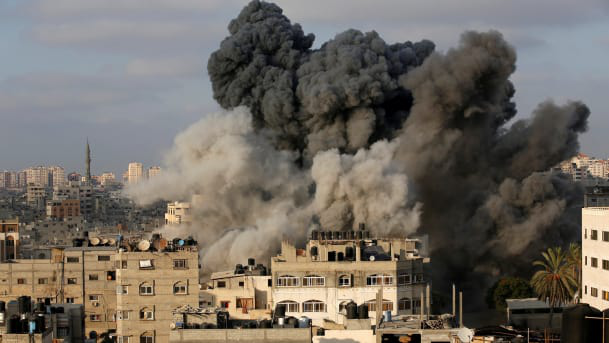
IAI, which services 80% of Amazon’s cargo planes, also provides aircraft, missiles, and other weapons to the Israeli government. Credit: MOHAMMED SALEM/ REUTERS
While Amazon’s ties with IAI and NSLComm are rarely reported in the media, its multi-million dollar contracts with another security firm has attracted widespread condemnation and protest. Amazon makes millions off providing web servers and database storage for Palantir, a private US data analysis firm which aids Immigration and Customs Enforcement (ICE) in identifying and deporting migrants. A petition this summer for Amazon to cut ties with Palantir and ICE gained over 270,000 signatures. Palantir also provides the Israeli government with so-called “predictive systems”, which analyze social media posts to identify Palestinians deemed a “threat”. The result of Palantir’s racially profiled analytics systems is that Palestinians are arrested and face long prison sentences for simply posting photos of family members killed by Israeli forces or in prison, citing Quranic verses, or calling for protests.
In the financial sector, Amazon signed agreements this year with Bank Hapoalim and Bank Leumi, two major Israeli banking institutions, to provide discounts to Amazon customers using Leumi and Hapoalim bank accounts. A 2018 report by Human Rights Watch found both banks guilty of financing construction and expansion of illegal settlements in the West Bank, while Bank Leumi also funds academic institutions in illegal settlements and programs for IDF recruits, even sponsoring gift packages and additional vacation days for Israeli soldiers during the 2014 invasion of Gaza, in which over 2,200 Palestinians, including more than 550 children, were killed. Pension funds and banks in Norway, Denmark, the Netherlands, and the UK have divested from Bank Leumi and Hapoalim due to their human rights violations, while Amazon signs new cooperation agreements with them.
Amazon’s dealings with Israeli companies supporting and profiting from the Occupation aside, many more questions remain. The most troubling of these questions surround how Amazon Israel will deal with realities on the ground in its operations. Will Amazon deliver to customers in illegal settlements? Will Amazon sell products manufactured or grown on Palestinian land seized by armed settlers and considered illegal by the UN and the international community? Will Amazon give Palestinian and Israeli sellers equal access to its platform?
A quick look at Amazon’s policies on its global site, amazon.com, give some indication as to how it might run its Israeli site. Last year, Amazon removed a top-selling T-shirt that reads “Make Israel Palestine Again”, on the grounds that it did not fulfill Amazon’s content policy. Amazon’s content policy prohibits the sale of “products that promote or glorify hatred, violence, racial, sexual, or religious intolerance or promote organizations with such views.” Amazon seems to have no problem, however, with selling “IDF” merchandise; at the time of writing this article, IDF T shirts, dresses, Halloween costumes, and even baby clothes were available on its global site. The occupation army has been accused of racism, sexism, religious intolerance, and countless acts of violence, torture, and human rights violations, not only by Palestinians but also by Israeli soldiers.
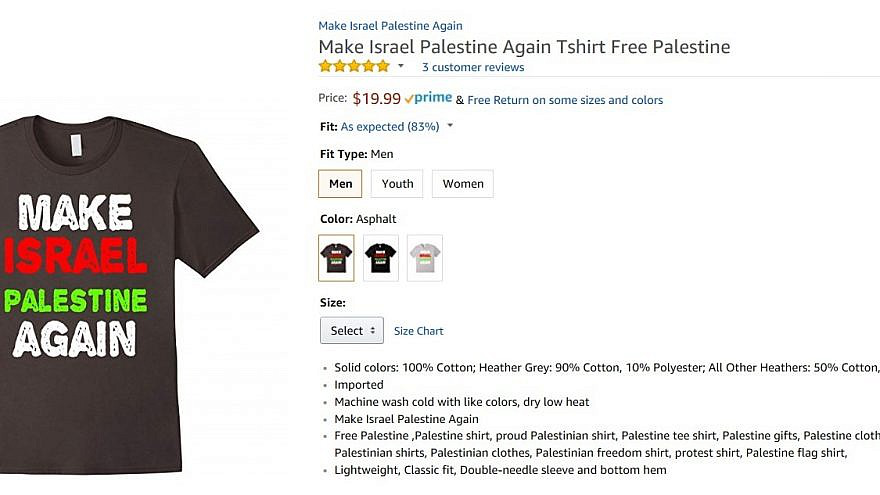
A screenshot of the “Make Israel Palestine Again” T-shirt removed by Amazon.
Amazon president, CEO, and largest shareholder Jeff Bezos, the richest man in the world since 2017 (and according to Forbes, the richest man in history) has yet to speak publicly about Palestine or Israel; he rarely gives public comments on any political issues. But indications of the Amazon founder’s political stances can be seen in the Washington Post. Jeff Bezos purchased the US paper for $250 million USD and has been its sole owner since October 2013.
The Washington Post has published a wide range of articles on Israel and Palestine, and a quick look at their articles and editorials since Bezo’s takeover in October 2013 shows where its editorial staff and leadership stand. It describes the shooting of unarmed Palestinian protesters in Gaza by Israeli snipers as “clashes”, and Netanyahu as a “prudent, even cautious, statesman” who “quietly restrained the building of Jewish settlements”, even though during his last 10 years in office over 20,000 settlement units were built in the Occupied West Bank. One Washington Post article, titled “Palestinians Kill 3 Israelis as Violence Mounts in ‘Day of Rage’”, acknowledges only in the 6th paragraph that “28 Palestinians have been killed by Israelis.” Israelis are routinely described as “killed”, but Palestinians merely “die”. Another article on electricity cuts in Gaza makes sure to inform the readers in the headline that “it’s not all Israel’s fault”. Last year, the Washington Post ran a full page advert calling New Zealand artist Lorde a “bigot” for canceling a concert in Israel.
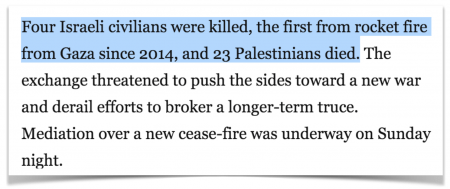
From the Washington Post (of which Amazon founder Jeff Bezos is the sole owner) on May 6, 2019. Israelis are killed, but Palestinians just “die”
Jennifer Rubin, a journalist for the Washington post, once retweeted an article describing Palestinians as “death-worshiping, innocent-butchering, child-sacrificing savages”, “devils spawn”, and “unmanned animals” who should be thrown “into the sea, to float there, food for sharks”. Her writing in the Washington Post declared that endorsements of the one-state solution “amount to calls for genocide”, and called then–Secretary of State John Kerry “intentionally obtuse”–or a liar–for not denouncing the Palestinian right of return. The Washington Post has rejected calls to remove Rubin for promoting racism and Islamophobia.
Given Amazon’s record of involvement with corporations deeply entrenched in the Israeli Occupation of Palestine, there is a high possibility of Amazon Israel failing to comply with international and human rights law in its Israeli operations. Should it fail to respect international law and engage in operations directly normalizing, supporting, and profiting from violations of Palestinian rights, Amazon may face boycott calls similar to those taken by BDS against companies like HSBC, SodaStream, Airbnb, Caterpillar, and Hewlett Packard. It remains to be seen what kind of corporate values Amazon Israel will deliver.
Turkey plans construction project worth $27 billion in Syria ‘safe zone’: Media
Press TV – September 28, 2019
State broadcaster TRT Haber says Turkey plans to build towns within the so-called safe zone in northeast Syria, raising fears that Ankara might be carving out a patch of land in the Arab country for itself.
The network revealed details of the scheme in territories outside the control of the Syrian government, which Turkish President Recep Tayyip Erdogan proposed at the 74th session of the UN General Assembly earlier this week.
Last month, Turkey and the US agreed to set up the “safe zone” stretching from the Euphrates River to the Iraqi border.
Syria slammed the deal as a “blatant aggression” against the country’s territorial integrity and a “flagrant violation” of the international law and the UN Charter.
At the United Nations, Erdogan held up a map to show the zone which Turkey wants to set up with the United States, and where it says one million Syrian refugees would be housed.
Turkey has pushed for the 20-mile (32 km) deep “safe zone” to be established along more than 400 km of its border with northeast Syria.
It initially said the aim of the zone was to drive back Syrian Kurdish YPG forces – which Ankara views as a security threat – from the border. It now says the region will also be used to settle 1 million of the 3.6 million Syrian refugees hosted by Turkey.
Under Turkey’s plan, which would cost around 151 billion lira ($27 billion), 140 villages and 10 towns would be established inside the “safe zone”.
The project will feature a total of 200,000 residences. Each village would have 1,000 houses, enough for housing 5,000 people, while each town would provide 6,000 homes for a total projected population of 30,000.
Every household residing in villages would have its own farmland while each town would have hospitals, football pitches, mosques, schools and other facilities, the report said.
TRT Haber reported that foreign funds would be established to build the residences, which are expected to settle 1 million of the 3.6 million Syrian refugees hosted by Turkey. It also published mock-up photos of the housing project.
During his Tuesday speech, Erdogan called on the General Assembly to support Turkey’s efforts in Syria.
“Our aim is to settle 2 million Syrians, with the support of the international community, by providing a peace corridor of 30 kilometers deep and 480 kilometers long in the first phase.”
He also offered to extend the safe zone to the Dayr al-Zawr-Raqqah line, adding that if implemented, 3 million displaced Syrians can be resettled.
Spanish multinational CAF and Israeli Shapir win tender to expand the Jerusalem light rail
Who Profits | August 2019
In August 2019, the Israeli Ministry of Finance announced that TransJerusalem J-Net Ltd, a consortium comprised of the Spanish multinational company CAF- Construcciones y Auxiliar de Ferrocarriles and the Israeli public company Shapir Engineering and Industry, won the tender to expand the Jerusalem light rail[1], which connects Israeli settlements in occupied East Jerusalem with the western part of the city. The tender, estimated at 11 billion NIS[2] (more than 3 billion USD), includes the construction, operation and maintenance of the Green Line, the extension of the existing Red Line, and the operation and maintenance of the Red Line, currently operated by the CityPass consortium.
CAF, which specializes in the design and implementation of transit systems,[3] will hold a 50% stake in J-Net.[4] In February 2019, the company’s workers’ council voted against participating in the Jerusalem light rail and urged the company to withdraw from the bid, stating that “CAF’s workers do not deserve to assume the responsibility for carrying out a job rejected by the overwhelming majority of the international community.”[5] Shapir Engineering and Industry, which specializes in construction, development and infrastructure projects, will hold the remaining 50%.[6]
The Jerusalem light rail connects Israeli settlements in occupied East Jerusalem with the western part of the city, expropriating occupied Palestinian land and promoting increased territorial contiguity for settlements.[7] Executed through public-private partnerships, the light rail project depends on the participation of Israeli and multinational companies for its implementation.
Currently, the only active line is the Red Line, which runs from the settlement neighborhood of Pisgat Ze’ev through the city center to Mt. Herzel. The construction of the line involved the expropriation of 8.16 hectares (81,600m2)[8] of land in East Jerusalem’s Palestinian neighborhoods, in violation of international law. The winning consortium will also construct the extension of the Red Line, which will reach the settlement of Neve Yaakov.[9]
The planned Green Line will connect the settlement neighborhood of Gilo to the western part of the city and to Mt. Scopus. The project includes the construction of 53 new stations, the supply of 144 railroad cars and the renovation of the existing 46 cars of the Red Line.[1] The winning consortium will also supply the communication systems for the light rail and operate and maintain both lines – 15 years for the Red Line and 25 years for the Green Line – with the possibility of extending the term of operation.[2]
By taking an active part in an infrastructure project that strengthens the illegal settlement enterprise and the continued fragmentation of Palestinian communities, the companies are facilitating the illegal annexation of occupied East Jerusalem and are complicit in violations of international law.
[1] CAF Press Release. The Consortium Made Up of the CAF Group and the Construction Firm Shapir Awarded the Jerusalem Tram Project. August 2019.
[2] Ibid.
[1] Company’s announcement to the Tel Aviv Stock Exchange. 08 August 2019.
[2] Government of Israel. Infrastructure for Growth. 2019
[3] Company Annual Report, 2018.
[4] CAF Press Release. The Consortium Made Up of the CAF Group and the Construction Firm Shapir Awarded the Jerusalem Tram Project. August 2019.
[5] Nieuwhof, Adri. Workers Reject Spanish Firm’s Bid for Israeli Settlement Project. Electronic Intifada, February 2019.
[6] Company’s announcement to the Tel Aviv Stock Exchange. 08 August 2019.
[7] Who Profits. Tracking Annexation: The Jerusalem Light Rail and the Israeli Occupation. July 2017.
[8] Ibid.
[9] Ibid.
We stop, you stop! Houthis offer Saudi Arabia mutual halt to strikes in wake of devastating oil-plant attacks
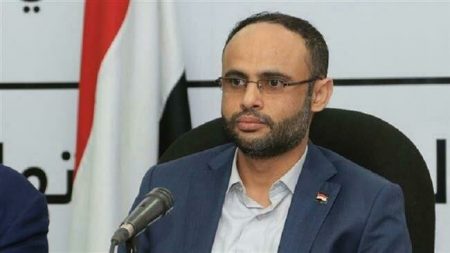
Houthi Ansarullah movement president of the Supreme Political Council, Mahdi al-Mashat
RT | September 21, 2019
Yemen’s Houthi rebels have announced a halt on strikes against Saudi Arabia, adding that they expect reciprocal steps from Riyadh. The ceasefire offer comes days after a major attack on Saudi oil refineries claimed by the Houthis.
The televised announcement was made on Friday by Mahdi al-Mashat, head of the Houthi political council in Sana’a. It comes as the Saudi-led coalition launched a massive operation against “legitimate military targets” north of the port of Hodeidah, in southwestern Yemen.
“I call on all parties from different sides of the war to engage seriously in genuine negotiations that can lead to a comprehensive national reconciliation that does not exclude anyone,” said Mashat. If the Saudis ignore the ceasefire offer and continue bombing, the group reserves its “right to respond,” he warned.
This is not the first instance of Houthis making a ceasefire gesture to try and stop the Saudi bombing campaign – but this time they appear to have some added leverage. The offer comes just a week after a strike on oil processing facilities in Abqaiq and Khurais halved Saudi Arabian production and spiked global oil prices by nearly 20 percent.
The Houthis claimed responsibility for the strike, which demonstrated failure of Saudi Arabia’s US-made air defenses, but Riyadh and Washington chose to blame Iran for the attack instead.
No proof of Tehran’s involvement in the launch of drones and missiles has so far been provided, with Saudi Arabia only identifying the source of the attack as somewhere in the “north.” Iran has denied any involvement in the attack.
Meanwhile, the Houthis also capitalized on the attack’s outcome by promptly threatening another member of the Saud-led coalition, the UAE. Earlier this week, the rebels claimed that they’ve picked dozens of Emirati targets that would be attacked by drones unless Abu Dhabi ceases its participation in the Yemen war.
Conflict has ravaged the Arabian peninsula country since 2015, when a coalition led by Saudi Arabia and the UAE invaded Yemen trying to reinstall the ousted pro-Saudi President Abdrabbuh Mansour Hadi. While they have been unable to defeat the Houthis despite their overwhelming advantage in numbers and weaponry, the war has taken a heavy toll on the people of Yemen. Tens of thousands have been killed in the conflict, while millions have been deprived of the very basic healthcare, food and clean water, with starvation and disease rampant.
If Iran behind attack, ‘US military worthless’ – Tehran prof
RT America | September 18, 2019
Prof. Mohammed Marandi of the University of Tehran joins Michele Greenstein (in for Rick Sanchez) to discuss Washington’s claim that Iran is behind the recent Saudi oil attack. He said that if Iran is truly behind the attack then it means that the US military presence in the region is “worthless.” He also argues that Iran’s response to a US attack would cause the US to “lose its key client regimes.”
Yemeni Killer Blow to House of Saud
By Finian Cunningham | Strategic Culture Foundation | September 18, 2019
The Yemeni rebels’ drone blitz on the “nerve center” of Saudi Arabia’s oil industry was a devastating counter-offensive which potentially could end the four-year war in short order. What is even more catastrophic for the Saudi monarchy – especially the ambitious Crown Prince – is that the Houthi rebels have wielded the ultimate power to crash the kingdom’s oil economy.
Crown Prince Mohammed bin Salman (MbS) was the main architect of the disastrous Saudi war on Yemen. His military hard-man display was meant to consolidate his rise to power as heir to the Saudi throne. It was a calculation based on the blood of the Yemeni people. But now the war has gone from a callous game to a far-more dangerous threat to the House of Saud’s seat of power. If the Saudi oil economy is put at severe risk, then the lifeline for the monarchy is liable to be cut.
After last weekend’s spectacular air strike on the main oil processing plant in Saudi Arabia – northeast of the capital Riyadh, some 1,000 kms from Yemen – the Houthi military leadership is warning that more deeply-penetrating aerial attacks are on the way. The Yemeni rebels have demonstrated that nowhere in Saudi Arabia is safe.
Saudi air defenses and their multi-billion-dollar US Patriot anti-missile systems have been rendered useless against an-ever increasing arsenal of more sophisticated unmanned aerial vehicles (UAVs) operated out of Yemen. UN experts reckon that the Houthis’ UAV-X drone has a range of up to 1,500 kms, which means that all of the Saudi oil infrastructure located in the Eastern Province near the Persian Gulf is a viable target.
Last weekend’s air strikes carried out with 10 drones, according to the Houthis, caused Saudi oil output to shut down by nearly half. The main target – the Abqaiq refinery – processes some 70 per cent of all Saudi crude destined for export. It is not clear when the processing plant can be restored to normal function. It may take weeks or even months. But if the Yemeni rebels can inflict that extent of damage in one air raid, it is not hard to foresee how the Saudi oil-dependent economy could conceivably be brought to a crippling standstill.
“The only option for the Saudi government is to stop attacking us,” said a Houthi military spokesman following the drone strikes. The rebels also warned foreign workers in Saudi Arabia associated with the country’s oil industry to vacate.
The Yemenis have a gun to the House of Saud’s head. It must give the rebels great satisfaction to finally have the Saudi monarchy in their cross-hairs after four years of Yemen suffering relentless aerial bombardment and siege by the US-backed Saudi military. The Saudi-led war on its southern neighbor – the poorest country in the Arab region – was always an outrageous aggression under the guise of supporting the return of a corrupt crony who had been ousted by the Yemenis in early 2015. Up to 100,000 people have been killed – most of them from the indiscriminate bombing campaign by Saudi (and Emirati) warplanes supplied and armed by the US, Britain and France. Millions face starvation in what the UN calls the worst humanitarian crisis for many years.
The Saudi rulers, Western governments and media have tried to obscure the genocidal war on Yemen as a “proxy war” involving Iran, as if Tehran is the instigator of subverting Saudi Arabia from the south. Iran backs the Houthis politically, and perhaps also militarily more recently, but any involvement by Tehran is a reaction to the initial Western-backed Saudi aggression against Yemen.
Claims by US and Saudi officials that Iran is responsible for the latest air strikes on Saudi Arabia’s vital oil industry are more of the same obfuscation. Such muddying of the waters is an attempt to distract from the central point that the Houthis are retaliating with the legitimate right of self-defense after years of merciless slaughter inflicted on their people by the Western-backed Saudi coalition.
There’s another urgent reason for why the Saudi rulers and the US are trying to blame Iran for the latest drone attacks on the Saudi oil industry. If admitted that the air raids were carried out primarily by the Houthis – perhaps even with Iranian drone technology – then that admission points to the complete vulnerability of the Saudi oil economy and the very power structure of the monarchic rulers.
A hint of the trepidation being felt in Riyadh are reports that the latest air strikes have rattled stock markets for Saudi petrochemical companies. Worse, it is also reported that the attacks may delay the planned stock market listing of Saudi Aramco, the state-owned oil company. Worse still, the valuation of the company may be slashed due to the perceived risk from further Yemeni air strikes.
The planned Initial Public Offering (IPO) of Aramco – whereby the Saudi state is selling a portion of the company to private investors – has been one of the most talked about events in recent years among international business. The IPO which is due to be launched next year has been called the “biggest-ever” stock market sell-off.
In an extensive interview with Bloomberg in October last year, the Saudi Crown Prince, MbS, boasted that it was the “biggest IPO in human history”. He claimed then that Aramco’s total valuation was worth $2 trillion. If the Saudis sell off a 5 per cent share in the company, they are expecting to raise $100 billion in cash. The Aramco IPO is central to MbS’ ambitious diversification master plan for the entire Saudi economy, known as Vision 2030. The capital raised from the Aramco sell-off is intended to catalyze private sector employment and technological innovation in the oil-dependent kingdom whose budget is unsustainably propping up government-sector jobs and welfare largesse to prevent the young population of Saudis rebelling against the sclerotic House of Saud.
After the Houthis’ devastating air attacks on the Saudi oil heartland – the crown jewels of the kingdom – potential investors are now reportedly looking warily at the future risk of Aramco. Valuation of the company in the aftermath of the Yemeni drone strikes has been slashed by some estimates to $300 billion – that’s down by 85 per cent from the previous aspired-for $2,000 billion. If that downgrade holds or worsens with future Houthi attacks on Saudi oil infrastructure, then the capital raised from an IPO could shrink from the $100 billion projected by the Crown Prince to $15 billion. In short, his Vision 2030 plan is down the pan.
It must be alarming to the young Saudi potentate that US President Donald Trump has begun to play down any retaliation against Iran, saying that he doesn’t want to be drawn into a war.
That means the Saudi monarchs are on their own and at the mercy of the Houthis and what they do next. The downfall of the scheming Crown Prince evokes a Shakespearian drama of treachery.
Featured Video

Trita Parsi: Israel Set a Trap for Total War in the Region
or go to
Aletho News Archives – Video-Images
From the Archive
Zionism’s Violent Legacy
By Donald Neff | Washington Report On Middle East Affairs | January 1996
On January 4, 1948, Jewish terrorists drove a truck loaded with explosives into the center of the all Arab city of Jaffa and detonated it, killing 26 and wounding around 100 Palestinian men, women and children.[1] The attack was the work of the Irgun Zvai Leumi – the “National Military Organization,” also known by the Hebrew letters Etzel – the largest Jewish terrorist group in Palestine. The Irgun was headed by Revisionist Zionist Menachem Begin and had been killing and maiming Arabs, Britons and even Jews for the previous ten years in its efforts to establish a Jewish state.
This terror campaign meant that at the core of Revisionist Zionism there existed a philosophical embrace of violence. … continue
Blog Roll
 Aletho News
- Trita Parsi: Israel Set a Trap for Total War in the Region
- Trump’s Iran war is on an Israeli leash
- Saudi oil boss issues global supply warning
- Riyadh Says Its Oil System Is Intact. The Numbers Say Otherwise.
- Trump and Netanyahu Want to “Finish the Job” on Iran
- US ‘one-sided dictation’ not Iran’s beliefs makes rational talks impossible: Baghaei
- Iran’s Next Strike May Not Explode. It Could Shut You Down /Col Doug Macgregor
- Iran: US political targets legitimate if assassinations return
- Iraq shuts key border crossing with Iran under US pressure: Report
- Undersea Internet cables could be targeted in retaliation for attacks on Iran: IRGC deputy chief
- If Americans Knew
- The Israel Lobby’s Changing Fortunes
- AIPAC has become such a political liability that it’s shifting to a more “nimble” approach to buying politicians
- At least 160 Israeli settler attacks in 2 weeks
- Will Gaza’s Ancient Christian Community Disappear Forever?
- Israel’s vision of regional security rests on keeping Arab states weak
- Heidi Levine recounts how Palestinian youths helped save her in settler attack
- DAILY UPDATE: Latest essential news on Palestine, Israel, & region
- Trump’s Intensifying Sabotage of the ICC, for Israel’s Sake
- Israeli military detain US and UK volunteers in West Bank including Democratic NY politician Brad Lander
- Americans at National Conservatism Conference held in Israel this year criticize Israel
- No Tricks Zone
- E-Cars Reduce CO2 Emissions By Only 41% Compared To Internal Combustion Engine Vehicles
- Predictions Made By Renowned Climate Professor Over Past Decades Have Been Proven To Be Poor
- New Study Suggests Large Regions Of The Pacific Ocean Have Been Cooling For The Last 80 Years
- Germany’s Green Energy Debacle: High Energy Costs Force Kahla Porzellan to Close After 182 Years!
- New Study: 50 Years Of The Most Aggressive ‘Net Zero’ Policies Can Only Affect The Global Climate By 0.03°C
- US September “Heat” Was No Record…Many Records Set Decades Ago
- Latest European Green Energy Debacle; Portugal’s Largest Flagship Solar Park Insolvent!
- Green Energy Debacle: German Expert Professor Fritz Vahrenholt Warns Of Severe Economic And Social Consequences
- Two More Paleo Reconstructions Affirm Meters-Higher Sea Levels Across Ireland, Brazil 7000-6000 Years Ago
- New Study: Earth And Venus Surface Warmth Largely Explained By Convection And Lapse Rate, Not CO2 Or Radiation

