Stolen West Bank artefacts displayed at Israel museum
MEMO | December 31, 2018
Israel has exhibited artefacts stolen from the occupied West Bank at a Jerusalem museum, an Israeli newspaper reported Monday.
Twenty artefacts – out of an estimated 40,000 confiscated in 1967 – are currently on display, Israeli daily Haaretz reported.
The purloined artefacts reportedly include a number of ancient coins and bowls.
For the last four decades, the artefacts remained in the Israeli authorities’ possession “with no means of ascertaining their provenance”, the paper reported.
Palestine’s official WAFA news agency condemned the looting of Palestinian antiquities.
The display of stolen artefacts, the news agency asserted today, “violates international law… which prohibits an occupying power from… carrying out archaeological excavations in occupied territory”.
Is there an Upside to the US Military Presence in the Southeast Asia?

By Jean Perier – New Eastern Outlook – 30.12.2018
As of today the Southeast Asian and Asia-Pacific region have found themselves at the center of a complex international process of establishing a new regional architecture. As states carry on fighting for control over strategic sea routes that run across the region, numerous security and transitional threats would appear seemingly out of the blue.
Unsurprisingly, the United States is trying to exercise as much influence over the region as it possibly can, even in spite of the fact that over the past decades the influence that Washington exercises in Southeast Asia has significantly diminished. Speaking about the evolution of the US approach to Southeast Asia in the post-bipolar period of global composition, it should be noted that the initial goal of containing the spread of communism that Washington used to pursue has evolved into attempts of ensuring American military and economic dominance in this part of the world. These days the US couldn’t care less about communism, as it’s dead set on opposing the rise of China and Russia and their regional allies. Washington’s new approach to its global strategy became evident after the release of America’s National Defense Strategy and the Nuclear Posture Review, in which China and Russia were designated as primary geopolitical opponents of the US.
To achieve these goals, the Trump administration would concentrate its efforts on creating a 400,000 man strong force in the Asia-Pacific region to ensure that at least 50 large military bases across the region remain fully operational at all times. It goes without saying that the absolute majority of those are located in Japan.
Among the tools that allow Washington to advance its agenda in the Asia-Pacific region are large carrier strike groups. For the first time since the days of WWII, the Pentagon keeps a total of two carrier groups stationed in the Western Pacific. Additionally, the US Air Force would use strategic bombers on patrol duty over the Pacific, as Washington believes this practice to be a good demonstration of force.
The Pentagon is also actively deploying its anti-air capabilities in the Asia-Pacific region, thus provoking an arms race across the region. At present, it has 20 ships capable of bringing down both missiles and aircraft, two THAAD batteries, three PAC-3 missile battalions along with five mobile radars stationed in the region.
To ensure its primacy in the region, Washington would place a particular emphasis on expanding its cooperation with Japan and South Korea. This results in those states holding an ever increasing number of joint military exercises, with their total exceeding 30 large military games over the last 18 months.
However, as inter-Korean relations begin reaping results of goodwill shown by both Pyongyang and Seoul, along with the progress that Russia and Japan have made in resolving their territorial disputes, Southeast Asian political analysts have begun discussing the issue of Washington maintaining such a leviathanian scale of American military presence in the region and the rationale behind it.
As for the prospects of a continuous US military presence on the Korean peninsula, it’s being addressed by China that which recently began insisting on the complete withdrawal of US armed forces from South Korea as a precondition for the complete denuclearization of the DPRK. Chinese authorities are persistent in convincing Pyongyang that this should be the first demand made, since there will be no way to force Washington into leaving once a peace treaty is signed. In turn, Washington is pursuing the goal of maintaining as many troops in South Korea as possible, as those remain an important element of its China containment plan.
As for the US military presence in Japan, the public pressure applied by various civil activist groups on Japanese authorities is almost palpable. Although Tokyo hasn’t faced a massive public uproar demanding the complete withdrawal of all American servicemen from the country, the number of civil protests demanding this course of action is increasing annually. In addition, the advances that Japan and Russia made in resolving their differences on questions over the Kuril Islands may vanish overnight, should it be announced that American servicemen are here to stay in Japan. As a matter of fact, this presence contradicts the terms of the 1956 agreement between the USSR and Japan, and ever since the day it was signed any further progress has been derailed by the presence of foreign servicemen in Japanese territory. Back in the day, this fact resulted in the USSR abandoning any discussions with Tokyo over the possibility of transferring a part of the Kuril Islands to Japan, as Tokyo signed the Treaty of Mutual Cooperation and Security with Washington back in 1960. After all, in accordance with this treaty, the Pentagon is allowed to build its naval bases all across the territory of Japan. Should it decide to build one on the Kuril Islands once they are handed over to Japan, it will trap the Russian navy in its harbors. It is quite understandable that Moscow will never allow this scenario to occur.
To get a better understanding of this deadlock, it is enough to recall the Caribbean crisis of 1962 and the deployment of Soviet ballistic missiles in Cuba. Back then, Washington reacted vigorously to Moscow’s attempt to create a direct military threat to the United States in the immediate vicinity of its borders, which brought the world toward the brink of WWIII. So what reaction should we expect from Moscow should Washington build a naval base on the Kuril Islands? Therefore, without Tokyo demanding the Pentagon to pack up and leave, no further progress in the disputes that exist between Russia and Japan can be achieved.
Of course, both Moscow and Beijing in their approach to the question of the lingering US military presence in the immediate vicinity of their shores are driven by their strategic interests. This means that Beijing is going to use any leverage it has to persuade North Korea to abandon its nuclear program in exchange for a US withdrawal, while Russia would never go as far as to consider handing over the Kuril Islands without Japan sending American servicemen home.
As for the position of today’s political elite of South Korea and Japan on this issue, it is clear that they follow the instruction of their overseas masters in addressing these issues, as both of these states have launched massive media campaigns to persuade their population that the presence of US forces is somehow not a bad thing. Washington has even given them cues as to what their media should advertise. In particular, they try to convince the world that:
- a certain part of the population of South Korea and Japan is still supporting the strengthening of military cooperation with the United States.
- the withdrawal of American troops will be accompanied by a substantial increase in defense spending. In particular, it is said that in South Korea in order to prevent the weakening of its combat potential, Seoul will be bound to spend no less than 30-35 billion dollars.
- both Japan and South Korea will lose jobs should they decide to close US military bases. It’s stated that South Korea will lose more than 10,000 jobs that were created by the fact that American soldiers needed services that the Pentagon was willing to pay for. It’s estimated that Washington would spend 800 million dollars on those and thus the withdrawal of American troops is going to somehow affect the overall economic growth rates of South Korea. Should those media sources be believed, Japan with its massive industrial potential is going to suffer even greater financial losses due to the withdrawal of US forces from Japan.
Under these circumstances, the ruling political circles of South Korea and Japan have to decide whether the costs and the lost income associated with persistent tensions those two states have with their neighbors are worth the pay Washington is providing them with. It goes without saying that neither nation can hope to secure full political independence without sending American troops home. Moreover, the signing of peace treaties with their neighbors will eliminate the need to carry on the arms race that Washington initiated, as both Japan and South Korea are bound to buy expensive outdated weapons produced by the United States to the detriment of their national interests. For sure, the final word on this matter should not be left to the political elites of South Korea and Japan who are closely tied to Washington, but to the population of these countries, since they are being described as democracies by the Western media.
Palestine urges international probe into Jerusalem excavations
MEMO | December 30, 2018
The Palestinian Foreign Ministry has called for forming an international commission to investigate Israeli excavations in the occupied city of East Jerusalem and beneath the flashpoint Al-Aqsa Mosque compound.
In a statement on Saturday, the ministry warned that the Israeli diggings pose a major threat to Palestinian houses in the occupied city.
“These excavations aim to cause cracks in Palestinian houses, with Israeli authorities ordering residents to leave these houses on the ground that they are not fit for living,” the ministry said.
The ministry went on to describe the Israeli eviction of Palestinians from their homes as a “large-scale, systematic ethnic cleansing”.
There was no comment from Israeli authorities on the ministry’s statement.
Israel refuses to allow access to UNESCO to examine the holy sites in East Jerusalem.
In July 2017, the UNESCO executive board adopted a resolution that slammed “the failure of the Israeli occupying authorities to cease the persistent excavations, tunneling, works, projects and other illegal practices in East Jerusalem, particularly in and around the Old City of Jerusalem, which are illegal under international law”.
The resolution further stated that “legislative and administrative measures and actions taken by Israel, the occupying power, which have altered – or purport to alter – the character and status of the holy city of Jerusalem… are null and void and must be rescinded forthwith”.
In 2016, UNESCO passed a resolution describing Jerusalem as an “occupied” city and Israel as an “occupying power”, which, under international law, has no sovereignty over the historic city.
The same resolution stated that Jerusalem’s Old City was “entirely Palestinian”, going on to emphasise its historical “Muslim and Christian” identity and heritage.
Israel occupied East Jerusalem during the 1967 Arab-Israeli War. In a move never recognised by the international community, it unilaterally annexed the entire city in 1980, claiming it as its “eternal and undivided” capital.
Read also:
Israel to spend $16.6 million on excavations under Al-Aqsa Mosque
Notes On The Withdrawals
By Michael Tracey | Medium | December 23, 2018
Trump announced the withdrawal of US troops from two warzones, which prompted the resignation (and now, firing) of James Mattis. It’s one of the most consequential weeks of the presidency thus far, so rather than try to come up with a grand cohesive Take on it all, here are some scattered thoughts.
- The media doesn’t know how to grapple with an event that genuinely does represent Trump contending with an intractable establishment, which is partially understandable given recent overheated bleating about the Deep State — a phenomena that does plainly exist but has been misrepresented by the dumber portion of MAGA boosters. “Establishment,” likewise, is a fuzzy buzzword, and almost nobody ever claims to be part of it. Trump himself can reasonably be said to be The Establishment considering he is the President. However, this is a specific instance in which Trump really is in direct confrontation with very particular “establishment,” namely the institutional national security apparatus, which exists largely unfettered across administrations. Survey the scene and there’s not a single person in this entire apparatus who apparently supports the Syria withdrawal.
- So what does the media do? They act, essentially, as vehicles for the grievances of said national security apparatus. Take a look at some of the coverage from the major outlets: NYT, WaPo, AP, etc.
- OK, who exactly is “outraged,” and why does their sentiment justify featured placement in an Associated Press headline? It’s the national security establishment figures who are outraged, for them Mattis is a patron saint. These are the people AP, NYT, and WaPo reporters rely on to inform their natsec coverage. This NYT example is less subtle, and far more egregious:
- Really? Robert Kagan, to the uninformed reader, might just be some innocuous “expert” offering his wisdom, but Kagan is one of the most significant neoconservative foreign policy luminaries ever, competing ignominiously for that distinction with Bill Kristol. And it’s his ideology which is being transmitted to unwitting readers by way of the NYT. People who hate Trump will be susceptible to the message, because what he’s saying portrays Trump in a very negative light, but they’re also consuming loads of stubborn interventionist pablum along with the typical anti-Trump dopamine hit.
- Collectively, the theme of all mainline media coverage in reaction to the withdrawals is some combination of “chaos,” “disarray,” “tumult,” etc. Never is it ever considered that the very fact of multiple endless military deployments in hot warzones is also “chaotic.” And destructive. And insanely expensive. And unpopular with the wider public. None of these facts amount to “chaos” in the minds of fretting journalists, because what they’re being informed by is the sentiments of the “natsec” apparatus Trump has just acted against. (Oh yeah BTW the Syria deployment is also illegal and unauthorized, and has been since Obama launched it on false pretenses, but again, that’s definitely not chaotic.)
- On a slightly different note, it’s also worth harkening back to the time, earlier this year, when John Bolton was appointed National Security Advisor. I joined in the dismay, considering Bolton is one of the most fervent unreconstructed hawks in the entire country, and has *even today* not stopped defending the Iraq invasion. I attended a speech of his in DC about a month before the appointment when he did so, once again… in 2018. His Iran antagonism is a virulent obsession, and he called for a first strike on North Korea in February.
- But what happened subsequently? Bolton’s wishes have been totally overruled at every turn, most notably at two spectacular junctures. The first was Trump’s Korea diplomacy initiative, when Bolton was made to sit meekly at the negotiating table with Kim’s generals, whom he’d not long before declared should be wiped out with a preemptive strike. Then this week, the Syria withdrawal is among the most epic humiliations conceivable, as Bolton has specifically and publicly declared that US troops would not be leaving Syria until Iranian influence was repelled (i.e., essentially never).
- So those are crucial facts to consider about Bolton’s influence in the administration. I still think it’s dangerous to have him anywhere near the locus of military power, because who knows what leverage he might wield in the event of some unforeseen crisis. But he’s clearly not anywhere close to calling the shots, or the last 9 months of the Trump presidency would have gone much differently. (If he had any personal pride he’d resign in the wake of the Syria withdrawal, but Bolton’s principal priority is proximity to power, not personal consistency or pride. Unlike, evidently, Mattis.)
- In sum: the initial freakout when Bolton was appointed at least had basis, because he’s a dangerous person, but the freakout over the policies which he’s (ironically) presided over have engendered an even greater freakout, by several orders of magnitude. And those policies have tended to be dramatically less belligerent and militaristic than what you’d expect from an Administration in which Bolton resides. (The two leading examples again being Korea and Syria/Afg withdrawals.) So you have to wonder what the freakout is really about then. Maybe it’s just simple knee-jerk Trump hatred. (Yeah, it’s that.)
- There’s a running fight in certain Online Circles about whether Trump is a “non-interventionist.” My point was always that Trump clearly evinced greater non-interventionist tendencies than Hillary Clinton, but that 2016-specific observation has been exaggerated by certain bad faith agitators into a bogus charge that I claimed Trump is some pure, peace-loving anti-war voice. Obviously that’s NEVER been the claim. Any assessment of Trump’s scatter-shot “non-interventionism” has to coexist alongside the acknowledgment that Trump has dropped large quantities of bombs in pre-existing warzones, and killed lots of civilians in the process. That’s bad. At the same time, Trump has now declared his intention to end two wars that were started by previous administrations, and has not started any new ones. He’s done so over the strident objections of his own staff, advisors, and 95% of his own party. Clearly the “instincts” I noted, and then was ruthlessly ridiculed for noting, had some basis in reality, or we would not be where we are.
- Trump, during the campaign, frequently complained about the trillions squandered in the Middle East. Hillary Clinton never did (because she was partly responsible for it). Therefore, the comparative assessment was warranted. Nobody ever assumed Trump’s complaint would automatically translate into a swift, seamless change in US policy, or that the US would now become a beacon of wholesome anti-interventionism. It took two years, but Trump has now taken tangible steps to actualize those complaints, at significant political risk.
Syrian Kurds throw Americans under the bus
By M. K. BHADRAKUMAR | Indian Punchline | December 28, 2018
The Syrian government forces have entered the northern town of Manbij on the Turkish border earlier today. The Syrian military command announced in Damascus that the operation stemmed from the commitment to “impose sovereignty to each inch of Syrian territories and in response to calls of locals of Manbij city.”
The announcement reiterated Damascus’ twin objective of “smashing terrorism and expelling the invaders and occupiers out of Syrian soil.” The government troops have hoisted the Syrian Arab flag in Manbij.
In a highly significant move, Kremlin Spokesman Dmitry Peskov promptly welcomed the development. “No doubt, this is a positive step towards stabilizing the situation,” the spokesman said. He added that the expansion of the zone of the Syrian government troops’ control “is a positive trend.”
It stands to reason that Moscow mediated between the Syrian Kurdish leadership and Damascus. There have been reports that Syrian Kurdish delegations visited Moscow this week as well as the Russian military base at Hmeimim in Syria. A senior Kurdish leader in Manbij told Reuters, “We want Russia to play an important role to achieve stability.”
Indeed, Moscow needs no prompting from anyone in this regard. The Russian Foreign Ministry spokesperson Maria Zakharova said on Wednesday, “The question of fundamental importance is who will assume control of the regions the Americans will vacate. It should be the Syrian government… We believe that the Syrian government is equipped to maintain stability through dialogue and interaction with all the national patriotic forces. This dialogue in the interests of all Syrians can help complete the routing of the terrorists and preclude their reappearance in Syria. It is important not to interfere with the Syrian society’s efforts on the political track.”
The fact of the matter is that while Russia welcomes Trump’s decision to withdraw US troops from Syria and regards it as “important in that it can promote a comprehensive settlement of the situation” Moscow remains extremely wary of what it entails. So far, even a week after Trump’s announcement, Washington has not contacted Moscow to explain its decision.
Foreign Minister Sergey Lavrov drew attention to this while talking to the media in Moscow today: “To the best of my knowledge… Washington wants its coalition partners to assume responsibility. French, British and German service personnel are also illegally deployed on the ground. Of course, there are also the coalition’s air forces on whom they want to shift an extra financial burden. We hope to receive specific explanations… on the assumption that the end goal of all counter-terrorist operations in Syria is to restore Syria’s sovereignty and territorial integrity.”
The known unknown will be the terms of any Faustian deal between Washington and Ankara with regard to the future of the Syrian territories under American control. A US military delegation is expected in Ankara. Moscow and Damascus (and Syrian Kurds) would not rule out the possibility that Pentagon commanders would work on the “neo-Ottoman” and secretly encourage Turkish revanchism. Meanwhile there are also reports that Turkish forces are moving toward the frontlines facing Manbij in “full readiness… to start military operations to liberate the town, according to Reuters.
Suffice to say, Damascus and Moscow have pre-empted Ankara in the race for Manbij. Put differently, they have created a new fact on the ground, which either Ankara has to learn to live with or use military force to change. The latter course is fraught with immense risk, apart from severely jolting the Turkish-Russian political understanding over Syria. It is unlikely that Turkey will push the envelope.
However, to my mind, Turkish President Recep Erdogan is unlikely to cross lines with the Kremlin. A high-powered Turkish delegation comprising Foreign Minister Mevlut Cavusoglu, Defence Minister Hulusi Akar, Turkish intelligence chief Hakan Fidan and the presidential spokesman Ibrahim Kalin is expected to travel to Moscow on Saturday. No doubt, Moscow hopes to engage Ankara constructively.
Interestingly, amidst the dramatic developments concerning Manbij today, Russian President’s Special Representative for the Middle East and African Countries, Deputy Foreign Minister Mikhail Bogdanov disclosed in Moscow today that the Guarantor States of Astana Process (Russia, Turkey and Iran) may hold a summit in Russia next week, depending on the schedule of the three presidents.
Curiously, there has been no reaction from Washington to today’s developments in Manbij. American troops have been patrolling in Manbij town and the tense front line between Manbij and adjacent towns where fighters backed by Turkey were based. Having received the orders from Washington to withdraw from Syria, the local US commanders in northeast Syria will be in a quandary.
Nonetheless, it will be a bitter pill for the Pentagon commanders to swallow that the Syrian Kurds are overnight reconciling with Damascus. This will become additional fodder for Trump’s detractors in the US, too. In fact, sniping has already begun in Washington.
On the other hand, the Syrian Kurds, who have been the US’ main allies in Syria up until recently, have openly declared that they have invited the government forces to enter Manbij. They said in a statement today, “Due to the invading Turkish state’s threats to invade northern Syria and displace its people similarly to al-Bab, Jarablus and Afrin, we as the People’s Protection Units, following the withdrawal of our forces from Manbij, announce that our forces will be focusing on the fight against ISIS on all the fronts east of the Euphrates.”
The statement added that the Syrian government forces are ”obliged to protect the same country, nation and borders” and also protect Manbij from Turkish threats. It leaves the door wide open for the Syrian government forces to eventually regain control of the entire territory vacated by the US.
Assad has offered the integration of the Kurdish fighters into the Syrian Army under separate regiments. The prospects are that Assad’s offer will find acceptance among the Kurds at some point soon. There has all along been a tacit co-habitation between the Syrian Kurdish fighters and the government forces operating in northern regions bordering Turkey. It will be recalled that Assad quietly went to the aid of the Kurdish fighters in February when the Turkish army attacked Afrin region in the northwest in February.
Clearly, it is nonsense to say that the Kurds have been “thrown under the bus”, as Trump’s critics in the US are alleging. The plain truth is that the US created the illusion in the Kurdish mind that the creation of another Kurdistan on Syrian territory, similar to the one in Iraq, could become a possibility. But, fundamentally, Kurds will reconcile with Damascus. The comfort level between the Kurds and the Russians is also appreciable, historically. Moscow has consistently held the view that the Kurds must be represented at the negotiating table in any intra-Syrian peace process. The speed with which Kurds began mending fences with Damascus only underscores that they never quite trusted the Americans and all along had kept their options open.
Afghanistan: Negotiations or a US Military Defeat?
By Salman Rafi Sheikh – New Eastern Outlook – 24.12.2018
While the Trump administration may think otherwise and even take the credit for initiating dialogue with the Taliban on an unprecedented level with a view to pulling the US out of Afghanistan, there can hardly be any doubt that negotiations, after 17 years of continuous war, are nothing short of an uncomfortable acceptance of their inability to defeat the Taliban militarily. How else do we define a military defeat? In the very act of negotiations is implicit an American admission of the ultimate fact that it has become impossible for it to retain its politico-military hold on Afghanistan through its planted government in Kabul and the US-raised and trained Afghan security forces, despite the continued huge financial support and the support of the US/NATO high-tech military forces in the country. It is for this reason that the US had even to drop its previously adamant refusal to hold direct talks with the Afghan Taliban.
If there is no military defeat for the US and even if the US still has got forces on the ground, the question of holding direct talks with the Taliban points to the increasing inability of the US forces to force the Taliban into submission. Importantly enough, the current phase of talks has been initiated by the US, not the Taliban. The Taliban had repeatedly refused to endorse Kabul’s offers of talks, and only agreed to do talks if the US was willing to engage directly. Therefore, with the US now fully engaged in “peace dialogue”, the US military’s self-proclaimed notion of invisibility stands fully exposed.
While some may argue that dialogue is necessary to end the war through non-military means, it is hard to miss the point that the US military still remains deeply entrenched in the war. For example, apart from the fact that there are thousands of soldiers on the ground, the US air force dropped more bombs on Afghanistan in 2018 than in any other year of the war in 17 years. The number of bombs dropped do not only show that the war basically remains intense, but also that the US military is desperate to change the course of the war to its advantage, an ambition highly unlikely to materialise; hence, the ever more emphasis on dialogue with the Taliban.
And while the US can’t avoid a military defeat, it can still hope to avoid humiliation in Afghanistan. And, for this purpose it is prepared to utilise all available means, including asking Pakistan for help. Even though the Trump administration, ever since it came into power, has cut all military aid and coalition support fund to Pakistan and bi-lateral relations have never been so frosty ever since the beginning of ‘war on terror’, the ever-increasing helplessness against the Taliban has once again forced the US to ‘ask’ for help.
Pakistan, fully aware as it is of the ground realities of Afghanistan and the way the US has already lost the war, is unlikely to ‘help’ the US in turning the table in its favour. In fact, in response to president Trump’s letter to Pakistan’s prime minister, Imran Khan, Khan was quick to rebut Pakistani involvement in any relationship with the US “where Pakistan is treated like a hired gun — given money to fight someone else’s war. We should never put ourselves in this position again.”
The request for help came only two weeks after president Trump had actually accused Pakistan of ‘not doing a damn thing’ in Afghanistan for the US. But the letter he wrote only two weeks after this blatant accusation signified increasing US desperation in Afghanistan and its willingness to still cast Pakistan in a friendly role even though it, as the US claims, never did a damn thing for the US. How wise it is for the US to ‘ask’ for help from a country that it thinks has worked against it through-out the war? How else to explain this wayward and self-contradictory approach than by placing it in the context of an imminent military defeat and US desperation to somehow avoid it by making a face-saving deal with the Taliban?
All this proves that no matter how powerful the US military might be, or how hard it might have worked, or how many years it might have committed to building an Afghan army in its own image, and no matter how much air and logistical support that army might have received, it has failed to militarily defeat the Taliban, who are currently directly and indirectly controlling about 44 per cent of the districts and have even established, as reports have shown, a parallel system of governance and administration in many parts where the Afghan officials work in close cooperation with the Taliban.
More than anything else, this reality exhibits another defeat in terms of the failure of its so-called ‘counter-insurgency’ program’s ability to roll back and replace the Taliban networks on the ground. It also means that the US-planted socio-political governance system in Afghanistan has almost reached the brink of a “political defeat”, much like the imminent defeat of the US military and its trained Afghan forces, which are losing more troops every year than the government can recruit, presenting yet another dilemma which the US forces have failed to resolve even after years of training and advising the Afghan security forces.
All this comes down to a single and indisputable reality: the US must withdraw and let the Afghans decide their future. Instead of finding a way to impose its demands on the Afghans, the best course for the US would be to liaise with other regional countries, including Pakistan, Russia and China, to develop such power sharing formula as would ensure an inclusive political system. Of course, any platform of negotiations and any peace plan that is developed without the Afghans themselves directly involved in its making would be meaningless in terms of reconciling the warring factions within the country. The sooner the US accepts this eventuality, the fewer of the US forces, the Afghan troops and innocent lives would be lost.
Trump’s Holiday Gift to America: Hope for a Little More Peace on Earth?
By Thomas L. Knapp | Garrison Center | December 27, 2018
In March, US president Donald Trump promised the American public that US troops would be leaving Syria “very soon.”
Nine months later, he threw Washington’s political establishment into turmoil by finally ordering the withdrawal he’d promised. Politicians like US Senator Lindsey Graham (R-SC), who’d never once in four years bestirred themselves to authorize the previous president’s decision to go to war there in the first place, railed against Trump’s decision to bring the bloody matter to a close.
Instead of backing down in the face of opposition, Trump doubled down. Or, rather, decided to draw down the 17-year-long US military presence in Afghanistan.
Then he jetted off for a surprise Christmas visit to Iraq … eliciting, with his usual theatrics, calls from Iraqi lawmakers for US withdrawal from THAT country. I suspect he may concede to that demand as well.
Nothing’s written in stone, and both US foreign policy and Donald Trump are prone to sudden and unexpected turns. But the holiday season is a time of hope. Maybe, just maybe, nearly three decades of US war in the Middle East are coming to the beginning of their end.
Adding to that hope, let’s turn an eye further east.
After significant saber-rattling and then a sudden turn toward personal diplomacy, Trump stood back and let events on the Korean peninsula take their course even as he continued the bellicose rhetoric and sanctions noises demanded of him by Graham and company.
As a result, North and South seem on the brink of ending a 68-year war. They’ve begun removing land mines and guard posts along the Demilitarized Zone. They’ve broken ground on a railway connecting the two countries.
Is it possible that Trump, as some of his supporters like to say, has been playing 4D chess while the rest of us distracted ourselves with checkers?
I’d really like to think so, and I do hope so.
As an advocate for ending US military adventurism, I’ve doubted Trump every step of the way. During his presidential campaign, he alternated between talking peace and pronouncing himself the most militaristic of the GOP’s presidential aspirants.
I’ve generally found it safer to believe the worst, rather than the best, things politicians say about themselves. But at moments like these, his bizarre zigs and zags on the global 4D chess board suddenly seem in retrospect to have taken American foreign policy in the right direction.
If he brings home substantial numbers of the American fighting men and women now in harm’s way around the globe, he will have secured his legacy and deserve the thanks of a grateful nation. I wish him every success in that endeavor.
Peace on Earth, goodwill toward men, and Happy New Year.
Trump Extricates Himself from the Trap in Syria, Abandoning the Kurds
By Dmitry MININ | Strategic Culture Foundation | 28.12.2018
It is not only many members of the US establishment who have labeled President Trump’s order to withdraw America’s forces (2,200 troops) from Syria as a betrayal, but also the allies of the United States. They claim that Trump is throwing the Syrian Kurds under the bus and leaving Israel in a state of “strategic isolation.” Also coming in for criticism is the statement by the US administration (the first of its kind) announcing that it has no plans to remove Bashar al-Assad from power.
It may turn out to be Syria’s Kurds (who number about two million) who will face the most dramatic consequences of the president’s decision, for it was they who created the de facto autonomous state of Rojava in northeastern Syria with the Americans’ support. Now Rojava’s very existence is under threat.
Ankara has already stated that it has not given up on its plan for “an offensive against the terrorists” in eastern Syria, but has merely put it on hold for a while (i.e., until the Americans have left). Officially, this has been prompted by the fact that Turkey intends to take over for the US and finish off the remnants of the “Islamic State” (IS) — something over which Trump and Erdoğan have supposedly already reached an explicit agreement. The leader in the White House has already tweeted that this is so. Turkey’s foreign affairs minister, Mevlüt Çavuşoğlu, issued the same confirmation on Dec. 21. If left to its own devices, the Syrian government army could handle a few stray IS units even without the Turks, but Ankara isn’t particularly interested in IS. Turkey needs to wipe Rojava off the map.
According to Çavuşoğlu, the vacuum that will be left after the US troops pull out “can be filled by terrorist organizations,” so Turkey is ready to exert control over those territories (which, as a reminder, are Syrian).
Faced with the dilemma over whether to favor as an ally the mythical state of Rojava or Turkey, the leader in the White House did not hesitate to choose the latter. Although the American troops are slated to leave Syria within 60 to 100 days, the State Department advisors who are helping to rebuild the nation’s infrastructure in northeastern Syria are being pulled out within a matter of days. Brett McGurk, the chief advisor and special presidential envoy in Syria — a man whom the Kurds practically viewed as the architect of their statehood — is openly irate. McGurk, who saw himself as a new version of Lawrence of Arabia, accused the White House of “abandoning the US allies in the region.” However, he himself bears much of the responsibility for the chaos there. It was none other than McGurk who was the primary author of the new Iraqi constitution that plunged that country into the abyss of civil war. And he also wooed the Syrian Kurds on behalf of the US, by dangling promises of their own statehood, which never materialized.
The command of the Kurdish Syrian Democratic Forces has already issued a statement condemning the US decision and proclaiming its determination to continue the fight. Kurdish leaders are less concerned with the Americans’ departure than with the deal the Americans reached with the Turks behind the Kurds’ backs. Their statement calls out Turkey’s intentions to take aggressive action against Rojava, in addition to Ankara’s “dirty plans and games.” The Kurds feel that by simultaneously announcing both the withdrawal of their troops as well as the sale of the Patriot missile-defense system to Turkey, the US has green-lighted the plans for a “Turkish occupation” of their territory. However, for some reason they are requesting protection from the UN, although Rojava is legally within the borders of the Syrian state and thus that kind of conversation needs to be held with Damascus.
What awaits Rojava? The only thing that can save it would be the recognition of the sovereignty of Damascus within its borders. If Syrian government troops enter Rojava, the Turks will not risk seriously damaging their relationship with Russia in order to launch an offensive. Nor do they even need northeastern Syria, as they only need assurances that there will be no further moves to create a Kurdish quasi-state and thus no threats to Turkey’s stability. Damascus and Moscow are ready to provide this. Russian representatives have always expressed their readiness to work with Damascus in order to safeguard the national rights of the Syrian Kurds in a mutually acceptable way. If the Kurds had been willing to move in this direction earlier, their negotiations with the Syrian government could have been conducted in a more favorable atmosphere. But better late than never. If the leaders in Rojava don’t find a way to reach a compromise with Damascus, the Syrian Kurds could be looking at a real calamity.
A Question Every American Must Confront: Apartheid Israel or US Democracy?
By Ramzy Baroud | Palestine Chronicle | December 26, 2018
Bahia Amawai is a US citizen and Texas-based language specialist who helps autistic and speech-impaired children overcome their impairment.
Despite the essential and noble nature of her work, she was fired by the Pflugerville Independent School District, which serves the Austin area.
Every year, Amawai signs an annual contract that allows her to carry on with her tasks uninterrupted. This year however, something changed.
Shockingly, the school district has decided to add a clause to the contract that requires teachers and other employees to pledge not to boycott Israel “during the term of their contract”.
The “oath” is now part of Section 2270.001 of the Texas Government Code, and it is stated in the contract with obvious elaboration so as those wishing to work or keep their jobs with the Texan government find no loophole to avoid its penalties:
“‘Boycott Israel’ means refusing to deal with, terminating business activities with, or otherwise taking any action that is intended to penalize, inflict economic harm on, or limit commercial relations specifically with Israel, or with a person or entity doing business in Israel or in Israeli-controlled territory ..”
The fact that Texas considers unacceptable even the boycott of businesses operating in the illegal Jewish settlements in the Occupied West Bank puts it at odds with international law, and, subsequently with the vast majority of the international community.
But don’t rush to judgment yet, condemning Texas for being the infamous and stereotypical “wild west”, as portrayed even in the United States’ own media. Indeed, Texas is but a small facet in a massive American government campaign aimed at stifling freedom of speech as enshrined in its country’s own constitution.
Twenty-five US states have already passed anti-boycott of Israel legislation, or have issued executive orders targeting the boycott support networks, while other states are in the process of following suit.
At a federal government level, the Congressional Israel Anti-Boycott Act, which is being received with enthusiasm among US legislators, vows to find and imprison those who boycott Israel.
While there is strong civil society opposition to such obvious violations of the basic tenets of freedom of speech, the pro-Israel campaigners are unhinged.
Texas – which has passed and enacted laws criminalizing support for the boycott of Israel, as championed by the Palestinian Civil Society Boycott, Divestment and Sanctions movement (BDS) – continues to lead the way for other states.
In the Texan town of Dickinson, which was devastated by hurricane Harvey last year, hurricane victims were asked to sign a pledge not to boycott Israel in exchange for life-saving humanitarian aid.
It must have been a complete shock for displaced residents of the town to learn that the meager supplies they were about to receive hinged on their support of the far-right government of Israeli Prime Minister Benjamin Netanyahu.
But this is the sad state of democracy in the US at the moment, where the interests of a relatively small, distant country are made the centerpiece of US government policies, at home or abroad.
Israel’s wealthy supporters are working hand in hand with Israel’s influential lobby groups in Washington DC, but also at state, and even city levels to make the boycott of Israel punishable by law.
Many US politicians are answering the unreasonable lobby call of criminalizing political dissent throughout the country. While in reality many of them could care less or even truly understand the nature of the debate concerning BDS, they are willing to go the extra mile (as in violating the sanctity of their own democratic system) to win lobby favors or to, at least avoid their wrath.
The anti-BDS campaign started in the US in earnest a few years ago, and, unlike BDS’ own tactics, it avoided grassroots efforts, focusing instead on quickly creating an official body of legal work that places boycotters of Israel in the dock.
Although the hastily composed legal language has been bravely challenged, and, at times, reversed altogether by civil society lawyers and organizations, the Israeli strategy has managed to place BDS supporters on the defensive.
That limited success can be accredited to powerful friends of Israel who have generously and forcefully responded to Tel Aviv’s war drums.
Las Vegas gambling mogul, Sheldon Adelson, took the helm of leadership. He moved into action, establishing the “Maccabee Task Force”, which raised millions of dollars to fight against what Israeli officials define as an existential threat to Israel and the delegitimization of the country as a “Jewish state.”
A major strategy that the Israeli camp has advanced in the discussion is the misleading notion that BDS calls for the boycott of Jews, as opposed to the boycott of Israel as a state that violates international law and numerous United Nations resolutions.
A country that practices racism as a matter of course, defends racial segregation and builds Apartheid walls deserves nothing but a complete boycott. That is the minimal degree of moral, political and legal accountability considering that the US, as other countries are obligated to honor and respect international law in that regard.
The US, however, encouraged by the lack of accountability, continues to behave in the same manner as countries that Washington relentlessly attacks for their undemocratic behavior and violation of human rights.
If such bizarre happenings – firing teachers and conditioning aid on taking a political stance – took place in China, for example, Washington would have led an international campaign condemning Beijing’s intransigence and violation of human rights.
Many Americans are yet to fathom how the United States’ submission to Israel’s political will is affecting their everyday life. But with more and more such legal restrictions, even ordinary Americans will soon find themselves fighting for basic political rights that, like Bahia Amawai, they have always taken for granted.
Sure, Israel may have succeeded in coercing some people not to openly vow support of BDS, but it will eventually lose this battle as well.
Muffling the voices of civil society rarely works over long periods of time, and the anti-BDS campaign, now penetrating the very heart of US government, is bound to eventually resurrect a nationwide conversation.
Is protecting Israeli Apartheid more important to Americans than preserving the fundamental nature of their own democracy?
That is a question that every American, regardless how they feel about a supposedly distant Middle Eastern conflict, must answer, and urgently so.
– Ramzy Baroud is a journalist, author and editor of Palestine Chronicle. His forthcoming book is ‘The Last Earth: A Palestinian Story’ (Pluto Press, London). Baroud has a Ph.D. in Palestine Studies from the University of Exeter and is a Non-Resident Scholar at Orfalea Center for Global and International Studies, University of California Santa Barbara. His website is www.ramzybaroud.net.
Syria Withdrawal Enrages the Chickenhawks
A Christmas present for the American and Syrian people
By Philip Giraldi • Unz Review • December 25, 2018
President Donald Trump’s order to withdraw from Syria has been greeted, predictably, with an avalanche of condemnation culminating in last Thursday’s resignation by Defense Secretary James Mattis. The Mattis resignation letter focused on the betrayal of allies, though it was inevitably light on details, suggesting that the Marine Corps General was having some difficulty in discerning that American interests might be somewhat different than those of feckless and faux allies like Israel and Saudi Arabia that are adept at manipulating the levers of power in Washington and in the media. Mattis clearly appreciates that having allies is a force multiplier in wartime but fails to understand that it is a liability otherwise as the allies create an obligation to go to war on their behalf rather than in response to any actual national interest.
The media was quick to line up behind Mattis. On Friday, The New York Times featured a lead editorial entitled “Jim Mattis was right” while neocon twitter accounts blazed with indignation. Prominent chickenhawk mouthpieces David Frum and Bill Kristol, among many others, tweeted that the end is nigh.
During the day preceding Mattis’s dramatic announcement, the press went to war against the Administration over Syria and also regarding other reports that there would be troop reductions in Afghanistan. The following headline actually appeared on a Reuters online article the day after the announcement by the president: “In Syria retreat, Trump rebuffs top advisers and blindsides U.S. commanders.” It would be difficult to imagine stuffing more bullshit into one relatively short sentence. “Retreat,” “rebuffs” and “blindsides” are not words that are intended to convey any sort of even-handed assessment of what is occurring in U.S. policy towards the Middle East. They are instead meant to imply that “Hey, that moron in the White House has screwed up again!”
Consider for a moment the agenda that Reuters is apparently pushing. It is supporting an illegal and unconstitutional invasion of Syria by the United States that has a stated primary objective of removing a terrorist organization which is already mostly gone and a less frequently acknowledged goal of regime change for the legitimate government in Damascus and the expulsion of that government’s principal allies. Reuters is asserting that staying in Syria would be a good thing for the United States and also for its “allies” in the region even though there is no way to “win” and no exit strategy.
Reuters is presumably basing its assessment on the collective judgments of a group of “top advisers” who are warmongers that the rest of the world as well as many Americans consider to be psychopaths or possibly even insane. And then there are the preferences of the “blindsided” generals, like Mattis, who have a personal interest in career terms for maintaining a constant state of warfare. If you want to really know how what the military thinks about an ongoing war ask a sergeant or a private, never a general. They will tell you that they are sick of endless deployments that accomplish nothing.
The New York Times lead story headline on Thursday also let you know that its Editors were not pleased by Trump’s move. It read “U.S. Exit Seen as a Betrayal of the Kurds, and a Boon for ISIS.” They also editorialized “Trump’s Decision to Withdraw From Syria Is Alarming. Just Ask His Advisers.”
The Washington Post was not far behind. It immediately ran an op-ed by the redoubtable neocon chickenhawk Max Boot, whom Caitlin Johnstone has dubbed “The Man Who Has Been Wrong About Everything.” The piece was entitled Trump’s surprise Syria pullout is a giant Christmas gift to our enemies making a twofer with an incredible “Fuck the EU” Victoria Nuland’s piece entitled “In a single tweet Trump destroys U.S. policy in the Middle East,” which appeared simultaneously. That anyone would regard Boot and Nuland as objective authorities on the Middle East given their ultimate and prevailing loyalty to Israel has to be wondered at, but then again Fred Hiatt is the editorial/opinion page editor and he is of the same persuasion, both ethnically and philosophically. They are all, of course, devoted Zionists and the big lie about what is going on in the region is apparently always worth repeating. As Joseph Goebbels put it in 1941 “… when one lies, one should lie big, and stick to it… even at the risk of looking ridiculous.”
Comments relating to the articles, op-eds and editorials in the Post and Times bordered on the hysterical, sometimes suggesting that readers actually believe that Trump was following orders from Russian President Vladimir Putin. And what was stirring at Reuters, The Times, and the Post was only the tip of the iceberg. The mainstream television news providers united in condemning the audacity of a president who might actually try to end a war while the only favorable commentary on Trump’s having taken a step that is long overdue came from the alternative media.
One might profitably recall how Trump has only been praised as “presidential” by the Establishment twice – when he staged cruise missile attacks on Syria based on faulty intelligence. The Deep State wants blood, make no mistake about it and it is not interested in “retreat.” And Trump will also get almost no support from Congress, with only longtime critics of Syrian policy Senators Rand Paul and Mike Lee as well as Congresswoman Tulsi Gabbard praising the move initially.
The arguments being made to criticize the Trump initiative were essentially cookie cutter neocon soundbites. The Reuters piece in its first few lines of text asserts that the reversal of policy “stunned lawmakers and allies with his order for U.S. troops to leave Syria, a decision that upends American policy in the Middle East. The result, said current and former officials and people briefed on the decision, will empower Russia and Iran and leave unfinished the goal of erasing the risk that Islamic State, or ISIS, which has lost all but a sliver of territory, could rebuild.” The article goes on to quote an anonymous Pentagon source who opined that “… Trump’s decision was widely seen in the Pentagon as benefiting Russia as well as Iran, both of which have used their support for the Syrian government to bolster their regional influence. Iran also has improved its ability to ship arms to Lebanese Hezbollah for use against Israel. Asked who gained from the withdrawal, the defense official, who spoke on condition of anonymity, replied: ‘Geopolitically Russia, regionally Iran.’”
Another so-called expert Charles Lister of the Middle East Institute was also cited in the article, saying “It completely takes apart America’s broader strategy in Syria, but perhaps more importantly, the centerpiece of the Trump administration policy, which is containing Iran.”
Israel is also turning up the heat on Trump, claiming that the move will make it more insecure. Prime Minister Benjamin Netanyahu pledged to increase air attacks on Iranian targets in Syria as an added security measure to make up for the American betrayal. Normally liberal American Jews have joined the hue and cry against Trump on behalf of Israel. Filmmaker Rob Reiner tweeted on Thursday that the president is a “childish moronic mentally unstable malignant narcissist” who is “committing Treason” against the United States.
The real story, lost in the wailing and gnashing to teeth, is that even after conceding that Donald Trump’s hyperbolic claim that the United States had defeated ISIS as the motive for the withdrawal is nonsense, there is still no good reason for Washington to continue to keep troops in Syria. The U.S. in reality did far less in the war against the terrorist groups infesting the region than did the Russians, Iranians or the Syrians themselves and, as a result, it will have less say in what kind of Syria emerges from the carnage. That is almost certainly a good thing for the Syrian people.
But let’s assume for sake of argument that the U.S. invasion really was about ISIS. Well, ISIS continues to hold on to a small bit of territory near the Euphrates River and is reported to have between one and two thousand remaining fighters. There are other estimates suggesting that between 10,000 and 20,000 followers have dispersed and gone underground awaiting a possible resurgence by the group. The argument that ISIS will reorganize and re-emerge as a result of the American withdrawal assumes that it is the 2,000 strong U.S. armed forces that are keeping it down, which is ridiculous. The best remedy against an ISIS recovery is to support a restored and re-unified Syria, which will have more than enough resources available to eliminate the last bits of the terrorist groups remaining in its territory.
So we go to fallback argument B, which is “containing Iran.” “Containment” was a U.S. policy devised by George Kennan in 1947 to inhibit the expansion of a powerful and sometimes aggressive soon-to-be nuclear armed Soviet Union, which was rightly seen as a serious threat. Iran is a second world country with a small military and economy with no nuclear arsenal and it neither threatens the United States nor any of its neighbors. But Israel supported by Saudi Arabia does not like Iran and has induced Washington to follow its lead. Withdrawing from Syria recognizes that Iran is no threat in reality. Positioning American military forces to “counter” Iran does not reduce the threat against the United States because there was no threat there to begin with.
And then there is the argument that the U.S. departure empowers Iran and Russia. Staying in Syria is, on the contrary, a drain on both those countries’ limited resources. The more money and manpower they have to commit to Syria the less they have to become engaged elsewhere and it is hard to imagine how either country would exploit the “victory” in Syria to leverage their involvement in other parts of the world. Both would be delighted if a final settlement of the Syrian problem could be arrived at so they can get out.
And as for the United States, the military should only be deployed anywhere to defend the U.S. itself or vital interests. There is nothing like that at stake in Syria. So, is American national security better or worse if the U.S. leaves? As Russian and American soldiers only confront each other directly in Syria, U.S. national security would in fact be greatly improved because the danger of igniting an accidental war with Russia would be dramatically reduced. There have reportedly already been a dozen incidents between U.S. and Russian troops, including some involving shooting. That has been a dozen too many. Even the possibility of starting an unintended war with Iran would potentially be disastrous for the United States as well as for everyone else in the region, so it is far better to put some distance between the two sides.
And finally, it is necessary to go to the argument for disengagement from Syria that is too little heard in the western media or from the usual bonehead politicians named Graham and Rubio who pronounce on foreign policy. How has American intervention in the Middle East and south and central Asia benefited the people in the countries that have been invaded or bombed? Not at all. By some estimates four million Muslims have been killed as a consequence of the wars since 2001 and millions more displaced. More than eight thousand U.S. military have died in the process in wars that had no purpose and no exit strategy. And the wars have been expensive – $6 trillion and counting, much of it borrowed. War without end means killing without end and it has to stop.
Withdrawing from Syria is the right thing to do, though one has to be concerned that there might be some secret side deals with Israel or Turkey that could actually result in more attacks on Syria and on the Kurds. Donald Trump is already under extreme pressure coming from all directions to reverse his decision to leave Syria and it is quite possible that he will either fold completely or bend at least a bit. It is to be hoped that he will not do so as a Christmas present to the American people. And he might want to think of a Christmas present for 2019. One might suggest a complete withdrawal from Afghanistan.
Philip M. Giraldi, Ph.D., is Executive Director of the Council for the National Interest, a 501(c)3 tax deductible educational foundation that seeks a more interests-based U.S. foreign policy in the Middle East. Website is www.councilforthenationalinterest.org, address is P.O. Box 2157, Purcellville VA 20134 and its email is inform@cnionline.org.
Troops Out of Syria and Afghanistan? That’s a Good Start!
By Ron Paul | December 24, 2018
We all had a big shock this week when, seemingly out of the blue, President Trump announced that he was removing US troops from Syria and would draw down half of the remaining US troops in Afghanistan. The president told us the troops were in Syria to fight ISIS and with ISIS nearly gone the Syrians and their allies could finish the job.
All of a sudden the Trump haters who for two years had been telling us that the president was dangerous because he might get us in a war, were telling us that the president is dangerous because he was getting us out of a war! These are the same people who have been complaining about the president’s historic efforts to help move toward peace with North Korea.
There was more than a little hypocrisy among the “never Trump” resistance over the president’s announcement. Many of the talking heads and politicians who attacked George W. Bush’s wars, then were silent for President Obama’s wars, are now attacking President Trump for actually taking steps to end some wars. It just goes to show that for many who make their living from politics and the military-industrial complex, there are seldom any real principles involved.
Among the neoconservatives, Sen. Lindsey Graham’s reaction was pretty typical. Though it seems Sen. Graham is never bothered when presidents violate the Constitution to take the US into another war without authorization, he cannot tolerate it when a president follows the Constitution and removes US troops from wars they have no business being involved in. Sen. Graham is now threatening to hold Congressional hearings in attempt to reverse the President’s decision to remove troops from Syria.
Neoconservatives are among the strongest proponents of the idea that as a “unitary executive,” the president should not be encumbered by things like the Constitution when it comes to war-making. Now all of a sudden when a president uses his actual Constitutional authority to remove troops from a war zone the neocons demand Congressional meddling to weaken the president. They get it wrong on both fronts! The president does have Constitutional authority to move US troops and to remove US troops; Congress has the power and the obligation to declare war and the power of the purse to end wars.
Most of the Washington establishment – especially the “resistance” liberals and the neocons – are complaining that by removing US troops from these two war zones President Trump has gone too far. I would disagree with them. I call President Trump’s announcement a good start. Americans are tired of being the world’s policemen. The United States does not “lose influence” by declining to get involved in disputes oceans away. We lose influence by spending more on the military than most of the rest of the world combined and meddling where we are not wanted. We will lose a whole lot more influence when their crazy spending makes us bankrupt. Is that what they want?
We should pay attention to Washington’s wild reaction to Trump’s announcement. The vested interests do not want us to have any kind of “peace dividend” because they have become so rich on the “war dividend.” Meanwhile the middle class is getting poorer and we’re all less safe. Let’s hope President Trump continues these moves to restore sanity in our foreign policy. That would really make America great again!
Featured Video
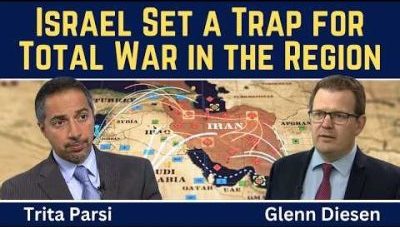
Trita Parsi: Israel Set a Trap for Total War in the Region
or go to
Aletho News Archives – Video-Images
Book Review
Why the War on Conspiracy Theories Is Bad Public Policy
By Kevin Barrett • Unz Review • February 1, 2019
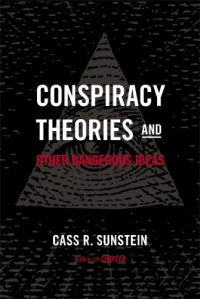 A Review of Conspiracy Theories and Other Dangerous Ideas by Cass Sunstein (based on an earlier paper co-authored with Adrian Vermeule); In Defense of Troublemakers: The Power of Dissent in Life and Business by Charlan Nemeth; and Conspiracy Theories and the People Who Believe Them, edited by Joseph E. Uscinski
On January 25 2018 YouTube unleashed the latest salvo in the war on conspiracy theories, saying “we’ll begin reducing recommendations of borderline content and content that could misinform users in harmful ways—such as videos promoting a phony miracle cure for a serious illness, claiming the earth is flat, or making blatantly false claims about historic events like 9/11.”
At first glance that sounds reasonable. Nobody wants YouTube or anyone else to recommend bad information. And almost everyone agrees that phony miracle cures, flat earthism, and blatantly false claims about 9/11 and other historical events are undesirable.
But if we stop and seriously consider those words, we notice a couple of problems. First, the word “recommend” is not just misleading but mendacious. YouTube obviously doesn’t really recommend anything. When it says it does, it is lying. … continue
Blog Roll
 Aletho News
- Putin’s key remarks on peace talks and Europe’s ‘schizophrenia’
- Trita Parsi: Israel Set a Trap for Total War in the Region
- Trump’s Iran war is on an Israeli leash
- Saudi oil boss issues global supply warning
- Riyadh Says Its Oil System Is Intact. The Numbers Say Otherwise.
- Trump and Netanyahu Want to “Finish the Job” on Iran
- US ‘one-sided dictation’ not Iran’s beliefs makes rational talks impossible: Baghaei
- Iran’s Next Strike May Not Explode. It Could Shut You Down /Col Doug Macgregor
- Iran: US political targets legitimate if assassinations return
- Iraq shuts key border crossing with Iran under US pressure: Report
- If Americans Knew
- DAILY UPDATE: Latest essential news on Palestine, Israel, & region
- The Israel Lobby’s Changing Fortunes
- AIPAC has become such a political liability that it’s shifting to a more “nimble” approach to buying politicians
- At least 160 Israeli settler attacks in 2 weeks
- Will Gaza’s Ancient Christian Community Disappear Forever?
- Israel’s vision of regional security rests on keeping Arab states weak
- Heidi Levine recounts how Palestinian youths helped save her in settler attack
- DAILY UPDATE: Latest essential news on Palestine, Israel, & region
- Trump’s Intensifying Sabotage of the ICC, for Israel’s Sake
- Israeli military detain US and UK volunteers in West Bank including Democratic NY politician Brad Lander
- No Tricks Zone
- E-Cars Reduce CO2 Emissions By Only 41% Compared To Internal Combustion Engine Vehicles
- Predictions Made By Renowned Climate Professor Over Past Decades Have Been Proven To Be Poor
- New Study Suggests Large Regions Of The Pacific Ocean Have Been Cooling For The Last 80 Years
- Germany’s Green Energy Debacle: High Energy Costs Force Kahla Porzellan to Close After 182 Years!
- New Study: 50 Years Of The Most Aggressive ‘Net Zero’ Policies Can Only Affect The Global Climate By 0.03°C
- US September “Heat” Was No Record…Many Records Set Decades Ago
- Latest European Green Energy Debacle; Portugal’s Largest Flagship Solar Park Insolvent!
- Green Energy Debacle: German Expert Professor Fritz Vahrenholt Warns Of Severe Economic And Social Consequences
- Two More Paleo Reconstructions Affirm Meters-Higher Sea Levels Across Ireland, Brazil 7000-6000 Years Ago
- New Study: Earth And Venus Surface Warmth Largely Explained By Convection And Lapse Rate, Not CO2 Or Radiation

