US Withdrawal from Syria: Postponing the Inevitable
Tim Hayward Blog | January 7, 2019
Peter Ford, former British Ambassador to Bahrain (1999–2003) and Syria (2003–2006), offers the following assessment:
At the start of the year the horizon seems to be dominated by the issue of the possible withdrawal of US troops. In reality however the more important action is elsewhere.
US withdrawal: on or not?
Every day that passes seems to bring fresh evidence that Trump’s decision is being walked back. But appearances can be misleading.
Trump’s ultra-hawkish National Security Adviser, John Bolton, is touring the Middle East apparently setting new conditions for the withdrawal with every stop he makes. We are currently told that the troops will not leave until the remnants of ISIS are mopped up, until there is certainty they cannot remerge, until Erdogan promises not to slaughter the Kurds, and until Israel’s security is absolutely assured.
It is certainly true that crushing those ISIS remnants could take some time, and as for ensuring that ISIS can never re-form that is a recipe for a never-ending US presence. The US allies, the Kurdish-dominated SDF, are currently retreating from parts of Eastern Deir Ez Zor because they are meeting hostility from Arab villagers, who resent the abduction of their young men and even children into the ranks of the SDF. While the departure of the sprinkling of 2000 US troops will hardly leave a vacuum as far as the fight against ISIS is concerned the departure of the SDF from certain areas certainly will. Only the government’s Syrian Arab Army (SAA) could enter these Arab areas, and that is precisely what some clan leaders are calling for (calls ignored of course by our media).
Extracting assurances from Erdogan is also likely to prove difficult, especially if (like Bolton, no doubt) you will perhaps not strain every sinew to extract them. Erdogan however has already said that he will have no need to invade if the Syrian Army interposes itself in a 40 mile deep buffer zone. To guard against this possibility of receiving yes for an answer Ambassador James Jeffrey, presidential envoy for Syria, is being dispatched to talk to the Kurds and deter them from pacting with Assad and the Russians.
The irony here is that it is the very presence of the US (and UK) forces which prevents the US conditions for withdrawal being met. While the US refuses to cooperate with the Syrian Army and Russia in fighting ISIS the holy warriors will always have somewhere to hide. And while the US keeps promising protection to the Kurds, and the Kurds believe them, then the YPG will go on infuriating the Turks and the Turkish threat will not go away.
But will the Kurds believe Jeffrey? Will they put their entire existence at the mercy of Trump’s whims and a frayed US tripwire? It seems not, at least to judge by reports that Kurdish negotiations with Damascus and the Russians are well advanced.
In this game for the prize of Kurdish affections Damascus holds most of the cards. To begin with the Kurds have never fought or wanted to fight the SAA and never wanted independence. They do want a measure of autonomy which they would like to see guaranteed in a new federal constitution. Damascus will have difficulty swallowing that, not least because other restive areas like the South might also want autonomy. Assad will probably reckon that he can clinch a deal with a few concessions rather than a federal constitution: use of Kurdish language in schools, incorporation of the peshmerga into the SAA. He can afford to sit on his hands indefinitely: the small US presence in the remote Syrian Far East is no existential strategic threat to him, while the endless lingering will be a constant embarrassment to Trump. Most crucially of all, the Kurds know now, if they hadn’t realised it before, that one day the US tripwire will indeed be removed and they will get no deal at all from Damascus if they do not strike one now.
We can expect to see bluster, smoke screens, reversals and and posturing on all sides in the coming days but ultimately it must be considered likely that at some point the Kurds, when they judge that no more concessions can be extracted from Assad, could ask the US to leave. Ah! That would upend everything. Actually they won’t even need to ask. All they have to do is conclude a deal. Then it will be game, set and match to Assad and the Russians. The real issue may soon become how to save American face and here we can expect to see some adroit Russian diplomacy. There is already talk of drafting UAE and Egyptian forces into Manbij, the key town under Turkish threat.
Before we reach that point however we must address two loose ends. Firstly Trump’s statement, when he was under fire and needed an excuse, that the Turks were going to deal with ISIS. This idea is a total nonsense but Bolton on the Turkey leg of his tour must go through the motions of exploring it with Erdogan. He will be told that for Turkish troops to cross over a hundred miles of hostile Kurdish territory to deal with ISIS in Deir Ez Zor Turkey would need the support of more US resources than are in the area already. Turkish generals are horrified at the idea. It will be quietly dropped. Anyway the preferred plan is for the US forces with the SDF to use all this new time at their disposal to do the necessary (except that, as mentioned, the SDF is something of a broken reed).
Secondly, and this is even more absurd, Bolton says the US is not going to withdraw its ‘a couple hundred’ troops from the ‘key’ Al Tanf enclave which straddles the Syrian/Jordanian/Iraqi borders, because of its strategic position blocking completion of the fabled ‘land bridge’ which we are told links Iran with Syria and Lebanon. It is quite simply grotesque that anyone with pretentions to being a strategist can appear seriously to believe this and that the media dutifully regurgitate the US talking points on it without question. While it is true that Al Tanf has been an important crossing point, all we are talking about here is bit of inconvenience. There are other crossing points a few miles to the North East. Anyway Iran airlifts most of its supplies to Damascus and Beirut and wouldn’t dream of ferrying sensitive equipment through Iraqi territory, pullulating with US troops and agents. Don’t they have maps in the Pentagon? It can perhaps be most charitably assumed that the Al Tanf gambit is part of the face-saving which has to be done, this time to be able to claim that the US has ensured that Iran will not become more ‘entrenched’ (what does this much bandied about word mean? They never tell us) and Israel’s concerns are not being overlooked.
Assad will not care less if the US wants to stay on in Al Tanf. The only settlement is the Ar Rukban encampment housing about 60,000 displaced persons, many of them ISIS and their families who fled from Raqqa. The US troops do not dare enter this encampment. Assad will be perfectly happy for the US to keep holding this tar baby and can lambast the US for blatant breach of international law, because after ISIS is gone the last vestige of any legal excuse for the US presence will also be gone. (Bolton tells us that the US constitution is basis enough, so now we know.)
Syria comes in from the cold
Meanwhile Syria’s rapprochement with much of the Arab world has proceeded apace. The President of Sudan visited. The UAE reopened its embassy. Bahrain says it will follow. Flights to Tunisia have resumed. It seems likely that Assad will be invited to the Arab Summit in March in Beirut and Syria will be readmitted to the Arab League. Italy is said to be close to reopening its embassy. The British Foreign Secretary, Jeremy Hunt, has sourly accepted that Assad is going to remain President ‘for a while’. Although reports that the British Embassy are being refurbished may turn out to be a false dawn, the day can surely not be far off when the UK informs Damascus that it proposes to reopen. However the issue will not be what concessions Syria must make to receive this favour but rather what concessions the UK must make if it is not to be even more totally excluded from the diplomacy around the Syrian question than it is already. The Syrians would be remiss not to require a lifting of sanctions as a minimum.
The economic war
The most important aspect of these rapprochements is the economic one. Syria’s immense battle ahead is economic recovery. The gains on the battlefield may be eroded if the government fails to get the country on its feet again. The problems seem never ending. One small example: 84,000 children are fatherless, the offspring resulting from rapes and forced temporary marriages by jihadis.
The Western media gleefully reckons that Syria needs $400 billion for reconstruction. The Western powers currently set their faces against contributing anything to this and indeed seek to push Syria deeper into the mire with punitive sanctions. A surer way of creating the conditions for a resurgence of ISIS could hardly be imagined.
Hence the importance of rapprochement with the Gulf countries. While Trump’s claim that Saudi would pay for recovery was probably another of Trump’s mis-statements, it is not fanciful to imagine the big Gulf development funds – the Saudi, Kuwaiti and Arab Development Funds, and some of the UAE funds – providing enough to make a good start. Syria in any case could not absorb huge amounts to begin with. Not least it would generate massive inflation.
Idlib
The Idlib issue, presently on hold, gets worse rather than better. Hayat Tahrir Ash Sham (HTS), the group everyone (except Qatar) considers terrorists, have fought and displaced other armed groups from a string of towns, some in the buffer zone which the Turks were supposed to have cleansed of the most radical groups. The groups in Idlib mount regular forays or artillery attacks into government-controlled areas, attracting air raids in retaliation.
Lest we forget
Within two days of each other John Bolton and Jeremy Hunt publicly reminded Syria that it must not run away with the idea that it could get away with more chemical attacks now that it seems to be in the ascendant. This seems to be the last lingering hope of all those who can never have too much Western military intervention in Syria, that an incident can be manufactured to justify heavy bombing. Unfortunately for them, the Syrians and Russians appear to be a step ahead: only the Russians seem to be doing any bombing. While a compliant media would dutifully echo possible Pentagon claims that any planes or helicopters were Syrian rather than Russian, or that black is white, this tactic does make that a tad more difficult.
There is broad international support for US withdrawal from Syria – but will Washington listen?
21st Century Wire | January 7, 2019
Forward by Daniel McAdams, Executive Director of the Ron Paul Institute:
The mainstream press coverage of President Trump’s announcement that he would be removing US troops from Syria has been unanimously apocalyptic. Journos who until a few days ago couldn’t care less about the Kurds (certainly not when US president after US president has used them as a cat’s paw and then abandoned them to their fate), were all of a sudden up in arms warning about an impending slaughter with the blood dripping squarely onto Trump’s hands.
In fact, US weapons, training, and backing had carved out a de facto super-sized Kurd-controlled section of northern Syria which it does not take a geopolitical expert to understand would incense NATO ally Turkey. Why prop up the Kurds and in the process infuriate Erdogan? The US-led regime-change program simply did not have many other boots on the ground to turn to. After years of arming jihadists whose masks slipped quickly thereafter to reveal al-Qaeda or ISIS markings, the game was up for the “Assad must go” crowd and the only move left was to pretend that a proxy Kurd militia was something called the “Syrian Democratic Forces.” When in fact it was nothing of the sort. It was simply the Kurds, rented by Washington.
And the bloodbath the media and neocons warned would come about should Trump dare reconsider another US forever war? More lies and bluster. The Kurds are re-considering their foolish refusal to partner more closely with the Syrian government against foreign-sponsored insurgencies. Just last week, they began negotiations with Damascus to reconcile and forestall a massive Turk incursion.
But the Kurds acting in their own best interest is a big problem for the neocons. Sen. Lindsey Graham, who has given himself credit for slowing Trump’s announced withdrawal from Syria, has gone on record claiming it would be a “major disaster” if the Kurds in Syria aligned themselves with the Syrian (aka their own) government. To Graham and his neocon cohort, the US can never leave any war. Undeclared wars are just fine with them, but declared peace is a “major disaster.”
Which brings us back to public opinion. With the neocons clogging up the airwaves with predictions of gloom and doom if the US ends its illegal occupation of Syria and with the mainstream media in its continuing Pravda-esque lock-step when it comes to the US global military empire, something quite remarkable has happened: the American people are happy that Trump plans to bring the troops home. According to a recent poll, more than half of Americans surveyed support the removal of US troops from Syria and Afghanistan.
Overseas, support for President Trump’s moves is also significant. The Baroness Caroline Cox of the UK House of Lords, has sent President Trump a letter, with former UK Ambassador to Syria Peter Ford, and on behalf of a network of “concerned parliamentarians, senior clerics, former ambassadors and academics,” congratulating the president on his announced pull-out.
The Baroness writes:
Your courage in doing the right thing, in the face of conflicting advice and an onslaught from ill-informed politicians, a blinkered media and brittle allies, commands respect. We salute you.
The letter continues with a call for the end of US sanctions on Syria, which, she writes “only hobble its economy, hamper refugee return, cause mass unemployment, hinder recovery and create conditions for a re-emergence of ISIS.”
She warns Trump that there’s nothing his critics (like Lindsey Graham) would like more than a resurgence of ISIS in the areas left by US troops so as to make Trump look wrong in withdrawing. An end of sanctions would help strengthen the Syrian government and better enable it to fight against ISIS.
Let’s hope President Trump heeds the wise counsel of very engaged experts like Baroness Cox. Perhaps next time Sen. Graham demands a meeting to harangue Trump on a troop pull-out he can beg off. Let Graham and Bolton stew in their own juices in some West Wing broom closet. Better yet…maybe Trump should consider some additional personnel changes.
This OpEd was originally published at the Ron Paul Institute for Peace and Prosperity. Below is the full text of the letter to President Trump…
OPEN LETTER OF THANKS TO PRESIDENT TRUMP FROM CO-FOUNDERS OF THE GLOBAL NETWORK FOR SYRIA (GNS)
The Honorable Donald John Trump,
President of the United States of America
White House, 1600 Pennsylvania Avenue NW
Washington DC 20500
United States of America.
December 31st 2018
Dear Mr President,
Please allow us to thank you for your bold decision to bring American forces home from Syria, mission accomplished.
Our Network of concerned parliamentarians, senior clerics, former ambassadors and academics has campaigned for just such an essential step on the way to bringing peace and stability back to Syria.
Your courage in doing the right thing, in the face of conflicting advice and an onslaught from ill-informed politicians, a blinkered media and brittle allies, commands respect. We salute you.
We urge you now to carry on as you have started by lifting sanctions on Syria. Keeping sanctions on Syria to keep it weak can only hobble its economy, hamper refugee return, cause mass unemployment, hinder recovery and create conditions for a re-emergence of ISIS. This will be a gift to your enemies, who long to see you proven wrong on the defeat of ISIS.
Continuing sanctions will also prevent American firms from benefitting from the multi-billion dollar recovery projects which will be funded by rich Arabs and otherwise benefit the Chinese and the Russians.
Congratulations, Mr President, on taking a momentous step which shows true statesmanship. We pray that you continue on this wise path and take the follow up steps essential so that your actions are not undermined.
Yours sincerely,
The Baroness Cox, Independent Member of the House of Lords, London
Peter Ford, British Ambassador to Syria, 2003-6
***
A copy of the original letter can be found here: Open Letter to President Tr… on Scribd
Canada’s Political Parties Support for Racist Jewish National Fund
By Yves Engler | Dissident Voice | January 6, 2019
An explosive CBC expose Friday on the Jewish National Fund should be the beginning of the end for this powerful organization’s charitable status. But, unless the NDP differentiates itself from the Liberals and Conservatives by standing up for Canadian and international law while simultaneously opposing explicit racism, the JNF may simply ride out this short bout of bad publicity.
According to a story headlined “Canadian charity used donations to fund projects linked to Israeli military”, the JNF has financed multiple projects for the Israeli military in direct contravention of Canada Revenue Agency rules for registered charities. The organization has also funded a number of projects supporting West Bank settlements, which Global Affairs Canada considers in violation of the Fourth Geneva Convention. The story also revealed that the Canada Revenue Agency, under pressure from Independent Jewish Voices and other Palestine solidarity activists, began an audit of the state-subsidized charity last year.
After detailing the above, (which provoked hundreds of mostly angry comments from readers) the story notes that the “JNF has had strong relations with successive Conservative and Liberal governments.” The CBC published a picture of politicians congregated at the Prime Minister’s residence above the caption “Laureen Harper poses with JNF Gala honorees during a group visit to 24 Sussex Drive in 2015.”
But the JNF, like all good lobbyists, has hedged it political bets and the story could have noted that the social democratic opposition party was represented at this JNF gala as well and has dutifully supported the dubious “charity”. NDP MP Pat Martin spoke at the JNF event Harper organized to “recognize and thank the people that have helped to make JNF Canada what it is today.” In 2016 NDP foreign critic Hélène Laverdière participated in a JNF tree planting ceremony in Jerusalem with JNF World Chairman Danny Atar and a number of its other top officials. The President of the Windsor-Tecumseh Federal NDP riding association, Noah Tepperman, has been a director of JNF Windsor since 2004 and has funded the organization’s events in London, Ontario.
In 2015 Ontario NDP leader Andrea Horwath published an ad in a JNF Hamilton handbook and offered words of encouragement to its fundraiser while Nova Scotia Premier Darrell Dexter planted a tree at a JNF garden in 2011. Manitoba NDP Premier Gary Doer was honoured at a 2006 JNF Negev Dinner in Winnipeg and cabinet minister Christine Melnick received the same honour in 2011. During a 2010 trip to Israel subsequent Manitoba NDP Premier Greg Selinger signed an accord with the JNF to jointly develop two bird conservation sites while water stewardship minister Melnick spoke at the opening ceremony for a park built in Jaffa by the JNF, Tel Aviv Foundation and Manitoba-Israel Shared Values Roundtable. (In 2017 Melnick won a B’nai Brith Zionist action figures prize for writing an article about a friend who helped conquer East Jerusalem and then later joined the JNF).
Besides NDP support for this dubious “charity”, the story ignored the JNF’s racist land-use policies. The JNF owns 13 per cent of Israel’s land, which was mostly taken from Palestinians forced from their homes by Zionist forces in 1947-1948. It discriminates against Palestinian citizens of Israel (Arab Israelis) who make up a fifth of the population. According to a UN report, JNF lands are “chartered to benefit Jews exclusively,” which has led to an “institutionalized form of discrimination.” Echoing the UN, a 2012 US State Department report detailing “institutional and societal discrimination” in Israel says JNF “statutes prohibit sale or lease of land to non-Jews.” Indicative of its discrimination against the 20% of Israelis who aren’t Jewish, JNF Canada’s Twitter tag says it “is the caretaker of the land of Israel, on behalf of its owners — Jewish people everywhere.” Its parent organization in Israel — the Keren Kayemet LeYisrael — is even more open about its racism. Its website notes that “a survey commissioned by KKL-JNF reveals that over 70% of the Jewish population in Israel opposes allocating KKL-JNF land to non-Jews, while over 80% prefer the definition of Israel as a Jewish state, rather than as the state of all its citizens.” While such exclusionary land-use policies were made illegal in Canada seven decades ago, that’s the JNF’s raison d’être.
An organization that recently raised $25 million for a Stephen Harper Bird Sanctuary, JNF Canada has been directly complicit in at least three important instances of Palestinian dispossession. In the late 1920s JNF Canada spearheaded a highly controversial land acquisition that drove a 1,000 person Bedouin community from land it had tilled for centuries and in the 1980s JNF–Canada helped finance an Israeli government campaign to “Judaize” the Galilee, the largely Arab northern region of Israel. Additionally, as the CBC mentioned, JNF-Canada built Canada Park on the remnants of three Palestinian villages Israel conquered in 1967.
A map the JNF shows to nine and ten-year-olds at Jewish day schools in Toronto encompasses the illegally occupied West Bank and Gaza, effectively denying Palestinians the right to a state on even 22 percent of their historic homeland. Similarly, the maps on JNF Blue Boxes, which are used by kids to raise funds, distributed in recent years include the occupied West Bank. The first map on the Blue Box, designed in 1934, depicted an area reaching from the Mediterranean into present-day Lebanon and Jordan.
The JNF is an openly racist organization that supports illegal settlements and the Israeli military. Many NDP activists understand this. The party’s MPs now have a choice: If they stand for justice and against all forms of racism, for the rule of international law and fairness in the Canadian tax system, they will speak up in Parliament to keep this story alive. The NDP needs to set itself apart from the Liberals and Conservatives by following up on the CBC’s revelations to demand the Canada Revenue Agency rescind the JNF’s charitable status.
Syria: US-Led Coalition Creating Appropriate Conditions for ISIL to Survive, Expand
Al-Manar | January 6, 2019
Syrian Foreign Ministry lashed out at the US-led coalition over crimes committed against civilians in the war-torn country, stressing that the coalition have been creating appropriate conditions for ISIL terror group to survive.
In a letter sent on Saturday to both UN Secretary-General and the UN Security Council, the Syrian ministry said “the continuous massacres against the Syrian civilians and destroying their houses and livelihoods by the illegitimate US-led coalition confirms the necessity to address the disregard showed by countries of this coalition with regard to UN Charter and the provisions of international law.”
The ministry was referring to strikes carried out by warplanes of the US-led coalition in Syria, the last of which were in al-kishkiah and al-Shaf’a villages in Deir Ezzor southeastern countryside.
“Since its establishment, the international coalition’s practices only served to create the appropriate conditions to enable Daesh (ISIS) terrorist organization to survive and expand again,” the letter read, according to SANA news agency.
The ministry meanwhile, renewed its demand that the Security Council “should shoulder its responsibilities and take immediate action to stop these crimes, attacks, massacres, and systematic destruction of infrastructure in Syria and punish their perpetrators.”
Senate’s First Act: “An Implicit Rebuke” Of Trump’s Syria Draw Down
By Tyler Durden – Zero Hedge – 01/05/2019
The Republican-held Senate’s first order of business as it reconvened on Friday for 2019 was to push back against President Trump’s planned Syria withdrawal, as the first bill Republican leadership introduced, led by hawk Marco Rubio, is being described as “an implicit rebuke” of the president’s Syria policy.
Senate Bill 1, expected to be one of the first pieces of legislation under consideration of the new Senate, was introduced Thursday by Sen. Marco Rubio (R-FL) is being co-sponsored by Majority Leader Mitch McConnell of Kentucky and incoming Senate Foreign Relations Committee Chairman Jim Risch of Idaho. Sen. McConnel subsequently announced this means Congress is finally set to debate Syria policy; however ironically at the very moment Trump is attempting a “full” and “immediate” pull out of some 2,000+ US forces. This after US officials reiterated on Friday that “no fixed deadline” for troop withdrawal has been given and they would seek to ensure “no power vacuum” in previously occupied northeast Syria would remain.
NBC describes the proposed legislation, which focuses on a new round of sanctions against Damascus, as follows:
Although Congress can’t force the commander-in-chief to keep troops in Syria, Senate aides say the move is designed to illustrate the need for a strong, continuing U.S. presence in the Middle East and re-assert the role of Congress on national security. It comes as many of Trump’s GOP allies have joined Democrats in deploring his announcement of a Syria withdrawal without consulting allies and lamenting the subsequent resignation of former Defense Secretary Jim Mattis.
The Senate is moving quickly to assert its point-of-view on U.S. policy regarding Syria and in the broader Middle East, and it could serve as a rebuttal to the decision by President Donald Trump to pull back U.S. forces from Syria.
Of note is that Congress is only attempting to “re-assert” its role on national security the moment a US president is seeking to pull out of the Middle East.
Statements by the bill sponsors referenced consulting “steadfast” allies first. While naming Israel and Jordan specifically, Foreign Relations Chairman Jim Risch said, “This package of legislation is an important step toward finishing the work of the last Congress. Israel and Jordan have been steadfast allies of the United States that deserve this support.”
Also noticeable was the complete lack of appeal to American self-defense and the unpopularity among the American public of remaining in Syria, according to recent polls.
Sen. Risc continued to cite foreign allies first and foremost as necessitating the bill: “Also, it is vital to confront Syrian government atrocities and end discrimination against Israel,” he said while calling for it to move forward rapidly.
And well-known Iran hawk Sen. Rubio echoed the same:
It is in America’s national security interests to ensure that our allies in the Middle East like Israel and Jordan remain secure amid the region’s growing destabilizing threats posed by Iran and Syria’s Assad regime… This important bill will also impose new sanctions against the Assad regime and its supporters who continue to commit horrific human rights violations against the Syrian people.
On Wednesday President Trump altered his language after immense pushback in Washington, saying the US will get out of Syria “over a period of time” and in such a way that will protect America’s Kurdish partners on the ground, at a moment pro-Turkish forces backed by Turkey’s army are set to invade and annex Kurdish enclaves in the north of the country.
Notably, Trump also told reporters on Wednesday: “Syria was lost long ago. we’re not talking about vast wealth. we’re talking about sand and death,” while also noting: “It’s not my fault. I didn’t put us there.”
But it appears senators like Rubio, McConnell and Risch want to come keep the US there indefinitely, continuing what’s unfortunately becoming an American tradition of “forever wars” and quagmires.
Canada charity used donations to fund Israel army bases
MEMO | January 4, 2019
A Canadian charity has been investigated for using its donations to fund infrastructure projects on Israeli army and naval bases.
The Jewish National Fund of Canada – an affiliate of parent organisation Keren Kayemeth LeIsrael or the Jewish National Fund (KKL-JNF) – used its donations to fund infrastructure projects on Israeli army, air and naval bases, in contravention of Canadian law.
The revelation came as JNF Canada was subjected to an audit by the Canada Revenue Agency (CRA), a federal agency that administers tax laws for the Canadian government, after a Canadian researcher filed a complaint about the charity’s spending. According to local news site CBC :
While no law bars a Canadian citizen from writing a cheque directly to Israel’s Ministry of Defence, rules do ban tax-exempt charities from issuing tax receipts for such donations, and also ban donors from claiming tax deductions for them.
CBC further explains that: “In its guide for Canadian registered charities carrying out activities outside Canada, the CRA states plainly that ‘increasing the effectiveness and efficiency of Canada’s armed forces is charitable, but supporting the armed forces of another country is not’.”
Though JNF Canada claims it stopped funding such projects in 2016, CBC points out that this would not stop the Canada Revenue Agency from taking action against the charity for funding projects in contravention of these clearly-stated guidelines.
Prior to 2016, JNF Canada’s contributions to projects associated with the Israeli military appear to have been expansive. One example indicates that JNF Canada provided funding for “a fitness area for the regular army staff at the Gadna base in Sde Boker,” a kibbutz (agricultural community) south of Beer Sheba in southern Israel. The charity describes Israel’s Gadna programme as “a special programme for young people in Israel that prepares them for their service in the [Israeli army]”.
The charity also funded other military infrastructure projects, including: “helping the development of the Bat Galim training base complex area” at Israel’s naval base in Haifa; upgrading the canteen for Israel’s 124th Helicopter Squadron at Palmachim Air Force Base, north of Ashdod; and developing a canteen at Nevatim Air Force Base, east of Beer Sheba.
As CBC points out, JNF Canada has a long history of supporting controversial projects, in 1984 raising funds for Canada Park which is built on the ruins of several villages near Latrun, east of Ramle. The park sits beyond the 1949 Armistice Line – often known as the Green Line – and as such is considered occupied Palestinian territory, though Israel has since cut the park off from the rest of the West Bank with its Separation Wall. JNF Canada has nonetheless continued to fund the maintenance of the park.
International donations to the Israeli army were thrust into the spotlight in November when Hollywood celebrities raised $60 million at the Friends of the Israel Defence Forces (FIDF) annual gala. Held in Beverly Hills, California USA, the gala was attended by more than 1,200 supporters of Israel, including prominent actors and singers like Ashton Kutcher, Pharrell Williams, Gerard Butler and Katharine McPhee. An internet campaign was quickly launched to criticise the celebrities’ involvement, starting the #HollywoodFundsTerror hashtag on Twitter.
Just a few weeks earlier, another FIDF gala held in New York raised $32 million for the Israeli army and was attended by key Israeli establishment figures, including Israel’s Ambassador to the United Nations Danny Danon and Israel’s Consul General in New York Dani Dayan. Two US-Jewish organisations – Or Lachayal, which works to strengthen the Jewish identity of the Israeli army, and Nefesh B’Nefesh, which promotes Jewish immigration to Israel – were among the biggest donors at the gala.
UNESCO should cry no tears over Israel’s departure
By Dr Daud Abdullah | MEMO | January 2, 2019
There will be no tears now Israel and the US have withdrawn from the United Nations Educational, Scientific and Cultural Organisation (UNESCO). Both countries have undermined the organisation’s credibility and brought it into disrepute – UNESCO will be better off without them.
UNESCO is governed by several international accords, to which all members are treaty-bound to adhere. The 1954 “Hague Convention for the Protection of Cultural Property in the Event of Armed Conflict” is arguably the most important international instrument for the protection of cultural property – defined as monuments of architecture, art or history; archaeological sites; buildings of historical or artistic interest; works of art; manuscripts, important books and archives, as well as scientific collections.
Both The Hague Convention and its Protocol have been incorporated into international customary law; their provisions are, therefore, binding on all parties to conflict, regardless of whether or not they are signatories to these instruments. In recent years, the protection of cultural heritage has been deemed so important that the Statute of the International Criminal Court (ICC) has recognised the destruction and seizure of buildings dedicated to religion, education, arts, science or charitable purposes, as well as historic monuments, a war crime.
Yet throughout its 70-year history, Israel has shown an alarming disregard for UNESCO’s rules and ideals, seeking exemptions and privileges not granted to any other member state. Its real grievance with UNESCO is that it wants the organisation to remain silent and, in doing so, endorse its theft and destruction of Palestinian cultural heritage.
Israeli soldiers and civilians have stolen innumerable objects of historical, cultural and archaeological importance to Palestine. Bizarrely, on the same day that Israel announced its withdrawal from UNESCO, one of the country’s leading daily newspapers, Haaretz, published an article under the title “Israel Displays Archaeological Finds Looted from West Bank”. This was in reference to a Civil Administration exhibition currently being held at the Bible Land Museum in Jerusalem.
As a contracting party to The Hague Convention, Israel is obliged “to prohibit, prevent and, if necessary, put a stop to any form of theft, pillage or misappropriation of, and any acts of vandalism directed against, cultural property”. Yet, with the backing of the US, it chooses to do just the opposite.
The theft of archaeological items is bad enough, but their wilful destruction is far worse. Israel’s construction of the Separation Wall – which encircles its settlements across the occupied West Bank – has often required large-scale archaeological excavation. Palestinian officials believe that an estimated 1,100 archaeological landmarks have been ruined or destroyed by the construction of the wall.
Furthermore, as a matter of policy Israel refuses to share with Palestinian researchers the data and objects obtained from its excavations in the occupied territories. Although Israel signed the UNESCO “Recommendation on International Principles Applicable to Archaeological Excavations” in 1956, it has refused to ratify the 1970 “UNESCO Convention on the Means of Prohibiting and Preventing the Illicit Import, Export and Transfer of Ownership of Cultural Property”. Instead, it continues to argue that international law does not prohibit excavation in occupied territories.
Around 53 per cent of the archaeological sites in the occupied West Bank are located in Area C, in which Palestinians are prohibited from conducting exploration, restoration and development. Unsurprisingly, during the first five years of the Oslo Accords (1993-98), only nine out of the 171 excavation permits issued by the Israeli Staff of Antiquities were granted to Palestinian academic institutions.
All told Israel has, for its own partisan reasons, never been a committed member of UNESCO. Its discomfort always lay in the fact that it could not persuade the organisation’s members to acquiesce to its theft and destruction of Palestinian cultural heritage. Disagreement and divorce seemed inevitable, given that UNESCO has declared some of the sites affected by Israel’s occupation as World Heritage sites.
Contrary to the Israeli-US claim, UNESCO has never adopted a policy of singling-out Israel for criticism or censure – the only reason it has been subjected to scrutiny is because it has, for decades, refused to act in accordance with UNESCO’s rules.
Were UNESCO to turn a blind eye to Israel’s looting and vandalising of Palestinian cultural heritage, this would be nothing less than a dereliction of duty. Furthermore, to appease Israel would set a dangerous precedent for rogue states and non-state actors to act with similar impunity. Instead of weeping over their departure, UNESCO must now feel deeply relieved that it will no longer be called upon to act against its principles, values and interests.
Thousands of West Bank farmers denied access to their lands in 2018
Palestine Information Center | January 3, 2019
OCCUPIED JERUSALEM – Israel has drastically reduced the number of Palestinian farmers who are allowed to work their lands located between the separation barrier or wall and the Green Line, according to Israeli official data.
According to Haaretz newspaper, in 2018, 72 percent of Palestinian requests for farming permits were rejected, compared to 24 percent in 2014.
There are also very few permits issued for relatives of the plot owner who work with him and paid laborers.
This information was sent by the Israeli army’s civil administration to Hamoked—the center for the defense of individual human rights—in response to a freedom of information law request, according to the newspaper.
However, that information lacks valuable data concerning, for example, the number of seasonal, short term permits which Hamoked believes often replace the long term permits.
The statistics correspond to reports submitted by farmers to Hamoked, to Machsom Watch activists and to Haaretz about bureaucratic obstacles that have been added over the past four years to get the permits to cultivate their land.
The land between the barrier and the Green Line, which Israel refers to as the “seam zone,” totals 137,000 dunums (33,853 acres), a report released by Haaretz pointed out.
Since the start of 2018 through November 25, the civil administration approved only 1,876 requests for farming permits of the 7,187 requests submitted, which constitutes an unprecedented refusal rate of 72 percent. This compares to a refusal rate of 24 percent in 2014, when the number of requests totaled 4,288, and the number of permits issued was 3,221.
Hamoked, has been assisting farmers who are denied permits since 2009, said the obtained data confirm that “contrary to the high court of justice ruling that recognizes the residents’ right to work their lands with their families and employees, the army is acting systematically to deprive the Palestinians of this basic right, to restrict the entry of Palestinian farmers into the seam zone and to gradually dispossess them of their land.”
Imperialism Abhors a Void: Guest: Sarah Abed
The Rabbit Hole | January 3, 2019
Cindy Sheehan’s Soapbox
Guest: Sarah Abed
Topic: US “Withdrawal” from Syria
On this episode of Cindy Sheehan’s Soapbox we discussed Trump’s announcement to withdraw US troops from Syria, the media’s reaction, and the impact this will have on Kurdish militias and Syria’s ultimate fight against imperialism.
Below are some of the points that I made during our chat (this is not a full transcript) or some thoughts I would like to expand on.
Cindy asked what I make of Trump’s announcement to withdraw 2,000 troops from Syria.
My response:
Trump had stated during his campaign and his presidency and even prior to that during Obama’s presidency in 2013 that he did not think we should be in Syria, nor should we be bombing Syria, that it was a waste of money and lives and that the Arab League and neighboring countries should be the ones to step up to the plate.
I think this was one of the reasons that many people voted for him, because of his non-interventionist foreign policy, which was in stark contrast to that of Hillary Clinton.
In April, of this year he had announced that he wanted to pull the US out of Syria and then just days later there was an alleged chemical weapons attack that was pinned on the Syrian government in Douma, to which Trump responded with attacking multiple targets along with his allies the UK and France.
This of course derailed his plan to pull out US troops, which is the exact outcome that the terrorists that staged the whole theatrical performance had wanted. And we have seen this sort of thing happen time and time again during the war. Whenever the Syrian army and government have made significant progress new allegations and attacks are made against them in corporate media in order to garner international support for military, political intervention as well as increased sanctions.
There are other factors at play with this latest withdraw announcement which was made on December 19th, in addition to standing by his America first promise, campaign statements, saving money and lives, there’s the fact that Turkey’s president Erdogan had threatened to attack the Kurdish militias on his border, if the US didn’t have them removed. He sees the YPG (People’s Protection Units) which was rebranded at the request of the US into the SDF (Syrian Democratic Forces) as an extension of the PKK (Kurdistan workers party) which is a terrorist group that has been in conflict with the Turkish state for decades.
As I had written about back in March the Olive branch operation in Afrin proved that NATO alliances are stronger than any other alliances and that the US will choose Turkey over the Kurds and that’s what we are seeing happen right now. Some have also speculated that Israel may have given the US a heads up that it would be engaging in an intense bombing campaign and that US troops should be sent home so that they are not caught in the crosshairs.
Cindy asked what I make of the reaction by democrats, liberals, celebrities etc.
My response:
It would be comical if it wasn’t actually dangerous. In their blind opposition to anything and everything that Trump says these overnight analysts and pundits started claiming that if US troops were to withdraw from Syria then Kurds would be annihilated by Turkey or succumb to some other equally horrible fate.
What we have seen over the past few days however is that leaders of Kurdish militias have actually reached out to the Syrian government and asked that they step in and take back Manbij and all the territory under their control west of the Euphrates in order to protect them against Turkey. This is a clear shift in their political alliance away from the US and towards Syria and Russia. Turkey will not directly confront the Syrian army so Trump’s announcement could actually signify a big step towards peace in this almost eight-year western imposed insurrection.
The US entered Syria illegally and has since set up over a dozen military bases and supported the Kurdish militias during the last few years only. Prior to using the Kurdish militias as a tool to create chaos and division in Syria, the US was predominately supporting the hardcore Al Qaeda-linked terrorists in the Free Syrian Army and an assortment of other alphabet soup groups who they affectionately referred to as “moderate rebels” to topple the secular Syrian government.
Had the US not supported the Kurdish militias they would have not had the motivation to turn against the Syrian state. During the beginning of the war, the Kurds were fighting with the Syrian army against terrorists, by the way some still are and many Kurds in Syria are not in agreement with the separatist ambitions of the Kurdish militias.
I want to stress the fact that before 2011 Kurds, Arabs, and Christian minorities lived peacefully in Syria and till now they are NOT the majority. They do not have any justifiable claims to the north eastern region (which also happens to be the most agriculturally and oil rich part of the country) or any other part of Syria. They are a nomadic people and I do not mean that in a condescending way at all but to illustrate that they came into Syria in waves to escape mistreatment in neighboring countries and were treated fairly and given equal rights. Not all Kurds envision a unified Kurdistan that would span four different sovereign countries (Turkey, Iraq, Syria, and Iran). Most Kurdish movements and political parties are focused on the concerns and autonomy of Kurds within their respective countries. Within each country, there are Kurds who have assimilated and whose aspirations may be limited to greater cultural freedoms and political recognition.
It’s also worth noting that only Israel is their main and really only supporter and their plans for an independent Kurdistan align almost perfectly with Israel’s greater Israel plan. They have historically been used by Israel and NATO.
Cindy asked about the demands being made that Russia or Iran should withdraw from Syria if US troops are to be withdrawn.
My response was basically that Russia, Iran, and Hezbollah are there with the Syrian government’s permission. Whereas the US, UK, France, and Turkey are there illegally and need to leave. Cindy noted and I agreed that it’s a false equivalency and a logical fallacy.
We also spoke about fasting to raise awareness #illuminateYemen for the entirely man-made and avoidable Saudi war and genocide that’s been going on for over three years and nine months. We discussed the latest developments and how Saudi Arabia is outsourcing their front line fighters with children and men from Dafur, Sudan and paying their families $10,000.
My response:
Fasting for seven days was a very humbling experience. The war on Yemen is truly heartbreaking especially because it is entirely man-made and avoidable. It’s so important for us to continue to raise awareness and get people to talk about it to literally everyone they know. For the past 3 years and nine months the murderous Al Saud regime, has been bombing civilians using weapons bought from the US, UK, and Germany, what they are doing is nothing short of committing genocide and deliberately starving Yemeni’s them through blockades. Tens of thousands have been killed since it began.
There was actually a report in the New York Times today that Saudi Arabia was recruiting children from Darfur to fight on the front lines and paying their families $10,000. Sudan has been part of the Saudi-led alliance, and deployed thousands of ground troops to Yemen. In the NYT report they said that five Sudanese fighters who had returned from Yemen told them that that children made up 20-40 percent of their units in Yemen.
The fact that House of Saud is on the UN human and woman’s rights council while also being the leading violator in crimes against humanity and the main sponsor of terror in the world shows the western worlds blatant hypocrisy. A United Nations-sponsored peace agreement was signed in Sweden earlier this month, and was agreed upon by both sides to implement a ceasefire in Hodeida. The panel will be meeting again on January 1 to discuss “detailed plans for full redeployment”. Every effort needs to be made for this conflict to end.
Majority of UN condemnations directed at Israeli crimes
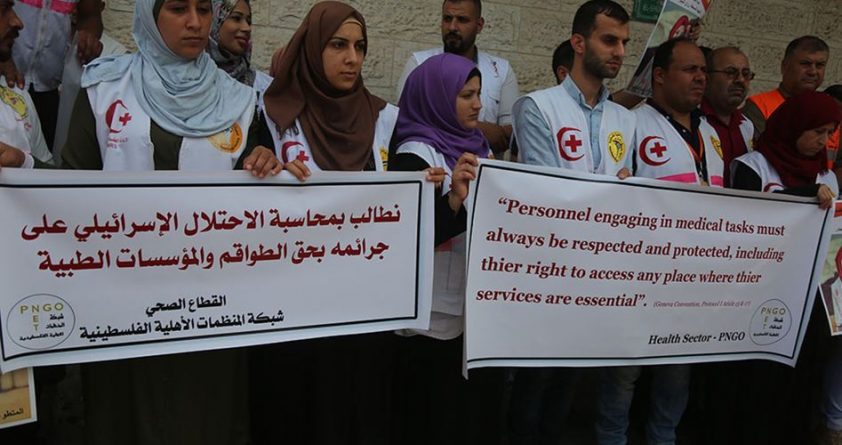
Palestine Information Center – January 1, 2018
OCCUPIED JERUSALEM – Over the course of 2018, the United Nations has voted to adopt some 27 condemnations — the vast majority of which were directed at Israel.
According to Hillel Neuer, executive director of United Nations Watch, 21 of the 27 condemnations were aimed at Israel.
Iran, Syria, North Korea, Russia, Myanmar and the United States each received one.
The Islamic Resistance Movement Hamas had none.
Weeks ago, the UN refused to pass a U.S.-led resolution that would have condemned Hamas for allegedly firing on Israel.
The UN’s vision of ‘peace’ for Palestine excludes ordinary Palestinians
By Ramona Wadi | MEMO | December 27, 2018
The UN is now adamant that the Palestinian Authority should return to govern the Gaza Strip. In the aftermath of Israel’s 2014 Operation Protective Edge, this hypothesis was raised by the US and has seldom been questioned, ostensibly due to other pressing factors such as delivering the necessary humanitarian aid to displaced and injured Palestinians in the besieged enclave.
Since the Palestinian cause has become fragmented into separate issues to prevent national unity, the PA — through decisions taken by its leader Mahmoud Abbas — has slowly imposed its own sanctions on Gaza, bizarrely in the name of unity. This facade was dropped swiftly, though, to reveal the real reason for the sanctions; the Fatah-led PA wants to force Hamas to relinquish its political power in the enclave. Hamas, remember, won the last Palestinian elections in 2006, but has never been allowed to govern both the West Bank and the Gaza Strip as it was entitled to.
Protests in the occupied West Bank expressing solidarity with Gaza have been met with excessive violence from the PA’s security forces, which basically exist to protect Israel, not the people of Palestine. Criticising Abbas’s collaboration with Israel and the international community is a dangerous endeavour for ordinary Palestinians.
None of this is of any concern to the UN. In the past months, the organisation’s officials have specifically expressed a preference for the PA under Abbas to return to Gaza. It was UN Special Coordinator Nickolay Mladenov who reiterated this demand in his briefing to the UN Security Council: “Ultimately, reuniting Gaza and the West Bank under a single, legitimate and democratic Palestinian Authority and putting an end to the occupation will ensure long-term peace.” Abbas’s own term of office as President was supposed to end in 2009, by the way; he has refused to hold a presidential election that he knows he will lose.
Mladenov also attempted to conflate resistance in Gaza and the occupied West Bank. “It is critical that events in the West Bank do not lead to reigniting the Gaza fuse,” he insisted. “The people in Gaza have suffered enough and must not be made to pay the price for violence elsewhere.”
Palestinians in Gaza and the West Bank are suffering varying degrees of oppression, yet there is one consistent omission from the narrative: both civilian populations are victims of collaboration between Israel and the Palestinian Authority. If the people of Gaza have “suffered enough”, to quote Mladenov, why is the UN insisting that the instigator of a large part of their oppression return to the enclave as part of a solution that is nowhere in sight?
How long will it take, I wonder, for the UN to move from expressing opinions about its preferred Palestinian government, to imposing yet another demand upon the Palestinians in Gaza which will also be detrimental to those in the occupied West Bank?
If the UN really wishes the PA to return to Gaza, and there is no reason to doubt its officials’ statements, it is advocating the elimination of Gaza’s elected political representation — albeit with an expired term in office — in favour of a hierarchy that was created and backed to implement the international plan for Palestine’s destruction.
The UN is implementing a new degree of impunity allocated exclusively to the PA. There will be no voices at an international level clamouring against this human rights violation, though. On the contrary, a future collective chorus seeking PA rule in Gaza will do so from within the loose interpretation of human rights advocated by the UN. There is no logic in seeking the return of an entity that has itself contributed to crippling Gaza as a step towards peace. If this is what the UN wants, then it must be clear that the international community’s vision of peace excludes ordinary Palestinians, which is tantamount to supporting Israel’s plans for a complete colonial takeover of historic Palestine.
Featured Video

Trita Parsi: Israel Set a Trap for Total War in the Region
or go to
Aletho News Archives – Video-Images
Book Review
Why the War on Conspiracy Theories Is Bad Public Policy
By Kevin Barrett • Unz Review • February 1, 2019
 A Review of Conspiracy Theories and Other Dangerous Ideas by Cass Sunstein (based on an earlier paper co-authored with Adrian Vermeule); In Defense of Troublemakers: The Power of Dissent in Life and Business by Charlan Nemeth; and Conspiracy Theories and the People Who Believe Them, edited by Joseph E. Uscinski
On January 25 2018 YouTube unleashed the latest salvo in the war on conspiracy theories, saying “we’ll begin reducing recommendations of borderline content and content that could misinform users in harmful ways—such as videos promoting a phony miracle cure for a serious illness, claiming the earth is flat, or making blatantly false claims about historic events like 9/11.”
At first glance that sounds reasonable. Nobody wants YouTube or anyone else to recommend bad information. And almost everyone agrees that phony miracle cures, flat earthism, and blatantly false claims about 9/11 and other historical events are undesirable.
But if we stop and seriously consider those words, we notice a couple of problems. First, the word “recommend” is not just misleading but mendacious. YouTube obviously doesn’t really recommend anything. When it says it does, it is lying. … continue
Blog Roll
 Aletho News
- Trita Parsi: Israel Set a Trap for Total War in the Region
- Trump’s Iran war is on an Israeli leash
- Saudi oil boss issues global supply warning
- Riyadh Says Its Oil System Is Intact. The Numbers Say Otherwise.
- Trump and Netanyahu Want to “Finish the Job” on Iran
- US ‘one-sided dictation’ not Iran’s beliefs makes rational talks impossible: Baghaei
- Iran’s Next Strike May Not Explode. It Could Shut You Down /Col Doug Macgregor
- Iran: US political targets legitimate if assassinations return
- Iraq shuts key border crossing with Iran under US pressure: Report
- Undersea Internet cables could be targeted in retaliation for attacks on Iran: IRGC deputy chief
- If Americans Knew
- The Israel Lobby’s Changing Fortunes
- AIPAC has become such a political liability that it’s shifting to a more “nimble” approach to buying politicians
- At least 160 Israeli settler attacks in 2 weeks
- Will Gaza’s Ancient Christian Community Disappear Forever?
- Israel’s vision of regional security rests on keeping Arab states weak
- Heidi Levine recounts how Palestinian youths helped save her in settler attack
- DAILY UPDATE: Latest essential news on Palestine, Israel, & region
- Trump’s Intensifying Sabotage of the ICC, for Israel’s Sake
- Israeli military detain US and UK volunteers in West Bank including Democratic NY politician Brad Lander
- Americans at National Conservatism Conference held in Israel this year criticize Israel
- No Tricks Zone
- E-Cars Reduce CO2 Emissions By Only 41% Compared To Internal Combustion Engine Vehicles
- Predictions Made By Renowned Climate Professor Over Past Decades Have Been Proven To Be Poor
- New Study Suggests Large Regions Of The Pacific Ocean Have Been Cooling For The Last 80 Years
- Germany’s Green Energy Debacle: High Energy Costs Force Kahla Porzellan to Close After 182 Years!
- New Study: 50 Years Of The Most Aggressive ‘Net Zero’ Policies Can Only Affect The Global Climate By 0.03°C
- US September “Heat” Was No Record…Many Records Set Decades Ago
- Latest European Green Energy Debacle; Portugal’s Largest Flagship Solar Park Insolvent!
- Green Energy Debacle: German Expert Professor Fritz Vahrenholt Warns Of Severe Economic And Social Consequences
- Two More Paleo Reconstructions Affirm Meters-Higher Sea Levels Across Ireland, Brazil 7000-6000 Years Ago
- New Study: Earth And Venus Surface Warmth Largely Explained By Convection And Lapse Rate, Not CO2 Or Radiation

