Israel warns Ireland over bill boycotting settlement goods, summons ambassador
RT | January 25, 2019
Israel has warned Ireland over passing a bill to ban imports of West Bank settlement products, saying the legislation, if adopted, would have “severe ramifications” on mutual relations, AP reported.
Israel’s Foreign Ministry said Friday it summoned Irish Ambassador Alison Kelly to the headquarters in Jerusalem and made Israel’s stance on the matter clear to her.
The ministry says the bill, which was advanced in Ireland’s lower house of parliament on Thursday, is “hypocritical and anti-Semitic.”
The law envisions prison terms and high fines for Irish businesses trading with goods originating from illegal settlements on occupied land.
If the bill becomes law, Ireland would become the first European country to ban settlement goods and would apply to illegal occupations anywhere in the world, not just Palestine and Israel.
The EU in 2015 issued guidelines on labeling settlement products. Palestinians see the West Bank as part of their future state.
Arab Protesters Clash With SDF In Raqqa Province
Syrian War Report | South Front | January 24, 2019
On January 23, hundreds of civilians took to the streets in the town of al-Mansoura in the province of Raqqa to protest against the Syrian Democratic Forces (SDF) after the group’s security forces had murdered a civilian.
According to local sources, Ahmad al-Zaban, a member of the prominent al-Bukhamis tribe, was killed because he had refused to join the SDF. In 2018, the Kurdish-dominated group started to employ forced conscription as a measure to form some Arab units within its ranks. This effort is a part of attempts to justify the political and military dominance of US-backed Kurdish armed groups in northeastern Syria.
During the protests in al-Mansoura, the locals and members of the al-Bukhamis tribe clashed with the SDF’s security forces and burned down their center. This forced the SDF to temporarily withdraw from the town. The locals also demanded that the SDF hand over those of their members who had been involved in the crime. The situation is developing, but it is not likely that the group will find a comprehensive peaceful solution with the protesters. In most of the cases, the SDF’s security forces just crack down on protests and accuse the opposition of links with terrorists.
Earlier this week, several tribes living on the eastern bank of the Euphrates held rallies asking Russia and the Damascus government to restore river bridges, which had been destroyed by the US-led coalition. The destruction of bridges is one of the tools used to prevent movement of people and goods between SDF-held and government-controlled areas.
The isolation of the SDF-held area from the rest of Syria as well as an ongoing large-scale propaganda campaign claiming that the bloody Assad regime is preventing people from returning to their homes are tools, which are being used to undermine Syria’s territorial integrity.
Meanwhile, the SDF has achieved notable progress fighting ISIS in the terrorist-held pocket near the Iraqi border. The SDF has captured the villages of al-Baghuz al-Fawqani and Shajlah and advanced on ISIS positions in the village of Murashida. When this village falls into the hands of the SDF, the ISIS-held pocket will be formally eliminated.
According to pro-Kurdish sources, more than 5,100 people have fled the ISIS-held area. At least 500 ISIS members were among them. They surrendered themselves to the SDF.
In Moscow, Turkish President Recep Tayyip Erdogan and his Russian counterpart Vladimir Putin held a meeting discussing a wide range of topics, including the situation in Syria. In a press briefing following the meeting, Putin announced that Moscow and Ankara had agreed to work on additional measures to implement the Idlib deconfliction agreement.
“We see that our Turkish partners are making great efforts to eliminate the terrorist threat there and it is necessary to work together to remove tension in that region”, Putin said. He added that Russia is also working to support negotiations between the SDF and Damascus.
Trump, Pull Them Out of Syria Now, Not Later
By Jacob G. Hornberger | FFF | January 24, 2019
In December, President Trump announced that he was finally ordering an immediate withdrawal of all U.S. troops from Syria. Almost immediately, under pressure from the interventionist crowd, including the national-security branch of the U.S. government, Trump reversed course and announced that he intended to delay the pullout by another four months. Today, it’s not clear that he even intends to abide by that deadline.
Meanwhile, while Trump dawdled with the withdrawal, four more Americans were killed in a suicide-bombing attack carried out by ISIS in Syria. They included two U.S. soldiers, a former U.S. soldier serving as a contractor, and an interpreter. Three other Americans were wounded in the attack.
What did those Americans die for? Nothing. All four died for nothing.
They died for nothing because the U.S. government has no business being in Syria. It never has had any business being in Syria. Those 2,000 U.S. troops don’t belong in Syria. Those four Americans deserve to be alive today. So do all other Americans who are killed in Syria the longer that Trump delays the pullout of all U.S. troops from the country.
Interventionists, not surprisingly, are saying that the ISIS attack instead shows that Trump needs to keep U.S. troops in Syria. They’re saying that the attack shows that ISIS hasn’t really been “defeated,” as Trump claimed when he was justifying his original withdrawal order.
But whether ISIS has been defeated or not is quite besides the point. The point is that the U.S., government has no business in Syria, ISIS or no ISIS.
Moreover, let’s not forget something important: It is interventionists who are responsible for the rise of ISIS. The organization did not exist prior to the U.S. invasion and occupation of Iraq. Never mind that Iraq had never attacked the United States or even threatened to do so. What mattered was that interventionists felt that Iraq’s dictator, who had partnered with the U.S. government in the 1980s, now had to go and be replaced with another pro-U.S. dictator.
Interventionists cheered as U.S. forces were invading and occupying the country for many years. But while they were celebrating the destruction of Iraq and the killing and torturing of tens of thousands of Iraqis (none of whom had ever attacked the United States), interventionists were refusing to take personal responsibility for what their interventionism had brought into existence — ISIS, which consisted largely of people who opposed the U.S. interventionist war against Iraq.
So, ISIS, which was a direct result of the U.S. intervention in Iraq, become the new official enemy, which now, interventionists said, required even more interventionism. The idea was that if the U.S. government didn’t now stop ISIS , ISIS would supposedly establish a worldwide Muslim caliphate that would end up conquering the United States and taking over the federal government, much like Iraqi dictator Saddam Hussein, with whom U.S. officials had partnered in the 1980s, was supposedly going to do if the U.S. government didn’t intervene against him.
The notion was ridiculous from the get-go. ISIS was never coming to get us, any more than Saddam was coming to get us. It was just one more of a series of official bugaboos that interventionists have used to justify their forever foreign interventions and ever-increasing tax-funded largess for the military-industrial complex, the CIA, and the NSA.
Trump and the U.S. national-security establishment have used SIS to justify the stationing of those 2000 troops in Syria. But it’s been a lie from the beginning. The real reason those troops are there is to attempt to achieve regime change in Syria, just like they got regime change in Iraq. That’s ultimately what those four Americans died for—regime change, which is the same thing as dying for nothing. That’s because the U.S. government has no business engaging in the business of regime change. It is not a legitimate role of the U.S. government to be deciding who should be in power in foreign countries and engaging in actions to buttress or remove foreign regimes.
Of course, that’s not the mindset of interventionists, including those who pressured Trump into immediately modifying his withdrawal order on Syria. What we hear from them is classic imperialism. “If we get out, there will be a power vacuum that will be filled by Russia, which is our rival.” “We need to counterbalance Iran.” “We need to block our NATO ally Turkey.” “ISIS could become a regional hegemon.”
All that is Empire Talk 101. After all, do you see Switzerland, a country whose government is limited to defense of the country, talking like that? Do you see Swiss officials referring to rivals, counterbalancing, blocking, or the rise of regional hegemons?
Meanwhile, while Trump dawdles with his withdrawal from Syria, he’s now stating that US. military intervention is a possibility for Venezuela, on top of the interventionist sanctions that Trump has already imposed on that country. Just more interventionism from America’s interventionist-in-chief.
UN Officials Reaffirm that Forcible Transfers are In Breach of Geneva Convention
IMEMC News & Agencies | January 23, 2019
After visiting the Palestinian Sabbagh family, who is facing eviction from its home, in the Sheikh Jarrah neighborhood of occupied Jerusalem, for the benefit of Israeli settlers, United Nations and other officials have again warned that forced eviction and transfer of Palestinians are a breach of Fourth Geneva Convention.
Jamie McGoldrick, Humanitarian Coordinator United Nations Office for the Coordination of Humanitarian Affairs (OCHA) in the occupied Palestinian territory, Gwyn Lewis, Director of West Bank Operations for the United Nations Relief and Works Agency for Palestine Refugees (UNRWA), James Heenan, Head of Office of the United Nations High Commissioner for Human Rights (OHCHR) in the occupied Palestinian territory, and Kate O’Rourke, Country Director of the Norwegian Refugee Council, said in a statement that they visited the Sabbagh family “who face imminent forced eviction from their home in the Sheikh Jarrah neighborhood of East Jerusalem, part of the occupied Palestinian territory, and are at heightened risk of forcible transfer.”
According to the statement, the Sabbagh family is a Palestinian refugee family originally from Jaffa city, who were settled in the neighborhood, along with 27 other families, with the support of the United Nations and the Jordanian government, in the 1950s.
Like other families in the area, for years they have been engaged in a legal dispute opposing efforts by Israeli settler organizations to evict them from their homes. Recently, this legal struggle was deemed unsuccessful as Israeli courts have ruled in favor of the settlers’ claims. Thirty-two members of the Sabbagh family, including six children, now face forced eviction, while an additional 19 members will be directly affected by the loss of the family property, should the eviction take place.
“In the occupied Palestinian territory, strict obligations apply with regard to the prohibition of forcible transfer and forced eviction,” said the officials in the statement. “Along with house demolitions, forced evictions are one of the major factors contributing to the creation of a coercive environment that may result in no other choice for individuals or communities but to leave. Forcible transfer is a grave breach of the Fourth Geneva Convention. Forced evictions contrary to international law also violate the right to adequate housing and the right to privacy, and may be incompatible with other human rights.”
They added, according to WAFA : “In many cases in East Jerusalem, including in Sheikh Jarrah, the forced eviction of Palestinians is occurring within the context of Israeli settlement construction and expansion, illegal under international humanitarian law. An estimated 3,500 Israelis are currently living in settlements established with the support of the Israeli authorities in the heart of Palestinian communities in East Jerusalem. In Sheikh Jarrah alone, more than 200 Palestinians face potential eviction, should they be unsuccessful in similar cases currently before Israeli courts.”
They called on the Israeli authorities “to immediately halt plans to evict the Sabbagh family to prevent further displacement of these refugees, cease settlement construction, and abide by their obligations as an occupying power under international humanitarian law and international human rights law.”
Syria threatens to ‘strike Tel Aviv airport’ unless UNSC acts against Israel’s impunity
RT | January 23, 2019
Damascus has threatened to exercise its legitimate right for self-defense against Israeli aggression and target Tel Aviv airport in a mirror response, unless the Security Council puts an end to IDF intrusions into Syrian airspace.
Apparently fed up with years of Israeli impunity in the Syrian skies and regular strikes carried out in the vicinity of Damascus International Airport, Syria has threatened to retaliate in explicit terms.
“Isn’t time now for the UN Security Council to stop the Israeli repeated aggressions on the Syrian Arab Republic territories?” Syria’s permanent representative to the UN, Dr. Bashar al-Jaafari wondered Tuesday.
“Or is it required to draw the attention of the war-makers in this Council by exercising our legitimate right to defend ourself and respond to the Israeli aggression on Damascus International Civil Airport in the same way on Tel Aviv Airport?”
Air strikes against alleged ‘Iranian targets’ in close proximity to Syria’s busiest airport have become a norm for the Israel Defense Forces (IDF), whose former chief of staff openly confessed last month to running a large-scale bombing campaign in Syria for years. Besides causing casualties and material damage by their “near-daily” strikes, Israeli combat missions into Syria have also repeatedly endangered flights operating over the conflict-torn country.
While the IDF rarely acknowledges striking specific targets in Syria, the Russian military has been keeping a close watch on IDF maneuvers over the Arab Republic. On Christmas Day, Israeli jets endangered two civilian aircraft while engaging targets in Syria, the Russian Defense Ministry said, noting that the IDF F-16s flew in as civilian jets were landing at Beirut and Damascus airports. In September, Israeli actions resulted in the death of 15 Russian servicemen after Israeli jets deliberately used Russian Il-20 recon plane as a cover and placed it into the path of a Syrian air defense missile.
Urging the UN Security Council to adopt measures to stop such blatant violations of Syrian sovereignty by the Jewish state, Jaafari accused France, Britain and the US – all permanent members of the world body – of endorsing Israeli aggression in breach of their responsibility to “maintain international peace and security in accordance with international law.”
Placing little faith into Western intentions to bring long-awaited peace to the country, the diplomat noted that Syria plans to restore full sovereignty over its lost territories, including the Golan Heights, which Israel continues to occupy.
“The restoration sovereignty of the occupied Syrian Golan is a permanent right of Syria that [is] not subject to negotiations,” Jafari stressed.
Israel captured the Golan Heights from Syria in the 1967 Six-Day War. While Tel Aviv refrained from extending sovereignty over the Golan for over a decade, in 1981 the Jewish state annexed the area. The Druze of the Golan were offered full Israeli citizenship under the Golan Heights Law of 1981, but only a small minority changed their allegiance from Syria to Israel. Syria repeatedly reiterated that the occupied land is an integral part of its territory, and that it will work to return it by all means necessary. Tel Aviv sees things differently.
“Israel will remain forever on the Golan Heights, and the Golan Heights will forever remain in our hands,” Prime Minister Benjamin Netanyahu said in November, after the US become the only state to vote alongside Israel against a symbolic, non-binding UN resolution calling on Tel Aviv to withdraw from the occupied region.
Malaysia’s Decision to Bar Israeli Athletes Was Much Needed
By Yousef Aljamal | Palestine Chronicle | January 22, 2019
Malaysia has historically been a strong supporter of the Palestinian people who experienced and continue to experience colonization, military occupation and many forms of discrimination for over 100 years.
In fact, it has always been Malaysia’s policy to support the Palestinian people, who have suffered immensely due to the ongoing Zionist colonization project in Palestine, which resulted in establishing Israel on the ruins of Palestinian homes.
Support for Palestine has been expressed under different Malaysian governments, most notably under the administrations of Tun Dr. Mahathir Mohamad, who has always been vocal in his criticism of Israel’s discriminatory and militant policies.
Palestine has always enjoyed the support of ordinary Malaysians, who exhibited their strong solidarity, often in emotional ways, during times of Israeli wars on the Gaza Strip in 2008-9, 2012 and 2014.
Islam and its shared values among Palestinians and Malaysians have always played a big part in the existing rapport between both nations.
However, due to existing ethnic tensions in the country, solidarity with the Palestinian people, has, at times, seemed confined to the Malay Muslim community.
While such a truth remains paramount, perspectives began to change in recent years, as Chinese and Indian communities developed a keener understanding of the situation in Palestine. Therefore, seeing Chinese and Indian activists at the forefront of Palestine solidarity in Malaysia is no longer a rare event. A reason behind this important shift is the fact that the approach of solidarity itself evolved from a religious-based appeal to a human-rights based one.
The year 2015 saw the first Boycott, Divestment and Sanctions (BDS) conference in the country, held at the University of Malaya, where the importance of boycott as a political tool for change was stressed and thoroughly discussed.
It would not be an exaggeration to say that a radical shift started on that very date. More Malaysians engaged with the BDS movement then, launching campaigns against HP, G4S and other international companies involved in facilitating Israel’s occupation of Palestine.
Therefore, the decision by Prime Minister, Mahathir Mohamad, to ban Israeli athletes is a rational step in that direction.
Last year, Malaysians voted in historical elections that changed their government to what many Malaysians hoped would be in the best interests of their country. The move by the Malaysian government to ban Israeli athletes from participating in an international sports event set to be held in the city of Kuching this year is a representation of this momentous change.
The elections, many hope, would decrease ethnic tensions and bring more justice to all Malaysians.
Palestinians have been suffering under Israeli colonization and military occupation for more than 70 years. Despite massive Palestinian political and territorial compromises, Israel gave up nothing. For example, the Palestine Liberation Organization (PLO) has conceded 78% of historic Palestine in return for peace, which never actualized. To the contrary, the pace of illegal Jewish construction has increased by several folds and military occupation of Palestine is more entrenched than ever before.
This grim reality was the main motive behind the 2005 call by Palestinian civil society to boycott Israel. The BDS movement is the outcome of that collective Palestinian decision.
According to this call, Palestinians demand:
- Ending Israeli occupation and colonization of all Arab lands and dismantling the Apartheid Wall.
- Recognizing the fundamental rights of the Arab-Palestinian citizens of Israel to full equality.
- Respecting, protecting and promoting the rights of Palestinian refugees to return to their homes and properties as stipulated in United Nations Resolution 194.
The truth is this, Israel has never respected Malaysia, its people and national security. The Israeli Mossad is widely believed to have been behind the assassination of Palestinian scholar Dr. Fadi Al-Batsh on a Malaysian soil last year. Thus, Israel has actively been engaged in harming Malaysia’s national security. This alone should be a compelling rationale for Malaysia – which has no diplomatic relationship with Israel anyway – to ban Israeli athletes.
Sports and politics are directly linked as the boycott of the South African Apartheid regime has shown in the past. Malaysia certainly did the right thing by banning Israeli athletes, especially as the Palestinian people are reduced to live in disconnected Bantustans in the West Bank and under a hermetic siege in Gaza.
Malaysians are important in the global solidarity movement, and their support for BDS can prove crucial considering the country’s large and diverse economy. This country, which has often chosen morality over politics can indeed help the Palestinian people end the oppressed Israeli Apartheid regime.
As a Malaysia Alumnus, and a Palestinian who lost two of my siblings because of Israel’s colonization, I call upon every single Malaysian to support equality for all in Palestine, by contributing to our collective struggle through the BDS movement.
Apartheid can only be defeated when we all realize that “a threat to justice anywhere is a threat to justice everywhere.”
Syria: In the History of Bad Excuses, This One’s Top-Tier

By Thomas L. Knapp | Garrison Center | January 17, 2019
US Senator Lindsey Graham (R-SC) thinks — I’m using the term “thinks” very loosely here — that Americans dying in Syria is a compelling reason to continue exposing Americans to the danger of dying in Syria. So do Senators Marco Rubio (R-FL), James Inhofe (R-OK), and Jack Reed (D-RI).
Ever since US president Donald Trump announced his intent to withdraw US troops from Syria in December, “hawks” in Congress have been looking for an argument against the withdrawal.
And this is the best they can come up with? If the troops don’t stay in Syria, they can’t keep getting killed in Syria? Wow, that really shows Trump, doesn’t it?
At issue: The single deadliest Islamic attack on US forces in their nearly four-year US invasion and occupation of Syria, on January 16 in Manbij, in which four Americans (two members of the armed forces, a contractor, and a civilian Pentagon employee) died.
When former president Barack Obama authorized the invasion and occupation of Syria in 2015, he did so in complete defiance of both US and international law. Congress had not then declared war on Syria and has not since then offered any formal legal basis for the Obama’s actions. And since Syria is a United Nations member state which has never attacked the US nor indicated any intent to do so, the invasion/occupation constitutes a war of aggression — “the supreme international crime,” as Nuremberg Tribunal judge Norman Birkett called it.
Despite the complete absence of any compelling military or political reason for invading and occupying Syria, and despite the complete illegality of that invasion and occupation, these Senators believe that Trump should reverse his decision and keep US troops at risk in a land whether they’re neither needed nor welcome.
After all, if US troops aren’t there, US troops can’t be killed there, and US troops need to be killed there every once in a while to justify keeping them there in perpetuity. The Senators’ campaign donors in the “defense” industry need them kept there. Government contracts and stock dividends depend on it!
That’s the caliber of mind and morality the voters of South Carolina, Florida, Oklahoma, and Rhode Island send to Washington, DC. Can’t say I blame the voters for wanting those guys to go somewhere, anywhere other than South Carolina, Florida, Oklahoma, or Rhode Island. If nothing else it probably raises those states’ average IQs and reduces their petty crime rates.
Thomas L. Knapp (Twitter: @thomaslknapp) is director and senior news analyst at the William Lloyd Garrison Center for Libertarian Advocacy Journalism (thegarrisoncenter.org). He lives and works in north central Florida.
Final Steps in Syria’s Successful Struggle for Peace and Sovereignty
By Federico PIERACCINI | Strategic Culture Foundation | 17.01.2019
The situation in Syria evolves daily and sees two situations very closely linked to each other, with the US withdrawal from Syria and the consequent expansionist ambitions of Erdogan in Syria and the Hay’at Tahrir al-Sham (HTS) takeover in Idlib that frees the Syrian Arab Army (SAA) and Russian aviation to liberate the de-escalation zone.
Trump has promised to destroy Turkey economically if he attacks the Kurds, reinforcing his claim that Erdogan will not target the Syrian Democratic Forces (SDF) once the US withdraws from the area. One of the strongest accusations made against Trump’s withdrawal by his opponents is that no Middle Eastern force will ever trust the US again if they abandon the SDF to its fate, that is, to its annihilation at the hands of the Turkish army and its FSA proxies. This, however, is not possible; not so much because of Trump’s economic threats, but because of Damascus and Moscow being strongly opposed to any Turkish military action in the northeast of Syria.
This is a red line drawn by Putin and Assad, and the Turkish president likely understands the consequences of any wrong moves. It is no coincidence that he stated several times that he had no problems with the “Syrians or Syrian-Kurdish brothers”, and repeated that if the area under the SDF were to come under the control of Damascus, Turkey would have no need to intervene in Syria. Trump’s request that Ankara have a buffer zone of 20 kilometers separating the Kurdish and Turkish forces seems to complement the desire of Damascus and Moscow to avoid a clash between the Turkish Armed Forces (TAF) and the SDF.
The only party that seems to be secretly encouraging a clash between the SDF and Turkish forces is Israel, criticizing Ankara and singing the praises of the SDF, in order to try and accentuate the tensions between the two sides, though naturally without success. Israel’s continued raids in Syria, though almost constantly failing due to Syrian air defense, and the divide-and-rule policy used against Turkey and the SDF, show that Tel Aviv is now weakened and mostly irrelevant in the Syrian conflict.
In Idlib, the situation seems to be becoming less complicated and difficult to decipher. Russia, Iran and Syria had asked Erdogan to take control of the province through its “moderate jihadists”, sit down at the negotiating table, and resolve the matter through a diplomatic solution. Exactly the opposite happened. The HTS (formerly al-Nusra/al-Qaeda in Syria) has in recent weeks conquered practically the whole province of Idlib, with numerous forces linked to Turkey (Ahrar al-Sham and Nour al-Din al-Zenki) dissolving and merging into HTS. This development puts even more pressure on Erdogan, who is likely to see his influence in Idlib fade away permanently. Moreover, this evolution represents a unique opportunity for Damascus and Moscow to start operations in Idlib with the genuine justification of combating terrorism. It is a repeat of what happened in other de-escalation areas. Moscow and Damascus have repeatedly requested the moderates be separated from the terrorists, so as to approach the situation with a diplomatic negotiation.
In the absence of an effective division of combatants, all are considered terrorists, with the military option replacing the diplomatic. This remains the only feasible option to free the area from terrorists who are not willing to give back territory to the legitimate government in Damascus and are keeping civilians hostages. The Idlib province seems to have experienced the same playbook applied in other de-escalation zones, this time with a clear contrast between Turkey and Saudi Arabia that shows how the struggle between the two countries is much deeper than it appears. The reasons behind the Khashoggi case and the diplomatic confrontation between Qatar and Saudi Arabia were laid bare in the actions of the HTS in Idlib, which has taken control of all the areas previously held by Ankara’s proxies.
It remains to be seen whether Moscow and Damascus would like to encourage Erdogan to recover Idlib through its proxies, trying to encourage jihadists to fight each other as much as possible in order to lighten the task of the SAA, or whether they would prefer to press the advantage themselves and attack while the terrorist front is experiencing internal confusion.
In terms of occupied territory and accounts to be settled, two areas of great importance for the future of Syria remain unresolved, namely al-Tanf, occupied by US forces on the Syrian-Jordanian border, and the area in the north of Syria occupied by Turkish forces and their FSA proxies. It is too early to approach a solution militarily, it being easier for Damascus and Moscow to complete the work to free Syria from the remaining terrorists. Once this has been done, the presence of US or Turkish forces in Syria, whether directly or indirectly, would become all the more difficult to justify. Driving away the US and, above all, Turkey from Syrian territory will be the natural next step in the Syrian conflict.
This is an unequivocal sign that the war of aggression against Syria is winding up, and this can be observed by the opening of a series of new embassies in Damascus. Several countries — including Italy in the near future — will reopen their embassies in Syria to demonstrate that the war, even if not completely over, is effectively won by Damascus and her allies.
For this reason, several countries that were previously opposed to Damascus, like the United Arab Emirates, are understood to have some kind of contact with the government of Damascus. If they intend to become involved in the reconstruction process and any future investment, they will quite naturally need to re-establish diplomatic relations with Damascus. The Arab League is also looking to welcome Syria back into the fold.
Such are signs that Syria is returning to normality, without forgetting which and how many countries have conspired and acted directly against the Syrians for over seven years. An invitation to the Arab League or some embassy being reopened will not be enough to compensate for the damage done over years, but Assad does not preclude any option, and is in the meantime demonstrating to the Israelis, Saudis and the US Deep State that their war has failed and that even their most loyal allies are resuming diplomatic relations with Damascus, a double whammy against the neocons, Wahhabis and Zionists.
New Poll: US Military Occupations Supported By Far More Democrats Than Republicans
By Caitlin Johnstone | Medium | January 10, 2019
A new Politico/Morning Consult poll has found that there is much more support for ongoing military occupations among Democrats surveyed than Republicans.
To the question “As you may know, President Trump ordered an immediate withdrawal of more than 2,000 U.S. troops from Syria. Based on what you know, do you support or oppose President Trump’s decision?”, 29 percent of Democrats responded either “Somewhat support” or “Strongly support”, while 50 percent responded either “Somewhat oppose” or “Strongly oppose”. Republicans asked the same question responded with 73 percent either somewhat or strongly supporting and only 17 percent either somewhat or strongly opposing.
Those surveyed were also asked the question “As you may know, President Trump ordered the start of a reduction of U.S. military presence in Afghanistan, with about half of the approximately 14,000 U.S. troops there set to begin returning home in the near future. Based on what you know, do you support or oppose President Trump’s decision?” Forty percent of Democrats responded as either “Somewhat support” or “strongly support”, with 41 percent either somewhat or strongly opposing. Seventy-six percent of Republicans, in contrast, responded as either somewhat or strongly supporting Trump’s decision, while only 15 percent oppose it to any extent.
These results will be truly shocking and astonishing to anyone who has been in a coma since the Bush administration. For anyone who has been paying attention since then, however, especially for the last two years, this shouldn’t come as much of a surprise.
This didn’t happen by itself, and it didn’t happen by accident. American liberals didn’t just spontaneously start thinking endless military occupations of sovereign nations is a great idea yesterday, nor have they always been so unquestioningly supportive of the agendas of the US war machine. No, Democrats support the unconscionable bloodbaths that their government is inflicting around the world because they have been deliberately, methodically paced into that belief structure by an intensive mass media propaganda campaign.
The anti-war Democrats, after Barack Obama was elected on a pro-peace platform in 2008, went into an eight-year hibernation during which they gaslit themselves into ignoring or forgiving their president’s expansion of George W Bush’s wars, aided by a corporate media which marginalized, justified, and often outright ignored Obama’s horrifying military expansionism. Then in 2016 they were forced to gaslight themselves even further to justify their support for a fiendishly hawkish candidate who spearheaded the destruction of Libya, who facilitated the Iraq invasion, who was shockingly hawkish toward Russia, and who cited Henry Kissinger as a personal role model for foreign policy. I recall many online debates with Clinton fans in the lead up to the 2016 election who found themselves arguing that the Iraq invasion wasn’t that bad in order to justify their position.
After Clinton managed to botch the most winnable election of all time, mainstream liberal America was plunged into a panic that has been fueled at every turn by the plutocratic mass media, which have seized upon unthinking cultish anti-Trumpism to advance the cause of US military interventionism even further with campaigns like the sanctification of John McCain and the rehabilitation of George W Bush. Trump is constantly attacked as being too soft on Moscow despite having already dangerously escalated a new cold war against Russia which some experts are saying is more dangerous than the one the world miraculously survived. Trump’s occasional positive impulses, like the agenda to withdraw US troops from Syria and Afghanistan, are painted as weakness and foolishness by the intelligence veterans who now comprise so much of corporate liberal media punditry. And their audience laps it up because by now mainstream liberals have been trained to have far more interest in opposing Trump than in opposing war.
And how sick is that? Obviously Trump has advanced a lot of toxic agendas which need to be ferociously opposed, but how warped does your mind have to be to make a religion out of that opposition which is so all-consuming that it eclipses even the natural impulse to avoid inflicting death and destruction upon your fellow man? How viciously has the psyche of American liberals been brutalized with mass media psyops to drive them into this psychotic, twisted reality tunnel?
There was one group in the aforementioned survey which was not nearly as affected by the propaganda as armchair liberals. To the statement “The U.S. has been engaged in too many military conflicts in places such as Syria, Iraq and Afghanistan for too long, and should prioritize getting Americans out of harm’s way,” military households responded 54 percent that this statement aligns with their view. Turns out when it’s your own family’s blood and limbs on the line, people are a lot less willing to commit to endless violence. Sixty percent of Republicans agreed with this statement, while only 41 percent of Democrats did.
Could these statistics have something to do with the fact that younger veterans are statistically much more likely to be Republicans than Democrats? Is it possible that a major reason Trump beat Hillary Clinton, and a major reason Republicans are now far less bloodthirsty than Democrats, is because mothers, fathers, sisters and brothers are tired of flag-draped coffins being shipped home containing bodies which were ripped apart for no legitimate reason in senseless military entanglements on the other side of the world? Seems likely. And it also seems likely that the mass media propaganda machine is having a harder time steering people toward war once they’ve personally tasted its true cost.
Campaign to revoke Jewish National Fund charitable status important
By Yves Engler · January 11, 2019
Last week the Canadian Broadcasting Corporation reported that the Canada Revenue Agency (CRA), under pressure from Palestine solidarity activists, began an audit of the Jewish National Fund.
The audit is significant. Beyond weakening the oldest Israel-focused charity in the country, it will put other Israeli charities in Canada on notice and reflects the growth of Palestine solidarity activism.
Fulfilling the time-consuming audit will be a bureaucratic headache for a group that has eleven offices across Canada and has raised $100 million over the past five years. Already, the credibility of the second most powerful Israel-oriented charity in Canada has taken a hit with the CBC exposé headlined “Canadian charity used donations to fund projects linked to Israeli military” and related stories. If the CRA revokes the JNF’s charitable status it would be devastating for fundraising and deter politicians/celebrities from attending their events.
Similar to the JNF, other registered charities support the Israeli military in direct contravention of CRA rules. Additionally, some of these organizations — like the JNF — fund projects supporting West Bank settlements, which Global Affairs Canada considers in violation of the Fourth Geneva Convention.
At a broader level, critical attention on the JNF could lead to questioning of why Canadian taxpayers subsidize hundreds of millions of dollars in donations to a wealthy country. Despite a GDP per capita greater than Spain or Italy (and equal to Japan), hundreds of registered Canadian charities deliver hundreds of millions of dollars a year to Israel. How many Canadian charities funnel money to Spain or Japan?
If the CRA revoked JNF’s charitable status it would boost Stop the JNF campaigns elsewhere. In England they convinced former Conservative Prime Minister David Cameron to withdraw as patron of the JNF (Theresa May seems to have also stayed away), and 68 members of parliament endorsed a bill to revoke the organization’s charitable status because “the JNF’s constitution is explicitly discriminatory by stating that land and property will never be rented, leased or sold to non-Jews.”
The CRA audit of a charity that’s found favour with numerous Canadian prime ministers is long in the making and reflects the growth of Palestinian solidarity consciousness. Born in a West Bank village demolished to make way for the JNF’s Canada Park, Ismail Zayid has been complaining to the CRA about its charitable status for 40 years. Lebanese Canadian Ron Saba “has been indefatigable over the years in writing to various Canadian government departments and officials, corporations, and media to rescind tax exemption status and endorsement of” what he calls the “racist JNF tax fraud”. During the Liberal party convention in 2006 Saba was widely smeared for drawing attention to leadership candidate Bob Rae’s ties to the JNF. Saba has put in multiple Access to Information requests regarding the JNF, demonstrating government spying of its critics and long-standing knowledge of the organization’s dubious practices. Under the headline “Event you may want to monitor,” Foreign Affairs spokesperson Caitlin Workman sent the CRA a communication about a 2011 Independent Jewish Voices event in Ottawa stating: “author of the Black Book of Canadian Foreign Policy, Yves Engler, will give a talk on Canada and the Jewish National Fund.”
Former Independent Jewish Voices coordinator Tyler Levitan was smeared for working diligently on the issue. In addition to important organizing, he discovered that the Ottawa Citizen sponsored JNF galas they covered and, suggesting a formal financial relationship, ran an ad for the JNF’s 2013 Ottawa Gala the day after the event.
At the Green Party convention in 2016 Corey Levine pushed a resolution to revoke the JNF’s charitable status because it practices “institutional discrimination against non-Jewish citizens of Israel.” The effort brought the issue into the mainstream though she, IJV and the entire Green Party were smeared as “hard core Jew haters” for even considering the resolution.
Fifteen months ago IJV and four individuals filed a detailed complaint to the CRA and Minister of National Revenue over the JNF. For a number of years IJV has run a “Stop the JNF” campaign and for more than a decade activists across the country have picketed local JNF fundraising galas. These efforts have benefited from many in Palestine/Israel, notably the work of Uri Davies and Adalah.
As I have written before, the campaign to revoke the JNF’s charitable status is important beyond winning the specific demand. It draws attention to the racism intrinsic to Zionism and highlights Canada’s contribution to Palestinian dispossession.
The CRA is undoubtedly facing significant behind-the-scenes pressure to let the JNF off with little more than a slap on the wrists. So, it’s important that people send their MP the CBC exposé and add their name to Independent Jewish Voices’ campaign to revoke the Jewish National Fund’s charitable status.
Featured Video
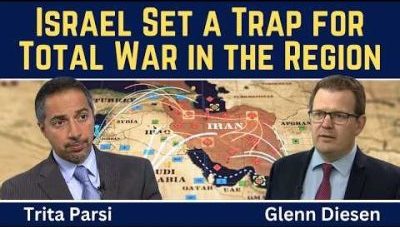
Trita Parsi: Israel Set a Trap for Total War in the Region
or go to
Aletho News Archives – Video-Images
Book Review
Why the War on Conspiracy Theories Is Bad Public Policy
By Kevin Barrett • Unz Review • February 1, 2019
 A Review of Conspiracy Theories and Other Dangerous Ideas by Cass Sunstein (based on an earlier paper co-authored with Adrian Vermeule); In Defense of Troublemakers: The Power of Dissent in Life and Business by Charlan Nemeth; and Conspiracy Theories and the People Who Believe Them, edited by Joseph E. Uscinski
On January 25 2018 YouTube unleashed the latest salvo in the war on conspiracy theories, saying “we’ll begin reducing recommendations of borderline content and content that could misinform users in harmful ways—such as videos promoting a phony miracle cure for a serious illness, claiming the earth is flat, or making blatantly false claims about historic events like 9/11.”
At first glance that sounds reasonable. Nobody wants YouTube or anyone else to recommend bad information. And almost everyone agrees that phony miracle cures, flat earthism, and blatantly false claims about 9/11 and other historical events are undesirable.
But if we stop and seriously consider those words, we notice a couple of problems. First, the word “recommend” is not just misleading but mendacious. YouTube obviously doesn’t really recommend anything. When it says it does, it is lying. … continue
Blog Roll
 Aletho News
- Trita Parsi: Israel Set a Trap for Total War in the Region
- Trump’s Iran war is on an Israeli leash
- Saudi oil boss issues global supply warning
- Riyadh Says Its Oil System Is Intact. The Numbers Say Otherwise.
- Trump and Netanyahu Want to “Finish the Job” on Iran
- US ‘one-sided dictation’ not Iran’s beliefs makes rational talks impossible: Baghaei
- Iran’s Next Strike May Not Explode. It Could Shut You Down /Col Doug Macgregor
- Iran: US political targets legitimate if assassinations return
- Iraq shuts key border crossing with Iran under US pressure: Report
- Undersea Internet cables could be targeted in retaliation for attacks on Iran: IRGC deputy chief
- If Americans Knew
- The Israel Lobby’s Changing Fortunes
- AIPAC has become such a political liability that it’s shifting to a more “nimble” approach to buying politicians
- At least 160 Israeli settler attacks in 2 weeks
- Will Gaza’s Ancient Christian Community Disappear Forever?
- Israel’s vision of regional security rests on keeping Arab states weak
- Heidi Levine recounts how Palestinian youths helped save her in settler attack
- DAILY UPDATE: Latest essential news on Palestine, Israel, & region
- Trump’s Intensifying Sabotage of the ICC, for Israel’s Sake
- Israeli military detain US and UK volunteers in West Bank including Democratic NY politician Brad Lander
- Americans at National Conservatism Conference held in Israel this year criticize Israel
- No Tricks Zone
- E-Cars Reduce CO2 Emissions By Only 41% Compared To Internal Combustion Engine Vehicles
- Predictions Made By Renowned Climate Professor Over Past Decades Have Been Proven To Be Poor
- New Study Suggests Large Regions Of The Pacific Ocean Have Been Cooling For The Last 80 Years
- Germany’s Green Energy Debacle: High Energy Costs Force Kahla Porzellan to Close After 182 Years!
- New Study: 50 Years Of The Most Aggressive ‘Net Zero’ Policies Can Only Affect The Global Climate By 0.03°C
- US September “Heat” Was No Record…Many Records Set Decades Ago
- Latest European Green Energy Debacle; Portugal’s Largest Flagship Solar Park Insolvent!
- Green Energy Debacle: German Expert Professor Fritz Vahrenholt Warns Of Severe Economic And Social Consequences
- Two More Paleo Reconstructions Affirm Meters-Higher Sea Levels Across Ireland, Brazil 7000-6000 Years Ago
- New Study: Earth And Venus Surface Warmth Largely Explained By Convection And Lapse Rate, Not CO2 Or Radiation

