Norway blames ‘Russian hackers’ after defense & security officials fall victim to phishing attack
RT | February 4, 2017
Government officials in Norway have been breached by a phishing attack which authorities promptly pinned on ‘Russian hackers,’ claiming the hack was allegedly traced back to the same culprits that compromised the DNC servers in the US last year.
Nine personal civil-servant email accounts have been compromised, the Norwegian Police Security Service (PST) announced, just days after the agency coincidentally identified possible Russian spying as the greatest potential threat to the country.
The Labor Party and “a handful of other Norwegian targets” were subjected to email attacks that allegedly took place last autumn, the Dagbladet reported. The defense and foreign ministries as well as security service staff were among those targeted, the BBC reports citing local media.
“The attacks had a signature that indicates those behind the hacking can be identified as APT29,” PST spokesman Martin Berntsen told the Associated Press. “They can be traced back to Russia,” he stated without elaborating further, while conceding that no classified information has been compromised.
CrowdStrike, a cybersecurity company hired by the Democratic National Committee (DNC) to investigate the June 2016 data breach, was first to accuse APT29 – which they named “Cozy Bear” and “Fancy Bear” – of being Russian government entities. However, CrowdStrike has never offered any proof for this assertion.
Spear phishing – the forging of trusted communication to access private data – isn’t a Russian know-how but a popular and quite unsophisticated fraud technique that is widely used around the world to hijack electronic accounts.
Labour’s leader, Jonas Gahr Store, also confirmed the breach of his party’s emails, after being notified of the hack by PST on Wednesday.
“I can confirm that we are informed by PST that Labour’s parliamentary group was subjected to an attempted digital attack by a group that PST ties to foreign intelligence,” Store’s press spokeswoman Camilla Ryste, told Nettavisen, The Local reports.
The new revelations follow PST’s latest threat assessment on national security published Wednesday, where Norway said that Russian intelligence poses the greatest challenge for the country.
“It is primarily Russia that has intentions and capacity to do intelligence activities with big damage potential for Norway and Norwegian interests,” the annual report from the Police Security Service (PST) reads.
“Intelligence pressure from foreign states, especially from the Russian side, has been high and stable over the years,” PST Chief Benedicte Bjornland said in the report, according to The Local. “The reason why we increase [the risk] now is that there is a tougher security situation. This means that the intelligence activities of Russia, in particular, have the potential to be more dangerous now than before.”
The Russian embassy in Norway called the Russian threat a “myth” blaming Oslo of staging a “witch hunt” instead of dealing with real threats like terrorism.
“Unfortunately, it seems like some are uninterested in normalization of our relationship and strive persistently to return to the times of the Cold War,” the embassy said on Facebook.
See also:
A Reprise of the Iraq-WMD Fiasco?
By James W Carden | Consortium News | February 3, 2017
The controversy over Russia’s alleged interference in the 2016 presidential election shows no sign of letting up. A bipartisan group of U.S. senators recently introduced legislation that would impose sanctions on Russia in retaliation for its acts of “cyber intrusions.”
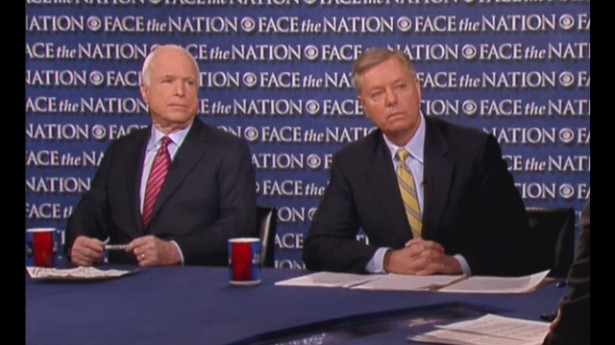
Senators John McCain and Lindsey Graham
At a press event in Washington on Tuesday, Sen. Dick Durbin, D-Illinois, called Election Day 2016 “a day that will live in cyber infamy.” Previously, Sen. John McCain, R-Arizona, called the Russian hacks of the Democratic National Committee “an act of war,” while Sen. Lindsey Graham, R-South Carolina, has claimed that there is near unanimity among senators regarding Russia’s culpability.
Despite all this, the question of who exactly is responsible for the providing WikiLeaks with the emails of high Democratic Party officials does not lend itself to easy answers. And yet, for months, despite the lack of publicly disclosed evidence, the media, like these senators, have been as one: Vladimir Putin’s Russia is responsible.
Interestingly, the same neoconservative/center-left alliance which endorsed George W. Bush’s case for war with Iraq is pretty much the same neoconservative/center-left alliance that is now, all these years later, braying for confrontation with Russia. It’s largely the same cast of characters reading from the Iraq-war era playbook.
It’s worth recalling Tony Judt’s observation in September 2006 that “those centrist voices that bayed most insistently for blood in the prelude to the Iraq war … are today the most confident when asserting their monopoly of insight into world affairs.”
While that was true then, it is perhaps even more so the case today.
The prevailing sentiment of the media establishment during the months prior to the disastrous March 2003 invasion of Iraq was that of certainty: George Tenet’s now infamous assurance to President Bush, that the case against Iraq was a “slam drunk,” was essentially what major newspapers and television news outlets were telling the American people at the time. Iraq posed a threat to “the homeland,” therefore Saddam “must go.”
The Bush administration, in a move equal parts cynical and clever, engaged in what we would today call a “disinformation” campaign against its own citizens by planting false stories abroad, safe in the knowledge that these stories would “bleed over” and be picked up by the American press.
WMD ‘Fake News’
The administration was able to launder what were essentially “fake news” stories, such as the aluminum tubes fabrication, by leaking to Michael R. Gordon and Judith Miller of The New York Times. In September 2002, without an ounce of skepticism, Gordon and Miller regurgitated the claims of unnamed U.S. intelligence officials that Iraq “has sought to buy thousands of specially designed aluminum tubes … intended as components of centrifuges to enrich uranium.” Gordon and Miller faithfully relayed “the intelligence agencies’ unanimous view that the type of tubes that Iraq has been seeking are used to make centrifuges.”
By 2002, no one had any right to be surprised by what Bush and Cheney were up to; since at least 1898 (when the U.S. declared war on Spain under the pretense of the fabricated Hearst battle cry “Remember the Maine!”) American governments have repeatedly lied in order to promote their agenda abroad. And in 2002-3, the media walked in lock step with yet another administration in pushing for an unnecessary and costly war.
Like The New York Times, The Washington Post also relentlessly pushed the administration’s case for war with Iraq. According to the journalist Greg Mitchell, “By the Post’s own admission, in the months before the war, it ran more than 140 stories on its front page promoting the war.” All this, while its editorial page assured readers that the evidence Colin Powell presented to the United Nations on Iraq’s WMD program was “irrefutable.” According to the Post, it would be “hard to imagine” how anyone could doubt the administration’s case.
But the Post was hardly alone in its enthusiasm for Bush’s war. Among the most prominent proponents of the Iraq war was The New Yorker’s Jeffrey Goldberg, who, a full year prior to the invasion, set out to link Saddam Hussein and Al Qaeda. Writing for The New Yorker in March 2002, Goldberg retailed former CIA Director James Woolsey’s opinion that “It would be a real shame if the C.I.A.’s substantial institutional hostility to Iraqi democratic resistance groups was keeping it from learning about Saddam’s ties to Al Qaeda in northern Iraq.”
Indeed, according to Goldberg, “The possibility that Saddam could supply weapons of mass destruction to anti-American terror groups is a powerful argument among advocates of regime change,” while Saddam’s “record of support for terrorist organizations, and the cruelty of his regime make him a threat that reaches far beyond the citizens of Iraq.”
Writing in Slate in October 2002, Goldberg was of the opinion that “In five years . . . I believe that the coming invasion of Iraq will be remembered as an act of profound morality.”
Likewise, The New Republic’s Andrew Sullivan was certain that “we would find weapons of mass destruction in Iraq. I have no doubt about that.” Slate’s Jacob Weisberg supported the invasion because he thought Saddam Hussein had WMD and he “thought there was a strong chance he’d use them against the United States.”
Even after it was becoming clear that the war was a debacle, the neoconservative pundit Charles Krauthammer declared that the inability to find WMDs was “troubling” but “only because it means that the weapons remain unaccounted for and might be in the wrong hands. The idea that our inability to thus far find the weapons proves that the threat was phony and hyped is simply false.”
Smearing Skeptics
Opponents of the war were regularly accused of unpatriotic disloyalty. Writing in National Review, the neoconservative writer David Frum accused anti-intervention conservatives of going “far, far beyond the advocacy of alternative strategies.” According to Frum, “They deny and excuse terror. They espouse a potentially self-fulfilling defeatism. They publicize wild conspiracy theories. And some of them explicitly yearn for the victory of their nation’s enemies.”
Similarly, The New Republic’s Jonathan Chait castigated anti-war liberals for turning against Bush. “Have Bush haters lost their minds?” asked Chait. “Certainly some have. Antipathy to Bush has, for example, led many liberals not only to believe the costs of the Iraq war outweigh the benefits but to refuse to acknowledge any benefits at all.”
Yet of course we now know, thanks, in part, to a new book by former CIA analyst John Nixon, that everything the U.S. government thought it knew about Saddam Hussein was indeed wrong. Nixon, the CIA analyst who interrogated Hussein after his capture in December 2003, asks “Was Saddam worth removing from power?” “The answer,” says Nixon, “must be no. Saddam was busy writing novels in 2003. He was no longer running the government.”
It turns out that the skeptics were correct after all. And so the principal lesson the promoters of Bush and Cheney’s war of choice should have learned is that blind certainty is the enemy of fair inquiry and nuance. The hubris that many in the mainstream media displayed in marginalizing liberal and conservative anti-war voices was to come back to haunt them. But not, alas, for too long.
A Dangerous Replay?
Today something eerily similar to the pre-war debate over Iraq is taking place regarding the allegations of Russian interference in the U.S. presidential election. Assurances from the intelligence community and from anonymous Obama administration “senior officials” about the existence of evidence is being treated as, well, actual evidence.
State Department spokesman John Kirby told CNN that he is “100% certain” of the role that Russia played in U.S. election. The administration’s expressions of certainty are then uncritically echoed by the mainstream media. Skeptics are likewise written off, slandered as “Kremlin cheerleaders” or worse.
Unsurprisingly, The Washington Post is reviving its Bush-era role as principal publicist for the government’s case. Yet in its haste to do the government’s bidding, the Post has published two widely debunked stories relating to Russia (one on the scourge of Russian inspired “fake news”, the other on a non-existent Russian hack of a Vermont electric utility) onto which the paper has had to append “editor’s notes” to correct the original stories.
Yet, those misguided stories have not deterred the Post’s opinion page from being equally aggressive in its depiction of Russian malfeasance. In late December, the Post published an op-ed by Rep. Adam Schiff and former Rep. Jane Harmon claiming “Russia’s theft and strategic leaking of emails and documents from the Democratic Party and other officials present a challenge to the U.S. political system unlike anything we’ve experienced.”
On Dec. 30, the Post editorial board chastised President-elect Trump for seeming to dismiss “a brazen and unprecedented attempt by a hostile power to covertly sway the outcome of a U.S. presidential election.” The Post described Russia’s actions as a “cyber-Pearl Harbor.”
On Jan. 1, the neoconservative columnist Josh Rogin told readers that the recent announcement of sanctions against Russia “brought home a shocking realization that Russia is using hybrid warfare in an aggressive attempt to disrupt and undermine our democracy.”
Meanwhile, many of the same voices who were among the loudest cheerleaders for the war in Iraq have also been reprising their Bush-era roles in vouching for the solidity of the government’s case.
Jonathan Chait, now a columnist for New York magazine, is clearly convinced by what the government has thus far provided. “That Russia wanted Trump to win has been obvious for months,” writes Chait.
“Of course it all came from the Russians, I’m sure it’s all there in the intel,” Charles Krauthammer told Fox News on Jan. 2. Krauthammer is certain.
And Andrew Sullivan is certain as to the motive. “Trump and Putin’s bromance,” Sullivan told MSNBC’s Chris Matthews on Jan. 2, “has one goal this year: to destroy the European Union and to undermine democracy in Western Europe.”
David Frum, writing in The Atlantic, believes Trump “owes his office in considerable part to illegal clandestine activities in his favor conducted by a hostile, foreign spy service.”
Jacob Weisberg agrees, tweeting: “Russian covert action threw the election to Donald Trump. It’s that simple.” Back in 2008, Weisberg wrote that “the first thing I hope I’ve learned from this experience of being wrong about Iraq is to be less trusting of expert opinion and received wisdom.” So much for that.
Foreign Special Interests
Another, equally remarkable similarity to the period of 2002-3 is the role foreign lobbyists have played in helping to whip up a war fever. As readers will no doubt recall, Ahmed Chalabi, leader of the Iraqi National Congress, which served, in effect as an Iraqi government-in-exile, worked hand in hand with the Washington lobbying firm Black, Kelly, Scruggs & Healey (BKSH) to sell Bush’s war on television and on the op-ed pages of major American newspapers.
Chalabi was also a trusted source of Judy Miller of the Times, which, in an apology to its readers on May 26, 2004, wrote: “The most prominent of the anti-Saddam campaigners, Ahmad Chalabi, has been named as an occasional source in Times articles since at least 1991, and has introduced reporters to other exiles. He became a favorite of hard-liners within the Bush administration and a paid broker of information from Iraqi exiles.” The pro-war lobbying of the American Israel Public Affairs Committee has also been exhaustively documented.
Though we do not know how widespread the practice has been as of yet, something similar is taking place today. Articles calling for confrontation with Russia over its alleged “hybrid war” with the West are appearing with increasing regularity. Perhaps the most egregious example of this newly popular genre appeared on Jan. 1 in Politico magazine. That essay, which claims, among many other things, that “we’re in a war” with Russia comes courtesy of one Molly McKew.
McKew is seemingly qualified to make such a pronouncement because she, according to her bio on the Politico website, served as an “adviser to Georgian President Saakashvili’s government from 2009-2013, and to former Moldovan Prime Minister Filat in 2014-2015.” Seems reasonable enough. That is until one discovers that McKew is actually registered with the Department of Justice as a lobbyist for two anti-Russian political parties, Georgia’s UMN and Moldova’s PLDM.
Records show her work for the consulting firm Fianna Strategies frequently takes her to Capitol Hill to lobby U.S. Senate and Congressional staffers, as well as prominent U.S. journalists at The Washington Post and The New York Times, on behalf of her Georgian and Moldovan clients.
“The truth,” writes McKew, “is that fighting a new Cold War would be in America’s interest. Russia teaches us a very important lesson: losing an ideological war without a fight will ruin you as a nation. The fight is the American way.” Or, put another way: the truth is that fighting a new Cold War would be in McKew’s interest – but perhaps not America’s.
While you wouldn’t know it from the media coverage (or from reading deeply disingenuous pieces like McKew’s) as things now stand, the case against Russia is far from certain. New developments are emerging almost daily. One of the latest is a report from the cyber-engineering company Wordfence, which concluded that “The IP addresses that DHS [Department of Homeland Security] provided may have been used for an attack by a state actor like Russia. But they don’t appear to provide any association with Russia.”
Indeed, according to Wordfence, “The malware sample is old, widely used and appears to be Ukrainian. It has no apparent relationship with Russian intelligence and it would be an indicator of compromise for any website.”
On Jan. 4, BuzzFeed reported that, according to the DNC, the FBI never carried out a forensic examination on the email servers that were allegedly hacked by the Russian government. “The FBI,” said DNC spokesman Eric Walker, “never requested access to the DNC’s computer servers.”
What the agency did do was rely on the findings of a private-sector, third-party vendor that was brought in by the DNC after the initial hack was discovered. In May, the company, Crowdstrike, determined that the hack was the work of the Russians. As one unnamed intelligence official told BuzzFeed, “CrowdStrike is pretty good. There’s no reason to believe that anything that they have concluded is not accurate.”
Perhaps not. Yet Crowdstrike is hardly a disinterested party when it comes to Russia. Crowdstrike’s founder and chief technology officer, Dmitri Alperovitch, is also a senior fellow at the Washington think tank, The Atlantic Council, which has been at the forefront of escalating tensions with Russia.
As I reported in The Nation in early January, the connection between Alperovitch and the Atlantic Council is highly relevant given that the Atlantic Council is funded in part by the State Department, NATO, the governments of Latvia and Lithuania, the Ukrainian World Congress, and the Ukrainian oligarch Victor Pinchuk. In recent years, it has emerged as a leading voice calling for a new Cold War with Russia.
Time to Rethink the ‘Group Think’
And given the rather thin nature of the declassified evidence provided by the Obama administration, might it be time to consider an alternative theory of the case? William Binney, a 36-year veteran of the National Security Agency and the man responsible for creating many of its collection systems, thinks so. Binney believes that the DNC emails were leaked, not hacked, writing that “it is puzzling why NSA cannot produce hard evidence implicating the Russian government and WikiLeaks. Unless we are dealing with a leak from an insider, not a hack.”
None of this is to say, of course, that Russia did not and could not have attempted to influence the U.S. presidential election. The intelligence community may have intercepted damning evidence of the Russian government’s culpability. The government’s hesitation to provide the public with more convincing evidence may stem from an understandable and wholly appropriate desire to protect the intelligence community’s sources and methods. But as it now stands the publicly available evidence is open to question.
But meanwhile the steady drumbeat of “blame Russia” is having an effect. According to a recent you.gov/Economist poll, 58 percent of Americans view Russia as “unfriendly/enemy” while also finding that 52 percent of Democrats believed Russia “tampered with vote tallies.”
With Congress back in session, Armed Services Committee chairman John McCain is set to hold a series of hearings focusing on Russian malfeasance, and the steady drip-drip-drip of allegations regarding Trump and Putin is only serving to box in the new President when it comes to pursuing a much-needed detente with Russia.
It also does not appear that a congressional inquiry will start from scratch and critically examine the evidence. On Friday, two senators – Republican Lindsey Graham and Democrat Sheldon Whitehouse – announced a Senate Judiciary subcommittee investigation into Russian interference in elections in the U.S. and elsewhere. But they already seemed to have made up their minds about the conclusion: “Our goal is simple,” the senators said in a joint statement “To the fullest extent possible we want to shine a light on Russian activities to undermine democracy.”
So, before the next round of Cold War posturing commences, now might be the time to stop, take a deep breath and ask: Could the rush into a new Cold War with Russia be as disastrous and consequential – if not more so – as was the rush to war with Iraq nearly 15 years ago? We may, unfortunately, find out.
James W Carden is a contributing writer for The Nation and editor of The American Committee for East-West Accord’s eastwestaccord.com. He previously served as an advisor on Russia to the Special Representative for Global Inter-governmental Affairs at the US State Department.
Moscow expects Reuters to clarify its complaints concerning working conditions in Russia
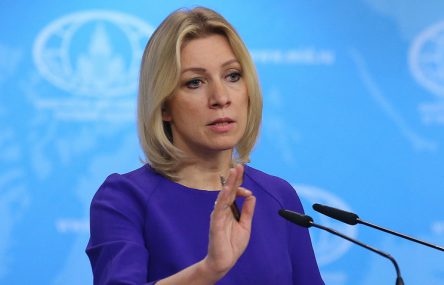
Russian foreign ministry’s spokeswoman Maria Zakharova
TASS – February 3, 2017
MOSCOW – Russia’s Foreign Ministry expects the Reuters news agency to clarify its complaints regarding the working conditions of its journalists in the country, the ministry’s spokeswoman Maria Zakharova said at a briefing on Friday.
“We have seen Reuters Editor-in-Chief Stephen Adler’s message to staff, which concerns covering the new US president’s activities,” Zakharova noted. “Although we do not usually comment on editorial directives, we could not but take notice of one paragraph,” she went on to say. “The implication is that Reuters considers Russia to be one of the countries where the agency has to ‘encounter some combination of censorship, legal prosecution, visa denials, and even physical threats’ to its journalists.”
“We don’t divide journalists into good and bad, we don’t refuse to issue visas, we don’t deprive them of visas or accreditation only because we don’t like their style or find them to be biased,” the Russian Foreign Ministry’s spokeswoman stressed. “I expect Reuters to clarify the matter.”
At the same time, she said that Russia’s Foreign Ministry would have not commented on this message if it had not been made public through the Reuters website and had not mentioned the agency’s work in Russia. The diplomat was confident that Reuters had deliberately posted the message “thus turning it into some kind of a manifesto.”
According to Zakharova, when the Russian Foreign Ministry contacted Reuters, the agency declined to comment. She also pointed out that the Reuters correspondents accredited in Russia took part in closed weekly briefings at the Foreign Ministry as well as in other media events, however, they had not voiced their concerns even once.
Photo Anton Novoderezhkin/TASS
The Hill Publishes Islamophobic Fake News on Venezuela
By Ryan Mallett-Outtrim | Venezuelanalysis | January 30, 2017
 Love it or hate it, The Hill can be a pretty useful source of information on the goings on around DC, but its latest article on Venezuela comes from some disturbing places.
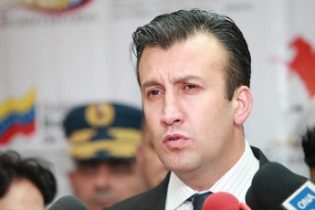
In a recent article, titled “Meet Venezuela’s new VP, fan of Iran and Hezbollah”, The Hill’s Emanuele Ottolenghi profiled the South American country’s new second in command, Tareck El Aissami.
Although El Aissami was appointed vice-president just a few weeks ago, he’s hardly a new face to anyone who has followed Venezuelan politics for a while. He previously served as Aragua’s governor, and also had a stint as interior minister a few years back.
So what’s so special about El Aissami? A lot, according to Ottolenghi, whose piece reads much like the biography of a minor goon from a Schwarzenegger flick, replete with semi-comical claims with the credibility, sophistication and nuance of Ninja Terminator.
Here’s a few highlights:
“Despite the Baathist family background — his father headed the Venezuelan branch of the Iraqi Baath Party — and his Lebanese Druze origins, El Aissami seems to prefer the Islamist Shiite revolutionary Hezbollah and Iran over the Baath’s supposedly secular pan-Arabism.
…
Like his Islamic revolutionary role models, he used violence to advance his politics.
Opposition figures have accused both El Aissami and Nassereddine of recruiting young Arab-Venezuelan members of the ruling party to undergo paramilitary training in South Lebanon with Hezbollah.
…
As if this were not enough, El Aissami reportedly facilitated drug trafficking, a crime for which he is being investigated in the U.S.”
In other words, El Aissami is every boogyman and right-wing scapegoat wrapped up in one nice little package, at least based on Ottolenghi’s depiction. He’s a mish-mash of Baathism, Sunni radicalism and Shiite extremism; plus he smuggles coke.
The obvious question is whether any of this is true. For one, El Aissami is indeed one of many suspects in a US investigation into Venezuela’s narcotics trade. We could discuss the politics of this investigation until the cows come home, but what about the juicier claims? For instance, the claim that El Aissami has been accused of sending young Venezuelans to Lebanon to train with Hezbollah, and that he has colluded with “guerrilla movements”?
If we follow the hyperlinks provided by Ottolenghi, we find that these claims were sourced from the Centre for Security Policy (CSP). It sounds credible, but has been widely dismissed by journalists as basically a joke. According to the Southern Poverty Law Centre, the Centre for Security Policy is “known for its accusations that a shadowy ‘Muslim Brotherhood’ has infiltrated all levels of government and warnings that ‘creeping Shariah,’ or Islamic religious law, is a threat to American democracy”.
“For the past decade, CSP’s main focus has been on demonising Islam and Muslims under the guise of national security,” the Southern Poverty Law Centre stated.
A cursory glance at the CSP’s homepage features ads for books with colourful titles like “CAIR is HAMAS”, “Civilisation Jihad”, “ObamaBomb” and “See No Sharia”. At the time of writing, some of their latest articles included one describing Islam as a “supremacist totalitarian ideology”, and another claiming Iran might already secretly have a “nuclear weapon” (which it doesn’t).
Well, that got weird fast.
So basically, Ottolenghi gets his best material from a website that is so far off the deep end, it has even been banned from the Conservative Political Action Conference.
As a side note, Donald Trump cited a report from the CSP back in 2015, when he falsely claimed one in four Muslims support violence against the US. At the time, the CSP’s claims were widely dismissed as junk.
But hey, that’s just one source – perhaps I’m not giving Ottolenghi’s narrative enough of a chance. Frustratingly though, Ottolenghi’s piece is very light on sources, and he provides no other references for his two most eyebrow raising claims.
Luckily, Ottolenghi is far from the first English language pundit to express this particular point of view on El Aissami. A few years ago, the Gatestone Institute published a piece that reads eerily similar to Ottolenghi’s more recent article. For example, the older piece details how El Aissami supposedly loved Saddam Hussein and Osama bin Laden. Ignoring the fact these two political figures espoused totally different and utterly incompatible political ideologies, the Gatestone article did a somewhat better job than Ottolenghi in terms of providing sources for their claims.
This is where things take a turn for the outright bizarre.
So, where did the Gatestone’s critical intelligence on El Aissami originate? According to the reference list they provided, the answer to that question is: Wikipedia and this obscure blog. Following the breadcrumbs, the blogger also provided a reference list for their sources. This list is extremely short for supposedly groundbreaking investigative reporting, and only features four different names: Al Arabiya, MEMRI, Jihad Watch and another blogspot blog called The Jungle Hut.
…. Okey-dokey then.
The trail runs dry over at The Jungle Hut, where there’s nothing more than a dead link and a nice photo of a waterfall. It’s not quite what I was expecting to find, so let’s look at the other two sources. Al Arabiya is Saudi Arabia’s state media outlet, though don’t let that bother you too much; they’ve actually produced some decent stuff in the past. Unfortunately, there’s no links to specific articles, so again, the trail runs dry. The same problem arises when we head to MERMI. Finally, we get to the El Dorado of anti-Islam trash: Jihad Watch, a blog created by the notorious Islamophobe Robert Spencer. For anyone who doesn’t know, Spencer is perhaps best known for co-founding two prominent anti-Muslim lobby groups, Stop Islamisation of America (SIOA) and the American Freedom Defence Initiative (AFDI). Both have been listed as hate groups by the Southern Poverty Law Centre. Spencer also garnered media attention in the wake of the 2011 Norwegian white supremacist terrorist attack carried out by Anders Behring Breivik. In his sprawling anti-Muslim manifesto, Breivik cited Spencer dozens of times.
This is where our journey down the rabbit hole ends; with an Islamophobe beloved by one of the worst white supremacist terrorists in recent years. I guess this is what I get for checking people’s sources: a browser history full of links to hate groups, anti-Islam garbage and one nice picture of a waterfall. I didn’t find much credible reporting, but I did learn that El Aissami is hated for one reason above all: he’s got a Muslim-ish sounding name.
That’s it.
You might think I’m being harsh on Ottolenghi.
And you’d be wrong.
Ottolenghi is a long time anti-Iran hardliner, and has authored books with names like “Under a Mushroom Cloud: Europe, Iran and the Bomb”. According to a review of this book over at The Jewish Chronicle, “Ottolenghi’s view that Iran, as an exceptional case, merits exceptional treatment, is perhaps unrealistically rigid. His argument is not helped by the absence from his text of source references by which the reader could cross-check the many, selective quotes he adduces in support of it.”
In other words, making far fetched claims based on no real evidence is something of a modus operandi for Ottolenghi.
Along with having an obvious disdain for the notion of providing sources, Ottolenghi seems like just another pundit with a bone to pick with Islam, and anyone who sounds like they might be Arab, Persian or any other ethnic group he doesn’t like. Ottolenghi’s writings seem better suited to publishers like Jihad Watch, and his presence at The Hill is surprising to say the least.
Unfortunately though, this whole saga is symptomatic of a deeper problem in the media. The fact that an article for The Hill can get away with featuring links to the Islamophobic fake news CSP is emblematic of the dismal state of international corporate media. Islamophobic rants are treated like credible political analysis, and conspiracy crackpots are put on pedestals. It’s a grim state of affairs, but the real question is: how much further will we slide?
Japanese embassy pays British think tank to plant anti-China stories
RT | January 30, 2017
The neoconservative Henry Jackson Society (HJS) think tank is on the payroll of the Japanese embassy, charged with drafting in public figures to spread anti-Chinese propaganda, investigators claim.
The Times’ investigation suggests the London-based HJS is paid £10,000 (US$12,500) per month to spread anti-Chinese propaganda, including through public figures like former British Foreign Secretary Malcolm Rifkind.
HJS frames itself as a pro-intervention and pro-capitalist voice, which aims to spread freedom and democracy around the world. It is run by the academic and failed Tory parliamentary candidate Alan Mendoza.
The deal between the think tank and the embassy was reportedly reached to counter the growing cooperation between the UK and China, championed by former Chancellor George Osborne.
The agreement reflects the rising tensions between China and Japan – the latter a close US ally in the Asia-Pacific region.
Rifkind confirmed to the Times over the weekend that he had been asked by HJS in August to put his name to an article called ‘How China could switch off Britain’s lights in a crisis if we let them build Hinkley C’, which criticized a UK-Chinese nuclear power station deal.
The comment piece claimed there may be a risk of a Chinese-funded power station having cyber-backdoors built into it which could present a risk to UK security.
Rifkin told the Times he had not been aware of the links between HJS and the Japanese embassy and said the think tank “ought to have informed me of that relationship when they asked me to support the article they provided. It would have been preferable if they had.”
The report indicates that HJS originally approached the Japanese embassy alongside a PR firm named Media Intelligence Partners (MIP), which is run by a former Tory PR man named Nick Wood.
The Times says it saw an early version of a proposal which would see the think-tank and PR firm develop a communications strategy for the embassy for a fee of £15,000 per month.
This, they said, would allow Japan’s concerns to be placed “on the radar of mainstream UK journalists and politicians.” It includes journalists from major papers like the Telegraph and the Guardian.
Other aims included the creation of “an engaged and interested cadre of high-level politicians” and a focus on the “threat to Western strategic interests posed by Chinese expansionism.”
The actual deal reached was for a lower figure of £10,000 plus expenses, according to the Times.
Liberals Morph from Peaceniks to Warhawks on Government Intelligence Agencies
By Stephen J. Sniegoski • Unz Review • January 28, 2017
During the latter decades of the Cold War with Soviet Russia, the charge of being “unpatriotic” or “anti-American” caused American liberals (excluding those who had to rely on the votes of regular Americans to hold political office) to burst into spasms of ridicule and howls of “Red-baiting,” “war-mongering,” “witch-hunting,” and “fascism.” Sophisticated folks, liberals implied, would never even deign to think of doing anything so gauche as to automatically support their country in its fight against what they sarcastically called the “Red Menace.” America’s very possession of nuclear weapons was considered a danger to all humanity and many liberals flirted with the idea of U.S. unilateral nuclear disarmament. And the slogan of the Democratic candidate for president in 1972, George McGovern, was “Come Home, America” — which meant U.S. military retrenchment that mainstream liberals now lambast as “isolationism.”
During this not-too-long-ago era (at least, it was not too long ago for me, who is too rapidly approaching the biblically allotted three-score and ten), the CIA and the FBI were considered the bête noire in this liberal Weltanschauung. FBI director J. Edgar Hoover, with his penchant for spying on innocent people, was regarded as thoroughly vicious. The CIA was notorious for being involved in the overthrow of nice democratic governments (at least, that is how liberals viewed them) in such countries as Iran, Guatemala, and Chile, and spying on leftist critics in the United States. The villainous nature of the CIA and FBI was a theme in many Hollywood movies of the era.[1]
Now let’s return to the present and the liberal hysteria over purported Russian interference with the U.S. presidential election. The most bandied about charge involves “hacking” the DNC and Podesta emails and providing these to WikiLeaks to denigrate Hillary Clinton, thus preventing her from becoming president. The support for this claim, at least as it has been presented to the America public, rests only on assertions made by the U.S. Intelligence Community, and this dearth of proof was continued in the most recent report from the Office of the Director of National Intelligence (ODNI), “Assessing Russian Activities and Intentions in Recent US Elections,” released to the public on January 6. The report represents the unclassified findings of the intelligence community’s investigation of Russian involvement in the 2016 election. In the words of the report: “Thus, while the conclusions in the report are all reflected in the classified assessment, the declassified report does not and cannot include the full supporting information, including specific intelligence and sources and methods.”[2]
Even some believers, especially those who might know something about cyber technology and the capabilities of America’s intelligence agencies, evinced some concern about the report’s lack of substantiating evidence. For example, Wired, a high-tech webzine that usually follows the current progressive line, published an article titled “Feds’ Damning Report on Russian Election Hack Won’t Convince Skeptics,” in which Robert Graham, an analyst for the cybersecurity firm Erratasec, was quoted as saying: “But knowing what data they [U.S. intelligence agencies] probably have, they could have given us more details. And that really pisses me off.”[3] The thrust of the article is that the lack of substantial proof fails to convince skeptics, not that the intelligence report’s claims could be wrong. This position is rather understandable since skepticism about traditional beliefs such as Christianity is highly lauded by progressives, but skepticism is not allowed to cast doubt on the progressive narrative of the day.
President Obama went somewhat further in his attack on non-believers. In an interview on ABC News on January 6, Obama insinuated, and, in some cases, openly stated that people who express skepticism about the findings and conclusions drawn by the U.S. Intelligence Community are not on America’s “team” and are siding with Putin; in fact, he maintains that they “love” Putin. In short, Obama has come to assume that the American people must not question the sanctity of the U.S. “Intelligence Community.” To do otherwise signifies not merely a lack of patriotism but actual love for America’s alleged number one adversary—Vladimir Putin. “One of the things that I’ve urged the president-elect to do is to develop a strong working relationship with the intelligence community,” Obama stated. “We have to remind ourselves we’re on the same team. Vladimir Putin’s not on our team.” Obama warned that “If we get to a point where people in this country feel more affinity with a leader who is an adversary and view the United States and our way of life as a threat to him, then we’re gonna have bigger problems than just cyber hacking.” It appears to Obama that some politicians and reporters “seem to have more confidence in Vladimir Putin than fellow Americans because those fellow Americans are Democrats.” And he solemnly pontificated: “That cannot be.”[4]
Obama continued with this rather dystopian view: “[I]n this new information age, it is possible for misinformation, for cyber hacking and so forth to have an impact on our open societies, our open systems, to insinuate themselves into our democratic practices in ways that I think are accelerating.” Although “cyber hacking” existed even before Obama entered the White House and “misinformation,” according to the Bible, existed even when Adam and Eve resided in the Garden of Eden, Obama implies that he only now became aware of this possibility.[5]
Now the term “open society” was popularized (at least in intellectual circles) by the philosopher Karl Popper.”[6] and its most prominent proponent today is billionaire George Soros (a student of Popper’s). Soros’ Open Society Institute has as its goal spreading the “open society” world-wide. An open society, as Popper presented it, would be open to all types of ideas with people being free to make their own decisions. Soros, in contrast, expressed a view similar to that of Obama, contending that “Popper failed to recognize that in democratic politics, gathering public support takes precedence over the pursuit of truth. In other areas, such as science and industry, the impulse to impose one’s views on the world encounters the resistance of external reality. But in politics the electorate’s perception of reality can be easily manipulated. As a result, political discourse, even in democratic societies, does not necessarily lead to a better understanding of reality.”[7] The implication is that gatekeepers are needed to protect “truth.” As one critic puts it: “the Open Society Institute embodies Popper’s idea of an open society the way the German Democratic Republic (East Germany) embodied democracy.”[8]
Moving away from the focus on hacking, the recent ODNI report describes the Russian effort to affect the US election as “multifaceted” and devotes almost half of the report to propaganda (despite the negative connotation, propaganda can be true) spread by Russia, especially by its major government-sponsored television network for foreign countries, RT.
Moreover, the intelligence report interprets the alleged Russian effort to aid Trump in the election as only one part of a broader goal to combat the United States’ “liberal democratic order,” stating: “Russian efforts to influence the 2016 US presidential election represent the most recent expression of Moscow’s longstanding desire to undermine the US-led liberal democratic order, but these activities demonstrated a significant escalation in directness, level of activity, and scope of effort compared to previous operations.”[9] Moreover, the report considers any type of criticism of the United States as a “desire to undermine the US-led liberal democratic order.” And the report deals with aspects of this broader goal that are entirely unrelated to any Russian effort to aid Trump. This is of the utmost importance since the media narrative focuses on the idea that Russia aided Trump in the 2016 election but, for proof, relies on a report that deals with a much broader subject. That Russian media provides a negative view of America does not mean that this propaganda played a role in making Trump president. And it is not only the mainstream media but even the leaders of the intelligence community who blur this distinction.
Illustrating the point made above about the report’s concern with Russia’s alleged broader goal is its devotion of considerable space to Russian news stories casting the United States government and economic system in a negative light, but having nothing to do with Trump or the 2016 election. For example, the report observed that “RT aired a documentary about the Occupy Wall Street movement on 1, 2, and 4 November [2016]. RT framed the movement as a fight against ‘the ruling class’ and described the current US political system as corrupt and dominated by corporations. RT advertising for the documentary featured Occupy movement calls to ‘take back’ the government. The documentary claimed that the US system cannot be changed democratically, but only through ‘revolution.’”[10] Although this report disparages the existing economic system in the United States, it could hardly be interpreted as encouraging anyone to vote for billionaire Donald Trump with his proposed agenda that included lower tax rates—especially the corporate tax rate–and a reduction in economic regulation that liberals and Democrats claimed helped only the wealthy.
The study also points out that “RT runs anti-fracking programming, highlighting environmental issues and the impacts on public health. This is likely reflective of the Russian Government’s concern about the impact of fracking and US natural gas production on the global energy market and the potential challenges to Gazprom’s profitability.”[11] That Russia’s alleged favored candidate Trump was pro-fracking whereas Hillary straddled the issue would mean that the RT anti-fracking program could militate against supporting Trump.
The report also maintains that “RT’s reports often characterize the United States as a ‘surveillance state’ and allege widespread infringements of civil liberties, police brutality, and drone use.”[12] Again, this would not seem to generate support for Trump.
The report refers to articles written in 2012 that deal with the U.S. presidential election that year, which did not involve Trump, and reflects the fact the study covers, as the title states, recent U.S. elections, not just the 2016 election. For example, “In the runup to the 2012 US presidential election in November, English-language channel RT America . . . intensified its usually critical coverage of the United States. The channel portrayed the US electoral process as undemocratic and featured calls by US protesters for the public to rise up and ‘take this government back.’”[13]
Still dealing with the 2012 election, the intelligence report stated: “From August to November 2012, RT ran numerous reports on alleged US election fraud and voting machine vulnerabilities, contending that US election results cannot be trusted and do not reflect the popular will.”[14] Oddly, this is almost identical to what the mainstream media has been saying since Trump won the election.
But what about the “fake news” — fictitious articles deliberately fabricated to deceive–that the mainstream media claimed helped Trump, largely by harming Clinton? For example, a Washington Post article, dated November 24, 2016, was titled: “Russian propaganda effort helped spread ‘fake news’ during election, experts say.”[15] CNN, in its article, “The reality behind Russia’s fake news,” dated December 2, made similar claims, relying heavily on the aforementioned Washington Post article. [16]
(After extensive criticism including legal threats from the sites the Washington Post described as Russian propaganda outlets, the Post added its lengthy editor’s note distancing itself from the anonymous group that provided the key claims of Russian “fake news” saying that the Post would not vouch for its validity.) [17]
Even Director of National Intelligence James Clapper referred to the Russians making use of “fake news” during the election. In a Senate Armed Services Committee hearing on “Foreign Cyber Threats to the United States” on January 5. 2017, Senator Jack Reed (Democrat, Rhode Island) asked Clapper about media reports that held that Russia was engaged in the creation of “fake news.” Clapper responded: “This was a multifaceted campaign. So, the hacking was only one part of it, and it also entailed classical propaganda, disinformation, fake news.”[18] When the January 6 ODNI report was released, NBC News even claimed that it mentioned “a series of fake news stories damaging to Clinton, many of which got their start with Russian-backed outlets.” [19]
Considering the many references to “fake news,” even by the Director of National Intelligence, it is astonishing that the January 6 report did not cite any examples of this alleged phenomenon—or even mention it. What stands out is the absence of the term “fake news.” Did “fake news” itself turn out to be “fake news”? Whatever the case, the mainstream media did not seem to notice the absence of “fake news” from the report.
While the Intelligence Community did not make any mention of “fake news” in its report, it did make general claims—assessments by the intelligence community — that held that Russia favored Trump over Hillary Clinton. For example: “We assess the influence campaign aspired to help President-elect Trump’s chances of victory when possible by discrediting Secretary Clinton and publicly contrasting her unfavorably to the President-elect.”[20] The report also states: “RT’s coverage of Secretary Clinton throughout the US presidential campaign was consistently negative and focused on her leaked e-mails and accused her of corruption, poor physical and mental health, and ties to Islamic extremism. Some Russian officials echoed Russian lines for the influence campaign that Secretary Clinton’s election could lead to a war between the United States and Russia.”[21] None of these political views differed from what the anti-Clinton media in the U.S. expressed, so it is not apparent how Russia would add any credibility to these claims. It might even have tended to detract from them, which seems to be the case after the election. And since Russian officials did make the aforementioned claim about war, the mention of it does not seem to reflect any type of bias.
In contrast to the Russian depiction of Clinton, the intelligence report stated that Russian government media outlets RT and Sputnik “consistently cast President-elect Trump as the target of unfair coverage from traditional US media outlets that they claimed were subservient to a corrupt political establishment.”[22] This view was also commonly expressed by the more conservative media in the U.S., even that media which was not supportive of Trump.
RT put forth an extensive refutation of the intelligence report’s claims in an article entitled, “All the ways RT ‘influenced’ American politics ‒ it’s not what the ODNI thinks,” dated January7.[23] In many cases, RT made an effort to show that it also presented news stories that were contrary to those that the report cited—in essence, that its reporting was balanced while the intelligence report “cherry picked” RT stories to fit its narrative. It should be noted that no supporter of the Intelligence Community’s findings, from either the U.S. Intelligence Community itself or the private media, made the effort to rebut RT’s detailed criticism of the report.
It would seem to be self-evident that Russian media would act to promote Russian interests—although information used to achieve this goal might be true–just as US government-sponsored international media is intended to promote the interests of the United States. However, while the intelligence report holds that the Russian media was biased in favor of Trump, it fails to prove that bias. The report, for example, did not come up with any obvious erroneous information, such as the U.S. media’s account of the alleged killing of the incubator babies during Iraq’s invasion of Kuwait in 1990; the WMD story in the run-up to the 2003 war on Iraq; and the recent story about the Russians hacking the Vermont power grid.
The report could have relied upon a statistical analysis of the Russian media’s election reporting. Numerous efforts have been made in the United States to use statistics and computer analysis in assessing media bias. Analyses that stand out tend to conclude that the U.S. media have a liberal bias. They include: The News Twisters (1976) by Edith Efron; T he Media Elite (1986) by Robert Lichter, Stanley Rothman, and Linda Lichter; Press Bias and Politics: How the Media Frame Controversial Issues (2002) by Jim A. Kuypers; and Left Turn: How Liberal Media Bias Distorts the American Mind, (2012) by Tim Groseclose. Many statisticians have found fault with these studies despite their often extensive use of statistical data and comparisons among various media outlets. If this extensive information can be rejected, how could one accept the intelligence report’s claims of Russian media bias where no statistical proof or even standards for determining bias exist? The intelligence report, indeed, not only eschews statistical analysis for its bias claims, but acknowledges that it does not even make a comparison between Russian media and U.S. media, stating that “it does not analyze US political processes or US public opinion.”[24]
Moreover, it is not apparent that the Russian media would affect how any significant number of Americans vote. And the report explicitly states: “We did not make an assessment of the impact that Russian activities had on the outcome of the 2016 election.”[25] With all the uproar about Russian meddling in the US election, and allegations by prominent figures that Trump is not a legitimate president, it would be expected that the report would try to determine if this alleged meddling had any effect on the election’s outcome.
The study does hint that Russian media might have had some effect on voting by using graphs that show it is competitive with leading international media—Al Jazeera English, BBC World, CNN/CNN International. The Economist, however, provides an effective statistical refutation of this claim: “In Twitter and Facebook, RT’s reach is narrower than that of other news networks . . . . Its biggest claim to dominance is on YouTube, where it bills itself as the ‘most watched news network’ on the platform. As the intelligence report fretfully notes, RT videos get 1m views a day, far surpassing other outlets. But this is mostly down to [due to] the network’s practice of buying the rights to sensational footage, for instance of Japan’s 2011 tsunami, and repackaging it with the company logo.”[26] A September 2015 article in The Daily Beast, “Putin’s Propaganda TV Lies about Its Popularity,” states: “As of 2015, RT is still largely absent from cable news rankings.”[27] Moreover, RT’s influence would seem to pale to insignificance compared to the totality of American media.
Considering all the information provided by the U.S. Intelligence Community, it would appear that the entire issue of the alleged Russian meddling in the election turns out to be, to quote the Bard, “full of sound and fury, signifying nothing.”
[1] Maria Lauino, “Hollywood Presents: Government as Villain,” New York Times, February 12, 1995, http://www.nytimes.com/1995/02/12/movies/film-hollywood-presents-government-as-villain.html?pagewanted=all
[2] “Background to ‘Assessing Russian Activities and Intentions in Recent US Elections’: The Analytic Process and Cyber Incident Attribution,” January 6, 2016, p. 1.
[3] Andy Greenberg, “Feds’ Damning Report on Russian Election Hack Won’t Convince Skeptics,” Wired, January 6, 2017, https://www.wired.com/2017/01/feds-damning-report-russian-election-hack-wont-convince-skeptics/
[4] Kevin Liptak, “Obama: ‘Vladimir Putin is not on our team,’” CNN, January 6, 2017, http://www.cnn.com/2017/01/06/politics/obama-vladimir-putin-is-not-on-our-team/
[5] Liptak.
[6] Noted philosopher Henri Bergson actually introduced the term “open society.”
[7] George Soros, Project Syndicate, November 8, 2007, https://www.project-syndicate.org/commentary/from-karl-popper-to-karl-rove—and-back?barrier=accessreg
[8] Jonathan David Carson, “The Left’s Theft of the Open Society and the Scientific Method,” American Thinker, April 24, 2008, http://www.americanthinker.com/articles/2008/04/the_lefts_theft_of_the_open_so.html
[9] Intelligence Community Assessment, “Assessing Russian Activities and Intentions in Recent US Elections,” p. ii.
[10] Assessing, p.7.
[11] Assessing, p.8.
[12] Assessing, p. 7.
[13] Assessing, p. 6.
[14] Assessing, p. 6.
[15] Craig Timberg, “Russian propaganda effort helped spread ‘fake news’ during election, experts say,” Washington Post, November 24, 2016, https://www.washingtonpost.com/business/economy/russian-propaganda-effort-helped-spread-fake-news-during-election-experts-say/2016/11/24/793903b6-8a40-4ca9-b712-716af66098fe_story.html?utm_term=.715bb
[16] Jill Dougherty, “The reality behind Russia’s fake news,” CNN, December 2, 2016,http://www.cnn.com/2016/12/02/politics/russia-fake-news-reality/
[17] Glenn Greenwald, “WashPost Is Richly Rewarded for False News About Russia Threat While Public Is Deceived,” The Intercept, January 4, 2017, https://theintercept.com/2017/01/04/washpost-is-richly-rewarded-for-false-news-about-russia-threat-while-public-is-deceived/
[18] Alex Griswold, “James Clapper Confirms Russia Was Behind Fake News During 2016 Election,” Mediaite, January 5, 2017, http://www.mediaite.com/tv/james-clapper-confirms-russia-was-behind-fake-news-during-2016-election/
[19] Ken Dilanian, “Report: Putin, Russia Tried to Help Trump By ‘Discrediting’ Clinton,” NBC News, January 6, 2017, http://www.nbcnews.com/news/us-news/report-putin-russia-tried-help-trump-discrediting-clinton-n703981
[20] Assessing, p.2.
[21] Assessing, p. 4.
[22] Assessing, p.4.
[23] RT, “All the ways RT ‘influenced’ American politics ‒ it’s not what the ODNI thinks,” January 7, 2017, https://www.rt.com/usa/372890-odni-rt-influenced-election/
[24] Assessing, p. i.
[25] Assessing, p. i.
[26] RT’s propaganda is far less influential than Westerners fear,” The Economist, January 19, 2017, http://www.economist.com/news/europe/21715031-kremlin-backed-network-inflates-its-viewership-youtube-disaster-videos-rts-propaganda
[27] Katie Zavadski, ‘Putin’s Propaganda TV Its Lies About Popularity,” The Daily Beast, September17, 2015, http://www.thedailybeast.com/articles/2015/09/17/putin-s-propaganda-tv-lies-about-ratings.html
Those ‘Resignations’: What Really Happened at the State Department
By Peter Van Buren | We Meant Well | January 26, 2017
Yesterday at the State Department five officials resigned or retired. Another one today.
The media has gone near-insane, claiming State is crumbling in protest under the Trump administration. This is not true. What happened at State is very routine.
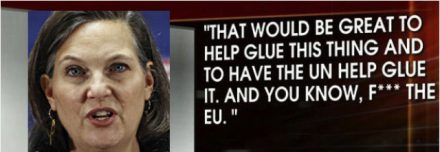
Leaving the Department are head of the Management Bureau Pat Kennedy, Assistant Secretary of State for Administration Joyce Anne Barr, Assistant Secretary of State for Consular Affairs Michele Bond, Ambassador Gentry O. Smith, director of the Office of Foreign Missions, arms control official Tom Countryman, and Victoria Nuland (above).
Here’s the story:
— No one at the State Dept resigned in protest.
— No one was formally fired.
— Six people were transferred from or retired from political appointee positions. Technically those who did not retire can be considered to have “resigned,” but that is a routine HR/personnel term used, not some political statement. The six are career Foreign Service career personnel (FSOs) They previously left their FSO job to be appointed into political jobs and now have resigned those (or retired out of the State Department) to return to career FSO jobs. A circle. They are required to submit a letter of resignation as a matter of routine when a new president takes office.
— As for perspective: only one Under Secretary of State (Alan Larson) stayed through the transition from Bill Clinton to George W. Bush. It is routine for senior officials to leave or be reassigned.
— Several of the six are connected to the Clinton emails and/or Clinton’s handling of Benghazi. One of these people, Pat Kennedy, played a significant role in both, as well as many other controversial issues during Clinton’s term. Sources tell me that although officially Kennedy “retired,” he was more or less required to do so by the Trump administration.
— I have no information on the others, whether they were asked to retire, or just part of a reshuffling of positions and will routinely be reassigned. Most likely the latter, as such reshuffling is very common as administrations change. As everywhere in the government, the new administration fills its own political appointee slots.
— Some of the six will hit mandatory retirement age on January 31 anyway.
— Reports that these people represent “senior management” at State confuse terms. Because of the odd way State is organized, four of the six work in the Management Bureau, M in State talk. Kennedy was the head of the Bureau. The four play varying roles and collectively are not the senior management of the State Department. Two work in other parts of the Department (Countryman and Nuland) and are more directly tied to policies likely to change under the new administration.
— All six persons come from offices with a deep bench. It is highly unlikely that any of the work of the State Department will be impeded by any of these changes. Every office has a second, third, fourth, etc., person in charge who will step up pending formal replacements to be nominated and confirmed. This is all part of the standard transition process.
— As an example, I worked in the Bureau of Consular Affairs for most of my 24 years at State, including working with/for Michele Bond, one of the resignees. I personally know the people in the next rank below her, and all have equal experience and tenure as Bond. There will be no gap in experience or knowledge as some press reports have fretted. There will be no “void.” A slightly more dire, but responsible take, here.
— There will very likely be more, similar, “resignations” and reshuffling at State. New political appointees will bring in their own staff, for example. But unless and until an employee holds a press conference to announce s/he is resigning out of protest, the media should take care to calm down, verify facts, and report accurately.
— The Washington Post stated these changes were part of an “ongoing mass exodus of senior Foreign Service officers who don’t want to stick around for the Trump era.” I am not aware of any other noteworthy departures (two lesser officials left earlier this month in circumstances not clearly connected to Trump) and as stated above, the six did not resign in protest. Regardless, eight people in any context do not constitute a mass exodus.
— The Post article is, in my opinion, grossly alarming. It reflects a reporter apparently unfamiliar with transitions at State.
Google, Facebook purge ‘fake news’ sites
RT | January 25, 2017
Under increased scrutiny for supporting the spread of false and misleading news, Google and Facebook are taking steps to purge networks of several hundred fake news sites.
On Wednesday, Google announced it had reviewed some 550 sites since its policy changes, permanently banning nearly 200 published sites and temporarily cutting off another 140 sites from the company ad dollar source, according to Variety.
Among the typical culprits was a conspiracy blog that appeared as the first item found for the search “who won the popular vote,” which suggested Donald Trump had won the popular vote. Another was a made-up story about President Barack Obama supposedly seeking a third term.
Google regularly weeds out advertisers for false and misleading claims, but the search giant has now booted publishers off its ad network for fake news.
The company responded to criticism that it supported fake news by changing its Adsense policy, prohibiting sites that “misrepresent, misstate, on conceal information about the publisher, the publisher’s content, or the primary purpose” of the site from using Google ads for monetization.
An annual report of ad violations shows that Google took down 1.7 billion ads for various policy violations in 2016, including 17 million ads for illegal gambling, 5 million payday loans and 80 million misleading or shocking ads.
The company declined to release a list of the banned sites.
Facebook also announced it is overhauling its “trending topics” box, as part of its effort to curb fake news.
Beginning on Wednesday, its software will track only topics that have been covered by a significant number of credible publishers.
“If just one story or post went viral, it wouldn’t make it into the trending as it might previously,” Will Cathcart, a Facebook vice president of product management told the Wall Street Journal. “It really takes a mass of publishers writing about the same topic to make the cut.”
Facebook will take into account how long a publisher has maintained a presence on the social network.
The trending feature appears in a box on the right side of the Facebook page.
The change, however, will do little to affect what is reflected in users’ newsfeeds. In December, Facebook had fact-checking groups flag stories if they were false, which would then be demoted in the news feed.
Another popular social media company, Snapchat, is embracing the fake news challenge. In a redesign rolled out Wednesday, the company will restrict publishers from using images or headlines in Discover that lack editorial value. The Discover channels, which were introduced last summer, are a grid of tiles that are scrollable by users.
Future plans will be an age-gating tool to prevent minors from seeing inappropriate content on the Discover feed.
European experts ask Trump to back new independent inquiry into MH17 crash
RT | January 24, 2017
A group of European journalists and aviation experts has sent an open letter to Donald Trump asking him to back a new UN-run investigation into the 2014 crash of Flight MH17. The current Dutch-led inquiry is “neither independent nor convincing,” they said.
The open letter, signed by 25 journalists, former civil aviation pilots and researchers from Germany, the Netherlands and Australia, was posted on the website of Joost Niemoller – a Dutch journalist who publicly challenged the current investigation into the ill-fated Flight MH17, which was downed over Ukraine in July 2014.
With Trump having taken office as the new president of the United States, the letter says “there is now a real chance of resolving the ongoing conflict in eastern Ukraine,” and also “hope of improving the quality of the investigation into the alleged shooting down of the MH17.”
The experts suggested that the new investigation should include independent international researchers able to overcome governments’ reluctance to disclose information, and should be overseen by the United Nations. At the moment, Ukraine’s secret service (SBU) plays a major role in providing data to the Dutch investigators, while Russian investigators are being excluded from the process.
In September last year, the Dutch investigators said the aircraft was shot down with a missile from a Buk launch system that “was brought from the territory of the Russian Federation and after launch subsequently returned to the Russian Federation territory.” The investigation stopped short of accusing Russia directly, saying that “we have determined that the weapons came from the Russian Federation.”
Furthermore, the experts’ letter referred to former US Secretary of State John Kerry, who claimed in July 2014 that Washington possesses “satellite imagery” showing the trajectory of a surface-to-air missile from areas controlled by rebels in eastern Ukraine. The US should release the images or recognize that they never existed, the experts stressed.
Notably, the open letter calls for a forensic investigation into the impact holes on the fragments of the MH17 wreckage, and suggests the same damage patterns should be reproduced in a shooting test. Similar experiments have already been staged by Almaz Antey, Russia’s leading missile manufacturer, in July and October 2015, although their results were subsequently ignored by international investigators.
Almaz Antey’s experts said that judging by the T-shape strike elements, the missile was an old Buk-M1 model fired from a Ukraine-controlled area, contesting the preliminary theory by Dutch investigators. “If the Malaysian Boeing was downed by a Buk missile, it was done with an old Buk model which does not have double-T iron strike elements,” CEO Yan Novikov told a media conference in Moscow after the experiment.
The new investigation proposed by Dutch, German and Australian experts should pave the way for “an international tribunal under the auspices of the UN,” the letter said, staffed with judges from countries that are not related to the disaster.
In 2015, speaking on MSNBC, Trump contested preliminary findings of the Dutch Safety Board (DSB), whose report alleged that the Malaysian Airlines Boeing 777 was hit by a surface-to-air missile launched by eastern Ukrainian rebels.
“It may have been their weapon, but they didn’t use it, they didn’t fire it, they even said the other side fired it to blame them,” Trump said. “I mean to be honest with you, you’ll probably never know for sure.”
Read more:
Featured Video

or go to
Aletho News Archives – Video-Images
New Documentary
“Inside Gaza” wins best documentary at Montreal’s Cinemania film festival
Palestine Information Center – November 16, 2026
MONTREAL – The documentary “Inside Gaza,” which chronicles the experiences of Palestinian journalists working with Agence France-Presse (AFP) while covering the Israeli war on the Gaza Strip, won the Best Documentary Award at the 32nd Cinemania International Francophone Film Festival held in Montreal, Canada.
Directed by Helene Lam Trong, the 72-minute film follows the daily lives of four AFP journalists who bear witness to the difficulties of reporting in a war-torn territory largely closed off to international media.
The film is compiled from material produced by the team on the ground, as well as from interviews conducted after they left.
The film also won the People’s Choice Award at the festival on Saturday. … continue
Blog Roll
 Aletho News
- Brand ‘rape’ case just doesn’t add up. Was he framed?
- How The Jensen Huang Chinese Spy Hoax Is Russiagate 2.0
- Austria seeks to strip former foreign minister of citizenship over Russia ties
- “Inside Gaza” wins best documentary at Montreal’s Cinemania film festival
- Activists block German munitions plant over arms exports to ‘Israel’
- The Nasser Hospital attack and Israel’s relentless lies
- Could it be satan? No, Huckabee, just the Americans you work for
- AIPAC and more: Network of pro-Israel influence in US Congress
- Putin aide reveals Moscow’s stance on Europe at peace talks
- Imran Khan warns Pakistani judges he may die in prison
- If Americans Knew
- Mossad abducted Iranian general in Turkey, tortured him for weeks before killing him: Report
- I Am a Palestinian-American. Israeli Soldiers Occupied My Home for Weeks and Trashed It
- Jeffries Accused of “Straight Up Lie” for Claiming AIPAC Is Ending Donations
- DAILY UPDATE: Latest essential news on Palestine, Israel, & region
- Mothers fear for their children as polio returns to Gaza amid Israel’s ongoing genocide
- Inside the Israel-backed ‘NAZA’ disinformation campaign
- US Restrictions Prevent Palestinian Clergy From Speaking in Washington
- Gazan medics detained on shift, tortured – and return to work
- AIPAC and more: Network of pro-Israel influence in US Congress
- Israel Pays “Conservative” Media to Propagandize Americans
- No Tricks Zone
- Argentina’s Perito Moreno Glacier Joins Antarctica and Arctic In Defying Doomsday Melt Claims
- New Study: Barents Sea Temperatures Were Warmer And Sea Ice Less Extensive In The 1700s Than Today
- German Authorities Start Initiative To Evaluate Public Register For Climate “Disinformation” Spreaders!
- Zonal Asymmetry of Temperature Change in the Antarctic Circumpolar Current
- New Study: The Net Fossil Fuel Contribution To Rising Atmospheric CO2 Has Been Zero For 500 Years
- Germany’s Green Energy Transition Becoming Increasingly Expensive…Another 6 Trillion Euros!
- Sudden Stratospheric Warming, Powerful El Niño Combination May Lead To Extreme Europe Cold, Energy Crisis!
- Two New Studies Find Thwaites Glacier Melt Cannot Be Driven By Human Activity Or A Warming Ocean
- E-Cars Reduce CO2 Emissions By Only 41% Compared To Internal Combustion Engine Vehicles
- Predictions Made By Renowned Climate Professor Over Past Decades Have Been Proven To Be Poor

