West’s hacking allegations aimed at ‘driving a wedge’ between Iran, Russia: Moscow
Press TV – October 25, 2019
Russia has dismissed a report by Western media this week that Russian hackers had used Iranian computer infrastructure to attack dozens of countries across the world.
Citing British and American spy agencies, Reuters reported Monday that a cyber-espionage group, known as Turla and allegedly linked to Russian intelligence agency, had hijacked the tools of an Iranian group to lead attacks in more than 35 countries over the last 18 months.
The attacks were allegedly carried out against government departments, military installations and industrial organizations, the British news agency said.
A spokesman for the Russian embassy in the UK reacted to the report on Thursday, describing it as “an unsavory interpretation of a concise report of the British National Cyber Security Center and the American National Security Agency.”
“The security services themselves are not putting forward any accusations against Russia and Russian citizens,” he added.
The spokesman said that the publications are aimed at driving “a wedge” between Moscow and Tehran, both of which have repeatedly denied Western hacking allegations in the past.
Russia and Iran enjoy strong bilateral ties and have been working in a strategic partnership format on their issues of mutual interest.
Russia has been critical of Washington’s exit from a 2015 multilateral deal with Iran and the re-imposition of harsh sanctions against the Islamic Republic.
Tehran and Moscow have also been assisting Syria in its efforts to uproot the terrorist groups that have been wreaking havoc on the Arab state since 2011 with the backing of Washington and its allies.
Pentagon Grants Earth Another 20 Year Reprieve
By Tony Heller | Real Climate Science | October 24, 2019
The Pentagon says the world could end in 20 years because of global warming.
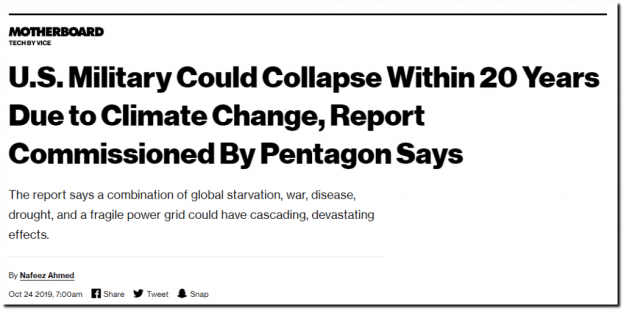
This is good news, because in 2004 they said the world would end in 2020.

Pentagon tells Bush: climate change will destroy us | Environment | The Guardian
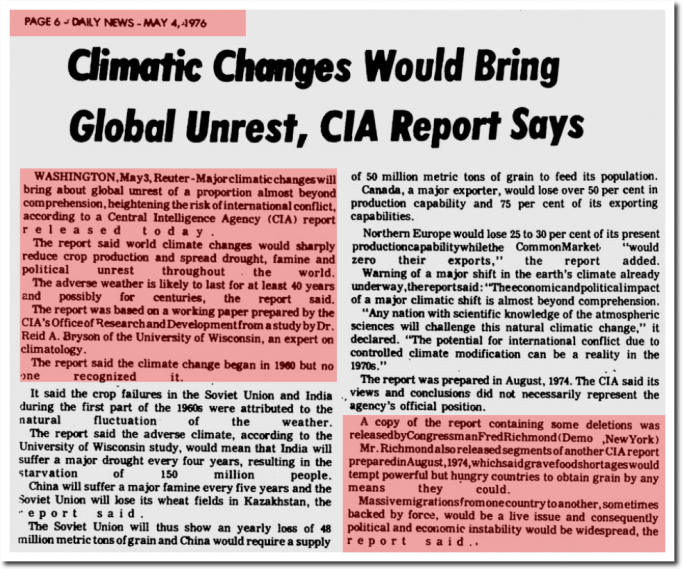
And the new date is 65 years after the CIA said global cooling was going to kill us.
More on the Quincy Institute: Don’t Mention Israel
By Philip Giraldi | American Herald Tribune | October 21, 2019
I have written frequently about how the overwhelming deference to Israeli perceptions not only distorts U.S. foreign policy, it also corrupts discourse regarding genuine national interests at all levels. The mainstream media, where Zionist journalists and editors exist in grossly disproportionate numbers, has long been a source of fake news about the Middle East, successfully obscuring Israel’s abominable record of war crimes and ethnic cleansing. The media lies overlap and often become self-propagating, with one lie from the likes of Rachel Maddow on MSNBC being employed to confirm the veracity of another similar lie being floated by someone like Jake Tapper on CNN.
So, the media, which is part of the Establishment and has a vested interest in promoting the status quo, is part of the “intellectual” underpinning of the government policies that it prefers. And it is joined by a more powerful and secretive ally in the form of the numerous think tanks that have sprung up in Washington like diseased mushrooms over the past twenty years. It is the think tanks that send ideologically driven “experts” to testify in front of congressional committees regarding policy, that draft legislation for lazy legislators, and that host well-funded panel discussions in which they air their biased views on the state of the nation.
I have written several times about the new think tank kid on the block the Quincy Institute, which is currently planning on “launching” during the month of November. Quincy, which claims to represent “Responsible Statecraft,” is largely funded by George Soros and the Charles Koch, both of whom have considerable negative baggage, and one is scarcely ever wrong when positing that compromising one’s views in exchange for money and celebrity is what Washington is all about.
My most recent rant on Quincy involved an article by the organization’s president, Professor Andrew Bacevich, whose books I have previously admired. His piece was entitled “President Trump, Please End the American Era in the Middle East.” The article appeared as one of Bacevich’s regular weekly contributions to The American Conservative (TAC) website under the rubric “Realism and Restraint.” I cited it as a good example of how self-censorship by authors works.
The article particularly focused on the foreign policy pronouncements of Bret Stephens, the resident neocon who writes for The New York Times. Stephens, per Bacevich, has been urging constant war in the Middle East and worrying lest “we may be witnessing the beginning of the end of the American era in the Middle East.”
Bacevich wrote the article without once mentioning Israel in spite of the fact that Stephens is an arch-propagandist for the Jewish state, a clearly deliberate omission that was noted not only by me but also by a number of comments from other readers. As the TAC site where the article appeared is heavily moderated, one suspects that additional, more vitriolic comments were not allowed to appear.
Bacevich is clearly on a roll. He followed up the piece on TAC with a stunningly ridiculous propaganda piece entitled “Foreign governments are messing with our elections the old-fashioned way” that appeared last week in the Boston Globe.
The article begins: “President Trump’s record as a unifier is spotty at best. Yet on at least one issue, he has helped forge a solid consensus: Americans are not going to tolerate further outside meddling in their politics. In discussing next year’s elections, Senate majority leader Mitch McConnell recently put it this way: ‘Any foreign country that messes with us is going to have a serious problem in return.’ The integrity of our electoral system is sacrosanct. Consider yourself warned, Mr. Putin. The Mueller report showed conclusively that in the run-up to the 2016 presidential election Russian hackers had done plenty of messing. Republicans and Democrats alike (if not President Trump himself) are now intent on preventing any recurrence of such interference, whether by Russia or other mischief-making interlopers such as Iran or China. Patriotic citizens must hope that those efforts will succeed.”
Let’s pause right there. Any article that pretends to be a serious discussion of America’s relationship with foreign powers should avoid quoting Mitch McConnell, who is possibly one of the slimiest politicians currently on display in the Senate. All his judgments are conditioned not by the national interest but rather by political considerations that relate to advancing his own personal agenda as well as the agenda of establishment Republicans. If the “integrity” of the U.S. electoral system is truly threatened, nearly all of the damage comes from inside the system, where corruption is rampant at all levels.
And, one might also note that the Mueller report may have demonstrated that in 2016 there were certain intrusions and manipulations by entities that may or may not have been connected to the Russian government, but it never revealed any plan by the Kremlin to influence voters in any serious way or change the results. It has not even been conclusively demonstrated that the Russians hacked anyone as the FBI has never been able to examine the Democratic National Committee computers. In fact, it is widely recognized that the Russian click-bait efforts on social media were insignificant and had no influence on the outcome. Overturning election results is called “regime change” and it is something that the United States does regularly, not the Russians.
Bacevich continues, “Yet those same citizens would do well to consider the other ways in which foreign governments, many of them ostensible friends, have habitually interfered in our politics. To do so, those governments do not employ the latest innovations in information warfare, waged via social media. No, they mess with our politics the old-fashioned way, distributing vast sums of money to buy influence.”
The professor makes a good point, that money in politics can create access and buy influence, but he then goes on to cite Saudi Arabia as a prime example of that specific form of corruption. He claims that the Saudis spent in 2018 alone “$33 million in their attempts to influence US policy” and wonders “… why the pervasive use of Saudi money to influence U.S. policy is any more tolerable than Moscow’s campaign to tilt the outcome of a presidential election in favor of its preferred candidate.”
Bacevich concludes with “Interested in salvaging the remnants of integrity that survive in American democracy? Well, it won’t be enough to stop the hackers employed by Moscow or Beijing or Tehran (even assuming that it’s possible to do so). To prevent foreign governments from mucking around where they are not wanted will require a concerted effort to get outside money out of American politics altogether. The moneychangers need to be ousted from the temple.”
With this recent series of somewhat related articles Professor Bacevich, unfortunately, defines himself as just another run-of-the-mill American hack propagandist. The enemies list includes Russia, China, Iran and Saudi Arabia but it deliberately avoids mentioning that country the more than any other interferes in U.S. politics. That country is, of course, Israel.
The $33 million that the Saudis allegedly spend on lobbying the U.S. is little more than chump change for the Israel Lobby, which is awash with money donated by Jewish oligarchs like casino magnate Sheldon Adelson, who came up with three times that much and more in 2016 to insure that America would have a solidly pro-Israel foreign policy. The Lobby plays with hundreds of millions of dollars annually, costs the U.S. taxpayer billions in various free rides for the Jewish state and has hundreds of full-time employees in groups like the American Israel Public Affairs Committee (AIPAC) and the Foundation for Defense of Democracies (FDD).
Andrew Bacevich is a smart man and he knows well that what I have written about above is correct. He knows first-hand that Israel’s interference in U.S. politics is highly organized, generously funded and ongoing at every level of government to obscure what Israel actually represents while also inter alia making it illegal to criticize the Jewish state in any way. Professor Bacevich fully well knows those things even as he pontificates about Americans not tolerating foreign influence in our politics, so why doesn’t he tell the truth for a change? Is it all about the Quincy Institute’s Benjamins?
OPCW put lid on key evidence in Douma chemical incident – watchdog whistleblower
RT | October 23, 2019
The international chemical weapons watchdog likely skewed its own investigation of the 2018 chemical weapons incident in Douma, Syria to come to a predetermined decision, a damning conclusion based on whistleblower testimony said.
The April 2018 incident in the Damascus suburb was quickly blamed on the Syrian government by the West. Within days, the US, the UK and France launched barrages of cruise missiles in retaliation. The Organization for the Prohibition of Chemical Weapons (OPCW), the international chemical weapons watchdog, later backed the justification, all but pointing the finger at Syria in its final report, which was released in March.
Now a panel of experts says the report was based on a flawed conclusion and likely deliberately steered toward the West-favored outcome. The accusation is based on evidence and testimony of an OPCW investigator, who came forward with damning evidence that his own organization had breached its mission.
After talking to the whistleblower and examining internal reports, text exchanges and other evidence, the panel was convinced that “key information about chemical analyses, toxicology consultations, ballistics studies, and witness testimonies was suppressed, ostensibly to favor a preordained conclusion,” it said in a statement.
The statement said the OPCW took effort to exclude dissenting investigators and silence their attempts to raise concerns about the report, which is “a right explicitly conferred on inspectors in the Chemical Weapons Convention.” The experts called on the organization to revisit its investigation and allow those not agreeing with the conclusion put in the final report to voice their concerns without fear of reprisal.
The panel convened by the Courage Foundation, which accepts donations for the legal defense of whistleblowers and journalists that report on leaks, includes several prominent specialists and public figures, including José Bustani, a Brazilian diplomat who served as the OPCW’s first Director General before being strong-armed from the office by US superhawk John Bolton.
Bustani said the whistleblower confirmed his doubts about the report, which “seemed incoherent at best” right from the start.
“My hope is that the concerns expressed publicly by the Panel, in its joint consensus statement, will catalyze a process by which the Organization can be resurrected to become the independent and non-discriminatory body it used to be.”
The panel did not make public the name of the whistleblower or any previously unpublished evidence of the OPCW’s alleged misconduct. WikiLeaks, whose editor-in-chief Kristinn Hrafnsson was a member of the panel, re-printed a draft engineering assessment penned by an OPCW investigator, which was leaked in May. The document rejects the claim that chlorine cylinders, which were used for delivery of the toxic gas in Douma, had been dropped from the air, which was used as a key argument in accusing the Syrian army for the attack.
The OPCW did not challenge the authenticity of the document, but stood by its conclusions on the Douma incident.
Ms. Pumpkin Head for President: A Nightmare
By Edward Curtin | Behind the Curtain | October 20, 2019
A few weeks ago I had a terrifying nightmare, so gruesome was it that I awoke screaming and had to run to the bathroom to vomit in the toilet. In this dark horror show, I was carving a pumpkin for Halloween. The cap came off easily and I disemboweled the slimy interior quickly, but as I did, I felt a strange sensation on my hand, as if a tongue were biting it. When I was finishing carving the face, however, the trouble really started. The pumpkin head came alive as the eyes and mouth moved and then it started speaking in a voice that was familiar but one I couldn’t place. Blond hair started sprouting from its head as it started shrieking and bouncing on the table in an hysterical manner. I jumped back in fear and trembling as it started cackling, “I running, I running.” Blood ran from between the carved teeth and the blue eyes pulsated with the mania of a serial killer in a horror movie.
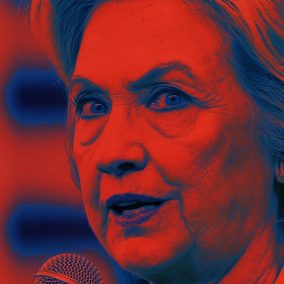 I awoke with a scream when I realized it was Hillary Clinton.
So hideous was this night terror that I kept it to myself. But a week later when the next Democratic pseudo-debate was being promoted, I said to my wife that something told me that Hillary Clinton would be the Democratic nominee and the debates were a sideshow. She said she thought that would never happen and that Clinton was now hated and done for. I disagreed without recounting my nightmare because to describe it at that point would have induced more retching at the thought of the night monster.
Then this past week during the Democratic debate, the courageous Tulsi Gabbard put the lie to the murderous militarism of U.S. foreign policy and its regime change operations with its use of American supported terrorists in Syria and throughout the world. She calmly and eloquently denounced the militarist positions of the other candidates standing beside her, as they listened disquieted and disturbed to a patriotic American speaking truth that they dare not even think, so bought and sold are they.
She was a woman alone among a cast of sycophants denouncing the murderous policies carried out by presidents Democratic and Republican and foisted on the American people through a vast network of propaganda, appealing to their worst instincts. It was a stunning few minutes, for it is so rare, almost unheard of, for a politician to tell Americans the brutal truth about their government.
To many it was a sign of hope, but to the evil forces that run this country, Rep. Gabbard had gone too far and the knives came out in force, this time led by the pumpkin-headed Hillary Clinton and her accomplices at The New York Times and The Washington Post, who have consistently trashed Tulsi Gabbard in an effort to destroy her candidacy.
I felt my dream was prophetic when Clinton, in her slimy manner, attacked Tulsi Gabbard, without naming her, by saying,
I’m not making any predictions but I think they’ve [The Russians] got their eye on somebody who is currently in the Democratic primary and are grooming her to be the third-party candidate. She’s the favorite of the Russians. They have a bunch of sites and bots and other ways of supporting her so far.
Well, I ain’t making any prediction either; I’m leaving that up to my nightmare to do my talking.
It tells me that Hillary-O-Lantern, spitting blood, is running and gunning again.
She’s the favorite of the CIA and the military industrial complex and all those who profit from war and live off the deaths of victims everywhere. They have bunches of sites and bots and fake news conspirators and all sorts of ways of supporting her, which they have been doing for many years, straight through their constructed Russia-gate and Ukraine-gate conspiracies and her barbaric support for wars everywhere, including the destruction of Libya and her joyful response to the fiendish death of Muammar Gaddafi, among so may atrocities.
Tulsi, never cowered, said it straight and true in response:
Great, Thank you. You the Queen of warmongers, embodiment of corruption, and of the rot that has sickened the Democratic Party for so long, have finally come out from behind the curtain. From the day I announced my candidacy, there has been a concerted campaign to destroy my reputation. We wondered who was behind it and why. Now we know — it was always you, through your proxies and concerted campaign to destroy my reputation. We wondered who was behind it and why. Now we know — it was always you, through your proxies and powerful allies in the corporate media and war machine, afraid of the threat I pose. It’s now clear that this primary is between you and me. Don’t cowardly hide behind your proxies. Join the race directly.
She later said, “I stand against everything she represents.”
Halloween is the time for masks and dissembling. Hillary Clinton is a figure straight out of a grotesque Halloween party, as are her clones in the Democratic party. Tulsi Gabbard was not invited to their party but came anyway, and came to tell the truth about the masquerade.
She has torn off Clinton’s mask and asks the American people to see the true face of Clinton and all her minions, who represent the triumph of war and death, and the sick play we have been living through, an endless war on terror justified by endless lies.
Norman O. Brown so well describes our stage set:
Ancestral voices prophesying war; ancestral spirits in the danse macabre or war dance; Valhalla, ghostly warriors who kill each other and are reborn to fight again. All warfare is ghostly, every army an exercitus feralis (army of ghosts), every soldier a living corpse.
Lying is the leading cause of living death in the United States.
Tulsi Gabbard has told the truth.
Like me, I am sure you don’t want your nightmares to become reality. Let’s live in the truth.
The American Deep State Would Sooner Sacrifice the Republic Than Lose Again to Donald Trump
By Robert Bridge | Strategic Culture Foundation | October 20, 2019
You’d really think the American people would have caught on by now. No sooner did Russiagate fizzle out like a wet firecracker did the Democrats, completely indifferent to the dire consequences, toss another incendiary into the public square. Sooner or later something has got to blow, and maybe it already did.
As Americans experience the brutal whiplash of going from the Mueller probe to presidential impeachment in a matter of days, all pretensions of democratic procedure to guide the show trial have been tossed from the clown car. With the boot-licking media to back their every whim and fancy, the Democrats are dragging the Republic to the brink of destruction as they threaten to take down the 45th POTUS, and without a single witness in the dock.
Last month, Adam Schiff, Chair of the House Intelligence Committee, said the identity of the shady whistleblower who revealed second-hand details of a call between Trump and Ukrainian President Volodymyr Zelensky would be made public “very soon.” That claim looks set to be the fifth ‘Pinocchio’ awarded to Schiff in almost as many days.
On Sunday, the truth-impaired Senator said the whistleblower at the heart of the Democrats’ impeachment inquiry might not testify in court over concerns about the individual’s safety. That pathetic excuse should incur the wrath of the mainstream media every bit as much as it has incurred the wrath of the Trump administration. Moreover, it cheapens the incalculable sacrifice that every whistleblower assumes when they attach their identities to explosive revelations; without their identity publicly known the claims do not carry the same weight. Unless the whistleblower is fully prepared to lose his career and risk jail time, much like Edward Snowden and Chelsea Manning and numerous others, a cloud of doubt will forever hang over the claims, and even more so in the Ukrainegate affair since we are talking about nothing more than hearsay.
Schiff’s notorious shiftiness didn’t end there. He actually cited Trump’s candidness in releasing the full transcript of the conversation as another reason as to why the ‘courageous’ whistleblower should enjoy full anonymity. This almost makes Trump himself appear as the whistleblower.
“Given that we already have the call record, we don’t need the whistleblower who wasn’t on the call to tell us what took place during the call,” Schiff said in an interview on CBS’s Face the Nation. In other words, Trump was doomed to be damned if he released the transcript or he didn’t.
The Democrat’s determination to bring down Trump was confirmed earlier when Schiff was caught in yet another lie.
On September 16, the Democratic Senator told CNN’s Anderson Cooper that he did not know the identity of the whistleblower. He repeated the same claim the next day when he told MSNBC’s Morning Joe that neither he nor his staff had “spoken directly with the whistleblower.” It is now known that his claims were bald-faced lies, and serious enough to bring the impeachment clown car to a screeching halt. Yet the rules of the game, as is proven time and time again, are always adjusted to suit the Democrats. In fact, the whistleblower may have committed a felony for failing to disclose in his or her official complaint that they had first brought the information to the attention of House Intelligence Committee Chair Adam Schiff.
Schiff has little to worry about, however, since the media does not react to Democratic transgressions with nearly the same amount of hysteria as it does with the Republicans, which explains why Trump is fighting a constant uphill battle.
This is where the push for impeachment is becoming a dangerous venture for the Democrats. The people are not stupid, and it does not require the shrewdest political tool to understand that the scales of justice are weighted heavily in favor of the Democrats. From Hillary Clinton escaping punishment for using her home computer to send classified government documents, to former Vice President Joe Biden bragging about arranging a billion-dollar quid pro quo with Kiev to sack Ukraine’s top prosecutor, who just happened to be investigating Biden’s son, Hunter, the Democrats rarely have anything to fear as far as justice is concerned. Yet this special status has certainly not gone unnoticed; with social media revolutionizing the ‘town square,’ the blatant hypocrisies and outright crimes are obvious to everyone.
Just as Russiagate was a conspicuous effort on the part of the Democrats and their lapdog media to deflect attention away from the contents of Clinton’s emails, not to mention the identity of the leaker (as opposed to the ‘Russian hackers,’ that is), Ukrainegate is a desperate attempt to focus attention on a harmless phone call between two state leaders so as to bury the news of corruption at the highest levels of the Obama administration, up to and including not only Joe Biden, but former Secretary of State John Kerry as well. In other words, we are talking about obstruction of justice on a mind-boggling scale, and which could only be pulled off with the full support of the mainstream media. A free-thinking, independent journalistic community would have called foul on such shenanigans long ago.
Lest anyone forget, the Democrats have been under investigation by Attorney General Bill Barr and federal prosecutor John Durham. These two are currently traveling the world in an effort to determine “the extent to which a number of countries, including Ukraine, played a role in the counterintelligence investigation directed at the Trump campaign during the 2016 election,” Justice Department spokesperson Kerri Kupec said in a statement on Sept. 25.
In fact, Barr and Durham’s ‘mission’ kicked off back in May, long before the smoke and mirrors of yet another Trump ‘transgression’ took front and center in living rooms across the country. Indeed, while every American has heard of the impeachment inquiry, few realize that the Democrats are under investigation for far greater crimes should they be found guilty, that is. Now, in the event that Barr and Durham attempt to present their findings to the public, the Democrats will scream in one persecuted voice that Trump is attempting to ‘obstruct justice,’ which will certainly be the greatest irony considering the source.
In other words, there are two vehicles – one filled with Democrats, the other Republicans – careening towards an intersection at a high rate of speed, and neither looks willing to yield to the other. This is the situation confronting America at the present time: a smashup of epic, deadly proportions, quite possibly on par with its first civil war. Such a seemingly inevitable event, however, would never have been remotely possible had the media been a fair and just provider of news and information as opposed to being an instigator and provocateur of the first order.
Now, should the Democrats get the impeachment they’ve been dreaming about ever since they lost the 2016 presidential election, at least 50 percent of the American public will understand full well that the scales of justice are tilted against them. That will be the moment when the United States is forced to confront its worst crisis in many years, simply because the Democrats have become so terrified of a longstanding political technology known as ‘free and fair elections.’
No Inquest for Dawn Sturgess
By Craig Murray | October 18, 2019
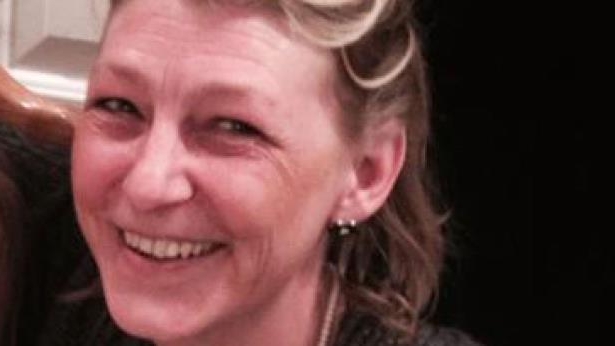
The killing of poor Dawn Sturgess was much the most serious of the events in Salisbury and Amesbury that attracted international attention. Yet nobody has been charged, no arrest warrant issued and no inquest held.
The inquest for Dawn Sturgess has today been yet again postponed, for the fourth time, and for the first time no new prospective date has been given for it to open. Alarmingly, the coroner’s office are referring press enquiries to Scotland Yard’s Counter Terrorism Command – which ought to have no role in an inquest process supposed to be independent of the police.
Congratulations to Rob Slane and to John Helmer for their excellent work in following this.
It appears very probable that the independent coroner’s inquiry process is going to be cancelled and, as in the case of David Kelly, replaced by a politically controlled “public inquiry” with a trusty or malleable judge in charge, like Lord Hutton of Kincora. This is because the truth of Dawn Sturgess’ death in itself destroys key elements of the government’s narrative on what happened in Salisbury.
Simply put, the chemical that killed Dawn Sturgess could not have been the same that allegedly poisoned the Skripals. Charlie Rowley is adamant that he found it in a packaged and fully sealed perfume bottle, in a charity bin. Furthermore he states that it was a charity bin he combed through regularly and it had not been there earlier, in the three months between the alleged attack on the Skripals and his taking it from the bin.
The government narrative that “Boshirov and Petrov” used that perfume bottle to attack the Skripals, then somehow resealed the cellophane, and disposed of it in the bin, depends on the Russians having a tiny plastic resealing technology concealed on them (and why bother?), on their taking a long detour to dispose of the “perfume” in a charity bin – the one method that guaranteed it being found and reused – and the “perfume” then achieving a lengthy period of invisibility in the bin before appearing again three months later.
Those are only some of a number of inconvenient facts. Perfume does not come as a gel; it cannot both have been applied as a gel to the Skripals’ doorknob and sprayed on to Dawn Sturgess’ wrists. Gels do not spray. Neither Porton Down nor the OPCW was able to state it was from the same batch as the chemical allegedly used on the Skripals’ house.
Then there is the fascinating fact that it took eleven days of intensive searching for a vial of liquid in a small modern home, for the police to find the perfume bottle sitting on the kitchen counter.
Nobody has been charged with the manslaughter or murder of Dawn Sturgess. There is still an international arrest warrant out for Boshirov and Petrov for the attack on the Skripals. Very interestingly indeed, this warrant has never been changed into the names of Chepiga and Mishkin.
From the moment I heard of the attack on Dawn Sturgess I worried that she – a person down on her luck and living in a hostel – was exactly the kind of person the powerful and wealthy would view as a disposable human being if her death fitted their narrative. The denial of an inquest for her, and the complete lack of interest by the mainstream media in the obvious nonsense of the official story that ties her to the Skripal poisoning, tends to confirm these fears. What Dawn Sturgess’ death tells us, beyond doubt, is that the government narrative is fake and the Skripal and Sturgess cases are two separate incidents. Which makes a local origin of the chemical very much more likely. No wonder the government is determined to avoid the inquest.
I was struck today that the tame neo-con warmongering “Chemical weapons expert” Hamish De Bretton Gordon, former head of the British Army’s chemical weapons unit, appeared on Sky News. He was being interviewed on use of white phosphorous by Turkey in Syria and repeatedly tried to deflect the narrative on to alleged chemical weapons use by Syrian government forces, arguing that the present crisis was the moral responsibility of those who opposed western military action against Assad. But what particularly struck me was that he appeared by Skype – from Salisbury. When you look at the British government’s own chemical weapons expertise, you are continually led back to Salisbury, perhaps not surprisingly given the location of Porton Down.
I am aiming to make a full documentary film on the Salisbury events entitled “Truth and the Skripals”, based around the questions raised on this blog. I shall be looking to launch crowdfunding for the documentary shortly, probably within the week.
Hillary Clinton Pitches Conspiracy Theory That Tulsi Gabbard, Jill Stein Are Russian Assets
By Tyler Durden – Zero Hedge – 10/18/2019
Hillary Clinton is still peddling election-related conspiracy theories, this time hinting that 2020 Democratic contender Tulsi Gabbard is being ‘groomed’ to split the Democratic vote as a third party candidate, thus handing the election to President Trump.
Speaking with former Obama 2008 campaign manager David Plouffe on his podcast, “Campaign HQ with David Plouffe,” Clinton said – without mentioning Gabbard by name: “I’m not making any predictions but I think they’ve got their eye on somebody who is currently in the Democratic primary and are grooming her to be the third-party candidate. She’s the favorite of the Russians.”
Of course, that’s “assuming Jill Stein will give it up – because she’s also a Russian asset,” Clinton continued.
Earlier in the interview, Clinton hinted that the Trump 2020 campaign is still in “contact with the Russians,” and that “we have to assume that since it worked for them, why would they quit?”
“Donald Trump is Vladimir Putin’s dream,” Clinton added. “I don’t know what Putin has on him – whether its both personal and financial, I assume it is. But more than that, there’s this bizarre adulation Trump has for dictators.”
Clinton also insisted that Russia “did affect the outcome of the election” in 2016, despite the DOJ concluding otherwise.
Incredible!
Tulsi Nails it on National TV… US Regime-Change Wars
By Finian Cunningham | Strategic Culture Foundation | October 18, 2019
No wonder Democratic Party bosses and mainstream media are trying to bury presidential contender Tulsi Gabbard. She is the only candidate, perhaps the only politician in the US, who is telling the American public exactly what they need to know about what their government and military are really up to: fighting illegal regime-change wars, and to boot, sponsoring terrorists for that purpose.
It didn’t come much clearer nor more explicit than when Gabbard fired up the Democratic TV debate this week. It was billed as the biggest televised presidential debate ever, and the Hawaii Representative told some prime-time home-truths to the nation:
“Donald Trump has blood of the Kurds on his hands, but so do many of the politicians in our country from both parties who have supported this ongoing regime-change war in Syria that started in 2011… along with many in the mainstream media who have been championing and cheer-leading this regime-change war.”
The 38-year-old military veteran went on to denounce how the US has sponsored Al Qaeda terrorists for its objective of overthrowing the government in Damascus.
It was a remarkably damning assessment of US policy in Syria and elsewhere in the Middle East. And it was by no means the first time that Gabbard has leveled with the American people on the brutality and criminality of Washington’s so-called “interventions”.
The other 11 Democratic candidates on the stage during the TV debate looked agog after Gabbard’s devastating and calmly delivered statement. All the others have proffered the false narrative that US forces are in Syria to “fight terrorism”. They deplore Trump’s announcement last week to pull back US troops from northeast Syria because, they say, it will undermine the fight against Islamic State (IS or ISIS) and other Al Qaeda affiliates. They also condemn Trump for “betraying Kurdish allies” by his partial troop withdrawal.
President Donald Trump talks about “ending endless wars” and “bringing our troops home”. But he still premises his views on a credulous belief that the US under his watch “defeated ISIS 100 per cent”. In that way, he essentially shares the same corny view as the Democrats and media that America is a force for good, that it is the “good guys wearing white hats riding into the sunset”.
On the other hand, Gabbard stands alone in telling the American people the plain and awful truth. US policy is the fundamental problem. Ending its regime-change war in Syria and elsewhere and ending its diabolical collusion with terror groups is the way to bring peace to the Middle East and to spare ordinary Americans from the economic disaster of spiraling war debts. American citizens need to know the truth about the horror their government, military, media and politicians have inflicted not just on countries in the Middle East, but also from the horrendous boomerang consequences of this criminal policy on the lives and livelihoods of ordinary Americans, including millions of veterans destroyed by injuries, trauma, suicide, and drug abuse.
Following the TV debate this week, it seems that Gabbard won the popular vote with her truth-telling. A major online poll by the Drudge Report found that she stole a march on all the other candidates, winning approval from nearly 40 per cent of voters. Top ticket candidates Elizabeth Warren, Bernie Sanders and Joe Biden were trailing behind with 7 per cent or less.
Gabbard has clearly struck a deep chord with the US public in her honest depiction of American wars.
Despite her shattering exposé and seeming appreciation by the public, most mainstream media tried to bury her after the TV debate. Outlets like Vox and CNN declared that Warren was the winner of the debate, whose talking points were mainly about domestic policy issues. Like the other candidates, Warren plies the propaganda narrative of US forces “fighting terrorism”. Vox even slated Gabbard as “a loser” in the debate and claimed she had made “blatantly false” statements about the US’ role in Syria.
Other mainstream news outlets chose to ignore reporting on Gabbard’s demolishing of the official propaganda about American wars. Earlier this week, CNN and the New York Times smeared her as a “Russian asset” and an “apologist for Assad”, referencing a visit she made to Syria in 2017 when she held talks with President Assad.
The Democratic National Committee is claiming that Gabbard does not have sufficient support in polls it deems worthy for her to qualify for appearing in the next TV debate in November.
International events, however, are proving the Hawaii Representative right. US troops, as with other NATO forces, have been occupying Syrian territory illegally. They have no mandate from the United Nations Security Council. The pullback of US troops by Trump has created a vacuum in northeast Syria into which the Syrian Arab Army is quickly moving to reclaim the territory which US-backed Kurdish fighters had de facto annexed for the past five years. Several reports show the local people are joyfully welcoming the arrival of the Syrian army. The scenes are reminiscent of when Syrian and Russian forces liberated Aleppo and other cities previously besieged by terror groups.
America’s war machine must get out of Syria for the sake of restoring peace to that war-torn country. Not because “they have defeated ISIS 100 per cent”, as Trump would conceitedly claim, nor because “we are betraying Kurds in the fight against terrorism”, as most Democrats and US media preposterously claim.
Peace will come to Syria and the Middle East when Washington finally ends its criminal regime-change wars and its support for terrorist proxies. Tulsi Gabbard seems to be the only politician with the intelligence and integrity to tell Americans the truth.
EVEN CNN hosts gasp at guest’s claim that Tulsi Gabbard is ‘a Russian puppet’
RT | October 15, 2019
Democratic presidential candidate Tulsi Gabbard is no stranger to mainstream media smears, but even a panel of CNN hosts and analysts audibly gasped when one guest outright accused the Hawaii congresswoman of working for Russia.
What started off as a standard panel discussion on Tuesday’s upcoming Democratic debate quickly took a dark turn, as CNN political analyst Bakari Sellers accused Gabbard of foreign allegiances. As soon as Gabbard’s name was mentioned, Sellers took the opportunity to claim that there “is a chance that Tulsi’s not just working for the United States of America.”
The dramatic accusation prompted uncomfortable shuffling from the rest of the panel, with CNN contributor April Ryan asking “ohh, wait a minute, what?” Sitting opposite Sellers, commentator Angela Rye jumped in to stress that any accusations of Gabbard working for a foreign power are just “an allegation.”
Sellers was not content to quit, however, adding that it was “not just an allegation” — despite the fact that there is absolutely no evidence to suggest that Gabbard is compromised by any foreign country.
Then Sellers got into the specifics.
“There’s no question, there is no question that Tulsi Gabbard, of all the 12 [debate participants], is a puppet for the Russian government.”
“How is there no question?” host Alisyn Camerota asked, seemingly taken aback by the seriousness of the claim. Sellers instantly cited Gabbard’s position on the war in Syria as proof.
Indeed, the unapologetically anti-war candidate has faced similar smears of being an “Assad apologist” and a “Putin puppet” multiple times due to her criticisms of US foreign policy in Syria, where she believes Washington should never have backed and funded jihadist rebels fighting President Bashar Assad.
As for Sellers himself, he has endorsed California Senator Kamala Harris for president, so his distaste for Gabbard is not entirely surprising. Gabbard won broad praise for expertly taking Harris to task on her record as a prosecutor during an earlier debate — so much so that the hashtag #KamalaHarrisDestroyed even trended on Twitter (but that was apparently Russia’s fault, too).
While Sellers did face some mild pushback from the CNN panel, none of the participants rushed to wholeheartedly defend Gabbard, either. The analyst did experience the wrath of Twitter, however.
Journalist Max Blumenthal tweeted that Sellers comment was somewhat ironic since he is “an actual puppet for corporate America and AIPAC.” Sellers is an activist for the pro-Israel AIPAC lobbying organization, which is accused of waging outsized influence in US domestic politics and foreign policy.
Investigative journalist Glenn Greenwald called Sellers’ comments “repugnant, McCarthyite accusations of treason” and noted that the CNN panel moved quickly on and would surely allow him back to repeat the same smears on another occasion.
“If there were a shred of proof that she is working for the Russian government she would be in a whole world of trouble,” another user wrote, noting that Gabbard is a major in the National Guard and a member of congress with top secret security clearance.
The anti-Gabbard smears have been bubbling in mainstream media since before she even announced her candidacy, but they went into overdrive after she entered the race for president.
NBC has accused her of being supported by Russian trolls on Twitter, while the New York Times recently published a hit piece in the ‘news’ section, headlined: “What, Exactly, Is Tulsi Gabbard Up To?” The piece speculated that Gabbard’s anti-interventionist stances might somehow make her a Russian stooge, even citing coverage of her campaign by RT of all news organizations as some kind of proof.
Gabbard also won no friends within the Democratic Party in 2016 after she stepped down as DNC vice chair, endorsed Bernie Sanders and accused the party of bias in favor of Hillary Clinton.
Gabbard has continued her criticism of her party during this election cycle, too — so it’s no wonder that the mainstream media and Democratic establishment haven’t exactly warmed to her candidacy.
Featured Video
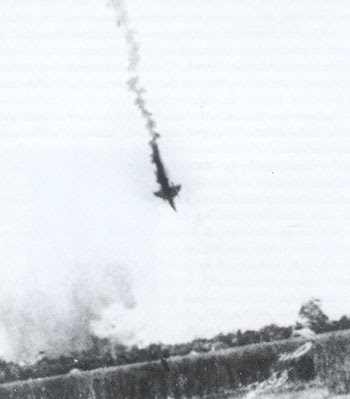
The Failed Air War Over Vietnam
or go to
Aletho News Archives – Video-Images
From the Archives
USS Liberty Massacre: A Pivotal Moment in the Hostile Takeover of America
By Kevin Barrett | Crescent | Dhu al-Qa’dah 24, 1445
In corporate America, hostile takeovers are commonplace. They occur when an aggressor—a larger corporation or rich individuals—seizes control of a smaller corporation without asking permission.
What few recognize is that the United States itself has been subjected to a hostile takeover. Since the aggressor, the illegitimate settler colony known as “Israel,” is much smaller than the US, the takeover has necessarily been surreptitious.
As of June, 2024, Israel’s gradual takeover of the US has become obvious and undeniable—a proverbial “elephant in the living room.” … continue
Blog Roll
 Aletho News
- Europe’s mounting social chaos… chickens coming home to roost for proxy war against Russia
- US-Russia Diesel Deal Becomes Massive Defeat for Ukraine
- Hormuz and the Looming Economic Catastrophe
- Dhubab offensive, media blitz and the rapid unraveling of Saudi-backed coalition’s new gambit
- Putin Conveys to Trump Iran’s Vision on Possible Conflict Resolution – Kremlin
- The Search for Truth: Charlie Kirk’s Assassination One Year Later
- ‘Harsh reality’: Iran says France seeks monopoly on power and intimidation, not peace for all
- When Will This White House Madness End?
- Huckabee aide goes to ‘unusual lengths’ to portray ‘Israel’ positively
- Trump Announces Diesel Supply Deal With Putin Following Phone Call
- If Americans Knew
- Israeli forces kill another child in Gaza – Daily Update
- Gaza ceasefire exists in name only, say more than 100 organizations
- Nearly 2 Million in Gaza Need Urgent Shelter Assistance as Winter Looms: IOM Chief Warns
- Suppressing Palestinian resistance: US charity under fire for AI monitoring of Gaza classrooms
- Thousands Are Held in Israeli Torture Camps. This Is What Happens Inside
- Israel puts Gaza’s sick, injured, newborn in peril – Daily Update
- Report claimed Mark Levin used by Israeli government to influence Trump
- Over 2,000 Gazans have died awaiting medical evacuation amid Israel’s continued siege
- How a U.S. Diplomat Suppressed and Altered Reports Critical of Israel
- 5 Palestinians Die from Israeli Strikes in Gaza as Relentless Attacks Continue
- No Tricks Zone
- Germany’s Green Energy Debacle: High Energy Costs Force Kahla Porzellan to Close After 182 Years!
- New Study: 50 Years Of The Most Aggressive ‘Net Zero’ Policies Can Only Affect The Global Climate By 0.03°C
- US September “Heat” Was No Record…Many Records Set Decades Ago
- Latest European Green Energy Debacle; Portugal’s Largest Flagship Solar Park Insolvent!
- Green Energy Debacle: German Expert Professor Fritz Vahrenholt Warns Of Severe Economic And Social Consequences
- Two More Paleo Reconstructions Affirm Meters-Higher Sea Levels Across Ireland, Brazil 7000-6000 Years Ago
- New Study: Earth And Venus Surface Warmth Largely Explained By Convection And Lapse Rate, Not CO2 Or Radiation
- 2025 Nature Paper Claiming Worsening Global Drought Gets RETRACTED …Heavily Flawed
- New Study: ‘Global Drought Shows No Detectable Recent Acceleration Under Climate Warming’
- Economic Masterminds: German Socialists Suggest Taxing Productivity Gains Stemming From Using AI

